The Boeing 717 (717) aircraft, registered VH-VQD, was being operated on a scheduled passenger service under the instrument flight rules from Brisbane to Mackay, with an expected arrival time of 2030 EST. There were rain showers and scattered low cloud in the area at the time and the air traffic controller had issued the crew with a clearance to conduct a runway 14 VOR/DME approach at Mackay. The pilot in command was the handling pilot for the sector.
Late in the cruise segment, the pilot in command asked the copilot to obtain the predicted altitude of the aircraft when it would pass overhead Mackay. The copilot said that he cleared the Mackay altitude constraint (2,500 ft) in the active flight plan page on the multi-function control and display unit (MCDU) of the flight management system (FMS). This enabled the unit to display the predicted altitude. The system displayed 5,100 ft and the copilot conveyed that information to the pilot in command.
The copilot then reinstated the previously set 2,500 ft altitude constraint into the active flight plan. The crew could not positively recall checking the altitude constraint against the Mackay waypoint at the end of that process. Passing overhead Mackay, the copilot entered the minimum descent altitude for the approach (430 ft) in the mode control panel altitude window. The aircraft was being operated on automatic pilot, with profile, navigation and manual speed modes engaged for the VOR/DME approach.
As the aircraft descended on the outbound leg of the approach, the crew noticed that the predicted track for the inbound turn on the map display screen showed a break between the inbound turn and the inbound track. During the inbound turn, the pilot in command became concerned that the aircraft was not going to intercept the inbound radial by the final approach fix at 5 NM by Distance Measuring Equipment (DME), and he and the copilot directed their attention to the aircraft's tracking profile.
A short time later, the pilot in command noted that the aircraft was descending through 1850 ft. Believing that they were too low for that segment of the approach, he asked the copilot to confirm the minimum step altitude. The copilot advised 2,200 ft. The crew then heard the Mackay Tower controller suggest that they 'check altitude', and that the aircraft was 'low on profile'. The pilot in command responded by selecting the autopilot vertical speed mode, commanding the aircraft to climb until it was above 2,200 ft. The crew then continued flying the approach to runway 14 and intercepted the inbound radial at about 6.6 DME.
The minimum crossing altitude at the final approach fix for the runway 14 VOR/DME approach was 760 ft. As the aircraft passed the final approach fix, it was at 1,427 ft, in the landing configuration, and established on the final approach track. The pilot in command indicated that he was 'a bit in shock' at that time over what had happened during the inbound turn but had not considered conducting a missed approach.
At about 800 ft, the copilot said that the runway was to the right. Visibility was satisfactory and the windshield wipers were off. The pilot in command said that he saw the lights the copilot was referring to and began to turn towards them, even though he felt that there was 'something not right', and he could not see the visual approach slope indicator system (T-VASIS) runway approach guidance lighting.
A short time later, the tower controller instructed the crew to climb, adding that the aircraft was 'well off centreline'. The pilot in command said that he was surprised by that instruction and initially did not react. However, when the controller repeated the instruction, about 2 seconds later, the pilot in command initiated a climb straight-ahead.
The pilot in command said that he had commenced the missed approach before the aircraft reached 500 ft on final approach. This was consistent with the information from the flight data recorder. The operator's procedures required the crew to check that the aircraft was aligned with the runway and on glideslope passing 500 ft on final approach.
The recorded flight data showed that the aircraft's track began to diverge right from about 138 degrees when the aircraft was descending through 620 ft at 3 DME on final approach. The missed approach was initiated 25 seconds later when the aircraft was tracking about 177 degrees as it passed 2.3 DME.
After the crew reported level at 2,500 ft during the missed approach, the controller instructed them to turn left when ready and track direct to the VOR. A short time later, the controller advised the crew that if the turn was not initiated, the aircraft would be required to climb to 3,100 ft; the minimum sector altitude. The crew turned the aircraft left and landed at Mackay following a second VOR/DME approach to runway 14.
This report highlights the potential safety benefits of the Flight Safety Foundation ALAR Tool Kit, especially in regard to the conduct of non-precision approaches.
Local safety action
The operator has advised that a review of processes has been carried out and new procedures are in place to ensure that a similar incident does not occur again. Some of the changes were reported to have been in the process of being introduced at the time of the accident.
Reported changes included the following:
Appointment of new personnel to key operational roles
Creation of a position of Flight Training Manager
Creation of a position of Quality Assurance Manager - Engineering
Review of Flight Manual Supplements
Rewriting of the Flight Operations Manual
Issue of a standing order to all pilots that a go-around is to be conducted anytime on approach below 1,000 ft above ground level, if the approach is not stabilised and the sink rate is in excess of 1,000 fpm
Reviewing the use of radio altimeter in non-precision approaches
Rewriting of the Check and Training Manual
Development of a Quick Action Handbook to cover emergency procedures
At the time of the occurrence, replacement aircraft for the Sydney-based aeromedical service were on order. Specifications for the new aircraft included an Enhanced Ground Proximity Warning System. Those aircraft are now in service.
Airservices Australia is reviewing the Manual of Air Traffic Services to clarify and remove the ambiguity relating to descent restrictions for pilots conducting instrument approaches in IMC.
Published with permission of Jeppesen Sanderson, Inc. - NOT TO BE USED FOR NAVIGATION.
Appendix B: Elements of a Stabilised Approach
Note: A suggested definition or policy that might be considered by operators could be as follows: "All flights shall be stabilised by 1,000 feet height above touchdown (HAT) in instrument meteorological conditions (IMC) and by 500 feet HAT in visual meteorological conditions (VMC)." An approach is considered stabilised when all of the following criteria are met:
The aircraft is on the correct flight path
Only small changes in heading and pitch are required to maintain that path
The aircraft speed is not more than Vref + 20 knots indicated airspeed (KIAS) and not less than Vref
The aircraft is in the proper landing configuration (approach configuration for small twins)
Sink rate is maximum 1,000 feet per minute; if an approach requires a sink rate greater than 1,000 feet per minute, a special briefing is to be performed
Power setting appropriate for configuration and not below the minimum power for approach as defined by the aircraft operations manual
All briefings and checklists have been performed
Specific types of approaches are considered stabilised if they also fulfil the following:
Instrument landing system (ILS) approaches - must be flown within one dot of the glideslope or localiser; a category II or III approach must be flown within the expanded localiser band.
Visual approaches - wings must be level on final when the aircraft reaches 500 feet HAT.
Circling approaches - wings must be level on final when aircraft reaches 300 feet HAT
Unique approaches such as the 'old' Hong Kong airport, and the DCA (Washington, D.C.) river visual approach to Runway 18 require a special briefing
Source: Flight Safety Foundation Approach-and-Landing Accident Reduction Task Force.
Analysis
This occurrence is a CFIT accident resulting from inadvertent descent below the MDA on the final segment of a non-precision approach, fortunately without the catastrophic consequences normally associated with such events. The investigation was unable to conclusively determine why the aircraft descended below the MDA while in IMC, or why the descent continued until CFIT could no longer be avoided. However, the investigation identified a number of factors that influenced, or had the potential to influence, the development of the occurrence.
The pilot's workload during the approach was high, primarily due to hand flying of the instrument approach in IMC. A steeper than normal descent angle and higher than normal rate of descent, resulting from the delayed descent clearance from the ADC, added to that workload. While in IMC, with the absence of any alert at the MDA, the pilot relied on specific reference to the altimeter during his instrument scan to alert him to the proximity to the MDA and any descent below it. Although use of the altitude alerter on the final segment of the approach was not established, an alert from a unit configured with the MDA would not be expected until at least 300 ft below the MDA. As such, the altitude alerter was not effective as an immediate alert to descent below MDA.
Given the potential for downdraft activity from convective cells, the 'sinking feeling' experienced by the pilot and the 'falling sensation' experienced by the front seat passenger, indicate that the aircraft probably encountered a convective downdraft shortly before it impacted the surface. It was possible that the heavy rain also had an adverse effect on the sink rate of the aircraft. An absence of specific data prevented the investigation from quantifying the effect of the downdrafts and heavy rain on aircraft performance. Furthermore, the almost simultaneous application of power and the impact indicate that the go-around was initiated well below the MDA. It was therefore not possible to determine if the environmental forces were sufficient to overcome optimum aircraft performance.
In the context of high pilot workload and a high rate of descent probably compounded by downdraft activity, it is possible that, with an expectation of becoming visual before the MDA, the pilot may have become preoccupied with acquiring visual reference to the ground as he descended through 800 ft. As any increased scanning outside the cockpit reduces instrument scan time and therefore time to assimilate the significance of altitude information, the pilot may not have recognised that the descent was continuing unchecked. Had the pilot confirmed that the aircraft was maintaining level flight at the MDA prior to attempting visual acquisition, the risk of inadvertent descent may have been reduced.
The likely trajectory of the King Air over the restaurant indicates that the aircraft overflew the breakwater at sufficient height for any attached landing gear to clear it. Therefore, the left main landing gear was dislodged, and the right main landing gear was impacted, prior to the aircraft passing over the breakwater. Although the lack of impact marks on the tyres suggests impact with water, contact with an outlying reef could not be ruled out. Whatever the surface, the impact force probably had a similar effect to a 'bounced' landing, and helped impart sufficient upward momentum to the aircraft to allow it to clear the buildings on the breakwater as it overflew them in the go-around. Had the aircraft not bounced, it may not have had sufficient height to clear the breakwater, and as a result it could have impacted the buildings with catastrophic consequences. Additionally, had the aircraft not been in the go-around attitude and the nosewheel impacted the water, it may have resulted in the aircraft cartwheeling into the breakwater.
Failure of the landing gear and flaps to retract during the go-around distracted the pilot from the primary task of controlling the aircraft. When the pilot sensed the g-force produced by the inadvertent turn, the depicted attitude on the failed primary attitude indicator was not an accurate representation of the aircraft's attitude. This had the potential to induce loss of control at a low altitude. The pilot's prompt and effective response prevented uncontrolled flight.
CFIT in the approach and landing phases of flight is a well-known and well-researched risk for which there are formal assessment and prevention tools. The operator demonstrated an awareness of that risk, and a desire to treat that risk, by providing FSF CFIT training material to pilots and by conducting the CFIT checklist in February 2002. The operator reported that recommendations arising from the CFIT checklist were adopted by the aviation manager and check and training pilots. Notwithstanding, the investigation found that the ALAR task force recommendations had not been incorporated into the operator's standard operating procedures.
The absence of documented procedures regarding the use of the radio altimeter, flight director and autopilot in the conduct of GPS NPAs allowed for variability in pilot technique and did not provide assurance that the potential safety benefits of using that equipment would be optimised. Also absent was a definition of stabilised approaches and specification of associated go-around criteria in the operator's standard operating procedures; criteria considered by the ALAR task force to have the potential to reduce CFIT risk.
Notwithstanding, the pilot indicated that, had the radio altimeter been serviceable, he would have used it to alert him of proximity to the MDA. Given the demonstrated increased risk of approach-and-landing CFIT without an alert to proximity to MDA, the application of one or more defences to the conduct of the GPS NPA in IMC would have reduced the risk of CFIT. Possible defences included: limiting the rate of descent on final approach; nominating a higher MDA; utilising flight director or autopilot; and operating with two pilots.
Use of the flight director in conjunction with the altitude alerter after the final approach fix would have provided the pilot with an attitude indicator 'fly-up' command when the aircraft descended below MDA. As the primary reference in manual instrument flying is the attitude indicator, it is likely that the pilot would have noticed a 'fly-up' command earlier than recognition of the 'sinking feeling'. This may have prompted an earlier go-around or missed approach and avoided the surface contact.
Autopilots are commonly used to control an aircraft's track and descent profile during an instrument approach. Such use can reduce pilot workload and allows a pilot or crew to monitor the critical parameters of an approach. Had the pilot utilised the autopilot with the altitude capture function armed, after the final approach fix, it would have reduced the risk of inadvertent descent below the MDA.
Although the pilot was aware of stabilised approach criteria, such parameters were not defined in the operator's documentation, nor was a go-around policy specified for any exceedance of such parameters. With a lack of specific data, it is not known if there were any such exceedances during the approach. However, a specific missed approach policy increases the likelihood of a timely missed approach. Conduct of a holding pattern prior to commencement of the approach would have provided increased separation from traffic and probably allowed a more stabilised approach profile. Although the intent of the ATC approach clearance procedures was to prevent the imposition of altitude restrictions during an instrument approach in IMC, those instructions were not clearly defined in the MATS.
The aircraft was not fitted with a ground proximity warning system, nor was it required by regulation. The function of such systems is to prevent CFIT accidents. A ground proximity warning system may have provided the pilot with a more salient warning to enable him to take corrective action in time to avoid ground contact.
Summary
On 15 May 2003, at about 0833 Eastern Standard Time (EST), a Raytheon1 Beech Super King Air B200C, VH-AMR, impacted the sea or a reef about 6 km north-east of Coffs Harbour airport. The impact occurred immediately after the pilot initiated a go-around during an instrument approach to runway 21 in Instrument Meteorological Conditions (IMC) that included heavy rain and restricted visibility. Although the aircraft sustained structural damage and the left main gear detached, the aircraft remained airborne.
During the initial go-around climb, the aircraft narrowly missed a breakwater and adjacent restaurant at the Coffs Harbour boat harbour. Shortly after, the pilot noticed that the primary attitude indicator had failed, requiring him to refer to the standby instrument to recover from an inadvertent turn. The pilot positioned the aircraft over the sea and held for about 30 minutes before returning to Coffs Harbour and landing the damaged aircraft on runway 21. There were no injuries or any other damage to property and/or the environment because of the accident.
The aircraft was on a routine aeromedical flight from Sydney to Coffs Harbour with the pilot, two flight nurses, and a stretcher patient on board. The flight was conducted under instrument flight rules (IFR) in predominantly instrument meteorological conditions (IMC).
During the descent, the enroute air traffic controller advised the pilot to expect the runway 21 Global Positioning System (GPS) non-precision approach (NPA). The pilot reported that he reviewed the approach diagram and planned a 3-degree descent profile. He noted the appropriate altitudes, including the correct minimum descent altitude (MDA) of 580 ft, on a reference card. A copy of the approach diagram used by the pilot is at Appendix A.
The aerodrome controller advised the pilot of the possibility of a holding pattern due to a preceding IFR aircraft being sequenced for an instrument approach to runway 21. The controller subsequently advised that holding would not be required if the initial approach fix (SCHNC)2 was reached not before 0825.
At about 0818, the aerodrome controller advised the pilot of the preceding aircraft that the weather conditions in the area of the final approach were a visibility of 5000 m and an approximate cloud base of 1,000 ft.
At 0825 the aerodrome controller cleared the pilot of the King Air to track the aircraft from the initial approach fix to the intermediate fix (SCHNI) and to descend to not below 3,500 ft. The published minimum crossing altitude was 3,600 ft. About one minute later the pilot reported that he was leaving 5,500 ft and was established inbound on the approach.
At 0828 the pilot reported approaching the intermediate fix and 3,500 ft. The controller advised that further descent was not available until the preceding aircraft was visible from the tower.
At 0829 the controller, having sighted the preceding aircraft, cleared the pilot of the King Air to continue descent to 2,500 ft. The pilot advised the controller that he was 2.2 NM from the final approach fix (SCHNF). At that point an aircraft on a 3-degree approach slope to the threshold would be at about 2,500 ft. The controller then cleared the pilot for the runway 21 GPS approach, effectively a clearance to descend as required.
The pilot subsequently explained that he was high on his planned 3-degree descent profile because separation with the preceding aircraft resulted in a late descent clearance. He had hand flown the approach, and although he recalled setting the altitude alerter to the 3,500 ft and 2,500 ft clearance limits, he could not recall setting the 580 ft MDA. He stated that he had not intended to descend below the MDA until he was visual, and that he had started to scan outside the cockpit at about 800 ft altitude in expectation of becoming visual. The pilot recalled levelling the aircraft, but a short time later experienced a 'sinking feeling'. That prompted him to go-around by advancing the propeller and engine power levers, and establishing the aircraft in a nose-up attitude. The passenger in the right front seat reported experiencing a similar 'falling sensation' and observed the pilot's altimeter moving rapidly 'down through 200 ft' before it stopped at about 50 ft. She saw what looked like a beach and exclaimed 'land' about the same time as the pilot applied power. The pilot felt a 'thump' just after he had initiated the go-around. The passenger recalled feeling a 'jolt' as the aircraft began to climb.
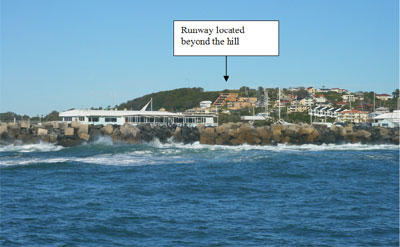
Figure 1. View of Coffs Harbour boat harbour northern breakwater from north-east.
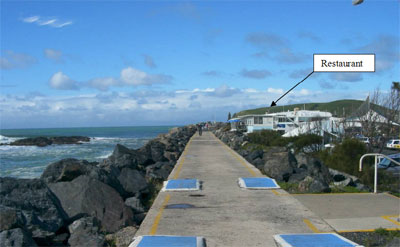
Witnesses on the northern breakwater of the Coffs Harbour boat harbour observed an aircraft appear out of the heavy rain and mist from the north-east. They reported that it seemed to strike the breakwater wall and then passed over an adjacent restaurant at a very low altitude before it was lost from sight. Wheels from the left landing gear were seen to ricochet into the air and one of the two wheels was seen to fall into the water. The other wheel was found lodged among the rocks of the breakwater.
Figure 2. Northern breakwater of Coffs Harbour boat harbour. King Air flight path was from left to right of picture.
During the go-around the pilot unsuccessfully attempted to raise the landing gear, so he reselected the landing gear selector to the 'down' position. He was unable to retract the wing flaps. It was then that he experienced a strong g-force and realised that he was in a turn. He saw that the primary attitude indicator had 'toppled' and referred to the standby attitude indicator, which showed that the aircraft was in a 70-degree right bank. He rapidly regained control of the aircraft and turned it onto an easterly heading, away from land. The inverter fail light illuminated but the pilot did not recall any associated master warning annunciator. He then selected the number-2 inverter to restore power to the primary attitude indicator, and it commenced to operate normally. The pilot observed that the left main landing gear had separated from the aircraft. He continued to manoeuvre over water while awaiting an improvement in weather conditions that would permit a visual approach.
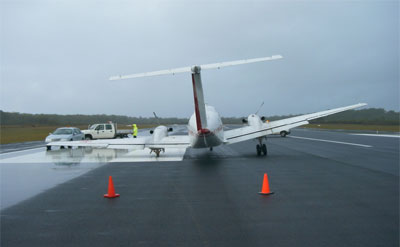
About 4 minutes after the King Air commenced the go-around, the aerodrome controller received a telephone call advising that a person at the Coffs Harbour boat harbour had witnessed an aircraft flying low over the harbour, and that the aircraft had '…hit something and the wheel came off'. The controller contacted the pilot, who confirmed that the aircraft was damaged. The controller declared a distress phase and activated the emergency response services to position for the aircraft's landing. Witnesses reported that the landing was smooth. As the aircraft came to rest on the runway, foam was applied around the aircraft to minimise the likelihood of fire. The occupants exited the aircraft through the main cabin door.
Aircraft damage
The left main landing gear oleo strut was severed, consistent with rapid rearwards bending. It was located in the water about 25 m to the north of the breakwater, with only one of the two wheels attached. The other wheel was found among rocks at the base of the breakwater. There were no impact marks on the tyres. The separation of the left main landing gear from the aircraft damaged the left inboard flap and resulted in an average flap asymmetry of 9 degrees. The impact force bent the right main landing gear rearwards about 5 degrees, but it remained attached to the aircraft. The nose landing gear and propellers displayed no evidence of impact damage.
Figure 3. King Air on runway 21 at Coffs Harbour.
The structural damage resulting from the impact with the sea or reef was consistent with damage sustained in a heavy landing. The impact forces damaged both engine nacelles and main landing gear wheel wells. The wing centre-section outboard ribs rear of the main spar and the lower fairing skins were buckled, and both ailerons were buckled outboard of the inboard hinge points. All of the upper and lower inboard wing assemblies were distorted. The inboard lower fuel tank linings were wrinkled and some fuel tank lining skins were cracked. The inboard wing leading edge upper skins were cracked, and the left wing leading edge upper skin and stringer were wrinkled.
The damage to the tips of the left propeller was consistent with their contact with the runway during the subsequent landing. About 40 mm of the upper left landing gear was ground away during the landing.
Pilot information
The pilot held an Air Transport Pilot (Aeroplane) Licence endorsed with the aeroplane type, and held a Class 1 medical certificate. He also held a command Instrument Rating (multi-engine aeroplane) with approval to conduct GPS NPA procedures. He was current on the aircraft type, and met GPS NPA recency requirements. He had 18,638 hours total flying experience, which included 1,460 hours on type. He was familiar with operating into Coffs Harbour, and had last flown there on the day prior to the occurrence flight.
The pilot reported no physiological or psychological conditions that may have affected his performance. He was within the limits of the operator's prescribed flight and duty time limitations. He said that he slept normally the previous night before rising at 0425 and signing on for duty at 0600 for the scheduled 0700 departure.
Aircraft information
The aircraft was equipped and certified for single-pilot IFR operations. Although the aircraft was fitted with an NPA-capable3 Trimble 2101 GPS receiver, there was no record of the Civil Aviation Safety Authority (CASA) approval required to authorise conduct of GPS NPAs in that particular aircraft. Installation of the GPS was consistent with the CASA requirements that provided for non-precision approach approval.4 However, that approval required a specific supplement that was not incorporated into the aircraft flight manual. Examination of the GPS receiver revealed that it was capable of normal operation, and that its data card was current at the time of the occurrence.
The counter drum-pointer altimeter5 on the pilot's instrument panel and the three-pointer altimeter on the right panel were tested and found to operate normally. Examination of the two independent static systems found no water or obstructions. Functional tests did not reveal any defects or anomalies. Both altimeter sub-scales were found set to the appropriate aerodrome QNH.6 Radar data, recorded down to 3,600 ft, indicated appropriate altitude keeping consistent with a correct QNH setting. Testing of the vertical speed indicator did not reveal any defects or anomalies.
The aircraft was equipped with an altitude alerting system to provide the pilot with visual and aural warnings 1,000 ft before reaching a preselected altitude and for deviations exceeding 300 ft when at a preselected altitude. The altitude alerting system was subsequently tested and found to operate normally.
The aircraft was fitted with a radio (radar) altimeter system that measured actual height above terrain and was able to provide a pilot with an alert when the aircraft reached a preselected height. However, the radio altimeter system was inoperative. This was recorded in the aircraft's maintenance release. The operator's B200 Minimum Equipment List (OMEL), which was approved by CASA, permitted the dispatch of the aircraft without an operative radar altimeter.
The aircraft had two inverters capable of independently supplying power to the main attitude indicator. A master warning and inverter inoperative annunciator indicated failure of an inverter. Flags and full nose-up indication warned a pilot of primary attitude indicator failure. Examination of the inverter number-1 system revealed that its circuit breaker in the left wing was open and, when reset during test, the system functioned normally. The circuit breaker was in a poor condition and operated erratically when tested. The investigation concluded that the circuit breaker had tripped as a result of the impact, but could not determine why there was no associated master warning.
The aircraft was fitted with an automatic flight control system that was capable of controlling the aircraft during the final approach of a GPS NPA.
The aircraft's automatic flight control system included a flight director. When the autopilot was not engaged, the flight director could be used to provide the pilot with attitude and pitch command cues. With an altitude selected, and armed on the altitude alerting system, the pilot would receive a main attitude indicator pitch command to capture and maintain the preselected altitude.
The wing flap system incorporated a safety mechanism that disconnected the power supply to the electric flap motor if any one of the four flap surfaces was 3 to 6 degrees out of phase with the other flaps. Failure of the flap to retract after the impact was consistent with operation of that safety mechanism.
The retractable landing gear was electrically controlled and hydraulically actuated. A safety switch on each main landing gear prevented inadvertent gear retraction by opening the retraction control circuit when weight was on the wheels. Failure of the landing gear to retract after impact was consistent with interruption of the retraction circuit resulting from the disruption of the left main landing gear.
The aircraft was not fitted with a ground proximity warning system, nor was it required to be.
Meteorological information
The Bureau of Meteorology (BoM) forecasts indicated that IMC were to be expected in the Coffs Harbour area. The applicable area forecast (ARFOR) predicted frequent showers over the sea and coastal areas, with localised heavy falls. Moderate turbulence was forecast below 5,000 ft. The Coffs Harbour aerodrome forecast (TAF) predicted that there would be periods of up to an hour duration when the visibility would reduce to 2,000 m in rain showers with broken cloud at 1,000 ft.
The BoM weather radar imagery recorded at Grafton showed that there were a number of large convective cells in the vicinity of Coffs Harbour at the time of the occurrence. There was no associated lightning activity, or any other indication of thunderstorms. Steady rain had fallen in the area throughout the morning prior to the occurrence and heavy rain was reported at the aerodrome shortly after the pilot of the King Air executed the go-around. During the morning, the recorded surface wind at the aerodrome remained a constant light south-south-westerly of about 8 kts, gusting to 12 kts.
A BoM analysis of the weather data indicated that one or more convective cells may have produced downdrafts that affected the aircraft, but the magnitude of any downdrafts could not be determined.
Witnesses sheltering at a caf on the northern breakwater near where the aircraft impacted the surface related that, although there was heavy rain, there were no significant wind gusts at the time of, or immediately following, sighting the aircraft. However, another witness who was working on a boat in the harbour reported that an umbrella was overturned by an easterly wind just after he observed the aircraft overfly the boat harbour.
The pilot commented that the descent and approach had been flown almost entirely in cloud and rain showers with continuous moderate turbulence. Although he had briefly sighted the water at the commencement of the approach, he had not seen land or water throughout the approach or go-around. The pilot indicated that prior to joining the approach he had noticed some weather radar returns, but the intended aircraft track was clear of those areas.
The pilot of the preceding aircraft commenced a runway 21 VOR instrument approach at about 2219. He advised that the heavy showers on the outbound leg were the worst he had 'ever experienced' and that his aircraft was still in cloud and rain on arrival at the MDA.
The pilot in command of a Dash 8 aircraft which landed on runway 03 about 5 minutes after the pilot of the King Air executed the go-around, reported that he could not see the far end of the runway during the landing, and that there appeared to be '…a sheet or wall of water' to the north of the aerodrome. That pilot also reported that after shutdown, the rain '…was torrential'.
The Australian Transport Safety Bureau (ATSB) investigation into a B737 microburst encounter during heavy rain conditions associated with an intense thunderstorm at Brisbane on January 2001 (VH-TJX, BO/200100213) highlighted that significant aerodynamic penalties may be imposed on an aircraft during flight through heavy rain. Those penalties can be sufficient to substantially degrade the flight performance of an aircraft.
GPS Non-Precision Approaches
The GPS NPA provided the pilot with track guidance to the runway via a series of pre-programmed waypoints. Track information was displayed on the pilot's Horizontal Situation Indicator (HSI) as a left or right deflection of a Course Deviation Indicator (CDI) needle. In the absence of electronic vertical course guidance, a series of descending steps, shown on the profile diagram of the approach chart, provided the pilot with terrain clearance guidance.
Civil Aviation Advisory Publications (CAAPs) provided information on relevant regulatory requirements relating to a variety of matters. The CAAPs were intended to aid in the understanding of, and compliance with, regulatory requirements. CAAP 178-1(0), published after the occurrence in October 2003, provided information on non-precision approaches. In the information relating to descent gradients, the following advice was provided:
For an approach to be safe the descent gradient should be neither too steep, nor too shallow. A steep approach requires high rates of descent which are undesirable and increase the risk of inadvertent descent below critical altitudes.
More specifically, Aeronautical Information Publication related that:
Aircraft may commence a segment in excess of the specified commencement altitude provided that any upper altitude limitation is observed. However, rate of descent after the FAF [final approach fix] should not normally exceed 1,000 ft/min.
CAAP 178-1(0) also included advice that the International Civil Aviation Organization has:
… identified that many CFIT [controlled flight into terrain] accidents have occurred because pilots did not possess good situational awareness in regard to terrain beneath the approach flight path …
Controlled flight into terrain and approach-and-landing accident risk
Controlled Flight into Terrain occurs when an airworthy aircraft under the control of the flight crew is flown unintentionally into terrain, obstacles or water, usually with no prior awareness by the crew. According to the Flight Safety Foundation (FSF), CFIT is currently the greatest threat to air safety and is the primary causal event in the approach and landing accidents studied by the FSF Approach and Landing Accident Reduction (ALAR) Task Force.7 FSF analysis of 287 fatal approach-and-landing accidents between 1980 and 1996 showed that, of the accidents where data was available, 75 percent happened where a precision approach aid was not available or was not used.8
The consequences of CFIT are normally severe to catastrophic in terms of loss of life or severe injury and damage to property and/or the environment. All flights can be considered to be at moderate risk of CFIT, based on historical data relating to the frequency and consequences of CFIT accidents. As risk is dependent on consequences and likelihood of an event, the only way that CFIT risk can be reduced is for operators to ensure that the necessary defences are present to reduce its likelihood.
The ATSB has recently completed two investigations into CFIT accidents that involved destruction of the aircraft and loss of life to aircraft occupants (VH-FMN at Mt Gambier, BO/200105769 and IL-76 at Timor, BO/200300263). Both investigations referred to the FSF initiatives in approach-and-landing accident reduction, and the FSF checklist to evaluate CFIT risk as part of its international program to reduce CFIT events that present risk to aircraft, crews, and passengers.
The FSF ALAR Task Force has concluded, amongst other things, that:
establishing and adhering to adequate standard operating procedures (SOPs) and crew decision-making processes improve approach-and-landing safety
failure to recognise the need for a missed approach and failure to execute a missed approach is a major cause of approach-and-landing accidents
unstabilised and rushed approaches contribute to approach-and-landing accidents (FSF definition of stabilised approach is at Appendix B)
the risk of approach-and-landing accidents increases in operations conducted in low light and poor visibility
effective use of radio altimeters will help to prevent approach-and-landing accidents.
An ALAR Tool Kit, which comprised a unique set of pilot briefing notes, videos, presentations, risk-awareness checklists and other tools on compact disc is available from the FSF. In a news release, dated March 2003, the FSF expressed concern that, not everyone in the industry had taken note of the ALAR work.
Air traffic control approach procedures
The Manual of Air Traffic Services (MATS) Part 6.2.6, Approach Clearances, stated that:
Unless authorised to make a visual approach, an IFR flight must conform to the published instrument approach procedure nominated by ATC.
A controller shall not issue an air traffic clearance which authorises or requires a pilot to descend in IMC below the lowest safe altitude for the route segment in a manner different from that specified in:
a. … GPS Arrival procedures b. the procedures, plan and profile diagram of IAL [instrument approach and landing charts] charts published in AIP/FLIP Terminal …
MATS Part 3.4.2 further stated that:
When an aircraft will make an instrument approach, clearance for the approach should be issued at least 3 minutes before the procedure is expected to commence, or as a soon as conditions allow.
MATS Part 6.12.14 also noted that a temporary level restriction during an instrument approach can only be applied to civilian aircraft during practice [instrument] approaches in Visual Meteorological Conditions.
A clearance to conduct a GPS instrument approach authorises a pilot to descend from the IAF altitude to the minimum descent altitude and to continue to the airport for landing if visual, or to make a missed approach if unable to land or the pilot cannot see the airport.
Operator information
The operator was an aeromedical service provider that was contracted to provide crews and aircraft maintenance services for a 24-hour, all weather, aerial ambulance service based at Sydney airport. Instrument approaches promulgated for aerodromes in NSW were non-precision approaches except for Instrument Landing System (ILS) approaches at Sydney and Tamworth.
With regard to formal CFIT risk management at the time of the occurrence the operator reported that:
Pilots are required to watch the CFIT video which is viewed on appointment and annually as part of the recurrent training program. The pilots are issued with the CFIT brochures and checklist. The ALAR Tool Kit has not been used in the past.
The operator advised that, following the Mt Gambier CFIT accident involving VH-FMN (BO/200105769), the following action was initiated:
Synopsis of accident and conditions … included in February 2002 safety report
Flight Safety Foundation CFIT checklist conducted February 2002. Report and recommendations circulated by Aviation Safety Officer and adopted by Aviation Manager/Check & Training pilots.
All aircraft fitted with Flight Profile Annunciators
The operator's documented standard operating procedures did not specifically address, or were considered to be unclear in relation to, the following:
Stabilised approach parameters
Go-around and missed approach policy
Use of radio altimeter in conduct of non-precision approaches
Use of flight director in conduct of non-precision approaches
Use of autopilot in conduct of non-precision approaches.
1 Raytheon Aircraft Company superseded the Beech Aircraft Corporation as the manufacturer of King Airs. 2 Approach fixes are given a five letter designator to identify the fix in the GPS database and on the approach diagram. A copy of the approach diagram is at Appendix A. 3 TSO-C129 Class A1. 4 Airworthiness directive AD/RAD/61 GPS Installation for Non-Precision Approaches required compliance with Civil Aviation Advisory Publication (CAAP) 35-1(0). 5 Type of altimeter recommended in Annex 6 of Convention on International Civil Aviation (Chicago 1944) for aeroplanes operated in accordance with instrument flight rules. 6 The barometric pressure in hectopascals that enables an altimeter to show height above mean sea level. 7 Appendix A of the Flight Safety Foundation, Approach-and-Landing Accident Reduction Task Force, Operations and Training Working Group, Final Report (Version 2.0). 8 Flight Safety Foundation, Approach-and-Landing Accident Reduction Task Force, Analysis of Critical Factors During Approach and Landing in Accidents and Normal Flight, Data Acquisition and Analysis Working Group, Final Report (Version 2.0).
The Boeing 717 aircraft was departing Melbourne for Coolangatta on a regular public transport service. Following a normal take-off the pilot in command (PIC), the handling pilot, called for the landing gear to be retracted. A short time later, he noticed an amber warning appear on the airspeed scale on his primary flight display (PFD) screen. The PIC immediately reduced the aircraft pitch attitude in response to that warning. At about the same time, he noticed that the flaps/slats lever was at the `slats retract' position. The PIC immediately called for the flaps to be re-positioned, but the copilot selected the landing gear up. The PIC again called for the flaps to be re-positioned and the copilot then returned the flap selector to the take-off position. The PIC reduced the pitch attitude further. The airspeed then quickly increased to 15 knots above the reference speed (Vref) as the flaps reached the take-off position. The PIC re-established the normal climb attitude and the flaps and slats were subsequently retracted in accordance with the normal profile. The remainder of the flight was uneventful. Both the PIC and the copilot believed that the stick shaker had activated momentarily during the sequence.
Examination of the flight data recorder from the aircraft revealed the following:
Three seconds after the aircraft became airborne, and at about 30 ft above ground level, the flaps/slats lever was moved from the take-off position and the flaps began to retract.
One second later, as the flaps/slats lever reached the retract position, the stick shaker warning commenced. At that time the aircraft pitch angle was 18.6 degrees and the computed airspeed was 157 kts. Over the next three seconds, the stick shaker warning continued and the aircraft pitch angle reduced to 10.2 degrees. A second later the landing gear handle was recorded in the up position.
The flaps/slats lever began to move from the retracted position about one second after the landing gear handle reached the up position. The flaps reached the fully retracted position less than two seconds later, before immediately beginning to extend again. The slats began to retract but did not reach the fully retracted position before moving back to the extended position. The flaps/slats movement was accompanied by a very brief reactivation of the stick shaker and a further reduction in aircraft pitch angle to about 6 degrees. Computed airspeed at that time was 165 kts. The aircraft then began to accelerate and quickly returned to a normal climb profile.
One altitude loss of 5 feet, and lasting less than three seconds, coincided with the reduction in pitch angle that was made in response to the second stick shaker activation. At that time the aircraft was more than 240 ft above ground level. There was no altitude loss associated with the first stick shaker activation.
Interviews with the PIC and copilot did not reveal any obvious issue that might have led to the copilot retracting the flaps/slats instead of the landing gear. His work schedule, recent life history, and activities leading up to the occurrence were unremarkable. Against that background, the actions of the copilot appear to have been an `action slip', a type of procedural error associated with two actions (landing gear and flaps/slats retraction) that are sequentially linked. As was the case here, in human behaviour there can sometimes be a `spill-over' that triggers the associated action at an inappropriate time.
Primary flight displays are liquid crystal screens that provide attitude, airspeed, altitude, and heading information for each pilot. The airspeed is displayed as a vertical `tape' on the left side of the PFD screen. The aircraft is equipped with a stall warning system that alerts the crew of an `approach-to-stall' condition. The warnings are generated by angle-of-attack, horizontal stabiliser position, and flaps/slats position inputs to the flight control computer (FCC). The FCC displays amber and red sectors (the so-called amber foot/red foot) on the airspeed tape to warn of an `approach-to-stall' condition. The FCC also activates the stickshaker. If the crew does not initiate recovery action, red STALL annunciations appear on the PFDs, a klaxon sounds, and a synthetic voice `stall' warning is activated.
In this occurrence, by reducing the aircraft pitch angle, the PIC responded appropriately and very rapidly to the `amber foot' warning that appeared on the speed tape as soon as the flaps/slats lever was moved from the take-off position. As a result, the aircraft moved from a deteriorating and potentially unsafe flight performance regime to a safe one.
Anecdotal evidence was received early in the investigation that there may have been other inappropriate/inadvertent flap/slat selections in B717 aircraft. As a result, and in cooperation with the operator, a survey was issued to company pilots who flew the aircraft. The survey revealed three other instances of the flap/slats lever being moved through the flaps zero position to the slats retract position. However, all those events occurred above 3,000 feet altitude during initial `clean-up' flap retraction after take-off and the error was recognised and corrected on each occasion. None was associated with landing gear selection after take-off.
In response to the occurrence, the company amended its procedures for flaps/slats retraction approaching the ramp after landing to include the following CAUTION note:
`When retracting flaps/slats to UP/RET, pause at the UP/EXT position until the flaps indicate UP on the PFD prior to retracting the slats. Never move the flap/slat handle to UP/RET in one motion.'
The purpose of the change was to separate the retraction of the flaps and slats into two distinct actions, in an attempt to prevent the retraction of the flaps and slats becoming `learned' as a single continuous action.
The operator has advised that its fleet type operating committee will review the approach checklist procedure, but that any proposed changes will require negotiation with the aircraft manufacturer because the operator's policy is to maintain its checklists consistent with the manufacturer's.
The operator is also examining using this event as a training discussion item for fleets with analog altimeters and will publish an account in its in-house safety magazine or operations newsletter.
Analysis
The non-selection of the QNH on the altimeter subscale and the incorrect selection of the radio frequency probably resulted from a combination of a number of factors. These included the:
preoccupation of the first officer,
possible slightly degraded performance by the pilot in command due to impending illness,
interrupted checklist procedures, and
high workload being experienced by the crew as a result of the meteorological conditions, works in progress and changed conditions at the airfield, and the amended approach requirements.
It could not be established whether the pilot in command's experience with the newer generation cockpit displays contributed to him missing the incorrect altimeter subscale setting. However, if the aircraft had been equipped with a similar display, then the missed changeover from QNE to QNH may not have occurred.
Organisations require multiple defences to prevent hazards, such as human error, from becoming accidents. These defences may include procedures, training and equipment design. In this case, although procedures failed to stop the aircraft from descending below 10,000 ft with the incorrect altimeter subscale, other procedures such as the mandatory missed approach and the culture encouraging missed approaches prevented the error from compounding.
Summary
The Boeing 737 was on a scheduled service from Adelaide to Melbourne. The crew had flown a standard arrival route to a locator/distance measuring equipment approach to runway 27. The weather at the time was overcast with the cloud base at about 2,000 ft with drizzle. Extensive airport works were being conducted on and near runway 27. When the aircraft encountered visual conditions, the pilots found the aircraft high on the approach and attempted to regain the glide path by increasing the aircraft's rate of descent. As the aircraft approached 500 ft above ground level, the rate of descent was assessed as too high and the first officer called for a missed approach to be conducted, which was carried out by the pilot in command.
The aerodrome controller (ADC) instructed the pilot to maintain runway heading, to maintain 3,000 ft, and to call the departure controller radio frequency. Approximately 1 minute later, the departure controller advised the ADC that no radio contact had been made with the aircraft. Subsequent attempts to contact the pilot by radio on several other frequencies were unsuccessful. The departure controller also noted that the aircraft had climbed to 3,400 ft. After approximately a minute, the pilot re-established radio contact with the ADC and advised that he was unable to contact the departure controller. The ADC instructed the pilot to climb to 5,000 ft and to attempt to call the departure controller. The aircraft was observed to climb to 5,400 ft and subsequently the pilot established radio contact with the departure controller.
The pilots thought that the reason why they had been high on the approach was because they incorrectly transcribed the information from the operator's internal notice to airmen (INTAM) regarding amended procedures due to the aerodrome works. The departure controller requested the pilots to confirm the aircraft's altitude and it was during this check that the pilots realised that the barometric settings on the altimeters had not been set to the airfield QNH of 1028 hectopascals (hPa) but rather had been left on 1013 hPa; the setting required for flight above the transition altitude (10,000 ft.) As a result, the aircraft altimeters had under-read by about 450 ft. Once the pilots had corrected the error, the subsequent approach was conducted without further incident.
QNH is the mean sea level pressure derived from the barometric pressure at the station location. The local QNH at an airport is normally derived from an actual pressure reading. Australian aviation regulations require that, when an accurate QNH is set on the pressure-setting subscale of an altimeter planned for use under the Instrument Flight Rules, the altimeter(s) should read the nominated elevation to within 60 ft. QNH should be set on the altimeter pressure-setting subscale of all aircraft cruising in the altimeter setting region, which extends from the earth's surface to the transition altitude of 10,000 ft in Australia. QNE is the standard pressure altimeter setting of 1013.2 hPa that is set for flight above the transition altitude.
The works and consequent limitations on the use of the runway were detailed in a notice to airmen (NOTAM) and in an Aeronautical Information Publication Supplement (AIP/SUP). Some of the restrictions and amendments to the runway 27 usage included a displaced threshold, the installation of a precision approach path indicator (PAPI) vice the normal T-VASIS (which was unavailable) and non-availability of the high intensity approach lighting.
The first officer's experience was primarily on the 737-400 and the pilot in command had primarily flown the newer 737-800, which was equipped with significantly more integrated and up-to-date cockpit displays compared with the 737-400. One of the altitude indication features available on the 737-800 primary flight display (PFD) automatically highlights, in boxed amber, the barometric setting if the STD (Standard) QNE, rather than the local QNH is set and the aircraft descends through the transition flight level. The electronic altimeter is connected to the aircraft's flight management computer (FMC) and therefore can register if the subscale has been changed or not by reconciling the altitude to the database transition and whether or not STD is still set. The 737-400 cockpit displays did not have a similar indication because the altimeters are not connected to the FMC database that includes the aerodrome transition level/altitude information.
Both pilots were on the third consecutive day that required a 0600 departure. They both reported retiring the previous evening between 2000 and 2100. The first officer reported that he had some preoccupation with health issues involving his child. The pilot in command reported that on a later sector that day, he began to feel unwell, experiencing flu-like symptoms.
The instrument approach conducted by the crew was an operator-modified version of the published procedure. The amended approach was issued via a company INTAM that raised the published minimum DME altitudes by 73 ft. Because the modified approach was issued via text rather than a chart, the crew was required to transcribe the changes from the INTAM to their own in-flight briefing notes and they reported that they had taken some effort to ensure that they had transcribed the amendments correctly.
The operator had a sterile cockpit policy that applied from when the fasten seat belts sign was illuminated to when the landing gear was lowered. During this period, the cabin crew was not to contact the technical crew on the flight deck unless an urgent safety-related message needed to be passed. The fasten seat belts sign during this approach was illuminated at 20,000 ft.
The operator's pilots recall the checklist by referring to information listed on the yoke of the aircraft controls. A sliding marker was used to indicate where a checklist procedure was suspended to assist the pilots to regain the place in the checklist. In this case, the descent approach checklist included:
Anti-Ice ON/OFF
Air Cond & Press SET
Altimeters & Instruments SET & X-CHECKED
N1 & IAS Bugs CHECKED & SET
The operator's flight crew training manual required the descent approach checklist to be initiated during the descent and completed passing 10,000 ft. In practice, to enable a crosscheck of the altimeter settings, the pilots were required to stop the checklist at `Altimeters & Instruments' until the aircraft had descended below the transition altitude.
The pilots reported that after sterile cockpit procedures had been invoked and while they were conducting the descent approach checklist, a cabin attendant mistakenly contacted them on the intercom. The barometric subscales on the altimeters were not adjusted after they had recommenced the checklist following descent through the transition altitude.
A later opportunity to correct the missed check was lost when the pilots reported that they had crosschecked the altimeter settings and indications during the approach but they did not notice that the QNH had not been set. When the aircraft became visual at about 5 NM on final approach, the PAPI indication was four whites, indicating that the aircraft was high on glidepath. On seeing the airport, the pilots momentarily accepted the PAPI glidepath indication as being normal, as it was what they would have expected to see for an `on-glidepath' indication when using the T-VASIS.
Although they quickly realised their misinterpretation of the PAPI indication and the pilot increased the rate-of-descent to correct the aircraft's approach profile, the crew were unable to regain the normal approach as they approached 500 ft height above touchdown (HAT). Consequently, they conducted a missed approach as prescribed in the operator's flight administration manual. The manual advised pilots that an approach should be stable by 1,000 ft HAT and if the approach was not stable by 500 ft HAT, then a missed approach, or go-around, was to be conducted. The operator also stated in the manual that, `Flight Crew are encouraged to perform a Missed Approach whenever any doubt exists to the safe continuation of an approach and landing'.
The pilots reported that when pre-setting the frequency it was possible to dial the frequency on the radio control too quickly and the selection could overshoot by 0.25 megahertz. They reported that after they selected what they thought was the departure controller's frequency, the frequency channel appeared too quiet so they returned the selected frequency to the ADC frequency where they regained communications.
The operator reported that the general management processes taught to the company pilots were based on prioritising response and sequence management. This was associated with almost all of the training conducted by the operator, particularly during simulator training.
Airservices Australia has advised the ATSB that they are conducting an in-depth review of Hazard Alerting procedures.
Bureau of Meteorology
The Bureau of Meteorology has advised the ATSB that they are considering including all wind gust information in METAR and SPECI reports.
The Operator
The aircraft operator has provided a report on this incident to all flight crew to remind them of the dangers of operating near thunderstorms at night, and to monitor the weather radar in these conditions, even when there are no visual cues that a thunderstorm is present. The operator also provided a weather radar training CD to all company flight crew.
Previous occurrences and recommendations
The ATSB recently released reports of the investigations into three occurrences that involved flight by regular public transport aircraft into convective weather. For further information, readers are directed to ATSB occurrence investigations 200100213, 200105157 and 200201228 and associated safety recommendations. Copies of these reports are available from the ATSB website, , or from the Bureau on request.
The following recommendations, along with responses and the current ATSB classification of those responses, also relate to the circumstances of this occurrence.
R20020170 - The Australian Transport Safety Bureau recommends that Airservices Australia increase the emphasis in its controller training programs to ensure that all appropriate sources of weather information, such as meteorological forecasts, controller observations, radar information, and pilot reports are provided to pilots.
The following response dated 29 January 2003 was received from Airservices Australia:
It is believed that current procedures already adequately cover the issues identified in the recommendation, however a Review of controller weather training will be undertaken by ATCC and upgrade action taken as required.
A further response, dated 13 April 2004, was received from Airservices Australia. That response advised:
A training package has been developed which is used in ab-initio course and is also included as a topic available for refresher training.
Response status: Closed - Accepted
R20020175 - The Australian Transport Safety Bureau recommends that the Civil Aviation Safety Authority ensure that operators increase the emphasis in their initial and periodic recurrent training programs on the effective use of all available sources of weather information, such as pre-flight meteorological briefings, ATIS broadcasts, controller-provided reports, airborne weather radar, and visual observations, and provide detailed guidance to pilots regarding the degradation on aircraft performance during flight through intense convective weather, and operational decisions involving take-off and landing operations which could expose a flight to hazardous weather conditions.
The following response dated 22 March 2003 was received from the Civil Aviation Safety Authority:
CASA acknowledges the intent of this recommendation and advises that while this is normal practice within the industry, the Authority will consider including an article on this topic in a future edition of the Flight Safety Australia magazine.
ATSB Note: The August 2002 edition of CASA's Flight Safety Australia magazine included an article on the 1 June 1999 McDonnell Douglas MD-82 convective weather-related accident at Little Rock, Arkansas. The October 2002 edition of the Flight Safety Australia magazine included an ATSB article on the effects of microburst events on aircraft performance.
Response status: Closed - Accepted
R20020177 - The Australian Transport Safety Bureau recommends that the Civil Aviation Safety Authority place greater emphasis on the hazards of low-level flight through thunderstorms and on the effect of windshear encounter during initial and periodic recurrent training programs for all pilots.
The following response dated 22 March 2003 was received from the Civil Aviation Safety Authority:
The Authority acknowledges the intent of recommendations R20020175 and R20020177. It addresses the matters raised in these recommendations through its education programs. A meteorological module is included in the Authority's programs. For example, a module called WeatherWise is included in the Flight Safety Roadshows. It covers a wide range of adverse weather situations including thunderstorms and microbursts and emphasises the importance of pre-flight weather briefings.
Response status: Closed - Accepted
R20020179 - The Australian Transport Safety Bureau recommends that the Civil Aviation Safety Authority ensure that operators of aircraft equipped with weather radar provide pilots with initial and periodic recurrent training on the use and interpretation of weather radar, and its limitations.
The following response dated 22 March 2003 was received from the Civil Aviation Safety Authority:
CASA acknowledges the intent of this recommendation and advises that while this is normal practice within the industry, the Authority will consider including an article on this topic in a future edition of the Flight Safety Australia magazine.
A further response from CASA, dated 10 May 2004, advised that an article on the use and interpretation of weather radar and its limitations would be included in a future edition of the Flight Safety Australia magazine.
Response status: OPEN
1 Global Positioning System/Non-precision Approach
Significant Factors
The crew lost directional control of the aircraft on the runway after landing due to thunderstorm-related strong wind and reduced visibility in heavy rain.
The crew did not refer to the on-board weather radar during final approach.
The crew was not provided with relevant information regarding the Emerald weather of which BoM and Airservices were aware.
BoM processing of METAR and SPECI information, along with Airservices procedures for passing operational information to flight crew during flight, reduced the likelihood that SPECI reports would be transmitted to the crew.
Analysis
The recorded flight data indicated that the influence of the left to right lateral acceleration immediately prior to, and just after, touchdown was sufficient to overcome the countering influence of the aircraft's orientation and the rudder position. Information regarding the prevailing weather conditions, along with the recorded flight data, indicated that the aircraft encountered significant windshear immediately before touchdown. The crew were unable to prevent the aircraft from touching down prior to their intended touchdown point. The windshear was accompanied by very heavy rainfall which reduced visibility to such an extent that the crew lost visual reference with the runway centreline and were unable to maintain directional control of the aircraft. Both the windshear and the heavy rain were characteristic of thunderstorm activity. The wet runway would have reduced the coefficient of friction between the aircraft's tyres and the runway surface.
The crew was surprised by the sudden and significant change in the weather conditions at the time of landing. Had they been aware of the proximity of the thunderstorm to the aerodrome, they would probably have delayed their landing until conditions improved. Against that background, it is relevant to discuss the information the crew was aware of regarding the thunderstorm.
The 1827 SPECI that the crew received at 1831 indicated that the Emerald weather had changed significantly from that reported in the 1800 Emerald METAR. Subsequent events indicated that the crew took a number of steps to gain further information regarding the Emerald weather.
The dark night conditions and absence of lightning activity when the aircraft was on final approach prevented the crew from visually assessing the location, size, and movement of the thunderstorm. The crew therefore had to rely on other sources of information regarding the storm.
The crew confirmed the presence of weather, consistent with a thunderstorm, near Emerald from the aircraft's weather radar, which provided an explanation for the change in conditions advised in the 1827 SPECI.
The dark conditions may have limited the value of the company agent's assessment regarding the movement of the thunderstorm. Nevertheless, the agent's advice that the storm would pass west of the aerodrome probably contributed to the crew's decision to continue the approach.
The crew's report that they could see the runway lights throughout the approach indicated that there was little, if any, rain or cloud between the aerodrome and the aircraft during that period. Those conditions would have strongly reinforced the crew's apparent perception that the thunderstorm posed no hazard to the progress of the flight.
Considering what the crew knew about the weather conditions at Emerald, their decision to continue the approach was reasonable. However, BoM and Airservices were aware of additional information about the weather conditions at Emerald, and further information was probably available from the aircraft's onboard weather radar. This additional information was potentially significant in the context of the flight crew's decision-making.
Despite the lack of detailed information available to the investigation regarding the speed and direction of movement of the thunderstorm, it seems very likely that it was close to the aerodrome during the aircraft's final approach. Therefore, it is possible that additional use of the aircraft weather radar during that period may have enabled the crew to better assess the conditions ahead.
Had the crew received all the SPECI reports as transmitted by the Emerald AWS (including all the wind gust data), their awareness regarding the significance of the thunderstorm activity may have been greater. In turn, that may have prompted them to seek more information, for example by reference to the weather radar, and/or amend their arrival procedure.
Because the controller did not have visibility or cloud height data for Emerald (the two parameters that generally determine alternate minima), the information available to the controller to assess whether the SPECI reports justified a hazard alert was incomplete and reduced the likelihood that a hazard alert would be issued. Even if visibility and cloud height information was available, the additional information the controller required to determine if a weather report such as a SPECI indicated that conditions had deteriorated below the alternate minima was not easily accessible, and reduced the likelihood that a hazard alert would be issued.
BoM removed from SPECI reports data on wind gusts that were not 10 kts or more greater than the mean wind speed. Therefore, information was not available to the air traffic controller, which may have influenced the controller's decision whether or not to pass the SPECI reports to the flight crew.
The 1842 and 1846 SPECI reports indicated a rapid and significant change in wind direction, characteristic of thunderstorm activity. The MATS requirement that a hazard alert should only have been issued if conditions were unexpected and critical reduced the likelihood that such SPECI reports would be passed to flight crew, even though there are occasions when such information constitutes a safety hazard. For example, if the wind had backed after 1827 rather than veered, the aircraft would have encountered a significant tailwind during the landing.
At 1852, four minutes after the crew advised that they were changing to the Emerald MBZ frequency, and coincident with the aircraft's estimate for arrival at Emerald, Airservices received a SPECI report which indicated that the wind had veered a further 20 degrees and the gust strength was 31 kts. The controller did not pass that SPECI report to the crew. The MATS requirement that hazard alerts be directed to aircraft maintaining continuous communications with ATS reduced the likelihood that the SPECI report would have been passed to the crew. The crew were still monitoring the area frequency, even though they had earlier advised that they were changing to the Emerald MBZ frequency.
The occurrence resulted in minor damage to the aircraft. Had the aircraft encountered the windshear slightly earlier in the approach, at a point where there was insufficient altitude available for the crew to establish a positive rate of climb and go around, the consequences of this occurrence could have been far more serious.
The recorded rainfall rate was within the BoM classification of `violent'. Visibility in such conditions would have been very limited and the benefit of windscreen wipers in such conditions was probably marginal at best, as indicated by the loss of visibility reported by the crew when they encountered the heavy rain. Therefore, the failure of the first officer's wiper when high wiper speed was selected was unlikely to have contributed significantly to the loss of directional control.
Flight crew are generally in the best position to assess the significance of operational information such as weather reports. However, currently the responsibility for assessment and transmission of such information remains with air traffic controllers. This situation is likely to exist until advanced technology systems for the provision of operational information direct to flight crews are available. One such system, an airborne internet communication system, is part of the US National Aeronautics and Space Administration-led Small Aircraft Transportation System project.
Summary
On 1 May 2003, the de Havilland Canada Dash 8-200 aircraft was conducting a scheduled public transport flight from Brisbane to Emerald, with a night landing at Emerald. The crew was aware of a thunderstorm near Emerald, but did not refer to the weather radar during final approach. As the captain flared the aircraft for landing, the crew lost virtually all external visual reference as the aircraft encountered very heavy rain. After the aircraft touched down at 1856:17, the right main gear and nose gear departed the right side of the runway.
The captain regained the runway, but was unable to identify any markings associated with the runway centre line, and the aircraft departed the left side of the runway, with all three landing gear leaving the sealed surface. The crew subsequently returned the aircraft to the runway. The crew was unable to maintain the aircraft on the runway after landing because of thunderstorm-related reduced visibility and strong wind. Between 1842 and 1851, the Emerald automatic weather station issued three special weather reports (SPECIs) that indicated rapidly changing conditions at Emerald aerodrome. Flight crew could not access the SPECI reports directly. The crew relied on the air traffic controller to inform them of any relevant operational information such as SPECI reports, however the controller did not provide any of the three SPECI reports to the crew. Air Traffic Service hazard alerting procedures reduced the likelihood of the controller passing the SPECI reports to the flight crew.
Occurrence summary
Investigation number
200301941
Occurrence date
01/05/2003
Location
Emerald, Aero.
State
Queensland
Report release date
30/06/2004
Report status
Final
Investigation type
Occurrence Investigation
Investigation status
Completed
Mode of transport
Aviation
Occurrence class
Serious Incident
Highest injury level
None
Aircraft details
Manufacturer
De Havilland Canada/De Havilland Aircraft of Canada
On 4 April 2003, an Airbus A330-200, registered VH-EBA, was being readied for departure for a flight from Sydney to Melbourne. The flight crew was provided with the load sheet based on information about the intended number of passengers and the amount of freight to be carried onboard the aircraft. The two forward left aircraft doors (DL1 and DL2) were closed in preparation for the pushback from the terminal, and the airbridges providing access to doors DL1 and DL2 were retracted clear of the aircraft. The flight crew notified the ground engineer that departure was imminent. They completed the `Before Pushback or Start' checklist, and verified that the aircraft doors were closed on the `DOOR/OXY' page on the system display of the electronic centralised aircraft monitoring (ECAM) system.
The passenger and baggage counts were lower than had been expected, and the aircraft weight and balance data differed from the load sheet that had been provided to the flight crew. The assigned load controller reconciled those differences by reassigning seating of passengers to restore the aircraft into an `in trim' configuration, and transmitted the final load sheet to the flight crew. However, although the seating reallocation had been performed in the computer system, those passengers had yet to be physically moved to their reassigned seats.
The airbridge servicing door DL2 was returned to the aircraft to allow the ground-based service agents to supervise the movement of the passengers to their reassigned seats. The cabin crew customer service manager (CSM) reopened DL2 to allow the ground-based service agents to board the aircraft without seeking permission from the pilot in command. The operator's procedures specified that: `If a door must be re-opened, the Customer Service Manager must request permission from the captain prior to re-opening a door'.
The ground engineer supervising the dispatch of the aircraft was standing at the nose of the aircraft, and did not notice that the airbridge had been returned to door DL2. The operator's procedures specified that: `If access is required to the cabin once the aircraft has been cleared to the dispatching engineer, clearance must be sought from the captain through the engineer'.
The ground engineer was not informed that the airbridge had been returned to door DL2, and clearance to open the door was not sought. When door DL2 was re-opened, the DL2 door symbol on the ECAM `DOOR/OXY' synoptic would have changed from green (closed and locked) to amber (door not locked). The amber door indication (door not locked), which was suppressed when the door was closed, would also have appeared on the ECAM `DOOR/OXY' synoptic. Those were the only visual indications available to the flight crew to indicate that door DL2 had been re-opened. No aural warning would have accompanied those changes to the ECAM `DOOR/OXY' synoptic, because the aircraft engines had not been started. The flight crew had previously verified that the aircraft doors were closed, and there was no requirement for them to conduct another check of the doors before commencement of the pushback.
The flight crew obtained clearance for pushback from air traffic control and the pushback from the terminal was commenced. As the aircraft moved rearwards, the opened door DL2 impacted the airbridge. The door and airbridge were deflected into the aircraft fuselage, causing significant damage to the fuselage skin and associated structure. Damage to the airbridge was limited to surface scraping and associated paint loss.
None of the passengers, crewmembers or ground personnel were injured.
The operator conducted an investigation into the incident, and determined that a number of individual/team actions, task/environmental conditions and organisational factors had contributed to the development of the occurrence. In addition, the operator's investigation identified a number of procedural and training deficiencies, particularly in the areas of cross-functional communication and coordination.
As a result of its investigation into this occurrence, the operator conducted a fleet-wide review of its airbridge return and aircraft door opening procedures. That review has resulted in amended procedures that ensure improved communication and coordination between departments sharing responsibility for the dispatch of company aircraft.
The kit supplier advised that several constructors had adapted commercially available governor units and fitted them to Safari helicopters. The kit supplier reported that a governor system was in development for future use in their Safari helicopters.
The kit supplier also advised that an improved rotor speed tachometer, with an expanded operating band for better interpretation, was being developed. A warning system that included both audio and visual alarms was to be incorporated into the tachometer. The RPM limits marked on the tachometer, and the alarm settings, were adjusted to indicate a low rotor RPM between 400 and 460 RPM and an overspeed condition above 502 RPM. Normal operation was between 461 and 501 RPM. When testing has been completed, the tachometer and warning system will be made available to Safari owners and to kit constructors.
As a result of this investigation the Australian Transport Safety Bureau issues the following Safety Advisory Notice.
Safety Advisory Notice SAN20040076
The Australian Transport Safety Bureau advises constructors of Canadian Safari and other lightweight helicopters to review the safety benefits of installing an engine speed governor.
Safety Advisory Notice SAN20040077
The Australian Transport Safety Bureau advises constructors of Canadian Safari and other lightweight helicopters to review the safety benefits of providing discernibly different aural warning tones to differentiate between main rotor RPM overspeed and underspeed conditions.
Analysis
Damage to the main rotor system was consistent with both main rotor blades having failed in upward bending overload, in excess of design limits, and the main rotor diverging from its normal plane of rotation and contacting the tail boom and canopy.
Examination of the helicopter and its transmission and rotor systems found no evidence to indicate any pre-existing defect that could have contributed to the in-flight break-up. Witnesses reported hearing the engine running before and after the break-up occurred.
The pilot was seen waving just moments before the helicopter broke up. The investigation was unable to determine if flight control input by the pilot or passenger, or lack of corrective control, had contributed to the development of the accident. Although either low rotor RPM or abrupt manoeuvring can result in air loads on the blades exceeding their design limit, the reason for the excessive upward bending of the blades could not be determined.
The NTSB special investigation report NTSB/SIR-96/03 - Robinson Helicopter Company - loss of main rotor control accidents, which analysed accident data from 31 fatal accidents, concluded that in the absence of any evidence of defects or component failures, other possible factors such as the sensitivity and responsiveness of the helicopter's flight controls combined with limited pilot skills, proficiency, or alertness, be considered. Although that report concerned a different helicopter type from the Safari, its conclusions were directed to all lightweight helicopters with sensitive and responsive controls, characteristics shared by both types.
The installation of a governor and an aural low rotor RPM warning, as noted in the NTSB special investigation report NTSB/SIR-96/03 - Robinson Helicopter Company - loss of main rotor control accidents, had contributed to the greatly reduced incidence of low rotor RPM related accidents in that helicopter type.
Summary
Sequence of events
The pilot and a passenger of a kit-built Canadian Home Rotors Safari (Safari) helicopter, registered VH-VDB, operated as an experimental aircraft1, were making a private flight from the pilot's property to a nearby airstrip.
At about 1415 Central Summer Time, witnesses reported seeing the helicopter flying in a south-westerly direction. The Australian Transport Safety Bureau did not conduct an on-scene investigation of this occurrence. The report presented below was prepared principally from information supplied to the Bureau.
One witness, who knew the pilot, reported that he saw the helicopter commence a gentle left turn and the pilot waving2 to him moments before it broke up in flight. That witness also reported seeing the cockpit bubble shatter and a cloud of white dust appearing from the area of the cabin. Witnesses reported having heard the engine operating immediately prior to and following the in-flight break-up. Other witnesses heard a loud metallic sound, and described the helicopter almost stopping, pitching nose-up and a main rotor blade folding, before pitching nose-down and descending steeply. The helicopter collided with a large tree and a shed before impacting the ground at the rear of a residential house block. There was no fire. Both occupants were fatally injured.
Wreckage information
The main wreckage consisted of the forward part of the helicopter, main rotor and transmission assembly and the forward section of the tailboom. The tail rotor, its gearbox and the rear part of the tail boom had lodged in the roof of the shed beside the main wreckage. The rear section of the damaged tail rotor drive shaft was lodged in a tree.
Debris from the helicopter was distributed over a distance of approximately 100 m. Components from the tailboom, tail rotor drive system, fragments of acrylic windshield and items from the cockpit were found along the wreckage trail. A damaged section of the windshield exhibited rotational scuff marks consistent with a main rotor blade strike.
Evidence at the accident site was consistent with the main rotor blades being stationary at impact. Paint transfer and deformation of the tailboom tubing and corresponding damage to the leading edges of the main rotor blades, were consistent with the tailboom being severed by the main rotor blades at the second rearmost bay. A ballast weight was later found approximately 150 m northwest of the main wreckage site.
Examination of the engine did not reveal any sign of mechanical failure. The carburettor, magneto and ignition harnesses were damaged in the impact sequence and could not be tested. Environmental conditions at the time of the occurrence, when plotted on the Carburettor Icing Probability Chart, were in the moderate zone for cruise power settings.
Pilot information
The pilot held a private pilot licence (helicopter) endorsed with the Robinson R22 helicopter type. Records held by CASA showed that the pilot's class 2 medical certificate had expired on 31 January 2002. The pilot had flown an estimated total of 308 hours of which 241 hours were on the Safari helicopter. Postmortem and toxicology reports did not find any condition that would have affected the pilot's performance.
Examination of components
The flight control system was examined for integrity. Although many of the control tubes were bent and fractured, they were all correctly attached. A friction device was fitted to the pilot's collective control lever. All fracture surfaces, when examined, exhibited failure in overload, consistent with impact forces. One of the high-density plastic 'droop stops', found separate from the main wreckage, exhibited damage that indicated a significant in-flight main rotor grip impact.
The main rotor transmission, main rotor mast and main rotor assembly, including the main rotor blades, were removed for examination at the ATSB's technical laboratory. None of those components exhibited any identifiable pre-existing defect. However, during examination it was noted that neither of the pitch control horns had the indexing ball bearings installed. A detent, machined into each blade grip, allowed a ball bearing to align with a slot machined into the clamping surface of the pitch control horn. That was to facilitate accurate alignment of the flight controls during rigging. Although the reason for the missing pitch control horn indexing balls was not determined, the kit supplier advised that their use was not essential.
Both main rotor blades exhibited extensive permanent upward bending. The blades were constructed of an extruded aluminium leading edge spar to which was bonded an upper and lower carbon fibre skin. The area between the upper and lower skin behind the spar was unfilled, except for the trailing edges which were bonded with an expanded foam adhesive. The deformation of both blades was similar, although the leading-edge extrusion of one blade had fractured at two locations. Examination indicated that bending was consistent with both blades having been subjected to excessive air loads while the rotor system was powered. The examination concluded that when bending of the blades exceeded normal design limits, the rigid, less ductile carbon fibre skins, separated. The upper skins separated almost instantaneously, releasing the cloud of fine dust-like particles from the disruption of the foam bonding material.
Subsequent examination of the blades by an independent composite structure specialist found that the carbon fibre surfaces had separated from the spar due to shearing forces produced by excessive upward bending. The blades did not exhibit any pre-existing manufacturing defect or delamination failure in the composite material of the blades.
Centre of Gravity
The Centre of Gravity (C of G) of the helicopter was calculated to be within normal operating limits.
Experimental aircraft
Civil Aviation Regulation CAR (1998) Part 21.191 (g) permitted construction and operation of the kit-built Safari helicopter as an experimental aircraft solely for the education and recreation of the constructor. As the constructor of the major portion of the helicopter, the pilot was considered to be the manufacturer and was responsible for the acceptance and use of all the helicopter's components. That permitted the use and modification of components without the need for lengthy and expensive development normally associated with certification.
The helicopter kit supplier did not approve any modification or alteration to the Safari helicopter or its components, other than those made by the factory. The kit supplier reported that following any factory modification to the helicopter, an extensive program of hover and flight testing was undertaken before acceptance. They also recommended that when constructors made modifications or substituted components, a similar testing program to that used by the manufacturer should be adopted.
The pilot was reported to have modified and replaced some components that had been supplied as part of the kit. Although the kit supplier reported that many of the changes had been made in consultation with them, the absence of a complete set of component modification records for the helicopter did not allow the investigation to authenticate information about those modifications or the testing of them.
Experimental aircraft were not required to have a Flight Manual, but it was expected that sufficient information for the safe operation of the aircraft was available to the pilot. A copy of a Safari flight manual was with the pilot's documentation provided to the investigation team. The manual was not identified as being specific to VH-VDB and the accuracy of information contained in it could not be validated. The provision and accuracy of information relating to the operation of the helicopter was the responsibility of the constructor.
Main rotor speed
Main rotor speed was one of the critical factors that determined the amount of lift generated by the main rotor of a helicopter. Engine power provided the force to overcome the drag of the rotor blades and attain a specific main rotor RPM. The pilot controlled engine power via a twist grip throttle control on the collective control lever. Although a mechanical linkage, described as a correlator, automatically adjusted engine power to approximate the power requirement for the collective control position, the pilot was required to make minor adjustments with the twist grip throttle. Despite the installation of a collective lever friction lock, the helicopter was not fitted with a governor that automatically maintained engine RPM and therefore main rotor RPM.
The rotor speed limits in the pilot's copy of the Flight Manual for the Safari were a maximum of 520 RPM and minimums of 475 RPM (power off) and 450 RPM (power on). The Flight Manual cautioned pilots that catastrophic rotor stall occurred if rotor RPM dropped below 390 RPM. Low rotor speed could result in excessive rotor 'coning' and if uncorrected, would ultimately lead to blade failure from excessive upward bending. In the event of a low rotor RPM, the kit-supplier reported that 'A strong engine will allow recovery. Lowering collective will lessen the time required. Using less right pedal will also help.'
The pilot was reported to have developed a main rotor RPM warning system, after having experienced difficulty monitoring the kit-supplied dual-pointer, combined rotor and engine RPM gauge. The system was described as providing both aural and visual warnings. Visual warnings were provided by an indicator, installed on the centrally mounted instrument panel. A red light at the top of the display indicated rotor overspeed and an amber light positioned at the bottom of the display indicated rotor underspeed. Four green lights arrayed across the centre of the instrument illuminated sequentially to provide a rotor RPM deviation trend. A single tone was generated to indicate both overspeed and underspeed rotor conditions. The warning indicator was too badly damaged to determine its operating status. The damaged sender unit from the warning indicator was tested and found to provide a low rotor speed signal at 459 RPM and an overspeed rotor signal at 494 RPM.
A Flight Manual limitation stated 'Use maximum power-on RPM [520 RPM] during take-off, climb or level flight below 500 ft AGL or above 5,000 ft density altitude'. That had the potential of a main rotor overspeed warning remaining continuously activated while a pilot adhered to the recommended rotor RPM during the above-mentioned phases of normal flight.
Maintenance
As the constructor of the helicopter, the pilot was approved to carry out his own maintenance. The kit supplier reported that the pilot had received maintenance training on the Safari helicopter from the kit supplier's test pilot when he attended the constructor's property to conduct the initial flight tests. The pilot was reported to have performed his own maintenance, but no maintenance documentation, including the current maintenance release, was found. The kit supplier reported that the pilot seldom asked about the Safari maintenance but would contact them for information when needed. A Rigging and Balance Manual for the Safari was available to owners. That manual contained information about the flight control rigging and balancing and tracking procedures for the main and tail rotors.
The main rotor blades were manufactured in the US by a separate manufacturer and sold to the pilot by the Canadian kit supplier. The pilot's family reported that the main rotor blades were obtained as part of the helicopter kit. When unpacked, one of the blades was found to have a 2 mm depression on the upper and lower surfaces at the mid-chord position along most of the blade length. The pilot had contacted the kit supplier about the problem and the blade manufacturer subsequently advised that the increase in air pressure, between the pilot's near sea-level property and the significantly higher elevation of their US facility, had resulted in the slight depression. The blade manufacturer advised the kit supplier that the pilot should drill a small hole in the outer end of the blade to allow the pressure to equalize and then fill the hole. The pilot was reported to have performed the repair according to the instructions. Although the kit supplier had offered to replace the blades with a matched pair, the pilot subsequently used the repaired blade.
The pilot had recently replaced the pitch control bearings of each blade due to excessive wear. That required the removal and refitting of the main rotor blades. As noted in the Examination of Components, the indexing ball bearings had not been installed. The investigation was unable to determine if any misalignment between the pitch control horns had existed before the in-flight break-up occurred.
The pilot had reported to other constructors that he had experienced vibrations associated with the main rotor with either a near full fuel load, or with low fuel quantities. During the previous three months, four of the flight entries in the pilot's notebook were annotated as 'track and balance'. The pilot was reported to have also weighed and balanced the blades in an attempt to eliminate a possible source of vibration. A family member reported that the pilot was attempting to eliminate all the vibrations, not because of any risk to flight safety, but in order to satisfy a personal ideal. That family member reported that during a flight in the helicopter earlier that week it had flown normally. A damaged hand-held vibration analyser unit was found in the wreckage. When examined, the unit contained no stored data. No relevant record of track and balance data was found. It could not be determined if there had been any tracking and balance testing during the accident flight.
NTSB Accident study of light weight helicopters
In 1996 the United States of America (US) National Transportation Safety Board (NTSB) released special investigation report NTSB/SIR-96/03 - Robinson Helicopter Company - loss of main rotor control accidents. The report reviewed 31 occurrence reports where loss of main rotor control was identified but where no evidence was found of the specific event that caused or allowed the main rotor blades to diverge from their normal plane of rotation and strike the airframe. The report stated that the sensitivity and responsiveness of the helicopter's flight controls when combined with limited pilot skills, proficiency, or alertness could have been a factor in some of the 31 accidents the NTSB reviewed. Although the NTSB report was solely concerned with the R22 helicopter type, it noted the need for continued research to study flight control systems and main rotor blade dynamics in light weight helicopters with highly responsive controls.
The report also noted that in March 1995, the US Federal Aviation Administration (FAA) technical panel recommended that the R22 helicopter type be reconfigured with an electronic engine RPM governor. The report further recommended that in normal flight operations, switching the governor off should be prohibited. The manufacturer adopted those recommendations and fitted governors to their fleet. The NTSB report cited that those measures were some of the many that had subsequently resulted in a reduction to the R22 accident rate.
Experimental aircraft by their very nature are not type-certificated. Experimental is not a category per se, rather it is a designation. It is also important to note that an experimental certificate does not attest to an aircraft being fully airworthy, despite being grouped under the special Certificate of Airworthiness (CoA). The Experimental certificate system replaces some elements of airworthiness control previously covered by Civil Aviation Regulation 134 Permit to Fly, and Civil Aviation Order 101.31 developmental category CoA.
2The helicopter was flown from the left seat. When seated on the left side of the helicopter, the pilot's left hand operated the collective control and twist-grip throttle. The cyclic control was operated with the other hand and unlike the collective control, generally required constant input. 3The Safari helicopter had a relocatable 6.3 Kg ballast weight consisting of a lead filled stainless steel tube. The ballast weight was positioned according to the helicopter loading, to maintain the Centre of Gravity within permissible limits. Mounts were located on the forward section of the right landing skid and on the tail boom tubing in the second bay from the rear. When not required for helicopter trim, the ballast weight could be carried in the cabin. 4Bureau of Air Safety Investigation, Asia Pacific Air Safety Journal No. 22, June 1999. 5Coning is the upward bending of the blades caused by the resultant forces of lift and centrifugal force. At rest, the main rotor blades have a preset Coning Angle. As rotor RPM increases, the coning angle reduces due to the centrifugal force exerted on the blades. When weight is transferred to the blades, the lift produced by the blades increases, increasing the coning angle. Within the range of normal operating RPM, centrifugal force acting on the blades prevents excessive coning. 6Civil Aviation Regulation 42ZC(6) of CAR 1988 permitted authorised persons to conduct maintenance on the aircraft and engine. CASA Instrument 545/00, effective from 1 January 2001, gave that permission to constructors of kit built aircraft who fabricated and assembled the major portion of that aircraft and if the aircraft was used solely for that person's own education or recreation.
The Australian Transport Safety Bureau did not conduct an on-scene investigation of this occurrence. The report presented below was prepared principally from information supplied to the Bureau.
REPORTED INFORMATION
On 13 March 2003, while on final approach during a training flight, the crew of a Lear 45 aircraft, registered VH-SQR, reported feeling a severe vibration through their respective control columns, followed by a rapid 10 to15 degree nose-down pitch change. Attempts to manually trim the nose of the aircraft up failed, with both crew members required to pull back on the control columns in order to regain control of the aircraft.
A subsequent inspection of the aircraft by the operator's engineers revealed that the aircraft's horizontal stabiliser could be moved by hand, vertically, approximately four inches at the leading edge. On examination, the horizontal stabiliser actuator appeared normal, with all attachments in place. However, the actuator was found to have free movement of its shaft in and out of the actuator body. Further detailed examination indicated that the actuator's primary `Acme screw' had failed. With this screw failed, the horizontal stabiliser load should have been retained through a secondary rod, however, the threaded retaining nut had unscrewed from the rod.
The United States National Transportation Safety Board (NTSB) advised the Australian Transport Safety Bureau (ATSB) that they were conducting an investigation into the failure of the horizontal stabiliser actuator, and the ATSB appointed an Accredited Representative to that investigation.
As a result of the incident, the US Federal Aviation Administration (FAA) issued emergency Airworthiness Directive (AD) 2003-06-51, on 20 March 2003, requiring operators to conduct an immediate inspection of Lear 45 aircraft horizontal stabiliser actuators and to remove from service any actuators that were the same part number as the failed one.
The Australian Civil Aviation Safety Authority issued Airworthiness Directive 5/2003, on 21 March 2003, requiring all Australian Lear 45 operators to comply with the requirements of the FAA AD. Additionally, the actuator manufacturer completed a new actuator design and has since had the new actuator certified for fitment to all affected Lear 45 aircraft.
The US NTSB is yet to publish its final investigation report (number ENG03WA011).
The Civil Aviation Safety Authority has undertaken to assess the Australian fleet implications of the failure. They have also undertaken to develop advisory documentation or corrective actions as required, to address any safety of existing fleet issues that may be identified.
Analysis
The damage to the rod end was consistent with failure during the retraction of the landing gear after take-off at Gove. Disconnection of the left main gear from its push-pull tube meant that the gearbox was unable to extend or retract that gear. It also meant that the emergency gear extension was ineffective. Fatigue cracking within the rod eye section was the principal factor behind the separation of the push-pull tube and the subsequent failure of the landing gear to operate correctly.
The investigation was unable to determine why the rod end failed. It is possible that an increase in transmitted loads resulting from excessive system friction, system rigging problems or the failure of interrelated components could have contributed to the initiation of the rod end cracking.
The pilot was confronted with the high workload of maintaining control during night circuits and trouble shooting a landing gear malfunction. The night conditions meant that people on the ground were of limited help, at least initially, in determining the status of the landing gear. Landing the aircraft with the gear retracted allowed for some directional control during the landing slide and probably limited damage to the aircraft.
The release of the emergency exit on final approach had the potential to inflict serious damage to the tailplane with possible control problems resulting.
Summary
The pilot of a Cessna 310R made a night departure from Gove, NT, at 1900 Central Standard Time for Groote Eylandt, NT. After take-off he noticed two unusual thumps near the end of the landing gear retraction cycle. Normal landing gear up indications were observed and there were no unusual handling characteristics during the flight to Groote Eylandt.
The pilot reported that on arrival in the circuit area he selected the landing gear down. The landing gear operated but the left main landing gear down light did not illuminate at the end of the cycle. The pilot changed the down light bulb without change to the indication. He then cycled the landing gear by selecting up then down, which resulted in the left main and nose landing gear down lights not illuminating. The pilot spoke to ground personnel by radio and made a few low passes along the runway to allow them to observe and report on the condition and position of the landing gear. However, they were unable to see the position of the landing gear due to the darkness.
The pilot manoeuvred the aircraft in an unsuccessful attempt to free the landing gear. Further cycling of the landing gear and a manual landing gear extension were attempted without success. Emergency services, notified by air traffic services, attended and were able to provide enough illumination of the aircraft for observers to report that the nose gear was not extended, the left main gear was at an angle and the right gear appeared to be in the down position.
After consultation with a pilot on the ground and briefing the passengers, the pilot made an approach to runway 28 with the gear selected up and the flaps down. While on final approach the pilot unlatched the emergency exit and cabin door. The emergency exit, which consisted of the pilot's side window and associated frame, detached from the aircraft.
The aircraft made a smooth touchdown and slid on the runway. The pilot selected the mixture control to idle cut off and the fuel, magnetos, alternators and battery to off. The passengers exited through the cabin door and over the right wing and moved away from the aircraft. There was no fire, but the propellers and the underbelly of the aircraft were damaged.
Inspection of the aircraft by engineering personnel revealed that the rod end on the outer end of the left main gear inboard push-pull tube had separated, effectively disconnecting the left main landing gear assembly from the actuating mechanism.
Laboratory examination by the ATSB revealed that rod end separation had occurred under predominantly tensile forces after fracturing through one side of the eye section. Detailed examination of the fracture surfaces found characteristic evidence of fatigue cracking, originating from the outer corners of an integral lubrication port within the eye body. The examination found no evidence of any material or manufacturing defects having contributed to the failure.
There were no reports of previous landing gear problems.
The electro-mechanical landing gear system utilised a gearbox, driven by an electric motor, to turn two bellcranks that extended or retracted a push-pull tube to each landing gear assembly. A landing gear hand-crank provided an alternative manual means to drive the gearbox.
In the sub-section titled `EMERGENCY LANDING PROCEDURES', the Cessna 310R pilot's operating handbook (POH) specified unlatching of the cabin door prior to flare-out. However, there was no reference to in-flight unlatching of the emergency exit in any of the emergency checklists.
As a result of this occurrence, the Australian Transport Safety Bureau highlights to the helicopter industry articles regarding helicopter dynamic rollover, including:
Preventing Dynamic Rollover, Major Joseph H. Schmid, Flight Safety Foundation, Helicopter Safety, Volume 14, No.1, January/February 1989.
Dynamic Rollover: A new look at an old problem, CASA Flight Safety Australia, April 1999.
Dynamic Rollover, Peter Rogers, Heli-News Australasia, May 2003.
1The mobile HLS is referred to in this report as the 'mobile platform'. 2VH-MTX was flown from the left seat. 3The main rotor of these types rotate in the opposite directions, which require different ant-torque flight control input. 4Helicopter rotor blades are identified by a colour-coding system for maintenance purposes. 5Flight Safety Australia, April 1999, pp33-34. 6Done in: Dynamically, Captain J.P. Cress, USMC, Naval Postgraduate School.
Significant Factors
The pilot was not recently experienced on the occurrence helicopter type.
The pilot in command allowed the helicopter to move laterally during the lift-off to the hover.
The pilot in command did not raise the helicopter to a hover height sufficient to prevent contact with the mobile platform.
Analysis
Post-occurrence technical examination of the helicopter did not reveal any evidence of an airframe, engine or system fault that may have contributed to the accident. In addition, examination of the mobile platform did not reveal any evidence of it having moved throughout the rollover sequence.
The circumstances of the accident are consistent with the phenomenon known as dynamic rollover. Scrape marks from the helicopter's right skid were found on the lip along the right side of the mobile platform. That indicated that the helicopter was not raised to a height sufficient to clear the platform in the event of lateral movement. There was no wind reported at the time of the occurrence that could have contributed to the lateral movement. The pilot had extensive flying experience and normally flew a mix of different types, including a mix of European and North American types. Due to that experience, the investigation considered that confusion with respect to correct flight control input to control yaw was unlikely.
If the pilot had prevented the lateral movement of the helicopter during the lift off to the hover, and had raised the helicopter to a hover height sufficient to clear the platform, dynamic rollover would most probably have not occurred. Therefore, the investigation considered that the design or use of the mobile platform was not a factor in the occurrence.
The pilot had not flown a Bell 47 type helicopter during the preceding three months, and had not previously flown a turbine-powered Bell 47. It is likely that the pilot's lack of recency in the helicopter type, combined with his not having flown a turbine-powered Bell 47 previously, contributed to his:
not making sufficient flight control input to correct the right lateral movement during the lift-off to the hover
not raising the helicopter to a hover height sufficient to prevent contact with the platform.
The pilot's injuries were consistent with him being struck by the main transmission assembly as it separated from its mount as a result of the dynamics associated with main rotor ground contact.
Summary
History of the flight
At approximately 0830 EST, the pilot of the Bell 47G-4A turbine-powered (Soloy) helicopter, registered VH-MTX, was conducting a lift-off to the hover from a mobile helicopter landing site (HLS)1 at Caboolture aerodrome, when the helicopter rolled onto its right side. Weather conditions at the time of the occurrence were reported to be '…little or no wind, warm and humid, some cloud but clearing.' The helicopter was substantially damaged and there was no post-occurrence fire. The pilot, who occupied the left seat2, was fatally injured and the passenger, who occupied the right seat, sustained minor injuries.
Pilot in command
The pilot held an Airline Transport Pilot (Helicopter) Licence, a Commercial Pilot (Aeroplane) Licence, a Command Multi Engine Instrument Rating (CMEIR) (Helicopter), a CMEIR (Aeroplane), and a Grade 1 Instructor (Helicopter) Rating. According to his pilot flying logbooks, he had accumulated approximately 8,293 hours total flying experience, of which approximately 7,180 hours was on helicopters, including 14.8 hours on the Bell 47G helicopter type. He had flown 2.0 hours in the last 30 days and 15.7 hours in the preceding 90 days. His last flight prior to the occurrence flight was nine days previously in a Bell 206 type helicopter. He had last flown a Bell 47G type helicopter on 19 December 2002, including taking off from and landing back on the mobile platform involved in the occurrence. He had not previously flown a turbine-powered Bell 47G helicopter.
The pilot was endorsed to fly Bell 47G type helicopters in accordance with Section 40.3.0 of the Civil Aviation Orders (CAO). In accordance with paragraph 3.3 of those orders, he was permitted to fly turbine-powered Bell 47G helicopters without further endorsement. The operator also reported that, in accordance with paragraph 3A.4 of CAO 40.3.0, prior to the occurrence flight, the pilot was offered refresher training in the turbine-powered Bell 47G type, however the pilot declined that offer.
The pilot met the recency requirements of Civil Aviation Regulation 5.178, having completed CMEIR (Helicopter) and Instructor (Helicopter) Rating renewals on 13 May 2002, in a Bell 412 helicopter type.
Due to the nature of his employment, the pilot had flown 10 aircraft types in the preceding 12 months, of which 7 were helicopters. Those helicopter types included a mix of European and North American types, a mix of single engine and multi-engine types3, and a mix of turbine and piston engine types. Most of the pilot's helicopter flying experience was in turbine engine types. The pilot was experienced in operating helicopters from mobile platforms.
Passenger
The passenger was employed by the same organisation as the pilot in command. He was an experienced helicopter pilot, who reported that he had accumulated approximately 4,700 hours total flying experience, of which approximately 4,500 hours was on helicopters. He reported that he was not in current flying experience. According to witnesses, he did not have his hands or feet near the flying controls during the occurrence.
Medical information
The pilot's aviation medical certificate was valid and carried a restriction for him to have available reading vision correction. A review of his medical records, investigation interviews, results of the post-mortem examination and toxicological testing, found no evidence of pre-existing medical conditions or the presence of any substance that may have influenced his performance.
Survival information
Four-point restraint harnesses with inertia reel shoulder straps were fitted at the pilot and right side passenger positions. Post-occurrence technical examination revealed that they were firmly secured to their mounts, and the inertia reels appeared to operate normally. The pilot occupied the left seat and remained restrained during the rollover sequence. He sustained severe impact injuries to the rear of the upper torso and lacerations to the back of the head.
Helicopter information
Type: Bell 47 helicopter Model: 47G-4A (Soloy) Registration: VH-MTX Serial Number: 7765 Year of manufacture 1971 Engine: Rolls Royce 250-C18 Total time in service: Approximately 5,570 hours Maintenance release: Number 09425 issued 14/03/03 at 5,549.7 hours
The helicopter had been imported from Japan in October 2002, receiving an Australian Certificate of Airworthiness in December 2002. The helicopter was maintained in accordance with the manufacturer's and CASA approved documents and schedules, and had flown approximately 20 hours since its last 100-hourly inspection.
Damage to the helicopter
The helicopter came to rest on its right side, with its right skid landing gear resting on the right rear corner of the platform. The canopy bubble had shattered. The main rotor, mast and transmission assembly had detached from the helicopter as a single unit and was located next to the helicopter. The 'white' main rotor blade4 was lying across the cockpit. Evidence, in the form of multiple main and tail rotor impact marks, was observed in the ground with an area of burned grass beneath the helicopter's engine exhaust. One of the tail rotor blades had detached and was located approximately 30 metres from the helicopter. The tip of the 'red' main rotor blade was found approximately 150 metres to the east of the helicopter. Both arms of the main rotor stabiliser bar had fractured and were found within 20 metres of the helicopter. All major components were located and identified at the site. Post-occurrence technical examination of the helicopter did not reveal any evidence of an airframe, engine or system fault that may have contributed to the accident.
Mobile platform information
The mobile platform was a flat-based metal construction on wheels, measuring 365 x 300 cm and was approximately 22 cm above the ground. A 5 cm high metal lip ran along both sides of the platform. There were no metal lips at the front or rear of the platform. The front wheels were positioned forward of the base and were approximately 27 cm in diameter. The rear wheel axles were in line with the platform base, allowing the 38 cm-diameter wheels to sit approximately 18 cm above the base. There were two prominent worn strips along the base approximately 38 cm from the side lips, which indicated the usual positioning of the helicopter skids on the platform. At the time of the occurrence, the platform was connected to a small tractor. The tractor brake was engaged and there was no evidence of the tractor having moved throughout the accident sequence.
Civil Aviation Regulation 92 (1) states that:
An aircraft shall not land at, or take-off from, any place unless:
(d) the place… is suitable for use as an aerodrome for the purposes of the landing and taking-off of aircraft;
and, having regard to all the circumstances of the proposed landing or take-off (including prevailing weather conditions), the aircraft can land at, or take-off from, the place in safety.
GEN 2.2 of the Aeronautical Information Publication, defines an aerodrome as:
A defined area of land or water (including any buildings, installations and equipment) intended to be used either wholly or in part for the arrival, departure and movement of aircraft.
Guidelines for the establishment and use of HLS are at Civil Aviation Advisory Publication (CAAP) 92-2 (1), which defined an HLS as:
…a place that may be used as an aerodrome for the purposes of landing or taking off of helicopters.
The definition of '…place…' in CAAP 92-2 (1) included '…on a structure…'.
There is no CASA regulation or guidance concerning the design or use of mobile platforms. Additionally, international standards and recommended practices contained in Annex 14 to the International Civil Aviation Organization (ICAO) Convention on International Civil Aviation, Aerodromes, Volume II - Heliports, do not refer to mobile platforms. A search of international regulatory authorities found no documentary guidance regarding design or use of mobile platforms.
The investigation found that mobile platforms of varying design are used throughout the Australian civil helicopter industry. Some of those designs incorporated side lips and others had no protrusions above the platform surface. Most of the platforms were tractor-towed.
Damage to the mobile platform
Examination of the mobile platform revealed two fresh scratch marks on the right lip approximately 50-85 cm from the rear of the platform. Also evident were fresh gouges on the rear edge of the platform, adjacent to the right wheel axle, which indicated that the helicopter had been moving rearwards as it contacted the lip. Examination of the platform did not reveal any evidence of it having moved throughout the rollover sequence.
Organisational information
Pilot employees from the same organisation as the occurrence pilot reported that they each received funding for up to 40 flying hours each financial year to maintain recency on selected aircraft types. They also reported that, due to the nature of their employment, some pilots had a requirement to maintain recency on a number of types simultaneously.
Dynamic rollover
The phenomenon known as dynamic rollover was described in helicopter textbooks, training manuals and industry and safety publications. It was included at:
items 10.7 and 12.1 of the CASA Day (VFR) Syllabus - Helicopters, Issue 3, January 1999, which applied from Student through to Commercial Helicopter Licence standard
item 2.1.14 of the Air Transport Pilot (Helicopter) Licence - Aeronautical Knowledge Syllabus, Issue 3, January 1999.
Dynamic rollover has been defined as:
The occurrence of a rolling motion, while any part of the landing gear is acting as a pivot that causes the aircraft to exceed a critical angle and roll over5.
Another definition states that:
Put simply, dynamic rollover is the result of the helicopter developing excess angular momentum about the skid in contact6...
Dynamic rollover typically occurs when a critical rollover angle is exceeded. That angle is dependent upon control limits and in most helicopters is in the order of 15 degrees. Accidents attributed to dynamic rollover have occurred previously on a number of surfaces, including open flat grassed surfaces.