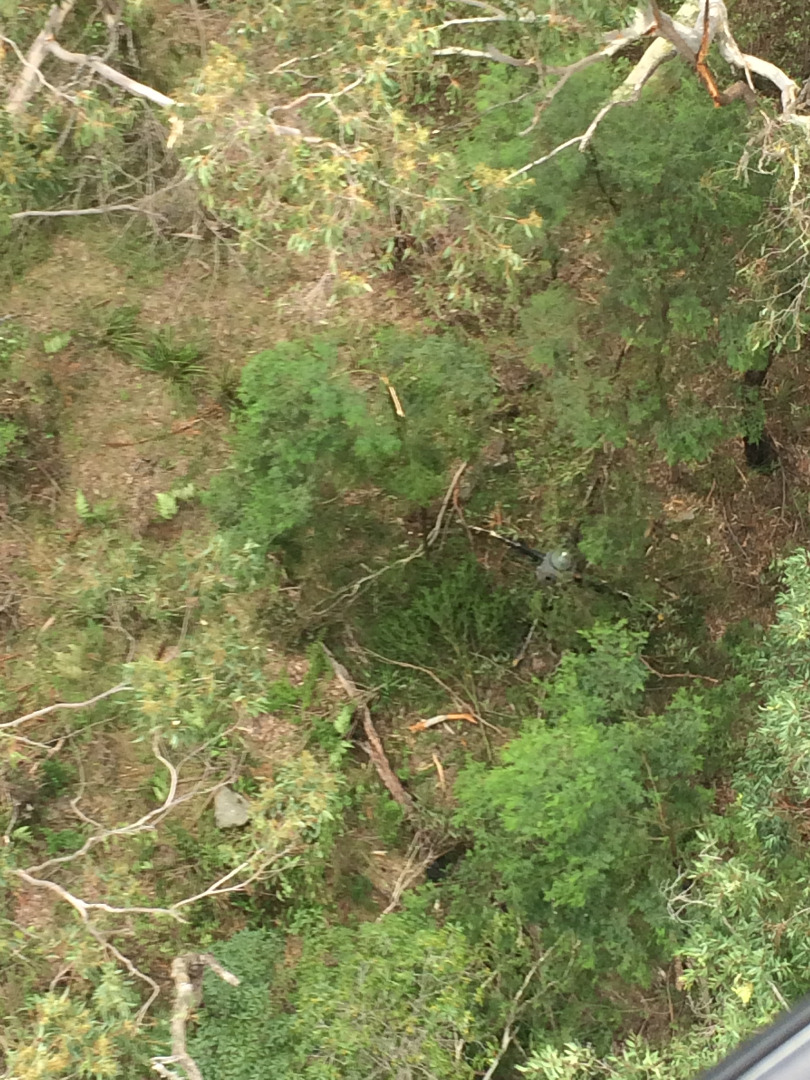
Loss of control involving Austflight U.L.A. Drifter A-503, 25-357, Tamrookum, Queensland

Summary

The purpose of the flight was to conduct an aerial inspection of a corn crop located approximately 1 km east of the airstrip. Witnesses reported seeing the aircraft in straight and level flight at a height of about 500 ft and hearing a change in the engine noise. A short time later, the right wing dropped, and the aircraft entered a steep, nose down, spiral descent which continued to ground impact.

Examination of the accident site showed that the aircraft had struck the ground while inverted and in a steep nose-down attitude while rotating to the right. The nature and extent of damage to the propeller indicated that the engine was developing significant power at impact. Inspection of the wreckage revealed no faults which might have contributed to the accident.

The evidence suggests that the aircraft probably stalled, causing the right wing to drop and a spiral dive to develop from which the pilot was unable to recover in the height available. The reason for the aircraft entering the manoeuvre was not determined.

Factors

1. The aircraft probably stalled, resulting in a spiral dive developing.

2. The pilot was unable to recover the aircraft to normal flight in the height available.

Occurrence summary

Investigation number 199304019
Occurrence date 05/12/1993
Location Tamrookum
State Queensland
Report release date 31/08/1994
Report status Final
Investigation type Occurrence Investigation
Investigation status Completed
Mode of transport Aviation
Aviation occurrence category Collision with terrain, Loss of control
Occurrence class Accident
Highest injury level Fatal

Aircraft details

Manufacturer Austflight U.L.A. Pty Ltd
Model Drifter A-503
Registration 25-357
Sector Piston
Operation type Private
Departure point Tamrookum QLD
Destination Tamrookum QLD
Damage Destroyed

de Havilland DH-104 Series 5 Dove, VH-DHD, 1 km south-west of Essendon, Victoria, on 3 December 1993

Summary

The flight was planned as a night charter dinner flight over Melbourne. On board the De Havilland DH-104 were the pilot, a dinner hostess and eight passengers.

After carrying out engine runups and pre-take-off checks, including selecting 20 of flap, the pilot initiated take-off from Essendon Airport runway 17, some 23 minutes before last light. Wind conditions were light and variable. Just as take-off safety speed was attained, somewhere between liftoff and 50 ft, the right engine lost power and the aircraft yawed to the right. The pilot momentarily assessed the problem as a partial engine failure and selected the landing gear up, but the landing gear failed to retract. However, by recycling the gear selector he was then able to successfully retract the landing gear. By this time the airspeed had decayed to a point well below take-off safety speed and continued decreasing to the minimum control speed (air). In order to maintain directional control, the pilot reduced power on the left engine but did not manage to raise the flaps or feather the right propeller before the aircraft crashed into a residential area adjoining the aerodrome. About one minute had elapsed from initiation of take-off until the accident.

Investigation revealed that the vertical drive shaft, which drives the right engine fuel control unit, had failed in torsional overload when the geared fuel pump drive shaft in the fuel control unit had seized on its surrounding bush. Following the vertical drive shaft failure, the right engine failed due to fuel starvation.

Analysis of DH-104 performance indicated that, at the time of the right engine failure, it was possible for the aircraft to achieve a positive rate of climb, assuming that the engine failure drills were performed promptly and correctly and proceeded without interruption. However, when the landing gear failed to retract on the first attempt, any possibility of the pilot being able to attain the required aircraft performance was lost. As a result, he was probably forced to abandon completing the emergency procedures in order to maintain control of the aircraft.

Occurrence summary

Investigation number 199304023
Occurrence date 03/12/1993
Location 1 km south-west of Essendon
State Victoria
Report release date 27/03/1996
Report status Final
Investigation type Occurrence Investigation
Investigation status Completed
Mode of transport Aviation
Occurrence class Accident
Highest injury level Serious

Aircraft details

Manufacturer de Havilland Aircraft
Model DH-104
Registration VH-DHD
Serial number 04104
Sector Piston
Operation type Charter
Departure point Essendon, VIC
Destination Essendon, VIC
Damage Unknown

Loss of control involving Neico Lancair 235, VH-HTD, Coffs Harbour, New South Wales, on 4 December 1993

Summary

The aircraft was being flown to Coffs Harbour in preparation for an open day, during which the aircraft was to be displayed on the ground and in the air. Witnesses at Ballina observed the aircraft take off and conduct a circuit before flying low along the strip in the take-off direction. The aircraft then pulled up to about 75 degrees nose up, levelled at about 350 ft, and descended again while travelling in the same direction. It then accelerated, turned right, climbed to about 500 ft and departed in the direction of Coffs Harbour.

Witnesses at Coffs Harbour saw the aircraft approach the aerodrome from the west, cross over the main runway, turn right and fly south. The aircraft was then observed to turn north and approach the airfield at low level before abruptly entering a very steep climb. At an altitude estimated by some witnesses as between 200 and 400 ft above ground level, the aircraft rolled right before diving vertically towards the ground and disappearing behind trees. A short time later, the sound of impact was heard, and smoke was seen rising above the trees.

Examination of the accident site revealed that the initial impact occurred when the aircraft struck 8m high trees. This ruptured the right fuel tank, providing the fuel source for the fire. Examination of the burnt-out wreckage indicated that at ground impact, the aircraft was yawing right and skidding left. The aircraft struck the ground with about 7 degrees of left bank, a level nose attitude and low horizontal speed. The engine was operating at low power at the time of impact.

Of the two occupants of the aircraft, one held a commercial pilot's licence and the other a student pilot's licence with passenger carrying approval. Consequently, the latter was not qualified to act as pilot-in-command for the flight from Ballina to Coffs Harbour. It was not possible to establish who was controlling the aircraft at the time of the accident. Both pilots had limited total flying experience, as well as limited experience on the aircraft type.

The investigation concluded that, following the pull-up from about tree height, the aircraft probably stalled and entered an incipient spin to the right. Recovery from the spin was not effected prior to ground impact. The reason for conducting the pull-up manoeuvre was not determined.

FACTORS

The factors considered relevant to the development of the accident were:

1. The experience level of both pilots was low.

2. Control of the aircraft was lost at a height insufficient to effect a safe recovery.

Occurrence summary

Investigation number 199304015
Occurrence date 04/12/1993
Location Coffs Harbour
State New South Wales
Report release date 21/07/1994
Report status Final
Investigation type Occurrence Investigation
Investigation status Completed
Mode of transport Aviation
Aviation occurrence category Loss of control
Occurrence class Accident
Highest injury level Fatal

Aircraft details

Manufacturer Neico Aviation Inc
Model Lancair 235
Registration VH-HTD
Serial number N149
Sector Piston
Operation type Private
Departure point Ballina, NSW
Destination Coffs Harbour NSW
Damage Destroyed

Piper PA-25-235, VH-AYB and Glasflugel Gmbh Mosquito, VH-GMN, 3 km north-east of Benalla, Victoria

Summary

FACTUAL INFORMATION

At 1640 hours ESuT, a Piper Pawnee glider tug and a Glasflugel Mosquito glider collided in the Benalla circuit area. The pilot of the tug was fatally injured. The glider pilot received serious injuries. Both aircraft were destroyed.

Sequence of events

The glider departed Benalla for a cross-country flight at approximately 1330, almost three hours before the accident. The wind was from the east and the glider was towed from airstrip 08. Benalla has two gliding airstrips 08/26 and 17/35, and two general aviation runways 08/26 and 17/35.

During the hour after the glider departed, the wind changed direction to a westerly and operations were changed to airstrip 26. A radio broadcast was made on the Benalla common traffic advisory frequency announcing the change.

Approximately 20 minutes before the accident, the glider pilot was heard on the Benalla common traffic advisory frequency informing traffic that the glider was at Wangaratta at 5,000 ft and returning to Benalla. The transmission was acknowledged by Benalla Ground. The pilot did not request and was not given airfield information. This was the last broadcast received from the glider pilot.

Six minutes before the collision, the tug towed a glider from strip 26 and subsequently released the glider to the west of the airfield. Very shortly before the collision the tug pilot made a radio broadcast on the Benalla common traffic advisory frequency informing that he was downwind for runway 26. The tug was observed descending downwind on a track essentially parallel to and displaced to the north of the 08/26 strip.

Immediately before the accident, the glider was seen approaching the airfield from the north-east flying on a westerly track almost parallel to and displaced to the north of the 08/26 airstrip. The glider was entering the circuit in conflict with the established circuit pattern.

Witnesses reported seeing the glider and the tug approaching each other almost head on. The aircraft collided approximately 750 ft above ground level, at a point where the tug would have been expected to turn onto a base leg for landing. It may have just commenced the base turn.

The right wings of both aircraft were severely damaged in the impact rendering them uncontrollable. The tug impacted the ground in a nose-down attitude. The impact was not survivable. The glider entered a flat spin to the right and impacted the ground in a level attitude. The glider pilot sustained serious injuries. Due to the effects of trauma sustained in the accident, he had no recall of events between the morning of the accident and 19 December, a period of 26 days.

Wreckage examination

The major components of both aircraft were destroyed.

Examination of the glider wreckage indicated that the initial impact occurred when its right wing collided with the tug's right main landing gear strut. The glider's right wing was severed during the impact. The lower surface of the glider's right wing was imprinted with a tyre tread mark. There was no evidence of propeller slash marks on the upper surface of the wing, and the forward fuselage was not damaged during the collision.

The initial point of impact on both aircraft was outboard of their respective centres of gravity resulting in the aircraft rotating about their respective vertical axes. Consequently, damage to the aircraft after the initial impact could not be used to determine the pre impact position of the aircraft.

The main landing wheel of the glider was found to be down and locked.

The examination of both aircraft and their records did not disclose any defects which may have contributed to the accident.

Determination of relative bank

The maximum and minimum relative bank angles between the glider and tug prior to impact were determined from the collision impact marks on the aircraft to be within the range of 36 and 67 degrees. There was insufficient information to determine whether both aircraft were banking at the time of impact.

The relative bank angle between the tug and glider could have resulted from the tug having commenced its base turn or as a result of avoidance manoeuvres by either or both aircraft.

Determination of relative heading

Using the measured angle of the initial cut in the right wing of the glider and an estimate of the airspeed of each aircraft, the relative headings could be determined. However, due to the inaccuracies of measuring the cut angle on the glider's wing, relative headings are expressed as ranges. The glider was situated at an angle between 7 and 11 degrees to the left of the heading of the tug. The tug was situated at an angle between 12 and 16 degrees to the right of the heading of the glider.

Rate and angle of descent

It was not possible to determine the relative angle of pitch between the two aircraft. It is probable that the tug had a nose-down attitude and was still descending. The flight profile of the glider could not be determined.

Pilot information

The tug pilot had been flying for 4 years and held an Australian commercial pilot licence and a valid Class 1 medical certificate. His total flying experience was 221 hours. He had completed approximately 90 aero tows at Benalla during the three months prior to the accident. During that period, he had also flown 36 glider flights.

The glider pilot was a visitor from England. He held valid power and gliding licences issued by the British authorities. He had flown gliders since 1952 and had accumulated 180 hours over 494 flights. He commenced flying powered aircraft in 1987 and had flown approximately 227 hours in powered aircraft prior to the accident. His medical certificate was valid and specified that vision correction was required while flying. He complied by wearing corrective lens of CR 39 resin plastic on which were fitted clip-on, amber-tinted sunglasses. His visual acuity met the requirements for the issue of a private pilot licence. However, there were scratches on his glasses which, when coupled with the presence of clip-on sunglasses, would have degraded his vision while looking into the sun.

Weather

The weather was fine, there was a light wind from the west and no cloud in the immediate area. The temperature was 26 degrees Celsius, and the visibility was in excess of 40 km. The sun had descended to approximately 40 degrees above the horizon. The glider was flying into the sun, and the sun was behind the descending tug.

Operational procedures

The operational information pertaining to Benalla was contained in the Enroute Supplement Australia issued by the Civil Aviation Authority. The Enroute Supplement Australia stated that when gliding operations are conducted on the 08/26 airstrip at Benalla all glider and tug circuit patterns must be flown to the north of the airstrip. When operations are from 26 the circuit is to the right and when from 08 the circuit is to the left. All other aircraft operations must be conducted to the south of the airfield. This circuit arrangement of gliders and tugs to the north, and other aircraft to the south, is referred to as a contra-circuit operation.

Prior to commencing flying at Benalla, the glider pilot had been briefed by the operations manager of the Gliding Club of Victoria. The purpose of this briefing was to explain local operations at Benalla, Australian regulatory requirements, and to assess the pilot's capabilities.

The briefing included a requirement for the pilot to certify that he had read the club's Operations Handbook. The handbook was last revised in 1988 and, due in part to changes to the administration of aviation in Australia, it was out of date in many respects. The handbook was not made available to the pilot, and he had not read it, even though he had signed that he had. Some parts of the handbook were relevant to the flight. Requirements for the briefing of visiting foreign pilots were not specified in the handbook, nor were the duties and responsibilities of the operations manager.

The pilot received a Visiting Pilot Information Package which contained the following statement concerning circuit joining procedures:

"When joining the circuit pilots must avoid flying in opposition to the established circuit pattern and must join in such a way as to avoid potential conflict with existing traffic. This is especially vital when returning from a cross-country flight. In this circumstance the pilot should contact the pie cart (Benalla Ground) to ascertain the runway in use"

There was no evidence that the glider pilot involved in the accident made contact with Benalla Ground to ascertain the runway in use.

The information package also contained an airfield layout diagram which detailed the requirements for ground and air movements on the same page. This made the page cluttered confusing and difficult to decipher. The package did not contain the pages of the Enroute Supplement Australia pertinent to Benalla. The package did not adequately explain the radio broadcast requirements detailed in the Aeronautical Information Publication.

The Gliding Federation of Australia's handbook, Airways and Radio Procedures for Glider Pilots, did not

adequately address the positions at which the inbound and circuit joining broadcasts were to be made. The Gliding Federation of Australia advised that the handbook had been prepared during the time Civil Aviation Authority procedures were being discussed with industry. Changes emanating from those discussions were not able to be included in the handbook prior to publication. Similarly, the Manual of Standard Procedures did not address common traffic advisory frequency area entry requirements.

Although this information was detailed in the Aeronautical Information Publication, it was a discretionary, purchasable document and may not have been available at clubs and appropriate sections may not have been included in Gliding Federation of Australia documents. Therefore, the operational and regulatory information contained in such documents may not have reached all users of the airspace system.

The Gliding Club of Victoria was required to comply with the Gliding Federation of Australia's Manual of Standard Procedures. This manual did not contain any details on briefing visiting foreign pilots.

Some senior instructors and administrators in the gliding movement were not aware of the implications of the regulatory requirements in relation to circuit entry and radio procedures. The Gliding Club of Victoria operations manager believed that there was no requirement for a glider to make a broadcast when entering the circuit pattern, and because radios were not mandatory in gliders, he thought that there was no requirement for gliders to announce entry to a common traffic advisory frequency area. This belief conflicted with the recommendations contained in the Aeronautical Information Publication.

The Gliding Federation of Australia's director of operations believed that gliders could join directly onto the downwind or base legs of the circuit. This was not correct in relation to joining on base leg. Approval for aircraft to join the circuit on base was restricted to emergency procedures. Civil Aviation Regulation 145, emergency authority, provided the authority for a pilot to depart from the rules of circuit entry, contained in Civil Aviation Regulation 166, to avoid immediate danger. There was no evidence that the glider was operating other than normally, and no evidence that immediate danger or an emergency existed that would have necessitated joining on base.

The Civil Aviation Authority had approved a procedure within the Gliding Federation of Australia's Operational Regulations which allowed gliders to make two turns in a circuit prior to landing. This had been interpreted as allowing a glider to join base with one turn, and final with the second. This had been further interpreted as allowing a left turn onto base and right turn onto final, or vice versa. Such a manoeuvre would allow a glider to approach head on, to traffic conforming to a normal circuit pattern.

The tug's descent profile and circuit flying procedure were different to those flown by other powered aircraft. After releasing a glider, a tug was permitted to join the circuit downwind while in a high rate of descent, which was maintained until after turning base. The tug pilot should conduct clearing turns during the descent. These turns are designed to improve the tug pilot’s visual acquisition of other aircraft in the circuit. The investigation was unable to determine if clearing turns had been carried out on this flight.

The Gliding Club of Victoria was responsible for the training of the tug pilot in accordance with the club's

Operations Manual, the Gliding Federation of Australia's Manual of Standard Procedures, and the Civil Aviation Authority's Flying Operations Instruction 21 4. None of these documents adequately addressed the issues of pilot workload and responsibilities.

Tug pilot training

The requirements for the control of gliding operations were monitored by procedures administered by the Gliding Federation of Australia. The monitoring of tug pilot training and operations was shared between the Civil Aviation Authority and the Gliding Federation of Australia.

The guidance pertaining to tug pilot training and tug pilot approvals contained within manuals and instructions was found to be diverse and unclear. There was inadequate emphasis placed on:

  • the tug pilot's responsibilities in relation to traffic avoidance;
  • the limitations of the see and avoid principle of collision avoidance;
  • an awareness of the dangers inherent in the tug's descent profile;
  • the need to continually clear the tug's blind spots during descent; and
  • the obligation to fly the aircraft in a manner that would minimise any hazard to other traffic.

Discussions between the Civil Aviation Authority and the Gliding Federation of Australia concluded that it may be appropriate for the Gliding Federation of Australia to take a more active role and take over the responsibility for establishing and monitoring tug pilot training standards.

System surveillance and audit

At the time of the accident the Civil Aviation Authority employed one Sport Aviation Inspector, based in Canberra, to administer sport aviation which included gliding, ballooning, hang gliding, parachuting, gyroplanes, and model aircraft.

Control of much of the gliding activity was vested in the Gliding Federation of Australia by delegation. It had a small full-time staff, only one of whom was employed in the operational standards area. Much of the audit function was carried out by experienced volunteers in each state. The systemic failures highlighted by this accident indicate that the audits conducted by the Civil Aviation Authority and the Gliding Federation were not effective. There were more than 4000 glider pilots, 700 gliders and 80 gliding clubs in Australia. Neither the Gliding Federation of Australia nor the Civil Aviation Authority had the capacity to carry out effective audit activities that might have shown up the systemic failures pertinent to this accident.

Since the accident, the Civil Aviation Safety Authority has appointed a sport aviation inspector in the north east region and one in the western region.

ANALYSIS

Glider pilot briefing

An analysis of the glider pilot's understanding of operations at Benalla and his intentions in relation to his entry into the circuit on this flight had to be made without the benefit of his recollections.

Evidence obtained during the investigation indicated that the glider pilot may not have been conversant with some of the procedures applicable to the flight, including radio broadcast and circuit joining procedures.

Although the Gliding Club of Victoria's Operations Handbook did not detail a briefing to visiting pilots, the Visiting Pilot Information Package statement in regard to circuit joining was clear and concise. The reason the pilot flew contrary to this instruction could not be determined. Post-accident interviews with the pilot and people who knew him indicated that he could be expected to follow regulatory requirements. A lack of appreciation of the dangers of not making prescribed radio broadcasts and of entering a circuit contrary to the established direction may have been as a result of inadequate briefing or as a result of his relatively low recent flight time.

Because of the operations manager's lack of understanding of the Aeronautical Information Publication and related documentation, it is unlikely that he would have stressed the importance of radio broadcasts as an integral part of the see and avoid principle of collision avoidance.

Instructor awareness

The glider pilot was instructed by the Gliding Club of Victoria's operations manager in the days prior to the accident. The tug pilot was instructed by the Gliding Club of Victoria's tug master during the previous three months. It is apparent that in both cases inadequate emphasis was placed on the regulatory requirements and on the procedures, pilots should adopt to comply with these requirements. The documentation available to the instructors and the pilots was unclear and lacked emphasis and may have led to a lack of awareness of regulatory requirements by the instructors.

Radio broadcast requirements

The radio broadcast made by the glider pilot at Wangaratta, 16 NM from Benalla, approximately 20 minutes before the accident, indicated that the radio was operating satisfactorily at that time. Impact damage to the radio precluded post-impact analysis. Because the glider was fitted with a radio the pilot was required to monitor the common traffic advisory frequency and to make broadcasts on that frequency approaching the airfield. For this particular flight a broadcast should have been made before crossing the common traffic advisory frequency boundary, 10 NM from the airfield. However, the Aeronautical Information Publication cautions that it is the pilot's responsibility to determine an appropriate distance from which a broadcast is made. In determining an appropriate distance the aircraft's performance must be considered, to ensure that broadcast information is relevant to aircraft operating in, or about to operate in the common traffic advisory frequency area. Many powered aircraft, including glider tugs, operate in the common traffic advisory frequency area for less than five minutes.

The glider's broadcast at Wangaratta could not be considered to have occurred at an appropriate distance for a broadcast to be relevant to aircraft operating in, or about to operate within the common traffic advisory frequency area. Similarly, having regard to glider performance, a call at 10 NM, at the common traffic advisory frequency boundary, may not be an appropriate distance. It may be more appropriate to make another call when closer to the airfield.

It is not known why the glider pilot did not contact Benalla Ground as detailed in the visiting pilot's package.

Visual acuity and scanning considerations

The Bureau's 1991 research report into the limitations of the see and avoid principle of collision avoidance states that visual scanning involves moving the eyes in order to bring successive areas of the visual field onto the small area of sharp vision in the centre of the eye. This process is frequently unsystematic and may leave large areas of the field of view unsearched. However, a thorough, systematic search is not a solution as in most cases it would take an impractical amount of time. The report states that the human visual system is better at detecting moving targets than stationary targets, yet in most cases, an aircraft on a collision course appears as a stationary target in the pilot's visual field.

Civil Aviation Regulation 166(1) requires all pilots to observe other aerodrome traffic for the purposes of avoiding collision. While radio calls are a necessary part of traffic alerting and subsequent observation, the visual acquisition of traffic is still paramount.

Immediately before the collision the glider was observed heading west into the sun and the tug was observed heading east descending out of the sun.

It is probable that the glider pilot was looking ahead of his glider and looking into the sun. The consultant optometrist who assisted the investigation advised that when the glider pilot looked towards the sun wearing his scratched glasses his vision would have been reduced dramatically. The optometrist advised that the addition of clip-on sunglasses introduced two more surfaces which, if slightly dirty or scratched, would further degrade vision when looking into the sun. He stated, "It could be postulated that if an aircraft was positioned between the sun and the glider...his vision may have been degraded by the multiple surfaces...to such an extent that it may not have been possible to see the approaching aircraft".

During the tugs descent the glider would have been essentially head on to the tug, may have been partially or totally hidden by the long nose and cowl of the tug, and would have been a diminutive target. The tug pilot should have been making clearing turns during the downwind leg. Under normal circumstances he would have been expected to look to the right to assess his position relative to the airfield. Had he commenced his turn onto base, he would probably have transferred his scanning away from the area of the approaching glider.

Circuit entry considerations

It was established that the tug pilot had made a position broadcast on the downwind leg for airstrip 26. The glider pilot did not respond to the broadcast by either announcing his intentions or manoeuvring the glider to remain clear of the established traffic pattern. He did not acknowledge the broadcast from the tug pilot, nor was he required to. It is possible that the glider pilot may not have heard the tug pilots broadcast, or he may not have understood it.

From the collision point, the glider would have had adequate height and been in a satisfactory position to have joined downwind for airstrip 08 or base leg for airstrip 26. If the glider pilot's intention was to join downwind and land on airstrip 08 then he would not have complied with the requirements of Civil Aviation Regulation 166(b) and (e) that a pilot shall conform with or avoid the pattern of traffic formed by other aircraft in operation, and shall as far as practicable land into wind.

If he was intending to turn left to join on base for airstrip 26, he would have been operating contrary to the requirement of Civil Aviation Regulation 166(c) that aircraft join the circuit on the upwind, crosswind or downwind legs.

The investigation was unable to determine why the main landing gear wheel of the glider was down and locked. It is possible that the pilot had completed a downwind check in preparation for turning left onto base for airstrip 26 or he may have completed an early downwind check for airstrip 08. It is also possible that the wheel may not have been retracted after take-off.

The tug joined the circuit in accordance with procedures for tug operations.

Civil Aviation Regulation 162(1) requires that powered aircraft give way to unpowered aircraft. This can only be relevant when the powered aircraft is aware of the presence of an unpowered aircraft. The direction from which the glider entered the circuit would not have been expected by the tug pilot.

While there may have been some track displacement between the two aircraft, the pilot of the descending tug would have been faced with an almost head on perspective of the glider. The glider was sleek with a diminutive cross section. It would have been very difficult to see unless the tug pilot was alerted to the glider's presence.

The Bureau's data for mid-air collisions over the last 20 years listed 39 occurrences, 22 of which included gliders. Four involved collisions with tugs. Three of these accidents occurred within the circuit area, two at Benalla and one at Tocumwal. Although these accidents occurred in different circumstances, contra circuits were prescribed at each airfield at the time of the accident.

In each accident, if the tug had descended on the powered aircraft side of the contra circuit the accidents may have been avoided. All three accidents occurred while the tug was descending in the circuit.

CONCLUSIONS

Findings

  1. Both pilots were medically fit, correctly licensed and qualified to undertake their flights.
  2. Both aircraft were properly certificated and serviceable for the flights undertaken.
  3. Formal requirements for the briefing of visiting pilots and the training of tug pilots were inadequate.
  4. The documentation used to brief the glider pilot was confusing and deficient in detail.
  5. The documentation detailing the requirements for tug pilot training lacked emphasis in safety considerations.
  6. Gliding administrators did not have a clear understanding of the operational requirements in relation to radiobroadcasts and circuit entry procedures.
  7. The glider pilot did not respond to a radio broadcast from the tug.
  8. The glider entered the circuit in a non-standard manner.
  9. The glider pilot would have had difficulty sighting the tug approaching due to the angle of the sun and limitations of his visual acuity. He was wearing scratched corrective lenses and clip-on sunglasses.
  10. The tug pilot would have had little opportunity to visually acquire an unalerted, small profile glider approaching from an unlikely area of conflict.
  11. Neither the Civil Aviation Authority nor the Gliding Federation of Australia had the capacity to adequately audit the procedures in use.

Significant factors

The following factors were considered relevant to the development of the accident:

  1. The glider pilot did not make a radio broadcast detailing his intentions in relation to circuit entry procedures.
  2. The glider pilot did not follow established circuit entry procedures.
  3. The tug would have been extremely difficult for the glider pilot to see because:
  • the sun was behind the descending tug; and
  • the glider pilot was wearing scratched corrective lenses and clip-on sunglasses.

SAFETY ACTION

As a result of this investigation the following safety actions were initiated:

1. The Gliding Federation of Australia submitted, and Civil Aviation Safety Authority approved, an amendment to the Gliding Federation of Australia's Operational Regulations. The amendment clarifies and verifies the requirement for gliders to track over the ground such that at least two turns, each of approximately 90 degrees in the circuit direction, are made prior to landing.

2 The Gliding Federation of Australia has revised its documentation to ensure that regulatory requirements are reflected accurately and completely.

  1. The Gliding Federation of Australia amended the Manual of Standard Procedures to ensure that a minimum standard of briefing is specified for visiting glider pilots.
  2. The Gliding Federation of Australia has promulgated instructional material detailing the circumstances under which non-standard approaches can be carried out, taking cognisance of the need to ensure a safe operation.
  3. The Gliding Federation of Australia internal audit system has been updated and improved.
  4. The Gliding Federation of Australia and the Civil Aviation Safety Authority are moving towards the Gliding Federation of Australia assuming responsibility for training and checking of tug pilots and tug pilot instructors.
  5. The Gliding Club of Victoria is expediting the amendment of its Operations Manual to correctly reflect the Club’s operating structure and to reflect Civil Aviation Safety Authority statutory requirements as they stand. Interim briefing material and handout notes have been produced for visiting pilots.

Occurrence summary

Investigation number 199303898
Occurrence date 21/12/1993
Location 3 km north-east of Benalla
State Victoria
Report release date 04/09/1996
Report status Final
Investigation type Occurrence Investigation
Investigation status Completed
Mode of transport Aviation
Aviation occurrence category Airborne collision
Occurrence class Accident
Highest injury level Fatal

Aircraft details

Manufacturer Piper Aircraft Corp
Model PA-25
Registration VH-AYB
Serial number 25-7556036
Sector Piston
Operation type Private
Departure point Benalla, VIC
Destination Benalla, VIC
Damage Destroyed

Aircraft details

Manufacturer Glasflugel
Model 303
Registration VH-GMN
Sector Other
Operation type Gliding
Departure point Benalla, VIC
Destination Benalla, VIC
Damage Destroyed

Collision with terrain involving Bell 206L-1, VH-ECT, 142 km west-north-west of Burketown, Queensland

Summary

FACTUAL INFORMATION

Background

The aircraft was engaged in providing support to a mineral exploration operation. The operation required that the drilling rig be disassembled by attaching the various components to the sling of the helicopter and lowering them to the ground.  The rig, associated equipment and personnel were then transported to the new site where the rig was reassembled by using the helicopter to lift the rig components into position.

The drilling rig was operated by the company owner, a driller, and two assistants.  The driller had previously used a helicopter in operations to disassemble, transport and reassemble the rig.  Neither of the assistants had been involved with the use of helicopters in drilling operations.  One of the assistants had practised assembling and disassembling the rig at the driller's base with the use of a crane.  The other had no previous experience with this type of drilling rig.

Sequence of Events

Earlier in the day the helicopter had been used to transport personnel to the drilling site (T9) from the base camp.  It had later flown to a fuel dump and carried a drum of fuel, as an externally slung load, to the next site to be drilled. At this site, the pilot added approximately 30 litres of fuel to the aircraft, removed the sling and net from the external attachment point and stowed them in the cabin of the aircraft.  The aircraft was then flown to T9 from where personnel and equipment were to be transported in preparation for the re-location of the rig to the new site.

At site T9, the pilot remained in the helicopter with the engine operating while the other personnel loaded two batteries and two drill hammers onto the floor of the cabin area. The assistant who was to travel on the helicopter to the next site attached the sling to the external attachment point. The driller and the assistant then boarded the helicopter. They were seated in the cabin opposite each other with one facing forward and the other rearward.

The helicopter then lifted off and, just after commencing forward flight, the end of the sling momentarily contacted the engine of the drilling rig.  The sling was flung upward and struck the helicopter.  As a result, a metre long section of the tip end of one main rotor blade was severed.  A main rotor blade then struck the forward right side of the cockpit area, fatally injuring the pilot.  The tail boom of the helicopter was severed by the damaged main rotor blade and the helicopter fell to the ground, landing on its left side.  Two persons on the ground assisted in evacuating the passengers. One of them remained at the site to assist the passengers and the other walked the considerable distance to the base camp to obtain assistance.

Operational and Briefings Aspects

The helicopter operator's operations manual required that the pilot be qualified on sling operations prior to this type of operation being undertaken.  The manual also required that the pilot brief all personnel involved in the sling operation prior to commencement.

On this occasion, because both the pilot and driller received fatal injuries, it was not possible to determine the extent of the briefing between the two men.  However, the assistants reported that their briefing covered two aspects only; the method of approaching the helicopter when the rotors were turning and the method of manipulating the sections of the drilling rig while they were attached to the sling on the helicopter.

The assistant who attached the sling to the helicopter stated that he had not been instructed on how to complete the task.  When he attached the sling, the pilot waved him away.  The assistant assumed that this was because he was attaching the sling from the wrong direction. He then moved around the helicopter and attached it from a different direction.  Thus, he believed that the pilot was aware that the sling was attached to the helicopter. Whether the pilot was aware the sling was attached and forgot about it during the take-off or believed that the sling was not attached is unknown.  The helicopter was not fitted (nor was it a requirement) with any device that would allow the pilot to ascertain the presence of a sling or the condition of the load on the sling.

Communications and Search and Rescue Aspects

The aircraft was fitted with an Emergency Locator Beacon (ELB) which was not activated during the accident sequence.  The beacon was located on the centre pedestal of the cockpit and positioned so that it was inclined downward.  The operation selector was in the 'Armed' position and a subsequent functional check found that the ELB was serviceable and capable of operation.

The ELB was of the type that is fitted with a single gravity activation switch and the method of mounting it on the pedestal was calculated to allow activation for vertical and forward impacts (those most likely as a result of helicopter accidents). On this occasion the helicopter landed on its left side and the gravity switch was not activated.

No communications network had been set up between the base camp, the helicopter or each drilling site. As a result, there was no provision to either allow the persons at T9 to call for assistance or to alert those at other sites of a potential problem when a schedule was missed.  Also, no one at T9 was aware that the ELB could have been manually activated, thus gaining the assistance of other aircraft in the area. The end result of the lack of a communication network was that a person was required to walk out of the site to obtain assistance.

CONCLUSIONS

Findings

  • The pilot was correctly licenced and experienced in the type of operation being conducted.
  • The aircraft was serviceable prior to the occurrence.
  • The driller had previously conducted similar operations using the support of a helicopter.
  • Neither of the driller's assistants had experience working with helicopters.
  • The external sling was attached to the helicopter by one of the driller's assistants.
  • The pilot could not visually confirm whether or not the external load sling was attached.
  • It could not be determined whether the pilot was aware that the sling was attached to the helicopter.
  • The pre-operation briefing given to the two drillers assistants was inadequate.
  • A metre long section of one main rotor blade was severed by impact with the sling.
  • The Emergency Locator Beacon was serviceable and 'armed' prior to the occurrence.
  • The Emergency Locator Beacon was not activated by the impact.
  • No communications network had been set up between any section of the operation.
  • Persons involved in the operation at site T9 were not aware of how to operate the Emergency Locator Beacon.

Significant Factors

  • The briefing, by the pilot, of all those involved in the operation was inadequate.
  • The helicopter was not fitted with a mirror to enable the pilot to visually confirm the status of the external load sling hook.

SAFETY ACTION

As a result of the investigation the Bureau of Air Safety Investigation issues the following recommendation and safety advisory notices:

1. Recommendation R940190

Summary of Deficiency

A search of the BASI data base revealed that nine accidents involving sling operations had occurred in the past nine years. Of these, six may have been directly related to the pilot being unaware of the presence of a sling or the condition of the winch load.

Regulations relating to sling load and winching operations with helicopters do not require a device to be fitted to allow a pilot to ascertain the status of the sling and load. Additionally, there are no minimum equipment requirements for sling operations specified in Civil Aviation Orders.

Many operators have documented their own requirements relating to minimum equipment for sling/load operations.

Recommendation

The Bureau of Air Safety Investigation recommends that the Civil Aviation Authority:

(i) Review the legislation relating to sling load and winching operations with particular emphasis given to the minimum equipment requirements and the benefits associated with a load checking device, such as a mirror.

(ii) Consider producing effective educational documentation that addresses the issues that pilots and operators should consider in these types of operations.

2. Safety Advisory Notice SAN 940192

Summary of Deficiency

The Civil Aviation Authority is introducing the mandatory carriage of ELTs complying with the US FAA Technical Standard Order 91a (TSO 91a) which comes into effect in July 1995. This does not fully take into account the unique flight characteristics of helicopters.

ELTs with multi-axis gravity switch activation complying with TSO 91a are now available for purchase by operators.

Safety Advisory Notice

The Bureau of Air Safety Investigation suggests that in conjunction with the introduction of the mandatory carriage of ELTs complying with TSO 91a, the Civil Aviation Authority consider introducing a requirement for only multi-axis gravity switch activated ELTs to be fitted to helicopters.

3. Safety Advisory Notice SAN 940194

Summary of Deficiency

Anecdotal evidence collected by the investigation team suggests that it is not unusual for employees to be set down at remote sites with no way of communicating with either their company or outside help.

In the event of an emergency, personnel on the ground at the remote site must either walk out of the site or wait for help to arrive. In cases that are time critical neither of these methods would appear satisfactory.

Safety Advisory Notice

The Bureau of Air Safety Investigation suggests that the Queensland Department of Minerals and Energy, the Mining Industry Standing Committee and The Australian Mining Industry Council consider introducing a minimum acceptable standard of communication between all facets of remote operations as well as setting up a contingency plan for emergency situations at such sites. It is also suggested that these organisations consider implementing education programs for personnel involved in these types of operations.

Occurrence summary

Investigation number 199303718
Occurrence date 10/11/1993
Location 142km WNW Burketown
State Queensland
Report release date 19/09/1994
Report status Final
Investigation type Occurrence Investigation
Investigation status Completed
Mode of transport Aviation
Aviation occurrence category Collision with terrain
Occurrence class Accident
Highest injury level Fatal

Aircraft details

Manufacturer Bell Helicopter Co
Model 206
Registration VH-ECT
Serial number 45166
Sector Helicopter
Operation type Aerial Work
Departure point 13km E Camp Ridgeway, QLD
Destination 18km E Camp Ridgeway, QLD
Damage Destroyed

VFR into IMC involving Quickie Q200, VH-OIO, 25 km north of Kilcoy, Queensland

Summary

The flight had progressed from Melbourne to Gunnedah, apparently without incident. After refuelling at Gunnedah, the aircraft departed for Noosa. No flight plan was submitted, nor were any documents indicating an intended route recovered from the accident site. The aircraft was subsequently observed passing over the parachuting centre at Toogoolawah. Weather in that area was poor, with a low cloud base. Parachuting operations had been suspended due to the cloud.

The aircraft apparently tracked north of Kilcoy and eventually around the northern edge of a range before tracking east. The weather on ranges closer to the coast was probably sufficiently poor to deter the pilot from tracking to the coast. Witnesses saw the aircraft in a valley between Conondale and Kenilworth, to the west of Maroochydore airport. Cloud covered all the ranges around the valley. The aircraft was last observed by one witness to be tracking towards Kilcoy. This information was consistent with the position of and direction to the accident site.

Searchers found wreckage of the aircraft at the top of a ridge line east of the main range to the west of Conondale. The aircraft had collided with the upper portion of a tree while in a left bank. Further breakup of the aircraft continued along a direction of 230 degrees, down the side of the ridge and across a small gully. No evidence of any mechanical defect or abnormality was found. From the available evidence, the aircraft was probably either in cloud or at the base of the cloud at the time of the accident. No evidence was found to indicate that the aircraft was equipped with instrumentation appropriate for flight in instrument meteorological conditions.

Significant Factor

1. The pilot continued flight into weather conditions in which he was unable to maintain the visual reference necessary to ensure adequate terrain clearance.

Occurrence summary

Investigation number 199303581
Occurrence date 23/10/1993
Location 25 km north of Kilcoy
State Queensland
Report release date 23/06/1994
Report status Final
Investigation type Occurrence Investigation
Investigation status Completed
Mode of transport Aviation
Aviation occurrence category Collision with terrain, VFR into IMC
Occurrence class Accident
Highest injury level Fatal

Aircraft details

Manufacturer Quickie Aircraft Corporation
Model Q200
Registration VH-OIO
Sector Piston
Operation type Private
Departure point Gunnedah NSW
Destination Noosa QLD
Damage Destroyed

Ditching involving Bell 47J-2A, VH-KHZ, 10 km south-east of Whyalla, South Australia

Summary

The helicopter was being flown from Ceduna to Parafield, with planned refuelling stops en route. It was initially refuelled with avgas carried in jerry cans, then later with super petrol (mogas) obtained from a service station at Iron Knob. The jerry cans used were reported to be clean, and the fuel uncontaminated. Prior to landing at Iron Knob, the pilot landed the helicopter on a clay pan and idled the engine for a short time to prevent possible overheating due to a reported partial oil cooler airflow restriction. It was refuelled with avgas at Whyalla and fuel drain checks were carried out. The jerry cans were also refilled and loaded onto the helicopter.

The radio transceiver fitted to the helicopter was unserviceable and the pilot had been using a handheld portable transceiver for communications. At Iron Knob he contacted Parafield Air Traffic Control (ATC) by telephone, advised of the radio problem, and of his intention to use the portable radio for his arrival at Parafield.

Before departing Whyalla, the pilot made a taxiing call which was recorded on the Whyalla Airport 'Avdata' tape. His initial track was over Spencer Gulf towards Port Pirie. The weather was fine with a strong north to north westerly wind at 20-25 knots, gusting to 35 knots, with a temperature of 31 degrees Celsius.

The passenger recalled that about five minutes after departing Whyalla, when the helicopter had climbed to approximately 1,000 feet, it suddenly turned left through 180 degrees, into wind, and the pilot advised him that they were going to ditch. The passenger said he had not noticed any change to the engine note, or any other problems prior to the helicopter turning, but during the descent he noticed that the cabin noise level had decreased, and he could now communicate with the pilot without using the intercom or shouting.

The pilot instructed the passenger (who had had some aeronautical experience) to make a 'mayday' call on the portable radio. The passenger was unsure of the frequency selected but believes that it was still tuned to the Whyalla mandatory traffic advisory frequency (MTAF). This call was not heard by any other aircraft or recorded on the Whyalla 'Avdata' tape. The passenger also used his mobile telephone in an unsuccessful attempt to contact his home, and Parafield ATC.

The passenger reported that the helicopter impacted the water in a nose down, left skid low attitude following a stable autorotational descent. The plexiglass bubble broke on impact, and the helicopter sank immediately. The pilot, who was knocked unconscious at impact, was released from his seatbelt by the passenger and pushed to the surface, where he quickly recovered. However, the pilot later drowned.

With this type of helicopter, following a loss of engine power, torque created by the rotation of the main rotor system causes the fuselage to turn left which can be corrected by pilot input through the anti-torque (tail rotor) system. A failure of the anti-torque system, with the engine still delivering power, would induce a turn to the right.

The passenger's recollections of the event indicate that the helicopter suffered a sudden loss of engine power, followed by a 180 degree turn to the left. The pilot corrected for this turning and controlled the helicopter in a normal autorotational descent.

Despite considerable search effort, the helicopter wreckage has not been located.

Neither the pilot nor the passenger was wearing a life jacket, as required by Civil Aviation Orders 20.11.5.1.1 (a) and 20.11.5.1.7 for overwater flights and there was no other flotation equipment on board.

Findings

  1. The helicopter had a valid maintenance release.
  2. The pilot was correctly licensed and endorsed on the helicopter type.
  3. The avgas and mogas used to refuel the helicopter en route to Whyalla was reported to have been supplied in clean jerry cans.
  4. The helicopter had been refuelled with clean avgas at Whyalla.
  5. The passenger's recollection is consistent with the helicopter suffering a sudden loss of power about 5 minutes after take-off.
  6. The pilot carried out a normal autorotational descent to the sea.
  7. There were no life jackets or flotation equipment on board the helicopter as required by Civil Aviation Orders.
  8. The helicopter has not been located, therefore the reason for the ditching cannot be confirmed.

Significant Factor

The following factor was considered relevant to the development of the accident:

Following a probable loss of engine power the pilot was forced to conduct an autorotational descent to the sea.

Occurrence summary

Investigation number 199303406
Occurrence date 20/10/1993
Location 10 km south-east of Whyalla
State South Australia
Report release date 23/06/1994
Report status Final
Investigation type Occurrence Investigation
Investigation status Completed
Mode of transport Aviation
Aviation occurrence category Ditching, Engine failure or malfunction
Occurrence class Accident
Highest injury level Fatal

Aircraft details

Manufacturer Bell Helicopter Co
Model 47
Registration VH-KHZ
Serial number 3325
Sector Helicopter
Operation type Private
Departure point Whyalla SA
Destination Parafield SA
Damage Destroyed

Freedom Aerolites Sapphire, 25-0149, Opposite Farm, 110 Prickly Road, Coleambally, New South Wales

Summary

Factual Information

The pilot departed from his property in his ultra-light aircraft at around 0830 EST for a local flight. He flew over several of his friends' properties and over the local township. The weather as reported by witnesses was a sunny day, wind light and variable, scattered high level cloud with a temperature of 18 degrees C.

Witnesses reported that they had observed the aircraft flying in a south westerly direction at an altitude of approximately 150 ft. The aircraft was observed to be flying at a constant speed with the engine noise remaining constant. A father and son said that they waved as the aircraft flew over where they were standing and the pilot acknowledged by waving back to them. The aircraft then banked steeply to the right, with the bank angle estimated to be 90 degrees. At approximately 180 degrees into the turn, the aircraft was observed to stall. At this point the nose dropped, and the aircraft proceeded to rotate. The aircraft was in a steep nose down wings level attitude, when the aircraft crashed through the safety rails of a bridge and impacted the ground, fatally injuring the pilot. The point of impact was approximately 75m from where the witnesses were standing.

Examination of the wreckage did not find any pre-existing defects that would preclude normal operation of the aircraft. There was no evidence that the pilot had any pre-existing medical conditions that would affect his ability to fly the aircraft. The pilot had accumulated some 188 hours flying time in ultra light aircraft, the majority of which was in this aircraft. He was currently undergoing additional flying training to gain his Private Pilot's Licence.

Analysis

The final flight path observed by the witnesses during the turn was consistent with the aircraft stalling and entering an autorotation. In attempting the manoeuvre, the pilot allowed the aircraft performance to degrade by not maintaining sufficient airspeed, resulting in the aircraft departing controlled flight at an altitude insufficient to recover.

Occurrence summary

Investigation number 199303141
Occurrence date 12/09/1993
Location Opposite Farm, 110 Prickly Road, Coleambally
State New South Wales
Report release date 24/04/1996
Report status Final
Investigation type Occurrence Investigation
Investigation status Completed
Mode of transport Aviation
Aviation occurrence category Collision with terrain
Occurrence class Accident
Highest injury level Fatal

Aircraft details

Model Sapphire
Registration 25-0149
Sector Piston
Operation type Private
Departure point Farm 515 Coleambally, NSW
Destination Farm 515 Coleambally, NSW
Damage Destroyed

Collision with terrain involving Bell 206B (III), VH-FUX, 4 km south-south-west of Mount Hotham, Victoria

Summary

FACTUAL INFORMATION

History of flight

The pilot and his passengers arrived at Hotham Heights at about 1735 EST on 21 September 1993. At the time the temperature was minus three degrees Celsius, it was snowing lightly, and the visibility was poor due to low cloud. The pilot parked the helicopter facing in a northerly direction in the day car park overnight. Snow deflector baffles were not fitted to the airframe and covers were not placed in the engine air intakes or on the exhaust stacks. Overnight it snowed enough to cover tracks from the previous day. The average windspeed, recorded from midnight, varied from 4 knots to 13 knots, varying in direction from the north through to the west.

Shortly after 0900 on 22 September 1993 the pilot threw a few cupfuls of water from a bucket into both sides of the particle separator which is the air filtering device for the engine air intake. He also threw water onto the tail rotor assembly and the windshield. Throwing water into the particle separator is not standard practice on a daily inspection prior to flight. About ten minutes later the pilot returned to the helicopter, loaded the two passengers, untied the main rotor, and started the engine. When the main rotor started to spin, snow was flung off the main rotor blades. The pilot ran the engine for five to ten minutes. Then the helicopter lifted into a hover briefly before it departed to the south west and descended into a valley.

The helicopter wreckage was not located until 1245 on 23 September after a prolonged search. The accident site was on a steep, snow covered, timbered slope in mountainous, alpine terrain about 1,300 ft lower than Hotham Heights. The pilot and the two passengers did not survive.

Flight notification

The pilot had telephoned his wife from Hotham Heights at about 0920 on 22 September to say that he would be departing shortly and that he would arrive at Moorabbin by 1200 local time. By about 1315 the pilot's wife became so concerned that her husband had not arrived that she telephoned a friend who contacted Moorabbin Airport to check on the whereabouts of VH-FUX. It was then realised that the helicopter had not arrived, and a search was initiated.

The pilot had not submitted a flight plan to the Civil Aviation Authority (CAA). By telephoning his wife, he had opted for the approved alternative of leaving a Flight Note with a responsible person. The investigation could not determine whether the pilot had acquired a weather forecast before departing Hotham Heights. A post-accident estimate of the fuel on board indicated that it was sufficient for the conduct the flight.

Weather

When the helicopter departed Hotham Heights, the temperature was minus 2.2 degrees Celsius, the relative humidity was 100% and the wind was 256 degrees at 8 kts. It was not snowing. The mountain peaks and tops of the ridges were covered by seven eighths of cloud which was showing signs of dissipating with the sun shining through in patches. The cloud base was slightly below the level of the Hotham Heights day carpark. Cloud conditions on the ridgeline immediately west of the accident site were probably similar. The valley into which the helicopter descended was reported to be clear of cloud with visibility being about 2 km.

Survival

The pilot survived the crash and died from injuries and/or hypothermia before the helicopter wreckage was located.

The helicopter was equipped with a Narco ELT10 survival beacon and a basic survival kit. The survival beacon was ejected from the helicopter at impact and was damaged. Once damaged, the beacon was incapable of transmitting a distress signal to assist in locating the helicopter.

Wreckage examination

Examination of the wreckage did not reveal any pre-existing defects which may have contributed to the accident. Damage sustained by the helicopter during the accident, as well as the damage to the trees, indicated that at initial impact the helicopter had a moderate rate of descent, with low rotor RPM and very little forward airspeed. The helicopter impacted the ground on its left side after which it slid about 20 m down a steep slope before coming to rest against tree trunks. It was within its approved centre of gravity and gross weight limits at the time of the accident.

No evidence of significant torsional twisting was found on any of the drive shafts. The main rotor mast was not torsionally twisted. The engine compressor case-half liners suffered minor internal damage consistent with engine RPM being very low at impact. This evidence is consistent with the engine having flamed out before impact.

The engine was successfully test run after the accident in an approved engine test cell.

Radio transmissions

At 0937, Melbourne Flight Service received a radio mayday call. A call sign was not received, and the Flight Service officer had no idea who transmitted the words 'mayday, mayday, mayday' but did correctly identify which frequency, from the group of frequencies he was monitoring, on which the call was made. He immediately declared the distress phase and notified the search and rescue mission coordinator (SARMC). As no further radio calls were made to indicate that an aircraft was in distress, the search and rescue phase was cancelled.

The recording of the mayday call was subsequently analysed by BASI and identified as having originated from VH-FUX. The mayday call lasted 2.1 seconds. After voice modulation ceased, there was approximately 0.42 seconds where noise was recorded. A second transmission was made approximately one second later and was approximately 0.23 seconds in duration. The results were compared with the helicopter manufacturer's data and with inflight recordings obtained during inflight trials conducted in VH-FUX on 16 September 1993 when sound and instrument readings were recorded to assist in another accident investigation. A tone which was considered to have been related to aircraft operation was detected and compared with prior recordings of VH-FUX in flight. The tone indicated that the aircraft may have been in an autorotation with the main rotor RPM reducing from 85% to 82% over a 3.3 second period. The normal range for a power off autorotation is 90% to 107%.

Flight in icing conditions

The approved Flight Manual for the Bell 206B states that the helicopter is certified for operations under non-icing conditions. The Flight Manual also states that engine anti-icing shall be selected on for flight in visible moisture in temperatures below plus 4.4 degrees Celsius. At the accident site the anti-ice valve on the engine was found on and the anti-ice switch in the cockpit was found in the on position. It is not known when the pilot selected anti-icing on.

In the Antarctic, the pilot had flown helicopters which were fitted with the same type of engine. He would have been familiar with the potential problems associated with ice. Compressor surge/stall has previously occurred in a Bell 206B in similar weather conditions in the Australian alps. In that case, the surge/stall occurred before the helicopter lifted off. Compressor surge/stall is audible. Witnesses who saw and photographed VH-FUX at Hotham Heights prior to and during its departure, reported no unusual engine noise.

Advice was sought from the Allison engine manufacturer. The engine manufacturer raised the possibility of a slug of ice/slush/snow being sucked into the intake causing a flameout. Such flameouts have been known to occur with the Allison 250 C18 and C20 engines fitted to Hughes 369 helicopters (also known as Hughes 500s) during flights in the Antarctic. In the Antarctic occurrences, the engine flameouts occurred in flight after about 15 to 20 minutes, but the outside air temperatures were colder than in the Australian alps. The Allison 250 B17, which has the same compressor, has been known to flameout in a Nomad floatplane due to water spray during taxiing. A twin engine Bolkow 105 helicopter also suffered a flameout on both of its Allison 250 C20 engines due to snow/sleet ingestion inflight despite the fact that the anti-ice was operating on both engines. In the case of a slug of ice/slush/snow or water causing an engine flameout, usually no damage is subsequently found in the engine.

Tests And Research

An experiment involving throwing cups of water into a particle separator, which was not fitted to an aircraft, proved that a significant amount of water will pass through the swirl vanes of the particle separator into the plenum chamber. There were no drain holes in the plenum chamber. This area is well sealed off to allow only filtered air to enter the engine.

ANALYSIS

Pre-flight actions

Because the helicopter was parked overnight in falling snow and moderate winds, without compressor intake covers installed, it was quite possible that snow made its way into the particle separator. The pilot probably saw frost/snow in the particle separator prior to starting the engine, which would account for his throwing water into it.

However, some of the water thrown into the particle separator by the pilot, plus some of the overnight snow, probably accumulated in the plenum chamber. It is unlikely that the pilot would have been able to see into the plenum chamber, if he tried to check for the presence of snow or water, because the Perspex viewing ports would have been covered in frost. Also, it is normally difficult to see clearly into the chamber except in very bright sunlight or with the aid of a bright torch. The pilot was not seen using a torch and ambient light at the Hotham Heights carpark was diminished by the foggy conditions.

Pilot decisions

The pilot probably elected to depart from Mount Hotham because the cloud on the high ground was just beginning to dissipate, and the valleys appeared clear. As there was no evidence of compressor surging/stalling, it is likely that the pilot turned on the engine anti-ice soon after starting the engine. He then ran the engine for some time, probably to warm it and to determine that there was no intake ice forming. With the rotors turning for several minutes before take-off, the pilot should have been able to feel whether or not the helicopter was vibrating as a result of ice/frost accumulation on the rotor blades.

Had the weather conditions caused the accumulation of significant airframe icing before departure, particularly on the rotors, the pilot and the passengers would probably have felt significant airframe vibrations soon after the engine was started. Such vibrations would have prompted the pilot to shut down the engine and postpone the departure. Also, if the aircraft had suffered serious airframe icing after departure, it would more likely have crashed under power, which was not the case.

A likely scenario is that the pilot, while flying in the valleys, saw a possibility of tracking north west and attempted to track in that direction in the hope of clearing the alpine area sooner than if he persisted in the valleys. In so doing, the pilot is likely to have flown at reduced airspeed as he approached the ridgeline which was slightly north west of the impact site. The evidence indicates that there probably was low cloud on or near the ridgeline as well as associated reduced inflight visibility.

Engine flameout

Given the weather conditions which prevailed in the Mount Hotham area at the time of the accident, there are two likely reasons for a flameout of the helicopter's Allison 250 C20 engine - compressor intake icing or a slug of ice/slush/snow being ingested into the compressor intake.

If the pilot had left the anti-ice switch in the off position for some time, ice could have built up on the engine compressor intake and caused the engine to surge/stall or even flameout. However, the pilot's actions after start, and the lack of any evidence of surge/stall at that time, make this less likely.

The helicopter probably encountered a slightly higher outside air temperature as it flew in the valleys. Also, the particle separator may have warmed up slightly as a result of engine heat soak, particularly if the helicopter was flying at low forward airspeed. An increase in temperature probably caused a large enough slug of ice/slush/snow to dislodge from the plenum area and the particle separator and enter the engine compressor intake causing an instant flameout. The helicopter was not fitted with the optional auto reignition system which relights the engine very quickly in the event of a flameout.

Because of the low height above the ground the pilot would not have had time to restart the engine. The combination of a flameout, low height, low airspeed, mountainous terrain, and tall trees resulted in a very heavy landing. The low height and lack of time would also account for the pilot not managing to transmit his call sign during the mayday call.

Survival

Had the Emergency Locator Transmitter (ELT) beacon been capable of transmitting a distress signal, it is possible that the signal would have been intercepted by the monitoring satellite or by an overflying aircraft. The time taken to locate the helicopter could have been significantly shorter in duration, which may have increased the pilot's chances of survival.

CONCLUSIONS

Findings

  1. The pilot parked the helicopter outdoors and did not fit it with engine intake covers.
  2. The helicopter was exposed to blowing snow and freezing conditions overnight.
  3. The engine anti-ice switch was found in the on position.
  4. The helicopter was not fitted with the optional engine auto-reignition system.
  5. The ELT fitted to the helicopter was damaged during the impact and could not transmit a distress signal.
  6. The pilot survived the initial crash impact but died from injuries and/or hypothermia before the helicopter was located.

Significant Factors

The following factors were considered relevant to the development of the accident:

  1. The helicopter was parked overnight, without engine intake covers being fitted, in conditions of blowing snow.
  2. The pilot may not have inspected the plenum chamber for snow or water accumulation before take-off.
  3. An engine flameout occurred at a low height over terrain unsuitable for a forced landing.

SAFETY ACTION

The issues relating to the ELT survival beacon raised in this report are being considered in the light of this and several other occurrences. They will be the subject of a future Bureau of Air Safety Investigation report.

Occurrence summary

Investigation number 199302930
Occurrence date 22/09/1993
Location 4 km south-south-west of Mount Hotham
State Victoria
Report release date 27/09/1994
Report status Final
Investigation type Occurrence Investigation
Investigation status Completed
Mode of transport Aviation
Aviation occurrence category Collision with terrain
Occurrence class Accident
Highest injury level Fatal

Aircraft details

Manufacturer Bell Helicopter Co
Model 206
Registration VH-FUX
Serial number 2665
Sector Helicopter
Operation type Charter
Departure point Hotham Heights, VIC
Destination Moorabbin, VIC
Damage Substantial

Socata TB-20, VH-JTI, 7 km south-west of Kanangra Walls, New South Wales

Summary

After completing a TB-20 aircraft type endorsement at Nowra the pilot hired the aircraft for a return flight to Forbes via Bankstown.  During the afternoon of Friday 1 October, he completed the Nowra to Bankstown sector but had to postpone the flight to Forbes due to en route weather conditions which precluded flight under visual flight rules (VFR).

On Sunday 3 October the pilot obtained area weather forecasts, and an aerodrome forecast for Forbes which indicated that the weather at Forbes was fine but the en route weather was not suitable for VFR flight. The pilot was also advised that two helicopters bound for Bathurst had turned back to Bankstown due to poor visibility.  Despite the forecasts and reports of adverse en route weather the pilot decided to attempt the flight to verify the accuracy of the forecasts which had predicted an improvement after 0900 hours.  The pilot did not submit details of his proposed flight to the CAA, nor did he request a SAR watch or leave a flight note.

VH-JTI subsequently departed Bankstown at 0830 EST and after the pilot changed from the tower frequency there was no further radio contact with the aircraft.  At about 0900 bushwalkers in the Kowmung River valley saw a single engine light aircraft flying in a southerly direction in the valley. The aircraft, which was not identified, was observed turning west to enter the Christies Creek Gorge.  The unbroken cloud base obscured the tops of the ridges and the aircraft, which appeared to be operating normally, was flying about midway between the valley floor and the cloud base.

JTI was reported missing during the evening of Sunday 3 October after it failed to arrive at Forbes.  An intensive air search was commenced the following day.  The bushwalkers did not report sighting an aircraft in the valley because a Sydney daily newspaper they had read incorrectly identified the date on which the aircraft was reported missing.

The wreckage was located on the eastern side of the Boyd Range on Sunday 24 October by a bushwalker who was about 2 kms from the site on the opposite side of the valley. The accident site was at an elevation of 2,500 ft on steeply sloping terrain which was moderately timbered with trees 18 to 25 m in height. The occupants survived the impact forces but suffered burns from a fuel fed fire which started when the aircraft began to break up during the collision with trees. Several days later they perished from the combined effects of their burns and exposure after they had walked about 2 km down to Wheengee Whungee Creek.

Examination of the wreckage found the landing gear and the wing flaps retracted.  Propeller inspection indicated that the engine was operating at a low power setting at ground impact.  No defects which may have influenced the circumstances of the accident were identified.

A removable emergency locater transmitter was attached to the floor of the luggage compartment at the rear of the cabin. The transmitter assembly had a self-contained aerial and was therefore capable of operating remotely from the aircraft. The transmitter was destroyed by intense fire which gutted the cabin area and there were no reports of any transmissions being received from the transmitter.

CONCLUSION

Significant Factors

The following factors were considered relevant to the development of the accident.

  1. Forecast and observed weather conditions over the Blue Mountains and Great Dividing Range in the general area of the proposed route were unsuitable for flight in accordance with visual flight rules.
  2. The pilot continued flight over mountainous terrain in weather conditions which were unsuitable for flight under visual flight rules.
  3. The pilot was inexperienced, both generally and on the accident aircraft type.
  4. The aircraft was not configured for the optimum manoeuvring speed in the prevailing conditions.

Occurrence summary

Investigation number 199303121
Occurrence date 05/10/1993
Location 7 km south-west of Kanangra Walls
State New South Wales
Report release date 26/04/1996
Report status Final
Investigation type Occurrence Investigation
Investigation status Completed
Mode of transport Aviation
Aviation occurrence category VFR into IMC
Occurrence class Accident
Highest injury level Fatal

Aircraft details

Manufacturer SOCATA-Groupe Aerospatiale
Model TB-20
Registration VH-JTI
Serial number 379
Sector Piston
Operation type Private
Departure point Bankstown NSW
Destination Forbes NSW
Damage Substantial