

Wheels up landing involving a Cessna 210N, Gove, Northern Territory, on 11 September 2024
| Occurrence Briefs are concise reports that detail the facts surrounding a transport safety occurrence, as received in the initial notification and any follow-up enquiries. They provide an opportunity to share safety messages in the absence of an investigation. Because occurrence briefs are not investigations under the Transport Safety Investigation Act 2003, the information in them is de-identified. |
What happened
On 11 September 2024, at 0935 local time, a Cessna 210N was conducting a non‑scheduled passenger transport charter to Gove Aerodrome, Northern Territory. The pilot, along with 3 passengers, were on board.
There were several aircraft in the circuit at Gove Aerodrome. The pilot of the Cessna broadcast their intention to join a 5 NM final approach for runway 13 and to follow a Beech Baron 58 already in the circuit. An Embraer ERJ 190, behind the Cessna, broadcast their intention to also join a 5 NM final approach for runway 13 and requested distance to run and time of arrival for the Cessna, which the pilot of the Cessna provided. The Cessna joined a 5 NM final approach and the pilot conducted the pre-landing checklist, however, in order to expedite their arrival and ensure they were clear of the runway before the Embraer arrived, the pilot delayed extending the landing gear to maintain a faster approach speed.
The Cessna was on a 1 NM final for runway 13 when the Beech Baron 58 landed and vacated the runway. Shortly after, the crew of the Embraer broadcast that they were on a 3 NM final. Now on short final, the pilot of the Cessna extended the flaps to full and reduced power, however they had not completed the pre-landing checklist by extending the landing gear. The pilot reported that they were focused on landing and vacating the runway prior to the Embraer landing to avoid the Embraer needing to conduct a missed approach. During the landing flare, the pilot of the Cessna noticed that the landing gear handle was still in the up position, however the aircraft landed a moment later with the wheels retracted. The pilot reported that they had not heard the landing gear warning horn activate during the landing flare.
The aircraft sustained minor damage to the propellor and underside of the fuselage (Figure 1).
Figure 1: Aircraft damage
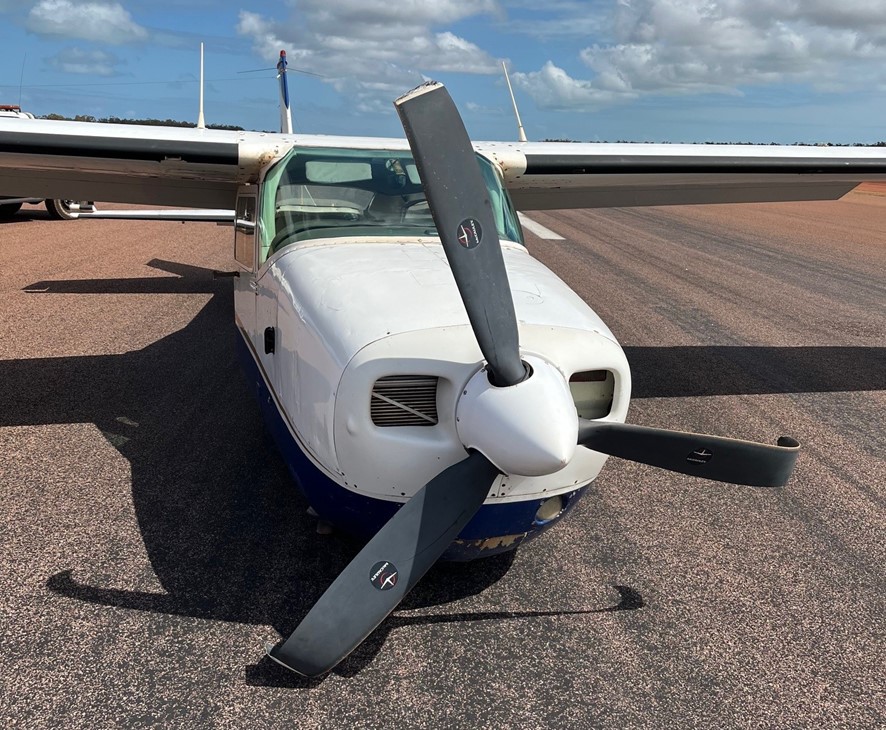
Source: Supplied
The pilot reported they were experiencing a high level of non-work-related distractions at the time that may have also contributed to the incident.
Safety message
It is important for pilots to manage distractions and ensure all normal pre-landing checklists are completed.
Distractions can often lead to human error and routine tasks such as selecting the landing gear being unintentionally omitted. Distractions are a normal part of everyday flying, with 13% of accidents and incidents associated with pilot distraction occurring during the approach phase of flight, as found in the ATSB research report, Dangerous distraction (B2004/0324).
Pilots must ensure that all pre-landing checklists are carried out systematically as detailed in the flight manual. If interrupted, it is best practice to start again from the beginning to ensure that nothing is missed.
About this report
Decisions regarding whether to conduct an investigation, and the scope of an investigation, are based on many factors, including the level of safety benefit likely to be obtained from an investigation. For this occurrence, no investigation has been conducted and the ATSB did not verify the accuracy of the information. A brief description has been written using information supplied in the notification and any follow-up information in order to produce a short summary report, and allow for greater industry awareness of potential safety issues and possible safety actions.
Occurrence summary
| Mode of transport | Aviation |
|---|---|
| Occurrence ID | AB-2024-040 |
| Occurrence date | 11/09/2024 |
| Location | Gove Aerodrome |
| State | Northern Territory |
| Occurrence class | Serious Incident |
| Aviation occurrence category | Wheels up landing |
| Highest injury level | None |
| Brief release date | 05/12/2024 |
Aircraft details
| Manufacturer | Cessna Aircraft Company |
|---|---|
| Model | 210N |
| Sector | Piston |
| Operation type | Part 135 Air transport operations - smaller aeroplanes |
| Departure point | Elcho Island Aerodrome, NT |
| Destination | Gove Aerodrome, NT |
| Damage | Minor |
Saab evacuated after interrupted engine start
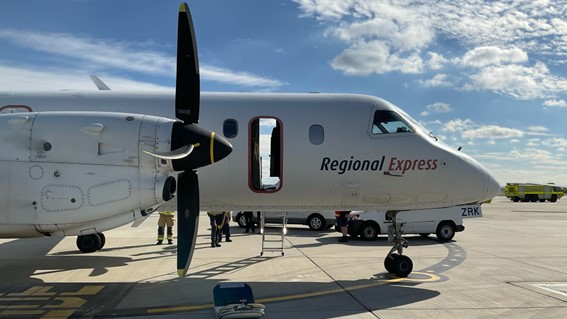
Misinterpretation of and miscommunication about a plume of flame and smoke from a Saab 340 regional airliner’s left engine following an interrupted start-up resulted in the captain ordering an evacuation of the aircraft in which incomplete instructions were provided to the passengers, 2 passengers sustained minor injuries, and several passengers exited the aircraft with their bags.
An ATSB investigation report into the incident details that on 5 April 2022, the Regional Express operated Saab 340 was being prepared for departure at Melbourne Airport for a flight to King Island, with two flight crew, a flight attendant and 23 passengers on board.
During the engine start, a ground crew member prematurely disconnected the ground power unit from the left engine. Recognising the interrupted start, the captain initiated the interrupted start checklist, which included motoring the engine to purge residual fuel (rotating the engine by running the starter motor without supplying fuel).
“As part of the motoring process there was a plume of smoke and flame from the engine, which prompted the marshaller, who was unaware that that could be expected, to gesture to the flight crew that there was a fire from the left engine, and to shut down the engine,” ATSB Chief Commissioner Angus Mitchell said.
“Due to the marshaller’s repeated hand signals, the captain stopped the motoring, which meant that burning fuel remained in the engine, and as a result, the fire was not extinguished.”
The captain subsequently shut down both engines and discharged the left engine fire extinguisher. They then ordered the evacuation of the aircraft, without communicating their observations or actions to the first officer prior, thus limiting the FO’s opportunity to contribute to the identification and management of the situation.
At that time the flight attendant was using the public address system, and so the captain ordered the evacuation via four chimes. However, the flight attendant did not recognise the chimes as an evacuation signal and did not react to the command, and they remained unaware that an evacuation was required until the captain opened the flight deck door to communicate directly.
Then, when ordering the passengers to evacuate, the flight attendant provided limited instructions, and passengers in the emergency row did not open the right overwing exit, which delayed the evacuation.
“As they evacuated the aircraft, some passengers took their baggage with them during the evacuation, which increased the risk of injury and delays exiting the aircraft,” Mr Mitchell added.
In all the evacuation, via the right front door only, took 4 minutes, and there were 2 reported minor injuries sustained during the evacuation: one passenger with a knee injury and another passenger with a grazed elbow.
Meanwhile, due to the nature of the problem not being communicated directly from the aircraft to air traffic control, the aviation rescue and firefighting service response was delayed by two minutes.
Mr Mitchell said the investigation highlights the importance of undertaking an informed and coordinated approach to decision‑making to ensure that the most appropriate action can be taken.
“The use of all available resources, including seeking input from other crew members, particularly in abnormal or emergency situations, assists in being able to positively identify the nature of a problem,” Mr Mitchell noted.
“This occurrence also highlights the importance of the use of standard communications, including hand signals, to be able to effectively convey information, particularly in a potentially time-critical situation.”
At an organisational level, the ATSB found that Regional Express did not provide flight crew or ground crew recurrent training to review the hand signals required to communicate with each other, including those used in an emergency.
In addition, although flight crew were required to notify ground crew if an evacuation was necessary, the operator did not provide guidance to ground crew on the actions to be taken in the event of an evacuation.
“A number of previous investigations have identified the importance of ground crew being aware of what happens during an evacuation and how they can potentially assist,” Mr Mitchell concluded.
Read the final report: Interrupted engine start and evacuation involving Saab 340B, VH-ZRK, at Melbourne Airport, Victoria, on 5 April 2022