ATSB recommendations target single point of failure in bulk carrier grounding

The ATSB has issued a number of safety recommendations after an electrical short circuit led to the grounding of a bulk carrier in the channel off Port Hedland, in Western Australia’s Pilbara region.

On 9 April 2022, the Liberian-flagged bulk carrier Hagen Oldendorff departed its berth with a harbour pilot on board and four tugs assisting for an outbound passage of Port Hedland’s 40 km dredged channel.

During the transit, shortly after completing a turn, an electrical short circuit led to the loss of power to all of the ship’s analogue rudder angle indicators.

Incorrectly believing the ship’s steering had failed, the bridge team implemented the relevant emergency response procedures for a steering failure.

Manoeuvring orders issued during the response resulted in an uncontrolled turn to port, and a collision with the side of the channel at about 6.1 knots.

The ship was returned to the centre of the channel, and taken out to anchorage, where inspection revealed it was taking on water in two of its double-bottom water ballast tanks, due to substantial damage which required extensive repairs.

Fortunately, no injuries or pollution were reported.

“Port Hedland is the largest bulk export port in the world, and a grounding in the channel could have significant outcomes not only for the environment and for the safety of those on board, but also for the Australian economy,” ATSB Chief Commissioner Angus Mitchell said.

As such, significant research has gone into the appropriate safety measures and procedures for ship movements in and out of Port Hedland.

“In any best practice, safety-critical operation, single points of failure should be eliminated,” Mr Mitchell continued.

“In this instance an electrical short circuit led to the loss of power to all of the ship’s analogue rudder angle indicators.”

The ATSB’s final report notes Hagen Oldendorff’s rudder angle indicators were compliant with international regulations and classification society rules.

“However, these applicable rules and regulations did not, and still do not, require the ship’s rudder angle indicators be protected against a single point of failure, such as the tripping of the common circuit breaker, which in this case resulted in a loss of electrical power supply to all the analogue indicators,” Mr Mitchell said.

“Additionally, the rules do not require installation of audible or visual alerts to notify the bridge team of a loss of power supply affecting the indicators.”

As such, the ATSB has issued a safety recommendation to Hagen Oldendorff’s flag state administration, the Liberia Maritime Authority, as well as the ship’s classification society, Lloyd’s Register, and Australia’s maritime regulator, the Australian Maritime Safety Authority, to address the risk associated with a single point of failure in electrical power supply for ship rudder angle indicators.

“While some progress has been made towards resolving this safety issue, there is an absence of detailed proposals and a timeframe to resolve it,” Mr Mitchell said.

Tug procedure safety issue addressed

The ATSB’s investigation also found the ship’s pilot had cast off the port and starboard shoulder tugs early, inconsistent with the recommended practices of Port Hedland’s escort towage strategy.

“Further, the investigation identified that best practice escort towage guidance was not integrated into the Port Hedland port user guidelines and procedures, or into the pilotage provider’s safety management system,” Mr Mitchell noted.

In response to the incident, the Pilbara Ports Authority updated its user guidelines and procedures to incorporate tug retention and utilisation practices, and guidance recommended in the port’s escort towage strategy.

Additionally, the pilotage provider, Port Hedland Pilots, advised the ATSB that its pilots now keep the forward two tugs fast, as recommended, for the relevant channel sections, unless prevented from doing so by weather or other factors.

“Pilotage and towage are primary risk control measures in ensuring the safety of port operations,” Mr Mitchell concluded.

“Where demonstrated techniques and practices have been identified that increase the effectiveness of towage in preventing incidents, and in mitigating the consequences when they occur, it is imperative that they are appropriately documented, disseminated and implemented.”

Read the final report: Grounding of Hagen Oldendorff, Port Hedland, Western Australia, on 9 April 2022

Expectation bias a factor in truck-train level crossing accident
A truck driver who failed to stop before a level crossing collision in southern Queensland was probably influenced by expectation bias, having likely never seen a train at the crossing in the past, an ATSB investigation has concluded.

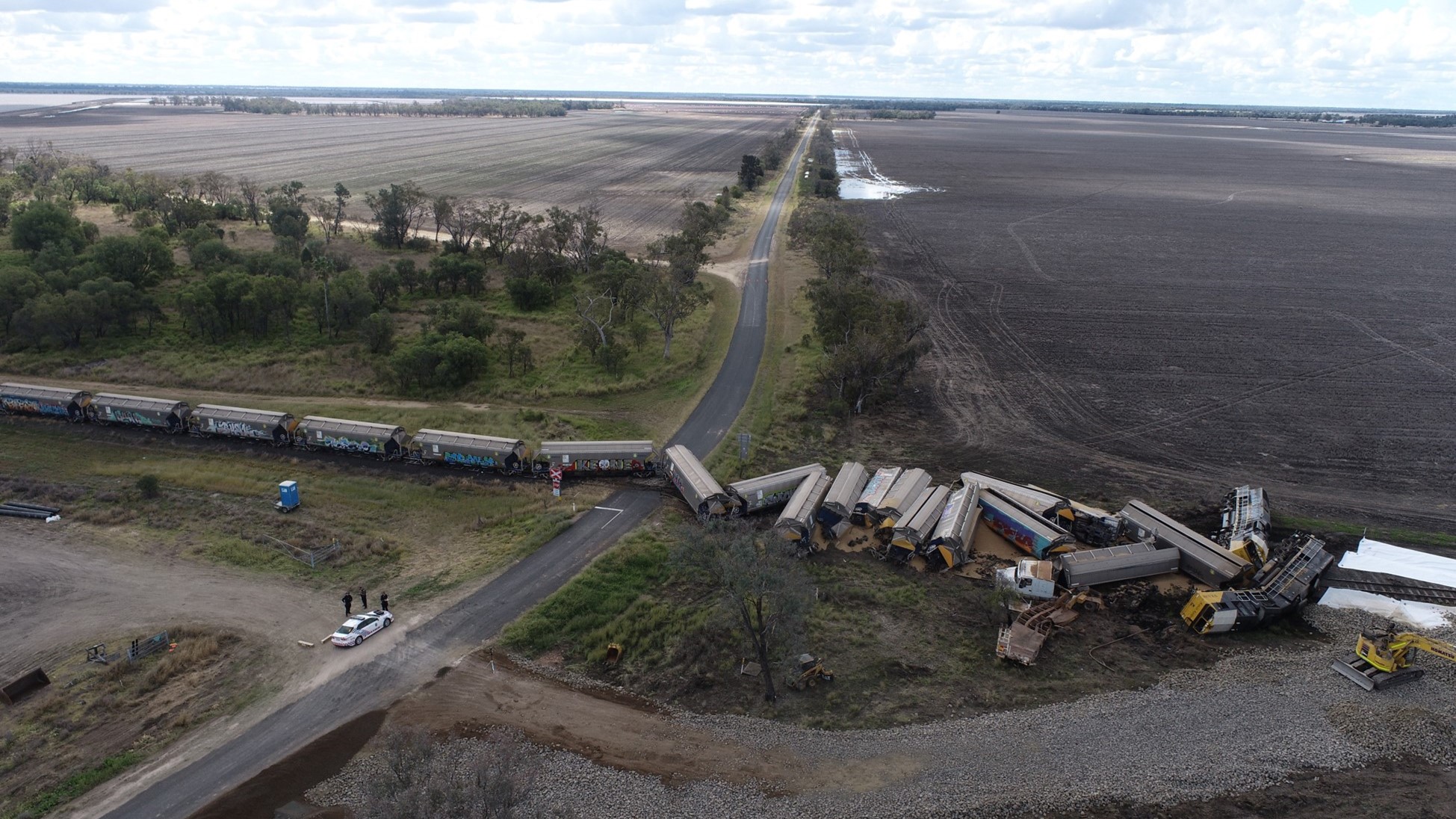
On 23 May 2024, a prime mover hauling a skid steer was about 50 m north of Gooray Road level crossing, near Goondiwindi, when the truck driver saw a train approaching from the west.

Assessing they could not stop in time, the truck driver accelerated, but the truck was unable to clear the crossing before the train collided with the truck’s trailer.

The truck driver and two train drivers were seriously injured in the collision, which also destroyed the train’s two locomotives and 12 grain hoppers, and the truck’s prime mover and low-load trailer.

“Due to the infrequency of trains on that corridor, it is likely the truck driver had not seen a train at that crossing in the past,” ATSB Director Transport Safety Stuart Macleod said.

“This created an expectation bias which probably reduced the effectiveness of the truck driver’s scan while approaching the crossing.

“Nonetheless, the signage instructed the driver to stop at the crossing, and the driver did not comply with this requirement.”

The ATSB found the configuration of the crossing provided appropriate signage and stopping distance for a road vehicle driver to notice the passive level crossing controls, and bring their vehicle to a controlled stop – as directed by the signage – before the level crossing.

“Once stopped, there is adequate visibility for a driver to sight a train and give way,” Mr Macleod said.

In addition to the ATSB’s assessment, after the accident Queensland Rail initiated its own assessment based on the Australian Level Crossing Assessment Model (ALCAM).

“The ALCAM assessment determined there were no obstacles to sighting distances or the visibility of signage,” Mr Macleod noted.

The ATSB’s report notes the Office of the National Rail Safety Regulator, in its own review, identified the advance warning signs on the northern side of the crossing were in the incorrect order, and Goondiwindi Regional Council advised it would schedule works to alter the order of the signs.

Additionally, the ALCAM assessment found an advanced warning sign was lacking on the southern side of the crossing – the opposite direction to the one used by the truck in this accident.

Mr Macleod said the accident demonstrates the limitations of passive controls at level crossings, where the onus is on road users to follow these controls – making them particularly vulnerable to unintentional driver error, or intentional driver decisions.

“This accident highlights how expectation bias can influence driver behaviours when negotiating passive level crossings,” Mr Macleod said.

“Passive controls are common at level crossings where road and rail traffic volumes are low, and it is unlikely most road users will encounter a train at such a crossing.

“As road users become familiar with a level crossing where they have not previously encountered trains, they can unconsciously form an expectation that no trains will be present every time they approach that crossing.

“It is therefore crucial that road users remain cognisant of the potential presence of trains at every level crossing, and are mindful of the consequences of a collision such as this one.”

Read the final report: Level crossing collision between freight train 6839 and truck, Gooray Road, Gooray, Queensland, on 23 May 2024
Gippsland aircraft accident investigation preliminary report

An ATSB preliminary report details factual information gathered in the early stages of the on-going transport safety investigation into a light aircraft accident north of Sale last month.

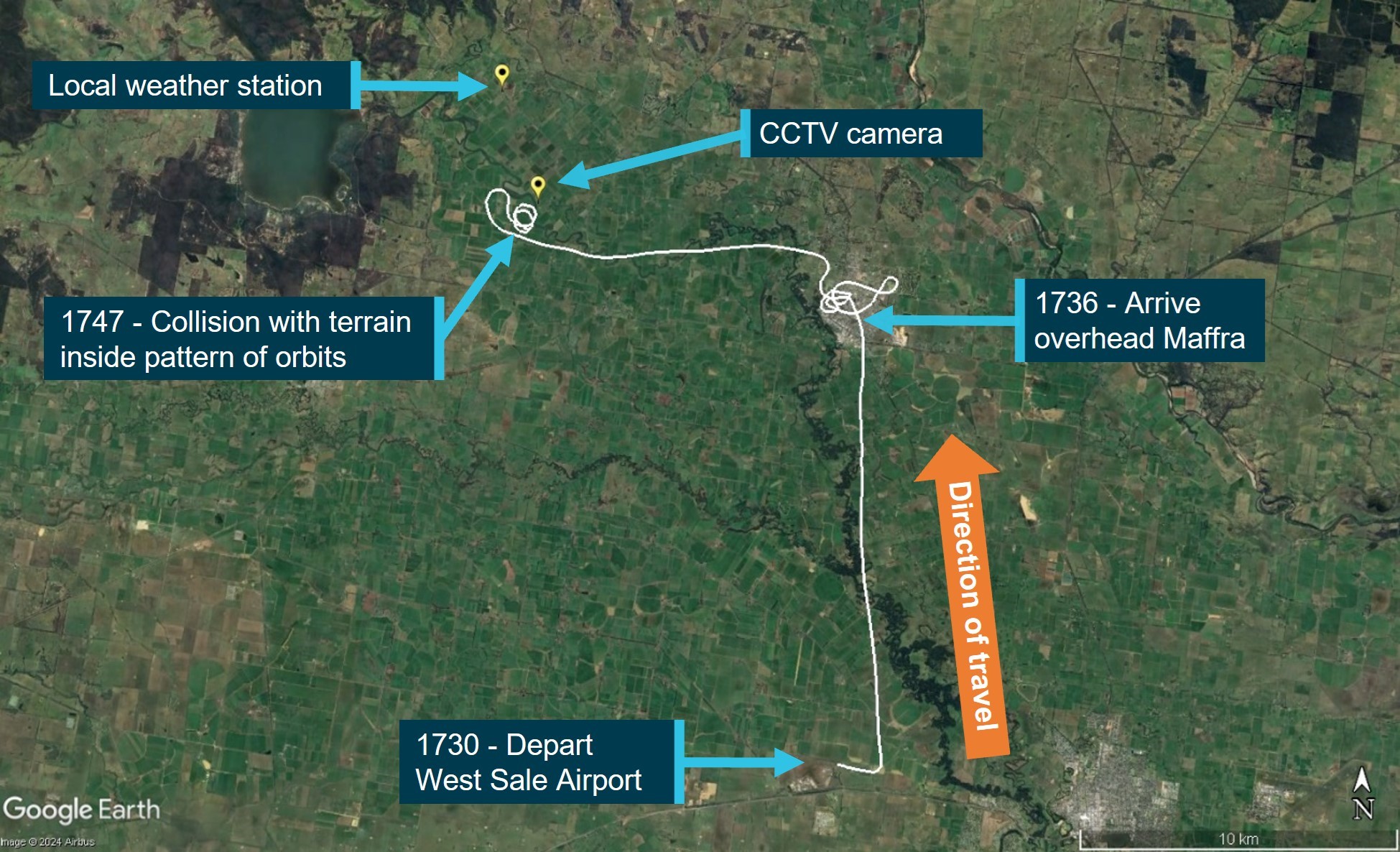
A pilot and two passengers were fatally injured when their Morgan Cougar aircraft impacted a paddock about 19 km north of Sale, in Victoria’s Gippsland region, on 16 November 2024.

After taking off from West Sale, the kit-built aircraft had flown north and conducted a series of turns over the township of Maffra. It then flew west before orbiting overhead a Tinamba West property, which belonged to relatives of the aircraft occupants.

“Footage from a camera located about 700 metres from the accident site shows the aircraft in a left turn, before it pitched nose down and descended in the left turn behind a tree line,” ATSB Chief Commissioner Angus Mitchell said.

“ATSB transport safety investigators’ examination of the accident site identified the aircraft impacted flat and open terrain.”

The aircraft was further affected by a post-impact fuel-fed fire.

“As the investigation proceeds, the ATSB will analyse and examine the avionics unit and aircraft components recovered from the accident site, and will review aircraft records, including design and certification standards,” Mr Mitchell said.

“Investigators will also review witness reports and interviews with key personnel.”

 The ATSB will release a final report at the conclusion of the investigation.

“In coming months, our investigators will continue to examine and analyse all evidence available to develop findings and identify safety action that can help reduce the likelihood of another tragic accident such as this one,” Mr Mitchell concluded.

Read the preliminary report: Collision with terrain involving a Morgan Cougar Mk1 aircraft, VH-LDV, 19 km north-north-west of West Sale Airport, Victoria on 16 November 2024

Poor quality sleep contributed to low-speed ore train collision

The driver of an iron ore train that collided at low speed with the rear of a stationary second train had been experiencing stress, sleeping with the lights on, and waking up often throughout rest periods, an ATSB investigation report details.

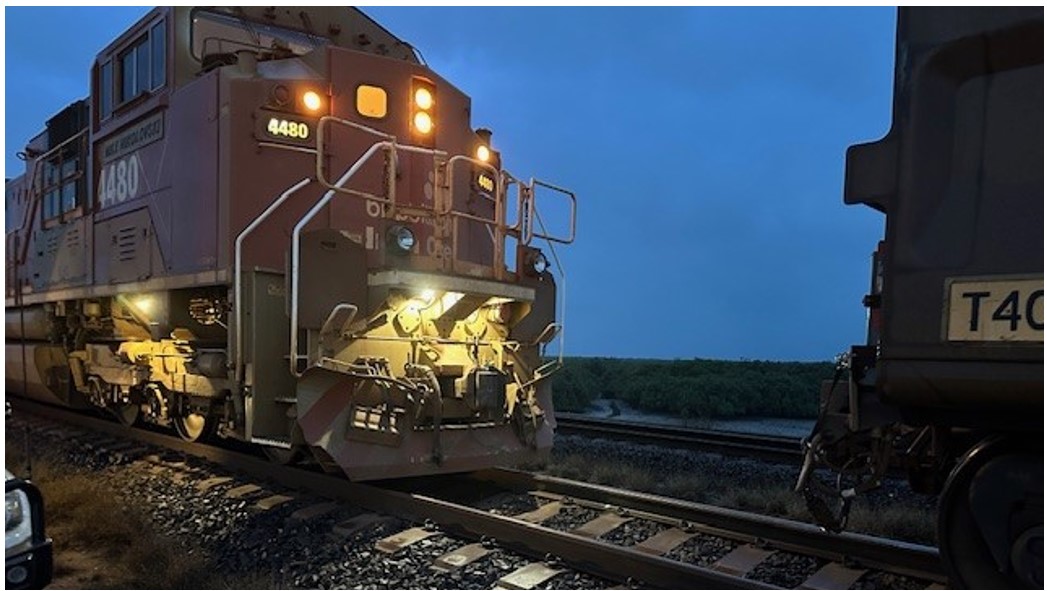
The collision occurred in the yard at BHP’s Finucane Island site at Port Hedland, Western Australia, where both trains were waiting to be unloaded, shortly after 4:30am on 2 March 2024.

After detecting the train ahead of them had moved, the driver applied power to move their train forward, with the intention of stopping behind the second train, which had come to a stop 325 m ahead at a handover point, to be prepared for unloading.

“The driver set their train in motion, and without the awareness of or memory of having done so, acknowledged four subsequent audible vigilance alerts which, by design, prevented a penalty brake activation prior to collision,” ATSB Chief Commissioner Angus Mitchell said.

With no brake application or reduction in throttle during that time, the train collided with the rear of the second train.

“The driver reported that they were awoken by the collision, and thought they must have had a microsleep.”

The impact sequence lasted 38 seconds and, although the locomotive brakes were fully applied on the stationary train, it was pushed forwards about 40 m. 

Fortunately, there were no injuries or damage.

"It was dark at the time of the collision, the driver had been experiencing a low workload while waiting to move their train in the yard, and it was their fourth consecutive night shift,” Mr Mitchell said.

“Poor quality sleep meant the driver was operating the train with a degraded level of alertness.”

An unusual set of circumstances contributed to the driver’s poor-quality sleep, with the report detailing that about three months before the accident, the driver (who was working under fly-in fly-out arrangements) was bitten by a white-tailed spider while sleeping in accommodation barracks at Port Hedland.

After having the spider bite assessed at a Port Hedland medical centre the driver returned home to Sydney, where they underwent surgery for the bite, and were subsequently cleared by their GP to resume duties about six weeks later.

A week after returning to work, in January 2024, the driver again awoke in the same barracks room and noticed similar signs of a white-tailed spider bite.

After returning to Sydney, the driver again underwent surgery, and another period of rehabilitation.

“Upon returning to Port Hedland after the second spider bite, the driver began to experience panic attacks and stress,” Mr Mitchell explained.

“Fearing another bite, the driver frequently sprayed insecticide in their locomotive cabs and, including waking from sleep to do so, their bedroom.”

While the driver had adequate opportunity for sleep, this stress and subsequent action disrupted their ability to obtain restorative sleep.

“While sleep duration is important, so too is sleep quality,” Mr Mitchell reiterated.

“Stress and interrupted sleep should prompt workers to assess and report an elevated risk of fatigue.”

As a result of the accident, BHP undertook a series of actions to manage fatigue, and to address the limitations of its relevant locomotive’s vigilance systems.

Read the final report: Low-speed collision between trains MO5519A and MO5519B at Finucane Island Balloon Loop, Port Hedland, Western Australia on 2 March 2024

Preliminary report into Bacchus Marsh light aircraft accident

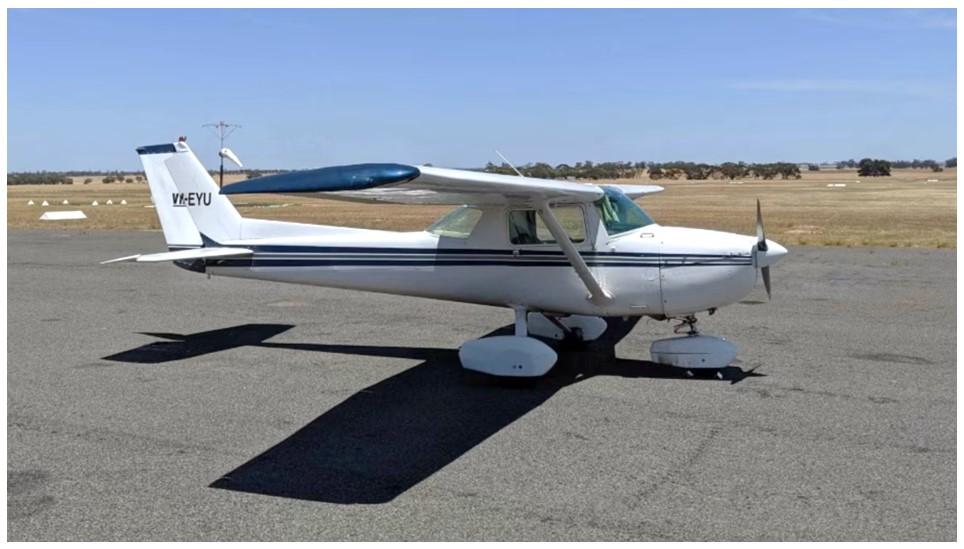
The ATSB has published its preliminary report into a fatal accident involving a Cessna 150 at Bacchus Marsh airfield, west of Melbourne.

On the morning of 22 October 2024, the pilot of the Cessna 150L single piston-engine light aircraft began a take-off roll on Bacchus Marsh runway 27, but rejected the take-off.

Four minutes later, after returning to the runway threshold, the pilot began a second take-off roll.

“Several witnesses at the airfield then observed the aircraft pitching steeply up during its initial climb,” ATSB Chief Commissioner Angus Mitchell said.

“Witnesses then report the aircraft’s left wing dropping rapidly, as it entered a vertical descent, rotating approximately 270° before colliding with terrain about 205 m south of the runway centreline.”

The ATSB’s preliminary report details factual information established in the investigation’s early evidence collection phase. It does not contain analysis or findings, which will be detailed in the investigation’s final report.

The preliminary report notes the wreckage was consistent with a steep nose down attitude during impact.

“ATSB examination found no evidence of pre-impact defects with the flight controls or structure, and the engine was able to be rotated with no obvious defects upon external examination,” Mr Mitchell reported.

The throttle setting was found to be at idle position (low power), and rotational damage signatures to the propeller were minimal, indicating a low engine power setting at the time of the impact.

The preliminary report also notes witnesses described strong and gusty wind at the time of the accident.

“Weather conditions will be part of the ongoing analysis as we progress through the investigation,” Mr Mitchell said.

“The investigation will also include further review of the pilot’s experience, qualifications and training, the aircraft’s maintenance history, and all available CCTV and mobile phone footage.”

A final report will be released at the conclusion of the investigation.

“Should a critical safety issue be identified during the course of the investigation, the ATSB will notify relevant parties immediately, so appropriate and timely safety action can be taken,” Mr Mitchell concluded.

Read the preliminary report: Loss of control and collision with terrain involving Cessna 150L, VH-EYU, Bacchus Marsh Airport, Victoria, on 22 October 2024