Loss of power and collision with terrain involving Stoddard Hamilton Glasair SH-2FT, VH-HRG, near Wedderburn Airport, New South Wales, on 19 July 2015
Final report
Report release date: 04/10/2016
Safety summary
What happened
Late in the afternoon on Sunday 19 July 2015, an amateur-built Stoddard Hamilton Glasair SH-2FT two-seat aeroplane, registered VH-HRG and operated in the Experimental category, was seen flying due north, consistent with the downwind leg of a circuit for landing at Wedderburn Airport, New South Wales.
Witnesses stated that they heard the aircraft’s engine surge twice and then silence, prior to hearing the aircraft collide with wooded terrain about 900 m north of the runway threshold. No witness reported seeing the aircraft turn onto the base leg or final approach, nor the aircraft collide with terrain.
The pilot sustained serious injuries, the passenger was fatally injured, and the aircraft was destroyed.
What the ATSB found
The ATSB found that during the turn onto final approach to land, the aeroplane’s engine ceased operating. Following the loss of power, the pilot was unable to control the aircraft’s descent to an appropriate forced landing area before colliding with the ground.
The ATSB also found that the loss of power was probably due to carburettor icing. No defects were identified that would have precluded normal operation of the aircraft or its engine prior to the accident. However, the environmental conditions at the time were conducive to serious carburettor icing at all power settings. The pilot reported using a low power setting during the downwind leg of the circuit to slow the aircraft down and did not use the carburettor heat system.
There was insufficient evidence to support other possible hypotheses for the aircraft’s loss of control, such as an aerodynamic stall as a result of aircraft handling.
Safety message
The ATSB advises pilots of aircraft fitted with a carburettor to check the forecast weather conditions affecting their operations, and consider the risk of carburettor icing prior to each flight. Pilots should be aware that carburettor icing can form over a wide range of outside air temperatures and relative humidity and understand the importance of following aircraft manufacturer guidelines regarding the use of carburettor heat. Further, they should be mindful that certain flight conditions, such as lower engine power settings, may increase the risk of ice accumulating in the engine’s carburettor.
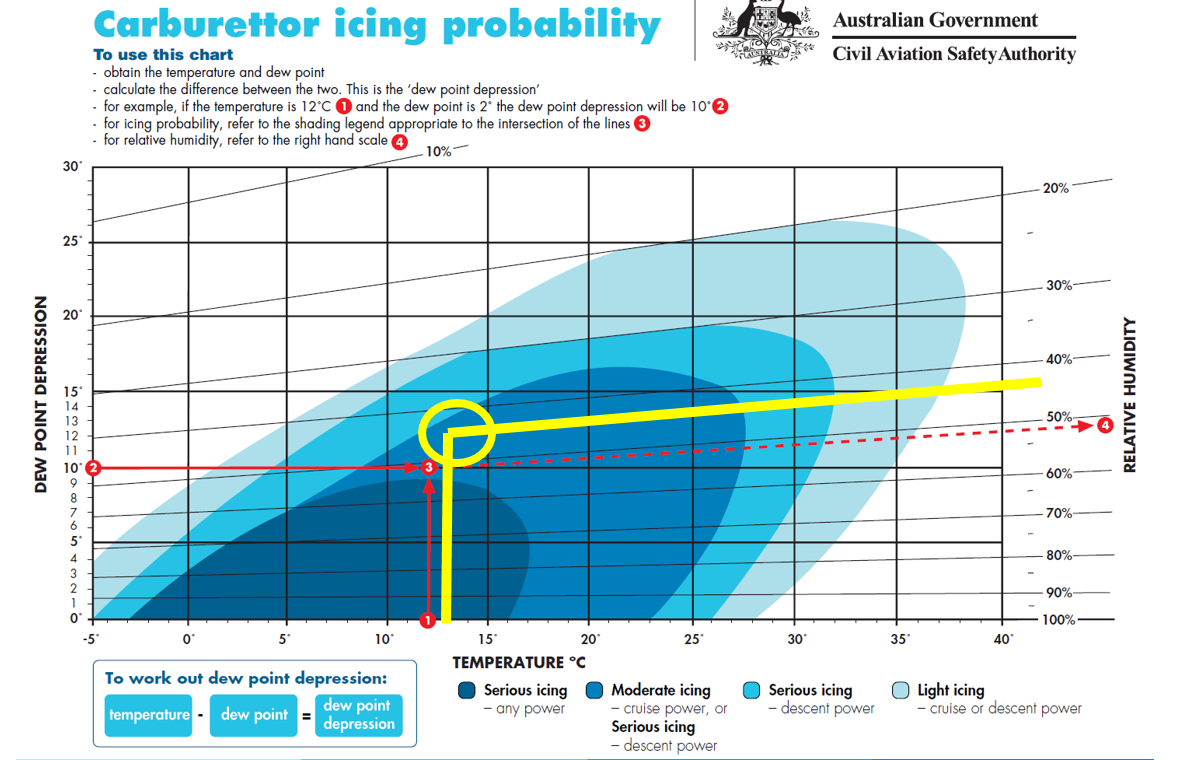
The Civil Aviation Safety Authority’s Carburettor icing probability chart provides helpful guidance for pilots to determine carburettor icing probability before flying. The chart is available at www.casa.gov.au.
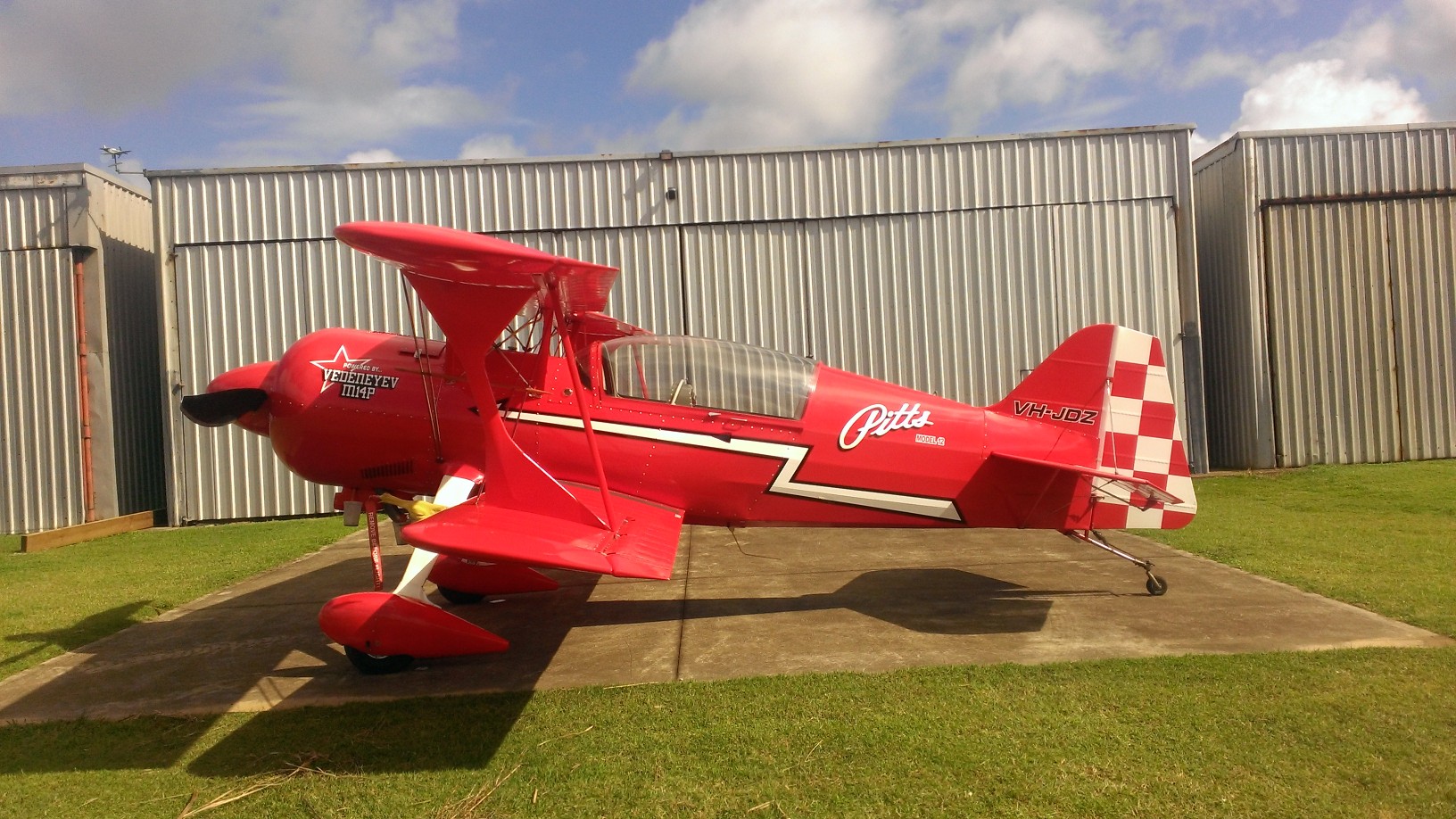
Photograph of VH-HRG
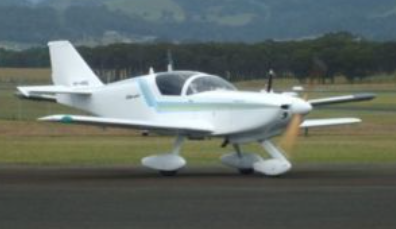
Source: NSW Sport Aircraft Club
The occurrence
At about 1625 Eastern Standard Time[1] on Sunday 19 July 2015, the pilot and passenger of an amateur-built Stoddard Hamilton Glasair SH-2FT two-seat aeroplane, registered VH-HRG and operated in the Experimental category, took off from runway 17[2] at Wedderburn Airport, New South Wales. The pilot recalled a ‘shallow’ take-off due to the aircraft’s weight (two people on board plus almost full fuel) and the characteristics of the aircraft’s wooden cruise propeller.
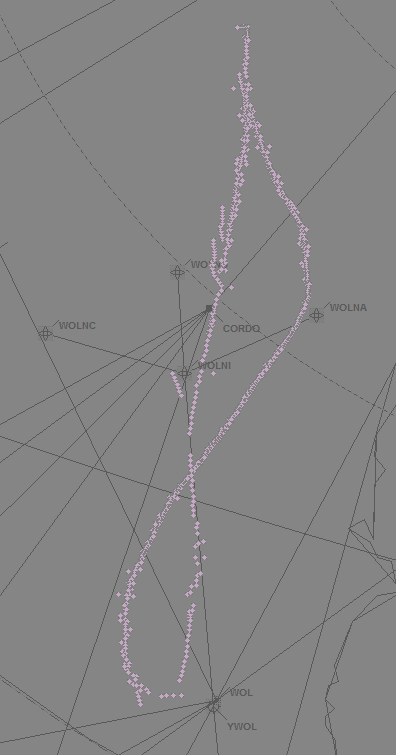
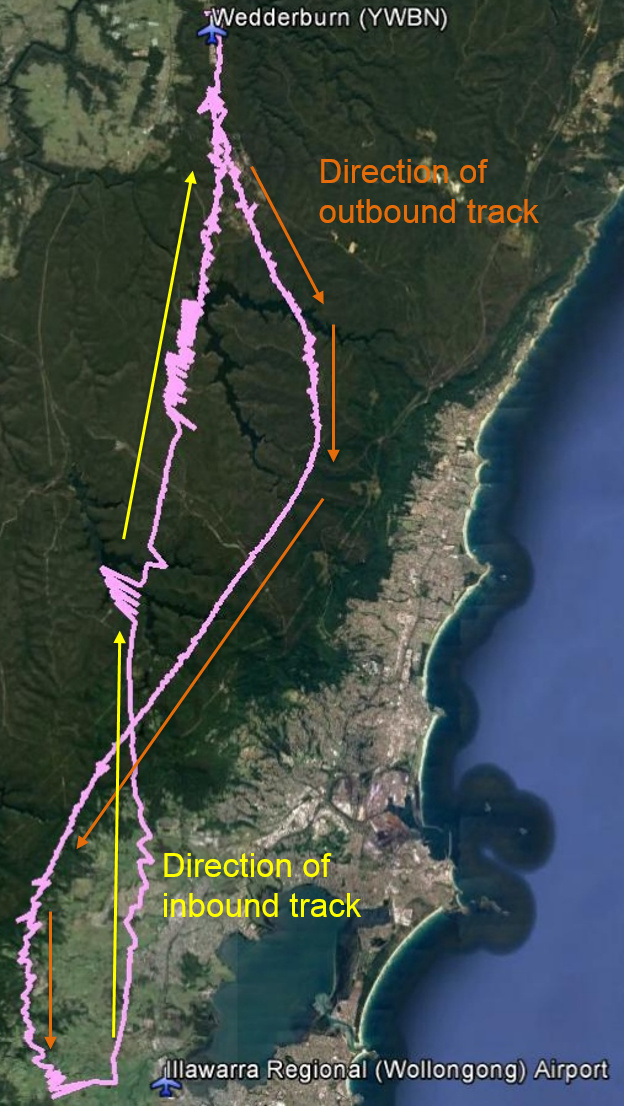
At 1628, an unverified aircraft was observed on Airservices Australia surveillance radar for the area, consistent with the position of VH-HRG. The aircraft tracked in a south-south-westerly direction toward Wollongong. At about 1639, when near Wollongong, the aircraft turned left and commenced tracking back to the north (Figure 1).
Figure 1: Radar trace of the aircraft that appeared on Airservices Australia surveillance radar in the area of Wedderburn Airport at 1628 (at the top, with the aircraft’s radar returns shown in lilac) and the radar trace and returns (also in lilac) overlaid on Google earth (right)
Source: Airservices Australia and Google earth, modified by the ATSB
Witnesses stated that, at about 1649, the aircraft was seen flying due north, consistent with the downwind leg of a circuit in preparation for landing on runway 17 at Wedderburn Airport. The pilot recalled that the aircraft’s airspeed was higher than preferred on downwind, being greater than 100 kt. The pilot reported attempting to reduce airspeed by adjusting power and the aircraft’s attitude. However, the airspeed remained high when on late downwind. The pilot indicated that by that time, power had been reduced to the idle position. The pilot further indicated that when on downwind, the aircraft was closer to the runway than normal.
The pilot commenced a continuous turn onto base and final at an airspeed of about 90 kt and applied full flap. The pilot indicated that the power setting remained at idle until approaching the finish of the turn onto final. The pilot then attempted to apply power to arrest the aircraft’s deceleration. However, the pilot stated that when power was applied, the engine coughed and spluttered. The pilot recalled the aircraft’s airspeed at that time as about 80–85 kt. The pilot commented that the engine was left at idle longer than preferred. The pilot could not recall anything further until after the impact with the ground.
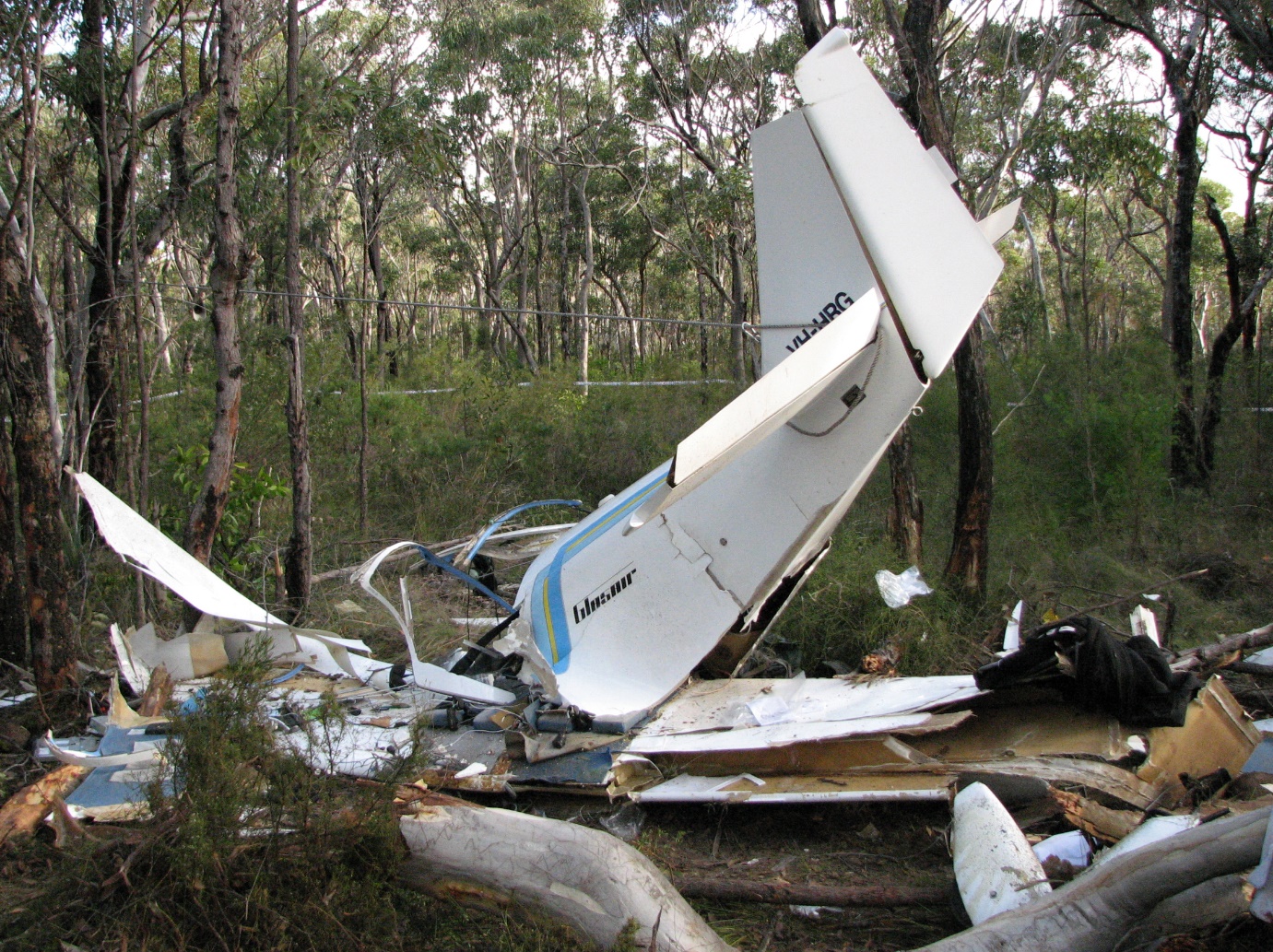
Witnesses also stated that they heard the aircraft’s engine surge twice and then silence, prior to hearing the aircraft collide with wooded terrain, about 900 m north of the threshold of runway 17 (Figure 2). None of the witnesses reported seeing the aircraft turn onto the base leg or final approach, nor the aircraft collide with terrain.
The pilot sustained serious injuries and the passenger was fatally injured. The aircraft was destroyed.
Figure 2: Aircraft wreckage. Note that the tail empennage is secured in an elevated position by being tied off to a nearby tree
Source: ATSB
__________
- Eastern Standard Time (EST) was Coordinated Universal Time (UTC) +10 hours.
- Runways are named by a number representing the magnetic heading of the runway.
Context
Pilot information
Qualifications and experience
The pilot held a valid Private Pilot (Aeroplane) Licence and a Class 2 Aviation Medical Certificate that required the pilot to wear distance vision correction and have reading correction available while exercising the privileges of the licence. The pilot reported wearing their distance correction glasses at the time of the loss of power.
No medical anomalies were identified during the pilot’s last medical examination. The pilot last completed a flight review on 1 November 2014. As of 9 June 2015, the total flying hours recorded in the pilot’s logbook was 621.8 hours, with 423.8 hours on type.
Recent history
The pilot’s spouse had recently passed away following a lengthy illness and the funeral was held on 13 July. The pilot reported not sleeping well or eating properly during this stressful period. However, the pilot stated that by 19 July they were sleeping and eating normally as the stress of the previous week had abated. More specifically, the pilot recalled obtaining about 9 hours sleep on the night prior to the accident (18 July) and commented that the sleep was normal. The pilot indicated that on the second and third nights preceding the accident (16 and 17 July), normal sleep was obtained, but that they felt tired on Saturday, 18 July. The pilot could not recall experiencing disturbed sleep or any illnesses.
There was no evidence that fatigue or the recent stressful events contributed to the accident.
A witness who interacted with the pilot on the morning of the accident stated that the pilot presented as being fine and well.
Aircraft information
The Glasair SH-2FT is a high-performance, two-seat, low-wing aeroplane constructed from fiberglass composite components. The FT model features a fixed, tricycle landing gear. The airframe was designed to provide a high top speed and efficiency of operation. Glasair indicated that the high-speed performance was complemented by a low-speed, gentle stall.
The aircraft, serial number W121, was home-built and registered VH‑HRG (HRG) in 1985. The pilot was the third owner of the aircraft since its construction.
HRG was fitted with a Lycoming O-320 engine with a hybrid ignition system and a wooden, fixed‑pitch, two-blade cruise[3] propeller. The aircraft was issued with a Department of Civil Aviation (Australia) approved flight manual on 5 September 1988.
An estimate[4] of the aircraft’s weight and balance showed that it was within centre of gravity limits at the time of departure and immediately prior to the accident.
Maintenance history
Examination of HRG’s maintenance records indicated that it was maintained to a day visual flight rules standard in the Private Category. The last periodic inspection was completed on 22 January 2015, and a maintenance release was issued at that time. At the time of the accident, all of the required maintenance had been completed.
Meteorological information
The meteorological conditions at Wedderburn for the flight were reported as calm with light winds. The 1700 aerodrome weather report (METAR)[5] for Camden Airport, about 18 km to the north-west of Wedderburn Airport, stated that the weather was clear with wind from the south-east at 4 kt (about 7 km/h).
The pilot reported that the weather conditions were fine with a slight crosswind from the left on take-off.
A witness, who was airborne when HRG departed Wedderburn but had landed before HRG returned, reported experiencing a ‘little bit’ of sun glare when on the base leg of the circuit to runway 17. Geoscience Australia astronomical information[6] showed that, at 1649, the sun would have been 2° 51.750’ above the horizon and that sunset was at 1707. The pilot reported they could not recall experiencing any sun reflection on the windscreen during the flight.
Ambient condition-related carburettor icing[7] probability
Bureau of Meteorology weather observations at Campbelltown (Mount Annan)
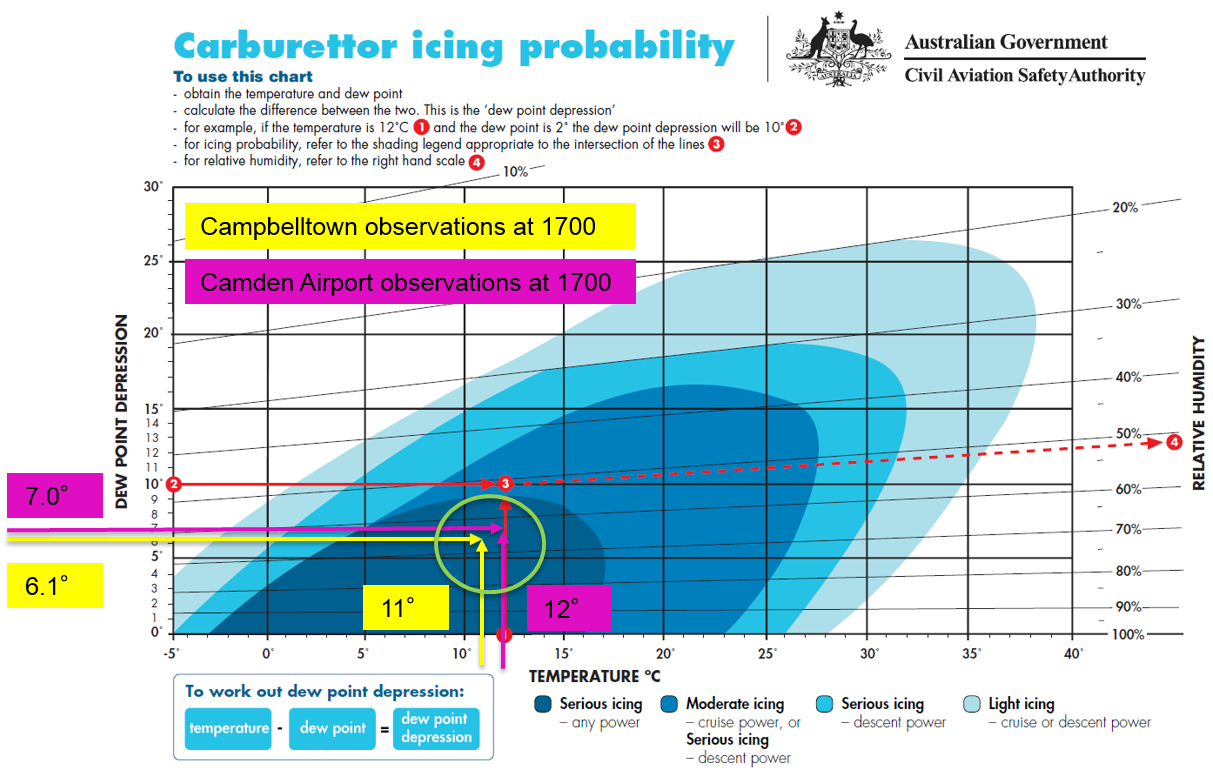
Bureau of Meteorology weather observations were available for Campbelltown[8] (Mount Annan), about 13 km north-north-west of the accident site. At around the time the aircraft departed Wedderburn Airport (about 1630), the temperature was 13.4 °C and the dewpoint[9] temperature was 5.1 °C. This resulted in a dewpoint depression of 8.3 °C. Around 10 minutes after the accident (about 1700), the temperature was 11 °C and the dewpoint temperature was 4.9 °C. This resulted in a dewpoint depression of 6.1 °C.
Camden Airport METARs
The 1630 METAR for Camden Airport indicated an air temperature of 13 °C and a dewpoint temperature of 5 °C. This resulted in a dewpoint depression of 8 °C.
The 1700 METAR for Camden Airport indicated an air temperature of 12 °C and dewpoint temperature of 5 °C. This resulted in a dewpoint depression of 7 °C.
According to the Civil Aviation Safety Authority (CASA) carburettor icing probability chart (see appendix A), the conditions recorded at Campbelltown (Mount Annan) and Camden Airport were conducive to ‘serious’ icing at all power settings.
Pilot reports
A pilot who was flying at Wedderburn Airport at the time HRG departed reported that, as far as they were aware, they did not experience carburettor icing during their flight. However, that pilot indicated being vigilant in using carburettor heat as their aircraft was prone to such icing, and that they had applied carburettor heat on that flight.
Two other pilots who were flying at Wedderburn Airport at the time also indicated that no carburettor icing issues were experienced and that they too were vigilant in the use of carburettor heat.
The pilot of HRG reported believing the conditions affecting the flight were not conducive to carburettor icing.
Airport information
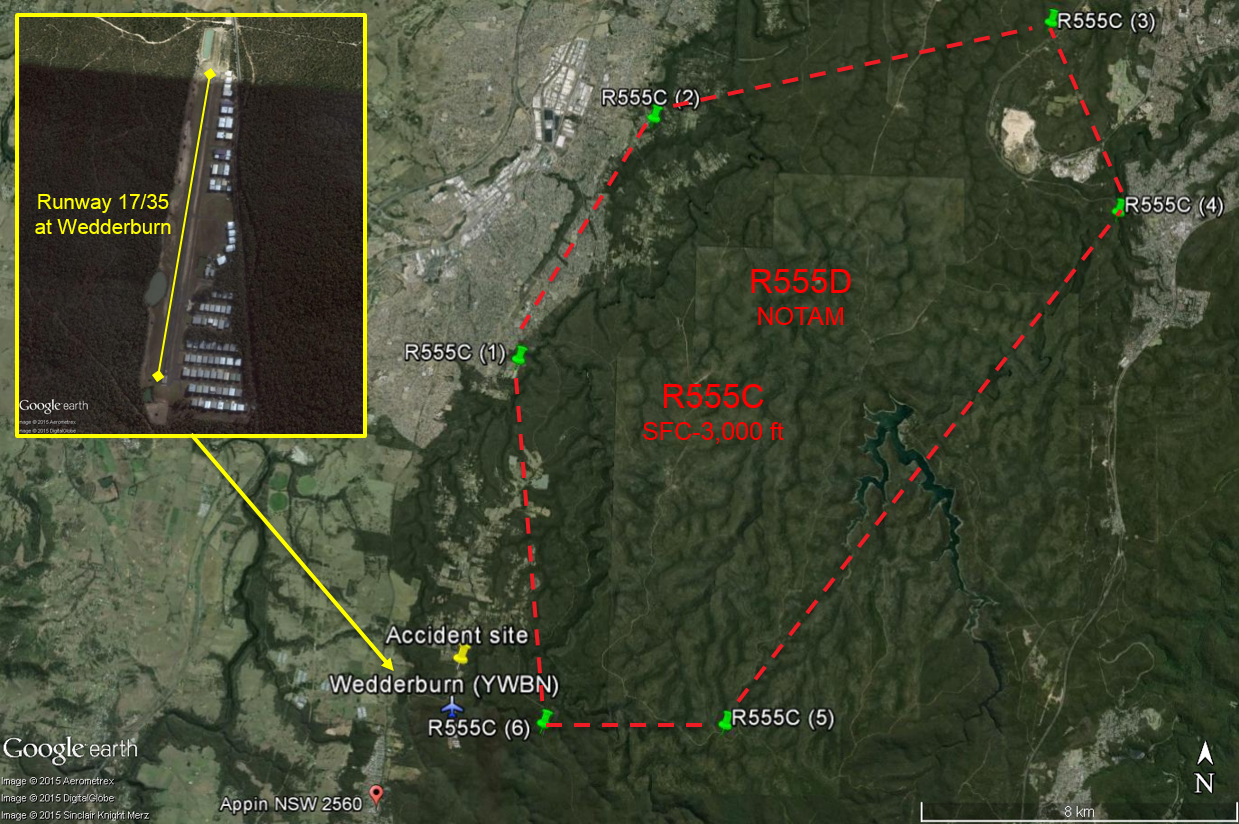
Wedderburn Airport was an uncertified, unregistered landing area about 13 km south of Campbelltown. The airport had a sealed and adjacent grass runway and was aligned 17/35 (roughly north-south) (Figure 3 inset). The airport was privately-owned and -operated. The Airservices Australia En Route Supplement Australia (ERSA) extract for Wedderburn advised the following:
- pilots should avoid flying over Appin Township (Figure 3)
- circuit traffic should avoid flying over the populous area to the north of the airstrip (refer to the section titled Wedderburn circuit pattern)
- restricted area R555 is located 1.5 NM (3 km) to the east of the airport (Figure 3).
The terrain surrounding the airstrip was heavily timbered, which provided minimal landing opportunities for an off-field forced landing.
Figure 3: Proximity of restricted area R555 (outlined by the red dashed line) to Wedderburn Airport (bottom-left of the restricted area) and Wedderburn runway 17/35 at inset
Source: Google earth, modified by the ATSB
Wreckage and impact information
On-site information
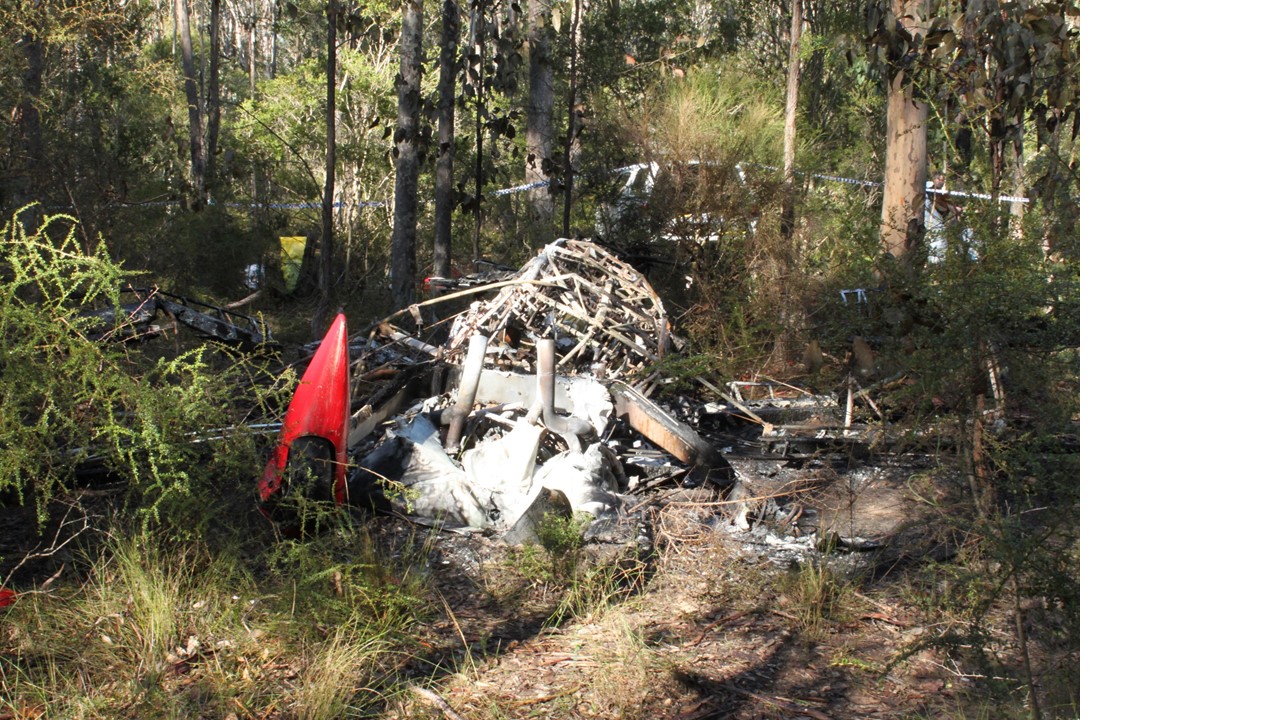
Examination of the wreckage found that, following a steep descent, the aircraft collided with trees before coming to rest about 26 m further on into a wooded area and about 20 m from a road leading to the eastern gate of Wedderburn Airport. The initial point of impact was a tree about 7 m in height. A second tree, measuring about 30–35 cm in diameter, was impacted about 17 m further along the wreckage trail. The aircraft’s angle of descent during the impact sequence with the trees was calculated to have been about 30°.
The impact sequence resulted in the engine oil sump being breached and destruction of the carburettor. The entire wing section, engine and fuselage forward section separated from the aircraft due to impact forces. The aircraft’s wooden propeller blades were broken off at the root and had shattered.
The aircraft’s landing gear collapsed and there was substantial damage to the fuel tanks and the header fuel tank was separated from the airframe. All header fuel tank plumbing was fractured. As a result of that damage, an unknown quantity of aviation gasoline leaked onto the ground under the wreckage and the amount of fuel on board prior to impact could not be determined. However, about 3 L remained in the header tank when examined.
There was no fire.
Fuel quality and quantity
Fuel quality
A number of other aircraft had refuelled from the NSW Sport Aircraft Club fuel source since 9 May 2015. A search of the ATSB’s occurrence database for the period 1 April–31 August 2015 did not identify any occurrences that could be linked to the fuel supply at Wedderburn Airport.
Fuel quantity
First responders indicated that there was a substantial amount of fuel detected at the accident site. A quantity of this fuel was recovered and tested by the ATSB. The test determined that the fuel smell and colour were consistent with Aviation gasoline 100, and that the sample was free from contamination.
The NSW Sport Aircraft Club fuel records indicated that 98 L of fuel was purchased by the pilot for HRG on 12 April 2015. This was followed by four refuels of 26 L, 24 L, 17 L and 20 L respectively on 9 May 2015 – a total uplift of 87 L. These latter fuel uplifts were consistent with a reported fuel vent line issue that resulted in the vent line being replaced. At that time, the aircraft had full fuel.
In terms of fuel quantity measurements, the owner’s manual noted that, due to the wing dihedral and location of the fuel gauge sender in the wing, the wing tank held a larger quantity of fuel than indicated by the full mark on the gauge in the cockpit. The pilot also indicated that the maximum reading on the fuel gauge was 90 L, yet the aircraft held 175 L when full (156 L in the main tank and 19 L in the header tank). Of this, about 150 L of main tank fuel was usable. There was no fuel dipstick for the aircraft.
The pilot recalled making a 40-minute flight 2 weeks prior to the occurrence flight. In contrast, the last two flights recorded on the aircraft’s maintenance release were:
- a 30-minute flight on 7 June 2015
- a flight on 14 April 2015.
That was, the only flight since the aircraft was filled to full fuel on 9 May 2015 was the 30-minute flight on 7 June 2015.
The pilot reported that the aircraft’s fuel burn rate was 30 L/hr but that 35 L/hr was used for flight planning. Using the planned fuel burn of 35 L/hr, the recorded 30-minute flight on 7 June would have burnt about 17.5 L of fuel. Based on Airservices Australia radar surveillance data, the accident flight was about 20 minutes in duration. Allowing for an additional 10 minutes for start-up, taxi and take-off, this meant that about 17.5 L was burnt on the accident flight.
The pilot reported that the main tank was selected for the duration of the flight and that the header tank was not used. The pilot further indicated that the header tank was only used if they believed the fuel was stale, and that this option was only exercised when doing the run-up checks. In this case, the estimated combined fuel burn for the flight on 7 June 2015 and the occurrence flight of 35 L meant that, at the time of the accident, there was an estimated 115 L of usable fuel in the main tank.
Technical examination of recovered items and components
The aircraft’s engine and associated components were recovered from the wreckage and transported to an approved engine overhaul facility for technical examination under the supervision of the ATSB. In addition, a number of aircraft items and components were recovered for technical examination at the ATSB’s technical facility in Canberra, Australian Capital Territory.
Conclusions
The on-site wreckage examination and post-on-site technical examinations found:
- no airframe or engine defects that may have contributed to the accident
- the main fuel tank contained a significant amount of fuel at impact
- the fuel selector was selected to the main fuel tank
- evidence of low-speed propeller rotation at impact.
The ATSB concluded that it was likely that none of engine or airframe defects or fuel contamination contributed to the loss of engine power.
Survival aspects
Shortly after the collision with terrain, witnesses arrived at the site and rendered assistance to the aircraft occupants. Witnesses reported that both occupants were restrained by at least the lap component of their seatbelt assemblies.
The pilot indicated that the passenger’s seat was fitted with a four-point harness, while the pilot’s seat was fitted with a shoulder/lap-type belt. Both seatbelts were appropriately anchored to the fuselage structure. However, due to cabin disruption during the accident sequence, the ATSB could not verify the remaining seatbelt attachment points.
The ATSB examined the survivability of the accident based on estimates of the aircraft’s speed, the impact angle and the level of aircraft disruption following the collision with terrain. The examination showed that the impact forces imparted to the occupants would normally be expected to result in serious to fatal injuries.
Additional information
Carburettor icing
Carburettor icing can occur in temperatures up to about 38 °C and is less likely in very cold climates. Increased humidity increases the likelihood of this icing. If ice continues to accumulate in the carburettor, the flow of air to the engine reduces and eventually, if the process is allowed to continue, the engine will stop.
Engines operating at reduced power settings are more prone to carburettor icing as the engine induction temperatures are lower due to the reduced airflow. In this case, the airflow through the carburettor is partially impeded by the throttle butterfly valve. This valve provides more area on which the ice can accrete and increases the partial vacuum downstream of the valve. This causes further chilling of the air and the water droplets, further increasing the likelihood of ice accretion. Unless otherwise stated in the aircraft owner’s manual, full carburettor heat should be applied prior to reduced power or closed throttle operations. The resulting warm air assists in preventing carburettor icing.
For aircraft with fixed-pitch propellers, as ice forms there is typically a small decrease in engine RPM but the engine may continue to run smoothly. As ice continues to accumulate, the reduction in RPM continues and the engine will begin to run rough. If the icing conditions are severe enough, and the pilot takes no remedial action, the engine will eventually stop.
The environmental conditions and time between the accident and the ATSB’s examination of the wreckage meant that any icing in the throat of the carburettor would have melted and not been detectable during that examination.
The pilot indicated that during the circuit, the carburettor heat was in the OFF position and the mixture was full rich. The aircraft was fitted with a carburettor air temperature gauge in the instrument panel. The pilot stated that they could not specifically recall the carburettor air temperature approaching Wedderburn Airport. The pilot also stated that checking the reading may not have been included in their normal instrument scan as icing was felt to not be a risk under the existing conditions and at that stage of the flight.
Wedderburn circuit pattern
One witness reported normally conducting the downwind leg for runway 17 closer to the runway due to the proximity of the R555 restricted area (see the section titled Airport information). Combined with noise restrictions to the north of the runway, this resulted in some pilots doing a continuous turn from downwind to base and onto final. However, another witness believed that the restricted area did not have much effect on the downwind portion of the circuit.
Several witnesses reported that they generally flew the circuit tighter than normal to avoid neighbour complaints about aircraft noise.
The pilot of HRG stated that, at Wedderburn, they normally conducted a ‘restricted circuit’, with a continuous turn from downwind to base and onto final due to the nature of the Wedderburn circuit. The pilot advised that the restricted area did not affect its conduct. The pilot of HRG further stated that members of the NSW Sport Aircraft Club, which was located at Wedderburn Airport, were aware of the need to turn onto base earlier to avoid neighbours on the closest roads to the north of the airport.
Glasair-recommended circuit pattern
The Glasair owner’s manual highlighted that the aircraft was a fast, clean aircraft that took longer to slow down than other light aircraft. Therefore, the manual recommended planning ahead and slowing down prior to entering the circuit pattern. The manufacturer recommended that entry to the circuit pattern occur at a speed between 113–122 kt. At that time, the following actions were recommended:
- the electric fuel boost pump should be turned on and the fuel tank selection changed to the desired tank
- carburettor heat should be applied for 5–7 seconds to check for icing and mixture be selected to full rich
- speed should then be reduced to 87 kt
- when abeam the landing threshold, the pilot should apply the first stage of flap (20°).
From this position, the manual recommended the pilot should:
- continue to reduce the aircraft’s airspeed
- at about 78 kt and no later than on the base leg, apply the second stage of flap (35°)
- commence the turn onto the final leg at an airspeed of about 70 kt and, if required, apply full flap (55°)
- have an airspeed of about 65 kt passing over the runway threshold.
The owner’s manual also provided a suggested pre-landing checklist. This checklist included selecting carburettor heat on and the fuel mixture to full rich.
Stall characteristics
The Glasair owner’s manual indicated that the clean stall speed for the aircraft (solo) was 55 kt, while the stall speed with flaps down at gross weight was 54 kt. The manual also indicated that stall strips were mandated on the wing inboard leading edges to induce the wing roots to stall first. The stall strips were considered by the manufacturer to be the aircraft’s stall warning indicators. Consistent with the manufacturer’s position, the Department of Civil Aviation (Australia)-approved flight manual indicated that stall warning was provided by a buffet brought on by the stall strips, which produced a steady signal about 5–6 kt prior to the stall in all configurations.
Angle of bank calculations
An aircraft in a constant, level turn develops lift greater than its weight and results in increased stall speeds. An increased angle of bank in a turn further increases the stall speed.
The minimum required angle of bank in a turn is worked out geometrically using the average ground speed and radius of turn. Due to the lack of an accurate height and position for HRG when the pilot commenced the base turn, the ATSB estimated approximate angle of bank figures using estimates of the turn radius and the pilot’s recollection of the aircraft’s speed and approximate height entering the base turn. Calculations were also done for the clean aircraft configuration and full flap stall speeds at both solo and gross weights.
All estimations indicated that the reported flying speed was above the stall speed relative to the required angle of bank.
Related occurrences
ATSB investigation AO-2014-149 - Collision with terrain involving Van’s Aircraft RV-6, registered VH-TXF, near Mudgee Airport, New South Wales on 14 September 2014
On the morning of 14 September 2014, the pilot and passenger of an amateur-built Van's Aircraft RV-6, two-seat aircraft, registered VH-TXF and operated in the Experimental category, approached Mudgee Airport. The aircraft had departed Dubbo Airport, New South Wales about 25 minutes earlier.
The pilot approached from the north-west and conducted a non-standard circuit entry including an orbit to the south of the airport. Prior to turning onto the downwind leg of the circuit, the aircraft descended to about 600 ft above ground level. Witnesses stated that the pilot conducted a tight left turn onto final approach at a slow speed and low height. The witnesses also recalled hearing the aircraft’s engine ‘splutter’ and then silence during the turn, followed by a ‘rev’ followed again by silence.
The aircraft continued its high angle of bank left turn and, at about 1053, collided with terrain about 300 m south-west and short of the runway threshold. The pilot and passenger were fatally injured and the aircraft was substantially damaged.
The ATSB found that the engine failure was probably due to carburettor icing. No defects were identified that would have precluded normal engine operation prior to the accident, and uncontaminated fuel was being supplied to the engine at that time. However, the environmental conditions at the time of the accident were conducive to serious carburettor icing at descent power, and the pilot-operated carburettor heat control was found in the OFF position.
ATSB investigation AO-2015-077 - Collision with terrain involving a Robinson R44, registered VH-VOH, 130 km east of Alice Springs, Northern Territory on 14 July 2015
On 14 July 2015, the pilot of a Robinson R44 helicopter, registered VH-VOH, was conducting aerial mustering operations on a property, about 70 NM (130 km) east of Alice Springs. At about 1300 Central Standard Time[10], the pilot was mustering cattle along a creek system. The helicopter was at about 50 ft above ground level, when the pilot slowed the helicopter to an airspeed of about 40 kt. The pilot felt a small vibration, and initially thought it was due to loose tape on the main rotor blade. The pilot looked for a suitable landing site, but the vibration increased significantly.
As the helicopter descended, the pilot manoeuvred the helicopter through a gap between trees, and pushed the cyclic forward to maintain airspeed. The pilot lowered the collective and noticed the engine seemed to go very quiet. The low rotor revolutions per minute warning horn sounded. The pilot made a radio call to advise another pilot operating nearby that the helicopter was going down. The pilot then flared the helicopter to try to cushion the landing impact. The right skid touched down first, and the helicopter rolled onto its right side. The pilot sustained minor injuries and the helicopter was substantially damaged.
According to the Carburettor Icing Probability chart, the conditions indicated a high probability of serious carburettor icing at descent power.
__________
- A cruise propeller will achieve maximum efficiency at 75 per cent power during the cruise. Take-off and climb performance will not be as good as with a climb or constant-speed propeller.
- The ATSB could not establish the exact amount of fuel in the main or the header (or auxiliary) tanks prior to the loss of power. That fuel was estimated based on refuelling records and operational documentation from previous flights.
- Routine aerodrome weather report issued at fixed times, hourly or half-hourly.
- Available at www.ga.gov.au/.
- Carburettor ice is formed when the normal process of vaporising fuel in a carburettor cools the carburettor throat so much that ice forms from the moisture in the airflow, which can restrict the airflow and interfere with the operation of the engine.
- The elevations of Campbelltown (Mount Annan) and Wedderburn Airport are 368 ft and 850 ft respectively.
- Dewpoint is the temperature at which water vapour in the air starts to condense as the air cools. It is used, among other things, to monitor the risk of aircraft carburettor icing or likelihood of fog at an aerodrome.
- Central Standard Time (EST) was Coordinated Universal Time (UTC) +9.5 hours.
Safety analysis
Introduction
Following the loss of engine power, the pilot was unable to control the aircraft’s descent to an appropriate forced landing area before colliding with the ground. Due to serious injuries during the impact sequence, the pilot was unable to recall anything about the descent following the loss of power. No witnesses saw the aircraft during the base and final turns, nor the loss of control and collision with terrain.
ATSB on- and off-site specialist analyses of the engine, airframe and selected items and components did not identify any issues that could have contributed to the accident. There was also no evidence that pilot fatigue or recent stressful life events were contributory.
This analysis will examine a number of potential factors that can account for the loss of power and discuss a number of possible reasons for the subsequent loss of control.
Potential reasons for the loss of control following the engine power loss
Aerodynamic stall
The ATSB considered the possibility that the aircraft entered an aerodynamic stall prior to colliding with terrain; however, there was not enough evidence to support that hypothesis. Due to the noise abatement procedures in place at Wedderburn Airport, the circuit was reported tighter-than-normal and the pilot conducted a continuous turn from base onto final approach. Generally, a tighter‑than‑normal turn would require an increased angle of bank, increasing the stall speed. In addition, the pilot reported entering the base turn at a speed higher-than-normal.
Based on the aircraft’s estimated airspeed and angle of bank, it was determined that the aircraft remained above the stall speed throughout the base turn. Therefore, an aerodynamic stall was ruled out as a possible explanation for the loss of control.
Fuel starvation
The possibility that the header tank was selected for the duration of the flight was also considered. If full prior to take-off and used for the flight, the header tank may have run dry during the turn on to the final leg of the circuit, contributing to the loss of power and then of control.
On-site examination of the fuel selector found that it was in the mains tank position. However, this evidence is somewhat unreliable due to the potential influence of impact forces during the impact sequence.
The pilot stated that the header tank was only selected for engine run-ups and when, due to the length of time between engine starts, the fuel in the header tank might have been considered ‘stale’. The pilot stated that they always took off and flew on the mains fuel tank.
The header tank was found separated from the airframe and all fuel lines and plumbing had been fractured by impact forces. Whether the header tank was full prior to take-off, and the quantity of fuel remaining in the header tank following the impact, could not be established. In combination, these factors prevented a determination of whether the header tank was selected for the flight and ran dry during the turn onto final.
Carburettor icing
The witness accounts of two engine surges before there was silence, and the low-speed rotational signatures on the propeller, indicated that the engine lost power prior to the collision with terrain. No defects were identified that would have precluded normal engine operation prior to the power loss.
Due to the level of disruption from the impact sequence, it could not be determined if the carburettor heat was selected at the time of the accident. However, the pilot stated that they did not use carburettor heating as they believed the conditions that day were too mild for carburettor icing. The pilot also stated that the downwind leg of the circuit was conducted with the engine at idle or near idle in an effort to reduce airspeed.
In this case, the meteorological conditions around the time of the accident were conducive to serious carburettor icing at all power settings (appendix A). In combination with the reported low power setting and lack of carburettor heat, there was an elevated risk of ice accreting in the throat of the carburettor. Ice in the throat of the carburettor would have reduced the flow of air to the engine and, without pilot action to correct the situation, the engine would have stopped.
In the absence of any contrary evidence, the ATSB concluded that it was probable the loss of power during the final turn was a result of carburettor icing. The loss of power in this position would suggest that any carburettor icing remained undetected by the pilot throughout the initial legs of the circuit.
Findings
From the evidence available, the following findings are made with respect to the loss of power and collision with terrain involving Glasair SH-2FT, registered VH-HRG, near Wedderburn Airport, New South Wales on 19 July 2015. These findings should not be read as apportioning blame or liability to any particular organisation or individual.
Contributing factors
- The meteorological conditions at the time of the accident, combined with the aircraft’s low engine power setting during the downwind and base legs of the circuit, probably resulted in carburettor ice formation.
- The lack of application of carburettor heat increased the likelihood of the formation of carburettor icing and, as a result, the engine losing power.
Sources and submissions
Sources of information
The sources of information during the investigation included:
- the pilot of VH-HRG
- a number of the members of the NSW Sport Aircraft Club, Wedderburn Airport
- the aircraft maintainer
- the aircraft manufacturer
- the Civil Aviation Safety Authority
- the New South Wales State Coroner
- the New South Wales Police Force
- the Bureau of Meteorology.
References
Australian Transport Safety Bureau, (2001). Melting moments: Understanding carburettor icing, Educational fact sheet.
Partie, E. and Peterson, B.D. (2009). Combating carb ice. AOPA Air Safety Foundation - Safety Brief, SB09-10/09.
United Kingdom Civil Aviation Authority. (2013). Piston engine icing. Safety sense leaflet No. 14 – January 2013.
Submissions
Under Part 4, Division 2 (Investigation Reports), Section 26 of the Transport Safety Investigation Act 2003 (the Act), the ATSB may provide a draft report, on a confidential basis, to any person whom the ATSB considers appropriate. Section 26 (1) (a) of the Act allows a person receiving a draft report to make submissions to the ATSB about the draft report.
A draft of this report was provided to the pilot of VH-HRG and the Civil Aviation Safety Authority.
A submission was received from the pilot. The submission was reviewed and where considered appropriate, the text of the report was amended accordingly.
Appendices
Appendix A – Civil Aviation Safety Authority carburettor icing probability charts
Figure A1: Civil Aviation Safety Authority (CASA) carburettor icing-probability chart annotated with Campbelltown (in yellow) and Camden (in purple) temperature information at 1630
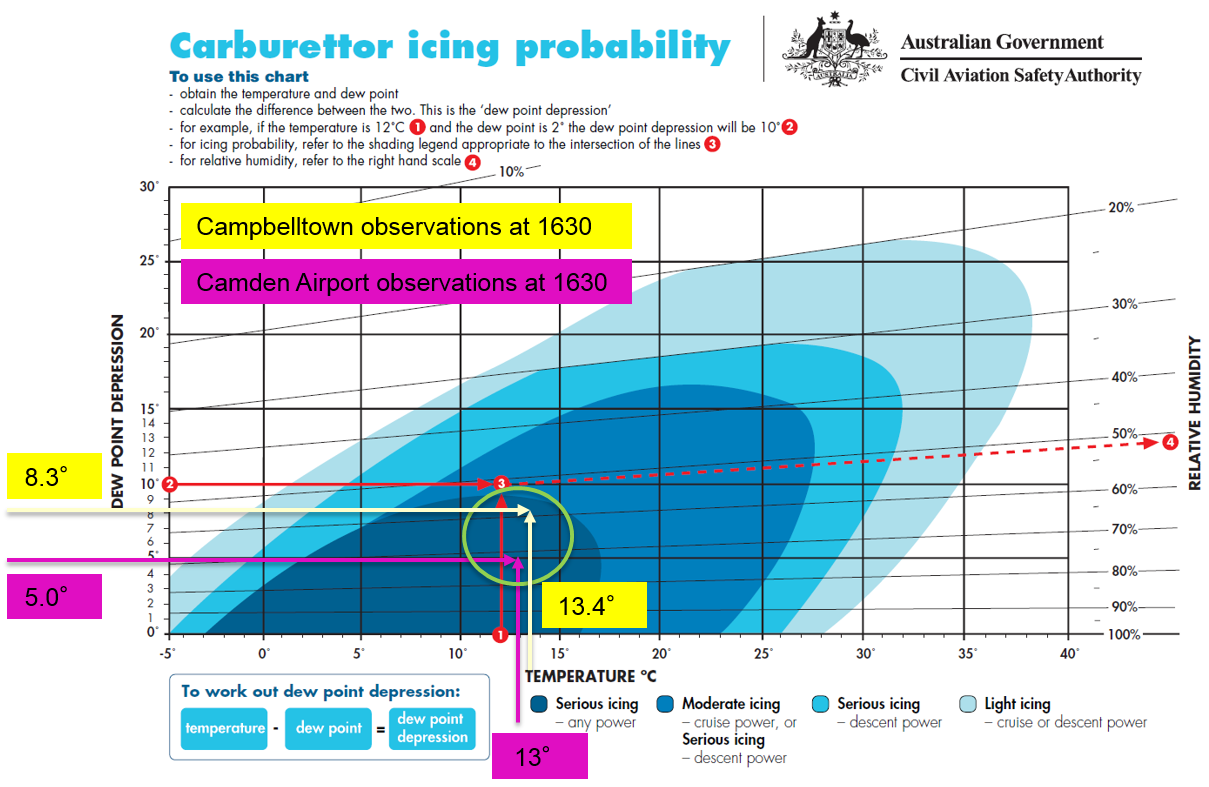
Figure A2: CASA carburettor icing-probability chart annotated with Campbelltown (in yellow) and Camden (in purple) temperature information at 1700
Purpose of safety investigationsThe objective of a safety investigation is to enhance transport safety. This is done through:
It is not a function of the ATSB to apportion blame or provide a means for determining liability. At the same time, an investigation report must include factual material of sufficient weight to support the analysis and findings. At all times the ATSB endeavours to balance the use of material that could imply adverse comment with the need to properly explain what happened, and why, in a fair and unbiased manner. The ATSB does not investigate for the purpose of taking administrative, regulatory or criminal action. TerminologyAn explanation of terminology used in ATSB investigation reports is available here. This includes terms such as occurrence, contributing factor, other factor that increased risk, and safety issue. Publishing informationReleased in accordance with section 25 of the Transport Safety Investigation Act 2003 Published by: Australian Transport Safety Bureau © Commonwealth of Australia 2016 
Ownership of intellectual property rights in this publication Unless otherwise noted, copyright (and any other intellectual property rights, if any) in this report publication is owned by the Commonwealth of Australia. Creative Commons licence With the exception of the Coat of Arms, ATSB logo, and photos and graphics in which a third party holds copyright, this publication is licensed under a Creative Commons Attribution 3.0 Australia licence. Creative Commons Attribution 3.0 Australia Licence is a standard form licence agreement that allows you to copy, distribute, transmit and adapt this publication provided that you attribute the work. The ATSB’s preference is that you attribute this publication (and any material sourced from it) using the following wording: Source: Australian Transport Safety Bureau Copyright in material obtained from other agencies, private individuals or organisations, belongs to those agencies, individuals or organisations. Where you wish to use their material, you will need to contact them directly. |
Occurrence summary
| Investigation number | AO-2015-079 |
|---|---|
| Occurrence date | 19/07/2015 |
| Location | Near Wedderburn Airport |
| State | New South Wales |
| Report release date | 04/10/2016 |
| Report status | Final |
| Investigation level | Defined |
| Investigation type | Occurrence Investigation |
| Investigation status | Completed |
| Mode of transport | Aviation |
| Aviation occurrence category | Collision with terrain |
| Occurrence class | Accident |
| Highest injury level | Fatal |
Aircraft details
| Manufacturer | Amateur Built Aircraft |
|---|---|
| Model | Glasair SH-2FT |
| Registration | VH-HRG |
| Sector | Piston |
| Operation type | Private |
| Departure point | Wedderburn Airport, New South Wales |
| Damage | Destroyed |