General aviation

SafetyWatch_icon_1.png

Safety concern

General aviation pilots continue to die in accidents that are mostly avoidable. The key hazards that the ATSB has found which increase the risk of an accident are:

  • flying lower than necessary
  • experiencing reduced visibility
  • not being aware that the engine fuel supply is not working
  • not recognising the implications of something going wrong.

ATSB on YouTube(Opens in a new tab/window)

What can you do?

Low flight

It is necessary to fly low for take-off and landing. The low-flying risks are managed by using circuit patterns at aerodromes, with any obstacles known, so that there is less chance of colliding with other aircraft or unexpected terrain.

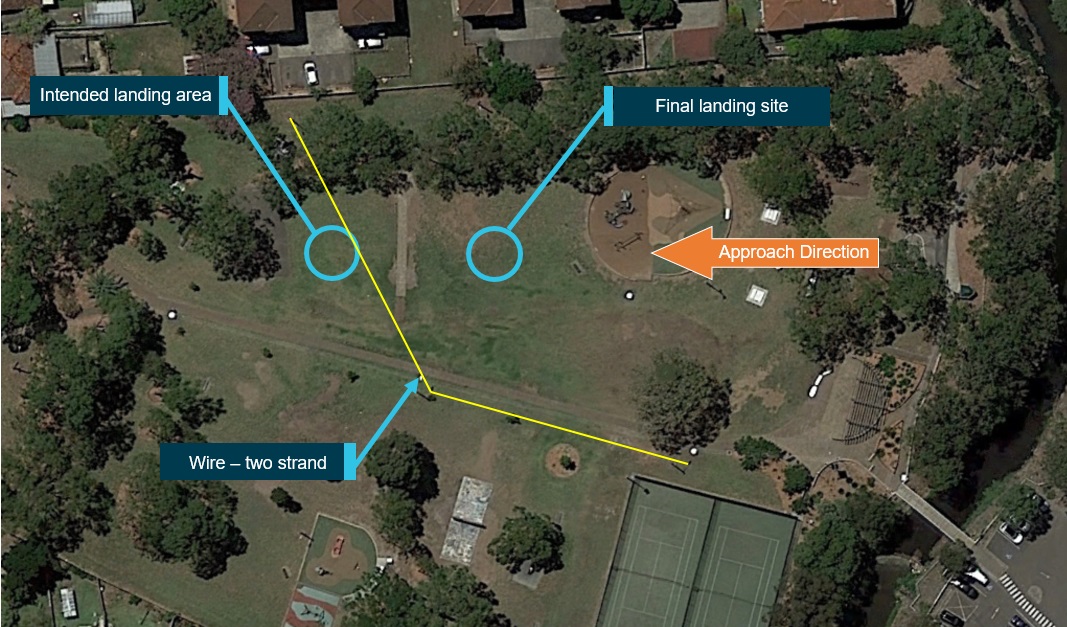
Low flying at other times is risky because of the chance of colliding with terrain, or things on the terrain. Collisions happen when pilots cannot see obstacles, do not see obstacles in time to avoid them, or are aware of obstacles but become distracted by another task and fail to avoid the obstacles. Wires are the most common type of obstacles, and pilots collide with them for all of the reasons described above. Low flying also further adds risk because if something does go wrong there is less time or opportunity to fix what has gone wrong.

Reduced visibility

At flying speed, sufficient visibility is needed to allow pilots to see and to avoid obstacles. Visibility is also required to maintain orientation, so pilots know which way is up and can maintain control (the exception is when an aircraft is being controlled using instrument flight techniques). Visibility is reduced by cloud, dark, or materials in the air such as rain, smoke or general haze. Two main risks are associated with flying in limited visibility:

  • loss of orientation, leading to loss of control of an aircraft and an uncontrolled flight into terrain
  • insufficient visibility to enable a pilot to see and avoid obstacles while remaining under control, known as a controlled flight into terrain.

The same hazards can also apply during night flight because less can be seen, even though the visibility may be just as good.

Fuel management

There are many ways for the engine fuel supply to be interrupted. The supply may run out because of not knowing the actual amount of fuel on board, or the rate of fuel consumption. The fuel supply may be switched off, particularly in aircraft with more complex fuel systems. The fuel supply may also be stopped by a filter blockage, water in the fuel tank, or a blocked fuel tank vent system. Thorough use of procedures is required to manage the various risks. Hazards increase when a flight is planned to use all the available flight fuel, particularly when the pilot is unfamiliar with the necessary procedures because shorter, non-fuel-critical flights are normally flown.

Management of common threats and errors

Operational problems can develop gradually, like deteriorating weather conditions or increased fuel consumption. Problems can also be sudden, like an unexpected power reduction or an obstacle looming in front of an aircraft in flight. A range of procedures and requirements exist to enable pilots to manage the hazards associated with all the common avoidable accident types.

More information

The ATSB’s Avoidable Accidents booklets feature case studies on regularly occurring accidents that could have been prevented with good flight management and preparation. The booklets also provide helpful hints and strategies to help pilots stay safe when flying.

SafetyWatch

ATSB SafetyWatch logo

SafetyWatch is a set of broad safety concerns for the ATSB that have arisen from our investigation findings and from occurrence data reported to us by industry.

These priorities highlight safety issues more broadly with the aim of raise heightened awareness from industry and public, and to help guide ATSB decision-making on investigations.

Our current SafetyWatch concerns comprise 

In developing these priorities, the ATSB applied the following criteria that they be:

  • Clearly-defined
  • Evidence-based
  • Relevant and timely
  • Aligned to the ATSB's remit
  • Actionable
  • Measurable

Our SafetyWatch priorities also help inform ATSB Safety Study topics.

Marine reporting consultation

New confidential reporting regulations and the International Casualty Investigation Code

The ATSB is inviting comments on two proposed regulatory changes relating to:

  • Confidential reporting of maritime safety concerns
  • ATSB use of the International Maritime Organization's Casualty Investigation Code 

Your comments are sought by Friday, 27 July 2012.

Confidential Reporting (REPCON)

New regulations will replace the existing maritime REPCON regulations creating a multi-modal confidential reporting scheme for the maritime, aviation and rail industries. A multi-modal scheme has the major benefit of allowing all three industries to learn from reports of safety concerns that contain transferable lessons.

Why we need mandatory and confidential reporting

Confidential reporting complements the mandatory reporting system managed by the Australian Maritime Safety Authority.  The information we get from both schemes helps us determine whether we need to investigate a safety concern, conduct research and identify trends of emerging hazards and risks. This gives us valuable insight into what needs to be done to improve the safety system. Ultimately, a report now can save lives and prevent injuries in the future.

The Casualty Investigation Code

The IMO's Casualty Investigation Code commenced in January 2010. The Code promotes high and consistent standards for maritime investigations around the world. While the ATSB already acts consistently with the Code, a regulatory amendment is proposed to formalise the ATSB's adherence to the Code.

Providing feedback

Links to the documents below provide further information about the proposed changes.

Consultation Paper

For a full overview of the proposed changes go to:

Attachment A: Draft Confidential Reporting Regulations

  • Draft Regulations - Confidential Reporting Regulations 
    [PDF: 221KB] (225.73 KB)
  • Explanatory Statement - Confidential Reporting Regulations 
    [PDF: 369KB] (148.12 KB)
       
    [DOC: 995KB] (346.5 KB)

Attachment B: Casualty Investigation Code

  • International Maritime Organization's Casualty Investigation Code  
    [PDF: 250KB] (242.38 KB)

You can email your response to:

repconreform@atsb.gov.au for comments on confidential reporting.

regulation.consultation@atsb.gov.au for comments on the Casualty Investigation Code.

You can also post your comments to:

Reporting and Notifications
Australian Transport Safety Bureau
PO Box 967
Civic Square ACT 2608

If you have any questions or would like a hard copy of the consultation package, please call the manager of notifications and confidential reporting 1800 011 034.

Rail reporting consultation

The ATSB is inviting comments on proposed regulatory changes covering mandatory reporting of accidents and incidents and confidential reporting of safety concerns in Australia.

The mandatory and confidential reporting proposals are a part of the national rail safety reforms.  By 1 January 2013, Australia's railways are set to have a single national rail safety regulator (the National Rail Safety Regulator - NRSR) and a single national rail safety investigator (the ATSB).

Your comments are sought by Friday, 27 July 2012.

Mandatory Reporting

The new arrangements will see changes to the mandatory reporting requirements for rail notifiable occurrences.

In particular, it is proposed that all Category A notifiable occurrences will be immediately reported to the ATSB by telephone, and in writing within 72 hours to the National Rail Safety Regulator (NRSR). Category B notifiable occurrences will also need to be reported in writing to the NRSR within 72 hours.

Confidential Reporting (REPCON)

New REPCON reporting regulations will also be introduced nationally by 1 January 2013. These regulations will allow any person to voluntarily report safety concerns about rail to the ATSB.  Where a safety concern is reported, the objectives of the scheme require a reporter's identity, and the identities of others, to be protected.

Why we need mandatory and confidential reporting

The information we get from mandatory and confidential reporting helps us determine whether we need to investigate a safety concern, conduct research and identify trends of emerging hazards and risks. This gives us valuable insight into what needs to be done to improve the safety system.  Mandatory and confidential reporting complements the use of other hazard and risk identification, and management tools used by industry and the regulator. Ultimately, a report now can save lives and prevent injuries in the future.

Providing feedback

Links to the documents below provide further information about the proposed changes.

Consultation Paper

For a full overview of the proposed changes go to:

Attachment A: Draft Confidential Reporting Regulations

  • Draft Regulations - Confidential Reporting Regulations 
    [PDF: 221KB] (225.73 KB)
  • Explanatory Statement - Confidential Reporting Regulations 
    [PDF: 369KB] (148.12 KB)
       
    [DOC: 995KB] (346.5 KB)

Details concerning the proposed changes for mandatory reporting are contained in the consultation paper.  A draft set of regulations will be prepared after consultation.

If you have any difficulties accessing the package please contact the ATSB and we will forward you a hard copy.

You can e-mail your responses to:

regulation.consultation@atsb.gov.au for comments on mandatory reporting.

repconreform@atsb.gov.au for comments on confidential reporting.

You can also post your comments to:

Reporting and Notifications
Australian Transport Safety Bureau
PO Box 967
Civic Square ACT 2608

If you have any questions or would like a hard copy of the consultation package, please call the manager of notifications and confidential reporting 1800 011 034.

2012 Flight Safety Australia

ATSB supplements

 January-February

  • R22 drive belt concerns
  • Pilot unknowingly affected by hypoxia
  • Starved and exhausted
  • Investigation briefs
  • Non towered aerodromes an on-going concern
  • REPCON briefs
  • Download ATSB supplement (January-February 2012) [
    PDF: 1.3MB (1.24 MB)
    ]


March-April

  • Rare software glitch causes sudden pitch down
  • Buckle up
  • Potentially catastrophic data error
  • Poor fuel management remains a safety risk - Is there enough left in the tank?
  • Your notification improves safety, saves lives
  • Investigation briefs
  • REPCON briefs
  • Download ATSB supplement (March-April 2012) [
    PDF: 1MB (996.16 KB)
    ]


May-June

  • Transport safety in plain English
  • ATSB eyes air traffic incidents
  • A tragic accident reflects the need for change
  • AirAsia X takes action to improve safety
  • The dangerous consequences of an incorrect data entry
  • R44 operators urged to change fuel tanks
  • Avoidable Accidents
  • REPCON briefs
  • Download ATSB supplement (May-June 2012) [
    PDF: 1MB (996.16 KB)
    ]


July-August

  • How safe is Australian aviation?
  • General aviation: Continuing safety concern
  • If in doubt, don't take-off
  • The success of the system
  • Proposed changes to reporting requirements
  • Night flying-make sure you're qualified
  • Wirestrikes go unreported
  • When wildlife strike
  • REPCON briefs
  • Download ATSB supplement (July-August 2012) [
    PDF: 3.1MB (2.86 MB)
    ]


September-October

  • Our plan for the year
  • Somatogravic illusion warning for pilots
  • Bulletin highlights safety lessons
  • Prepare to live
  • Help keep aviation safe
  • Aviation groups collaborate to improve safety
  • 30 years of safer aviation
  • REPCON briefs
  • Download ATSB supplement (September-October 2012) [
    PDF: 1.1MB (1.07 MB)
    ]


November-December

  • The dangers of dust devils
  • Ditching highlights the need for good flight planning and monitoring
  • The continuing risk of pilot distraction
  • Flight Crew Licence Information
  • Corrosion leads to R44 helicopter main rotor drive loss
  • When good weather goes bad
  • REPCON briefs
  • Download ATSB supplement (November-December 2012) [
    PDF: 1.7MB (1.74 MB)
    ]

ATSB KML Creator

Create a flight path for Google Earth

This software tool lets users create an aircraft's flight path in Google Earth using basic flight data.

The ATSB 'KML Creator' uses a spreadsheet of recorded flight parameters (latitude, longitude and altitude) in csv format to create a flight path you can view in Google Earth. The KML Creator can also create a display of other aircraft parameters relevant to the flight on the same screen. The flight can be split into phases differentiated by name and colours. Google Earth Placemarks can be used with the data to identify user-defined important features.

You can find more information about the KML file format from the Google website(Opens in a new tab/window).

Download of the KML Creator is free of charge under the licence terms and conditions below.

ATSB KML Creator - Licence Terms and Conditions

1. Parties to this Licence

(a) Commonwealth of Australia represented in this Agreement through its Australian Transport Safety Bureau having its principal office at 12 Moore Street, Canberra 2601 in the Australian Capital Territory ABN 65 061 156 887 (the ATSB); and

(b) The Licensee, being the person who has accepted the terms and conditions of this Licence.

2. Purpose of this Licence

(a) The ATSB has developed a Software program called ATSB KML Creator (the Licensed Material)

(b) The Licensed Material provides an interface to convert data created by the Licensee in a text file to another text format (KML) that can be utilised in Google Earth.

(c) The Licensed Material is intended for use by transport safety and other investigation agencies and aviation operators for examination of flight data to create a flight path from that data.  Nothing in this Licence prevents any other person from obtaining the Licensed Material and using the Licensed Material for any lawful purpose.

3. Interpretation

Commencement Date means the date of acceptance by the Licensee of the licence terms and conditions and downloading of the Licensed Material.

Derivative Product means a distinct product derived from the Licensed Material (i.e. resulting from the Licensed Material being customised, altered, abridged or supplemented, and/or additional functionality being incorporated).

Duration means the period between the commencement date and the expiry or revocation of the Licence

Exploit means to manufacture, sell, hire, distribute, give away, or otherwise commercialise the Licensed Product or to provide a service, incorporating the Derivative Product.

Intellectual Property includes all copyright, and all rights in relation to registered and unregistered trademarks (including service marks), registered designs and confidential information (including trade secrets and know-how), and all other rights resulting from intellectual activity in the industrial, scientific, literary or artistic fields

Licensed Material means Software program comprising the ATSB KML Creator (Version 1).  However, the Licensed Material does not include any product licensed by the ATSB by a Third Party.

Personnel means in relation to either the ATSB or the Licensee their respective officers employees, agents or contractors.

Third Party means a person other than the ATSB or its personnel.

4. Rights under this Licence

The ATSB grants to the Licensee (without cost) from the commencement date the Licensed Material a revocable, royalty free, non-exclusive, non-transferrable licence to use the Licensed Material.

5. Restrictions on use

The Licensee agrees, except to the extent permitted by this Agreement or applicable Law, for the duration of the Licence:

(a) not to exploit the Licensed Material to, or permit the any Third Party to exploit the Licensed Material;

(b) not to remove, obscure or interfere with any copyright statement, acknowledgment, attribution, trade mark, warning or disclaimer statement affixed to, incorporated in or otherwise applied in connection with the Licensed Material;

(c) not to copy and distribute the Licensed Material to persons other than the Licensee's personnel;

(d) to use reasonable care and protection to prevent the unauthorised use, copying, publication or dissemination of the Licensed Material to persons other than the Licensee's Personnel; and

(e) to require any Personnel to whom the Licensed Material is made available to comply with the requirements of this clause.

6. Intellectual Property

The Licensee agrees that all Intellectual Property in the Licensed Material vests and continues to vest in the ATSB.

7. Derivative Products

In the event that a Licensee develops a Derivative Product based on the Licensed Material, such modification not being prohibited by the Licence, the terms of this Licence do not apply to the Derivative Product.

8. Non Grant of Licence for other Software, Programs or Applications

This Licence does not constitute a Licence for any other software, program or application for which a licence may be required by a Third Party.

9. Revocation

The Licence shall be taken to be revoked in the event of any breach of its terms and conditions.

10. Expiry

The Licence shall be taken to have expired where the Licensed Material is permanently removed from a Licensee's operating system.

11. Acceptance of terms for downloading copy

The terms and conditions of this Licence must be accepted in order for a copy of the Licensed Material to be downloaded.

12. Sub-licence

This Licence does not give any Licensee a right of sub-licence in respect of the Licensed Material.

13. Revised versions of Licensed Material

The ATSB may develop and make available for download revised versions of the Licensed Material.

14. Warranty

(a) The ATSB provides the Licensed Material 'as is' without any warranty of any kind, either express or implied. Where any statute implies into the Licence Agreement any condition or warranty, and that statute prohibits provisions excluding or modifying the application or exercise of, or liability under, such condition or warranty, such condition or warranty will be deemed to be included in the Licence Agreement.  However, the ATSB's liability for any breach of such statutory condition or warranty will be limited, at its option, to replacement of the Licensed Material;

(b) The Licensee acknowledges that the Licensee has not relied on any representation made by the ATSB that has not been expressly stated in this Licence Agreement;

(c) The ATSB does not warrant the accuracy, completeness, currency or suitability of the Licensed Material for any purpose; and

(d) The Licensee assumes responsibility for selection of the Licensed Material to achieve any intended results, and for its installation and use.

15. Indemnity

15.1            The Licensee indemnifies the ATSB and its Personnel if the ATSB, or its Personnel, suffer any loss (including legal costs and expenses on a solicitor/own client basis), or if the ATSB or its Personnel become liable to pay damages, from any claim, suit, demand, action or proceeding brought by any person against the ATSB or its Personnel where such loss or liability was caused by:

(a) any act or omission by Licensee or its Personnel in connection with the use of the Licensed Material;

(b) any Third Party's use of a Derivative Product which the Licensee has supplied or sublicensed to them; and

(c) a breach by the Licensee of this Licence.

15.2            The Licensee's liability to indemnify the ATSB and its Personnel under the preceding subclause is reduced proportionately to the extent that any negligent act or omission by the ATSB or its Personnel caused or contributed to any loss, liability, damage or expense incurred.

15.3            The ATSB's right to be indemnified under this clause is in addition to, and not exclusive of, any other right, power or remedy provided by law, but the ATSB is not entitled to be compensated in excess of the amount of the relevant liability, loss or damage, or loss or expense.

15.4            This clause 15 will survive the revocation or expiry of this Licence.

16. Entire agreement / amendments

This Licence Agreement constitutes the entire agreement between the parties for the licensing of the Licensed Material.  No variation or amendment to this License Agreement will be effective unless it is in writing and signed by both parties to the Licence.

17. No waiver

A waiver by either party of any rights arising from a breach of this Licence will not be a continuing waiver of any other rights arising from any other breach of this Licence.  A failure or delay by either party to exercise its rights under this Licence will not operate as a waiver of that party's rights and will not prevent that party from subsequently enforcing such rights or treating any breach by the other party as a repudiation of this Licence.

18. Severability

If any provision of this Licence Agreement is illegal, invalid or unenforceable, this will not affect the remaining provisions of this Licence Agreement, which will continue in full force and, if possible, the illegal, invalid or unenforceable part will be read with such modifications as are necessary to render it legal, valid and enforceable.

19. Governing law

This Licence Agreement is governed by the laws of Australian Capital Territory and the parties submit to the non-exclusive jurisdiction of the courts of the Australian Capital Territory.

User agreement

By clicking download I acknowledge that I have read, understood and accept these terms and conditions.

Download KML Creator

Aviation reporting consultation

This stage of the consultation is now CLOSED.

The new confidential reporting regulations are in the process of being made, with persons or organisations that made submissions informed. Please refer back to the main consultation page for information about the proposed response to the consultation on mandatory reporting.

The ATSB is inviting comments on proposed regulatory changes covering mandatory reporting of accidents and incidents and confidential reporting of safety concerns in Australia.

Your comments are sought by Friday, 27 July 2012.

Mandatory Reporting

There are two changes proposed to mandatory reporting of accidents and incidents.

Firstly, it is proposed to improve the Civil Aviation Safety Authority's (CASA's) access to the information contained in notifications reported in accordance with the Transport Safety Investigation Act 2003 (TSI Act). Providing more open access to the regulator will be in line with international practice. CASA will be in a better position to regulate aviation safety with its enhanced knowledge of the hazards and risks encountered by the industry.

Secondly, it is proposed to revise the existing list of accidents and incidents that need to be reported as immediately reportable and routinely reportable matters. A less prescriptive approach is used in draft legislation. The new reporting requirements will be based on an assessment of the risk of death, injury and damage involved with each incident.

Confidential Reporting (REPCON)

Draft confidential reporting regulations are included in the consultation package. These regulations will replace the existing aviation REPCON regulations creating a multi-modal confidential reporting scheme for the aviation, maritime and rail industries. The significance of making the scheme multi-modal will be its capacity to assist all three industries to learn from reports of safety concerns that contain transferable lessons.

Why we need mandatory and confidential reporting

The information we get from mandatory and confidential reporting helps us determine whether we need to investigate a safety concern, undertake research and identify trends of emerging hazards and risks. This gives us valuable insight into what needs to be done to improve the safety system. Mandatory and confidential reporting complements the use of other hazard and risk identification and management tools used by the industry and the regulator. Ultimately, a report now can save lives and prevent injuries in the future.

Providing feedback

Links to the documents below provide further information about the proposed changes.
Consultation Paper

For a full overview of the proposed changes go to:

Attachment A: Draft Mandatory Reporting Regulations

  • Draft Regulations - Mandatory Reporting Regulations  
    [PDF: 255KB] (216.95 KB)
  • Explanatory Statement - Mandatory Reporting Regulations 
    [PDF: 995KB] (244.44 KB)
       
    [DOC: 516KB] (501.5 KB)

Attachment B: Draft Confidential Reporting Regulations

  • Draft Regulations - Confidential Reporting Regulations 
    [PDF: 221KB] (225.73 KB)
  • Explanatory Statement - Confidential Reporting Regulations 
    [PDF: 369KB] (148.12 KB)
       
    [DOC: 995KB] (346.5 KB)

You can email your responses to:

regulation.consultation@atsb.gov.au for comments on mandatory reporting.

repconreform@atsb.gov.au for comments on confidential reporting.

You can also post your comments to:

Reporting and Notifications
Australian Transport Safety Bureau
PO Box 967
Civic Square ACT 2608

If you have any questions or would like a hard copy of the consultation package, please call the manager of reporting and notifications 1800 011 034.

Consultation on amended Transport Safety (Confidential Reporting Scheme) Regulations 2013

Transport Safety Investigation (Voluntary and Confidential Reporting Regulations) 2013 - REPCON

Voluntary and Confidential Reporting Scheme for Aviation, Marine and Rail Transport

In September 2011 the ATSB sought public comment on a proposal to establish a voluntary and confidential reporting scheme (REPCON)

The following documents were released by the ATSB:
Confidential Reporting: Discussion Paper and Explanatory Statement [

PDF: 251KB] (233.98 KB)

Draft Regulations [
PDF: 172KB (175.04 KB)
]

The proposed Regulations sought to consolidate the existing aviation and marine schemes while incorporating rail for the first time. Rail was included consistent with the scope of reforms proposed for the national rail safety system, including establishing the ATSB as the national rail safety investigator.

The ATSB received a number of submissions from aviation, maritime and rail stakeholders.  There was broad support for the reforms and comment was largely focussed on:

  • The value of confidential reporting in safety information gathering
  • The ATSB as the administrator of REPCON
  • How the ATSB can improve confidential reporting processes and outcomes.

A summary of the submissions received and the ATSB's position on the submissions is provided in the following document:

_________________

REPCON Submission Summary:

[PDF: 292KB] (216.6 KB)

As a result of the issues raised in submissions the ATSB has made some changes to the proposed Regulations. The ATSB is now seeking further public comment on an Exposure Draft before the regulations are finalised and made into law.  To obtain a copy of the Exposure Draft and supporting explanatory material for further information on making a submission please access the following links:

www.atsb.gov.au/aviation_newregs.aspx

www.atsb.gov.au/marine_newregs.aspx

www.atsb.gov.au/rail_newregs.aspx

Security

Our security responsibilities

We will ensure that:

  • The data you give us will be safe. Encryption is used to protect the personal information you give us.
  • Your data will be stored at a secure facility. Regular backups of data are performed to ensure it can be recovered in case of a disaster.
  • All access to the system is logged. If any unauthorised behaviour should occur, this will assist us in identifying and resolving the issue.

Increasing your safety online

Protecting your computer

You should:

  • Install and activate security software on your computer. Ensure your security software includes anti-virus, anti-spyware, firewall and anti-spam filter.
  • Run regular scans of your computer for viruses.
  • Remember to update your security software to ensure you are always running the current version.

Other steps you should take help protect your computer include:

  • Check your Internet browser's security settings for ways to make your browsing more secure.
  • Do not open email attachments if you do not know the sender.
  • Only download files from reputable Internet sites.
  • Be wary when exchanging files with colleagues or friends.
  • Never click on hyperlinks in emails received from unknown sources.

Protecting your password

You should:

  • Never share your password with anyone
  • Never send your password via email
  • Make your password as strong as possible

Contact us

You should report any suspicious or unauthorised activity relating to your use of atsb.gov.au by contacting us. This will help us make atsb.gov.au as secure as we can.

Further reading

Incident off Exmouth, Western Australia, 30 July

Subsection 49(2) notice for Incident off Exmouth, Western Australia, on 30 July 2010

The ATSB received a report that on 30 July 2010, off the coast of Exmouth Western Australia, a seismic survey vessel reported that seismic cables were run over and cut by another vessel.

Based on the information available, the ATSB did not conduct an investigation.

For the purpose of subsection 49(2) of the Transport Safety Investigation Act 2003, I declare that any On-Board Recordings (as defined by section 48 of the Act), made in relation to the reported incident, are not to be treated as an OBR on and after 2 August 2010.

Peter Foley
General Manager - Surface Safety