As a result of evidence provided at a recent Coronial Inquest, CASA issued an Airworthiness Bulletin (AWB 02-041 Issue 2) recommending that operators and maintenance organisations review the fatigue index records for BAC Strikemaster 167 aircraft.
Operators of BAC 167 Strikemaster aircraft are being urged to check the safety of their aircraft following a Coronial inquest into a fatal Strikemaster accident.
On 5 October 2006, a BAC 167 Strikemaster aircraft broke up in flight and crashed into the Turon State Forest (near Bathurst, NSW) during an adventure flight. The pilot and passenger died in the accident.
Earlier this year, the Office of the NSW State Coroner began a Coronial Inquest into the accident. During evidence at the Inquest, details of the calculation of Fatigue Index (FI) penalties applicable to Strikemaster aircraft was provided.
As a result of this evidence, CASA recently issued an Airworthiness Bulletin (AWB 02-041 Issue 2). The bulletin recommends registered operators and maintenance organisations review the FI records for BAC Strikemaster 167 aircraft and determine if a FI penalty should be applied.
The ATSB is investigating today’s train derailment that occurred 15 km south of Cadney Park in South Australia. The derailment occurred on the Defined Interstate Rail Network between Adelaide and Alice Springs at about 6.20am this morning.
The ATSB is investigating today's train derailment that occurred 15 km south of Cadney Park in South Australia.
The derailment occurred on the Defined Interstate Rail Network between Adelaide and Alice Springs at about 6.20am this morning.
Initial reports indicate that 22 wagons derailed and around 300 metres of track will require replacement. No one was injured.
Two ATSB investigators will arrive on the accident site later this afternoon to begin the onsite investigation.
More information on the investigation is available on the ATSB website, RO-2010-012
Further updates will be provided as information comes to hand.
On the afternoon of 3 October 2022, a Pilatus Britten-Norman Islander BN2A-21, registered VH-WQA and operated by Torres Strait Air, was conducting a non-scheduled passenger air transport flight from Saibai Island Airport, Queensland (QLD) to Horn Island Airport, QLD. There was 1 pilot and 6 passengers on board.
About 19 km NE of Moa Island both engines began to surge. The pilot diverted towards Kubin Airport on Moa Island. As the aircraft passed to the south of the township of Saint Pauls, the pilot determined there was insufficient altitude remaining to reach the airport. As a result, the pilot conducted a forced landing on a road 7 km ENE of Kubin Airport. There were no reported injuries to the pilot or the passengers. The aircraft was substantially damaged.
What the ATSB found
The ATSB found that the dual engine speed fluctuations and associated power loss was probably the result of fuel starvation.
The mechanism was not conclusively determined, however it was identified that the pilot did not operate the aircraft's fuel system in accordance with the aircraft flight manual, and that the configuration and location of the aircraft’s fuel controls and tank quantity gauges were probably not conducive to rapid and accurate interpretation. The aircraft manufacturer released a service letter in June 2022 that detailed an optional modification to centralise the fuel system controls and gauges, however this modification was not fitted to VH-WQA. The ATSB considered that these factors increased the risk of inadvertent fuel tank selection.
Safety message
Accidents involving fuel mismanagement are an ongoing aviation safety concern. Pilots are reminded of the importance of understanding an aircraft’s fuel supply system and being familiar and proficient in its use. Adhering to procedures, maintaining an accurate fuel record, and ensuring appropriate tank selections are made for the phase of flight will lessen the likelihood of fuel starvation.
The investigation
Decisions regarding the scope of an investigation are based on many factors, including the level of safety benefit likely to be obtained from an investigation and the associated resources required. For this occurrence, a limited-scope investigation was conducted in order to produce a short investigation report and allow for greater industry awareness of findings that affect safety and potential learning opportunities.
The occurrence
On the afternoon of 3 October 2022, a Pilatus Britten-Norman Islander BN2A-21 (Islander), registered VH‑WQA and operated by Torres Strait Air, was conducting a non-scheduled passenger air transport flight from Saibai Island Airport, Queensland (QLD) to Horn Island Airport, QLD. There was 1 pilot and 6 passengers on board.
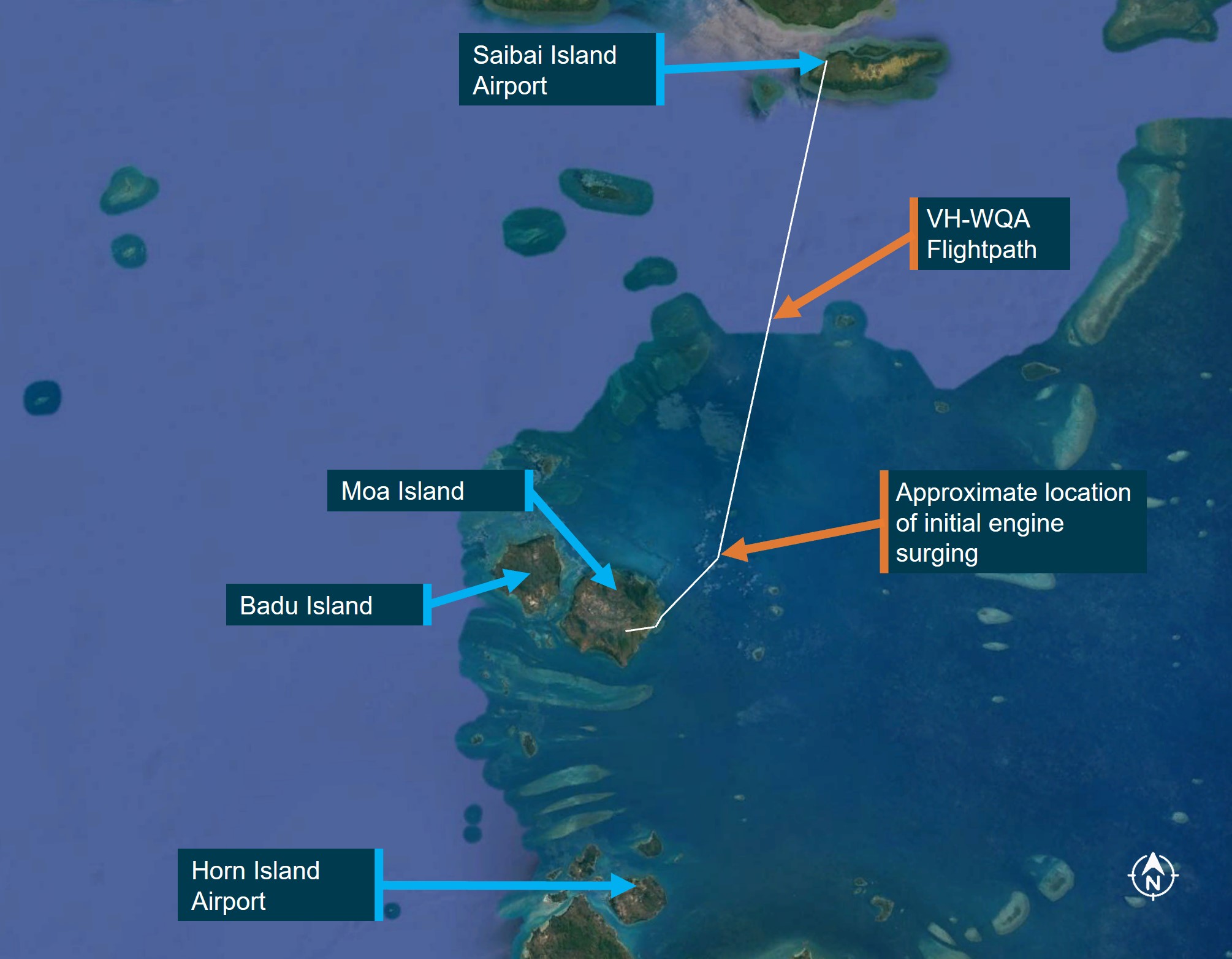
At about 1333, when the aircraft was at a cruise altitude of 6,000 ft and approximately 19 km NE of Moa Island (Figure 1), the pilot recalled that the right engine began to surge. The pilot observed the right engine speed fluctuate, accompanied by yawing[1] of the aircraft.
Figure 1: VH-WQA Torres Strait flightpath
Source: Google Earth annotated by the ATSB
About 40–50 seconds later, the left engine also began to surge. The pilot recalled disconnecting the autopilot, selecting auxiliary fuel pumps on and placing the left and right engine mixture, pitch and power levers in the full forward position. The pilot then varied the throttle and mixture levers in an attempt to resolve the issue, but the surging continued. The pilot reported that they did not check the fuel contents indicators at the time, as they believed the main tanks were supplying fuel to the engines and there was sufficient fuel within those tanks to complete the flight.
As a result of the engine issues, the pilot was unable to maintain level flight and recalled descending at 800–1,100 ft per minute to maintain an airspeed of about 75–85 knots. When the engine issues commenced, the closest land to the aircraft was Moa Island. However, the pilot initially elected to divert to Badu Island, as there was cloud along the track[2] to Moa Island. The pilot commenced a right turn towards Badu Island and recalled advising Brisbane Centre air traffic control of the diversion.
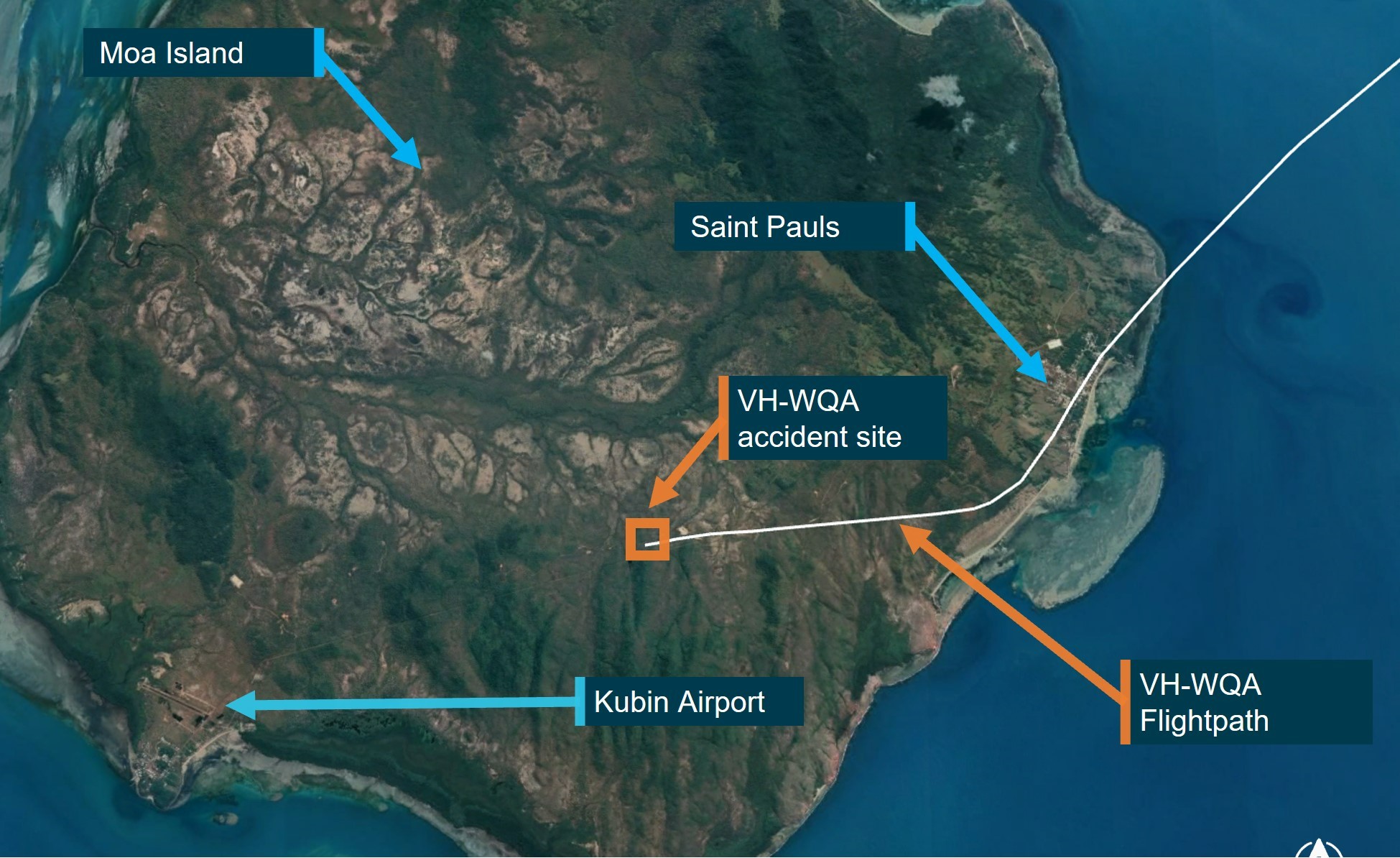
A short time later, the pilot revised their diversion plans and set a course for Kubin Airport on Moa Island. As the aircraft passed to the south of the township of Saint Pauls, the pilot determined there was insufficient altitude remaining to reach Kubin Airport (Figure 2). The pilot considered the available options and chose to land on a road that ran east–west. At an altitude of about 600–700 ft, the pilot recalled switching the fuel supply from main tanks to wing tip tanks but noticed no improvement in engine performance.
Figure 2: VH-WQA Moa Island flightpath
Source: Google Earth annotated by the ATSB
About 15 seconds prior to touchdown, the pilot recalled the right engine stopped. They then shut down the left engine and recalled setting both mixtures to cut-off, closing the throttles, and selecting the main fuel cocks to off. The pilot positioned the aircraft to land on the road, before noticing a power line in the intended touchdown area, which they manoeuvred to avoid. The pilot continued to fly the aircraft above the road and as the road traversed a hill and made a left turn, the pilot followed with the aircraft. At this point the pilot recalled that the stall warning system[3] sounded and that they called for the passengers to ‘brace’.
At about 1339, the aircraft impacted the ground heavily, with the rear fuselage and tail breaking away from the aircraft. The aircraft came to rest in an area of vegetation on the northern side of the road. The pilot reported instructing the passengers to evacuate, which they did through the emergency window hatches. The pilot then exited through the pilot door.
There were no reported injuries to the pilot or the passengers. The aircraft sustained substantial damage.
Context
Pilot information
The pilot held a commercial pilot licence (aeroplane), issued in January 2018 with single and multi-engine aircraft class ratings, multi-engine instrument rating, and a valid Class 1 medical. The pilot had accrued a total flight time of about 2,400 flying hours, including about 200–250 hours flying the Islander, and commenced employment with Torres Strait Air in April 2022.
The pilot reported they were well rested and the ATSB found no risk indicators of the pilot experiencing a level of fatigue known to affect performance.
Aircraft information
VH-WQA was a Pilatus Britten-Norman Islander BN2A-21; a twin-engine, high-wing, unpressurised aircraft, with fixed landing gear and seating for up to 9 passengers. It was fitted with Textron Lycoming IO-540-K1B5 piston engines and Hartzell HC-C2YK-2CUF propellers. The aircraft was manufactured in 1975 and first registered in Australia on 5 October 1978. Torres Strait Air became the registered operator of the aircraft on 14 August 2018.
The last periodic inspection was carried out on 21 September 2022. There were no defects recorded on the aircraft’s maintenance release. At the time of the accident, the aircraft had accumulated 14,081.92 hours total time in service, and the left and right engines had accumulated 294.15 and 2,185.36 hours since overhaul respectively.
Fuel system
The fuel system in VH-WQA was specification Mod NB/M/364 that consisted of a tip tank and main fuel tank within each wing. The usable capacity of each main tank was about 65 US gallons (246.1 l), and 27.5 US gallons (104.1 l) for each wing tip tank.
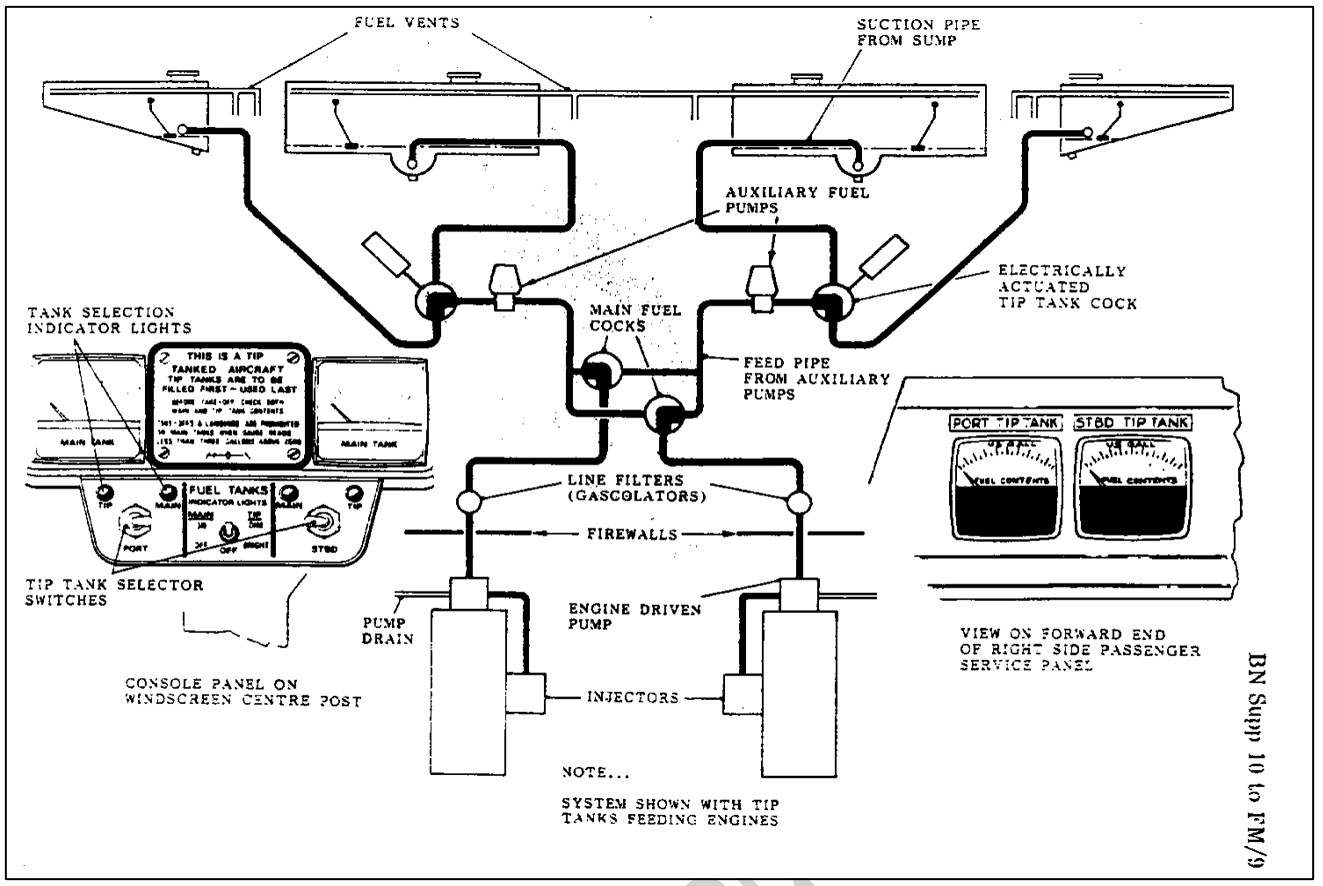
Fuel was fed from either the main or wing tip tanks (but not simultaneously) to the auxiliary fuel pumps, and then supplied to either engine via the main fuel cocks (Figure 3).
Figure 3: Fuel system
Source: Britten-Norman
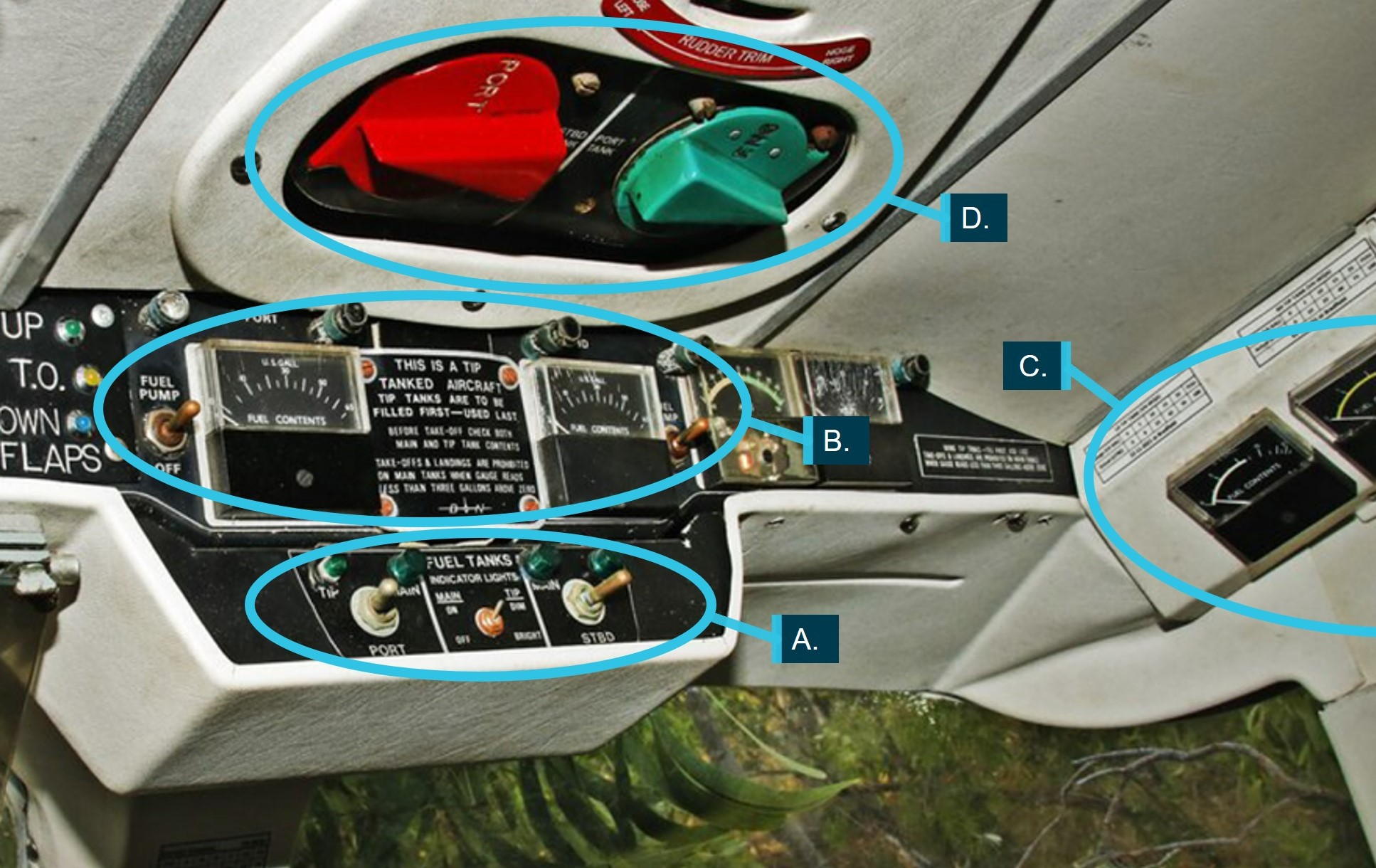
The electrically actuated tank cocks were controlled via an overhead panel, located above the windscreen central pillar. The panel consisted of port and starboard switches that selected either the wing tip tank or main tank. There was a corresponding indicator light for each selection. The panel also contained a switch that controlled the brightness of the tip tank indicator light when that tank was selected (dim or bright). The same switch also determined the main tank indicator light when that tank was selected, either on or off (for the tip tank light positions of dim or bright, respectively) (Figure 4, Label A).
Figure 4: VH-WQA cockpit fuel system configuration
Source: Queensland Police annotated by the ATSB
The main tank contents indicators were located above the fuel tank section panel, with corresponding auxiliary fuel pump switches located either side (Label B). The wing tip tank contents indicators were located on the right side of the cockpit above the side window (Label C). The main fuel cock rotary selectors were located above the main tank contents indicators (Label D).
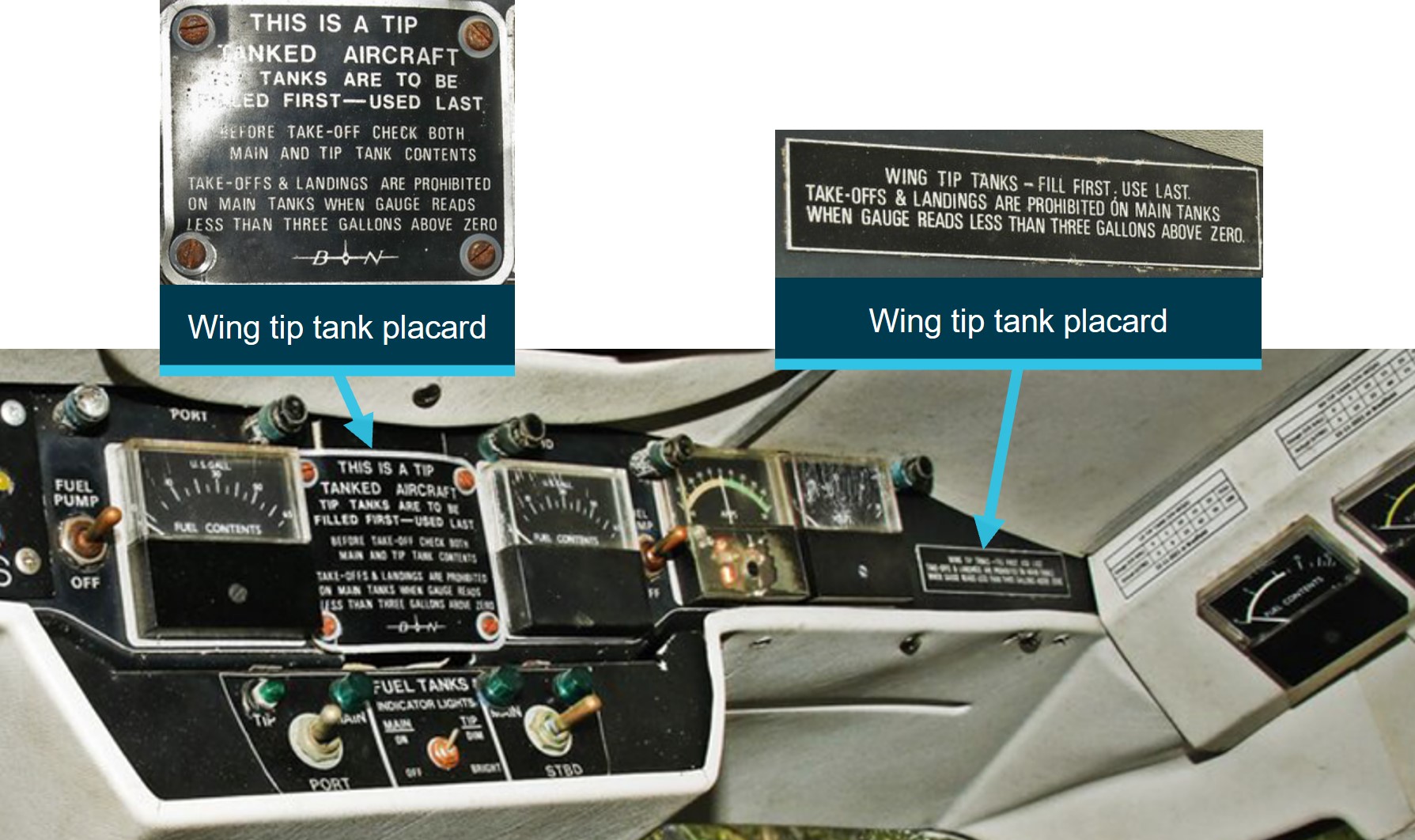
Fuel system placards,[4] highlighting the configuration and usage of the fuel tanks, were located between the main fuel contents indicators and to the left of the wing tip tank contents indicators (Figure 5). The placards indicated that wing tip tanks were to be used last (after main tanks), and that main tanks were not to be used for landings when the gauge reads less than 3 gallons.
Figure 5: VH-WQA fuel system placards
Source: Queensland Police annotated by the ATSB
Service letter SL 145
On 1 June 2022, Britten-Norman released service letter (SL) 145 applicable to all BN2 series Islander aircraft with Mod NB/M/364 wing tip tanks. The service letter detailed an optional modification to provide an alternative pilot interface that centralised the fuel system controls, specifically relocating the wing tip tank indicators to the overhead panel adjacent to the main tank fuel indicators, with the fuel selection switches mounted between the indicators. VH-WQA did not have this modification fitted.
Aircraft flight manual
The aircraft flight manual[5] for VH-WQA contained a supplement that detailed procedures, limitations, and information for the operation of the modified fuel system. This supplement stated that 13.5 US gallons (51 l) of fuel was to be retained in each wing tip tank at all times for structural reasons, except that this fuel could be used as reserve for holding or diversion to an alternate airfield. The wing tip tanks were required to be refuelled before the main tanks and used in flight after the main tanks were exhausted. The supplement stated:
The fuel in the main tanks may be used below the zero marking in cruise flight until the tanks are empty. Between 40 and 50 seconds of warning are given before engine malfunction occurs due to fuel exhaustion of the main tanks. The warning is characterised first by a drop-off of fuel pressure followed by a gentle hunting of the propeller.
Fuel
The flight time records indicated that VH-WQA flew 6 sectors on the day of the occurrence, prior to the accident flight. The occurrence pilot flew all of those sectors (Table 1).
Table 1: VH-WQA flight time records 3 October 2023
LT 40, LM 175, RM 190, RT 35 (after refuelling and before sector)
123
317
Murray I. – Yorke I.
0810
28
317
-
44
273
Yorke I. – Horn I.
0843
48
273
LT 40, LM 55, RM 75, RT 35 (after sector)
87
186
Horn I. – Moa I.
1026
19
186
-
27
159
Moa I. – Horn I.
1113
22
159
LT 30, LM 30, RM 45, LT 25
(after sector)
29
130
Horn I. – Saibai I.
1200
49
350
LT 55, LM 120, RM 120, RT 55
(after refuelling and before sector)
83
267
Saibai I. – Horn I.
1308
-
267
-
-
-
Source: Torres Strait Air
The aircraft was refuelled with avgas[7] at Horn Island Airport at 0626 (300.3 l) and again at 1150 (200.3 l). The pilot recalled using a fuel dipstick[8] to check the contents of the 2 main tanks and 2 wing tip tanks following refuelling, as well as checking drained fuel for water contamination. The flight time records contained a fuel discrepancy following the 1150 refuelling (the aircraft had an additional 20 l) and recorded tank contents on the Yorke Island – Horn Island sector (which is 19 l more than the recorded fuel remaining). Despite these discrepancies, the aircraft departed Horn Island Airport with a recorded 350 l of fuel on board, which was sufficient for the round trip to Saibai Island Airport. This was composed of 120 l in each of the main tanks and 55 l in each of the wing tip tanks.
The aircraft was recorded to have used 83 l on the flight to Sabai Island Airport, but the pilot did not record the individual levels of each tank in the flight time records on arrival at Saibai Island Airport. The ATSB calculated that 81 l of fuel was required to complete the intended flight from Saibai Island Airport to Horn Island Airport. About 44 l fuel would likely have been used for the flight from Saibai Island Airport to the vicinity where the pilot recalled that the engine surging commenced.
Pilot fuel management
The pilot was familiar with VH-WQA’s modified fuel system and during interview, recalled the correct use of the tip tanks. Despite this, flight time records indicated that the pilot had, on occasion, operated VH-WQA without the required 51 l of fuel in the wing tip tanks and had also used these tanks when fuel remained in the main tanks. The pilot did not give a reason for this usage of the tip tanks.
Site and wreckage
The ATSB did not examine the accident site or wreckage. The site was attended on 6 October 2022 by representatives from the aircraft operator, insurance provider, independent maintenance provider, and Queensland Police. The site inspection was recorded by Queensland Police and the video footage was provided to the ATSB along with forensic photographs taken on the day of the accident. The aircraft wreckage was not guarded during the period between the accident occurring and the on-site examination.
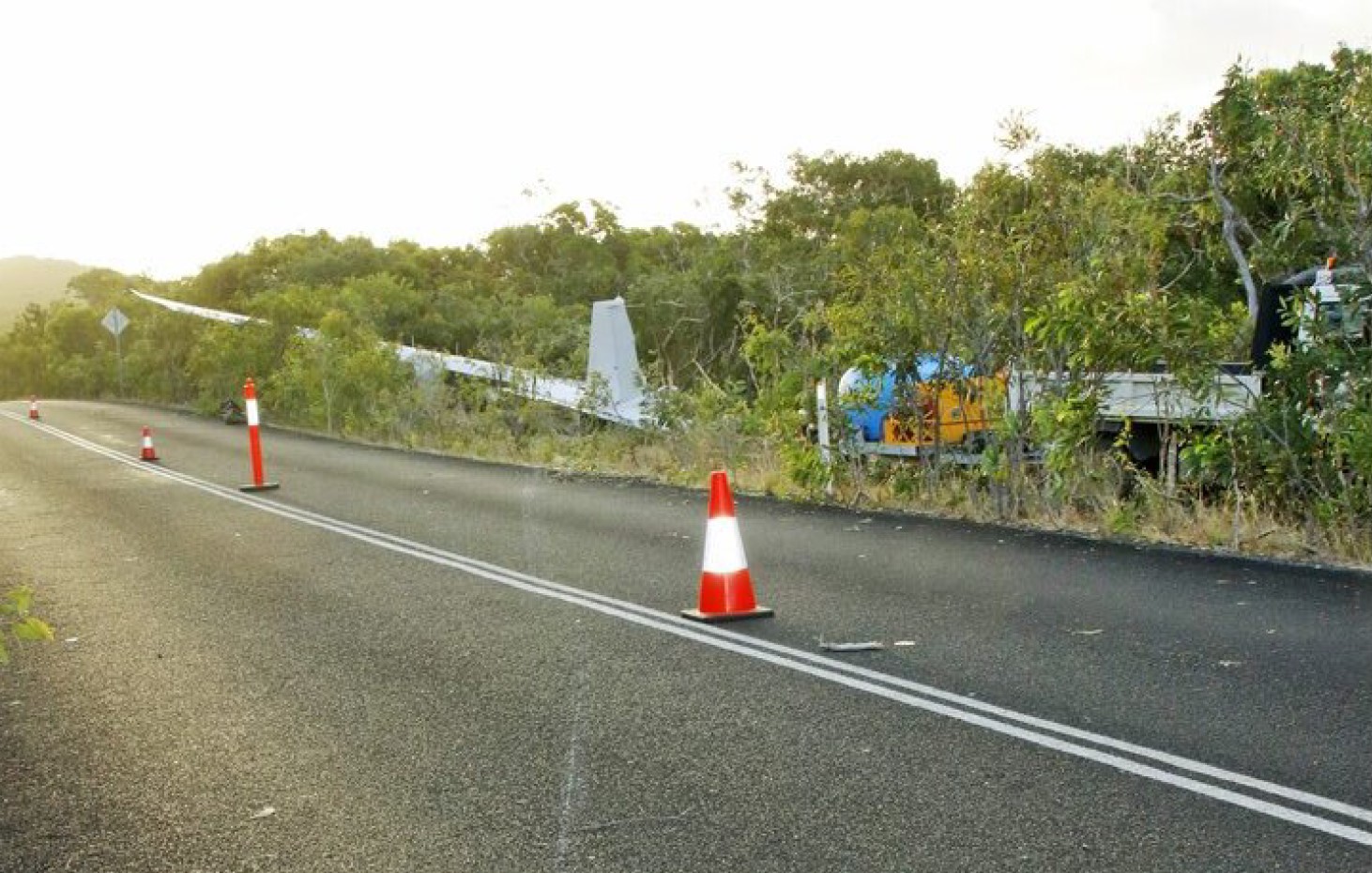
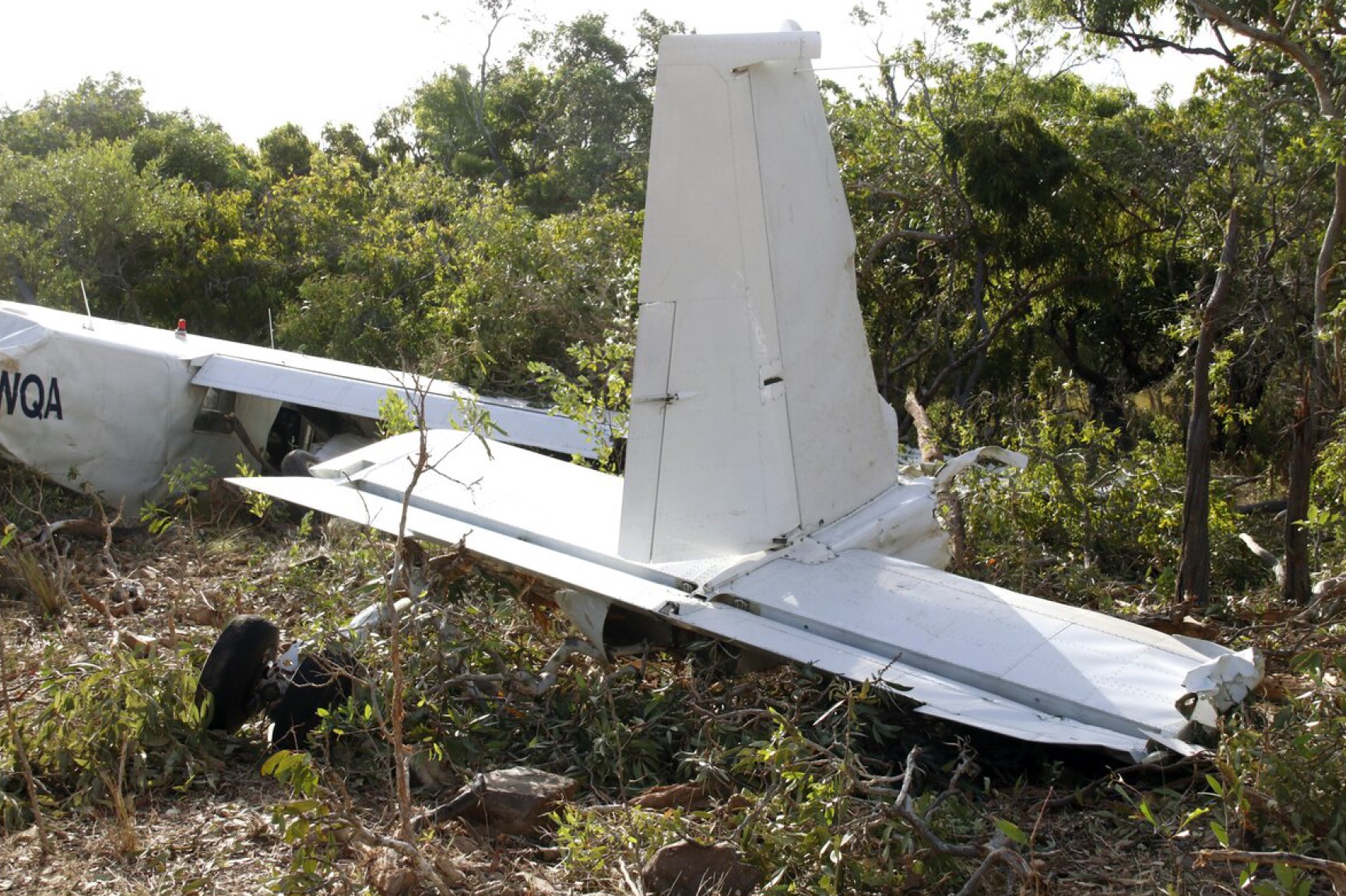
The wreckage was located a short distance from the road in an area of low foliage approximately 6.5 km ENE of Kubin Airport. The undercarriage and empennage were separated from the aircraft and the fuselage was resting right wing low (Figure 6 and Figure 7). No obvious airframe or engine defects were reported by those that attended the site.
Figure 6: Accident site from road
Source: Queensland Police
Figure 7: Accident site
Source: Queensland Police
The right main tank and wing tip tank were ruptured during the accident sequence. The left main fuel tank and wing tip tank were reported as being intact and found to contain approximately 60 l, and less than 500 ml of fuel respectively. No fuel contamination was apparent, and the fuel selectors were found to work correctly when electrical power was applied to the aircraft. Table 1 depicts the positions of the fuel controls as documented in forensic photographs taken shortly after the accident. The wing tip tanks were selected for use, the auxiliary pumps were on, and the main fuel cocks were selected ‘off’, which was consistent with the pilot’s recollection of the occurrence.
Table 2: Fuel system cockpit control positions
Control
Position
Left electrically actuated tip fuel cock
Wing TIP tank
Right electrically actuated tip fuel cock
Wing TIP tank
Tank indicator light setting
Wing tip tanks DIM
Left auxiliary fuel pump
ON
Right auxiliary fuel pump
ON
Left main fuel cock
OFF
Right main fuel cock
OFF
Source: Queensland Police
Related occurrences
Collision with terrain, Pilatus Britten–Norman aircraft BN2B-27 near Marcel Marchant Aerodrome, Chile on 16 April 2019, 1895SP (Directorate General of Civil Aviation Chile)
On 16 April 2019, a Pilatus Britten–Norman aircraft BN2B-27 with modified fuel system (Mod NB/M/364) collided with terrain shortly after take-off from Marcel Marchant Aerodrome, Chile. The pilot and 5 passengers on board were fatally injured and the aircraft was destroyed. The final investigation report concluded the near-empty wing tip tanks were likely selected to supply fuel to the engines, resulting in fuel starvation.
Collision with terrain, Pilatus Britten–Norman aircraft BN2B-21 near Devil’s Hole, approximately 2.5 nm north of Jersey Airport, Channel Islands on 3 November 2013, Air Accidents Investigation Branch United Kingdome Bulletin: 10/2014
During a search and rescue flight at night in poor weather conditions, one engine ceased producing power and eventually stopped. During the subsequent diversion towards Jersey Airport the other engine also stopped. The pilot was able to reach the Jersey coast and make a forced landing, in which the aircraft suffered significant damage. The aircraft had operated a previous flight with the fuel system configured so that tip tank fuel was being supplied to the engines. The aircraft departed on the accident flight in the same configuration and the engines stopped when the tip tank fuel became exhausted. The investigation also noted the layout of the fuel controls and tank quantity gauges as a source of complication with regard to the presentation of fuel source information to the pilot.
Australian occurrences
The ATSB has conducted a number of investigations that involved fuel management and fuel starvation. Examples include:
Fuel starvation involving Cessna 310R, VH-JQK, Sunshine Coast Airport, QLD, on 18 August 2022 (AO-2022-040)
Fuel starvation and forced landing involving Piper PA-28, VH-BDB, 15 km WSW of Bankstown Airport, NSW, on 19 September 2017 (AO-2017-094)
Fuel starvation involving Cessna 206, 3.5 NM NE of Aldinga, SA, on 3 February 2019 (AB-2019-004)
Cessna C310R, VH-HCP, 3km E Newman Aerodrome, WA, on 26 January 2001 (200100348)
The 2013 ATSB publication, Avoidable Accidents No. 5: Starved and exhausted: Fuel management aviation accidents (AR-2011-112) focused on accidents involving fuel starvation due to fuel management, stating:
Keeping fuel supplied to the engines during flight relies on the pilot’s knowledge of the aircraft’s fuel supply system and being familiar and proficient in its use. Adhering to procedures, maintaining a record of the fuel selections during flight, and ensuring the appropriate tank selections are made before descending towards your destination will lessen the likelihood of fuel starvation at what may be a critical stage of the flight.
Safety analysis
At a cruise altitude of 6,000 ft the pilot reported that the right engine and, shortly after, the left engine began to surge. There were limited potential reasons for two fuel-injected engines to behave in this manner, and (almost) simultaneous dual technical failure of independent systems would be highly unlikely. The most probable contributing factor was a fuel-related issue, which was also consistent with the onset of surging described by the pilot.
The aircraft departed Horn Island Airport with sufficient total fuel for the round trip to Saibai Island Airport and a significant quantity of fuel remained in the left main tank after the accident. The aircraft therefore did not suffer fuel exhaustion. The aircraft was filled with the correct fuel type and no fuel contamination was apparent to those on site. Additionally, the aircraft had already flown for over an hour since refuelling, which suggested that an issue with fuel quality was unlikely.
The reported fuel burn from Horn Island to Saibai Island, and the ATSB’s calculated fuel usage for the return flight, to the point of engine surging, totalled 127 l. Each of the main tanks were recorded as commencing the round trip with 120 l. This meant that the (approximately) 60 l of fuel found on site in the left main tank was correct if the flights to that point had been flown entirely on the main tanks, and assuming the breached right main tank contained the same volume. This also supported the pilot’s recollection of the occurrence, along with the fuel system cockpit control positions.
However, the calculated fuel usage was also close to the reported amount of fuel in the wing tip tanks (55 l each, 110 l total) upon refuelling at Horn Island. It was therefore considered whether the wing tip tanks had been selected for most or all of the flight duration and became exhausted. Previous occurrences have highlighted this as a possibility and it was also consistent with the small quantity of fuel found remaining within the reportedly unbreached left wing tip tank (<500 ml).
The pilot reported that they did not verify the fuel remaining in the aircraft's main or wing tip tanks when attempting to restore engine performance, following the onset of the engine surging. This oversight was possibly due to confirmation bias, as the pilot believed there was sufficient fuel in all 4 tanks at that time. The fuel controls and tank contents indicators were also probably not conducive to rapid and accurate interpretation due to the potentially confusing configuration of the fuel system panels, and the disparate location of the wing tip tank contents indicators on the right side of the cockpit. In addition, fuel records from earlier flights showed that the pilot was using the wing tip tanks when fuel remained in the aircraft's main tanks, which was not in accordance with the approved flight manual. The ATSB considered that both of these factors increased the likelihood of the wing tip tanks being inadvertently selected during part or all of the round trip, leading to the exhaustion of the wing tip tanks. However, it is noted that this scenario is inconsistent with the pilot’s recollection of switching to the tip tanks in attempting to restore power – the position to which the tanks were found selected during the wreckage examination.
The ATSB was unable to account for the fuel tank content discrepancy for either scenario. However, the aircraft wreckage was not guarded during the period between the accident occurring on 3 October 2022 and the on-site examination on 6 October 2022. Consequently, while there was not evidence of tampering, it is possible that during this time fuel was removed (syphoned or pumped) from either tank or leaked from the fuel system, through a mechanism not obvious during the on-site examination. Ultimately the fuel discrepancies were unable to be resolved from the evidence available. However, on the balance of probabilities and in the absence of any other likely mechanical or fuel related issue, the dual engine speed fluctuations and associated power loss was most probably the result of fuel starvation.
Findings
ATSB investigation report findings focus on safety factors (that is, events and conditions that increase risk). Safety factors include ‘contributing factors’ and ‘other factors that increased risk’ (that is, factors that did not meet the definition of a contributing factor for this occurrence but were still considered important to include in the report for the purpose of increasing awareness and enhancing safety). In addition ‘other findings’ may be included to provide important information about topics other than safety factors.
These findings should not be read as apportioning blame or liability to any particular organisation or individual.
From the evidence available, the following findings are made with respect to the Engine power loss and forced landing involving Pilatus Britten-Norman Islander BN-2A, registered VH-WQA, Moa Island, Queensland on 3 October 2022.
Contributing factors
The engine power loss was likely the result of fuel starvation.
Other factors that increased risk
The pilot did not use the aircraft’s wing tip tanks in accordance with the flight manual. In addition to aircraft structural considerations, this also increased the likelihood of an inadvertent inappropriate fuel tank selection.
For Britten-Norman Islander aircraft fitted with wing tip tanks, but without the alternative pilot interface per service letter number SL145, the configuration and location of the fuel controls and tank quantity gauges were probably not conducive to rapid and accurate interpretation.
Sources and submissions
Sources of information
The sources of information during the investigation included the:
pilot of the accident flight
aircraft operator
UK Air Accident Investigation Branch
Civil Aviation Safety Authority
Queensland Police Service
aircraft manufacturer
Airservices Australia
Submissions
Under section 26 of the Transport Safety Investigation Act 2003, the ATSB may provide a draft report, on a confidential basis, to any person whom the ATSB considers appropriate. That section allows a person receiving a draft report to make submissions to the ATSB about the draft report.
A draft of this report was provided to the following directly involved parties:
pilot of the accident flight
aircraft operator
Civil Aviation Safety Authority
UK Air Accident Investigation Branch.
Submissions were received from:
UK Air Accident Investigation Branch.
The submissions were reviewed and, where considered appropriate, the text of the report was amended accordingly.
Purpose of safety investigations
The objective of a safety investigation is to enhance transport safety. This is done through:
identifying safety issues and facilitating safety action to address those issues
providing information about occurrences and their associated safety factors to facilitate learning within the transport industry.
It is not a function of the ATSB to apportion blame or provide a means for determining liability. At the same time, an investigation report must include factual material of sufficient weight to support the analysis and findings. At all times the ATSB endeavours to balance the use of material that could imply adverse comment with the need to properly explain what happened, and why, in a fair and unbiased manner. The ATSB does not investigate for the purpose of taking administrative, regulatory or criminal action.
Terminology
An explanation of terminology used in ATSB investigation reports is available here. This includes terms such as occurrence, contributing factor, other factor that increased risk, and safety issue.
Publishing information
Released in accordance with section 25 of the Transport Safety Investigation Act 2003
Ownership of intellectual property rights in this publication
Unless otherwise noted, copyright (and any other intellectual property rights, if any) in this report publication is owned by the Commonwealth of Australia.
Creative Commons licence
With the exception of the Coat of Arms, ATSB logo, and photos and graphics in which a third party holds copyright, this publication is licensed under a Creative Commons Attribution 3.0 Australia licence.
Creative Commons Attribution 3.0 Australia Licence is a standard form licence agreement that allows you to copy, distribute, transmit and adapt this publication provided that you attribute the work.
The ATSB’s preference is that you attribute this publication (and any material sourced from it) using the following wording: Source: Australian Transport Safety Bureau
Copyright in material obtained from other agencies, private individuals or organisations, belongs to those agencies, individuals or organisations. Where you wish to use their material, you will need to contact them directly.
[1] Yawing: the motion of an aircraft about its vertical or normal axis.
[2] Track: the path of the aircraft across the earth’s surface.
[3] Stall warning system: activates an audible alert at a desired point above the stall.
[4] Placard: a notice affixed to an aircraft that my contain warnings, limitation or reference information.
[5] Aircraft flight manual: a document produced by the aircraft manufacturer that contains information on the specifications and operation of the aircraft.
[6] Block time: elapsed period from when an aircraft starts to move at the beginning of the flight, to the time it comes to rest at the conclusion of the flight.
[7] Avgas: a type of aviation fuel used in aircraft with a spark-ignited internal combustion engine.
[8] Dipstick: a graduated tool that is inserted into a fuel tank and used to determine the level of fuel within the tank.
On 17 October 2022, at about 1345 local the pilot of a Mooney Aircraft Corporation M20J aircraft, registered VH-UDQ, departed Maitland Airport, NSW for a local flight. The pilot flew to Cessnock Airport, NSW and completed an orbit, then continued to Luskintyre airfield, NSW. When overhead Luskintyre airfield, the pilot broadcast their intent to track to Maitland Airport.
Witnesses near Luskintyre airfield reported observing the aircraft in what appeared to be descending to land. They further reported that smoke and flames were seen trailing the aircraft. At about 1359 VH-UDQ collided with terrain about 330 metres short of runway 30 with witnesses describing an explosion and accompanying fireball.
The aircraft was destroyed by an intense post-impact fire. The pilot survived the collision but eventually succumbed to injuries sustained during the accident.
What the ATSB found
The ATSB determined that an O-ring seal fitted to the engine-driven fuel pump outlet fitting remained in service until it became age-affected and failed to provide an effective seal. The escaping fuel from the age-affected O-ring seal ignited and created an engine compartment fire. In response to the fire, the pilot initiated an emergency descent towards the runway but subsequently landed in a field resulting in the aircraft impacting trees. That led to a break-up of the aircraft and a severe post‑impact fire that consumed the aircraft.
The ATSB also established that the aircraft had been recently refurbished. The refurbishment included repainting the aircraft and replacing interior furnishings with alternate materials. Neither the refurbishment activity nor details of the flammability assessment of the substituted materials, were recorded in the aircraft log books. The effect this refurbishment had on the in-flight fire, or the survivability of the pilot could not be determined.
What has been done as a result
In response to this accident, the Civil Aviation Safety Authority proposed to review Airworthiness Bulletins AWB 02-001 relating to on-condition maintenance, and AWB 85-004 regarding aircraft piston engine calendar time overhaul and most likely update them. The review would serve to highlight that ‘on-condition’ was not a ‘fit and forget’ approach to preventative maintenance.
The ATSB has issued safety advisory notice SAN AO-2022-049-001 in conjunction with this investigation report. The SAN draws attention to the proactive replacement of O-ring seals fitted to engines and engine components, should inspection of aircraft records indicate they have been in service for a significant period.
Safety message
Piston engines, and the components necessary for their operation, installed in aircraft operating in the private or airwork category are permitted to remain in service beyond their recommended calendar time overhaul interval. As O-ring seals fitted to such engines are susceptible to deterioration due to age, being aware of their accumulated time-in-service may initiate replacement action before they fail.
Maintaining an aircraft’s internal appearance may require the introduction of alternate materials when original products may no longer be available. Aircraft owners are encouraged to document aircraft refurbishment action in the aircraft logbook and to include details of materials if substituted, and their suitability for use in aircraft interiors.
Summary video
The investigation
Decisions regarding the scope of an investigation are based on many factors, including the level of safety benefit likely to be obtained from an investigation and the associated resources required. For this occurrence, a limited-scope investigation was conducted in order to produce a short investigation report, and allow for greater industry awareness of findings that affect safety and potential learning opportunities.
The occurrence
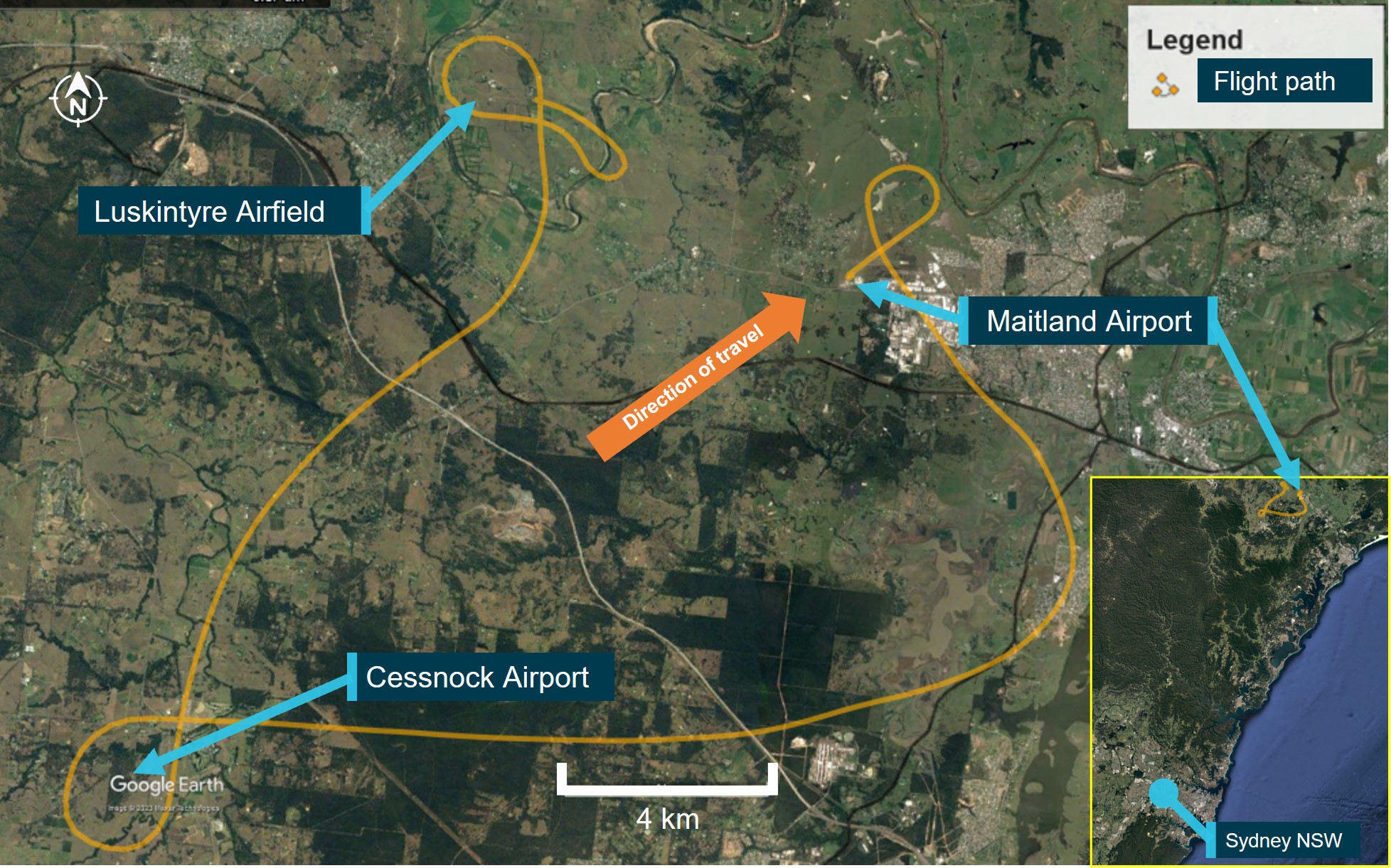
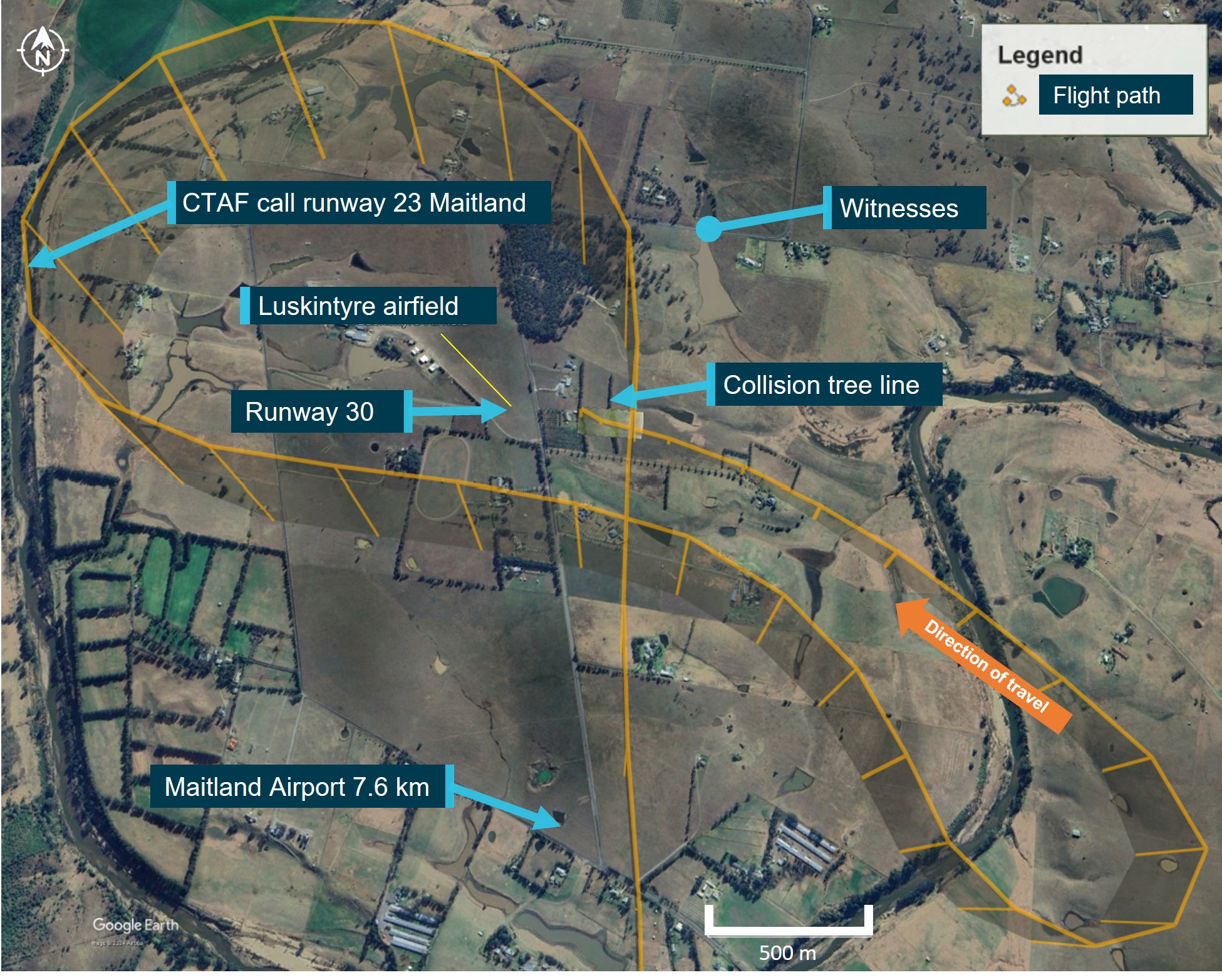
On 17 October 2022, at about 1345 the pilot of a Mooney Aircraft Corporation M20J aircraft, registered VH‑UDQ, departed Maitland Airport, NSW for a local flight. The aircraft travelled to the south-east before turning west towards Cessnock Airport. The pilot conducted an orbit of Cessnock Airport and by about 1353, was headed north-east towards Luskintyre airfield (Figure 1). At 1357:29, when about 2,150 ft above ground level (AGL)[1] during an orbit of Luskintyre airfield, the pilot made a broadcast on the common traffic advisory frequency[2] alerting other pilots in the area that they were overhead Luskintyre airfield and intending to track to join crosswind for runway 23[3] at Maitland Airport.
Figure 1: VH-UDQ Maitland to Luskintyre flight with inset showing flight path north of Sydney, NSW
Source: Google and AvPlan flight data. Annotated by ATSB.
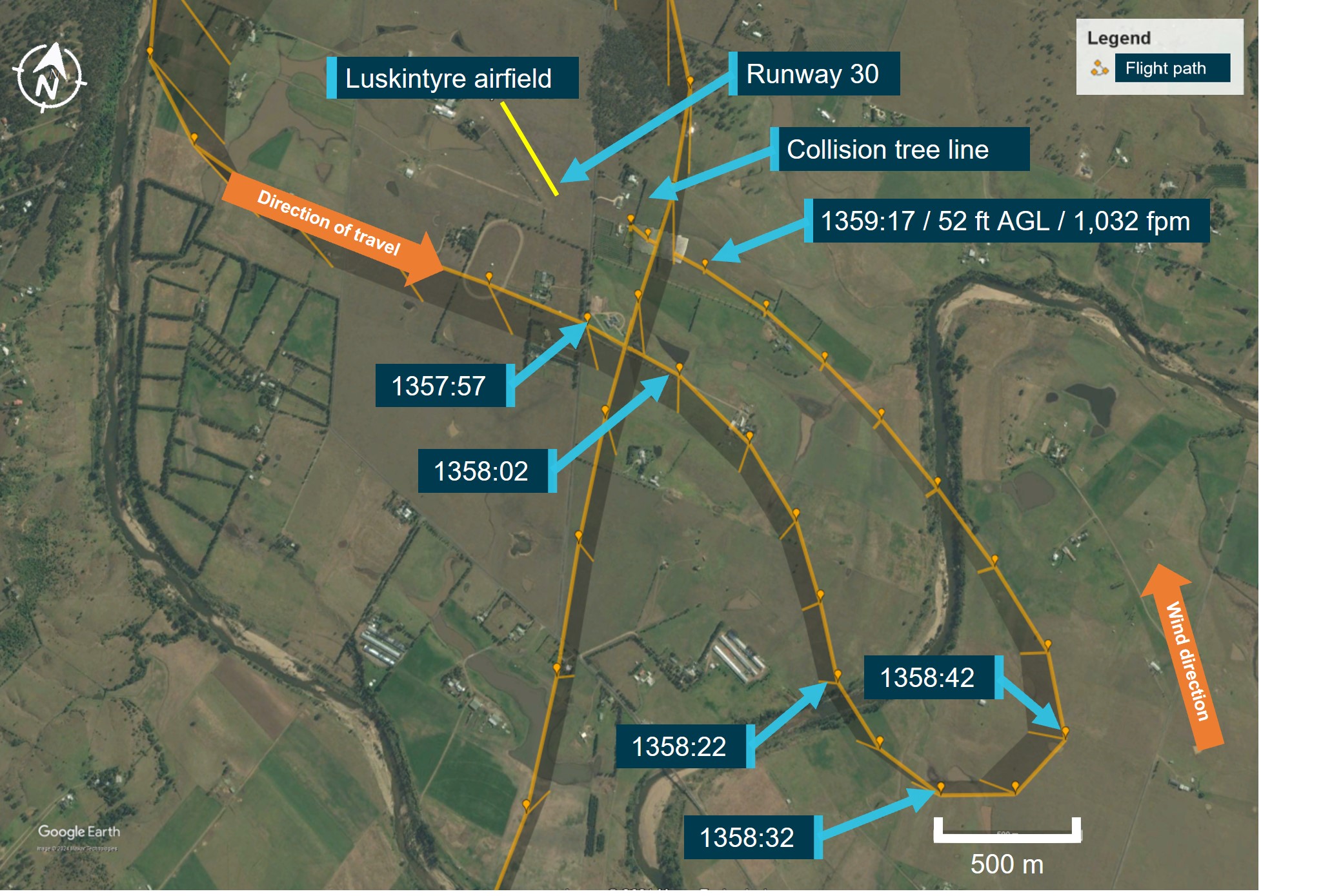
Witnesses reported observing a light aircraft near the airfield that appeared to be descending to land. As VH-UDQ descended towards a line of trees to the south of their position, one witness observed flames coming from the front of the aircraft. The other witnesses reported seeing the aircraft with smoke trailing behind. No distress or emergency calls from the pilot were recorded (Figure 2).
Figure 2: Orbit and descent towards Luskintyre airfield
Source: Google and AvPlan flight data. Annotated by ATSB.
VH-UDQ continued its descent, and touched down in a grass field that was divided by a line of trees. At about 1359 VH-UDQ collided with the trees that were located about 330 metres short of runway 30 with witnesses describing an explosion and accompanying fireball. The collision with trees resulted in the break-up of the aircraft with the fuselage coming to rest about 70 m beyond the tree line.
The witnesses proceeded to the scene and on arrival, they located the pilot lying in the field about 10 m away from the burning aircraft. The pilot advised the witnesses that the aircraft engine had caught fire and that they had suffered smoke inhalation.
The aircraft was destroyed by an intense post-impact fire. Although the pilot survived the collision and escaped from the aircraft, the pilot sustained substantial burns. The pilot was taken to hospital but succumbed to these injuries about 10 weeks later.
Context
Pilot information
The pilot held a Commercial Pilot Licence (Aeroplane) and a valid Class 1 aviation medical certificate. The pilot was issued with a private pilot licence in 1998 and a commercial pilot licence in 2008. The pilot, who was an associate of the aircraft owner, held the required ratings and endorsements for the flight. According to the last medical examination report in October 2021, the pilot reported that they had accumulated about 990 flying hours experience.
Aircraft information
General
VH-UDQ was a Mooney Aircraft Corporation M20J, manufactured in the United States in 1978 and assigned serial number 24-0588. The aircraft Log Book Statement for maintenance direction specified that the airframe was to be periodically inspected in accordance with Civil Aviation Safety Authority (CASA) Schedule 5 and the engine per AD/ENG/4 as amended. For special inspections and lifed component changes, the aircraft maintenance manual was to be consulted.
Engine history
The aircraft was fitted with a 4-cylinder Lycoming engine, model IO‑360-A3B6D, serial number L‑22956-51A. Records show that the engine was last overhauled in May 1993 and had accumulated 1,806.3 hours, time-in-service since overhaul. At the time of the accident, the engine had been operating for 29.5 years since overhaul.
The engine manufacturer recommended that the engine type was to be overhauled on accumulating 2,000 hours, time-in-service or every 12 years. Continued operation in service beyond 12 years was permitted provided the continuing airworthiness requirements of CASA AD/ENG/4 Amendment 11 for ‘on-condition’[4] operation was met. Additional maintenance related information is addressed in Airworthiness directives and airworthiness bulletins.
This engine was installed in VH-UDQ in September 2021. The aircraft owner reported that the engine was replaced by the former owner prior to the sale of the aircraft. The engine had accumulated 27.4 hours since it was installed and the time of the accident.
A piston engine condition report conducted at the 100‑hour inspection addressed the continuing airworthiness requirements did not identify any faults with the engine. The available aircraft records did not contain maintenance activity related to engine‑driven fuel pump replacement or repair.
Airframe information
At the last 100-hour periodic inspection on 14 September 2022, a maintenance release was issued, permitting day VFR operations and showed that the airframe had accumulated 19,128.3 hours, time-in-service.
Refurbishment
Prior to the 100-hour inspection, the aircraft had been refurbished by the current owner. The refurbishment included new external livery and replacement of interior furnishings. The interior refurbishment included re-covering of the seats with leather and the renewal of cabin and baggage compartment linings and floor panels. The owner confirmed that the backing material used for some of the cabin and baggage compartment linings were of carbon fibre construction. Details of the specific furnishings used in the aircraft were not recorded in the aircraft maintenance log books.
Meteorological information
The Maitland weather observation recorded at 1400 was wind from 160º at 12 kt, greater than 10 km visibility, cloud bases broken at 3,500 ft and 7,900 ft above airfield elevation, temperature and dew point of 21º and 14º respectively, and QNH 1019 hPa with no rainfall recorded since 0900. The ten‑minute weather observations for Maitland recorded the wind direction from 165º at 11 kt with a maximum gust of 14 kt in the period 1350-1400.
Luskintyre airfield
Luskintyre airfield is located about 8 km to the north-west of Maitland Airport. The airfield consists of a grass runway 12/30[5] which is 760 m long. The airfield has an elevation of about 35 m above mean sea level and is surrounded by fenced pastures containing dwellings and occasional stands of trees lining boundary fences.
Recorded data
Flight information sourced from AvPlan[6] indicated that at about 1358, VH-UDQ completed the orbit of Luskintyre airfield and commenced a descending turn to the right, reducing altitude from 1,863 ft AGL at 1358:02 to 1,597 ft at 1358:22. By 1358:32, VH-UDQ had begun a left turn and by 1358:42 was at 1,273 ft in an established turn and descending towards Luskintyre airfield. The final turn resulted in a tailwind component as the aircraft descended (Figure 3).
Figure 3: Aircraft flight - final turn towards Luskintyre airfield with time stamps
Image description: Overhead view of flight path with displayed height referenced to the elevation of Luskintyre airfield.
Source: AvPlan and Google, annotated by ATSB
Analysis of the data when VH-UDQ was established in the final turn and approach to the tree line, indicated that the aircraft rate of descent peaked at 3,504 feet per minute. Prior to initial ground contact, when at 52 ft AGL, the rate of descent was 1,032 feet per minute and a ground speed of 108 kt was recorded (Table 1).
Table 1: Aircraft performance during descent towards Luskintyre airfield
Time (local)
Groundspeed (kt)
Altitude (ft - AGL)
Average rate of descent (ft/min)
1358:27
91
1,522
-
1358:42
94
1,273
996
1358:47
106
981
3,504
1358:57
124
551
2,580
1359:12
111
138
1,652
1359:17
108
52
1,032
Source: ATSB
Emergency procedures
The Mooney M20 pilot’s operating handbook (POH) advised pilots that in the event of an engine fire in‑flight, the emergency is to be treated in the following manner:
Fuel Selector Valve – OFF
Throttle and mixture – CLOSED and at IDLE CUTOFF
Cabin ventilation and heating controls – CLOSED
Landing gear – UP or DOWN, depending on terrain
Flaps – Extend as necessary
The POH noted that if the fire is not extinguished, pilots should attempt to increase the airflow over the engine by increasing the glide speed and to attempt a power off landing. They should not attempt to restart the engine.
For a power off landing associated with an engine failure, the POH advised pilots to secure the engine by moving the mixture control to the idle cut-off position and to switch the magnetos off. Wing flaps were to be set to the full down position and undercarriage selected as necessary. Prior to landing, the master switch was to be in the off position and the aircraft approach speed to be 71 kts indicated airspeed.
Site and wreckage information
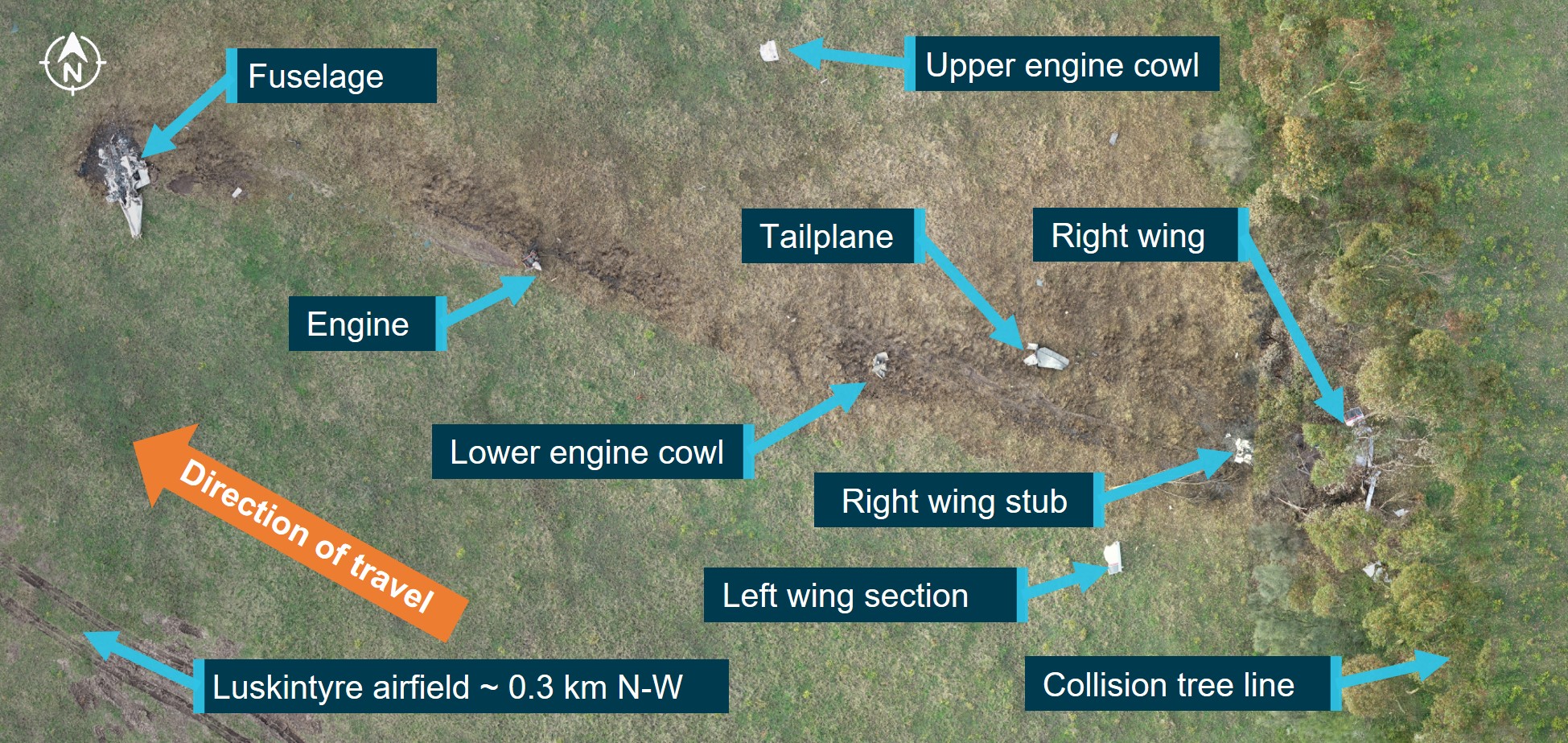
The initial ground contact points were tyre marks in a grass field ahead of a tree line that separated two grass fields and was located about 330 metres before the runway 30 threshold. The tyre marks began about 67 metres from the tree line and ended about 22 metres before the tree line, indicating that VH-UDQ had become airborne again before colliding with the trees in a near-level attitude. The collision with the closely spaced trees separated the wings from the fuselage and was followed by a progressive break-up of the rest of the aircraft. The resulting wreckage trail was spread over a distance of about 70 metres, on a heading of about 282 degrees (magnetic). Ignited fuel from the ruptured wing tanks created the initial fireball reported by witnesses and generated an intense post‑impact fire that consumed the cockpit and cabin area of the fuselage (Figure 4).
Figure 4: VH-UDQ wreckage trail and location of major items
Source: ATSB
The complete aircraft was present at the accident site with all the flight control surfaces and major components accounted for. Examination of the aircraft control systems did not identify any defects that may have affected control of the aircraft. When examining the fuselage remains, the ATSB identified sections of carbon-fibre based products in the aircraft cabin and baggage compartment.
The nose undercarriage was noted to be in the down and locked position however the left and right main undercarriages were found housed in the wheel wells. The main undercarriage actuation and locking mechanism was found to be broken and the damage attributed to the wings separating from the fuselage.
The flap and tailplane trim actuators were retrieved from the accident site and details of their respective jack screw positions were provided to the aircraft manufacturer for comment. The aircraft manufacturer reported that in consideration of the position of the flap jack screw, the wing flaps were set in a slightly down position. The tailplane trim position could not be accurately determined.
Assessment of ground slash marks created by propeller rotation indicated that the propeller was operating between 1,590 and 1,150 revolutions per minute.[7] The engine manufacturer reported that the propeller speed was above that expected for an engine to be windmilling.
Due to the post-impact fire, the position prior to impact of cockpit switches and magneto selection, the fuel selector valve, the throttle and mixture controls, and the cabin ventilation and heating controls, could not be determined.
Engine examination
A detailed engine examination was undertaken at the ATSB technical facilities in Canberra, ACT. The following observations were noted:
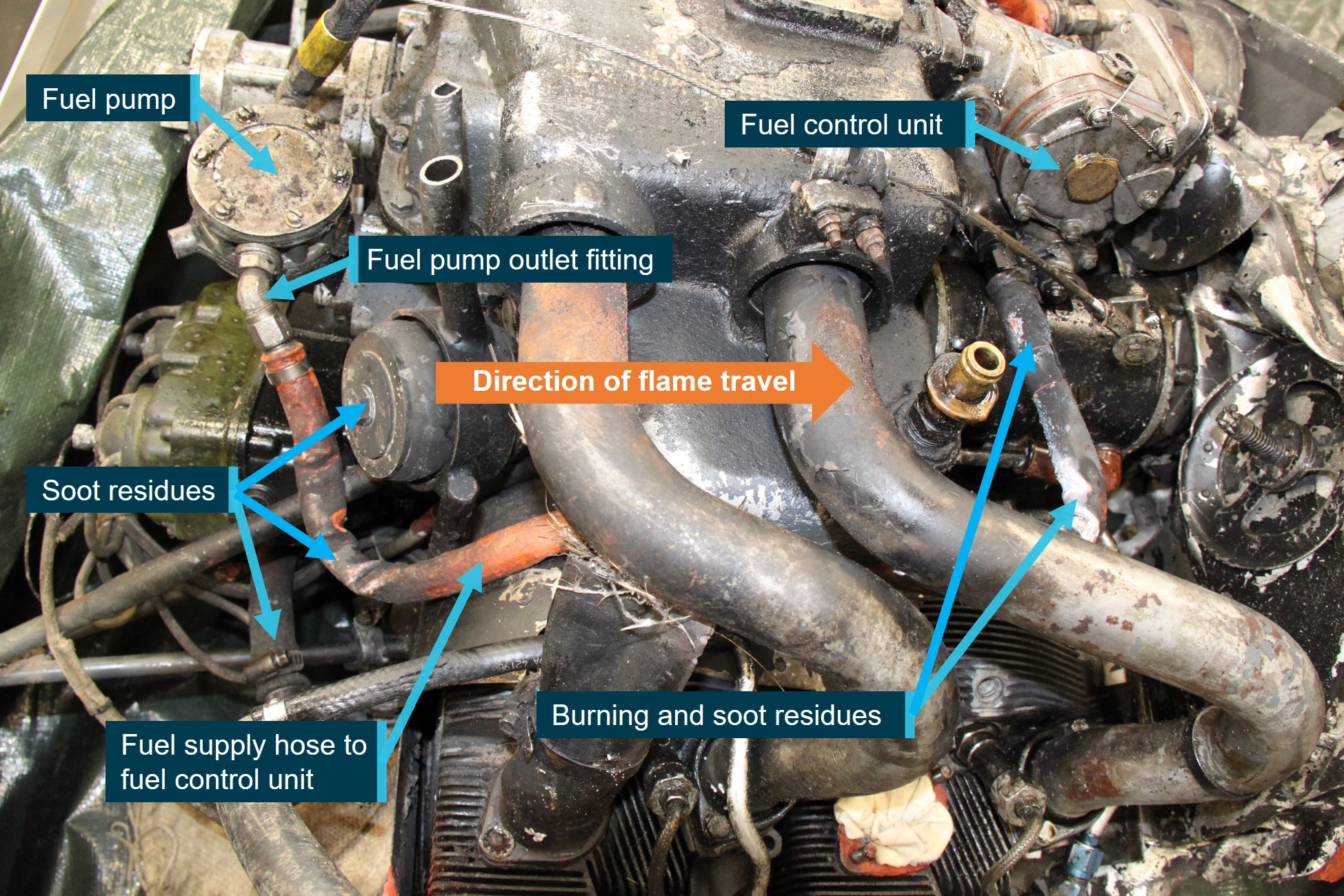
Evidence of scorching and soot residue on engine hoses and components, presented as a distinct flame path that commenced at the rear of the engine and progressed to the front (Figure 5).
The origin of the engine fire was localised to the area surrounding the engine-driven fuel pump.
Pressure testing of the engine fuel supply and distribution hoses did not reveal any fluid leak associated with a hose defect.
Pressure testing of the engine-driven, mechanical fuel pump detected fluid leakage at the base of the fuel outlet fitting of the pump.
Figure 5: Underside of engine showing components and direction of flame travel
Source: ATSB
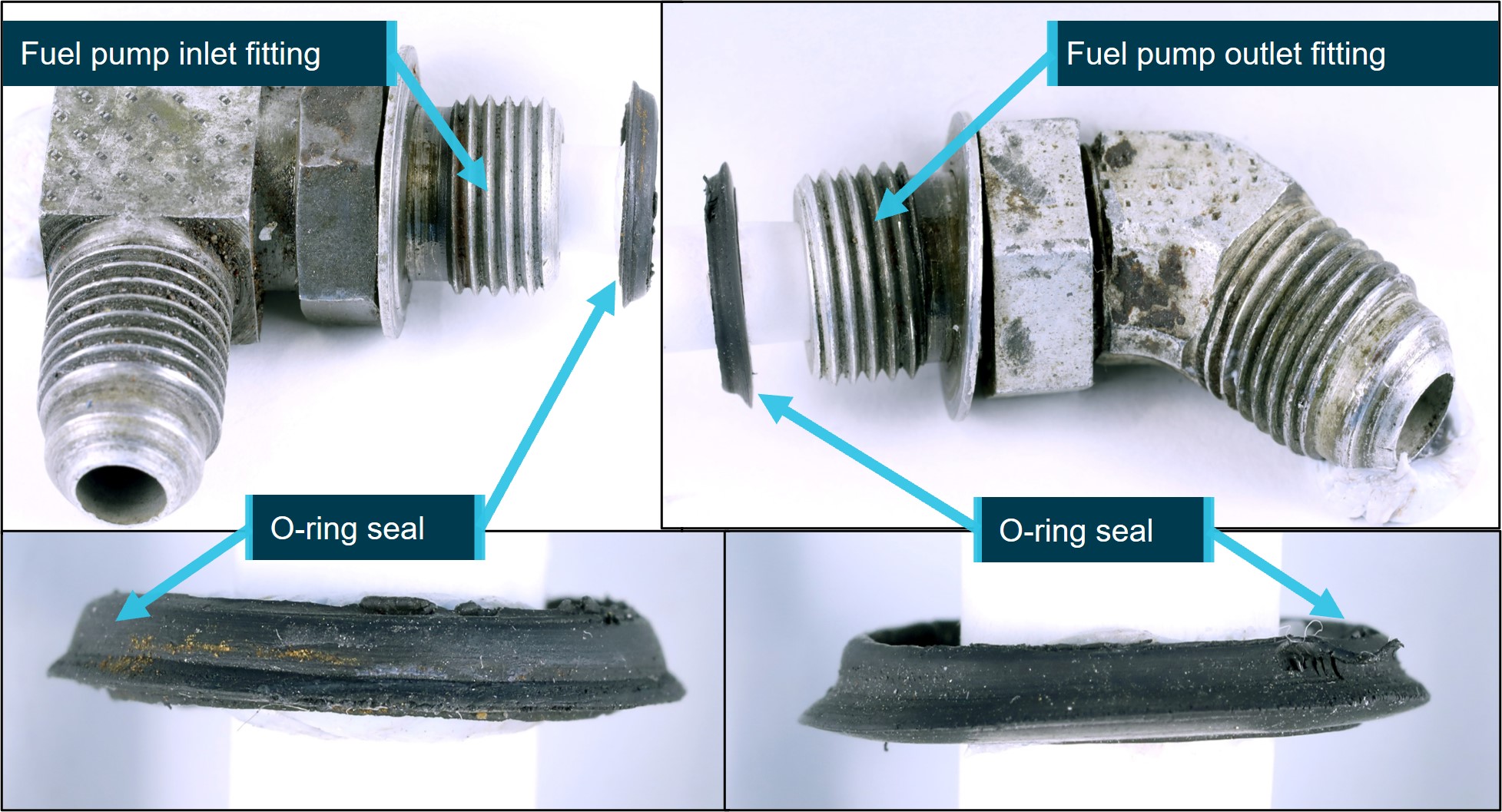
The fuel pump inlet and outlet fittings were removed to allow for examination of the O-ring seals installed between the fittings and the fuel pump body. Inspection of the outlet fitting seal revealed a deteriorated elastomer that had lost its pliability and its round, cross‑sectional shape. Further, the seal showed signs of permanent deformation and contained surface defects (Figure 6).
Figure 6: Fuel pump fittings and O-ring seals showing loss of natural shape and surface defects
Source: ATSB
The inlet fitting seal exhibited similar in-service defects as the outlet fitting seal, however the deterioration had not progressed to failing to provide an effective seal. The examination indicated that fuel under pressure was leaking past the outlet fitting O-ring.
Maintenance records and requirements
Responsibility of registered operators – conduct and recording of maintenance
Section 3 of the Civil Aviation Act1988, describes maintenance as:
Any task required to ensure, or that could affect, the continuing airworthiness of an aircraft or aeronautical product, including one or a combination of overhaul, repair, inspection, replacement of an aeronautical product, modification or defect rectification.
The owner or if appointed, the registered operator is responsible for the airworthiness and maintenance control of the aircraft to ensure its safe operation. Provision for the recording and certification of maintenance that is carried out are contained in the aircraft logbooks.
Maintenance activity or modifications which may include repainting of exterior surfaces or internal furnishings renewal, may change the aircraft’s empty weight and its centre of gravity position. If the change varies by more than the specified amount detailed in the aircraft’s weight and balance record, or the effect of the change is unknown, the aircraft may need to be re-weighed to determine its new empty weight and centre of gravity position. Maintaining the accuracy of the aircraft’s weight and balance information is necessary to ensure that changes do not adversely impact the performance of the aircraft as published in the aircraft flight manual.
To ensure that aircraft type certification standards are maintained and occupant survivability in the case of fire is not further degraded, modifications that include changes to materials used in interior furnishings are subject to approval by an authorised entity. The approval process will likely involve testing of the materials to evaluate their flash or flame resistance.
Airworthiness directives and airworthiness bulletins
An airworthiness directive (AD) is a document issued by the aircraft State of Design or CASA, if an unsafe condition exists in a kind of aircraft or aeronautical product. Registered operators are to comply with the requirements of an AD or an approved alternate means of compliance. CASA also issues Airworthiness Bulletins (AWBs) to inform the aviation public of essential information or make recommendations that are not considered mandatory.
Airworthiness directives – continuing airworthiness of aircraft and aeronautical products
CASA airworthiness directive AD/ENG/4, Piston engine continuing airworthiness requirements, was first issued in March 1995. Amendment 11 became effective on 15 January 2009 and specified the piston engine continuing airworthiness requirements. It required that registered operators of aircraft operated in either the private or airwork categories, in addition to scheduled engine maintenance, conduct additional maintenance actions to confirm the serviceability of the engine.
AD/ENG/04 also referenced CASA Airworthiness Bulletin AWB 85-004, Aircraft piston engine calendar time overhaul, that provided guidelines for additional inspections related to engine calendar time overhaul. The purpose of this AWB was specified as:
This AWB provides guidelines for procedures to be followed to ensure continued airworthiness of the engines that have exceeded the calendar time overhaul limits specified by the manufacturer. These guidelines are in addition to the recommendations by the manufacturers relating to inspections for corrosion.
The AWB highlights corrosion and degradation of elastomers as factors contributing to engine deterioration associated with calendar time. The AWB recommended inspecting elastomer components such as engine mounts, hoses and other elastomer related items for deterioration, however O-ring seals fitted to engine components were not specifically mentioned.
Airworthiness Bulletins
While airworthiness bulletins are for information only, they contain useful information concerned with the airworthiness of aircraft and aeronautical products. CASA recommends that all aircraft owners, and other key stakeholders involved in the operation or maintenance of aircraft, review AWBs for applicability and take any action they consider appropriate.
Airworthiness Bulletin AWB 02-1, On-condition maintenance, was issued on 27 November 2001, and provided information relating to ‘on-condition’ maintenance.
‘On-condition’ maintenance means that the condition of the item is monitored continuously or at specified intervals. When its performance or physical appearance is observed to no longer meet an appropriate standard, the resultant action is the removal of the item before it fails in service. Items in the engine may remain in service longer than the manufacturer recommended time‑in‑service, provided they continue to meet desired physical conditions and performance standards. The AWB identified that ‘on-condition’ is not an opportunity to fit and forget until a failure occurs. The AWB further advised that the condition of an item may require appropriate judgement to determine that failure of the item will not occur prior to the next scheduled inspection.
CASA recommended that where applicable, certificate of registration holders utilise the philosophy of ‘on condition’ maintenance to detect the potential for failures of critical items or products, especially when the time-in-service is approaching the manufacturer’s recommended overhaul period.
Flammability resistance
CASA (2011) AWB 25-016 Cabin interior and cargo compartment flammability provided guidance regarding flammability requirements for aircraft material and advised that when repairing or replacing interior material in an existing aircraft, the applicable flammability requirements are to be understood, and compliance with, is shown.
Factors to consider are the minimum flammability requirements for the aircraft, which is dependent on the aircraft category and the standard applicable at the time that the aircraft was first certificated. Certification information is contained in a document usually referred to as the Type Certificate Data Sheet.
The Type Certificate Data Sheet for the Mooney M20 showed that the aircraft was certified under Part 3 of the United States Civil Air Regulations as amended in 1956, which required that materials making up the cabin interior be ‘flash resistant’, or ‘flame resistant’ if the compartment could be used for (cigarette) smoking.
For a material to be flash resistant, AWB 25-016 notes that the material is to be of a type that is not susceptible to burning violently when ignited. To be flame resistant, it is not to be susceptible to combustion to the point of propagating a flame beyond a limit when the ignition source is removed.
Elastomer type products used in aircraft systems
Aircraft and engine systems carrying petroleum-based products use fluid carrying hoses, seals and gaskets that commonly involve nitrile rubber in the manufacturing process (Brink, Czernik and Horve, 1993). Nitrile rubber is a widely used, synthetic elastomer that is resistant to oil, fuel and chemicals with inherent properties that include tear and abrasion resistance, tensile strength, resilience,[8] and compression set.[9] Distinguishing characteristics of elastomer type products are their ability to be stretched up to several hundred percent and given their ability to store energy, to return to their near original shape when significantly compressed (Brady and Clauser,1991). Hoses, seals and gaskets are normally subject to handling, inspection and replacement requirements while in service.
Following installation, standard aviation maintenance practices described in US Advisory Circular AC-43-13, Acceptable methods, techniques and practices-aircraft inspection and repair (FAA, 1998), require that O-ring seals should not be re-used if disturbed during maintenance or disassembly of the part to which they are fitted. The O-ring seal may have swelled from exposure to fluid, hardened over time, or gained a permanent set. When installed as a gasket within a recessed area to seal a fluid carrying fitting, leaks are not normally acceptable. However, opportunities to replace or physically examine O-ring seals are reliant on scheduled maintenance where the component to which they are fitted is targeted for attention, or unscheduled maintenance in response to the component developing a defect when in service.
As specified by the Logbook Statement,[10] contained in VH-UDQ’s logbook, when considering aircraft components, reference is to be made to the overhaul and replacement schedule provided in the Mooney M20J aircraft maintenance manual. The schedule specifies that fuel and oil system flexible hoses containing elastomer type material are replaced every two to seven years, or at engine overhaul, whichever occurs first. The schedule also specifies that all other fuel and oil system components such as an engine‑driven fuel pump are treated as on-condition items and may remain in service until an inspection, or their performance reveals an unserviceable condition.
Additional information
Annex 13 to the convention on international civil aviation is published by the International Civil Aviation Organization and details the standards and recommended practices for aircraft accident and incident investigation. For statistical purposes, an injury is classified as a fatal injury when death results within thirty days of the date of the accident. The pilot involved in this accident did not succumb to injuries until after the 30-day period, and therefore, the accident is not registered as a fatal collision, despite the outcome.
Related occurrences
Between 2014 and 2023, the ATSB investigated two accidents (described below) involving aircraft in-flight fires that resulted in a fatality or serious injuries. In one accident, the origin of the fire was attributed to burning oil due to engine failure while the other was attributed to a fuel-fed cabin fire.
On 28 March 2014, the pilot of a Cessna Aircraft Company 210L aircraft departed Numbulwar, Northern Territory, on a charter flight with one passenger on board for a return flight to Tindal, Northern Territory.
When about 22 NM west of Numbulwar, smoke was detected in the cabin and following a ‘MAYDAY’ call advising of an engine failure, the pilot applied the cabin fire extinguisher which quickly stopped the smoke. The aircraft landed heavily and collided with trees. The pilot and passenger suffered serious injuries and the aircraft was destroyed.
The ATSB determined that a piston connecting rod broke resulting in a catastrophic engine failure. The smoke entering the cockpit was likely from burning oil.
On 16 April 2022, the pilot of a Beechcraft B58 Baron aircraft, on a charter flight with one passenger on board from Broome Western Australia, commenced a straight in approach to runway 12 at the East Kimberley Regional Airport, Western Australia.
When attempting to extend the landing gear, smoke emerged from forward of the pilot’s circuit breaker panel. The pilot made a PAN-PAN call, by which time flames were observed to be coming from the area of the source of the smoke. Attempts to extinguish the fire were unsuccessful with flames and thick smoke filling the cockpit.
The aircraft collided with terrain about 800 m from the threshold of runway 12 and was consumed by the post-impact fire. The passenger succumbed to their injuries and the pilot received serious injuries.
The ATSB determined that a fault associated with the landing gear electrical system likely ignited fuel from the cabin heater supply line, resulting in a significant and sustained cockpit fire.
NTSB investigation
A similar occurrence in the United States was investigated by the National Transportation Safety Board. The accident was attributed to an engine compartment fuel leak and described in NTSB report, ERA17LA284 as summarised below.
On August 20, 2017, the pilot of a Mooney M20C aircraft registered N6833N departed Palm Coast, Florida on a private flight with one passenger on board to Fort Lauderdale, Florida.
During take‑off and climb the pilot noticed that the engine was losing power. Upon reaching 400 ft above ground level the engine lost total power. During touchdown for the subsequent forced landing to a road, the pilot noticed flames coming into the cabin near the passenger’s feet. The pilot was able to stop the aircraft and both occupants were able to egress quickly after landing.
The pilot and passenger were not injured however the aircraft was substantially damaged.
The NTSB investigation found that a crack in the engine’s No. 4 cylinder resulted in a rough running engine and a subsequent loss of power. The increased vibration loosened a fuel line fitting that generated a fuel leak and was the source of the in-flight fire.
Safety analysis
Introduction
On 17 October 2022, at about 1345 the pilot of a Mooney Aircraft Corporation M20J aircraft, registered VH-UDQ, departed Maitland Airport, NSW for a flight in the local area. While overhead Luskintyre airfield the pilot broadcast an intent to track to Maitland Airport. However, witnesses nearby saw the aircraft descending towards Luskintyre airfield while trailing smoke and flames. Following an initial touch-down in a grass field, VH-UDQ collided with a line of trees. The witnesses described an explosion and accompanying fireball. The pilot was seriously injured but subsequently succumbed to injuries after 10 weeks. The aircraft was destroyed.
The following analysis will consider the cause of the in-flight engine compartment fire, the O‑ring seals of the engine fuel pump, and the recording of maintenance activity in the aircraft logbook. The risk to occupant safety when substituting materials used for interior furnishings is also discussed.
Fire and emergency descent
Witnesses in the area reported flames and smoke coming from the aircraft, and the pilot reported to first responders that the engine was on fire and that they had inhaled smoke. In consideration of the leak found with the engine-driven fuel pump outlet O‑ring seal (see O‑ring seal replacement below), it was likely that fuel leaking from the pump outlet fitting produced a vapor that was ignited by heat in the lower engine compartment.
Given that the pilot made a normal, inbound call for a landing at Maitland Airport, it is likely the pilot only became aware of the presence and/or extent of the engine compartment fire after the orbit of Luskintyre airfield and after the inbound call. However, once the pilot became aware of the fire, they abandoned their intention to land at Maitland Airport and the flight path suggests they instead intended to land at Luskintyre airfield due to its proximity.
The approach towards runway 30 at Luskintyre airfield was at a very high rate of descent, which was consistent with an emergency reaction to a fire that the pilot perceived as high risk to their safety. The available recorded data shows that the descent from 1,522 ft to 52 ft occurred in 50 seconds. From the available evidence it was not clear if, during that time, all of the pilot operating handbook checklist items for an in-flight fire were conducted. One item included cutting off fuel to reduce the source of fire, but the calculated propeller speed at collision suggested that the engine was rotating at well above windmilling speed and was not consistent with configuring the aircraft for a power off landing.
While a landing on a runway is generally safer than in a field, the high descent rate close to the ground may have limited the pilot’s ability to reach runway 30. However, it is also possible that the pilot was becoming more affected by heat, fire and/or smoke as the aircraft descended, and made a decision to land in the paddock to expedite the landing.
The relatively wings-level attitude when the aircraft touched down and then collided with the tree line indicates the aircraft was in an attitude appropriate for landing, albeit at a high ground speed and descent rate. The high speed at which the aircraft’s wheels first contacted the ground and the proximity of the tree line from the initial ground contact point indicated that the collision with trees and subsequent break-up of the aircraft was unavoidable. The release and atomisation of fuel as the wings separated from the fuselage was likely ignited by the pre-existing fire within the engine compartment and the generated heat ignited combustible materials of the aircraft.
As the fuselage was subsequently consumed by the post-impact fire, it was not possible to determine whether cockpit furnishings had started to burn in-flight due to radiant heat from the engine compartment fire, or that cockpit related smoke in-flight, contributed to the reported smoke inhalation.
O-ring seal replacement
An engine compartment fuel leak during the accident flight originated from the engine‑driven, mechanical fuel pump outlet fitting due to an O‑ring seal that had deteriorated with age and had lost the ability to provide an adequate seal. Maintenance related standard practices specify that O‑ring seals are not reused, and they should be replaced when disturbed during maintenance or when a leak is detected.
Unlike the engine fluid carrying hoses that were periodically replaced per the aircraft’s maintenance schedule, the fuel pump and the O-ring seals were on condition and had not required replacement while the engine was in service. Additionally, the maintenance records did not contain evidence of other opportunities to access and physically examine the condition of the O-ring seals that are normally hidden from view when installed on the fuel pump fittings.
O-ring seals were not specifically identified in the broad classification of elastomer type products described in CASA airworthiness bulletin AWB 85-004. Since the O-ring seals were not specifically targeted for attention, this may have resulted in them being overlooked for proactive replacement of easily accessible seals.
In the absence of physical examination or replacement opportunity, assurance that the O‑ring seals were functional, was reliant on checking for fluid leaks at specific intervals. When last inspected it was likely that no discernible leak was detected at the fuel pump outlet fitting. However, the engine was about 17.5 years past its normal overhaul calendar life and the potential for a leak to develop between scheduled inspection intervals was increasingly likely as the O‑ring seals continued to age. A review of the records may have identified the prolonged time-in-service of O‑ring seals, and if documented, the modifications that may have affected the weight of the aircraft, or the flammability attributes of materials used during interior refurbishment.
Flammability assessment
The interest in giving the aircraft a renewed look may have influenced the selection of products as interior furnishings. The use of alternate products was not prohibited. However, to understand the risk associated with substituting materials, an assessment of the substituted materials’ flammability was required. When conducted, the assessment would have indicated the suitability of the material in terms of potential impact on occupant safety in the case of a fire.
Regarding material type, those having flame or flash resistant attributes were permitted for use as cabin furnishings and was dependent on whether smoking was permitted in the aircraft. Considering the common practice of not permitting smoking in aircraft interiors, assurance that occupant safety was not compromised could have been achieved by using products that at a minimum, were determined to be flash resistant. However, a record of their use and their suitability needed to be included in the aircraft records.
Due to the intensity of the post-impact fire, and the lack of records, the ATSB was unable to determine the full extent of product or material substitution, or whether the replacement materials had fed or suppressed the fire.
Findings
ATSB investigation report findings focus on safety factors (that is, events and conditions that increase risk). Safety factors include ‘contributing factors’ and ‘other factors that increased risk’ (that is, factors that did not meet the definition of a contributing factor for this occurrence but were still considered important to include in the report for the purpose of increasing awareness and enhancing safety). In addition, ‘other findings’ may be included to provide important information about topics other than safety factors.
These findings should not be read as apportioning blame or liability to any particular organisation or individual.
From the evidence available, the following findings are made with respect to the collision with terrain involving Mooney Aircraft Corporation M20J, registration VH-UDQ, near Luskintyre airfield, NSW on 17 October 2022.
Contributing factors
In response to an engine compartment fire, the pilot initiated an emergency descent towards the runway but subsequently landed in a field resulting in the aircraft impacting trees. That led to a break-up of the aircraft and a severe post‑impact fire that consumed the aircraft.
An O-ring seal fitted to the engine-driven fuel pump outlet fitting remained in service until it became age-affected and failed to provide an effective seal. The escaping fuel ignited and created an engine compartment fire.
Other factors that increased risk
The aircraft had recently been refurbished and changes included new external livery and replacement of interior furnishings. The aircraft records did not indicate that the refurbishment had been conducted, and consequently, there was no evidence of a flammability assessment for the materials used.
Safety actions
Whether or not the ATSB identifies safety issues in the course of an investigation, relevant organisations may proactively initiate safety action in order to reduce their safety risk. All of the directly involved parties are invited to provide submissions to this draft report. As part of that process, each organisation is asked to communicate what safety actions, if any, they have carried out to reduce the risk associated with this type of occurrences in the future. The ATSB has so far been advised of the following proactive safety action in response to this occurrence.
Safety action by the ATSB
In response to this accident, the ATSB has issued safety advisory notice SAN AO‑2022‑049‑001 in conjunction with this investigation report. The safety advisory notice draws attention to the management of O-ring seals in engine components and their pro‑active removal from service, should inspection of aircraft records indicate a significant time‑in‑service.
Safety Action by the Civil Aviation Safety Authority
In response to the investigation finding related to deteriorated O-ring seals, the Civil Aviation Safety Authority proposed to review Airworthiness Bulletins AWB 02-001 and AWB 85-004 and most likely update them. The update would serve as a reminder to industry of some of the concepts and philosophy related to ‘on-condition’, which is not a ‘fit and forget’ approach to preventative maintenance.
Sources and submissions
Sources of information
The sources of information during the investigation included the:
Civil Aviation Safety Authority
aircraft manufacturer
registered operator
maintenance organisation for VH-UDQ
accident witnesses
recorded data from AvPlan.
References
Brady, G.S. and Clauser, H. R. (1991), Materials Handbook: An Encyclopaedia for Managers, Technical Professionals, Purchasing and Production Managers, Technicians, Supervisors, and Foremen, McGraw-Hill, Inc. New York, NY, USA
Brink, R.V., Czernik, D.E., and Horve, L.A. (1993), Handbook of fluid sealing, McGraw-Hill, Inc. New York, NY, USA.
Federal Aviation Administration (1998), Advisory Circular 43.13-1B, Acceptable methods, techniques and practices-aircraft inspection and repair, U.S. Department of Transportation, Oklahoma City, OK, USA.
Submissions
Under section 26 of the Transport Safety Investigation Act 2003, the ATSB may provide a draft report, on a confidential basis, to any person whom the ATSB considers appropriate. That section allows a person receiving a draft report to make submissions to the ATSB about the draft report.
A draft of this report was provided to the following directly involved parties:
aircraft manufacturer
Civil Aviation Safety Authority
engine manufacturer
National Transportation Safety Board
registered operator/owner.
Submissions were received from the Civil Aviation Safety Authority.
The submissions were reviewed and, where considered appropriate, the text of the report was amended accordingly.
Purpose of safety investigations
The objective of a safety investigation is to enhance transport safety. This is done through:
identifying safety issues and facilitating safety action to address those issues
providing information about occurrences and their associated safety factors to facilitate learning within the transport industry.
It is not a function of the ATSB to apportion blame or provide a means for determining liability. At the same time, an investigation report must include factual material of sufficient weight to support the analysis and findings. At all times the ATSB endeavours to balance the use of material that could imply adverse comment with the need to properly explain what happened, and why, in a fair and unbiased manner. The ATSB does not investigate for the purpose of taking administrative, regulatory or criminal action.
Terminology
An explanation of terminology used in ATSB investigation reports is available here. This includes terms such as occurrence, contributing factor, other factor that increased risk, and safety issue.
Publishing information
Released in accordance with section 25 of the Transport Safety Investigation Act 2003
Ownership of intellectual property rights in this publication
Unless otherwise noted, copyright (and any other intellectual property rights, if any) in this report publication is owned by the Commonwealth of Australia.
Creative Commons licence
With the exception of the Coat of Arms, ATSB logo, and photos and graphics in which a third party holds copyright, this publication is licensed under a Creative Commons Attribution 3.0 Australia licence.
Creative Commons Attribution 3.0 Australia Licence is a standard form licence agreement that allows you to copy, distribute, transmit and adapt this publication provided that you attribute the work.
The ATSB’s preference is that you attribute this publication (and any material sourced from it) using the following wording: Source: Australian Transport Safety Bureau
Copyright in material obtained from other agencies, private individuals or organisations, belongs to those agencies, individuals or organisations. Where you wish to use their material, you will need to contact them directly.
[1]All heights in this report are referenced to the Luskintyre airfield elevation of 35 m (115 ft)
[2]Common traffic advisory frequency (CTAF): a local VHF radio frequency used for air‑to‑air communication at non‑towered airports. The frequency was shared between airfields in the local area that included Maitland and Cessnock Airports and Luskintyre airfield.
[3]Runway number: the number represents the magnetic heading of the runway.
[4]On-condition: A type of aircraft maintenance in which parts are replaced only when their condition appears no longer airworthy, instead of at pre-determined intervals of operation.
[5]Runway numbers: the number and its reciprocal represent the magnetic headings of the runways.
[6]AvPlan: the AvPlan EFB application allows users, with appropriate setting selected, to track and record flight path information based on the position of the device. This data can then be downloaded either from the device or from the application servers.
[7]RPM: Revolutions per minute – a measure of the speed of a rotating unit.
[8]Resilience: In material science, resilience is the ability of a material to absorb energy when it is deformed elastically and release that energy upon unloading. An ability to return to its original size and shape after deformation.
[9]The decrease in thickness of a rubber specimen which has been deformed under specific conditions of load, time and temperature.
[10]Log Book Statement: a document forming part of the log book that specifies an aircraft’s maintenance needs that includes CASA and the aircraft manufacturer’s requirements, any special conditions, and the validity period of the maintenance release.
[11]For statistical purposes, an injury is classified by the International Civil Aviation Organization as a fatal injury when death results within thirty days of the date of the accident.
On the afternoon of 28 September 2022, a Boeing Company 787-9 (787), registered G-ZBKF, was being operated by British Airways as flight number BA16, on an air transport flight from Sydney, New South Wales, to Singapore. At the same time, an Airbus A330-202 (A330), registered VH-EBK, was being operated by Qantas Airways as flight number QF926, on an air transport flight from Sydney to Cairns, Queensland.
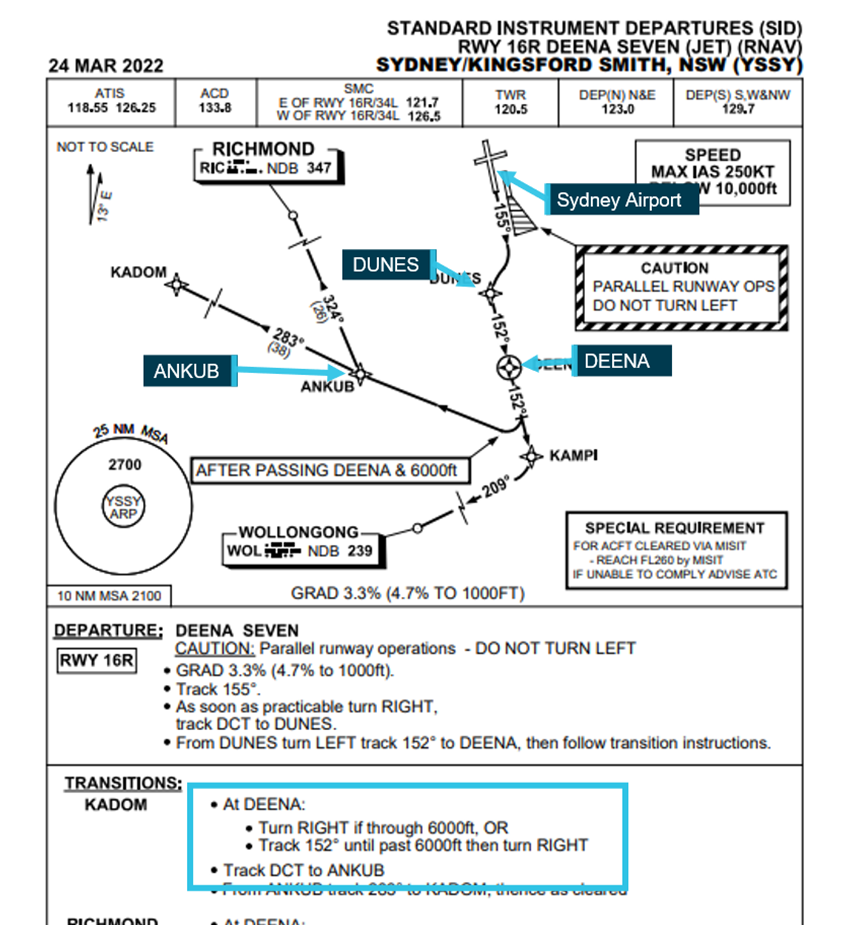
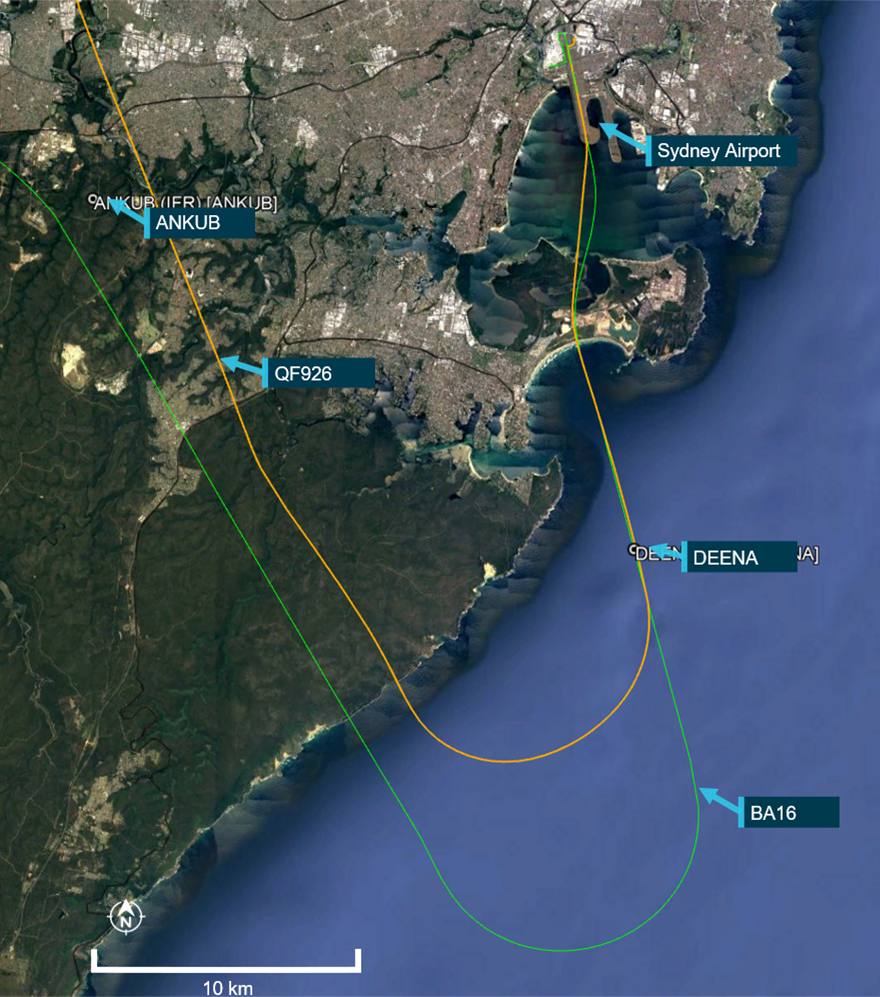
At approximately 1508 local time, BA16 was cleared for take-off from runway 16R to conduct the DEENA SEVEN (DEENA 7) standard instrument departure (SID). Shortly after, QF926 was also cleared for take-off conducting the same SID. The Departure controller cleared both aircraft, in sequence, to climb to flight level 280 via the SID.
During the departure, the following aircraft climbed faster than the controller anticipated and turned towards the next waypoint inside the preceding aircraft, resulting in a loss of separation.
What the ATSB found
The ATSB found that the actual climb performance of the A330 was greater than the climb performance of the 787 which was not expected, or identified, by the controller due to their focus on other aircraft. This resulted in the A330, while complying with the SID, turning inside the leading 787, resulting in the loss of separation.
The ATSB also found that the design of the DEENA SEVEN SID did not provide a positive method of providing separation assurance to aircraft with different performance characteristics. As the aircraft had to satisfy 2 separate conditions prior to turning, there was no way of ensuring aircraft would turn at the same distance from the airport. That is, separation could not be assured.
What has been done as a result
Airservices Australia advised that the DEENA SEVEN SID has been redesigned to remove the conditional requirements of the procedure. The change has been approved and planned to be released as part of the Western Sydney International (Nancy-Bird Walton) Airport project. At the time of writing Airservices Australia was developing a timeline for the implementation of the redesigned SID. As such, the ATSB will continue to monitor the safety issue and provide website updates.
Safety message
Maintaining separation in high traffic terminal areas, such as Sydney, requires that both controllers and flight crews remain vigilant, maintain open communications, and use the available systems and tools to minimise the risk of errors. When sequencing departures, controllers should consider a number of factors, including how the flight duration (and the associated fuel load), will likely affect aircraft climb performance.
Standard instrument departures are designed to expedite the safe and efficient flow of air traffic operating from airports through the use of specific routings, levels, speed restrictions and waypoints. Where a SID, with limited designed separation assurance is used, it is important that air traffic controllers regularly monitor individual aircraft performance rather than rely on expected flight characteristics.
The occurrence
On the afternoon of 28 September 2022, a Boeing Company 787-9 (787), registered G-ZBKF, was being operated by British Airways as flight number BA16, on air transport flight from Sydney, New South Wales, to Singapore. At the same time, an Airbus A330-202 (A330), registered VH-EBK, was being operated by Qantas Airways as flight number QF926, on air transport flight from Sydney to Cairns, Queensland.
The Sydney Airport automatic terminal information service (ATIS)[1] indicated that parallel runways were in use, including simultaneous independent departures[2] from runways 16R and 16L.[3]
At approximately 1508 local time, BA16 was cleared for take-off from runway 16R by the Sydney tower controller. They were cleared to conduct a DEENA SEVEN (DEENA 7) standard instrument departure (SID)[4] (Figure 1) from runway 16R and to climb to 5,000 ft.
The DEENA 7 SID required an aircraft to turn right as soon as practicable after take-off, towards the DUNES waypoint[5] and then turn left to track 152° towards the DEENA waypoint. The aircraft was required to have passed DEENA and climbed above 6,000 ft prior to turning right towards the ANKUB waypoint. If the aircraft had not reached 6,000 ft at DEENA, there was a requirement to continue on a heading of 152° until passing an altitude of 6,000 ft, before turning towards ANKUB.
Passing 1,500 ft, the flight crew contacted the departure controller (Departures) and advised them that they were a heavy aircraft[6] on climb to 5,000 ft, departing via the DEENA 7 SID. Departures advised the flight crew the aircraft was identified on radar and instructed them to climb via the SID to flight level (FL) 280.[7]
Figure 1: DEENA SEVEN standard instrument departure (SID) from runway 16R
Source: Airservices Australia, annotated by ATSB
At approximately 1511, and with 6.3 NM spacing behind BA16, QF926 departed from runway 16R, also cleared on a DEENA 7 SID. During the initial climb, the flight crew contacted Departures advising that they were a heavy aircraft, passing 1,500 ft on climb to 5,000 ft, cleared on a DEENA 7 SID. Departures subsequently cleared them to climb to FL 280 via the SID.
BA16 climbed through 6,000 ft at around 25 km from Sydney Airport and initiated a turn to ANKUB in accordance with the SID. QF926 passed DEENA approximately coincident with climbing through 6,000 ft and initiated a turn to ANKUB at approximately 20 km from the airport, also in accordance with the SID (Figure 2).
Figure 2: Flight tracks of both aircraft during their departure from Sydney
Qantas Q926 is depicted in orange and BA16 is depicted in green.
Source: Google Earth with Flight Radar 24 tracks and annotated by ATSB
As QF926 was turning, the controller detected that the aircraft had climbed faster than they had anticipated and instructed QF926 to stop their climb at 9,000 ft, to which the flight crew advised they would do their best. The controller then instructed BA16 to expedite their climb through 10,000 ft.
The controller subsequently advised the flight crew of QF926 that there was a 787 above their aircraft, and they would step climb their aircraft underneath the 787. The Qantas flight crew advised they had sighted the higher aircraft.
There was a loss of separation standards (see the section titled Required separation) between the two aircraft with the minimum vertical separation reducing to 600 ft and lateral separation reducing to 2.4 NM.
The flight crew in BA16 later advised that they had received a traffic alert and collision avoidance system (TCAS)[8] traffic advisory[9] during the event and the first officer subsequently visually identified the A330. They also advised they were informed by air traffic control of the traffic, however this was not recorded on the departures frequency.
Context
Air traffic controller information
The controller had worked as a controller from 2008 and had moved to Sydney in 2015 where they had qualified in both the Sydney Approach Director and Departures positions. While they mainly worked in the Approach Director position, they were rostered in the Departures position regularly to remain current in that role.
They had conducted compromised separation training in their last departures refresher training session in June 2022.
The controller advised that they expected the A330 would have a comparative climb performance to the 787. Hence, they instructed them to follow the 787. Qantas typically utilised the A330 on international routes, however, more recently had been utilising the A330 on domestic routes, including Sydney to Cairns, with correspondingly lower fuel loads and higher climb performance.
The controller then proceeded to assess other traffic in the area. Specifically, they were assessing a track for an aircraft, on descent from FL 280 to Shellharbour to ensure separation between this aircraft and an Airbus A380, which was in the list to depart runway 16R. They were also assessing the departure tracks for other aircraft due to depart from runway 16L and coordinating a media helicopter, overflying the airspace at 500 ft, with the Bankstown Airport tower controller. The controller advised they considered their workload to be manageable at the time.
Air traffic control procedures
Departure procedures
At the time, auto-release departures were in progress at Sydney Airport. This procedure allowed the tower controller (Tower) to depart aircraft without prior coordination with the departures controller (Departures). Departures had a list of aircraft on their console which were due to depart. These aircraft were listed in order of departure from the runway they were using, but the Tower controller could depart the aircraft from either runway in the order which allowed best use of the runways.
Tower was required to ensure there was a minimum separation between the aircraft of 5 NM when aircraft were departing from runway 16R. When using the DEENA 7 SID, Tower cleared the aircraft to climb to 5,000 ft via the SID, this ensured that departing aircraft continued on a heading of 152° and would not initiate a turn unless they received a further clearance from Departures.
Required separation
The required separation standards at Sydney are specified in the manual of air traffic services (MATS). The manual specified that the separation standard in the Sydney terminal control unit (TCU) was 3 NM lateral or 1,000 ft vertical separation. However, the wake turbulence standards between 2 heavy aircraft, required a minimum of 4 NM separation where aircraft were departing using the same runway, which was the case for this departure.
The A330 departed with the required spacing behind the preceding B787.
Controller traffic alerts
The controller advised they did not receive a short-term conflict alert (STCA) on their console during the event. A replay of the recorded surveillance data indicated the STCA was displayed on a number of occasions. However, Airservices advised that the replay was not a reproduction of the controller’s screen at the time. The parameters for a STCA in the TCU environment are that within the following 60 seconds the aircraft will infringe 2.1 NM lateral separation and or 600 ft vertical separation. In this case, as the separation reduced to 600 ft and 2.4 NM in a turn, it is possible that due to the dynamics of the event, the STCA may not have shown on the controller’s console. However, the ATSB was unable to determine whether the controller received a STCA on their console.
Issuing safety alerts
According to MATS, where a controller becomes ‘aware that an aircraft is in a situation that places it is unsafe proximity to…other aircraft’, the controller should issue a ‘safety alert’. They should also use the term ‘avoiding action’ prior to instructions when in the controller’s judgement, the aircraft ‘is in a situation that places it at risk of a collision with another aircraft under surveillance’.
Weather
The weather at the airport during the occurrence was fine, with good visibility, scattered[10] cloud at 3,000 ft and a 15 kt easterly wind.
Replanning of Sydney Airspace
Airservices Australia advised that in response to the replanning of the airspace in the Sydney area due to the establishment of the Western Sydney International (Nancy-Bird Walton) Airport, which is due to open in 2026, the DEENA 7 SID has been redesigned.
Related occurrences
In the last 10 years, across Australia, there have been 8 occurrences of a loss of separation reported to the ATSB involving aircraft cleared on a SID where a following aircraft has climbed faster than the preceding aircraft.
Of these, 6 occurrences were at Sydney Airport and 5 of these involved the DEENA 7 SID. Of these, 1 occurred in 2012, 1 in 2019, 1 in 2020, and 2 in 2022.
Safety analysis
During the departure of two heavy aircraft conducting the DEENA SEVEN standard instrument departure (SID), the controller assessed that the following Airbus A330 would have a similar climb performance to the leading Boeing 787, without considering that the A330 was conducting a domestic flight and would therefore have a significantly lower fuel load and better climb performance than the preceding heavily‑loaded 787. The controller cleared both aircraft, in sequence, to climb to the same level. The controller then became distracted, planning the separation between 2 other aircraft and did not detect the variation in climb performance between the departing A330 and 787.
As the actual climb performance of the A330, on a domestic route, was greater than the climb performance of the 787 on an international route, the separation reduced. When the controller detected the closing aircraft, they instructed both flight crew to take action to increase the separation between their aircraft. During the occurrence, it is likely the controller did not receive a short-term conflict alert (STCA) warning however, they did suspect there had been loss of separation and did not provide a safety alert or advise that the instruction was an avoiding action.
The use of SIDs ‘enable the safe and efficient processing of instrument flight rules[11] aircraft … from airports’ (Airservices Australia) and will ‘deconflict potentially conflicting traffic by the use of specific routings, levels, speed restrictions and check points’ (Skybrary). They are particularly useful in high traffic airspace such as departing Sydney Airport. However, according to Airservices Australia, SIDs do not provide longitudinal separation between aircraft which are following in trail with another aircraft, with controller action ensuring the maintenance of separation.
Despite this, the design of the DEENA SEVEN SID (and possibly others) did not provide a positive method of providing lateral separation assurance to departing aircraft with differing climb performance. As the aircraft had to satisfy 2 separate conditions prior to turning, there was no way of ensuring aircraft would turn at the same distance from the airport. As such, lateral separation could not be assured.
Airservices Australia advised that the DEENA SEVEN SID had been redesigned to remove the conditional requirements of the procedure. At the time of writing, the change had been approved and was planned to be released in the first implementation package for the Western Sydney International (Nancy-Bird Walton) Airport project. However, no timeframe for the release of the package was provided.
Findings
ATSB investigation report findings focus on safety factors (that is, events and conditions that increase risk). Safety factors include ‘contributing factors’ and ‘other factors that increased risk’ (that is, factors that did not meet the definition of a contributing factor for this occurrence but were still considered important to include in the report for the purpose of increasing awareness and enhancing safety). In addition ‘other findings’ may be included to provide important information about topics other than safety factors.
Safety issues are highlighted in bold to emphasise their importance. A safety issue is a safety factor that (a) can reasonably be regarded as having the potential to adversely affect the safety of future operations, and (b) is a characteristic of an organisation or a system, rather than a characteristic of a specific individual, or characteristic of an operating environment at a specific point in time.
These findings should not be read as apportioning blame or liability to any particular organisation or individual.
From the evidence available, the following findings are made with respect to the loss of separation involving Airbus A330, VH-EBK, and Boeing 787, G-ZBKF near Sydney Airport, New South Wales on 28 September 2022.
Contributing factors
When clearing two aircraft on the DEENA 7 standard instrument departure, the controller incorrectly assessed that they would have similar climb performance and became distracted and did not detect the relatively higher climb performance of the departing Airbus A330 aircraft. This resulted in the A330 turning inside the preceding Boeing 787 and a loss of separation standards with that aircraft.
The DEENA 7 standard instrument departure has no designed positive separation assurance method, making it susceptible to loss of separation occurrences. (Safety issue)
Safety issues and actions
Central to the ATSB’s investigation of transport safety matters is the early identification of safety issues. The ATSB expects relevant organisations will address all safety issues an investigation identifies.
Depending on the level of risk of a safety issue, the extent of corrective action taken by the relevant organisation(s), or the desirability of directing a broad safety message to the aviation industry, the ATSB may issue a formal safety recommendation or safety advisory notice as part of the final report.
All of the directly involved parties are invited to provide submissions to this draft report. As part of that process, each organisation is asked to communicate what safety actions, if any, they have carried out or are planning to carry out in relation to each safety issue relevant to their organisation.
Descriptions of each safety issue, and any associated safety recommendations, are detailed below. Click the link to read the full safety issue description, including the issue status and any safety action/s taken. Safety issues and actions are updated on this website when safety issue owners provide further information concerning the implementation of safety action.
DEENA 7 Standard instrument departure had no positive separation assurance method
Safety issue description: The DEENA 7 standard instrument departure has no designed positive separation method, making it susceptible to loss of separation occurrences.
Glossary
ATC Air traffic control
ATIS Automatic terminal information service
FL Flight level
IAS Indicated airspeed
MATS Manual of air traffic services
SID Standard instrument departure
STCA Short-term conflict alert
TCAS A type of airborne collision avoidance system (ACAS).
TCU Terminal control unit
Sources and submissions
Sources of information
The sources of information during the investigation included the:
involved air traffic controller
flight crew notifications
Airservices Australia
Skybrary
Submissions
Under section 26 of the Transport Safety Investigation Act 2003, the ATSB may provide a draft report, on a confidential basis, to any person whom the ATSB considers appropriate. That section allows a person receiving a draft report to make submissions to the ATSB about the draft report.
A draft of this report was provided to the following directly involved parties:
Involved air traffic controller
Airservices Australia
Civil Aviation Safety Authority
Qantas
Air Accidents Investigation Branch, United Kingdom
A submissions was received from:
Airservices Australia
The submission was reviewed and, where considered appropriate, the text of the report was amended accordingly.
Purpose of safety investigations
The objective of a safety investigation is to enhance transport safety. This is done through:
identifying safety issues and facilitating safety action to address those issues
providing information about occurrences and their associated safety factors to facilitate learning within the transport industry.
It is not a function of the ATSB to apportion blame or provide a means for determining liability. At the same time, an investigation report must include factual material of sufficient weight to support the analysis and findings. At all times the ATSB endeavours to balance the use of material that could imply adverse comment with the need to properly explain what happened, and why, in a fair and unbiased manner. The ATSB does not investigate for the purpose of taking administrative, regulatory or criminal action.
Terminology
An explanation of terminology used in ATSB investigation reports is available here. This includes terms such as occurrence, contributing factor, other factor that increased risk, and safety issue.
Publishing information
Released in accordance with section 25 of the Transport Safety Investigation Act 2003
Ownership of intellectual property rights in this publication
Unless otherwise noted, copyright (and any other intellectual property rights, if any) in this report publication is owned by the Commonwealth of Australia.
Creative Commons licence
With the exception of the Coat of Arms, ATSB logo, and photos and graphics in which a third party holds copyright, this publication is licensed under a Creative Commons Attribution 3.0 Australia licence.
Creative Commons Attribution 3.0 Australia Licence is a standard form licence agreement that allows you to copy, distribute, transmit and adapt this publication provided that you attribute the work.
The ATSB’s preference is that you attribute this publication (and any material sourced from it) using the following wording: Source: Australian Transport Safety Bureau
Copyright in material obtained from other agencies, private individuals or organisations, belongs to those agencies, individuals or organisations. Where you wish to use their material, you will need to contact them directly.
[1] Automatic terminal information service (ATIS): continuous broadcast of recorded aeronautical information. ATIS broadcasts contain essential information, such as current weather information, active runways, available approaches, and any other information required by flight crew.
[2] Simultaneous independent departures are simultaneous departures for aircraft departing in the same direction from parallel runways.
[3] Runway number: the number represents the magnetic heading of the runway. The runway identification may include L, R or C as required for left, right or centre.
[4] Standard instrument departure (SID): an air traffic control (ATC) defined procedure, that simplifies departure tracking while also balancing terrain/obstacle avoidance, noise abatement and airspace management considerations.
[5] Waypoint: A defined position of latitude and longitude coordinates, primarily used for navigation.
[6] Wake turbulence separation is determined by aircraft maximum take-off weight. Aircraft with a maximum take-off weight of 136,000 kg or greater are categorised as heavy aircraft.
[7] Flight level: at altitudes above 10,000 ft in Australia, an aircraft’s height above mean sea level is referred to as a flight level (FL). FL 280 equates to 28,000 ft.
[8] Traffic alert and collision avoidance system (TCAS): a type of airborne collision avoidance system (ACAS).
[9] Traffic advisory (TA): an alert issued by an airborne collision avoidance system (ACAS) when the detected traffic may result in a conflict. Pilots are expected to initiate a visual search for the traffic causing the TA.
[10] Cloud cover: in aviation, cloud cover is reported using words that denote the extent of the cover – ‘scattered’ indicates that cloud is covering between a quarter and a half of the sky
[11] Instrument flight rules (IFR): a set of regulations that permit the pilot to operate an aircraft in instrument meteorological conditions (IMC), which have much lower weather minimums than visual flight rules (VFR).
Occurrence summary
Investigation number
AO-2022-047
Occurrence date
28/09/2022
Location
Near Sydney Airport
State
New South Wales
Report release date
03/03/2023
Report status
Final
Investigation level
Defined
Investigation type
Occurrence Investigation
Investigation status
Completed
Mode of transport
Aviation
Aviation occurrence category
Loss of separation
Occurrence class
Incident
Highest injury level
None
Aircraft details
Manufacturer
Airbus
Model
A330-202
Registration
VH-EBK
Serial number
0945
Aircraft operator
Qantas Airways
Sector
Jet
Operation type
Part 121 Air transport operations - larger aeroplanes
On the morning of 2 October 2022, a Robinson Helicopter Company R22 Beta II, registered VH‑RAS, departed Koorda, Western Australia for a private flight, with the pilot and one passenger on board. About 6 minutes later, the helicopter impacted terrain, inverted, about 13 km to the southwest of the departure point. The helicopter was destroyed, and both occupants were fatally injured.
What the ATSB found
Recorded flight data showed that, during cruise, the helicopter’s altitude increased by about 100 ft and then rapidly descended, almost vertically, before colliding with terrain inverted. The ATSB found that the helicopter sustained an in-flight break-up at about the time it rapidly descended. The site and wreckage examination identified signatures indicative of a low-g and/or low rotor RPM/rotor stall condition, however, the circumstances preceding this could not be determined.
Dual flight controls were fitted in a position that was occupied by the passenger. When carrying passengers, the helicopter manufacturer recommends removing the passenger‑side controls to avoid inadvertent bumping or interference.
The ATSB also found that the pilot had not disclosed their use of a prescription medication or the associated medical condition to the Civil Aviation Safety Authority. This precluded a specialist assessment of the aeromedical significance of the medication’s use and the underlying conditions for which it was prescribed.
Safety message
Low-g and low rotor RPM/rotor stall conditions can be catastrophic for helicopters with semi‑rigid rotor heads. A pilot’s ability to identify the condition and promptly apply the correct flight control inputs is vital to effective recovery and continued safe operation. It is also particularly important that the dual flight controls be removed before flight to avoid inadvertent passenger interference. Where the dual controls cannot be removed, the passenger should be fully briefed to keep their hands and feet clear.
This accident also highlights the importance of pilots reporting relevant medical conditions and the use of medications to their designated aviation medical examiner. A full understanding by the Civil Aviation Safety Authority’s aviation medical specialists of a pilot’s medical conditions, and use of medications, enables management of the risk for both the individual and flight safety overall.
Further, recording devices have long been recognised as an invaluable tool for investigators in identifying the factors behind an accident, and their contribution to aviation safety is irrefutable. While not required by regulations, owners and operators should consider the benefits of installing such devices.
The investigation
Decisions regarding the scope of an investigation are based on many factors, including the level of safety benefit likely to be obtained from an investigation and the associated resources required. For this occurrence, a limited-scope investigation was conducted in order to produce a short investigation report, and allow for greater industry awareness of findings that affect safety and potential learning opportunities.
The occurrence
Flight from Jandakot to Koorda
On 1 October 2022, a Robinson Helicopter Company R22 Beta II, registered VH‑RAS, departed Jandakot Airport, Western Australia for a private flight to an airstrip at Koorda (Figure 1 inset). The helicopter and several aeroplanes were being used to participate in a group social flying weekend, with the pilots and their passengers following a common itinerary but operating independently. The helicopter was being operated under the visual flight rules.[1]
The group arrived around midday at Koorda, and a witness recalled assisting the pilot of VH-RAS to fuel the helicopter with avgas[2] from 2 full 10 L plastic fuel containers, which they had been given by the pilot to drive to Koorda from Jandakot. This fuel was loaded into the main fuel tank. This witness also observed the pilot conduct a fuel drain during the pre‑flight inspection the next morning.
Return flight to Jandakot
On the morning of 2 October 2022, the group departed at staggered times from Koorda, on the return flight to Jandakot. VH-RAS departed at about 1140 local time, with the pilot and one passenger on board. It was reported that the pilot intended to refuel at Northam aerodrome, about 117 km to the south-west of Koorda.
When VH-RAS did not arrive at Jandakot as expected, and after confirming it had not landed at Northam, the helicopter was reported as overdue at about 1500 and a search was commenced. The search was coordinated by the Australian Maritime Safety Authority’s Joint Rescue Coordination Centre. The wreckage was subsequently located at about 1600 on a dry salt flat in the Cowcowing Lakes region, about 13 km south-west of Koorda (Figure 1). The helicopter was destroyed, and both occupants were fatally injured.
Figure 1: Flight from Jandakot to Koorda and from Koorda on the morning of the accident
Source: Google Earth and handheld GPS data, annotated by the ATSB
Context
Pilot information
General
The pilot was the owner of VH-RAS and held a private pilot licence for both aeroplanes (since 1976) and helicopters (since 2006). Their last flight review, conducted in VH‑RAS, was completed 11 January 2021.
The pilot held a Class 2 Aviation Medical Certificate valid to 22 January 2024, which included restrictions requiring the wearing of distance vision correction and that reading correction must also be available while exercising the privileges of the licence. The pilot reportedly did not wear glasses while flying. However, their flight instructor and other pilots who flew with them, advised that they had not noticed any impediment with the pilot’s ability to operate the helicopter without wearing distance vision correction or at other times when reading the flight instruments.
Aeronautical experience
At their last medical in January 2022, the pilot reported that they had accrued about 3,000 hours total aeronautical experience (combined aeroplane and helicopter). It was also reported that the pilot no longer maintained their logbook, which prevented an accurate determination of their experience specific to aeroplanes and helicopters.
There were 16 entries on the current maintenance release, indicating the pilot typically flew the helicopter about twice per month, for about 20 minutes each time.[3] A review of previous maintenance releases determined that the pilot had operated the helicopter for a total of 77 hours since its purchase in 2016.[4]
The pilot was reported to have regularly flown the helicopter accompanied by an experienced aeroplane commercial pilot and instructor, who also held a helicopter licence. Those flights would typically occur each month and involve about 45-minutes[5] of skill‑based flying practice, consisting of general handling, hovering, hovering turns and slope landing practice. No simulated emergencies or abnormal operations were practiced during those flights. In addition to those flights, they would do short flights to properties in the Perth hills or to nearby aerodromes to participate in social ‘fly-in’ breakfast events.
The pilot’s January 2021 helicopter flight review was performed by an experienced helicopter instructor and flight examiner who had conducted a significant amount of the pilot’s training and testing over the years. The flight review included simulated engine failures, autorotation[6] to confined areas, main rotor under speed recoveries and stuck tail rotor pedal emergencies.
In addition to the flight review, the instructor recalled accompanying the pilot on other occasions during the period since January 2021. During this, the pilot had the opportunity to practice simulated emergencies under the instructor’s supervision.
The aviation community at Jandakot held the accident pilot in high regard and recognised them as somebody who had natural aptitude as both an aeroplane and helicopter pilot.
Recent history
The pilot was reported to typically retire to bed about 2100 and wake about 0500 most days. They were described consistently as being very health conscious, having exercised regularly and maintained very good overall health.
Members of the flying group that had spent time with the pilot during the weekend recalled them being their normal self, including prior to departing Koorda the morning of the accident. The pilot was reported to have slept normally, was well rested and had eaten breakfast with the group prior to arriving at the airstrip. There was no evidence to indicate the pilot was unwell nor experiencing a level of fatigue known to affect performance.
Passenger information
The passenger held a Student Pilot Licence (Aeroplane), with about 15 hours of flight experience in a Cessna Aircraft Company 152. They also held a valid Class 2 Aviation Medical Certificate, which included restrictions requiring the wearing of distance vision correction. It was stated that this was the passenger’s first flight in a helicopter. The passenger was reported to be well and that they appeared normal during the weekend, including prior to departing Koorda.
Helicopter information
General
VH-RAS (Figure 2) was a 2-seat Robinson Helicopter Company (RHC) R22 Beta II helicopter, serial number 4617, powered by a Textron Lycoming O-360-J2A, 4-cylinder carburetted piston engine. It was manufactured in the United States in 2013 and first registered in Australia the same year. It was purchased by the pilot in 2016 and had been maintained by the same maintenance organisation since that time. The helicopter was to undergo a periodic inspection every 100 hours or 12 months, whichever came first. The last periodic inspection had been completed in November 2021, with the current maintenance release issued at that time. At the time of the accident, the helicopter had accrued about 13 hours since the periodic inspection and 2,080 hours total time-in-service.
The helicopter was equipped with an intercom system and headsets, allowing those on board to talk to each other during flight. This would allow for clear communication between the pilot and passenger in the event of an abnormal situation.
Figure 2: VH-RAS
Source: Dallas Presser, modified by the ATSB
Rotor head design
The 2-blade main rotor assembly is a semi-rigid rotor head, otherwise known as a teetering rotor head (Figure 3). Bolts secure the rotor blades to the main rotor hub at the coning hinges.[7] The teetering head allows the rotor disk to take up an attitude appropriate to the flight condition, with the coning hinges allowing the blades to achieve the optimum coning angle appropriate for the flight and loading conditions. This design permits a lighter blade structure than would otherwise be required.
During stopping and starting of the main rotor, when the revolutions per minute (RPM) are low, the spindle tusks rest against the droop stops, which are mounted near the top of the main rotor mast. The droop stops restrict the drooping of each blade to prevent contact with the tailcone at low rotor RPM. As the main rotor RPM increases, the blades become rigid and straighten due to rotational forces, and the tusks shift off the droop stop as the blades lift. During normal flight, the rotor is free to teeter and flap around its designed flight axis via the teeter hinge, while polyurethane teeter stops limit the degree of teetering to protect the mast from direct contact with the main rotor blades. The main rotor system is also fitted with pitch change links, which connect the swashplate to the pitch horn and transmit the flight control inputs to the main rotor blades.
Figure 3: R22 main rotor head assembly
Source: United Kingdom Air Accidents Investigation Branch, annotated by the ATSB
Flight controls
The tail rotor pedals change the pitch of the tail rotor blades, and therefore the thrust of the tail rotor system, which provides directional control. The collective lever controls the amount of thrust (lift) produced by the main rotor disc. Raising or lowering the collective lever will raise or lower the swashplate,[8] which will alter the pitch on both main rotor blades to increase or decrease the main rotor thrust. The collective lever also incorporates a twist grip to provide the pilot with full manual control of the engine throttle. The cyclic[9] control tilts the main rotor disc to point the rotor thrust in the desired direction of flight. Fore‑aft movement of the cyclic provides the longitudinal (pitch) control of the main rotor disc. Left‑right movement of the cyclic provides lateral (roll) control of the main rotor disc.
The helicopter was fitted with quick-disconnect dual flight controls (exemplar shown in Figure 4).[10] This consisted of duplicated collective and tail rotor pedal controls for both the pilot (right) and passenger (left) seating positions, and an additional control arm to the left of the T-bar cyclic control, enabling the cyclic control of the helicopter to be transferred between positions. In that configuration, the T-bar cyclic control would tilt down to be directly in front of the person controlling the helicopter. The opposite side cyclic control would still be connected and in front of the other seating position, but in a significantly higher position than normal (Figure 4 inset). The dual controls for the left seat position could be easily removed for passenger carrying operations. Notably, the R22 Pilot’s Operating Handbook (POH) included the caution:
…remove left seat controls if person in that seat is not a rated helicopter pilot.
Figure 4: Dual flight controls, with insert showing deflection when being operated from the right
Note: While the insert image is from a R44 helicopter, it demonstrates the position of the opposite cyclic grip when the T-Bar is oriented to the pilot sitting in the right seat, with similar see-saw orientation when being held by the left seat pilot.
Source: Robinson Helicopter Company, annotated by the ATSB
Fuel system
The fuel system consists of a main tank (left side, 69 L) and an auxiliary tank (37 L, right side). Fuel is gravity-fed (no pumps) via the gascolator to the carburettor.
Engine governor system
Under normal conditions, the governor senses engine RPM and makes adjustments to the throttle control to maintain a constant engine RPM, which leads to a constant rotor RPM in flight. It can be selected on or off using the toggle switch on the right seat collective. The POH stated that the governor may not prevent over- or under-speed conditions generated by aggressive flight manoeuvres. In the event of malfunction, the pilot can override the governor and manipulate the throttle to maintain engine RPM, until the governor can be selected off, or rendered inoperative by pulling the circuit breaker.
Carburettor heat system
The helicopter was fitted with a carburettor heat system, which directed hot air collected from a scoop installed on the engine exhaust system, via a duct, to the engine induction air box. Within the airbox was a sliding guillotine-type valve to proportion the mix of cool and heated air. The pilot could monitor the temperature of the carburettor air using the carburettor air temperature gauge on the instrument panel console.[11] The carburettor heat control knob was situated aft and rear of the cyclic, with ‘down’ being no heat and ‘up’ providing full heat, or anywhere in between as selected by the pilot. This heated air prevented the temperature within the carburettor from dropping to at or below the freezing point of water. While the increase in carburettor air temperature would result in a small reduction in power, this could be countered by increasing throttle and manifold pressure.
The helicopter also had a carburettor heat assist system, which automatically applied carburettor heat when lowering the collective, generally for descent, to reduce pilot workload. The pilot could override the heat assist. In addition, a latch was provided at the carburettor heat control knob to lock the heat assist off when not required.
Weight and balance
Weight and balance for the accident flight was calculated using the approved weight and balance record, together with the estimated fuel load, occupant weights and recovered luggage. To calculate the fuel on board departing Koorda, the ATSB used scenarios where the helicopter was fully‑fuelled prior to departing Jandakot and the average fuel consumption (as specified by RHC) was between 7 and 10 US gallons per hour (26–38 L/hr). Using those rates, the ATSB estimated that, on engine start at Koorda, the helicopter had between 40‑54 kg (55–75 L) of fuel onboard, which included the 20 L added the day before.
Irrespective of the fuel load departing Koorda, the helicopter’s lateral and longitudinal centre of gravity remained within the limits published by the manufacturer. However, the helicopter would have been at about its maximum gross operating weight if departing Koorda with 40 kg of fuel but could have exceeded the maximum gross weight by about 15 kg if departing with 54 kg of fuel. Despite this, as the helicopter was observed to have departed normally, and reached a cruise altitude, this would suggest that the overall weight did not significantly reduce the helicopter’s performance.
Meteorological information
Bureau of Meteorology forecast and analysis
The graphical area forecast prepared by the Bureau of Meteorology indicated visual meteorological conditions[12] were expected during the flight to Jandakot. Winds were forecast to be generally east-south-easterly below 5,000 ft above mean sea level, between 15–20 kt. There were no SIGMET[13] or AIRMET[14] warnings applicable to the flight.
An analysis prepared by the Bureau of Meteorology indicated a high-pressure system was situated to the south‑west of Western Australia, producing moderate east to south‑easterly winds in the vicinity of the accident site. Satellite imagery and measurements from the weather station at Cunderdin (about 80 km south of the accident site) indicated there was scattered cloud[15] in the vicinity of the site, with bases approximately 4,500–5,000 ft. There was the possibility of some thermal turbulence as the surface temperature and cloud base increased during the day, with a well-mixed air layer below the cloud. However, the analysis did not identify the existence of any hazardous weather phenomena in the vicinity of the accident site.
The air temperature at 2,500–3,000 ft was estimated to be about 10–12 °C, with a dewpoint[16] of about 6–8 °C. According to the Civil Aviation Safety Authority Carburettor icing probabilitychart, this temperature and dew point were within the ‘serious icing – any power’ envelope.
Pilot reports
Pilots of the other aircraft in the group reported good flying conditions during the flight back to Jandakot. Those reports were generally consistent with the Bureau of Meteorology’s analysis. There was slight variation in the pilots’ estimates of the cloud bases during their flights, ranging between 3,000–4,500 ft. Several pilots who departed Koorda that morning reported encountering some turbulence over the Cowcowing Lakes area. Most described the turbulence as mild, but one pilot reported an instance of ‘moderate’ turbulence,[17] an updraft of sufficient magnitude to startle their passenger and dislodge loose items in the cockpit.
Recorded information
The helicopter was not fitted with a cockpit voice recorder, flight data recorder or cockpit camera, nor was it required to be. Neither the pilot nor the passenger’s mobile telephones were identified at the accident site.
Sources of data
A handheld GPS receiver and lanyard was recovered at the accident site and data was successfully downloaded. A review of the data found that during the accident flight, data was recorded at intervals varying between 1 and 19 seconds, with shorter intervals representing periods where the track and speed calculated by the GPS was rapidly changing. The information logged included GPS-calculated position, track, groundspeed, and altitude.
While no mobile telephones were found, the passenger was using the OzRunways[18] application installed on their iPhone during the flight. The application was using the mobile telephone network to transmit data to the OzRunways’ servers every 5 seconds, which included the current position, track, groundspeed and truncated altitude in increments of 100 ft.[19]
Correlation of data
There was a strong correlation between the track log from the handheld GPS and the data transmitted by the iPhone to the OzRunways’ servers. The only significant discrepancies were during the initial climb with the handheld GPS-calculated altitude lagging behind the altitude data transmitted from the iPhone and during the last 10 seconds of recorded data (altitude, groundspeed, and position). Analysis of the last 10 seconds of data indicated several of the positions calculated by the handheld GPS required groundspeeds that exceeded the helicopter’s performance capabilities. During that period, any rapid changes in the satellite constellation used by the GPS could adversely affect the accuracy of the calculated position. The position calculated by the iPhone used additional sensors and GPS frequency bands, and those positions were more consistent with the helicopter following that trajectory during the descent.
Analysis of recorded data
The elevation of Koorda airstrip was about 1,060 ft above mean sea level. The handheld GPS started recording position information at 1136:32 local time. At 1139:50, the track log of the GPS indicated that the helicopter was airborne and on initial climb. Soon after, the OzRunways application on the iPhone started transmitting data, also consistent with the helicopter being airborne.
There was a close correlation between the 2 tracks and groundspeeds. The helicopter’s airspeed during the initial stages of climb was estimated to be between 60 and 65 kt,[20] which was consistent with the helicopter manufacturer’s recommended climb speed. The estimated airspeed increased progressively towards about 80 kt during the latter stages of the climb. About 3 minutes 40 seconds after take-off, the iPhone and GPS altitude stabilised at about 2,700 ft (refer Appendix A for graphed data).
During the latter stages of the climb and the initial cruise, the pilot’s tracking of the helicopter towards Northam closely matched the track required[21] and any track error was generally less than 5°. This was similar to the tracking performance achieved by the pilot during the outbound flight on the previous day.
About 1 minute after reaching 2,700 ft, the tracking accuracy towards Northam began to reduce (measured as the calculated difference between the track required and track made good).[22] About 20 seconds later (1144:48), the altitude indicated by the iPhone had increased by a 100 ft increment to 2,800 ft (and the handheld GPS altitude also increased by a commensurate amount), with an estimated airspeed of 83 kt.
About 45 seconds after reaching 2,800 ft and with an airspeed of about 76 kt (at 1145:33), the iPhone data indicated that the helicopter had departed abruptly from controlled flight, descending from 2,800 ft to 1,300 ft over a 10-second interval (a rate of descent of about 9,000 ft/min). The helicopter subsequently collided with terrain (at an elevation of 930 ft), about 6 minutes after becoming airborne at Koorda.
Data transmitted by the iPhone (blue) and data from the handheld GPS (green) is depicted in Figure 5 and Figure 6.
Figure 5: Correlated track data for VH-RAS from Koorda to the accident site
Source: Google Earth, annotated by the ATSB
Figure 6: iPhone track data, truncated altitude, and estimated airspeed for VH-RAS during last the 2 minutes of flight
Source: Google Earth, annotated by the ATSB
Helicopter onboard camera
RHC introduced cockpit video cameras, which have been standard on new R66 and R44 helicopters since early 2021 and 2022 respectively and are an optional retrofit to in-service helicopters of both types. At the time of publication of this report, it remained optional for new R22 helicopters, with retrofit available to most in-service R22s. The forward-facing camera records video (encompassing a view through the windshield, pilot controls and the instrument panel), intercom audio, radio transmission and GPS data. RHC advised the recordings (up to 10 hours) can be used as a training tool, maintenance aid, or aerial-tour souvenir.
The recording could also assist with occurrence investigations by allowing investigators to understand the circumstance/s that precede an accident, particularly when there are no survivors or witnesses. In turn, this aids the identification of important safety issues.
Wreckage and impact information
Wreckage distribution
The helicopter collided with terrain inverted, on a dry salt flat, on an easterly heading. A small distance below the salt crust was loose muddy sand and the water table was close to the surface. The main rotor head, with blades attached, and the top portion of the mast had separated but were located alongside the fuselage (Figure 7). One main rotor blade had fractured, with the outboard section located about 3 m from the main rotor assembly. The tailcone, including the tail rotor assembly, was attached to the fuselage. The horizontal and vertical stabiliser assembly had separated and was located about 6 m from the tailcone. The auxiliary fuel tank bladder was intact, however, the main tank bladder had ruptured due to impact forces. There was no fire.
Distribution of the wreckage and ground scars were consistent with an almost vertical descent and little to no rotation of the main rotor blades. Both occupants were found secured in their respective restraints, however, due to the high descent rate and inverted orientation, the impact was not considered survivable.
Figure 7: Accident site and wreckage
Source: ATSB
Wreckage examination
Detailed examination of the wreckage identified continuity of the flight and engine controls, with all fractures consistent with overstress failure, however, distortion to the fuselage precluded determining engine control position prior to impact. There was nil evidence of birdstrike found in the wreckage or the surrounding area. The examination further identified the following:
Powerplant
There was no evidence of a restriction or blockage to any part of the air induction system. Notably, the air intake SCEET hose[23] was in good condition with nil delamination and the air box filter was clear. The governor switch (located at the end of the right seat collective) was in the OFF selection. Although this may not necessarily reflect the position of the switch prior to the accident due to the damage sustained to the helicopter during the impact sequence. In addition, the governor circuit breaker was noted to be in the operational selection (not pulled due to failure or troubleshooting).
The carburettor heat selector was fully down (no heat) and the carburettor heat assist lockout latch was unlocked. However, it was possible these positions were altered during the impact sequence. Therefore, the actual positions prior to the impact could not be determined. The air box carburettor heat slider was about mid travel, but impact forces and fuselage distortion pulled the control cable, preventing determination of the pre-impact position. Some scoring to the alternator fan backing plate and oil cooler was indicative that the engine may have been rotating at impact, although the damage was not consistent with the engine operating at full power.
Drivetrain
There was no evidence of pre-existing defects to the drive shafts, drive belts or sheaves. The drive belt tensioning clutch actuator had fractured in overstress, however, the actuator setting was consistent with normal operation and stretch of in-use belts. The main rotor transmission case had fractured open on the forward right side, but there was no evidence of failure of the transmission internal gears. The ATSB could not determine if the fracture was sustained during extreme teetering (refer to section titled Extreme teeter and mast bumping) or the impact.
Main rotor system
Damage to the main rotor head components (refer Figure 8for main rotor head components detail) included:
both main rotor pitch change links had fractured, in overstress, at the upper rod end thread
both spindle tusks had fractured and the tusks were not recovered
the teeter stops had fractured in the centre due to severe impact forces from the spindles, the lower halves had been liberated and impact damage was visible on the mast.
The mast had fractured near the swashplate, with no evidence of pre-existing fatigue. The fracture location was coincident with impact from a pitch horn that was free to rotate down and impact the mast, following pitch link failure. The fractured main rotor blade exhibited red paint transfer and damage consistent with it striking the forward fuselage with low energy and wrapping under the cabin.
Figure 8: Main rotor head and mast damage
Note: Diagram of typical R22 main rotor head showing VH-RAS fractured pitch links and corresponding rod end, teeter stop split in half and impact damage from mast bumping.
Source: ATSB and the United Kingdom Air Accidents Investigation Branch
Fuselage and cabin
Both windshields had shattered, however, the bow (central pillar) was intact. The left seat quick‑disconnect dual flight controls were installed. It was reported both doors were fitted when the helicopter departed Koorda.[24] The left door or its components were not identified in the wreckage at the site, nor in an extensive search of the surrounding area. It was possible it may have been destroyed during the main rotor blade strike to the cabin, but with the fragments unable to be identified or located in the loose muddy sand that was below the salt crust. There was no evidence of main rotor blade strike to any portion of the tailcone.
Post on-site examination
The governor controller was sent to the helicopter manufacturer in the United States for testing, observed by the ATSB (via video link). However, impact damage prevented any functional testing. An internal visual inspection revealed damage consistent with impact forces and there was no evidence of electrical arcing or overheating of the circuit board components.
The ATSB collected a small amount of fuel from the gascolator and auxiliary tank. This was tested by an independent accredited laboratory. While the fuel recovered had been contaminated with ground water after the collision with terrain, the fuel content was consistent with 100 LL Avgas.
Most of the lamps for the warning and caution lights, including low rotor RPM, low fuel and engine governor-off, had been destroyed by impact forces. The only lamps available for testing (clutch, alternator, main rotor chip and main rotor temperature) were examined at the ATSB’s technical facilities in Canberra, Australian Capital Territory. The main rotor chip and temperature lamp filaments had fractured and there was no observable stretch.[25] Examination of the alternator[26] and clutch[27] lamps indicated they probably were illuminated at impact. However, it was unknown if these indications would have illuminated prior to, during, or as a result of the impact sequence. Therefore, the status of these lights prior to the impact was unable to be determined.
In addition, examination of the instruments identified possible contact transfer of material from the needle to the instrument face, at 50-55% engine and 58% rotor RPM on the dual tachometer. The normal operating range for the engine was 101% to 104%, with a maximum continuous RPM of 104%. The engine RPM had to be maintained within this tolerance for the main rotor system to provide effective lift. A possible sweep mark at 11‑15 inches of mercury was identified on the manifold pressure gauge, which was lower than would be expected in cruise conditions. This could be indicative of severe icing, however, it was also possible that the sweep between 11 and 15 was from disruption due to impact forces. There were no reliable marks identified on the carburettor air temperature gauge face or internal components.
In early November 2022, the engine was disassembled and examined at a Civil Aviation Safety Authority (CASA) authorised engine overhaul facility under the supervision of the ATSB. The engine condition was consistent with the engine’s recorded time-in-service since overhaul. No internal or external damage was identified that may have prevented the engine from operating normally prior to the accident. No defects were identified in the induction system components, core engine, or cylinder assemblies that may have affected its pre-accident operation. One magneto was operationally tested with positive results, however, the other could not be tested due to impact damage. Both magnetos were also internally examined, and resistance tested with nil defects identified. Further, the carburettor was bench tested and internally examined, with no issues identified.
In summary, examination of the helicopter’s flight and engine control systems, drive train and powerplant did not indicate any pre-existing defects that may have affected the control or normal operation of the helicopter.
Medical and pathological information
Post-mortem examinations
A full post-mortem examination was performed on the pilot and a limited examination conducted on the passenger.[28] Within the limits of this examination, the pilot’s post‑mortem did not identify any significant natural disease.
The post-mortems identified multiple fractures and injuries to both the pilot’s and passenger’s arms, hands, and legs. Research has previously been conducted into injuries sustained by control seat occupants during an accident and the extent to which those injures would be consistent with the occupant of the seat having their hands or feet on the controls. However, some research has found that the passenger and pilot may exhibit similar injuries if the passenger grasps a solid structure, such as bracing in anticipation of an impact (Cullen, 2004; Gradwell and Rainford, 2016). In addition, the inverted impact with terrain and limited protection provided by the lightweight airframe could have also contributed to the nature of the injuries sustained. Therefore, the evidence was inconclusive in determining whether the pilot or the passenger was manipulating the flight controls. Further, it could not be established if either had a medical event that prevented the other from being able to maintain control of the helicopter.
Toxicology testing conducted on pilot
Toxicology testing conducted as part of the pilot’s post-mortem examination detected the presence of paracetamol, propranolol, and quinidine/quinine. Carbon monoxide detected in the samples was less than 5%.[29]
Paracetamol is a commonly used over the counter analgesic, but generally without adverse side effects significant for its use in aviation. Propranolol, quinine and quinidine are prescription medications with some potential side effects and interactions.
A review of records from the Pharmaceutical Benefits Scheme, from June 2018, indicated that the pilot held prescriptions and a dispensing history for propranolol and temazepam, but none for either quinidine or quinine.
Quinidine and its naturally occurring stereoisomer (mirror image) quinine are natural alkaloids[30] and are individually synthesised for pharmaceutical and medical purposes. The toxicology testing technique could not differentiate between the 2 compounds. Quinidine was typically used to treat heart arrythmias and quinine, as a pharmaceutical medication, to treat malaria. Quinine is also used as a bittering agent in soft drinks such as bitter lemon or tonic water. The pilot used tonic water as a mixer with alcoholic drinks but was reported to have not consumed any during the days prior to the accident.
Propranolol is a prescription medication in the Beta-blocker class of drugs, that blocks the release of stress hormones, such as adrenaline. It can be prescribed for a variety of conditions that include migraines, benign heart palpitations and performance anxiety. The use of propranolol in an aeromedical context is discussed below (refer to section titled Civil Aviation Safety Authority review of propranolol use).
Consultant pharmacologist review
The ATSB engaged a consultant pharmacologist to review the results from the pilot’s toxicology testing. That review found the level of propranolol detected was unlikely to have been consumed during the period 24-hours prior to the accident, nor did they anticipate any adverse effects on the pilot’s ability to operate the helicopter during the accident flight.
They also concluded that if the quinine or quinidine source was from tonic water (ingested as quinine), it would have most likely have had to be consumed within the previous 24 hours and at the detected levels, they would not have expected any impairment of the pilot’s performance. If the source was quinidine (as a medication), it could have been consumed during the previous few days.
Further, the consultant pharmacologist found that the carbon monoxide levels (less than 5% saturation) in the non-preserved blood of the pilot was insignificant.
Civil Aviation Safety Authority review of propranolol use
Although propranolol was not a medication prohibited for use by pilots, the reason for its use could be of aeromedical significance and for that reason, required assessment by a designated aviation medical examiner (DAME) and/or CASA. Aeromedical impacts for its use included the blocking of the effect of adrenaline in maintaining blood pressure under g‑loading and to also reduce blood pressure at normal g-loadings but making the pilot more prone to light headedness from other causes such as dehydration.
Due to the potential side effects, CASA advised the ATSB that propranolol would not usually be approved for pilots who were likely to encounter high g-loadings[31] (high performance aircraft) or operations involving complex variations in g-loadings (push-pull effects in particular). In other cases, pilots may be approved to use propranolol if they could demonstrate their blood pressure was consistently stable.
Pilots intermittently using propranolol to treat symptoms such as performance anxiety are required to be assessed for other effects (such as low blood pressure and tiredness) and could be advised to not operate an aircraft within 24 hours of taking propranolol.
Additional medical considerations
The pilot had previously been diagnosed by their general practitioner as having a longstanding familial benign essential tremor, affecting their hand’s fine motor skills. To treat those symptoms, propranolol had been prescribed and was to be taken as needed. That tremor had also been noticed by many of the pilot’s flying friends and colleagues and was reported to be particularly evident when using hand tools such as screwdrivers, writing and pouring drinks. Flight examiners, instructors and passengers who had flown with the pilot advised that, although they were aware of the existence of the pilot’s tremor, they had not noticed it to affect the operation of the helicopter or aeroplanes being flown.
The pilot completed an aviation medical with a CASA DAME every 2 years. That process required submission of an online applicant medical history questionnaire and then completion of a physical examination and tests with a DAME to assess the applicant’s ability to meet the relevant medical standard. This included assessing the applicant’s hand/eye coordination and checking for any symptoms or indications of neurological disease.
The DAME had conducted the pilot’s last 3 medical renewals, with the last being conducted in January 2022, and did not recall the applicant having any tremor of clinical significance. Further, the pilot had not declared in their applicant medical history questionnaire they had symptoms or were receiving treatment of any movement disorder (including tremor), or that they had been prescribed any medications. Had a tremor of clinical significance been identified, the DAME reported that they would have referred the pilot to a neurologist for a specialist opinion.
Extreme teeter and mast bumping
Under certain specific flight conditions, semi-rigid rotor systems are susceptible to extreme teetering where the blades teeter beyond their normal operational range, resulting in what is commonly known as ‘mast bumping’. Mast bumping is the act of the inboard end of the blade (the spindle) or main rotor hub contacting the main rotor shaft. In R22 helicopters, this can generally be identified by extensive damage to the teeter stops and varying degrees of structural damage to, and possible fracture of, the mast.
Once the teeter stops are damaged or fractured, both spindle tusks may also fracture. This allows the main rotor blades to flap even further resulting in excessive bending loads to the main rotor pitch change links and subsequent fracture of one or both links. Failure of a pitch link can result in the associated blade reacting to the aerodynamic and centripetal forces on the blade and rotating about its pitch axis, making the helicopter uncontrollable.
As documented in many investigation reports worldwide, scenarios that have been linked to mast bumping include low-g and/or low rotor RPM/rotor stall, in conjunction with delayed and/or inappropriate flight control inputs.[32]
The low-g condition
‘G’ or ‘g’ is an abbreviation for the acceleration due to the earth’s gravity. Positive ‘g’ is necessary for helicopters to respond to pilot control inputs. In a low-g condition (that is, approaching the feeling of weightlessness),[33],[34] the pilot’s ability to control the attitude of the helicopter is greatly reduced.
Helicopters rely on positive G to provide much or all of their response to pilot control inputs. The pilot uses the cyclic to tilt the rotor disk, and, at one G, the rotor is producing thrust equal to aircraft weight. The tilting of the thrust vector provides a moment about the center of gravity to pitch or roll the fuselage. In a low-G condition, the thrust and consequently the control authority are greatly reduced.
Although their control ability is reduced, multi-bladed (three or more blades) helicopters can generate some moment about the fuselage independent of thrust due to the rotor hub design with the blade attachment offset from the center of rotation. However, helicopters with two-bladed teetering rotors rely entirely on the tilt of the thrust vector for control. Therefore, low-G conditions can be catastrophic for two-bladed helicopters.
… (when the helicopter) enters a low-G condition. Thrust is reduced, and the pilot has lost control of fuselage attitude but may not immediately realize it. Tail rotor thrust or other aerodynamic factors will often induce a roll. The pilot still has control of the rotor disk, and may instinctively try to correct the roll, but the fuselage does not respond due to the lack of thrust. If the fuselage is rolling right, and the pilot puts in left cyclic to correct, the combination of fuselage angle to the right and rotor disk angle to the left becomes quite large and may exceed the clearances built into the rotor hub. This results in the hub contacting the rotor mast, which is known as mast bumping.
RHC stated that extreme teetering and subsequent mast bumping can result from the pilot attempting to recover from an uncommanded right roll while in a low-g condition. Extensive investigation has shown that inappropriate recovery flight control inputs often resulted in the main rotor blade impacting the forward fuselage.
Low rotor RPM and stall
The R22 helicopter, with its low rotor system mass and relatively high RPM, is described as ‘low inertia’. In low inertia systems, rotor RPM is gained and lost very easily. Low rotor RPM occurs when the rotor can no longer produce enough lift to support the weight of the helicopter, and it will start to descend. If this situation is not quickly and effectively managed, the rotor RPM can reduce to a point where one, or both, main rotor blade/s stall. According to RHC safety notice[35] SN-24Low RPM rotor stall can be fatal, rotor stall recovery is ‘virtually impossible’.
Low-rotor RPM can occur at almost any time, during power-on and power-off operations and is usually the result of improperly coordinating the collective and throttle, including overpitching or a failure to quickly lower the collective in an emergency such as engine failure or power reduction.
A primary cause of fatal accidents in light helicopters is failure to maintain rotor RPM. To avoid this, every pilot must have his reflexes conditioned so he will instantly add throttle and lower collective to maintain RPM in any emergency.
…
Power available from the engine is directly proportional to RPM. If the RPM drops 10%, there is 10% less power. With less power, the helicopter will start to settle, and if the collective is raised to stop it from settling, the RPM will be pulled down even lower, causing the ship to settle even faster. If the pilot not only fails to lower collective, but instead pulls up on the collective to keep the ship from going down, the rotor will stall almost immediately. When it stalls, the blades will either "blow back" and cut off the tailcone or it will just stop flying, allowing the helicopter to fall at an extreme rate. In either case, the resulting crash is likely to be fatal.
No matter what causes the low rotor RPM, the pilot must first roll on throttle and lower the collective simultaneously to recover RPM before investigating the problem. It must be a conditioned reflex. In forward flight, applying aft cyclic to bleed off airspeed will also help recover lost RPM.
The low rotor RPM warning lamp and horn will activate when the rotor RPM reduces to 97% or below. The warning lamp is located on the top of the instrument panel and the horn can be heard in the cabin and in both headsets. The POH stated that ‘catastrophic rotor stall could occur if the rotor RPM ever drops below 80% plus 1% per 1,000 ft of altitude’. Further, the FAA Helicopter Flying Handbook stated that ‘low inertia rotor systems can become unrecoverable in 2 seconds or less if the RPM is not regained immediately’.
Potential factors leading to low-g and/or low rotor RPM/rotor stall
As a possible explanation for delayed or inappropriate control inputs that may have preceded a low-g condition or low rotor RPM and stall, the investigation explored the following scenarios:
Low-g pushover
RHC safety notice SN-11Low-g pushovers – extremely dangerous stated ‘pushing the cyclic forward following a pull-up or rapid climb, or even from level flight, produces a low-g (weightless) condition’. It also stated that severe in-flight mast bumping usually results in main rotor shaft separation and/or rotor blade contact with the fuselage. The following warning was included:
Never attempt to demonstrate or experiment with low-G manoeuvres, regardless of your skill or experience level. Even highly experienced test pilots have been killed investigating the low-G flight condition. Always use great care to avoid any manoeuvre which could result in a low-G condition. Low-G mast bumping accidents are almost always fatal.
The ATSB spoke with the pilot’s regular helicopter flight instructor and other pilots who routinely flew with the pilot in VH-RAS. They all reported that the pilot demonstrated awareness of low-g flight conditions and the danger in entering a pushover manoeuvre, whether deliberate or unintentional. It was therefore determined to be unlikely that the pilot initiated a deliberate low-g pushover.
Turbulence
The FAA Helicopter Flying Handbook stated that ‘turbulence, especially severe downdrafts, can also cause a low-g condition and, when combined with high airspeed, may lead to mast bumping’. RHC safety notice SN-32 referred to flying in high winds or turbulence,[36] firstly stating that it should be avoided. It continued, noting that ‘a pilot’s improper application of control inputs in response to turbulence can increase the likelihood of a mast bumping accident’. In addition, in March 2024, the ATSB published the safety advisory notice Anticipate turbulence and slow down, which included:
Awareness of conditions likely to produce turbulence, and slowing down prior to encountering turbulence, could increase the time available to recognise and respond to a low-g condition in Robinson Helicopters.
Several pilots who departed Koorda that morning reported encountering some turbulence over the Cowcowing Lakes area.[37] RHC recommended a reduction in airspeed when encountering turbulence. The recorded data for VH-RAS did not indicate any significant deviation to altitude or airspeed typically seen in moderate, severe or extreme turbulence. In addition, the data did not indicate any significant reduction in airspeed in the last minutes of the flight, as recommended by RHC when encountering significant turbulence.[38],[39]
RHC also advised helicopters that are lightly loaded may be more susceptible to turbulence than heavy helicopters. As the weight of VH-RAS was calculated to be at, or just above, its maximum weight at the time of the accident, this potentially reduced any effects of turbulence that may have been encountered.
Overpitching
As the collective is raised, there is a simultaneous and equal increase in pitch angle of both main rotor blades. An increase in pitch angle also results in increased drag on the main rotor blades. To counter this adverse effect, the R22 has a throttle correlator mechanism attached to the collective control that increases the engine’s throttle when the collective is raised.
Overpitching is a condition that happens when the collective pitch is increased to a point where the angle of attack of the main rotor blades creates extra drag and maximum engine power cannot maintain or restore normal operation rotor RPM. One typical scenario often occurs during take-off, where the pilot raises the collective lever to a point beyond the full throttle position (where full throttle was required to maintain RPM), then there will be more power required by the rotors than power available from the engine, resulting in a rotor RPM decay. However, as the helicopter had departed Koorda without incident, this was considered unlikely for this occurrence.
Overpitching can also occur if the pilot raises the collective lever at a rate that is faster than the correlator will open the throttle (to avoid a bird for example), while not compensating for the increased drag by manually increasing the throttle. In this case, the rotor RPM may rapidly decay to a level that is too low for the engine power available to recover.
In addition, overpitching is more likely to occur at a high weight and/or high altitude, where the rotor blades are already operating at larger pitch angles.
Any application of collective to arrest the descent further increases rotor drag and reduces rotor RPM. The situation can rapidly deteriorate resulting in the rotor blades effectively stalling and significantly reduced lift.
Potential for negative transfer of learning in an emergency situation
The pilot had considerable aeroplane operational experience, including flight activity endorsements to conduct aerobatics, spinning and formation flying. The investigation considered if the pilot may have reacted to an unexpected situation with an inadvertent ‘aeroplane’ control input, as described in SN-29Airline pilots high risk when flying helicopters, which could have induced a low-g scenario. Specifically, the notice stated that:
…The airplane pilot may fly the helicopter well when doing normal maneuvers under ordinary conditions when there is time to think about the proper control response. But when required to react suddenly under unexpected circumstances, he may revert to his airplane reactions and commit a fatal error. Under those conditions, his hands and feet move purely by reaction without conscious thought. Those reactions may well be based on his greater experience, ie., the reactions developed flying airplanes.
Records indicated the majority of the pilot’s recent flying had been conducted in VH-RAS.[40] In addition, people who had flown in VH-RAS reported the pilot to being cognisant of the dangers of inappropriate control inputs when operating an R22 helicopter. Therefore, while a scenario where the pilot inadvertently used aeroplane flight control actions was considered a possibility, it was assessed to be unlikely in this occurrence given the pilot’s helicopter experience.
Inadvertent or inappropriate dual control input
Several sources reported that, on occasion, the pilot had offered passengers with flying experience the opportunity to ‘fly’ the helicopter using the left seat dual flight controls. Some passengers reported that they had flown the helicopter using the cyclic control, while the pilot retained control of the collective. One of those passengers had remarked that the pilot had been closely supervising them and had cautioned them about making abrupt forward control inputs. Another passenger recalled that they had been offered but decided to decline the opportunity to fly the helicopter. In this case, the pilot had emphasised the sensitivity of the flight controls and highlighted the hazards with making abrupt control inputs.
RHC safety notice SN-20Beware of demonstration or initial training flights noted that, ‘a disproportionate number of fatal and non-fatal accidents occur during demonstration or initial training flights’. Further, if a ‘student’ was to make sudden large control movements in the wrong direction, an experienced instructor may not necessarily be able to recover control of the helicopter. The notice also highlighted the importance of thoroughly explaining to students the ‘extreme sensitivity of the controls in a light helicopter’.
RHC safety notice SN-44Carrying passengers also identified that carrying a passenger can potentially increase risk as they add workload and distraction. The notice specifically stated:
Always remove passenger-side controls.
Caution passengers against inadvertently bumping the cyclic center post.
Another potential source of confusion for someone inexperienced in flying helicopters is the throttle operation. The throttle twist control, located on the end of each collective, is operated by rolling the hand away from the body (or outboard) to increase engine power, and rolling toward the body to decrease. This is opposite to throttle controls fitted to vehicles such as motorcycles and the steering arm on boat outboard motors.
Despite the above, without any onboard recording devices such as a cockpit camera, the ATSB was unable to determine if the passenger was in control or if they had inadvertently bumped or moved the controls.
Other scenarios
The investigation considered other scenarios that may induce a large control input, such as avoiding a bird or a door opening or separating in-flight. Bird avoidance may have resulted in an abrupt control movement, however, nil evidence of a strike was found in and around the wreckage. Further, one of the pilots in the group and a local resident stated that they did not observe any bird activity in the area.
If a door had opened, this had potential to temporarily distract the pilot and/or the passenger, or result in an inadvertent control input while trying to close the door.[41] Noting that the left door could not be identified at the accident site, operating the helicopter with one or both doors removed is permitted, with the manufacturer advising to calculate weight and balance as required[42] and ensure loose articles are secured in the cabin. Liberation of the left door had the potential to strike the tail cone or tail rotor assembly, however, there was no evidence of the door coming into contact with any portion of the tailcone.
While these scenarios remained a possibility, there was insufficient evidence to conclude probability.
Engine power loss scenarios
While the governor switch was found in the OFF selection, the position prior to impact could not be determined and post-accident functionality testing could not be performed due to the damage sustained. However, it remained a possibility for an intermittent issue (for example a cylinder misfire, fouled spark plug or sticky valve), to briefly affect engine operation, which did not result in any visible damage. An intermittent loss of engine power will typically result in a ‘kick’ (nose left yaw). It was possible that a sudden yaw may have contributed to either the pilot or passenger making a large control input, but there was insufficient evidence to conclude probability.
There have also been cases where an engine stoppage was inadvertently induced by rolling off the throttle too fast or the mixture control being pulled instead of the carburettor heat or another control.[43]
Acknowledging the limitations of the Civil Aviation Safety Authority Carburettor icing probabilitychart and variations to induction systems depending on engine installation, the investigation also considered the possibility of carburettor icing. Carburettor ice is formed when the normal process of vaporising fuel in a carburettor cools the carburettor throat so much that ice forms from the moisture in the airflow, which can restrict airflow to the engine. This is more likely to occur at low engine power settings due to the added cooling effect of the partially-closed throttle butterfly.[44],[45] This valve provides more area on which the ice can accrete and increases the partial vacuum downstream of the valve. This causes further chilling of the air and the water droplets, further increasing the likelihood of ice accretion. The effect of carburettor icing includes reduced power output, rough running and in some cases engine failure. Further, the risk of ice build-up in the carburettor can be high even with no visible moisture and at temperatures of up to 38 °C.
The RHC safety notice SN-25Carburetor Ice also stated that, ‘avoidable accidents have been attributed to engine stoppage due to carburetor ice. When used properly, the carburetor heat and carb heat assist systems on the R22 and R44 will prevent carburetor ice’. The European Union Aviation Safety Agency safety information bulletin No: 2010-03Carburetor Icing Prevention, also noted that:
In a helicopter, icing can develop quite insidiously and the effect on the engine is less obvious. Furthermore, should the engine stop, an immediate entry to autorotation is necessary to prevent catastrophic reduction of rotor RPM, and the descent rate, usually around 2 000 feet per minute, is such that there is rarely time to attempt a restart.
RHC safety notice SN-31Governor can mask carb ice stated that, when ice begins to form in the carburettor, a properly functioning governor will increase throttle to maintain engine RPM, which will also result in constant manifold pressure. Once the governor has opened the throttle completely it can no longer maintain rotor RPM and the engine RPM will reduce, which may be the first point a pilot is aware of the icing, if they had not been monitoring the manifold pressure and carburettor air temperature gauges.[46],[47] Further, application of heat at this late stage will melt any ice, which could result in engine stoppage.
The environmental conditions and time between the accident and the ATSB’s examination of the wreckage meant that any icing in the throat of the carburettor would have melted and not been detectable. Also, the examination could not determine if carburettor heat was in use prior to impact nor were there any reliable needle impact marks identified on the carburettor air temperature gauge. Therefore, while local conditions were conducive to the possibility of the formation of carburettor ice, it was not possible to establish if VH-RAS was affected by carburettor icing at any stage of the flight.
Overall, the ATSB’s examination of the engine did not identify any issue that may have affected operation and noting that the engine was likely rotating at impact, may suggest that an engine stoppage had not occurred. However, the investigation could not conclude an intermittent engine issue and/or that carburettor icing occurred, resulting in a reduction in power and the requirement to enter autorotation. Equally, the inverted portion of the descent had the potential to interrupt fuel flow to the engine via the gravity‑fed fuel system and reduce engine power.
In the event of an engine power failure above 500 ft above ground level, the emergency procedures section of the POH stated to:
Lower collective immediately to maintain rotor RPM
Establish a steady glide at approximately 65 KIAS (knots indicated airspeed)
Adjust collective to keep RPM between 97 and 100% or apply full collective down if light weight prevents attaining above 97%.
Airspeed and descent rates may be variable during controlled descent. Descent rates during autorotation vary depending on helicopter configuration and local conditions, however, anywhere between 1,400 to 1,900 ft/min can be expected.[48]
However, using the recorded data, the investigation estimated that the helicopter collided with terrain between 10 to 15 seconds after departing from controlled flight. The descent rate of about 9,000 ft/min during this period was inconsistent with the helicopter being established in an autorotative descent.
Low-g or low rotor RPM signatures
The ATSB liaised with RHC and reviewed investigation reports from the United Kingdom, United States, Europe, and New Zealand. Excessive teeter and mast bumping, such as fractured tusks and teeter stops, were associated with a combination of these scenarios.
A sudden roll to the right is often associated with a low-g event. Typical low-g wreckage signatures include a main rotor blade strike to the cabin/forward fuselage (where the blade/s cuts through the helicopter at high velocity) and mast separation (often at the mast bump/teeter stop location). In addition, a long/large debris trail is indicative of in‑flight break‑up initiating when the helicopter was within normal operating parameters.
Low rotor RPM and rotor stall signatures identified in many investigation reports included a rotor strike to the tailcone, main rotor blade coning,[49] spindle impact marks on the main rotor head, little to no rotational ground marks, and the helicopter nosing over and a vertical descent with a small debris field. However, it has been documented that, since RHC changed the main rotor blade construction from stainless steel skin to aluminium skin, damage to blade skins due to extreme coning as a result of low rotor RPM is now less than previously observed.[50]
A rotor strike to a solid object, such as the fuselage, a tree, or the ground, can stop a low powered engine. This is in contrast to where rotor blades often fracture into multiple small pieces during a rotor strike with full engine power.
Similar occurrences
A review of investigation reports from Australia, New Zealand, United Kingdom, United Sates, South Africa, and Europe identified at least 3 reports that had signatures very similar to this occurrence. These are summarised below.
German Federal Bureau of Aircraft Accident InvestigationBFU21-0949-3X
On 17 October 2021, recorded data from a Robinson R44 Raven II showed that, while in cruise about 1,900 ft above mean sea level, the helicopter abruptly climbed about 200 ft, followed almost immediately by a rapid descent. Coincident to this, the recorded ground speed rapidly decayed from about 100 kt to zero. The pilot and 2 passengers were fatally injured.
The mast had fractured below the swashplate and the rotor head, with the blades attached, came to rest on top of the upright destroyed fuselage. Typical mast bump and in‑flight break‑up signatures were found on the mast and rotor head. One main rotor blade showed damage consistent with it striking the forward fuselage. In addition, the left seat (passenger) dual flight controls were installed.
The investigation concluded the helicopter likely entered a low-g condition that led to mast bumping ‘due to erroneous control inputs, which resulted in the rotor hitting the fuselage and in‑flight break-up’. Of note, the Bureau indicated that it was quite possible that the passenger was allowed to control the helicopter during the flight and unknowingly initiated a pull‑up or push over. However, it could not be established with any certainty who was in control of the helicopter at the time of the occurrence.
On the afternoon of 2 December 2020, a RHC R44 Raven I, registered VH-HGU, departed Goulburn Airport, New South Wales with a student pilot and instructor on board. The helicopter flew east, and the last recorded automatic dependent surveillance broadcast detected it descending into a valley in the Bungonia State Conservation Area. A search commenced when the helicopter did not return as expected, and the wreckage of VH-HGU was found in a valley, approximately 4 km north-west of its last ADS-B transmission. Both pilots were fatally injured, and the helicopter was destroyed.
Although fire and impact damage had destroyed some parts of the helicopter, the evidence available gave no indication that the helicopter was operating abnormally prior to an in‑flight break-up. Components recovered near the beginning of the 275 m wreckage trail indicated that a main rotor blade had struck the left side of the fuselage at the beginning of the break‑up sequence. No evidence was found to indicate pre-existing mechanical defects or issues that could have prevented normal engine operation. While a transient condition such as a partial or complete power loss could not be ruled out, such an event should not have resulted in an in-flight break-up.
The investigation concluded that, while flying in the vicinity of the valley, the helicopter entered a low-g condition due to turbulence, inappropriate control inputs, or a combination of both. This condition, probably in combination with inappropriate recovery control inputs resulted in extreme teetering of the main rotor. A mast bump occurred as a result, and the helicopter subsequently broke up in-flight.
United Kingdom Air Accidents Investigation Branch G‑CHZN
On 6 January 2012, after about 1 hr and 28 minutes into a private flight, and when about 1,440 ft above the ground, the Robinson R22 disappeared from air traffic control radar. Witnesses reported hearing a pop sound and some described the helicopter rolling to the left, with one person saying the helicopter pitched up prior to the left roll. The helicopter then fell, inverted, to the ground. The pilot, the only person on board, sustained fatal injuries.
Both main rotor blades had separated from the hub. There was evidence of rotor blade strike to the forward left fuselage. The tailcone remained attached to the fuselage and there was no evidence of rotor strike. An engine examination did not identify any issue or failure that would prevent it from operating normally. The local conditions at the time were calculated to be conducive to moderate or serious carburettor icing at any engine power.
The investigation explored low-g and low rotor RPM, with the wreckage exhibiting signatures from both scenarios. Pilot incapacitation, carburettor icing and avoiding a bird were also considered as possible contributing events. The report concluded that the mast bumping ‘was probably caused by a loss of rotor RPM (not followed by rapid lowering of the collective), a low-g pushover, a large abrupt control input – or a combination thereof’. Further, it was noted that low-g or a large abrupt control input ‘could have been generated for a number of reasons, and the light control forces in the R22 make it relatively easy to enter such conditions’.
Safety analysis
Introduction
On the morning of 2 October 2022, a Robinson Helicopter R22 Beta II, registered VH‑RAS, departed Koorda, Western Australia, on a return flight to Jandakot via Northam aerodrome. Shortly after reaching cruise, the helicopter departed from controlled flight, descended rapidly, and collided with terrain inverted. The 2 occupants were fatally injured, and the helicopter was destroyed.
This analysis will examine the factors that likely contributed to the in-flight break-up, which include entering a low-g and/or low rotor RPM/rotor stall condition. It will also discuss the fitment of dual flight controls when carrying passengers and the importance of disclosing to aviation medical specialists the use of prescription medication for a medical condition.
Departure from controlled flight due to in-flight break-up
Analysis of the recorded data indicated that the helicopter took off from Koorda and climbed to a cruise altitude with no apparent issues. However, shortly after, the data broadcast by the iPhone was consistent with the helicopter departing controlled flight. The groundspeed quickly reduced and the helicopter rapidly descended at a rate significantly in excess of what would be expected if an autorotation was being conducted by the pilot. The trajectory apparent in the analysis of the iPhone data closely correlated with the location of the helicopter wreckage.
Extreme teetering
The site and wreckage examination identified signatures consistent with the main rotor assembly being subject to excessive teeter and mast bumping. This included fracture of the spindle tusks, teeter stops, pitch links, and main rotor strike to the fuselage. While the main rotor assembly separation location was lower than the typical mast bumping, impact damage in the vicinity of the teeter stops was indicative of the severe forces associated with extreme teetering. In this instance, the mast fracture was likely associated with pitch horn impact, from a freely rotating blade, and determined to have occurred later in the accident sequence. As a result of the extreme teetering and mast bumping, the helicopter was subject to structural failure and in-flight break-up, beyond which sustained flight was no longer possible.
Low-g and/or low rotor RPM/stall conditions
The ATSB examined several previous accidents with similar circumstances, all of which identified low-g or low rotor RPM/rotor stall as conditions that could lead to extreme teetering and/or mast bumping and an in-flight break-up.
Examination of the dual tachometer identified signatures of low rotor and engine RPM at impact, however, this may not be indicative of operational conditions just prior to the departure from controlled flight. Although the small debris field and flight data showing an almost vertical descent were representative of low rotor RPM/rotor stall, there was only minor coning to the main rotor blades, but this may have been due to the aluminium skin construction of the main rotor blades. In addition, it was unknown if the low rotor RPM warning light was illuminated as the lamp was destroyed.
While the helicopter impacted the ground inverted, it could not be established if this was initiated by a right roll (low-g) or a nose over event (low rotor RPM). The method of the main rotor blade strike to the cabin was consistent with a mast bumping event and likely occurred during the later stage of the uncontrolled descent.
Multiple scenarios were determined to have preceded a low‑g or low rotor RPM condition, which were also explored by the ATSB. These included responding to an engine power loss/failure (such as from carburettor icing or governor unit malfunction), turbulence, low-g pushover, overpitching, a medical event, birdstrike or bird avoidance, a door opening or separating in-flight, or other large control input for undetermined reasons. While some of these were considered unlikely, as discussed previously, some were inconclusive due to insufficient evidence and the absence of an onboard camera.
However, the preceding factors examined result from, or could be exacerbated by, pilot flight control inputs. For example, inappropriate inputs may result in a low-g pushover or overpitching, incorrect recovery inputs when responding to turbulence may result in low-g, or delayed inputs when responding to a low rotor RPM may lead to rotor stall. In this instance, the ATSB was unable to establish which scenario preceded the other during the accident sequence, in that, pilot reaction to low-g may have inadvertently induced a low rotor RPM state, or vice versa.
Research has shown that, even if a helicopter enters a low-g or low rotor RPM condition it is recoverable through prompt and appropriate control inputs. The RHC POH and safety notices provide detailed information on how to avoid these conditions, and best practice for recovering control if required. It is important to acknowledge that the automation of some systems (for example, the carburettor heat assist and engine RPM governor) may mask a developing malfunction or adverse condition. While flight training assists in appropriate recovery techniques becoming instinctual, the pilot must remain vigilant throughout the entire flight to avoid a delayed reaction in an unexpected situation. This is critical as the R22 low inertia rotor system means a pilot could have less than 2 seconds to identify the situation and react appropriately before it becomes unrecoverable.
In summary, the site and wreckage examination identified signatures that were likely indicative of a low-g and/or low rotor RPM/rotor stall condition. While an onboard camera was not fitted, given the nature of the events that typically precede these conditions, it was also likely that delayed and/or inappropriate flight control inputs were a factor, although the exact circumstances could not be conclusively determined. However, it is known that low‑g and low rotor RPM/rotor stall conditions can be catastrophic for helicopters with semi-rigid rotor heads. Therefore, a pilot’s ability to identify the condition and promptly apply the correct flight control inputs is vital to effective recovery and continued safe operation.
Dual flight controls
Examination of the wreckage identified that the quick-disconnect dual flight controls were installed at the left seat (passenger) location. It was also established that, on occasion, the pilot allowed passengers with previous flying experience to operate the cyclic control. As large, abrupt control inputs are one precursor to teetering/mast bumping events, the ATSB considered the possibility of an inadvertent control input from the passenger, such as bumping the controls, or the passenger having control of the cyclic and/or any of the other dual controls.
The cyclic T-bar ‘see-saw’ design meant that, if the person seated in the left seat has control of the helicopter, the cyclic grip of the right seat person would be in a higher-than-normal operating position. In a situation where a passenger has made an inappropriate control input from the left seat, the positioning of the T-bar could potentially delay the pilot from regaining control. RHC noted that, even within a structured flying training context, the instructor may not be able to regain control of the helicopter in time to prevent a loss of control.
Having dual flight controls installed increases the risk of inadvertent control inputs by a passenger. This is supported by the advice in the R22 POH to remove the controls and in a further safety notice from RHC, which described the risks when carrying passengers. While there was insufficient evidence in this case to determine if the passenger made an inadvertent control input or if they were operating any of the controls during the flight, either action had the potential to contribute to the helicopter entering a low-g and/or low rotor RPM condition.
In addition, to avoid an inappropriate input as much as possible, unless operating in a flight training environment with a qualified instructor, under no circumstances should an unqualified person be permitted to manipulate the helicopter’s controls. As emphasised in the RHC safety notice on demonstration or initial training flights, this is particularly relevant in the R22 type helicopter, where the low inertia rotor system affords a pilot very little time to react appropriately and regain control.
Disclosure of medical information
While a medical event prior to the in-flight break-up could not be determined in the absence of an onboard camera, the investigation established that the pilot had been prescribed and was taking medication (propranolol) to treat symptoms of their hand tremor. However, this information had not been declared to the DAME during their recent medical examinations. This precluded an opportunity by CASA and/or the DAME to complete a formal assessment of that condition and the use of medication for aeromedical significance and fully assess the pilot’s ability to meet the relevant medical standard.
Based on information provided to the ATSB by CASA and the DAME who had completed the pilot’s most recent medical renewals, neither the hand tremor nor the prescription medication used to treat those symptoms would necessarily have precluded the pilot being issued an aviation medical certificate.
Although the source of the quinine or quinidine could not be determined, the level of this and the propranolol detected were unlikely to have affected the pilot’s ability to operate the helicopter, as assessed by the consultant pharmacologist. Similarly, those who had flown with the pilot stated that they did not recall the tremor affecting their ability to fly.
Nevertheless, it is important to declare all medications and medical conditions to address risks that could affect performance. While it is acknowledged that some pilots may have concerns about not meeting medical certificate requirements if they make such declarations, pathways exist for managing certain medical conditions while maintaining a medical certificate.
Cockpit cameras
The ATSB explored multiple scenarios that were considered to contribute to extreme teetering and mast bumping accidents. However, there was insufficient evidence available to determine the events immediately prior to the in-flight break-up. As noted by the Transport Accident Investigation Commission (2021), a significant proportion of mast bumping accidents in New Zealand have occurred in low-g flight conditions. However, ‘Part of the problem is that the available evidence has not allowed the circumstances and causes of all of these ‘mast bumping’ accidents to be fully determined’. As such, the Commission recommended the need for cockpit video recorders and/or other means to capture data in certain classes of helicopter.
In recent years, RHC has introduced cockpit cameras into the R66 and R44 helicopters as standard. The inclusion of these cameras will provide vital footage and audio information to investigators and manufacturers. Understanding the circumstances leading up to extreme teeter and in-flight break events, will assist in determining appropriate steps for ongoing safety improvement.
Findings
ATSB investigation report findings focus on safety factors (that is, events and conditions that increase risk). Safety factors include ‘contributing factors’ and ‘other factors that increased risk’ (that is, factors that did not meet the definition of a contributing factor for this occurrence but were still considered important to include in the report for the purpose of increasing awareness and enhancing safety). In addition ‘other findings’ may be included to provide important information about topics other than safety factors.
These findings should not be read as apportioning blame or liability to any particular organisation or individual.
From the evidence available, the following findings are made with respect to the in-flight break-up involving Robinson R22 Beta II, VH-RAS, 13 km south-west of Koorda, Western Australia, on 2 October 2022.
Contributing factors
Shortly after reaching cruise altitude, for reasons that could not be determined, it was likely that the helicopter entered a low-g and/or low rotor RPM/rotor stall condition. This, along with delayed or inappropriate control inputs, or a combination of both, resulted in extreme teetering of the main rotor assembly and subsequent in‑flight break-up.
Other factors that increased risk
Quick-disconnect dual flight controls were installed in a position occupied by a passenger, which increased the risk of inadvertent or inappropriate passenger control input.
The pilot did not disclose their use of a prescription medication being used to treat symptoms of a medical condition to the Civil Aviation Safety Authority. This precluded specialist consideration and management of the on-going flight safety risk the medical condition and medication may have posed.
Other findings
In helicopters with semi-rigid rotor heads, the circumstances leading to an in-flight break-up as a result of mast bumping and extreme teetering are not well documented. Recorded cockpit imagery would provide valuable information and insight into the events leading up to this type of occurrence.
Sources and submissions
Sources of information
The sources of information during the investigation included the:
Civil Aviation Safety Authority
Western Australia Police Force and the Coroner’s Court of Western Australia
Robinson Helicopter Company
maintenance organisation for VH-RAS
Bureau of Meteorology
participants of the flying event
pilot’s flight instructor
people who had regularly flown with the pilot
consultant pharmacologist
recorded data from a handheld GPS receiver and OzRunways computer server.
References
Cullen, S.A. (2004). Mechanisms of injury in aircraft accidents. In Pathological aspects and associated biodynamics in aircraft accident investigation. Lecture series conducted at RTO HFM, Germany.
Gradwell, D. & Rainford, D.J. (Eds.) (2016). Ernsting’s Aviation and Space Medicine (5th ed). Boca Raton, FL: CRC Press.
Rivera, J., Talone, A.B., Boesser, C.T., Jentsch, F. & Yeh, M. (2014). Startle and surprise on the flight deck: Similarities, differences, and prevalence. In Proceedings of the human factors and ergonomics society annual meeting September 2014 (Vol. 58, No. 1, pp. 1047-1051). Sage CA: Los Angeles, CA: SAGE Publications.
Under section 26 of the Transport Safety Investigation Act 2003, the ATSB may provide a draft report, on a confidential basis, to any person whom the ATSB considers appropriate. That section allows a person receiving a draft report to make submissions to the ATSB about the draft report.
A draft of this report was provided to the following directly involved parties:
the maintenance organisation for VH-RAS
Civil Aviation Safety Authority
United States National Transportation Safety Board
Robinson Helicopter Company
Bureau of Meteorology.
Submissions were received from the Robinson Helicopter Company. The submissions were reviewed and, where considered appropriate, the text of the report was amended accordingly.
Appendices
Appendix A: Handheld GPS and iPhone data during accident flight
Purpose of safety investigations
The objective of a safety investigation is to enhance transport safety. This is done through:
identifying safety issues and facilitating safety action to address those issues
providing information about occurrences and their associated safety factors to facilitate learning within the transport industry.
It is not a function of the ATSB to apportion blame or provide a means for determining liability. At the same time, an investigation report must include factual material of sufficient weight to support the analysis and findings. At all times the ATSB endeavours to balance the use of material that could imply adverse comment with the need to properly explain what happened, and why, in a fair and unbiased manner. The ATSB does not investigate for the purpose of taking administrative, regulatory or criminal action.
Terminology
An explanation of terminology used in ATSB investigation reports is available here. This includes terms such as occurrence, contributing factor, other factor that increased risk, and safety issue.
Publishing information
Released in accordance with section 25 of the Transport Safety Investigation Act 2003
Ownership of intellectual property rights in this publication
Unless otherwise noted, copyright (and any other intellectual property rights, if any) in this report publication is owned by the Commonwealth of Australia.
Creative Commons licence
With the exception of the Coat of Arms, ATSB logo, and photos and graphics in which a third party holds copyright, this publication is licensed under a Creative Commons Attribution 3.0 Australia licence.
Creative Commons Attribution 3.0 Australia Licence is a standard form licence agreement that allows you to copy, distribute, transmit and adapt this publication provided that you attribute the work.
The ATSB’s preference is that you attribute this publication (and any material sourced from it) using the following wording: Source: Australian Transport Safety Bureau
Copyright in material obtained from other agencies, private individuals or organisations, belongs to those agencies, individuals or organisations. Where you wish to use their material, you will need to contact them directly.
[1]Visual flight rules (VFR): a set of regulations that permit a pilot to operate an aircraft only in weather conditions generally clear enough to allow the pilot to see where the aircraft is going.
[2]Avgas: a type of aviation fuel used in aircraft with a spark-ignited internal combustion engine.
[3]Time-in-service recorded on the maintenance release was collective activated. Therefore, engine running time (warm up, cool down and any time with the helicopter running on the ground) was not included.
[4]VH-RAS was the second R22 helicopter that the pilot had owned. Ownership of these helicopters was reported to have been transferred in 2016, as an operational consideration. Although VH-RAS had accumulated a higher number of hours total time in service prior to the ownership transfer, it had adequate hours available for the pilot’s purposes and their pattern of personal use.
[5]The 45 minutes included engine running time while the helicopter was on the ground, which resulted in about 20 minutes recorded on the maintenance release.
[6]Autorotation is a condition of descending flight where, following engine failure or deliberate disengagement, the rotor blades are driven solely by aerodynamic forces resulting from rate of descent airflow through the rotor. The rate of descent is determined mainly by airspeed.
[7]Coning of main rotor blades: the upwards movement of the main rotor blades while they are rotating. This is usually in response to an increase in aerodynamic force as a result of a control input from the pilot. It is more pronounced at high weights and/or low main rotor speed.
[8]The swashplate consists of 2 main parts: a stationary swashplate and a rotating swashplate. The stationary (inner) swashplate is mounted on the main rotor mast and is connected to the cyclic and collective controls by the push-pull tubes. It is able to tilt in all directions and move vertically. The rotating (outer) swashplate is mounted to the stationary swashplate by means of a bearing, which allows it to rotate with the mast. The swashplates move as one unit. The rotating swashplate is connected to the main rotor blade pitch horns by the pitch links.
[9]Cyclic: a primary helicopter flight control that is similar to an aircraft control column. Cyclic input tilts the main rotor disc, varying the attitude of the helicopter and hence the lateral direction.
[10]Quick-disconnect flight controls do not require use of tooling to fit and remove and can therefore be accomplished by the pilot, without the requirement for a licenced aircraft maintenance engineer.
[11]The POH required the pilot to use carburettor heat as required to keep the needle on the carburettor air temperature gauge out of the yellow arc (-15 to 5°C). In addition, carburettor heat was to be used with power settings below 18” mercury, regardless of the indicated carburettor air temperature.
[12]Visual meteorological conditions: an aviation flight category in which visual flight rules flight is permitted – that is, conditions in which pilots have sufficient visibility to fly the aircraft while maintaining visual separation from terrain and other aircraft.
[13]SIGMET provides information on the occurrence or expected occurrence of enroute weather phenomena that are potentially hazardous to aircraft.
[14]AIRMET provides information on deteriorating conditions, not already included in the relevant graphical area forecast.
[15]Cloud cover: in aviation, cloud cover is reported using words that denote the extent of the cover – ‘scattered’ indicates that cloud is covering between about 3/8 and half of the sky.
[16]Dewpoint: the temperature at which water vapour in the air starts to condense as the air cools. It is used, among other things, to predict the probability of aircraft carburettor icing or the likelihood of fog.
[17]Light turbulence results in momentary slight and erratic changes in attitude and/or altitude with little effect on loose objects. Moderate turbulence results in appreciable changes in attitude and/or altitude but the pilot remains in control at all times, Unsecured will objects move and there is an appreciable strain on seatbelts. Severe turbulence results in large abrupt changes in attitude and/or altitude and a momentary loss of control. Unsecured objects are tossed about and the occupants are violently forced against seatbelts (Bureau of Meteorology).
[18]OzRunways is an electronic flight bag application, utilising approved data for electronic maps and charts, and can be used to assist with navigation.
[19]The Australian Maritime Safety Authority’s Joint Rescue Coordination Centre had used this data during their initial response to the reports of the missing helicopter, which assisted with its prompt location.
[20]Taking into account the recorded groundspeed, the forecast wind, atmospheric pressure and temperature were used to estimate the calibrated airspeed (CAS) of the helicopter during the climb.
[21]The intended path of the aircraft over the ground, from the current position to reach the next waypoint or destination.
[23]‘SCEET’ is a high-temperature, flexible type aircraft ducting, constructed of 2 plies of silicone rubber impregnated fiberglass, supported with wire between the plies.
[24]The passenger on the flight from Jandakot to Koorda advised the ATSB that both doors were fitted for that flight. In addition, no one reported seeing either door being removed at Koorda.
[25]Filament stretching can be indicative of a hot filament and therefore the light being illuminated at impact.
[26]The alternator lamp will illuminate to indicate low voltage, typically alternator failure or when the engine was at or below idle speed of about 55% (1,512 rpm).
[27]The clutch lamp illuminates to indicate actuator operation and belt tensioning, which can occur during flight as the drive belts warm and stretch. Clutch lamp illumination could have been a normal function, or from the actuator trying to keep the drive belts tensioned due to airframe distortion during the accident sequence.
[28] A full post-mortem includes a full external and internal examination. While the extent of a limited post-mortem examination can vary, an external examination is performed (https://www.pathwest.health.wa.gov.au/).
[29]Carbon monoxide is a colourless, odourless and tasteless poisonous gas. It is a byproduct of the incomplete combustion of carbon containing materials such as exhaust gases from aircraft engines.
[30]Alkaloids are nitrogenous organic compounds of plant origin that have pronounced physiological effects on humans.
[31]Load factor being experienced by the pilot/aircraft, in relation to the normal force of gravity.
[32]Although not directly related to this occurrence, RHC has developed a symmetrical horizontal stabilizer for the R22 model helicopters, which enhances roll stability during high-speed flight. It is expected to be in production by mid-2024 with a retrofit kit for existing helicopters available shortly after. This new design is currently available on the R44 and R66 models.
[33]All 2-bladed teetering main rotor systems helicopters, including Bell 205/UH-1 and Bell 206/L, are subject to mast bumping.
[35]RHC safety notices mentioned in this report are included in the POH and also freely available via the website - https://robinsonheli.com/
[36]Atmospheric turbulent eddies occur in a range of scales from hundreds of kilometres down to centimetres. Aircraft bumpiness is most pronounced when eddies are about the size of the aircraft, i.e. in the order of one hundred metres or so for commercial aircraft, to tens of metres for smaller aircraft. The reactions of aircraft are dependent on their type, configuration and the speed at which they encounter turbulent zones. Refer www.bom.gov.au for more detail.
[37]Analysis of track data for this aircraft indicated it had passed about 1.8 km abeam (north-west) the accident site at an altitude of 4,500 ft, about 1 minute prior to the accident. Therefore, aircraft-induced turbulence was considered not to be a factor in this occurrence.
[38]RHC safety notice SN32 included: ‘what is considered significant turbulence will depend on pilot experience and comfort level’.
[39]ATSB’s analysis of the available data indicated a relatively small reduction in estimated airspeed during the final stages of the flight. However, it was not possible to establish if this was an intentional action on the part of the pilot in response to encountering unexpected turbulence, a normal variation in airspeed during normal flight or an issue/malfunction affecting the helicopter and the airspeed it could maintain.
[40]Maintenance records indicated the pilot last operated a Christen Eagle II in September 2021 and may have operated a T6 Harvard (fixed wing aircraft) for a total of about 7 hours in the previous 12 months. It could not be determined the extent to which the pilot was the pilot in command during these flights.
[41]ATSB investigation AO-2012-021 identified that a door opening in-flight will not adversely affect control of the helicopter.
[42]The POH stated that each R22 door weighs 5.2 lb (2.35 kg).
[43]RHC safety notice SN-01 Inadvertent actuation of mixture control in flight detailed ‘cases have been reported where a pilot inadvertently pulled the mixture control instead of the carb heat or other control resulting in complete engine stoppage’.
[44]RHC advised that, at maximum continuous power, the throttle is normally open about 75%.
[45]All engines in R22 and R44 helicopters are derated in terms of maximum continuous power, by the pilot following the ‘Limit Manifold Pressure Chart’ in the respective POH. However, the engine is capable of providing more power if required, until the throttle is fully open. This was primarily incorporated to increase helicopter performance at higher altitudes, and to improve reliability and overhaul life. This is further detailed in the online articles Unlocking the mysteries of Robinson’s derated engines and No Ice, Thank You.
[46]The carburettor air temperature and manifold pressures gauges required monitoring by the pilot as there were no warning lamps or horns that would alert the pilot to either being in the range indicative of icing.
[47]In December 2014, RHC published service letter SL-66 Full Throttle Caution Light Kit, which offered an optional field installation kit for a full throttle caution light that illuminates when the engine is approaching full throttle. This would alert the pilot that lowering the collective may be required to avoid low rotor RPM. VH-RAS did not have this kit installed.
[48]The R22 vertical speed indicator has a maximum indication of 2,000 ft/min.
[49]Coning of main rotor blades: the upwards movement of the main rotor blades while they are rotating. This is usually in response to an increase in aerodynamic force as a result of a control input from the pilot. It is more pronounced at high weights and/or low main rotor speed.
[50]R22 main rotor blade skins were changed from stainless steel to aluminium, around 2011, to reduce corrosion and disbonding and improve dent resistance. VH-RAS was fitted with aluminium blades at manufacture.
Preliminary report
Report release date: 09/12/2022
This preliminary report details factual information established in the investigation’s early evidence collection phase and has been prepared to provide timely information to the industry and public. Preliminary reports contain no analysis or findings, which will be detailed in the investigation’s final report. The information contained in this preliminary report is released in accordance with section 25 of the Transport Safety Investigation Act 2003.
The occurrence
On 1 October 2022, a Robinson Helicopter Company R22 Beta registered VH‑RAS departed Jandakot Airport, Western Australia for a private flight to an airstrip at Koorda, Western Australia. The helicopter and several aeroplanes were participating in a social flying weekend, with the pilots and their passengers following a common itinerary but operating independently.
On the morning of 2 October 2022, the aircraft departed at staggered times from Koorda, on the return flight to Jandakot (Figure 1). VH-RAS departed at about 1130 local time, with the pilot and one passenger on board. It was reported that the pilot intended to land en route at Northam Airport to refuel.
Figure 1: Flight from Jandakot to Koorda and wreckage location
Source: Google Earth and eTrex data, annotated by ATSB
When VH-RAS did not arrive at Jandakot as expected, a search was initiated. The wreckage was subsequently located at about 1600 that afternoon on a dry salt flat in the Cowcowing Lakes region, about 13 km south-west of Koorda. The helicopter was destroyed and both occupants were fatally injured.
Context
Pilot information
The pilot was the aircraft owner and held a valid class 2 aviation medical certificate. The pilot held private pilot licences for both aeroplanes and helicopters. At their last medical in January 2022, the pilot reported they had accrued about 3,000 hours total aviation experience (combined aeroplane and helicopter).
Passenger information
The passenger held a student pilot licence (aeroplane), with about 15 hours of dual flight experience, and a valid class 2 medical certificate.
Aircraft information
VH-RAS (Figure 2) was a 2-seat Robinson Helicopter Company R22 Beta helicopter, serial number 4617, powered by a Textron Lycoming O-360-J2A, 4-cylinder piston engine. It was manufactured in 2013 and registered in Australia the same year. It was purchased by the pilot in 2016 and had been maintained by the same maintenance organisation since that time. At the time of the occurrence, the helicopter had accrued about 2,080 hours total time in service.
Figure 2: VH-RAS
Source: Dallas Presser
Meteorological information
The graphical area forecast prepared by the Bureau of Meteorology (BoM) indicated visual meteorological conditions were expected during the flight to Jandakot. Winds were forecast to be generally east-south-easterly below 5,000 ft, between 15–20 kt. There were no SIGMET[1] or AIRMET[2] warnings applicable to the flight.
An analysis prepared by the BoM indicated a high-pressure system was situated to the south‑west of Western Australia, producing moderate east to south-easterly winds in the vicinity of the accident site. Satellite imagery and measurements from the Bureau’s weather station at Cunderdin (about 80 km south of the accident site) indicated scattered cloud[3] could be expected at the accident site, with bases approximately 4,500–5,000 ft. There was the possibility of some thermal turbulence as the surface temperature and cloud base increased during the day, with a well-mixed air layer below the cloud. The air temperature at 2,500–3,000 ft was estimated to be about 10–12 °C, with a dewpoint of about 6–8 °C. The meteorological analysis did not identify the existence of any hazardous weather phenomena in the vicinity of the accident site.
Pilots of the other aircraft in the group reported good conditions existed for the flight back to Jandakot. Those reports were generally consistent with the BoM’s analysis. There was slight variation in the pilots’ estimates of the cloud bases during their flights, those estimates ranging between 3,000–4,500 ft. The pilots also reported encountering some light turbulence during the first part of the flight, including near Cowcowing Lakes.
Site and wreckage information
The aircraft collided with terrain inverted, on a dry salt flat, on an easterly heading. The main rotor head, with blades attached, and the top portion of the mast, were located alongside the fuselage. One main rotor blade had fractured, with the outboard section located about 3 m from the main rotor assembly. The tail cone and tail rotor assembly were attached to the fuselage. The stabiliser assembly had separated and was located about 6 m from the tail cone. The auxiliary fuel bladder was intact however, the main bladder had ruptured due impact forces. There was no fire.
In early November 2022, the engine was disassembled and examined at a CASA-approved engine overhaul facility under the supervision of the ATSB. The engine condition was consistent with the engine’s recorded time in service since overhaul. No internal or external damage was identified that may have prevented the engine from operating normally prior to the accident. No defects were identified in the induction system components, core engine, or cylinder assemblies that may have affected its pre-accident operation. One magneto was operationally tested with positive results, the other could not be tested due impact damage. Both magnetos were also internally examined and tested with nil defects identified. Further, the carburettor was internally examined, and bench tested satisfactory.
Recorded data
Flight tracking data, recorded at 5‑second intervals, showed the helicopter initially tracking in a stable south-westerly direction at about 1,700 ft above ground level (Figure 3). About 5 minutes into the flight the altitude increased by about 100 ft, followed almost immediately by a rapid descent. The data stopped in the vicinity of the accident location, about 10‑15 seconds after the commencement of the descent.
Figure 3: Last one minute of recorded flight data
Source: Google Earth and OzRunways data, annotated by ATSB
Further investigation
To date, the ATSB has examined the accident site and wreckage, interviewed witnesses, collected meteorological data, aircraft maintenance and pilot records, and obtained flight tracking data.
The investigation is continuing and will include further review of:
pilot records and medical information
aircraft maintenance and flight records
aircraft wreckage and recovered components
witness information
meteorological data
recorded aircraft tracking data.
Should a critical safety issue be identified during the course of the investigation, the ATSB will immediately notify relevant parties so appropriate and timely safety action can be taken.
A final report will be released at the conclusion of the investigation.
Purpose of safety investigations
The objective of a safety investigation is to enhance transport safety. This is done through:
identifying safety issues and facilitating safety action to address those issues
providing information about occurrences and their associated safety factors to facilitate learning within the transport industry.
It is not a function of the ATSB to apportion blame or provide a means for determining liability. At the same time, an investigation report must include factual material of sufficient weight to support the analysis and findings. At all times the ATSB endeavours to balance the use of material that could imply adverse comment with the need to properly explain what happened, and why, in a fair and unbiased manner. The ATSB does not investigate for the purpose of taking administrative, regulatory or criminal action.
Terminology
An explanation of terminology used in ATSB investigation reports is available here. This includes terms such as occurrence, contributing factor, other factor that increased risk, and safety issue.
Publishing information
Released in accordance with section 25 of the Transport Safety Investigation Act 2003
Ownership of intellectual property rights in this publication
Unless otherwise noted, copyright (and any other intellectual property rights, if any) in this report publication is owned by the Commonwealth of Australia.
Creative Commons licence
With the exception of the Coat of Arms, ATSB logo, and photos and graphics in which a third party holds copyright, this publication is licensed under a Creative Commons Attribution 3.0 Australia licence.
Creative Commons Attribution 3.0 Australia Licence is a standard form licence agreement that allows you to copy, distribute, transmit and adapt this publication provided that you attribute the work.
The ATSB’s preference is that you attribute this publication (and any material sourced from it) using the following wording: Source: Australian Transport Safety Bureau
Copyright in material obtained from other agencies, private individuals or organisations, belongs to those agencies, individuals or organisations. Where you wish to use their material, you will need to contact them directly.
[1] SIGMET provides information on the occurrence or expected occurrence of enroute weather phenomena that are potentially hazardous to aircraft.
[2] AIRMET provides information on deteriorating conditions, not already included on the GAF.
[3] Scattered cloud is used to describe cloud coverage between about 3/8 and half of the sky.
On 6 October 2022, the pilot of a Bell 206B JetRanger helicopter, registered VH-PHP, departed Casino Airport, New South Wales for a solo ferry flight to Warnervale. The helicopter flew about 30–60 km inland of the coast before entering the inland visual flight rules route through the Williamtown military restricted area. Before exiting the restricted area, recorded flight data showed that the helicopter deviated from the pilot’s intended track. The helicopter turned around, deviated outside the lane, and the pilot did not respond to radio calls from Brisbane air traffic control.
The pilot then flew south and exited the restricted area below 500 ft above ground level. The helicopter was then observed by multiple witnesses to be heading towards the Hunter River, descending slightly, and was possibly initiating a turn when the helicopter rolled markedly and descended rapidly, colliding with the riverbank. The helicopter was destroyed, and the pilot was fatally injured.
What the ATSB found
Having discounted a number of other scenarios to explain the accident, the ATSB found that it was likely the pilot experienced an incapacitating event.
Less than 12 months prior, the pilot had undergone a review by a cardiologist that determined the pilot had minor coronary artery disease and was at a low to intermediate risk of a cardiac event. However, the pilot’s post-mortem showed they had severe coronary atherosclerosis within all 3 major coronary arteries with at least 80% blockage observed within each artery. While it was not possible to forensically determine if the pilot experienced a heart attack prior to the accident, it remained a significant risk factor for the pilot.
It was also established that the pilot did not declare a significant surgery and was taking numerous prescribed, non-prescribed, and recreational drugs, which had the potential to adversely affect their performance. Further, these were not declared to the Civil Aviation Safety Authority during their aviation medical examination, which prevented a specialist assessment of the aeromedical significance of the surgical outcome, nor the medication’s use and the underlying conditions for which they were prescribed.
Safety message
It is a pilot’s responsibility to declare a full medical history and medication use at the time of an aviation medical examination so that the Civil Aviation Safety Authority and the designated aviation medical examiner can assess a pilot and their medications’ suitability for flying. Alternate medication may be available if current medications for existing conditions are incompatible with flying, thereby permitting the pilot to manage both their own personal risks as well as those to aviation safety.
Pilots should also remain cognisant of health and lifestyle changes and how this may affect their fitness to fly. Do not fly if feeling unwell or until fully recovered from temporary medical conditions and manage chronic conditions in association with your designated aviation medical examiner.
The investigation
Decisions regarding the scope of an investigation are based on many factors, including the level of safety benefit likely to be obtained from an investigation and the associated resources required. For this occurrence, a limited-scope investigation was conducted in order to produce a short investigation report, and allow for greater industry awareness of findings that affect safety and potential learning opportunities.
The occurrence
On 6 October 2022, at about 1350 local time, the pilot of a Bell 206B JetRanger helicopter, registered VH-PHP, departed Casino Airport, New South Wales for a ferry flight to Warnervale. The helicopter was being returned to the registered operator after a long-term repair to correct hail damage and exchange life-expired parts. The pilot was the only person onboard.
The helicopter tracked south-south-west, about 30–60 km inland of the coast (Figure 1).
Figure 1: VH-PHP flight track
Source: Google Earth and OzRunways, annotated by the ATSB
Recorded data indicated that at tracking point Wirradgurie, the pilot followed the inland visual flight rules (VFR)[1] route,[2] D589B and D589A (shaded in purple and green respectively on Figure 2), north of the Williamtown military control area (CTR) through restricted areas R583B and R578E.[3]
At about 1547, when approaching the township of Dungog, the pilot received a telephone call[4] from a family member enquiring as to their progress. The pilot reported the helicopter was flying well, operations were normal, and they were 5 minutes from Maitland and 20 minutes from Warnervale.
Figure 2: VH-PHP flight track (in white) through the Williamtown inland VFR route D589
Source: Google Earth and OzRunways, annotated by the ATSB
At about 1556, when approaching Tocal (Figure 3), about 4 NM (7 km) from the end of the lane, the helicopter started to climb and then conducted a right 180° turn to track northbound. After about 2 minutes, the helicopter transitioned through the upper limit of the VFR lane (1,600 ft) and continued climbing to 3,100 ft. The helicopter then descended to 1,100 ft, back into D589A and continued to follow the lane northbound until Hilldale when the pilot again made a right turn. This time the pilot flew the helicopter outside the lateral bounds of the lane by conducting a gradual climbing orbit around a hill before crossing from the east to the west of the lane, reaching 2,900 ft during the transition.
At about 1611, the helicopter then descended over the town of Vacy, flying as low as 120 ft above ground level and as slow as 22 kt ground speed before climbing and heading south. The helicopter then descended to low levels travelling parallel to, but just outside, the VFR lane western boundary until it exited the southern border of R578E at Maitland Vale.
Figure 3: VH-PHP flight track (in white) through the Williamtown VFR route D589A
Source: Google Earth and OzRunways, annotated by the ATSB
At about 1616, the helicopter cleared a ridge by about 200 ft and descended gradually toward the Hunter River. At the last recorded data position, the helicopter was at 300 ft and 98 kt (Figure 4).[5]
After clearing the ridge, the helicopter was visually observed by 7 witnesses. Common features of these reports were that the helicopter headed towards the river, descended slightly, possibly initiated a turn at which point it rolled markedly, descended rapidly, and collided with the riverbank. Some of those witnesses, as well as others who only heard the helicopter and the impact, reported the helicopter sounded normal or nothing out of the ordinary, while others reported it sounded rough or the engine was ‘screaming’.
The helicopter came to rest on a muddy river flat near the water’s edge. A first responder stated there was smoke coming from an engine fairing grille. They found a fire extinguisher in the cabin, discharged it into the grille and the smoke stopped. The helicopter was destroyed, and the pilot was fatally injured.
Figure 4: VH-PHP final flight track
Source: Google Earth and OzRunways, annotated by the ATSB
Context
Pilot information
The pilot held a Commercial Pilot Licence (Helicopter) and was qualified to fly by day under the visual flight rules (VFR). The pilot’s paper logbook indicated a total of 382.9 hours aeronautical experience, of which 132.5 hours were in various Bell 206 model helicopters. However, the last entry in this logbook was December 2003. No other paper or electronic logbooks could be found. The pilot indicated in their last aviation medical examination in October 2021 that they had 7,200 total flying hours and no hours recorded in the prior 12 months. Prior medical questionnaires recorded hours that appeared to be steadily increasing and rounded to the nearest 100 hours. The pilot had an OzRunways[6] account, which indicated they had accrued 27 hours since May 2017 while using their OzRunways application. The application recorded:
11.6 hours over 11 flights in 2017
1.0 hours over 2 flights in June 2018
11.9 hours over 17 flights in 2022.
In the 90 days prior to the accident, no flights were recorded by the application.
The pilot last conducted a single-engine helicopter flight review on 26 January 2022 that was valid until 31 January 2024. This flight was conducted in the accident helicopter. In interview, the flight instructor stated the pilot was ‘reasonably cautious, not overconfident’ and they were ‘not out of practice’.
The pilot held a Class 1 and Class 2 Aviation Medical Certificate issued by the Civil Aviation Safety Authority (CASA). The Class 1 medical was valid until 26 October 2022 and the Class 2 valid until 26 October 2023. The pilot was required to have reading correction eyewear with them while flying.
The pilot had recently returned from an overseas holiday and had a head cold. A family member reported the pilot had 8 hours sleep the night before the flight and in the morning was in good spirits and appeared to have improved with respect to their head cold.
Helicopter information
VH-PHP was a Bell Helicopter Company, model 206A that was manufactured in 1970 in the United States. The helicopter was first registered in Australia in May 1986. In 1988, the helicopter was rebuilt and converted to a 206B model with fitment of a Rolls Royce/Allison 250-C20 turboshaft engine and the associated uprated transmission, rotor head and other required changes.
In 2019, the helicopter was damaged by hail and repaired over a 3-year period. During this time, other modifications were performed, including correcting issues associated with the A to B model conversion. In April 2022, as part of a maintenance test flight, the helicopter was flown from Warnervale to Casino. During the test flight, a ‘lazy’ power turbine governor was identified. Subsequently, further parts required repair or overhaul, including time-expired parts.
A 30 minute maintenance test flight associated with the replacement of components was conducted and the helicopter was found to be in a satisfactory condition. A maintenance release was issued, and the helicopter flew the following day with the aim of returning to Warnervale (the accident flight).
Meteorological information
In the days before the accident, the east coast of Australia had been under the influence of a low‑pressure system, which had included large quantities of rain in some areas.
The Bureau of Meteorology graphical area forecast, current for the accident flight, indicated greater than 10 km visibility and broken cloud[7] with a base of 4,000 ft above mean sea level on departure from Casino. However, shortly after taking off, the pilot was to fly into an area with isolated rain, 6,000 m visibility and scattered cloud with a 2,000 ft base. Further south along the flight path taken, the weather was forecast to have visibility greater than 10 km but reduced to 5,000 m and 2,000 m in scattered rain and showers. Broken cloud was forecast throughout these varied conditions.
At 1600, the aerodrome meteorological report (METAR)[8] for Maitland Airport (about 6 km west‑south-west from the accident site) recorded 8 kt of wind, visibility greater than 10 km, scattered cloud at 4,000 ft and 4,500 ft, and overcast cloud at 7,800 ft. The air temperature was 21 °C.
Two eyewitnesses separately reported seeing the helicopter, one as it operated down the D589A and the other when it was in the R578E restricted area. These witnesses reported the weather at the time to be a mid to high level overcast cloud with no rain. A retired airline pilot in the area of the accident site stated that the weather was suitable for VFR operations.[9] They observed a general base layer at 5,000 ft, and scattered cloud with patches to the south.
Recorded information
Position data
The helicopter had analogue instrumentation and had no fitted equipment that recorded data. The pilot was using the OzRunways application on their mobile phone. The application sent position information back to a server via a mobile data connection. Position, altitude, and ground speed was recorded for the entire accident flight at about 5 second intervals (refer to Figure 2, Figure 3 and Figure 4).
Radio communications
The Airservices Australia area frequency radio calls were reviewed. The pilot made no calls on the appropriate area frequencies for the flight, nor were they required to do so. At 1605, Brisbane Centre air traffic control made 3 calls trying to contact the pilot in response to the helicopter flying through restricted airspace R578E, with no response received.
No distress calls were made on the area frequency around the time of the accident.
Mobile phone
Mobile phone records showed that the pilot made and received multiple calls during the flight. Some calls were from family members checking on the pilot’s progress. At 1614, the pilot missed a call and received a missed call text. Also at 1614, the pilot received and answered a call from an unknown person for 27 seconds. The call ended about 60 seconds before the accident. Despite numerous attempts, the ATSB was unable to establish contact with this caller to seek any further information on the situation with the pilot at that time.
Wreckage and impact information
An initial assessment of the helicopter was conducted on the riverbank, however, due to rapidly rising river levels, the wreckage was moved to higher ground and the principal components were moved to a secure location for further examination.
The wreckage trail was about 45° to the right of the last track direction recorded by the pilot’s OzRunways application (Figure 4). Examination of the accident site showed the wreckage trail (Figure 5) had started at a tree and extended along the riverbank for a distance of 33 m on a heading of 210° (magnetic). Figure 5 also shows the location of key components including the main rotor hub and blades, right horizontal stabiliser, right cockpit door, tail rotor blades, tail gearbox, left skid, and the fuselage.
Some lower branches of the tree (Figure 6) were cut at 75° from the horizontal and the multiple cuts were at about 75° to each other suggesting they were cut by the main rotor system. Other branches higher up on the other side of the tree were snapped off in the general direction of the wreckage.
Figure 5: Wreckage trail
Source: NSW Police annotated by ATSB
Figure 6: Initial impact tree
Source: ATSB
All major aircraft components were accounted for at the accident site except for 2 parts of a main rotor blade. There was no evidence of a birdstrike identified in the wreckage.
The turbine and combustion sections of the engine had partially separated from the gearbox section. The left compressor discharge tube had separated from the compressor section at the compressor output flange. The right compressor tube was partially crushed between the combustion section and compressor section, consistent with the right side of the fuselage impact with terrain. The exhaust pipes were removed and a visual inspection of the output face of the power turbine was carried out with no defects evident. Due to the level of disruption to the engine and compressor casings, rotation of the power turbine and compressor was not possible.
The engine fuel and oil filters were removed and inspected with no unusual contamination found. The engine oil tank was punctured at the bottom of the tank by the tail rotor driveshaft. The puncture exhibited signs of rotation of the driveshaft and remnants of engine oil were found in the tank.
Fuel was found spilled at the accident site and fuel in the fuel filter bowl showed no evidence of contamination with water.
The main rotor hub was intact and attached to the mast section. The mast nut was installed and locked, and there were minimal signs of mast bumping.[10] Both main rotor blades were still attached to the rotor head.
The 2 parts unaccounted for were a 2 ft long outboard section of the main rotor blade leading edge and the associated blade tip weight. It was assessed that the leading edge and tip weight were likely projected into the swollen river during the impact sequence due to the helicopter heading, the pattern of damage, and fracture surfaces of the recovered adjacent leading edge, trailing edge and tip sections.
The main rotor mast was fractured near the main rotor head. The fracture surface was indicative of an overload failure. The main transmission was free and smooth in rotation. No oil was present due to the fracture of the oil filter mount, however, there was residual oil evident in the gearbox and the oil chip detector was removed and inspected with no signs of internal failure evident. The oil filter was opened and inspected with no signs of unusual contamination present.
The upper surface of the main rotor gearbox isolation mount had heavy scoring, caused by the rotating engine driveshaft during the impact sequence and the main gearbox input flange was radially scored through about 225° in a periodic saw-tooth pattern. This indicated that the engine was driving the driveshaft, and the main gearbox input flange were rotating at the time of separation.
In summary, examination of the helicopter’s flight controls, engine and structure did not identify any pre-existing defects that would have affected normal operation.
Survival aspects
The helicopter cabin underwent severe disruption upon impact with terrain. The front row seats were fitted with a 4-point harness. Evidence showed the pilot was wearing the safety harness correctly but due to the severity of the impact with the ground, the restraint system failed. The pilot was not wearing a helmet.
The accident was not considered survivable, and the pilot received non-survivable injuries.
Operational information
The pilot did not submit a flight plan, nor were they required to do so. The track taken was 30 to 60 km inland from the New South Wales coast, which allowed the pilot to fly under Class E and Coffs Harbour Class C controlled airspace.
At tracking point Wirradgurie, the pilot followed the inland VFR route west of Williamtown (Newcastle) Airport. The VFR route, designated in 2 segments as D589B and D589A, is a 2–3 NM (4–6 km) wide lane under restricted airspace from ground level to 2,500 ft above mean sea level and ground level to 1,600 ft respectively. The VFR lane enables pilots to visually fly under restricted areas R583B and R578E (military flying area) without requiring permission or monitoring by Williamtown airspace controllers.
The 2 eyewitnesses who observed the helicopter in D589A and R578E both reported that it appeared to be operating normally. There were other aircraft in the vicinity operating at higher altitudes both in R578E and in the Class G airspace just to the south of the restricted area. However, VH-PHP was the only aircraft broadcasting a transponder signal in the D589 inland VFR route at the time.
A family member who spoke with the pilot during the flight stated they were not aware of any reason why the pilot would have diverted from the intended track. Based on the assumed flight path and prior cruising ground speed, the estimated times given by the pilot of 5 minutes to Maitland and 20 minutes to Warnervale were broadly correct. However, when the subsequent deviation was included, the ATSB estimated the times to Maitland and Warnervale would have been closer to 29 minutes and 44 minutes respectively.
Medical and pathological information
Post-mortem examination
The forensic pathologist who conducted the post-mortem examination concluded that the pilot received fatal injuries sustained during the accident. However, they also noted severe triple vessel coronary artery disease with at least 80% lumen[11] stenosis[12] observed within each artery. The post-mortem report stated that:
Severe coronary artery disease is a risk factor for sudden death due to myocardial ischaemia[13] and subsequent fatal arrhythmia.[14]
Toxicological results from a post-mortem subclavian blood sample revealed the following medications, which were considered ‘non-fatal’ levels: alprazolam (<0.005 mg/L), diazepam (0.13mg/L), and metabolites nordiazepam, temazepam and oxazepam. Citing Baselt (2020), the forensic pathologist noted that:
Although alprazolam and diazepam were detected at non-lethal levels, they are both central nervous system (CNS) depressant medications which may act synergistically to cause sedation, confusion and incoordination.
Methylecgonine (0.13mg/L) a cocaine metabolite, Levamisole (a common cutting agent of cocaine) and cannabinoids (delta-9-tetrahydrocannabinol (THC) 0.006 mg/L and THC acid 0.004 mg/L) were also detected. Carbon monoxide saturation was less than 1% and no alcohol was detected.
Coronary artery disease
During the post-mortem examination, the pilot’s heart was found to have severe coronary atherosclerosis[16] within all 3 major coronary arteries (the left anterior descending coronary artery, circumflex artery and the right coronary artery) with at least 80% lumen stenosis observed within each artery. Histological examination confirmed the severe atherosclerosis within all 3 main coronary arteries, with 75-90% arterial lumen stenosis observed. Focal perivascular fibrosis[17] and occasional enlarged myocytes[18] were seen, which are both associated with the development of cardiac dysfunction.
In coronary artery disease, one or more of the coronary arteries are partially blocked by plaques. If a plaque breaks open, it can cause a blood clot in the heart, which can lead to a heart attack (also known as a myocardial infarction). They occur when the heart has either a sudden interruption of blood supply, or a longer term reduced blood supply, both of which cause damage to the heart muscle.
Signatures of a heart attack in survivors, such as heart inflammation and fibrosis (scarring) take time to develop and are not normally present in people who immediately succumb to the heart attack or an associated fatal event. Therefore, it may be challenging to identify a heart attack as the reason for an accident when sudden death occurs.
There are 3 types of heart attack. The most severe form is ST segment elevation myocardial infarction. It has the classic symptom of pain in the centre of the chest and may range from discomfort to debilitating. Other symptoms may include shortness of breath or trouble breathing, nausea, heart palpitations, anxiety, sweating, and feeling dizzy, lightheaded, or fainting.
The CASA fact sheet on coronary artery disease, noted that the disease is associated with distracting pain, acute shortness of breath, arrhythmia and sudden death. When considering the effect on flying, CASA indicated that ‘Stressful phases of flight can force the cardiac system to work harder. The sedentary nature of aviation can also be detrimental to this condition.’
The ATSB’s aviation medical specialist’s opinion was the pilot was at risk of a sudden incapacitating cardiac event. They had advanced triple-vessel coronary artery disease, capable of inducing incapacitating and distracting chest pain with or without an arrhythmia, such as ventricular tachycardia[19] or ventricular fibrillation.[20] This can induce severe and incapacitating chest pain leading to distraction and declining consciousness.
Medical history
The pilot had ongoing treatment for chronic insomnia with various medications being prescribed. They underwent a sleep study in 2016 and was found not to suffer from sleep apnoea. At the time of the accident, the pilot was prescribed 2 alternating medications for the insomnia: Alprazolam 2 mg and Amitriptyline hydrochloride 25 mg. Only Alprazolam was found in the pilot’s toxicology. The pilot had also previously been prescribed Stilnox for their insomnia.
The pilot also had a history of elevated blood pressure. Treatment had included medication although this stopped during a period of weight loss. The pilot had since regained weight but had not resumed treatment for high blood pressure.
In 2015, the pilot underwent spinal fusion surgery to correct pain associated with osteoarthritic degeneration of the lumbar spine. In 2020, the pilot underwent re-exploration surgery with the removal of existing intervertebral fusion cages and replacement with new ones. The family advised that this surgery was successful and greatly improved the pilot’s life.
Aviation medical examinations
The pilot had seen the same designated aviation medical examiner (DAME) for many years and medical examinations. In August 2018, the pilot failed a medical examination due to their diastolic blood pressure level.[21] The pilot reapplied for an aviation medical in May 2019 and passed the examination.
In October 2021, their Class 2 aviation medical certificate was due to expire and they attended a consultation with their DAME for a Class 1 and Class 2 medical examination. The pilot passed their examination based on the responses to the pre-medical questionnaire and the testing prescribed by CASA. These tests included an audiogram, a resting electrocardiogram, and a glucose and lipids blood test.
During a Class 1 medical examination, a DAME will enter updated information into the CASA medical record system, which calculates the risk score of an applicant using the CASA coronary heart disease risk factor prediction chart. The chart and an associated formula provide a cardiac risk index. Risk factors include age, high-density lipoprotein and total cholesterol levels, systolic blood pressure, and whether the person is a smoker, has diabetes or left ventricular hypertrophy.[22] A score above 14 triggers the requirement for further investigation starting with a stress electrocardiogram. During their most recent medical examination, the pilot did not score above 14.
The pilot declared in their questionnaire a lower back operation in 2015 and magnetic resonance imaging associated with that operation in 2016. The DAME assessed the pilot’s remaining range of motion to be adequate. In addition, they declared the sleep study undertaken in 2016. The pilot did not declare any ongoing medical issues, recent surgeries, nor that they had taken any prescribed medications in the last 4 years. The DAME had no other resources available to validate the pilot’s response that they were not taking prescription medications.
While the pilot passed their aviation medical exam, in discussions with the DAME, they decided the pilot should be referred for another sleep study and a cardiologist review. This was based on their current job stressors, history of weight fluctuations, history of high blood pressure, high cholesterol, and poor lipid control, and having been 5 years since their previous testing.
The pilot attended an appointment with a cardiologist in November 2021. The cardiologist reported that there was no evidence for significant heart disease and the pilot was at low risk of a significant cardiac event. As the pilot was unable to complete the stress electrocardiogram due to back pain, they were referred for a computed tomography (CT) coronary angiogram. The angiogram report stated a moderate burden of coronary artery calcification with plaques in all areas. In addition, it was reported that the pilot had only minor coronary artery disease (less than 25% narrowing), however, mixed plaque in the proximal third of the left anterior descending artery caused up to 25–49% narrowing. The report also stated the pilot had a poor calcium score of 340, which was in the ninetieth percentile for the pilot’s age and gender.
Civil Aviation Safety Authority requirements
A pilot is required to declare to CASA when they have a medically significant condition that affects them for a period of time and to stop acting as authorised by their licence while that condition continues. If the condition becomes chronic, the DAME, in consultation with CASA, may be able to treat the condition such that the pilot again meets the medical standard. CASA provides guidance for pilots on their website on the process and obligations.
CASA lists the classes of medications that can have side effects, which may impair flying performance and groups them into 4 levels, categories A through D (Table 1).
Table 1: CASA medication categories
Category D broadly includes some conditions or classes of medications that can treat conditions such as, but not limited to, angina, cancer, Parkinson’s disease, hypertension, malaria, psychiatric conditions, seizures, smoking cessation aids, steroids and weight loss medications. It also includes Therapeutic Goods Administration Schedule 8 controlled substances.[23]
CASA advised the ATSB that alprazolam, amitriptyline hydrochloride and diazepam are classed as category D. They stated this was due to the side effects of the medications themselves or for the conditions in which they were treating. Alprazolam is a Schedule 8 controlled substance, while diazepam is a Schedule 4D restricted substance.[24] Stilnox is a category B medication, which was approved for use with the restriction of a short no fly period after ingestion.
CASA advised they can access the Medicare Benefits Schedule and Pharmaceutical Benefits Scheme to check an applicant’s history when it has reason to, such as when incomplete medical information is supplied by the applicant, for complex medical certifications, or for monitoring compliance with certain medications.
For the awareness of pilots, CASA publicises a limited list of approved medications, along with a list of medications that are considered hazardous or prohibited in aviation.[25] Medications that are considered as hazardous can only be used with the express clearance of CASA or a DAME.
Pharmacological influence
The post-mortem report was examined by a consultant forensic pharmacologist at the request of the ATSB. The review noted that the detection of THC and THC acid could have only occurred as a result of the use of cannabis. Specifically, the consultant concluded that, with the blood concentration[26] of diazepam and THC detected, some impairment of the high-level psychomotor skills required for flying would be expected and could not be excluded as being factors in the accident.
In 2012, the National Safety Council Committee on Alcohol and Other Drugs stated that it was unsafe to operate a vehicle or other complex equipment while under the influence of cannabis, its primary psychoactive component THC or synthetic cannabinoids with comparable cognitive and psychomotor effects. They reported that studies have demonstrated that cannabis intoxication produces dose-related impairment of cognitive and psychomotor functioning and risk-taking behaviour. They also reported the growing epidemiological evidence that detectable THC concentration in blood is associated with increased motor vehicle crash risk, particularly above THC concentrations of 0.002 mg/L.
The opinion of the forensic pharmacologist was the relative concentration of diazepam to the nordiazepam, oxazepam and temazepam concentrations in the pilot indicated they most likely used diazepam within 12 hours to 24 hours of the accident. The therapeutic range for diazepam is 0.1 to 2.0 mg/L.
Epidemiological and experimental studies have demonstrated benzodiazepines (a class of drug that includes diazepam) impair psychomotor skills performance. There is an epidemiological association between benzodiazepine use, increased motor traffic-accident risk and responsibility of the drivers for the crash (Longo et al., 2001; Bramness et al., 2003; Smink et al., 2008).
The pharmacologist also noted that there was no cocaine or benzoylecgonine (a major metabolite) reported to be present in the pilot’s blood but the cocaine metabolite methylecgonine was detected. They further stated that, while this confirmed the pilot had used cocaine within the previous few days, methylecgonine does not produce impairment although the possibility of impairment due to the ‘crash phase’ or withdrawal phase could not be excluded as being a possible factor in the accident. Cocaine effects on skills performance include risk-taking, inattentiveness and poor impulse control. In the withdrawal phase, the user can experience fatigue, sleepiness and inattention (Couper & Logan, 2014 Revision).
Alprazolam can also impair psychomotor skills (Baselt, 2001) and even at therapeutic blood concentrations, it can cause profound impairment of psychomotor skills required for complex tasks such as driving (Verster et al., 2002; Bramness et al., 2003; Leufkens et al., 2007). However, the pharmacologist indicated that, at the level detected, it was unlikely there would have been impairment of the pilot’s psychomotor functions and it unlikely contributed to the accident.
The ATSB’s aviation medical specialist indicated that the presence and levels of these psychoactive drugs and prescription medications would not have increased the risk of heart attack.
Medical-related accident research
ATSB research report B2006/0170
The ATSB’s research report (B2006/0170) on Pilot Incapacitation: Analysis of Medical Conditions Affecting Pilots Involved in Accidents and Incidents 1 January 1975 to 31 March 2006 (Newman, 2007) found pilot incapacitation due to the effects of a medical condition or a physiological impairment represents a serious potential threat to flight safety. A search of the ATSB’s accident and incident database was conducted for medical conditions and incapacitation events between 1 January 1975 and 31 March 2006. Heart attack was the fourth highest form of pilot incapacitation behind gastrointestinal illness, smoke and fumes, and loss of consciousness.
There were 98 occurrences in which the pilot of the aircraft was incapacitated for medical or physiological reasons and in 10 occurrences (10.2%), the outcome of the event was a fatal accident. All the fatal accidents involved single-pilot operations, and in the majority of cases, heart attack was the cause. The second highest cause was loss of consciousness.
The results of this study demonstrated that the risk of a pilot experiencing an in-flight medical condition or incapacitation event was low. However, if the pilot experienced a heart attack the risk of a fatal accident occurring increased. The report also suggested that the aeromedical certification process must keep pace with the evolving nature of modern medical science to ensure that the risk of in-flight incapacitation remained low.
United States Federal Aviation Administration Office of Aerospace Medicine (DOT/FAA/AM‑18/8)
This study, DOT/FAA/AM-18/8 of Incidental Medical Findings in Autopsied U.S. Civil Aviation Pilots Involved in Fatal Accidents (Ricaurte, 2018) examined incidental medical findings (IMFs) reported in the autopsies of pilots who died in United States aircraft accidents from April 2013 through March 2016. Incidental medical findings are previously undiagnosed medical conditions that were incidentally discovered during the autopsy, which may or may not have been related to the cause of death or of the accident.
Out of the selected pilots, 42% were found with IMFs reported in the autopsy. Cardiovascular abnormalities were the most common IMF (85%). The National Transportation Safety Board determined a medical issue was either the probable cause or a contributory factor in 12.2% of accidents with IMFs. The report noted that, while in commercial operations with 2 pilots, the other pilot carries out the flying duties, in single pilot operations, the outcome of the event is usually catastrophic. Epidemiological studies showed that in 15% of patients with coronary heart disease, sudden cardiac death is the initial coronary event.
On 18 March 2008, a Pitts S-2A aircraft impacted the ground 7 km north-east of Camden, New South Wales, fatally injuring the occupant of the rear cockpit. The occupant of the rear cockpit, an experienced aerobatic pilot, was undergoing a routine flight review with an instructor. During a practice forced landing, the pilot stopped responding to instructions and commands, so the instructor took control of the aircraft. A powerful nose-up force began acting on the control column and the aircraft entered an incipient aerodynamic stall.[27] The instructor recovered the aircraft from the stall but, this came too late to prevent a collision with trees. Post-mortem examination of the pilot found they had severe heart disease. Expert medical opinion considered it likely that the pilot experienced an incapacitating event as a result of their heart disease.
On 22 January 2010, a Victa Airtourer 115/A1 was landed safely on Miles Beach, Bruny Island, Tasmania. The pilot, being the sole occupant, shut down, exited and secured the aircraft before leaving it on the beach and walking away. The pilot was found deceased about 300 m from the aircraft. A post-mortem revealed the pilot had died as the result of a heart attack.
On the afternoon of 17 August 2018, the pilot of a Kawasaki Heavy Industries BK117 helicopter was conducting fire-bombing operations approximately 9 km west of Ulladulla, New South Wales. On the fifth fire-bombing circuit, at this location, the pilot filled the slung Bambi Bucket (bucket) without incident from a nearby dam and departed towards the fire area. Shortly after, the helicopter diverted off course, the bucket and longline became caught in trees and the helicopter collided with terrain. The pilot was fatally injured, and the helicopter was destroyed. The pilot’s post-mortem identified 2 heart conditions, one of which was coronary heart disease that was capable of causing sudden impairment and incapacitation.
On 28 February 2022, the crews of 3 Robinson R44 helicopters were preparing to conduct crocodile egg collection in Arnhem Land, Northern Territory. The crews of 2 of the R44 helicopters collecting crocodile eggs nearby became concerned that they had not heard any communications from the crew of the third helicopter, which they reported was unusual. One of those helicopters returned to the area where they were last seen and found the fatally injured egg collector on the ground and the pilot, having sustained serious injuries, laying beside the helicopter that had collided with terrain.
The pilot’s subsequent toxicology results detected 2 metabolites of cocaine. On the basis that the metabolites indicate exposure to cocaine, the detected levels indicated the pilot had not been exposed to cocaine within the previous 24 hours and may not have been affected by cocaine on the accident day. There was insufficient evidence to enable an assessment of whether the drug contributed to the development of the accident. However, the indication of exposure to cocaine is highlighted, as the effects of cocaine and post-cocaine exposure clearly increase risk to aviation activities. The post-cocaine exposure effects can include fatigue, depression and inattention.
On 2 January 2023, the operator was conducting a series of scenic flights in 2 Eurocopter EC130B4 helicopters. The flights were performed under the visual flight rules from its base with the helicopters operating from separate helipads about 220 m apart. As one helicopter was preparing to land, the other helicopter took off. Shortly after, both helicopters collided. The landing helicopter was able to make a safe landing but the helicopter taking off crashed with the occupants being seriously or fatally injured.
The toxicology report for the fatally injured pilot showed a positive result for cocaine metabolites and the cutting agent levamisole. The ATSB’s interim investigation report found that, although it was unlikely the pilot would have had any psychomotor skill impairment on the day of the accident, it was not known whether post-cocaine exposure effects of the drug, which can include fatigue, depression and inattention, had any effect on the performance of the pilot.
Safety analysis
Introduction
On the afternoon of 6 October 2022, while flying at low level over Maitland Vale, New South Wales, a Bell 206B helicopter, registered VH-PHP, rolled markedly and descended rapidly, colliding with a riverbank. The helicopter was destroyed, and the pilot was fatally injured.
This analysis will consider the possible explanations for why the helicopter deviated from the pilot’s intended track and the final moments of the flight. It will also discuss the importance of disclosing medical information to CASA and the use of psychoactive drugs.
Pilot incapacitation and collision with terrain
The pilot deviated from the defined VFR lane and flew for periods at low level before the helicopter departed controlled flight. The ATSB considered a number of possible reasons to explain these events.
Pilot manoeuvring
The manoeuvring performed when approaching Tocal and the subsequent deviation outside the VFR lane and flight at low level was unexpected given the pilot’s intention to track to Warnervale. At one point during the deviation, the helicopter slowed to 22 kt and descended to 120 ft above ground level, which could be interpreted as an approach to land, but the pilot then climbed away. It was also noted that the pilot did not respond to calls made by air traffic control.
The pilot did not indicate to anyone their intention to deviate from the VFR lane and there was no known reason for the pilot to diverge from the track. To the contrary, the pilot stated to family by phone call just prior that the helicopter was flying well, and they would arrive at their destination in a short amount of time and that time would not have accommodated the deviation. The continued broadcasting by the pilot’s navigation software on their phone throughout the entire flight was evidence the pilot had a functional navigational aid.
Helicopter serviceability
While there were varying accounts by witnesses regarding the engine sound that could not be resolved and the helicopter had been in maintenance, the wreckage examination found no pre‑existing issues (mechanical or structural) that would have prevented normal operation. Numerous signatures of engine and driveshaft rotation were found indicating the powerplant and rotor system were functional. There were minimal signs of mast bumping, and the mast fractured in torsional overload indicating it failed on main rotor blade contact with the ground and the pilot did not excessively manoeuvre the helicopter.
Meteorological conditions
The weather forecast for the flight indicated some areas of low cloud and reduced visibility enroute, which could potentially explain the unexpected manoeuvring when near Tocal. However, an experienced pilot who was in the vicinity of the accident site reported the conditions as suitable for VFR operations. This was consistent with the meteorological equipment observations recorded at nearby Maitland Airport. Other witnesses near the VFR lane also reported weather consistent with these observations. Therefore, there was no evidence to indicate that the weather conditions directly contributed to the flight track deviation or the accident.
Pilot distraction
Distractions can occur unexpectedly, during any phase of flight, but when they have contributed to a safety occurrence, they have most often resulted in an incident rather than an accident (ATSB, 2006). There were no passengers on board, no other aircraft traffic was reported in the area at their altitude, and there was no evidence of any technical issues with the helicopter. While the pilot had been making phone calls, this was through the Bluetooth headset, which has simple handling. In addition, the flight time from Tocal and Vacy to the accident was 15 minutes and 5 minutes respectively, which should have been sufficient time to respond to the distraction and react appropriately. This included conducting a precautionary landing if the pilot had experienced a minor medical event. Therefore, a distraction event that was of sufficient magnitude and duration to result in the pilot losing awareness of their location and flightpath for this amount of time was considered to be unlikely. Further, distraction at the end of the flight was possible but considered unlikely due to the steep angle of pitch and bank prior to impact, which would not go unnoticed by an experienced pilot.
Pilot incapacitation
Pilot incapacitation is operationally defined as (International Civil Aviation Organization, 2012):
…any physiological or psychological state or situation that adversely affects performance.
Incapacitations can be divided into two operational classifications: “obvious” and “subtle”. Obvious incapacitations are those immediately apparent...onset can be “sudden” or “insidious” and complete loss of function can occur. Subtle incapacitations are frequently partial in nature and can be insidious because the affected pilot may look well and continue to operate but at a less than optimum level of performance. The pilot may not be aware of the problem or capable of rationally evaluating it.
ATSB research (ATSB, 2016) has shown that in-flight incapacitation can result from a variety of reasons, including changes in environmental conditions during the flight, the development of an acute medical condition, or the effects of a pre-existing medical condition.
The air temperature at nearby Maitland Airport was not excessive. The pilot had finished a short phone call about 60 seconds before the accident. As such, it was unlikely the pilot had fallen asleep leading up to the accident, although it could not be discounted that this occurred immediately prior to the impact. Also, the pilot was reported to be experiencing a head cold from which they were recovering. However, this was unlikely to be a source of distress enough to not permit continued control of the helicopter.
The pilot had notable changes in health during previous years including weight fluctuations, periods of high blood pressure and high cholesterol, insomnia, and lower back pain, for which the pilot had been prescribed various medications.
In the 12 months prior to the accident, the pilot completed their aviation medical and was found to be below the baseline required for further cardiac assessment. Although, given the pilot’s medical history and job stressors, the designated aviation medical examiner (DAME) and pilot elected to conduct further cardiac testing. The assessment found only minor to moderate cardiac disease and that the pilot was at low risk of a significant cardiac event.
However, the pilot’s post‑mortem examination found severe coronary atherosclerosis within all 3 major coronary arteries with at least 80% lumen stenosis observed. The ATSB’s aviation medical specialist noted that this could result in incapacitating chest pain leading to distraction and declining consciousness. This may possibly explain the unexpected deviation from the pilot’s intended track and the witness observations of the helicopter rolling markedly and descending rapidly before colliding with the riverbank. Nevertheless, it was not possible to forensically determine if the pilot experienced a heart attack prior to the accident. This is consistent with the ATSB research, which indicated it was likely that cardiovascular problems featured more prominently in general aviation accidents, but evidence of this was often difficult to establish with certainty, particularly in fatal accidents (ATSB, 2016).
The pharmacological influence of the medication and controlled substances detected was assessed by a forensic pharmacologist and an aviation medical specialist. While the levels of diazepam and delta-9-tetrahydrocannabinol in the pilot’s blood sample were considered to result in some impairment of cognitive and psychomotor function, they were not at levels likely to exacerbate the pilot’s cardiac condition.
Despite this, in the absence of other reasonable scenarios to explain the unexpected events leading to the collision with terrain, the most plausible explanation was that the pilot likely experienced some level of incapacitation. However, the ATSB could not conclusively determine if this was due to a cardiac event, related to the medication and controlled substances, a combination of both, or for other unknown reasons.
Coronary artery disease
While a previous cardiac assessment identified the pilot had minor to moderate cardiac disease, the post-mortem found severe coronary atherosclerosis within all 3 major coronary arteries. With this level of disease, the ATSB’s aviation medical specialist advised that the pilot was at risk of a sudden incapacitating cardiac event. Similarly, the forensic pathologist also noted that the extent of the disease was a risk factor for sudden death. The post-mortem observations would suggest that the pilot’s cardiac disease had significantly increased in the period leading up to the accident.
Prior accidents and ATSB research have shown that, for fatal accidents with medical-related causes, coronary artery disease is one of the leading reasons for incapacitation, and for single‑pilot operations the majority leads to a fatal accident. Likewise, cardiovascular abnormalities were the most common incidental medical findings identified in pilot autopsies in the United States.
In this case, although it could not be determined if the pilot had experienced a heart attack, it remained a significant risk factor for the pilot. The initiation of a cardiac event can become so debilitating that the pilot becomes physically unable to control their own movements and thus the flightpath of the aircraft, which is particularly crucial in single-pilot operations.
Disclosure of medical information
As the holder of a pilot’s licence, the person is required to apply and obtain a medical certificate of an appropriate class if the person wishes to exercise the privileges of that licence. Aviation medical certificates have a period of validity, depending on their class, and need to be reapplied for at their expiry. As part of the medical process, the pilot is required to answer the DAME’s questions regarding their health and provide historical information so CASA can determine if the pilot meets the relevant medical standard. This includes the pilot completing a pre-medical questionnaire, which is reviewed by the DAME at the medical examination.
The DAME was not aware of the medications the pilot had been prescribed as ongoing treatment for insomnia (Alprazolam and Amitriptyline hydrochloride), as they had not been declared by the pilot during their medical examinations. These 2 medications were classified by CASA as category D drugs, which would have made the pilot ineligible to receive an aviation medical certificate. The Alprazolam, which was found in the pilot’s blood sample, was a Therapeutic Goods Administration Schedule 8 controlled drug.
The pilot also did not declare a spinal operation conducted 12 months before their last aviation medical examination, though the outcome of this was covered by a range of motion tests conducted by the DAME, which the pilot passed.
Medications and chronic conditions declared to a DAME permit medical conditions to be managed appropriately. Where an issue exists, alternative treatments and medications more compatible with aviation can be trialled, thereby permitting the pilot to manage both their own personal risks as well as those to aviation safety. A pilot should not exercise the privileges of their licence while taking a prohibited medication and should consult CASA or their DAME if they are unsure of a medication’s categorisation.
Psychoactive drugs and medications incompatible with aviation
The pilot’s blood sample contained psychoactive drugs, their metabolites and a cutting agent. In addition, the pilot had 2 medications determined by CASA to be incompatible with aviation safety. None of these drugs were permitted to be used in conjunction with flying.
The levels of diazepam detected were considered to be in the therapeutic range.
The family reported that the pilot reported operations were normal during a phone call during the flight. Also, the pilot had been flying for about 2 hours without any apparent issues. Therefore, there was insufficient evidence to enable an assessment of whether the drugs and medications alone contributed to the accident. However, the forensic pharmacologist advised that some of these drugs were at levels where some impairment of the high-level psychomotor skills required for flying would be expected. In addition, at the levels detected for some of these drugs, there is a notable increase in risk-taking.
Findings
ATSB investigation report findings focus on safety factors (that is, events and conditions that increase risk). Safety factors include ‘contributing factors’ and ‘other factors that increased risk’ (that is, factors that did not meet the definition of a contributing factor for this occurrence but were still considered important to include in the report for the purpose of increasing awareness and enhancing safety). In addition ‘other findings’ may be included to provide important information about topics other than safety factors.
These findings should not be read as apportioning blame or liability to any particular organisation or individual.
From the evidence available, the following findings are made with respect to the collision with terrain involving Bell Helicopter 206B, VH-PHP, 6.5 km east north-east of Maitland Airport, New South Wales on 6 October 2022.
Contributing factors
While at low level, the pilot likely experienced an incapacitating event, leading to a collision with terrain.
Other factors that increased risk
The pilot had severe coronary artery disease, which is known to reduce the supply of blood to the heart muscle. This can cause chest pain, dizziness, shortness of breath and possible incapacitation.
The pilot did not disclose their use of prescription medicines to the Civil Aviation Safety Authority. This precluded specialist consideration and management of the ongoing flight safety risk the prescribed medications posed.
The presence of metabolites of controlled substances and prescription medications in the pilot's blood stream had the potential to affect their performance and ability to safely operate the helicopter.
Sources and submissions
Sources of information
The sources of information during the investigation included:
Coroner’s Court of NSW
NSW Police Service
NSW Forensic Medicine Service
Civil Aviation Safety Authority
the helicopter owner
the maintenance organisation for VH-PHP
Airservices Australia
OzRunways
Services Australia
Bureau of Meteorology
the pilot’s medical practitioners
the witnesses.
References
Australian Transport Safety Bureau. (2016). Pilot incapacitation occurrences 2010-2014 (AR‑2015-096). Retrieved from /publications/2015/ar-2015-096/
Baselt, R (2001). Drug effects on Psychomotor Performance. Biomedical Publications, California.
Baselt RC (2017). Disposition of toxic drugs and chemicals in man. 11th Edn. Biomedical Publications,California.
Bramness, J.G., Skurtveit, S. & Morland, J (2003). Testing the benzodiazepine inebriation-relationship between benzodiazepine concentration and simple clinical tests for impairment in a sample of drugged drivers. Eur. J. Pharmacol., 59:593-601.
Couper, F.J. & Logan, B.K. (2014 revision). Drugs and Human Performance Facts Sheets. Technical Report DOT HS 809 725, National Highway Traffic Safety Administration, Washington DC.
Longo, M.C., Lokan, R.J. & White, J.M. (2001). The relationship between blood benzodiazepine concentration and vehicle crash culpability. J. Traffic Med., 29:36-43
Leufkens, T.R., Verneeren, A., Smink, B.E., van Ruitenbeek, P. & Ramaekers, J. G. (2007). Cognitive, psychomotor and actual driving performance in healthy volunteers after immediate and extended release formulations of alprazolam 1 mg. Psychopharmacology (Berl.), 191(4):951-959.
National Safety Council Committee on Alcohol and Other Drugs. (2012). Position on the Use of Cannabis (Marijuana) and driving. J. Anal. Toxicol., 37:47-49
Ricaurte E (2018) DOT/FAA/AM-18/8 Incidental Medical Findings in Autopsied U.S. Civil Aviation Pilots Involved in Fatal Accidents
Smink, B.E., Lusthof, K.J., de Gier, J.J., Uges, D.R.A. & Egberts, A.C.G. (2008). The relation between the blood benzodiazepine concentration and performance in suspected impaired drivers. J. Forensic & Legal Medicine, 15:483-488.
Verster, J.C., Volkerts, E.R. & Verbaten, M.N. (2002). Effects of alprazolam on driving ability, memory functioning and psychomotor performance: a randomized, placebo-controlled study. Neuropsychopharmacology 27(2): 260-269.
Submissions
Under section 26 of the Transport Safety Investigation Act 2003, the ATSB may provide a draft report, on a confidential basis, to any person whom the ATSB considers appropriate. That section allows a person receiving a draft report to make submissions to the ATSB about the draft report.
A draft of this report was provided to the following directly involved parties:
Civil Aviation Safety Authority
pilot’s medical practitioners
consultant pharmacologist
consultant aviation medical specialist.
Submissions were received from the Civil Aviation Safety Authority and a medical practitioner. The submissions were reviewed and, where considered appropriate, the text of the report was amended accordingly.
Purpose of safety investigations
The objective of a safety investigation is to enhance transport safety. This is done through:
identifying safety issues and facilitating safety action to address those issues
providing information about occurrences and their associated safety factors to facilitate learning within the transport industry.
It is not a function of the ATSB to apportion blame or provide a means for determining liability. At the same time, an investigation report must include factual material of sufficient weight to support the analysis and findings. At all times the ATSB endeavours to balance the use of material that could imply adverse comment with the need to properly explain what happened, and why, in a fair and unbiased manner. The ATSB does not investigate for the purpose of taking administrative, regulatory or criminal action.
Terminology
An explanation of terminology used in ATSB investigation reports is available here. This includes terms such as occurrence, contributing factor, other factor that increased risk, and safety issue.
Publishing information
Released in accordance with section 25 of the Transport Safety Investigation Act 2003
Ownership of intellectual property rights in this publication
Unless otherwise noted, copyright (and any other intellectual property rights, if any) in this report publication is owned by the Commonwealth of Australia.
Creative Commons licence
With the exception of the Coat of Arms, ATSB logo, and photos and graphics in which a third party holds copyright, this publication is licensed under a Creative Commons Attribution 3.0 Australia licence.
Creative Commons Attribution 3.0 Australia Licence is a standard form licence agreement that allows you to copy, distribute, transmit and adapt this publication provided that you attribute the work.
The ATSB’s preference is that you attribute this publication (and any material sourced from it) using the following wording: Source: Australian Transport Safety Bureau
Copyright in material obtained from other agencies, private individuals or organisations, belongs to those agencies, individuals or organisations. Where you wish to use their material, you will need to contact them directly.
[1]Visual flight rules (VFR): a set of regulations that permit a pilot to operate an aircraft only in weather conditions generally clear enough to allow the pilot to see where the aircraft is going.
[2]A VFR route is a designated track usually in an area of high-density traffic or restricted airspace to enable safe separation of VFR traffic. It is also referred to as a VFR lane.
[3]These restricted zones cover from ground level to an altitude of 10,000 ft radially around Williamtown Airport and are used by military aircraft.
[4]The pilot reportedly flew with a Bluetooth enabled aviation headset.
[5]The last position indicated on the track was the last reliable GPS fix. The OzRunways system reported 8 additional points, but these were discarded as being unreliable due to reflected signals.
[6]OzRunways is an electronic mobile application, utilising approved data for electronic maps, and used for navigation.
[7]Cloud cover: in aviation, cloud cover is reported using words that denote the extent of the cover – ‘scattered’ indicates that cloud is covering between a quarter and a half of the sky, ‘broken’ indicates that more than half to almost all the sky is covered, and ‘overcast’ indicates that all the sky is covered.
[8]METAR: a routine report of meteorological conditions at an aerodrome. METAR are normally issued on the hour and half hour.
[9]For VFR operations, when flying below the height of 3,000 ft above mean sea level or 1,000 ft above ground level (whichever is the higher) in Class G non-controlled airspace, a pilot is required to have 5,000 m flight visibility and to be clear of cloud.
[10]Mast bumping: abnormal contact between the main rotor hub and the rotor mast which, if excessive, could severely damage the mast, or result in the separation of the main rotor system from the helicopter.
[11]A lumen is the inside space of a tubular structure, such as an artery or intestine.
[12]Stenosis is the abnormal narrowing of a blood vessel or other tubular organ or structure.
[13]Myocardial ischemia occurs when blood flow to the myocardium (the muscular tissue of the heart) is obstructed by a partial or complete blockage of a coronary artery by atherosclerosis.
[14]Arrhythmia, or irregular heartbeat, is an abnormal rate or rhythm of the heartbeat. The heart may beat too quickly, too slowly, or with an irregular rhythm.
[15]Myocardial infarction, colloquially known as ‘heart attack’, is caused by decreased or complete cessation of blood flow to a portion of the myocardium.
[16]Atherosclerosis is the buildup of fats, cholesterol, and other substances in and on artery walls. This buildup is known as plaque. The plaque can cause arteries to effectively narrow, blocking blood flow.
[17]Perivascular fibrosis is the increased amount of connective tissue in the heart vessels, which increases tissue stiffness.
[18]A myocyte is a contractile cell (muscle cell).
[19]Ventricular tachycardia is a type of irregular heart rhythm (arrhythmia) characterised by the lower heart chamber contracting poorly (quivering) but in a coordinated manner resulting in poor pumping function.
[20]Ventricular fibrillation is a type of irregular heart rhythm (arrhythmia) characterised by the lower heart chamber contracting very rapidly but in an uncoordinated manner resulting in poor pumping function.
[21]Diastolic blood pressure is how much pressure the blood is exerting against the artery walls while the heart muscle is resting between contractions.
[22]Left ventricular hypertrophy is thickening of the walls of the lower left heart chamber.
[23]Schedule 8 controlled drugs are substances that should be available for use but require restriction of manufacture, supply, distribution, possession and use to reduce abuse, misuse and physical or psychological dependence (Therapeutic Goods (Poisons Standard - October 2022) Instrument 2022).
[24]Schedule 4 is for prescription only medicine. These are substances, the use or supply of which should be by or on the order of persons permitted by State or Territory legislation to prescribe and should be available from a pharmacist on prescription. However, some prescription medications have further specified controls applying to possession or supply. These are often referred to as restricted drugs or Schedule 4D medications (Therapeutic Goods (Poisons Standard - October 2022) Instrument 2022).
[26]It should be noted that post-mortem blood samples are whole blood samples, but the reported therapeutic ‘blood’ concentrations from clinical studies are generally plasma concentrations. The blood/plasma ratio for diazepam is reported as being about 0.6 (Baselt 2017). Therefore, the reported blood concentration would be very conservative, and a plasma concentration would have been around 40% higher.
[27]Aerodynamic stall: occurs when airflow separates from the wing’s upper surface and becomes turbulent. A stall occurs at high angles of attack, typically 16˚ to 18˚, and results in reduced lift and increased drag.
Preliminary report
Report release date: 17/11/2022
This preliminary report details factual information established in the investigation’s early evidence collection phase, and has been prepared to provide timely information to the industry and public. Preliminary reports contain no analysis or findings, which will be detailed in the investigation’s final report. The information contained in this preliminary report is released in accordance with section 25 of the Transport Safety Investigation Act 2003.
The occurrence
About 1350 local time on 6 October 2022, the pilot of a Bell 206 JetRanger helicopter, registered VH-PHP, departed Casino Airport, New South Wales for a ferry flight to Warnervale, New South Wales. The helicopter was in the process of being returned to its owner after a long‑term repair to correct hail damage and exchange life‑expired items. The pilot was the only person onboard. The aircraft tracked south-south-west, approximately 30-60 km inland of the coast (Figure 1).
Figure 1: VH-PHP flight track
Source: Google Earth and OzRunways, annotated by the ATSB
Recorded data indicated that at tracking point Wirradgurie, the pilot followed the inland visual flight rules (VFR) route west of Williamtown Airport through restricted areas R583B and R578E (Figure 2).[1] The VFR lane, designated D589B and D598A, is a 2-3 NM wide corridor under the restricted airspace from ground level to 2,500 ft above mean sea level (AMSL) and ground level to 1,600 ft AMSL, respectively. The VFR lane enables pilots to visually fly under the restricted airspace without requiring permission or monitoring by Williamtown airspace controllers. The VFR route follows the east coast rail line where it passes through the mountainous region between Gloucester and Maitland.
Figure 2: VH-PHP flight track through Williamtown VFR Route D589B and D589A
Source: Google Earth and OzRunways, annotated by the ATSB
At 1547 approaching Dungog, the pilot received a telephone call from a relative enquiring as to their progress. The pilot reported the aircraft was flying well, operations were normal, and they were 5 minutes from Maitland and 20 minutes from Warnervale.
Figure 3: VH-PHP flight track through Williamtown VFR Route D589A
Source: Google Earth and OzRunways, annotated by the ATSB
At 1556 approaching Tocal, approximately 4 NM from the end of the lane, the aircraft started to climb and then conducted a right 180° turn to backtrack northbound. After approximately 2 minutes the helicopter transitioned through the upper limit of the VFR lane and continued climbing to 3,100 ft. The helicopter then descended to 1,100 ft, back into D598A and continued to follow the lane northbound until Hilldale when the aircraft again made a right turn. This time the pilot flew outside the lateral bounds of the lane by conducting a gradual climbing orbit around a hill before crossing from the east to the west of the lane, reaching 2,900 ft during the transition.
The helicopter then descended over the town of Vacy, flying as low as 120 ft above ground level (AGL) before climbing and heading south. The aircraft then descended to low levels travelling parallel to, but just outside, the VFR lane western boundary until it exited the southern border of R578E at Maitland Vale.
At approximately 1616, the helicopter cleared a ridge by approximately 200 ft and descended gradually toward the Hunter River.
After clearing the ridge, the helicopter was observed by 6 witnesses. Common features of these reports were that the helicopter was heading towards the river, descending slightly, possibly initiating a turn when the helicopter rolled markedly and descended rapidly, colliding with the riverbank. The aircraft came to rest on a muddy river flat approximately 2 m from, and 0.5 m above, the water’s edge. The helicopter was destroyed, and the pilot was fatally injured.
Context
Helicopter information
The accident helicopter was a Bell 206 manufactured in 1970 as an 206A model. The helicopter was first registered in Australia in May 1986. In 1988, the helicopter was rebuilt and converted to a 206B model with fitment of a Rolls Royce/Allison 250-C20 turboshaft engine and the associated uprated transmission, rotor head and other changes.
A maintenance test flight associated with the replacement of components was conducted in Casino the day before the accident flight.
Site and wreckage examination
An initial assessment of the aircraft was conducted in situ after which, due to rising river levels, the wreckage was moved to higher ground and the principal components were moved to a secure location for further examination.
All major aircraft components were accounted for at the accident site. Examination of the aircraft’s flight controls, engine and aircraft structure did not identify any pre-existing defects. Fuel was found spilled at the accident site and fuel in the fuel filter bowl showed no evidence of contamination with water. Multiple sources of evidence indicating engine rotation at impact were identified.
The helicopter struck a tree on the riverbank, prior to impacting the ground. The tree and wreckage damage indicated the helicopter impacted the ground at approximately 80° right angle of bank and 60° nose down pitch.
Several aircraft components were retained by the ATSB for further detailed analysis.
Meteorological information
At 1600 the Bureau of Meteorology Meteorological Terminal Air Report (METAR)[2] for Maitland Airport reported 8 kt of wind with scattered cloud at 4,000 ft and 4,500 ft and overcast cloud at 7,800 ft above the airport.
Witnesses reported the weather at the time and location of the accident to be a mid to high level overcast cloud with no rain. A retired airline pilot reported that the ’Weather was suitable for VFR. A general base layer at 5,000 ft. Scattered cloud with patches to the South’.
Pilot qualifications
The pilot held a Commercial Pilot Licence (helicopter), a valid Class 1 Medical Certificate, a valid flight review, and a low-level helicopter rating.
Further investigation
To date, the ATSB has assessed the aircraft wreckage, interviewed witnesses and collected external data sources related to weather, air traffic communications, and flight tracking.
The investigation is continuing and will include further review and examination of:
aircraft maintenance documentation and operational records
recorded data
weather information
air traffic communications
pilot medical records, qualifications and experience.
Should a critical safety issue be identified during the course of the investigation, the ATSB will immediately notify relevant parties so appropriate and timely safety action can be taken.
A final report will be released at the conclusion of the investigation.
Acknowledgements
The ATSB would like to acknowledge the accident site property owners and their extended family for the significant assistance they provided the ATSB with moving, handling and storage of the wreckage away from the rapidly rising floodwaters.
Purpose of safety investigations
The objective of a safety investigation is to enhance transport safety. This is done through:
identifying safety issues and facilitating safety action to address those issues
providing information about occurrences and their associated safety factors to facilitate learning within the transport industry.
It is not a function of the ATSB to apportion blame or provide a means for determining liability. At the same time, an investigation report must include factual material of sufficient weight to support the analysis and findings. At all times the ATSB endeavours to balance the use of material that could imply adverse comment with the need to properly explain what happened, and why, in a fair and unbiased manner. The ATSB does not investigate for the purpose of taking administrative, regulatory or criminal action.
Terminology
An explanation of terminology used in ATSB investigation reports is available here. This includes terms such as occurrence, contributing factor, other factor that increased risk, and safety issue.
Publishing information
Released in accordance with section 25 of the Transport Safety Investigation Act 2003
Ownership of intellectual property rights in this publication
Unless otherwise noted, copyright (and any other intellectual property rights, if any) in this report publication is owned by the Commonwealth of Australia.
Creative Commons licence
With the exception of the Coat of Arms, ATSB logo, and photos and graphics in which a third party holds copyright, this publication is licensed under a Creative Commons Attribution 3.0 Australia licence.
Creative Commons Attribution 3.0 Australia Licence is a standard form licence agreement that allows you to copy, distribute, transmit and adapt this publication provided that you attribute the work.
The ATSB’s preference is that you attribute this publication (and any material sourced from it) using the following wording: Source: Australian Transport Safety Bureau
Copyright in material obtained from other agencies, private individuals or organisations, belongs to those agencies, individuals or organisations. Where you wish to use their material, you will need to contact them directly.
[1] These restricted zones cover from ground level to an altitude of 10,000 ft radially around Williamtown Airport and are used by military aircraft.
[2] METAR: A meteorological report for an aerodrome at a routine time (half hourly) when conditions are better than specified thresholds
On the morning of 19 September 2022, the pilot of an Air Tractor AT-502B aircraft, registered VH‑KDR and operated by Smart Air Services, was completing aerial spray operations near Chinchilla, Queensland. After becoming concerned at not being able to contact the pilot, the spray company alerted nearby farmers to assist, and the aircraft was subsequently found in the paddock being sprayed. The pilot was fatally injured and the aircraft was destroyed.
What the ATSB found
The ATSB found that, while the pilot was conducting a spray run parallel to the paddock fence line at about 8 ft above the ground, a large bird (Australian bustard) struck the right Perspex windshield. During the impact, the right windshield was shattered, with the bird carcass found inside the aircraft.
The site examination showed that, after the birdstrike, the aircraft continued flying for a further 310 m, or about 5 seconds. However, without any flight data, it could not be exactly determined what occurred during this time. Despite this, the ATSB established that, it was likely that the birdstrike affected the pilot’s ability to control the aircraft, resulting in a collision with terrain.
Safety message
Birdstrikes are relatively common with over 1,300 occurrences reported to the ATSB in 2022. While these strikes typically result in nil-to-minor damage to an aircraft and nil-to-minor injuries to occupants, there have now been 2 confirmed fatal accidents in Australia. This accident highlights the ongoing hazards of birdstrikes to aircraft, particularly during low-level spraying operations.
Where applicable, there are published recommended practices available from the Australian Aviation Wildlife Hazard Group (2014) to manage risk of wildlife strikes for organisations that may be involved in a wildlife strike occurrence. Practices include considering the likelihood of a wildlife strike and proximity of known wildlife to aircraft manoeuvring areas and flight paths, as well as identifying wildlife characteristics such as their agility, speed, manoeuvrability, and their ability to avoid aircraft. Other considerations include the consequence of a strike, including the effects of the mass of the wildlife species, the velocity of the aircraft involved, the resultant impact force(s) and the damage that could result; and if adequate control of the aircraft can be maintained following a strike event. If a birdstrike does occur, available protections for a pilot include the wearing of flight helmets, 4‑point seatbelts, and the fitment of thicker aircraft windshields, where possible.
The investigation
Decisions regarding the scope of an investigation are based on many factors, including the level of safety benefit likely to be obtained from an investigation and the associated resources required. For this occurrence, a limited-scope investigation was conducted in order to produce a short investigation report, and allow for greater industry awareness of findings that affect safety and potential learning opportunities.
The occurrence
On the morning of 19 September 2022, the pilot of an Air Tractor AT-502B aircraft, registered VH‑KDR and operated by Smart Air Services, was conducting aerial spray operations on a property near Chinchilla, Queensland. The operations base for the day was at a private airstrip south-east of Chinchilla, where the aircraft was to be loaded with fungicide, pesticide, and fuel. The 2 farms to be sprayed were located several kilometres to the north of the airstrip (Figure 1).
Figure 1: Location of the airstrip and area of operations
Source: Google Earth, annotated by the ATSB
Numerous spray runs were completed on the paddocks during the morning between 0704 and 1012 local time, with the pilot returning to the airstrip on 4 occasions to reload the spray chemicals and to refuel the aircraft. Recorded GPS data from the aircraft’s Satloc[1] system identified that, at 1058, the pilot departed the airstrip to continue herbicide spraying on the northerly paddock. By 1125, the pilot had completed 17 spray runs within the paddock in a racetrack pattern (Figure 2).
At the conclusion of run 17, the aircraft was turned onto a northerly heading, flown parallel to the fence line, before being turned onto a reciprocal heading to spray this area (Figure 2). The final GPS data point recorded by the Satloc system was at 11:25:41, 3 seconds after the pilot had commenced the southerly fence line spray run.
After 1200, the loader at the airstrip attempted to phone the pilot to ask whether more fuel was required, however, no response was received. The loader was concerned at not being able to contact the pilot, and phoned the company operations manager, who then contacted nearby farmers to assist with locating the aircraft. At about 1215, a local farmer found the aircraft wreckage in the paddock where the pilot had been spraying. The pilot was fatally injured and the aircraft was destroyed.
Figure 2: Accident site and spray runs (orange)
Source: SatLoc data provided by the aircraft operator overlaid on Google Earth, annotated by the ATSB
Context
Pilot information
The pilot held a valid Class 1 Aviation Medical Certificate and a Commercial Pilot Licence (Aeroplane). The pilot also held aerial application and low-level ratings, as well as tailwheel and retractable undercarriage, manual propellor pitch control, and turbine engine endorsements.
The pilot had accumulated 3,738 hours of aeronautical experience, of which 2,681 hours was in turbine agricultural aircraft.
Aircraft information
General information
VH-KDR was an Air Tractor Incorporated 502B single-seat low-wing tailwheel aircraft manufactured in the United States in 1996. It had a total wingspan of 15.8 m and was powered by a Pratt & Whitney Canada PT6A‑34AG turboprop engine. It was first registered in Australia on 6 August 2004. It was issued with a Special Certificate of Airworthiness in therestricted category[2] on 10 August 2004. A maintenance release was issued on 9 September 2022.
Windshield information
The Air Tractor 502B windshield is constructed of 3 pieces being either glass or Perspex (Figure 3). The centre windshield is manufactured from glass. The thickness of the glass on VH‑KDR was 1/4-inch, which was the standard thickness when the aircraft was manufactured. The 2 side pieces were manufactured from Perspex.
Figure 3: Air Tractor AT-502B windshield
Source: Storm Aeronautics
The ATSB contacted Air Tractor regarding the availability of thicker side windshields and they advised that there had been no consideration for using thicker material. The manufacturer stated that the windshield design on the Air Tractor is standard for the agricultural aviation industry, and in previously reported birdstrikes where the bird had entered the aircraft through either side windscreen, the bird missed the pilot and hit the back wall. Further, they described difficulties in replacing the Perspex windshield with glass due to the curvature of the design, which would increase the likelihood of glare and would add weight.
In 2009, Air Tractor issued a service letter advising that thicker centre windshields were being installed in current production aircraft. The thicker windshields were 3/8-inch thick glass compared to the original 1/4-inch. The letter also advised that the thicker windshields could be installed in existing aircraft, though not mandatory. This letter was issued after operators had reported on birdstrikes that had resulted in the bird carcass entering the cockpit through the centre windshield (refer to section titled Related occurrences).
Meteorological information
Based on information recorded from a private weather station located in the paddock being sprayed, the air temperature around the time of the accident was 26.3 °C, and the average wind speed was about 9 kt from the west-south-west. The calculated crosswind component was about 8 kt.
Wreckage and impact information
The ATSB’s on-site examination found that the aircraft had impacted the ground, adjacent to the fence line. The aircraft’s orientation was consistent with the direction of travel. The left wing had initially impacted the ground, followed by the fuselage, in a near vertical attitude. The propeller and engine were buried in the soft earth, with the spread of wreckage contained to a small area. Ground scars and damage to the left wing indicated that the wing struck the ground at about 30° to the horizontal (Figure 4). The length of the ground scar from the point of impact to the fuselage was about 12.6 m.
Figure 4: Aircraft wreckage at the accident site
Source: ATSB
Examination of the wreckage identified that:
Inspection of the propeller and engine indicated the engine was delivering power at the time of the impact.
Fuel and chemical product residues were also found at the accident site.
There was no post-impact fire.
Due to the extent of damage to the cockpit in the accident sequence, it was not possible to determine the position of the engine controls prior to the impact. However, where possible, control continuity was established.
It was very likely the aircraft was trimmed ‘nose-up,’[3] which was reported by the operator to be the configuration[4] typically used when conducting low-level aerial spraying.
There were no pre-existing technical failures with the aircraft that would have contributed to the accident.
A large bird carcass was found in the cockpit and severed bird wings were located about 310 m north of the wreckage, in-line with the aircraft’s track along the fence line, which indicated the approximate location of the initial birdstrike (Figure 5). Bird feathers were found along flight path in between location of wings and aircraft wreckage. Biological residue from the bird was found outside the right cockpit window and among the pieces of Perspex from that window. Further biological residue was found on the left side of the cockpit behind the pilot’s seat, indicating the bird passed through the right cockpit window in an upward trajectory towards the left side. There was no evidence of the bird striking any other part of the aircraft.
Figure 5: Site map with key locations
Source: Google Earth, annotated by the ATSB
Recorded data
The SatLoc data’s final recorded point was about 800 m north of the wreckage, and 500 m from the location of the severed bird wings (Figure 2). Based on the aircraft's previously recorded ground speed and direction of travel, there were about 5 seconds between the birdstrike occurring and the impact with the ground. The ground speed of the aircraft was about 116 kt (200 km/h), which was a similar speed to other runs, and the height was about 8 ft above ground level,[5] which was a similar height to the previous runs.
Medical and pathological information
The post-mortem report indicated that the pilot did not have any pre-existing medical conditions nor consumed any substances likely to have contributed to the accident. The report indicated that the pilot sustained significant head injuries in the accident. It was also noted that feathers were found on the pilot’s neck and chest, but it could not be determined whether they were the direct result of the birdstrike or from the accident sequence. Therefore, it was unknown whether these injuries sustained were due to the birdstrike or collision with terrain, or both.
Bird identification
Recovered biological specimens of the bird, including wing feathers and residue from the carcass, were analysed by the Australian Centre for Wildlife Genomics at the Australian Museum. The specimens were identified as a Ardeotis australis, commonly known as an Australian bustard (or bush/wild/plains turkey) (Australian Museum 2020).
The Australian bustard is a large bird, 80 to 120 cm in length and a wingspan of up to 230 cm (Ziembicki 2010). An average adult bird weighs 4.5 kg, however, males can weigh up to 8 kg (Bird Fact 2022). Australian bustards are capable of flying but are mostly ground dwelling. They are Australia’s heaviest flying bird. The bird carcass recovered had a wingspan of at least 120 cm and a length of 100 cm; the gender was unknown.
Survival aspects
First responders to the accident site identified that the pilot had been fastened into the seat by the aircraft’s 4‑point restraint harness. A flight helmet was found within the wreckage, which the pilot had been wearing, but it had become dislodged and sustained damage to the right-side shell and left‑side earpiece during the accident sequence. The left-side helmet strap had separated from the earpiece. Yellow paint transfer from the rear of the cockpit was found on the back of the helmet. Bird biological residue was found on the inner surface of the helmet visor.
Severe compression of the forward fuselage and cockpit region had occurred as a result ground impact forces. The accident was not considered survivable.
Related occurrences
Birdstrikes are a recognised hazard in aviation and there are mitigators in place around airports, however, there are challenges when operating outside of these areas. A review of Australian and international data and investigation reports found the following occurrences involving birdstrikes during aerial spraying operations.
Australian data
A review of the ATSB occurrence database from 2000 to 2022 found that 30 birdstrike occurrences were reported during aerial spraying operations. Of those, one resulted in minor injury, 20 resulted in minor damage, and one resulted in substantial damage. For example:
On 4 February 2000, the pilot of an Air Tractor 502B was conducting aerial spraying operations 15 km west of Moree, New South Wales. As the aircraft approached the start of a spray run at approximately 50 ft above ground level, a large bird struck the front windshield. The pilot sustained minor injuries and the aircraft sustained minor damage.
On 9 November 2011, an Air Tractor 802A struck an Australian bustard while conducting aerial spraying operations, 37 km south-east of Emerald Airport, Queensland. The impact damaged the wing, resulting in a loss of control and the aircraft sustained substantial damage. The pilot was uninjured.
In 2022, there were 2 fatal accidents involving birdstrikes, including this accident. The other accident was a private helicopter flight, investigated as AO-2022-034. This was the only fatal birdstrike confirmed in Australia.
United States data
A review of the United States Federal Aviation Administration wildlife strike database identified 2 birdstrikes resulting in damage to the windshield while conducting aerial spraying operations:
On 15 April 2000, the pilot of an Air Tractor 502B reported that a red-tailed hawk struck and damaged the windshield during a spray run near Prescott, Washington, resulting in minor injuries.
On 9 June 2017, the pilot of an Air Tractor 502B reported a birdstrike occurring while conducting spraying operations about 10 miles west of Salt Lake City Airport, Utah. The birdstrike damaged the right front window, which resulted in the door opening. The pilot was uninjured and conducted a precautionary landing. The bird species was unknown.
In addition, Air Tractor reported another 3 instances involving birdstrikes resulting in minor windshield damage and nil injuries:
On 30 October 2015, an Air Tractor AT-402B struck a bird during mosquito control activity.
On 24 August 2020, while returning from a drop during firebombing operations, the windshield of an Air Tractor AT-802A broke due to a birdstrike.
On 24 October 2021, an ibis entered the cockpit through the windshield of an Air Tractor AT‑802.
South African data
On 11 September 2008, the pilot of an Air Tractor 502B was conducting aerial spraying operations on a farm in the Caledon region of South Africa. During a spray run, a witness on the ground, who was approximately 700 m from the aircraft heard an aircraft noise and immediately after, an explosion. The aircraft wreckage was located in a field in an inverted position. The pilot was fatally injured.
Bird remains and feathers were identified inside the aircraft cockpit. A piece of glass windshield was also found within the cockpit that was covered in bird remains. The carcass of a blue crane was found near the wreckage. The investigation was unable to determine if the pilot was incapacitated or fatally injured as a result of the collision with the bird before the impact with the ground.
As a result of the investigation, the South African Civil Aviation Authority (investigation CA 18/2/3/8548) made the following recommendation:
Request the Air Tractor manufacturer to investigate the possibility of replacing the existing windshield with a thicker, stronger windshield to be used by clients operating these aircraft in areas of high bird activity.
The following year, Air Tractor published a service letter with details of a new, thicker windshield available to be fitted (refer to section titled Windshield information).
Safety analysis
Birdstrike and resulting collision with terrain
The location and impact point of the aircraft wreckage was consistent with the previously recorded flight path. Further, the presence of the Australian bustard carcass inside the aircraft wreckage, and the identification of the bird’s wings around 310 m north of the wreckage, indicated that the aircraft had experienced a birdstrike while flying the southbound spraying track at about 8 ft above ground level.
Considering the recorded ground speed of the aircraft on the 17 previous spray runs and up to the last recorded data point, it was likely that the aircraft struck the bird while flying at about 116 kt (200 km/h). This resulted in a collision with sufficient energy to break the right Perspex windshield as evidenced by the biological residue found on the aircraft and broken windshield pieces.
Given the expected track and speed of the aircraft, and the location of the bird wings to the wreckage, the aircraft sustained flight for about 5 seconds following the birdstrike. As the aircraft was operating around 8 ft above ground level, and the wingspan (total of 15.8 m) was longer than this height, it was likely the aircraft entered a short climb to result in a near vertical attitude at impact, indicative of a loss of control. There was also significant damage to the pilot’s helmet as well as a small amount of bird biological residue found in the visor. However, in that time, the ATSB could not determine exactly what occurred as a result of the bird entering the aircraft as no flight data was recorded nor was the extent of the pilot’s injuries from the birdstrike known. That is, whether the pilot sustained a level of incapacitation due to a direct strike from the bird, or whether they experienced a level of startle or distraction following the event.
Therefore, with no other reasonable explanation and having excluded a pre-existing medical condition, it was likely that the birdstrike affected the pilot’s ability to control the aircraft when operating at low-level, resulting in a loss of control and collision with terrain.
Findings
ATSB investigation report findings focus on safety factors (that is, events and conditions that increase risk). Safety factors include ‘contributing factors’ and ‘other factors that increased risk’ (that is, factors that did not meet the definition of a contributing factor for this occurrence but were still considered important to include in the report for the purpose of increasing awareness and enhancing safety). In addition ‘other findings’ may be included to provide important information about topics other than safety factors.
These findings should not be read as apportioning blame or liability to any particular organisation or individual.
From the evidence available, the following findings are made with respect to the birdstrike and collision with terrain involving Air Tractor 502B, VH-KDR, on 19 September 2022.
Contributing factor
During aerial spraying operations at low-level, a large bird (Australian bustard) struck the right windshield of the aircraft and entered the cockpit. This likely affected the pilot’s ability to control the aircraft, resulting in a collision with terrain.
Sources and submissions
Sources of information
Sources of information during the investigation were gathered from:
Ziembicki, M (2010) Australian Bustard. CSIRO Publishing: Collingwood.
Submissions
Under section 26 of the Transport Safety Investigation Act 2003, the ATSB may provide a draft report, on a confidential basis, to any person whom the ATSB considers appropriate. That section allows a person receiving a draft report to make submissions to the ATSB about the draft report.
A draft of this report was provided to the following directly involved parties:
Smart Air Services Pty Ltd
the aircraft loader
Air Tractor Incorporated
Pratt & Whitney Canada
Civil Aviation Safety Authority
Transportation Safety Board of Canada
United States National Transportation Safety Board.
Submissions were received from Air Tractor Incorporated. The submission was reviewed and, where considered appropriate, the text of the report was amended accordingly.
Purpose of safety investigations
The objective of a safety investigation is to enhance transport safety. This is done through:
identifying safety issues and facilitating safety action to address those issues
providing information about occurrences and their associated safety factors to facilitate learning within the transport industry.
It is not a function of the ATSB to apportion blame or provide a means for determining liability. At the same time, an investigation report must include factual material of sufficient weight to support the analysis and findings. At all times the ATSB endeavours to balance the use of material that could imply adverse comment with the need to properly explain what happened, and why, in a fair and unbiased manner. The ATSB does not investigate for the purpose of taking administrative, regulatory or criminal action.
Terminology
An explanation of terminology used in ATSB investigation reports is available here. This includes terms such as occurrence, contributing factor, other factor that increased risk, and safety issue.
Publishing information
Released in accordance with section 25 of the Transport Safety Investigation Act 2003
Ownership of intellectual property rights in this publication
Unless otherwise noted, copyright (and any other intellectual property rights, if any) in this report publication is owned by the Commonwealth of Australia.
Creative Commons licence
With the exception of the Coat of Arms, ATSB logo, and photos and graphics in which a third party holds copyright, this publication is licensed under a Creative Commons Attribution 3.0 Australia licence.
Creative Commons Attribution 3.0 Australia Licence is a standard form licence agreement that allows you to copy, distribute, transmit and adapt this publication provided that you attribute the work.
The ATSB’s preference is that you attribute this publication (and any material sourced from it) using the following wording: Source: Australian Transport Safety Bureau
Copyright in material obtained from other agencies, private individuals or organisations, belongs to those agencies, individuals or organisations. Where you wish to use their material, you will need to contact them directly.
[1] Satloc: an aerial guidance system that provides the pilot with guidance commands to fly accurate spray patterns.
[2] Restricted category aircraft are limited to operate and carry personnel only for specified purpose/s.
[3] The elevator trim control lever was found to be in the ‘nose-up’ position. However, the left elevator trim tab was found to be in the ‘up’ position, which would be consistent with the control lever in the ‘nose-down’ position. This discrepancy likely resulted from compression of the fuselage due to the impact with terrain. This was based on the rod connecting the controls to the trim tab likely sliding towards the rear of the aircraft while the fuselage compressed, moving the trim tab ‘up’ or in the ‘nose-down’. Therefore, it was likely that the aircraft was trimmed nose-up prior to the accident.
[4] If forward pressure was removed from the yoke, the aircraft would climb for safety reasons.
[5] The data was adjusted based on the location of the SatLoc antenna and the spray broom as there was approximately 8 ft between these points.
Preliminary report
Report release date: 16/12/2022
This preliminary report details factual information established in the investigation’s early evidence collection phase and has been prepared to provide timely information to the industry and public. Preliminary reports contain no analysis or findings, which will be detailed in the investigation’s final report. The information contained in this preliminary report is released in accordance with section 25 of the Transport Safety Investigation Act 2003.
The occurrence
On 19 September 2022, the pilot of an Air Tractor AT-502B aircraft, registered VH-KDR and operated by Smart Air Services, was conducting spraying operations on a property near Chinchilla, Queensland.
At about 0704 Eastern Standard Time,[1] the aircraft departed from a private airstrip 24 NM (44 km) south-east of Chinchilla, with the first load of fungicide. Recorded GPS data from the aircraft’s Satloc system showed that, by 0900, the pilot had sprayed 2 loads on that property. The aircraft was then refuelled and the chemical hopper reloaded at the airstrip.
The pilot then sprayed 2 loads of pesticide (the third and fourth loads of the day) on a different paddock, before returning to the airstrip. The aircraft’s hopper was then reloaded before departing with the fifth load to continue spraying the same paddock (Figure 1).
Figure 1: Location of the airstrip and spray paddock
Source: Google Earth, annotated by the ATSB
After completing 17 spray runs on the paddock in a racetrack pattern, at about 1125, the aircraft was turned to track north along the western boundary (Figure 2). The aircraft was then turned at the northern end to commence the 18th spray run to the south. The last GPS data point was recorded 3 seconds after starting this run.
After 1200, the loader attempted to call the pilot to ask whether they needed more fuel but received no response. The loader was concerned having received no response, and phoned the operations manager, who contacted nearby farmers to assist with locating the aircraft. At about 1215, a local farmer found the aircraft in the paddock where the pilot had been spraying. The pilot was fatally injured, and the aircraft was destroyed.
Figure 2: Accident site and spray runs (orange)
Source: Satloc data provided by the aircraft operator overlaid on Google Earth, annotated by the ATSB
Context
Pilot information
The pilot held a valid Class 1 Aviation Medical Certificate and a Commercial Pilot Licence (Aeroplane). The pilot also held aerial application and low-level ratings, as well as tailwheel and retractable undercarriage, manual propellor pitch control, and turbine engine endorsements.
The pilot had 3,738 hours of aeronautical experience, of which 2,681 hours was in turbine agricultural aircraft.
Meteorological information
Based on information from a private weather station located in the paddock being sprayed, around the time of the accident, the air temperature was 26.3 °C, and average wind speed was about 9 kt from the west-south-west.
Operational information
The operator advised that they expected that accident run field would be sprayed at a height of about 2 m (6 ft) above the ground, to be just above the weeds.
The Satloc GPS data indicated the aircraft had a ground speed of 116 kt for the accident spray run.
Site and wreckage information
The ATSB’s site examination found that the aircraft had impacted terrain with the fuselage in a near vertical attitude. The propeller and engine were buried in the soft earth, with the wreckage contained to a small area. Ground scars and damage to the left wing indicated that the wing struck the ground at about 30° to the horizontal (Figure 3).
Figure 3: Aircraft wreckage and exemplar aircraft (inset)
Source: ATSB and Air Tractor (inset), annotated by the ATSB
Examination of the propeller and engine indicated that the engine was delivering power at the time of the impact. Fuel and chemical product residues were also found at the accident site, but there was no post-impact fire.
A large bird carcass was found in the cockpit and the bird’s wings were located about 300 m north of the wreckage, in-line with the aircraft’s track. Biological residue from the bird was found outside the right cockpit window.
Bird identification
Recovered biological specimens of the bird, including the feathers from the wing and residue from the carcass, were analysed by the Australian Centre for Wildlife Genomics at the Australian Museum. The specimens were identified as a Ardeotis australis, commonly known as an Australian bustard or Plains turkey.
The Australian bustard is a large bird, 80 to 120 cm in height, with an average weight for an adult of 4.5 kg, with males weighing up to 8 kg. They are capable of flying but are mostly ground dwelling.
Further investigation
The investigation is continuing and will include further review and examination of:
electronic components recovered from the accident site.
operational documentation.
maintenance records.
research and similar occurrences.
Should a critical safety issue be identified during the course of the investigation, the ATSB will immediately notify relevant parties so appropriate and timely safety action can be taken.
A final report will be released at the conclusion of the investigation.
Acknowledgements
The ATSB acknowledges the support of the local farmers and Queensland Police Service for their assistance during the on-site investigation.
The objective of a safety investigation is to enhance transport safety. This is done through:
identifying safety issues and facilitating safety action to address those issues
providing information about occurrences and their associated safety factors to facilitate learning within the transport industry.
It is not a function of the ATSB to apportion blame or provide a means for determining liability. At the same time, an investigation report must include factual material of sufficient weight to support the analysis and findings. At all times the ATSB endeavours to balance the use of material that could imply adverse comment with the need to properly explain what happened, and why, in a fair and unbiased manner. The ATSB does not investigate for the purpose of taking administrative, regulatory or criminal action.
Terminology
An explanation of terminology used in ATSB investigation reports is available here. This includes terms such as occurrence, contributing factor, other factor that increased risk, and safety issue.
Publishing information
Released in accordance with section 25 of the Transport Safety Investigation Act 2003
Ownership of intellectual property rights in this publication
Unless otherwise noted, copyright (and any other intellectual property rights, if any) in this report publication is owned by the Commonwealth of Australia.
Creative Commons licence
With the exception of the Coat of Arms, ATSB logo, and photos and graphics in which a third party holds copyright, this publication is licensed under a Creative Commons Attribution 3.0 Australia licence.
Creative Commons Attribution 3.0 Australia Licence is a standard form licence agreement that allows you to copy, distribute, transmit and adapt this publication provided that you attribute the work.
The ATSB’s preference is that you attribute this publication (and any material sourced from it) using the following wording: Source: Australian Transport Safety Bureau
Copyright in material obtained from other agencies, private individuals or organisations, belongs to those agencies, individuals or organisations. Where you wish to use their material, you will need to contact them directly.
[1] Eastern Standard Time (EST): Coordinated Universal Time (UTC) + 10 hours.
Section 21 (2) of the Transport Safety Investigation Act 2003 (TSI Act) empowers the ATSB to discontinue an investigation into a transport safety matter at any time. Section 21 (3) of the TSI Act requires the ATSB to publish a statement setting out the reasons for discontinuing an investigation. The statement is published as a report in accordance with section 25 of the TSI Act, capturing information from the investigation up to the time of discontinuance.
Overview of the investigation
On 27 September 2022, the ATSB commenced an investigation following notification of a collision with terrain involving a Robinson R22 Beta helicopter, registered VH-CWE.
About 1300 local time, on 26 September 2022, the helicopter departed a rural property, with the pilot and one passenger on board, reportedly to perform a weed inspection of that property. While flying at low altitude, the pilot lost control of the aircraft and collided with terrain. The aircraft was substantially damaged, with the pilot sustaining serious injuries, and the passenger receiving minor injuries.
The ATSB evaluated photographic evidence of the wreckage and interviewed the pilot and witnesses. There were no reported problems with the helicopter prior to the collision with terrain. The first items in the wreckage trail were the landing gear, which had separated from the helicopter and had contact marks consistent with impact to the left struts. The main wreckage was located about 400 m away on its side adjacent to the road with no obvious pre‑accident defects (Figure 1 and Figure 2).
Based on the available evidence it is likely that the accident was due to a handling error while operating at low level.
A review of Civil Aviation Safety Authority (CASA) licencing information identified that the pilot held both Commercial and Private Pilot Licences (Helicopter) and a low-level mustering endorsement. However, they did not hold a current medical certificate and CASA had no evidence that the pilot had conducted a flight review within the required period to enable operation of the R22 helicopter. As such, they were not entitled to exercise the privileges of their licence at the time of the accident.
Figure 1: Landing gear assembly components and final helicopter location
Source: Queensland Police, annotated by the ATSB
Figure 2: Helicopter wreckage
Source: Queensland Police
Reasons for the discontinuation
Based on a review of the available evidence, the ATSB considered it was unlikely that further investigation would identify any systemic safety issues or important safety lessons. Consequently, the ATSB has discontinued this investigation.
The evidence collected during this investigation remains available to be used in future investigations or safety studies. The ATSB will also monitor for any similar occurrences that may indicate a need to undertake a further safety investigation.
On 31 August 2022, an Ayres Corporation S2R-T15, registered VH-IWI, was conducting aerial application operations. Around 100 m into a take-off roll, the pilot heard a bang as the left wing hit the ground and the aircraft performed a ground loop. No injuries were sustained.
Inspection revealed that the left main landing gear shock assembly had failed, with the left main landing gear folding outwards and contacting the bottom of the wing.
What the ATSB found
The ATSB examination identified that the lower tube of the left shock strut assembly failed at a fatigue crack, which led to the collapse of the left main landing gear and the aircraft wing to strike the ground. It is very likely that this lower tube was a part that Thrush Aircraft had instructed owner/operators to replace or modify in 1994 in accordance with a service bulletin. The reason the part was not replaced or modified was not identified.
Safety message
Manufacturers issue service bulletins to inform owners and operators about critical and useful information on aircraft safety, maintenance, or product improvement. The ATSB strongly encourages compliance with service bulletins pertaining to aircraft safety.
Additionally, on acquisition of an aircraft, it is important to review maintenance documentation to determine whether all the appropriate manufacturer issued instructions have been addressed.
The investigation
Decisions regarding the scope of an investigation are based on many factors, including the level of safety benefit likely to be obtained from an investigation and the associated resources required. For this occurrence, a limited-scope investigation was conducted in order to produce a short investigation report, and allow for greater industry awareness of findings that affect safety and potential learning opportunities.
The occurrence
On 31 August 2022, an Ayres Corporation S2R-T15, registered VH-IWI, was conducting aerial application operations from Trangie Airport. The pilot was the only person on board.
Three application flights were scheduled for the day, and after performing the daily aircraft inspection, the pilot commenced the first flight at around 0800 local time. Once the first flight was complete, the pilot obtained fuel and chemical, and taxied back to the airstrip to commence the second flight. The aircraft was around 100 m into the take-off roll when the left wing struck the ground, resulting in the pilot’s view being obstructed with chemical, and the aircraft started to rotate. In an attempt to stop the aircraft, the pilot applied reverse thrust. After completing a ground loop, the aircraft came to rest near the left edge of the runway. No injuries were sustained.
Initial inspection revealed that the left main landing gear shock assembly had failed, with the left main landing gear folding outwards and contacting the bottom of the wing.
Context
Operational and maintenance history
VH-IWI was manufactured by the Ayres Corporation in 1980 and first registered in Australia on the 24 December that year. The aircraft was powered by a Pratt & Whitney PT6A -15AG engine. It had accumulated 14,474.5 hours total time in service. The last maintenance took place 2 days prior to the occurrence and the right landing gear was replaced in 2012.
The Ayres Corporation[1] had issued 2 service bulletins associated with the main landing gear shock strut assembly.[2] The first, SB-AG-31,[3] was issued in 1992 in response to failures that occurred in the upper tube. This service bulletin described a modification to strengthen the upper tube, adding 4 rosette welds to the existing 2 rosette welds.[4] An entry in the aircraft maintenance logbook indicated that shock struts were welded to comply with SB-AG-31.
The second service bulletin, SB-AG-36,[5] was issued in 1994 in response to failures that occurred in the lower tube and included strengthening the lower tube. SB-AG-36 described 5 methods to comply with the bulletin:
(1) replace shock assembly with P/N 50116-29 (new)
(2) replace shock assembly with P/N 50116-28F1 (re-worked)
(3) replace lower tube P/N 50116-12 with P/N 50116-12F (modified)
(4) replace lower tube P/N 50116-12 with P/N 50116-30 (new design)
(5) modify old lower tube P/N 50116-12
Option (5) described the removal of a plug from the top of the tube, removal of a 0.12” (3.0 mm) thick and 1 3/8” (34.9 mm) long reinforcing tube, insertion and welding (including rosette welds) of a 0.312” (7.9 mm) thick and 4.25” (108.0 mm) long reinforcing tube P/N 50116-100, and attachment of a plug by welding. No logbook record indicating compliance with SB-AG-36 was found. The current maintainer stated they were performing maintenance under the assumption that all previous maintenance had been performed according to the manufacturer’s instructions. The reason the lower tube was not replaced or modified when the service bulletin was issued was not identified.
The operator of VH-IWI acquired the aircraft in 2018. The maintainer commenced maintaining the aircraft in the 12 months leading up to the occurrence. They were not the maintainer of the aircraft when either SB-AG-31 or SB-AG-36 were issued.
ATSB technical examination
Examination of the damaged main landing gear shock strut assembly was conducted at the ATSB’s technical facilities. The overall condition of the assembly was aged, and the rubber shock biscuits were cracked (Figure 1).
Figure 1: Left main landing gear shock strut assembly
Schematic and photo showing the main landing gear shock struct assembly with components labelled. The assembly was dirty and the shock biscuit exhibited cracks.
Source: Thrush Aircraft (schematic), ATSB (photo and annotations)
The grease between the upper and lower tube was discoloured; however, there was fresh blue grease around the lubricator and within the lower tube near the point of fracture. A substantial amount of new grease appeared to have migrated out of the lower tube during the occurrence.
The left shock strut fractured at the hole where the lower steel tube attached to the slider plate (Figure 1). This allowed the bottom portion of the lower tube to separate from the remaining shock assembly. The fracture was consistent with fatigue cracking, followed by unstable crack growth and ductile overstress (Figure 2).
Figure 2: Fractured lower tube exhibiting characteristics of fatigue fracture followed by overstress
Fracture surface exhibiting characteristic of fatigue cracking followed by overstress.
Source: ATSB
The construction of the fractured lower tube consisted of a steel tube, around 3 mm thick and 400 mm long, reinforced inside with a smaller diameter section of tube, around 3mm thick and 35 mm long, over the region of the through-hole. The reinforcing tube was welded to the lower tube at the top end. There was no end cap on the lower tube, which was present on a more recently-manufactured lower tube. There were no rosette welds connecting the lower tube and the reinforcing tube. The upper tube of the left shock strut assembly was also examined; there were 6 rosette welds present on the upper tube.
There was a handwritten marking on the side of the lower tube (Figure 3) which was identified as the characters ‘50116T012 25[?]’, with an indistinct character at the end.
Figure 3: Marker writing on the lower tube
Writing on the lower tube written in black marker. The characters are 50116T012 25[?].
Source: ATSB
Advice from Thrush Aircraft
When asked about the writing on lower tube Thrush Aircraft informed the ATSB that first 5 characters represented a drawing number,[6] the 3 numbers to the right of the ‘T’ identified the component on that drawing. The drawing number, together with the component identifier, was considered the ‘part number’ and these numbers, 50116-012, were consistent with the designation of the pre-1994 lower tube design. Thrush Aircraft suggested the final 3 digits might be an employee or serial number.
A representative from Thrush Aircraft concluded that, based on the available evidence, the failure was consistent with the failures that prompted SB-AG-36.
Safety analysis
The ATSB examination identified that the lower tube of the left shock strut assembly failed at a fatigue crack. The crack had initiated from the hole where the lower tube attached to the slider plate and propagated around the circumference of the tube. The final fracture most likely took place early in the take-off roll which led to the collapse of the left landing gear and the aircraft wing striking the ground.
The dimensions of the reinforcing tube[7] and the writing on the side of the part were most consistent with the original part, noting that there was no plug. This part was to be replaced or modified to comply with SB-AG-36. It was not possible to determine the exact age of the lower tube. It is very likely that this lower tube was manufactured prior to 1994 and would need to have been replaced or modified to comply with the service bulletin.
The construction of the upper tube was consistent with SB-AG-31, which was issued 2 years before SB-AG-36.
Findings
ATSB investigation report findings focus on safety factors (that is, events and conditions that increase risk). Safety factors include ‘contributing factors’ and ‘other factors that increased risk’ (that is, factors that did not meet the definition of a contributing factor for this occurrence but were still considered important to include in the report for the purpose of increasing awareness and enhancing safety). In addition, ‘other findings’ may be included to provide important information about topics other than safety factors.
These findings should not be read as apportioning blame or liability to any particular organisation or individual.
From the evidence available, the following findings are made with respect to the ground strike involving Ayres Corporation S2R-T15, registration VH-IWI at Trangie, New South Wales on 31 August 2022.
Contributing factors
A fatigue crack initiated in the lower steel tube of the left shock assembly, located at the hole where the lower tube connected to the slider plate. The fatigue crack grew until there was a final overstress failure of the lower tube during the take-off roll.
For reasons not identified, it was highly likely that the lower tube of the left landing gear shock assembly was not replaced or modified to comply with SB-AG-36, which was issued to prevent similar failures.
Sources and submissions
Sources of information
The sources of information during the investigation included the:
Maintenance Manual Model S2R-T15 Model S2R-T34, Serial Numbers T15-020 & Subsequent Numbers T34-091 & Subsequent Numbers, Thrush Aircraft Inc., 25 October 1990. Revised: 24 July 1991.
Submissions
Under section 26 of the Transport Safety Investigation Act 2003, the ATSB may provide a draft report, on a confidential basis, to any person whom the ATSB considers appropriate. That section allows a person receiving a draft report to make submissions to the ATSB about the draft report.
A draft of this report was provided to the following directly involved parties:
pilot of the occurrence flight
maintenance organisation for VH-IWI
Civil Aviation Safety Authority
Thrush Aircraft
No submissions were received.
Purpose of safety investigations
The objective of a safety investigation is to enhance transport safety. This is done through:
identifying safety issues and facilitating safety action to address those issues
providing information about occurrences and their associated safety factors to facilitate learning within the transport industry.
It is not a function of the ATSB to apportion blame or provide a means for determining liability. At the same time, an investigation report must include factual material of sufficient weight to support the analysis and findings. At all times the ATSB endeavours to balance the use of material that could imply adverse comment with the need to properly explain what happened, and why, in a fair and unbiased manner. The ATSB does not investigate for the purpose of taking administrative, regulatory or criminal action.
Terminology
An explanation of terminology used in ATSB investigation reports is available here. This includes terms such as occurrence, contributing factor, other factor that increased risk, and safety issue.
Publishing information
Released in accordance with section 25 of the Transport Safety Investigation Act 2003
Ownership of intellectual property rights in this publication
Unless otherwise noted, copyright (and any other intellectual property rights, if any) in this report publication is owned by the Commonwealth of Australia.
Creative Commons licence
With the exception of the Coat of Arms, ATSB logo, and photos and graphics in which a third party holds copyright, this publication is licensed under a Creative Commons Attribution 3.0 Australia licence.
Creative Commons Attribution 3.0 Australia Licence is a standard form licence agreement that allows you to copy, distribute, transmit and adapt this publication provided that you attribute the work.
The ATSB’s preference is that you attribute this publication (and any material sourced from it) using the following wording: Source: Australian Transport Safety Bureau
Copyright in material obtained from other agencies, private individuals or organisations, belongs to those agencies, individuals or organisations. Where you wish to use their material, you will need to contact them directly.
[1] In 2003, Ayres Corporation’s assets were purchased by Thrush Aircraft, the current producer of the aircraft.
[2] The main landing gear shock strut reduces the landing loads transmitted from the landing gear to the fuselage.
[6] The drawing number together with the component identifier was considered the ‘part number’.
[7] The reinforcing tube was around 3mm thick and 35 mm long, while the pre-1994 reinforming was described as 0.12” (3.0 mm) thick and 1 3/8” (34.9 mm) long.