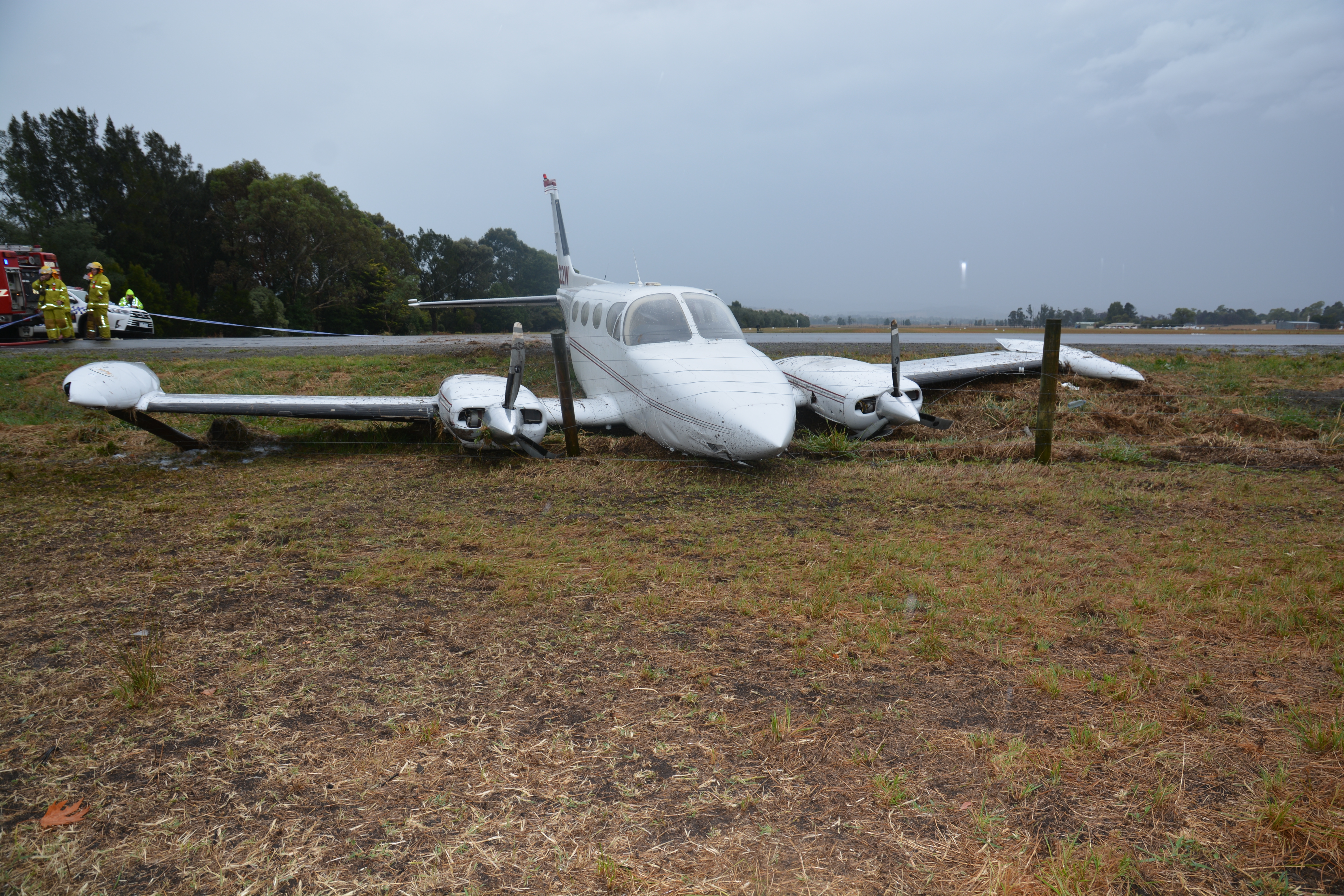
Aircraft accident highlights severe risks for pilots

This week’s tragic aircraft accident of a Cessna 182A at Burrum Heads, Queensland highlights the heightened risk of general aviation pilots flying low, and the hazard posed by powerlines. 

On 17 December, witnesses reported seeing a Cessna 182A hit a powerline before colliding with terrain. The pilot—the only person on board the aircraft—died in the accident. The Australian Transport Safety Bureau (ATSB) completed the on-site phase of its investigation yesterday. While the investigation is still in its early days, preliminary evidence suggests that the aircraft struck a wire while flying at a very low altitude. The low-level flight phase was not part of a landing or take off. 

ATSB General Manager of Aviation Safety Investigations, Mr Ian Sangston, said that low-level flying, especially around powerlines, presents major risks to general aviation pilots. 

‘Unnecessary and unauthorised flying at low altitudes adds an extra level of complexity and danger,’ said Mr Sangston. ‘There are many obstacles to avoid and it creates a much greater risk. That’s why low-level flying requires special training and endorsements, and should never be undertaken without authorisation and a good reason.’

‘This tragedy is a timely reminder for all pilots to consider the dangers of low-level flying and flying around wires.’

The ATSB investigation team is seeking witness reports including any video footage that might assist with the investigation. Witnesses can call the ATSB on 1800 020 616

The ATSB’s Avoidable Accident booklet series provides important advice to pilots on low-level flying and wirestrikes. The booklets Wirestrikes involving known wires: A manageable aerial agriculture hazard and Low-level flying can be found on the ATSB website at www.atsb.gov.au

Details of the investigation AO-2012-170 are also available on the ATSB website. 

Onsite media briefing: Collision with terrain – Cessna 182A, VH-SGB, Burrum Heads, Queensland

The ATSB will conduct an onsite media briefing on its investigation into the 17 December 2012 fatal aircraft accident at Burrum Heads, Queensland.

The Investigator-in-Charge, Mr Brett Leyshon will discuss factual information known to the ATSB at this time and will outline the investigation process.

The ATSB has deployed four investigators, with specializations in engineering and aircraft operations. They have already begun work at the accident site. Over the coming days they will finalise their examination of the wreckage site and interview witnesses.

The investigators are seeking witness reports including any video footage that might assist the investigation. Witnesses can call the ATSB on 1800 020 616. 

Where: On the road verge near 805 Burrum Heads Rd, Qld

When: 4:00pm (AEST), 18 December 2012

Reminder to report wirestrikes

The ATSB is urging pilots and operators to report wirestrikes and all significant aviation occurrences.

Even if there's no damage to the aircraft or no injuries to people onboard the aircraft, reporting can help identify hotspots and ultimately save lives.

Wirestrikes occur when an aircraft flies into a powerline or cable. They can happen to any low-flying aircraft involved in any operation, including aerial agricultural and mustering, private flights, sport aviation, and survey flights.

A new report released today by the Australian Transport Safety Bureau (ATSB) shows that around 100 wirestrikes had not been reported between 2003 and 2011. Under law, aviation accidents and serious incidents, such as wirestrikes, need to be reported to the ATSB.

ATSB Chief Commissioner Martin Dolan said the reporting of wirestrikes and other aviation occurrences greatly helps in preventing loss of life and injuries.

"We need to be told when things go wrong, so that we can examine what happened and see what needs to be done to improve future safety."

Pilots and operators involved in a wirestrike occurrence should report to the ATSB. Notifications can be made via the toll free number 1800 011 034 (available 24/7) or via the ATSB notification website.

Follow this link for a copy of the report, Under reporting of aviation wirestrikes.

ATSB investigation reveals safety concerns with Queensland coastal pilotage

Systemic safety issues in Queensland coastal pilotage operations have been identified in an Australian Transport Safety Bureau (ATSB) investigation report, released today.

Coastal pilots form a key defence against a serious shipping incident in parts of the Great Barrier Reef and Torres Strait as part of a suite of broader protective measures already in place.

The ATSB began an investigation into coastal pilotage operations in December 2010 following the release of its report into the grounding of the piloted tanker Atlantic Blue in the Torres Strait and a request from the Australian Maritime Safety Authority (AMSA)—the coastal pilotage safety regulator. That report identified safety issues affecting coastal pilotage which indicated that other systemic issues may also exist that would benefit from the ATSB further investigating.

The ATSB’s safety issue investigation found that under the coastal pilotage regulations, no organisation, including the pilotage provider companies, has been made clearly responsible and held accountable for managing the safety risks associated with pilotage operations. This has meant that responsibility for managing the most safety critical aspects of pilotage has rested with individual pilot contractors instead of an organisation that systematically manages safety risk.

The investigation also identified systemic safety issues surrounding pilot training, fatigue management, incident reporting, competency assessment and use of coastal vessel traffic services.

AMSA has already taken and proposed safety action to address the issues identified and is working with pilots, pilotage providers and industry to make further improvements to shipping safety in the region. Significant AMSA action includes the publishing of standard passage plans for pilotage, and requiring pilotage providers to develop standard operating procedures for pilotage tasks undertaken by their contractor pilots. On 1 July 2012, AMSA also began a review of its coastal pilotage regulations.

The ATSB welcomes AMSA’s response but considers further action is necessary to fully address the safety issues. In particular, the ATSB is recommending that AMSA ensures that the coastal pilotage regulations specifically assign responsibility for the safe management of pilotage operations to the pilotage providers or another organisation.

The ATSB has also issued recommendations to the three coastal pilotage providers to take safety action in relation to fatigue management and incident reporting to facilitate action by AMSA.

Following the allowed 90-day period after the issue of its recommendations, the ATSB will reassess the safety risk based on the action taken and proposed by AMSA, and the pilotage providers to address the issues.

The report Safety issue investigation into Queensland Coastal Pilotage (MI-2010-011) is available on the ATSB website.

Smoking mobile phone highlights need for precautions

An incident with an overheating mobile phone on board an aircraft highlights the importance of taking precautions with lithium battery-powered devices, especially when travelling, according to the ATSB.

On 25 November 2011, shortly after a Rex Airlines Saab aircraft arrived at Sydney airport, a passenger's Apple iPhone began to overheat and give off smoke in the passenger cabin. A cabin crew member used a fire extinguisher on the phone, and after several minutes, the smoke cleared.

The ATSB investigation found that a small metal screw had been misplaced in the phone's battery bay-probably during earlier repairs. The stray screw punctured the battery casing, causing an internal short circuit that led to heating-heating that increased as the battery reacted and began to break down.

Significantly, the phone repairs had not been conducted by an authorised service provider.

ATSB Chief Commissioner, Mr Martin Dolan, said passengers should be aware of the safety measures needed for flying with lithium battery-powered devices.

"When travelling with mobile phones, laptops and other portable electronic devices-or just their batteries-passengers should, wherever possible, carry them in the cabin, and not in checked-in baggage," Mr Dolan says. "This reinforces the Civil Aviation Safety Authority's recommendations for flying with lithium battery-powered devices."

"The incident also highlights the importance of good maintenance and repair processes for these devices, and the risk of using non-authorised repair agents."

The complete final report is available on the ATSB website.

The Civil Aviation Safety Authority's advice on carrying lithium batteries on aircraft is available on the CASA website, at www.casa.gov.au/dg/(Opens in a new tab/window)

Media briefing: Preliminary report into the foundering of cargo ship Tycoon at Christmas Island

On Thursday 2 February 2012, the Australian Transport Safety Bureau (ATSB) will hold a media briefing to accompany the release of its preliminary investigation report into the 8 January 2012 foundering of the Panamanian registered general cargo ship Tycoon at Christmas Island.

ATSB Chief Commissioner Mr Martin Dolan will present the facts of the accident and outline the direction of the ATSB's ongoing investigation.

Where: 62 Northbourne Avenue, Canberra, ACT (ATSB Central Office)

Time: 11.00am (AEDT), Thursday 2 February 2012

Copies of the investigation report will be available from 11.00am. An audio recording of the media briefing will be available after midday.

ATSB releases preliminary report on Tycoon accident at Christmas Island

In its preliminary investigation report released today, the ATSB describes the events leading to the accident involving the Panama-registered general cargo ship Tycoon on 8 January, and outlines the direction the investigation will be taking.

While Tycoon was moored in Flying Fish Cove at Christmas Island, an increase in wind speed and sea conditions combined with a failure in the ship's mooring so that the ship made contact with the adjacent rock-face and shore crane pylon. Despite attempts by crew to move the ship, it continued to hit against the rock-face and pylon.

A one-metre long hole was torn in the hull. This flooded the engine room and allowed oil and other pollutants to be washed into the sea. The crew subsequently abandoned the ship and were rescued by the Royal Australian Navy.

The following day, the starboard side of Tycoon's hull collapsed inward, exposing the contents of the hold to the sea. The wreck remains alongside the rock-face awaiting salvage.

The ongoing ATSB investigation will now focus on:

  • the actions of the Tycoon's master and crew and those of the port's operational staff
  • the failure of the port's permanent stern mooring arrangement and the design and maintenance of the mooring system
  • port operational procedures, guidelines and risk assessment
  • the condition of Tycoon and the adequacy of the ship's mooring equipment
  • Tycoon's safety management system and other on board guidance material.

A copy of the preliminary factual report MO-2012-001.

Poor fuel management worrying trend in aviation

The poor management of fuel in some aircraft operations continues to pose a serious risk to aviation safety according to the Australian Transport Safety Bureau.

ATSB Chief Commissioner, Mr Martin Dolan, said fuel mismanagement is a continuing concern for the ATSB due to the high number of fuel-related occurrences reported each year.

'Each year, the ATSB receives more than 20 reports of fuel exhaustion or starvation incidents and accidents,' Mr Dolan said.

'These events have led to forced landings, diversions to other aerodromes and, in the worst cases, fatal crashes.'

'Many accidents involving fuel exhaustion and starvation are avoidable through good fuel management practices and procedures.'

ATSB data reveals that aircraft involved in private and charter operations are particularly at risk of experiencing fuel exhaustion or starvation due to poor fuel management.

Fuel exhaustion and fuel starvation are the two main reasons fuel stops going to the engine. Fuel exhaustion occurs when there is no useable fuel to supply the engine; fuel starvation happens when the fuel supply to the engine is interrupted although there is still enough fuel on board.

'The ATSB will continue to monitor this worrying trend and will work with relevant operators and pilots to help improve fuel management,' says Mr Dolan.

The ATSB has just released its latest Avoidable Accident report that helps pilots and aircraft operators better understand and manage fuel exhaustion and starvation. Starved and exhausted: Fuel management aviation accidents is available on the Safety Awareness section of the ATSB website at www.atsb.gov.au

ATSB releases Annual Report

The Australian Transport Safety Bureau has released its 2010-11 Annual Report.

'The report summarises a year of major activity and accomplishment for the ATSB, 'said the ATSB's Chief Commissioner, Martin Dolan. 'It also highlights a number of areas of continuing concern for transport safety.'

In its review of transport safety trends, the report highlights:

  • a number of events involving 'see-and-avoid' procedures in the vicinity of smaller airports
  • continuing issues with the training, checking and supervision of pilots
  • the recurrence of known problems in general aviation, including collisions with powerlines, poor fuel management; and pilots flying visually into instrument conditions
  • a pattern of problems, including a fatality, in the safe management of work on rail tracks
  • the continuing risk to life of unsafe working practices in the maritime sector.

'These are potentially worrying trends', said Mr Dolan. 'We will continue to monitor them through our investigations and continue to bring them to industry's attention through our safety communication and education activities.'

During 2010-11, the ATSB completed 133 accident and incident investigations and commenced over 140 new investigations. Many of these attracted national and international interest, including the investigation into the uncontained engine failure on an Airbus A380 aircraft over Batam Island, Indonesia on 4 November 2010. The investigation identified fatigue cracking within a pipe feeding oil into engine bearing structures. As a result, prompt action was able to be undertaken to enable aircraft equipped with this engine type to resume safe flight.

Other investigations identified safety issues with the protection of Boeing 747-438 aircraft systems from liquids, waterproofing in AgustaWestland AW139 helicopters, potentially unreliable airspeed indications in Airbus A330 and A340 aircraft, the supervision of agricultural pilots, training and supervision of charter pilots, potentially hazardous helicopter winching procedures, turbulence caused by buildings at airports, airspace design and management and problems with the management by air traffic control of compromised separation of aircraft.

Significant surface transport investigations completed in 2010-11 include the 2010 grounding of the Chinese registered bulk carrier Shen Neng1; an investigation into the loss overboard of containers from the Pacific Adventurer, off Cape Moreton in 2009; and the grounding of the Atlantic Blue, which has led to a safety review of Australian coastal pilotage.

The ATSB Annual Report for 2010-2011 is available on the ATSB website at www.atsb.gov.au

Media briefing: Release of final investigation report into the in-flight upset 154 km west of Learmonth, WA

On Monday 19 December 2011, the Australian Transport Safety Bureau (ATSB) will hold a media briefing to accompany the release of its final investigation report into the 7 October 2008 in-flight upset of an Airbus A330-303 that occurred 154 km west of Learmonth, WA.

ATSB Chief Commissioner Mr Martin Dolan will present the facts of the investigation and highlight the key safety actions that have resulted by the parties to prevent a recurrence.

Where: 62 Northbourne Avenue, Canberra, ACT
(ATSB Central Office)

Time: 10.30am (AEDT), Monday 19 December 2011

Copies of the investigation report will be available from 10.30am. An audio recording of the media briefing will be available after midday.