The ATSB is investigating a loss of control event involving a Bell 412EP, registered VH-VJF, 57 km north-east of Strahan Aerodrome, Tasmania, on 10 March 2025.
The helicopter was being operated by Coulson Aviation for firefighting operations using a sling-loaded water bucket. While hovering to load the bucket from a river, the helicopter unexpectedly sank about 50 ft. In an attempt to recover, the pilot initiated forward flight but was unable to jettison the load before the longline became taut, causing a sudden stop and an abrupt tail-down motion. This resulted in the external hook and longline making contact with the lower fuselage.
The pilot flew back to the base at Zeehan where inspection identified damage to the helicopter’s fuselage, control tubes for both the engines and the tail rotor. Damage was also identified to the bucket and longline.
To date, the ATSB investigation has included:
interviewing involved parties
retrieving recorded data
the collection of other relevant information
reviewed recorded aircraft information
reviewed the forecast and observed weather conditions
reviewed maintenance documentation for VH-VJF
analysed recorded helicopter information
reviewed pilot training delivered by Coulson Aviation.
review of Coulson Aviation’s risk controls for bucketing operations in the Bell 412
review of Coulson Aviation’s operational and reporting procedures
review of Tasmanian Fire Service operational and reporting procedures.
An interim report, which details factual information established during the course of the investigation, was released on 17 March 2026 (see below).
The draft report internal review process has been completed. The draft report has been distributed to directly involved parties (DIPs) to check factual accuracy and ensure natural justice. Any submissions from those parties will be reviewed and, where considered appropriate, the draft report will be amended accordingly.
Following the external review process, any submissions and amendments to the draft report are internally reviewed. Once approved, the final report is prepared for publication and dissemination and released to DIPs prior to its public release.
The final report will be released at the conclusion of the investigation. Should a critical safety issue be identified during the course of the investigation, the ATSB will immediately notify relevant parties, so that appropriate safety action can be taken.
Last updated:
Interim report
Report release date: 17/03/2026
This interim report details factual information established in the investigation’s early evidence collection phase, and has been prepared to provide timely information to the industry and public. Interim reports contain no analysis or findings, which will be detailed in the investigation’s final report. The information contained in this interim report is released in accordance with section 25 of the Transport Safety Investigation Act 2003.
The occurrence
Prior to the occurrence flight
On 10 March 2025, a Bell 421EP, registered VH-VJF and operated by Coulson Aviation as HT204, was tasked with ground crew support operations on the Canning Peak fire, a sub‑fire of the West Coast fire complex in Tasmania.
At about 0830, the Tasmanian Fire Service briefed pilots on the weather and taskings for the day while at Strahan Airport. The Air Attack Supervisor (AAS) reported that the 2 Bell 412 helicopters were tasked with the insertion of crews into the fireground (HT201) and then firebombing[1] in support of those crews with a 150-ft longline and bucket[2] (HT204).
At about 0900, both helicopters departed Strahan Airport for Tullah, which was the designated staging area[3] for the activities. Approximately 25 minutes later both helicopters arrived at Tullah. The pilot of HT204 reported shutting down the helicopter and waiting until they were required for firebombing operations. The pilot of HT201 reported picking up a crew and completing an insertion into the fireground before returning to Tullah and remaining on standby in case an extraction was required.
First fuel cycle
At about 1215, HT204 was tasked with firebombing operations in direct support of ground crew who were undertaking hot and cold trailing.[4]
At 1226 local time the pilot departed Tullah for hotspots located west of the Murchison River on the south‑east end of the fire. The pilot was the only person on board. The pilot reported that the weather conditions on departure were calm, with a temperature of 22°C and light, variable winds.
When reaching the dip site[5] the pilot completed one fuel cycle, approximately 10 bucket loads, under relatively stable conditions. The pilot described the dip site as a narrow section of river, approximately 50–60 m wide, with tall trees lining the bank (see also Dip site). The drop zone was located approximately 1 km west of the dip site.
The pilot then returned to Tullah to pick up an air crew officer (ACO) at 1400 and continued onto the designated air base in Zeehan, which had a sports oval being used as a refuel base (Figure 1).
Figure 1: First fuel cycle and return to Tullah
White line: flight path of the first fuel cycle and return to Tullah. Purple line: flight path from Tullah to Zeehan. Source: Google Earth, annotated by the ATSB
Zeehan air base
During the approach to Zeehan, the pilot noted a significant weather change, with winds shifting to a westerly direction at approximately 30 knots.
While on the ground, the helicopter was refuelled for the next cycle. At about 1440 the pilot departed Zeehan and returned to the Canning Peak fireground.
Second fuel cycle and occurrence
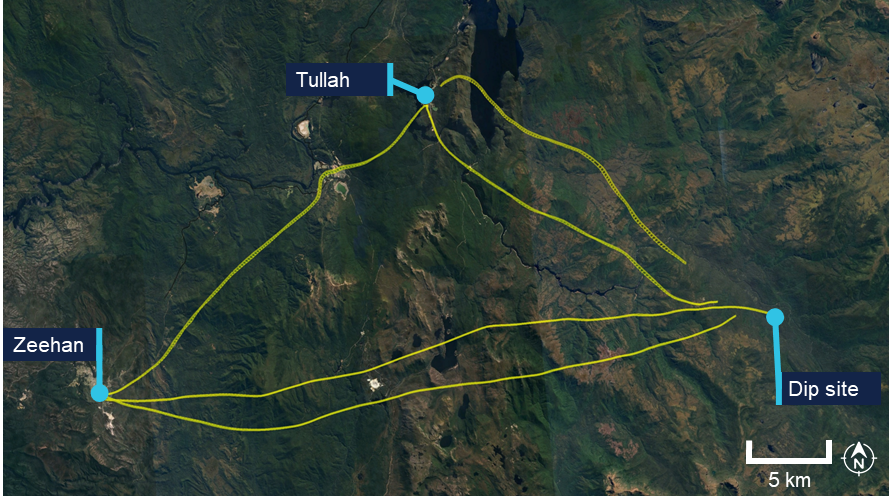
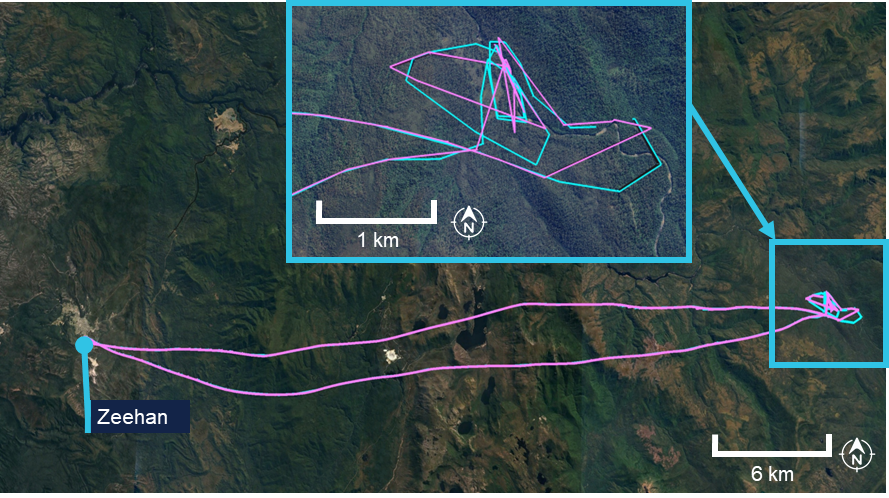
The pilot recalled that various dip sites along the river looked similar. Flight data (Figure 2) indicated the pilot initially conducted a descent into an incorrect dip site. The pilot recognised this and undertook reconnaissance to find the intended dip site. Once reaching the dip site, the pilot resumed bucketing operations.
Figure 2: Second fuel cycle flight path
Source: Google Earth, annotated by the ATSB
The pilot reported that, at about 1525, while filling the third bucket load of water, the helicopter had been in a stable hover at about 150 ft above the water, when it unexpectedly sank. The pilot recalled the helicopter sinking approximately 50 ft. To recover control, the pilot applied forward cyclic and upward collective inputs to transition to forward flight and stabilise the helicopter, while aiming to avoid an over-torque event.
Prior to this manoeuvre, the pilot reported they were unable to jettison the longline, which they attributed to pressing on the button’s ring guard instead of its centre, and the longline subsequently became taut. The helicopter then came to an abrupt stop and the pilot heard a ‘loud clunking noise’. The pilot then recovered the helicopter to a stable hover approximately 30 ft above the water and initiated rearward flight to release the water and retrieve the bucket from the river. The pilot observed an engine torque split[6] and once the bucket and longline were recovered they initiated a climb to clear the surrounding trees.
The pilot reported that once they had cleared the trees, the torque split levelled back out. They conducted a range of tests to assess controllability and engine performance, including minor adjustments to engine torque. The pilot noted that the tail rotor control pedals felt stiff, however they continued to provide adequate input for sufficient helicopter control.
The pilot contacted the AAS on the fire common traffic advisory frequency (FCTAF) stating they had a bucket issue and a flight control issue.
The air attack pilot (who flew the helicopter with the AAS on board) oriented the helicopter to view HT204. The AAS recalled HT204 gaining altitude and tracking away from the Murchison River, over the fire, heading on a bearing south‑west uphill and back to Zeehan. They noted the helicopter was climbing slowly and appeared to be flying irregularly during this period. They reported they had not seen the occurrence as the dip site HT204 was using was beneath and behind the air attack helicopter.
The AAS contacted the pilot on the FCTAF. The pilot of HT204 reported issues with the helicopter pedals and when asked what their intention was, the pilot reported they were heading back to Zeehan. The AAS acknowledged this and reported they would follow HT204 back.
The pilot of HT204 assessed available landing options but elected to continue toward Zeehan rather than commit to an off-field landing. This decision was influenced by a previous experience where a potential landing site, assessed from approximately 500 ft, had appeared suitable but proved unsuitable upon reaching around 30 ft. The pilot considered that committing to a landing carried the risk of being unable to complete it safely.
The AAS and air attack pilot discussed possible landing options nearby. However, given the impaired controllability of HT204 and the smaller prepared landing areas on the fireground, they agreed the best action would be to return to Zeehan.
Return flight
The pilot of HT204 reported that, during the return flight to Zeehan, airspeed was maintained between 65 and 70 kt[7] due to the tail rotor pedals feeling stiff. This would reduce strain on the tail rotor by operating the helicopter at a lower power setting.
The pilot reported continuing the flight toward Zeehan with a plan that, should the situation deteriorate further, the flight would be changed to Strahan Airport as an alternative. Throughout the remainder of the flight, pedal inputs were minimised in an effort to avoid exacerbating the condition.
The AAS described the helicopter’s flight en route to Zeehan as appearing abnormal. In addition to the notably reduced speed, HT204 appeared to be yawing from side to side and maintained an unusually low height above ground. They reported that due to the pilot sounding stressed they did not contact the pilot further.
The AAS recalled contacting the air base manager at Strahan and the air operations manager and advised them of an unknown mechanical malfunction with HT204. They reported that the pilot was still in control, and that they were following HT204 back to Zeehan.
Landing at Zeehan
At about 1548, the pilot conducted a shallow approach to set up a vertical descent to the oval in Zeehan with the bucket and longline attached. During the landing sequence, the ACO secured the bucket and longline and moved it away and forward of the landing zone.The pilot then released the line and allowed the helicopter to sink, utilising available power, which resulted in what they stated ‘appeared to be a satisfactory landing with minimal pedal input required’.
After landing, during the shutdown procedure, the pilot was unable to roll the engine throttles back to idle. While disconnecting the longline from the hook, the ACO observed significant damage to the helicopter’s fuselage structure aft of the external hook.
The pilot of HT201 recalled that they landed and shut down their helicopter in Zeehan. They observed HT204 still running and the pilot underneath the helicopter assessing damage. They discussed the issue of not being able to roll the engines back and the pilot of HT201 suggested pulling the helicopter’s T-handles.[8] The T-handles were pulled to shut down the engines.
Context
Pilot information
The pilot held a Commercial Pilot (Helicopter) Licence, with a single engine class rating for helicopters. They held type ratings for the Bell 212, 412 and 427. The pilot’s total aeronautical experience was over 3,000 hours of which 120.6 hours were on the Bell 412. In the previous 90 days the pilot had flown 50.3 hours, all on the Bell 412.
The pilot was qualified to conduct helicopter firefighting operations and had low‑level and sling operation ratings.
The pilot last completed an aerial application proficiency check on 11 November 2024, which was valid for 12 months, and a low-level helicopter flight review on 4 December 2023.
The pilot held a valid Class 1 aviation medical certificate, valid to July 2025. The certificate specified that the pilot was to wear distance vision correction while flying, which was being worn on this occasion.
Helicopter information
General information
The Bell Helicopter Company 412EP is a medium‑lift[9] utility helicopter commonly used for firefighting, search and rescue and transport operations. The helicopter had a 4-blade main rotor and 2‑blade tail rotor and was powered by 2 Pratt & Whitney PT6T-3DF turboshaft engines. The helicopter was manufactured in Canada in 2004 and first registered in Australia in 2020. The helicopter was owned by NSW Rural Fire Service (RFS) and operated by Coulson Aviation Australia.
VH-VJF had accumulated about 4,819 flight hours total time in service and had a current certificate of airworthiness and registration. The helicopter’s technical log indicated no outstanding defects at the time of the accident.
The helicopter’s multi-role configuration enabled it to be utilised in a range of aerial firefighting tasks, including reconnaissance, winching operations and firebombing using either a belly tank or external bucket system (Figure 3).
Figure 3: NSW RFS Bell 412 EP VH-VJF
Source: Lesley de Robllard, annotated by the ATSB
On the day of the accident, the helicopter was configured for firebombing operations and was fitted with an external load system, a vertical reference door, and a 150‑ft longline attached to a Bambi bucket[10] (see Bucket and longline information). In addition to these items, the helicopter also had a forward looking infrared (FLIR) camera mounted on the left‑hand side of the helicopter above the skids.
External load system
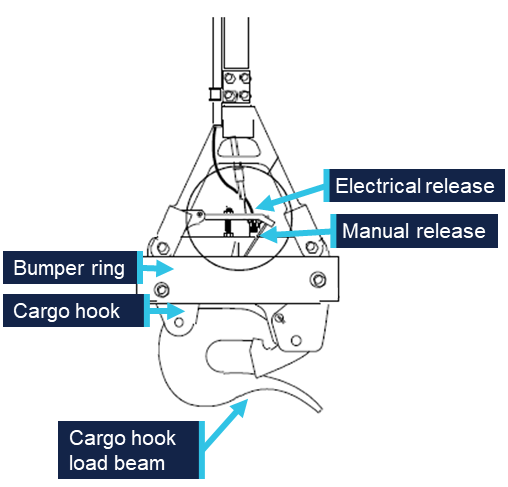
VH-VJF was equipped with an Onboard Systems International cargo hook suspension system. The system attached to an existing Bell hard point and hung at approximately the centre of gravity. It extended through an opening in the lower fuselage, which was fitted with a protective rubber ring around the edge (Figure 4). This protective ring was used to reduce the risk of damage if the hook hit the edge of the opening.
Figure 4: Onboard Systems International cargo hook suspension system on the Bell 412
Source: Onboard Systems International, annotated by the ATSB
The release of the hook could be initiated electrically or mechanically. Normal release was completed by pilot actuation of a push button on the side of the cyclic (Figure 5, left). The button is guarded by a small ring to prevent inadvertent pilot activation. When this button is pressed the latch of the cargo hook is opened.
In addition to the electrical release, in an emergency a mechanical release can be completed by pushing a small pedal located between the 2 tail rotor pedals at the pilot’s feet (Figure 5, right). This activated a manual release cable attached to the cargo hook.
The cargo hook suspension system was required to be inspected annually or after 100 hours of external load operations, whichever came first. The system was last inspected on 20 February 2025.
Figure 5: Electrical and mechanical external load release systems
Left: the electrical release found on the cyclic grip. Right: mechanical release between the 2 pedals. Source: Coulson Aviation, annotated by the ATSB
Coulson Aviation required pilots to test the electrical and manual release system prior to conducting flights for the day. The pilot recalled testing both the electrical and mechanical release the morning of the accident. They stated that both systems were in working order. In addition to the tests, the pilot recalled that when landing at Zeehan after the accident, the electrical release was used to drop the longline and bucket without issue.
Coulson Aviation reported that both the electrical and mechanical releases of the hook were tested following the accident. Both were reported as serviceable.
Vertical reference door
The Bell 412EP helicopters are usually flown from the right-hand seat. This configuration is used when pilots are conducting either winching or reconnaissance operations. The helicopters can be modified to include a vertical reference door, which is designed to provide the pilot with a side bubble window and instruments for longline operations from the left-hand seat.
VH-VJF was modified with a vertical reference door in accordance with the Transwest vertical reference door supplement type certificate. This included a bubble window, viewing slot, and instruments and warning lights installed in the door (Figure 6).
Figure 6: Instruments and warning lights installed in the vertical reference door
Source: Coulson Aviation, annotated by the ATSB
In addition to the instruments and warning lights, the type certificate required the installation of several systems to be placed on the left side of the helicopter. This included:
a force trim switch, cargo release switch and automatic flight control system (AFCS) release switch mounted on the left cyclic
the torque meter and tachometer from the left-hand instrument panel moved to the vertical reference door
an additional mechanical cargo release pedal between the left side pedals.
During the occurrence flight and other firebombing operations, the pilot was operating the helicopter from the left-hand seat, utilising the left cyclic and referencing the flight instruments through the vertical reference door. While conducting the water collection, the torque indicator was visible through the bubble window and could be monitored during the lift.
Bucket and longline information
The bucket and longline were attached to the external load system via a bow shackle (Figure 7, left).
The bucket was a Bambi Max bucket with a nominal capacity of 240 US gallons (910 L). The empty weight of the bucket was 137 lb (62 kg) and the maximum gross weight was 2,140 lbs (970 kg).
The collapsable bucket was equipped with multiple selectable drop valves. Pilots were able to use the bucket to split water loads into multiple drops (Figure 7, right) and had the capability to shed the load rapidly.
Figure 7: Longline attachment and Bambi Max bucket
Source: Coulson Aviation, annotated by the ATSB
The longline was constructed from high-strength synthetic fibre rope selected for its high tensile strength, low stretch characteristics, light weight, and resistance to heat and abrasion. The line incorporated an electrical cable along the line to control bucket release. The 150-ft length provided vertical separation between the helicopter and the load to reduce rotor downwash disturbance during water pick‑up.
Forward looking infrared (FLIR) camera
FLIR cameras are used on aerial firefighting aircraft to provide thermal imaging of fire grounds, enabling crews to detect heat sources through smoke, darkness, or challenging terrain. This capability allows operators to identify fire hotspots, monitor fire spread, and support decision-making for resource deployment and suppression strategies.
On the Bell 412s, the FLIR camera was mounted on the left side, just above the skids. Coulson Aviation stated that although the cameras could be removed, they would generally be kept on the helicopters throughout all operations, allowing the ability for the crews to be re-tasked for reconnaissance missions. Some pilots indicated to the ATSB that the camera could partially obscure visibility during bucketing.
Helicopter damage
The ATSB did not examine the helicopter or equipment. Coulson Aviation conducted an examination of the helicopter the morning after the occurrence. The following damage was identified:
The #1 engine control tube had sheared at the lower tube end bell crank, resulting in a complete loss of pilot input to the engine.
The #2 engine control tube bell crank attachment bracket had detached from the helicopter structure’s securing rib, restricting pilot control of the engine.
The tail rotor control rod on the right-hand side of the external hook’s bell crank airframe attachment had broken away, with the primary structure also separated.
The main transmission oil cooler pressure line exhibited significant contact damage, however, no splits or leaks were identified.
The fuel tank interconnect braided hoses sustained minor contact damage.
Multiple aft fuselage drain lines were damaged.
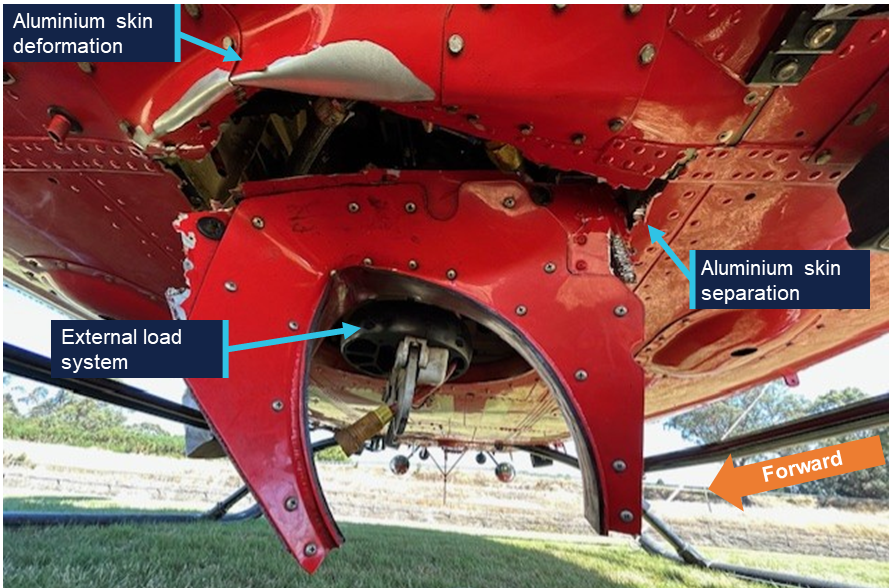
Images of the helicopter indicated that the structural fuselage honeycomb aluminium skin, adjacent to and aft of the external hook, was deformed and had separated from the primary structure (Figure 8).
Figure 8: Helicopter aluminium skin damage
Source: Coulson Aviation, annotated by the ATSB
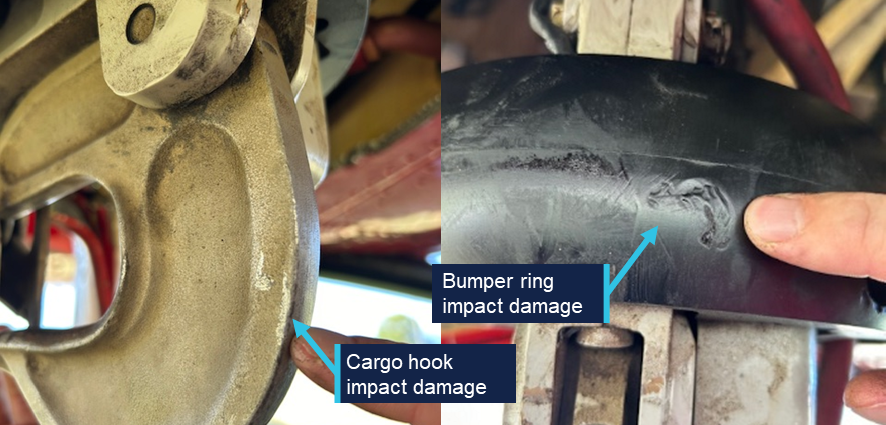
Images revealed indications consistent with contact between the longline and the rear cross tubes of the helicopter. In addition, inspection of the cargo hook and associated bumper stop components identified visible signs of impact damage (Figure 9).
Figure 9: External load system damage
Source: Coulson Aviation, annotated by the ATSB
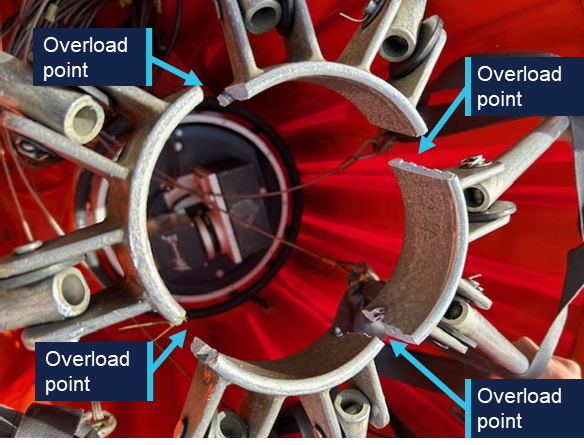
In addition, the ring in the middle of the Bambi bucket spoke assembly was fractured in 4 places (Figure 10).
Figure 10: Bambi Max damage to spoke assembly
Source: Coulson Aviation, annotated by the ATSB
Multiple instances of cable bruising and stretching were reported to have been observed on the bucket cable wiring and attachment eye ends. The ATSB was unable to substantiate the presence of cable bruising and stretching based on the images provided of the cables.
Weather data
On departure from Strahan Airport, the meteorological aerodrome report (METAR)[11] reported wind west‑north-west at 6 kt, visibility greater than 10 km and no cloud cover.
The Tasmania Fire Service (TFS) incident action plan indicated that weather on the Canning Peak fire would change from north-westerly to west-south‑westerly by mid‑morning with winds reaching 10 kt by the afternoon (Table 1).
Table 1: Canning Peak fire forecast
Local time
Temperature (°C)
Dew point (°C)
Wind direction
Wind speed (kt)
Wind gust (kt)
0800
14
12
N
5
8
0900
17
13
NNW
8
10
1000
19
14
NW
8
14
1100
22
14
WNW
8
14
1200
23
14
W
10
16
1300
25
14
W
10
16
1400
26
13
WSW
10
16
1500
26
13
WSW
8
14
1600
26
13
WSW
8
10
The AAS reported that on the day of the accident the wind was calm, there was no turbulence and ‘great’ visibility. A change in wind direction was noted from mid-morning changing from northerly to south-westerly, however this was expected based on the forecast. They recalled the area in which the aircraft were working in was protected from south‑westerly winds due to the topography. They reported no feedback from pilots regarding the weather or any other environmental conditions on the day.
The pilot of HT201 reported there were blue skies and fairly light winds on the day of the accident. They recalled that although they were not bucketing on this day, during previous bucketing operations in the same valley, the wind conditions were variable and the wind would shift ‘back and forth’.
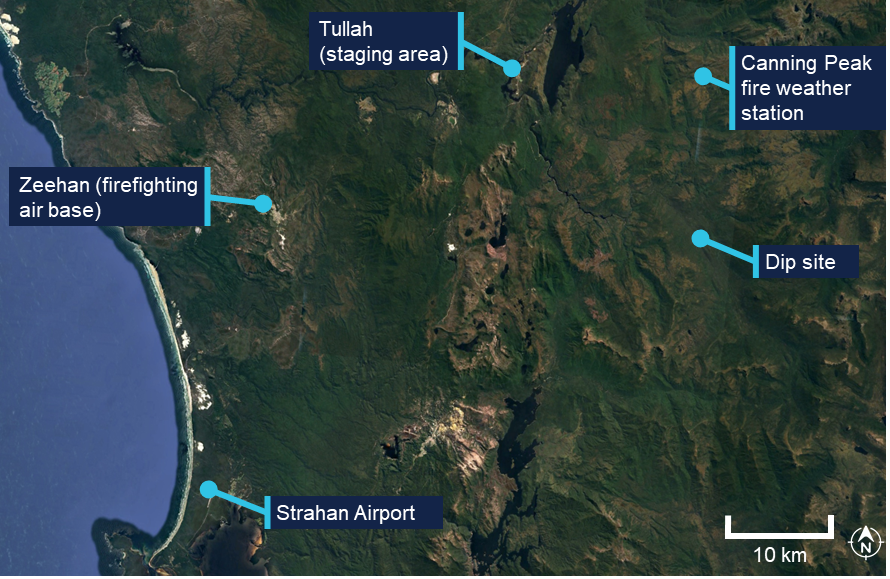
A weather station atop Mt Inglis, approximately 15 km north of the operating area (Figure 11), recorded south‑south-westerly winds at 5.7 kt gusting to 11.4 kt at the time of the accident.
Figure 11: Canning Peak weather station location to dip site
Source: Google Earth, annotated by the ATSB
Fireground information
The West Coast fire complex originated from 24 individual ignitions sparked by dry lightning strikes on 3 February 2025, across Tasmania’s remote western and north‑western regions. These separate fires were grouped into a single complex for coordinated management due to their proximity, shared weather influences, and overlapping spread patterns.
There were 4 primary firegrounds that accounted for the majority of the burnt area: the Canning Peak fireground, the Yellowband Plain fireground, the Mount Donaldson fireground, and the Corinna Road fireground. Each represented a distinct sector with unique terrain, vegetation types, and behavioural characteristics. These firegrounds collectively contributed to the complex’s total footprint of nearly 95,000 hectares.
Canning Peak fireground
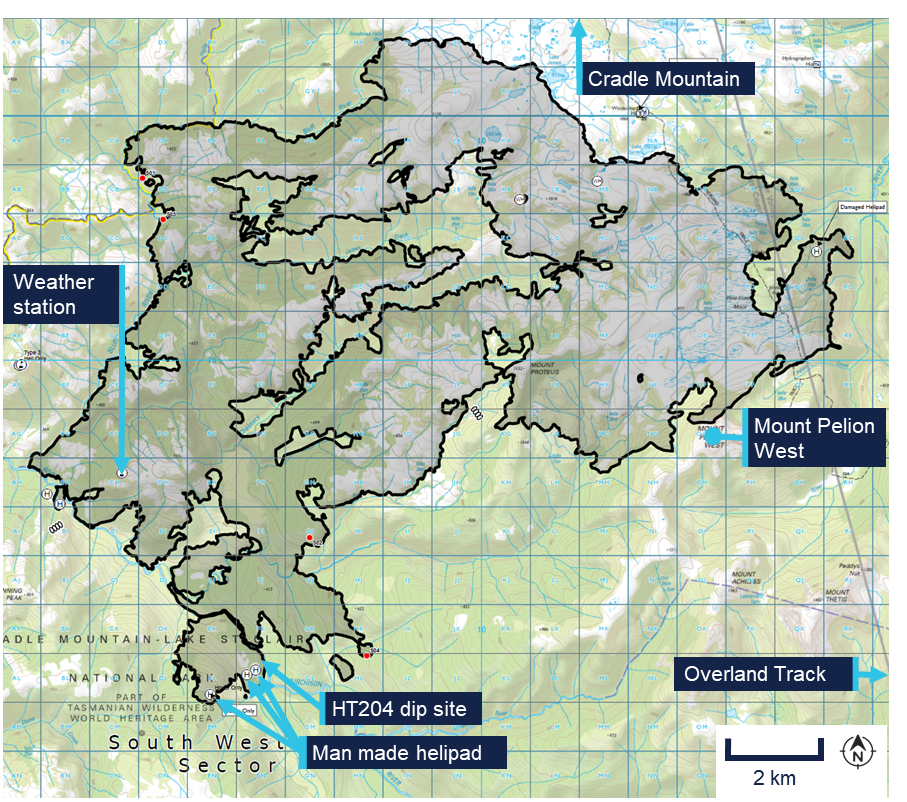
The Canning Peak fireground was located in a more elevated and vegetated zone close to the Cradle Mountain area and in proximity to sections of the Overland Track. This sector featured rugged alpine-influenced terrain that complicated direct ground access, leading to heavy reliance on aerial suppression tactics.
Figure 12: Canning Peak fireground
Black outline indicates area which has been burnt by fire. Source: Tasmania Parks and Wildlife Service, annotated by the ATSB
Day of accident
On the day of the accident HT201 was the designated winching helicopter and HT204 was part of the bucketing helicopters on the fireground. There were 6 helicopters (3 x AS350, 1 x Bell 412 (HT204), 1 x Bell 212, 1 x BK 117) bucketing within a 2 km proximity of each other intermittently. In addition, the air attack helicopter was on scene overhead.
The helicopters were distributed across 4 separate circuits, with 5 separate dip points, seperate individual and shared targets and some shared ground crew.
Dip site
The pilot reported that the general location for a dip site was provided prior to commencing operations on the fireground, with selection of the specific section of river within that area being at their discretion.The pilot advised that they chose this dip site location on the river as it was relatively wider than other areas and they had used this section as a dip site on the days preceding the accident.
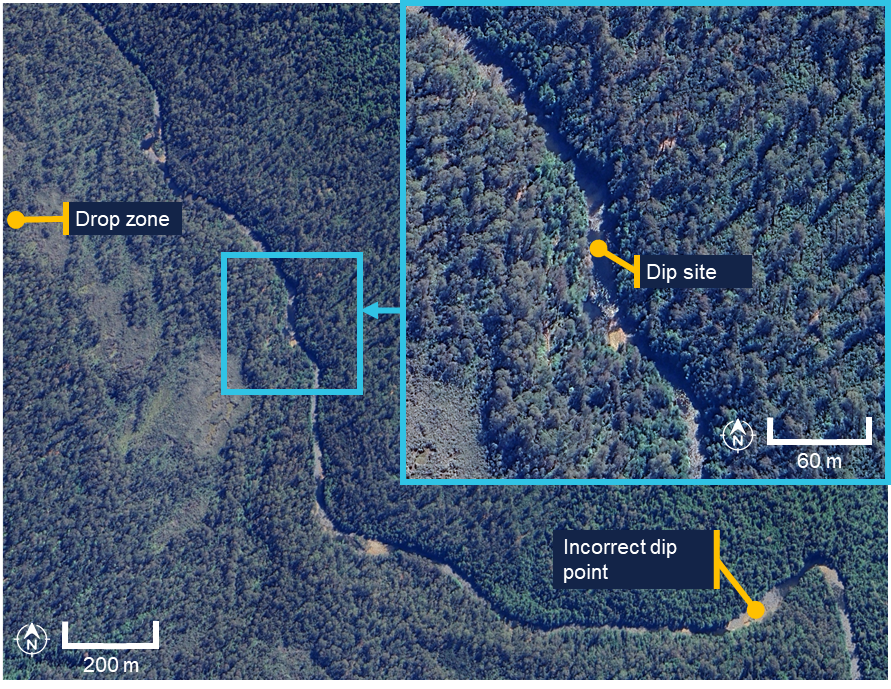
HT204’s dip site was approximately 700 m from the next nearest dip site with working helicopters. The dip site was approximately 1 km south‑east of the drop zone, along the Murchison River. Google Earth images indicate the river width at the dip point was approximately 20 m (Figure 13).
Figure 13: Dip site location on Murchison River
Source: Google Earth, annotated by the ATSB
The pilot described the dip site as a narrow section of river, approximately 50–60 m wide, with tall trees lining the bank. They reported that there were limited locations deep enough to operate the bucket, which constrained where they could dip and they stated they had used the same dip point on the days prior.
In addition, the river contained very little water at the time, allowing clear visibility to the riverbed. They stated that they could not recall whether any tree branches or rocks were present in the riverbed during the operation. Despite the presence of tall trees, the pilot indicated that the area was accessible to the aircraft and considered it one of the better dip sites along the river. They also noted that the turnaround time from the dip point to the fireground was approximately one minute.
The AAS described the dip site as a section of river with trees approximately 30–60 m tall on either side. They recalled that the pilot was the only one using the dip point and the only helicopter in the circuit. In previous weeks, when different crews had flown the same helicopter on similar missions, no pilots had reported any problems with the dip point. Based on the dips that were observed, the occurrence pilot appeared to be performing them safely and adequately.
Recorded data
Multiple independent data sources, including TracPlus satellite-based tracking logs, FlightAware ADS-B derived positions, and OzRunways electronic flight bag recordings, were cross‑referenced and correlated to reconstruct the helicopter’s flights throughout the day and to approximate the entry and exit angles into and out of the bucketing site.
TracPlus
The helicopter was fitted with a TracPlus surveillance system, which provided real-time tracking through a satellite or mobile phone network. It reported position, altitude, and speed at set time periods, in this case every 15 seconds.
OzRunways
The OzRunways application recorded the helicopter’s position at regular intervals of approximately 5 seconds throughout the day, capturing parameters including latitude, longitude, groundspeed, track, and truncated altitude (in 100 ft increments) where connectivity permitted. However, no position data was recorded during the bucketing operations (Figure 14). This absence of recorded data was likely attributable to the helicopter operating at very low levels, down to around 150 ft above ground level, while conducting repeated drops in mountainous terrain.
Figure 14: OzRunways flight data
Source: Google Earth, annotated by the ATSB
FlightAware
The FlightAware flight tracking data captured the helicopter’s en route flight to the bucketing site, as well as the subsequent low-level manoeuvres involving repeated water dips and drops. Position reports were recorded at irregular intervals ranging between approximately 8 seconds and 40 seconds[12] during these operations.
In addition to the TracPlus data, FlightAware was incorporated into the data analysis. The differing sampling rates and coverage characteristics of the 2 systems together produced a more complete reconstruction of the helicopter’s flight circuit during the second fuel cycle (Figure 15).
Figure 15: Second fuel cycle data from TracPlus and FlightAware
Pink line: TracPlus data. Blue line: FlightAware data. Source: Google Earth, annotated by the ATSB
Further investigation
To date, the ATSB has conducted the following activities:
interviewed the pilot and other Coulson Aviation personnel
interviewed the air attack supervisor from Tasmania Parks and Wildlife Service
reviewed recorded aircraft information
reviewed the forecast and observed weather conditions
reviewed maintenance documentation for VH-VJF
analysed recorded helicopter information
reviewed pilot training delivered by Coulson Aviation.
The investigation is continuing and includes:
review of Coulson Aviation’s risk controls for bucketing operations in the Bell 412
review of Coulson Aviation’s operational and reporting procedures
review of Tasmanian Fire Service operational and reporting procedures.
A final report will be released at the conclusion of the investigation. Should a critical safety issue be identified during the course of the investigation, the ATSB will immediately notify relevant parties so appropriate and timely safety action can be taken.
Purpose of safety investigations
The objective of a safety investigation is to enhance transport safety. This is done through:
identifying safety issues and facilitating safety action to address those issues
providing information about occurrences and their associated safety factors to facilitate learning within the transport industry.
It is not a function of the ATSB to apportion blame or provide a means for determining liability. At the same time, an investigation report must include factual material of sufficient weight to support the analysis and findings. At all times the ATSB endeavours to balance the use of material that could imply adverse comment with the need to properly explain what happened, and why, in a fair and unbiased manner. The ATSB does not investigate for the purpose of taking administrative, regulatory or criminal action.
About ATSB reports
ATSB investigation reports are organised with regard to international standards or instruments, as applicable, and with ATSB procedures and guidelines.
Reports must include factual material of sufficient weight to support the analysis and findings. At all times the ATSB endeavours to balance the use of material that could imply adverse comment with the need to properly explain what happened, and why, in a fair and unbiased manner.
An explanation of terminology used in ATSB investigation reports is available here. This includes terms such as occurrence, contributing factor, other factor that increased risk, and safety issue.
Publishing information
Released in accordance with section 25 of the Transport Safety Investigation Act 2003
Ownership of intellectual property rights in this publication
Unless otherwise noted, copyright (and any other intellectual property rights, if any) in this report publication is owned by the Commonwealth of Australia.
Creative Commons licence
With the exception of the Commonwealth Coat of Arms, ATSB logo, and photos and graphics in which a third party holds copyright, this report is licensed under a Creative Commons Attribution 4.0 International licence.
The CC BY 4.0 licence enables you to distribute, remix, adapt, and build upon our material in any medium or format, so long as attribution is given to the Australian Transport Safety Bureau.
Copyright in material obtained from other agencies, private individuals or organisations, belongs to those agencies, individuals or organisations. Where you wish to use their material, you will need to contact them directly.
[1]Firebombing: The National Aerial Firefighting Centre states that firebombing is the dropping of fire suppressant or fire retardant from an aircraft to assist with the control or suppression of a fire.
[2]Firebombing with a bucket, often known as ‘bucketing’, requires filling the bucket by lowering it into a water source, and emptying it as required at the flame front.
[3]A staging area is a designated location where aircraft and crews temporarily assemble and wait for tasking to active fires.
[4]Hot and cold trailing is a task requiring identification of hotspots along the fire perimeter, opening these areas/smouldering ground fire up with hand tools and directing pilots to drop buckets atop the burning material to prevent further fire spread.
[5]A dip site is a designated water source where helicopters equipped with buckets can collect water for aerial firefighting. These sites can be natural bodies of water, such as lakes, rivers, or ponds, or artificial sources like reservoirs and water tanks. Their key requirements are sufficient water depth, accessibility, and proximity to the fire to maximise efficiency.
[6]Engine torque split in a multi-engine helicopter is where there is an unequal proportion of total main rotor torque shared between each engine through the gearbox.
[8]The T-handles are a red handle which pilots pull in an emergency to shut off fuel, hydraulics, and other systems to an engine while arming the fire extinguishing bottles.
[9]A medium-lift helicopter is one capable of carrying moderate loads, typically between 2,000 kg and 5,000 kg.
[10]A Bambi bucket is a collapsible water bucket suspended beneath a helicopter, used to collect and drop water during aerial firefighting operations.
[11]METAR (Meteorological Aerodrome Report) is a routine aerodrome weather report issued at half‑hourly intervals. The report ordinarily covers an area of 8 km radius from the aerodrome reference point.
[12] This update rate arises from the way FlightAware processes ADS-B data: although equipped aircraft transmit position messages nominally every second, the displayed track depends on signals received by a network of ground stations. In remote hilly terrain, at low altitudes down to around 150 ft AGL, terrain shadowing, ridges, valleys, and line-of-sight limitations can prevent some transmissions from being captured reliably. As a result, FlightAware relies on the most consistent available reports, leading to longer effective intervals of 25–40 seconds or more during intermittent low-level reception.
Occurrence summary
Investigation number
AO-2025-013
Occurrence date
10/03/2025
Occurrence time and timezone
15:25 Australian Eastern Daylight Time
Location
57 km north-east of Strahan Airport
State
Tasmania
Report release date
17/03/2026
Report status
Interim
Anticipated completion
Q4 2026
Investigation level
Systemic
Investigation type
Occurrence Investigation
Investigation phase
Final report: Approval
Investigation status
Active
Mode of transport
Aviation
Aviation occurrence category
Collision with terrain, Control issues, Loss of control, Miscellaneous - Other
Occurrence class
Accident
Highest injury level
None
Aircraft details
Manufacturer
Bell Helicopter Co
Model
412EP
Registration
VH-VJF
Serial number
36329
Aircraft operator
Coulson Aviation (Australia) Pty Ltd
Sector
Helicopter
Operation type
Part 138 Aerial work operations
Activity
General aviation / Recreational-Aerial work-Firefighting
On the morning of 25 February 2025, an Agusta A109E helicopter was conducting a marine pilot transfer operation on the inbound bulk carrier Star Coral at Blossom Bank pilot boarding ground, about 200 km north‑east of Mackay, Queensland.
At 0901 local time, during take‑off from the ship with 2 pilots on board, the helicopter developed severe vibrations. The pilots discontinued the take-off but their attempts to recover control of the helicopter were unsuccessful. The helicopter came to rest in an upright position on the helideck, having spun more than 90° counterclockwise from its initial heading, and sustaining substantial damage. The pilots and ship’s crew were unharmed.
What the ATSB found
The investigation did not identify any airworthiness issues with the helicopter and it was considered that the loss of control was not attributable to a mechanical issue.
The ATSB found that the vibration was likely the result of the helicopter entering ground resonance, a phenomenon that dissipates when airborne, while it was in the process of departing from the ship. The discontinuation of the take‑off, after the onset of the vibration, probably resulted in the loss of control and subsequent damage to the helicopter.
What has been done as a result
The operator has added new guidelines on ground resonance to its procedures. The guidelines include procedures for recognising and recovering from ground resonance and feature case studies and video resources for training purposes.
The operator has also developed an updated procedure for training and checking flight briefings that will include confirming the roles of each pilot, procedures for transferring aircraft control between pilots, and actions to be followed in the event of an actual emergency.
Safety message
The occurrence highlights the dangers of ground resonance, a potentially catastrophic phenomenon that can occur in helicopters with fully articulated rotor systems. Typically, the onset of ground resonance is sudden and if the pilot does not take immediate corrective action, a loss of control can rapidly occur.
The occurrence also highlights the importance of proper coordination between a helicopter’s pilots when responding to abnormal or emergency situations. This is particularly pertinent for situations where the pilot flying is not the pilot in command. Ideally, the pilots’ individual roles and responsibilities for emergency response and flying duties should be well established prior to the flight.
The investigation
The ATSB scopes its investigations based on many factors, including the level of safety benefit likely to be obtained from an investigation and the associated resources required. For this occurrence, the ATSB conducted a limited-scope investigation in order to produce a short investigation report, and allow for greater industry awareness of findings that affect safety and potential learning opportunities.
The occurrence
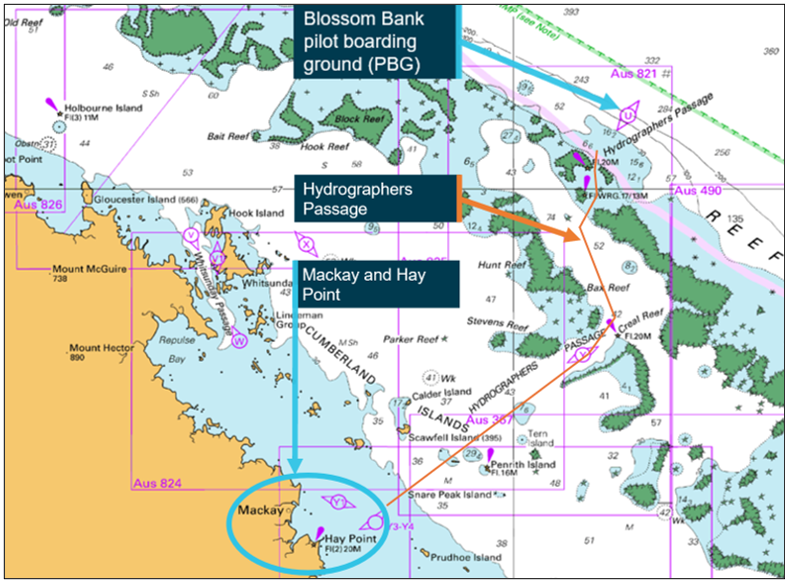
At about 0730 local time on 25 February 2025, the 229 m bulk carrier Star Coral arrived at the Blossom Bank pilot boarding ground, about 200 km north‑east of Mackay, Queensland (Figure 1). The ship waited to embark a coastal marine pilot by helicopter for its inbound transit of the Great Barrier Reef via Hydrographers Passage.[1] It was in ballast and bound for Hay Point to load coal.
Figure 1: Blossom Bank pilot boarding ground and Hydrographers Passage
Source: Australian Hydrographic Office, annotated by the ATSB
Meanwhile, at Mackay Airport, a twin‑engine Agusta A109E helicopter, operated by Flyon Helicopters and registered VH‑XUM (XUM), with 2 pilots on board, embarked the marine pilot scheduled to conduct the ship’s pilotage. The marine pilot transfer (MPT) flight to Star Coral was the first scheduled for the helicopter and its pilots that day. These flights were normally conducted as a single‑pilot operation. However, on this occasion, the pilot flying, a pilot recently engaged by the operator under its ‘in‑command‑under supervision’ (ICUS)[2] program, was under the supervision of a company check pilot (pilot supervising).
The pilots’ plan was to transfer Star Coral’s marine pilot and then proceed to a nearby outbound ship to collect its marine pilot for return to Mackay.
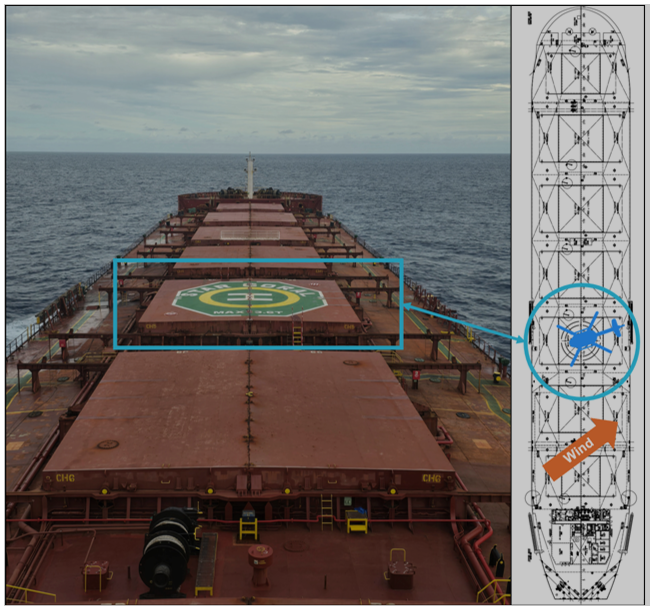
At 0759, the helicopter departed Mackay Airport under the control of the pilot flying. En route, the pilots established communication with Star Coral’s master via VHF[3] radio. The master advised that the ship was rolling about 3° on its inbound heading due to a 2 m south‑easterly swell. Subsequently, the pilots requested the master to reposition the ship on a heading[4] of 270° to reduce rolling. At 0853, the pilot flying landed the helicopter on the ship’s helideck, situated on the number 5 cargo hold hatch cover (Figure 2). The marine pilot exited the helicopter and proceeded to the ship’s bridge.
Figure 2: Landing position of VH-XUM aboard Star Coral
This figure is a representation of the helicopter’s orientation relative to the wind during the take‑off. Source: Flyon Helicopters and Star Coral, annotated by the ATSB
Meanwhile, the helicopter remained on the helideck at flight idle[5] while its pilots radioed the outbound ship’s pilot to coordinate the transfer. After some discussion, the pilots elected to keep the helicopter on the deck of Star Coral until the outbound ship had departed the compulsory pilotage area.
After about 5 minutes, as the 2 ships were about to pass each other, the helicopter pilots began conducting their pre‑take‑off checks. The pilots observed a 20 to 28 knot headwind (relative to the helicopter) and noted that the ship was rolling less than 2°. The pilot flying conducted a brief for a performance category 1[6] take‑off, which involved establishing the helicopter in a hover 35 ft above deck height before departing. Both pilots later recalled that everything seemed normal as the take‑off checks were completed.
At about 0900, the pilot flying raised the collective[7] and observed the engine torques increasing through 50%. The pilot flying recalled the aircraft became light on its oleos as though it was ‘right at the point of lifting off’. Meanwhile, the pilot supervising was observing the outbound ship passing. A few seconds later, both pilots felt a sudden and substantial vibration.
The pilot supervising immediately looked down at the controls and recalled that the pilot flying was holding the cyclic[8] in an abnormally aft position. Concerned that the main rotor might have struck the tail boom, the pilot supervising decided to assume control of the helicopter and took hold of the cyclic and collective unannounced. Meanwhile, the pilot flying was still attempting to lift off, unaware of the pilot supervising’s decision to take control. The pilot supervising recalled that the pilot flying had centred the cyclic and ‘must have’ lowered the collective by the time the pilot supervising took hold of the controls. In contrast, the pilot flying stated that the pilot supervising rapidly lowered the collective after the vibration started, causing the aircraft to descend from being light on its oleos and bounce heavily on the helideck.
Moments later, the cyclic became uncontrollable as the vibrations suddenly worsened into a violent, vertical oscillation of the airframe. The pilot supervising tried to stabilise the helicopter but was unable to control the cyclic movement. Subsequently, the pilot supervising elected to shut down the engines.
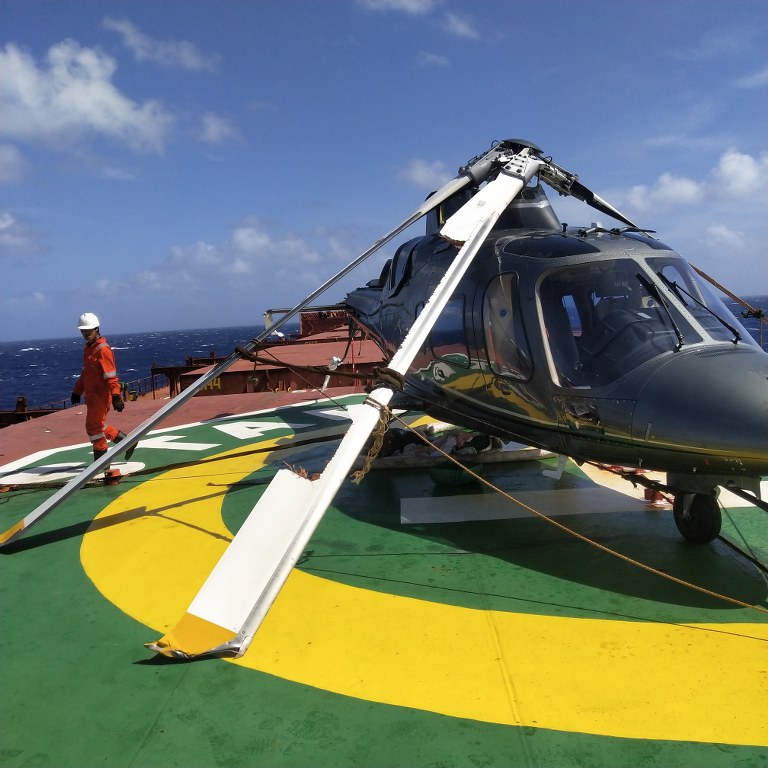
The pilot supervising initially struggled to reach the engine mode switches (located on the centre console) due to the severe vibrations but subsequently managed to shut down engine number 2. The vibrations slightly eased and moments later, they were able to also shut down engine number 1. The vibration dissipated and the helicopter came to rest in an upright position on the helideck, having spun more than 90° counterclockwise from its initial heading. The sequence, from the attempted take‑off to shut‑down occurred within a period of about one minute.
Soon after, the pilots exited the wreckage and inspected the damage. The tail rotor was separated from the helicopter and had come to rest on the main deck between cargo hatches 4 and 5. Items of debris, including main rotor fragments, laid scattered on the deck along with some hydraulic fluid pooled beneath the substantially damaged fuselage (Figure 3).
Figure 3: Helicopter wreckage
Source: Star Coral
Apart from a thumb sprain to the pilot supervising and some bruising to both pilots’ upper leg areas, where they had been struck by the cyclic, neither were significantly injured and no‑one on board Star Coral was injured.
Context
Helicopter information
The helicopter was an Agusta A109 E variant, manufactured in 2006 and issued serial number 11684. It was registered in Australia in 2006 and began services under the operator’s Air Operator’s Certificate (AOC) in 2023.
The Agusta A109E is a multipurpose helicopter equipped with 2 Pratt & Whitney PW206‑C turbine engines. It has a fully articulated 4‑blade main rotor system, a 2‑blade tail rotor and retractable tricycle landing gear. Able to carry up to 7 occupants, it has a maximum allowable take‑off weight of 2,850 kg.
The helicopter was able to perform flight performance class 1 operations by adherence to Category A procedures[9]. While the helicopter was normally operated from the right crew seat, it was fitted with dual controls. A left seat‑approved pilot in command (PIC) was permitted to occupy either seat during training flights. Each set of controls could not be operated independent of the other.
The helicopter’s wreckage was recovered from the ship 2 days after the incident and transported to a secure hangar at Mackay Airport. Prior to its removal, photographs of the wreckage and the accident area were taken. There were no indications that the main rotor or tail rotor had struck any part of the ship during the accident.
Based on its inspections, the operator advised that no engine faults or exceedance alarms had been recorded by the helicopter’s electronic engine management systems. Additionally, no faults or defects had been reported by any of XUM’s pilots or maintainers leading up to the occurrence flight.
Post-accident activities
There was no recorded flight data available to determine the flight control inputs and their effect on the motion of the helicopter during the occurrence.[10] The pilots’ accounts, a witness statement from the master of Star Coral and photographs of the wreckage were the main sources of evidence.
The ATSB also sought the manufacturer’s input for this occurrence. The manufacturer advised that its preliminary assessment of the available evidence suggested that the helicopter damage appeared consistent with a ground resonance phenomenon (see the section titled Ground resonance).
The licenced maintenance organisation for XUM carried out an examination of the wreckage at the Mackay hangar. On advice from the manufacturer, the examination included inspection of specific components commonly associated with ground resonance. These included main rotor dampers, landing gear struts and tyres. The operator advised the ATSB that the inspection did not identify any airworthiness issues that may have contributed to the occurrence. The operator did not provide the inspection report or findings to the manufacturer for its assessment.
Pilot flying
The pilot flying obtained a New Zealand commercial helicopter licence (CPL) in 2011 and started flying commercially in 2014. They converted their CPL over to an Australian CPL in 2016 and held a grade 2 flight instructor rating and a class 1 aviation medical certificate. They had experience flying both single and twin-engine helicopters in various operations. Prior to joining the operator’s in‑command‑under‑supervision (ICUS) program in September 2024, they had no previous experience on the A109E, or with marine pilot transfers (MPT).
Under the ICUS program, the pilot was required to accrue 200 hours on the A109E before they could be assessed to fly the helicopter unsupervised on daytime VFR[11] MPT operations. At the time of the occurrence, the pilot had completed the operator’s training requirements and accrued around 50 hours flight time on the A109E. They had also been cleared to conduct unsupervised MPT operations on single‑engine Eurocopter AS350 helicopters.
Pilot supervising
The pilot supervising was the operator’s head of flying operations and held an air transport pilot (helicopter) licence, issued in 2014, and a class 1 aviation medical certificate. They were approved under the operator’s training and checking system to conduct check and supervision flights on the A109E.
The pilot supervising had been flying helicopters for 26 years in various operations and had accumulated over 10,000 hours flying time, including 3,800 hours in the A109E. They first started MPT operations in 2007 and commenced working with the operator in December 2016.
Star Coral
Star Coral was built in 2009 by Jansu Newyangzi Shipbuilding, China, registered in The Bahamas and classed with Bureau Veritas. The ship was owned by Panormos Shipping, The Bahamas, and managed and operated by Charterwell Maritime, Greece.
At the time of the occurrence, the 229 m ship had a mean draught of 6.51 m and the helideck height was about 18 m above the waterline.
In a written witness statement, the master reported that:
• shortly after the helicopter started to take off, it began to pound on the helideck before it spun and the tail rotor separated
• during the sequence, the helicopter became airborne for no more than 2 seconds.
Ground resonance
Ground resonance can be defined as a vibration of large amplitude resulting from a forced or self‑induced vibration of a helicopter in contact with the ground.[12] The phenomenon is normally associated with helicopters equipped with fully articulated main rotor systems consisting of 3 or more rotor blades. It is more common on helicopters with sprung landing gear than those with skids. Typically, ground resonance occurs during landing, take‑off and ground manoeuvres.[13]
In fully articulated rotor systems, drag hinges allow each blade to advance or lag in the plane of rotation to compensate for the stresses caused by the acceleration and deceleration of the rotor hub. Such rotor systems are typically fitted with lead‑lag dampers to limit the extent of this movement and help prevent excessive vibrations. However, if for any reason one or more of the blades assumes a dragged position different to the others, the blades will move out of phase and the rotor will become imbalanced, transmitting an oscillation throughout the entire airframe.[14]
The risk of ground resonance arises when the unbalanced forces in the rotor system cause the fuselage to oscillate on its landing gear at or near its natural frequency. Ground resonance will occur if the helicopter’s damping systems are unable to compensate for the oscillation.[15] Unless corrective action is taken, the amplitude of the oscillation will increase until the helicopter becomes uncontrollable.[16] Ground resonance can also be induced when the helicopter is in light contact with the ground, if the landing gear oscillation frequency is in sympathy with the rotor head vibration.[17]
Ground resonance is commonly precipitated by the helicopter making hard or asymmetric contact with the ground, landing on a slope or sudden control movements by the pilot.[18] It can also result from other factors such as improper blade balancing and tracking, or damage to any of the blades.[19] Hard contact with the ground by some part of the landing gear when the main rotor is in an unbalanced state can further aggravate the condition.[20]
Additionally, improper maintenance of the helicopter’s main rotor and fuselage damping systems, or incorrect tyre pressures, can induce or worsen ground resonance.[21]
Flight control inputs that may induce ground resonance typically involve sudden control movements or a mishandling of the cyclic that causes the fuselage to bounce.[22]
The helicopter manufacturer advised that the application of certain cyclic commands, such as extreme aft cyclic input, could theoretically reduce the main rotor damper effectiveness in respect to the damping action on the blades’ regressive lead‑lag dynamic.
Recovery technique
The onset of ground resonance can be recognised by a rocking motion or oscillation of the fuselage while on the ground.[23] The United States Federal Aviation Administration (FAA) Helicopter Handbook[24] documented 2 widely accepted recovery techniques:
• if the condition arises when there is insufficient rotor speed for take‑off, the only option is to lower the collective to reduce the pitch of the blades. The rotor rpm[25] should also be reduced as soon as possible.[26]
• If the rotor speed is in the normal operating range for flight, the Helicopter Handbook recommends lifting the helicopter off the ground to allow the rotor blades to rephase themselves automatically.
Additionally, the FAA cautioned that:
If a pilot lifts off and allows the helicopter to firmly re‑contact the surface before the blades are realigned, a second shock could move the blades again and aggravate the already unbalanced condition. This could lead to a violent, uncontrollable oscillation.
In practice, a pilot experiencing ground resonance typically has seconds to identify the condition and take corrective action.
Similar occurrences
The ATSB reviewed several investigation reports relating to previous A109E accidents attributed to ground resonance. The incidents reviewed occurred outside of Australia between 2006 and 2025 and the contributing factors were found to be operational. Technical factors which may have caused or exacerbated ground resonance were not identified.
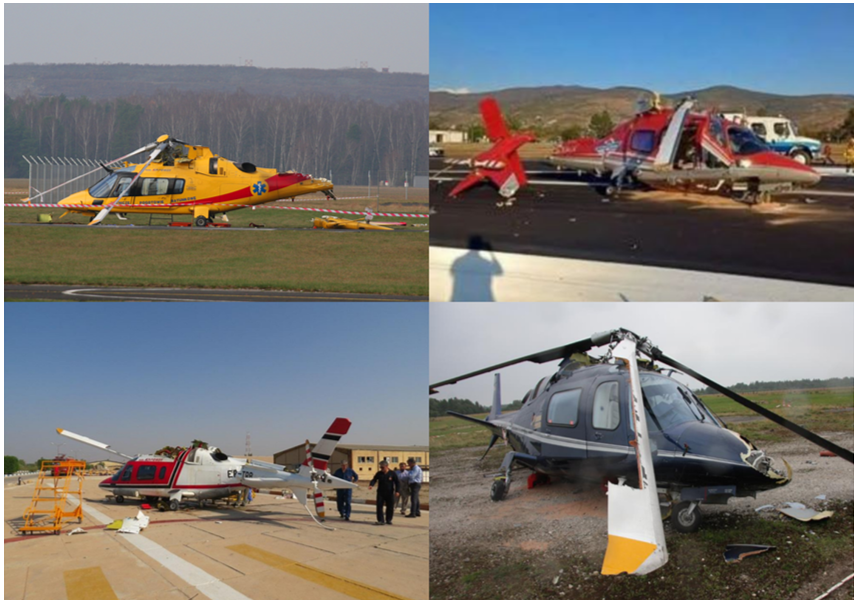
Details of the previous incidents bear similarity to the occurrence involving XUM, particularly in respect to subsequent damage to the helicopter (Figure 4).
Figure 4: Previous occurrences of ground resonance involving the Agusta A109E
Source: Leonardo Helicopters
Flight manual procedures
The A109E rotorcraft flight manual (RFM) listed fault conditions and corrective actions for emergencies and malfunctions that might occur during take‑off.
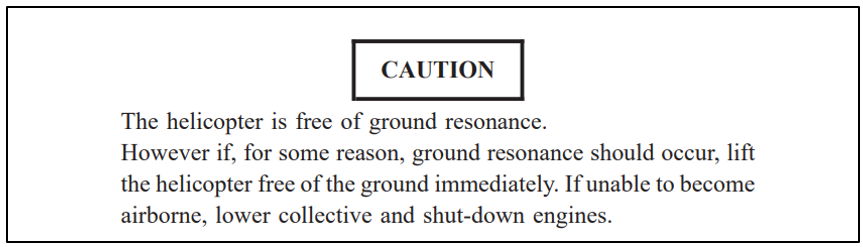
The RFM included the caution below for ground resonance within the normal flight procedure for take‑off. This was not part of the emergency and malfunction procedures.
The RFM procedure for ground resonance was consistent with recovery techniques published by the FAA. The RFM reference to the helicopter being ‘free of ground resonance’ was intended to indicate that, like all helicopters, the A109E was designed and certified to applicable standards so that the rotor and fuselage systems do not vibrate at the same frequency under normal conditions.
Operator procedures
As an AOC holder, the operator maintained a CASA‑approved[27] operations manual/exposition[28] to promulgate general policy and standardised procedures for MPTs on the A109E. The version of the operations manual current at the time of the occurrence was issued by the operator in November 2023.
Ground resonance
The operator’s normal procedures and emergency checklists for the A109E were derived from the RFM and did not contain any procedures related to ground resonance.
Crew coordination in response to abnormal situations
While MPT flights were predominantly conducted by a single pilot, the helicopter was certified for operations with either a single pilot or 2 pilots. In either case, the normal procedure and emergency checklists remained the same, except that 2‑pilot checklist procedures were to be based on challenge and response.
Normal handover and takeover procedures provided that:
In the case where the pilot flying (PF) is not the PIC and the PIC determines that the PF is not maintaining adequate control of the aircraft, the PIC may elect to take control, in which case they will signal their intention by saying ‘I have control’ upon which the PF will immediately relinquish control and the roles will reverse.
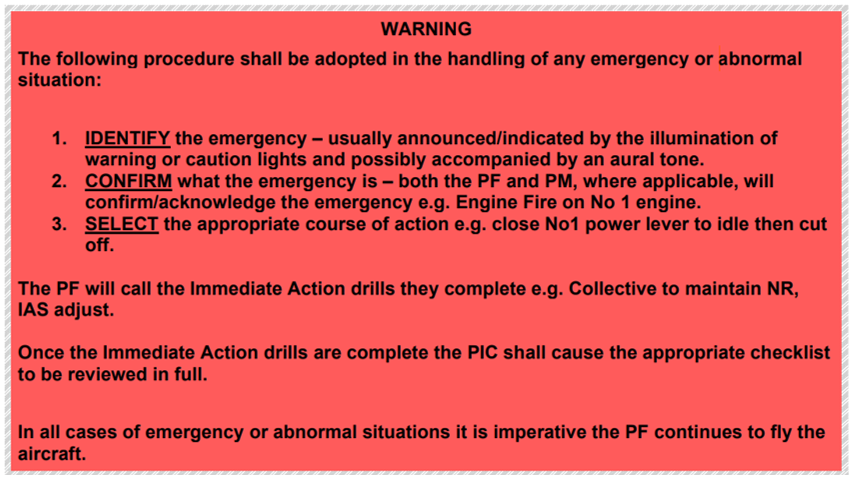
In abnormal or emergency situations, the PIC was responsible for ensuring the aircraft was flown and kept under control. The operations manual emphasised the importance of cockpit resource management (CRM) standards throughout the situation, in accordance with the below procedure:
Note: In the above procedures PM stands for ‘pilot monitoring’, NR refers to main rotor speed and IAS means indicated airspeed.
In the context of rapidly escalating emergencies such as ground resonance, pilots have limited time to perform the procedure.
Pilot in command responsibility during training flights
As the holder of a certificate that authorised air transport and aerial work operations, the operator was required to have in place a training and checking system (TACS). A training and checking manual (TACM) sets out policies and procedures for conducting training flights. It provided that a check pilot supervising ICUS training was to be the PIC. Check pilots were to ensure that pilots involved in training exercises were made aware of who was acting as the PIC through proper handover of control procedures.
While an ICUS pilot might be considered the PIC for flight‑time logging purposes, the pilot supervising was deemed the PIC and responsible for the safety of the flight. The TACM stated that in the event of an actual emergency during flight training:
If the flight examiner or check pilot deems it necessary to take physical control of the aircraft at any stage after the occurrence of the emergency, then they shall do so in accordance with the hand‑over and take‑over procedures specified in the Operations Manual - Hand over and take‑over procedures.
The flight examiner or check pilot must be prepared and ready to assume physical control of the aircraft at any stage, particularly during critical manoeuvres such as during take‑off and landing.
As such, beyond the normal handover of control procedures, there were no special provisions in the TACM for the allocation of PIC responsibility and PF duties during ICUS flights.
Briefings
For 2‑pilot operations or training flights, the operator’s procedures did not require pilots to brief who would assume PF duties in the event of an abnormal or emergency situation during critical phases of flight.
Operational limits
Under the operator’s operations manual, the A109E was permitted to conduct daytime MPT operations up to a wind strength of 30 knots, with a maximum crosswind of 20 knots. The operational limit for ship’s pitch was 4° up and 2° down while the maximum permissible roll was 4°. The manufacturer did not have input into these operator‑defined limits.
The pilots reported that the conditions at the time of the occurrence (20–28 knot headwind, 2° roll and minimal pitching) were within the operator’s limits for MPTs.
Safety analysis
Prior to the accident, VH‑XUM (XUM) made an uneventful landing on Star Coral and remained on the deck for several minutes without incident. There was no evidence that the helicopter was operating abnormally or experienced any instability during this period.
Examination of the accident site did not reveal any evidence to suggest that the occurrence resulted from the main rotor or tail rotor striking the ship. Star Coral’s master reported that the tail rotor separated after the helicopter started contacting on the deck, indicating that contact with the tail boom by the main rotor was a consequential rather than causative factor.
In that context, it is most likely that the helicopter encountered ground resonance. Assessment of the damage to the helicopter following the occurrence revealed significant similarities to that seen in previous A109E incidents attributed to this phenomenon.
It is well established that ground resonance only arises when the helicopter is in contact with the ground. Both pilots asserted that the helicopter did not become airborne prior to the vibrations while the master reported that it became airborne for about 2 seconds. However, it is more likely this occurred after the vibration worsened and the helicopter started rebounding on the helideck.
The exact cause of the vibration could not be determined. The possibility of causative operational factors such as flight control inputs or environmental factors could not be ruled in or out.
Similarly, while the operator’s post‑accident inspection of the helicopter (including examination of its rotor and fuselage damping systems) did not reveal any apparent defects, causative technical factors could not be discounted.
However, the sudden lowering of the collective after the onset of the vibration likely aggravated the situation. The helicopter was almost certainly light on its oleos when the vibration began. Therefore, a sudden lowering of the collective would have caused the helicopter to come down firmly on the helideck. The United States Federal Aviation Administration (FAA) Helicopter Handbook describes that such an impact when the rotor is already in an unbalanced state can cause the rotor blades to move further out of phase, resulting in violent uncontrollable oscillations. This description is consistent with the occurrence sequence described by the pilots and the master.
The pilots’ accounts of who lowered the collective differed. The recollection of the pilot flying that their intention was to lift the helicopter off the deck in response to the vibration was not consistent with a lowering of the collective. In contrast, the pilot supervising did not immediately identify the source of the vibration and later shut down the engines, believing the main rotor may have struck the tail boom. In this context, lowering of the collective would be a natural and expected response. Therefore, it is most likely that the pilot supervising lowered the collective while the pilot flying was attempting to lift the helicopter off the helideck.
In isolation, the immediate responses taken by each pilot following the sudden onset of the significant vibration were understandable. However, since the helicopter’s rotor speed was in the normal operating flight range, continuation of the take‑off would probably have resulted in the vibration dissipating (as detailed in the FAA Helicopter Handbook).
The operator had adequate procedures for responding to abnormal and emergency situations. However, the rapidly escalating nature of this occurrence meant that there was virtually no time to implement them. There was no requirement for the pilots to conduct a pre‑flight or pre‑take‑off brief about who would assume flying duties in the event of an emergency on take‑off. Therefore, the normal procedures for handover and takeover of control were assumed to apply.
However, the time between observing the vibrations and the loss of control severely limited the time available for a formal transfer of control between the pilots. As a result, neither of these procedures were followed and each pilot responded to the situation separately.
Findings
ATSB investigation report findings focus on safety factors (that is, events and conditions that increase risk). Safety factors include ‘contributing factors’ and ‘other factors that increased risk’ (that is, factors that did not meet the definition of a contributing factor for this occurrence but were still considered important to include in the report for the purpose of increasing awareness and enhancing safety). In addition ‘other findings’ may be included to provide important information about topics other than safety factors.
These findings should not be read as apportioning blame or liability to any particular organisation or individual.
From the evidence available, the following findings are made with respect to the loss of control during marine pilot transfer operations, involving an Agusta A109E, VH‑XUM and bulk carrier Star Coral, about 200 km north‑east of Mackay, Queensland, on 25 February 2025.
Contributing factors
During take‑off, the helicopter likely experienced ground resonance, resulting in the rapid onset of significant vertical oscillations through the airframe.
Discontinuing the take‑off after the onset of the vibration, with the rotor speed in the flight range, probably resulted in the loss of control and substantial damage to the helicopter.
Safety actions
Whether or not the ATSB identifies safety issues in the course of an investigation, relevant organisations may proactively initiate safety action in order to reduce their safety risk. The ATSB has been advised of the following proactive safety action in response to this occurrence.
Safety action by Flyon Helicopters
Following this occurrence, the helicopter’s operator, Flyon Helicopters, established ground resonance guidelines for its pilots. Forming part of its exposition, the guidelines were purposed to raise awareness of ground resonance and provide information about how to recognise and respond to the phenomenon. They included response procedures and featured case studies and video resources. The procedures were to be implemented into the operator’s training framework for new and current pilots.
Flyon Helicopters advised the ATSB that it also planned to implement an additional briefing procedure in its training and checking manual (TACM). The briefing is to be conducted by the training or checking pilot prior to any training or checking flight. It will include:
the objectives and scope of the flight, including the intended lesson plan or sequence
the training/checking outcomes
the roles of each pilot, including the allocation of aircraft command responsibility
procedures for transferring aircraft control between pilots
actions to be followed in the event of an actual emergency
procedures to be used in the simulation of emergencies
procedures for the conduct of unusual operations
the method to be used to simulate instrument flight conditions, if required
human factors/non‑technical stills and threat and error management.
Sources and submissions
Sources of information
The sources of information during the investigation included:
the pilots and operator of VH-XUM
the master and manager of Star Coral
the helicopter manufacturer, Leonardo Helicopters
References
Lemmens Y, Troncone E, Dutré S, Olbrechts T. (2012). Identification of Helicopter Ground Resonance with Multi-body Simulation, 28th International Congress of the Aeronautical Sciences
United Kingdom Ministry of Defence, AP3456 Central Flying School Manual of Flying Vol 12 - Helicopters
Salini S N, Haradev G S, Ranjith M. (2020). Ground Resonance: Nonlinear Modelling and Analysis, 6th Conference on Advances in Control and Optimization of Dynamical Systems (ACODS), India
United States Federal Aviation Administration. (2019). Helicopter Flying Handbook
Schafer J. (1980). Helicopter Maintenance
Submissions
Under section 26 of the Transport Safety Investigation Act 2003, the ATSB may provide a draft report, on a confidential basis, to any person whom the ATSB considers appropriate. That section allows a person receiving a draft report to make submissions to the ATSB about the draft report.
A draft of this report was provided to the following directly involved parties:
the pilots and operator of VH-XUM
the master and manager of Star Coral
the ship’s flag State administration, The Bahamas
the helicopter manufacturer, Leonardo Helicopters
Agenzia Nazionale per la Sicurezza del Volo (ANSV)
Civil Aviation Safety Authority
Australian Maritime Safety Authority
Submissions were received from:
the pilots of VH-XUM
the ship’s flag State administration, The Bahamas
the helicopter manufacturer, Leonardo Helicopters
Agenzia Nazionale per la Sicurezza del Volo (ANSV)
The submissions were reviewed and, where considered appropriate, the text of the report was amended accordingly.
Purpose of safety investigations
The objective of a safety investigation is to enhance transport safety. This is done through:
identifying safety issues and facilitating safety action to address those issues
providing information about occurrences and their associated safety factors to facilitate learning within the transport industry.
It is not a function of the ATSB to apportion blame or provide a means for determining liability. At the same time, an investigation report must include factual material of sufficient weight to support the analysis and findings. At all times the ATSB endeavours to balance the use of material that could imply adverse comment with the need to properly explain what happened, and why, in a fair and unbiased manner. The ATSB does not investigate for the purpose of taking administrative, regulatory or criminal action.
Terminology
An explanation of terminology used in ATSB investigation reports is available here. This includes terms such as occurrence, contributing factor, other factor that increased risk, and safety issue.
Publishing information
Released in accordance with section 25 of the Transport Safety Investigation Act 2003
Ownership of intellectual property rights in this publication
Unless otherwise noted, copyright (and any other intellectual property rights, if any) in this report publication is owned by the Commonwealth of Australia.
Creative Commons licence
With the exception of the Commonwealth Coat of Arms, ATSB logo, and photos and graphics in which a third party holds copyright, this report is licensed under a Creative Commons Attribution 4.0 International licence.
The CC BY 4.0 licence enables you to distribute, remix, adapt, and build upon our material in any medium or format, so long as attribution is given to the Australian Transport Safety Bureau.
Copyright in material obtained from other agencies, private individuals or organisations, belongs to those agencies, individuals or organisations. Where you wish to use their material, you will need to contact them directly.
[1]Hydrographers Passage provides a deep-water shipping route through the Great Barrier Reef between Blossom Bank pilot boarding ground, near the entrance to the passage, and the Cumberland Islands, north-east of Mackay. Pilotage is compulsory through Hydrographers Passage for ships over 70 m, as well as for loaded oil and chemical tankers and gas carriers, irrespective of size.
[2]In-command-under-supervision (ICUS) generally refers to a pilot who is acting as the pilot in command (PIC) for a flight under the supervision of a more experienced pilot.
[4]All ship’s headings are reported in degrees true.
[5]Flight idle refers to the lowest engine power setting that allows the aircraft to maintain stable operations during flight. A flight idle setting when the helicopter is on the ground allows for the engine(s) to go to higher power settings faster and facilitate take-off when collective pitch is raised.
[6]Performance Class 1 (PC1) refers to operations for which, in the event of a critical engine failure, performance is available to enable the helicopter to safely continue the flight to an appropriate landing area.
[7]Collective: a primary helicopter flight control that simultaneously affects the pitch of all blades of a lifting rotor. Collective input is the main control for vertical speed.
[8]Cyclic: a primary helicopter flight control that is similar to an aircraft control column. Cyclic input tilts the main rotor disc, varying the attitude of the helicopter and hence the lateral direction.
[9]Category A (CAT A) operations were those where, in the event of an engine failure, the helicopter has adequate performance to safely continue or reject the take-off or landing.
[10]The aircraft type involved was not required under regulations to carry a cockpit voice recorder (CVR) or flight data recorder (FDR).
[12]United Kingdom Ministry of Defence, AP3456 Central Flying School Manual of Flying Vol 12 – Helicopters.
[13]Lemmens Y, Troncone E, Dutré S, Olbrechts T. (2012). Identification of Helicopter Ground Resonance with Multi-body Simulation, 28th International Congress of the Aeronautical Sciences.
[14]United Kingdom Ministry of Defence, AP3456 Central Flying School Manual of Flying Vol 12 – Helicopters.
[15]Salini S N, Haradev G S, Ranjith M. (2020). Ground Resonance: Nonlinear Modelling and Analysis, 6th Conference on Advances in Control and Optimization of Dynamical Systems (ACODS), India.
[16]United States Federal Aviation Administration. (2019). Helicopter Flying Handbook.
[17]United Kingdom Ministry of Defence, AP3456 Central Flying School Manual of Flying Vol 12 – Helicopters.
[28]‘Exposition’ is a term used in some regulatory domains for a document or set of documents that describe how an organisation will comply with all applicable legislative requirements, and how they will manage the safety of their operations. An exposition is broadly equivalent to an operations manual in other domains.
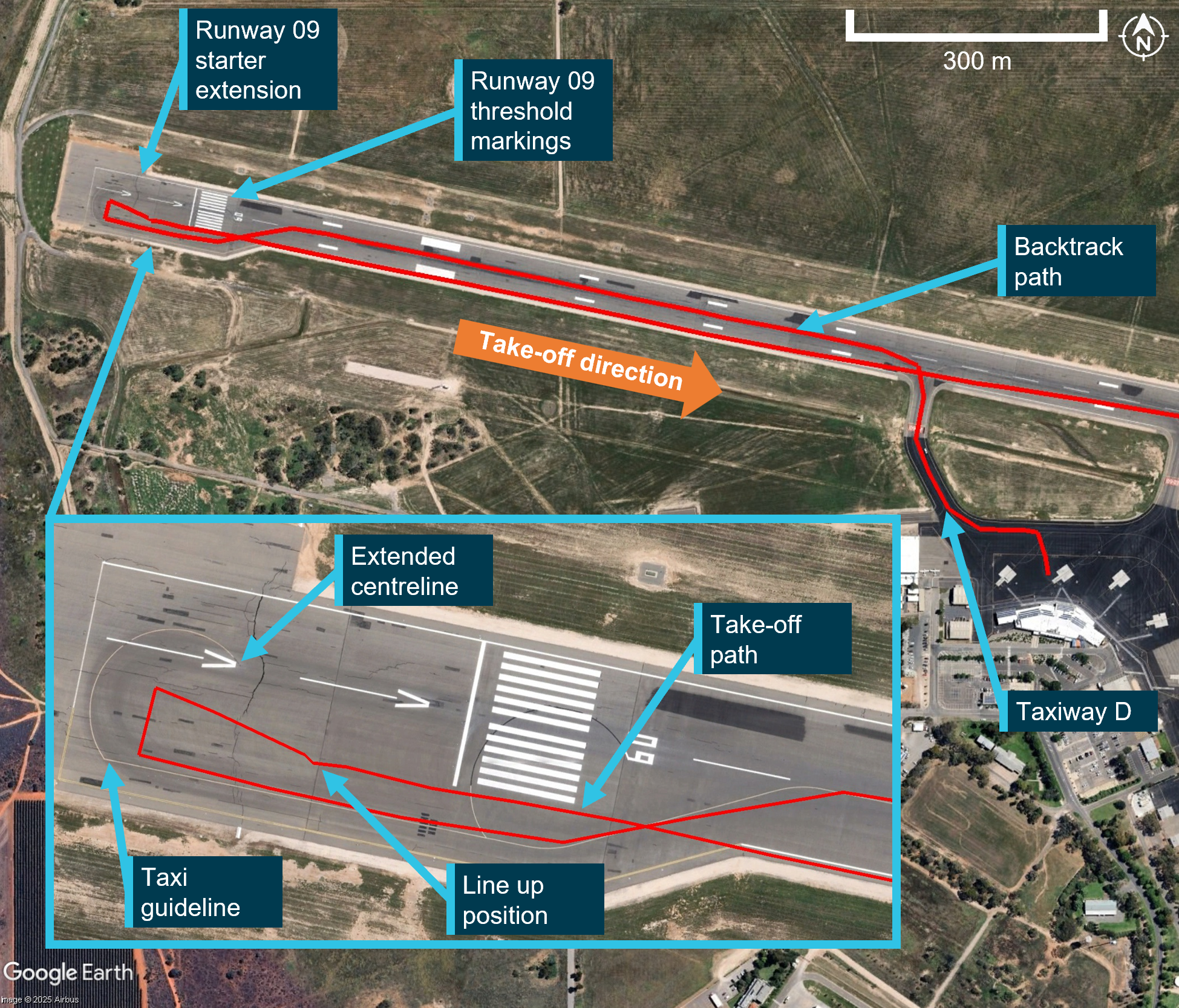
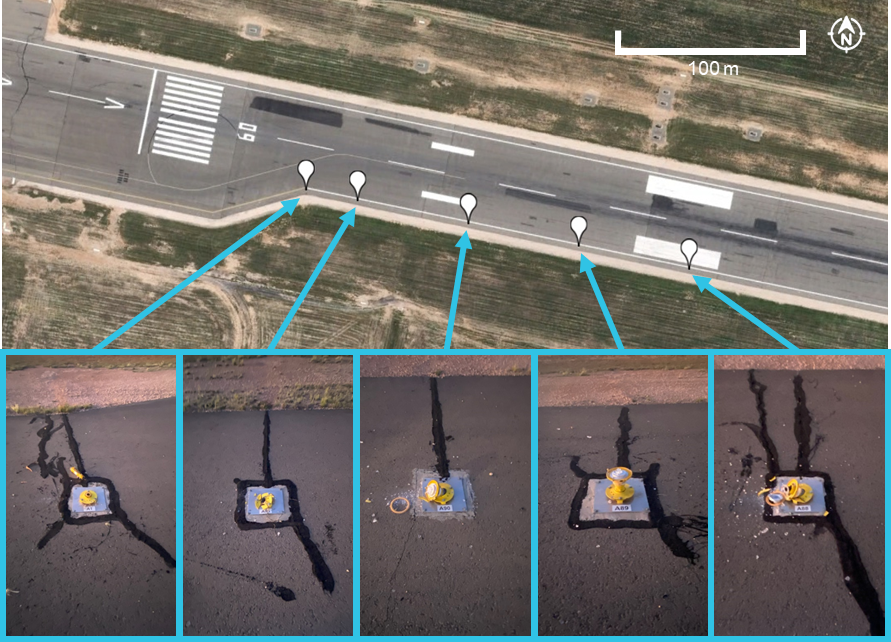
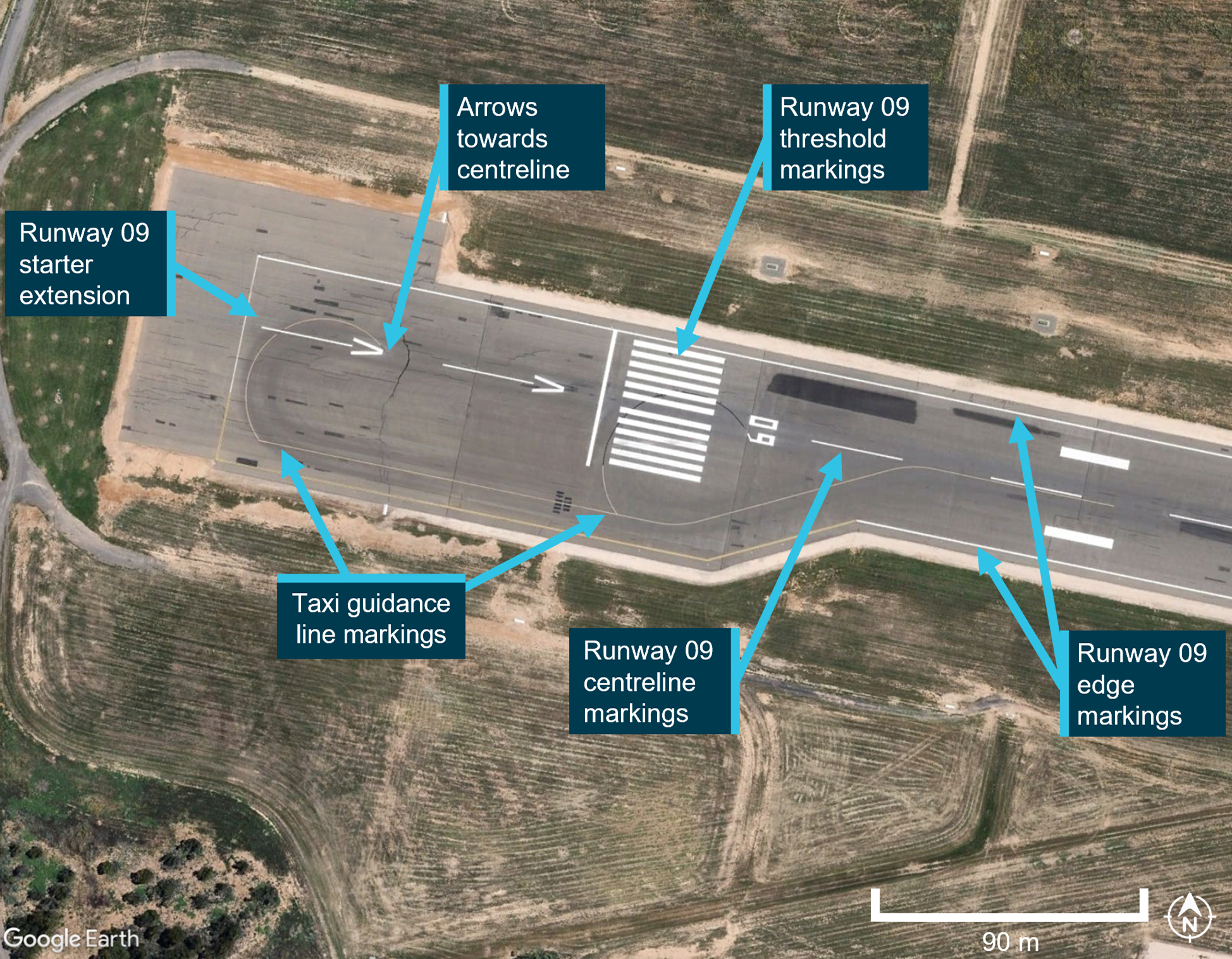
On 25 February 2025, a QantasLink DHC-8-315 aircraft, registered VH-TQM, was being operated on a scheduled passenger transport flight from Mildura to Melbourne Airport, Victoria. The flight crew commenced taxiing the aircraft prior to first light. The aircraft was backtracked on runway 09 and taxied past the threshold into the starter extension bypass pad to turn around and line up. The flight crew inadvertently lined up the aircraft with the right runway edge lights and commenced taking off from this position.
During the take-off roll, the nose landing gear contacted and damaged 5 runway edge lights. Although the flight crew heard some external noises, neither recognised this as contact with the runway edge lights. The captain, however, identified that the aircraft was not on the centreline and manoeuvred towards the centreline and continued the take-off. During the initial climb, the flight crew realised that the aircraft had contacted the runway edge lights.
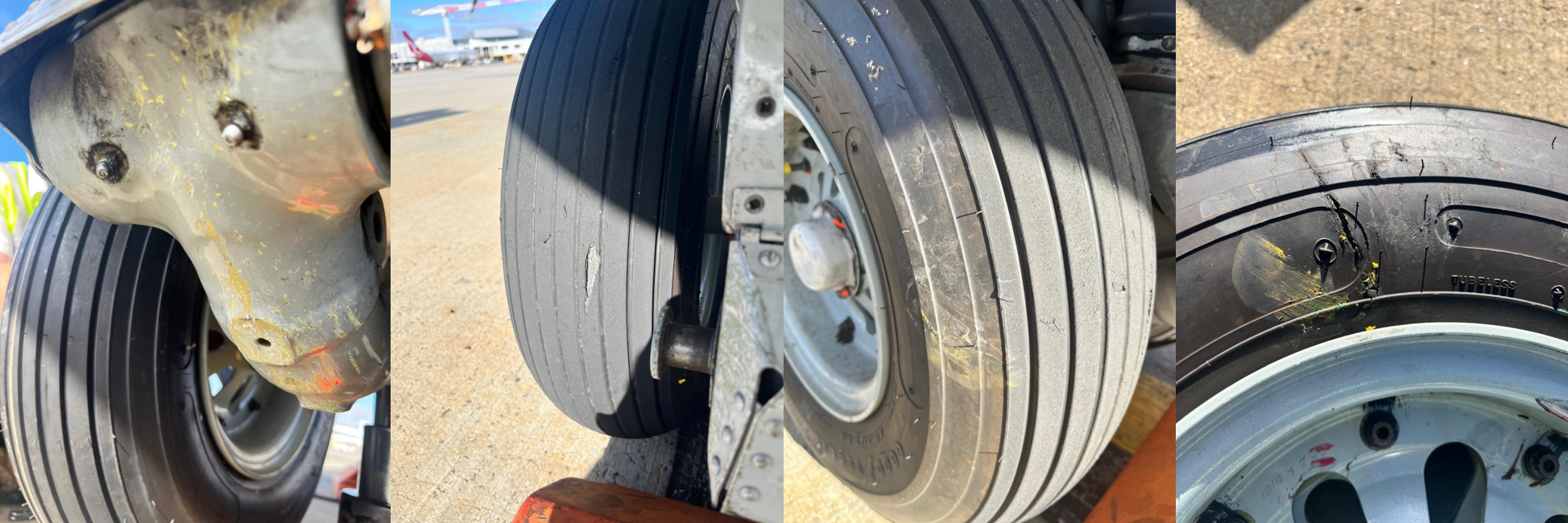
The flight crew conducted a low pass at Melbourne to facilitate a visual inspection of the landing gear by air traffic control. This did not identify any issues and the aircraft landed without incident. An inspection of the aircraft found minor damage to the nose landing gear, fuselage and right propeller blade.
What the ATSB found
The ATSB found that the incident took place in dark ambient conditions and that the taxi guidance line markings were not followed for the turn to line up. Instead, the aircraft was turned tighter, which positioned it closer to the right edge of the runway. Also, the flight crew’s attention was focused on conducting checks during the turn and on completion of the turn. However, as the flight crew believed they were correctly aligned with the runway centreline, they commenced the take-off roll.
It was also established that, when conducting the low pass of the Melbourne air traffic control tower, the aircraft was not maintained at the briefed height of 200 ft above ground level and descended to 134 ft for a short period. It was noted that the flight crew did not seek advice on the low pass nor did the operator provide supporting procedures for this.
Further, during post‑incident drug and alcohol testing, the captain tested positive for a non-prescribed medication. However, impairment was not expected given the reported dosage and time elapsed since taken.
What has been done as a result
QantasLink advised that human factors and non-technical skills training on the threat awareness of factors that have contributed to misaligned take-offs was included for wider flight crew recurrent training. Supporting documentation for Mildura Airport was updated to include information on the runway 09 starter extension for increased awareness along with education material being distributed regarding flight crew briefings and identifying relevant threats.
A safety alert was issued to prohibit the conduct of checks during runway end turns. This was incorporated into the Flight Crew Operating Manual. QantasLink also introduced policy aligned with Qantas Group operators regarding the risks associated with air traffic control tower fly pasts.
Safety message
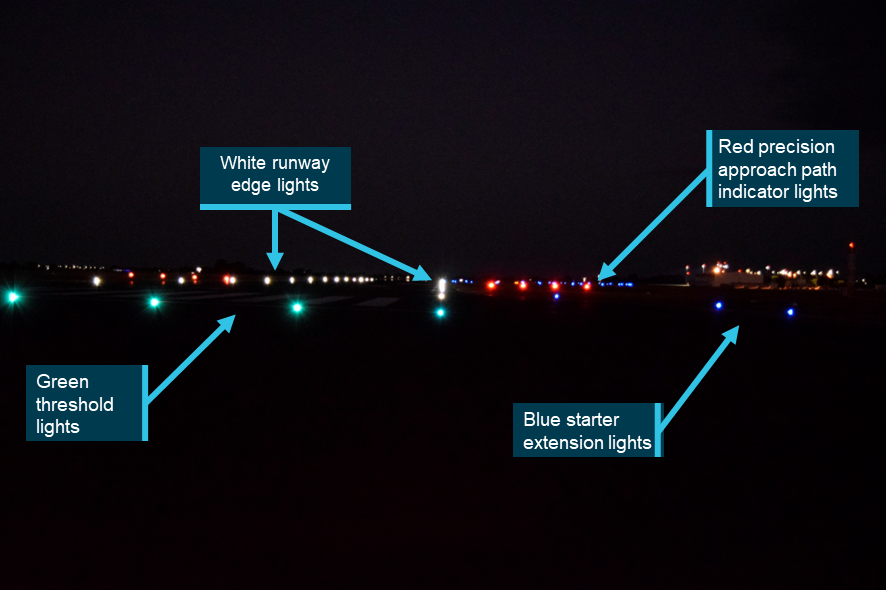
A number of factors known to influence misaligned take-off occurrences were identified in this investigation. Dark ambient conditions have been consistently identified in similar occurrences and can reduce the visual cues available. This may limit the ability of flight crew to identify their position when lining up.
Although the completion of checks are a necessary part of a flight, they may result in a diversion of attention towards the checks at the expense of another task such as lining up. Pilots must consider the timing for conducting checks in situations where monitoring their external environment is important.
The incident further highlighted that, in non-normal situations for which there is no documented procedure, pilots should consult all available sources including their operator for assistance. Lastly, pilots should exercise caution when taking any medications and should be discouraged from taking prescription medications without medical supervision. Many prescription (and non-prescription) medications are not safe for use while conducting aviation activities and are therefore not permitted for use.
The investigation
The ATSB scopes its investigations based on many factors, including the level of safety benefit likely to be obtained from an investigation and the associated resources required. For this occurrence, the ATSB conducted a limited-scope investigation in order to produce a short investigation report, and allow for greater industry awareness of findings that affect safety and potential learning opportunities.
The occurrence
Flight schedule
On 24–25 February 2025, a QantasLink DHC-8-315 (Dash 8) aircraft, registered VH‑TQM, was operated on scheduled passenger transport flights over the 2 days, which consisted of 5 sectors on the first day and 3 sectors the following morning.1 The crew consisted of 2 flight crew and 2 cabin crew.
On 24 February, the flight crew signed on at 1040 local time in Melbourne, Victoria, and completed 2 return flights to Devonport, Tasmania, and Wagga Wagga, New South Wales. For the final sector to Mildura, Victoria, the aircraft departed Melbourne at about 1922 and arrived at 2045. The crew signed off from duty at 2100 and arrived at their accommodation about 15 minutes later.
On 25 February, at about 0545, the crew departed their accommodation and signed on for duty at 0600 for a 0630 scheduled departure from Mildura to Melbourne. The captain was the pilot flying (PF) and the first officer (FO) was the pilot monitoring2 for this sector. There were 50 passengers on board.
Taxi to runway 09
The captain commenced taxiing the aircraft before first light at about 0631. Closed-circuit television (CCTV) footage showed the aircraft taxi light was on, illuminating a portion of the tarmac ahead of the aircraft. The captain reported that they had also selected the approach lights to ‘on’ to provide greater illumination of the runway surface during the taxi. CCTV footage also showed that the taxiway, runway and starter extension bypass pad3 lighting was active.
After entering the runway, the aircraft was backtracked along the centreline. CCTV footage showed that, when the aircraft approached the runway 09 threshold, the approach lights were selected on. The aircraft was taxied past the threshold and into the runway starter extension bypass pad to turn the aircraft around and line up. The captain reported that the starter extension was not required for performance, but their preference was to use the full runway length where possible. They also stated that the wider extension area would provide more room for the turn around.
The recorded flight data4 showed that the aircraft path followed the taxi guideline marking into the starter extension but was turned right, prior to the end, and away from the guideline, which led to the extended centreline. The captain explained that their initial intent was to use the complete starter extension. However, once established in the extension, they chose not to do so to avoid inadvertently exiting the pavement in the dark conditions. The FO reported that this was not communicated to them at the time nor were they aware that the aircraft had been turned earlier. The aircraft path during the turn remained to the right of the extended centreline, resulting in it being positioned close to the right edge of the runway (Figure 1).
During the turn, the flight crew conducted the ‘ready checks’ and the associated checklist, during which time they both reported being focused within the flight deck on the conduct of the checks. The captain also reported being distracted by either smoke or mist outside the left window. On completion of the turn, the captain stated they were drawn to the white right runway edge lights, believing them to be runway centreline lights. The captain also indicated that the flight director and heading bug confirmed that the aircraft was aligned with the runway direction. The FO reported that they observed the runway 09 threshold markings, which they equated as the aircraft being in the correct position to line up. They did not recall noticing any lights ahead of their position. Once lined up, both flight crew believed they were aligned on the centreline of runway 09.
Take-off on runway 09
The captain recalled that, when they commenced the take-off roll, they advanced the power levers as close to the required power setting as possible, then called ‘set power’. At this point, the FO checked the power setting and adjusted the levers to ensure the exact power required was set. The FO reported their attention was predominantly focused inside the flight deck from this time. The captain identified that the take-off roll was ‘rough’, explaining that this was not unusual for an early morning first flight of the day for that aircraft type.
The captain recalled that, about the time the FO called ‘70 kt’, the sounds and sensations became more intense and identified that the aircraft was on the runway edge (Figure 1). They then manoeuvred the aircraft to its correct position along the centreline.
The FO reported hearing ‘1 or 2 thuds’ at about the time that they called ‘70 kt’. The FO also explained becoming momentarily distracted with the storm light5 on their side of the flight deck, which had unexpectedly turned on. The FO continued their scan between airspeed and ahead of the aircraft and shortly after made the calls ‘V1’ and ‘rotate’.6
The FO stated that they had not become aware of the misaligned take-off until after the captain had already begun manoeuvring the aircraft toward the runway centreline.
The captain continued the take-off, recalling that the aircraft had operated normally, and that the abnormal sounds and sensations had ceased. Once airborne, the ‘after take-off’ procedures were completed, as required.
Figure 1: Flight tracking data for the take-off with the starter extension inset
The aircraft track (within the inset) at the end of the starter extension shows a sharply clipped turn, which is due to the fidelity of the data. Source: Google Earth, with aircraft flight data overlaid and annotated by the ATSB
During the initial climb, the flight crew realised that they may have contacted the runway edge lights. The FO contacted the Mildura Airport aerodrome reporting officer and advised them of this. They requested the area be inspected and for them to report back on any debris located. The flight crew were subsequently advised that there was damage to 5 lights on the right edge of runway 09 (Figure 2). No aircraft debris was identified.
Figure 2: Damaged runway edge lights (inset) on runway 09
Source: Google Earth and Mildura Airport, annotated by the ATSB
After take-off inspections
The flight crew reported that following discussion about what had occurred, they considered the possibility that the landing gear had not been damaged as the remainder of the take-off roll occurred normally and the landing gear retracted without fault. They consulted the Quick Reference Handbook, however, there was no procedure to assist them with assessing the landing gear status. They then discussed and assessed the potential risks for landing with potential damage to the aircraft, and that a visual inspection of the landing gear would be required.
The captain explained that after the landing gear was extended, the main gear would become visible from the passenger cabin. The captain had briefed a cabin crew member that the landing gear would be extended earlier than normal for them to inspect. The captain asked them to check for any signs of fluid or tyre damage and whether the gear had deployed correctly. The cabin crew were to use the cabin ready button to signal if the landing gear appeared okay, otherwise they were to call the captain if they had concerns. Although the cabin crew were able to inspect the main landing gear, they could not view the nose landing gear. QantasLink advised that, during this time there was no contact for assistance between the flight crew and its operations centre.
The FO contacted Melbourne Centre air traffic control (ATC) and requested to conduct a low pass on their arrival at Melbourne Airport to facilitate a visual inspection of the landing gear. ATC was requested to focus their inspection on the nose landing gear. On advice from ATC, the flight crew briefed to complete the pass at approximately 200 ft above ground level (AGL), which would place the aircraft at an equivalent level to the controller who was in the control tower. The captain set the radar altimeter to 150 ft AGL to assist them in maintaining the aircraft at 200 ft AGL. As the landing gear and flaps would be extended, the captain planned to fly the aircraft at 120–130 kt. During the low pass, the captain reported that the height was adjusted to enable ATC to inspect the landing gear and that they received a minimums audio alert, signifying that the aircraft had descended below 150 ft AGL. The flight data identified the aircraft had descended at its lowest to a height of 134 ft AGL at which point the speed was 122 kt.
The inspection of the main landing gear was completed by a cabin crew member and they pushed the cabin ready button to advise the flight crew that the gear appeared satisfactory. Similarly, ATC did not observe any anomalies of the landing gear, advising the flight crew that the gear appeared correctly aligned and the tyres appeared in satisfactory condition. Following the low pass, the landing gear was raised and a missed approach conducted. The flight crew completed another approach, and the aircraft was landed without further incident.
Context
Flight crew information
Qualifications and experience
The captain held an Air Transport Pilot Licence (Aeroplane) and a valid class 1 aviation medical certificate. They had a total of 19,000 hours flying experience of which 935 hours were on the Dash 8. The captain had flown 107 hours on the Dash 8 in the previous 90 days.
The FO held a Commercial Pilot Licence (Aeroplane) and a valid class 1 aviation medical certificate. They had a total of 3,386 hours flying experience of which 773 hours were on the Dash 8. The FO had flown 45 hours on the Dash 8 in the previous 90 days.
The captain’s logbook identified they had operated at Mildura on numerous occasions in the previous few months. None of those flights were at night or before first light. The FO reported they last operated in similar light conditions at Mildura in September 2024.
Flight crew fatigue assessment
The captain reported going to bed at around 2230 after arriving in Mildura and waking at around 0500 the next morning. The noise from the hotel had interrupted their sleep and they recalled feeling ‘a little tired, less than fresh’, to, ‘moderately tired’7 at the time of the incident. In total, the captain reported obtaining around 6 hours sleep in the previous 24 hours and around 13 hours in the previous 48 hours.
The FO reported they went to sleep at around 2200, woke around 0500, and obtained a ‘good’ sleep. During interview, the FO described that they did not feel ‘match fit’, as they had not operated a 5-sector overnight duty for some time. They also reported feeling ‘okay, somewhat fresh’7 at the time of the incident. In total, the FO reported obtaining around 7 hours sleep in the previous 24 hours and around 14.5 hours in the previous 48 hours.
Aside from the usual workload associated with a take-off in the dark, neither of the flight crew reported any additional fatigue‑related factors on the incident flight.
The ATSB assessed the flight crew’s sleep opportunity, actual sleep obtained, and quality of sleep leading up to the flight as well as other fatigue‑related factors. A number of factors were present that could have increased the risk of fatigue, including a minimum rest period that was provided after a 5-sector day, and a slight reduction of sleep hours and poor-quality sleep in the previous 24 hours (for the captain). However, given the total hours of sleep obtained, time awake, time on duty, and time of the incident, it was unlikely the flight crew was experiencing a level of fatigue known to have an adverse effect on performance.
Drug and alcohol test results
In accordance with the QantasLink drug and alcohol management plan, the flight crew underwent a post-incident alcohol breath test and urine drug test. The FO returned a negative result, however, the captain’s drug test was non-negative. When the test was administered the captain declared that on consecutive days during the prior weekend they had taken a prescription medication that was not prescribed to them.
As there was a non-negative result, a second test of the sample was conducted at a laboratory. The presence of a testable substance above the cut-off level was confirmed.
QantasLink confirmed that the captain had returned a positive test result and that they had been stood down pending further assessment in accordance with company policy. Their medical review officer explained that, while the test result confirmed the presence of a testable substance above the cut-off level, the testing could not indicate when or what dosage was taken, nor could it indicate if there were any effects. They further explained that the medication was not currently permitted for use by pilots, it had an effective period of about 10 hours, and there would be no lingering effects expected unless there was an adverse reaction.
The captain reported to the ATSB they did not experience any effect from the medication at the time it was taken, nor did they experience any side effects. The FO and cabin crew members reported not noticing anything of concern regarding the captain nor their fitness for duty on that morning.
The ATSB engaged a forensic pharmacologist to review the test results. They stated that the concentration detected was consistent with the reported dosage self-administered by the captain on the weekend prior to the incident flight.
The pharmacologist noted numerous potential adverse effects of the medication that included: insomnia, loss of appetite, restlessness, euphoria, dizziness, dyskinesia (involuntary, repetitive and or jerky movements), tremor, dysphoria and with higher doses personality changes, irritability, hyperactivity and psychosis. It may produce peripheral effects such as increasing blood pressure and heart rate, palpitations, increased sweating and hyperthermia (increased temperature). The manufacturer’s consumer medication information stated that the medication should not be taken by persons with known cardiovascular disease. Additionally, the information advised consumers to not drive or operate machinery until they know how the medication affects them. The pharmacologist advised it was possible that the non-therapeutic use of the medication could result in some impairment and potentially, in some cardiovascularly susceptible persons, serious harm.
The pharmacologist further noted it was not possible to determine the likelihood of impairment from a urine sample. There were no studies that have established any relationship between urine concentration of the medication and psychomotor skills performance. For a person using a non-prescribed medication and who has not developed a tolerance, they indicated that impairment could not be excluded as being possible. However, based on the reported dosage, the specialist assessed that impairment would not have been expected on the day of the incident.
Aircraft information
General
The aircraft was a Bombardier DHC-8-315 (Dash 8) twin turbo-propeller regional aircraft capable of carrying 50 passengers and normally crewed by 2 flight crew and 2 cabin crew. It was manufactured in 2004 (serial number 604) and first registered in Australia in 2004.
Post‑incident maintenance
Following the incident, the operator conducted a towing assessment and general visual inspection of the aircraft, with particular attention paid to the landing gear, engines, propellers and fuselage. More detailed inspections of the nose and right main landing gear also took place. In addition, the aircraft manufacturer requested an unscheduled engine inspection.
Damage was identified to the nose landing gear, including both tyres, the cover for the weight on wheels sensor, and the trailing arm (Figure 3). The lower fuselage skin sustained minor impact damage (to 17 areas) and there was minor impact damage to the leading edge sheath of a right propeller blade. Both tyres, the weight on wheels sensor cover and the nose landing gear trailing arm were replaced. The remaining damage was assessed to be within the limits in accordance with manufacturer guidance.
Figure 3: Nose landing gear damage
From left to right: trailing arm impact damage, tread cuts and chunking, tyre impact damage, tyre sidewall slice. Source: QantasLink
Meteorological information
The captain described the weather as good with no fog or rain, although it was dark at the time as their departure was before first light. They specifically noted that the conditions were very dark and the area was poorly lit when conducting the turn to line up. Similarly, the FO reported that it was clear but very dark.
Data from the Bureau of Meteorology showed that the weather at Mildura was fine and clear of any cloud or significant phenomena that may have reduced visibility. The aerodrome weather information service recorded visibility in excess of 10 km at the time of the incident. The wind was generally from 170° (southerly) around 5 kt in the 10 minutes prior.
Information from Geoscience Australia identified that the incident was 14 minutes prior to first light and 40 minutes prior to sunrise.8 CCTV footage showed that the conditions were dark and the sun had not yet risen.
Airport information
Mildura Airport was a certified, non-controlled aerodrome and had 2 sealed runways, aligned 09/27 and 18/36. Runway 09/27 was 45 m wide and included a starter extension bypass pad at the western end of the runway. The starter extension bypass pad provided an additional surface of 117 m in length available for take-off from runway 09. It also provided an additional 23 m in width to turn an aircraft around.
The extension included taxi guideline markings with turn guidance to realign the aircraft with the centreline. It also had arrows aligned with the runway centreline and pointing to the runway threshold (Figure 4).
Figure 4: Runway 09 starter extension bypass pad
Source: Google Earth, annotated by the ATSB
The airport was equipped with airfield lighting, which included elevated white omni‑directional runway edge lights, inset green and red bi-directional runway threshold lights9 and elevated blue omni-directional taxiway edge lights on taxiways C and D only. The starter extension also had elevated blue edge lights. Runway 09/27 did not have, nor was it required to have, runway centreline lighting. Runway 09 also included precision approach path indicator10 lighting on both sides of the runway. CCTV footage obtained from Mildura Airport confirmed that the airfield lighting was active at the time of the incident. Although the foreground was not illuminated by an aircraft taxi light, Figure 5 is indicative of the view that was likely available to the flight crew after lining up on the right edge of runway 09.
Figure 5: View of the runway 09 lighting that was available to the flight crew when lined up with the right edge of the runway
Source: Mildura Airport, annotated by the ATSB
Operational information
Runway alignment
The Operations Manual OM 1 section 6.13.1.2 Navigation and monitoring of taxi routes stated that:
During taxi, the PM is to monitor aircraft location and provide proactive guidance to the PF on the taxi route.
Section 6.13.5.1 Takeoff also required that:
Prior to commencing the takeoff the Pilot in Command and the First Officer shall check the aircraft position is on the runway centreline and either at the correct runway threshold or other designated takeoff position (e.g. intersection).
Similarly, section 2.8 Takeoff of the Flight Crew Operating Manual 300 (FCOM) also indicated that the captain shall align the aircraft with the runway centreline prior to take‑off.
‘Ready’ and take-off procedures
The FCOM included a ‘Ready and Line Up’ procedure. Although it directed flight crew to conduct the associated checks at an appropriate time, the FCOM did not provide detail as to when was appropriate. However, the captain reported that they would not normally conduct the ready checks during a turn to line up, explaining that some runways they operated on were 30 m wide and the tight turn required was not compatible with the conduct of the ready checks. They further explained that runway 09 at Mildura was 45 m wide, with an even wider starter extension, and they felt comfortable that this would allow them the appropriate time and area to conduct the checks concurrent with the turn.
The FCOM also included a rejected take-off procedure in section 3.4.1. The procedure stated that the take-off should be rejected for a critical malfunction (for example, a master warning, engine failure or directional control issue) when between 70 kt and V1. At and after V1, the take-off must be continued. Neither the captain nor FO reported anything meeting the rejected take-off criteria. The captain did, however, discuss in hindsight that they possibly should have rejected the take-off.
Low flying
Section 4.4.4 Low Flying Operations in the Operations Manual OM 1 stated:
A company aircraft shall not be flown below 500’ AGL in day VMC [visual meteorological conditions],11 below LSALT [lowest safe altitude] at night or in IMC [instrument meteorological conditions],12 or below 1000’ over a built up area, unless it is:
• An emergency,
• To takeoff or land,
• Part of a published instrument approach,
• In accordance with ATC instructions, or
• Specifically authorised.
There was no guidance provided on conducting a low pass for the purposes of an external visual inspection of the aircraft.
Airport guidance
Qantaslink provided additional operational guidance for Mildura Airport, which included:
The standard position for RWY [runway] 09 take-off is on the threshold lines. An alternate start position is available which includes the runway starter extension.
However, guidance on how or when flight crew could use the starter extension for runway 09 was not included.
Misaligned take-offs
Previous research
When pilots taxi and take-off during daylight conditions, they normally have a wide range of visual cues by which they can navigate and verify their location. At night, however, the amount of visual information available is markedly reduced. Pilots rely more on the taxiway and runway lighting patterns presented to them and what can be seen in the field of the aircraft’s taxi and landing lights.
The ATSB research report Factors influencing misaligned take-off occurrences at night (AR-2009-033) was published in 2010 following the review of 24 misaligned take-offs that occurred at night in Australia and overseas. The report identified 8 common and recurring factors that contributed to misaligned take-offs at night, as presented below (Figure 6).
Figure 6: Factors contributing to misaligned take-off occurrences
Source: ATSB
Environmental factors were the predominant contributors, which included physical features such as the runway layout, line markings and lighting. Weather and visibility were also considerations. The report identified that confusing runway entry, lighting or taxiway layout/lighting were the most frequent factors and that additional areas of pavement around taxiway entry and runway threshold areas could provide erroneous cues for pilots at night.
Human factors were the next most common contributor, in particular, flight crew distraction, divided attention, workload and fatigue. Flight crew distraction upon entering, or just prior to entering the runway was frequently identified as a factor. The report described distraction as the drawing away or diverting attention, or an action that divided attention. This was reported to have occurred for numerous reasons including the performance of checklists, setting power or checking instruments.
The report explained that:
…distraction comes about when multiple stimuli or tasks make simultaneous demands for attention.Generally, distraction results from one of these competing stimuli or tasks interfering with or diverting attention from the original task or focus of an individual.
Part of the problem with distraction is the resulting divided attention of the flight crew, with a focus on tasks inside the cockpit being at the expense of accurately assessing the external environment. This often occurs during taxi, when flight crew need to be ‘eyes inside’ the cockpit for significant periods of time. That is, instead of maintaining a visual look out from when they enter the runway, their attention is drawn inside for some reason such as checking instruments, confirming aircraft configuration or performing checklist items. While multi-crew operations partially mitigate this risk by articulating and dividing aircraft handling and monitoring roles between the pilots, there are still times when both crew members may not be processing the external environmental cues accurately. This divided attention is often a necessary part of lining up or beginning the take-off roll, but occasionally the attention of the flight crew will be diverted for longer than normal in response to an unusual event or problem. It is often attention to this non-standard action or item that contributes to line-up error events.
Operational factors were also identified such as air traffic control clearances and intersection departures were examples and in some cases they either contributed to, precipitated and/or exacerbated the environmental and human factors that were present.
Related occurrences
A review of the ATSB occurrence database identified a previous QantasLink misaligned take-off, which was investigated by the ATSB in 2009. ATSB investigation AO-2023-027 detailed 3 misaligned take-offs at Perth Airport in 2023 and 2024, and a number of other related occurrences were discussed in that report.
On 11 February 2009, at about 1922 local time, a Bombardier DHC-8-315 aircraft, commenced the take-off roll on runway 01 at Townsville Airport for Cairns, Queensland. During the take-off, the captain realised that the aircraft was aligned with the left runway edge. The aircraft was manoeuvred to the centre of the runway and the take-off rejected. It was later determined that the aircraft’s left mainwheel had damaged a runway edge light. There were no injuries to the 34 passengers or 5 crew members and no damage to the aircraft.
The investigation found a number of factors that may have led to the captain not aligning the aircraft on the runway centreline for the take-off. Those factors included misinterpreting the normal runway cues, time pressure to depart, the weather conditions at Townsville Airport and the associated delays during the aircraft’s arrival, landing and departure.
Between June 2023 and April 2024, 3 misaligned take-offs occurred at Perth Airport, Western Australia. Each occurred before first light and in all 3 incidents, when entering runway 06 from taxiway V, the pilots taxied past the turn onto the centreline and lined the aircraft up along the runway edge lighting on the far side of the runway to where they entered. The investigation found that, in each incident, the pilots believed they had correctly aligned the aircraft with the runway centreline, prior to taking off. Several factors known to increase the risk of a misaligned take-off in the dark were identified from the investigation:
In terms of the runway environment, there was an unlit and unmarked extended pavement area on each side of runway 06, which made the runway appear wider.
In relation to the available airport lighting, the lead-on lights from the taxiway continued across the taxiway to the other side, meaning there was limited guidance when taxiing to the runway’s centreline.
Recessed edge lights at the start of runway 06 could be mistaken for centreline lighting.
There was limited ambient airport lighting around taxiway V and runway 06 to enhance visibility.
The taxi lighting on one of the aircraft was reported by the pilots as being of limited benefit.
The required runway markings were reported by 2 of the incident pilots to be difficult to see at night.
In one of the incidents, the flight crew’s attention was diverted to completing pre-take-off tasks and their take-off clearance while lining up on the runway. This divided their attention between the flight deck and the monitoring of the external environment.
Safety analysis
Diverted attention
The starter extension included a taxi guideline that curved around towards the extended centreline. The guideline was likely visible to the crew as the flight data showed that the aircraft was taxied along the line from the time it entered the starter extension bypass pad until the time it commenced the right turn to line up on runway 09. The captain reported that, although their intention was to use the full length of the extension, it was not required and due to the dark, ambient conditions, they did not want to continue that plan and risk exiting the pavement. As such, they turned the aircraft early.
The flight crew reported that the ready checks were conducted while turning the aircraft to line up for departure. The Flight Crew Operating Manual stated that ready checks could be conducted at a time appropriate for the anticipated take-off. However, the manual did not provide any guidance as to when an appropriate time was during this process. Therefore, the decision was at crew discretion and dependent on the circumstances at the time.
The FO and captain had predominantly focused their attention inside the flight deck while conducting the ready checks. The captain also reported becoming momentarily distracted looking out the side window. This was at a time when they would also be required to monitor the aircraft’s taxi path. The data showed that the aircraft was turned tightly to the right of the extended centreline and was no longer following the line markings for guidance.
Barshi and others (2009) discuss that it was easy for attention to become absorbed in one or more tasks, allowing another task to drop from awareness. Therefore, it can be concluded that, during the turn to line up, the flight crew's attention was diverted to completing the ready checks, likely reducing their monitoring of the aircraft position within the starter extension, and resulted in it being close to the edge of runway 09. This was consistent with the ATSB research report (2010), which discussed flight crews becoming focused on other tasks upon entering the runway or just prior to entering the runway, and that this was a frequently cited factor in misaligned take-off occurrences.
Misaligned take-off
Although not required for performance, using the starter extension allowed for additional take-off distance and a wider turn than was normally available at airports where the aircraft was mostly operated. However, as identified through ATSB research (2010) and related investigations, additional pavement on one or both sides of the runway has been known to provide erroneous visual cues for pilots. This potentially gives the impression that the additional pavement is part of the runway and that the runway is wider than it is.
Then, following completion of the ready checks and when the aircraft neared completion of the turn to line up, the captain reported being drawn to a row of white lights, believing them to be centreline lights, even though such lights were not fitted to runway 09. With reduced visual cues available due to the dark conditions, a distinct visual indicator such as the white runway edge lights was likely to have been an influence in their belief that it was the runway centreline. Such dark ambient conditions have been consistently cited in the research and similar occurrences. The FO reported looking up but also believed the aircraft was correctly lined up, having associated their observation of the runway threshold markings as being in the correct position to line up.
However, imagery of runway 09 in similar conditions to the incident flight did show that the runway threshold lights, edge lights and right side precision approach path indicator lights would have been visible to the crew from their line‑up position. Confirmation bias is the tendency for people to seek information and cues that confirm their tentatively held hypothesis or belief (Wickens et al, 2022). As the flight crew believed they were correctly aligned with the runway centreline, they commenced the take-off roll.
Low pass
The flight crew noted no indications of a landing gear malfunction or failure, and the gear was retracted without issue following the misaligned take-off. They also received advice from the Mildura Airport aerodrome reporting officer that no aircraft parts or debris were identified along the runway. As the aircraft documentation did not provide guidance for such an incident, and to further assess the condition of the landing gear, the flight crew decided that a visual inspection via a low pass of the Melbourne Airport ATC tower was necessary.
The flight crew did not contact QantasLink operations for assistance regarding the landing gear or the conduct of the low pass. This prevented QantasLink from providing input into the decision-making process. Further, while a visual inspection (using binoculars) by ATC from the tower may give a general assessment of the landing gear, it was not likely to have identified specific damage that would have otherwise been visible at close proximity during a ground inspection.
A flight at low altitude, and at a low speed with the landing gear and flaps extended may introduce a number of risks. Notably, the low pass was conducted lower than the briefed low pass height. As this was not a procedure within the operations manuals, there was no assurance that all potential risks had been identified and mitigated.
Unauthorised/unsupervised use of prescription medication
Post‑incident drug and alcohol screening of the flight crew detected the presence of a medication, which the captain reported was not prescribed to them. The medication had been taken in the days prior to the incident flight, and although the substance was above the permitted threshold for detection, the results could not be used to assess any level of impairment. Independent analysis by a forensic pharmacologist indicated any effects from the medication could not be completely ruled out, however, impairment was not expected given the reported dosage and time elapsed.
The medication taken could only be dispensed with a prescription, and its consumer medicine information sheet highlighted this requirement and several cautions and potential side effects. Although it was a strictly controlled, commercially produced medication, the absence of medical supervision meant there was no assurance that the captain would not experience any adverse effects or impairment that may have impacted their ability to safely operate the aircraft.
Findings
ATSB investigation report findings focus on safety factors (that is, events and conditions that increase risk). Safety factors include ‘contributing factors’ and ‘other factors that increased risk’ (that is, factors that did not meet the definition of a contributing factor for this occurrence but were still considered important to include in the report for the purpose of increasing awareness and enhancing safety). In addition ‘other findings’ may be included to provide important information about topics other than safety factors.
These findings should not be read as apportioning blame or liability to any particular organisation or individual.
From the evidence available, the following findings are made with respect to the misaligned take-off involving Bombardier DHC-8-315, VH-TQM, at Mildura Airport, Victoria, on 25 February 2025.
Contributing factors
During line‑up, the aircraft was taxied off the starter extension guidance line and the flight crew’s attention was diverted to completing the ready checks. This likely reduced their monitoring of the aircraft's position within the starter extension and resulted in it being positioned close to the right edge of runway 09.
The flight crew commenced the take-off from a misaligned position resulting in damage to the aircraft and runway edge lights.
Other factors that increased risk
The flight crew conducted a low pass to facilitate a visual inspection of the landing gear by air traffic control. There were no supporting procedures for the low pass or visual inspection, nor did the flight crew contact the operator to seek assistance.
The presence of a prescription medication was detected in the captain's post‑incident drug and alcohol test that was not prescribed for them. While they were unlikely to have been impaired by the medication, there was no assurance that the captain would not experience any adverse effects or impairment that may have impacted their ability to safely operate the aircraft.
Safety actions
Whether or not the ATSB identifies safety issues in the course of an investigation, relevant organisations may proactively initiate safety action in order to reduce their safety risk. All of the directly involved parties are invited to provide submissions to this draft report. As part of that process, each organisation is asked to communicate what safety actions, if any, they have carried out to reduce the risk associated with this type of occurrences in the future. The ATSB has so far been advised of the following proactive safety action in response to this occurrence.
Safety action by QantasLink
QantasLink advised the ATSB of the following safety actions:
Targeted human factors/non-technical skills training on the threat awareness of factors that have contributed to misaligned take-offs has been included in wider flight crew recurrent training.
Further information and a diagram was added to QantasLink operational documentation for Mildura Airport, specifically for the runway 09 starter extension to improve flight crew familiarity and situation awareness.
Educational material regarding departure briefings and identifying relevant threats was included in various mediums available to flight crew.
A safety alert was issued to flight crew soon after the incident with a new policy that prohibits ‘ready checks’ being completed during runway end turns. This was incorporated permanently in the Flight Crew Operating Manual to ensure that during runway turns the flight crew’s attention was not divided externally between aircraft manoeuvring and internally on checklist completion.
A policy was introduced to outline the risks associated with an ATC tower fly past published in the operations manual and aligned with other operators in the Qantas Group.
A risk review was conducted on reduced sleep opportunity during overnights, fatigue reporting trends, risk controls and mitigators currently used in fatigue risk management.
Sources and submissions
Sources of information
The sources of information during the investigation included:
the flight crew
the cabin crew
QantasLink
Civil Aviation Safety Authority
Airservices Australia
Bureau of Meteorology
Mildura Airport
recorded data from the aircraft
the consultant forensic pharmacologist.
References
Australian Transport Safety Bureau. (2010). Factors influencing misaligned take-off occurrences at night, Australian Transport Safety Bureau, Australian Government.
Civil Aviation Safety Authority. (2024). Civil Aviation Safety Regulations 1998 Part 99-Drug and alcohol management plans and testing, Civil Aviation Safety Authority, Australian Government.
Civil Aviation Safety Authority. (2019). Part 139 Manual of Standards for Aerodromes, Civil Aviation Safety Authority, Australian Government.
Dawson, D., Sprajcer, M., & Thomas, M. (2021). How much sleep do you need? A comprehensive review of fatigue related impairment and the capacity to work or drive safely. Accident Analysis & Prevention, 151, 105955. doi: 10.1016/j.aap.2020.105955.
Goode J.H. (2003). Are pilots at risk of accidents due to fatigue?’ Journal of Safety Research, 34(3), 309–313. doi: 10.1016/s0022-4375(03)00033-1.
Dawson, D., Sprajcer, M., & Thomas, M. (2021). How much sleep do you need? A comprehensive review of fatigue related impairment and the capacity to work or drive safely. Accident Analysis & Prevention, 151, 105955. doi: 10.1016/j.aap.2020.105955.
Loukopoulos, L. D., Dismukes, R. K., & Barshi, I. (2009). The multitasking myth: Handling complexity in real-world operations. Routledge.
Submissions
Under section 26 of the Transport Safety Investigation Act 2003, the ATSB may provide a draft report, on a confidential basis, to any person whom the ATSB considers appropriate. That section allows a person receiving a draft report to make submissions to the ATSB about the draft report.
A draft of this report was provided to the following directly involved parties:
flight crew
cabin crew
QantasLink
Civil Aviation Safety Authority
consultant forensic pharmacologist.
Submissions were received from:
the flight crew
QantasLink.
The submissions were reviewed and, where considered appropriate, the text of the report was amended accordingly.
Purpose of safety investigations
The objective of a safety investigation is to enhance transport safety. This is done through:
identifying safety issues and facilitating safety action to address those issues
providing information about occurrences and their associated safety factors to facilitate learning within the transport industry.
It is not a function of the ATSB to apportion blame or provide a means for determining liability. At the same time, an investigation report must include factual material of sufficient weight to support the analysis and findings. At all times the ATSB endeavours to balance the use of material that could imply adverse comment with the need to properly explain what happened, and why, in a fair and unbiased manner. The ATSB does not investigate for the purpose of taking administrative, regulatory or criminal action.
About ATSB reports
ATSB investigation reports are organised with regard to international standards or instruments, as applicable, and with ATSB procedures and guidelines.
Reports must include factual material of sufficient weight to support the analysis and findings. At all times the ATSB endeavours to balance the use of material that could imply adverse comment with the need to properly explain what happened, and why, in a fair and unbiased manner.
An explanation of terminology used in ATSB investigation reports is available here. This includes terms such as occurrence, contributing factor, other factor that increased risk, and safety issue.
Publishing information
Released in accordance with section 25 of the Transport Safety Investigation Act 2003
Ownership of intellectual property rights in this publication
Unless otherwise noted, copyright (and any other intellectual property rights, if any) in this report publication is owned by the Commonwealth of Australia.
Creative Commons licence
With the exception of the Commonwealth Coat of Arms, ATSB logo, and photos and graphics in which a third party holds copyright, this report is licensed under a Creative Commons Attribution 4.0 International licence.
The CC BY 4.0 licence enables you to distribute, remix, adapt, and build upon our material in any medium or format, so long as attribution is given to the Australian Transport Safety Bureau.
Copyright in material obtained from other agencies, private individuals or organisations, belongs to those agencies, individuals or organisations. Where you wish to use their material, you will need to contact them directly.
Footnotes
1
Although the crew was scheduled for 3 sectors the following morning, the captain was only rostered to fly the first sector back to Melbourne.
2
Pilot flying (PF) and pilot monitoring (PM): procedurally assigned roles with specifically assigned duties at specific stages of a flight. The PF does most of the flying, except in defined circumstances, such as planning for descent, approach and landing. The PM carries out support duties and monitors the PF’s actions and the aircraft’s flight path.
3
Starter extension bypass pad: a runway starter extension may be established where additional take-off distance, take‑off run or accelerate-stop distance is required (Civil Aviation Safety Authority advisory circular AC 139.C-09 v1.0). It may also incorporate a bypass pad, which resembles a runway turn pad except that it is part of the runway starter extension and allows an aircraft to go around the declared end of the runway and runway end lights before turning around 180° to use the runway in a reciprocal direction.
4
The flight data for the incident was downloaded by the operator and provided to the ATSB for analysis. The cockpit voice recorder was removed from the aircraft and downloaded by the ATSB. However, a combination of the 1 hour and 45-minute flight time and delays in the isolation of the recorder resulted in the incident flight being overwritten.
5
The storm light is part of the flight deck lighting, which will illuminate the instrument panel when on.
6
The 70 kt and V1 calls were procedural calls that served as a confirmation of the indicated airspeed (70 kt) and as a decision point for the flight crew. Below 70 kt, the take-off was to be rejected for any failure, malfunction or caution/warning light. Between 70 kt and V1, the take-off was to be rejected for a critical malfunction or malfunction that was deemed to make the aircraft not flyable. Above V1, the take-off was to be continued.
7
Responses based on the Samn-Perelli 7-point scale which asks people to rate their fatigue at a point in time: 1 = fully alert, wide awake; 2 = very lively, responsive, but not at peak; 3 = okay, somewhat fresh; 4 = a little tired, less than fresh; 5 = moderately tired, let down; 6 = extremely tired, very difficult to concentrate; 7 = completely exhausted, unable to function effectively.
8
Morning civil twilight or first light is defined as the instant in the morning when the centre of the Sun is at a depression angle of 6° below an ideal horizon. At this time in the absence of moonlight, artificial lighting or adverse atmospheric conditions, the illumination is such that large objects may be seen but no detail is discernible. The brightest stars and planets can be seen and for navigation purposes at sea, the sea horizon is clearly defined. Sunrise is defined as the instant in the morning under ideal meteorological conditions, with standard refraction of the Sun's rays, when the upper edge of the Sun's disk is coincident with an ideal horizon.
9
Runway threshold lights: When viewed approaching the start of a runway, the threshold lights will be green, with red showing at the end of the runway.
10
Precision approach path indicator: a ground based system that uses a system of coloured lights used by pilots to identify the correct glide path to the runway when conducting a visual approach.
11
Visual meteorological conditions (VMC): an aviation flight category in which visual flight rules flight is permitted – that is, conditions in which pilots have sufficient visibility to fly the aircraft while maintaining visual separation from terrain and other aircraft.
12
Instrument meteorological conditions (IMC): weather conditions that require pilots to fly primarily by reference to instruments, and therefore under instrument flight rules, rather than by outside visual reference. Typically, this means flying in cloud or limited visibility.
Occurrence summary
Investigation number
AO-2025-008
Occurrence date
25/02/2025
Occurrence time and timezone
0636 EDT
Location
Mildura Airport
State
Victoria
Report release date
12/05/2026
Report status
Final
Investigation level
Short
Investigation type
Occurrence Investigation
Investigation phase
Final report: Dissemination
Investigation status
Completed
Mode of transport
Aviation
Aviation occurrence category
Collision with terrain, Runway excursion
Occurrence class
Serious Incident
Highest injury level
None
Aircraft details
Manufacturer
Bombardier Inc
Model
DHC-8-315
Registration
VH-TQM
Serial number
604
Aircraft operator
Eastern Australia Airlines Pty Ltd operating as QantasLink
Sector
Turboprop
Operation type
Part 121 Air transport operations - larger aeroplanes
The ATSB is investigating a collision with water involving a Cessna 208 Caravan Amphibian, registered VH-WTY, near Rottnest Island, Western Australia, on 7 January 2025. On board was one pilot and 6 passengers.
During the water take-off, the aircraft was observed to become airborne then impact the water. The pilot and 2 passengers were fatally injured, and 3 passengers sustained serious injuries.
Preliminary and interim reports, which detail factual information established during the course of the investigation, have been released (see below).
To date, the ATSB has conducted the following activities:
interviewed current and former Swan River Seaplanes personnel and other parties involved in the maintenance of VH-WTY
engaged Pratt & Whitney to conduct a tear-down examination of the aircraft engine, and reviewed the findings from that examination
reviewed information recorded by avionics equipment on board VH-WTY
reviewed video recordings from witnesses, CCTV and other sources
reviewed information recovered from mobile devices
reviewed the forecast and observed weather conditions at Rottnest Island
reviewed maintenance documentation for VH-WTY
reviewed Swan River Seaplanes operational procedures
analysed recorded flight data and weather information for previous take-offs from Thomson Bay
engaged medical specialists to review post-mortem records to support analysis of the cause of the 3 fatalities.
The investigation is continuing and will include review and consideration of:
aircraft handling and performance prior to and following the separation from the water
take-off performance requirements and limitations considering environmental conditions
the pilot of VH-WTY’s assessment of conditions for the take-off from Thomson Bay, including the decision to conduct an eastwards take-off
accident survivability, consistent with the ATSB SafetyWatch priority Reducing the severity of injuries in accidents involving small aircraft; this will include consideration of the crashworthiness of Cessna 208 Caravan aircraft, and the suitability of the emergency equipment and procedures for accidents involving immersion in water
VH-WTY aircraft preservation actions and return to service inspection activity
Cessna 208 Caravan stall warning system configuration and the stall warnings provided to pilots during water take-offs and landings
Swan River Seaplanes’ identification and assessment of Thomson Bay for floatplane operations
Swan River Seaplanes’ operational oversight practices
Swan River Seaplanes’ procedures and other risk controls for Thomson Bay operations, including safety management system functions
regulatory oversight of Swan River Seaplanes and VH-WTY maintenance activities.
A final report will be released at the conclusion of the investigation. Should a critical safety issue be identified during the course of the investigation, the ATSB will immediately notify relevant parties, so that appropriate safety action can be taken.
Last updated:
Interim report
Report release date: 19/12/2025
This interim report details factual information established in the investigation’s early evidence collection phase, and has been prepared to provide timely information to the industry and public. Interim reports contain no analysis or findings, which will be detailed in the investigation’s final report. The information contained in this interim report is released in accordance with section 25 of the Transport Safety Investigation Act 2003.
The occurrence
Events prior to the accident flight
On 7 January 2025 a Cessna 208 Caravan amphibian (floatplane), registered VH‑WTY and operated by Swan River Seaplanes, was being utilised for non-scheduled passenger air transport flights to and from South Perth and Rottnest Island, Western Australia. The flights were conducted using the waters of the Swan River at South Perth and Thomson Bay at Rottnest Island.
At about 0840, the pilot and 10 passengers prepared for the flight to Rottnest Island. Prior to boarding at South Perth, passengers watched a safety briefing video and were fitted with life jackets.
At 0915 the aircraft departed the Swan River, before climbing to a cruising altitude of about 1,600 ft. The aircraft orbited to the north of Rottnest Island then landed in a south‑south‑west direction on the waters of Thomson Bay at 0926 (Figure 1). Passengers recalled that the flight was uneventful.
Figure 1: Rottnest Island (insert) and key locations in Thomson Bay
Source: Google Earth, annotated by the ATSB
The passengers alighted the aircraft onto a pontoon and were then conveyed to the island on board a tender vessel. The aircraft remained at Thomson Bay throughout the day, with the pilot remaining on the island.
At 1116, the Swan River Seaplanes head of flying operations (HOFO)[1] sent the pilot a text message stating that winds were forecast to increase that afternoon. The HOFO sent the pilot an image from a weather website, showing that winds at Rottnest Island were 25 kt with gusts to 34 kt.
The pilot responded that they may need to return to South Perth earlier than the planned 1600 departure time. The HOFO indicated they agreed with this, stating that if necessary the passengers could return via ferry. The pilot responded to this text with a thumbs up.
Closed‑circuit television (CCTV) recordings showed that at about 1305 the Swan River Seaplanes tender vessel departed from alongside the aircraft, with the pilot operating the vessel solo. The video appeared to show the pilot travel north from the pontoon. The tender vessel was then returned to shore where it was docked at a jetty on Rottnest Island at about 1320.
At about 1330, the pilot sent a text message to the HOFO, stating that the wind had reduced but the swell remained high towards the centre of Thomson Bay, from where take-offs were normally commenced (see Thomson Bay departures). The pilot stated they planned to depart taking a quartering crosswind closer to shore, where they perceived conditions were calmer. The HOFO responded to this message stating they trusted the pilot’s judgement, encouraging the pilot to resist any perceived pressure to depart.
At about 1500, the pilot requested the coxswain[2] operate the tender vessel to the area normally used for floatplane take-offs from Thomson Bay, so the pilot could conduct an inspection of the sea conditions. The coxswain recalled that the pilot determined the conditions to be unsuitable for take-off, and requested to be taken closer to the southern shore of Thomson Bay. The coxswain recalled that conditions were calmer in this location, and the pilot had planned to take off eastwards towards Phillip Rock. At the completion of this inspection, the pilot requested to be conveyed to the aircraft.
At 1511, one of the directors of Swan River Seaplanes (who was also the approved safety manager) texted the pilot and asked about the wind conditions. The pilot responded that conditions were ‘ok but rough’, however the swell was ‘not too bad’ closer to shore. The pilot also noted in that text message conversation that the aircraft would be ‘pretty light’ for the take‑off.
At about 1540, the passengers for the flight from Rottnest Island to South Perth were conveyed by the coxswain to the pontoon at which the aircraft was moored. The pilot met the passengers at the aircraft.
There were 6 passengers for the return flight, all of whom had travelled to Rottnest Island on the morning flight. Passengers described conditions on board the vessel and pontoon as rough and windy. Each passenger was fitted with a life jacket before boarding the aircraft (Figure 2).
Figure 2: Passengers boarding VH-WTY at Thomson Bay
Source: Witness
Passengers recalled the pilot told them the departure would be rough. Some passengers recalled the pilot using the term ‘choppy’, and others recalled the pilot said the departure ‘might get a bit bumpy’.
Once all passengers were boarded, the pilot signalled to the coxswain to release the mooring lines securing the aircraft to the pontoon. The aircraft then drifted before the pilot started the engine and taxied the aircraft to the south then north-west, before lining up for an eastwards take‑off. At 1558, while taxiing the aircraft, the pilot was recorded making a broadcast on the Rottnest Island common traffic advisory frequency,[3] announcing an intention to depart from Thomson Bay to the south-east.
Accident flight
Figure 3 shows the track of the aircraft during its take-off from Thomson Bay. Recorded data showed that engine power was applied for take-off at about 1600:20. The aircraft accelerated in the plowing position[4] to about 31 kt groundspeed and 21 kt indicated airspeed (IAS)[5] by 1600:30, and yawed slightly left, on course towards Philip Rock.
The aircraft continued to accelerate, reaching about 37 kt IAS by 1600:34. At about this time, the pilot corrected the track to the south of Philip Rock.
Figure 3: VH-WTY take-off track with approximate location of key events
Source: Google Earth, annotated by the ATSB
At about 1600:38, as the aircraft accelerated to about 43 kt IAS, the pilot manoeuvred the aircraft onto the step.[6]
The aircraft continued to accelerate, reaching 50 kt IAS by 1600:44. As it accelerated on the step, the aircraft encountered sea swell and chop. Passengers recalled the aircraft bumping loudly and forcefully against the water, perceiving this to be much rougher than the take-off from South Perth. Video captured by a passenger on board included the sound of these bumps.
At about 1600:49, as the aircraft accelerated to about 57 kt IAS, it struck swell and became airborne. The aircraft nose attitude increased significantly, reaching a maximum 18° nose up. The aircraft reached a maximum altitude of 16 ft above the surface of the water, before rolling to the left (see Flight data and video).
Impact and passenger escape
The left wing impacted the water, followed by the fuselage and the rest of the aircraft. Surviving passengers and other witnesses recalled the aircraft remained partially afloat in a vertical orientation, with the aircraft nose resting on the sea floor. The surviving passengers reported that all cabin doors were submerged.
The forward section of the cabin rapidly filled with water. Four passengers moved into a pocket of air in the rear cabin. One passenger opened the top section of the rear right door, through which they escaped with another passenger.
The coxswain of the Swan River Seaplanes tender vessel, having observed the collision, piloted the vessel to the crashed aircraft. Upon reaching the aircraft, the coxswain observed a passenger in the rear cabin. This passenger recalled perceiving they were stuck inside the sinking aircraft, as they were unable to exit through the door opened by the other passenger.
The coxswain broke the rear left window, through which 2 passengers recalled escaping. The pilot and the 2 other passengers remained in the aircraft.
Police officers stationed at Rottnest Island responded to the accident, arriving at the aircraft at about 1610. Police body-worn camera footage showed the aircraft was partially submerged in a vertical orientation, with the rear left window above the water surface (Figure 4). Under conditions of uncertainty and potential danger, police and members of the public entered the water and attempted to rescue the occupants. Despite these efforts, none of the remaining occupants were able to be freed from the aircraft. Police who entered the water were not able to open the forward aircraft doors.
Figure 4: VH-WTY inverted in the water shortly after the collision
Source: WA Police
At about 1630 the aircraft began to sink, becoming fully submerged at about 1640.
Police divers recovered the 3 deceased occupants on the evening of 7 January 2025.
Context
Pilot information
Licencing and experience
Licence and experience details for the pilot of VH-WTY are shown in Table 1.
Table 1: Pilot licencing and experience
Licence type
Commercial Pilot Licence (Aeroplane)
Medical certificate
Class 1, valid to October 2025
Total aeronautical experience
1908.5 hours
Total time on type (Cessna 208 amphibian)
708.0 hours
Recent aeronautical experience (90 days)
60.1 hours
Recent aeronautical experience (7 days)
7.8 hours
The pilot obtained a Private Pilot Licence in 2014 and had held a Commercial Pilot Licence (Aeroplane) since June 2019. The pilot obtained a floatplane endorsement in August 2019.
The pilot’s experience included almost 1,400 hours on floatplanes and over 2,600 water landings. Since commencing with the Swan River Seaplanes in October 2024, the pilot had accrued over 60 hours, including 102 water landings.
Recent history
The pilot’s roster for the week prior to the accident (from 1 to 7 January 2025) is shown in Table 2. The pilot had conducted multiple floatplane flights during this week however none involved operating from Thomson Bay.
Table 2: Pilot rostered duties, 1 to 7 January 2025
Date
Shift start-finish time
Total flight hours
1 January
OFF
2 January
0630-1430
1.5
3 January
0630-1430
2.1
4 January
0630-1430
1.8
5 January
0630-1430
2.4
6 January
OFF
7 January
0730-1630
The Swan River Seaplanes incident reporting system included a report from one of these shifts. At about 0800 on 4 January, the pilot was departing from Jandakot, Western Australia,[7] for the first flight of the day when they omitted to retract the aircraft water rudders. The pilot submitted an incident report for this, which identified that the pilot was ‘likely in a fatigued state’.
The pilot’s partner recalled the pilot went to bed at about 2130 on 6 January, before waking at 0645 on 7 January and leaving for work at about 0730. Records from the pilot’s mobile phone were consistent with these estimates, and indicated the pilot had opportunity to sleep from 2124 on January to 0645 on 7 January.
Witnesses recalled that the pilot of VH-WTY appeared happy and alert on the day of the accident. There were no reports of the pilot appearing tired.
Prior flights into Thomson Bay
The system used by Swan River Seaplanes to track flight and duty times showed that the pilot had conducted 12 water landings (and take-offs) at Thomson Bay prior to the day of the accident (Table 3). Flight tracking records from the operator’s aircraft and notes from the flights the pilot conducted under supervision showed only 10 landings at Thomson Bay. It is possible that the pilot conducted touch-and-go landings[8] at Thomson Bay during initial training flights.
All the pilot’s prior landings at Thomson Bay had been conducted in the other Cessna 208 amphibian utilised by Swan River Seaplanes, VH‑UOZ (see Organisational background).
Table 3: Thomson Bay landings conducted by the pilot
Date
Thomson Bay landings
Aircraft crewing information
Recorded wind [1]
1 November 2024
2
Under supervision by the HOFO
13–15 kt SSW
2 November 2024
1
Under supervision by the HOFO
17 kt SSW
9 November 2024
2
Under supervision alternate HOFO (Thomson Bay proficiency check)
20–22 kt SSW
16 November 2024
2
Pilot in command, without supervision
23–28 kt SSW[2]
1 December 2024
3
Pilot in command, without supervision
13–17 kt WNW
Source: Bureau of Meteorology, Rottnest Island weather station
Note: Wind direction information was not available for Rottnest Island weather station at the time of these flights. Wind direction was estimated by averaging the wind direction recorded at other nearby stations.
The Swan River Seaplanes Head of Flying Operations (HOFO) recalled having a positive impression of the pilot’s performance at Thomson Bay. The HOFO’s notes from the flights undertaken on 2 November included that all water landings were conducted well in ‘lumpy conditions’. The Swan River Seaplanes alternate HOFO indicated a similar impression from the flights conducted on 9 November. Flight tracking records showed that all the Thomson Bay take‑offs on 1, 2 and 9 November were conducted on a predominantly southerly track, consistent with the typical water runway used for Thomson Bay take-offs (see Thomson Bay departures). After the flight conducted on 9 November, the pilot was checked to line to conduct flights from Thomson Bay without supervision.
Analysis of the pilot’s subsequent 5 take-offs from Thomson Bay (without supervision) showed that 4 of these were conducted using tracks which were significantly different to the operator’s typical water runway.
The Swan River Seaplanes HOFO stated that they had reviewed the take-offs conducted by the pilot. The HOFO stated that the take-offs from Thomson Bay on 16 November and 1 December did not raise any concerns and were consistent with the wind direction at the time.
Previous cancellations
The HOFO stated the pilot was comfortable making command decisions to cancel flights if conditions were not suitable, and had been supported in these decisions by company personnel.
Records extracted from the pilot’s mobile phone included communication between the pilot and other company personnel, and demonstrated the pilot’s assessment of weather conditions for 2 previous departures:
On 16 November 2024, the pilot sent the HOFO an image of the conditions at Thomson Bay and said 'this is on limits'. The HOFO responded 'Yeah that'd be pretty close to limits… Next one is light. But totally your call’. The pilot texted 'Yeah, we're done for the afternoon…way too rough’. Later that day, a company director (who was also the safety manager) sent a group message stating 'hey guys, great call this afternoon’. The director also said the following flight had been cancelled and passengers had been booked on ferries for their return from Rottnest Island.
On 24 November 2024, the pilot texted the company director and safety manager of Swan River Seaplanes and advised that wind conditions were 26 kt and forecast to increase. The pilot stated they would cancel an afternoon flight due to the winds. The director responded by thanking the pilot.
Aircraft information
General information
VH-WTY was a Cessna[10] 208 Caravan amphibian floatplane, powered by a Pratt & Whitney Canada (P&WC) PT6A-114A turboprop engine and a 3-bladed McCauley constant speed propeller. The aircraft was fitted with Wipline 8750 amphibious floats, manufactured by Wipaire, which enabled operation from both land and water. The aircraft was manufactured in the United States in June 2016, then registered in Australia in September 2016. It had accumulated about 1,125 hours total time in service at the time of the accident.
Operating procedure documentation
The Cessna 208 Pilot’s Operating Handbook (POH) provided normal and emergency operating procedures, performance and aircraft systems information for the Cessna 208 equipped with standard landing gear.[11]
The Wipaire Approved Pilot’s Operating Handbook and Airplane Flight Manual Supplement (AFMS) provided procedures for the Cessna 208 equipped with Wipline 8750 floats.[12]
Weight and balance
The maximum take-off weight (MTOW) for the Cessna 208 equipped with Wipline 8750 floats was 3,968.9 kg (8,750 lb). Considering recorded passenger weights and other information, VH‑WTY was estimated at about 3,206 kg without fuel and about 3,565 kg with fuel at the commencement of the take-off from Thomson Bay. The aircraft was within its centre of gravity envelope.
Water rudders
Most floatplanes are equipped with retractable water rudders to provide for greater manoeuvrability on the water surface while taxiing. The Wipline 8750 floats were equipped with a water rudder steering and retract system, with water rudders fitted to the rear end of each float.
Quadrant friction lock
The Cessna 208 is equipped with a quadrant friction lock, which is a knob located on the side of the pedestal that when rotated adjusts the level of friction on the engine controls. The POHstated that the friction lock was provided ‘to minimise creeping of the engine controls once they have been set’.
Stall warning system
The Cessna 208 was equipped with a vane-type stall warning unit in the leading edge of the left wing. The stall warning unit sensed change in the airflow over the wing, and produced a warning horn if the sensed airspeed was between 5 and 10 kt above the stall speed. The purpose of this system was to provide a warning to the pilot if the aircraft was approaching a stall.[13]
The POH identified that the stall warning system was protected by a pull-off circuit breaker, labelled STALL WARN. This circuit breaker was also provided as a means to shut off the warning horn in the event it became stuck on.
Meteorological and environmental information
Location information
Rottnest Island is located 18 km from the Western Australian coast. Rottnest Island Airport has a sealed runway, which is oriented east-west and provides 1,293 m for take‑off and landing.
Figure 5: Rottnest Island and Thomson Bay
Source: Google Earth, annotated by the ATSB
Thomson Bay is on the eastern side of Rottnest Island and is the main landing point for marine vessels visiting the island. Swan River Seaplanes conducted operations in the south-eastern quadrant of Thomson Bay. This section of the bay extends to the east towards Phillip Point. Phillip Rock is a rocky outcrop about 400 m offshore of the eastern tip of the southern shore.
Swan River Seaplanes maintained a pontoon close to the southern shore of Thomson Bay. A tender vessel was used to ferry passengers from the pontoon to the Rottnest Island Fuel Jetty.
Local climate
The Bureau of Meteorology (BoM) maintained a weather station about 5.5 km south-west of Philip Rock. The weather station was located at an elevation of 43.1 m above sea level, on the side of a hill with exposure to the south-west. BoM records showed the mast anemometer[14] was 10m high and had been replaced in 2016.
Records from the BoM captured the wind direction and speed at 1500 local time, from November 1987 to August 2024 (over 12,000 observations). Southerly winds were recorded on nearly 40 per cent of days, with south-westerly winds recorded on over 20 per cent of days (Figure 6). Recorded winds were regularly over 30 km/h (16 kt).
Figure 6: Climatology data from BoM showing winds recorded at Rottnest Island at 1500 local time, from 1987 to 2024
Source: Bureau of Meteorology
Coastal geography and sea conditions
The terrain surrounding the bay near Phillip Point includes coastal dunes, some small hills and buildings, with elevation to about 16 m above sea level (Figure 7). Maritime charts showed that the sea in Thomson Bay was around 3–4 m deep, whereas past Phillip Point the depth increased significantly (Figure 8).
Figure 7: Overhead photography of Thomson Bay near Phillip Point, with accident flight track of VH‑WTY highlighted
Source: Google Earth, annotated by the ATSB
Figure 8: Maritime chart showing sea depth in Thomson Bay
Source: WA Department of Transport, annotated by the ATSB
Thomson Bay was protected from wind and sea conditions during typical southerly and south‑westerly winds, particularly close to the southern shore. Witnesses familiar with boating at Rottnest Island identified that conditions east of Phillip Rock were typically much rougher than in the bay.
Meteorological forecasts and observations
The BoM issued a grid point wind and temperature forecast for the southern portion of Western Australia (including Rottnest Island) at 0726 on 7 January. This forecast showed that, from 1400, conditions on Rottnest Island were forecast to include south-westerly winds of 21 to 26 kt.
The BoM provided meteorological aerodrome reports (METAR) for Rottnest Island Airport every half hour. The METAR issued at 1600 showed winds from 210° at 25 kt, which was unchanged from the previous report issued at 1530. Table 4 shows the METAR from 1400 to 1600 on the afternoon of the accident.
Table 4: Rottnest Island Airport METAR, 1400 to 1600 on 7 January 2025
Time
Wind speed
Wind direction (º)
Temperature (ºC)
1400
25 kt
210
24
1430
23 kt
210
25
1500
26 kt
210
24
1530
25 kt
210
24
1600
25 kt
210
24
The Western Australia Department of Transport maintained a wave monitoring buoy approximately 17 km south-west of Thomson Bay. Data from this buoy recorded a relatively constant 0.6 m swell[15] with a marked increase in the sea waves[16] from 1 m at 0900 to around 2 m by 1500. At 1600 the wave monitoring buoy recorded a sea wave height of 2 m. The total wave height[17] was 1.2 m at 0900, increasing to 2.1 m at 1600.
Directional wave data showed that the swell and sea waves were from a south-westerly direction (230°).
Witness environmental observations and recorded video
Witnesses recalled strong gusty winds and choppy seas in Thomson Bay on the afternoon of the accident. One witness, who was an experienced mariner, who observed the accident from the shore about 500 m away, estimated the wind at the time of the accident at 25 kt. The witness recalled that the aircraft operated in protected, calmer water at the start of the take-off, with conditions becoming rougher during the take-off run.
The coxswain who operated the Swan River Seaplanes tender vessel recalled that conditions in Thomson Bay included winds of about 30 kt and waist-height (approximately 1 m) waves near the usual floatplane departure location. Conditions closer to the shore were calmer, with waves at about 20 cm high.
Video recordings taken on the afternoon of the accident showed that the sea was calm close to the southern shore of Thomson Bay. Further into the bay, however, waves were larger and more frequent.
Video recorded by the passenger in seat 2A (see Passenger video) showed:
The aircraft encountered waves immediately prior to the application of power for take‑off. These waves may have been influenced by reef in the area. The video showed the waves encountered by the aircraft at this point were perpendicular to its take‑off track (Figure 9, A).
As the aircraft transitioned onto the step, the sea became smoother and continued to improve during the step phase (Figure 9, B).
The aircraft encountered rougher sea conditions later in the step phase, causing it to bounce. Figure 9 (image C) shows the sea conditions at the time the aircraft separated from the water. The video showed that the waves encountered by the aircraft had changed in direction, and were now more reciprocal to the take-off track.
Sea conditions developed east of Philip Rock, with larger waves observed. Figure 9 (image D) shows the sea conditions almost directly beneath the nose of the aircraft when it was about 25 ft above the water surface.
Figure 9: Sea conditions encountered by VH-WTY during take-off
Source: Passenger video and Google Earth, annotated by the ATSB
Flight recorders and other recorded information
Onboard recorders
VH-WTY was not fitted with a flight data recorder or cockpit voice recorder, and nor were these recorders required for the type of aircraft or operation.
The aircraft was fitted with a Garmin G1000 integrated electronic flight instrument system that presented flight instrumentation, position, navigation, communication, and identification information to the pilot through large-format displays.
The G1000 had a flight data logging feature that stored flight and engine parameters onto a secure digital (SD) card at approximately one second intervals while the multi‑function display was powered on. The ATSB retrieved the SD card from VH-WTY after the accident and downloaded data from the SD card. The data comprised of the accident flight and 71 previous flights from 30 December 2024. For the accident flight, the G1000 recorded data up to 1600:54, about 2 seconds before the aircraft impacted the water.
The aircraft was also fitted with a Pratt & Whitney Canada digital aircraft data acquisition system (ADASD) that primarily recorded engine parameters at approximately 0.5 second intervals. The data was extracted by Pratt & Whitney Canada and provided to the ATSB and included the accident flight and previous flights. For the accident flight, the ADASD recorded data up to and after the impact with water.
Passenger video
The passenger in seat 2A recorded a video of the accident flight, including about 35 seconds of footage prior to the aircraft colliding with the sea. The video was mainly focused outside the aircraft, and captured sound including the aircraft moving along the sea during the take-off.
Recorded engine performance
Engine parameters were recorded on both the G1000 and ADASD and showed good agreement. The data showed the following (Figure 10):
The propeller speed was relatively constant, just below the maximum take-off limit of 1,900 RPM. Fuel flow and temperature values were consistent with the recorded engine torque.
At the beginning of the take-off, between 1600:21 and 1600:26, the engine torque was above the maximum take-off limit of 1,865 ft lb. This was below the maximum transient limit of 2,400 ft lb.
Between 1600:29 and 1600:42, the engine torque was relatively stable between about 1,750 ft lb and 1,710 ft lb.
Between 1600:43 and 1600:52, the engine torque reduced from about 1,720 ft lb to about 1,580 ft lb.
At 1600:53, the engine torque increased, exceeding the maximum take-off limit until the aircraft impacted the water. The engine torque did not exceed the maximum transient limit.
Figure 10: Engine torque recorded by ADASD unit on board VH-WTY
Source: ATSB
Flight data and video
Flight data recorded by the G1000 unit on board VH-WTY is displayed in Table 5.
Table 5: VH-WTY selected flight data parameters.
Time
Groundspeed (kt)
Indicated airspeed (kt)
Heading (º)
Pitch attitude (º)
Altitude MSL[1] (ft)
1600:10
8
0
116
6
1
1600:26
23
1
114
10
2
1600:30
31
21
111
12
3
1600:35
39
39
125
9
3
1600:40
48
44
120
10
3
1600:45
55
52
117
9
3
1600:46
56
53
116
11
4
1600:47
57
55
114
10
4
1600:48
59
56
117
14
4
1600:49
61
57
113
9
2
1600:50
61
56
112
16
5
1600:51
62
54
110
17
10
1600:52
62
55
113
16
13
1600:53
62
57
117
18
15
1600:54
62
56
115
17
16
[1] Altitude MSL: Altitude above mean sea level
The flight data and recorded video indicated the following:
The aircraft separated from the sea at about 1600:49 with high pitch angle, increasing to a maximum of 18º.
Video footage indicated the elevator was deflected up and the left aileron was deflected down after the aircraft separated from the sea. The float rudders were also shown to be extended as the aircraft separated from the sea.
The aircraft climbed to about 16 ft above the surface of the water.
At 1600:53, there was a simultaneous reduction in pitch and commencement of left roll which continued until the aircraft impacted the water.
Ongoing investigation focus
Aircraft handling and performance prior to and following the separation from the water.
Wreckage information
Accident site and recovery
Analysis of witness video and recorded information showed that the aircraft collided with the sea approximately 70 m south-east of Phillip Rock. The right float and part of the left float separated from the aircraft after the collision and were later recovered by WA Police and members of the public. The rear section of the left float remained tethered to the aircraft by the fly wire and sea rudder control cables.
The aircraft drifted approximately 800 m north of Phillip Rock until being tethered to the sea floor by WA Police divers. Their dive video showed that the main structure of the aircraft remained largely intact following the collision. Both wings had separated from the fuselage at the leading (forward) edge and had hinged rearward, entering the fuselage at the trailing (aft) edge (Figure 11). The right wing had been pushed back significantly more than the left wing.
On 9 January 2025, the aircraft was recovered from the sea and transported to a secure storage facility for further examination.
Figure 11: VH-WTY submerged in Thomson Bay on 8 January 2025
Source: WA Police, annotated by the ATSB
Wreckage examination
The wreckage examination identified structural damage consistent with a collision with water. The floats had been separated from the aircraft, as had the left wing section outboard of the aileron pushrods. The wings were swept back, with significant damage to both wings outboard the ailerons. The lower surface of the tail had sustained buckling and puncture damage, consistent with damage from impact with the floats during the accident sequence.
The cockpit windscreen was intact, while several of the cabin windows were broken including inboard of the right wing and the rear left window. The wings, fuselage and floats did not display any physical markings to suggest that the aircraft had struck landmass or a submerged object prior to the collision with the sea.
The pilot’s seat was observed in a locked, forward position. The seat rails were firmly attached to the aircraft structure, and the adjusting and locking system were observed to be functional. None of the passenger seats displayed any damage, buckling or failure.
The examination identified that the engine controls were attached to the associated engine components and were free to move through their full range of movement. The propeller blades were intact and attached to the propeller hub. All 3 propeller blades were significantly bent toward the blade face. The significance of this could not be determined due to the propeller assembly resting on the sea floor prior to recovery.
Due to structural damage from the accident, the primary flight controls could not be moved when examined. The flight control pushrods, bell-cranks and control cable hardware were examined for continuity and correct assembly. No pre-existing damage or defects were identified.
The instrument panel appeared undamaged. All circuit breakers were in the pushed-in (power on) position except those corresponding to the strobe light and stall warning which were in the out (power off) position.
Wing ingress into cabin structure
The trailing edge and inboard flap sections of both wings had been forced into the cabin area at the wing rear attachment points. The fuselage was deformed and the passenger windows broken around the wing structure (Figure 12 and Figure 13).
Figure 12: Ingress of left wing into VH-WTY fuselage. Image depicts inverted aircraft facing aft
Source: ATSB
Figure 13: Ingress of right wing into VH-WTY fuselage. Image depicts inverted aircraft facing aft
Source: ATSB
Examination of the wing support structure showed the left and right carry‑through structure[18] had fractured at the wing rear attachment points (Figure 14). The fractured sections of the carry-through structure were forced inwards and downwards into the space normally occupied by passengers seated in row 2 of the cabin.
Figure 14: Internal cabin showing fuselage and wing support structural damage. The image is taken from the rear of the cabin looking towards the cockpit.
Source: ATSB
Wing flap position
The wing flaps were observed in the retracted (0°) position. The flap selector however was in the ‘full’ (extended) position, and the flap position indicator was showing an intermediate position of about 15°. The emergency flap switches were in the guarded position and lockwire was present.
Examination of the flap control system showed that the jack screw which controlled the movement of the wing flaps was in a position indicative of a ‘full’ (extended) flap position. It is very likely that the wing flaps were in the ‘full’ position during the take-off, and that discrepancies between the flap selector, the position indicator and the wing flaps were because of disruption following the collision with the sea.
Additional engine examination
The engine was removed from the airframe and transported to the Pratt & Whitney facilities in Canada for a detailed teardown examination.[19] The report from this examination identified that the engine displayed rotational contact marks to internal engine components, characteristic of the engine developing power at the time of impact. The report further identified that there were no indications of pre-impact mechanical anomalies to the engine components which would have precluded normal operation.
The report also reviewed the data recorded by the digital aircraft data acquisition system (ADASD), noting the data showed the engine was running at high power at the time of impact. ATSB analysis of this data is provided in Recorded engine performance.
Aircraft structure and passenger seating
VH-WTY was configured in a 13-seat layout. This comprised the pilot (left) and copilot (right) seats in the front row, followed by 4 rows of passenger seats. The first 3 rows of passenger seats were configured with 2 seats on the right side of the cabin and 1 seat on the left. The rear row provided 2 seats in a bench layout.
Surviving passengers recalled that the seating positions for the accident flight were as follows (illustrated in Figure 15):
The pilot was seated in the normal position in the front left seat, and was fatally injured in the accident. There was no passenger seated in the front right seat.
Two passengers were seated in the first passenger row (seats 1A and 1C), with the central seat vacant. The passenger seated in the left seat was fatally injured in the accident.
Two passengers were seated in the second passenger row (2A and 2C), with the central seat vacant. The passenger seated in the right seat was fatally injured in the accident.
Two passengers were seated in the third passenger row (3A and 3C), with the central seat vacant. Both passengers in the third row survived the accident.
Figure 15: Cessna 208 seating plan showing the occupant location of those who survived (green) and those who sustained fatal injuries (red)
Source: ATSB
Figure 16 is an illustration showing the ingress of the wing trailing edges into the cabin area and encroaching seats 2A and 2C. It also illustrates how the wings were hinged and rotated on the forward attachment points and wing struts. Figure 17 shows the ingress of the wing structure relative to the position of seats 2A and 2C.
Figure 16: Projected movement of wings inboard into cabin space
Source: ATSB
Figure 17: Right wing ingress into VH-WTY cabin and position of seat 2C
Source: ATSB
Post-mortem and other medical information
Post-mortem examinations of the 3 deceased occupants were conducted by a qualified pathologist, on behalf of the Coroner’s Court of Western Australia. The pathologist’s reports identified the following:
The cause of death for the pilot was drowning. The post-mortem report for the pilot did not identify evidence of significant internal or skeletal injury or the presence of significant natural disease. Toxicological analysis for the pilot was negative for the presence of alcohol and other common drugs.
The cause of death for the passenger in seat 1A was drowning. The report did not identify evidence of significant internal injury or natural disease relevant to the accident.
The cause of death for the passenger in seat 2C was drowning with head injury. The report identified the passenger had sustained a brain injury which was traumatic in nature.
The surviving passengers sustained injuries including:
The passenger in seat 1C sustained bruising and lacerations to the torso.
The passenger in seat 2A sustained bruising and lacerations to their arms and shoulders.
The passenger in seat 3C experienced a significant hand injury.
The ATSB has engaged medical specialists to provide analysis of the post-mortem records and assist the investigation to identify the factors which may have contributed to the non-survival of the pilot and 2 of the passengers.
Aircraft restraints and exits
Restraints
Figure 18 shows the restraints provided for occupants of VH-WTY. The pilot and copilot seat were equipped with 5-point restraint which consisted of 5 webbing straps all connecting to a central release buckle. The buckle released when twisted in either direction.
Figure 18: Types of restraints fitted to VH-WTY and their positions
Source: ATSB
The passenger restraints for the first 3 rows were a 3-point lap-sash design which clicked into place in a buckle with a push-button release, similar to a motor vehicle. The restraints for the bench seat were also 3-point design with lap belt and shoulder strap. These restraints, however, required separate fastening of the shoulder and lap belts.
All surviving passengers recalled wearing their restraint during the flight, and that the deceased passengers were also secured. Three of the surviving passengers recalled successfully disconnecting their restraint, with one recalling that another passenger disconnected their restraint for them. Passenger video showed the pilot secured by the 5-point restraint during the accident flight.
Police video footage from the recovery of the deceased occupants showed that the pilot and 2 passengers were not secured by their restraints. The pilot and the passenger in seat 1A were found near their seats. The passenger in seat 2C was partially outside the aircraft, with their torso through an overwing window that had broken in the accident. The circumstances by which the deceased occupants became released from their restraints, and by which the passenger of seat 2C partially exited the aircraft, has not been determined.
Crew entry doors
The aircraft had 2 crew entry doors at the front of the cabin, next to the pilot (left) and copilot (right) seats. The crew entry doors had interior and external handles, which could be set to OPEN, CLOSE and LATCHED positions. The doors were also equipped with separate locks, and with lock override knobs inside the aircraft. To close the door, aircraft operating procedures instructed pilots to place the handle in the CLOSE position and pull the door closed, before rotating the handle to the LATCHED position. When unlocked and in the LATCHED position, the crew entry doors could be opened from either inside or outside the aircraft by rotating the handle to the OPEN position (Figure 19).
Figure 19: Operation of front door handles on a Cessna 208
Source: Swan River Seaplanes briefing video, annotated by the ATSB
The wreckage examination found the right (copilot) door handle in the LATCHED position. The door sustained significant damage in the accident, rendering it inoperable.
Footage captured by WA Police divers on the evening of 7 January showed the left (pilot) door handle in the LATCHED position. The divers unlatched the left (pilot) door during the recovery of the deceased occupants. When examined by the ATSB, the left (pilot) door handle was in the OPEN position, and the door was free to open. The reason why the door was not unlatched and opened by the pilot immediately following the accident has not been determined.
Passenger doors
There were 2 doors towards the rear of the cabin, each with a horizontal clamshell opening. Each rear door included separate handles for the upper and lower sections. The upper section had to be opened first by pulling the handle inwards before rotating it from CLOSED to OPEN. The lower section was released by pulling up on the inside door handle, rotating the handle to the OPEN position and pushing outwards. When the lower section of the right rear door opened, a set of integral airstairs deployed.
After the collision, the passenger in seat 3A opened the top section of the right rear door. Because the aircraft was inverted, however, the aircraft stairs were extended across the aircraft exit (Figure 20). The passengers in seat 3A and 3C recalled this restricted the opening to a narrow gap, requiring both passengers to swim through the rungs of the aircraft stairs to escape.
The passenger in seat 2A recalled unsuccessfully attempting to open a door in the rear of the aircraft.
Figure 20: VH-WTY right rear door
Source: ATSB
Other information related to passenger escape
Passengers recalled that water filled the aircraft immediately after the collision. The surviving passengers moved to the rear of the cabin, where a small pocket of air was available. The passengers recalled that carry-on bags and a seat cushion had also floated into this air pocket, reducing the space available and hindering their escape.
The passengers in seats 1C and 2A recalled escaping through the rear left window, which had been broken by the coxswain of the operator’s tender vessel.
Other survivability information
Life jackets
The Swan River Seaplanes Aircraft Operations Manual[20] stated that prior to any flight over water, the pilot was to ensure that all persons on board were wearing a life jacket.
Swan River Seaplanes provided passengers pouch-style life jackets which were designed for constant wear, and to be donned and inflated when required in an emergency. The life jackets could be inflated using a gas-cylinder inflation system or using an oral inflation system. Instructions for wearing, donning and inflating the life jackets (as shown in Swan River Seaplanes safety information cards) are depicted in Figure 21.
Figure 21: Passenger life jacket wearing, donning and inflating instructions
Source: Swan River Seaplanes
The pilot and all passengers wore their life jackets during the accident flight.
None of the surviving passengers had donned or inflated their life jackets during the evacuation process. Similarly, the pilot and the 2 deceased passengers were found with their life jackets secured around their waists.
Safety briefings and passenger briefing cards
Part 135 of the Civil Aviation Safety Regulations requires pilots to ensure passengers are provided safety briefings (regulation 135.280). The regulations also require the operator of an aeroplane with more than 2 rows of seats to have a safety briefing card available to each passenger, and that the safety briefing card meets the requirements of the Part 135 Manual of Standards (regulation 135.275).
Swan River Seaplanes utilised a safety briefing video, which was shown to passengers prior to departures from South Perth. The surviving passengers all recalled watching the video on the morning of the accident. The video demonstrated:
the use of the aircraft safety equipment, including the location of the aircraft exits, how to open the front and rear doors and how to don the life jackets
the operation of the seatbelts equipped to the final (rear) row of seats.
The video did not demonstrate the operation of the seatbelts equipped to the forward three passenger rows.
The Swan River Seaplanes Aircraft Operations Manual required that prior to all departures, pilots were to ensure that all passengers had received a briefing that included the proper use and adjustment of restraints, the location and operation of emergency exits, and the proper stowage of luggage. The manual required that for overwater flights, the use of life jackets must be demonstrated. The HOFO reported that Swan River Seaplanes pilots were required to provide a passenger briefing in addition to, and including repeating content provided in, the safety video.
Surviving passengers recalled that prior to the departure from South Perth on the morning of the accident, the pilot instructed them to fasten their seatbelts. Passengers did not recall the pilot providing additional instructions about the aircraft exits prior to the morning departure, however they did perceive the video and briefing were comprehensive.
Surviving passengers recalled that the pilot did not provide a briefing during the boarding and preparation for the return flight from Thomson Bay (the accident flight). The passenger in seat 3A recalled that during the boarding, the pilot requested they assist with closing the rear left door. The passenger recalled the pilot provided detailed instructions on how to operate the 2 sections of the rear door, and requested the passenger push the door closed. The passenger considered that the pilot’s instructions for closing the door were helpful for the passenger to subsequently open the right door after the aircraft collided with the sea.
Ongoing investigation focus
Accident survivability, consistent with the ATSB SafetyWatch priority Reducing the severity of injuries in accidents involving small aircraft. This will include consideration of the crashworthiness of Cessna 208 Caravan aircraft, and the suitability of the emergency equipment and procedures for accidents involving immersion in water.
Aircraft maintenance information
Maintenance procedures
The Textron Aircraft Maintenance Manual (AMM) and the Pratt & Whitney Engine Maintenance Manual (EMM) provided manufacturer procedures for the maintenance of the airframe and engine, respectively. Both manuals specified requirements for preservation for extended periods of inactivity, and for return to service inspection procedures following inactivity.
For periods of inactivity greater than 90 days, the EMM required preservation actions including draining the engine oil, installing numerous caps, covers and plugs, and coating numerous surfaces with preservative oils and compounds. The EMM stated that the preservation requirements for periods of inactivity could be substituted by alternatively ensuring the engine is ground run[21] once a week.
The EMM also provided an engine unpreserved procedure, which was for inspection of engines which had been inactive without preservation. For periods of inactivity greater than 90 days, the procedure required examination of engine components, fuel system flush, engine runs and inspection of the fuel control unit at an approved facility. Pratt & Whitney stated that extended inactivity of PT6 engines without the required preservation carried risks associated with moisture ingress and corrosion, and that the risk of corrosion was exacerbated for aircraft operated in a salt-laden environment. Pratt & Whitney further advised that a PT6 engine inactive for the periods specified in the EMM, which had neither been preserved for inactivity nor inspected following inactivity according to the EMM procedures, would be considered to have been not maintained in accordance with the published instructions for continued airworthiness.
Maintenance history prior to acquisition by Swan River Seaplanes
Maintenance documentation associated with VH-WTY showed that the aircraft had been inactive for extended periods of time from June 2021 until it was leased and operated by Swan River Seaplanes in late December 2024. The aircraft was inactive for 1,265 out of 1,277 days during this period and was only operated for 12 days and for 8.1 hours. The main periods of inactivity are shown in Table 6.
Table 6: VH-WTY periods of inactivity June 2021 to December 2024
Dates
Duration (days)
29 June 2021 – 22 June 2022
358
25 June 2022 – 16 March 2023
263
16 March 2023 – 20 October 2023
217
4 March 2024 – 27 December 2024
298
There was no record the engine was preserved according to the EMM procedures for any of these periods of inactivity. Other than during the first few weeks of the final period of inactivity (discussed in the following paragraph) there was no record of engine runs having been conducted while the aircraft was inactive.
During the final period of inactivity, from March to December 2024, VH-WTY was at Bankstown Airport, New South Wales. Another operator had intended to acquire the aircraft and conducted checks of the airframe and associated maintenance documentation. The aircraft was initially stored in a hangar in Bankstown, and the operator conducted weekly engine runs in the first few weeks after VH-WTY arrived.
The acquisition, however, did not eventuate, and with no ongoing commercial arrangement with the aircraft owner, the Bankstown operator moved VH-WTY to a location outside its hangar in about June 2024. The Bankstown operator discontinued weekly engine runs on VH-WTY in around April 2024.
Ferry and inspection prior to operation by Swan River Seaplanes
VH-WTY was leased by Swan River Seaplanes in late December 2024. On 27 December 2024, a special flight permit was issued by an authorised approver on behalf of the Civil Aviation Safety Authority (CASA), for a ferry flight from Bankstown to Jandakot. This permit was required due to the expiry of the maintenance release on 20 October 2024.
On 28 December, VH-WTY departed Bankstown Airport, and on 29 December arrived at Jandakot Airport. A maintenance organisation at Jandakot then conducted checks to meet the time-expired requirements of the maintenance release. The maintenance documentation showed this included conducting the 12-month, 100‑, 200‑, 400‑ and 800‑hour inspections as described in the AMM. A new elevator pushrod bearing was installed, and new rudder pulleys were installed for the left and right floats. Engine work included a compressor power recovery wash and desalination rinse. A seal kit was installed on the engine, which included a new fuel filter. Additionally, the chip detector plugs were recorded to have been inspected with no defects listed.
The records from these maintenance activities did not include reference to the engine unpreserved procedure. The ongoing investigation will consider the maintenance activities conducted prior to VH-WTY being returned to service on 2 January 2025.
Ongoing investigation focus
VH-WTY aircraft preservation actions and return to service inspection activity.
Aircraft operating procedures
Use of water rudders
The AFMS required that water rudders only be used for taxiing the aircraft. The first item on the before take-off checklist was to retract the water rudders.
Witness video footage from the shore of Thomson Bay showed the water rudders extended while the aircraft taxied, consistent with normal practice. Video showed the water rudders were also extended when the aircraft separated from the water, whereas they should have been retracted by this stage.
It is possible that the water rudders were retracted by the pilot during the take-off, but released back to the extended position as the aircraft moved through sea swell. Operational experience is that the Cessna 208 water rudders can inadvertently deploy in rough swell, and a previous operator of VH-WTY had installed an additional restraint strap to prevent this occurring. The pilot of VH-WTY did not use the additional water rudder restraint strap.
Witness and passenger video recorded the aircraft encounter significant swell during the take-off (see Witness environmental observations and recorded video). Video recorded by a passenger on board the aircraft also captured sounds consistent with the water rudder being retracted at a normal stage for the floatplane departure (the video did not show the operation of the water rudder controls).
The primary reason water rudders were required to be retracted during take-off and flight was to prevent damage to the rudders, which can occur if they are left extended during flight operations. Wipaire stated operational experience was that water rudders extended during take-off had benign influence on performance.
Use of quadrant friction lock
The POH, when describing before take-off procedures, required the pilot to adjust the friction lock. It was not possible to determine the setting of the quadrant friction lock for the accident flight.
Stall warning procedures and Cessna 208 amphibian pilot practices
The POH warned pilots that the circuit breaker must be closed for approach and landing. The POH identified that the stall warning system was required to be installed and operable during flight. It further required that pilots check that all circuit breakers were in the ‘IN’ position prior to engine start.
Video recorded by a passenger on board VH-WTY recorded sound within the cabin as the aircraft approached Philip Rock and became airborne. No stall warning horn was captured on the footage. The stall warning circuit breaker was found in the out (power off) position after the accident.
Cessna 208 amphibian aircraft are used by several Australian operators. Pilots experienced with these operations identified that the stall warning system regularly activates during normal water take-offs. These pilots noted that the stall warning horn was loud and distracting, and caused concern to passengers. The pilots identified it was a common practice for Cessna 208 amphibian aircraft pilots to disable the stall warning system by pulling the circuit breaker to the out (power off) position.
The Swan River Seaplanes HOFO stated they were aware that some C208 amphibian pilots engaged in the practice of disconnecting the stall warning circuit breaker. They stated, however, that this was not a common practice of Swan River Seaplanes pilots, and that the operator's procedures required pilots to operate company aircraft according to the aircraft procedures, including ensuring the stall warning circuit breaker was connected.
Ongoing investigation focus
Cessna 208 Caravan stall warning system configuration and the stall warnings provided to pilots during water take-offs and landings.
Take-off procedures
General background
When compared to land-based operations, floatplane take-offs involve the additional challenge of overcoming hydrodynamic drag, parasite drag and the additional weight of the floats. To achieve this, the pilot accelerates the aircraft through the water in a high nose attitude to build hydrodynamic pressure under the floats. This is known as the 'plow' or ‘plowing’ phase. Once there is sufficient pressure, the weight of the aircraft can be supported by the forward section of the floats with the rear section held out of the water. Modern floats feature a stepped construction to reduce drag and facilitate faster acceleration during this phase of the take-off. When the aircraft weight is supported by this forward section of the floats, the aircraft is said to be 'on the step'. Once on the step, the pilot maintains the aircraft in a ‘planing’ attitude and as airspeed increases, more of the aircraft weight is supported by the aerodynamic lift of the wings. When the airspeed is sufficient for the wings to support all the weight of the aircraft, the aircraft becomes airborne.
In crosswind conditions, seaplane pilots may attempt to use a technique whereby they utilise co‑ordinated control inputs to counter the effect of the crosswind to maintain directional control. A crosswind will generally raise the upwind wing, pushing the downwind float into the water which increases drag. By applying ailerons to lift the downwind wing, this drag is reduced. Coordinated use of rudder to keep the floats tracking straight through the water, and elevator to maintain the correct planing attitude on the step, will further minimise drag and assist with acceleration until the upwind float separates from the water.
Procedures for Wipline 8750 equipped Cessna 208 floatplanes
The Airplane Flight Manual Supplement (AFMS) water take-off procedures instructed the pilot to configure the aircraft with the wing flaps set to either 10 or 20°, and the rudder trim at the floatplane take-off index. The pilot was then required to set the power lever for take-off, before retracting the water rudders. Considering the ambient temperature and altitude of the departure from Thomson Bay, the maximum torque for take-off was 1,865 ft lb.
Once on the step, the procedures required the pilot to maintain the planing attitude to allow the aircraft to accelerate. The procedures stated that once the aircraft reached the take-off speed of between 65–70 kt IAS, the pilot could apply light back pressure on the controls to fly the aircraft off the water smoothly.
Take-off performance
Wind component information
The Rottnest Island weather station recorded winds of 23 to 27 kt (with gusts to 33 kt), at 210–220°, from 1530 to 1600 on the day of the accident. While the weather conditions in Thomson Bay may have differed to those recorded at the weather station (about 5.5 km away, and at an elevation of 43.1m), observations from witnesses indicate conditions were similar to those recorded. Further description of recorded and observed weather is provided in Meteorological and environmental information.
Recorded data showed VH-WTY departed on a heading of about 110°. Assuming the aircraft encountered winds consistent with those recorded at the Rottnest Island weather station at 1600, this indicates a tailwind of about 4.3 kt and a crosswind of about 24.6 kt in the prevailing winds.
Performance information
The AFMS provided guidance on the distance required for a water take-off, including values for the distance required for aircraft to achieve a lift-off speed of approximately 67 kt IAS, when configured for take-off with flaps set to 20° and the engine torque set for maximum continuous power.
Considering the values and guidance provided by the AFMS, for the conditions encountered by VH-WTY during its take-off from Thomson Bay:
The aircraft would require a take-off distance of approximately 756 m (2,482 ft) considering ambient temperature of 24°C and sea-level altitude.[22]
The take-off distance required was extended by 20% (151 m) due to the approximately (mean) 4 kt tailwind.
The take-off distance required was increased by 1% (8 m) due to the pilot setting the inertial separator system[23] to BYPASS.
The take-off distance required, according to the guidance provided in the AFMS, was thus estimated to be about 915.4 m (3,003.2 ft).
As identified in Meteorological forecasts and observations, the recorded wind strength and direction remained relatively constant from 1400, and therefore this calculation is likely to be reflective of the conditions apparent when the pilot inspected Thomson Bay at 1500 (see Assessment of environmental conditions by the pilot of VH-WTY).
The AFMS calculated take-off distances were based on smooth (not glassy) water conditions, and at the maximum take-off weight for the aircraft. The AFMS did not provide methods for adjusting the calculations for variations in water conditions or take‑off weight. The ATSB notes that VH-WTY was operated at less than its MTOW (see Weight and balance), and that the water conditions in Thomson Bay included significant swell and waves (see Witness environmental observations and recorded video).
The calculated take-off distances do not account for variations in wind direction or strength, including gusts, which were present on the afternoon of the accident. The ATSB final investigation report may include additional calculation of the take-off distance required considering these factors.
Regulatory requirements for determining take-off distances
The Civil Aviation Safety Regulations (CASR), Part 135.350, states that the Part 135 Manual of Standards (MOS) may prescribe requirements relating to the take-off performance for a flight of an aeroplane. The Part 135 MOS states that an operator and pilot in command must ensure that the take-off run available for a selected runway does not exceed the factored take-off run for that aircraft. The factored take-off run is the take‑off run required for the aeroplane, multiplied by a standard take-off factor determined by the MTOW of the aircraft. The Part 135 MOS states that for an aeroplane with a MTOW of greater than 3,500 kg a take-off factor of 1.25 must be applied.
The required factored take-off run for VH-WTY was estimated to be about 1,144 m.
Aircraft crosswind limitations
The Cessna 208 was certified under US Federal Aviation Regulations Part 23[24] and approved in October 1984 with ongoing production. Under Part 23 certification testing requirements the manufacturer was required to demonstrate handling characteristics and adequate directional stability and control. The regulations defined the required crosswind handling characteristics as:
A 90 degree cross-component of wind velocity, demonstrated to be safe for taxiing, takeoff, and landing must be established and must be not less than 0.2 VS0.
The published Vs0[25] for the Cessna 208 is 60 kt calibrated airspeed.[26] This means that the aircraft was required to demonstrate adequate handling, stability and control in crosswinds of at least 12 kt.
The AFMS specified the maximum crosswinds in which Cessna 208 aircraft equipped with the Wipline 8750 floats had been demonstrated during certification testing. The AFMS stated that for water take-offs, the maximum demonstrated crosswind was 14 kt. The AFMS further stated that the demonstrated limitation was ‘close to the capabilities of the airplane’.
Aircraft tailwind limitations
The US Federal Aviation Administration (FAA) Floatplane Handbook identifies that downwind take-offs (that is, take-off conducted with a tailwind component) may be necessary or preferred due to water conditions. The FAA Floatplane Handbook notes, however, that this will result in a longer take-off run due to the requirement for the aircraft to first accelerate to the speed of the wind, then to the correct speed to generate lift for take-off.
The FAA Floatplane Handbook notes that during floatplane operations, tailwind has an additional effect to further lengthen the required take-off run due to float drag. It states:
The speed of the floats in the water corresponds to the higher groundspeed required in a landplane, but the drag of the floats increases as the square of their speed. This increase in drag is much greater than the increase in rolling resistance of tires and wheel bearings in a landplane. A tailwind may lengthen the seaplane’s takeoff distance much more dramatically than the same tailwind in a landplane.
There was no maximum tailwind for take-off identified in the AFMS. The AFMS stated that for tailwind up to 10 kt, take-off distance required increased by 10% for every 2 kt of tailwind.
Aircraft wave and sea limitations
Rough water can adversely affect the performance of floatplanes during take-off and landing. The FAA Floatplane Handbook states:
In most cases an experienced seaplane pilot can safely take off in rough water, but a beginner should not attempt to take off if the waves are too high…The advisability of canceling a proposed flight because of rough water depends on the size of the seaplane, wing loading, power loading, and, most importantly, the pilot’s ability. As a general rule, if the height of the waves from trough to crest is more than half the height of the floats from keel to deck, takeoffs should not be attempted except by expert seaplane pilots.
The FAA Floatplane Handbook provides guidance on pilot techniques for rough water take-offs and states:
Fortunately, a takeoff in rough water is generally accomplished within a short time because if there is sufficient wind to make water rough, the wind is also strong enough to produce aerodynamic lift earlier and enable the seaplane to become airborne quickly.
The FAA Handbook does not consider the suitability of conducting a rough-water take-off with headwind and crosswind component.
The AFMS stated that the Cessna 208:
Has been demonstrated to operate satisfactorily in wave heights (trough to crest) of approximately 14 inches [35.6 cm]. This is not considered to be a limitation.
Wipaire identified that the effect of rough wind is not easily quantifiable, and these effects were not directly assessed during certification testing beyond the demonstrated 14‑inch limit noted in the AFMS. Wipaire also noted that very rough water with large swell can cause the aircraft to lift off before intended.
Ongoing investigation focus
Take-off performance requirements and limitations considering environmental conditions.
Swan River Seaplanes Thomson Bay operations
Regulatory context for water aerodromes
The Civil Aviation Safety Authority (CASA) advisory circular AC 139.F-01 provided guidance for the design and operation of water aerodromes for air transport operations. Water aerodromes were defined as:
A defined area, primarily on water, intended to be used either wholly or in part for the arrival, departure and movement of seaplanes, and any building and equipment on ground or water.
AC 139.F-01 noted that the International Civil Aviation Organization (ICAO) recommends that States certify water aerodromes open to public use through an appropriate regulatory framework. AC 139.F-01 stated that as CASA does not require certification of water aerodromes, it has notified a difference with this requirement.
Guidance provided by AC 139.F-01 included that:
The take-off direction of water runways will vary depending on prevailing conditions. AC 139.F-01 stated that floatplane pilots will determine the correct direction at the time of take‑off.
The length of a water runway should be sufficient to meet the requirements of the floatplane with which take-offs are intended to be conducted, considering the conditions in the local operating environment.
The dimensions available for aircraft use should be provided in a suitable format. Any limits or restrictions should be made available to pilots operating to the area.
Regulatory context for use of water runways
The CASR Part 91.410, stated that take-offs and landings must only be conducted at a location if:
The aircraft can land at, or take off from, the place safely having regard to all the circumstances of the proposed landing or take‑off (including the prevailing weather conditions).
The regulations specified that aircraft may take-off or depart from certified aerodromes, or from a place ‘that is suitable for the landing and taking-off of aircraft’. The water alighting area at Thomson Bay was not certified, and therefore the use of the bay for floatplane operations was dependent on the pilot and Swan River Seaplanes determining the area was suitable for the aircraft.
The CASA publication AC 91-02[27] provided advisory guidance to assist pilots when determining the suitability of a place to safely take off and land. The publication stated that pilots have a responsibility to satisfy themselves that an aeroplane can safely take off from, or land at, a location. The publication advised that this requires consideration of the aircraft type and weight, the prevailing weather conditions and the dimensions and other characteristics of the intended landing or take-off location. AC 91-02 recommended that water aerodromes provide a channel of at least 60 m width for day operations, and sufficient depth.[28]
AC 91-02 further stated pilots must resist personal and external pressures to proceed when evidence suggests safety is not reasonably assured. The publication advised that persons involved in operating an aircraft should pre-identify criteria for cancelling an operation (‘no-go decision criteria’). AC 91-02 advised that operations should not be commenced in circumstances where no-go criteria have been met, unless appropriate consideration has been given to safety mitigation and regulatory requirements.
Swan River Seaplanes procedures
The Swan River Seaplanes Air Routes and Aerodromes manual described the aerodromes and water alighting areas regularly used by the operator. The exposition stated that Rottnest Island (Thomson Bay) was a ‘water alighting area’ approved by Swan River Seaplanes for use for CASR Part 135 operations.
The procedures for the Thomson Bay water alighting area provided a water alighting area diagram, which showed a defined ‘suitable landing area’ (Figure 22). The procedures did not describe the dimensions of the suitable landing area, and nor did they indicate the tracks which should be utilised for take-offs and landings in the area.
Figure 22: Swan River Seaplanes water alighting area diagram for Thomson Bay
Source: Swan River Seaplanes
The water alighting area procedures stated that water landings were only to be conducted at Thomson Bay ‘in a clear area with safe available landing and take-off distances. These factors are to be determined by pilot in command’. The procedures also stated that the (red shaded) danger area was to be avoided at all times.
Rottnest Island approvals
The Rottnest Island Authority[29] provided approval for Swan River Seaplanes pilots to conduct water landings and departures from Thomson Bay. Following approval to conduct trial take-offs and landings in January to April 2023, the authority provided and renewed approvals for the operations from October 2023 to June 2025.
The approvals to conduct operations in Thomson Bay specified several conditions, including that landings may only occur in a designated area. The Rottnest Island Authority and Swan River Seaplanes personnel confirmed it was understood that take‑offs were also to only occur in this area. The Swan River Seaplanes HOFO stated that company pilots were permitted to operate outside the designated area if required for safety of flight.
Figure 23: Thomson Bay area of approved operations, as described in Rottnest Island Authority approval
Source: Google Earth, annotated by the ATSB based on information provided by Rottnest Island Authority
Marine vessels were restricted to a maximum 5 kt in parts of Thomson Bay. The Western Australian Department of Transport provided an exemption to this limit for seaplanes during take-off and landing, in a designated section of the bay. The exemption was gazetted in May 2023.
Ongoing investigation focus
Swan River Seaplanes’ identification and assessment of Thomson Bay for floatplane operations.
Thomson Bay departures
The ATSB examined available electronic flight data records of previous take-offs from Thomson Bay by aircraft operated by Swan River Seaplanes since 2023. Swan River Seaplanes operated another Cessna 208 amphibian, registered VH-UOZ, and used this aircraft for all flights conducted in 2023 and 2024.
A flight tracking device equipped to VH-UOZ recorded 95 departures from Thomson Bay in 2023 and 2024. The flight tracking data showed that departures from Thomson Bay typically involved the aircraft taxiing from the pontoon to the north‑east, into the centre of the bay. The take-off run would then typically be conducted on a south-westerly or south‑easterly heading (Figure 24).
Figure 24: Typical tracks recorded for take-offs from Thomson Bay in VH-UOZ
Source: Google Earth, annotated by the ATSB
Flight tracking information from the accident aircraft, VH-WTY, recorded the flights conducted from Thomson Bay on 4 and 5 January under the command of the Swan River Seaplanes HOFO. All of these flights were conducted on a south-easterly track (Figure 25). The pilot of the accident flight had not conducted a take-off from Thomson Bay using VH-WTY prior to the day of the accident.
Figure 25: Recorded departure (including taxiing phase) tracks for VH-WTY within Thomson Bay displaying the difference between the accident flight and the previous flights
Source: Google Earth, annotated by the ATSB
Take-off wind for previous flights
Observations recorded at the Rottnest Island weather station included the wind strength and direction at the time of take-offs from Thomson Bay, as captured in the flight tracking information for VH-UOZ and VH-WTY. Recorded weather and flight tracking information for 30[30] take-offs from Thomson Bay in 2024 and 2025 (including the accident flight) showed the following:
Only 2 flights were conducted from Thomson Bay with a tailwind, with the accident flight being conducted with the highest tailwind (4.3 kt).
The accident flight take-off was conducted with the highest crosswind component (24.6 kt), with only 1 other take-off having a crosswind component of over 18 kt. The majority of the take-offs (25 of 30) were conducted with a crosswind component of less than 13 kt.
Most (25 of 30) take-offs were conducted with a recorded windspeed of less than 20 kt.
Pre-flight assessments
Swan River Seaplanes procedures
The Swan River Seaplanes Aircraft Operations Manual stated that all flights were to be authorised by the HOFO. Prior to authorising flights, the HOFO was to consider whether the pilot in command was rated for the aircraft type and class, had a current flight review and was current for the route. The HOFO was deemed to have authorised a flight when they rostered a pilot onto a flight sector.
The Aircraft Operations Manual stated that once the HOFO had authorised a flight, a pilot with more than 250 water landings may be given ‘a general approval to operate in weather conditions at their discretion’. Such pilots had authority to make decisions regarding whether a flight should proceed, proceed subject to modification, or be cancelled. The manual stated that the HOFO retained the authority to override a pilot’s decision and was still responsible for controlling operations.
The Aircraft Operations Manual stated that within one hour prior to a flight, the pilot in command must study all available information relevant to the flight. This was to include all current weather reports and forecasts for the route, departure and destination aerodromes.
The Aircraft Operations Manual did not provide or suggest any limits for forecast wind conditions.
Ongoing investigation focus
Swan River Seaplanes’ operational oversight practices.
Suitability of alighting areas
The Aircraft Operations Manual stated that water take-offs and landings must be conducted from an area conforming to the recommendations described in Civil Aviation Advisory Publication (CAAP) 92(1).[31] CAAP 92(1) provided similar guidance to that contained in AC 91-02, recommending that water alighting areas provide:
a runway length equal to or greater than that specified in the aeroplane's flight manual or approved performance charts or certificate of airworthiness, for the prevailing conditions is required...
CAAP 92(1) further recommended:
A pilot should not use a landing area without taking all reasonable steps to ensure the physical characteristics and dimensions are satisfactory. For aerial work and charter operations the operator should provide evidence to the pilot on the suitability of a landing area prior to its use.
The Aircraft Operations Manual further required pilots assure themselves that the proposed take-off area provided a suitable water surface that was clear of obstructions. The manual indicated that pilots must assure themselves of the suitability of the water surface. The manual indicated this check was to be conducted from the air, stating:
Pilots shall make judgments when airborne, of the suitability of the sea surface for alighting on the water. If in doubt - do not operate. This shall consider variables such as, wind velocity, turbulence, sea state, tidal flow and natural protection by bays, reefs etc.
Ongoing investigation focus
Swan River Seaplanes’ procedures and other risk controls for Thomson Bay operations, including safety management system functions.
Assessment of environmental conditions by the pilot of VH-WTY
The pilot’s mobile phone and other sources showed that the pilot had access to multiple sources of weather observation and forecast information while preparing for the departure from Thomson Bay. This included:
The HOFO messaged the pilot at 1116, providing an image from a weather website showing that winds at Rottnest Island were 25 kt with gusts to 34 kt.
At 1316, the pilot accessed and saved weather observation and forecast information for Rottnest Island. The image showed that winds had been recorded at 25 kt, gusting to 34 kt, and that actual winds were much stronger than predicted.
At 1525, the pilot accessed the same forecast and saved another image. This showed that winds were still recorded at 25 kt south-south‑west, however the gusts had reduced to 27 kt. The image showed forecast winds increasing (Figure 26).
Figure 26: Rottnest Island wind measurement and prediction obtained by pilot of VH‑WTY at about 1525 on 7 January 2025
Source: Mobile phone records
The tender vessel used by Swan River Seaplanes was equipped with a tracking device, which recorded positional information at approximately 1-minute intervals. Closed‑circuit television (CCTV) recorded the jetty where the tender vessel docked at in Thomson Bay, and showed the times the vessel arrived and departed.
The tracking data and CCTV showed that the pilot operated the tender vessel solo at about 1300, with the tracking data showing the tender vessel operated to about 400 m north-west of Philip Rock. The vessel was recorded at this location at about 1310 on a heading of 55° at 22 kt. The vessel returned to the jetty at about 1320.
Figure 27: Thomson Bay showing farthest (most easterly) recorded positions of the tender vessel during inspection journeys at 1300 and 1500, 7 January 2025
Source: Google Earth, annotated by the ATSB
CCTV recorded the coxswain arrive at the jetty and board the tender vessel with the pilot at about 1450. The tracking data showed the tender vessel was then operated to about 450 m west of Philip Rock, before returning to the fuel jetty. Regarding this journey, the coxswain recalled that:
The tender was navigated along the operator’s normal north-south take-off track.
Both the pilot and the coxswain agreed that conditions along that track were not suitable.
The pilot decided to conduct a crosswind take-off, using an easterly track.
The tender was not operated along this easterly track.
Conditions in Thomson Bay were calm, but were rough beyond Philip Rock. The coxswain did not recall the pilot describing an assessment of the conditions along the easterly departure track, or identifying an intended lift-off point.
Ongoing investigation focus
The pilot of VH-WTY’s assessment of conditions for the take-off from Thomson Bay, including the decision to conduct an eastwards take-off.
Swan River Seaplanes
Organisational background
Swan River Seaplanes commenced flight operations in 2017. The organisation initially conducted flights from the Swan River to Margaret River, Western Australia, using a leased Cessna 208 amphibian. Swan River Seaplanes reported commencing flights to the sealed runway at Rottnest Island Airport in October 2017, with operations from Thomson Bay commencing in January 2023. In addition to operating to Rottnest Island, Swan River Seaplanes conducted scenic flights departing and arriving on the Swan River. The operator also conducted occasional charter flights to Busselton, Western Australia.
Swan River Seaplanes had 2 directors, one of whom founded the organisation and was also the approved chief executive officer for the air operator’s certificate (AOC).[32] The other director was also the approved safety manager for the AOC.
Swan River Seaplanes had a HOFO and alternate HOFO. The HOFO also held the positions of head of training and checking, head of aircraft airworthiness and maintenance control, and conducted line flying duties. The alternate HOFO conducted check and training activities for Swan River Seaplanes. The organisation also employed 2 line pilots, one of whom was the pilot of VH-WTY. The alternate HOFO had previously conducted line flights but was not operating in that function at the time of the accident.
Additionally, Swan River Seaplanes employed several personnel to conduct duties such as operating the company tender vessel and docking company aircraft.
Swan River Seaplanes operated 2 Cessna 208 amphibian aircraft, registered VH-UOZ and VH-WTY. The operator used VH-UOZ for all flights conducted in 2023 and 2024, until the aircraft became unserviceable due to a mechanical problem. The operator leased VH-WTY and commenced operations using the aircraft on 2 January 2025.
Regulatory context
Swan River Seaplanes had a valid AOC with approval to conduct air transport operations under Part 135 of the CASRs. The company also had valid approval to conduct aerial work (Part 138) and to operate a flight check system.
Further investigation
To date, the ATSB has conducted the following activities:
interviewed current and former Swan River Seaplanes personnel and other parties involved in the maintenance of VH-WTY
engaged Pratt & Whitney to conduct a tear-down examination of the aircraft engine, and reviewed the findings from that examination
reviewed information recorded by avionics equipment on board VH-WTY
reviewed video recordings from witnesses, CCTV and other sources
reviewed information recovered from mobile devices
reviewed the forecast and observed weather conditions at Rottnest Island
reviewed maintenance documentation for VH-WTY
reviewed Swan River Seaplanes operational procedures
analysed recorded flight data and weather information for previous take-offs from Thomson Bay
engaged medical specialists to review post-mortem records to support analysis of the cause of the 3 fatalities.
The investigation is continuing and will include review and consideration of:
aircraft handling and performance prior to and following the separation from the water
take-off performance requirements and limitations considering environmental conditions
the pilot of VH-WTY’s assessment of conditions for the take-off from Thomson Bay, including the decision to conduct an eastwards take-off
accident survivability, consistent with the ATSB SafetyWatch priority Reducing the severity of injuries in accidents involving small aircraft; this will include consideration of the crashworthiness of Cessna 208 Caravan aircraft, and the suitability of the emergency equipment and procedures for accidents involving immersion in water
VH-WTY aircraft preservation actions and return to service inspection activity
Cessna 208 Caravan stall warning system configuration and the stall warnings provided to pilots during water take-offs and landings
Swan River Seaplanes’ identification and assessment of Thomson Bay for floatplane operations
Swan River Seaplanes’ operational oversight practices
Swan River Seaplanes’ procedures and other risk controls for Thomson Bay operations, including safety management system functions
regulatory oversight of Swan River Seaplanes and VH-WTY maintenance activities.
A final report will be released at the conclusion of the investigation. Should a critical safety issue be identified during the course of the investigation, the ATSB will immediately notify relevant parties so appropriate and timely safety action can be taken.
Purpose of safety investigations
The objective of a safety investigation is to enhance transport safety. This is done through:
identifying safety issues and facilitating safety action to address those issues
providing information about occurrences and their associated safety factors to facilitate learning within the transport industry.
It is not a function of the ATSB to apportion blame or provide a means for determining liability. At the same time, an investigation report must include factual material of sufficient weight to support the analysis and findings. At all times the ATSB endeavours to balance the use of material that could imply adverse comment with the need to properly explain what happened, and why, in a fair and unbiased manner. The ATSB does not investigate for the purpose of taking administrative, regulatory or criminal action.
About ATSB reports
ATSB investigation reports are organised with regard to international standards or instruments, as applicable, and with ATSB procedures and guidelines.
Reports must include factual material of sufficient weight to support the analysis and findings. At all times the ATSB endeavours to balance the use of material that could imply adverse comment with the need to properly explain what happened, and why, in a fair and unbiased manner.
An explanation of terminology used in ATSB investigation reports is available here. This includes terms such as occurrence, contributing factor, other factor that increased risk, and safety issue.
Publishing information
Released in accordance with section 25 of the Transport Safety Investigation Act 2003
Ownership of intellectual property rights in this publication
Unless otherwise noted, copyright (and any other intellectual property rights, if any) in this report publication is owned by the Commonwealth of Australia.
Creative Commons licence
With the exception of the Commonwealth Coat of Arms, ATSB logo, and photos and graphics in which a third party holds copyright, this report is licensed under a Creative Commons Attribution 4.0 International licence.
The CC BY 4.0 licence enables you to distribute, remix, adapt, and build upon our material in any medium or format, so long as attribution is given to the Australian Transport Safety Bureau.
Copyright in material obtained from other agencies, private individuals or organisations, belongs to those agencies, individuals or organisations. Where you wish to use their material, you will need to contact them directly.
[1]The position ‘head of flying operations’ is also commonly referred to as the ‘chief pilot’.
[2]A coxswain is a person in charge of navigating and steering a small water vessel.
[3]A common traffic advisory frequency is a designated frequency on which pilots make positional broadcasts when operating in the vicinity of a non-controlled airport or within a broadcast area.
[4]A nose high, powered taxi characterised by high water drag and an aftward shift of the centre of buoyancy. The weight of the floatplane is supported primarily by buoyancy, and partially by hydrodynamic lift. Also referred to as the ‘plow’ position.
[5]Indicated airspeed (IAS): the relative velocity between the aircraft and the surrounding air (airspeed), as measured by the equipped airspeed indicator and corrected for instrumentation error.
[6]The aircraft is said to be ‘on the step’ when the weight of the aircraft is supported on the forward portion of the floats by hydrodynamic and aerodynamic lift, as it is during high-speed taxi or just prior to take-off. This position, which is also referred to as the planing position, produces the least amount of water drag.
[7]Swan River Seaplanes stored its aircraft at Jandakot Airport. Prior to the first flight of the day, pilots would position the aircraft from Jandakot to the Swan River.
[8]A ‘touch-and-go’ is a practice landing in which the aeroplane is permitted to touch the landing area briefly.
[9]Wind direction information was not available for Rottnest Island weather station, and was estimated by averaging the wind direction recorded at nearby weather stations.
[10]Cessna is a brand of aircraft owned by Textron Aviation, which is the aircraft manufacturer.
[11]The complete title of this manual was the Pilot’s Operating Handbook and FAA Approved Airplane Flight Manual, Caravan Model 208, 675 SHP – Gamin G1000. This manual was applicable to Cessna 208 aircraft equipped with G1000 avionics equipment. The revision applicable at the time of the accident, and referred to in this report, was Revision 6.
[12]The complete title for this manual was the FAA Approved Pilot’s Operating Handbook and Airplane Flight Manual Supplement for the Cessna Model 208 Caravan (675 Shp Pt6a-114a) with Wipline Model 8750 Amphibious Floats when operated at a Maximum Gross Weight Of 8750 Lbs.
[13]An aerodynamic stall is a rapid decrease in lift and increase in drag caused by the separation of airflow from the wing’s upper surface. A stall occurs when the angle of attack exceeds the wing’s critical angle of attack, resulting in the disruption to the smooth airflow over the wing. This can ordinarily occur at angles of around 16°.
[14]An anemometer is a device that measures wind speed and direction.
[15]Swell - swell waves are the regular, longer period waves generated by distant weather systems. Definition provided by the Department of Transport – WA.
[16]Sea waves – sea waves are generated by the local prevailing wind. Their height depends on the length of time the wind has been blowing, the fetch (the distance the wind has blown over the water), and the water depth. Definition provided by the Department of Transport – WA.
[17]Total wave height is the combined height of the sea waves and the swell. It's also called the combined sea and swell. Definition and method for calculating total wave height obtained from Waves and swell | The Bureau of Meteorology.
[18]The carry-through structure of an aeroplane joins, and transmits loads between, the wings and the fuselage.
[19]Pratt & Whitney examined the engine on 25 to 27 March 2025. The examination was overseen by the Transportation Safety Board of Canada, which is an accredited representative of the ATSB investigation under the provisions of Annex 13 to the Convention on International Civil Aviation.
[20]The formal title of this document was ‘Part 135/138 Exposition: Volume 2A – Aircraft Operations – General’.
[21]Engine ground running is the operation of the aircraft engine while on the ground for the purpose of checking the operation of the engines or other aircraft systems.
[22]The AFMS provided take-off distances for ambient temperatures of 20° and 30°C. The ATSB interpolated between these figures to estimate the distance required for 24°C.
[23]An inertial separator is an engine component designed to prevent foreign objects from entering the engine air intake.
[24]These regulations prescribe the airworthiness standards for Normal category aeroplanes.
[25]Vs0 is an abbreviation of Velocity stall 0. It represents the stall speed of an aircraft configured for landing.
[26]Calibrated airspeed is the aircraft’s speed through the air once non-standard atmosphere (or atmosphere of the day) effects are applied to true airspeed.
[27]The full title of this document was ‘CASA Advisory Circular 91-02 - Guidelines for Aeroplanes not Exceeding 5700 kg MTOW - Suitable Places to Take Off & Land’, dated November 2022.
[28]AC 91-02 recommended ‘ensuring that the depth of water over the whole water channel be 300 mm or greater below the hull or floats when the aeroplane is stationary and loaded to maximum take-off weight.’
[29]The Rottnest Island Authority is a statutory authority responsible for the management of Rottnest Island on behalf of the Western Australian Government.
[30]There were 32 take-offs conducted from Thomson Bay in VH-UOZ in 2024 and 6 conducted in VH-WTY in 2025. Records from several departures were not included due to issues with recorded wind data. For 4 recorded flights, wind direction information was not available for Rottnest Island weather station, and was estimated by averaging the wind direction recorded at nearby weather stations.
[31]Civil Aviation Advisory Publication 92-1. Guidelines for Aeroplane Landing Areas. Note: This publication was discontinued by CASA in 2021.
[32]A certificate issued by CASA under the provisions of the Civil Aviation Act (1998), Part 3, Division 2. The Civil Aviation Safety Regulations, Part 119, require that a valid Australian air transport AOC is required for all air transport operations.
Preliminary report
Report release date: 27/02/2025
This preliminary report details factual information established in the investigation’s early evidence collection phase, and has been prepared to provide timely information to the industry and public. Preliminary reports contain no analysis or findings, which will be detailed in the investigation’s final report. The information contained in this preliminary report is released in accordance with section 25 of the Transport Safety Investigation Act 2003.
The occurrence
On 7 January 2025 a Cessna 208 Caravan Amphibian (floatplane), registered VH-WTY and operated by Swan River Seaplanes, was being utilised for non-scheduled passenger air transport flights to and from South Perth and Rottnest Island, Western Australia.
At about 0840, the pilot and 10 passengers prepared for the flight to Rottnest Island. Prior to boarding at South Perth, passengers watched a safety briefing video and were fitted with life jackets. At 0915 the aircraft departed, before climbing to a cruising altitude of about 1,600 ft. The aircraft orbited to the north of Rottnest Island, then landed in a south-south-west direction on the waters of Thomson Bay at 0926 (Figure 1). Passengers recalled that the flight was uneventful. The passengers alighted the aircraft onto a pontoon and were then conveyed to the island onboard a tender vessel. The aircraft remained at Thomson Bay throughout the day, with the pilot remaining on the island.
Figure 1: Map showing Rottnest Island and key locations in Thomson Bay (inset)
Source: Google Earth, annotated by the ATSB
At 1116, the chief pilot of Swan River Seaplanes sent the pilot a text message stating that winds were forecast to increase that afternoon, and included an image from a weather website, showing that winds at Rottnest Island were 25 kt with gusts to 34 kt.
The pilot responded that they may need to return to South Perth earlier than the planned 1600 departure time. The chief pilot indicated they agreed with this, stating that if necessary the passengers could return via ferry. The pilot responded to this text with a thumbs up.
CCTV recordings showed that at about 1305, the tender vessel used by Swan River Seaplanes to ferry passengers to and from the pontoon in Thomson Bay departed from alongside the aircraft. The video appeared to show the pilot travel north on the vessel from the pontoon. The vessel was then returned to shore where it was docked at a jetty on Rottnest Island at about 1320.
At about 1330, the pilot sent a text message to the chief pilot of Swan River Seaplanes, stating that the wind had reduced but the swell remained high at the normal departure location. The pilot stated they planned to depart taking a quartering crosswind closer to shore, where they perceived conditions were calmer. The chief pilot responded to this message stating they trusted the pilot’s judgement, encouraging the pilot to resist any perceived pressure to depart. Following this exchange, there was no further discussion around rescheduling the departure time.
At about 1500 the pilot requested the coxswain take them out in the tender vessel to the area normally used for floatplane departures from Thomson Bay to inspect the sea conditions. The coxswain recalled perceiving that conditions were rough, with swell about knee to waist high, and wind of at least 30 kt. The coxswain recalled that the pilot determined the conditions to be unsuitable for the planned departure, and requested to be taken closer to the southern shore of Thomson Bay. The coxswain recalled that conditions were calmer in this location, and the pilot had planned to depart on an easterly track towards Phillip Rock.
At 1511, one of the directors of Swan River Seaplanes texted the pilot and asked about the wind conditions. The pilot responded that conditions were ‘ok but rough’, however the swell was ‘not too bad’ closer to shore. The pilot also noted in that text message conversation that the aircraft would be ‘pretty light’ for the departure.
At about 1540, the passengers for the flight from Rottnest Island to South Perth were conveyed via the transfer vessel to the pontoon where the aircraft was moored. There were 6 passengers for the return flight, all of whom had travelled to Rottnest on the flight earlier that morning. Passengers described conditions onboard the vessel and pontoon as rough and windy. Each passenger was fitted with a life jacket before boarding the aircraft.
Once all passengers were boarded, the pilot signalled to the coxswain to release the mooring lines securing the aircraft to the pontoon. The aircraft then drifted before the pilot started the engine and taxied the aircraft to the south then north-west, before lining up for an easterly take‑off (Figure 2). At 1558, while taxiing the aircraft, the pilot was recorded making a broadcast on the Rottnest Island Common Traffic Advisory Frequency, announcing an intention to depart from Thomson Bay to the south-east.
Figure 2: VH-WTY take-off track with approximate location of key events
Source: Google Earth, annotated by the ATSB
Flight data showed at 1600:20 engine power was applied for the take-off. Over the following 32 seconds, the aircraft travelled along the surface of the water in an easterly direction. Witness video and the fight data showed that at 1600:52,[1] as the aircraft approached the western tip of Phillip Rock it became airborne with a high nose attitude. At 1600:58, the aircraft rolled rapidly to the left with the left wingtip and then fuselage impacting the water. Further description of the aircraft behaviour during the take-off sequence is described in Recorded information.
Survivors and other witnesses recalled the aircraft remained partially afloat in a perpendicular orientation, with the aircraft nose resting on the sea floor. The survivors reported that all cabin doors were submerged. The rear windows were not submerged. Four passengers moved into a pocket of air in the rear cabin and one of the passengers opened the top section of the rear right door. They and another passenger exited through this door. The coxswain of the tender vessel broke the rear left aircraft window, and 2 passengers recalled escaping through this broken window.
The pilot and the 2 other passengers remained in the aircraft, which later sank. Western Australia Police Force (WA Police) divers recovered the 3 deceased occupants in the evening of 7 January 2025.
Context
Pilot information
The pilot held a commercial pilot licence (aeroplane), with a current single-engine class rating and endorsements including for floatplane operations. The pilot had a current Class 1 medical certificate, with no restrictions.
The pilot had a total aeronautical experience of over 1,900 hours, including almost 1,400 hours on floatplanes and over 2,600 water landings. The pilot had about 700 hours experience in the Cessna 208 Caravan Amphibian, including over 60 hours accrued since commencing with Swan River Seaplanes in October 2024. Since commencing with the operator, the pilot had conducted 102 water landings, 12 of which were at Thomson Bay.
Aircraft information
VH-WTY (Figure 3) was a Cessna 208 Caravan Amphibian[2] floatplane, powered by a single Pratt & Whitney Canada (P&WC) PT6A-114A turboprop engine and a 3-bladed McCauley constant speed propeller. The aircraft was fitted with Wipline Model 8750 amphibious floats which enabled operation from both land and water. It was configured in a 13-seat interior layout. The aircraft was manufactured in the United States in June 2016, then registered in Australia in September 2016. It had accumulated about 1,125 hours total time in service at the time of the accident. Further aircraft information is detailed in VH-WTY maintenance history below.
The aircraft had 2 crew entry doors at the front of the cabin, next to the pilot (left) and copilot (right) seats. The crew entry doors had interior and external handles, which could be set to OPEN, CLOSE and LATCHED positions. The doors were also equipped with separate locks, and with lock override knobs inside the aircraft. To close the door, aircraft operating procedures instructed pilots to place the handle in the CLOSE position and pull the door closed, before rotating the handle to the LATCHED position. When unlocked and in the LATCHED position, the crew entry doors could be opened from either inside or outside the aircraft by rotating the handle to the OPEN position.
There were also 2 doors towards the rear of the cabin, each with a horizontal clamshell opening. Each rear door included separate handles for the upper and lower sections, and the upper section had to be opened first by pulling the handle inwards before rotating it from CLOSED to OPEN. When the lower section of the right rear door opened, a set of integral airstairs deployed. Information about passenger use of these exits following the accident is described in Seating arrangement and occupant injuries below.
Rottnest Island is located 18 km offshore the West Australian coast. The island has a sealed runway with 1,293 m available for the take-off run at Rottnest Island Airport. The runway is oriented east-west.
Thomson Bay is situated on the eastern side of Rottnest Island and is the main landing point for marine vessels visiting the island. Phillip Rock is a rocky outcrop about 400 m offshore the eastern tip of Thomson Bay.
The operator had received approval to conduct water landings and departures into and out of Thomson Bay. Swan River Seaplanes pilots reported that flights to Rottnest Island would normally utilise the sealed runway at the airport, and that Thompson Bay would only be utilised if forecast weather (wind direction and wind speed) would make the sealed runway unsuitable. The approval included a designated landing area, located in the south-eastern end of Thomson Bay, with the south-western area of the landing area subject to a 5 kt marine traffic limitation (Figure 4). Company pilots reported that it was normal practice to depart from Thomson Bay along a southerly track and to become airborne prior to the 5 kt limitation.
An initial review of flight data by the ATSB showed results consistent with these recollections. There were 6 flights which departed from Thomson Bay after Swan River Seaplanes commenced operations with VH-WTY on 2 January, comprising 3 flights on 4 January, 2 flights on 5 January, and the accident flight on 7 January. All these flights departed with a southerly track, except for the accident flight which departed with an easterly track (Figure 5).
Figure 4: Thomson Bay approved floatplane landing area
Source: Google Earth and Rottnest Island Authority, annotated by the ATSB
Figure 5: Recorded departure tracks for VH-WTY within Thomson Bay displaying the difference between the accident flight and the previous flights
Source: Google Earth, annotated by the ATSB
Weather and sea conditions
The Bureau of Meteorology automated weather information service (AWIS) located at Rottnest Island Airport provided meteorological observations at one-minute intervals. At 1600, the AWIS reported winds of 25 kt from 210° (approximately south-south-westerly). The temperature was 24°C.
Witnesses to the accident recalled strong gusty winds in Thomson Bay throughout the afternoon of the accident. Video recordings taken on the afternoon of the accident showed that the sea was calm close to the southern shore of Thomson Bay. Further into the bay, however, waves were larger and more frequent. The sea state around the aircraft during the take-off run was choppy, with some white caps. Video showed that beyond the eastern end of Thomson Bay, sea conditions became significantly worse, with larger and more frequent white caps (Figure 6).
Figure 6: Aerial view shortly after the accident near to the impact point showing the rougher sea state outside of Thomson Bay (top), with surface photography from a vessel in Thomson Bay (bottom left) and a witness on the shore (bottom right) showing conditions shortly before the accident.
Note: The police video (top image) was captured at about 1627, approximately 26 minutes after the accident. Source: Western Australia Police Force, ferry operator and witness video, modified by the ATSB
Site and wreckage information
Accident site information and wreckage recovery
Analysis of witness video and information recorded by avionics and navigational equipment onboard the aircraft showed that the aircraft collided with the sea approximately 70 m south-east of Phillip Rock. The right float and part of the left float separated from the aircraft after the collision, and these were later recovered by WA Police and members of the public. The rear section of the left float remained tethered to the aircraft by the fly wire and sea rudder control cables.
The aircraft drifted approximately 800 m north of Phillip Rock until being tethered to the sea floor by WA Police divers. Their dive video showed that the main body of the aircraft remained largely intact following the collision (Figure 7). On 9 January 2025, commercial salvors lifted and recovered the aircraft using barges and a crane (Figure 8), before it was transported to a secure storage facility near Perth for further examination.
Figure 7: The aircraft sank inverted onto the sea floor within Thomson Bay
Source: Western Australia Police Force
Figure 8: VH-WTY recovery from Thomson Bay
Source: ATSB
Wreckage examination
Examination of the aircraft wreckage at the secure facility identified:
The wings, fuselage and floats did not display any physical markings that the aircraft had struck landmass or a submerged object prior to the collision with the sea.
The engine controls were attached to the associated engine components and were free to move through their full range of movement.
The propeller blades were intact and attached to the propeller hub. They could be rotated through 360º about the feathering axis, indicating internal damage to the feathering mechanism. The investigation will include further analysis to determine the significance of this damage.
All 3 propeller blades were significantly bent toward the blade face. The significance of this was not able to be determined due to the propeller assembly resting on the sea floor prior to recovery.
The primary flight controls could not be moved due to structural damage from the accident. The flight pushrods, bellcranks and control cable hardware were examined for continuity and correct assembly. No pre-existing damage or defects were identified.
The flap selector was in the ‘full’ position and the flap position indicator was showing an intermediate position of about 15°. The wing flaps were in the retracted position.
The instrument panel and combing appeared undamaged. All circuit breakers were pushed in except those corresponding to the strobe light and stall warning.
The wings were swept back, with significant damage to both wings outboard of the ailerons. The left wing section, outboard of the aileron pushrods, was separated during the accident sequence and not recovered.
Video footage from WA Police divers for the recovery of the deceased occupants showed that the left (pilot) crew door was in the LATCHED position and the right crew door was in the LATCHED position. The upper section of the right rear door was open but the lower section, incorporating the airstairs, remained closed. Both sections of the left rear door were closed (with ATSB examination showing both handles in the CLOSED position).[3] The ATSB examined the functionality of all doors and determined that they could be unlatched and opened. Some doors were difficult to open, most likely due to structural damage to doorframes following the accident.
Engine examination
P&WC provided an engineering specialist to complete an internal borescope inspection of the engine. No evidence of pre-accident damage was identified.
The engine was removed from the aircraft in preparation for detailed teardown examination at the P&WC facilities in Canada. The ATSB analysis will consider the report from that examination.
Recorded information
The ATSB recovered the Garmin G1000 avionics equipment from VH-WTY. Using the flight data recovered from the G1000, witness video recordings of the accident, and automatic dependent surveillance broadcast (ADS-B) data[4] the following was identified:
Engine power was applied to commence the take-off at 1600:20, with the aircraft about 600 m from the western tip of Phillip Rock, and at a heading of 108°.
Fifteen seconds into the take-off the aircraft had accelerated to 40 kt and was about 400 m from Phillip Rock. The aircraft transitioned onto the step[5] and the nose was lowered. The aircraft heading was manoeuvred on a course between Phillip Rock and the eastern tip of Thomson Bay.
About 200 m from Phillip Rock, and with a recorded airspeed of 46 kt, the aircraft appeared to cross a wave or swell. Video footage showed the aircraft appearing to bounce on the water, becoming airborne momentarily before settling back onto the water.
Over the next few seconds, the left wing rose on 2 occasions as the aircraft approached Phillip Rock, with the left float separating from the water. On each occasion, the aircraft struck waves and the right float did not separate from the water.
There was a gradual reduction in engine power for about 20 seconds, commencing prior to the aircraft becoming airborne.
About 30 m from Phillip Rock, the aircraft had accelerated to a recorded airspeed of 57 kt, and again appeared to strike waves.
At 1600:52, the aircraft then became airborne, with a nose high attitude and on a heading of about 110°. Over the next few seconds, the aircraft maintained a nose-up attitude of between about 15°–18°. The aircraft climbed to about 16 ft above the surface of the water. The right wing then dropped, followed by an apparent aerodynamic stall of the left wing, with the aircraft rolling to the left.
A witness video recording at about the time the aircraft separated from the water showed that the flaps were extended for take-off. The video also indicated the water rudders were extended.
At 1600:56 the engine torque increased rapidly.
At 1600:58 the left wingtip struck the water then followed by the fuselage.
Seating arrangement and occupant injuries
Surviving passengers recalled watching a safety briefing video prior to boarding the flight to Rottnest Island on the morning of the accident, with the pilot providing an additional safety briefing in the aircraft prior to departing from South Perth. Passengers recalled that there was no briefing provided prior to the departure from Thomson Bay, with the pilot asking if the passengers recalled the briefing from the morning. Passengers reported that the safety video and pilot briefing were thorough and provided adequate information on the use of seatbelts and the location and use of the aircraft exits.
One passenger additionally recalled that during boarding the aircraft prior to the departure from Thomson Bay, the pilot requested the passenger assist with closing and latching the left rear door. The passenger considered that the pilot’s instructions for closing the door were crucial for the passenger to subsequently open the right door after the aircraft struck the water.
The ATSB identified multiple safety information cards for the Cessna 208 Caravan in the aircraft wreckage, which showed information including the location of the aircraft exits, and how to unlatch and open the aircraft doors.
Surviving passengers recalled wearing life jackets during the accident flight. The life jackets worn by passengers were designed for constant wear in a pouch, with a belt securing the pouch around the waist. The life jackets were designed to be donned and inflated when required in an emergency. The life jackets could be inflated using a gas-cylinder inflation system or using an oral inflation system.
Surviving passengers recalled that the seating positions (Figure 9) for the accident flight were as follows:
The pilot was seated in the normal position in the front left seat, and there was no passenger seated in the front right (copilot) seat.
Two passengers were seated in the second row, with the central seat vacant. The passenger seated in the left seat was fatally injured in the accident. The passenger in the right seat recalled escaping through the rear left window, which had been broken by the coxswain of the operator’s tender vessel.
Two passengers were seated in the third row, with the central seat vacant. The passenger seated in the right seat was fatally injured in the accident. The passenger seated in the left seat was pulled from the aircraft through the left rear window by the coxswain of the operator’s tender vessel.
Two passengers were seated in the fourth row, with the central seat vacant. Both passengers in the fourth row survived the accident. The passenger seated in the left seat of the fourth row opened the top section of the right rear door, through which they exited the aircraft along with the passenger seated in the left seat of the fourth row.
The investigation will consider the post-mortem examination reports for each of the fatally injured occupants, including in support of analysis of the accident survivability.
Figure 9: Cessna 208 seating plan showing the occupant location for those who survived (green) and those who sustained fatal injuries (red)
Passengers were able to exit the aircraft using the top section of the right rear door (upper inset) and left rear window (lower inset). Source: Textron Aviation, modified by the ATSB
Swan River Seaplanes
Swan River Seaplanes conducted Part 135 of CASR air transport operations for the purpose of passenger flights from the Swan River to Rottnest Island and Margaret River, Western Australia. It also operated flights around Perth, Western Australia, departing and landing on the Swan River. The operator reported commencing flights to Rottnest Island in October 2017, with operations from Thomson Bay commencing in January 2023.
Swan River Seaplanes had cross-hired VH-WTY, commencing passenger‑carrying flights in the aircraft on 2 January 2025. Swan River Seaplanes operated another Cessna 208, registered VH‑UOZ, however due to maintenance requirements this aircraft had been unavailable for operations since December 2024.
Swan River Seaplanes had 3 line pilots including the chief pilot. Another pilot, who conducted check and training for the operator, had also previously conducted line flights but was not operating in that function at the time of the accident.
VH-WTY maintenance history
Maintenance documentation for VH-WTY showed that:
The aircraft had been operated in the Whitsunday region of Queensland (Qld) since arrival into Australia. In the period between 29 June 2021 to 20 October 2023, it had not been operated and was inactive at Shute Harbour Airport, Qld.
It was then flown to Caloundra, Qld where it stayed for 31 days, and then flown to Sunshine Coast Airport, Qld where it remained for 37 days. It was not operated during these periods except for a relocation flight where it was flown to Bankstown Airport, New South Wales (NSW) on 3 March 2024.
The aircraft had been inactive at Bankstown, NSW, from 4 March 2024 to 27 December 2024, with no recorded flights. Maintenance releases and logbooks did not show evidence of engine or airframe preservation having been performed for the periods of storage of the aircraft.
On 27 December 2024, a special flight permit was issued by an authorised approver on behalf of the Civil Aviation Safety Authority, for a ferry flight to Jandakot, Western Australia (WA). This permit was required due to the expiry of the maintenance release on 20 October 2024.
Maintenance documentation showed that a new battery was installed in the aircraft at Bankstown on 27 December 2024.
On the morning of 28 December 2024, a 12-minute flight was recorded for the Bankstown Airport flying circuit.
From 28 December to 29 December 2024, the aircraft was flown from Bankstown Airport, NSW to Jandakot Airport, WA.
The aircraft and engine logbooks identified that from 30 December 2024 to 1 January 2025, the airframe, floats and role equipment (life jackets, fire extinguisher and first aid kit) were inspected. From the records, a new elevator pushrod bearing was installed, and new rudder pulleys were installed for the left and right floats. Engine work included a compressor power recovery wash and desalination rinse. Additionally, the chip detector plugs were recorded to have been inspected with no defects listed.
Further investigation
To date, the ATSB has conducted the following activities:
interviewed Swan River Seaplanes personnel and survivors of the accident
examined the aircraft wreckage
reviewed information recorded by avionics equipment onboard VH-WTY
reviewed the forecast and observed weather conditions at Rottnest Island
reviewed video recordings from witnesses, CCTV and other sources.
The investigation is continuing and will include review and examination of:
information recovered from mobile devices
the recorded data from the aircraft engine
the results of the engine teardown by Pratt & Whitney Canada
weather and sea conditions in Thomson Bay on the day of the accident
the information available to the pilot for Thomson Bay operations on the day of the accident
the operator’s procedures and other risk controls for assessing the suitability of planned floatplane departures from Thomson Bay
the history, identification and assessment of Thomson Bay for floatplane operations
the aircraft maintenance history
pilot training records, medical information and recent history
pilot and passenger injuries and post-mortem reports
the safety briefings provided to passengers, the location and availability of exits after the accident, and the performance of the aircraft seatbelts
regulatory oversight and surveillance for the floatplane operations from Thomson Bay and for the maintenance of VH-WTY.
A final report will be released at the conclusion of the investigation. Should a critical safety issue be identified during the course of the investigation, the ATSB will immediately notify relevant parties so appropriate and timely safety action can be taken.
Acknowledgements
The ATSB acknowledges the support of the Western Australian Police Force and those involved with the recovery of VH-WTY.
Purpose of safety investigations
The objective of a safety investigation is to enhance transport safety. This is done through:
identifying safety issues and facilitating safety action to address those issues
providing information about occurrences and their associated safety factors to facilitate learning within the transport industry.
It is not a function of the ATSB to apportion blame or provide a means for determining liability. At the same time, an investigation report must include factual material of sufficient weight to support the analysis and findings. At all times the ATSB endeavours to balance the use of material that could imply adverse comment with the need to properly explain what happened, and why, in a fair and unbiased manner. The ATSB does not investigate for the purpose of taking administrative, regulatory or criminal action.
Terminology
An explanation of terminology used in ATSB investigation reports is available here. This includes terms such as occurrence, contributing factor, other factor that increased risk, and safety issue.
Publishing information
Released in accordance with section 25 of the Transport Safety Investigation Act 2003
Ownership of intellectual property rights in this publication
Unless otherwise noted, copyright (and any other intellectual property rights, if any) in this report publication is owned by the Commonwealth of Australia.
Creative Commons licence
With the exception of the Commonwealth Coat of Arms, ATSB logo, and photos and graphics in which a third party holds copyright, this report is licensed under a Creative Commons Attribution 4.0 International licence.
The CC BY 4.0 licence enables you to distribute, remix, adapt, and build upon our material in any medium or format, so long as attribution is given to the Australian Transport Safety Bureau.
Copyright in material obtained from other agencies, private individuals or organisations, belongs to those agencies, individuals or organisations. Where you wish to use their material, you will need to contact them directly.
[1]Witness videos were aligned to the time of events recorded on the flight data, and the synchronisation between these sources has a margin of error of +/- 1 second.
[2]The term amphibian refers to an aircraft equipped to operate from land runways and water.
[3]The ATSB examined the aircraft after the deceased occupants had been recovered by the police. The investigation will include analysis to determine the likely configuration of door control positions during and after the accident sequence.
[4]The ADS-B tracking of VH-WTY on the afternoon of the accident can be viewed at ADSBexchange.com.
[5]The step position is the attitude of the aircraft when the entire weight of the aircraft is supported by hydrodynamic and aerodynamic lift, as it is during high-speed taxi or just prior to take‑off. This position produces the least amount of water drag.
Occurrence summary
Investigation number
AO-2025-001
Occurrence date
07/01/2025
Occurrence time and timezone
1601 Australian Western Standard Time
Location
Rottnest Island
State
Western Australia
Report release date
19/12/2025
Report status
Interim
Anticipated completion
Q4 2026
Investigation level
Systemic
Investigation type
Occurrence Investigation
Investigation phase
Examination and analysis
Investigation status
Active
Mode of transport
Aviation
Aviation occurrence category
Collision with terrain
Occurrence class
Accident
Highest injury level
Fatal
Aircraft details
Manufacturer
Textron Aviation Inc.
Model
208 Caravan (amphibian)
Registration
VH-WTY
Serial number
20800586
Aircraft operator
Swan River Seaplanes
Sector
Turboprop
Operation type
Part 135 Air transport operations - smaller aeroplanes
Activity
Commercial air transport-Non-scheduled-Passenger transport charters
Departure point
Thomson Bay, Rottnest Island, Western Australia
Destination
Elizabeth Quay Aircraft Landing Area, Western Australia
The ATSB assisted the New South Wales Police Force with an investigation into a collision with water involving a TL Ultralight Sting S4, registered 23-1677, 5 km north-west of Scotts Head, New South Wales, on 4 January 2025. This assistance was initiated at the request of Recreational Aviation Australia (RAAus).
While reportedly conducting flying training, the aircraft collided with water resulting in fatal injuries to the 2 occupants. The aircraft was destroyed.
As part of an investigation by the Coroner’s Court of New South Wales, the ATSB provided assistance to the NSW Police by conducting an onsite technical examination of the recovered airframe. The ATSB found that the predominantly composite airframe was significantly disrupted, consistent with a relatively high energy impact with the water. Almost all of the major airframe components, flight controls, linkages, and control surfaces were available and examined by the ATSB, which did not identify any pre-existing defects that could have contributed to a premature, in-flight component failure.
Information on ATSB investigation of sport aviation accidents is available here.
Any enquiries relating to the investigation should be directed to the New South Wales Police Force.
The ATSB is investigating a collision with terrain involving Robinson Helicopter Co R44 II, VH‑XIX, about 50 km east of Young Airport, New South Wales, on 4 December 2024.
During aerial spraying operations, the helicopter collided with terrain and was destroyed. The pilot sustained fatal injuries.
The final report has been drafted and is undergoing internal review to ensure the report adequately and accurately reflects the evidence collected, analysis, and agreed findings.
The final report will be released at the conclusion of the investigation. Should a critical safety issue be identified during the course of the investigation, the ATSB will immediately notify relevant parties, so that appropriate safety action can be taken.
Preliminary report
Report release date: 20/02/2025
This preliminary report details factual information established in the investigation’s early evidence collection phase, and has been prepared to provide timely information to the industry and public. Preliminary reports contain no analysis or findings, which will be detailed in the investigation’s final report. The information contained in this preliminary report is released in accordance with section 25 of the Transport Safety Investigation Act 2003.
The occurrence
On 4 December 2024, at about 0530 local time, a Robinson R44 Raven II helicopter, registered VH-XIX, departed from Griffith Regional Airport, New South Wales to conduct a ferry flight to a property approximately 50 km east of Young. Onboard were the operator’s Griffith base manager and a loader[1] (acting as pilot for the ferry flight). They arrived at a paddock on the farm at 0744, landing next to a chemical tank. They were met by the farm manager of the property, and the pilot for the day, who had arrived shortly before by motor vehicle from Crookwell. The tasking for the day was the aerial application of herbicide across 2 properties, to be conducted under Part 138 of the Civil Aviation Safety Regulations.
The base manager, pilot, loader and farm manager discussed the day’s work and then prepared the helicopter for spraying operations, including refuelling the helicopter, attaching the spray booms and mixing herbicide. At 0912, the pilot and base manager, who had sprayed the paddocks previously, flew the helicopter on a reconnaissance mission of the intended paddocks returning 5 minutes later.
The helicopter was loaded with herbicide and, at 0921, the pilot departed for application of the first load of the day. The pilot applied 10 loads consecutively. Each load took around 10 minutes to apply, with the pilot returning for the helicopter to be replenished with herbicide, and fuel as required, before immediately departing again.
Toward the end of this activity, the farm manager from an adjacent property arrived and discussed the task for the second property with the base manager. During this time, the pilot departed for the 11th and planned final load of the job on the first farm. After 15 minutes, the base manager realised the helicopter should have returned and tried, unsuccessfully, to contact the pilot via ultra‑high frequency radio in the work vehicle. The base manager then checked a flight tracking application on their mobile phone that showed the helicopter had not moved from its last indicated location for a couple of minutes. The base manager and second farm manager departed in the farmer’s vehicle toward the intended spray area, while the loader stayed to monitor the work vehicle’s radio.
Prior to the flight, high tension powerlines that ran through the middle of the intended spray area had been identified as a hazard to the operation. The base manager and farmer headed to a location near the powerlines but could not find the helicopter. After further searching, they located the wreckage of the helicopter in a gully. They made their way down to the helicopter and found the pilot had exited the helicopter and moved approximately 1 m away but was seriously injured. Emergency services attended, however, the pilot succumbed to their injuries.
Context
Pilot information
The pilot held a commercial pilot licence (helicopter) with a single-engine helicopter class rating. The pilot had 1,035 hours total aeronautical experience, of which 637 hours were on the R44 type. Most of the pilot’s recent flying had been on the R44. The pilot also held a gas turbine design feature endorsement, and numerous piston and turbine type ratings. In addition, the pilot held aerial application, low-level, and sling operational ratings. The pilot had spent approximately 3 years flying agricultural helicopters in New Zealand where they also obtained a mountain flying operational rating.[2]
The pilot held a valid class 1 aviation medical certificate and was reported as appearing well rested and fully alert for the flight.
Helicopter information
The Robinson R44 Raven II is a 4-seat helicopter, powered by a single Textron Lycoming IO‑540‑AE1A5 piston engine driving a 2 blade semi-rigid main rotor system and 2 blade tail rotor system. The helicopter was manufactured in the United States in 2003 and first registered in Australia in May 2003. It was issued with a special certificate of airworthiness in the restricted category in January 2017. The certificate permitted VH-XIX to be used in agricultural operations and aerial surveying, among other similar operations.
A periodic inspection and minor maintenance tasks were carried out on 30 October 2024. At the time of the accident, the helicopter had accumulated about 5,820 hours. The helicopter was configured with an agricultural spray system, which consisted of 2 fibreglass chemical tanks, a flexible hose and stainless-steel tubing distribution system, a petrol‑powered water pump, valving systems, and 2 cantilevered carbon fibre spray booms, one each on either side of the fuselage.
Meteorological information
The closest Bureau of Meteorology weather station was at Young Airport, 50 km to the west of the accident site, which reported winds of 7–8 kt from the north-west and a temperature of 28°C in 30‑minute windows around the time of the accident. Cloud cover[3] was measured as few at 3,500 ft and broken at 4,800 ft. Cowra weather station, 53 km to the north, reported winds of 4–7 kt varying between northerly and westerly and a temperature around 28–30°C. Cloud cover was not recorded.
Wunderground.com is a weather network designed to provide public access to community weather stations. A weather station at Boorowa, 14 km south-south-west of the accident site, reported wind, in 5-minute windows, of 6.8 km/h (3.6 kt) gusting to 7.3 km/h (3.9 kt), from the south‑south‑west and a temperature of 19°C around the time of the accident. Another weather station at Frogmore, 8 km to the north-east, reported wind of 0.9 km/h (0.5 kt) gusting to 1.9 km/h, (1.0 kt) from the north-north-west, with a temperature of 22°C.
Wreckage and impact information
The wreckage was located about 1,200 m south-south-east of the base of operations for that day, in a steep gully towards the southern end of the target spray area. The area was in hilly terrain and contained high dry grass with scattered large alive and dead eucalyptus trees.
The first items in the debris trail were the stabiliser assembly, right side carbon fibre spray boom and broken branches. These items were located next to a dead tree, with freshly broken branches on one side, near the top (Figure 1).
The helicopter was orientated on its left side and facing the direction of the travel. The main fuselage had sustained minor impact damage, with the exception of the cabin, which was significantly disrupted. Outboard sections of both main rotor blades had been liberated during the accident sequence. For the tail rotor assembly, one liberated tail rotor blade, and sections of the tailcone were scattered to the right of the ground path. Despite the disruption, all components of the helicopter were accounted for.
Two ground scars, consistent with the landing gear skids, were located between the tree and the wreckage in the gully. The ground marks were indicative of the upright helicopter sliding along the ground, prior to reaching the edge of the gully.
Figure 1: Wreckage site
Note: Ground scars from the helicopter skids are highlighted red.
Source: ATSB
While the ATSB conducted a preliminary examination of the wreckage at the site, due to access restrictions, the wreckage was relocated to a secure facility for detailed examination. This further examination identified:
no evidence of pre-impact defects with the flight controls or structure
approximately 55 L of low-lead aviation fuel in the fuel system, which was visibly clear of contaminants and tested negative to the presence of water
the engine was able to be rotated, contained oil and there were no obvious defects upon external examination
the fuel gascolator, engine oil, hydraulic fluid, and intake air filters were clear of particles
the air intake hose had no signs of collapse, delamination or restriction
the main and tail rotor gearboxes contained oil, with no metal contamination on the respective chip detectors.[4]
Recorded data
The helicopter had analogue instrumentation and did not record any flight or engine parameters.
A SpotTrace device was carried inside the helicopter, which broadcast the device’s position every couple of minutes when movement was detected. Anybody with access rights could see the position of the tracking device using a computer or mobile phone application. The SpotTrace device broadcast the position of the helicopter from shortly after take‑off that morning, until the helicopter stopped moving, in a position coincident with the collision with terrain.
To assist with aerial application tasks, the helicopter was also fitted with a Tracmap GPS guidance device with recording capability. The flight tracks from the day of the accident were recorded and downloaded, including information about when the spray valve was open (Figure 2 in orange), up until a couple of minutes before the accident. Due to the sudden removal of power, some data collected towards the end of the flight was not able to be downloaded. A chip level recovery[5] was conducted from the device but it contained no further information.
Figure 2: Tracmap spray runs completed
Note: The last few minutes of the flight and spray runs were not recorded.
Source: Google Earth Pro, annotated by the ATSB using operator and onboard data sources
Further investigation
To date, the ATSB has conducted witness interviews, collected documentation and recorded data, and examined the site and wreckage.
The investigation is continuing and will include review and examination of:
witness accounts
recorded data
the wreckage
helicopter documentation
operational records
pilot medical records, qualifications and experience.
A final report will be released at the conclusion of the investigation. Should a critical safety issue be identified during the course of the investigation, the ATSB will immediately notify relevant parties so appropriate and timely safety action can be taken.
Acknowledgements
The ATSB would like to acknowledge the assistance of the Young branch of the NSW Police Force during the onsite stages of the investigation.
Purpose of safety investigations
The objective of a safety investigation is to enhance transport safety. This is done through:
identifying safety issues and facilitating safety action to address those issues
providing information about occurrences and their associated safety factors to facilitate learning within the transport industry.
It is not a function of the ATSB to apportion blame or provide a means for determining liability. At the same time, an investigation report must include factual material of sufficient weight to support the analysis and findings. At all times the ATSB endeavours to balance the use of material that could imply adverse comment with the need to properly explain what happened, and why, in a fair and unbiased manner. The ATSB does not investigate for the purpose of taking administrative, regulatory or criminal action.
Terminology
An explanation of terminology used in ATSB investigation reports is available here. This includes terms such as occurrence, contributing factor, other factor that increased risk, and safety issue.
Publishing information
Released in accordance with section 25 of the Transport Safety Investigation Act 2003
Ownership of intellectual property rights in this publication
Unless otherwise noted, copyright (and any other intellectual property rights, if any) in this report publication is owned by the Commonwealth of Australia.
Creative Commons licence
With the exception of the Commonwealth Coat of Arms, ATSB logo, and photos and graphics in which a third party holds copyright, this report is licensed under a Creative Commons Attribution 4.0 International licence.
The CC BY 4.0 licence enables you to distribute, remix, adapt, and build upon our material in any medium or format, so long as attribution is given to the Australian Transport Safety Bureau.
Copyright in material obtained from other agencies, private individuals or organisations, belongs to those agencies, individuals or organisations. Where you wish to use their material, you will need to contact them directly.
[1]Loader: the term used to denote ground support personnel whose functions include assisting with mixing chemicals, loading and dispatching the aircraft.
[2]A mountain flying rating is not a rating classification available under the Civil Aviation Safety Regulations Part 61 licencing system but is a valid rating in some countries.
[3]Cloud cover: in aviation, cloud cover is reported using words that denote the extent of the cover – ‘few’ indicates that up to a quarter of the sky is covered, ‘scattered’ indicates that cloud is covering between a quarter and a half of the sky, ‘broken’ indicates that more than half to almost all the sky is covered, and ‘overcast’ indicates that all the sky is covered.
[4]Chip detector: a magnetic device used to gather chips of metal from engine or transmission oil to provide early warning to maintenance personnel of impending engine failure. Depending on the installation, it can be linked to an in-cockpit indicating light to provide immediate advice to aircrew.
[5]Chip level recovery: involves removing (desoldering) the memory integrated circuit (IC) package from the circuit board of the device and, using dedicated hardware and software tools, reading an image of the IC contents directly from the IC.
Occurrence summary
Investigation number
AO-2024-062
Occurrence date
04/12/2024
Occurrence time and timezone
10:38 Australian Eastern Daylight Time
Location
50 km east of Young Airport
State
New South Wales
Report release date
20/02/2025
Report status
Preliminary
Anticipated completion
Q2 2026
Investigation level
Short
Investigation type
Occurrence Investigation
Investigation phase
Final report: Internal review
Investigation status
Active
Mode of transport
Aviation
Aviation occurrence category
Collision with terrain
Occurrence class
Accident
Highest injury level
Fatal
Aircraft details
Manufacturer
Robinson Helicopter Co
Model
R44 II
Registration
VH-XIX
Serial number
10073
Aircraft operator
Riverina Rotor Work Pty Ltd
Sector
Helicopter
Operation type
Part 138 Aerial work operations
Activity
General aviation / Recreational-Aerial work-Agricultural spreading / spraying
On 7 May 2024, a Cessna 208 amphibian was operating a round-trip sightseeing flight from a floating pontoon facility in Talbot Bay, Western Australia with a pilot in command under supervision, a supervising pilot and 6 passengers on board. The facility had the capacity for up to 4 seaplanes to launch and dock side by side. The aircraft was moored on dock 1, the forward‑most dock.
A strong pushing on[1] tide existed on the day with an easterly 8 kt wind. Two dockhands on the pontoon assisted the flight crew with the launch of the aircraft while the flight crew began the engine start sequence.
The environmental conditions had a greater effect on the aircraft than the crew anticipated, and the tide pivoted the front of the aircraft left around the corner of the dock, while the wind pushed the tail of the aircraft away from the pontoon. Once the aircraft was out of reach of the dock crew, the tidal movement pushed the aircraft through the water towards a houseboat at the front of the pontoon’s configuration.
The crew continued with the engine start and the aircraft started to move forward under its own power. The supervising pilot took over control, increasing engine power and bringing the propeller out of the feathered[2] position. However, the wind continued to rotate the aircraft to the left, and the flight crew was unable to achieve sufficient forward speed through the water before the aircraft collided with the houseboat.
The aircraft’s left wing impacted first, swinging the aircraft into the bow of the houseboat, resulting in a further propellor impact (Figure 1). The aircraft came to rest entangled in the pontoon’s mooring lines. There were no injuries to the flight crew or passengers.
Figure 1: Propeller damage
Source: Operator, annotated by the ATSB
Operator’s procedures
The operator provided a pontoon operating manual which outlined the standard operating procedures and limitations. The manual identified pushing on tides as one potentially hazardous scenario when it could be difficult for dockhands to maintain control of the aircraft. To mitigate the risk in such conditions, a wind limit of 10 kt was stipulated when the prevailing winds were blowing opposite to the tidal flow, and further limitations were to be observed when operating from dock 1 in pushing tides.
The procedures for launching from dock 1 required dockhands to push the aircraft from the pontoon while maintaining control of the aircraft from the rear and pulling on ropes attached to the wing. By positioning the nose downwind of the launch, this procedure allowed the aircraft to be swung into its position while the flight crew conducted the engine start. Once in the correct position, the dockhands would call ‘clear’, notifying the pilot in command that the aircraft was safe to dispatch and launch. The pilot in command would then announce ‘launching’ and commence the engine start and subsequent launch from the pontoon.
The operator’s manual stated that if at any time the dockhands observed anything abnormal related to the dispatch sequence not complying with the standard operating procedures, they were to notify the crew using hand signals or radio contact.
Operator’s comments
The operator advised that mechanical or steering malfunctions that would have precluded the normal operation of the aircraft were ruled out as contributing factors.
The operator determined that the crew’s decision to not abort the launch, while attempting to recover the aircraft, exacerbated the situation by swinging the aircraft back towards the dock.
Safety message
During times of significant workload, effective communication is important when relaying safety critical information. This incident highlights the importance of adhering to operational limitations and defined operating procedures, especially in marginal conditions. It is also a reminder of the importance of conducting regular risk assessments to ensure the safe operation of the aircraft and its crew and passengers.
About this report
Decisions regarding whether to conduct an investigation, and the scope of an investigation, are based on many factors, including the level of safety benefit likely to be obtained from an investigation. For this occurrence, no investigation has been conducted and the ATSB did not verify the accuracy of the information. A brief description has been written using information supplied in the notification and any follow-up information in order to produce a short summary report, and allow for greater industry awareness of potential safety issues and possible safety actions.
[1]Pushing on tide: The term ‘Pushing On’ comes from the effect of the tidal currents pushing the aircraft onto the pontoon.
[2]A practice employed by operators where the propeller blades are rotated to an edge-on angle to the airflow to assist in securing the propeller while the aircraft is docked. This reduces the risk of injury and damage to the engine caused by the internal components rotating without a supply of oil.
Occurrence summary
Mode of transport
Aviation
Occurrence ID
AB-2024-024
Occurrence date
07/05/2024
Location
253 km from Broome Airport
State
Western Australia
Occurrence class
Serious Incident
Aviation occurrence category
Collision with terrain
Highest injury level
None
Brief release date
02/12/2024
Aircraft details
Manufacturer
Cessna Aircraft Company
Model
208
Sector
Turboprop
Operation type
Part 135 Air transport operations - smaller aeroplanes
Occurrence Briefs are concise reports that detail the facts surrounding a transport safety occurrence, as received in the initial notification and any follow-up enquiries. They provide an opportunity to share safety messages in the absence of an investigation. Because occurrence briefs are not investigations under the Transport Safety Investigation Act 2003, the information in them is de-identified.
What happened
On the morning of 23 October 2024, an Air Tractor AT-504 (Figure 1) was on approach to land at a private aircraft landing area, about 28 km south-east of Duaringa, Queensland, when a water bottle fell onto the floor in the cockpit and rolled in front of the copilot’s left rudder pedal. The pilot decided to abort the landing and climb to a safe altitude to try to retrieve the bottle before attempting another approach. However, during the climb and after retracting the flaps, the aircraft suddenly yawed sharply to the left.
Figure 1: Air Tractor AT-504
Source: Operator
The pilot recalled attempting to correct the yaw by depressing the right rudder pedal, but this was ineffective. While trying to regain control, the pilot couldn't find the bottle (Figure 2). Realising that the aircraft was close to entering a spin, the pilot chose not to increase power, as this would have worsened the yaw and required more opposite aileron.
The pilot chose to attempt a landing, however collided with trees short of an open field (Figure 3). The impact with trees caused the aircraft to veer left and overturn, eventually coming to rest upside down. The pilot, who sustained minor injuries, was able to exit before a fire consumed the aircraft following the impact (Figure 4).
Figure 2: Air Tractor AT-504 cockpit and primary flight controls
Source: Operator, annotated by the ATSB
Figure 3: Aircraft landing area with depiction of aircraft track
Source: Google Earth, annotated by the ATSB
Figure 4: Air Tractor AT-504 wreckage
Source: Operator, annotated by the ATSB
Safety message
This accident highlights the serious risks of loose items, known as foreign object debris (FOD), in the cockpit. Objects such as water bottles, phones and other loose objects in a cockpit can dislodge and interfere with flight controls during critical phases of flight.
Pilots and operators are encouraged to conduct thorough pre-flight checks to find and proactively secure any loose items in the cockpit throughout all phases of flight. Implementing these practices can prevent FOD interference with flight controls, ensuring a safer environment for all phases of flight.
Similar issues were noted in the US National Transportation Safety Board (NTSB) investigation report IAD05LA072, where an unsecured pen and jar obstructed the flight controls, resulting in a loss of control.
About this report
Decisions regarding whether to conduct an investigation, and the scope of an investigation, are based on many factors, including the level of safety benefit likely to be obtained from an investigation. For this occurrence, no investigation has been conducted and the ATSB did not verify the accuracy of the information. A brief description has been written using information supplied in the notification and any follow-up information in order to produce a short summary report, and allow for greater industry awareness of potential safety issues and possible safety actions.
The ATSB is investigating an accident involving an Airbus Helicopters AS332L1, registration N368EV, 41 km north-north-west of Hay aerodrome, New South Wales, on 22 November 2024.
The aircraft was conducting a ferry flight from Broken Hill to Albury when it collided with terrain. One crew member sustained fatal injuries and the other sustained serious injuries.
The ATSB released a preliminary report, which details factual information established in the investigation’s early evidence collection phase, on 28 January 2025. See below.
The final report has been drafted and is undergoing internal review to ensure the report adequately and accurately reflects the evidence collected, analysis, and agreed findings.
The final report will be released at the conclusion of the investigation. Should a critical safety issue be identified during the course of the investigation, the ATSB will immediately notify relevant parties, so that appropriate safety action can be taken.
Last updated:
Preliminary report
Report release date: 28/01/2025
This preliminary report details factual information established in the investigation’s early evidence collection phase and has been prepared to provide timely information to the industry and public. Preliminary reports contain no analysis or findings, which will be detailed in the investigation’s final report. The information contained in this preliminary report is released in accordance with section 25 of the Transport Safety Investigation Act 2003.
The occurrence
On 22 November 2024, at about 0828 local time, an Aérospatiale (Airbus Helicopters) AS332L1 Super Puma helicopter, registered N368EV, departed Broken Hill Airport, New South Wales for Albury with one pilot and a passenger on board. The flight was the final leg of a repositioning flight from Kuala Lumpur, Malaysia that started on 17 November 2024. The helicopter was being positioned at Albury for use as an aerial firefighting asset over the summer period.
At about 0955, while cruising at about 3,500 ft above mean sea level, the pilot noted a high frequency vibration through the airframe that was also apparent to the passenger. In response, the pilot lowered the collective control[1] and began a descent, noting that Hay aerodrome was about 22 NM (41 km) from their location. Recorded data showed the helicopter was descended at about 1,500 ft/min with an indicated airspeed of about 115 kt.
In interview with the ATSB, the pilot reported that, during the descent, they heard a loud thud, which was immediately followed by an uncommanded yaw[2] to the left. To control the yaw, the pilot established an autorotation[3] then indicated that they reduced the throttles to idle, however, inadvertently reduced the no 2 engine throttle beyond the idle gate position resulting in the engine shutting down.
With the reduction in power, the uncommanded yaw ceased, and the pilot initiated a straight-in approach towards the open fields below. On approaching the ground, the pilot reported that, during the final flare with reduced airspeed, application of the collective control[4] to cushion the landing resulted in the helicopter yawing again.
At about 0958, the helicopter landed heavily, initially impacting terrain in an upright attitude but facing in the opposite direction of flight, before rolling onto its right side. The emergency locator transmitter was activated in the impact and there was no post-impact fire. The pilot and passenger survived the impact but were seriously injured. The passenger, who was seated in the forward cabin, succumbed to their injuries. The helicopter was destroyed.
Context
Pilot information
The pilot held a United States Department of Transportation - Federal Aviation Administration Airline Transport Pilot Certificate (issued in 2023), with the necessary ratings to fly the helicopter. The pilot also held a Medical Certificate First Class, issued in November 2024. The pilot also held an Australian-issued Commercial Pilot Licence (issued 2016) with an AS322 type rating.
The pilot completed AS332 type rating training in April 2023 and had about 8,000 hours total aeronautical experience at that time. Since completing the training, the pilot had logged about 400 hours flight time on the AS332. The pilot reported completing annual recurrent training on the AS332 in May 2024.
Helicopter information
General information
The AS332L1 Super Puma is a utility helicopter developed and initially produced by Aérospatiale, and subsequently manufactured by successor companies Eurocopter and Airbus Helicopters. N368EV was manufactured in 1988 by Aérospatiale with the serial number 2179. The helicopter was fitted with 2 Turbomeca Makila 1A1 turboshaft engines.
The helicopter was registered in the United States and was issued a Certificate of Airworthiness by the Department of Transportation - Federal Aviation Administration in the transport category on 26 January 2011. The type certificate holder was Airbus Helicopters.
At the time of the accident, the helicopter had accrued about 28,323 hours total time in service.
Tail rotor system
The AS332 tail rotor system comprises a 5-bladed tail rotor assembly that rotates in a counter‑clockwise direction. The tail rotor blades mount to the tail rotor hub and are driven by the tail gearbox via the inclined tail rotor shaft.
Tail rotor blade pitch control occurs in response to the pilot’s tail rotor pedal inputs via mechanical connection to the servo control. The servo control actuates a pitch change control rod located within the hollow tail rotor shaft and is connected to the pitch change control plate. The pitch change control plate is mounted to and supported by a splined sleeve that slides laterally in a guide located within the tail rotor shaft (Figure 1 and Figure 2).
Figure 1: Tail rotor gearbox and related components
Source: Airbus Helicopters, annotated by the ATSB
Meteorological information
The Bureau of Meteorology’s forecast conditions for Broken Hill and Albury airports were described as CAVOK[5] for the duration of the flight. Recorded weather observations for Hay aerodrome showed the mean wind speed varying between 12 kt and 15 kt from the north around the time of the accident.
The pilot reported that, following the departure from Broken Hill, and while cruising at about 3,500 ft, they were experiencing smooth flying conditions and had a tailwind of about 10–15 kt.
Recorded data
The helicopter was not fitted with a cockpit voice recorder or flight data recorder. A recent modification included the installation of a helicopter usage and monitoring system from which preliminary flight data was extracted by the ATSB.
The helicopter was also equipped with a Tracplus RockAIR portable tracking device. Additional navigational equipment was retained for further examination.
Wreckage and impact information
The helicopter impacted grass covered, flat terrain, in a slight left side down, but generally upright attitude facing about 320° (magnetic). The fuselage and belly sections were heavily compressed during the impact sequence, with the aft fuselage structure collapsing, resulting in the tail boom striking the ground. The tail boom ground strike then resulted in the vertical fin, with the tail gearbox and horizontal stabiliser attached, to separate from the tail boom. Following the ground contact and compression damage to the fuselage and tail boom, the helicopter rolled onto its right side. The wreckage was contained within the immediate area of the impact point and minimal forward projection of debris was noted.
The landing gear was found in the down position with the nose and left main gear sustaining significant damage. The compression of the belly resulted in considerable release of fuel from the fuselage belly tanks. The cabin‑fitted ferry fuel tanks were dislodged from the floor mounts in the impact but remained intact.
During the impact sequence, fractures occurred on the main and tail rotor systems, including an associated loss of blade material consistent with a ground strike. However, each of the blades remained securely attached to their respective attachment point.
Examination of the wreckage found that the tail rotor pitch change control plate was detached from the tail rotor gearbox assembly and was the likely reason for the uncommanded yaw. Closer examination showed that the splined sleeve supporting the pitch change control plate had fractured at the mounting flange and the pitch change control rod was also fractured (Figure 2).
Figure 2: Tail rotor assembly with separation of pitch change control plate from gearbox
Source: ATSB
Component examination
Introduction
The fractured splined sleeve was examined at the ATSB’s technical facilities in Canberra, in the presence of representatives from the French Bureau d'Enquêtes et d'Analyses and Airbus Helicopters.
The manufacturer advised that the splined sleeve had no safe life limit,[6] and its serviceability was determined by on-condition maintenance requirements. The continuation in service of the component was contingent on the absence of corrosion or surface scratches as determined by visual inspection at specified intervals.
Component examination
Following the removal of its surface protective coating, the splined sleeve was identified as part number AS332A33 0070.20. The sleeve’s serial number was also identified to assist with determining the component manufacturing history.
Initial examinations of the fracture surface found that a fatigue crack had propagated around the majority of the splined sleeve’s circumference, leading to fracture of the sleeve in the section adjacent to the pitch change control plate mount flange. Further examination is to be conducted to determine the crack origin and identify the factors contributing to the cracking (Figure 3).
Figure 3: Separation of the pitch change control plate mount flange from the splined sleeve
Source: ATSB
Safety action
In response to this accident, Airbus Helicopters published safety related information, which included:
Safety Information Notice 4082-S-64 on 29 November 2024 that highlighted tail rotor assembly maintenance tasks, specific to inspection and lubrication requirements.
Alert Service Bulletin ASB AS332-64-20-003 on 23 December 2024 that specified an inspection for defects of the splined sleeve radius area of the control plate mount flange.
Further investigation
To date, the ATSB has:
examined the wreckage
collected items of evidence from the accident site
collected pilot and aircraft records
conducted interviews with relevant parties
liaised with Airbus Helicopters and the French Bureau d'Enquêtes et d'Analyses
conducted a preliminary examination of the splined sleeve.
The investigation is continuing and will include:
a further review and detailed examination of the splined sleeve
examination of the tail gearbox and components
an assessment of accident survivability aspects
a review of helicopter records and loading aspects
a review of the pilot’s qualifications and experience
analysis of recorded data.
A final report will be released at the conclusion of the investigation. Should a critical safety issue be identified during the course of the investigation, the ATSB will immediately notify relevant parties so appropriate and timely safety action can be taken.
Purpose of safety investigations
The objective of a safety investigation is to enhance transport safety. This is done through:
identifying safety issues and facilitating safety action to address those issues
providing information about occurrences and their associated safety factors to facilitate learning within the transport industry.
It is not a function of the ATSB to apportion blame or provide a means for determining liability. At the same time, an investigation report must include factual material of sufficient weight to support the analysis and findings. At all times the ATSB endeavours to balance the use of material that could imply adverse comment with the need to properly explain what happened, and why, in a fair and unbiased manner. The ATSB does not investigate for the purpose of taking administrative, regulatory or criminal action.
Terminology
An explanation of terminology used in ATSB investigation reports is available here. This includes terms such as occurrence, contributing factor, other factor that increased risk, and safety issue.
Publishing information
Released in accordance with section 25 of the Transport Safety Investigation Act 2003
Ownership of intellectual property rights in this publication
Unless otherwise noted, copyright (and any other intellectual property rights, if any) in this report publication is owned by the Commonwealth of Australia.
Creative Commons licence
With the exception of the Commonwealth Coat of Arms, ATSB logo, and photos and graphics in which a third party holds copyright, this report is licensed under a Creative Commons Attribution 4.0 International licence.
The CC BY 4.0 licence enables you to distribute, remix, adapt, and build upon our material in any medium or format, so long as attribution is given to the Australian Transport Safety Bureau.
Copyright in material obtained from other agencies, private individuals or organisations, belongs to those agencies, individuals or organisations. Where you wish to use their material, you will need to contact them directly.
[1]Collective: a primary helicopter flight control that simultaneously affects the pitch of all blades of a lifting rotor. Collective input is the main control for vertical velocity. Raising or lowering the collective also increases or decreases engine power to maintain rotor RPM as the rotor drag changes.
[2]Yawing: the motion of an aircraft about its vertical or normal axis.
[3]Autorotation: Autorotation is a condition of descending flight where, following engine failure or deliberate disengagement, the rotor blades are driven solely by aerodynamic forces resulting from rate of descent airflow through the rotor. The rate of descent determined mainly by airspeed.
[5]Ceiling and visibility okay (CAVOK): visibility, cloud and present weather are better than prescribed conditions. For an aerodrome weather report, those conditions are visibility 10 km or more, no significant cloud below 5,000 ft, no cumulonimbus cloud and no significant weather.
[6]Safe life limit: An airworthiness limitation that is applied to life limited parts, which have a predetermined lifespan after which they must be replaced to ensure safety.
Occurrence summary
Investigation number
AO-2024-060
Occurrence date
22/11/2024
Occurrence time and timezone
11:45 Australian Eastern Daylight Time
Location
41 km north-north-west of Hay Aerodrome
State
New South Wales
Report release date
28/01/2025
Report status
Preliminary
Anticipated completion
Q4 2026
Investigation level
Short
Investigation type
Occurrence Investigation
Investigation phase
Final report: Internal review
Investigation status
Active
Mode of transport
Aviation
Aviation occurrence category
Collision with terrain, Loss of control, Transmission and gearbox
Occurrence class
Accident
Highest injury level
Fatal
Aircraft details
Manufacturer
Aerospatiale Industries
Model
AS332L1
Registration
N368EV
Serial number
2179
Aircraft operator
Forest Air Helicopters (Aust) Pty Ltd
Sector
Helicopter
Operation type
Part 91 General operating and flight rules
Activity
General aviation / Recreational-Other general aviation flying-Ferry flights
On 16 November 2024, an amateur-built experimental certificate Morgan Cougar Mk 1 aircraft, registered VH-LDV, with a pilot and 2 passengers on board, departed from West Sale Airport, Victoria for a local area flight. The aircraft collided with terrain in a paddock it was orbiting around, about 19 km north-north-west of West Sale Airport, 17 minutes after departure. The aircraft was destroyed, and the 3 occupants were fatally injured.
The pilot was operating a VH-registered aircraft with a Recreational Pilot Licence (RPL), issued by CASA in recognition of the pilot holding a Recreational Pilot Certificate (RPC), issued by Recreational Aviation Australia (RAAus).
What the ATSB found
The aircraft entered an accelerated aerodynamic stall while in a steep turn at a low speed and height from which it was too low to recover (about 220 ft above ground level). The pilot had a reported history of conducting steep turns at low heights, and on occasions at low speeds, and had low flying hours in the aircraft and no transition training. Therefore, it was likely that the pilot was not aware of the stall characteristics of the aircraft and that it might depart controlled flight in an abrupt and unexpected manner.
The pilot’s history also included several counselling sessions they had received from members of the local aviation community in response to risky flying activities. However, no official reports were submitted to authorities and therefore no follow-up action was ever initiated.
A review of the pilot’s examination history revealed several errors about aerodynamic stalling in exams conducted during 2024 and it was concluded that the pilot likely had inadequate knowledge of the relationship between angle of bank, load factor and stall speed. Additionally, the investigation found several instances of irregular practices in training and exams at the Adventure Flight Training (AFT) school, which included the pilot’s exams, and concluded that those management practices likely contributed to the pilot’s inadequate knowledge.
RAAus administered the examination system, and it was found to have inadequate controls to mitigate the practices at AFT. When RAAus uncovered the problems at AFT in 2024, they issued a safety related suspension (SRS) notice against the chief flying instructor of AFT, which resulted in the cessation of operations in August 2024.
After the accident, RAAus issued another SRS against the AFT graduates for potential knowledge deficiencies. However, when CASA were advised of this action, they did not follow-up to verify if any of those graduates also held a CASA licence granted based on holding an RAAus RPC which had been suspended. It was subsequently found that 2 members held a CASA-issued licence, granted based on their suspended RPCs.
Furthermore, the accident aircraft was found to have design deficiencies, which contributed to the severity of the occupants’ injuries. They included a lack of energy attenuation in the landing gear and seating, and the installation of a fuel tank between the engine and instrument panel that ruptured and caused the post-crash fire. In addition, it was likely that car seatbelts were fitted and the front seatbelts failed in the accident, which resulted in the front seat occupants being ejected from their seats.
Finally, it was found that the CASA advisory circular for amateur-built experimental certificate aircraft provided recommendations to address some aspects of aircraft crashworthiness, which included seatbelts. However, it did not address energy attenuation or fuel tank installation. In addition, while it provided safety recommendations for pilots conducting flight testing, it did not recommend transition training for new owners of these aircraft.
What has been done as a result
RAAus commenced a digital systems redevelopment project with scoping of user requirements completed in 2023, which includes their learning management system. This incorporates the implementation of an online exam system. RAAus are also progressing the re-drafting of several key documents in their Exposition, which includes updates to the following:
flight operations manual to contain greater clarity around the conduct of RAAus examinations
occurrence and complaints handling manual to include a description of the process for handling a safety related suspension for an individual if their membership has lapsed
syllabus of flight training to include further development of the stalling element of the syllabus.
CASA has implemented a more robust process to ensure that all reports received that relate to suspension, variation or cancellation of authorisations issued by an approved self‑administering organisation will include a review of CASA records to determine if the reported individual also holds a ‘same-in-substance’ CASA-issued authorisation. If so, the holder’s qualifications will be subject to review through the CASA Coordinated Enforcement Process.
Safety message
The investigation revealed a trend in risky flying behaviour by the accident pilot, which was likely compounded by inadequate knowledge from a flight training school that had developed irregular practices in the delivery of training and had inadequate supervision. While many people knew of the pilot’s risky flying behaviour and had attempted to counsel them, there was no evidence that any of the incidents were reported to authorities, and the counselling efforts were ultimately unsuccessful.
The ATSB has previously advocated for witnesses, particularly those within the aviation industry, to report any concerns regarding unsafe behaviours through mechanisms such as confidential reporting systems (see AO-2019-027). The ATSB re-iterates this previous safety message.
CASA has published recommended guidance for amateur-built experimental certificate aircraft. While this publication is directed at those who design, build and flight test these aircraft, the safety precautions should be read by new owners and considered equally applicable to them.
The ATSB SafetyWatch highlights the broad safety concerns that come out of our investigation findings and from the occurrence data reported to us by industry. One of the safety concerns is reducing the severity of injuries in accidents involving small aircraft. In this accident the lack of energy attenuation and location of the fuel tank in the design of the aircraft and the likely fitment of car seatbelts all increased the risk to occupants in the event of a ground collision.
Summary video
The occurrence
At 1730 local time on 16 November 2024, an amateur-built Morgan Cougar Mk 1 aircraft, registered VH-LDV, with a pilot and 2 passengers on board, departed from West Sale Airport, Victoria for a local area flight. The pilot was seated in the front left seat, and the passengers were seated in the front and rear right seats. A review of Airservices Australia automatic dependent surveillance-broadcast (ADS-B) data identified that the aircraft conducted a left turn on departure and tracked 15 km north of West Sale Airport to the town of Maffra, where they arrived overhead at about 1736 (Figure 1).
Figure 1: Accident flightpath with key timings and locations
Sources: Airservices Australia and Google Earth, annotated by the ATSB
The aircraft made a series of turns overhead the town of Maffra for about 4 minutes. At 1740, the aircraft departed from overhead Maffra and tracked about 11 km west towards Tinamba West. The aircraft conducted a right-hand turn overhead a property at Tinamba West, which belonged to relatives of the aircraft occupants, before commencing a series of left-hand turns (orbits) around a point about 1 km to the south-east of the property over open paddocks (Figure 2).
On the second orbit, the aircraft made a low pass along the Macalister River, adjacent to where several witnesses, which included 2 adults, were located. The 2 adults later stated that they had witnessed the aircraft conduct 2 orbits past their location before the accident. They reported the second pass along the river was lower than the first, such that they could both see the occupant in the rear seat, and that the aircraft sounded normal.
Figure 2: Orbits and the location of witnesses
Sources: Airservices Australia and Google Earth, annotated by the ATSB
A closed-circuit television (CCTV) camera, located about 700 m north-north-east of the accident site, captured the aircraft entering a left turn towards the camera on its third orbit (Figure 3 [1]). During the turn the angle of bank increased to a steep turn attitude (Figure 3 [2]) before the nose of the aircraft pitched down and the aircraft descended in the left turn behind trees (Figure 3 [3]).
Figure 3: CCTV footage of final turn
Images subject to visual distortion (fisheye lens effect). Source: Victoria Police, annotated by the ATSB
One of the witnesses reported that, as the aircraft approached them for a third pass, it did a hard left turn and then appeared to be falling and not gliding towards the ground, as though it did not have enough speed. They reported that the wings levelled after the turn and it landed very hard on its belly and immediately caught fire. The second witness saw it bank hard left and fall out of the sky but did not see the collision. The 3 occupants were fatally injured, and the aircraft was destroyed.
Context
Accident site and wreckage
Overview
The aircraft impacted flat and open terrain at an elevation of about 130 ft and produced a ground scar on a track of 315° T (Figure 4). The length of the wreckage trail was 30.3 m from the first ground scar to the propeller spinner, with the fuselage resting on a heading of 303° T. Impact analysis indicated the aircraft struck the ground in a slight left wing low and close to level pitch attitude, which was consistent with the witness report of the collision.
Figure 4: Accident site
Source: ATSB
There was a delta-shaped fuel spray and debris pattern along the wreckage trail. A fuel‑fed fire occurred after the ground impact, however, most of the fire damage to the aircraft was confined to the fuselage within the area bounded by the firewall,[1] aft bulkhead (behind rear seats) and the inboard sections of the wings (Figure 5). The engine and propeller were also affected by the post‑impact fire, but to a lesser extent than the fuselage. The wings and tailplane (except the rudder) remained attached to the fuselage. The rudder was found in the wreckage trail.
Figure 5: Fire damage to the aircraft
Source: ATSB
The engine remained attached to the firewall, which had separated from the fuselage, and the 3-bladed propeller hub was attached to the engine. There was considerable disruption between the engine and airframe. One substantially fire-damaged carbon fibre propeller blade was attached to the hub and the other 2 propeller blades, which were not fire‑affected, had separated at their roots and were found fragmented within the debris field.
Aircraft inspection
Engine and propeller
The 2 witnesses to the accident sequence provided different accounts of the noise of the aircraft just prior to the collision. One reported that the aircraft sounded normal before the final turn and then went quiet, whereas the other witness reported no change in the sound of the aircraft during the accident sequence.
The intake manifolds, carburettors, drive belts, oil hoses, and fuel lines were heavily damaged by the post-impact fire. The left carburettor was damaged beyond assessment, and the right carburettor was found with the throttle valve in the idle position. However, the carburettor throttle valve is spring loaded to idle, so the as-found position was not considered a reliable indicator of its position in flight.
The number 1 cylinder head was removed for inspection and was found to be lubricated and did not exhibit any signs of distress. The other cylinders could not be accessed due to impact damage. The engine oil filter and oil sump magnetic plug were inspected, and no metallic debris was identified.
The turbocharger compressor scroll was found separated from the turbocharger and directly below the turbocharger assembly. The scroll exhibited an overstress failure, with fracture surfaces but no scoring. Several turbocharger compressor vanes exhibited bending in the opposite direction of rotation, which indicated the compressor was running at impact (Figure 6).
Figure 6: Rearward bending of turbocharger compressor vanes
Source: ATSB
The propeller hub was secured to the engine output flange by 6 bolts and concentric locating pins. The hub was removed for inspection and very slight ovalisation of all 6 of the locating pins’ hub-side holes in the direction of rotation was noted.
Two of the propeller blades fractured at the blade root and separated from the hub, leaving the propeller root sections still clamped in the hub. The carbon fibre remnants on the root sections indicated tearing and separation of the blades in the opposite direction to rotation.
One of the propeller blade root hubs was relatively unbent and the following blade root hub (in the direction of rotation) exhibited rearward bending. This suggested a loss of propeller energy between consecutive blade ground strikes and the possibility that the first blade to separate was being driven by engine power.
The use of non-metallic propeller blades increased the uncertainty in the engine power assessment. However, in combination with the turbocharger compressor damage it was concluded that the engine was operating at impact, but the power level could not be determined.
Flight controls
Primary aircraft flight controls were of the direct acting cable, pushrod, and bellcrank type with a dual yoke control installed for elevator and aileron control. The wing flaps were electrically powered and found in the retracted position. The flaps could not be tested due to damage.
Rudder, elevator, and aileron controls were free to move about their full range. Several control cables were found severed and were inspected for signs of pre-impact failure. No wear, bird-caging, fretting, or other indications of damage were noted on the cables, and it was concluded that all these cables failed from overstress during the ground collision.
The rudder separated from the vertical stabiliser and was found in the wreckage trail. The mounting hardware was found, and the fracture surfaces of the flight control attachment points were consistent with an overstress failure.
While ATSB investigators were handling the yoke controls for inspection and photography, the chainring, which was part of the aileron control, separated under gravity from its bearings and support frame (Figure 7). However, given that they were not found separated, and that the aircraft attitude was recovered towards wings-level before the collision, it was concluded that the controls did not separate in-flight. The chainring and bearings were retained for further examination at the ATSB technical facility and details of that examination are provided in Appendix A – Examination of the flight controls.
Figure 7: Chainring separation from bearings and support frame
Source: ATSB
Fuel system
The aircraft fuel system consisted of a 55 L fiberglass tank in each wing, located aft of the main spar, and a 90 L fibreglass main tank between the instrument panel and the firewall. Fuel could be transferred from the wing tanks to the main tank via an electric transfer pump. The engine feed was from the main tank, via a fuel filter and 1 of 2 electric pumps.
The wing fuel tanks were found empty and relatively undamaged. The main tank was completely consumed by the impact and fire, along with significant parts of the surrounding fuselage. This was consistent with the flight fuel carried in the main tank.
Undercarriage
The undercarriage was a fixed tricycle gear, with a single-piece fibreglass strut supporting both main wheels, and a castering, spring lever nose wheel. The main and nose gear were found in the wreckage trail and their separation from the airframe was consistent with multiple overstress failures of the attachments at impact. The main gear assembly exhibited no evidence of permanent deformation or absorption of energy.
Seats and restraints
The aircraft was designed and built with 2 front seats and a 2-place rear bench-seat arrangement. The front seats were found in the wreckage, and their rear mountings were attached to the fuselage seat frame aluminium angle cross-member. The steel bolts used to mount the rear of the seats to the aluminium angle were present and fastened. The forward steel cross-member for the front seats was bowed forward (Figure 8). The right seat pan was retained by the seat back and appeared to have collapsed onto the main wing spar,[2] located underneath the front seats. The left front seat pan had separated from its seat back and was found in front of the seat frame forward cross-member.
Figure 8: Aircraft seat frame, wing spar and seats
Source: ATSB
Both front seatbelt latch plates were found separated from their buckles and their associated harnesses were destroyed by the fire (Figure 9). The rear seats and seatbelts were destroyed by the post‑impact fire. However, the seatbelt latch plate for the rear seat occupant was found in its buckle.
Figure 9: Aircraft seatbelt latch plates
Source: ATSB
Instruments and avionics
The aircraft was fitted with:
a Dynon Skyview SV-D1000 avionics unit, which provided a primary flight display with a navigation display and engine instruments display
a 2-channel autopilot system
analogue airspeed, oil pressure, altimeter, turn/slip and vertical speed instruments.
The instrument panel and instruments were found together in the wreckage, forward of the front seats and behind the engine firewall. All instruments and the panel were destroyed by the impact and fire. However, the Dynon unit was retained by the ATSB for examination (see the section titled Flight path analysis).
Meteorological information
The Bureau of Meteorology provided 30-minute METAR[3] recordings for the East Sale Airport, located about 30 km south-east of the accident site. At 1730, the temperature was 26°C and the wind was 17 kt from 090° T. The visibility was greater than 10 km and no cloud was detected. Similar conditions were recorded at 1800. A local weather station about 4 km north of the accident site recorded the weather data at 5-minute intervals. Table 1 presents the temperature, mean wind and wind gust data recorded at 1745 and 1750 by the local weather station.
Table 1: Local weather station recordings
Time
Temperature (°C)
Wind speed (kt)
Wind gust (kt)
Wind direction (°T)
1745
27.5
6.2
8.0
124
1750
27.3
6.4
12.8
122
Flight path analysis
The aircraft was fitted with a Dynon Skyview SV-D1000 avionics unit, with the capability to record various flight path parameters. The unit was recovered from the accident site and examined at the ATSB facilities. The memory chip was recovered from the internal memory unit and read. However, due to the extensive thermal exposure beyond the specifications of the chip, the data was corrupted and not usable.
Airservices Australia ADS-B data was obtained for the flight path analysis. The data included altitude in 25 ft increments and groundspeed with timings, which were combined with the CCTV camera footage for flight path analysis. A mean wind speed of 6 kt and wind gust speed of 12.8 kt from 124° T were used to calculate a range of estimated calibrated airspeeds (CAS) for each data point.
A trend over the last 3 minutes was noted with the aircraft generally descending from a recorded altitude of 850 ft above mean sea level (AMSL) to 275 ft AMSL, with a low pass at 97 ft above ground level (AGL) during the second left orbit overhead the Macalister River. The groundspeed varied over the last 3 minutes from 103 kt to 71 kt, with a gradual and almost continuous reduction in speed below that recorded during the previous orbit speeds over the last 30 seconds of the flight.
The final turn started at 1746:52 at 64 kt (67–74 kt CAS) and 269 ft AGL. The nose drop observed in the CCTV footage during the final turn, followed by a rapid descent, was indicative of an aerodynamic stall[4] in a steep turn. The stall likely occurred at 1746:59 at 56 kt (59–65 kt CAS) and 221 ft AGL. After the stall there was an abrupt reduction in altitude and increase in speed, consistent with initiation of a stall recovery (Figure 10).
Figure 10: Plot of ADS-B data and CAS calculations
Source: ATSB
The final turn was of a tighter radius than the previous orbits and analysis of the radius of this turn indicated it was consistent with a turn to align with the Macalister River and would have required an average angle of bank of 45° in a steady coordinated turn. The turn radius appeared to reduce during the turn at a relatively constant speed, which would have required an increase in the angle of bank and load factor. For about the last minute of flight, the aircraft was operating below a height of 500 ft, which was the minimum height applicable to this portion of the flight, as prescribed in Civil Aviation Safety Regulation (CASR) 91.267. Further description of each orbit is provided in Appendix B – Flight path description.
Aircraft information
General information
The aircraft was an amateur-built Morgan Cougar Mk 1, registered VH-LDV, issued with a special certificate of airworthiness under the designation: experimental certificate. It was a 4-seat, piston-engine aircraft with a maximum take-off weight of 800 kg. The aircraft was fitted with a Rotax 912 ULS 4-cylinder turbocharged engine and 3-bladed composite (carbon fibre) propeller. The aircraft’s builder sold it to a syndicate of 3 pilots, which included the accident pilot, on 5 November 2024, with its manufacture date recorded as 2013 and with 136.9 airframe hours.
The aircraft build started in May 2013 and the experimental certificate for Phase 1 flight testing was issued by a Civil Aviation Safety Authority (CASA) delegate in December 2015. The experimental certificate for Phase 2, completion of the test flying phase, was issued by the same CASA delegate in April 2017.
Amateur-built experimental aircraft
According to the CASA advisory circular (AC) 21-10 v4.3: Experimental certificates, an experimental certificate may be issued for the purpose of operating amateur-built aircraft, and it does not attest to the airworthiness of the aircraft. CASA AC 21.4(2): Amateur-built experimental aircraft – certification (published in 2000) stated:
An amateur-built aircraft is an aircraft, the major portion of which has been fabricated and assembled by a person or persons who undertook the construction project solely for their own education or recreation.
Amateur builders should call upon persons having experience with aircraft construction techniques…to inspect particular components…prior to closure and to conduct other inspections as necessary.
The AC required an authorised person, or CASA, to only inspect the aircraft once prior to the initial test flight and the inspection should establish that:
• the aircraft is registered and marked in accordance with the requirements
• the aircraft meets the major portion rule
• the weight and balance data is available and the aircraft has been correctly weighed
• the engine(s) and flight controls operate properly
• the pitot static system and associated instruments operate properly.
• Note: The person carrying out the inspection is not responsible for the integrity of the design or construction of the amateur-built experimental aircraft, nor for the identification of any structural design or construction deficiencies — responsibility for the design, construction and integrity of the aircraft rests with the amateur builder.
In accordance with CASA AC 21.4(2), the builder maintained a build-log that detailed the progressive build of the aircraft with photographs and notes. The builder consulted with the designer during the initial build and with both the designer and the CASA delegate for subsequent modifications. The designer of the aircraft was deceased prior to the accident.
Weight and balance
The maximum take-off weight published in the aircraft logbook was 800 kg and the centre of gravity limits were between 2,263 mm and 2,537 mm aft of the datum. The aircraft was reweighed 2 days prior to the accident, which involved transferring all fuel remaining in the wing tanks into the main tank. The transfer process resulted in empty wing tanks and a full main tank.
The weight and balance for start-up and at the time of the accident were calculated and found to be within the published limits.
Builder modifications to the design
The aircraft builder reported to the ATSB that they made several modifications to the original design, consulting with the CASA delegate and designer about the changes. They reported that under the original design, aileron and elevator control was via a stick, with a linear relationship between stick and control surface movement across the full range. However, the stick control required large inputs for small movements of the control surfaces, felt sloppy and was designed with components bolted to the floor in a manner that exposed them to interference from the occupants.
After a taxiing accident in 2019, the builder incorporated modifications, which included a new engine (Rotax) and propeller, yoke controls and roller bearings to eliminate lateral movement (play) in the horizontal stabilator control tube. The builder noted improved climb and cruise performance after the modifications, but reported the greatest improvement was in flight handling.
Following the modifications, the roll, pitch and yaw motions were described as ‘smooth, linear and predictable… There was no slop in the control system and this resulted in the aircraft being responsive without being twitchy.’ The autopilot actuators provided additional resistance and a heavier feel to the original design. The builder reported no noticeable changes to the stall speed or aircraft reaction during a stall after these modifications but recovery from a stall was reported to be quicker than previous.
Aircraft stall warning and characteristics
Stall warning
While not published in the pilot operating handbook (POH), the aircraft was fitted with a stall warning system incorporated into the Dynon avionics unit. The documentation for the unit stated that it provided an audio alert as the angle of attack increased, which started as an intermittent tone and increased in frequency as the angle of attack increased, until it became a continuous tone at the critical angle of attack.[5]
There were 3 options in the settings for how early the intermittent tone activated. The ATSB could not determine what was set or if a calibration flight was conducted. The builder reported that they believed it was factory set and one of the new owners reported they believed there was an angle of attack indicator but no audible stall warning. They further stated that they had not conducted any of their own verification/calibration flights before the accident.
Stall characteristics
The stall characteristics were described in the POH as having about a 10 kt buffet warning before a slow nose drop at the stall until flying speed was regained. The POH’s published ‘straight and level’ clean indicated stall speed was 37 kt. However, after construction, the aircraft was subject to 40 hours of restricted flying operations under Phase 1 of its experimental certificate, which included stall testing. The results from Phase 1 testing were recorded in the aircraft logbook, which indicated the stall speed was found to be 38 kt.
The builder described the aircraft handling characteristics approaching the straight and level clean stall as ‘a mush’ with no sudden nose‑down pitching moment. However, they reported that during a 30° angle of bank left turn, the aircraft started to stall at about 42 kt and then suddenly pitched nose-down with a left yaw. The aircraft was quickly recovered but the builder was reportedly surprised by the different response to a stall in a turn to what was experienced in straight and level flight and hypothesised that a greater angle of bank might exacerbate the response.
The following table presents the indicated stall speeds and load factors in level coordinated turns from wings level to 75° angle of bank and up to a load factor[6] of 3.86, noting the published manoeuvring limit for the aircraft was 4G. The manoeuvring stall speed was calculated by multiplying the 1G stall speed by the square root of the load factor.
Table 2: Calculated stall speeds for increasing angle of bank and load factor
Bank angle
Load factor (G)
Stall speed (37 kt)
Stall speed (38 kt)
Stall speed (42 kt)
0
1.00
37
38
-
30
1.15
40
41
42
45
1.41
44
45
46
60
2.00
52
54
55
70
2.92
63
65
67
75
3.86
73
75
77
The builder recalled discussing various types of stalls, including accelerated stalls, with the aircraft designer. However, the designer recommended against the builder testing these characteristics unless accompanied by either the designer or an experienced instructor. The builder did not conduct any stall testing additional to that detailed above.
Stall testing for amateur-built aircraft
In AC 21.4(2), CASA ‘strongly urged’ builders to ‘make detailed reference to the U.S. FAA [Federal Aviation Administration] Advisory Circular AC 90-89, “Amateur-Built Aircraft Flight Testing Handbook”, prior to their flight programs commencing, and follow the guidance provided.’ In accordance with the FAA AC, for straight and level stall testing, the aircraft should be slowed towards the expected stall speed at 1 kt per second and the stall warning should occur about 5 kt before the stall.
The FAA AC stated that a sharp wing drop during stall testing could be regarded as the onset of spin autorotation, and the recommended corrective action is reducing power, full opposite rudder, and lowering the nose to the horizon or below. The guidance for flight testing of accelerated stalls provided the following description:
An accelerated stall is not a stall reached after a rapid deceleration. It is an in-flight stall at more than 1 G, similar to what is experienced in a steep turn or a pull up.
The accelerated stall is based on a closure rate between the aircraft speed and stall speed. Standards for type certified aircraft have historically[7] used a closure rate of 3–5 kt per second for testing accelerated stall characteristics or required a minimum load factor for the test conditions (Gratton, 2015).
A turning manoeuvre is often used for the accelerated stall testing, which can affect the aircraft response. According to Gratton (2015), low wing aircraft tend to roll into the turn during a turning stall and high wing aircraft tend to roll out of the turn. Consequently, certification authorities have historically placed roll limits on the acceptable response of an aircraft during a turning or accelerated stall (Gratton, 2015). Therefore, accelerated stall flight testing may not be recommended for an amateur-built aircraft and the notes within the accelerated stall section of the FAA AC contained the following advice:
Do not attempt this or any other extreme maneuver unless the designer or kit manufacturer has performed similar tests on a prototype aircraft identical to the amateur-builder’s aircraft.
Of note, the reference from Gratton (2015) that low wing aircraft tend to roll into the turn during a turning stall, will, in combination with a nose down pitch, produce a nose low unusual attitude to the pilot. While the correct recovery technique from a conventional stall is to apply power as soon as the wings are unstalled, the standard recovery technique from a nose low unusual attitude is to close the throttle, roll wings level and then pull up (CASA, 2007).
Transition training
Purchase of the aircraft
The builder sold the aircraft due to medical issues that made it difficult for them to inspect and operate the aircraft and inhibited their ability to egress from the aircraft in an emergency. Consequently, the builder did not accompany any potential buyers on their trial flights. The inspections and trial flights of the aircraft occurred at Whyalla Airport, South Australia, and the syndicate that purchased the aircraft were the second interested buyers.
The builder reported that the first interested buyer had about 800 hours experience on slower aircraft, which included experimental kit-built aircraft. The buyer conducted a trial flight accompanied by a more experienced pilot who advised them against the purchase due to the performance difference from their previous aircraft. The accompanying pilot reported to the builder that the buyer was used to flying 80 kt aircraft, not 130 kt aircraft.
The syndicate that purchased the aircraft consisted of a recreational pilot certificate (RPC) holder and 2 Recreational Aviation Australia (RAAus) instructors. The instructors each held a CASA-issued recreational pilot licence (RPL) with navigation endorsement, and one of them was the accident pilot. They arrived together at Whyalla Airport in another light aircraft as the second prospective buyers.
The syndicate conducted several trial flights at Whyalla, and the builder briefed them on the aircraft logbook and the POH but could not recall the specific details of what was covered. The builder believed the syndicate members were going to study the POH the night before their departure from Whyalla and the builder made themselves available the following day to answer any questions but could not recall if any were asked. The syndicate members signed the sale agreement on 5 November 2024 and departed from Whyalla with the aircraft on 6 November.
The builder had no recollection of discussing the aircraft’s banked stall characteristics with them and had never received such a brief themselves in the past when introduced to a new aircraft. They did not advise the syndicate to seek transition training or recommend aerial work exercises as part of their familiarisation process. The builder was aware that 2 of the syndicate members held instructor qualifications with RAAus in addition to CASA licences. Therefore, the builder (who was not an instructor themself) did not think it was necessary to advise them about flight training matters.
One of the syndicate members was concerned about the aircraft’s centre of gravity with rear seat passengers and they agreed to have it reweighed before conducting any of their own verification flights. This was done at West Sale Airport on 14 November 2024, and no significant changes were recorded by the weight and balance organisation.
As the aircraft was in the single-engine class rating of less than 1,500 kg, the syndicate’s RPL-qualified pilots were able to fly the aircraft without additional flying training or qualifications. The ADS-B data history for the aircraft revealed about 7.7 hours were flown by the syndicate from 4 November 2024 until the accident flight, which included 4.5 hours of ferry flights from Whyalla to Moama, New South Wales, and from Moama to West Sale. There were also several check flights associated with rectifying a blocked fuel strainer. While the accident pilot had received dual transition training for other aircraft, which included the Bristell and Pitts Special, this was not undertaken on the accident aircraft.
One of the syndicate members reported that they didn’t think the pilot had the opportunity to do any aerial work exercises in the aircraft before the accident and they suspected that the pilot may not have appreciated the heavier aircraft, in which they had low flying hours. The other syndicate member reported that the pilot had limited flying experience in the aircraft and suspected that the pilot did not understand the risks of what they were doing with respect to steep turns, load factor and the associated effect on stall speed.
CASA flight testing and training advice
CASA AC 21.4(2) included recommended safety precautions for the flight-testing phase, emphasising that:
a graduated process of familiarisation should be followed, starting with the ground handling characteristics of the aircraft before attempting flight operations
emergency equipment and personnel should be available before the first flight
‘Violent or aerobatic manoeuvres should not be attempted until sufficient flight experience has been gained to establish that the aircraft is satisfactorily controllable throughout its normal range of speeds and manoeuvres.’
The minimum qualifications required for the Phase 1 flight testing was a CASA-issued private pilot licence (PPL) with the appropriate endorsements.
CASA AC 21.4(2) also stated that ‘Flight training will be permitted under certain circumstances, i.e. type endorsement training and training given in the aircraft to its owner.’ A separate section addressed the maintenance aspects for new owners, which prohibited them from certifying for maintenance, and that it must be certified by a Licenced Aircraft Maintenance Engineer (LAME) when no longer owned by the builder. However, there was no recommendation for new owners to seek transition training or for designers or builders to recommend buyers conduct transition training.
Amateur-built aircraft Part 2: Analysis of accidents involving VH-registered non-factory-built aeroplanes 1988-2010, was published in 2013. It included findings related to the accident and injury rates (with implications for the crashworthiness of these aircraft) and the experience of pilots involved in these accidents, as follows:
Amateur-built aircraft had an accident rate three times higher than comparable factory-built certified aircraft conducting similar flight operations between 1988 and 2010. The fatal and serious injury accident rate was over five times higher in amateur-built aircraft, in particular due to relatively more serious injury accidents.
The pilots of amateur-built aircraft involved in accidents were significantly more experienced overall than factory-built aircraft accident pilots. However, they were significantly less experienced on the aircraft type that they were flying at the time of the accident.
A quarter of accidents were from loss of aircraft control.
The safety action section of the report included initiatives from the Sport Aircraft Association of Australia (SAAA), as follows:
Working with the Civil Aviation Safety Authority (CASA) to provide a legal framework for better training in amateur-built aircraft.
Working with CASA to allow a legal framework for suitably qualified pilots to give instruction in amateur-built aircraft both for the aeroplane flight review (AFR) and transition training for pilots (post-phase one).
The SAAA subsequently produced a Flight Training and Safety Manual supported by their Flight Safety Advisor program. However, a pilot operating an experimental aircraft needed to be a member of SAAA to access these resources.
Federal Aviation Administration advisory circular
In 2012, the United States National Transportation Safety Board published a safety study on The Safety of Experimental Amateur-Built Aircraft (NTSB/SS-12/01). Their study found that pilots who did not seek training were over‑represented in accidents, and that accidents involving loss of control could be reduced with transition training. This led to a recommendation for the FAA to develop resources for transition training and encourage builders and new owners to complete the training.
In 2015, the FAA published AC 90-109(A) Transition to unfamiliar aircraft. The purpose of the FAA AC was ‘to help plan the transition to any unfamiliar fixed-wing airplanes, including type-certificated (TC) and/or experimental airplanes.’ The AC stated that ‘accidents resulting from loss of aircraft control or situational awareness frequently result from pilot unpreparedness for challenges presented by the aircraft’ and provided recommendations for training experience based on aircraft performance and handling characteristics. It contained an extensive section on stall characteristics, which included the following points:
There are no rules for stall behavior with experimental airplanes.
Some experimental airplanes can be flown in a carefree manner with the stick all the way back, while others can depart controlled flight dramatically without any perceptible warning.
Since amateur-built airplanes are built by individuals, there can be a wide variation in the stall behavior of identical models.
Receive training in your airplane on stall avoidance and recovery from a qualified instructor, preferably with recent experience in the make and model.
Periodically practice stall avoidance, entry, and recovery at a safe altitude after you have received enough instruction to feel comfortable. Stall recognition and recovery should not be self-taught. Your first experience should not come from an inadvertent stall that catches you by surprise.
The appendices of the FAA AC provided a list of families of aircraft, based on their characteristics, with examples of experimental aircraft within each family. The accident aircraft was described to the ATSB as being responsive by the builder and very responsive by one of the syndicate members. Appendix 3 of the FAA AC was for aircraft with rapid flight control response, and it included the following information:
There are many more experimental airplanes that may look more like type-certificated (TC) airplanes, but they actually have light control forces and/or very quick maneuvering response. The hazard of light forces and rapid response is that without some level of training, the pilot may over-control the airplane.
Best Training. The best training is accomplished in the specific airplane the pilot intends to fly with a well-qualified instructor who has recent experience in the specific make and model.
In this case, the accident pilot had conducted transition training on the Pitts Special aircraft with an instructor who also had experience with the Morgan Cougar Mk 1 aircraft, though not the accident aircraft. The instructor’s experience with the Morgan Cougar included flying them and modifying them to improve their handling qualities. This offered the accident pilot an opportunity to undertake transition training for the Morgan Cougar Mk 1 that would have been consistent with the ‘best training’ model recommended in FAA AC 90-109(A).
Crashworthiness and survivability
Occupant positions and injuries
The seating configuration during the flight was the pilot in the front left seat, a passenger in the front right seat and a second passenger in the rear right seat. A full autopsy was conducted on the pilot, and a computed tomography scan and external examination was conducted on the 2 passengers at the Victorian Institute of Forensic Medicine. Toxicology analysis of blood was conducted for all occupants.
The examinations for all occupants revealed extensive non-survivable blunt force trauma injuries to the head, chest and lumbar spine. Examination of the pilot indicated that they were deceased prior to the fire. Toxicology results found no ethanol, common drugs or poisons, and carboxyhaemoglobin (an indicator of carbon monoxide exposure) was not detected.
CREEP methodology
The CREEP methodology used for analysing the crashworthiness and survivability of aircraft accidents is based on:
Container – maintain a liveable volume
Restraint – retain the occupants in their seats and the seats to the airframe
Energy attenuation – minimise the transmission of forces to the occupants
Environment (local) – minimise the lethality of the cockpit and cabin to flailing injuries
Post-crash factors – egress and minimise the risk of drowning, fire and fumes.
Container
The occupied cabin area of the aircraft was visible, though significantly damaged from fire and the underside compromised from the ground impact. The outline of the cabin was discernible and displayed dynamic deformation of the structure supporting the front seats and the main spar located underneath the front seats, which is discussed further in the following sections.
Restraint
The pilot and front right seat passenger were ejected from their seats during the accident, and their seatbelt latch plates were found separated from their respective buckles. The rear seat occupant appeared to have remained restrained and was found in the rear right seat location with their seatbelt latch plate attached to the buckle. The pilot was seen wearing a 3-point harness in videos taken during the accident flight. Therefore, it was considered very likely that all 3 occupants were wearing their seatbelts.
According to the build log, the front seats were from a Toyota Prado motor vehicle, and the seatbelts were connected to the seat mounts and airframe with their shoulder straps extending from centre to outboard, where the buckles were located. Regarding seatbelts, AC 21-4(2) para 7.3 stated:
It is strongly recommended that US [United States] FAA [Federal Aviation Administration] Technical Standard Order (TSO) approved or equivalent seat belts be installed along with approved shoulder harnesses.
According to the build log, the builder conducted load testing of the seat belts in accordance with FAA AC 23-4 Static strength substantiation of attachment points for occupant restraint system installations. This involved the application of a simulated 4G load (400 kg) downwards and forwards to test the seats and seatbelt attachments, which they passed. The TSO specified the minimum performance standards were those in the Society of Automotive Engineers Aerospace Standard AS 8043 (1986), which included the following information:
Pelvic Restraint: A torso restraint system shall provide pelvic restraint whether or not an upper torso restraint is used. Pelvic restraint shall not incorporate emergency locking retractors (inertia reels).
Release: A torso restraint system shall be provided with a single buckle having a single motion release which is readily accessible to the occupant to permit easy and rapid egress by the occupant from the assembly. The buckle release mechanism shall be designed to minimize the possibility of inadvertent release.
A review of car and aircraft seatbelt images revealed a general difference between the design. Car seatbelt latch plates are threaded through the strap connected from the shoulder to the pelvic anchor point on the shoulder strap side. The inertia reel applies the tension, and emergency locking under acceleration, when the latch plate is inserted in the buckle on the opposite side. Therefore, the pelvic restraint (lap belt) incorporates an inertia reel because it is part of the upper torso restraint mechanism.
The aircraft builder confirmed that this was the design of the front seatbelts fitted to the aircraft and that they were probably car seatbelts. The inertia reel was located at the shoulder anchor point on the inboard side of the seats and the shoulder strap extended down to the inboard pelvic anchor point with the latch plate threaded through the strap. The inertia reels at the shoulder anchor points provided the tension and emergency locking under acceleration for the front seat occupants.
Seatbelts can fail due to overload, which is why strength tests are conducted, and they can also fail to perform a required function, such as restrain the occupant during a collision. Roberts et al. (2007) described 3 known failure modes associated with car seatbelt design as follows:
inadvertent unlatching when the buckle is unlatched due to occupant flailing contact with the release button during an accident
false latching when the buckle fails to engage completely, but gives the user the impression that it is properly fastened due to its partial engagement
inertial unlatching when the buckle unlatches due to inertial forces resulting from impacts and the associated impulse accelerations during planar collisions and rollovers, which is an example of a component failing to perform a required action.
Energy attenuation
All 3 occupants had fractures of the lumbar spine and the 2 front seat occupants both had crush fractures of the fifth lumbar (L5) vertebra. According to Shanahan (2004) light fixed‑wing aircraft provide little crushable structure to attenuate collision forces. However, 2 areas where energy attenuation can be incorporated into the design are the landing gear and seating. The main landing gear for the Morgan Cougar aircraft was a rigid single-piece structure with the wheel axles attached to the structure. It separated on impact and there were no oleos for energy attenuation incorporated into the design.
The rear seats were upholstered 4 mm plywood mounted to the cross-members. The front seats were car seats, which were attached to cross-members and had the main wing spar underneath them. The front right seat pan was found collapsed onto the wing spar and the left seat pan had separated and was found forward of the front seat frame structure. None of the seats incorporated any recognisable form of energy attenuation.
According to Stech and Payne (1969), the G-loading strength of the L5 vertebra for a 160 lb (72.6 kg) male is around 25G. The 25G limit was acknowledged by Shanahan (2004) with the following caveat:
However, poorly designed seats can produce spinal fracture in impacts as low as 8-10G. Typically, spinal fractures in low to moderate velocity crashes are caused by mounting seats above rigid panels or other non-frangible objects such as batteries and from mounting relatively rigid seats directly on bulkheads or over beams. In the first case, seats collapse onto unyielding objects causing the occupants to experience excessive vertical accelerations. In the latter case, rigid bulkheads or structural members transmit excessive forces from the ground directly to the seat occupants.
According to Taylor and Moorcroft (2023) from the FAA Civil Aerospace Medical Institute, special energy attenuating seats are used to provide a controlled deceleration over a vertical stroking distance to keep aircraft crash loads within human tolerance. While there are many methods to achieve a controlled deceleration, some of the simplest and lightest methods include collapsible sheet metal boxes for the seat pan structure and/or the use of rate sensitive foams for the seat pan cushion.
CASA AC 21.4(2) para 7.3 recommended safety considerations for the design of the cockpit and seatbelts to reduce injuries to the pilot and passengers in the event of an accident. It also strongly recommended the use of FAA TSO seatbelts and shoulder harnesses. However, there was no recommendation for the designer or builder to consider energy attenuation for the occupants, specifically the energy attenuation of seating.
Environment (local)
The local environment was not considered to be a significant contributing factor in this accident due to the severity of the occupants’ spinal injuries (indicative of excessive vertical forces) and because the front seat occupants were ejected from their seats. In addition, CASA AC 21-4(2) para 7.3 recommended the ‘delethalization’ of the cockpit as follows:
The design of the cockpit or cabin of the aircraft should avoid, or provide for padding on, sharp corners or edges, protrusions, knobs and similar objects which may cause injury to the pilot or passengers in the event of an accident.
Post-crash factors
The aircraft was designed with a main fuel tank located between the engine firewall and the instrument panel. This made it susceptible to crushing forces in an impact and presented a risk of fuel spray onto the occupants and onto the engine as an ignition source, which occurred in the accident. The fire damage to the aircraft was centred on the cabin and engine area with die-back of the grass evident in a diamond pattern from the initial impact to the point of rest.
The builder modified the original design to incorporate wing fuel tanks in the design, located aft of the main wing spar. The modified wing tanks were not compromised by the collision. The importance of fuel tank location on post-crash survival was described in Johnson et al. (1980 and 1989) Aircraft Crash Survival Design Guide Volume V –Aircraft Postcrash Survival as follows:
The location of the flammable fluid-carrying tank in an aircraft is of considerable importance in minimizing the postcrash fire hazard from a tank installation. The location must be considered with respect to occupants, ignition sources, and probable impact areas.
Greater distance between occupants and fuel supply tends to increase escape time in the event of a fire because it reduces the likelihood of fuel entering the occupied area. Also, the tank should be kept away from probable ignition sources… Another important consideration is the location of tanks with respect to probable impact damage. Accident histories show repeated tank ruptures and consequent fires…, indicating the tank’s high degree of vulnerability to damage from surrounding structures.
As much aircraft structure as possible should be allowed to crush before the tanks themselves are exposed to direct contact with obstructions.
CASA AC 21.4(2) para 7.4 recommended reducing the risk of fire hazard, and the inclusion of a fireproof firewall between the engine compartment and the cabin. However, it did not recommend or advise on how to incorporate crashworthiness into the design of the fuel system.
Pilot information
Qualifications
The pilot held a:
Recreational Pilot Licence (Aeroplane) (RPL-A), issued by CASA on 6 August 2024, with a single-engine aeroplane class rating and manual propeller pitch control endorsement
Class 2 aviation medical certificate, issued in June 2024.
The RPL licence was granted in recognition of the pilot holding a recreational pilot certificate (RPC) with RAAus in accordance with Civil Aviation Safety Regulation (CASR) 61.480. In addition, the pilot held an RAAus-issued instructor rating and had accumulated 506.8 hours according to their last logbook entry, dated 7 August 2024.
Flight training
Recreational aviation flight training
The pilot started flying training with RAAus at Adventure Flight Training (AFT) school in Moama, New South Wales, on 11 April 2022 for their RPC. The pilot passed their RPC flight test on 20 September 2022, and was endorsed with passenger carriage later in 2022, and with navigation and formation in 2023. All flight tests and endorsements were conducted and certified by the AFT chief flying instructor (CFI).[8]
On 8 May 2023, the pilot started their RAAus instructor training at AFT and passed their instructor flight test at Bendigo, Victoria, on 7 July with an external testing officer. The pilot started delivering instructional flights at AFT on 16 July 2023.
On 19 December 2023, the pilot passed their senior instructor flight test with the AFT CFI and on 3 January 2024, the CFI endorsed the pilot’s logbook with the entry ‘meets the requirements for senior instructor rating iaw RAAus syllabus of flight.’ However, the pilot had not completed the theory exam requirement to be a senior instructor and their rating for senior instructor was not issued by RAAus.
General aviation flight training
The pilot’s logbook had entries for the following general aviation training flights in 2024:
On 5 June, the pilot started dual flying training in the Pitts Special aerobatic biplane at Latrobe Valley and recorded 0.7 hours.
On 6 June, the pilot successfully completed a flight review of 2.5 hours duration with a controlled airspace/aerodrome endorsement in a Cessna 152 (a flight review was required to exercise the privileges of a CASA RPL, which was issued in August).
On 6 June, the pilot recorded a further 0.5 hours of dual flight training in the Pitts Special.
On 1 July, the pilot recorded 3.1 hours of dual aerobatics training in the Pitts Special.
While the ATSB was informed that the pilot’s flying in the Pitts Special was for the purpose of an aerobatics endorsement, the flight training school (FTS) where the pilot conducted their RPL flight review did not have them enrolled for an aerobatics endorsement. In addition, CASA reported that they did not have an aerobatics endorsement record for the pilot. The ATSB reviewed the pilot’s flight training records for the Pitts Special and concluded that the activities were consistent with transition training onto the Pitts Special, which included stalls and spins, and not an aerobatics course.
The ATSB spoke to a member of a local aerobatics team, who knew the accident pilot, and they confirmed there had been discussions about the possible use of the accident pilot to ferry their Pitts Special aircraft to an airshow at the end of August 2024. However, the pilot did not meet the minimum experience requirements for insurance purposes and the plan was cancelled.
On 9 November 2024, a general aviation flight instructor and RAAus CFI conducted a check flight with the accident pilot at the Echuca Aero Club in the club’s Piper Archer aircraft. This was a requirement to be able to hire the aircraft. The instructor conducted a standard aerial work check flight with the pilot and did not identify any deficiencies in flying skills.
Theory examinations
Recreational aviation theory examinations
The pilot’s logbook had a record of aviation theory examinations (exams) in accordance with the following table:
Table 3: Pilot's theory exams
Date
Theory exam
31 May 2022
Pre-solo
20 June 2022
Air legislation
29 June 2022
Basic aeronautical knowledge
13 August 2022
Radio
13 August 2022
Human factors
4 December 2022
Navigation theory [includes meteorology theory]
21 May 2023
RAA instructor rating
The AFT CFI was recorded as the delegate for all of the pilot’s theory exams in their logbook. Another AFT instructor reviewed the exams recorded in the pilot’s logbook and reported that:
the theory exams were conducted online and unsupervised
the correct answers to all questions were revealed after the first attempt so that any incorrect answers could be corrected with a second attempt
no knowledge deficiency reports were provided.
The ATSB reviewed the software used by AFT to conduct the theory exams and found that the settings allowed multiple attempts and revealed all the correct answers in a report provided to the candidate.
PPL(A)-equivalent examination
To become a senior RAAus instructor, a candidate must pass either the RAAus PPL(A) (aeroplane) equivalent exam, or the CASA PPL(A) exam. The RAAus PPL(A)-equivalent exam was a multi-choice exam in which each question had 4 options to select from.
On 3 January 2024, RAAus received the pilot’s application for upgrade to senior instructor, certified by the AFT CFI as the examiner, with a copy of the pilot’s instructor exam from 21 May 2023 attached. This exam was completed using the AFT online system. The ATSB did not find a record of the initial response to this application but based on the available evidence, it is likely that RAAus staff identified that the incorrect exam had been submitted in support of the application and reported this to the AFT CFI.
On 12 January 2024, the pilot completed the RAAus PPL(A)-equivalent exam using the AFT online system and a pass mark of 94% was recorded. However, the marking rubric for this exam had not been provided to AFT as this exam was marked by RAAus staff. As no marking rubric was provided, the AFT exam software provider had set answer ‘A’ as the default correct answer to all questions for this exam and notified the AFT CFI of this action. The accident pilot had selected answer ‘A’ to 47/50 questions.
When a copy of the pilot’s exam was provided to RAAus and re-marked it was identified that the actual result for the accident pilot’s exam was 26% (13/50).
On 29 January 2024, RAAus sent an email to the AFT CFI to report the result and express their concern about the result and the process used to mark the exam. They also notified the CFI that the pilot’s application for senior instructor would not be processed and that the pilot would:
need to complete another PPL(A)-equivalent exam
continue to require direct supervision (in-person) when instructing.
Re-attempt of PPL(A)-equivalent exam
On 24 February 2024, an external CFI[9] supervised the pilot’s re-attempt of the RAAus PPL(A)-equivalent exam at Moama Airfield. This CFI reported that the pilot arrived with a copy of the exam paper questions and that after the exam was completed, the CFI submitted it to RAAus for marking. They did not follow up as to how the pilot obtained a copy of the exam paper. Instead, they passed the information on to RAAus, who also did not enquire how the pilot had obtained the exam questions.
The AFT CFI reported that they believed the pilot had taken a blank answer sheet and not a copy of the exam paper to the exam. The answer sheet is a document with a table for the candidate to annotate the answer to each question. However, the pilot annotated their answer to each question on a copy of the exam paper, not an answer sheet, and it was this exam paper that was certified by the supervising external CFI and submitted to RAAus for marking.
The second exam result, marked by RAAus, was 76% (37/50), which was less than the required pass mark of 80%. This was the same exam paper, with the same questions and answers, that the pilot had previously attempted in January.
Pilot exam outcomes
The RAAus PPL(A)-equivalent exam included 3 questions about aerodynamic stalling, including about factors that change the 1G level flight stalling speed. For the pilot’s attempt on 12 January 2024, the pilot selected answer A to all 3 questions and they were all marked correct. However, 2 were correct and 1 was incorrect according to the RAAus marking rubric.
For the pilot’s re-attempt on 24 February 2024, the pilot changed all 3 answers with the result that 1 was correct and 2 were incorrect. While the pilot correctly answered one question that the stall speed increases in a steep turn, they incorrectly answered another question about the relationship between angle of bank, load factor and stall speed.
On 29 February 2024, RAAus sent an email to the AFT CFI to report the failed second exam attempt by the pilot. On this occasion they stated:
Of more concern is the type of errors made, which include several stalling questions and poor Part 91 regulatory understanding among other items. I understand you have already spoken to [the pilot] and advised [them] of this, but I will call [them] to discuss as well.
RAAus expressed concern about the reported preparation process of reviewing current exam papers which ‘could be considered an attempt at rote learning of questions rather than developing a deeper understanding of the underpinning knowledge required of a RAAus Senior Instructor.’ RAAus reiterated previous comments they had made, that the pilot should re-attempt the exam ‘only after appropriate study of aviation textbooks and regulatory references.’
The ATSB noted other incorrect questions of concern for an instructor, in addition to the questions about stalling and Part 91 regulations identified by RAAus. They included knowledge of the instruments affected by a blocked static pressure system and the interpretation of an aerodrome weather forecast. The questions about stalling and pressure instruments were in the RPC syllabus, and knowledge of weather forecasts and reports were in the navigation endorsement syllabus. At the time they were attempting the PPL(A)‑equivalent exam, the pilot was delivering instruction for both syllabi.
The ATSB queried RAAus as to whether they had considered imposing any restrictions or limitations on the pilot’s instructor rating after the second exam result, noting their concern about the pilot’s knowledge deficiencies. RAAus responded that by not processing the pilot’s upgrade to senior instructor, the pilot was required to remain under the direct supervision of a CFI, which was their risk management strategy until the pilot’s knowledge deficiencies could be addressed.
A copy of the 29 February 2024 email sent from RAAus to the AFT CFI appeared on the accident pilot’s RAAus member file. However, the pilot’s member file did not include any record of a follow-up about the exam result or progress towards completing any further attempts. Phone call records indicated that a follow-up from RAAus to the pilot did occur on 29 February 2024, but the details of the call could not be recollected.
Commercial pilot theory examinations
Instead of studying the CASA PPL theory, the pilot started studying for their CASA aeroplane commercial pilot licence (CPL-A) theory component, which consisted of 7 exams. The pilot attempted and passed their first CPL-A exam on the subject of aircraft general knowledge (CSYA) with a result of 93% on 10 July 2024. The knowledge deficiency report (KDR) had 3 items listed, which indicated a score of 37/40 questions answered correctly.
On 25 July 2024, the pilot attempted, and failed, the CPL-A aerodynamics exam (CADA) with a result of 63%. The KDR had 15 items listed, which indicated a score of 25/40. The incorrect answers were from a range of topics that included 2 questions on stalling. The 2 incorrect answers on stalling included the effect of using ailerons when approaching and during the stall, and the effect of manoeuvring on the level flight stall indicated airspeed.
On 7 August 2024, the pilot re-attempted the CPL-A aerodynamics exam and passed with a result of 75%. There were 10 items in the KDR, which indicated a score of 30/40. The 2 CPL-A aerodynamics exam KDRs included 3 errors in each of the topics of stalling, stability and control (longitudinal, lateral and directional), and control surface feature. Other items on the KDRs included:
the lift and drag formulae
dynamic pressure
basic forces on an aircraft in level flight
factors affecting turn performance
angle of attack required for various flight situations.
Risky flying behaviour and counselling
Background
During the investigation the ATSB interviewed the AFT CFI and associates of the pilot, including:
2 other instructors from AFT
3 AFT RPC graduates from Moama
the airport operator, who was also a local aerobatic pilot
a local general aviation instructor and RAAus CFI.
Each of them recalled experiencing instances of risky flying behaviour involving the accident pilot, or knowledge of this behaviour and counselling. The ATSB also interviewed RAAus staff to determine if they had received any reports of the pilot engaged in risky flying behaviour.
Risky flying behaviour
A fellow AFT instructor from Moama, who was also a syndicate member in the purchase of the aircraft, reported that the accident pilot had a history of conducting low and slow steep turns. While they had steep turn flying training experience themselves, they were accustomed to entering a steep turn from cruise airspeed and were concerned about the pilot’s practice of entering steep turns at slow speed. They had experienced this personally as a passenger with the pilot, as they were co-owners of a Jabiru aircraft, and were aware of reports of similar instances from the pilot’s students.
The instructor had also witnessed the pilot conduct dumbbell turns in the circuit with students in light wind conditions. This involved the pilot conducting a reversal turn shortly after take-off to land on the reciprocal runway for student landing practice, rather than completing a full circuit between landings. They suspected the pilot had learned this from the AFT CFI as they had previously witnessed the CFI conduct this same manoeuvre in light wind conditions.
The other member of the syndicate in the purchase of the aircraft was an AFT RPC graduate from Moama in 2024. While they had conducted their RPC at AFT, they did not fly with the pilot until near the end of their flying training, at which point they were doing most of the flying. They did not observe any risky flying behaviour from the pilot but were advised by others at the school that the pilot had previously received counselling for risky flying behaviour.
Another fellow AFT instructor reported that the pilot could fly an aircraft well but ‘pushed the limits’. They recalled an example of a private flight in the pilot’s Jabiru, in which the pilot held the aircraft on the runway as it accelerated significantly beyond the take-off speed and then performed a pull-up into a steep climb. They stated that they immediately asked the pilot to lower the nose.
During the same flight, the pilot reportedly conducted low-level steep turns and a swooping manoeuvre over a friend on the ground. The instructor reported that they repeatedly verbally intervened throughout the flight, and that they didn’t like how the pilot was flying and asked them to stop and return to the airport after about 30 minutes.
Another AFT RPC graduate from Moama reported that during a local recreational flight on 1 November 2024 in the pilot’s Jabiru, which had a stall airspeed of 45 kt, the pilot conducted a low-speed steep turn overhead a friend driving a tractor. The combination of low speed and steep angle of bank made them feel uncomfortable and they assessed that the aircraft did not have sufficient lift for the manoeuvre. The pilot reportedly noticed their discomfort and told them not to worry as they were still at 60 kt (airspeed). ADS-B data recorded a minimum groundspeed of 57 kt during this turn.
The AFT graduate had previously conducted their RPC pre-check flight with the pilot in August 2023, which included stalls and steep turns in a Topaz aircraft with a stall speed of 44 kt. They reported that the steep turns demonstrated by the pilot then were at least 60° angle of bank, which made them feel uncomfortable and they noted that the pilot appeared to be pushing the aircraft to its limits in a confident manner.
Another RPC graduate interviewed by the ATSB had transferred from the CASA-issued PPL system to the RAAus-issued RPC system and completed their flying training with AFT at Moama. Three days prior to the accident, the pilot invited them on a local area private flight in the accident aircraft. During the flight, the pilot reportedly turned off the transponder and conducted a low-level, high-speed pass over a friend’s house, followed by a wingover.[10] The pilot then demonstrated the responsiveness of the aircraft by conducting a series of level steep turns. The witness reported that the angle of bank was more than 60° and felt like 70–75°, which they described as ‘knife-edge stuff’.
Counselling
The Moama Airfield operator and local aerobatic pilot knew the accident pilot from the AFT school at Moama. The operator had taken the pilot flying in their own aerobatic aircraft and found them to be a very enthusiastic young aviator. Their impression was that the pilot was attracted to the sport aviation side of the industry. In September 2024, the operator was contacted by the AFT CFI about reports of unsafe flying, which included instances of low-level flying and manoeuvring overhead a local football match.
The airfield operator investigated the reports and found that it was likely the accident pilot who had been conducting steep turns overhead the Moama football ground during a match. They approached the pilot in late September and stressed the need for them to fly respectfully and emphasised staying above the minimum requirements and not to orbit overhead properties. They thought that the pilot accepted the counselling in a positive manner.
A local general aviation instructor and RAAus CFI, who was involved in establishing an FTS near Moama, also received a report that the pilot had been observed conducting aerobatics overhead a local football match. They responded to the reporter that the pilot would not be allowed to instruct for the school with that flying behaviour. The pilot subsequently contacted the CFI and visited them on the afternoon of 1 November 2024 to discuss the reported incident. The pilot was reportedly adamant that they had not conducted aerobatics overhead the football match but acknowledged that they had conducted steep turns overhead the match.
At the time of the visit, the CFI had also heard reports that the pilot had been conducting dumbbell turns in the circuit with students. Consequently, they used the visit from the pilot as a counselling opportunity, specifically pointing out that a solo student might try to imitate the pilot’s flying and lose control of the aircraft. The CFI thought that the pilot accepted the counselling in a positive manner.
The AFT CFI reported to the ATSB that prior to the cessation of AFT operations in August 2024, they had regularly engaged in coaching and counselling sessions with the pilot. However, after they ceased AFT operations, they received multiple calls from members of the local community raising concerns about a Jabiru aircraft flying in a manner perceived to be unsafe. While the pilot was not confirmed, the context of the reports led them to believe that the flights were operated by the accident pilot.
The AFT CFI reported that several weeks prior to the accident they had a candid conversation with the pilot and urged them to continue flying safely and responsibly. They stressed that the pilot needed to be even more alert and disciplined without direct oversight. However, as they were no longer responsible for formal oversight of the pilot, they elected to contact others who could potentially mentor the pilot. This included the Moama Airfield operator.
RAAus advised the ATSB that, prior to the accident, they had not received any reports or complaints about the pilot’s flying behaviour, nor were they aware of the pilot receiving any counselling. However, following the accident, they received a report from the AFT CFI that they had been managing the pilot’s behaviour.
RAAus interrogated their occurrence management system for any complaints involving unidentified aircraft and/or pilots in the Moama region and found none. They stated that if they had received a report of an instructor involved in risky flying behaviour, there would have been a ‘fairly swift response’ because they would not want the individual working as an instructor, and potentially indoctrinating students to that behaviour.
Recreational Aviation Australia
Structure
Recreational Aviation Australia (RAAus) is a CASR (Civil Aviation Safety Regulation) Part 149 approved self-administering aviation organisation (ASAO). In 2025, RAAus had 14–15 full time employees in the following areas:
flight operations
maintenance and airworthiness
safety
finance
information technology
administration.
According to the RAAus website, they had 10,000+ members in 2025, and were the largest administrator of pilots, maintainers and aircraft in Australia.
RAAus were authorised by CASA to conduct their activities in accordance with their approval certificate, the Part 149 Manual of Standards and their approved Part 149 Exposition. As a sport aviation organisation, RAAus was oversighted by the CASA Sport and Recreation Aviation Branch (CASA Sport).
The structure of RAAus, with their key personnel in accordance with their Exposition, is depicted in Figure 11.
Figure 11: Recreational Aviation Australia structure
Source: Recreational Aviation Australia
The RAAus Part 149 approval certificate authorised RAAus to administer several aviation administration functions and their sub-functions. The function of relevance to the ATSB’s investigation was Part 149 Flight Training Organisations:
Administer a person that conducts flight training, or flight tests, in relation to a Part 149 aircraft.
The sub-functions were listed as follows:
1. Assessing a person’s organisation, and its procedures, practices, personnel and facilities to determine whether the person is capable of conducting flight training, or flight tests, in relation to the aircraft
2. If satisfied as mentioned in paragraph 1, issuing an authorisation to the person to conduct the activities specified in the authorisation
3. Assessing whether a person to whom the ASAO has issued an authorisation continues to be capable of conducting the activities covered by the authorisation
4. Approving aeronautical examinations that may be conducted by a Part 149 flight training organisation to assess candidates undertaking flight training.
Flight training schools
In 2025, there were about 160 RAAus flight training schools (FTSs). Student pilots, converting pilots and pilot certificate holders could only undertake flight training with an RAAus FTS approved by the RAAus Head of Flight Operations (HFO). An FTS could only operate when a CFI was approved in accordance with the RAAus flight operations manual (FOM). The FOM also required FTS instructors to be directly supervised by the CFI, or another senior instructor approved by RAAus, with indirect (remote) supervision of senior instructors permitted.
In February 2022, RAAus published version 1.1 of their Recreational Aviation Advisory Publication on instructor supervision requirements. This was published to address the enquiries RAAus had received from their members about the instructions in the FOM. Direct supervision of instructors was in-person and was required to be provided by the CFI or approved senior instructor. The intention of the direct supervision requirement was to ensure the supervisor was physically present at the location where the training was conducted to provide continuing mentoring and development for their instructors.
The CFI oversight responsibilities included 90-day check flights of their instructors and 12‑monthly check flights of their senior instructors, which were called standards and proficiency checks. To become a CFI, an individual was required to progress through the qualifications of RPC, instructor and senior instructor. A senior instructor could be appointed to supervise an FTS in the CFI’s absence if they met the requirements of the RAAus FOM and were approved by the HFO.
Flight training school exams
Each RAAus FTS qualification had a flight test and one or more associated theory exams. The theory exams were written by RAAus and sent to the FTS CFIs via email. For each exam, answer sheets were provided for the candidates to record their answers to a selection of multiple-choice exam questions. The syllabi for the theory exams were published in the RAAus syllabus of flight training.
Before accessing the exams, each CFI was required to sign a declaration acknowledging that they had read the conditions of use and would ensure the necessary processes had been implemented at their FTS. The declaration included:
Multiple Choice Examinations. These are not to be distributed and/or reproduced electronically and must be stored securely.
The FTSs were provided with the marking rubric for each exam and were responsible for marking, filing and recording of the results of each exam. The exception to this was the upgrade from instructor to senior instructor for which the exam requirement was either the CASA PPL(A) exam or the RAAus PPL(A)-equivalent exam. RAAus marked the PPL(A)-equivalent exam and did not provide the FTSs with the marking rubric for it. Prior to 2023, RAAus did not require proof of completion of any exams. In 2023, the RAAus instructor upgrade form was amended to require proof of exam completion for the upgrade to senior instructor only.
Flight training school oversight
The RAAus Exposition included an audit program to fulfill sub-functions 1 and 3 of their Part 149 Flight Training Organisations function. Sub-function 1 was for the assessment to issue FTS status while sub-function 3 was for the monitoring of the FTS, which was required to be conducted at least once in every 2-year period.
The RAAus audit activities included:
desktop
onsite
special purpose audits
health checks
periodic reviews
renewals.
The CFI was the only individual from the FTS who was required to be in attendance for an onsite audit and was interviewed as part of the audit process. Other staff members could be interviewed on an opportunity basis, but students were not interviewed as part of a routine audit.
Given the large number of FTSs and the limited number of RAAus staff available for oversight, RAAus developed a risk and audit matrix to determine the type and frequency of audit activity. The matrix produced a performance indicator (PI) score for each authorisation holder. The RAAus audit manual provided the following statement for FTSs assessed as higher risk:
Where resourcing permits, authorisation holders who fall within the highest 10 PI [performance indicator] scores shall only be eligible for an on-site audit and should be scheduled within the following 6 months.
When an authorisation holder within the highest 10 PI scores was scheduled for an onsite audit, the audit team would identify other authorisation holders within the local area who would also be audited during the visit.
Occurrence management system
RAAus had an occurrence and complaints management system (OCMS) database supported by an occurrence and complaints handling manual (OCHM). According to the OCHM:
Any person may report a safety concern or confidential complaint relating to an RAAus member and aircraft. A confidential occurrence may be lodged through the RAAus Occurrence and Complaint Management System (OCMS).
Apart from those OC [occurrences] that are resolved immediately by front line staff, all OC will trigger an informal assessment.
An informal assessment will be made to obtain and assess sufficient information to determine the most appropriate course of action, including the possibility of a Safety Related Suspension [SRS] if a serious safety situation is indicated.
The OCHM described the SRS as follows:
Temporary suspension of a member’s privileges, through imposing an SRS, is a risk management strategy that will be considered if:
a. the potential risk (to self, other RAAus members, members of the public, the organisation or the effective conduct of the investigation) posed by the member continuing to fly, or maintain aircraft, is significant; and/or
b. the potential risk to others posed by the member cannot reasonably be managed in any other manner.
The AM [Accountable Manager], HAM [Head of Airworthiness and maintenance] or HFO may decide to impose an SRS on a member.
The OCHM provided the following examples of an SRS:
a. enhanced supervision requirements
b. temporary suspension of certificates
c. temporary revocation or restriction of privileges.
In accordance with CASR 149.425 and the RAAus Exposition, RAAus was required to submit a written report to CASA within 7 days of taking formal compliance or enforcement action. This was described in the RAAus formal inquiry process.
RAAus advised that mandatory notification to CASA was not required following an SRS because it was part of their informal assessment process and not their formal inquiry process. However, they could notify CASA of an SRS at their own discretion if they considered it prudent, although there was no continuing reporting requirement associated with this.
The outcome from an informal assessment could include a requirement for remedial action to be completed prior to lifting an SRS. If an individual’s membership lapsed with an active SRS, the requirements remained in place, flagged in their RAAus member profile, and were to be completed prior to exercising the privileges of their RPC if they decided to reactivate their RAAus membership.
Adventure Flight Training
Background
The AFT CFI became a member of RAAus in December 2008 and was issued with an RPC in December 2009, instructor rating in April 2017 and senior instructor rating in July 2018. On their senior instructor upgrade submission to RAAus, the examiner certified that the ground theory component was satisfactorily completed, although proof of completion of the ground theory was not required and not provided. Proof of a current medical certificate was required and provided.
As previously described, the theory component for the upgrade to senior instructor could be met by either passing the CASA PPL(A) exam or submitting the RAAus PPL(A)‑equivalent exam for marking by RAAus. In the case of the AFT CFI’s senior instructor upgrade, RAAus reported that the answer sheet for the PPL(A)-equivalent exam was not received with the upgrade submission and that it was likely their administration staff believed that the CASA PPL(A) exam had been completed instead. The CFI reported to the ATSB that for their senior instructor upgrade, the RAAus PPL(A)‑equivalent exam was done, submitted and approved.
The CFI was issued with a certificate of approval for their FTS on 11 June 2019. This followed an FTS inspection report in May 2019 at the nominated location of Riddell Airfield (Riddell), Victoria, and was initially to provide training for the issue of an RPC. The first 3 RPC candidates were required to be independently assessed by an RAAus‑nominated examiner.
In October 2021, RAAus issued the CFI with temporary approval for instructor training IT(T). This required the first 3 candidates for their instructor rating to be independently assessed by an RAAus-nominated examiner before the temporary approval could be lifted. In May 2022, RAAus conducted an onsite audit of AFT at Riddell.
RAAus records indicated that on 6 March 2023, the primary location for AFT became Moama. In August 2024, RAAus imposed an SRS on the CFI, which suspended their CFI approval and senior instructor qualification. Subsequently, the CFI elected to cease the FTS operations and later sold AFT.
Practices at Riddell Airfield
As part of the investigation, the ATSB interviewed the AFT CFI, 2 AFT instructors who were peers of the accident pilot, and several AFT RPC graduates from Riddell and Moama Airfields, all of whom knew the CFI and the accident pilot.
The interviews with those who had trained at Riddell indicated that AFT operations appeared to be consistent with the RAAus Exposition for an FTS, which was the situation when AFT was audited by RAAus in May 2022. One RPC graduate from Riddell reported that it was a more positive learning environment than they had previously experienced in general aviation.
The CFI would deliver the theory during the classroom lesson, then demonstrate the manoeuvre in-flight before handing over control and directing them how to fly the manoeuvre. Theory exams were paper-based using the exam papers provided by RAAus, which were supervised, marked and debriefed by the CFI.
However, what also emerged from the interviews was a difference in the FTS practices between Riddell in the period 2019–2023 and Moama in the period 2022–2024.
Onsite audits
In May 2019, RAAus conducted an initial FTS inspection at Riddell, and an FTS inspection report was completed by the RAAus delegate. No non‑compliances or rectifications were recorded on the report. At the time, there were no satellite flight training facilities and therefore the requirement for inspections of these facilities was recorded as not applicable on the report.
The next onsite audit of AFT was conducted at Riddell by RAAus in May 2022, at which time Moama was recorded as a satellite facility. That audit only occurred by virtue of AFT being at the same airfield as another FTS at Riddell being audited due to their PI being in the top 10. RAAus reported that, prior to that audit, AFT was ranked about 20 based on their PI score.
RAAus reported that during the 2022 audit they checked the records of student exam results but would not have checked the exam papers (answer sheets) themselves. One member of the audit team recalled a discussion with the CFI about the use of an online exam system as part of a broader discussion about how to improve the administration of the FTS. They did not believe an online exam system was in use, and they did not review or approve one.
The 2022 audit report included a reference to checking exam results but no reference to the use, or discussion, of an online exam system. RAAus reported that they had declined requests by FTSs to use online systems because it conflicted with the CFI declaration to not distribute the exams in either electronic or paper form.
On review of the draft report, the CFI maintained that RAAus did approve their online exam system and that they demonstrated it to 2 of the auditors during the 2022 audit. They further reported that during the audit they reported that exams were completed and stored electronically and demonstrated this in accordance with the respective audit checklist item. However, the auditor’s annotation on the 2022 audit report next to this item indicated ‘Cloud based (Google Drive)’ and did not include reference to the online exam software platform.
The audit resulted in 2 required corrective actions and 5 observations with associated recommendations. The AFT CFI responded to the corrective actions required and observations, which were accepted by RAAus. A copy of the audit closure report with the accepted supporting evidence was sent to the CFI in August 2022.
RAAus reported that, depending on findings, an FTS did not automatically move to the bottom of the PI score list after an audit. In this instance, because of the structure of AFT and the non-compliances identified during the audit, their rank moved from about 20 to approximately 100 (of about 160 FTSs at the time).
Chief flying instructor conduct
In May 2020, RAAus investigated a close proximity event involving the AFT CFI, which their risk matrix indicated was a potentially catastrophic event. The CFI denied involvement in the event and reportedly provided RAAus with a copy of their flight path history for the day of the incident. However, the RAAus investigation confirmed it was the CFI’s aircraft and that they were aboard at the time. RAAus subsequently issued a formal letter of reprimand to the CFI for not reporting the event and denying their involvement.
In August 2020, the initial cadre of AFT RPC candidates were ready for assessment, and an independent examiner was nominated by RAAus. The examiner assessed the first candidate and reported to RAAus that the flight component of the test went smoothly but the candidate’s theory knowledge was ‘not as good as it could have been’. The examiner recommended the candidate do further theory practice exercises.
RAAus correspondence indicated that following the independent assessment of the first AFT RPC candidate, the CFI conducted the flight tests for the 2 other RPC candidates, instead of having them assessed by the nominated examiner as required. When RAAus challenged the CFI about this matter, they alleged that the examiner had lost control of the aircraft during the flight test with their candidate. This allegation was later challenged by the examiner and the CFI provided RAAus and the examiner with a retraction.
On review of the draft report, the CFI denied that they had made this allegation and reported that the student had told them the examiner was flying out of balance. Therefore, the CFI decided to request another examiner with experience on that aircraft type conduct the checks.
In December 2020, RAAus lifted the RPC testing restriction on the CFI with an administrative assessment in place. This allowed them to conduct the flight tests for the recommendation of an RPC but required them to provide RAAus with each candidate’s completed training records when the RPC recommendation paperwork was submitted.
In November 2021, about a month after RAAus issued the CFI with their instructor training temporary approval (IT(T)), the CFI advised RAAus they were starting a full-time IT course at Moama Airfield. Like the first 3 RPC candidates, the first 3 candidates for the instructor rating were required to be independently assessed.
In April 2023, the CFI reported to RAAus that their first 3 instructor candidates had been independently assessed and requested removal of their temporary IT status. However, the examiner on this occasion (different from the previous RPC examiner discussed above) reported that the candidates were not prepared for their instructor briefing session despite the preparation advice the examiner had provided to the CFI for their candidates.
The examiner also reported that there were additional administration preparation deficiencies, which led them to conclude that the CFI had not taken the time to check the process requirements. Consequently, in May 2023, RAAus notified the CFI that they would need to remain under a temporary IT approval status until a further 2 candidates could be assessed by the same examiner. The RAAus records indicate that the temporary IT approval was never lifted.
Practices at Moama Airfield
Pre-flight video briefs
The accident pilot started flight training with AFT at Moama in April 2022 with operations temporarily moving to Echuca, Victoria, during the flooding of Moama in late 2022. Staff and students interviewed by the ATSB who attended Moama from late 2022 through to the closure in August 2024 reported that no pre-flight briefings or post-flight debriefings were delivered for RPC candidates. Instead, the CFI had produced a short in-flight video for each of the RPC flight training elements, which demonstrated how the manoeuvres were to be flown, and candidates reported they had to pay a subscription fee to access AFT flight training videos for pre-flight briefing material.
On review of the draft report, the CFI reported that the videos were gradually introduced from 12 July 2023 to 22 July 2024. Therefore, the videos were not used for the delivery of training to the accident pilot, which they reported was delivered in-person.
The CFI reported that the videos were only introductory material and not the pre-flight briefing material. However, the CFI’s position was contradicted by the Moama AFT instructor staff and students interviewed by the ATSB. Additionally, the ATSB noted that the syllabus used by AFT staff included the following items:
Confirm student has watched the relevant video briefing and understood the concepts
Remind students to login to AFT members page and watch next video
According to RAAus, their Exposition did not prohibit an FTS from implementing pre-flight video briefings in lieu of in-person pre-flight briefs. However, RAAus advised being unaware of the videos prior to suspending the CFI in August 2024. RAAus learnt about the videos from interviews with AFT members about the practices at the FTS. However, they were then told by the CFI that access to the videos was no longer available and therefore, RAAus reported they were unable to assess whether the content of the videos was adequate.
The ATSB interviewed an RAAus CFI, who was also a CASA flight instructor, and who had reviewed one of the videos. They reported that they didn’t think the video met the quality required for a pre-flight brief. Another RAAus CFI, who had reviewed several of the videos for the AFT CFI, reported to the ATSB that they had been led to believe that they were the pre-flight briefing material and that they were inadequate due to deficiencies in the quality of instruction presented.
They noted that, while the AFT CFI was projecting a friendly demeanour in the videos, it was often at the expense of technical errors and an adequate demonstration. For example, the reviewer noted the stalling video did not include any reference to the effect of load factor on stall speed and reference to checks and limits were often omitted in the various videos.
The ATSB obtained copies of 12 of the AFT videos from elements of the RPC syllabus, one produced in 2020 and the remainder in 2023. This evidence was consistent with a report the ATSB received from a Moama AFT instructor that they were already receiving video briefs when they started flying training in late 2022. They ranged in length from 2 minutes and 15 seconds to 7 minutes and 30 seconds. Of specific interest to the ATSB investigation was the aerodynamic stalling video, which was of 6 minutes duration.
In that video, the CFI demonstrated the reduced effectiveness of flight controls near the stall by applying full left then full right rudder and instructed the use of rudder to level the aircraft if a wing drop occurred. The risk of inducing a spin from large rudder applications near the stall was not mentioned. By contrast, the CASA flight instructor manual for aeroplanes explained these points in its chapters on stalling and spinning as follows:
Emphasize that if a wing drops, rudder is used to prevent yaw into the direction of the lowered wing. The wing is raised with aileron when it is un-stalled.
An aeroplane is made to spin, whether accidentally or deliberately, by faulty use of the controls particularly the rudder.
During the stalling video, the CFI explained that lowering the flap for the configured stall demonstration would ‘thicken’ the wing, and that the thicker the wing, the slower they could fly. The manufacturer’s website for the demonstration aircraft stated that it had a slotted flap. A slotted flap is a design feature used to control the boundary airflow layer and increase the camber of the wing. Lowering the flap increases the maximum coefficient of lift (and drag) for the wing, thereby allowing the aircraft to fly and stall at a lower airspeed and is part of the basic lift formula.
At the start of the video, and in accordance with the RAAus syllabus of flight element of stalling, the CFI demonstrated the pre-manoeuvre checks. However, there was no reference to flap limiting speeds for the configured stall and no demonstration of post loss of control checks after recovery from any of the stalls. The RAAus syllabus of flight included ‘airframe limitations’ as a competency requirement within the element of stalling.
Demonstration of stall at greater than 1G
For the RAAus RPC syllabus, stall exercises were limited to straight and level, clean and configured stalls, with and without wing drops, which were covered in the AFT video. However, the RPC theory syllabus did require a thorough understanding of the relationship between load factor and stall speed and the instructor syllabus included demonstration of stall entry at greater than 1G (critical angle of attack exceeded at a higher airspeed). In the AFT stalling video, the CFI directed the viewer’s attention to the lower stall speed when the flap was lowered for a configured stall, but a higher stall speed, and what contributes to a higher stall speed, was not demonstrated or discussed.
The CFI reported that the demonstration of stall entry greater than 1G was conducted in training, but the 2 AFT instructors interviewed by the ATSB reported they did not conduct this manoeuvre during their training. One of the instructors reported that they were unaware of the effect of load factor on stall speed at the time of the accident and that both themself and the accident pilot were trained in stalling by the AFT CFI for their instructor course. Therefore, they believed the accident pilot would not have covered this topic either. Their main concern with the load factor applied by the accident pilot during steep turn manoeuvres was the potential for a structural failure.
While the CFI reported that the ‘greater than 1G stall manoeuvre’ was taught as a turning stall during training, they were unable to recall the parameters used for the demonstration. The AFT records for their instructor training courses included comments about clean stalls, configured stalls and wing drops. However, there were no references to a stall at greater than 1G.
The AFT RPC student records indicated that the element ‘critical angle of attack exceeded at a higher airspeed’, was assigned a competency code on 46 out of 55 occasions. This was despite it not being in the RPC syllabus and the AFT instructors interviewed by the ATSB reporting that they had never done it in training themselves or with a student. One instructor explained that the competencies for each flight were accessed during the flight with a portable electronic device, such as a smartphone, and that on a small screen, instructors might have only registered the start of the competency, which stated ‘critical angle of attack exceeded…’, without either registering or understanding the meaning of the rest of the competency, which stated ‘…at a higher airspeed’.
Online exams
The AFT instructor interviewed by the ATSB, who started flying training with AFT at Riddell Airfield, reported that they followed the RAAus paper-based exam system, as previously described, and that they had no experience with an online exam system. However, the other instructor interviewed by the ATSB, who started at Moama Airfield (Echuca during the floods), conducted their exams at home, unsupervised using their own login to the AFT online exam system. This was the same process described by the AFT RPC graduates from Moama interviewed by the ATSB.
The CFI reported that the online exam system was set up in response to the COVID lockdown period and was approved by RAAus. The setup of the system entailed the CFI providing a copy of each exam paper and marking rubric to the software platform provider for loading onto their platform. The exception was the RAAus PPL(A)-equivalent exam, which was marked by RAAus and therefore no marking rubric was provided. The CFI reported that the software provider loaded answer A as the default correct response to all questions for the PPL(A)-equivalent exam and notified them of this action.
The AFT cohort who used the online exam system paid a subscription to access the exams and were notified by the CFI or their instructor when they were due to complete an exam. The CFI was the administrator for the online system and reported that the security protocols prevented anyone else from downloading or printing a copy of an exam paper. As the administrator, the CFI included settings which allowed 2 attempts at each exam and revealed the correct answers to all questions in the exam report, provided after the first attempt.
One of the Moama RPC graduates reported there was no study direction before an online exam and that the staff expected they would pass each exam on a second attempt if required. This graduate reported there were no classroom lessons, in addition to no in‑person pre-flight briefs, and the lack of theory education caused them progression problems and learning difficulties with some of the technical aspects.
Another Moama RPC graduate, who had prior non-aviation teaching experience, believed the online exams were open-book as they were unsupervised. Consequently, they used their flight training reference books during exams, supported by online searches for any questions they could not find the answer to in their books.
They did not pass their first attempt at the basic aeronautical knowledge exam but received all the correct answers in their exam report, which they photographed and used for their second attempt. They did not receive any classroom lessons or pre-flight briefings at AFT and reported that they felt the learning experience was substandard.
The RPC graduate had 2 attempts at the basic aeronautical knowledge exam on the same day recorded in the AFT exam records, with a score of 100% for both attempts. One of the AFT instructors reported to the ATSB that the exam scores were manually entered and might not have represented the actual results. Of the 146 entries in the AFT exam records, from April 2021 to July 2024, there were no failures.
Deficient instructor supervision
As previously described, on 19 December 2023, the AFT CFI conducted the senior instructor flight test for the accident pilot and incorrectly submitted the upgrade application to RAAus with a copy of the pilot’s May 2023 instructor exam, which had been conducted online. On 3 January 2024, the CFI certified in the pilot’s logbook that they met the requirements for the senior instructor rating in accordance with the RAAus syllabus of flight. The pilot subsequently took the RAAus PPL(A)-equivalent exam online on 12 January 2024.
The pilot scored 94% (47/50), noting answer A was the default correct answer for all questions, and which the CFI reported that they were aware of. The CFI then submitted a copy of this exam to RAAus, noting that they reported that they were the only one who could download the exams from their online platform.
In late January, RAAus notified the CFI of the pilot’s failure assessment for the PPL(A)‑equivalent exam, that the pilot’s upgrade to senior instructor would not be processed and that the pilot would continue to require direct supervision as an instructor. However, in January 2024, the CFI left the FTS for extended travel around Australia throughout the calendar year 2024.
Prior to leaving, the CFI enquired with another RAAus CFI if that person could hold a temporary CFI position for them while they were away. However, they were told by that person that they could not attend the FTS in Moama and were therefore unable to comply with the direct supervision requirements for the AFT instructors. There was no reference in the AFT CFI’s RAAus member record of their absence from their FTS and RAAus reported they had no knowledge that the CFI had departed from the area and left their instructors without direct supervision.
The accident pilot’s last logbook entry was an AFT instructional flight on 7 August 2024 and their last check flight with the CFI was their senior instructor flight test on 19 December 2023. There were no entries in 2024 for a standards and proficiency check from the CFI, which was required every 90 days.
The AFT training records indicated that the CFI was at the FTS until at least 11 January 2024 and returned to deliver training for several days in February, May and June of 2024. One of the AFT instructors reported they didn’t get a check flight from the CFI during one of the visits, which concerned them as they considered themself and the other instructors at AFT to be relatively ‘green’.
The other AFT instructor reported that the flights they conducted with the CFI during this period were ferry flights between Melbourne and Moama when the CFI visited the FTS to deliver training. The 3 AFT instructors all qualified in 2023; one in early 2023, the accident pilot in mid-2023 and the third in late 2023.
Examination conduct
As previously described, the accident pilot unsuccessfully re-attempted the PPL(A)‑equivalent exam on 24 February 2024. At the end of February, RAAus emailed the CFI the result from the pilot’s second attempt at the exam and their concern about the type of errors made. They also advised the CFI that it was critical for the CFI to also complete the PPL(A) exam as they had delivered the instructor training for the accident pilot and RAAus could not confirm that the CFI had previously completed the PPL(A) exam.
In response, the CFI reported to RAAus that it was their intent to complete a PPL(A) course and the CASA PPL(A) exam. RAAus noted this but also committed to revising their PPL(A)‑equivalent exam by the end of March as an alternative pathway. In late March, RAAus requested an update from the CFI on their progress towards attempting the PPL(A) exam. The CFI reported that both they and the accident pilot were enrolled in a course but could not provide an estimated completion date.
On 2 July the CFI submitted a completed exam paper to RAAus for the same version of the PPL(A)-equivalent exam that the accident pilot had failed in February (2022 version). However, RAAus noted that their policy for exam conduct, published at the front of the exam paper, was not followed. Specifically, a supervisor for the exam was required to be appointed by RAAus, the exam answer sheet should have been used instead of the exam paper, and the supervisor should have submitted the exam to RAAus for marking, rather than the candidate (the CFI themself).
RAAus communicated the problems they identified to the CFI, and they subsequently received a copy of the exam answer sheet, with a supervisor’s signature dated 4 July. The answer sheet provided was marked by RAAus and scored as a pass (88%). RAAus prepared a knowledge deficiency report with the pass result for the CFI and annotated the exam location as ‘Supervised via zoom (possibly at Moama)’.
On 8 July, RAAus followed up with the certifying supervisor on several points, which included:
Their instructor approval had lapsed in January and therefore their supervisory privileges had also lapsed.
How were they given approval to supervise the exam as the policy document states that the RAAus HFO makes these arrangements?
Exams require direct supervision, which is in-person, whereas the use of Zoom indicated indirect supervision.
The supervisor’s certification date of 4 July was 2 days after the exam paper was submitted to RAAus.
There was no record of answers to these queries, but RAAus subsequently concluded that the CFI’s exam result was invalid. At the end of July, they communicated to the CFI that either the CASA PPL(A) or a new RAAus PPL(A)-equivalent exam needed to be taken prior to 16 August 2024.
The CFI notified RAAus on 7 August that they would attempt the PPL(A)-equivalent exam if it could be facilitated for them in Far North Queensland. This was arranged for 8 August with a copy of a new RAAus PPL(A)-equivalent exam (2024 version). The 2024 exam paper comprised 60 questions, of which 50 were the same, or similar, to the 2022 version. The CFI scored 77% (46/60), which was below the required pass mark of 80%.
The CFI reported to the ATSB that other CFIs had told them that they too could not pass the 2024 version exam paper, and the CFI did not believe the exam had been validated and therefore should not have been used. They provided a specific example of a navigation question they believed was marked as incorrect because they used a protractor rather than the ‘1-in-60’ rule to calculate their answer to a heading correction question. However, the ATSB identified that it was possible to derive the correct answer using either method.
The ATSB also noted that the CFI provided the same incorrect answer as the accident pilot to a question about the relationship between angle of bank, load factor and stall speed. They had both selected the answer with the correct stall speed but the incorrect load factor. The RAAus syllabus of flight training contained the references for the navigation and stall speed questions.
The marking of the CFI’s answer sheet revealed there were 13 incorrect answers in the first 50 questions (7 in common with the accident pilot) and 1 incorrect answer in the 10 additional questions. Consequently, if only the 50 questions from the 2022 version exam were marked, the score would have been 74% (37/50) and remained below the pass mark.
Safety related suspensions
On 9 August, RAAus notified the CFI of the failed exam result and that the exam had been crosschecked by 2 independent staff. They then issued an immediate SRS, suspending the CFI’s senior instructor rating, which was required for a CFI approval. To remove the SRS, the CFI was required to supply RAAus with evidence of a pass result for the CASA PPL(A) exam. RAAus reported to the ATSB that they were prepared to arrange for a temporary CFI for AFT in the interim, but the CFI decided to cease FTS operations and later sold AFT.
On 13 August, RAAus notified CASA of their implementation of the SRS for the AFT CFI and that the matter was currently under review. The notification to CASA included:
RAAus identification of incorrect marking of a PPL(A)-equivalent exam for a senior instructor candidate, which raised questions about the CFI’s theoretical knowledge
advice of the CFI’s failed attempt at the PPL(A)-equivalent exam, with a conclusion that they therefore did not meet the theoretical knowledge requirement for the senior instructor rating and would need to provide evidence of a pass for the CASA PPL(A) exam.
On 11 November, RAAus notified the AFT CFI that they had completed an informal assessment as per the OCHM and did not believe a formal inquiry was necessary. They reiterated that the remedial action required was the completion of the CASA PPL(A) exam. However, by that time the CFI’s membership had lapsed. RAAus reported to the ATSB that the remedial action requirement would remain flagged in the system in the event that the CFI elected to re-activate their membership and have their senior instructor rating reinstated.
Following the accident, on 19 December 2024, RAAus issued an SRS notice to all RPC graduates from AFT who did not hold a CASA PPL(A) licence or higher. This was due to non-compliances with the conduct and supervision of exams, which meant they could not verify that former students met the theoretical knowledge requirements for the issue of an RPC.
Civil Aviation Safety Authority
Surveillance events
The CASA Sport and Recreation Branch (CASA Sport) conducted a Level 1 surveillance event of RAAus at their premises between 12–14 April 2023, and a Level 2 surveillance event at their premises between 3–5 September 2024. Prior to 2023, the previous audit was a Level 1 surveillance event on 4 May 2019. The ATSB obtained a copy of the previous 2 audit reports (2023 and 2024) of RAAus by CASA.
The May 2019 audit resulted in 1 finding and 6 observations. The April 2023 audit resulted in 4 findings and 7 observations. The 4 findings related to the elements of airworthiness and listing of aircraft and were not relevant to the ATSB’s investigation. However, one observation of relevance from the 2023 audit was for the element of Evaluation of Authorisation Holders, as follows:
The processes for the regular evaluation of holders of certain authorisations to ensure compliance with the requirements set out in the ASAO’s policies and procedures require additional development.
As this was an observation, no response was required from, or provided by, RAAus. The September 2024 audit of RAAus followed their notification to CASA Sport of the SRS issued against the AFT CFI and the introduction to the audit report stated:
The auditors sampled the systems and elements relating to RAAus' oversight of flight training schools with the respective key personnel and the RAAus Accountable Manager. Emphasis was placed on reviewing:
• the integrity of their training/testing system which leads to the granting of pilot authorisations,
• governance and process including consistency,
• oversight of training and examining,
• safety assurance including the reliability of information provided by examiners.
CASA Sport raised 2 observations from the audit for competency-based training, and interpretation of manuals, which were both against the element of Flight Operations (Pilot Authorisations). No responses were required or provided to the observations. The observation about competency-based training had a similar theme to the 2023 audit observation about compliance issues and stated:
Current updates to the Flight Operations Manual (Version 8) places significant reliance on CFIs and Examiners applying competency-based training and testing outcomes. However, one of the highest individual non-compliances identified from the RAAus Risk and Audit Matrix Occurrence Tracker records has been deficiencies in the FTS applying and recording competency-based training outcomes (assessing and recording competence and rectifying deficiencies).
The non-compliances found by RAAus auditors during the audits of FTSs - with more than 30% of the RAAus FTS surveillance events (conducted between Dec 2021 and August 2024) showing a non-compliance in relation to assessing and recording competencies - may suggest a level of guidance regarding competency-based training for FTS may be required.
Pilot examination office
The CASA pilot online examination system is called the pilot examination office (PEXO). The key personnel in the daily operations of an examination centre are the registrar and invigilator. A registrar is responsible for making the booking of exams for candidates and an invigilator is responsible for the direct supervision of the candidates for their exams. An individual may hold both the registrar and invigilator positions.
Registrars, invigilators and examination centres must be authorised by CASA and the approval for FTSs to conduct exams is limited to PPL and the private instrument flight rating (PIFR). Therefore, a candidate for a commercial pilot licence, which is a requirement to instruct for the issue of a pilot licence, would need to pass their higher‑level theory exams at an examination centre independent of their FTS.[11]
The registrar, invigilator and candidate each have their own unique password, which limits their access within the system to their specific functions. CASA records access and usage of the PEXO system and provides an e-learning module for the system users (registrars, invigilators and candidates). They also undertake surveillance of examination centres, which may, or may not, be conducted with advance notice.
The exams are accessed by connection to the CASA server during an examination. When an exam is started, the questions and associated answers will be generated from a database of questions, and a timer will count down. The program will automatically close the exam when the time has expired or if the candidate selects ‘End’ exam and ‘logout’. After the candidate selects ‘End’ exam, it will be automatically submitted for marking and the result recorded against the candidate. The invigilator login is needed to recover the result and the associated knowledge deficiency report for the candidate.
Granting of a Recreational Pilot Licence
Under CASR Part 61.480, CASA can grant an RPL to an individual on the basis of them holding a pilot certificate, granted from certain organisations, which included RAAus. In this scenario, the applicant is taken to have passed the aeronautical knowledge examination and flight test for the licence and associated aircraft category rating issued.
The applicant is also taken to have met the requirements for the aircraft class rating and design feature endorsements for which the applicant is permitted by their pilot certificate to act as the pilot in command. However, they must successfully complete a flight review for their class rating in order to exercise the privileges of their rating. In the case of the accident pilot, this was a single-engine aeroplane class rating.
Mandatory reporting and enforcement process
Background
Under CASR Part 149.425, RAAus have mandatory reporting requirements to CASA Sport in accordance with their Exposition and the circumstances prescribed by 149.425. If RAAus reported to CASA Sport that they had revoked or suspended a member’s qualification(s), then the matter could be referred by CASA Sport to the CASA Coordinated Enforcement Process (CEP), which is described in the CASA Enforcement Manual.
Under the CEP, the matter is referred to the Coordinated Enforcement Meeting (CEM) where it is allocated to an investigator to investigate and provide a report to the CEM for discussion on whether to proceed with action. The participants in the CEM have a range of options, which include, but are not limited to, the following:
no action
education
counselling
direct the person to undertake examinations
suspend authorisations pending completion of a practical or theoretical examination
varying, suspending or revoking a licence, endorsement or rating.
Response to RAAus safety related suspension notices
On 19 December 2024, RAAus issued an SRS notice to all RPC graduates from AFT who did not hold a CASA PPL(A) licence or higher. The notice explanation included the following:
RAAus has identified non-compliance with respect to the conduct and supervision of exams conducted by students at Adventure Flight Training. Based on the evidence available, RAAus is unable to verify that all former students of Adventure Flight Training met the required theoretical knowledge standards required for the issue of a Recreational Pilot Certificate with RAAus.
Due to the potential for this finding to result in a risk to aviation safety, RAAus has implemented a safety related suspension (SRS) on your Recreational Pilot Certificate (RPC), effective immediately, pending the conduct of an assessment to confirm that your theoretical knowledge meets the expected standard required to maintain an RPC.
On 20 December, RAAus notified CASA Sport of the implementation of the SRS following their ongoing investigation into how AFT was being managed. Their notification to CASA did not include the names of the affected members, but did include the following explanation:
It has been identified that some students undertook RAAus exams using an online system from their home address without the supervision of an instructor. Further, it has been identified that the system used to sit exams online allowed the student to update incorrect answers and resubmit the exam to achieve a successful pass mark.
The process for the affected members to remove their SRS included passing the RAAus converting pilot exam (a requirement for a pilot licence holder applying for an RAAus RPC) under the supervision of an FTS CFI or senior instructor. The exam supervisor also had the discretion to require additional theoretical assessments and one of the AFT instructors subject to the SRS reported to the ATSB that in addition to the converting pilot exam, they were also required to complete the RAAus instructor exam. The instructor also reported to the ATSB that they held a CASA-issued RPL (issued in recognition of their RPC) but CASA had not contacted them about continued exercising of the privileges of their CASA-issued licence.
CASA reported that they recorded all information provided by RAAus in their records management system but no follow‑up was conducted with RAAus to identify the specific members affected. RAAus reported that they elected to voluntarily provide the initial SRS (August 2024) about the AFT CFI to CASA as it involved a higher approval holder. When the AFT graduates’ SRS was implemented in December, RAAus considered that it would be prudent to notify CASA due to the number of pilot certificate holders involved.
The ATSB obtained a list of the affected members from RAAus, about 7 months after the SRSs were issued, and requested CASA review it against their RPL records. It was identified that 3 affected members held a CASA-issued RPL, granted based on their RAAus RPC, which included 2 at the time the SRS was issued.
Two of those 3 members addressed the SRS within a month of its issue. The third had not addressed it and their RAAus membership had lapsed, which meant that they continued to hold a CASA RPL without restrictions, while their RPC was suspended and would not be lifted unless they re-activated their membership.
Safety analysis
Introduction
On 16 November 2024, an amateur-built experimental certificate Morgan Cougar Mk 1 aircraft, registered VH-LDV, with a pilot and 2 passengers on board, departed from West Sale Airport, Victoria, for a local area flight. The aircraft collided with terrain in a paddock 19 km north-north-west of West Sale Airport about 17 minutes after departure and shortly after commencing a series of orbits. The aircraft was destroyed and the 3 occupants fatally injured.
This analysis will discuss the factors that contributed to the accident sequence, including the loss of control and the pilot’s knowledge deficiencies and history of risky flying behaviour. It will also discuss the management of the Adventure Flight Training (AFT) school and the Recreational Aviation Australia (RAAus) examination system.
In addition, the analysis will examine the aircraft’s occupant restraints, aircraft design and guidance material from the Civil Aviation Safety Authority (CASA) advisory circular for amateur-built experimental certificate aircraft and transition training guidance for buyers of these aircraft. Finally, it will discuss the CASA Sport and Recreation Aviation Branch management of suspension notices received from RAAus.
Accident sequence
Loss of control
Analysis of the final 3 minutes of the flightpath revealed the aircraft’s speed and height were decreasing as it flew a series of turns and orbits. When the aircraft commenced the final turn, the groundspeed and height above the ground had reduced from 103 kt and 716 ft, to 64 kt and 269 ft. Using the recorded local mean and gust wind, the estimated calibrated airspeed was in the region of 67–74 kt at the start of the final turn. The groundspeed reduced to 56 kt during the final turn as the turn radius tightened and analysis of this turn indicated a steep turn with an average 45° angle of bank required for the observed flight path.
A closed-circuit television camera at a nearby farm recorded the aircraft enter the final turn with an angle of bank consistent with a steep turn manoeuvre. The aircraft then pitched nose down at an estimated airspeed of 59–65 kt and height of about 220 ft. Witnesses reported that the aircraft appeared to fall from the sky, and the recorded data indicated an abrupt reduction in altitude and increase in speed. The witness accounts, recorded data, and camera footage were consistent with a loss of control due to an aerodynamic stall.
Wreckage examination found the aircraft attitude was recovering towards straight and level just prior to impact and that the engine was operating at impact. This indicated that it was very unlikely that a mechanical fault contributed to the accident. The amount of engine power at impact could not be determined and the ATSB could not rule out the possibility that the pilot retarded the power lever towards idle in response to the loss of control, which would be the expected response to a nose-low unusual attitude.
The final turn started 7 seconds prior to the stall, at which time the aircraft was estimated to be 29–36 kt above the flight test recorded stall speed of 38 kt in straight and level flight. For a stall to occur in 7 seconds after starting the turn, it required a closure rate of 4–5 kt per second to the stall speed, which was consistent with an accelerated stall at a load factor of 2.5–3G.
The ATSB could not determine the stall warning system settings, or if an audible stall warning would have been activated prior to the stall event. However, the stall occurred in a steep turn at a height that was insufficient for recovery.
Contributing factor
The aircraft entered an accelerated stall in a steep turn with insufficient height to recover, resulting in a collision with terrain.
Knowledge deficiencies
Shortly after the accident, the ATSB was contacted by an AFT instructor who was a colleague of the accident pilot. They advised being unaware of the effect of angle of bank and load factor on stall speed. The accident pilot was trained at the same flight training school (FTS) as the reporting pilot for their recreational pilot certificate (RPC) and instructor rating, prompting an examination of the accident pilot’s knowledge of aerodynamics.
On review of the accident pilot’s last RAAus exam, the ATSB found that they failed the exam on 2 consecutive attempts. On the pilot’s second attempt, the incorrect answers included 2 questions about stalling, one of which included the relationship between angle of bank, load factor and stall speed. While the pilot’s answer had the correct stall speed for the nominated angle of bank, they had the incorrect load factor. However, it is the load factor generated by manoeuvring flight that affects the stall speed and not the angle of bank. Therefore, the pilot was missing the critical link in the relationship – how the load factor is derived from the angle of bank in a level turn, and how the stall speed is derived from that load factor.
The pilot’s incorrect answers resulted in RAAus expressing their concern about the pilot’s knowledge of aerodynamic stalling when they notified the AFT chief flying instructor (CFI) of the result. The question about load factor and stall speed in a turn was listed in the RAAus syllabus of flight as an item that required a thorough understanding at the RPC level and the exam had been submitted for the pilot’s upgrade from instructor to senior instructor. As the pilot had failed this exam twice, a new exam was required to be completed, and the pilot started a CASA commercial pilot licence theory course.
From early June to early July 2024, the pilot conducted flight training in a Pitts Special aerobatic aircraft. Several parties reported to the ATSB that this was for the purpose of an aerobatics endorsement. The syllabus for an aerobatics endorsement included the effect of load factor on stall speed. However, the flight training records indicated it was transition training and not training for an aerobatics endorsement. While an aerobatics endorsement included a list of underpinning knowledge requirements, which included the relationship between load factor and stall speed, it was not required to be taught for transition training.
In late July, the pilot failed their first attempt at the CASA commercial pilot licence aerodynamics exam, which included an incorrect answer to the effect of manoeuvring on stall speed. This indicated the pilot’s previous misunderstanding of this topic had not been corrected. However, only the knowledge deficiency reports were retrievable by CASA and not the exam questions and answers, which limited the analysis of these exams. A comparison of the 2 subjects the pilot completed revealed they achieved a high pass result for aircraft general knowledge, but a fail result followed by a low pass result for aerodynamics. This indicated that the pilot found learning the aerodynamic aspects of flight challenging, which was consistent with the concerns previously expressed by RAAus.
The RAAus syllabus for an instructor included demonstrating a stall entry at greater than 1G (critical angle of attack is exceeded at a higher airspeed), which could have addressed the misunderstandings that the pilot held from their RPC theory. While the AFT CFI reported that this training was conducted, the 2 AFT instructors interviewed by the ATSB reported that it was not done and the ATSB found no comments in any of the AFT instructor training records to indicate that it was completed. Therefore, the ATSB concluded that it likely was not done and that the pilot’s knowledge of the relationship between load factor and stall speed was likely deficient at the time of the accident, which contributed to them manoeuvring the aircraft close to the stall speed.
Contributing factor
It was likely that the pilot had an inadequate understanding of the relationship between angle of bank, load factor and stall speed, which contributed to the pilot not fully understanding the risk of conducting slow steep turns.
Pilot flying history and aircraft characteristics
The ATSB interviewed several pilots from AFT who were either colleagues of the accident pilot (fellow instructors) or were RPC graduates from the FTS. They all had experience flying with the accident pilot and 2 of them were syndicate members with the pilot in the purchase of the accident aircraft. One of the syndicate members reported they did not experience any risky flying practices with the pilot but was aware that the pilot had received counselling for such flying.
The ATSB identified that several people, including pilots, fellow instructors and CFIs had been counselling the pilot leading up to the accident, including 3 counselling sessions in the 2 months prior to the accident.
In between the counselling sessions in the last 2 months, there were 3 reported instances of risky flying activities by the pilot. It was therefore likely that no individual involved in counselling the pilot had full knowledge of their behaviour and the counselling sessions did not achieve their intended purpose.
While the safety concerns were discussed with the pilot, no reports were submitted to RAAus and therefore no official action was ever taken. It is possible that there was a reluctance to submit official reports after providing counselling, as this action could make the reporter identifiable and result in a loss of trust between the reporter and their community.
Other factor that increased risk
The pilot was counselled about unsafe flying practices but was not reported to any authority and therefore no official follow-up action was ever initiated.
Two fellow AFT instructors each had experiences with the pilot conducting low level steep turns at high and low speeds and had both advocated to the pilot to manoeuvre their aircraft less aggressively. One of the RPC graduates also experienced the pilot manoeuvring the aircraft aggressively during their pre-RPC check flight in 2023 and conducting a slow speed steep turn overhead a tractor during a private flight in November 2024, 15 days prior to the accident. These reports related to RAAus Topaz and Jabiru aircraft, which both had higher published stall speeds than the Morgan Cougar aircraft. This likely led to an expectation by the pilot that similar manoeuvres could be safely conducted in the Morgan Cougar.
The Morgan Cougar was an amateur-built experimental certificate aircraft, which was subject to a 40-hour flight testing period that included stall testing. However, the stall testing was predominantly limited to 1G clean and configured stalls. The builder was able to recollect one instance of a left turn stall at 30° angle of bank. In this case, the aircraft stalled in a sudden and unexpected manner compared with the 1G stall response, and the builder hypothesised that a stall at a greater angle of bank could exaggerate this effect.
The description provided by the builder was consistent with the warning from the United States (US) Federal Aviation Administration (FAA) that there are no rules for the stall behaviour of an experimental aircraft, and that they can depart controlled flight dramatically without any perceptible warning.
The designer of the Morgan Cougar recommended the builder not attempt accelerated stall testing alone, and this was not done, so the responsiveness of the aircraft to this scenario was unknown. However, the accident pilot invited an AFT RPC graduate for a familiarisation flight in the Morgan Cougar 3 days prior to the accident flight, which the passenger described to the ATSB as for the purpose of demonstrating the responsiveness of the aircraft. During the flight, the pilot demonstrated manoeuvring the aircraft at 70–75° angle of bank, which the passenger described as ‘knife-edge stuff’ and would have required a load factor in the region of 3–4G.
According to the FAA, aircraft with light control forces and/or rapid response are susceptible to overcontrolling by pilots who have not received any type-specific training. Furthermore, low wing aircraft tend to roll into the turn during a turning stall. A stall in a turn will increase the height loss during recovery, as the recovery requires a rolling motion followed by a pitching motion, and therefore, the further the aircraft has to be rolled to restore wings level flight, the greater the height loss.
The syndicate members signed the sale agreement on 5 November, 11 days prior to the accident. However, the builder was unable to accompany them on any familiarisation flights and did not discuss the turning stall behaviour of the aircraft with them. Furthermore, it was concluded from interviews and review of ADS-B data that none of the members had completed any transition training on the aircraft. Therefore, it was very unlikely that the pilot was aware of the specific response of the aircraft in a turning and/or accelerated stall scenario, which was very likely different to the 1G stall and different to the approach to stall and post-stall response of aircraft the pilot had delivered RPC training in at AFT.
Contributing factor
The pilot had a reported history of conducting low flying and slow steep turns and was likely unaware that, while the accelerated stall characteristics of the accident aircraft were unknown, there were indications that it would be abrupt.
Adventure Flight Training school management
Demonstration of stall at greater than 1G
The RAAus instructor syllabus module for aerodynamic stalling included a stall entry at greater than 1G sequence. This was for the instructor candidate to demonstrate exceeding the aircraft’s critical angle of attack at a higher speed than the 1G stall speed. While this was not part of the RPC syllabus, the instructor syllabus required the demonstration to be performed by the instructor to a high degree of accuracy. However, the AFT instructors interviewed by the ATSB reported that this manoeuvre was not taught on their instructor course and their training records did not include any instructor comments to indicate that it had been completed.
The AFT CFI reported that the stall entry at greater than 1G was taught as a turning stall manoeuvre but could not recall any of the performance parameters for it. Furthermore, the AFT records indicated that a competency code was routinely assigned to their RPC candidates for this manoeuvre as part of their stalling training. Once again, there were no comments within the instructor remarks to indicate that it was taught to those members who had a competency code assigned.
Based on this evidence, the ATSB concluded that this competency was likely not taught at AFT and that the competency code was probably misunderstood.
Instructor supervision
Within the RAAus FTS system, instructors required direct supervision from either their CFI or an approved senior instructor. The purpose of this was to provide continuing mentoring and development of the FTS instructors. The level of supervision could be reduced to indirect (remote) for a senior instructor. However, except for the CFI, none of the AFT instructional staff had progressed to senior instructor. The accident pilot attempted to upgrade to senior instructor in early 2024 but failed the required theory exam component.
When RAAus communicated the pilot’s exam result to the AFT CFI on 29 February 2024, they included their concern about the pilot’s knowledge of aerodynamic stalling and the requirement that the pilot remain under direct supervision. However, the AFT instructors reported to the ATSB that their CFI left the FTS for a trip around Australia in early 2024, with occasional return visits. This was supported by another CFI who had been asked, but declined, to supervise the FTS by the AFT CFI in their absence.
RAAus reported to the ATSB that they were not aware of the AFT CFI’s extended absence from their FTS.
Consequently, the AFT instructors were not under direct supervision for the majority of 2024, even though they had all only received their instructor ratings in 2023. Of note, the instructor who had qualified first, in early 2023, reported to the ATSB that they were all relatively inexperienced as instructors and they did not always conduct a check flight with the CFI during their return visits. This was supported by the accident pilot’s logbook, in which there were no check flights with the AFT CFI recorded in 2024. The fact that the AFT CFI had asked an external CFI to supervise the FTS indicated they were aware of their supervision requirements but ultimately did not comply with them.
Pre-flight video briefings
The RPC graduates from AFT Moama in 2023 and 2024 reported that they did not receive any classroom tutorials or in-person pre-flight briefs. Instead, they had to pay a subscription fee to access a series of flight training videos in which the CFI demonstrated the manoeuvres to be flown for each element of the RPC syllabus. While the CFI stated that the videos were not the pre-flight briefing, the AFT instructors reported that they represented the entirety of the pre-flight briefing, with no in-person pre-flight briefs delivered.
The use of this medium was not prohibited by the RAAus Exposition, but RAAus had not reviewed the material and therefore had no knowledge of the adequacy of instruction presented. Two RAAus CFIs who had reviewed the videos reported that the quality of instruction in these videos was inadequate as the sole source of pre-flight briefing material.
Within the video sequence for stalling, the AFT CFI demonstrated large rudder inputs near the stall speed and instructed the use of the rudder to level the attitude if a wing drop occurred. The risk of inducing a spin, as described in the CASA flight instructor manual for aeroplanes, was not acknowledged.
Additionally, during the stall demonstrations, the CFI omitted flap limiting speeds for the configured stall and did not demonstrate post-loss of control checks to confirm there was no overspeed or overstress of the flap. If flap is subjected to damage from an overspeed or overstress, further damage and control problems can occur if an attempt is made to retract the flap. In the case of an aircraft with a retractable landing gear, the landing gear could become stuck if an attempt to retract it is made after overspeed damage has occurred.
The stalling video also revealed incorrect terminology by the CFI for their explanation of the effect of lowering flap. This related to the basic lift formula, which should have been taught and reinforced throughout the syllabus.
While all these discrepancies may have been low risk in the demonstration aircraft, they introduced the potential for negative learning[12] in the lesson, which could be later applied in other aircraft types. The report from one of the AFT instructors, that they believed the accident pilot had copied the CFI in performing dumbbell reversal turns upwind in the circuit to expedite practice landings with students, indicated that negative learning was likely occurring at AFT.
A component of the instructor assessment was the in-person delivery of a pre-flight brief and post-flight debrief. However, this was not practiced by the staff at Moama after they passed their instructor rating because of the use of pre-flight video. The Moama RPC graduates reported that the lack of access to in-person tutorials and pre-flight briefs contributed to learning difficulties for their flight training and theory exams. The delivery of pre-flight briefs is also important for instructor development because the practice requires them to explain how the theory of flight will be applied in the lesson, check their student’s knowledge, and answer impromptu questions about the topic. It is also the time to discuss any hazards associated with the flight and ensure the student and instructor have a shared understanding of how the lesson will be conducted.
The report from one of the instructors after the accident that they were not aware of the relationship between angle of bank, load factor and stall speed, which is part of the RPC syllabus, may have been the result of knowledge decay because they were not required to deliver briefings. The substitution of video briefs for in-person pre-flight briefs was likely at the expense of both student and instructor development.
Online exams
The AFT CFI introduced an online exam platform used at the Moama Airfield school, for which their students and staff were provided with a login. The ATSB discussed the use of online exams with an instructor and RPC graduate who completed their exams at Riddell Airfield, and they both reported they followed the RAAus paper-based exam process and had no knowledge of the online platform.
The RPC graduates from Moama were prompted by the CFI or staff when they needed to complete a theory exam, which was done online and without supervision. The CFI setup the exams so that 2 attempts could be made and the correct answers to all questions were revealed in the exam report after the first attempt. Consequently, one of the graduates who failed the basic aeronautical knowledge exam on their first attempt photographed all the questions with the correct answers identified and passed the exam on their second attempt. More generally, the online exam setup likely created an attitude from the staff at AFT that candidates would naturally pass the exam on a second attempt if needed. Significantly, there were no failure results from 146 exams in the AFT exam records over a 3-year period.
The accident pilot’s first attempt at the RAAus private pilot licence (aeroplane) (PPL(A)) equivalent exam was completed using the AFT online platform. The software provider had informed the CFI that answer ‘A’ was set as the default correct answer to all questions as they were not provided with the marking rubric. The pilot had used this platform previously for their instructor exam in May 2023 and, given that the other instructor from Moama was aware of how the system was setup, it was very likely that the pilot was also aware of the settings. Consequently, the pilot’s selection of answer ‘A’ to 47/50 questions, the majority of which were technically incorrect, indicated that they were answering to the marking system and not the questions.
The pilot’s selection of answers may have resulted from the exam report providing the correct answers after a failed first attempt or from the CFI informing the pilot of the default correct response. In either case, the CFI reported that as the administrator, they were the only person who could download a copy of the exam. Therefore, they would have known the result for the exam they submitted to RAAus was almost certainly incorrect based on the default marking.
Contributing factor
The Adventure Flight Training school management practices did not provide the required level of supervision, training and assurance that their graduates had achieved the required level of aeronautical knowledge and understanding for the qualifications they received. (Safety issue)
Recreational Aviation Australia examination system
The RAAus Exposition, approved by CASA under CASR Part 149, provided a basic overview of their examination system. Multiple-choice exams were provided and the FTSs were to store them securely and not reproduce or distribute them. The exams were distributed to the FTSs via email after each respective CFI had signed a declaration that the exams would be stored securely and not be reproduced or distributed. Candidates for theory exams were provided with an exam answer sheet on which they recorded their answer to each question. All exams were required to be supervised, marked, debriefed and the results recorded and retained by the FTS, with the exception that the RAAus PPL(A)-equivalent exam was to be marked by RAAus. There was no documented exam failure management process.
The RAAus instructor application form indicated that the upgrade to senior instructor was the only time that proof of successful exam completion was required to be provided, which was a change introduced in 2023. Prior to 2023, RAAus did not require proof of completion of any exams for the issue of a qualification or endorsement. In each case they accepted the certification from the examiner that the theory component was met. However, this did not necessarily confirm the examiner had sighted the exam and their certification could be based on the record of result provided by the FTS. The RAAus Exposition required the FTSs to be able to provide exam results on request and RAAus reported that it was the record of exam results that they inspected at audit and not the exam answer sheets.
Consequently, the AFT CFI was able to progress through their instructor and senior instructor upgrade to CFI approval and the establishment of the AFT FTS, all without providing proof to RAAus that they had completed the associated theory exams. After the FTS was established, the CFI setup a system for online exams that could be completed by AFT members as open-book assessments without supervision. Further, all correct answers were revealed after the first attempt, and the exam could be immediately retaken. This non-compliant system likely existed throughout 2023, unnoticed by RAAus, as AFT’s use of an online platform only came to their attention in January 2024. The accident pilot had used the platform for their instructor exam in May 2023, but proof of completion of the instructor exam was not required to be provided to RAAus.
The CFI’s upgrade to senior instructor was investigated by RAAus in early 2024 after they discovered the accident pilot’s PPL(A)-equivalent exam failure. They were unable to confirm with the examiner for the CFI’s senior instructor upgrade that the associated exam was done. The setup of the AFT online exam system, and the CFI’s subsequent submission of an exam and certification of remote supervision by a former instructor 2 days after the exam was submitted, all suggested a cultural malaise towards the theory examination requirements.
The ATSB’s review of the RAAus examination system and the situation that unfolded at AFT, indicated that the only risk control evident in the theory examination system was the CFI declaration to not reproduce or distribute exams. The only effective oversight of exams by RAAus was the marking of the PPL(A)-equivalent exam, as the other oversight activities appeared to be limited to the records of exam results.
The situation at RAAus contrasted with the CASA examination system, which had multiple controls in place for the access to and conduct of exams, supported by surveillance of the examination centres, which could be unannounced. CASA also had restrictions in place for the exams that could be hosted by an FTS, such that a candidate for an instructor rating would have to conduct some of their theory exams at an examination centre independent of their FTS.
In 2025, there were a significant number of RAAus FTSs and members, estimated at 160 and 10,000+ respectively based on information from their website. This presented a significant risk management challenge for the integrity of their pilot examination system, particularly noting that their pilots could use their RPC to obtain a CASA licence. Considering the size and complexity of their operation, and what unfolded at AFT as described previously, the ATSB concluded that the RAAus examination system, as described in their Exposition, did not include sufficient controls to prevent the system from being exploited.
Contributing factor
The Recreational Aviation Australia pilot theory examination system did not incorporate sufficient risk controls to ensure that their examination processes were followed as intended and their members had achieved the minimum required knowledge in accordance with the syllabus of flight training. (Safety issue)
Restraint failure
The front seat occupants were ejected from their seats in the accident and the ATSB found the seatbelt latch plates separated from their buckles. However, no evidence was found to indicate the seatbelts were susceptible to false latching, and they were subjected to load testing by the builder. Other mechanisms by which a car seatbelt can fail to perform its function include inadvertent unlatching from occupant flailing in an accident and inertial unlatching. Inertial unlatching is a known phenomenon with car seatbelts in rollover accidents, when they are subjected to vertical accelerations.
The CASA advisory circular guidance for amateur-built experimental certificate aircraft (AC 21.4(2)) recommended that seatbelts comply with the US FAA Technical Standard Order approval for seatbelts. However, the builder did not believe they complied with the recommended standard and that the design was consistent with car seatbelts.
The ATSB reviewed pre-accident photographs of the interior of the aircraft and found the design of the seatbelts was consistent with car seatbelts and inconsistent with aircraft seatbelts. While the release of the front seatbelts would have contributed to the injuries sustained by the front seat occupants, the fatal injuries were likely the result of the ground impact.
Other factor that increased risk
The aircraft’s front seats were likely fitted with car seatbelts, which unlatched in the accident and resulted in the front seat occupants being ejected from their seats. While this exposed them to additional injuries, the fatal injuries were likely from the aircraft-ground impact.
Aircraft design and guidance
Energy attenuation
The pathologist reported that all occupants experienced non-survivable, blunt-force trauma injuries. However, the front seat occupants had a common vertebral crushing injury that was not found on the rear seat occupant. A likely source of the discrepancy between the front and rear seat occupant injuries was the location of the front seats above the main wing spar, as per the original design.
There are different mechanisms in which energy attenuation can be incorporated into design, but light aircraft are generally limited to the landing gear and seating. Poorly designed seats can produce spinal fractures in ground impacts as low as 8–10 G. In this situation, an unyielding structure, such as a main wing spar, can transmit a force to the occupant of the seat in excess of the ground impact force and the occupant will suffer injuries greater than those expected from the impact.
Neither the landing gear nor seating of the accident aircraft appeared to include consideration of crashworthiness in the design. The landing gear separated at impact and did not incorporate any stroking mechanism to absorb vertical energy, and the seating did not incorporate energy attenuation into the design. These 2 design deficiencies contributed to the severity of injuries to the occupants. However, the injuries indicated a minimum force experienced by the occupants and not the actual force they experienced. Therefore, it could not be concluded if a design change would have reduced the forces experienced to a survivable level. Despite that, the ATSB noted that similar accident scenarios in type-certified aircraft have been survivable.
Energy attenuating seat designs, such as stroking mechanisms, deforming box structures and rate-sensitive seat bottom cushions can all play a role in reducing the lumbar load experienced by the occupant in an accident. While there is no requirement for amateur-built aircraft to address this issue, it may be feasible for energy absorbing features to be incorporated into the design of some aircraft.
The CASA advisory circular guidance for amateur-built experimental certificate aircraft (AC 21.4(2)) recommended the delethalization of the cockpit and installing approved seatbelts but was silent on the issue of energy attenuation for the landing gear and seating. However, a 2013 ATSB aviation research report on amateur-built aircraft accidents found they resulted in a higher rate of fatal and serious injuries than factory‑built and certified aircraft. This indicated that the amateur-built industry could benefit from additional guidance in this area. However, as the CASA AC is guidance material and the recommendations may not be practicable for all builders to implement, it has not been raised as a safety issue.
Crashworthiness of the fuel system
The pathologist’s examination of the pilot indicated they were deceased prior to the post‑crash fire. However, the wreckage examination revealed a near total destruction of the cabin area by fire, while the extremities of the aircraft were relatively undamaged by fire. This was despite the collision occurring in a relatively level attitude in an open paddock with no penetrating objects.
The main fuel tank was carrying the flight fuel, and it was installed between the instrument panel and the engine firewall, as designed. This made it susceptible to rupturing in a collision and spraying fuel over the engine and occupants, which occurred in the accident. However, the wing fuel tanks installed aft of the main spar, which were a builder modification, were found intact and provided greater separation of the fuel load from the engine and occupants than the main tank.
The susceptibility of fuel tanks to rupturing in an accident is not new and there have been published recommended design standards to address this for light aircraft since at least 1980 (Johnson et al. 1980 and 1989). They included guidance for the location of fuel tanks, which should consider the location of occupants, ignition sources and probable impact areas. They recommended fuel tanks be located such that as much aircraft structure as possible can crush before the tanks are exposed to direct contact with obstructions.
The CASA advisory circular guidance for amateur-built experimental certificate aircraft (AC 21.4(2)) recommended reducing the risk of fire hazard. However, the specific design recommendations were limited to the inclusion of a fireproof firewall between the engine compartment and the cabin. It did not recommend or discuss how to incorporate crashworthiness into the design of the fuel system, and specifically the considerations for the location of fuel tanks.
Given the susceptibility of aircraft fuel tanks to rupturing and the detrimental effect that it can have on post-crash survival, the ATSB concluded that the amateur-built industry could benefit from additional guidance in this area. However, as discussed previously, the CASA AC for amateur-built experimental certificate aircraft is guidance material and the recommendations may not be practicable for all builders to implement. Therefore, it has not been raised as a safety issue.
Other factor that increased risk
The aircraft design did not incorporate energy attenuation in the landing gear and seating and located the fuel tank between the engine firewall and instrument panel, which resulted in a post-crash fire. While these factors increased the severity of the injuries to the occupants, it could not be determined if design changes would have made them non-fatal.
Other factor that increased risk
The Civil Aviation Safety Authority guidance material for amateur-built experimental aircraft did not recommend consideration of the crashworthiness of seating and fuel tank installation. These characteristics within the design of the aircraft increased the risk of occupant injuries in an accident.
Transition training guidance
The accident pilot was a member of a syndicate of 3 pilots who purchased the aircraft on 5 November 2024, 11 days before the accident. While the pilot and another member of the syndicate held instructor ratings, they were for RAAus-registered aircraft, which were 2‑seat aircraft with a maximum take‑off weight of 600 kg. The accident aircraft was a 4‑seat amateur-built experimental certificate aircraft on the CASA register with a maximum take‑off weight of 800 kg.
None of the syndicate pilots were qualified to instruct on this aircraft and none of them met the minimum licence requirements to conduct Phase 1 flight testing, which required a PPL(A) as a minimum. However, they could pilot the aircraft with an RPL as the Phase 1 flight testing of the aircraft was completed by the builder before they purchased it.
In the 11 days after the syndicate purchased the aircraft, ADS-B data recorded 7.7 hours of flying, the majority of which were ferry flights. While the accident pilot likely did most of the flying in the aircraft, the other syndicate members reported that it was unlikely that any aerial work training flights were conducted. One of the syndicate members was concerned about the weight and balance of the aircraft and they had agreed not to conduct any verification flights before the aircraft could be reweighed, which occurred 2 days prior to the accident. In addition, the builder had not conducted any familiarisation flights with them and had not recommended any aerial work exercises for them. Therefore, the ATSB concluded that the pilot had not received any transition training in the aircraft.
A 2013 ATSB aviation research report on amateur-built aircraft accidents found the pilots involved in accidents were significantly more experienced overall than factory-built aircraft accident pilots. However, they were significantly less experienced on the aircraft type that they were flying at the time of the accident, and a quarter of the accidents were from loss of control.
Previously, in 2012, the US National Transportation Safety Board published a report, which found that pilots who did not seek training for their experimental amateur-built aircraft were overrepresented in accidents. They reported that accidents involving loss of control could be reduced with transition training, which led to a recommendation to the FAA to develop resources for transition training and encourage builders and new owners to complete the training.
The FAA published AC 90-109(A) Transition to unfamiliar aircraft, in 2015. The AC stated that ‘accidents resulting from loss of aircraft control or situational awareness frequently result from pilot unpreparedness for challenges presented by the aircraft’ and provided recommendations for training experience based on aircraft performance and handling characteristics. The AC included an extensive discussion about the variety of stall characteristics that amateur-built aircraft can exhibit and recommended stall avoidance and recovery training from a qualified instructor.
The FAA AC included a ‘Best Training’ recommendation, which is accomplished in the specific aircraft the pilot intends to fly with a qualified instructor who has recent experience in the same make and model. The accident pilot had previously conducted transition training on the Pitts Special aircraft with an instructor who also had experience with the Morgan Cougar Mk 1 aircraft. Therefore, the ‘best training’ model recommended by the FAA in their AC was an option the syndicate could have pursued.
The CASA advisory circular guidance for amateur-built experimental certificate aircraft (AC 21.4(2)), included recommended safety precautions for the flight-testing phase, which emphasised a graduated process. The purpose of this was for the pilot to learn the behaviour of the aircraft near the centre of the flight envelope before pushing the aircraft out towards the predicted boundary of the envelope. As stated in the AC, ‘Violent or aerobatic manoeuvres should not be attempted until sufficient flight experience has been gained to establish that the aircraft is satisfactorily controllable throughout its normal range of speeds and manoeuvres.’ Despite these recommended precautions for pilots in the flight-testing phase, there were no recommendations for new owners to seek transition training or for sellers to recommend buyers conduct transition training.
The recommended precautionary approach to the flight testing in Phase 1 could equally apply to a new owner of an amateur-built experimental certificate aircraft. Therefore, the ATSB concluded that the amateur-built industry could benefit from further guidance in this area. However, the CASA AC for amateur-built experimental certificate aircraft is guidance material, which may not be practicable to follow in all circumstances, such as a single-seat unique design aircraft. Therefore, it has not been raised as a safety issue.
Other factor that increased risk
The pilot had not conducted transition training and the Civil Aviation Safety Authority guidance material for amateur-built experimental aircraft did not include a recommendation for new owners to receive transition training.
Civil Aviation Safety Authority management of suspension notices
An individual must be a member of RAAus to exercise the privileges of their RPC. Pilots can then use their RPC, issued by RAAus, to obtain a CASA-issued RPL without completing either a CASA pilot exam or flight test, although a CASA flight review was required to exercise the privileges of the RPL. RAAus is an approved self-administering aviation organisation under Civil Aviation Safety Regulation (CASR) 149, which imposes reporting requirements to CASA under CASR 149.425. The reporting line is from RAAus to the CASA Sport and Recreation Aviation Branch (CASA Sport).
The RAAus mandatory reporting requirements to CASA are detailed in their Exposition, specifically in their occurrence and complaints handling manual (OCHM) under the Formal Inquiry process. However, the RAAus Exposition has a safety related suspension (SRS) notice as a risk management tool within the Informal Assessment process. As the SRS sits within the Informal Assessment process, and is not enforcement action, it does not require notification to CASA. However, RAAus, at their own discretion, can notify CASA that they have issued an SRS where they believe the circumstances warrant such notification.
In August 2024, RAAus elected to notify CASA of the SRS issued against the AFT CFI because of the position the person held within RAAus. In December 2024, they notified CASA that an SRS was issued against the graduates of AFT because of the number of pilot certificate holders involved. However, the accident pilot had never been issued with an SRS despite their previous exam failures and flying history, and therefore, there was never any cause for CASA to receive a notification about the pilot.
On receipt of the RAAus AFT SRS notifications, CASA Sport entered the details into the CASA records management system, but no further action was taken. CASA had a process for follow-up of notifications, which was their Coordinated Enforcement Process (CEP), detailed in their enforcement manual. Within the CEP an investigator could be appointed to make preliminary enquiries and report findings to the Coordinated Enforcement Meeting for consideration.
After the ATSB received the details of the persons affected by the SRS issued to the graduates of AFT and their CASA licence status, it was found that 2 members also held RPLs at the time their SRSs were issued. In both cases, their RPL was granted based on their RPC which was subsequently suspended by the SRS. The ATSB spoke to one of those individuals, who reported that nobody from CASA had contacted them, but they had acted immediately to complete the remedial actions to have their SRS lifted. However, the second individual’s membership with RAAus had lapsed and they had not had their SRS lifted when the ATSB received the list of affected persons about 7 months after the SRSs were issued. RAAus confirmed that in this case the individual’s membership profile is flagged to address the remedial action if they re-activate their membership and that there were no continuing reporting requirements to CASA beyond the initial notification.
Consequently, an individual could continue to exercise the privileges of a licence issued by CASA based on holding an RPC while their RPC was suspended. This revealed a missing link within CASA’s internal process for handling the notification of an SRS, with no mechanism in place to ensure CASA Sport forwarded relevant information from the SRS to the CASA CEP for review.
Other factor that increased risk
The Civil Aviation Safety Authority (CASA) Sport and Recreation Aviation Branch did not have a process in place to verify if individuals subject to a suspension from a self-administering organisation held a CASA licence and to ensure the information was provided to the CASA Coordinated Enforcement Process for review. (Safety issue)
Findings
ATSB investigation report findings focus on safety factors (that is, events and conditions that increase risk). Safety factors include ‘contributing factors’ and ‘other factors that increased risk’ (that is, factors that did not meet the definition of a contributing factor for this occurrence but were still considered important to include in the report for the purpose of increasing awareness and enhancing safety). In addition, ‘other findings’ may be included to provide important information about topics other than safety factors.
Safety issues are highlighted in bold to emphasise their importance. A safety issue is a safety factor that (a) can reasonably be regarded as having the potential to adversely affect the safety of future operations, and (b) is a characteristic of an organisation or a system, rather than a characteristic of a specific individual, or characteristic of an operating environment at a specific point in time.
These findings should not be read as apportioning blame or liability to any particular organisation or individual.
From the evidence available, the following findings are made with respect to the loss of control and collision with terrain involving a Morgan Cougar Mk1 aircraft, registered VH‑LDV, 19 km NNW from West Sale Airport, Victoria, on 16 November 2024.
Contributing factors
The aircraft entered an accelerated stall in a steep turn with insufficient height to recover, resulting in a collision with terrain.
It was likely that the pilot had an inadequate understanding of the relationship between angle of bank, load factor and stall speed, which contributed to the pilot not fully understanding the risk of conducting slow steep turns.
The pilot had a reported history of conducting low flying and slow steep turns and was likely unaware that, while the accelerated stall characteristics of the accident aircraft were unknown, there were indications that it would be abrupt.
The Adventure Flight Training school management practices did not provide the required level of supervision, training and assurance that their graduates had achieved the required level of aeronautical knowledge and understanding for the qualifications they received. (Safety issue)
The Recreational Aviation Australia pilot theory examination system did not incorporate sufficient risk controls to ensure that their examination processes were followed as intended and their members had achieved the minimum required knowledge in accordance with the syllabus of flight training. (Safety issue)
Other factors that increased risk
The pilot was counselled about unsafe flying practices but was not reported to any authority and therefore no official follow-up action was ever initiated.
The aircraft design did not incorporate energy attenuation in the landing gear and seating and located the fuel tank between the engine firewall and instrument panel, which resulted in a post-crash fire. While these factors increased the severity of the injuries to the occupants, it could not be determined if design changes would have made them non-fatal.
The aircraft’s front seats were likely fitted with car seatbelts, which unlatched in the accident and resulted in the front seat occupants being ejected from their seats. While this exposed them to additional injuries, the fatal injuries were likely from the aircraft‑ground impact.
The Civil Aviation Safety Authority guidance material for amateur-built experimental aircraft did not recommend consideration of the crashworthiness of seating and fuel tank installation. These characteristics within the design of the aircraft increased the risk of occupant injuries in an accident.
The pilot had not conducted transition training and the Civil Aviation Safety Authority guidance material for amateur-built experimental aircraft did not include a recommendation for new owners to receive transition training.
The Civil Aviation Safety Authority (CASA) Sport and Recreation Aviation Branch did not have a process in place to verify if individuals subject to a suspension from a self-administering organisation held a CASA licence and to ensure the information was provided to the CASA Coordinated Enforcement Process for review. (Safety issue)
Safety issues and actions
Central to the ATSB’s investigation of transport safety matters is the early identification of safety issues. The ATSB expects relevant organisations will address all safety issues an investigation identifies.
Depending on the level of risk of a safety issue, the extent of corrective action taken by the relevant organisation(s), or the desirability of directing a broad safety message to the aviation industry, the ATSB may issue a formal safety recommendation or safety advisory notice as part of the final report.
All of the directly involved parties were invited to provide submissions to this draft report. As part of that process, each organisation was asked to communicate what safety actions, if any, they had carried out or were planning to carry out in relation to each safety issue relevant to their organisation.
Descriptions of each safety issue, and any associated safety recommendations, are detailed below. Click the link to read the full safety issue description, including the issue status and any safety action/s taken. Safety issues and actions are updated on this website when safety issue owners provide further information concerning the implementation of safety action.
Safety issue description: The Adventure Flight Training school management practices did not provide the required level of supervision, training and assurance that their graduates had achieved the required level of aeronautical knowledge and understanding for the qualifications they received.
Recreational Aviation Australia examination system
Safety issue description: The Recreational Aviation Australia pilot theory examination system did not incorporate sufficient risk controls to ensure that their examination processes were followed as intended and their members had achieved the minimum required knowledge in accordance with the syllabus of flight training.
Civil Aviation Safety Authority management of suspension notices
Safety issue description: The Civil Aviation Safety Authority (CASA) Sport and Recreation Aviation Branch did not have a process in place to verify if individuals subject to a suspension from a self‑administering organisation held a CASA licence and to ensure the information was provided to the CASA Coordinated Enforcement Process for review.
Safety action not associated with an identified safety issue
Whether or not the ATSB identifies safety issues in the course of an investigation, relevant organisations may proactively initiate safety action in order to reduce their safety risk. The ATSB has been advised of the following proactive safety action in response to this occurrence.
Additional safety action by Recreational Aviation Australia
The draft rewrite of the Recreational Aviation Australia (RAAus) occurrence and complaints handling manual (OCHM) has been updated to include a description of the process for handling a safety related suspension (SRS) for an individual whose membership has lapsed.
The draft rewrite of the Recreational Aviation Australia (RAAus) syllabus of flight training has been updated to include further development of the stalling element of the syllabus.
Glossary
AC
Advisory circular
ADS-B
Automatic dependent surveillance-broadcast
AGL
Above ground level
AFT
Adventure Flight Training
AMSL
Above mean sea level
CAS
Calibrated airspeed
CASA
Civil Aviation Safety Authority
CASR
Civil Aviation Safety Regulations
CCTV
Closed-circuit television
CEP
Coordinated enforcement process
CFI
Chief flying instructor
FAA
Federal Aviation Administration (United States)
FOM
Flight operations manual
FTS
Flight training school
KDR
Knowledge deficiency report
NTSB
National Transportation Safety Board (United States)
OCHM
Occurrence and complaints handling manual
OCMS
Occurrence and complaints management system
PEXO
Pilot examination office. The CASA online theory examination system.
PI
Performance indicator
POH
Pilot operating handbook
RAAus
Recreational Aviation Australia
RPC
Recreational Pilot Certificate
RPL
Recreational Pilot Licence
SRS
Safety related suspension
US
United States
Sources and submissions
Sources of information
The sources of information during the investigation included:
accident witnesses
the aircraft builder
Airservices Australia
Bureau of Meteorology
chief flying instructors from Recreational Aviation Australia
Civil Aviation Safety Authority
the former chief flying instructor from Adventure Flight Training
former instructors and pilot graduates from Adventure Flight Training
Payne R and Stech E (1969) Dynamic models of the human body (Aerospace Medical Research Laboratory AMRL-TR-66-157), accessed 3 July 2025.
Roberts et al. (2007) ‘Failure analysis of seat belt buckle inertial release’, Engineering failure analysis, 14(6):1135-1143.
Shanahan DF (28-29 October 2004) Basic Principles of Crashworthiness: Pathological Aspects and Associated Biodynamics in Aircraft Accident Investigation. Madrid, Spain: RTO-EN-HFM-113, accessed 3 July 2025.
Submissions
Under section 26 of the Transport Safety Investigation Act 2003, the ATSB may provide a draft report, on a confidential basis, to any person whom the ATSB considers appropriate. That section allows a person receiving a draft report to make submissions to the ATSB about the draft report.
A draft of this report was provided to the following directly involved parties:
the aircraft builder
Civil Aviation Safety Authority
the former chief flying instructor from Adventure Flight Training
Recreational Aviation Australia.
Submissions were received from:
Civil Aviation Safety Authority
the former chief flying instructor from Adventure Flight Training
Recreational Aviation Australia.
The submissions were reviewed and, where considered appropriate, the text of the report was amended accordingly.
Appendices
Appendix A – Examination of the flight controls
Introduction
Examination of the flight control system chainring and bearings included a photographic review of the chainring at the wreckage site and as installed in the aircraft pre-accident, which was behind the instrument panel (Figure 12).
Figure 12: Location and movement of chainring
Source: ATSB
The part that transmitted roll control from either yoke to the ailerons consisted of 2 chainrings welded together around a hexagonal nut to form one part, hereafter referred to as the ‘chainring’ (Figure 13). The chainring was supported by an inner and outer bearing attached to a support frame. Two grub screws located in threaded holes through the nut were present to secure the chainring to a bearing.
Figure 13: Front chainring facing pilot (left) and rear chainring facing engine (right)
Source: ATSB
Examination and findings
It was noted that the chainring hexagonal nut appeared to be centrally located on the bearings (Figure 14 left) before the controls were disturbed for onsite examination and that the chainring only separated from the bearings when it was disturbed. Pre- and post‑accident photographs of the flight controls and measurement of the clearance between the chainring and the support frame indicated that the 2 grub screws could only have engaged with the outer bearing (Figure 14 right).
Figure 14: Location of bolt relative to hexagonal nut (left) and bearings (right)
Source: ATSB
The examination found that the 2 grub screws were not proud of the hexagonal nut inner diameter (Figure 15 [1, 2]) and they had an angular separation of 117° (Figure 15 [3]). The inner bearing and the outer bearing (Figure 15 [4]) were examined, cleaned and re‑examined. No witness marks from the grub screws were identified. The grub screws (Figure 15 [5, 6]) were examined, cleaned and re-examined and no bearing witness marks were identified. Therefore, ATSB examination could not confirm that the grub screws retained the chainring to either bearing.
Figure 15: Condition of grub screws and outer bearing
Source: ATSB
Appendix B – Flight path description
Introduction
The end-of-flight analysis was divided into sections based on the manoeuvring of the aircraft, which have been annotated on the supporting figures. It started with a right turn, followed by a reversal into a left turn followed by 2 full orbits. A third left orbit commenced inside of the second orbit, which led to the stall and collision with terrain. Airservices Australia ADS-B data was used, and altitudes are recorded in 25 ft increments. The last 3 data points, considered unreliable, were inconsistent with the observed CCTV and were potentially predicted points that were not updated prior to the collision.[13] The calibrated airspeed (CAS) range was calculated by the ATSB using a 6 kt mean wind and 12.8 kt wind gust from 124° T recorded at a local weather station 4 km north of the accident site.
End of flight description
With reference to Figure 16:
At the start of the right turn (RH turn – yellow) at 1744:17, the aircraft recorded a groundspeed of 98 kt (87–91 kt CAS) and an altitude of 825 ft (683 ft AGL). Altitude was maintained through the turn, but groundspeed (and estimated CAS) reduced.
The first orbit (First orbit – blue) started at 75 kt groundspeed (78–85 kt CAS) and an altitude of 825 ft (689 ft AGL) and the aircraft descended about 250 ft during the orbit.
The second orbit (Second orbit – orange) started at 82 kt groundspeed (84–89 kt CAS) and an altitude of 575 ft (442 ft AGL). During the orbit, the aircraft descended and conducted a low pass (Low pass) at 97 kt groundspeed (89–92 kt CAS) and an altitude of 225 ft (97 ft AGL).
A brief straight section (cyan) started at 69 kt groundspeed (72–79 kt CAS) and an altitude of 400 ft (267 ft AGL) and reduced to 64 kt groundspeed (67–74 kt CAS) at the start of the final turn (Turn – magenta) at 1746:52.
In the final turn at 1746:59 (Stall), the groundspeed reached a minimum of 56 kt (59–65 kt CAS) at an altitude of 350 ft (221 ft AGL) as the turn radius tightened and an average of 45° angle of bank was required for this turn radius.
The last reliable data point was recorded at 1747:02 and indicated a groundspeed of 71 kt (69 kt CAS) at an altitude of 275 ft (143 ft AGL). The abrupt descent and increase in speed were consistent with a conventional stall response.
In the accompanying Figure 17, the start of the right turn (RH turn), start of the first orbit (First orbit), start of the second orbit (Second orbit), low pass (Low pass), start of the final turn (Turn) and stall (Stall) are annotated. The lowest speeds were recorded on the segment from the final turn to the stall, which was also the segment with the smallest turn radius.
Figure 16: Accident flight path
Source: Airservices Australia, annotated by the ATSB
Figure 17: Plot of ADS-B data and CAS calculations with the start of each orbit
Source: ATSB
Purpose of safety investigations
The objective of a safety investigation is to enhance transport safety. This is done through:
identifying safety issues and facilitating safety action to address those issues
providing information about occurrences and their associated safety factors to facilitate learning within the transport industry.
It is not a function of the ATSB to apportion blame or provide a means for determining liability. At the same time, an investigation report must include factual material of sufficient weight to support the analysis and findings. At all times the ATSB endeavours to balance the use of material that could imply adverse comment with the need to properly explain what happened, and why, in a fair and unbiased manner. The ATSB does not investigate for the purpose of taking administrative, regulatory or criminal action.
About ATSB reports
ATSB investigation reports are organised with regard to international standards or instruments, as applicable, and with ATSB procedures and guidelines.
Reports must include factual material of sufficient weight to support the analysis and findings. At all times the ATSB endeavours to balance the use of material that could imply adverse comment with the need to properly explain what happened, and why, in a fair and unbiased manner.
An explanation of terminology used in ATSB investigation reports is available here. This includes terms such as occurrence, contributing factor, other factor that increased risk, and safety issue.
Publishing information
Released in accordance with section 25 of the Transport Safety Investigation Act 2003
Ownership of intellectual property rights in this publication
Unless otherwise noted, copyright (and any other intellectual property rights, if any) in this report publication is owned by the Commonwealth of Australia.
Creative Commons licence
With the exception of the Commonwealth Coat of Arms, ATSB logo, and photos and graphics in which a third party holds copyright, this report is licensed under a Creative Commons Attribution 4.0 International licence.
The CC BY 4.0 licence enables you to distribute, remix, adapt, and build upon our material in any medium or format, so long as attribution is given to the Australian Transport Safety Bureau.
Copyright in material obtained from other agencies, private individuals or organisations, belongs to those agencies, individuals or organisations. Where you wish to use their material, you will need to contact them directly.
[1]Firewall: a fire-resistant bulkhead that separates the engine compartment from the cockpit or cabin area.
[2]There was a main spar for each wing, which were bolted together underneath the seats to form one continuous main spar.
[3]METAR: a routine report of meteorological conditions at an aerodrome. METAR are normally issued on the hour and half hour.
[4]Aerodynamic stall: occurs when airflow separates from the wing’s upper surface and becomes turbulent. A stall occurs at high angles of attack, typically 16° to 18°, and results in reduced lift.
[5]Maximum coefficient of lift prior to the wing stalling.
[6]Load factor is the ratio of the lift of an aircraft to its weight and is also referred to as the G load.
[7]Reference has been made to historical standards as they were prescriptive and in some cases these standards are now performance-based, which can make current standards more difficult to use for comparisons.
[8]The Adventure Flight Training school ceased operations in August 2024 and was later sold. All references to the AFT CFI in this report are to the CFI from the inception of the school in June 2019 to August 2024.
[9]This was a different CFI to the CFI who conducted the pilot’s instructor flight test.
[10]A coordinated positive G pitching and rolling manoeuvre.
[11]The reference to independence assumes the FTS and examination centre are independent businesses.
[12]For this report, negative learning is the interference of new leaning with the correct knowledge and/or skills to perform a task and can be detrimental to future task performance compared with no learning.
[13]The Kalman Filter algorithm used in global navigation satellite systems uses past data to predict future positions.
Preliminary report
Report release date: 18/12/2024
This preliminary report details factual information established in the investigation’s early evidence collection phase, and has been prepared to provide timely information to the industry and public. Preliminary reports contain no analysis or findings, which will be detailed in the investigation’s final report. The information contained in this preliminary report is released in accordance with section 25 of the Transport Safety Investigation Act 2003.
The occurrence
At 1730 local time on 16 November 2024, an amateur-built Morgan Cougar Mk 1 aircraft, registered VH-LDV (LDV), with a pilot and 2 passengers onboard, departed from West Sale Airport, Victoria for a flight over the local area. Flightradar24 data indicated the aircraft conducted a left turn on departure and tracked 8 NM (15 km) north of West Sale Airport to the town of Maffra. The aircraft arrived overhead Maffra shortly after 1736 where LDV made a series of turns overhead the town for about 4 minutes. At 1740, the aircraft departed from overhead Maffra and tracked about 6 NM (11 km) west-north-west towards Tinamba West (Figure 1).
The aircraft conducted a right-hand turn overhead a property at Tinamba West, which belonged to relatives of the aircraft occupants, before commencing a series of left-hand turns (orbits) around a point about 1 km to the south-east of the property over open paddocks. The last data point was at 1747, after LDV had commenced a third left-hand orbit, which recorded the aircraft at an altitude of 450 ft at a groundspeed of 60 kt on a track of 073° True (T).
A closed-circuit television (CCTV) camera, located about 700 m north-north-east of the accident site, captured LDV in a left turn towards the camera. Subsequently, the nose of the aircraft pitched down and the aircraft descended in the left turn behind trees (Figure 2). About 14 seconds later a plume of dark smoke rose up above the trees. The 3 occupants were fatally injured in the accident and the aircraft was destroyed.
Context
Local weather data
A local weather station, about 4 km north of the accident site, recorded the following temperature and wind velocity information at 1745 and 1750 on the day of the accident:
Table 1: Local weather data
Time
Temperature (°C)
Wind speed (kt)
Wind gust (kt)
Wind direction (°T)
1745
27.5
6.2
8.0
124
1750
27.3
6.4
12.8
122
Accident site
The aircraft impacted flat and open terrain at an elevation of about 130 ft and produced a ground scar on a track of 315° T (Figure 3). The length of the wreckage trail was about 30 m from the first ground scar to the propeller spinner, with the fuselage resting on a heading of 303° T. There was a diamond-shaped fuel spray and debris pattern along the wreckage trail.
Fuel was ignited after the ground impact, however, most of the fire damage to the aircraft was confined to the fuselage within the area bounded by the firewall, aft bulkhead (behind rear seats) and the inboard sections of the wings. The wings and tailplane (except the rudder) remained attached to the fuselage. The engine was attached to the firewall and the 3-bladed propeller was attached to the engine. One propeller blade was attached to the hub and the other 2 propeller blades had separated at their roots but were found within the debris field.
Figure 1: Accident flightpath with key timings and locations
Source: Flightradar24 and Google Earth, annotated by the ATSB
Figure 2: CCTV footage of final turn
Images subject to visual distortion (fisheye lens effect).
Source: Victoria Police, annotated by the ATSB
Figure 3: Accident site
Source: ATSB
Further investigation
To date, the ATSB has:
examined the accident site
retrieved hardware and avionics from the wreckage
collected witness statements, CCTV and drone footage, local weather data, pilot licencing and medical information and aircraft records.
The investigation is continuing and will include:
examination and analysis of the avionics unit and aircraft hardware
a review of aircraft records, including design and certification standards
a review of witness reports
interviews with key personnel.
A final report will be released at the conclusion of the investigation. Should a critical safety issue be identified during the course of the investigation, the ATSB will immediately notify relevant parties so appropriate and timely safety action can be taken.
Acknowledgements
The ATSB acknowledges the support provided by Victoria Police during the onsite investigation phase.
Purpose of safety investigations
The objective of a safety investigation is to enhance transport safety. This is done through:
identifying safety issues and facilitating safety action to address those issues
providing information about occurrences and their associated safety factors to facilitate learning within the transport industry.
It is not a function of the ATSB to apportion blame or provide a means for determining liability. At the same time, an investigation report must include factual material of sufficient weight to support the analysis and findings. At all times the ATSB endeavours to balance the use of material that could imply adverse comment with the need to properly explain what happened, and why, in a fair and unbiased manner. The ATSB does not investigate for the purpose of taking administrative, regulatory or criminal action.
Terminology
An explanation of terminology used in ATSB investigation reports is available here. This includes terms such as occurrence, contributing factor, other factor that increased risk, and safety issue.
Publishing information
Released in accordance with section 25 of the Transport Safety Investigation Act 2003
Ownership of intellectual property rights in this publication
Unless otherwise noted, copyright (and any other intellectual property rights, if any) in this report publication is owned by the Commonwealth of Australia.
Creative Commons licence
With the exception of the Commonwealth Coat of Arms, ATSB logo, and photos and graphics in which a third party holds copyright, this report is licensed under a Creative Commons Attribution 4.0 International licence.
The CC BY 4.0 licence enables you to distribute, remix, adapt, and build upon our material in any medium or format, so long as attribution is given to the Australian Transport Safety Bureau.
Copyright in material obtained from other agencies, private individuals or organisations, belongs to those agencies, individuals or organisations. Where you wish to use their material, you will need to contact them directly.