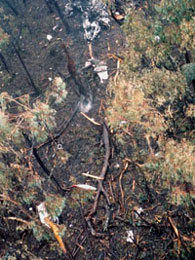
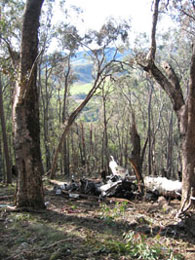
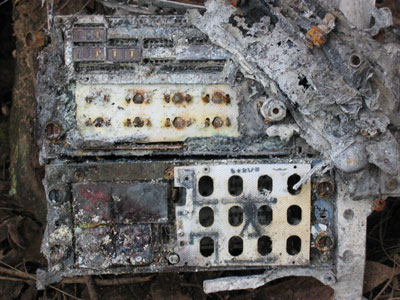
Cessna 172H, VH-DPH, South-East of Carnarvon, WA, 2 December 1971

Summary

The aircraft departed Brickhouse Station airstrip 8 miles north-east of Carnarvon to rendezvous with five stockmen in vehicles at a well on the property. Burt, who was an experienced aerial mustering pilot, occupied the right seat and Boddington, whose flying experience was limited and who was not qualified to perform aerial mustering, occupied the left seat. It is hot known which pilot was In command but it is probable that Boddington was manipulating the controls. After air-to-ground radio communication was established, the mustering operation commenced with the ground party making its way south-west through the scrub and the aircraft flying low overhead and diving to indicate any cattle sighted. After about an hour, during which the operation proceeded without incident, one of the stockmen noticed the aircraft approach his position in a shallow dive from the north. When it was overhead, the aircraft turned towards the south-east. The stockman took this to indicate that he was positioned correctly. A few seconds later his attention was again drawn to the aircraft by a change in the sound of the engine. He looked to the east and saw the aircraft about 1/4 mile away in a steep dive only 50 feet above the ground. The aircraft did not recover from the dive and subsequent examination of the wreckage showed that the angle at impact had been almost vertical. It has not been possible to determine the cause of the accident from the available evidence but a likely explanation is that the pilot lost control of the aircraft while manoeuvring at low level.

Occurrence summary

Investigation number 197105171
Occurrence date 02/12/1971
Location Carnarvon
Report release date 27/04/1972
Report status Final
Investigation type Occurrence Investigation
Investigation status Completed
Mode of transport Aviation
Aviation occurrence category Collision with terrain
Occurrence class Accident
Highest injury level Fatal

Aircraft details

Manufacturer Cessna Aircraft Company
Model 172
Registration VH-DPH
Operation type Aerial Work
Departure point Brickhouse Station
Destination Brickhouse Station
Damage Destroyed

Beech D55 Baron, VH-DRT, 23 miles NE Marble Bar, WA, 1 June 1971

Summary

The aircraft took off from Shay Gap under a very low overcast with the intention of proceeding to Nullagine som 85 miles to the south. The low cloud persisted throughout the route and the tops of hills in the area, at a general level of about 750 feet above mean sea level, were enveloped in cloud and mist. Before taking off from Shay Gap the pilot called the Flight Service Unit at Port Hedland by radio and requested the winds forecast for the local area. Port Hedland did not respond but the aircraft calls were acknowledged by Derby Flight Service Unit. The pilot advised Derby when the aircraft departed Shay Gap at 0637 hours WST and he again requested the forecast winds for the area in which he was operating. The wreckage of the aircraft was found by a searching aircraft at 0800 hours on the following morning. The aircraft had struck the ground at a height of approximately 780 feet above sea level near the crest of a ridge, apparently whilst in substantially level flight and under control. The accident site was some 23 miles south of Shay Gap on the direct track to Nullagine. The aircraft had been on a southerly heading and probably at normal cruising speed at the time of the initial impact with the ground.

Occurrence summary

Investigation number 197105150
Occurrence date 01/06/1971
Location Marble Bar
Report release date 09/06/1972
Report status Final
Investigation type Occurrence Investigation
Investigation status Completed
Mode of transport Aviation
Aviation occurrence category Collision with terrain
Occurrence class Accident
Highest injury level Fatal

Aircraft details

Manufacturer Beech Aircraft Corp
Model 55
Registration VH-DRT
Operation type Charter
Departure point Shay Gap
Destination Nullagine
Damage Destroyed

Cessna 172F, VH-DGV, Clear Hills, near Mount Buller, Vic, 29 May 1971

Summary

There is no record of any communication with the aircraft after it left Connewarre and it did not reach Wagga Wagga. The disappearance of the aircraft was not reported until 31 May, 1971 after relatives of those on board had become concerned that the aircraft had not returned. An intensive air search lasting more than 7 days and hampered by the weather, failed to locate the aircraft. On 12 December, 1971 the wreckage of the aircraft was found, by a private searching aircraft, in heavily timbered country near Mount Buller, at an altitude of 4,400 feet. The accident site was approximately 20 miles to the east of the planned track. The aircraft had struck the trees, tearing off the outer panel of the starboard wing and had then crashed steeply through the timber, coming to rest on a heading of 184 degrees magnetic. The nature of the damage to the starboard wing suggests that the aircraft was not out of control when it struck the trees. The engine and propeller damage was consistent with a low power output at impact with the ground, the ignition switches were "On", mixture control set to "Full Rich", the carburettor heat was set to "Cold" and the fuel selector was on "Both". The aircraft fuel tanks, although damaged were found to contain a quantity of fuel.

Occurrence summary

Investigation number 197102543
Occurrence date 29/05/1971
Location Clear Hills, near Mount Buller
Report release date 21/07/1972
Report status Final
Investigation type Occurrence Investigation
Investigation status Completed
Mode of transport Aviation
Occurrence class Accident
Highest injury level Fatal

Aircraft details

Manufacturer Cessna Aircraft Company
Model 172
Registration VH-DGV
Operation type Private
Departure point Connewarre
Destination Wagga Wagga
Damage Destroyed

Piper PA24-260 Comanche, VH-GWE, Wurdee Boluc Reservoir, Vic, 30 April 1971

Summary

The pilot obtained a meteorological forecast which indicated that conditions generally would be suitable for visual flight, but that until 0900 hours there would be areas of drizzle and reduced visibility. He submitted a flight plan which indicated that his route to Warrnambool would be via Sorrento and Colac. The flight proceeded normally to 1,500 feet or about 10 miles west of Torquay, where the aircraft encountered an area of low cloud and drizzle. The pilot descended to remain clear of cloud and when the aircraft had reached the vicinity of the Wurdee Boluc Reservoir he was compelled to fly at an extremely low level to maintain visual contact with the ground. He circled in this area, unable to proceed or to turn back because of the low cloud and reduced visibility in all directions. While flying along the southern edge of the reservoir he observed a line of tall pine trees looming ahead and to avoid them he made a left hand turn over the reservoir. During the turn the port wing tip contacted the surface and the aircraft cartwheeled into the water. There were no witnesses to the accident and one of the four surviving occupants swam a considerable distance to the shore for assistance whilst the other three surviving persons remained standing on the aircraft wreckage which had settled in some 10 feet of water. The fourth passenger had released his seat belt during the flight and was apparently thrown from the aircraft on impact with the water.

Occurrence summary

Investigation number 197102540
Occurrence date 30/04/1971
Location Wurdee Boluc Reservoir
Report release date 05/11/1971
Report status Final
Investigation type Occurrence Investigation
Investigation status Completed
Mode of transport Aviation
Aviation occurrence category Collision with terrain
Occurrence class Accident
Highest injury level Fatal

Aircraft details

Manufacturer Piper Aircraft Corp
Model PA-24
Registration VH-GWE
Operation type Private
Departure point Moorabbin
Destination Warrnambool
Damage Destroyed

Piaggio P166, VH-MMP, Essendon, Vic, 2 March 1971

Summary

It had been pointed out to the pilot, by another pilot on a previous flight, that the undercarriage retraction cycle was slow and he resolved to have this checked on the approaching 100 hourly inspection. The purpose of this flight was to position the aircraft for this inspection. After a normal flight from Adelaide the pilot selected undercarriage "Down" on a practice ILS approach to Essendon and noticed that cockpit indications for the port undercarriage continued to show "Up". He advised the Tower of the problem and on a subsequent pass over the Tower, ground observers confirmed that the port wheel was still retracted. Since he had plenty of fuel on board, the pilot spent about an hour attempting to lower the undercarriage, using the normal and emergency lowering methods. All systems operated normally, except for the port gear, which remained retracted. Acting upon instructions from engineers on the ground, the passenger removed a panel from the hydraulic system and tapped the port gear jack with the rubber end of a crash axe, but to no avail. The pilot decided to make a wheels up landing on the grass parallel to runway 08, and outside the northern boundary of the flight strip. Although the aircraft landed smoothly the under side of the fuselage was considerably damaged. Subsequent examination of the port undercarriage jack showed that the piston 'O' ring was badly chipped, but the reason for this could not be established. A fragment from the chipped 'O' ring had blocked the orifice of the jack brake valve, preventing operation'of the jack to lower the port gear. The unit containing the defective 'O' ring was required to be overhauled at periods not in excess of 4 years, but examination of the aircraft servicing records showed that it had not been overhauled since 14.2.1967.

Occurrence summary

Investigation number 197102531
Occurrence date 02/03/1971
Location Essendon
Report release date 22/11/1972
Report status Final
Investigation type Occurrence Investigation
Investigation status Completed
Mode of transport Aviation
Aviation occurrence category Wheels up landing
Occurrence class Accident
Highest injury level None

Aircraft details

Manufacturer Piaggio Aero
Model P.166
Registration VH-MMP
Operation type Charter
Departure point Adelaide
Destination Essendon
Damage Substantial

Boeing 747Aircraft N652 PA at Sydney (Kingsford-Smith) Airport NSW, 18 July 1971

Summary

At approximately 0912 hours Eastern Standard Time (EST) on 18 July, 1971, the Boeing 747 aircraft, registered N652PA, overran the end of Runway 25 and became bogged in soft earth whilst landing at Sydney (Kingsford- Smith) Airport, New South Wales. The aircraft was engaged in operating Pan American Airways Flight 811, a regular public transport service from Los Angeles to Sydney with intermediate stops at Honolulu and Nadi. The aircraft sustained no damage and none of the 15 crew members or 269 passengers on board was injured.

Occurrence summary

Investigation number 197101852
Occurrence date 18/07/1971
Location Sydney
Report release date 20/07/1972
Report status Final
Investigation type Occurrence Investigation
Investigation status Completed
Mode of transport Aviation
Aviation occurrence category Runway excursion
Highest injury level None

Aircraft details

Manufacturer The Boeing Company
Model 747
Registration N652PA
Operation type Air Transport High Capacity
Departure point Nadi, Fiji
Destination Sydney, NSW
Damage Nil

de Havilland Canada DHC2 Beaver, VH-IDJ, Moulamein, NSW, 15 November 1971

Summary

The area to be seeded was a flooded rice paddy, rectangular in shape and approximately 1650 feet east/west by 800 feet north/south, with the western bank 95 feet to the east of a river. There was an extensive area of dense timber, generally about 70 feet in height, on the western side of the river and a line of trees along the eastern bank. After making an aerial inspection of the area the pilot arranged for the two men who were to act as markers to take up positions on the banks of the paddy in preparation for easterly and westerly seeding runs commencing along the southern side. The aircraft commenced a steep descent, with the wings level, consistent with an approach for a seeding run to the east. A few seconds later, when about 250 feet short of the rice paddy, the aircraft struck the sparsely foliated upper branches of a tree which extended about 20 feet above the other trees in the vicinity and the starboard elevator was torn off. With no apparent power reduction, and little change of direction, the aircraft rolled steeply to the left, descended and, after travelling a further 150 feet, struck another tree on the eastern side of the river. The wings and empennage were torn off and the fuselage fell through the tree to the ground and burst into flames.

Occurrence summary

Investigation number 197101265
Occurrence date 15/11/1971
Location Moulamein
Report release date 15/01/1974
Report status Final
Investigation type Occurrence Investigation
Investigation status Completed
Mode of transport Aviation
Occurrence class Accident
Highest injury level Fatal

Aircraft details

Manufacturer De Havilland Canada/De Havilland Aircraft of Canada
Model DHC-2
Registration VH-IDJ
Operation type Aerial Work
Departure point Dhuragoon Agricultural Airstrip
Destination Dhuragoon Agricultural Airstrip
Damage Destroyed

Britten Norman BN2A, VH-BNN, Bondi Beach, NSW, 5 September 1971

Summary

At approximately 1045 hours EST, on 5 September, 1971, a parachutist landed in the sea close to Mackenzie's Point, following a free fall type descent from 10, 000 feet. Rescue attempts were made but the parachutist was lost beneath the surface, in rough water, for several minutes and was subsequently pulled ashore at Bondi Beach in an unconscious state. Following resuscitation attempts the parachutist was admitted to hospital, where she died several days later on 11 September without regaining consciousness.

Occurrence summary

Investigation number 197101247
Occurrence date 05/09/1971
Location Bondi Beach
Report release date 12/02/1973
Report status Final
Investigation type Occurrence Investigation
Investigation status Completed
Mode of transport Aviation
Aviation occurrence category Miscellaneous - Other
Occurrence class Accident
Highest injury level Fatal

Aircraft details

Manufacturer Britten Norman
Model BN2A
Registration VH-BNN
Operation type Sports Aviation
Departure point Sydney
Destination Sydney
Damage Nil

Piper PA28/180 Cherokee, VH-POK, Narromine, NSW, 14 November 1971

Summary

The four occupants of the aircraft were members of Condobolin Aero Club and each held a Private Pilot Licence. Earlier in the day they had flown from Condobolin to Narromine to take part in a flying competition. Four other club members had also flown to Narromine in another Club aircraft. A flight plan covering both the outward and the return flight of VH-POK had been submitted to Dubbo Flight Service Unit by telephone. At a prize-giving ceremony held in the clubrooms at the conclusion of the flying competition drinks had been served.

Occurrence summary

Investigation number 197101263
Occurrence date 14/11/1971
Location Narromine
Report release date 07/02/1973
Report status Final
Investigation type Occurrence Investigation
Investigation status Completed
Mode of transport Aviation
Aviation occurrence category Collision with terrain
Occurrence class Accident
Highest injury level Fatal

Aircraft details

Manufacturer Piper Aircraft Corp
Model PA-28
Registration VH-POK
Operation type Private
Departure point Narromine
Destination Condobolin
Damage Destroyed

Cessna 172B, VH-KFG, Camden, NSW, 15 August 1971

Summary

At approximately 1433 hours EST on 15 August, 1971, a parachutist was fatally injured by impact with the ground following a static line descent near Camden, New South Wales. The parachutist, was making his eighth parachute descent. As a result of static line release the pilot chute deployed and the bag was drawn from the pack, but after partial extension of the rigging lines the deployment sequence ceased. When the parachutist's equipment was subsequently inspected the main parachute, except for a small portion, was still contained in its bag and the reserve parachute ripcord had not been operated.

Occurrence summary

Investigation number 197101244
Occurrence date 15/08/1971
Location Camden
Report release date 30/06/1972
Report status Final
Investigation type Occurrence Investigation
Investigation status Completed
Mode of transport Aviation
Aviation occurrence category Miscellaneous - Other
Occurrence class Accident
Highest injury level Fatal

Aircraft details

Model 172B
Registration VH-KFG
Operation type Sports Aviation
Departure point Camden
Destination Camden
Damage Nil