Loading related

Aircraft loading-related occurrence involving Airbus A330-303, VH-QPD, Sydney Airport, New South Wales, on 17 December 2017

Final report

Safety summary

What happened

On 17 December 2017, a Qantas A330 aircraft, registered VH-QPD, was being loaded with freight in preparation for an international passenger flight from Sydney, New South Wales to Beijing, China. After landing in Beijing, the operator’s freight agent identified that the aircraft had been loaded incorrectly. As a result, the aircraft exceeded its maximum take-off weight on departure from Sydney by 494 kg.

What the ATSB found

A decision by the flight crew to uplift additional fuel for the flight to Beijing led to a reduction in the aircraft’s freight capacity. This required the operator’s load control department to re-issue the ‘load instruction report’ for the flight. The re-issued report required that a 2,005 kg freight pallet be replaced with a lighter unit weighing 1,130 kg.

The required cargo variation was not actioned by the loading supervisor as electronic messages associated with the revised loading instruction were acknowledged without being correctly interpreted. That action was probably influenced by the supervisor’s experience that load changes were accompanied by verbal advice, and that did not occur on this occasion.

In addition, the loading irregularity was not immediately reported, as required by the operator’s procedures.

What's been done as a result

As a result of this, and other freight loading occurrences, Qantas have updated the technology used by staff directly involved in freight operations. The update involved the introduction of handheld scanning devices that automate much of the freight confirmation and mobile communication process using printed barcode and scanning technology. The hand scanners were implemented at most domestic and international Qantas ports by June 2019.

Qantas also advised that in order to reduce the potential for communication errors between those responsible for loading the aircraft, an amendment to their Weight and Balance Manual was implemented on 1 September 2019. The changes formalised communication associated with loading changes.

Safety message

This incident highlights a loading error that led to a maximum take-off weight exceedance during the conduct of a high-capacity passenger flight from Sydney to Beijing. Planning and loading of freight within this sector is often conducted in a time-pressured environment where delays can lead to scheduling issues. Effective communication between all parties responsible for aircraft loading can assist in reducing errors in such an operating environment.

Findings

From the evidence available, the following findings are made with respect to the loading-related occurrence involving an Airbus A330-303, registered VH-QPD on 17 December 2017. These findings should not be read as apportioning blame or liability to any particular organisation or individual.

Contributing factors

  • An operational requirement for additional holding fuel resulted in the issuing of a revised load instruction to carry less cargo. This instruction was not actioned and led to a heavier freight pallet remaining on board the aircraft, instead of being exchanged for a lighter unit. The aircraft subsequently departed Sydney 875 kg above the weight listed in the revised load sheet and 494 kg above the aircraft's maximum take-off weight.
  • The required cargo variation was not actioned by the loading supervisor as electronic messages associated with the revised loading instruction were acknowledged without being correctly interpreted. That action was probably influenced by the supervisor’s experience that load changes were accompanied by verbal advice, and that did not occur on this occasion.

Other factors that increased risk

  • The loading irregularity was not immediately reported, which was not in accordance with the operator’s procedures for international airports, therefore delaying any assessment of the hazard presented by the exceedance of the aircraft’s maximum take-off weight.

Safety analysis

Introduction

The following analysis discusses the factors surrounding the incorrect freight pallet being loaded onto the Qantas A330, which resulted in an exceedance of the aircraft’s certified maximum take-off weight (MTOW) on departure.

Maximum take-off weight exceedance

An operational requirement for additional holding fuel resulted in the issuing of a revised load instruction to carry less cargo. This instruction was not actioned and led to a heavier pallet of freight remaining on board the aircraft, instead of being exchanged for a lighter unit. The aircraft subsequently departed Sydney 875 kg above the weight listed in the revised load sheet and 494 kg above the aircraft's maximum take-off weight.

The heavier freight was positioned in the underfloor hold close to the aircraft’s centre of gravity. This limited the potential for control of the aircraft to be affected. Further, the flight crew did not report any control or performance anomalies. While the outcome was benign in the case of QF107, the operational risk level is increased when any significant addition of freight and/or passengers remains unaccounted. Continued operation of an aircraft that has exceeded its certificated weight may lead to unaccounted structural damage and pose a safety risk.

Load instruction report not actioned

Although the presence of an electronic message of a cargo variation was acknowledged by the loading supervisor, as confirmed through pressing ‘OK’ on the iPad, it was not correctly interpreted. This led to the required cargo variation not being actioned. The lack of accompanying verbal advice from load control or the ramp office personnel meant that the usual prompt for the loading supervisor of a significant change to the aircraft cargo configuration did not exist. This variation from normal practice probably influenced the actions of the loading supervisor on this occasion.

Additionally, as the freight had been loaded and the forward cargo doors locked by the time the new electronic messages were received, it is possible that the messages were perceived as not relevant.

Reporting delay

A number of factors were identified that led to a three-week delay in the operator identifying, and subsequently reporting to the ATSB, that the aircraft MTOW limits had been exceeded when QF107 departed from Sydney.

The freight agent in Beijing did not immediately report the loading irregularity, as required by the Qantas procedures for international airports. Additionally, the initial occurrence report did not identify the ULD irregularity as a serious risk. This limited the ability of the company to understand and address the circumstances associated with the loading error.

Another factor identified by the operator’s investigation was the significant backlog of occurrence notifications awaiting processing. The backlog, in combination with a corporate shutdown period, led to the delay in identifying the significance of the MTOW breach and its subsequent reporting to the ATSB. Although there was no consequence associated with this occurrence, reporting delays can lead to an increased safety risk with regard to continued operation of an overstressed aircraft and/or identification of deficiencies in the loading process.

Context

Aircraft information

The A330-303 is a wide-body aircraft with underfloor cargo hold areas used for the carriage of baggage and freight (Figure 3). As is typical of most wide-body aircraft, all of the freight in the main cargo hold area is contained within a unit load device (ULD) (Figure 4). Specialised loading equipment is required with trained operators to ensure that the correct freight is loaded and positioned in accordance with the load instruction report (LIR).

The freight loading of wide-body aircraft is generally considered more complex than the loading of smaller, narrow-body aircraft in which freight is predominantly handled manually. The Airbus A330-303 aircraft cargo area consists of a forward and rear hold. Position 24P, which was associated with the loading of the incorrect ULD, is located in the forward hold as shown in Figure 5.

Figure 3: Typical A330-300 cargo hold
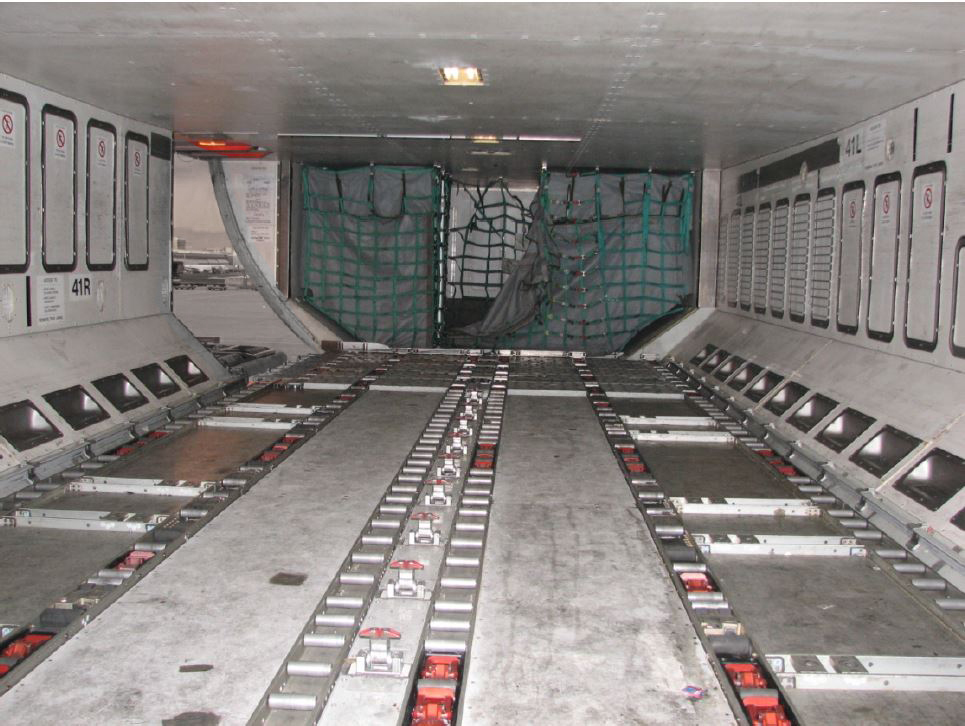
Figure 3: Typical A330-300 cargo hold.
For reference only – internal detail of the A330 300 rear cargo hold.
Image source: ATSB

For reference only – internal detail of the A330‑300 rear cargo hold.I
Source: ATSB

Figure 4: Sample unit load devices being loaded into an A330 forward hold
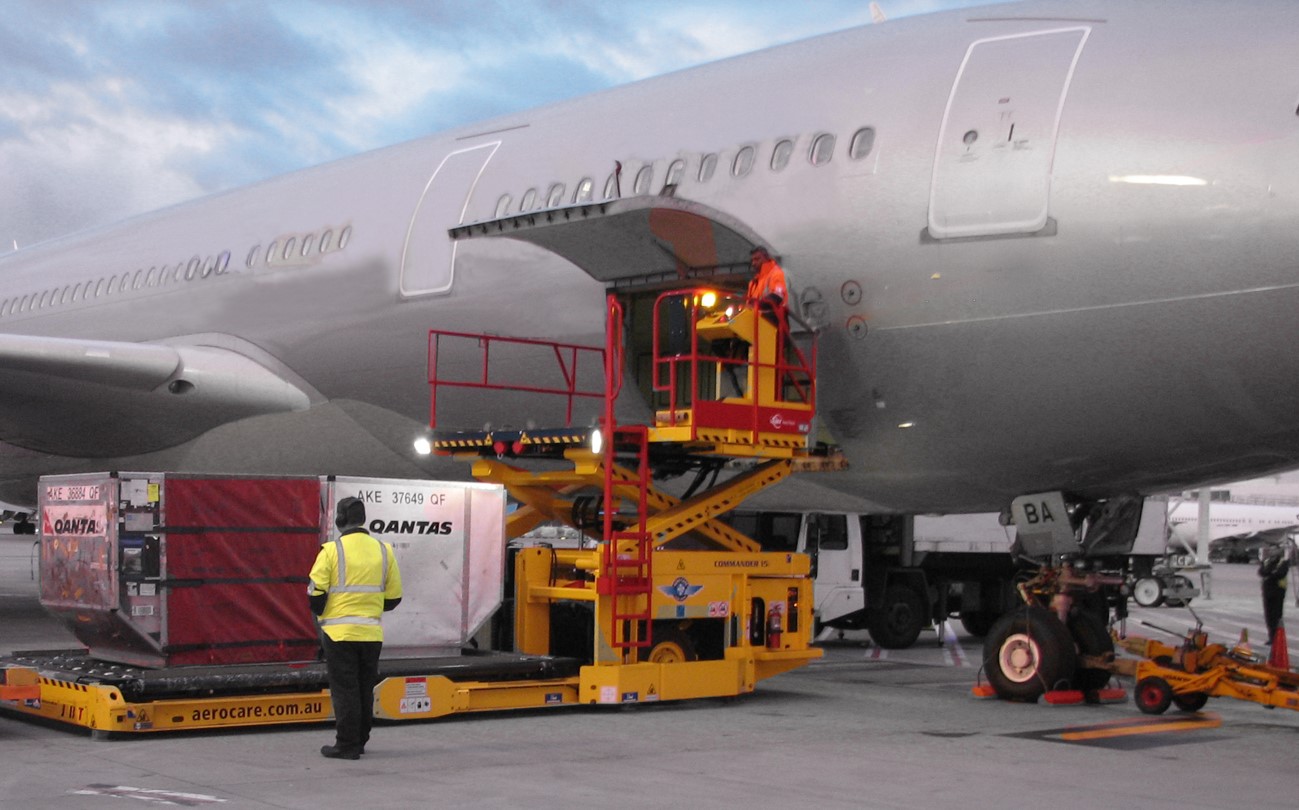
Figure 4: Sample unit load devices being loaded into an A330 forward hold.
Image source: Source ATSB, image digitally altered to remove aircraft operator logos

Source: ATSB, image digitally altered to remove aircraft operator logos

Figure 5: A330-300 series cargo hold showing the position of location 24P (shaded red) within the forward hold

Figure 5: A330-300 series cargo hold showing the position of location 24P (shaded red) within the forward hold.
Image source: Qantas, edited by ATSB

Source: Qantas, edited by ATSB

Freight management system

To facilitate communication between those responsible for loading a departing aircraft, Qantas used an electronic freight management system. The system provided a direct means of sending data or messages between staff at the load control office, the ramp and the ramp office. Once an aircraft’s departure load was determined, the freight was configured and an electronic copy of the LIR sent from the load control office to the loading supervisor’s portable electronic tablet.

The LIR was also sent to the ramp office where it was automatically printed for hard-copy distribution to ramp personnel. The ramp office was staffed by the ground services coordinator, whose role was to provide liaison between the load control office and ramp staff, at the aircraft.

Any additional announcements or instruction from the load control office were also sent to the loading supervisor’s tablet via this system. If a LIR was re-issued, Qantas procedures required the load control office to make contact with ramp staff.

Qantas reported that loading supervisors often received messages on their iPad while using the freight loading application. Though not necessarily directly related to the loading task, all messages received from load control were related to the specific flight being worked on. To use the application on the iPad, loading supervisors were required to ‘log in’ to a specific flight, in order to progressively record the ULDs loaded onto that aircraft.

Aircraft loading procedures

The LIR assigned a specific location to each container or pallet in order to maintain the calculated weight and balance of the aircraft. It was the responsibility of the loading supervisor on the ramp to ensure that each item of allocated freight was loaded and secured in the correct position.

The procedures describing the loading supervisor’s responsibilities are contained in the Qantas Ramp Operations Manual. Section 5.2.2.2 of the manual describes the specific operating procedures that the loading supervisor was required to follow when loading a departing aircraft, including:

When loading, the Loading Supervisor and in-hold operators are all responsible for confirming that the following details are checked and in accordance with the LIR:

•  Flight Number and Date

•  Destination

•  ULD numbers (containerised aircraft), where the ULD numbers are noted on the LIR.

After finalising the load, section 5.2.2.3 of the Ramp Operations Manual required the loading supervisor to record the final load, including any variations to the planned load on the LIR before a final ‘ramp clearance’ is given to the load control office.

In the event that an LIR was re-issued, Section 5.7.2.4 of the Ramp Operations Manual indicated that the load control office would make contact with the loading supervisor or ramp staff. Section 5.5.3.2 of the Ramp Operations Manual required that:

If a subsequent edition of the LIR is received during the loading process the Loading Supervisor must instruct the team to cease loading until the next edition LIR has been received and distributed to ALL relevant operational team members.

The operator’s Weight and Balance manual specified that:

Load Control (are) to make contact with and Notify Ramp in the event that an LIR needs to be re-issued.

Load Instruction Report – Edition 2

When Edition 2 of the LIR for flight QF107 was issued by the load control office, a copy of the LIR was automatically printed in the ramp office. The officer responsible within the load control office contacted the ramp office by telephone and spoke to the ground services coordinator, advising of the new edition LIR.

Qantas advised the ATSB that they were unable to establish the person on duty within the ramp office at that time. Nor could that they establish why the message that a new LIR had been released was not conveyed directly to the loading supervisor and his team at the aircraft.

Loading supervisor

The loading supervisor performs an integral role during the loading of an aircraft. The main tasks of the loading supervisor include managing ramp staff during aircraft-loading activities and ensuring that freight, goods and other luggage are appropriately loaded on a departing aircraft. The loading supervisor responsible for loading QF107 had about 15 years of experience in aircraft freight operations. In relation to this loading occurrence, the loading supervisor advised the ATSB that he:

  • had no clear recollection of the QF107 freight-loading irregularity. This was largely due to the high number of aircraft he had subsequently loaded and the latency period between the incident flight and the time it was reported.
  • had no clear recollection that an Edition 2 LIR had been released, requiring an exchange in the freight pallet at position 24P from the 2,005 kg unit to the 1,130 kg unit.
  • indicated that in his experience, ramp staff were always verbally contacted whenever the load control office released a new edition LIR. The announcement arrives from personnel within the ramp office, or via a radio or telephone call from the load control office.
  • advised that messages were often received on the iPad that were not necessarily directly related to the current task.

Load control officer

The load control officer had about 16 years of experience in aircraft loading and freight operations and the following comments were provided to the ATSB:

  • Contact with the loading supervisor or ramp staff was accomplished through various means including a messaging system on the loading supervisor’s portable tablet device (iPad), a phone call, or ground-to-ground radio contact.
  • When a new Edition LIR is released from the load control office, it must be acknowledged by the loading supervisor on their iPad.
  • When the Edition 2 LIR was issued, the freight management system was programmed to change the colour of position 24P from ‘green’ to ‘white’. That colour change would have been displayed on the loading supervisor’s iPad when he logged back into the system. It would have also required the loading supervisor to ramp clear position 24P again, despite already completing that task minutes earlier.
  • The load control officer’s understanding was that the ground services coordinator within the ramp office would deliver a printed copy of the new edition LIR to the loading supervisor once Edition 2 had been released.

Ground services coordinator

Qantas advised the ATSB that they could not identify the duty officer (ground services coordinator) within the ramp office when Edition 2 of the load instruction report was released. The ATSB was therefore unable to interview that person to discuss the occurrence.

Communication and actions

The loading supervisor reported that he had always been verbally contacted by the load control officer via radio or telephone if an aircraft load plan had changed while he was on the ramp, and he had never previously simply been issued a change via iPad with no accompanying verbal notification. Therefore, his expectation was that if a change occurred in this case, it would be accompanied by a call.

Since this occurrence, Qantas has formalised a procedure for verbal communication to accompany any changes in the load instruction report (refer to section titled Safety issues and actions).

Operator’s investigation

The operator’s agents noted a discrepancy with the palletised freight during the evening of 18 December when the aircraft was unloaded in Beijing. The contents of the offload instruction report indicated that ULD PMC42559QQ (1,130 kg) should have been within the forward hold of the aircraft. The ATSB received an occurrence notification of the maximum take-off weight exceedance on 10 January 2018, approximately 3 weeks after the incident had occurred. The Qantas investigation into this occurrence detailed a number of factors that led to the reporting delay.

Operator’s notification procedures

In their investigation report of this loading occurrence, Qantas indicated that their procedures for international airports contained various options when addressing an operational incident. The response and level of escalation was dependant on the identified level of safety risk. The risks were categorised from Very Low through to Extreme. Incidents that led to a breach in the MTOW limits qualified as a Medium Risk requiring an immediate escalation to the company authorities. The Qantas procedures for international airports required that when an irregular load was identified, such as a misplaced ULD, an internal report was to be lodged within a 12-hour period.

The Qantas investigation established that the freight personnel in Beijing had not realised the aircraft MTOW limits had been exceeded by the ULD discrepancy. As such, the occurrence report was not identified as an occurrence notifiable to any authority. On 19 December 2018, two days after the occurrence had been identified, an internal notification report was lodged into the Qantas reporting system. The report was titled, ‘Miss Handle of Cargo’.

Due to a combination of the corporate Christmas shutdown period, the classification level of the notification, and a significant backlog of other accumulated notifications, the report relating to the MTOW exceedance remained in triage within the internal Qantas reporting system and unattended for another 10 days. On 9 January 2018, the significance of the ULD discrepancy was identified by a quality assurance manager who realised the aircraft’s MTOW had been exceeded. The occurrence report was then internally escalated and the ATSB was notified.

Previous loading-related occurrences

A search of the ATSB occurrence database was conducted for ’Aircraft loading’ occurrence types involving high-capacity, Australian-registered aircraft, throughout the years 2010 to 2019. The search returned 1,135 Aircraft Loading occurrences[3] over the 10-year reporting period. Nearly all of these reported occurrences involved passenger-carrying operations. They were further defined into three broad categories (displayed in Figure 6):

  • Loading Related with 408 occurrences
  • Dangerous Goods[4] with 752 occurrences
  • Other with 18 occurrences.

Occurrence types identified as Loading Related have the potential to affect the aircraft weight and/or balance, aircraft structural integrity, aircraft performance and its flight characteristics. In the reporting period, there were 25, or about 6 per cent, of the notifications that described an impact on aircraft performance involving centre of gravity and/or maximum take-off weight. Of the 408 Loading Related occurrences within the 10-year reporting period, 12 investigations were commenced by the ATSB.[5] Most of the loading occurrences had minimal impact on the safety of operations and there were either people, processes, procedures, and/or engineering equipment to control the risks to the aircraft.

Figure 6: Aircraft Loading occurrence types over the period 2010 to 2019 (left chart), and (right chart), a subset of the Loading Related occurrence types with a descriptor breakdown
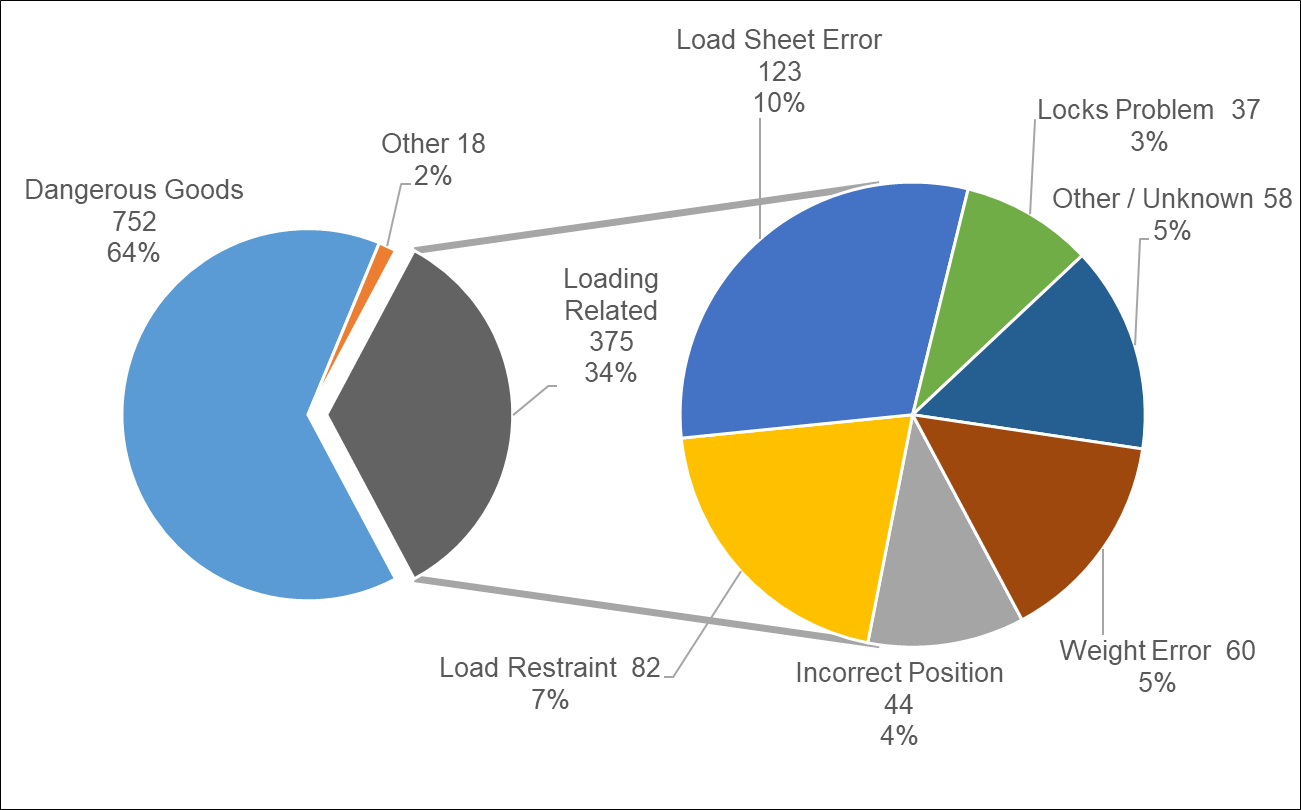
Figure 6: Aircraft Loading occurrence types over the period 2010 to 2019 (left chart), and (right chart), a subset of the Loading Related occurrence types with a descriptor breakdown.
Image source: ATSB

Image source: ATSB

Further derivation of the Loading Related data revealed 123 occurrences attributable to ‘Load Sheet Errors’ that included unaccounted freight, receipt of a new load sheet after take-off, incorrectly recorded weights of baggage and freight items, and calculation of the weight of children as adult passengers.

There were 82 occurrences coded as ‘Load Restraint’ mostly relating to securing of containers and pallets. Some also related to bags not being secured with webbing. For the 60 occurrences relating to an aircraft ‘Weight Error’, most were the result of either non-manifested containers, pallets or bags being loaded. The most significant ‘Weight Error’ involved additional and unaccounted baggage that constituted an additional 1,600 kg of weight to the aircraft. The 44 ‘Incorrect Position’ occurrences related to passengers in the wrong seating location or baggage and freight being loaded into the incorrect position within the hold.

There were 37 occurrences coded as a ‘Locks Problem’. Containers and pallets are positioned in the hold using a series of electronically controlled rollers, which are then locked into place using retractable latches integrated into the floor or wall of the aircraft. These latches, called cargo locks, stop containers and pallets from moving while the aircraft is in flight or when taxiing.

__________

  1. More than one occurrence type can be coded to an occurrence, for example an undeclared and unrestrained Dangerous Good may also classified as Loading Related with an associated Load Restraint descriptor. The Level 4 descriptors are incorporated primarily to value add for the purposes of statistical and research analysis.
  2. Occurrence types coded as Dangerous Goods and Other include situations where freight such chemicals or batteries were undeclared and had been discovered while unloading the aircraft, had spilled or were incorrectly packed and stowed.
  3. ATSB ‘Loading Related’ investigations: AO-2010-034, AO-2012-004, AO-2014-110, AO-2014-145, AO-2015-088, AI2015-139, AO-2016-119, AO-2016-145, AO-2016-177, AO-2017-012, AO-2017-018, AO-2017-019

The occurrence

What happened

On 17 December 2017, an Airbus A330-303 aircraft, registered VH-QPD and operated by Qantas Airways, was being prepared for passenger flight QF107 from Sydney, New South Wales, to Beijing, China (Figure 1). The loading of baggage and freight into the lower hold of the aircraft was conducted as part of pre-departure operations. The aircraft departed from the international terminal at Sydney Airport at 1346 Eastern Daylight-saving Time.[1] After landing in Beijing, the operator’s freight agents identified that the aircraft had been loaded incorrectly. An incorrect freight pallet resulted in the aircraft exceeding its maximum take-off weight on departure from Sydney.

Figure 1: A330 aircraft VH-QPD
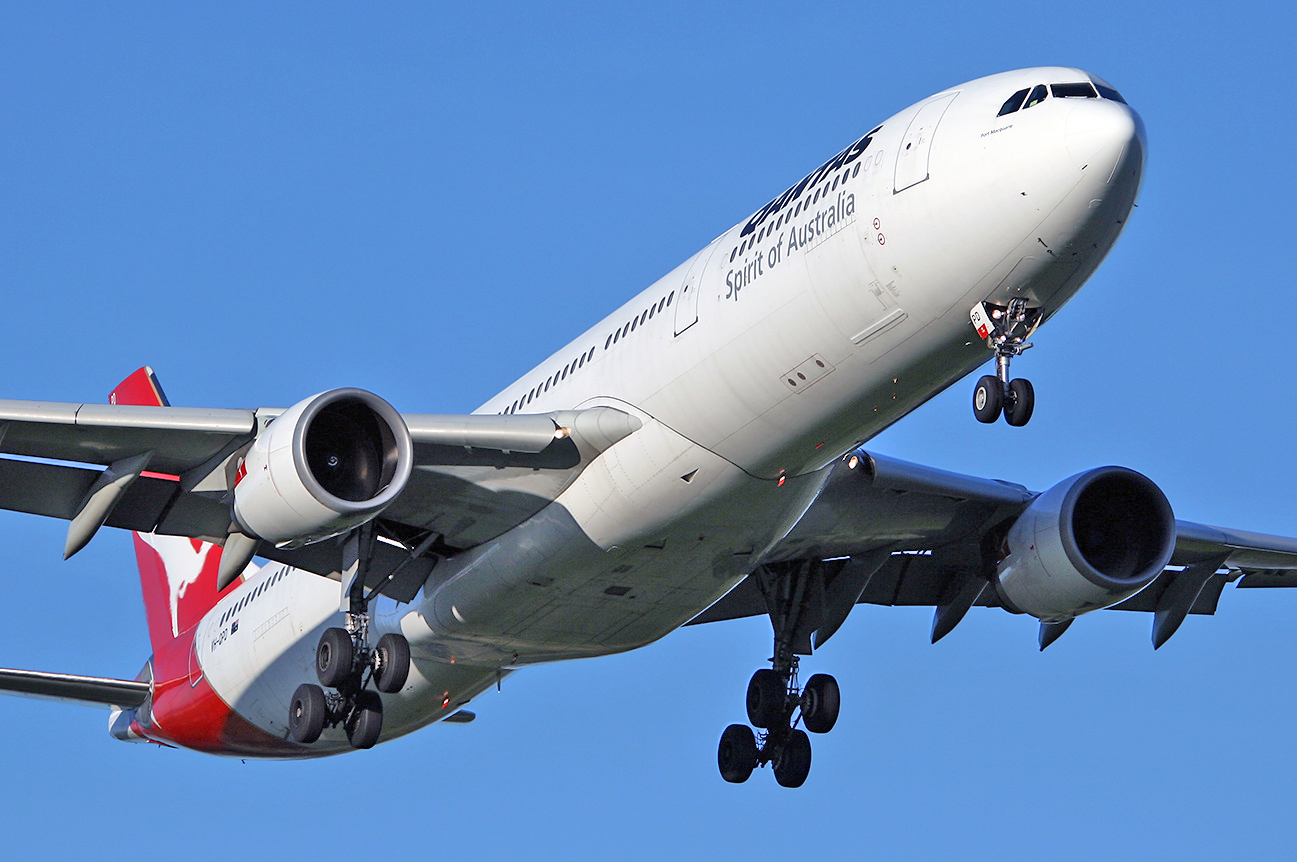
Figure 1: A330 aircraft VH-QPD.
Source: Anthony Filippousis

Source: Anthony Filippousis

Aircraft loading sequence of events

The following sequence of events describes the primary actions and decisions during the freight-loading process prior to the departure of QF107 from Sydney. The sequence of events is further summarised in Figure 2.

Preparations for loading the aircraft typically commenced about two hours prior to departure. These included finalisation of passenger numbers, freight planning, fuel uplift and aircraft departure weight calculations. The freight that had been prepared for transport to Beijing on QF107 included three unit load devices (ULDs).[2] All three ULDs were weighed and assigned a unique identification number as follows:

  • PMC42476QF at 2,175 kg
  • PMC41566QF at 2,005 kg
  • PMC42559QQ at 1,130 kg.

The pallets were then towed to a holding bay near the aircraft.

At 1210, the operator’s staff within the load control office determined that the aircraft’s maximum take-off weight (MTOW) would be exceeded if all three ULDs were loaded into the hold. Load control determined that only two of the three ULDs could be sent on QF107. PMC42476QF at 2,175 kg and PMC41566QF at 2,005 kg were selected. The provisional flight plan was subsequently issued to the operating flight crew for review.

At 1225, approximately 75 minutes prior to the scheduled departure time, Edition 1 of the load instruction report (LIR) was sent from the load control office to the ramp staff allocated to load the aircraft. The ULDs PMC42476QF at 2,175 kg and PMC41566QF at 2,005 kg were identified in the LIR to be loaded into the aircraft. The loading supervisor accessed Edition 1 of the LIR using his portable electronic tablet (iPad).

At 1234, the operating flight crew contacted the load control office with a request to remove some cargo from the aircraft due to the requirement to carry an additional fuel reserve for the flight to Beijing. In order for the aircraft to depart below its MTOW, load control elected to switch a heavier ULD with a lighter unit. The resultant changes to aircraft take-off weight required the release of another LIR (Edition 2), detailing that:

  • PMC42476QF at 2,175 kg was to remain as originally planned and to be loaded within the rear hold of the aircraft at position 31P.
  • PMC41566QF at 2,005 kg was to be removed and replaced with the lighter weight unit, PMC42559QQ at 1,130 kg, within the forward hold at position 24P.

At 1237, the load control officer contacted the ground services coordinator to advise that a ULD change had been requested by the operating flight crew and to delay loading the ULDs pending release of Edition 2 of the LIR.

At around 1238, all three ULDs were brought by tug from the holding bay to the aircraft. By 1248 PMC42476QF at 2,175 kg and PMC41566QF at 2,005 kg were loaded and secured into their respective positions on board the aircraft, in accordance with Edition 1 of the LIR.

At 1248, the operating flight crew contacted the load control office to confirm the final fuel upload data, also confirming that a change to a lighter ULD would be required to offset the weight of the additional fuel.

At 1250, the load control officer ‘locked out’ the flight within the freight management system. Just prior to the freight management system lock out, the loading supervisor at the aircraft accessed the system and both loaded ULDs were ‘ramp cleared’, indicating they had been loaded and secured into their respective positions. The loading supervisor then logged off from the system, and directed the tug driver to return the remaining ULD (PMC42559QQ at 1,130 kg) back to the freight terminal.

At 1251, Edition 2 of the LIR was entered into the freight management system with three accompanying electronic messages from the load control office:

1. Flight Locked by Load Control. Please contact Load Control.

2. Edition has changed

3. 24P has changed Ref: PMC41566QF to PMC42559QQ
    Cargo Weight: 2005 to 1130

At 1252, shortly after the release of Edition 2 of the LIR, the loading supervisor locked the forward hold door of the aircraft.

At 1254, the load control officer contacted the ground services coordinator in the ramp office to confirm that Edition 2 of the LIR had been released with a requirement for the heavier ULD to be exchanged with the lighter unit.

At 1300, the loading supervisor at the aircraft logged back into his iPad and resumed using the freight management software. All three messages advising that Edition 2 of the LIR had been issued, that a ULD change was required, and that he was to contact Load Control, were displayed on the tablet device. The supervisor acknowledged the electronic messages and tapped the ‘OK’ button, clearing them from the system. Despite the electronic acknowledgement, the supervisor did not change the ULD configuration at Position 24P.

The final load sheet provided to the operating flight crew incorporated the ULD change from Edition 2 of the LIR, where the 1,130 kg ULD had been loaded to Position 24P, when in fact the heavier 2,005 kg ULD remained on the aircraft. Calculations showed that with the heavier unit in place the aircraft take-off weight was 233,494 kg, which was 875 kg above the planned take-off weight and 494 kg above the aircraft’s MTOW.

The flight crew were unaware of the load discrepancy during the flight. There were no reported handling or control issues encountered during take-off and no associated abnormal indications were received.

Figure 2: Sequence of events for this loading event
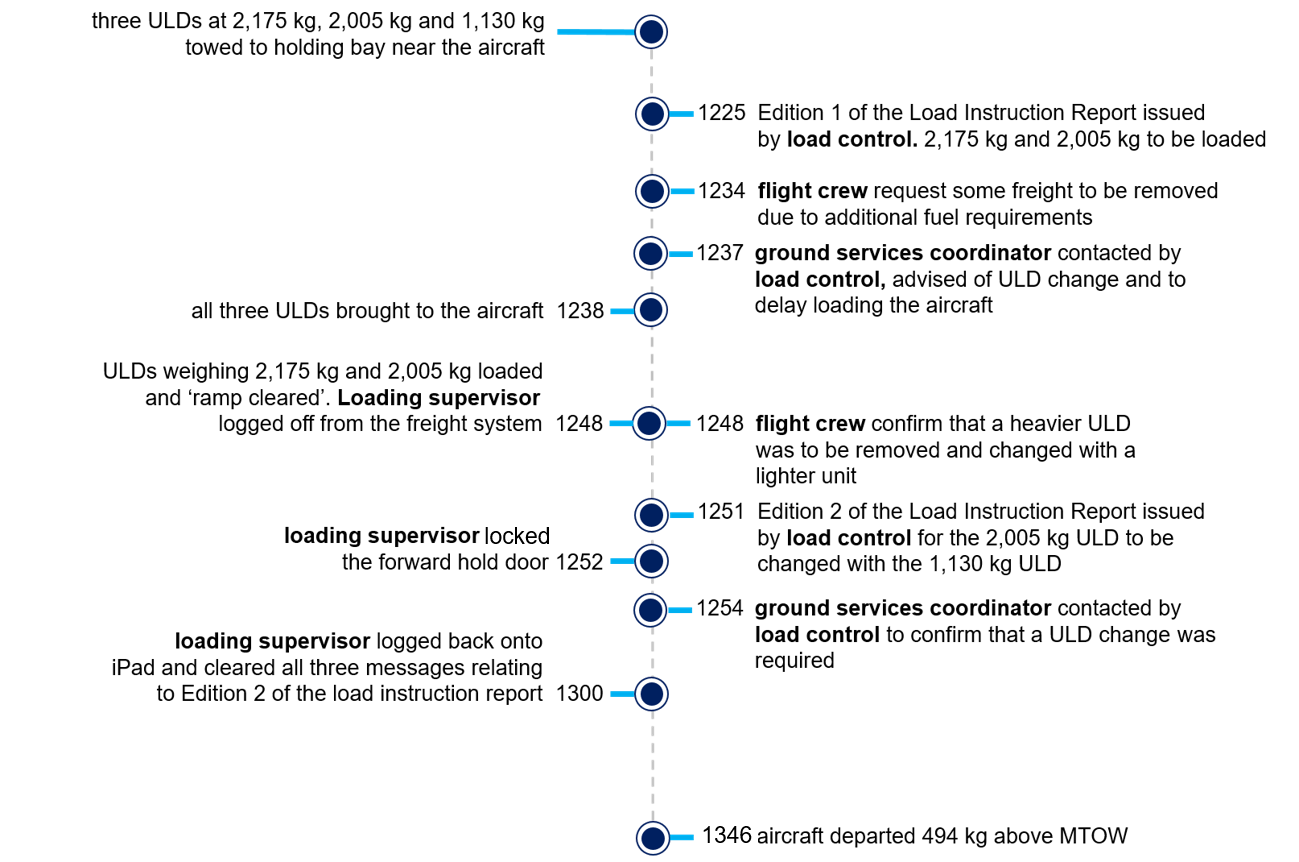
Figure 2: Sequence of events for this loading event


__________

  1. Eastern Daylight-saving Time (EDT): Co-ordinated Universal Time (UTC) +11 hours.
  2. Unit load devices (ULDs) are pallets or containers used to transport bulk freight in aircraft. The PMC code identified the occurrence ULDs were a pallet design.

Safety issues and actions

Whether or not the ATSB identifies safety issues in the course of an investigation, relevant organisations may proactively initiate safety action in order to reduce their safety risk. The ATSB has been advised of the following proactive safety action in response to this occurrence.

Freight management

Qantas advised that an internal project to address freight discrepancies and loading errors was commenced in June 2018 and was completed in June 2019. The project involved the replacement of the loading supervisors’ portable electronic tablets (iPads) with handheld scanning devices. The new devices provide an automated freight confirmation and mobile communication process using printed barcode and scanning technology. The vast majority of domestic and international Qantas ports are using the scanners to validate freight before loading onto an aircraft.

Internal occurrence reporting

A change to the Qantas international airports occurrence notification form has been made. The completion of the ‘Loading Related Incident’ field within the form is now mandatory.

Load control to loading supervisor communication

To reduce the potential for communication errors between load controllers, ramp staff and loading supervisors, an amendment to the Qantas Weight and Balance Manual was incorporated on 1 September 2019. The amendment stated:

The preferred methods of contacting the Loading Supervisor when notifying of a LIR/LGR new edition or any other urgent message are:

1.  Directly via phone, VHF radio or FM Messenger to First Load requiring a positive response that the message has been understood, not just read, e.g. “have you received the changes in EDNO 2?”,

2.  Via Ramp office or Duty Manager, explicitly stating the Loading Supervisor MUST be notified.

CAUTION: If at any point you are unsure that the Loading Supervisor will not or has not received and understood the message, lock out the First Load application by setting the Load Control status to LO or LL until contacted.

Sources and submissions

Sources of information

The sources of information during the investigation included:

  • Qantas Airways.

Submissions

Under Part 4, Division 2 (Investigation Reports), Section 26 of the Transport Safety Investigation Act 2003 (the Act), the ATSB may provide a draft report, on a confidential basis, to any person whom the ATSB considers appropriate. Section 26 (1) (a) of the Act allows a person receiving a draft report to make submissions to the ATSB about the draft report.

A draft of this report was provided to the loading supervisor, and the load controller, Qantas Airways and the Civil Aviation Safety Authority.

Submissions were received from Qantas Airways and the Civil Aviation Safety Authority. The submissions were reviewed and where considered appropriate, the text of the report was amended accordingly.

Purpose of safety investigations & publishing information

Purpose of safety investigations

The objective of a safety investigation is to enhance transport safety. This is done through:

  • identifying safety issues and facilitating safety action to address those issues
  • providing information about occurrences and their associated safety factors to facilitate learning within the transport industry.

It is not a function of the ATSB to apportion blame or provide a means for determining liability. At the same time, an investigation report must include factual material of sufficient weight to support the analysis and findings. At all times the ATSB endeavours to balance the use of material that could imply adverse comment with the need to properly explain what happened, and why, in a fair and unbiased manner. The ATSB does not investigate for the purpose of taking administrative, regulatory or criminal action.

Terminology

An explanation of terminology used in ATSB investigation reports is available here. This includes terms such as occurrence, contributing factor, other factor that increased risk, and safety issue.

Publishing information 

Released in accordance with section 25 of the Transport Safety Investigation Act 2003

Published by: Australian Transport Safety Bureau

© Commonwealth of Australia 2020

image_5.png

Ownership of intellectual property rights in this publication

Unless otherwise noted, copyright (and any other intellectual property rights, if any) in this report publication is owned by the Commonwealth of Australia.

Creative Commons licence

With the exception of the Coat of Arms, ATSB logo, and photos and graphics in which a third party holds copyright, this publication is licensed under a Creative Commons Attribution 3.0 Australia licence.

Creative Commons Attribution 3.0 Australia Licence is a standard form licence agreement that allows you to copy, distribute, transmit and adapt this publication provided that you attribute the work.

The ATSB’s preference is that you attribute this publication (and any material sourced from it) using the following wording: Source: Australian Transport Safety Bureau

Copyright in material obtained from other agencies, private individuals or organisations, belongs to those agencies, individuals or organisations. Where you wish to use their material, you will need to contact them directly.

Occurrence summary

Investigation number AO-2018-003
Occurrence date 17/12/2017
Location Sydney Airport
State New South Wales
Report release date 18/06/2020
Report status Final
Investigation level Defined
Investigation type Occurrence Investigation
Investigation status Completed
Mode of transport Aviation
Aviation occurrence category Loading related
Occurrence class Incident
Highest injury level None

Aircraft details

Manufacturer Airbus
Model A330-303
Registration VH-QPD
Serial number 0574
Aircraft operator Qantas Airways
Sector Jet
Operation type Air Transport High Capacity
Departure point Sydney, New South Wales
Destination Beijing, China
Damage Nil

Aircraft loading event involving Saab 340 VH-ZRB, Sydney Airport, NSW, on 14 September 2017

Notice

Investigation discontinued

Section 21 (2) of the Transport Safety Investigation Act 2003 (TSI Act) empowers the Australian Transport Safety Bureau (ATSB) to discontinue an investigation into a transport safety matter at any time. Section 21 (3) of the TSI Act requires the ATSB to publish a statement setting out the reasons for discontinuing an investigation.

On 15 September 2017, the ATSB commenced an investigation into an aircraft loading event involving Saab 340, VH-ZRB, Sydney Airport, New South Wales on 14 September 2017.

The flight was originally planned to be conducted in a different aircraft, and the captain had advised the trim staff that 239 kg of freight could be loaded. There were subsequently two aircraft changes prior to departure. After the flight crew had been assigned VH-ZRB to conduct the flight, the captain advised the trim staff that the 239 kg of freight was not to be loaded on the aircraft due to weight limitations. The trim staff advised the baggage staff of the change.

There was subsequently a misunderstanding between the baggage staff and the loader, resulting in the loader believing that a barrow containing passenger baggage and freight was approved to be loaded on to VH-ZRB. Subsequent communications between the loader and the trim staff were not conducted in accordance with the operator’s loading and freight confirmation procedure, and the error was not detected until after the aircraft had departed. Subsequent calculations revealed that the aircraft departed Sydney about 77 kg over the aircraft’s maximum take-off weight.

The ATSB obtained the operator’s investigation report into the occurrence and related material, and reviewed previous loading occurrences involving the operator. Based on this information, the ATSB considered it was very unlikely that further investigation would identify any systemic safety issues. The ATSB has discontinued the investigation, but will continue to monitor loading occurrences involving all operators.

Occurrence summary

Investigation number AO-2017-093
Occurrence date 14/09/2017
Location Sydney Airport
State New South Wales
Report release date 29/06/2018
Report status Discontinued
Investigation level Short
Investigation type Occurrence Investigation
Investigation status Discontinued
Mode of transport Aviation
Aviation occurrence category Loading related
Occurrence class Incident
Highest injury level None

Aircraft details

Manufacturer Saab Aircraft Co.
Model 340B
Registration VH-ZRB
Serial number 340B-389
Aircraft operator Regional Express (REX)
Sector Turboprop
Operation type Air Transport Low Capacity
Departure point Sydney, NSW
Destination Wagga, Wagga, NSW
Damage Nil

Aircraft loading event involving Fokker F28, VH-NHV, Perth Airport, Western Australia, on 3 February 2017

Final report

What happened

On 3 February 2017, a Network Aviation Fokker F28 Mk 0100, registered VH-NHV (NHV), conducted a scheduled passenger flight from Perth to Kalgoorlie, Western Australia (WA). On board the aircraft were two flight crew, three cabin crew and 17 passengers.

The service to Kalgoorlie was originally scheduled in another company F28, registered VH-NHQ (NHQ). However, a fault occurred in NHQ after the aircraft was pushed back from the terminal for departure. The fault resulted in the aircraft returning to the terminal and the operator replacing NHQ with NHV for the service to Kalgoorlie.

The flight crew moved to NHV to start their pre-flight duties and took the certified load instruction sheet (LIS) for NHQ with them. After the flight crew boarded NHV, they received the customer management summary and passenger manifest with the registration NHQ. The crew identified the incorrect registration and rejected the paperwork. Subsequently a person, whom the captain believed was the loading supervisor for the ramp team loading the aircraft, entered the flight deck and inspected what the captain believed was the new LIS, again with the registration NHQ.[1] The captain asked this person if NHV was to be loaded as per NHQ and the response they[2] received satisfied them that that was the case. The captain then pen amended their LIS from NHQ to NHV.

The F28 has two cargo compartments forward of the wing, compartments A and B, and two compartments aft of the wing, compartments E and F. The flight to Kalgoorlie was planned to be loaded with 197 kg of freight and 272 kg of baggage (469 kg in total), distributed between compartments A and B.

The aircraft departed from Perth and landed at Kalgoorlie without incident. However, when the cargo compartments were opened after arrival at Kalgoorlie, there was no load on board the aircraft and the cargo nets were undone. The load was subsequently found to be on board NHQ in Perth, which had been towed into the operator’s hangar for maintenance.

Load instruction sheet

Both of the aircraft involved in this incident, NHQ and NHV, were classified as Group-A F28 aircraft, therefore the same LIS instructions applied to both aircraft for weight and balance purposes. When NHQ developed a fault, the maintenance watch staff in the operations control centre[3] identified NHV as the alternative aircraft for the Kalgoorlie service. The operator’s terminal staff produced an amended LIS for NHV and sent a copy of the LIS to their contracted ground handling service provider. The LIS was marked as edition 1, but should have been marked as edition 2. However, post-incident, the ground handling service provider reported to the operator that they did not receive a copy of the LIS for registration NHV.

The normal process for the LIS is, once it is certified by the loading supervisor that the aircraft is loaded in accordance with the LIS and all cargo compartments inspected, it is passed from the loading supervisor to the flight crew. The incident LIS was certified for NHQ, which the captain amended to NHV after consultation with a person whom they believed was from the loading team. Pen amendments were a permitted practice at the time of the incident. The captain believed it was the correct LIS, but with the incorrect registration.

The LIS was also used by the operator themselves to prepare the offload instruction report for the destination airport. To prepare the offload report, the operator’s ramp personnel would normally contact the contracted ground handling staff to retrieve the details from the final LIS.[4] However, in the absence of a loading team, they could also check the LIS that was on the flight deck.

Management of changes within ground services

The conduit for information within the ground handling service provider is their movement control (MOCO). For ramp loading activities, MOCO contacts the ground resource allocator/coordinator who allocates the ramp loading tasks. Tasks are related to flight numbers and the task for loading flight number 1608 (NHQ) was completed prior to the aircraft change to NHV. Any further loading tasks related to this flight number, were required to be manually generated.

The LIS amended to NHV, sent (faxed) from the operator to their ground handling service provider had edition 1 for flight number 1608, as did the previous LIS for NHQ. The ground handling service provider reported to the operator, after the incident, that they did not receive an LIS for the registration NHV and therefore no team was allocated the task to transfer the freight and baggage from NHQ to NHV.

Weight and balance

The operator reported that the F28 has a ‘very aft’ empty weight centre-of-gravity due to the location of the engines near the tail of the aircraft. However, the majority of the passengers (16 from 17) were seated in the forward rows and therefore the aircraft did not exceed weight and balance limits on the incident flight.

Previous incidents

On the 26 January 2017, the operator experienced an incident in which paperwork with errors were delivered to the flight crew (AO-2017-018). Incorrect cargo weight data was entered by the flight crew, but there was no reported effect on the handling of the aircraft.

Safety analysis

Following the unserviceability of NHQ, the operator re-allocated the Perth to Kalgoorlie service to NHV. The operator’s contracted ground handling service provider was responsible for loading the aircraft in accordance with the operator’s LIS.

The operator verbally notified their ground handling services provider of the unserviceability, but not of the replacement registration. The ground handling service provider allocated tasks with reference to the flight number and the task for flight number 1608 had been completed in their system. The replacement registration was identified on the amended LIS, but the LIS inadvertently indicated that it was edition 1.

It is probable that a team was not allocated to the task of transferring baggage and freight from NHQ to NHV because the LIS sent to the ground handling service provider, marked as edition 1, was for a task recorded as already completed.

The operator was responsible for producing the offload instruction for the destination. It is therefore possible that the person who entered the flight deck of NHV, while the flight crew were preparing for flight, was there only for the purpose of confirming the offload figures from the LIS because they could not make contact with the loading supervisor. The captain was a relatively new employee and had no prior experience of this practice. Consequently, they misunderstood the role of this person and the reason for their inspection of the LIS. The captain then pen amended the aircraft registration on the LIS from NHQ to NHV under the assumption that the LIS was actually for NHV. This was a permitted practice at the time, which resulted in the flight crew believing they had a certified LIS for the loading of NHV.

Findings

These findings should not be read as apportioning blame or liability to any particular organisation or individual.

  • After NHQ became unserviceable, the operator sent the ground handling service provider a new load instruction sheet for NHV with the same flight number and edition as NHQ.
  • NHV was not loaded because no team was allocated to the task of transferring the freight and baggage from NHQ to NHV.
  • The policy of permitting flight crew to pen amend the load instruction sheet resulted in the aircraft departing with the flight crew believing they had a load instruction sheet certified for the loading of NHQ.

Safety action

Whether or not the ATSB identifies safety issues in the course of an investigation, relevant organisations may proactively initiate safety action in order to reduce their safety risk. The ATSB has been advised of the following proactive safety action in response to this occurrence.

Operator

As a result of this occurrence, the aircraft operator has advised the ATSB that they are taking the following safety action:

Advisory bulletin

The operator issued an advisory bulletin to their staff, to communicate the aircraft loading system requirements, including the interface requirements between departments for aircraft dispatch. Note 3 of the bulletin states that ‘after a significant change, such as an aircraft change, a new LIS will be issued with an updated edition number, previous editions should be placed so as not to be referenced in error.’

Part of Aviation Short Investigations Bulletin - Issue 60

Purpose of safety investigations

The objective of a safety investigation is to enhance transport safety. This is done through:

  • identifying safety issues and facilitating safety action to address those issues
  • providing information about occurrences and their associated safety factors to facilitate learning within the transport industry.

It is not a function of the ATSB to apportion blame or provide a means for determining liability. At the same time, an investigation report must include factual material of sufficient weight to support the analysis and findings. At all times the ATSB endeavours to balance the use of material that could imply adverse comment with the need to properly explain what happened, and why, in a fair and unbiased manner. The ATSB does not investigate for the purpose of taking administrative, regulatory or criminal action.

Terminology

An explanation of terminology used in ATSB investigation reports is available here. This includes terms such as occurrence, contributing factor, other factor that increased risk, and safety issue.

Publishing information 

Released in accordance with section 25 of the Transport Safety Investigation Act 2003

Published by: Australian Transport Safety Bureau

© Commonwealth of Australia 2017

image_5.png

Ownership of intellectual property rights in this publication

Unless otherwise noted, copyright (and any other intellectual property rights, if any) in this report publication is owned by the Commonwealth of Australia.

Creative Commons licence

With the exception of the Coat of Arms, ATSB logo, and photos and graphics in which a third party holds copyright, this publication is licensed under a Creative Commons Attribution 3.0 Australia licence.

Creative Commons Attribution 3.0 Australia Licence is a standard form licence agreement that allows you to copy, distribute, transmit and adapt this publication provided that you attribute the work.

The ATSB’s preference is that you attribute this publication (and any material sourced from it) using the following wording: Source: Australian Transport Safety Bureau

Copyright in material obtained from other agencies, private individuals or organisations, belongs to those agencies, individuals or organisations. Where you wish to use their material, you will need to contact them directly.

__________

  1. The captain reported that they were a relatively new employee to the company and had not observed this prior to this incident.
  2. Gender-free plural pronouns: may be used throughout the report to refer to an individual (i.e. they, them and their).
  3. The operations control centre includes staff from the operations and maintenance departments. Staff from the maintenance department are referred to as maintenance watch.
  4. This process ensures last minute changes to the aircraft loading are captured for the offload report.

Occurrence summary

Investigation number AO-2017-019
Occurrence date 03/02/2017
Location Perth Airport
State Western Australia
Report release date 24/05/2017
Report status Final
Investigation level Short
Investigation type Occurrence Investigation
Investigation status Completed
Mode of transport Aviation
Aviation occurrence category Loading related
Occurrence class Incident
Highest injury level None

Aircraft details

Manufacturer Fokker B.V.
Model F28 MK 0100
Registration VH-NHV
Serial number 11482
Aircraft operator Network Aviation
Sector Jet
Operation type Air Transport High Capacity
Departure point Perth, WA
Destination Kalgoorlie-Boulder, WA
Damage Nil

Aircraft loading event involving Fokker F28, VH-NHZ, Perth Airport, Western Australia, on 26 January 2017

Final report

What happened

On 26 January 2017, a Network Aviation Fokker F28, registered VH-NHZ (NHZ), conducted a flight from Perth Airport, Western Australia (WA), to Newman Airport, WA. On board the flight were two flight crew, three cabin crew and 31 passengers.

The aircraft was initially pushed back from the parking bay at about 1600 Western Standard Time (WST), for the Perth-Newman-Perth service. However, another company aircraft, scheduled to operate the Perth-Karratha-Perth service, became unserviceable and the company elected to return NHZ to the gate and reschedule NHZ to operate a Perth-Newman-Karratha-Perth service. This required the flight crew to re-plan the flight while ground staff transferred passengers and baggage from the unserviceable aircraft to NHZ. In addition to the transfer of passengers and baggage from the Perth-Karratha service, there were 30 bags, which had been offloaded from another Perth-Karratha service due to weight restrictions, which were planned to be loaded on board NHZ for the rescheduled service.

During the flight planning process, the flight crew were presented with an amended load instruction sheet (LIS) and two customer management (CM) summaries. The LIS indicated the number of bags to be loaded and the distribution of the load between the baggage compartments. The CM summaries were produced by the passenger check-in system and provided the total passenger number and distribution of passengers, along with the total number of bags and their weight.

The LIS indicated there were 28 bags to be loaded in compartment A and 30 bags to be loaded in compartment B, for a total of 58 bags. The first CM summary, annotated as ‘Acceptance not finalised’, indicated there were 34 passengers with 30 bags at a total weight for the bags of 388 kg. The second (final) CM summary indicated there were 31 passengers with 28 bags at a total weight for the bags of 365 kg.

The flight crew entered 58 bags with a total weight of 388 kg (correct number of bags, but 365 kg less than the actual weight) and 31 passengers (the correct number of passengers) into their electronic load sheet for departure. The flight departed Perth and landed at Newman without incident. After arrival at Newman, the ground staff informed the flight crew that the actual baggage weight appeared to be greater than what they expected. The Newman ground staff weighed the baggage, which was found to be 755 kg (planned load 388 + 365 = 753). The flight crew worked with the Newman ground staff to resolve the discrepancy and the flight continued to Karratha and Perth without further incident.

Check-in system

According to the operator, there was some difficulty getting the paperwork to the flight crew when the flight was re-scheduled to include the Karratha service. At the time the decision was made to amalgamate the services, the check-in system had recorded that the services to both Newman and Karratha had departed. The first CM summary, annotated ‘Acceptance not finalised’ with boarding time 1725, was delivered to the flight crew by the gate staff for the purpose of planning their flight. When the flight closed, the final CM summary with boarding time 1820 was generated from check-in and then delivered to the flight crew with the passenger manifest. The flight crew then crosschecked the final CM summary with the figures entered into the electronic load sheet (see electronic load sheet) and the completed LIS.

Each CM summary delivered to the flight crew supersedes any previous CM summary. The second CM summary was the final CM summary and had the correct number of passengers. However, both CM summaries had incorrect baggage data. The operator considered it possible that the attempt to amalgamate the services, which were both recorded as departed in the check-in system, resulted in incorrect baggage data on the final CM summary. The final CM summary had the correct number of passengers and their baggage, but did not take into account the extra bags, which had been off-loaded from the earlier flight.

Electronic load sheet

The flight crew had electronic flight bags (iPads), which were used to produce the electronic load sheet from the data provided from the LIS and CM summary.[1] The electronic load sheet was produced with the total number of bags in accordance with the LIS, the baggage weight of 388 kg in accordance with the first CM summary marked ‘Acceptance not finalised’ and the number and distribution of passengers in accordance with the final CM summary.

Flight crew comments

The captain reported that they performed a crosscheck of the paperwork and that they commented to the first officer that they needed to be extra careful due to the number of changes that were occurring during the process of re-planning the flight.

Safety analysis

During the flight planning process, the crew received several items of paperwork for the re-schedule of the service to include Karratha. It is likely that the first CM summary contained the 30 bags offloaded from an earlier flight. The final CM summary received by the flight crew contained incorrect information on the total number and weight of bags loaded in the aircraft, but was in accordance with the passengers’ checked-in baggage.

It is likely that when entering the information into the electronic load sheet, the crew entered the baggage weight from the CM summary annotated ‘Acceptance not finalised’ during the planning stage. It is likely that the crosscheck of baggage weight entered into the electronic load sheet from the first CM summary (388 kg) with a final CM summary (365 kg) resulted in an incorrect assumption that the planned baggage weight was acceptable in the mind of the captain.

While the LIS has the total number of bags and their distribution between the cargo compartments, it does not include the weight of baggage. Hence, the LIS may be used for entering and crosschecking baggage numbers, but it cannot be used for entering or crosschecking baggage weight. It is probable that the flight crew did not crosscheck the total number of bags on the LIS against the final CM summary.

Findings

These findings should not be read as apportioning blame or liability to any particular organisation or individual.

  • The final CM summary provided to the flight crew contained incorrect baggage data, which was possibly the result of an attempt to amalgamate two services already recorded in the check-in system as departed, and did not include the extra baggage, which was previously offloaded from an earlier Perth-Karratha service.
  • It is probable that when completing the electronic load sheet, the flight crew entered the total number of bags from the LIS and the baggage weight from the CM summary annotated ‘Acceptance not finalised’. This weight was probably checked against the final CM summary and considered acceptable in the mind of the flight crew.
  • The total number of bags on the LIS was probably not crosschecked with the final CM summary, resulting in the crew not detecting the error and the aircraft departing with the incorrect weight and balance calculations.

Safety action

Whether or not the ATSB identifies safety issues in the course of an investigation, relevant organisations may proactively initiate safety action in order to reduce their safety risk. The ATSB has been advised of the following proactive safety action in response to this occurrence.

Operator

As a result of this occurrence, the aircraft operator has advised the ATSB that they are taking the following safety action:

Advisory bulletin

The operator issued an advisory bulletin to communicate to their staff the aircraft loading system requirements, including the interface requirements between departments for aircraft dispatch. This includes the point that the baggage crosscheck is the final CM summary number of bags versus number of bags on the LIS.

Part of Aviation Short Investigations Bulletin - Issue 60

Purpose of safety investigations

The objective of a safety investigation is to enhance transport safety. This is done through:

  • identifying safety issues and facilitating safety action to address those issues
  • providing information about occurrences and their associated safety factors to facilitate learning within the transport industry.

It is not a function of the ATSB to apportion blame or provide a means for determining liability. At the same time, an investigation report must include factual material of sufficient weight to support the analysis and findings. At all times the ATSB endeavours to balance the use of material that could imply adverse comment with the need to properly explain what happened, and why, in a fair and unbiased manner. The ATSB does not investigate for the purpose of taking administrative, regulatory or criminal action.

Terminology

An explanation of terminology used in ATSB investigation reports is available here. This includes terms such as occurrence, contributing factor, other factor that increased risk, and safety issue.

Publishing information 

Released in accordance with section 25 of the Transport Safety Investigation Act 2003

Published by: Australian Transport Safety Bureau

© Commonwealth of Australia 2017

image_5.png

Ownership of intellectual property rights in this publication

Unless otherwise noted, copyright (and any other intellectual property rights, if any) in this report publication is owned by the Commonwealth of Australia.

Creative Commons licence

With the exception of the Coat of Arms, ATSB logo, and photos and graphics in which a third party holds copyright, this publication is licensed under a Creative Commons Attribution 3.0 Australia licence.

Creative Commons Attribution 3.0 Australia Licence is a standard form licence agreement that allows you to copy, distribute, transmit and adapt this publication provided that you attribute the work.

The ATSB’s preference is that you attribute this publication (and any material sourced from it) using the following wording: Source: Australian Transport Safety Bureau

Copyright in material obtained from other agencies, private individuals or organisations, belongs to those agencies, individuals or organisations. Where you wish to use their material, you will need to contact them directly.

__________

  1. The data entered into the electronic flight bag is used to calculate aircraft performance. The ATSB did not receive a flight crew report of aircraft performance or handling issues associated with this incident.


Occurrence summary

Investigation number AO-2017-018
Occurrence date 26/01/2017
Location Perth Airport
State Western Australia
Report release date 24/05/2017
Report status Final
Investigation level Short
Investigation type Occurrence Investigation
Investigation status Completed
Mode of transport Aviation
Aviation occurrence category Loading related
Occurrence class Incident
Highest injury level None

Aircraft details

Manufacturer Fokker B.V.
Model F28MK0100
Registration VH-NHZ
Serial number 11515
Aircraft operator Network Aviation
Sector Jet
Operation type Air Transport High Capacity
Departure point Perth, WA
Destination Newman, WA
Damage Nil

Loading related event involving Airbus A320, VH-VGI, Melbourne Airport, Victoria, on 21 December 2016

Final report

What happened

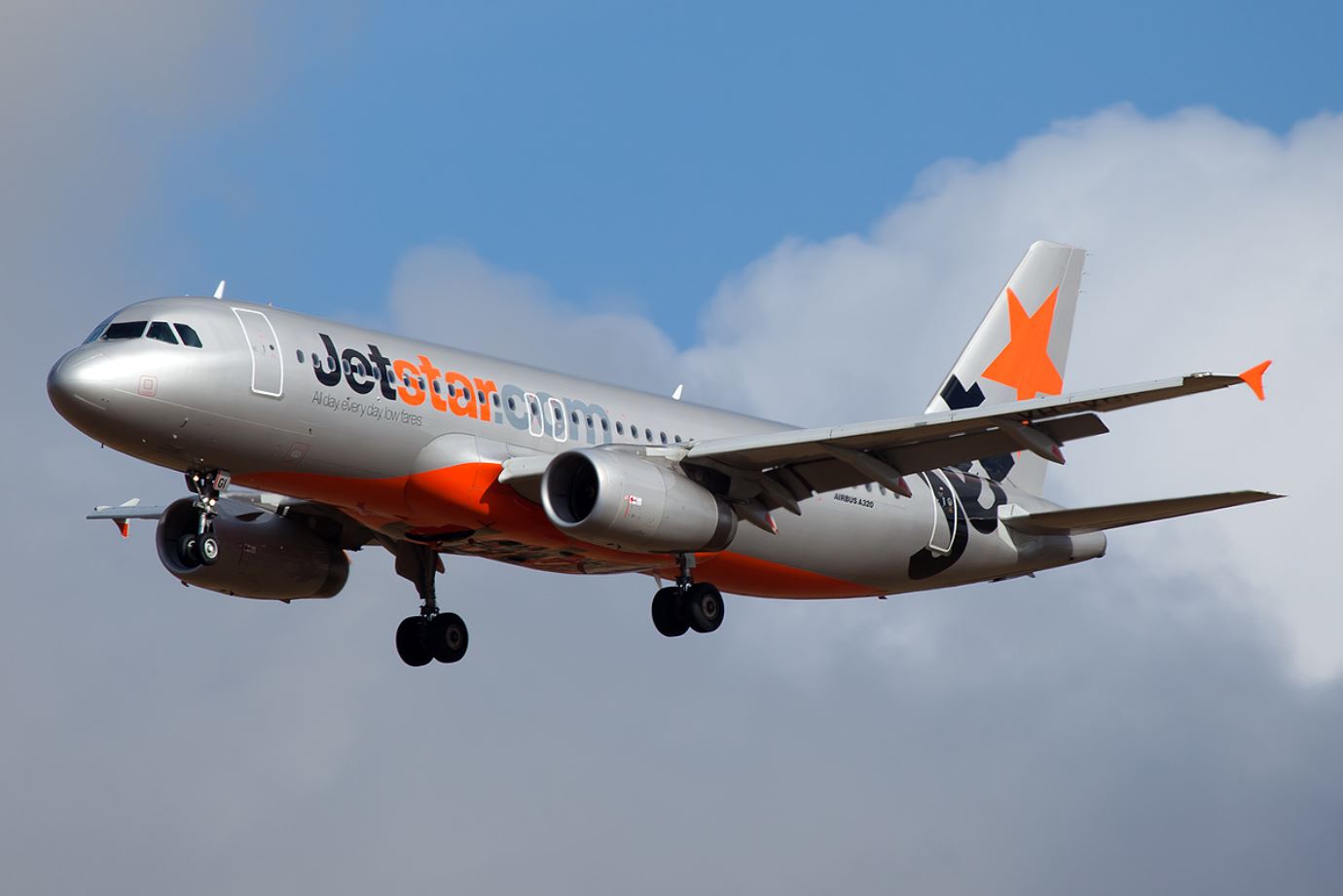
On 21 December 2016, an Airbus A320 aircraft, registered VH-VGI (VGI), and operated by Jetstar Airways, was being loaded at Melbourne Airport, Victoria, prior to operating flight JQ792 to Sunshine Coast, Queensland (Figure 1).

Figure 1: Image of VH-VGI

Figure 1: Jetstar Airbus A320 aircraft, VH-VGI

Source: Medhi Nazrinia

At 0500 Australian Eastern Daylight-savings Time (AEDT),[1] a clerk at a freight organisation commenced their shift at the organisation’s Melbourne Airport freight office. As it was the week before Christmas, it was a very busy week.

The organisation had recently introduced a new system for processing freight, however, a decision was made to revert to the old system due to the amount of freight to be entered and issues which had been experienced with the new system the previous day.

A team of clerks organised which items of freight are loaded on specific unit loading devices (ULDs)[2] to be sent to aircraft for flights around Australia. They then send the loading information to the airline. The team was short one person and the person who had been called in to cover the shift was starting work at 0700. Until that person commenced their shift, the clerk was responsible for completing two freight uplift roles. This meant the clerk was responsible for processing freight on all narrow-body[3] flights the organisation sent freight to, departing from Melbourne.

Because of the large amount of freight to be processed, including a large amount of freight from the previous night still waiting to be processed, there was a lot of radio traffic between leading hands organising the loading/unloading of the ULDs, and the clerk regarding the management of the freight. The clerk spent about 20 minutes on the radio, and then processed freight for 9 or 10 flights over the next half an hour.

During this time, the clerk identified two pieces of freight, which needed to be sent to the Sunshine Coast. These two pieces of freight contained flowers and meat and weighed a total of 93 kg. Rather than informing the leading hand, the clerk put the freight in a ULD and wrote that ULD number on the same page they had previously written the details of a different ULD, one that was to be sent to Adelaide. The clerk then went to the office and the ULD was processed as going to the Sunshine Coast; however, when the clerk returned to the ULD with the freight, they inadvertently put the Sunshine Coast freight card on the ULD destined for Adelaide. This ULD contained medical goods with a gross weight of 245 kg. This ULD was subsequently loaded on the flight to the Sunshine Coast.

The clerk realised an error was made when the ULD, which was intended to go to Adelaide, could not be located. The clerk, who commenced work at 0700, noticed the same number ULD on the Sunshine Coast flight paperwork and they then found the ULD that was supposed to go to the Sunshine Coast. That ULD was put on the next flight to the Sunshine Coast.

Once the error was detected, the clerk rang the Sunshine Coast freight office. They were informed the incorrect container had been sent and provided them with details of the freight so the ULD could be sent back to Melbourne, then to Adelaide.

The aircraft remained within all weight and balance limits during the flight.

Freight processing systems

The organisation was transitioning between an old and new processing system. In the old processing system, all information (such as weight and container number) was entered into an office computer. It was also the clerks’ responsibility for planning which flight the freight will go on and they rely on information from the leading hands for the freight details. The clerk would write the number of the container down, enter the number via the computer and then they would itemise the freight that had gone into the container. The cards itemising the freight would be printed out and attached to the container.

In the new system, information is entered on tablet computers. It is the customer’s responsibility to book their freight onto flights themselves. Staff are on the floor and are required to put the piece of freight in a container and enter the details on the tablet in succession. The system has built in checks, which would not allow the same number ULD to be used. This new system had been introduced about a week prior to the incident, but due to technical issues, they had reverted to using the old system.

Clerk’s comments

The clerk provided the following comments:

  • They felt very busy. Within the first hour, they would have processed freight for about 9 to 10 flights, which was double the usual workload.
  • They had to process all flights to Adelaide, Brisbane, Canberra, Alice Springs, and Townsville, as well as all other narrow-body flights. Normally this role would be divided between two clerks.
  • If there is a person unable to work their shift, they try to find a replacement. They had done so in this case, but the replacement could not start until 0700.
  • Normally at Christmas time, they would have extra staff rostered, but that year they did not.
  • On the day, they felt under stress due to the busy time of year.

Previous occurrences

A search of the ATSB’s occurrence database found occurrences relating to incorrect loading information being processed, particularly when staff were under high workload:

On 16 May 2010, an Embraer ERJ 190 aircraft was operated on a positioning flight from Adelaide, South Australia to Brisbane, Queensland (ATSB investigation AO-2010-034). The pilot-in-command reported that the load and trim sheet for the aircraft was inaccurate due to items being counted twice. It was found that the error occurred when the airport movements coordinator inadvertently selected the incorrect aircraft configuration in the company’s computerised load and trim system during a high workload time.

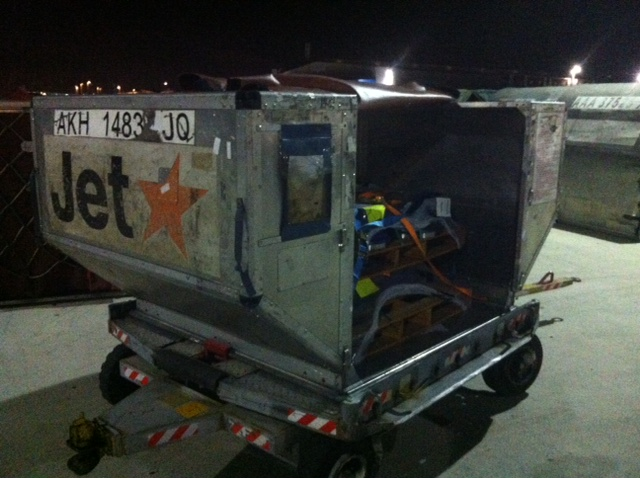
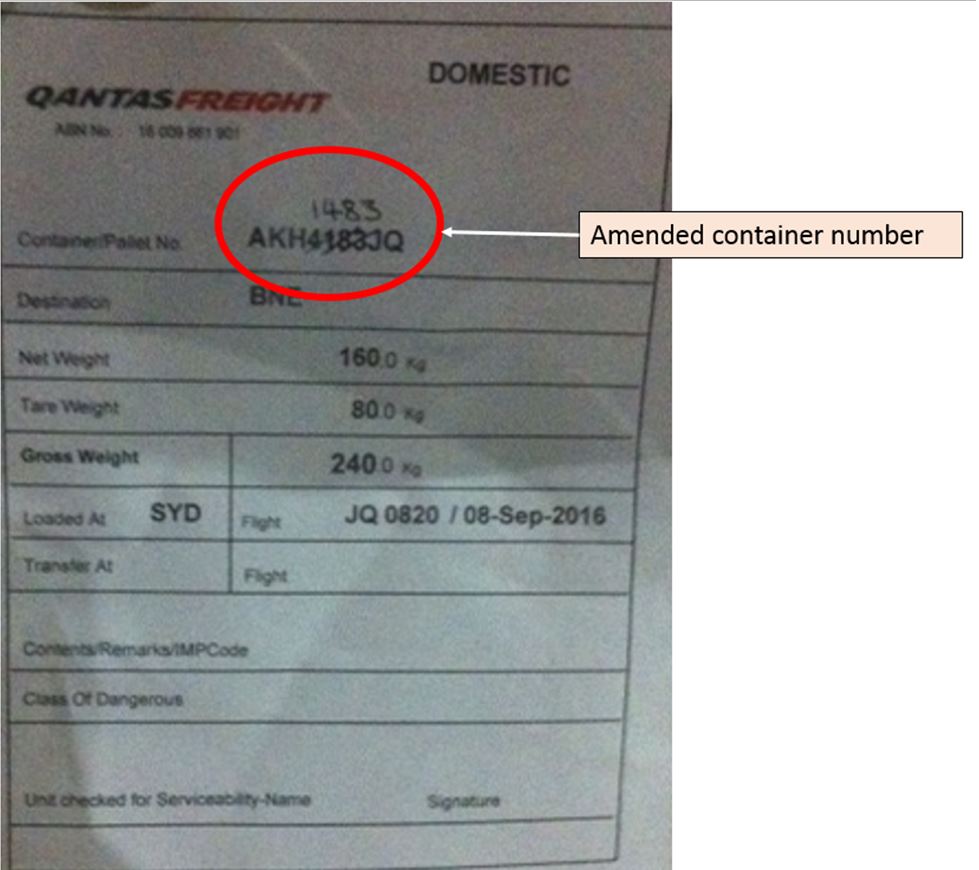
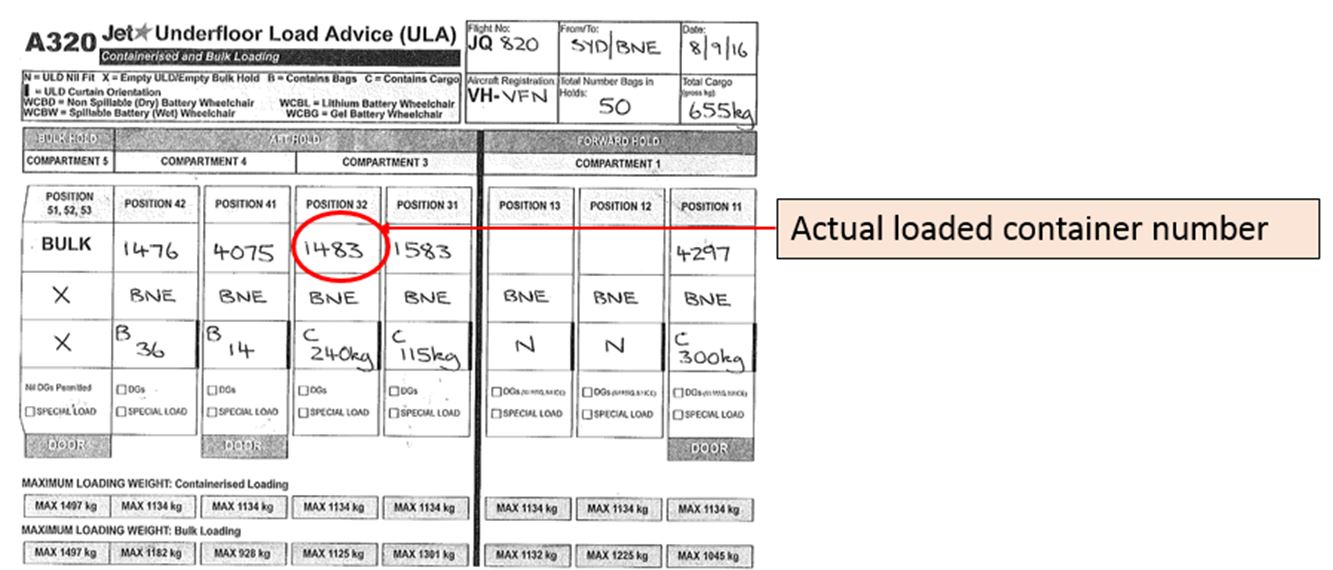
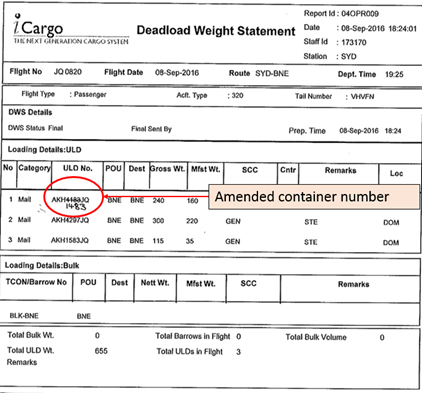
On 8 September 2016, an Airbus A320 aircraft was being loaded at Sydney Airport, New South Wales to Brisbane, Queensland (ATSB investigation AO-2016-119). The leading hand received the deadload weight statement (DWS) and checked the containers. The third container number (1483) did not match the number listed on the DWS (4183), nor the container card (4183). The leading hand assumed that the freight handler had inadvertently transposed the numbers incorrectly and amended the card and DWS with 1483 and continued loading. When the aircraft was unloaded in Brisbane, it was found that the incorrect container (1483) was delivered and was nearly 650kg heavier than container 4183. The loading procedure if the DWS is incorrect, is that the container must not be loaded onto the aircraft. The leading hand noted that the short turnaround time and the flight was the last one of the day led to procedures being bypassed.

Safety analysis

An incorrect ULD, weighing 245 kg was loaded onto VGI operating the Sunshine Coast flight, where the load sheet recorded a ULD of 93 kg. The error occurred when the clerk put the freight card for the Sunshine Coast flight on the Adelaide ULD, and the card for the Adelaide flight on the Sunshine Coast ULD. The Adelaide ULD was then sent to the Sunshine Coast. Because these ULDs had the same ULD number, it is likely the clerk misread the flight details and put the cards on the incorrect ULDs.

In the old processing system, the same ULD number can be entered twice into the system. In the new system, this would result in an error feedback. Without the error feedback, the clerk would not have known that the same container was entered twice. Furthermore, this data cross check is completed by the same person who entered it, making it difficult to detect any errors, particularly if they are experiencing a high workload.

The same error involving heavier weights could have a significant impact on the handling and performance of an aircraft.

Findings

These findings should not be read as apportioning blame or liability to any particular organisation or individual:

The incorrect ULD card was placed on the Adelaide ULD, leading it to be sent to the Sunshine Coast.

There was no error feedback on the old system of entering information into an office computer meaning the clerk would not have realised they had entered the same container number twice in the system.

Due to the absence of a staff member and the time of the year, the clerk was experiencing a high workload as they were required to take the responsibility for organising freight for all narrow body flights, rather than dividing them between two people.

Safety action

Whether or not the ATSB identifies safety issues in the course of an investigation, relevant organisations may proactively initiate safety action in order to reduce their safety risk. The ATSB has been advised of the following proactive safety action in response to this occurrence.

Freight organisation

As a result of this occurrence, the aircraft operator has advised the ATSB that they are taking the following safety actions:

  • The operator issued a revised loading instruction to prevent a recurrence of this type of event. The instruction stated after weighing the ULD or barrow[4], immediately record the weight on the appropriate ULD or barrow card and immediately insert in the ULD/Barrow pocket. Then close load in the Cargo system and move the ULD/Barrow to the designated staging area away from build-up areas.

Safety message

Safety message

This investigation highlights the effect of high workload on data input errors, as well as the importance of system feedback to indicate that the correct data has been entered. One of the ATSB’s SafetyWatch priorities is data input errors. These errors, such as using the incorrect loading figures occur for many different reasons. The consequence of these errors include a range of aircraft handling and performance issues.

Aviation Short Investigations Bulletin - Issue 59

Purpose of safety investigations

The objective of a safety investigation is to enhance transport safety. This is done through:

  • identifying safety issues and facilitating safety action to address those issues
  • providing information about occurrences and their associated safety factors to facilitate learning within the transport industry.

It is not a function of the ATSB to apportion blame or provide a means for determining liability. At the same time, an investigation report must include factual material of sufficient weight to support the analysis and findings. At all times the ATSB endeavours to balance the use of material that could imply adverse comment with the need to properly explain what happened, and why, in a fair and unbiased manner. The ATSB does not investigate for the purpose of taking administrative, regulatory or criminal action.

Terminology

An explanation of terminology used in ATSB investigation reports is available here. This includes terms such as occurrence, contributing factor, other factor that increased risk, and safety issue.

Publishing information 

Released in accordance with section 25 of the Transport Safety Investigation Act 2003

Published by: Australian Transport Safety Bureau

© Commonwealth of Australia 2017

image_5.png

Ownership of intellectual property rights in this publication

Unless otherwise noted, copyright (and any other intellectual property rights, if any) in this report publication is owned by the Commonwealth of Australia.

Creative Commons licence

With the exception of the Coat of Arms, ATSB logo, and photos and graphics in which a third party holds copyright, this publication is licensed under a Creative Commons Attribution 3.0 Australia licence.

Creative Commons Attribution 3.0 Australia Licence is a standard form licence agreement that allows you to copy, distribute, transmit and adapt this publication provided that you attribute the work.

The ATSB’s preference is that you attribute this publication (and any material sourced from it) using the following wording: Source: Australian Transport Safety Bureau

Copyright in material obtained from other agencies, private individuals or organisations, belongs to those agencies, individuals or organisations. Where you wish to use their material, you will need to contact them directly.

__________

  1. Australian Eastern Daylight-savings Time is Co-ordinated Universal Time (UTC) +11.
  2. Containers used to transport freight.
  3. An aircraft with a single aisle.
  4. A frame used for holding ULDs.

Occurrence summary

Investigation number AO-2016-177
Occurrence date 21/12/2016
Location Melbourne Airport
State Victoria
Report release date 27/04/2017
Report status Final
Investigation level Short
Investigation type Occurrence Investigation
Investigation status Completed
Mode of transport Aviation
Aviation occurrence category Loading related
Occurrence class Incident
Highest injury level None

Aircraft details

Manufacturer Airbus
Model A320-232
Registration VH-VGI
Serial number 4466
Aircraft operator Jetstar Airways
Sector Jet
Operation type Air Transport High Capacity
Departure point Melbourne, Vic.
Destination Sunshine Coast, Qld
Damage Nil

Aircraft loading involving Boeing 737, ZK-TLK, Sydney Airport, New South Wales, on 17 December 2016

Final report

What happened

On 15 December 2016, a Boeing 737-476SF (Special Freighter) aircraft, registered ZK-TLK (TLK), conducted a night freight flight from Sydney, New South Wales, to Melbourne, Victoria. On approach to Melbourne Airport the captain noted the aircraft nose attitude appeared to be too high and airspeed appeared to be too low for that phase of flight. After landing at Melbourne Airport, the captain was notified that a loading error occurred at Sydney Airport.

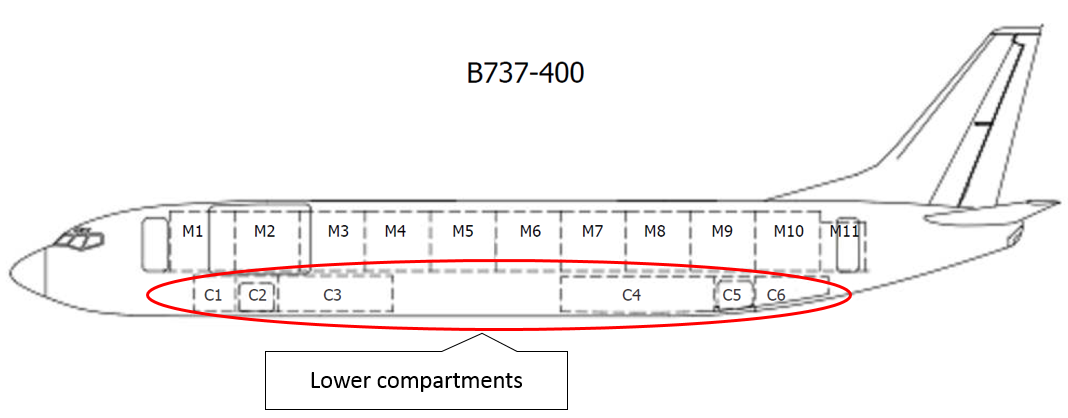
On the evening of the incident, two 737 freighter aircraft, operated by the same freight company, with the same paint scheme, were conducting freight flights into and out of Sydney Airport. The loading supervisor received loading instructions for the two aircraft shortly after they[1] started their shift at 1600 Eastern Daylight-savings Time (EDT). The loading instructions included changes to the scheduled lower compartment loads for the two 737 freighter aircraft, TLK and ZK‑JTQ (JTQ) (Figure 1).

Figure 1: Boeing 737-476SF lower compartments

Figure 1: Boeing 737-476SF lower compartments

Source: Operator, annotated by ATSB

At about 1945, the loading supervisor completed their ramp report, which included the planned aircraft parking bays. At 2015, they travelled to the parking bays to prepare the tarmac for the aircraft arrivals and confirm the freight was prepared for loading. At 2030, they briefed their leading hand, who was responsible for directing the transfer of the road freight to the respective aircraft parking bays.

The planned loads for TLK and JTQ were distributed into containerised and non-containerised freight. Containerised freight is loaded into the upper compartments of the 737-freighter aircraft and non-containerised freight is loaded into the lower compartment. The freight was prepared on the international side of the airport and then delivered to aircraft parking bays 5 and 6 on the domestic side of the airport.

At about 2040, the loading supervisor received a phone call from their manager that there would be an aircraft swap at Sydney Airport (see aircraft swap). Therefore, the freight planned for TLK and JTQ, needed to be exchanged between the two aircraft. The supervisor was at the tarmac at the time of the phone call and did not have access to a computer, so they manually changed their ramp report and briefed the tarmac loaders about the change. However, they only swapped the aircraft registration, flight number and inbound port on their ramp report, they did not change the parking bay numbers. According to the supervisor’s ramp report, TLK was scheduled to park on bay 6 and JTQ on bay 5. However, when the two aircraft arrived at their parking bays, at about 2136 and 2138 respectively, TLK parked on bay 5 and JTQ parked on bay 6.

The staff responsible for loading the containerised freight into the upper compartments of the aircraft loaded the aircraft with reference to their copy of the load instruction report.[2] However, the non-containerised lower compartment freight was allocated to the aircraft by the loading supervisor with reference to their ramp report parking bay numbers, which were incorrect. Consequently, TLK was loaded with JTQs lower compartment freight and JTQ was loaded with TLKs lower compartment freight. The flight crew were then issued with the load instruction reports with their planned freight, which were correct for their upper compartments, but incorrect for their lower compartments. The aircraft taxied for departure at 2247 and 2253 and departed at 2300 and 2302 respectively.

Airport curfew

While the loading supervisor was supervising the distribution of freight for the aircraft, they were also mindful of the airport curfew time of 2300. The priority for the loading supervisor in this situation is to ensure that the aircraft can depart on time. Therefore, they were required to closely monitor and assess the progress of the loading in order to be prepared to make a decision to stop the loading of freight if it posed a risk of delay past curfew.

Aircraft swap

The normal schedule for the two 737 freighter aircraft were as follows:

Flight TFR 21 from Brisbane to Sydney would depart outbound from Sydney as TFR 22 for Melbourne.

Flight TFR 34 from Adelaide to Sydney, would depart outbound from Sydney as TFR 41 for Brisbane.

On the night of the incident, JTQ operated as TFR 21 from Brisbane to Sydney and TLK operated as TFR 34 from Adelaide to Sydney. The aircraft swap in Sydney required JTQ to depart from Sydney as TFR 41 for Brisbane and TLK to depart from Sydney as TFR 22 for Melbourne.

Weight and balance

The two 737 freighter aircraft had a maximum take-off weight of 68,039 kg. The centre-of-gravity limits for the aircraft, represented as an ‘index’,[3] varied with respect to the weight of the aircraft in a non-linear manner. Table 1 depicts the planned and actual data for TLK and Table 2 depicts the planned and actual data for JTQ. The actual weight and balance for TLK was within limits, but while the weight for JTQ was within limits, the centre of gravity was marginally forward of the forward centre-of-gravity limit.[4] The weight and balance calculation is used to provide the aircraft horizontal stabiliser adjustment setting for take-off. The difference between the planned and the actual required stabiliser settings was minimal for both aircraft.

Table 1: ZK-TLK weight and balance

Planned taxi weight58,178 kgIndex35.1
Actual taxi weight59,937 kgIndex35.7
Planned landing weight54,217 kgIndex33.4
Actual landing weight55,976 kgIndex34.0
Stabiliser adjustment figures:   
Planned flaps 1 & 54.4Planned flaps 153.6
Actual flaps 1 & 54.3Actual flaps 153.6

Table 2: ZK-JTQ weight and balance

Planned taxi weight58,629 kgIndex23.3
Actual taxi weight56,875 kgIndex22.6
Planned landing weight54,533 kgIndex23.1
Actual landing weight52,779 kgIndex22.4
Stabiliser adjustment figures:   
Planned flaps 1 & 55.0Planned flaps 154.3
Actual flaps 1 & 55.1Actual flaps 154.4

Safety analysis

Several changes to the planned loading of the aircraft were communicated to the loading supervisor on the afternoon and evening of the incident. The loading supervisor incorporated the initial change to the lower compartment freight into their ramp report and communicated the plan to the staff. When the loading supervisor was notified that an aircraft swap would occur in Sydney, they were on the tarmac and performed a manual update to their ramp report. However, their manual update did not include the change in parking bay numbers.

The loading supervisor referred to their ramp report to direct the loading of the lower compartment freight planned for TLK and JTQ. The staff loading the upper compartments referred to their load instruction reports, which had the correct parking bays. At this time, the supervisor’s attention was divided between the freight loading activities and the overall progress of the loading of both aircraft against the approaching airport curfew time. Consequently, the supervisor directed the planned lower compartment freight for TLK to JTQ, and the planned lower compartment freight for JTQ to TLK.

The pilot of TLK reported that the aircraft’s flight management computer determines the airspeed to be flown on final approach based on aircraft weight. They entered a zero-fuel weight into the flight management computer based on the planned load, which was less than the actual load. Therefore, the target airspeed flown was slower than required for the actual weight of the aircraft and the aircraft nose attitude increased in order to produce sufficient lift to maintain the approach flight path.

Findings

These findings should not be read as apportioning blame or liability to any particular organisation or individual.

  • The loading supervisor made a manual change to their ramp report but did not include a change to the aircraft parking bay numbers; this resulted in them directing the lower compartment freight for TLK to JTQ, and the lower compartment freight for JTQ to TLK.
  • JTQ was operated with a centre of gravity marginally forward of the limit.

Safety action

Whether or not the ATSB identifies safety issues in the course of an investigation, relevant organisations may proactively initiate safety action in order to reduce their safety risk. The ATSB has been advised of the following proactive safety action in response to this occurrence.

Loading supervisor

As a result of this occurrence, the loading supervisor has advised the ATSB that they have taken the following safety actions:

Cross-check

During loading of the aircraft lower compartment freight, an independent cross-check will be made of the freight destination against the load instruction report.

Safety message

This incident highlights the risk associated with a single source of error propagating through a safety critical process. Following this incident, the loading supervisor reported that the lesson they learned was to have their work cross-checked whenever feasible.

Aviation Short Investigations Bulletin - Issue 59

Purpose of safety investigations

The objective of a safety investigation is to enhance transport safety. This is done through:

  • identifying safety issues and facilitating safety action to address those issues
  • providing information about occurrences and their associated safety factors to facilitate learning within the transport industry.

It is not a function of the ATSB to apportion blame or provide a means for determining liability. At the same time, an investigation report must include factual material of sufficient weight to support the analysis and findings. At all times the ATSB endeavours to balance the use of material that could imply adverse comment with the need to properly explain what happened, and why, in a fair and unbiased manner. The ATSB does not investigate for the purpose of taking administrative, regulatory or criminal action.

Terminology

An explanation of terminology used in ATSB investigation reports is available here. This includes terms such as occurrence, contributing factor, other factor that increased risk, and safety issue.

Publishing information 

Released in accordance with section 25 of the Transport Safety Investigation Act 2003

Published by: Australian Transport Safety Bureau

© Commonwealth of Australia 2017

image_5.png

Ownership of intellectual property rights in this publication

Unless otherwise noted, copyright (and any other intellectual property rights, if any) in this report publication is owned by the Commonwealth of Australia.

Creative Commons licence

With the exception of the Coat of Arms, ATSB logo, and photos and graphics in which a third party holds copyright, this publication is licensed under a Creative Commons Attribution 3.0 Australia licence.

Creative Commons Attribution 3.0 Australia Licence is a standard form licence agreement that allows you to copy, distribute, transmit and adapt this publication provided that you attribute the work.

The ATSB’s preference is that you attribute this publication (and any material sourced from it) using the following wording: Source: Australian Transport Safety Bureau

Copyright in material obtained from other agencies, private individuals or organisations, belongs to those agencies, individuals or organisations. Where you wish to use their material, you will need to contact them directly.

_________

  1. Gender-free plural pronouns: may be used throughout the report to refer to an individual (i.e. they, them and their).
  2. The load instruction report (LIR) includes the aircraft registration, flight number, destination and description of planned load with reference to the respective aircraft upper and lower compartments. The LIR is issued by the load control centre and therefore incorporated all the changes which were communicated to the loading supervisor.
  3. ‘Index’ is a number calculated from aircraft weight and centre of gravity position to represent the aircraft moment. The aircraft index is referenced from a point near the centre of gravity and permits simplified centre of gravity calculations when loading the aircraft.
  4. A centre of gravity forward of the limits can adversely affect the stability and control of the aircraft.

Occurrence summary

Investigation number AO-2017-002
Occurrence date 17/12/2016
Location Sydney Airport
State New South Wales
Report release date 27/04/2017
Report status Final
Investigation level Short
Investigation type Occurrence Investigation
Investigation status Completed
Mode of transport Aviation
Aviation occurrence category Loading related
Occurrence class Incident
Highest injury level None

Aircraft details

Manufacturer The Boeing Company
Model 737-476SF
Registration ZK-TLK
Serial number 24434
Sector Jet
Operation type Air Transport High Capacity
Departure point Sydney, NSW
Destination Melbourne, Vic.
Damage Nil

Loading event involving Avions de Transport Régional ATR42, VH-TOX, Sydney Airport, New South Wales, on 27 September 2016

Final report

What happened

On 27 September 2016, at about 0030 Eastern Standard Time (EST), an Avions de Transport Regional ATR42-300 aircraft, registered VH-TOX (Figure 1), was being loaded at Sydney Airport, New South Wales, for a freight charter flight to Brisbane, Queensland.

The freight had arrived from a freight facility where it had been weighed and a load plan completed, with a total freight weight of 2,281 kg.

Prior to loading the freight, a representative from the aircraft operator was unsure of the accuracy of the provided weights and requested ground staff reweigh the freight using calibrated scales at the airport. The measured total weight was 3,215 kg, which was 934 kg more than stated on the load plan.

The flight crew, consisting of a captain and first officer, completed the trim sheet using the actual weights, and the aircraft was within its weight limitations and the allowable centre of gravity envelope. The aircraft operated to Brisbane without incident.

Figure 1: VH-TOX

Figure 1: VH-TOX

Source: Daniel Vorbach edited by ATSB

Freight weighing

The freight was weighed at the freight facility using a forklift fitted with scales. Each item of freight was then allocated to a loading position on the aircraft using a spreadsheet from which the aircraft load plan was derived.

The aircraft operator commented that they had previously advised the freight company that forklifts should not be used for the weighing of freight when intended for carriage by air, as they were not sufficiently accurate. The loading supervisor, who was employed by the freight company and responsible for loading the aircraft in accordance with the load plan, was not aware that the weights recorded on the load plan were inaccurate.

The ground handling agreement between the aircraft operator and freight company did not include Sydney as a port of service at the time of the incident. Until recently, the operator’s Sydney operations were based at Bankstown Airport, where calibrated floor scales were used to weigh the freight.

Findings

These findings should not be read as apportioning blame or liability to any particular organisation or individual.

  • The freight company weighed the freight using inaccurate (forklift) scales, resulting in a discrepancy of 934 kg from the actual freight weight. The aircraft load plan was derived from the inaccurate freight weights.
  • The aircraft operator discovered the inaccuracy before loading and the aircraft was subsequently loaded within its weight and balance limitations.

Safety action

Whether or not the ATSB identifies safety issues in the course of an investigation, relevant organisations may proactively initiate safety action in order to reduce their safety risk. The ATSB has been advised of the following proactive safety action in response to this occurrence.

Aircraft operator

As a result of this occurrence, the aircraft operator has advised the ATSB that they are taking the following safety actions:

Change of port

The operator ceased operations into and out of Sydney Airport and reverted to Bankstown Airport, where calibrated floor scales are used to determine the freight weight for the load plan.

Safety message

Accurate aircraft weight and balance information is vital for the safety of flight, particularly during take-off. Inaccurate weight of freight items can lead to incorrect flight management selections such as power and trim settings. Discrepancies in these can result in reduced take-off performance and incidents such as tail strikes and runway overruns.

Short Investigations Bulletin - Issue 55

Purpose of safety investigations

The objective of a safety investigation is to enhance transport safety. This is done through: 

  • identifying safety issues and facilitating safety action to address those issues
  • providing information about occurrences and their associated safety factors to facilitate learning within the transport industry.

It is not a function of the ATSB to apportion blame or provide a means for determining liability. At the same time, an investigation report must include factual material of sufficient weight to support the analysis and findings. At all times the ATSB endeavours to balance the use of material that could imply adverse comment with the need to properly explain what happened, and why, in a fair and unbiased manner. The ATSB does not investigate for the purpose of taking administrative, regulatory or criminal action.

Terminology

An explanation of terminology used in ATSB investigation reports is available here. This includes terms such as occurrence, contributing factor, other factor that increased risk, and safety issue.

Publishing information

Released in accordance with section 25 of the Transport Safety Investigation Act 2003

Published by: Australian Transport Safety Bureau

© Commonwealth of Australia 2016

image.png

Ownership of intellectual property rights in this publication

Unless otherwise noted, copyright (and any other intellectual property rights, if any) in this report publication is owned by the Commonwealth of Australia.

Creative Commons licence

With the exception of the Coat of Arms, ATSB logo, and photos and graphics in which a third party holds copyright, this publication is licensed under a Creative Commons Attribution 3.0 Australia licence.

Creative Commons Attribution 3.0 Australia Licence is a standard form licence agreement that allows you to copy, distribute, transmit and adapt this publication provided that you attribute the work.

The ATSB’s preference is that you attribute this publication (and any material sourced from it) using the following wording: Source: Australian Transport Safety Bureau

Copyright in material obtained from other agencies, private individuals or organisations, belongs to those agencies, individuals or organisations. Where you wish to use their material, you will need to contact them directly.

Occurrence summary

Investigation number AO-2016-127
Occurrence date 27/09/2016
Location Sydney Airport
State New South Wales
Report release date 14/12/2016
Report status Final
Anticipated completion Q4 2016
Investigation level Short
Investigation type Occurrence Investigation
Investigation status Completed
Mode of transport Aviation
Aviation occurrence category Loading related
Occurrence class Incident
Highest injury level None

Aircraft details

Manufacturer ATR-GIE Avions de Transport Régional
Model ATR42-300
Registration VH-TOX
Serial number 024
Sector Turboprop
Operation type Charter
Departure point Sydney, NSW
Destination Brisbane, Qld
Damage Nil

Loading related event involving Airbus A320, VH-VQC, Gold Coast Airport, Queensland, on 29 October 2016

Final report

What happened

On 29 October 2016, an Airbus A320 registered VH-VQC, approached Gold Coast Airport, Queensland, prior to operating Jetstar flight JQ407 from Gold Coast to Sydney, New South Wales.

In preparation for the aircraft’s arrival, the ground crew leading hand checked whether the pit load sheet[1] from the previous destination had arrived. This would allow the crew to be better prepared to unload the aircraft. As it had not, the leading hand went to assist loader operator 1 in preparing the bay for the aircraft’s arrival.

At about 1050 Eastern Standard Time (EST), 20 minutes before the aircraft’s arrival, the leading hand received a call detailing the requirements for the aircraft. These requirements included two lifts for passengers who could not board the aircraft using the portable stairs, a non-standard toilet clean and an aircraft water top up. The ground crew were also advised that the aircraft would arrive 3 minutes later than scheduled.

About 7 minutes prior to the aircraft’s arrival, the leading hand again checked whether the pit load sheet had arrived, it had not.

Once the aircraft arrived, the leading hand estimated the unloading would require three dollies[2] and retrieved the dollies to unload the aircraft. Loader operator 1 unloaded containers from positions 41, 42, and 32 (Figure 1). Both loader operator 1 and the leading hand assumed only three containers needed to be unloaded.

Figure 1: Aircraft hold positions (with position 31 highlighted)

Figure 1: Aircraft hold positions (with position 31 highlighted)

Source: Operator (modified by the ATSB)

After unloading, the loading procedures require a check of the aircraft hold to confirm if there are any containers remaining in the hold. The loader operator 1 reported checking the hold, however as they were walking towards the hold door, watching their footing, they did not detect a container in position 31. The leading hand witnessed loader operator 1 checking the aircraft hold and assumed all containers had been unloaded.

Loader operator 1 then turned the loader around, and unloaded the container in the front of the aircraft (which was staying on the aircraft) and reloaded it at position 11. During that time, they inadvertently put the yellow copy of the underfloor load advice (ULA) [3] sheet in their pocket, rather than on the clipboard as is required. As loader operator 1 repositioned the loader at the rear of the aircraft, they received the request for a passenger lift, and they left the loader, to organise the lift. After organising the lift, loader operator 1 went to complete the clean of the two rear toilets, which took between 5–10 minutes. At the same time, loader operator 2 assisted with the aircraft water top up.

After cleaning the aircraft’s toilets, loader operator 1 observed loader operator 2 on the loader continuing the loading process. Loader operator 2 presumed that loader operator 1 had started the loading process and had already loaded a container in position 31. They loaded containers in position 42 and 32, using the information on the container destination cards, as they did not have the yellow ULA copy, and ensured all the locks were engaged. Loader operator 1 then completed the yellow ULA copy using the bingo cards,[4] but they were not aware of the container at position 31.

The leading hand observed loader operator 2 entering the rear hold and assumed that they were checking the locks, which they were doing. As the leading hand had previously worked with the loader operator, they trusted them to have completed the lock check.[5] Loader operator 1 signed the yellow copy of the ULA and handed it to the leading hand for crosschecking. The leading hand checked the yellow copy against their white copy. As both copies matched, they assumed the aircraft was loaded correctly.

The leading hand then proceeded to the flight deck to hand the paperwork to the captain and confirmed that all locks had been engaged.

While pushing the aircraft back, the leading hand received a call advising that the aircraft had been correctly loaded for the previous flight in Cairns and that 20 bags had been reported missing. The duty manager also contacted the leading hand to confirm if all containers had been unloaded, which the leading hand confirmed.

After the aircraft departed the bay, the leading hand and loader operator 1 considered the possibility that a container may have been left on the aircraft. They recalled that all areas had been checked. The leading hand contacted loader operator 2 assisting on the loader who confirmed that there was a container in position 31, however they assumed it had been loaded prior to them taking over the loading of that hold. The duty manager contacted company personnel in Cairns, who provided a pit load sheet for the previous flight. The pit load sheet confirmed there was a container in position 31 with 40 bags that should have been unloaded at Gold Coast Airport.

At about 1230 EST during the cruise, the flight crew received an aircraft communications addressing and reporting system (ACARS) message advising that there was an extra container in position 31. The container weighed about 360kg and had not been included in the aircraft take-off performance calculations.

Prior to being advised of the extra container, the flight crew determined the aircraft take-off weight to be 62,844 kg and the take-off trim[6] position to be 0.4 degrees nose down. After being advised of the extra container, the flight crew recalculated the aircraft weight and trim to be 63,204 kg and 0.5 degrees nose down. The recalculated weight and trim showed that the aircraft was within all weight and balance limitations.

The flight proceeded to Sydney without further incident.

Loading procedures

Jetstar’s ground operations procedures include the following steps:

  • All compartments must be checked and confirmed as empty, including the bulk hold, on all arrivals after unloading.
  • If a position in the cargo hold is labelled as ‘Nil fit’ (empty), then the loader operator is required to inspect the position. The leading hand is then required to visually inspect the nil fit positon and initial the loader copy to show it has been inspected.
  • As containers are progressively loaded, the loader operator must notate on the ULA container serial number, destination, contents, and tick loaded and locks up.

Leading hand comments

  • The leading hand provided the following comments:
  • It is unusual for a loader operator to complete a different task.
  • The leading hand and two loader operators had worked together previously. This led to a lot of trust within the group.
  • At the time, there were also two off-schedule aircraft being handled. This resulted in no extra staff being available to assist with the servicing of the aircraft.
  • The other tasks to be completed (lift, water top up, and toilet clean) during the unloading had taken a lot of time and created pressure, which may have led to short cuts being taken.
  • They had not come across through-freight before, normally they just take all containers off the aircraft. This particular through-freight needed to have the destination card completed and this created a distraction.
  • When they realised that loader operator 2 had not been using the yellow ULA to load the aircraft, they considered unloading the aircraft and restarting the loading process. As they were already running late, they decided against this.
  • They were experiencing personal issues on the day, but does not believe they were contributory to the incident.

Loader operator 1 comments

Loader operator 1 provided the following comments:

  • Normally when they operate as loader operator, they have always fully loaded or fully unloaded the aircraft.
  • During unloading, if you are standing at the controls of the loader you cannot see position 31, only part of 32, and positions 41, and 42. It is only when you walk into the compartment door, or stand on the very edge of the loader at the door are you able to see position 31.
  • They were feeling fatigued on the day due to a lack of, and poor quality sleep the previous night. They were also feeling a little dehydrated at the time.

Captain’s comments

The captain provided the following comments:

  • The pilot flying commented that during the take-off, they did not notice any unusual aircraft behaviour and did not detect the incorrect trim setting.
  • They had used a higher take-off weight than required, to allow for last minute adjustments in the passenger loads. This meant that the extra weight did not have much effect on the flight.

Ground handling operator internal report

The ground handling operator internal report found the following:

  • Initially, loader operator 1 was not aware that loader operator 2 had commenced the loading as they were still cleaning. Therefore, they did not offer the yellow copy of the ULA.
  • There was a revision to the Standard Underfloor Load Advice Procedures for both leading hand and loader operators to commence from 13 October 2016. One of the changes was that loader operators are to complete the yellow ULA copy progressively as containers are loaded. This was not adhered to during the loading process.

Previous occurrences

A search of the ATSB database of previous loading related occurrences involving incorrect load or weight on the aircraft were detected, particularly when crew were under time pressures and procedures were not followed to resolve discrepancies:

  • 8 May 2014: During unloading, unmanifested baggage in the front hold of the aircraft was detected from the previous flight. The dispatcher did not check the front hold due to time pressures from the short turnaround times.
  • Loading related event, Bali, Indonesia, 26 May 2014 (ATSB investigation AO-2014-110)[7]. A Boeing 737 aircraft was being loaded at Bali Airport for a flight to Melbourne, Victoria. Due to the time restrictions, the ground staff were unable to load all of the bags for the flight before aircraft had to be prepared for departure. The load controller assessed that a total of 93 bags had been loaded and the flight documents produced were using that figure. About 30 minutes after the aircraft departed Bali, the ground handler advised network operations and load control that the final baggage numbers were incorrect. The total number of bags loaded onto the aircraft was 189 instead of 93, which an estimated additional weight of about 1,600 kg. Prior to loading, the ground crew were under time pressure due to the flight already being delayed, breakdown of baggage belt, and scheduled closure of the runway and impending airport curfew.
  • Loading event, Sydney Airport, NSW, 8 September 2016 (ATSB investigation AO-2016-119)[8]. An Airbus A320 was being loaded at Sydney for a flight to Brisbane, Queensland. The leading hand received the deadload weight statement (DWS) and checked the containers. The third container number (1483) did not match the number listed on the DWS (4183), nor the container card (4183). The leading hand assumed that the freight handler had inadvertently transposed the numbers incorrectly and amended the card and DWS with 1483 and continued loading. When the aircraft was unloaded in Brisbane, it was found that the incorrect container (1483) was delivered and was nearly 650kg heavier than container 4183. The loading procedure if the DWS is incorrect, is that the container must not be loaded onto the aircraft. The leading hand noted that the short turnaround time and the flight was the last one of the day led to procedures being bypassed.
  • Loading event, Brisbane Airport, Qld, 19 October 2015. During boarding, the flight crew were notified of a discrepancy between passenger numbers, but later advised the issued had been resolved. After the passenger count during the flight, it was found that the aircraft departed with 16 more passengers than advised. The investigation is continuing.

Safety analysis

The first step in the ground handling operator’s aircraft loading procedures involve obtaining a pit load sheet, if available. If the load sheet is not available, then the ground crew can contact the ground operations controller. The ground crew attempted to contact the ground operations controllers, but they were unavailable at the time of this occurrence. These are the only two sources that can provide accurate load information. The investigation was unable to determine why the pit load sheet was not provided.

After unloading, all compartments are to be checked and confirmed as empty. Loader operator 1 did check the hold, but did not see the container in position 31. The leading hand witnessed loader operator 1 checking the hold, but did not check the hold themselves.

Loader operator 1 had commenced the loading and was called away with the yellow ULA copy in their pocket, as opposed to on the clipboard in the loader per normal. Because loader operator 2 continued the loading process, they assumed that any containers on the aircraft had been pre-loaded. This assumption was reinforced as the yellow copy was with loader operator 1. Therefore, load operator 2 completed the loading without the yellow copy and did not complete the sheet as containers were loaded. There was also no communication between the two loader operators on how much of the task had been completed.

When a position is identified as empty on the ULA, the loader operator and leading hand are to check the position is empty and initial it on the yellow copy. The loader operator 1 had commenced the loading process but did not complete the process, nor did they check all the containers once they had been loaded. The leading hand also did not check position 31 though it was marked as empty.

On that day, the ground crew were required to complete additional tasks, including putting in a lift, toilet clean, and water top up. Ordinarily, the leading hand would have asked another team to complete the toilet clean in order to keep the loader operator on that task. It is unusual to have a leading hand complete a different task. The leading hand did call for assistance, but as there were two off-scheduled aircraft also being turned around at the time, no assistance was available Furthermore, the leading hand reported feeling rushed because of the extra tasks to be completed during the 30-minute turnaround, and this contributed to the checks not being completed.

Findings

These findings should not be read as apportioning blame or liability to any particular organisation or individual.

  • The lack of loading documentation received at the Gold Coast resulted in the ground crew not knowing the number of containers to be off-loaded from the aircraft. Loader operator 1 did not detect the container in position 31 as they checked to ensure the hold was empty.
  • The loader operator and leading hand did not adequately check the containers during the loading process, leading to the container in position 31 not being noticed.
  • The individual conducting the loader operator role changed during the loading of the aircraft, which likely led to a misunderstanding of how much of the loading had been completed.
  • The ground crew had additional tasks to complete during the unloading and a smaller ground team than normal, which led to the hold not being checked adequately.

Safety action

Whether or not the ATSB identifies safety issues in the course of an investigation, relevant organisations may proactively initiate safety action in order to reduce their safety risk. The ATSB has been advised of the following proactive safety action in response to this occurrence.

Ground handling operator

As a result of this occurrence, the ground handling operator has advised the ATSB that they have taken the following safety actions:

Ground handling operator’s safety communications

The loader operator procedures have changed to include the following requirements:

  • Physically touch each bulkhead wall after unloading is completed, to ensure no containers are left inside the aircraft.
  • If there is no leading hand present, then no movement by the loader machine including unloading/loading will be undertaken.
  • If there is no yellow ULA, then no loading is to be completed.
  • Yellow ULA must be completed as each container is loaded
  • Yellow ULA must be handed to the leading hand for cross checking before the white ULA is taken to the crew.
  • Standardised communication between loader operators and leading hand to confirm that all containers have been unloaded.
  • The leading hand is to conduct a mandatory visual check to ensure unloading has been completed before any loading commences for the new outbound flight.

Safety message

This incident highlights the effect time pressures and workload can have during loading operations. The ATSB report: Aircraft loading occurrences - July 2003 to June 2010 found that one reason unlisted cargo was loaded into an aircraft was time pressure where late arriving inbound traffic left little time for loading. This pressure is increased when airlines are under internal and external pressures to meet timeframes.

Overall, this investigation emphasises the importance of adhering to procedures during the completion of tasks and communication between fellow colleagues, particularly if there is a role changeover.

Aviation Short Investigations Bulletin - Issue 58

Purpose of safety investigations

The objective of a safety investigation is to enhance transport safety. This is done through:

  • identifying safety issues and facilitating safety action to address those issues
  • providing information about occurrences and their associated safety factors to facilitate learning within the transport industry.

It is not a function of the ATSB to apportion blame or provide a means for determining liability. At the same time, an investigation report must include factual material of sufficient weight to support the analysis and findings. At all times the ATSB endeavours to balance the use of material that could imply adverse comment with the need to properly explain what happened, and why, in a fair and unbiased manner. The ATSB does not investigate for the purpose of taking administrative, regulatory or criminal action.

Terminology

An explanation of terminology used in ATSB investigation reports is available here. This includes terms such as occurrence, contributing factor, other factor that increased risk, and safety issue.

Publishing information 

Released in accordance with section 25 of the Transport Safety Investigation Act 2003

Published by: Australian Transport Safety Bureau

© Commonwealth of Australia 2017

image_5.png

Ownership of intellectual property rights in this publication

Unless otherwise noted, copyright (and any other intellectual property rights, if any) in this report publication is owned by the Commonwealth of Australia.

Creative Commons licence

With the exception of the Coat of Arms, ATSB logo, and photos and graphics in which a third party holds copyright, this publication is licensed under a Creative Commons Attribution 3.0 Australia licence.

Creative Commons Attribution 3.0 Australia Licence is a standard form licence agreement that allows you to copy, distribute, transmit and adapt this publication provided that you attribute the work.

The ATSB’s preference is that you attribute this publication (and any material sourced from it) using the following wording: Source: Australian Transport Safety Bureau

Copyright in material obtained from other agencies, private individuals or organisations, belongs to those agencies, individuals or organisations. Where you wish to use their material, you will need to contact them directly.

__________

  1. A document detailing the actual loads in the aircraft’s compartments.
  2. A flatbed trolley used to load and unload containers from the aircraft.
  3. A triplicate carbonised form to be completed with details of the number of bags and cargo loaded into each underfloor position. It consists of a provisional (pink) copy, loader (yellow) copy, and final (white) copy. The yellow copy is completed by the loader operator during the loading process.
  4. A card for every item of baggage that has a passenger name, flight number, and destination.
  5. A check completed by ground staff to ensure containers are secure after loading.
  6. Part of an aircraft control surface for stabilisation
  7. /publications/investigation_reports/2014/aair/ao-2014-110/
  8. /publications/investigation_reports/2016/aair/ao-2016-119/

Occurrence summary

Investigation number AO-2016-145
Occurrence date 29/10/2016
Location Gold Coast
State Queensland
Report release date 24/03/2017
Report status Final
Investigation level Short
Investigation type Occurrence Investigation
Investigation status Completed
Mode of transport Aviation
Aviation occurrence category Loading related
Occurrence class Incident
Highest injury level None

Aircraft details

Manufacturer Airbus
Model A320-232
Registration VH-VQC
Serial number 3668
Aircraft operator Jetstar Airways
Sector Jet
Operation type Air Transport High Capacity
Departure point Gold Coast, Qld
Destination Sydney, NSW
Damage Nil

Loading event involving Airbus A320, VH-VFN, Sydney Airport, New South Wales, on 8 September 2016

Final Report

On 8 September 2016, at about 1900 Eastern Standard Time, an Airbus A320-232 aircraft, registered VH-VFN, was being loaded at Sydney Airport, New South Wales, to operate Jetstar flight JQ820 from Sydney to Brisbane, Queensland.

The leading hand assigned to loading the aircraft had received the deadload weight statement (DWS) for the cargo from the cargo terminal operator (CTO), and printed out a copy to refer to while loading the aircraft. The DWS listed three containers of freight and the CTO had previously delivered three containers to the loading bay from their facility. The leading hand checked the containers with those listed on the DWS. Two of the three listed containers were correct, however, the third was listed on the DWS with number 4183 and a gross weight of 240 kg, while the container on the bay was number 1483, which was subsequently found to have had a gross weight of 900 kg.

The container card associated with, and attached to the container also had number 4183 on it. The leading hand assumed that the freight handler had inadvertently transposed the first two digits of the container number from 14 to 41, entered that onto the card and transferred the error onto the DWS. The leading hand therefore amended the card and the DWS with the actual number of the container (1483), and entered that container number onto the underfloor load advice (ULA) as it was loaded onto the aircraft.

At about 1915, the leading hand completed loading the aircraft and took the paperwork, including the DWS and ULA, to the flight deck. The captain sighted the amendments and the leading hand affirmed, as they believed at the time, that the weight was correct and the container number was now correct on the DWS and ULA. 

The aircraft departed on time at about 1925. The flight crew were not aware of the discrepancy during the flight and did not encounter any handling or control issues on take-off or receive any abnormal indications.

This incident highlights how being service oriented to increase efficiency can inadvertently bypass safety-related risk controls.

Short Investigations Bulletin - Issue 55

Read report

What happened

On 8 September 2016, at about 1900 Eastern Standard Time (EST), an Airbus A320-232 aircraft, registered VH-VFN, was being loaded at Sydney Airport, New South Wales, to operate Jetstar flight JQ820 from Sydney to Brisbane, Queensland.

The leading hand assigned to loading the aircraft had received the deadload weight statement[1] (DWS) for the cargo from the cargo terminal operator (CTO), and printed out a copy to refer to while loading the aircraft. The DWS listed three containers of freight, which the leading hand reported was usually loaded onto the aircraft before the passenger bags. The CTO had previously delivered the three containers to the loading bay from their facility. The leading hand checked the containers with those listed on the DWS – crosschecking the container numbers and the flight details, and confirming that the sum of the weight of the three containers corresponded to the total gross weight on the DWS. Two of the three listed containers were correct, however, the third was listed on the DWS with number 4183 and a gross weight of 240 kg, while the container on the bay was number 1483 (Figure 1), which was subsequently found to have had a gross weight of 900 kg.

Figure 1: Container AKH 1483 JQ

Figure 1: Container AKH 1483 JQ

Source: Jetstar

The container card associated with, and attached to the container also had number 4183 on it (Figure 2). The leading hand assumed that the freight handler had inadvertently transposed the first two digits of the container number from 14 to 41, entered that onto the card and transferred the error onto the DWS. The leading hand therefore amended the card and the DWS with the actual number of the container (1483), and entered that container number onto the underfloor load advice (ULA) as it was loaded onto the aircraft (Figure 3).

The leading hand supervised the loading of the three containers and the passengers’ bags onto the aircraft and completed filling out the ULA. Container 1483 was loaded into position 32 (see Underfloor load advice), which was close to the aircraft’s centre of gravity.

Figure 2: Container card

Figure 2: Container card

Source: Jetstar

Figure 3: Extract of the underfloor load advice

Figure 3: Extract of the underfloor load advice

Source: Jetstar

At about 1915, the leading hand completed loading the aircraft and took the paperwork, including the DWS and ULA, to the flight deck. The captain sighted the amendments and the leading hand explained that they had amended the container number because the digits had been mixed up. The captain said they would accept the paperwork if the leading hand was sure the contents of the container was the same as the container listed on the DWS. The leading hand affirmed, as they believed at the time, that the weight was correct and the container number was now correct on the DWS and ULA.

The flight crew then entered the data into the loading program and crosschecked it. The data was then used to generate the take-off data including reference speeds and trim settings based on the weights provided on the DWS. The crew then entered the performance data into the aircraft’s flight management and guidance system.

The aircraft departed on time at about 1925. The flight crew were not aware of the discrepancy during the flight and did not encounter any handling or control issues on take-off or receive any abnormal indications.

Subsequent investigation revealed that the incorrect container was delivered for loading; the CTO had delivered container 1483 (which weighed 900 kg) instead of 4183 (which weighed 240 kg).

Freight management procedures

The aircraft operator’s procedures included that if the DWS was incorrect, then the leading hand was to ‘offload’ the freight – that is, not load it onto the aircraft and remove it from the DWS, irrespective of how the incorrect container arrived at the bay.

Leading hand’s comments

Generally, if there is a discrepancy between the freight and the DWS, the leading hand commented that they would cease loading, go to the office and give the CTO a call. They would then ask the team to email a new DWS and bring a new container card to the loading bay. In this event, time did not permit the normal process to be followed, due to the short turnaround time for the aircraft. In addition, as it was the last Brisbane flight of the day, they were trying to ensure the cargo would be loaded if possible. The leading hand also commented that in their experience, it was not uncommon to have discrepancies on the DWS, including errors in the weights. The leading hand assessed that this had just been a simple transcription error, and changed the numbers.

The leading hand had not been to the CTO facility and was not certain as to how the container card and DWS were compiled. However, the leading hand was experienced in operations in the bag room, where the bags were loaded into containers. The loader would then fill out the container card including the container number and the number of bags loaded into the container. The leading hand commented that transcription errors sometimes occurred in that process, resulting in the incorrect number on the container card. The leading hand would then amend the card to reflect the actual (and correct) container number.

The leading hand subsequently found that the CTO did not operate in a similar way to the bag room. On this occasion, container 4183 with 240 kg of freight was scheduled to be loaded onto JQ820, but the incorrect container was delivered to the bay. The leading hand was advised during a post-incident discussion, that the container numbers and corresponding cargo are entered into a database at the CTO and the container numbers on the DWS would therefore be correct.

The leading hand stated that they would only open up the containers to check the contents if there were dangerous goods manifested in the contents, to check for spills or leakages, or if some contents were insecure. Otherwise, once the container is delivered to the bay from the freight shed, there is no confirmation of its contents and no ability to check the weight of the container.

Captain’s comments

The captain commented that it is necessary for the leading hand to be able to amend the ULA, which is a Jetstar document. However, the DWS is not a Jetstar-generated document. If there was a Jetstar procedure that did not allow amendments to the DWS (and a new one was required from the CTO whenever a change was deemed to be necessary), that may prompt the CTO to review the DWS details. Such a review may identify any discrepancies such as an incorrect container. This would provide an additional defence against an incident of this nature.

The aircraft operator responded to the comment, advising that the operations manual stated that ‘all changes to the DWS must be completed by the cargo terminal operator (CTO)’.

The captain was not required to sign the ULA, unlike the Notification to the Captain (NOTOC) – which contains information about dangerous goods. The captain commented that ULAs were frequently amended, and if the leading hand amends them on the flight deck, they then initial the change.

The leading hand is a trusted member of the team; the captain delegates responsibility for the loading of the aircraft to them. If there are any issues with the loadsheets, the flight crew clarify them with the leading hand. The flight crew can also contact the ground operations controller (GOC) if there are any issues, but the GOC will refer the crew to the leading hand for questions regarding the underfloor load.

The captain accepted the amendment to the DWS based on the leading hand’s confirmation that the correct container weighing 240 kg had been loaded onto the aircraft. The captain then entered that weight into the loading program, an iPad application ‘Jetload’, which was used to generate the aircraft’s performance data.

The captain commented that the Jetload program is very robust and is designed around ease of use. It prevents crew making a basic input error because there is a crosscheck. If there is a mismatch, it will not proceed to the next screen. The data then goes into the Airbus fly smart program along with the environmental and aircraft data, and generates the V speeds[2] and flex temperature for take-off. While the system is robust, it depends on the correct data being provided on the DWS and ULA. Offloading freight or bags is easy to do with the program and only takes 5–8 minutes for the leading hand to action and the crew to amend the data.

Deadload weight statement

The deadload weight statement (Figure 4) was generated by the freight shed at 1824 and the loading details specified three unit load device (ULD, or container) items: AKH4183JQ gross weight 240 kg, AKH4297JQ 300 kg and AKH1583JQ 115 kg, all destined for Brisbane with a total ULD weight of 655 kg.

Figure 4: Extract of the deadload weight statement

Figure 4: Extract of the deadload weight statement

Source: Jetstar

Effect on the aircraft

The actual container loaded onto the aircraft weighed 660 kg more than the 240 kg entered into the loading program, and was loaded close to the aircraft’s centre of gravity. The trim setting used for the take-off was the same as would have been used if the actual container weight and position had been entered and the derived V speeds were within 1 kt and the flex temperature within 1 °C of those generated based on the actual aircraft take-off weight. There was no effect on the aircraft performance or handling and no issues or abnormal indications were identified by the flight crew.

Based on the weights listed on the DWS, the leading hand commented that they could have loaded any of the three containers into the forward compartment of the aircraft, but elected to load container 4297 with a gross weight of 300 kg for position 11 (Figure 3) and fortuitously elected to load 1483 close to the centre of gravity.

Safety analysis

The aircraft operator advised that a member of the freight company misread the digits on the container (confusing 1483 for 4183) and transported it to the incorrect bay while delivering the correct DWS and container card.

The leading hand (incorrectly) assumed the freight container (1483) was the correct container to be loaded, but that the container number on the container card and DWS (4183) had been entered incorrectly (due to a transcription error). Although the leading hand could have requested a new printed DWS and container card, due to the combination of the limited turnaround time available and the concern to ensure the freight made it to the destination that night, the leading hand instead ‘corrected’ the numbers with a pen so they matched the number on the container. This resulted in a lost opportunity for the leading hand’s incorrect assumption to be identified. Similarly, although the captain could see there was a discrepancy, they accepted the hand-written amendment to the DWS based on the leading hand’s assurance that the correct container been loaded onto the aircraft.

Findings

These findings should not be read as apportioning blame or liability to any particular organisation or individual.

  • An incorrect container was delivered to the ramp by the cargo terminal operator, probably because the cargo terminal operator crew misread the similar container numbers.
  • The short turnaround time combined with this being the last flight to Brisbane that night, along with the assumption there was a transcription error, resulted in the leading hand not requesting a new deadload weight statement and container card, and loading the incorrect container on the aircraft.
  • Due to the leading hand's assurance, the captain accepted the hand-written amendment to the deadload weight statement.
  • Although the actual take-off weight was about 660 kg more than the calculated take-off weight, as the container was loaded close to the aircraft’s centre of gravity, there was no effect on the aircraft performance or handling.

Safety action

Whether or not the ATSB identifies safety issues in the course of an investigation, relevant organisations may proactively initiate safety action in order to reduce their safety risk. The ATSB has been advised of the following proactive safety action in response to this occurrence.

Aircraft operator

As a result of this occurrence, the aircraft operator has advised the ATSB that they are taking the following safety actions:

Reminder to ground staff

Ground crew have been reminded to offload any freight where there is a discrepancy in the paperwork.

Safety message

The procedure published by the aircraft operator was to offload freight if a discrepancy existed. The leading hand thought it was a simple typographical error and amended the associated paperwork. Their intention was to facilitate loading the freight if at all possible, rather than offload it and leave it overnight for the next shift to deal with. This incident highlights how being service oriented to increase efficiency can inadvertently bypass safety-related risk controls.

Purpose of safety investigations

The objective of a safety investigation is to enhance transport safety. This is done through:

  • identifying safety issues and facilitating safety action to address those issues
  • providing information about occurrences and their associated safety factors to facilitate learning within the transport industry.

It is not a function of the ATSB to apportion blame or provide a means for determining liability. At the same time, an investigation report must include factual material of sufficient weight to support the analysis and findings. At all times the ATSB endeavours to balance the use of material that could imply adverse comment with the need to properly explain what happened, and why, in a fair and unbiased manner. The ATSB does not investigate for the purpose of taking administrative, regulatory or criminal action.

Terminology

An explanation of terminology used in ATSB investigation reports is available here. This includes terms such as occurrence, contributing factor, other factor that increased risk, and safety issue.

Publishing information 

Released in accordance with section 25 of the Transport Safety Investigation Act 2003

Published by: Australian Transport Safety Bureau

© Commonwealth of Australia 2016

image_5.png

Ownership of intellectual property rights in this publication

Unless otherwise noted, copyright (and any other intellectual property rights, if any) in this report publication is owned by the Commonwealth of Australia.

Creative Commons licence

With the exception of the Coat of Arms, ATSB logo, and photos and graphics in which a third party holds copyright, this publication is licensed under a Creative Commons Attribution 3.0 Australia licence.

Creative Commons Attribution 3.0 Australia Licence is a standard form licence agreement that allows you to copy, distribute, transmit and adapt this publication provided that you attribute the work.

The ATSB’s preference is that you attribute this publication (and any material sourced from it) using the following wording: Source: Australian Transport Safety Bureau

Copyright in material obtained from other agencies, private individuals or organisations, belongs to those agencies, individuals or organisations. Where you wish to use their material, you will need to contact them directly.

__________

  1. Deadload weight statement: Document produced by the cargo terminal operator that listed the details of freight booked on a specific flight.
  2. V speeds: take-off reference speeds or V speeds are provided by the manufacturer to assist pilots in determining when a rejected take off should be initiated, and when the aircraft can rotate, lift off and climb.

Occurrence summary

Investigation number AO-2016-119
Occurrence date 08/09/2016
Location Sydney Airport
State New South Wales
Report release date 14/12/2016
Report status Final
Investigation level Short
Investigation type Occurrence Investigation
Investigation status Completed
Mode of transport Aviation
Aviation occurrence category Loading related
Occurrence class Incident
Highest injury level None

Aircraft details

Manufacturer Airbus
Model A320-232
Registration VH-VFN
Serial number 5566
Aircraft operator Jetstar Airways
Sector Jet
Operation type Air Transport High Capacity
Departure point Sydney, NSW
Destination Brisbane, Qld
Damage Nil

Multiple passenger loading events involving Airbus A320 and A321 aircraft

Discontinuation notice

Discontinuation notice

Section 21 (2) of the Transport Safety Investigation Act 2003 (the Act) empowers the Australian Transport Safety Bureau (ATSB) to discontinue an investigation into a transport safety matter at any time. Section 21 (3) of the Act requires the ATSB to publish a statement setting out the reasons for discontinuing an investigation.

On 19 November 2015, the ATSB was notified of an occurrence involving an Airbus A321, operated by Jetstar Airways. During take-off on 29 October 2015, the flight crew encountered difficulty rotating the aircraft.[1] A subsequent passenger count found that passengers had not been allocated seats in accordance with the aircraft’s weight and balance requirements, making the aircraft nose heavy.

The ATSB initiated investigation AO-2015-139 on 23 November 2015. Later, the ATSB became aware of three previous events involving the same operator. They were initially investigated as related occurrences as part of AO-2015-139. On 8 September 2017, due to the common factors involved, the ATSB changed the investigation type to a safety issues investigation and it was re‑numbered AI-2015-139. A fifth occurrence, also involving the same operator, was added to the investigation scope in October 2017. A summary of each occurrence is provided at the end of this notice.

On these five separate occasions, and probably others, aircraft were loaded with incorrect passenger distributions or with incorrect passenger numbers used to determine the aircraft's weight and balance. This placed increased operational pressure on flight and cabin crews and, on at least one occasion, adversely affected aircraft performance during take-off. Records show that there were other flights where erroneous passenger loading was discovered before pushback.

Four of the occurrences followed the introduction of a new type of mobile boarding manager (MBM) device used to scan passenger boarding passes and tally the passengers as they boarded. In each case, technical faults and/or erroneous operation of the MBM led to incorrect passenger loading information being provided to flight crews. On two of those occasions, passenger seating allocations were erroneous after a late change of aircraft type.

The ATSB obtained and analysed a large amount of evidence, mostly information from the operator, and interviewed relevant operational personnel during the initial occurrence investigation. However, there were significant and ongoing difficulties in obtaining documentation associated with the project to introduce then new MBM in 2015 and some related matters.

The ATSB strives to use its limited resources for maximum safety benefit and considers that:

  • The operator’s organisational context has significantly changed in the 3 years since the investigation began, likely making some of the organisational aspects of the investigation no longer relevant.
  • The operator conducted internal safety investigations into the relevant occurrences, and there is significant overlap between the operator’s findings and the ATSB’s provisional findings. The operator has taken action to address those issues in regular consultation with the Civil Aviation Safety Authority.
  • The potential safety issues identified to date provide only limited benefit to the greater aviation industry.
  • Significant further investigation work would be required to obtain sufficient information to develop provisional investigation findings into safety issues that meet the ATSB’s standards for rigour and defensibility.
  • Based on the available information, the risk controls currently in place and the operating context, the ATSB considers any undetected passenger loading problem associated with the identified limitations were very unlikely to have a significant operational impact.

Consequently, the ATSB has discontinued this investigation, and will communicate all additional provisional safety issues and learnings to the operator to reduce future risk. These included limitations in the management of passenger load discrepancies and late aircraft changes, support for concourse staff, management of the then MBM development project,[2] and the framework for operational change. The investigation information collected and analysed to date remains available as reference material for future ATSB investigations.

Summary of occurrences

  • On 16 June 2015 an Airbus A321 registered VH‑VWY was being prepared for a flight from Sydney, New South Wales (NSW), to Hobart, Tasmania, after the scheduled Airbus A320 aircraft became unavailable. After the passengers had boarded, the flight crew identified that the aircraft was loaded too nose heavy for take-off, because the passenger distribution in the cabin was too far forward. To balance the aircraft, the captain ordered the underfloor cargo to be rearranged in a manner that contravened the aircraft’s loading requirements and then continued the planned flight. It was later established that passenger seating allocations had been determined using the seat map for an A320 instead of an A321.
  • While processing passenger data after an Airbus A320 registered VH‑VFQ departed Brisbane, Queensland for Newcastle, NSW on 6 October 2015, ground staff discovered a passenger count discrepancy between the final boarding report and the central check-in computer. The flight crew were contacted and an in-flight passenger count found that 15 more passengers were aboard than accounted for during pre-flight planning. This affected the flight crew’s weight and performance calculations, but the minor effect of the increased weight had not been noticed by the crew on take-off. The flight crew amended the calculations prior to approach and landing.
  • During a flight from Brisbane to Melbourne, Victoria on 19 October 2015, the crew of an Airbus A320 registered VH‑VQG identified a passenger count discrepancy after a cabin crewmember mentioned the large number of passengers on board to the flight crew. They found that 15 more passengers were aboard than accounted for during pre-flight planning. This affected the flight crew’s weight and performance calculations, but the minor effect of the increased weight had not been noticed by the crew on take-off. The flight crew amended the calculations prior to approach and landing.
  • On 29 October 2015, an Airbus A321 registered VH‑VWT was being operated from Melbourne to Perth, Western Australia, after the scheduled Airbus A320 aircraft became unavailable. During take-off, the pilot flying needed significantly more control input than normal to rotate the aircraft. After conducting a passenger count, the crew found that the passenger distribution in the cabin was too far forward, making the aircraft nose heavy. The crew moved six passengers to the rear zone for the remainder of the flight, and amended the weight and balance calculations prior to approach and landing. It was later established that passenger seating allocations had been determined using the seat map for an A320 instead of an A321.
  • While processing passenger data after an Airbus A320 registered VH‑VGR departed Sydney for Melbourne on 23 October 2017, ground staff discovered an unusual discrepancy between the provisional and final boarding reports. The flight crew were contacted and an in-flight passenger count found that 22 more passengers were on board than accounted for during pre-flight planning. This affected the flight crew’s weight and performance calculations, but the minor effect of the increased weight had not been noticed by the crew on take-off. The flight crew amended the calculations prior to approach and landing.


_______________

[1]     Rotate: lift an aircraft’s nose on take-off.

[2]     The operator reported to the ATSB that it has subsequently introduced a fully redesigned MBM without these issues.

Occurrence summary

Investigation number AI-2015-139
Occurrence date 24/11/2015
Report release date 18/01/2019
Report status Discontinued
Investigation level Systemic
Investigation type Safety Issue Investigation
Investigation status Discontinued
Mode of transport Aviation
Aviation occurrence category Loading related