Section 21 (2) of the Transport Safety Investigation Act 2003 (the Act) empowers the Australian Transport Safety Bureau (ATSB) to discontinue an investigation into a transport safety matter at any time. Section 21 (3) of the Act requires the ATSB to publish a statement setting out the reasons for discontinuing an investigation.
On 2 March 2014, the ATSB commenced an investigation into a collision with terrain that day involving a Van’s Aircraft RV-6 amateur-built aircraft, registered VH-ZMH, near Gatton Airpark, Queensland.
Examination of information collected during the investigation identified that the pilot held a Civil Aviation Safety Authority flight crew student pilot licence and a Recreation Aviation Australia Incorporated pilot certificate, but did not hold qualifications that entitled the pilot to fly the aircraft as pilot in command.
Examination of the aircraft wreckage identified no mechanical issues or faults with the aircraft that may have contributed to the accident.
From the available eye witness evidence, and after reviewing security video footage that captured the aircraft movements directly prior to impact, the ATSB determined that it was very likely the pilot was performing a low-level aerobatic manoeuvre at a height from which recovery to normal flight was not completed before the aircraft collided with terrain.
The ATSB did not identify any organisational or systemic issues that contributed to the development of the accident or that might adversely affect the future safety of aviation operations and assessed that no safety issues would be identified through further investigation. On that basis, the ATSB has decided to discontinue its investigation.
On 22 February 2014, the pilot of a Robinson R44 helicopter, registered VH-UGR, was conducting aerial agricultural operations on a property near Yass, New South Wales.
After successfully completing five loads of spraying, the helicopter was refuelled and reloaded with chemical for the next flight. The wind at the time was light and variable but favouring a southerly direction and the pilot manoeuvred the helicopter to take off towards the south. During the take-off, when at about 3 ft above ground level (AGL), the pilot reported that the helicopter was not climbing as expected and he thought that the wind had veered to a more westerly direction.
He commenced a right pedal turn towards the west, and down the slope, in an attempt to gain translational lift. The pilot reported that the wind had actually turned more easterly, and the helicopter therefore had a tailwind.
The low rotor revolutions per minute (RRPM) warning horn sounded and the pilot jettisoned the chemical load. The helicopter was then about 5 ft AGL, and the pilot was attempting to gain lift, and concentrating on keeping the helicopter straight in order to keep the landing skids level. He sighted a dry creek bed ahead and attempted to gain altitude prior to crossing it.
The helicopter was about 40-50 m beyond where the load had been jettisoned, and the pilot was focused on gaining lift, when the left skid contacted the ground, and the helicopter rolled over.
This incident highlights the importance of assessing options in case of reduced aircraft performance on take-off.
On 23 February 2014, a Hughes 269C helicopter, registered VH-HAK, was parked on a property about 55 km north-east of Launceston, Tasmania, beside a dam. The pilot had shut the helicopter down in that position about a week earlier, aware that it was low on fuel.
At about 0700 Eastern Daylight-savings Time (EDT), the pilot prepared for a short 200 m flight to reposition the helicopter to the other side of the dam, for refuelling. He conducted fuel drains, with no contaminants found.
The helicopter took off and climbed to about 20 ft above ground level. When about three quarters of the way across the dam, the engine stopped due to fuel exhaustion. The pilot conducted a forced landing onto the edge of the dam, with part of the helicopter sinking into the water and mud. The main rotor blades collided with the embankment resulting in substantial damage.
While experience and familiarity with operations are invaluable, they can also lead to complacency. It is therefore important that pilots with experience, familiarity and comfort with the aircraft and location, continue to do all checks thoroughly.
On 18 February, 2014 an instructor from a local flying school at Moorabbin Airport, Victoria, conducted a trial instructional flight (TIF) in a Cessna 150, registered VH-RXM.
As the aircraft taxied to the runway holding point, ATC advised of a 3-4 knots tailwind on the duty runway, 35 Left (L). Although the wind was now southerly, the instructor was satisfied it was still acceptable to safely depart on this runway.
The flight was intended to give the student a “hands-on” experience at flying an aircraft. During the take-off, the student slowly advanced the throttle to attain full power, and then applied back pressure to the control column during the rotation and initial climb. These actions were monitored by the instructor. To enhance the “flight experience” for the student, the instructor had minimal input. He did however, maintain full control of the rudder pedals, and took control of the throttle lever once the student had applied full power.
During the initial climb, the student continued to apply back pressure to the control column resulting in a reduction in optimal airspeed, and a higher than normal aircraft nose attitude. As the instructor attempted to rectify the aircraft’s profile, the right wing dropped and the aircraft began to descend.
The instructor’s efforts to recover the aircraft to a normal climb attitude were not successful, and the right side of the aircraft struck the ground. The aircraft bounced, then came to a halt on its left side.
The instructor and student egressed through the right door. They both sustained minor injuries. The aircraft was substantially damaged.
As a ‘Safety Action’, the flying school have changed their procedure in regard to trial instructional flights.
Instructors will now complete the take-off and initial climb to a height of 300 ft.
At about 0700 WST on 4 February, 2014 a student pilot departed Merredin Aerodrome, Western Australia for his first solo flight to the training area. He was flying a Grob G-115 aircraft, registered VH-BFW (BFW).
The wind was a light easterly when he departed to the north from runway 10. When the training area practice sequences were completed, he returned to the aerodrome by overflying the airfield at 3500 ft, prior to joining the circuit. He noted the windsock now indicated a left crosswind, but as there was already an aircraft landing on runway 10, he elected to continue and join for this runway.
After completing crosswind, downwind and base legs of the circuit he configured the aircraft for the final approach and landing, including selecting full flap. As he commenced the round out, he realised the aircraft was about 15-20 ft above the ground and too high to continue with the landing, so commenced a go around. He applied full power and a small amount of rudder, but mindful of a previous instruction not to move the elevator forward while close to the ground, did not make any other changes to the aircraft configuration.
The application of power caused the nose of the aircraft to rise. It then encountered a gust of wind, which pushed the nose even higher, with a resultant loss of airspeed. The stall warning started to sound and the aircraft began to sink. The student attempted to recover the aircraft from the stall, but shortly after, the left wing struck the ground. The aircraft bounced back into the air and struck the ground again. The student was not injured but the aircraft was substantially damaged.
As a result of this accident, and to maximise safety at the flying school, management have split the Safety and Quality Manager position into two distinct positions. This will allow each incumbent to work separately, to maximise safety at the flying school. Management have also briefed all flight instructors on the importance of using correct phraseology when briefing and teaching students; as well as the importance of their role to ensure a safe environment for the students.
Section 21 (2) of the Transport Safety Investigation Act 2003 (TSI Act) empowers the Australian Transport Safety Bureau (ATSB) to discontinue an investigation into a transport safety matter at any time. Section 21 (3) of the TSI Act requires the ATSB to publish a statement setting out the reasons for discontinuing an investigation.
On 6 January 2014 at 1808 Coordinated Universal Time (UTC), a GippsAero GA8 Airvan aircraft, registered F-ORPH, was destroyed when it collided with terrain shortly after take off from Félix Eboué Airport, Cayenne, French Guiana. The pilot had returned for maintenance due to an engine problem during an initial take off attempt. The collision occurred after the pilot declared a MAYDAY two minutes after a second take off. One occupant was seriously injured while the other suffered minor injuries.
As the accident occurred in an overseas department of France, the Bureau d'Enquêtes et d'Analyses pour la sécurité de l'aviation civile (BEA) of France is responsible for investigating this accident. In accordance with international convention, the BEA notified the Australian Transport Safety Bureau (ATSB) as Australia is the State of Manufacture of the aircraft. In accordance with clause 5.18 of Annex 13 to the Convention on International Civil Aviation, the ATSB appointed an accredited representative to liaise with the BEA and initiated an investigation under the Australian Transport Safety Investigation Act 2003.
Given the time since the accident took place and that the BEA has not requested any assistance from Australia, the ATSB has decided to discontinue its investigation.
On 31 December 2013, at about 1230 Eastern Daylight-savings Time, a Grumman G-164A aircraft, registered VH-CCF, took off to the west, from an airstrip about 18 km north of Deniliquin, New South Wales, to conduct aerial spraying spreading operations.
The pilot reported applying a higher power setting than normal for take-off to allow for the warm temperature (about 25 ˚C) and short airstrip. When at about 150 ft above ground level (AGL), the pilot levelled the aircraft off and commenced a right turn towards the north. During the turn, the pilot felt the aircraft sink. The pilot rolled the wings level and elected not to jettison the chemical fertilizer load at that time as the aircraft normally stopped sinking once the wings were level. However, the aircraft continued to sink, and the pilot then jettisoned the load.
When at about 20-30 ft AGL, with a nose high attitude, the pilot felt the aircraft’s wings shaking, indicating an imminent stall. The pilot increased engine power in an attempt to avert the stall, but the aircraft continued to descend. Shortly after, the wheels touched down in a rice paddy in about 20 cm of water and the aircraft flipped over. The aircraft was substantially damaged, and the pilot was uninjured.
On 30 March 2013, a Beechcraft Baron G58 aircraft, registered N254F,with two persons on board, took off from Ardmore Aerodrome, New Zealand on private instrument flight rules (IFR) flight to Timaru, New Zealand. Shortly after the aircraft reached the intended cruise altitude of 18,000 feet (Flight Level 180), the aircraft began descending at a high rate and subsequently collided with the water. Both occupants were fatally injured.
The Civil Aviation Authority (CAA) of New Zealand is investigating the accident. On 11 December 2013, investigating officials contacted the Australian Transport Safety Bureau (ATSB) and requested assistance with the analysis of air traffic control audio recordings containing transmissions from the accident aircraft. To facilitate this assistance and protect the audio data and sensitive information received from the CAA, an external investigation was initiated under the provisions of the Australian Transport Safety Investigation Act 2003.
The ATSB has completed an analysis of the recordings and has provided the results of this analysis to the CAA of New Zealand.
Further information on the CAA investigation, including an interim factual report on the occurrence can be found on the CAA website, at:
On 18 November 2013, an ICP Savannah aircraft, registration 24-7787, collided with terrain near Moomba, South Australia. The pilot and sole occupant was fatally injured.
Recreational Aviation Australia (RA-Aus) is assisting the South Australian Police Service with their investigation of this accident. RA-Aus requested technical assistance from the Australian Transport Safety Bureau (ATSB) in the download of data from a portable Global Positioning System (GPS) navigation device from the aircraft. To facilitate this work and provide appropriate protections for the recovered data, the ATSB initiated an investigation under the Transport Safety Investigation Act 2003.
The AvMap Navigation GPS unit recorded the parameters date, time, latitude, longitude and altitude at a 5 second frequency. A total of 7 flights were successfully recovered from the unit including the accident flight. This data was provided to RA-Aus on 14 January 2014.
______________
Released in accordance with section 25 of the Transport Safety Investigation Act 2003.
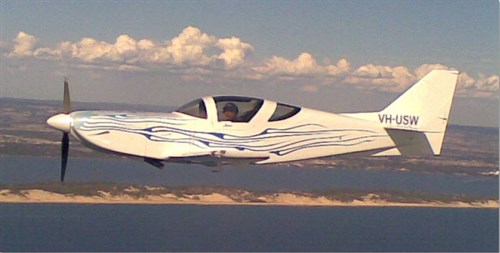
On 9 December 2013, the pilot/owner of an amateur-built Stoddard-Hamilton Glasair III aircraft, registered VH-USW and operated in the ‘experimental’ category, was conducting a local flight from Jandakot Airport, Western Australia with a passenger on board.
Shortly after take-off, when about 2 km from the airport, the aircraft’s engine stopped without warning. During the ensuing forced landing onto a sports oval, the aircraft’s left wing detached from the fuselage after striking a metal goal post. Fuel from the ruptured left wing fuel tank ignited as the aircraft tumbled across the ground.
The pilot and passenger sustained serious burns and were taken to hospital. The aircraft was destroyed by impact forces and an intense post-impact fuel-fed fire.
Photograph of Stoddard-Hamilton Glasair III, VH-USW
Source: Aircraft owner
What the ATSB found
During the aircraft’s construction, modification of the electronic ignition system incorporated a single point of failure in the intended dual system, increasing the risk of the simultaneous failure of both systems and a total loss of engine power. In addition, the connector plug used for the modification was inappropriate for the in-line installation, increasing the risk of its disconnection and disabling the ignition system.
Examination of the engine found that the single wiring harness for the ignition system was disconnected from the connector plug. However, due to the level of impact and fire damage sustained by the aircraft, the ATSB was unable to conclusively establish if this occurred inflight, resulting in the total engine power loss, or during the early stages of the impact sequence.
Safety message
The aviation industry has long recognised the need for redundant systems, particularly those relating to safety-critical components. The ATSB cautions that, even if unintended, the incorporation of a single point of failure into such systems during construction or modification can eliminate all levels of redundancy. In this case, damage to the aircraft’s modified single wiring harness resulted in the failure of an otherwise redundant system, with near-fatal consequences.
The occurrence
On the afternoon of 9 December 2013, the pilot/owner of an amateur-built Stoddard-Hamilton Glasair III aircraft, registered VH-USW (USW) and operated in the ‘experimental’ category, conducted a preflight inspection in preparation for a local flight from Jandakot Airport, Western Australia. The pilot reported that the aircraft’s wingtip fuel tanks were empty, the main tanks were full and 25 L was uploaded into the header tank. The pilot and passenger then boarded the aircraft and taxied for the flight.
The flight was the first since the aircraft’s electronic ignition system had undergone maintenance. While the ignition system was engine ground-run tested by a Licenced Aircraft Maintenance Engineer as part of that maintenance, the pilot elected to perform the engine run-up checks twice as a precaution. The pilot reported that the engine operated as normal.
At about 1434 Western Standard Time,[1] the pilot advised Jandakot Tower air traffic control that they were ready for departure and was subsequently cleared to take off from runway 24 Right (R). After take-off, the aircraft was climbed to 1,000 ft and a shallow right turn commenced toward Fremantle. The pilot and passenger stated that at about 1436 the aircraft’s engine suddenly stopped without warning and the pilot broadcast on the Jandakot Tower radio frequency that they had experienced an engine failure. The pilot reported that, while there was insufficient altitude to conduct the engine failure ‘trouble checks’,[2] they moved the two toggle switches for the aircraft’s ignition system to OFF and ON again in an attempt to re-start the engine, but with no effect.
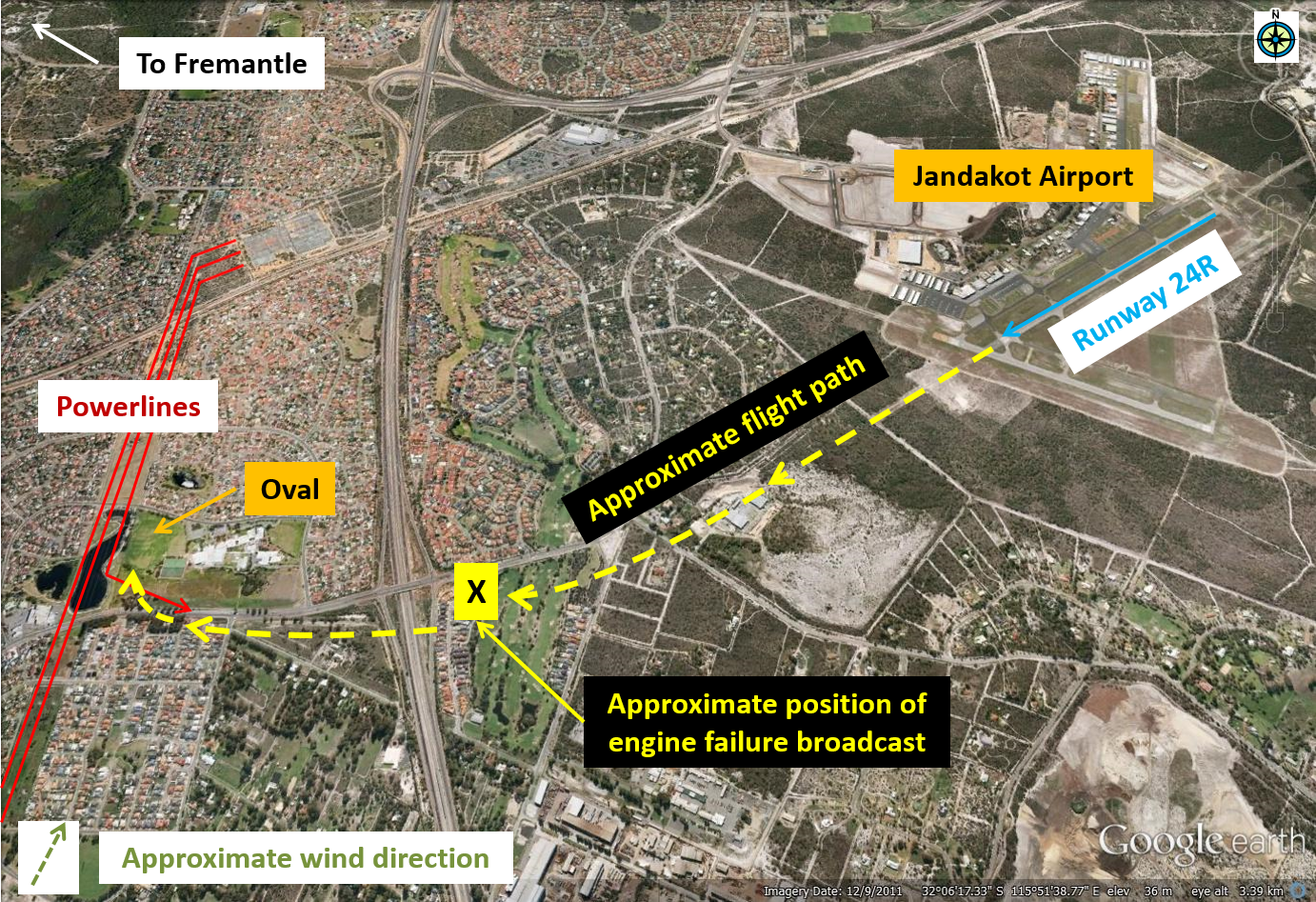
The pilot focused on flying the aircraft and looking for a suitable landing area. With very few options available, the pilot, who was aware of powerlines in the vicinity (Figure 1), manoeuvred the aircraft for a forced landing in a nearby grassed area (Lakelands Reserve Oval). It was reported that the propeller was windmilling during the descent.[3]
Figure 1: Approximate flight path and forced landing area
Source: Google earth, modified by the ATSB
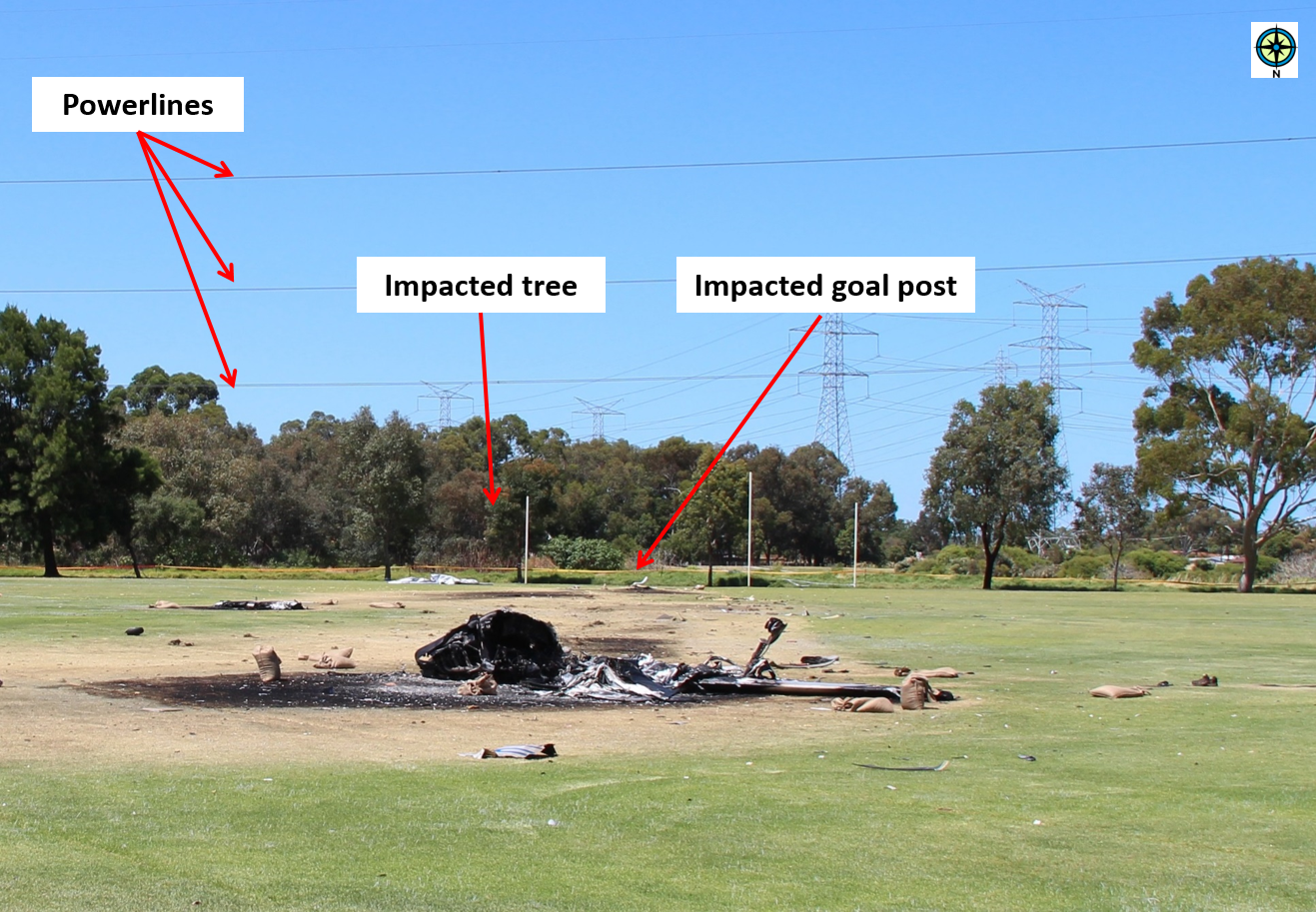
Approaching the landing area, the pilot observed a powerline along the flight path and dived abruptly to pass beneath that line. At the same time, the pilot lowered the undercarriage and flaps to control the aircraft’s airspeed and avoid overshooting the oval. The pilot elected not to turn the aircraft’s electrical system off for the landing to ensure that the undercarriage lowered completely.
After flying under the powerline, the aircraft lightly clipped a tree bordering the oval before colliding with a metal goal post. The pilot reported not seeing the goal posts until it was too late to avoid the collision (Figure 2). The pilot recalled hearing the sound of the impact then next remembered lying on the ground and seeing the passenger nearby and the aircraft wreckage on fire. The pilot helped the passenger to move away from the wreckage and remove burning clothes items.
Figure 2: Three-strand powerline on late approach to the landing area and the impacted tree and goal post (looking back along the direction of travel)
Source: ATSB
Witnesses in the vicinity heard the sound of an impact and saw a fireball and the burning aircraft tumbling across the oval before coming to rest. A number of people rushed to assist and found the two occupants clear of the burning wreckage. They moved the occupants further away and administered first aid until emergency services personnel arrived.
The pilot and passenger both sustained serious burns and were taken to hospital. Emergency services extinguished the fire, but the aircraft was destroyed by the impact forces and intense fuel fed fire.
The pilot held a Private Pilot (Aeroplane) Licence that was issued on 12 March 1990 and a valid Class 2 Aviation Medical Certificate.[4] The pilot had a total flying experience of 3,265 hours, of which 114.6 hours were conducted in the Glasair III aircraft. In the previous 90 days, the pilot had flown 10.2 hours and they last completed an aeroplane flight review on 1 November 2013. This review was carried out in a Van’s Aircraft RV-8 and included a practice forced landing.
Aircraft information
General
The Stoddard-Hamilton Glasair III is a kit-built, all-composite aircraft (primarily fibreglass/resin and carbon fibre/resin) with a low-wing and retractable undercarriage. Consistent with its construction in the United States (US), an experimental amateur-built certificate of airworthiness was issued by the US Federal Aviation Administration (FAA) on 19 July 2000. The aircraft was subsequently purchased by the present owner/pilot and imported into Australia, where it was registered on 1 October 2008 as VH-USW. A special certificate of airworthiness designating the aircraft in the Experimental airworthiness category, and for operation as an amateur-built aircraft, was issued by a Civil Aviation Safety Authority (CASA) authorised person on 22 January 2009.
Engine and propeller
The aircraft was fitted with a six-cylinder, direct-drive, horizontally-opposed, air-cooled Textron Lycoming engine, model number IO-540-K1B5, serial number L-25612-48A. The engine drove a two-bladed Hartzell, constant-speed propeller, model HCCZYK-1BF.
Maintenance
A review of the aircraft’s logbook and other related documentation indicated that USW was maintained in accordance with an approved CASA maintenance schedule. The last periodic inspection was conducted on 11 March 2013, at which time the aircraft’s total time in service was 223.2 hours. The aircraft last flew on 12 November 2012 and had undergone several ground runs following maintenance since that time.
Recent maintenance was carried out on the aircraft’s Light Speed Engineering Plasma I capacitor discharge ignition (CDI) electronic ignition system. This included the removal of the aircraft’s two CDI modules for upgrade by the manufacturer before they were refitted to the aircraft and ground tested satisfactorily.
The power feed to each system was also modified during that maintenance to enhance the independence of the two CDI systems. It was reported that a wire that led from the main power bus to the voltmeter switch was temporarily disconnected (see the section Engine monitoring and recording) and that the wire was not reconnected prior to the occurrence. The aircraft had not flown in the intervening period.
Alternator V-belt
The aircraft’s maintenance records indicated that a notched alternator V-belt was fitted to the engine in about January 2000 and had not been replaced. The engine manufacturer specified that, following fitment of a new belt, the belt should be checked for correct tension 25 hours after installation. It was unknown if this had been conducted.
Routine maintenance inspections were certified as conducted in the intervening 14-year period. According to the FAA and CASA maintenance schedules, these inspections included an inspection of the V-belt. The pilot indicated that when inspected, no problems were identified with the condition of the belt. According to the belt manufacturer, the belt had an acceptable storage life of 8 years, even if stored for this time on the drive under tension. Examination of the alternator belt tensioning arm showed a single, circular witness mark that coincided with the under-head washer on the bolt. Consistent with the maintenance records, this indicated that the alternator belt had likely not been replaced since initial installation during the construction of the aircraft.
Further, in order to prevent ‘belt set’,[5] the manufacturer recommended that tension be removed from the belt if storage time before re-use was greater than about 6 months. Depending on a number of factors including drive design, storage environment and maintenance practices, serious belt damage may occur when starting this type of belt if ‘set’ had occurred and/or the belt had lost tension. The maintenance records for USW indicated a maximum storage time of just over 6 months. As such, there would have been no need to remove tension from the belt.
Electronic ignition system
During the aircraft’s construction, the engine was modified by replacing its dual magneto system and corresponding aircraft-type spark plugs and leads with the Plasma I capacitor discharge ignition (CDI) system (electronic ignition system). This system was originally designed to operate as a single CDI system and used dual-lead coils and automotive spark plugs and leads.
In normal operations, six-cylinder engine ignition timing on the Plasma I was achieved by a trigger coil system. As part of this system, a trigger plate mounted on the front of the engine crankcase contained three trigger coils and precisely-placed interrupter trigger bolts fastened to the ring gear support assembly (flywheel). This assembly is attached to the propeller hub. As the flywheel rotates, the trigger coils sense the trigger bolts and produce an electrical signal each time successive bolts pass the coils. This provides an indication of crankshaft position (timing) and allows the determination of the engine revolutions per minute (RPM) via wiring to the individual CDI modules located beneath the instrument panel in the cockpit. Timing, RPM and manifold pressure information is integrated by the CDI modules to optimise the timing of the spark in each cylinder.
Aircraft builders were supplied with a trigger plate assembly and were responsible for connecting a short wiring harness from the trigger plate to the pre-manufactured CDI module cable. The manufacturer’s diagram recommended that the wiring harness be attached using a suitable connector. The manufacturer also recommended a soldered joint connection as a preference. These connections were based on a single electronic ignition system installation.
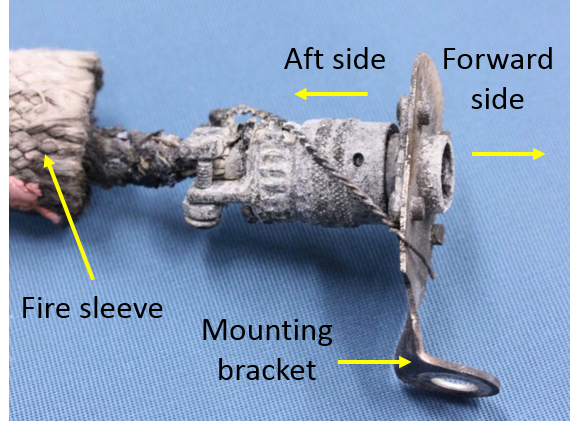
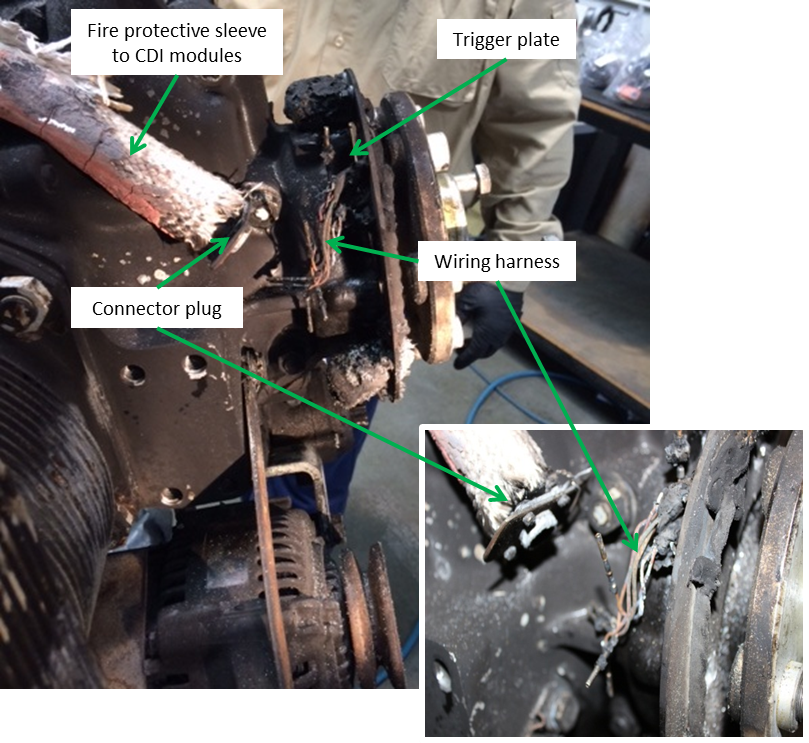
The aircraft’s ignition system was further modified by the aircraft builder to include a second CDI module and an auxiliary battery. The addition of an auxiliary battery was recommended by the manufacturer and independently powered the second system. The aircraft’s two CDI systems were intended by the builder to operate independently, providing redundancy in the event that one of the duplicated elements failed. To duplicate the wiring for the two CDI modules, the builder split the single wiring harness from the trigger plate into two using a MILSPEC connector plug.[6] This plug was designed to be attached to a metal box or a panel, such as a firewall. However, in USW, it was mounted onto a homemade, right-angled bracket that was fastened to the front of the engine crankcase (Figure 3). The connector plug and associated wiring were in an in-line arrangement.
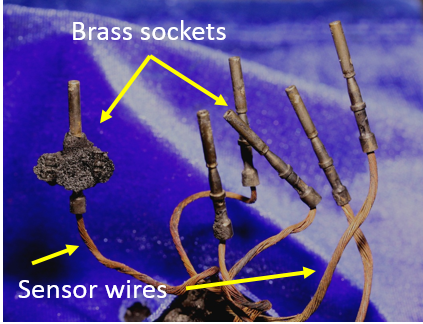
On the aft side of the connector plug in USW, the duplicated wires were clamped to relieve stresses from wire tension and were collectively shrouded in fire sleeving (Figure 3), which went to each CDI module. On the forward side of the plug, the single set of wires from the trigger plate was inside two plastic sleeves and their ends inserted into brass sockets, which were crimped for security (Figure 4). The sockets were then pushed into the forward side of the connector plug through a rubber sealing grommet and held in place in the cylindrical, plastic insulator by plastic clips. There was no means on this type of connector for relieving any stresses placed on the wires.
Figure 3: Bracket-mounted connector plug and fire sleeve
Source: ATSB
Figure 4: Sensor wires and brass sockets
Source: ATSB
Light Speed Engineering Plasma II and III ignition systems, such as the direct crank sensor installation, are now available as a dedicated dual system, with two independent wiring harnesses originating from the sensor plate and connecting directly to each CDI module. No intermediate plug, such as the connector plug used on USW, is required.
Engine monitoring and recording
The aircraft was fitted with a Vision Microsystems Inc. VM 1000 engine management system and an EC 100 electronic checklist and caution advisory system. The VM 1000 was normally used to display engine and aircraft system parameters during a flight. Additionally, when the engine RPM increased above 1,500 RPM, the VM 1000 automatically recorded the minimum and maximum values for various operating parameters for the flight. The system also had a built-in warning system whereby any out-of-tolerance parameter flashed on the display.
The recorded data for the occurrence flight was retrieved from the VM 1000 following the accident. This data showed a voltmeter reading of zero for the flight. This was consistent with the reported disconnection of the wire between the main power bus and voltmeter switch, which had been selected to indicate main bus voltage. The remaining values, including engine oil pressure and temperature, ammeter and fuel flow and pressure gave no indication of the reason for the engine failure.
The EC 100 operated in conjunction with the VM 1000 and alerted the pilot to abnormal conditions or trends in the engine operating parameters. The pilot could not recall a warning of a problem with the engine, but had reportedly mentioned to witnesses immediately after the accident that an unspecified engine warning had been received. The passenger reported not paying any particular attention to the warning display during the flight.
Fuel system and selection
The fuel was carried in integral fuel tanks located in each wing, with a reported total capacity of 114 L in each tank. A fuselage header tank located between the engine firewall and the cockpit had a total capacity of 25 L. Additionally, USW was fitted with optional wingtip tanks, but the pilot reported that they were empty for the flight.
A four-position fuel selector was located on the centre console near the pilot’s right knee. To prevent inadvertent selection, a button on the selector had to be raised in order to select the OFF position. The pilot reported selecting the left fuel tank for the flight.
The pilot also reported a previous temporary fuel starvation event with the header tank selected. In that instance the engine had coughed and surged, providing sufficient warning for the pilot to change tanks.
Meteorological information
The automatic terminal information service[7] at Jandakot Airport indicated a 14 kt (26 km/h) surface wind between 140° and 200° (south-south-easterly to south-south-westerly) and a temperature of 27 °C at the time. A nearby surveillance camera showed smoke from the post-impact fire being blown from the south-west.
Wreckage and impact information
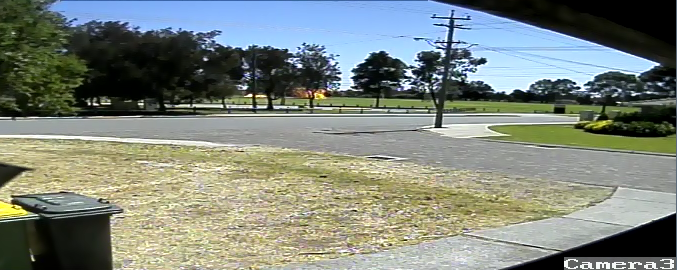
An examination of the wreckage found that the aircraft’s right wingtip clipped a tree on the southern boundary of the oval before the left wing was sheared off at the wing root by the collision with a tubular, metal goal post. This impact ruptured the left-wing fuel tank and severed aircraft wiring from the fuselage into the left wing. Images from a nearby surveillance camera showed that the fuel ignited shortly after the collision with the goal post (Figure 5).
Figure 5: Security camera image of the fire (looking south-south-east)
Source: Channel 7
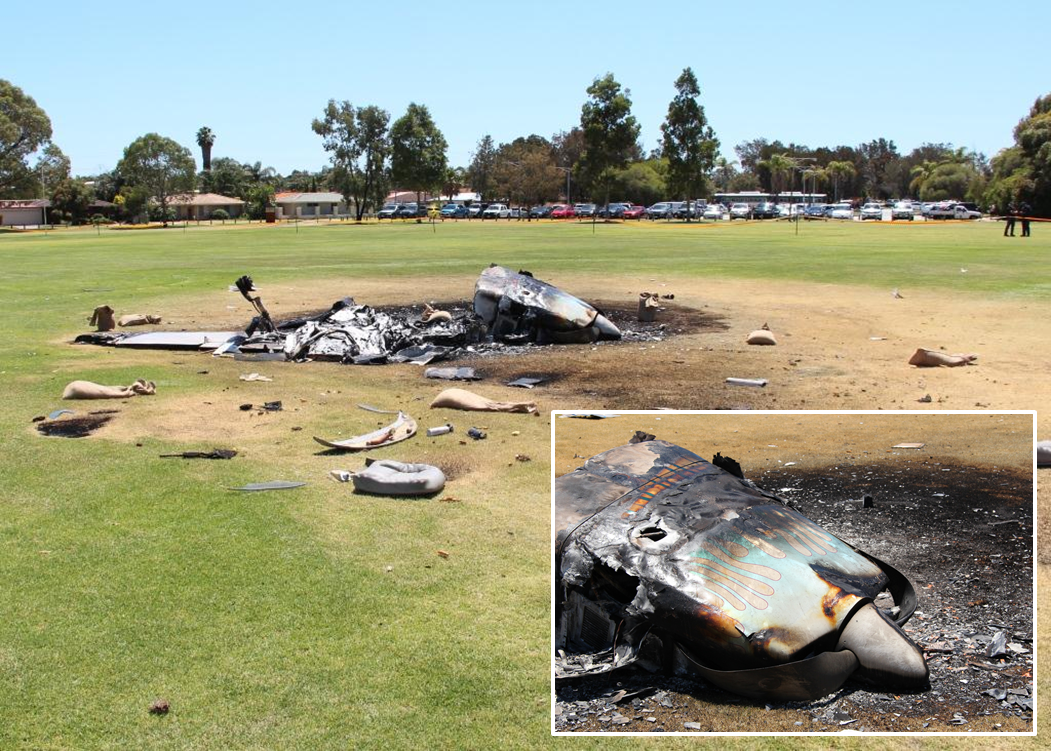
Damage to the aircraft was consistent with witness descriptions and the surveillance images depicting the aircraft tumbling before coming to rest with the fuselage, attached right wing and tailplane inverted. The engine, upper engine cowling, engine mounts and header tank were orientated in an upright position. The upper engine cowling was in situ and intact, with the engine still attached to the firewall assembly via the support frame. The damage to the propeller blades and strike marks on the ground were consistent with the propeller rotating at impact but the engine producing no power (Figure 6 inset).
The impact and fuel-fed fire destroyed the cockpit and severely damaged the composite airframe. This included the destruction of components of the electronic ignition and fuel systems, limiting or preventing examination of these parts.
Figure 6: Aircraft wreckage and propeller damage (see inset)
Source: ATSB
Fire
Shortly after colliding with the ground, a significant fire commenced that was initially fed by fuel from the ruptured left-wing tank. The right wing and header tanks were also breached during the impact sequence. The fire was subsequently extinguished by local fire authorities. The aircraft was destroyed in the fire and the occupants received serious burn injuries. The investigation was unable to identify the ignition source(s) for the fire; however, disruption of the aircraft’s wiring while still powered provided a potential ignition source for the fire.
The emergency procedures section of the Glasair III owner’s manual detailed the actions in the event of an engine failure, in particular, once committed to landing. These included the requirement for the aircraft’s alternator, master and ignition switches to be selected to OFF. In addition, the FAA Airplane Flying Handbook stated that:
Deactivation of the airplane’s electrical system before touchdown reduces the likelihood of a post-crash fire. However, the battery master switch should not be turned off until the pilot no longer has any need for electrical power to operate vital airplane systems.
In this instance, due to the difficult approach and landing area constraints, the pilot lowered the flaps and undercarriage to assist with controlling the aircraft’s landing speed and prevent an overshoot. As the undercarriage required electrical power to extend, the pilot elected to leave the aircraft’s electrical system on for the landing. This was consistent with the FAA guidance.
Survival aspects
The pilot reported that he and the passenger most likely escaped the burning wreckage during the break-up of the fuselage as the aircraft tumbled across the oval. This dislodged the seatbelt attachment points from the fuselage and released the pilot and passenger from the wreckage.
Tests and research
Engine examination
The engine was recovered from the wreckage and transported to an approved overhaul facility for technical inspection under the supervision of the ATSB. The examination found no evidence of internal mechanical failure of the engine that would have prevented normal operation prior to the occurrence.
The wires from the engine timing trigger plate for the aircraft’s electronic ignition system were found disconnected from the connector plug and displaced in the direction of engine rotation (Figure 7). In addition, there was no evidence of the alternator V-belt. Whether the belt failed or dislodged from the drive prior to or during the accident sequence, or was consumed in the postimpact fire could not be determined.
The remaining components from the aircraft’s ignition system and the alternator were removed from the engine. Together with the already-removed flywheel, these items were transported to the ATSB technical facilities in Canberra, Australian Capital Territory for further examination.
The wires for each of the trigger coils on the engine timing trigger plate were resistance tested and found within manufacturer’s specifications. A check for short circuiting between the wires was also conducted, with nil evidence found. This indicated that the trigger coils were capable of functioning prior to the occurrence.
Examination of the pins and brass sockets on the forward side of the connector plug showed damage consistent with the wiring harness being forcefully and unevenly disconnected either inflight or during the early stages of the impact sequence. However, no witness marks were identified on the two flywheel trigger bolts to indicate contact with another part of the engine or its accessories. This and the fire damage to the plastic insulation on the wiring harness meant that there was insufficient evidence to conclude that they had contacted a trigger bolt.
System redundancy and single points of failure
On 22 June 2001, the pilot of an amateur-built Quickie Aircraft Corporation Q2 aircraft reported that their aircraft’s engine stopped during the climb. The pilot attempted a forced landing at the departure aerodrome. The pilot reported that, as the aircraft approached the runway, they ‘encountered sink’ and undershot the runway. The aircraft collided with a boundary fence before coming to rest. The pilot reported that the switch for the aircraft’s ignition system had failed. The aircraft was fitted with a dual magneto ignition system but had a single ignition selector switch. The pilot indicated that not being able to select the individual ignition systems reduced the redundancy of the system (ATSB occurrence 200103043).
Downer (2009) described system redundancy as follows:
An element is redundant if it contains backups to do its work if it fails; a system is redundant if it contains redundant elements. This can mean having several elements that work simultaneously but are capable of carrying the ‘load’ by themselves if required…
Describing the advantages of system redundancy, Dekker (2011) highlighted that:
…redundancy is the best way to protect against hazard…safety-critical systems usually have multiple redundant mechanisms…it protects them against the failure of a single component or part that could directly lead to a bad outcome.
The October 2014 edition of the Sport Aircraft Association of Australia Airsport magazine included an article on the occurrence involving USW and the aircraft’s electronic ignition system. Specifically, the article discussed that, while the ignition system was well-built, with redundancies in place, the wiring from the trigger plate was a potential common point of failure that, if damaged, would result in a sudden and total power loss. The article further suggested a number of strategies to help manage this risk, including the installation of a hybrid ignition system (one magneto and one electronic ignition system) and/or ensuring the wiring was protected from mechanical damage. The manufacturer of the ignition system fitted to USW noted the benefits of having a dual electronic ignition system. In particular, dual ignition would provide enhanced performance and reliability when compared with traditional (two magnetos) or hybrid ignition systems. Regardless of the solution adopted by builders, the manufacturer reinforced that, in order to address the risk of a single point of failure, it is crucial that dual electronic ignition systems operate independently.
The US Federal Aviation Administration Advisory Circular 25.1309-1A (System design and analysis) suggests that in any safety-critical system, the failure of a single element, component or connection should be assumed, regardless of the probability. However, such single-point failures should not compromise the safety of a flight or significantly reduce the aircraft’s capability or a crew’s ability to cope with the resultant failure. A single point of failure can simultaneously eliminate all levels of redundancy (Berk 2009).
The loss without warning of engine power at about 1,000 ft shortly after take-off, combined with the surrounding built-up area and obstacles, presented the pilot with very few landing options. The loss of the left wing from the collision with the goal post contributed to the aircraft tumbling across the sports oval, increasing the severity of the occupants’ injuries and aircraft damage.
The extensive damage from impact forces and the post-impact, fuel-fed fire precluded examination of a number of the aircraft’s fuel system components. However, the pilot’s description of the symptoms associated with a previous loss of engine power from fuel starvation, and the amount of fuel on board so shortly after take-off, indicated that fuel-related issues were not a factor in the sudden engine power loss.
While the engine examination identified no internal mechanical failure or abnormality that would have precluded normal operation, the single wiring harness to the aircraft’s electronic ignition system was found disconnected.
This analysis will discuss the aircraft’s electronic ignition system and the possible reasons for, and timing of the disconnection of the wiring harness. It will also consider the suitability of the associated connector plug and discuss the risks to aircraft systems of single points of failure.
Electronic ignition system installation
During construction, the aircraft was fitted with a single electronic ignition system that was then modified by the builder of the aircraft with the addition of a second ignition module. The installation was intended by the builder to create a dual system that would provide for redundancy. That is, in the event of one system failing, the other would continue to operate. However, the modification retained the original single wiring harness from the engine timing trigger plate to the connector plug, incorporating a single point of failure in the intended dual system.
Cessation of the engine timing signal, such as from the disconnection of the single wiring harness, would result in the loss of timing signals to both ignition modules and failure of the ignition system. Without an ignition source, the engine would stop operating.
The alternator V-belt and the engine timing trigger bolts on the flywheel were the only two moving components within the vicinity of the single wiring harness and connector plug with the potential to disconnect the harness. The still rotating propeller meant that, dependent on the presence of an operational alternator belt, these components may still have been rotating at impact. However, the unavailability of the alternator belt for examination prevented any conclusion on its pre-impact condition or contribution to the disconnection of the harness. Regardless, the continued use of the V-belt, which had been stored under tension for longer than the manufacturer’s acceptable storage life, increased the risk of belt failure.
As with the difficulty determining the contribution, if any, of the V-belt to the occurrence, the lack of witness marks on the two flywheel trigger bolts and the fire damage to the plastic insulation on the wires precluded a conclusion that the wiring harness had contacted a trigger bolt.
In any case, examination of the connector plug and sensor wire sockets showed that the wiring harness was forcibly disconnected prior to the fire. However, given the number and nature of the multiple impacts with terrain during the accident sequence, the timing of the disconnection could not be established.
Suitability of the wiring harness connector plug
The connector plug and associated wiring forward and aft of the plug were an in-line installation. The connector allowed duplication of the wiring for the intended dual ignition system and provided clamping on the aft side of the plug to relieve wire tension. The clamping was not repeated forward of the plug, where the single wiring harness from the engine timing trigger plate had disconnected.
The wiring on the forward side of the plug relied on friction and an internal, plastic locking mechanism to retain the sensor wires and sockets in position. The limited support provided on the forward side of the plug increased the risk of the wiring harness disconnecting from the in-line installation.
Single point of failure
The aviation industry has long recognised the need for redundant systems, particularly those relating to safety-critical components. Incorporating a single point of failure into such systems during construction or modification can eliminate all levels of redundancy. In this case, the loss of the single wiring harness resulted in failure of an otherwise redundant system, with near-fatal consequences.
Findings
From the evidence available, the following findings are made with respect to the engine failure at about 1,000 ft shortly after take-off, and subsequent collision with terrain in a nearby sports oval involving an amateur-built Stoddard-Hamilton Glasair III aircraft, registered VH-USW, near Jandakot Airport, Western Australia on 9 December 2013. These findings should not be read as apportioning blame or liability to any particular organisation or individual.
Contributing factors
The aircraft's engine stopped without warning and, with very few landing options available and a number of obstacles on short finals to the intended landing area, the forced landing resulted in a collision with terrain.
Other factors that increased risk
Modification of the aircraft’s electronic ignition to an intended dual system during aircraft construction incorporated a single point of failure, increasing the risk of the simultaneous failure of both systems and a total loss of engine power.
The connector plug for the aircraft’s electronic ignition system was inappropriate for an in-line installation, increasing the risk of the single wiring harness becoming disconnected and disabling the ignition system.
The alternator V-belt fitted to the aircraft exceeded the manufacturer's storage life of 8 years, increasing the risk of belt failure.
Other findings
Although the initiator and timing of the disconnection could not be conclusively determined, the single wiring harness for the aircraft’s electronic ignition system was found disconnected from the connector.
Sources and submissions
Sources of information
The sources of information during the investigation included:
the pilot and passenger of VH-USW
the Licenced Aircraft Maintenance Engineer and electrical technical expert for VH-USW
Light Speed Engineering
a number of witnesses
the Civil Aviation Safety Authority.
References
Berk J 2009, Systems Failure Analysis, ASM International Ohio.
Dekker S 2011, Drift into failure: from hunting broken components to understanding complex systems, Ashgate Publishing Surrey.
Downer J 2009, When Failure is an Option: Redundancy, reliability and regulation in complex technical systems, Discussion Paper No. 53, Centre for Analysis of Risk and Regulation London.
Federal Aviation Administration 2004, Airplane Flying Handbook, Chapter 16: ‘Emergency procedures’, United States Department of Transportation.
Federal Aviation Administration 1988, System design and analysis, Advisory Circular AC 25.13091A.
George A 2014, ‘Engine failure Glasair III’, Airsport, October 2014, pp. 14–15.
Gates Facts Extended Storage of Belt Drives and Analyze Your Way to Longer Lasting, Better Performing V-belt Drives.
Submissions
Under Part 4, Division 2 (Investigation Reports), Section 26 of the Transport Safety Investigation Act 2003 (the Act), the ATSB may provide a draft report, on a confidential basis, to any person whom the ATSB considers appropriate. Section 26 (1) (a) of the Act allows a person receiving a draft report to make submissions to the ATSB about the draft report.
A draft of this report was provided to the pilot and passenger of VH-USW, the aircraft’s electrical technical expert, Light Speed Engineering, the Civil Aviation Safety Authority and the United States National Transportation Safety Board.
A submission was received from Light Speed Engineering. The submission was reviewed and where considered appropriate, the text of the report was amended accordingly.
Purpose of safety investigations
The objective of a safety investigation is to enhance transport safety. This is done through:
identifying safety issues and facilitating safety action to address those issues
providing information about occurrences and their associated safety factors to facilitate learning within the transport industry.
It is not a function of the ATSB to apportion blame or provide a means for determining liability. At the same time, an investigation report must include factual material of sufficient weight to support the analysis and findings. At all times the ATSB endeavours to balance the use of material that could imply adverse comment with the need to properly explain what happened, and why, in a fair and unbiased manner. The ATSB does not investigate for the purpose of taking administrative, regulatory or criminal action.
Terminology
An explanation of terminology used in ATSB investigation reports is available here. This includes terms such as occurrence, contributing factor, other factor that increased risk, and safety issue.
Publishing information
Released in accordance with section 25 of the Transport Safety Investigation Act 2003
Ownership of intellectual property rights in this publication
Unless otherwise noted, copyright (and any other intellectual property rights, if any) in this report publication is owned by the Commonwealth of Australia.
Creative Commons licence
With the exception of the Coat of Arms, ATSB logo, and photos and graphics in which a third party holds copyright, this publication is licensed under a Creative Commons Attribution 3.0 Australia licence.
Creative Commons Attribution 3.0 Australia Licence is a standard form licence agreement that allows you to copy, distribute, transmit and adapt this publication provided that you attribute the work.
The ATSB’s preference is that you attribute this publication (and any material sourced from it) using the following wording: Source: Australian Transport Safety Bureau
Copyright in material obtained from other agencies, private individuals or organisations, belongs to those agencies, individuals or organisations. Where you wish to use their material, you will need to contact them directly.