Beech Aircraft Corp 200, VH-SWP

Summary

The Beech Super King Air 200 aircraft was on an aeromedical flight from Darwin to Gove. The flight had been planned to maintain a cruise level of flight level (FL) 150. The crew consisted of the pilot and a flight nurse. An off-duty company pilot was also on board for the flight back to Gove and occupied the co-pilot's seat. During the climb the pilot carried out the normal transition altitude checklist actions. The actions included checking the pressurisation system for normal operation and that the engine bleed air switches were selected to "ON". The crew oxygen mask in-line indicators were both noted to be "green", and the position of the ceiling mounted oxygen control was also visually checked.

At FL130, the pilot contacted the air traffic controller and amended the planned cruise level to FL270. As the aircraft passed through FL254 he noticed that the left and right "Master Warning" captions, positioned on the instrument coaming, had begun to flash. The cabin "ALT WARN" annunciator was also illuminated, indicating the cabin altitude rising above 12,500 ft, and that the cabin ceiling mounted passenger oxygen masks had automatically deployed. The cabin pressure altitude alert system was set to activate at 12,500 ft.

The pilot, the passenger and the flight nurse immediately donned oxygen masks, with the pilot carrying out the applicable "Phase One" actions for a loss of cabin pressurisation. The pilot then contacted the air traffic controller and gained clearance for an immediate descent to FL210.

During the descent the air traffic controller made several unsuccessful attempts to contact the aircraft and, when the aircraft was observed to descend through FL200, an "Alert Phase" was declared. As the aircraft neared FL190, contact was re-established with the pilot. The aircraft was then climbed back to FL210, as the cabin pressurisation had stabilised and was maintaining a cabin pressure altitude of between 8,000 and 9,000 ft. The flight was continued to Gove.

Prior to landing, the pilot decided to again climb the aircraft to assess at what altitude the pressurisation operation began to malfunction. The pilot contacted the air traffic controller, and was given a clearance to operate "not above FL150" while the problem was assessed. It was found that by FL140 the cabin pressure was less than normal, and after less than a minute of maintaining level flight at that altitude, the cabin altitude began to climb. The aircraft was then descended and a normal landing carried out. The alert phase was cancelled.

An initial examination of the aircraft by maintenance personnel found numerous small pressurisation leaks from the airframe. The aircraft was then flown back to Darwin for a more thorough examination. During that examination several other leaks were evident, including a split main cabin door seal. All leaks were repaired and the door seal replaced. The left bleed air flow pack also had a leaking seal joint on the venturi body and the left flow pack pneumostat was faulty. The flow pack and pneumostat were replaced and the aircraft returned to service.

The pilot indicated that the reason he did not level the aircraft at FL210, as originally cleared by air traffic control, was that he had been fully occupied with the pressurisation problem and with going through the "Phase Check" manual during the descent. Due to that action he had forgotten to set the altitude select function "ALT SEL" on the autopilot as he normally did. That omission had prevented the autopilot "auto capturing" the assigned altitude during the descent, as he expected, and the aircraft was allowed to descend lower than intended. He reported that he had set the aural altitude alert system correctly, but due to his concentration on the pressurisation situation he did not notice the alarm.

Occurrence summary

Investigation number 200102455
Occurrence date 05/06/2001
Location 170 km E Darwin, (NDB)
State Northern Territory
Report release date 20/03/2002
Report status Final
Investigation type Occurrence Investigation
Investigation status Completed
Mode of transport Aviation
Occurrence class Incident
Highest injury level None

Aircraft details

Manufacturer Beech Aircraft Corp
Model 200
Registration VH-SWP
Serial number BB-529
Sector Turboprop
Operation type Aerial Work
Departure point Darwin, NT
Destination Gove, NT
Damage Nil

British Aerospace Plc BAe 146-100, VH-NJY

Safety Action

Local safety action

As a result of the investigation the operator has:

  1. Scheduled detailed visual inspection of airstair actuators and fittings during routine maintenance.
  2. Issued maintenance instructions to check that:
    • airstair retract switch covers are fitted and correctly aligned with the rocker switch;
    • adequate tolerances exist when replacing panels around the retract switch so that the switch cannot be fouled by surrounding panels; and
    • the retract switch operates without obstruction and springs back to the `off' position.
  3. Amended maintenance schedules to include:
    • Operational check of the airstair hydraulic system;
    • Inspection for evidence of hydraulic leakage from the `retract' actuator banjo fittings and airstair hydraulic coupling and banjo fitting; and
    • Regular change of airstair banjo fitting `o' rings, as required, during heavy maintenance checks.
  4. Amended flight attendant emergency procedure manuals and training sessions to reflect the requirement for cockpit doors to be closed in the event of smoke or fumes.
  5. Amended flight crew and flight attendant training modules to include scenarios that reflect aspects of this occurrence, including information regarding suitable evacuation paths for passengers and crew.
  6. Formed a working group within the Australasian Aviation Ground Safety Council. The working group will develop a Recommended Industry Practice procedure for response to an aircraft that has an emergency return to the terminal from a taxi position

Significant Factors

  1. The airstair retract switch remained in the `on' position, thereby allowing sustained hydraulic pressure to be delivered to the airstair retraction system.
  2. The airstair actuator banjo fitting `o' ring failed.
  3. The non-use of the crew interphone system exposed the flight crew to the fumes.
  4. Cabin crew opened the flight deck door allowing the mist/fumes into the flight deck.
  5. Emergency response teams did not provide portable stairs in a timely manner.
  6. Cabin crew disembarked passengers through the fumes affected forward left door.


Analysis

Airstair operation

The electric stand-by pump would have been switched off from the flight deck shortly after airstair retraction, thereby reducing hydraulic pressure even though the retract switch was stuck in the `on' position.

However, after engine start, the engine driven hydraulic pumps would have delivered pressure to the airstair hydraulic system. Sustained hydraulic system pressure would then have been delivered to the airstair retraction system when the pump was engaged.

The failure of the retract switch allowed sustained pressure to be delivered over an undetermined, but excessive time, to the airstair retraction system. That exposure resulted in the failure of the `o' ring and consequent leakage of fluid, as a fine mist, into the cabin.

Emergency Procedures

Instead of using the crew interphone, to contact the flight crew, the flight attendants followed common practice and opened the flight deck door to tell the flight crew about the fumes. This action exposed the flight crew to the fumes.

The captain's decision not to don his oxygen mask could have resulted in flight crew incapacitation through exposure to smoke or fumes.

The information exchange between the flight crew and ground staff should have indicated a need for portable stairs at the rear door. The decision to disembark the passengers through the forward door was not appropriate. Use of the rear door would have provided passengers and flight attendants better protection from the fumes.

The absence of suitable emergency ground procedures, delay in response from ground staff, and the provision of stairs to only the front door, increased the exposure to fumes for passengers and crew.

Summary

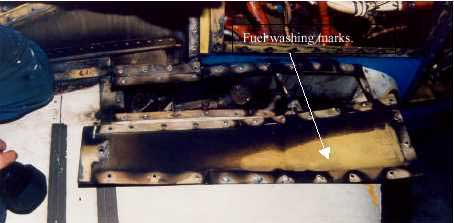
During taxi from the terminal, when the British Aerospace BAe 146-100 was approximately 150 metres from the parking bay, and while making the pre-flight safety public address, a flight attendant began coughing due to a slight irritation in her throat and was unable to finish the presentation. When the second flight attendant went to the front of the cabin to assist, she too developed a cough. Both flight attendants saw what they described as a grey, smoky gas in the airstair region of the left door.

At approximately the same time, the first officer experienced an involuntary cough and stinging eyes and donned an oxygen mask. A short time later a flight attendant opened the flight deck door and advised the flight crew that smoke, or fumes, were filling the forward section of the passenger cabin. The flight crew turned off both air conditioning packs and the Auxillary Power Unit and immediately returned to the parking bay after advising Air Traffic Control and the ground handling company. During the return to the bay, the captain opened the left flight deck window and the flight attendants moved the forward seated passengers to the rear cabin and instructed passengers to cover their nose and mouth.

When the flight crew reported their intention to return to the terminal, the ground handling company requested that passengers remain on board the aircraft at the terminal. The first officer advised the company that this was not possible as there were fumes in the cabin. The aircraft arrived back at the parking bay approximately four minutes after the fumes were first noticed.

Upon arrival at the terminal the captain instructed the flight attendants to open the doors. A flight attendant returned to the front of the aircraft from the rear cabin and opened the forward left door. The second flight attendant opened the rear left door. The flight attendants reported that there were no portable stairs available when the doors were opened. The forward flight attendant called to ground staff in the area and portable stairs were brought to the forward left door. The flight attendants elected not to attempt airstair activation as that was believed to be the source of the smoky gas.

To avoid delay, flight attendants disembarked passengers through the forward door, in the vicinity of the fumes. They reported that, as they were coughing, they could not speak to passengers during the disembarkation.

The company later reported that the urgency of the situation might not have been conveyed to ground services during the initial advice of the aircraft's return to the terminal.

After passengers had disembarked, Aviation Rescue Fire Fighting (ARFF) personnel advised the flight attendants to sit outside the aircraft for ten minutes. The flight attendants later underwent a medical check at the recommendation of the company. Neither the captain nor first officer sought medical attention following the incident. All crewmembers have since returned to duty.

Some passengers later reported that they experienced coughing, watering of the eyes, and respiratory irritation during the event. They also reported that medical attention was not available at the terminal. The ground handling company reported that when passengers reached the terminal, staff did not call a doctor when requested by passengers. They also reported that ARFF personnel had recommended that passengers go outside into the fresh air but few passengers had followed that advice.

Subsequent investigation revealed that neither the operator nor the ground handling company had emergency response procedures in place to cover the situation of an aircraft emergency return to the terminal from a taxi position.

Integral airstair

The aircraft was fitted with an integral stairway (airstair) at the forward left door. However, portable stairs were often used in place of the narrow integral stairs for convenience and ease of boarding.

The operator reported that the forward door airstair had been in use before the flight but had been retracted and replaced by portable stairs prior to boarding passengers.

The airstair was operated from inside the aircraft. It was extended manually, but retracted by hydraulic pressure when the airstair-selector `retract' switch was pressed and held in position. This procedure allowed hydraulic fluid (Skydrol) to pass under pressure through a series of lines and valves to activate airstair retraction. When the airstair was retracted, and the airstair-selector switch was released, the rocker-type switch was designed to spring back to the `off' position. The airstair was then pushed along tracks to a rearward, stowed position out of the doorway.

While the aircraft was on the ground with engines off, an electric stand-by pump was used to top-up and maintain pressure for airstair retraction. After engine start-up, engine driven pumps delivered pressure to the airstair hydraulic system.

An examination of the integral airstair by company engineers revealed that the airstair selector switch had stuck in the `retract' position, and also revealed a failed `o' ring in the retraction jack `banjo' fitting in the airstair actuator. During the examination, other `o' rings had also shown signs of deterioration.

The operator reported that an internal failure caused the switch to be stuck in the `retract' position and also noted that the switch was flush with the surrounding panel. The operator considered it possible that the body of the switch became fouled on the panel and remained in the `retract' position.

The operator also reported that the aircraft maintenance manual stated that the airstair `retract' switch should have had a hinged flap cover. The flap was missing and an engineering order had not been raised for its removal.

Crew emergency procedures and manuals

Flight crew emergency procedures for smoke or fumes required flight deck crew to don oxygen at any time that smoke or fumes were evident. The captain reported that he did not don the oxygen mask when he was alerted to the presence of smoke or fumes as the fumes did not affect him. He also considered it more important to return the aircraft to the parking bay to disembark passengers than to stop and don his oxygen mask.

Flight crew emergency procedures for smoke or fumes also required that the flight deck door remain closed. However, this procedure was not reflected in the flight attendant emergency procedures manual. The flight attendants were unaware of the requirement to keep the flight deck door closed.

Occurrence summary

Investigation number 200102292
Occurrence date 24/05/2001
Location Perth, Aero.
State Western Australia
Report release date 18/09/2002
Report status Final
Investigation type Occurrence Investigation
Investigation status Completed
Mode of transport Aviation
Aviation occurrence category Fumes
Occurrence class Incident
Highest injury level None

Aircraft details

Manufacturer British Aerospace
Model BAe 146
Registration VH-NJY
Serial number E1005
Sector Jet
Operation type Air Transport High Capacity
Departure point Perth, WA
Destination Barrow Island, WA
Damage Nil

Beech Aircraft Corp C24R, VH-BMQ

Significant Factors

  1. The aircraft's engine was not operating normally throughout the take-off run.
  2. The pilot continued the take-off run with a 'rough running' engine.


Analysis

Based on witness evidence and the on-site examination of the aircraft, the investigation determined that the engine was not functioning normally during the take-off. However, the prospects of being able to positively identify conditions that may have affected the operation of the engine, the fuel and ignition systems, were severely reduced by the extent of the fire damage. Had the aircraft performed as predicted by the Pilot's Operating Handbook, it should have attained a height of more than 250 ft above ground level at the point that it contacted the trees beyond the end of the airstrip.

It was not possible to determine to what extent the incorrect spark plugs had contributed to the accident as the aircraft had flown with no reported problems from Hoxton Park to Trilby station. However, as indicated by the engine and spark plug manufacturers, the use of incorrect heat range spark plugs could result in serious engine damage from possible detonation/ pre-ignition. The reported symptoms such as engine 'rough running' and 'backfiring' are consistent with a pre-ignition condition.

The investigation could not determine why the pilot in command elected to continue the take-off with a 'rough running' engine.

Summary

The Beech C24R Sierra aircraft had been flown to Trilby Station as part of a weekend pleasure trip two days before the accident. The three occupants, including the aircraft owner, were qualified pilots experienced on the aircraft type.

The aircraft owner was the pilot in command for the flight from Hoxton Park to Trilby Station. During their stay at the property, none of the occupants of the aircraft had given any indication that there had been any problems regarding the operation of the aircraft on that flight.

For the return flight, the youngest of the three men was designated as pilot in command. Witnesses indicated that he occupied the front left seat of the aircraft. He was appropriately licenced for the aircraft type and held a current medical certificate. The aircraft owner occupied a rear seat while the other pilot occupied the front right seat.

Witnesses reported that the engine was 'running roughly' and 'missing' shortly after startup. One witness recalled the pilot carrying out a pre-takeoff engine run-up. The aircraft was then observed to taxy to the end of the dirt strip where the pilot immediately commenced the take-off run. Throughout the take-off run, the aircraft appeared to accelerate slowly with reported 'frequent backfires' and the engine 'missing badly'. One witness expected the pilot to reject the take-off. None of the witnesses observed the aircraft become airborne. Several seconds later the engine noise ceased, followed by the sound of an impact. The burning wreckage of the aircraft was subsequently located on the western bank of the Darling River.

The Bureau of Meteorology assessed the weather conditions at Trilby Station around the time of the accident as fine, with a temperature of 18 degrees C, and the wind from the NW at 15 knots. Calculations based on this data indicated that during the take-off there would have been approximately 5 knots headwind component, and 14 knots crosswind from the right. This was confirmed by witness observations.

The airstrip was 1000 m long and 30 m wide, with a level, dry, gravel surface. There were several small trees 108 m beyond the end of the strip on the extended centreline and a cleared area to the right.

The Pilot's Operating Handbook for the aircraft indicated that with 15 degrees of flap selected, a maximum take-off weight of 2750 lbs, a 5 kt headwind, temperature of 18 degrees C, and 350 ft elevation above mean sea level, the take-off distance to an obstacle height of 15 m (50 ft) was predicted to be 503 m (1650 ft). The trees struck by the aircraft were 1108 m (3635 ft) from the downwind end of the strip.

Autopsy and toxicological examinations of the pilot in command did not reveal any pre-existing medical condition that would have prevented him from safely operating the aircraft.

Inspection of the area between the end of the strip and the accident site revealed that, after becoming airborne and while in a left-wing low attitude, the aircraft had struck the tops of several small trees located beyond the end of the airstrip. The aircraft then crossed the Darling River, impacting on the steeply sloping western bank. Fire had destroyed most of the aircraft structure, except the aircraft's empennage, engine and propeller, limiting the amount of useful information available to the investigation.

Examination of the flap system indicated that the flaps were positioned at approximately 15 degrees. The landing gear position could not be determined. The airframe fuel system was destroyed in the fire. Both fuel tank caps were located secured to their fuel tank filler necks and the fuel selector position was not able to be determined.

The propeller blades were found in a fine pitch position. Fire damage to the propeller governor precluded an assessment being made regarding its pre-impact serviceability. The nature of the damage to the propeller blades indicated that they were not rotating under power on impact. The severe heat damage to the engine's ignition system and fuel control system prevented an assessment being made of their pre-accident operation.

The engine and propeller were removed from the wreckage for a technical examination at an appropriate overhaul facility. This examination revealed spalling damage on the number 1 cylinder exhaust valve camshaft follower. The number 1 cylinder inlet valve stem tip was 'belled' out. The number 4 cylinder connecting rod gudgeon pin bushing was a loose fit in the rod small end. However, nothing significant was noted during the examination of the core engine that would have prevented its operation.

The spark plugs fitted to the engine were part number REM38E in all cylinder lower plug positions, and part number REM40E in all upper positions. Due to the engine being found inverted at the accident site, most of the spark plugs had been coated with engine oil. When tested, all spark plugs operated normally, with the exception of the number 4 cylinder lower plug. After it had been cleaned, the spark plug again operated normally.

The engine manufacturer listed the spark plugs approved for use in their various model engines, and advised that only the approved plugs were to be fitted. The REM38E plugs were the correct type for the engine. The REM40E plugs were of a higher heat range for use in engines of a lower compression ratio. They were neither recommended nor approved for this engine model. The manufacturer stated that during the certification of the engines and spark plug approval, it was determined that it was possible to experience detonation/pre-ignition and serious engine damage with other than the approved spark plugs fitted. The engine manufacturer further advised that the mixing of spark plugs by heat range was not good practice.

The spark plug manufacturer described detonation as the explosion of unburnt fuel ahead of the normal flame front, and is typified by a mildly rough running engine with an audible knocking sound. Pre-ignition is the ignition of the fuel while the compression stroke is occurring, but much earlier than intended. Pre-ignition is typified by engine roughness and backfiring.

The only aircraft documents located were the engine and aircraft radio maintenance logbooks, and some expired maintenance releases. The aircraft and propeller logs, along with the current maintenance release, were believed to have been destroyed in the post-accident fire.

The aircraft's Lycoming IO-360-A1B6 engine, serial number L-7866-51A, had been installed in the aircraft on 29 November 2000 following overhaul. The engine had approximately 35 hours in service since installation. Documentation indicated that during the overhaul, amongst other components, all of the camshaft followers and the spark plugs were replaced. Only REM38E spark plugs were listed as fitted. No documentation indicating fitment of REM40E spark plugs was found. The engine logbook indicated that, on 22 February 2001, the fuel control unit was recalibrated, and the fuel injector nozzles tested due to high fuel flow at take-off. The logbooks indicated that during a subsequent engine run, the engine operated normally.

A pilot who flew the aircraft on 17 May 2001 reported that, following take-off, he experienced an engine surge similar to a change of propeller pitch towards coarse. After an adjustment of the propeller pitch control the engine returned to normal. He recorded the problem and mentioned it to the aircraft owner, who indicated he would have the propeller system examined. No maintenance records relating to this event were located. Maintenance documentation available indicated that the propeller governor had been repaired on 8 September 2000, and the propeller had been repaired on 12 October 2000.

Witnesses reported that the aircraft had been refuelled from a sealed drum on the afternoon of the day before the accident. Post accident examination of a sample of fuel remaining in the drum showed it to be free of water contamination. A detailed analysis of the fuel, carried out by a National Association of Testing Authorities (NATA) accredited laboratory, showed that it met the requirements of 100 Low Lead Avgas. Witnesses indicated that a fuel drain check was carried out prior to flight.

Occurrence summary

Investigation number 200102289
Occurrence date 27/05/2001
Location 20 km W Louth
State New South Wales
Report release date 08/10/2002
Report status Final
Investigation type Occurrence Investigation
Investigation status Completed
Mode of transport Aviation
Aviation occurrence category Collision with terrain
Occurrence class Accident
Highest injury level Fatal

Aircraft details

Manufacturer Beech Aircraft Corp
Model 24
Registration VH-BMQ
Serial number MC-558
Sector Piston
Operation type Private
Departure point Trilby Station, NSW
Destination Hoxton Park, NSW
Damage Destroyed

Saab SF-340B, VH-EKX

Technical Analysis

Examination of a Failed Compressor Blisk - Saab Aircraft AB, SF-340B, VH-EKX

1. FACTUAL INFORMATION

1.1 Introduction

On 23 May 2001, the take-off of a Saab 340 aircraft (VH-EKX) was discontinued as a result of the right engine failing. To investigate the event, the Australian Transport Safety Bureau carried out an examination of the first stage compressor blisk (bladed disk) from the affected engine. An earlier disassembly of the engine had found the component damaged by the partial loss of a single aerofoil (blade) section. The examination attributed the downstream damage within the engine to the effects of the released aerofoil section.

1.2 Component history

The blisk component was installed within a General Electric CT7-9B turboprop engine; serial number 785492. At the time of failure, the engine had operated for a total of 13,931 hours and 16,226 flight cycles. The engine manufacturer indicated that the failed stage-one blisk (p/no. 6055T83G14, s/no. GLHG4996) had been fitted to the engine since new. A supplied specification indicated that the blisk was produced as a forging from a proprietary precipitation hardening stainless steel alloy, similar to UNS S35500 (AM355).

1.3 Visual examination and fractography
1.3.1 General condition

The leading edges and tips of the blisk aerofoil sections had been damaged by multiple impacts (figures 1 & 2). The single fractured aerofoil had separated transversely at a mid-span location, around 29 millimetres above the root transition (figure 3). The rear edges of the blisk hub (adjacent to the stage two compressor wheel coupling) showed appreciable erosion around the full circumference (figure 4). Heat tinting and other evidence indicating rubbing contact against the housing was present over approximately two-thirds of the blisk circumference (figure 5). The forward (convex) surfaces of the aerofoils were coated with an oily, black deposit which increased in density toward the blade tips (figure 6). Beneath the deposit, the surfaces exhibited a bright, lustrous finish, typical of a metallic coating (figure 7). Conversely, the rearward (convex) surfaces exhibited appreciable erosion; being most pronounced toward and along the trailing edges (figure 8). The metallic coating appeared to have appreciably eroded away on this side.

tr200102263_001.jpg

Significant Factors

  1. Onset of the engine non-synchronous vibration excited reverse bending of the first-stage compressor blisk blade in the second or higher bending modes.
  2. Presence of fatigue cracking in the mid-span location on a single first-stage compressor blisk blade led to blade separation.
  3. Damage to the downstream engine components by the separated portion of the blade resulted in a loss of engine power and increased inter-stage turbine temperature.

Analysis

The manufacturer advised that previous research into the mid-span blade failures indicated that the failures were always associated with the presence of vibratory loads. The loads were found to have resulted from the higher levels of non-synchronous engine vibration that were evidenced by the power turbine shaft contacting and rubbing against the compressor tie rod.

The failed engine power turbine shaft was reported to be exhibiting evidence of rubbing against the compressor tie rod. The manufacturer advised that, although the rubbing was not as severe as observed during the previous first-stage compressor blisk mid-span blade separations, the required frequency, severity, and duration of the rub resulting in the blade separation was not known.

Previous research into the problem attributed onset of non-synchronous vibration to friction in the rotor system at the power turbine shaft forward spline due to either lack of lubrication, spline wear, misalignment, or reduced damping at the number 2 bearing in the input drive assembly. The NTSB engine examination report mentioned no deficiency in any of those areas.

On completion of the examination by the ATSB, the blisk was returned to the manufacturer. The ATSB requested to be informed of any further development in the investigation and research into the onset of the engine non-synchronous vibration by the manufacturer's specialists. Any results from that research will be published on the ATSB website at: www.atsb.gov.au.

Summary

During the take-off roll, as the Saab 340 aircraft reached about 100 kts, the crew heard a loud bang that was followed by loss of power from the right engine. The crew rejected the take-off and shut down the engine when the inter-stage turbine temperature increased to about 1,190 degrees Celsius. The air traffic controller confirmed the absence of fire or smoke and the crew returned the aircraft to the gate where the passengers disembarked.

An external examination by the aircraft operator's engineers found no evidence of damage to the engine or the intake from uncontained failure, case rupture, fire, or foreign objects. Two stage-4 air tubes were found broken and the exhaust centre body was missing. An internal boroscopic examination revealed that about one half of a single first-stage compressor blisk (bladed disk) blade had separated, and that the compressor and turbine blades sustained varying degrees of damage on the leading and trailing edges.

Due to the lack of authorised facilities in Australia, the operator sent the engine to its manufacturer in the USA for detailed examination and repair. The ATSB requested the National Transportation Safety Board (NTSB) of the USA to supervise the examination and provide a report to the Bureau. The ATSB also requested that the first-stage compressor blisk be returned for examination to determine the mode of blade failure.

The NTSB report confirmed that about one half of a single first-stage compressor blisk blade was missing and that all downstream engine components sustained varying degrees of damage consistent with the separated portion of the blade passing through the engine. The report also indicated that the engine was found to have been correctly assembled and that no deficiency was found that would have contributed to the separation of a single first-stage compressor blisk blade.

The only anomaly reported was a small difference in setting of the variable stator vane (VSV) assembly opening and closing angles, when compared to the build-up overhaul requirements. The manufacturer advised that such a difference could be expected, as it was reflecting normal in-service wear. The difference in the angles was not expected to affect the engine operation, but could reduce its stall margin.

The NTSB report further detailed damage to the power turbine shaft that was found intact, but containing an amount of black grainy material deposits at some galleries and seals. Commencing about 400 mm from the front end, the shaft also contained about a 200 mm wide strip of circumferential rub marks.

Engine and blisk history

The CT7-9B turbopropeller engine, serial number 785492, had accumulated 13,930.9 hours and 16,226 cycles since new and 4,428.2 hours and 4,718 cycles since overhaul. It was last overhauled in the UK in November 1998.

The engine design employed the "modular" concept with the engine consisting of the accessory, the core and the power turbine modules. The blisk, part number 6055T83G14, serial number GLHG4996, was re-installed into the engine core section module during the engine overhaul in November 1998 and remained a part of the engine since that time.

Since April 1999, the engine was installed into a number of aircraft operated by the same operator and was maintained in accordance with the requirements current at that time. In July 1999, the engine was shut down due to erratic operation and torque fluctuation. The subsequent examination found no fault, with the problem attributed to pilot training. In January 2001, the engine was removed due to noise coming from the gearbox. Records indicated that the hydromechanical unit was replaced and the engine was returned to service.

Blisk examination

Detailed examination of the failed first-stage compressor blisk is covered in Technical Analysis Report 39/01. [See associated tab above]

The examination revealed that one blade had separated about 29 mm from the root and that the remaining blades had sustained multiple impacts and distortions along the leading edges and tips.

The blade separation was found to have occurred as a result of fatigue cracking that initiated from corresponding transverse mid-span locations on both sides of the blade. The initial development and growth of the crack had been slow, extending over numerous hours and flight cycles. At approximately nine cycles before failure, the crack began to advance much more rapidly. The crack grew to a critical size and final overload fracture of the remaining section allowed separation of the outer blade section.

Many shallow cracks, not detected by non-destructive examination, were found adjacent to the primary fractures and in an adjacent blade that had not failed. Many of those cracks contained oxide and corrosion products attesting to their slow growth, and therefore, existence prior to the blade failure event. That presence tended to suggest that the failed blade was subjected to a reverse bending in the second or higher bending modes. No anomalies were found within the blisk material and manufacture.

Previous failures of the first-stage compressor blisk blade

The manufacturer reported that 12 similar events occurred during the engine's 17-year history. Investigation of the previous events led to the conclusion that the engine could experience a non-synchronous vibration that excited the power turbine shaft's first bending mode in the 10,300 to 14,500 RPM range. The power turbine shaft had a rated speed of 22,000 RPM.

The manufacturer reported that the onset of non-synchronous vibration could cause the bending power turbine shaft to contact and rub against the compressor tie rod, resulting in severe metal-to-metal rub between the components. It could also set up a vibratory stimulus, exciting reverse bending in the second and higher bending modes of the first-stage compressor blisk blades, resulting in high stresses at the blades' mid-span location and subsequent crack initiation and propagation. The relative positions of the individual components on the engine is shown at Attachment "A".

The onset of non-synchronous vibration was attributed to friction in the rotor system at the power turbine shaft forward spline due to either lack of lubrication, spline wear, misalignment or reduced damping at the number 2 bearing in the input drive assembly.

Following research into the non-synchronous vibration in the early 1990's, the manufacturer issued a number of service bulletins aimed towards alleviating the problem. The ATSB was advised that the subject engine's power turbine shaft, either during manufacture or at maintenance, had all requirements of the relevant service bulletins incorporated and that the investigated mid-span blade separation was the first such occurrence since June 1995.

Occurrence summary

Investigation number 200102263
Occurrence date 23/05/2001
Location Canberra, Aero.
State Australian Capital Territory
Report release date 10/09/2002
Report status Final
Investigation type Occurrence Investigation
Investigation status Completed
Mode of transport Aviation
Occurrence class Incident
Highest injury level None

Aircraft details

Manufacturer Saab Aircraft Co.
Model 340
Registration VH-EKX
Serial number 340B-257
Sector Turboprop
Operation type Air Transport Low Capacity
Departure point Canberra, ACT
Destination Sydney, NSW
Damage Minor

Piper PA-30, VH-CNZ

Significant Factors

  1. The left-wing fuel tank filler caps were not secured before take-off.
  2. Fuel vented from the left-wing fuel tanks and had the appearance of smoke coming from the left engine.
  3. The pilot(s) did not take the appropriate actions to maintain aircraft performance after shutting down the left engine.
  4. The pilot(s) were unable to maintain control of the aircraft.

Analysis

The aircraft took off with the fuel caps for the left-wing tanks not secured, and the flap covers unlocked. It could not be established if the flap covers remained in the opened (up) position where they were left by the refueller, or whether they moved to the closed/not locked position because of aircraft movement or vibration, or airflow.

There may have been some perceived time pressure regarding the pre-flight inspection because of the deteriorating light. Further, the light may have reduced the visual prominence of the open flap covers. Either, or both of those influences could have contributed to the pilots not being aware that the left-wing fuel caps were not secured.

As the aircraft accelerated during the take-off roll, the caps fell from the left-wing filler ports, probably as a result of vibration and/or aerodynamic forces. The 'smoke' observed by the tower controller and a witness was fuel venting from the open tank filler ports. It was unlikely that any other interpretation of the venting fuel would reasonably have been made in the circumstances, particularly in the deteriorating ambient light conditions, coupled with the position of the filler ports on either side of the engine nacelle.

Other than the tower controller's transmission regarding the 'smoke', it could not be determined what other information the pilots of the aircraft used in reaching the decisions to shut down the left engine and attempt a left turnback. However, based on the examination of the left engine and propeller, there would most probably have been no indication from the cockpit instruments that the left engine was malfunctioning in any way. Whether the pilots were able to observe the 'smoke', or became aware of the situation regarding the fuel caps, could not be determined.

It was apparent from the record of communications with the control tower that the pilot who initiated communications with the air traffic controller prior to take off was not the same person who communicated with the tower controller following the advice that there was 'smoke' coming from the left engine. However, which pilot manipulated the aircraft controls during that period could not be determined.

At the time the aircraft passed abeam the control tower, there was adequate runway and overrun distance available for the aircraft to land and decelerate significantly before reaching the boundary fence. Whether the pilots considered the option of landing straight ahead after being notified of the 'smoke' could not be determined.

The flight path taken by the aircraft (the turn away from the live engine) and the aircraft configuration at impact (left propeller not feathered, landing gear extended) indicated that aspects critical to maintaining single engine performance were not accomplished. The final flight path and impact attitude of the aircraft were typical of what might be expected following loss of control when the airspeed falls below the minimum single engine control speed.

Summary

Sequence of events

The co-owners of the Piper Twin Comanche aircraft, both of whom were pilots, were conducting the flight to test a newly fitted left propeller governor.

At about 1650 EST, one of the owners telephoned the aircraft refueller and requested fuel for VH-CNZ. When the refueller arrived at the aircraft a short time later, he was requested by the other pilot to refuel the aircraft to full tanks. The refueller reported that this pilot appeared to be conducting a preflight check of the aircraft while the other pilot was seated in the cockpit, possibly in the left seat. The refueller noticed that the fuel filler flap covers were open and that the fuel tank filler caps, two on each wing, one on either side of the engine nacelles, had each been removed and placed on the wing adjacent to the filler points. After adding fuel to the right auxiliary fuel tank, the refueller placed the cap in the filler port. The pilot who was doing the external inspection approached him and said that he would secure the caps because they had a locking mechanism that was different from those fitted to many other aircraft types. The refueller then filled the right main tank and placed the cap in the filler port. As he moved away, he saw the pilot move to the tank. The refueller then moved to the left side of the aircraft and filled the left auxiliary and left main tanks, again placing the caps in the filler port of each tank. He did not secure the caps and left the flap covers open. At this stage, he saw the pilot lying beneath the fuselage, apparently conducting a fuel drain check. The refueller recorded in the refuelling register that 179 litres of fuel had been added to the aircraft at 1700. He then told the pilot seated in the aircraft the amount of fuel he had added, and reminded her that he had not secured the fuel caps. The refueller then moved to refuel another aircraft.

A short time later, the aircraft taxied for take-off. Visual meteorological conditions existed with scattered light cloud at 3500 feet. The wind was from the southeast, gusting to 5 knots. Sunset on the day of the accident was at 1658. At the time of the accident, the sun was 3.5 degrees below the horizon, bearing 292 degrees True.

The following is a summary of the pertinent communications between the aircraft (CNZ) and Archerfield Tower (Tower), which commenced at 1714.14.

  • 1714.14 (CNZ) Archer Tower Twin Comanche Charlie November Zulu is ready runway 10 right departing to the southeast (male voice).
  • 1714.26 (Tower) Charlie November Zulu Tower runway right cleared for take-off.
  • 1714.31 (CNZ) Runway right cleared for take-off Charlie November Zulu (male voice)
  • 1715.21 (Tower) Charlie November Zulu there is smoke coming from one of your engines (pause) it's the left engine.
  • 1715.31 (Tower) Charlie November Zulu did you copy.
  • 1715.36 (CNZ) Charlie November Zulu affirm we're shutting it down and request a left turn back for landing (female voice).
  • 1715.43 (Tower) Charlie November Zulu left turn approved.
  • 1715.45 (CNZ) Charlie November Zulu (female voice).
  • 1716.23 (Tower) Charlie November Zulu clear to land.
  • 1716.27 (CNZ) Clear to land Charlie November Zulu (female voice).

Several witnesses observed the progress of the aircraft. Their observations confirmed that a cloud of what appeared to be 'greyish black smoke' coming from both sides of the left engine. The aircraft yawed sharply left and right just after becoming airborne and then commenced a left circuit at very low level, estimated to have been 100 ft above ground level. The landing gear remained extended throughout the circuit. Approaching the western boundary of the airport, the aircraft entered another left turn, passing low over some buildings. Part way through the turn, the aircraft's angle of bank suddenly increased and it descended rapidly into the ground. Both occupants were fatally injured.

Wreckage and impact information

Initial examination at the accident site revealed that the fuel filler flap covers of the two left wing tanks were open, and both filler caps were missing. The caps were recovered the following day from runway 10 right and the adjoining clear way. Fuel wetting was evident on the ground below the open fuel caps of the inverted left wing. A total of approximately 35 litres of fuel was recovered from the damaged right wing fuel tanks. The recovered fuel was confirmed as the correct type and grade for the aircraft. The accident aircraft was the thirteenth of sixteen refuelled from the same batch and tanker on the day. The records show that the fuelling agent had sample tested the fuel on three previous occasions throughout the day. Given that there were no reports of fuel related problems from any other aircraft and because of the obvious level of performance from the right engine. The quality of the fuel as a factor in the development of the accident was discounted.

The aircraft wreckage was located in an open area adjacent to the western boundary fence of the aerodrome, approximately 250 metres north-northwest of the threshold of runway 10 left. Impact marks indicated that the aircraft was inverted and rolling left when it struck the ground. The aircraft attitude was 55 - 60 degrees nose down and 25 - 30 degrees left wing low. The main wreckage came to rest about 17 m beyond the initial impact point. The tail section was right way up and the main wing section was folded back on top of the rear fuselage. The cabin area was severely distorted, with the instrument panel and cockpit floor displaced rearward.

Specific points noted during the wreckage examination included the following:

  • There was no evidence of either pre-impact or post impact fire including to the left engine. (PA30-160 aircraft, along with most other light twin engine aircraft, were not equipped with fire detection or suppressant systems.)
  • The landing gear was locked in the extended position and the wing flaps were fully retracted. Impact damage prevented the serviceability of the stall warning system being assessed.
  • The nature and extent of damage to the cockpit engine control pedestal prevented any useful witness mark information being obtained regarding the pre-impact position of the controls.
  • Ground contact marks and the condition of the right propeller blades indicated that the right engine was developing significant power at impact. Ground contact marks and the condition of the left propeller blades indicated that the left propeller was rotating at impact but that the engine was not developing power.

The constant speed governor from the left engine was recovered; the only obvious damage being slight bending to the control-input shaft which was consistent with impact damage. The governor was functionally tested at an approved overhaul facility. The tests met all the manufacturer's specifications, with the exception of the maximum RPM setting that indicated 2285. This was 45 RPM below the specification. Specialist opinion was that this discrepancy could be attributed to the damage to the control-input shaft.

Disassembly of the left and right propellers found no evidence of any pre-existing fault or defect. Disassembly of the left propeller confirmed the blades were at fine pitch and not in the feathered position at impact. Disassembly of both engines did not reveal any pre-existing fault or defect that would have affected normal engine operation.

Fuel tank filler points

The two fuel tank filler points on each wing were located on either side of the engine nacelles. The filler points consisted of filler port, a cap to seal the port, and a flap covering the cap access. The cap consisted of a black rubber insert that compressed to seal the fuel filler tank port by the action of a screw grip on top of the cap. The flap cover was secured with a winged slotted 'dzus' type fastener and, when locked, was flush with the upper surface of the wing. Locking the flap cover required deliberate action, and could not be achieved by slamming the cover down. The flap covers were hinged parallel to the longitudinal axis of the aircraft, and opened away from the engine nacelles. The slotted 'dzus' fasteners had to be locked for the flap covers to be closed flush with the wing surface. If not locked, the flap covers would stand slightly proud of the wing surface.

The left and right wing filler points, inboard of the engine nacelles, were visible from the left and right cockpit seats, respectively. They may have been visible in the pilot's peripheral vision, depending on the pilot's seating position. With the flap covers open, there was a high level of contrast between the white painted upper surface of the wing and the dark underside of the flap covers and filler cavity. In reduced light conditions, the level of contrast would have been lower.

When in the open position, the outboard flap covers were partly visible from the cockpit. If those covers were down, but not locked, they were not visible from the cockpit.

The 'dzus' fastener locking mechanism for the flap covers on the left-wing tanks functioned normally. Aside from damage caused to one cap when it was struck by an aerodrome mower operating on the runway 10R flight strip on the morning following the accident, both fuel caps from the left-wing tanks were in a serviceable condition.

The pilots

Both pilots were appropriately licensed and held current medical certificates.

Toxicological and Post-mortem analysis did not reveal the presence of any compound or pre-existing medical condition that may have affected the performance of either pilot.

Aerodrome information

Runway 10 Right was 1100 m long. Beyond the runway end was a flat area extending for more than 400 m, and free of major obstacles, to the aerodrome boundary fence. The distance from a position on the runway abeam the control tower to the boundary fence was about 800 m.

The control tower cab was 65 ft above ground level. The controller reported that when the aircraft passed abeam the tower, its level appeared to be slightly below that of the tower cab. With respect to the control tower, the remaining light or glow from the sun was behind and slightly left of the position of the aircraft, as it became airborne.

Aircraft performance

The aircraft flight manual performance charts indicated that, in the prevailing conditions, the take-off ground run distance required was about 350 m, depending on the flap setting used. The observations of the tower controller indicated that the actual take-off performance of the aircraft was not substantially different from that figure.

The landing distance over a 50-ft obstacle was approximately 500 m, depending on the aircraft flap setting and approach speed.

Single engine performance

The sea level single engine climb performance of light twin engine aeroplanes certified in accordance with United States Federal Aviation Regulation 23 requirements can be up to 70 to 90 percent less than the twin engine performance. Many factors can contribute to this performance loss such as aircraft age and condition, leaving the landing gear extended, not feathering a propeller, not maintaining the correct airspeed, and not turning towards the live engine.

The Pilot's Operating Manual for the aircraft included information on propeller feathering procedures and single engine flight. That information included the statement that, when climbing with one engine inoperative, the landing gear and wing flaps must be retracted.

Occurrence summary

Investigation number 200102253
Occurrence date 23/05/2001
Location Archerfield, Aero.
State Queensland
Report release date 04/11/2002
Report status Final
Investigation type Occurrence Investigation
Investigation status Completed
Mode of transport Aviation
Aviation occurrence category Collision with terrain
Occurrence class Accident
Highest injury level Fatal

Aircraft details

Manufacturer Piper Aircraft Corp
Model PA-30
Registration VH-CNZ
Serial number 30-858
Sector Piston
Operation type Private
Departure point Archerfield, QLD
Destination Archerfield, QLD
Damage Destroyed

Schweizer Aircraft Corp 269C, VH-AID

Summary

Hughes 269 helicopter was being ferried from the township of Ayr to a cattle property. The pilot reported that while cruising at about 1,000 feet above ground level, approximately 1 hour after departure, the engine suddenly began to run roughly and then lost all power. During the subsequent forced landing the helicopter impacted the rocky terrain heavily, resulting in substantial damage to all sections of the helicopter. The pilot sustained minor injuries.

Technical disassembly of the engine revealed extensive internal damage to the number four cylinder and piston. The exhaust valve head had separated from its stem section and was embedded in the ceiling of the cylinder head. The majority of the stem section was missing, probably having passed out through the exhaust port. Both of the valve retaining keys and the outer valve spring seat were loose in the rocker box. Broken fragments of the exhaust valve stem cap and a section of the outboard end for the exhaust push rod, including the ball-end, were also in the rocker box. A slight wear ring or indentation was found around the circumference of the inlet push rod near the outboard end. The investigation determined that during a previous maintenance action the intake valve rocker arm had been fitted to the exhaust valve position, and the exhaust valve rocker arm was fitted to the inlet valve position.

Examination of the maintenance documentation for the aircraft showed that the engine had completed approximately 200 hours time in service since it was last overhauled. It showed that the engine had also undergone significant repair work to rectify low power indications 26.5 operating hours prior to the accident. During that repair, all four cylinders were removed for inspection and several valve guides were replaced. The camshaft was also replaced. The maintenance engineer who completed the repair work and subsequent power checks reported that the engine was then indicating full rated power.

The incorrect positioning of the valve rocker arms resulted in a significant misalignment of both the rocker arms and push rods at the outboard (cylinder head) ends. That misalignment allowed the cup-edges of the rocker arms to make contact with the walls of both pushrods during operation. On the intake pushrod, the contact resulted only in a slight scoring of the pushrod wall. However, the contact on the exhaust pushrod was more severe and resulted in a circumferential thinning and weakening of the pushrod wall to the point where the wall collapsed and the ball end for the pushrod separated. After the pushrod collapsed the most likely sequence of events was that the valve stem cap came loose from the end of the exhaust valve stem due to the (now) excessive gap between the rocker arm and the outer valve seat. It then lodged sideways, or in an irregular manner, closing the gap between the two. The subsequent actuation of the pushrod against the rocker arm would have caused the rotor cap to impact upon the outer valve seat and valve retaining keys, in a manner that allowed the keys to fall out. The exhaust valve was then free to over-travel into the cylinder and impact with the upcoming piston.

It was reported that two experienced engineers were involved with the last repair work on the engine. One of them identified the parts that were to be re-fitted and the other carried out the actual re-fit.

Occurrence summary

Investigation number 200102239
Occurrence date 23/05/2001
Location 60 km S Townsville, Aero.
State Queensland
Report release date 14/12/2001
Report status Final
Investigation type Occurrence Investigation
Investigation status Completed
Mode of transport Aviation
Occurrence class Accident
Highest injury level Minor

Aircraft details

Manufacturer Schweizer Aircraft Corp
Model 269
Registration VH-AID
Serial number S1443
Sector Helicopter
Operation type Aerial Work
Departure point Ayr,QLD
Destination Oakey Park Station, QLD
Damage Destroyed

Cessna 402, VH-RJH

Summary

The owner/pilot of the Cessna 402 was conducting a check circuit following the installation of a repaired engine-driven fuel pump. He occupied the left control seat. The intended lessee, who was also a pilot, occupied the right control seat.

A witness observed the aircraft fly downwind on a left circuit for runway 18 and complete what appeared to be a normal base turn. When the aircraft was on final approach, with the landing gear extended, it briefly pitched nose up and yawed left before the nose pitched down and the yaw was corrected. The aircraft then rapidly lost altitude and crashed into scrub short of the airport boundary fence and approximately 200 m from the runway threshold. Both occupants sustained serious injuries. The intended lessee later indicated that both engines had ceased operating almost simultaneously when the aircraft was on final approach. He said that he then moved both fuel selectors from main tanks to auxiliary tanks.

The aircraft was examined shortly after the accident. Very little fuel remained in any of the four fuel tanks. Three days later, after the aircraft was removed to a maintenance facility, the fuel tanks were drained. The amount of fuel recovered from each tank was measured as follows:

Left main: 2.50 US gallons / 9.5 litres
Left auxiliary: 2.75 US gallons / 10.45 litres
Right auxiliary: 3.0 US gallons / 11.4 litres
Right main: 1.25 US gallons / 4.75 litres

Total 9.5 US gallons / 36.1 litres

The aircraft was equipped with optional 20 US gallon auxiliary fuel tanks. The Cessna 402 Pilot's Operating Handbook stated that the total unusable fuel for this configuration was 3 US gallons, consisting of 1 US gallon in each main tank, and 0.5 US gallons in each auxiliary tank.

Both engine-driven fuel pumps were removed for testing. They functioned correctly. The engine-driven fuel pump from the left engine had been re-installed the day before the accident after being repaired. During subsequent engine ground runs, maintenance personnel noted that the fuel gauges indicated less than 5 US gallons in each main tank. Although there was a small amount of usable fuel recovered from the main tanks, it is possible that aircraft attitude changes during the approach allowed the relatively small amount of fuel remaining to move away from the fuel pick-up points inside the main tanks, thereby starving the engines of fuel.

No documentary or witness information was found to suggest that the aircraft had been refuelled after the engine runs were completed, and prior to conducting the check circuit. Two witnesses stated that

Occurrence summary

Investigation number 200102216
Occurrence date 18/05/2001
Location Maroochydore/Sunshine Coast, Aero.
State Queensland
Report release date 24/06/2002
Report status Final
Investigation type Occurrence Investigation
Investigation status Completed
Mode of transport Aviation
Aviation occurrence category Collision with terrain
Occurrence class Accident
Highest injury level Serious

Aircraft details

Manufacturer Cessna Aircraft Company
Model 402
Registration VH-RJH
Serial number 4020023
Sector Piston
Operation type Private
Departure point Maroochydore, QLD
Destination Maroochydore, QLD
Damage Substantial

Fairchild SA227-AC, VH-EES

Safety Action

Local safety action

As a result of the investigation, Airservices Australia advised that they were proposing a change to procedures in AIP and MATS. The changes proposed were to place the responsibility onto the pilot or vehicle driver receiving the conditional clearance to identify and avoid the aircraft or vehicle causing the conditional clearance, prior to proceeding, rather than relying on an implication that it was their responsibility. The other significant change proposed was to include "position" as a requirement of the conditional clearance. The proposed amendments were to be included in both MATS and AIP for consistency. As of 6 May 2002, the changes had been drafted for the final consultation process.

Significant Factors

  1. The Titan pilot did not comply with the condition of the clearance that was issued.
  2. Aerodrome works and associated background lighting made sighting of the Titan, from the tower, more difficult.
  3. The controller did not intervene when the Titan began to enter the runway to line up.


Analysis

The aerodrome controller was relatively busy and involved with multiple tasks prior to the occurrence. Both of the incident aircraft had been holding for a lengthy period and the controller was attempting to expedite each of their departures. By issuing a conditional clearance to the pilot of the Titan, the controller achieved two outcomes. First the pilot was tasked to line up, which would expedite the aircraft's departure and notify the pilot that he was next. Secondly, the controller, in effect, transferred his responsibility for separation to the pilot by making the clearance conditional. The condition of the clearance was that the pilot would monitor the departing aircraft and line up behind it. That distanced the controller from the responsibility of watching and waiting for the Metro to roll for take-off and then telling the Titan pilot to line up after the Metro had passed the intersection. The delegation of responsibility allowed the controller to concentrate on other tasks in the tower, such as the monitoring and control of taxiing aircraft around the tarmac area during the works in progress.

The Metro had been holding for departure for a significant period. The crew, when eventually cleared to line up and subsequently take off, responded quickly and accurately to fit in with what appeared on radio to be a busy and complex period. The controller sounded confident in the various instructions being issued and the crew would not have expected an aircraft to line up in front of them. The crew did not comprehend that the readback of the conditional clearance included advice that the Titan was at the Foxtrot intersection and was lining up. Their focus, once cleared for take-off, would have been on take-off checks and their departure profile.

The Titan had been holding for over 10 minutes and the pilot would have been keen to depart. He would not have been aware that the Metro was holding at the threshold of runway 16R. The Metro would have been difficult to see as its external lights would have blended in with the airfield lighting and the lights of Sydney to the north of the airport. When the Metro was cleared for take-off, because its position at the threshold was not annunciated by the controller and it was during the curfew period, the Titan pilot assumed the aircraft was departing from taxiway Golf. While the lights of the Metro would not have been obvious to the Titan pilot when he looked briefly to the right as he began to enter the runway, the landing lights should have been seen. Nevertheless, they may not have been obvious if they were directed away from the runway centreline while the Metro was still in the process of lining up.

Summary

A Fairchild SA227-AC (Metro) aircraft was cleared to take off from runway 16R at Sydney. A Cessna 404 (Titan), holding at the Foxtrot intersection with runway 16R, was cleared to line up behind the departing Metro. The Titan pilot acknowledged the conditional clearance and reported lining up at Foxtrot. As the Metro was rolling under take off power, the pilot noticed the Titan moving onto the runway. The Metro pilot veered the aircraft sharply to the right to avoid a collision and passed the Titan at 77 kts. The wingtip clearance between the two aircraft was estimated to be 6m. The take-off was aborted.

The investigation revealed that the Metro was cleared by air traffic control at 22:44 Eastern Standard Time to taxy to the Bravo One holding point on runway 16R. The aircraft was on a night freight operation to Brisbane and had two pilots on board. Bravo One was the most northerly of the taxiways on the eastern side of the north-south runways. The Bravo One taxiway entered runway 16R at the threshold allowing the full length of the runway for take-off. The co-pilot reported ready for take-off at 22:47:51, which was approximately 12 minutes before curfew. The Metro had taxied behind a Boeing 727 that was to depart first.

Aircraft movements between 23:00 and 06:00 local time at Sydney's Kingsford Smith Airport were regulated by the Sydney Airport Curfew Act 1995, the Sydney Airport Curfew Regulations and the Air Navigation (Aerodrome Curfew) Regulations. Aircraft that received a taxi clearance prior to 23:00 but subsequently departed after commencement of the curfew period were able to use the full length of the runway and were not required to reposition south of the intersection of runway 16R and taxiway Golf. However, aircraft that taxied after 23:00 were required to take-off from a position south of the intersection of taxiway Golf. That requirement was to minimise environmental noise in the residential areas to the north of the airport.

At 22:52:15, the controller had cleared the Boeing 727 to take off when the pilot of the Titan called for a taxi clearance. The Titan was scheduled for a single-pilot night freight operation to Canberra. The pilot of the Titan was instructed by the controller to stand by. Due to arriving traffic on runway 34L, the crew of the Metro was advised that a delay of around 10 minutes was probable. The Titan was then cleared to the taxiway Golf intersection, which was immediately changed to the taxiway Foxtrot intersection. The Foxtrot intersection was closer to the Titan's parking bay. Because the clearance was issued 7 minutes prior to curfew, taxiway Golf was not required for noise abatement purposes. The B727 departed and the controller then processed two other aircraft for landing on runway 34L before the Metro was cleared to line up at 23:04:12.

During the approximately 17-minute period that the Metro was waiting at the holding point, the controller made numerous transmissions to seven other aircraft, as well as the coordination with controllers in the Sydney terminal control unit. In addition, the controller had discussed the closures of taxiways with the safety officer in "Car 3" and had cleared an aircraft under tow on the north-east apron. All transmissions made by the controller sounded professional and confident.

When the second of the two landing aircraft had vacated runway 34L at taxiway Bravo 9, the Metro was cleared to take off from runway 16R. The clearance was issued at 23:05:00 and acknowledged by the pilot. Almost immediately, at 23:05:07, the pilot of the Titan was issued a conditional clearance to line up. The clearance was: "CSV, Metro departing, behind that aircraft line up". The pilot replied "Behind the Metro holding clear Foxtrot at the moment, lining up, CSV". Less than 30 seconds later, the Metro crew reported aborting take-off.

Neither the Metro pilot nor the controller understood that the Titan pilot had said that he was lining up at the Foxtrot intersection during the read back of the conditional clearance. The replay of the audio recording confirmed that the Titan pilot's readback transmission was difficult to understand.

The controller in the tower was working the combined position of aerodrome control and surface movement control. Although five controllers were rostered for duty until 2300, three had stood down earlier; after the last international aircraft had departed. Such a reduction in staff coverage was common practice. The other controller was absent from the tower on a break. The occurrence happened at night in clear weather conditions. Works in progress on the north-east sector of the airport increased the normal lighting within the area with a number of flashing lights and lighting towers.

The Titan pilot said that he understood that the line up clearance was a conditional clearance but had thought the Metro was departing from taxiway Golf because they were in the curfew period. He looked right and left when entering the runway but did not see the Metro, which was using the full length of the runway. The Foxtrot intersection was 462 m from the runway threshold and the Golf intersection was 1039 m from the runway threshold.

During discussions with the Metro crew, the pilot in command reported that all of their aircraft's external lighting was selected on, including the landing lights. After veering to the right to miss the Titan that was lining up, the pilot considered the take-off to be unstable and, therefore, aborted the departure. The aircraft returned to the apron.

The Manual of Air Traffic Services (MATS) stated at 6.3.8.2:

"An aircraft delayed by the traffic situation shall be issued traffic information if appropriate, and instructed to hold position off the runway, or shall be issued a conditional line-up clearance".

MATS did not provide a definition of a conditional clearance. However, there was a definition a conditional line-up clearance in the Aeronautical Information Publication (AIP).

The AIP 3.4 - 14 at paragraph 4.5 defined Conditional Clearances as follows:

"Phrases such as "behind landing aircraft" or "after departing aircraft", will only be used for movements affecting the active runway(s) when the aircraft or vehicles concerned are seen by the appropriate controller, pilot or vehicle driver. In all cases, a conditional clearance will be given in the following order and consist of:

  1. identification;
  2. the condition (specify); and
  3. the clearance, eg:

    ATS: "(aircraft callsign) A340 ON SHORT FINAL, BEHIND THAT AIRCRAFT LINE UP".
    Pilot: "BEHIND THE A340 LINING UP (aircraft callsign)".
    Note: This implies the need for the aircraft receiving the conditional clearance to identify the aircraft or vehicle causing the conditional clearance."

Occurrence summary

Investigation number 200102139
Occurrence date 15/05/2001
Location Sydney, Aero.
State New South Wales
Report release date 23/07/2002
Report status Final
Investigation type Occurrence Investigation
Investigation status Completed
Mode of transport Aviation
Aviation occurrence category Loss of separation
Occurrence class Incident
Highest injury level None

Aircraft details

Manufacturer Fairchild Industries Inc
Model SA227
Registration VH-EES
Sector Turboprop
Operation type Air Transport Low Capacity
Departure point Sydney, NSW
Destination Brisbane, QLD
Damage Nil

Aircraft details

Manufacturer Cessna Aircraft Company
Model 404
Registration VH-CSV
Serial number 4040217
Sector Piston
Operation type Air Transport Low Capacity
Departure point Sydney, NSW
Destination Canberra, ACT
Damage Nil

Boeing 767-338ER, VH-OGL

Summary

The Boeing 767 aircraft was at cruise altitude when the flight crew noticed a burning odour from the captain's light panel on the glareshield. The odour intensified and the flight crew donned supplemental oxygen masks. The crew then isolated the odour to the map and chart light rheostat switches, which were hot to the touch as was the surrounding panel. The switches were selected off and the odour dissipated. The crew descended the aircraft to flight level 250 in anticipation of a diversion and monitored the situation. As the odours did not recur, the crew elected to continue the flight as planned.

The operator reported that their maintenance personnel checked all instrument lighting control switches with no faults found. They then attempted to replicate the problem by turning on all switch rheostats to maximum intensity for a long period and observed no malfunction. A subsequent systems check revealed all operations normal. The aircraft technical log had noted a similar discrepancy two days prior to the occurrence. A decision was made to replace the map panel light rheostat as a precaution. No further problems were noted on subsequent flights.

Occurrence summary

Investigation number 200102129
Occurrence date 10/05/2001
Location 200 km S Kingscote
Report release date 04/07/2001
Report status Final
Investigation type Occurrence Investigation
Investigation status Completed
Mode of transport Aviation
Occurrence class Incident
Highest injury level None

Aircraft details

Manufacturer The Boeing Company
Model 767
Registration VH-OGL
Serial number 25363
Sector Jet
Operation type Air Transport High Capacity
Departure point Perth, WA
Destination Melbourne, VIC
Damage Nil

Piper PA-31, VH-FML

Summary

Approaching the top of the climb, the pilot of the Navajo observed that the cylinder head temperature (CHT) for the left engine was higher than normal. When the CHT started to exceed the accepted company maximum of 400 degrees Fahrenheit, the pilot enriched the mixture to attempt to control it. After reaching the desired cruise altitude and speed, a vibration was felt through the airframe. After confirming that the vibration was from the left engine, the pilot decided that further troubleshooting was not possible. He elected to shut down the left engine and feathered the propeller. With concern for last light, a diversion to an alternate aerodrome and successful single engine landing was carried out.

Maintenance investigation found that the left engine No. 6 cylinder fuel injection nozzle had become blocked. That cylinder assembly had recently been changed and the engineer thought that a small piece of ceramic might have been dislodged when the nozzle and supply line was disturbed. The cylinder also had the single cylinder head temperature probe for the left engine fitted to it and would have registered the high temperature in this cylinder due to the leaning effect of the blockage. The nozzle was cleaned and the aircraft returned to service.

Occurrence summary

Investigation number 200102124
Occurrence date 13/05/2001
Location 56 km E Telfer, (NDB)
State Western Australia
Report release date 10/07/2001
Report status Final
Investigation type Occurrence Investigation
Investigation status Completed
Mode of transport Aviation
Aviation occurrence category Abnormal engine indications
Occurrence class Incident
Highest injury level None

Aircraft details

Manufacturer Piper Aircraft Corp
Model PA-31
Registration VH-FML
Serial number 31-8112015
Sector Piston
Operation type Charter
Departure point Punmu WA
Destination Port Hedland, WA
Damage Nil