Safety Advisory Notice

Correctly fitted, secured and maintained flight helmets can save lives

Safety Advisory Notice

A correctly fitted and secured flight helmet can significantly reduce injuries and save lives in the event of a serious incident or accident. But a helmet is only fully effective if it is fitted correctly, retained securely on the wearer’s head, and maintained in accordance with the manufacturer’s instructions.

san-picture-2.jpg

Source: ATSB

What happened

On 31 July 2020, the pilot of a Robinson R44 helicopter was conducting aerial spraying along a property fence line. During the fifth spray load, as the helicopter descended from above trees to recommence spraying, it struck a powerline about 5 metres above the ground. The helicopter subsequently collided with terrain resulting in substantial damage. The pilot sustained fatal injuries.

Survivability

The pilot was not adequately restrained by the seat belt’s shoulder sash resulting in the pilot’s head impacting on the left side of the helicopter. This resulted in non-survivable head injuries.

The pilot was wearing a helmet during the initial impact. While it could not be determined if the accident impact forces were survivable, the helmet may not have been fully effective as it came off during the accident sequence.

There was also no evidence that the helmet had been maintained or serviced, including after it had likely been worn in a previous accident. 

Helmet regulations and standards

For all pilots conducting low-level operations, a helmet is an essential component of personal protective equipment required to be worn under work, health and safety guidelines. Wearing a helmet is not mandated by the Civil Aviation Safety Authority, and there is no Australian Standard for flight helmets. However, many commercially available helmets meet or exceed military and US and European civilian standards, some of which are designed specifically for helicopter operations.

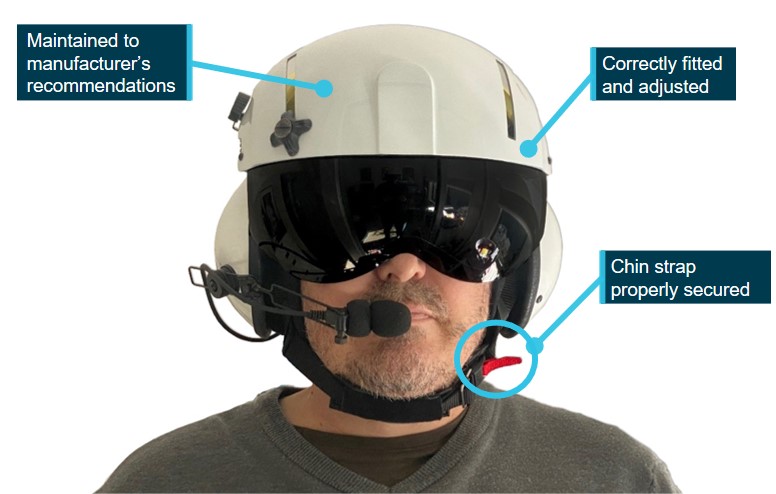
To work as designed, a helmet must be adjusted to fit the head and the chin strap must be fastened securely. The helmet must be serviced regularly, routinely inspected for damage, and replaced immediately if it has sustained a major impact.

Safety advisory notice

AO-2020-040-SAN-01 (204.84 KB)
: The ATSB strongly encourages all pilots conducting low-level operations to wear a flight helmet, ensuring that it is:
  • fit for purpose
  • custom fitted to the pilot’s head
  • properly secured by using the chin strap
  • maintained in accordance with the manufacturer’s recommendations.

Read more about the ATSB’s investigation: Wirestrike and collision with terrain involving Robinson R44, VH-HNF, 69 km south-east of Hay Airport (Steam Plains), New South Wales, on 31 July 2020

Publication details

Investigation number AO-2020-040
Publication type Safety Advisory Notice
Publication mode Aviation
Publication date 04/03/2022

Alerts and guidance for unreliable airspeed indications on take-off

Safety Advisory Notice

Delayed flight crew responses can lead to hazardous high-speed rejected take-offs or flight with unreliable airspeed indications.

What happened

san-004-image.png

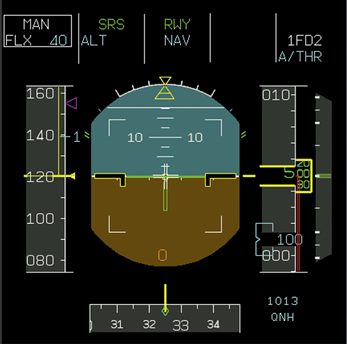
On the night of 18 July 2018, an Airbus A330 commenced take-off from Brisbane, Queensland with covers left on the aircraft’s three pitot probes (airspeed sensors). The primary flight displays showed red speed flags in place of the airspeed indication early in the take‑off, and either speed flags or unrealistically low airspeeds for the remainder of the flight. The standby airspeed display was also invalid throughout the flight.

The flight crew did not see or respond to the speed flags until the aircraft’s speed was too high for a safe rejection of the take-off. The take-off was continued and the aircraft returned to Brisbane.

Source: Airbus 

Why did it happen  

Surprise, uncertainty, time pressure, and ineffective communication between the two pilots during the take-off probably led to stress and high cognitive workload. Numerous take-offs have been continued, or rejected at high speed, with single or multiple airspeed anomalies. Flight crews who continued generally turned back.

The ATSB found that flight crews were not detecting unreliable airspeed early enough in the take-off, or if they did, other factors prevented or delayed a decision to reject the take-off. This is probably because:

  • aircraft alerts related to unreliable airspeed were either not available during take-off, or were not prominent enough to gain both the flight crew’s attention in a manner that the presence and importance of the problem were both immediately apparent                                                                                                                         
  • there was limited guidance provided to flight crews to aid in the detection and decision-making processes in response to unreliable airspeed indications.

These concerns are very likely to be relevant to many aircraft types.

Safety advisory notice

AO-2018-053-SAN-004 (150.29 KB)
: The Australian Transport Safety Bureau encourages all manufacturers and operators of larger air transport aeroplanes to consider what types of unreliable airspeed events can occur, how the information is presented to flight crews, and what responses are the safest in different phases of the take-off and in a range of potential situations. Aircraft alerting systems, flight crew procedures, and flight crew training should be designed to provide sufficient assurance that flight crews become aware of and understand how to appropriately respond to unreliable airspeed on take-off in a timely manner.

Read more about this ATSB investigation: Airspeed indication failure on take-off involving Airbus A330, 9M-MTK, Brisbane Airport, Queensland, on 18 July 2018

Publication details

Investigation number AO-2018-053
Publication type Safety Advisory Notice
Publication mode Aviation
Publication date 16/03/2022

Are your wing attachment points serviceable?

Safety Advisory Notice

To owners and maintainers of Stolp Acroduster SA-700/750 aircraft

Stolp Acroduster upper-wing attachment point, eye bolt fatigue cracking resulted in an in-flight break-up.

What happened

On 18 August 2021, an amateur-built Stolp Acroduster II SA-750, registered VH-YEL, departed Caboolture Airfield, Queensland, Australia for an aerobatic flight, with the pilot being the sole occupant. A short time later the aircraft sustained an in-flight break-up. The aircraft was destroyed and the pilot was fatally injured.

Why did it happen

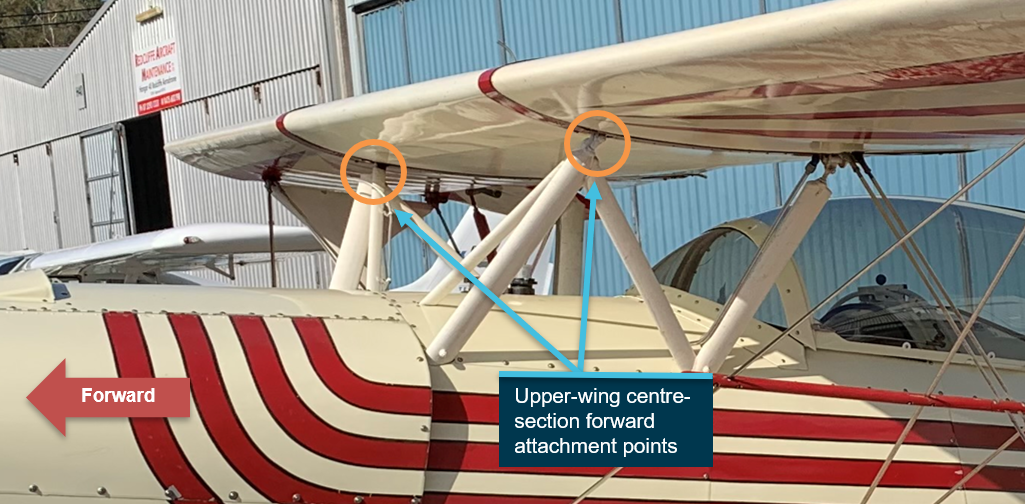
The centre section of the upper wing was located away from the main aircraft wreckage. Technical examination of the cabane struts from the centre section confirmed that there was fatigue cracking on the fracture surfaces of the eye bolts that had been fitted in the upper-wing forward position on the left and right cabane struts. The fatigue cracking had initiated in the thread root of each eye bolt at its termination into the cabane strut.

Stolp Acroduster II SA-750 showing centre wing forward attachment points locations

Figure 4: Upper-wing centre-section attachment

Source: Supplied, annotated by the ATSB

The right eye bolt had sustained fatigue cracking through about 90 per cent of the cross-section, and the left eye bolt had sustained about 40 per cent fatigue cracking through its cross-section. From the preliminary examination findings, it is indicative that fatigue cracking and then fracture of the eye bolts has led to structural instability of the centre-wing section and a consequential in-flight break-up of the upper-wing structure.

There were about 130 Acroduster SA-700/750 aircraft that were completed. The accident aircraft was first flown in the US in 1981, where it was registered N97177. It was exported to Australia in 2007, and registered as VH-YEL. It has accumulated about 717 flight hours at the time of the accident.

Right forward cabane strut showing fractured eye bolt

Figure 8: Right-side cabane strut forward upper-wing attachment eye bolt showing evidence of significant fatigue cracking through the threaded portion (Detail A from Figure 7)

Source: ATSB

Additional information

This aircraft type has had previous instances of cracking in the same area of the cabane strut upper-wing attachment eye bolts, through the threaded sections. The location of fatigue cracking in the forward upper-wing attachment eye bolts makes identifying fatigue crack during visual inspections difficult and in some cases impossible without removing the eye bolts from the cabane strut. The aircraft type does not have a specific detailed scheduled inspection of the eye bolts to ensure their ongoing airworthness. It also does not have a time-life replacement of the eye bolts at set periods.

Due to the location of the fatigue cracking through a primary structual support to the upper wing, the ATSB is concerned for the ongoing airworthiness of the Stolp Acroduster aircraft.

Safety advisory notice

AO-2021-032-SAN-01 (321.7 KB)
:

The Australian Transport Safety Bureau advises all owners, operators and maintainers of Stolp Acroduster SA‑700/750 aircraft to consider the safety implications of the initial findings of this investigation regarding the fatigue cracking on forward cabane strut upper wing attachment eye bolts, and take action where considered appropriate to ensure that their aircraft remain airworthy.

Read more about this ATSB investigation: In-flight break-up, Stolp Acroduster II SA-750, VH-YEL, 16 km north-east of Caboolture airfield, Queensland, on 18 August 2021

Publication details

Investigation number AO-2021-032
Publication type Safety Advisory Notice
Publication mode Aviation
Publication date 03/11/2021

R44 helicopter drive train failure

Safety Advisory Notice

To R44 helicopter operators

Fatigue cracking in an R44 helicopter clutch shaft resulted in the total loss of drive to the main rotor system while airborne.

What happened

On the morning of 22 December 2020, the pilot of a Robinson R44 helicopter was conducting aerial agricultural spray operations on a property 13 km south‑east of Clare Valley Aerodrome, South Australia. After completing numerous spray runs throughout the morning, the pilot was preparing to land the helicopter adjacent to a loading vehicle for replenishment of chemical product by a ground crewman when a loud bang emanated from the rear of the helicopter.

The pilot reported that, following the noise, the helicopter descended rapidly and there was significant resistance from the flight controls. The helicopter collided heavily with the loading vehicle, coming to rest on its side. The pilot and crewman were uninjured. The operator’s preliminary on-site assessment of the substantially damaged helicopter identified that a mechanical disruption had occurred to the drive system. 

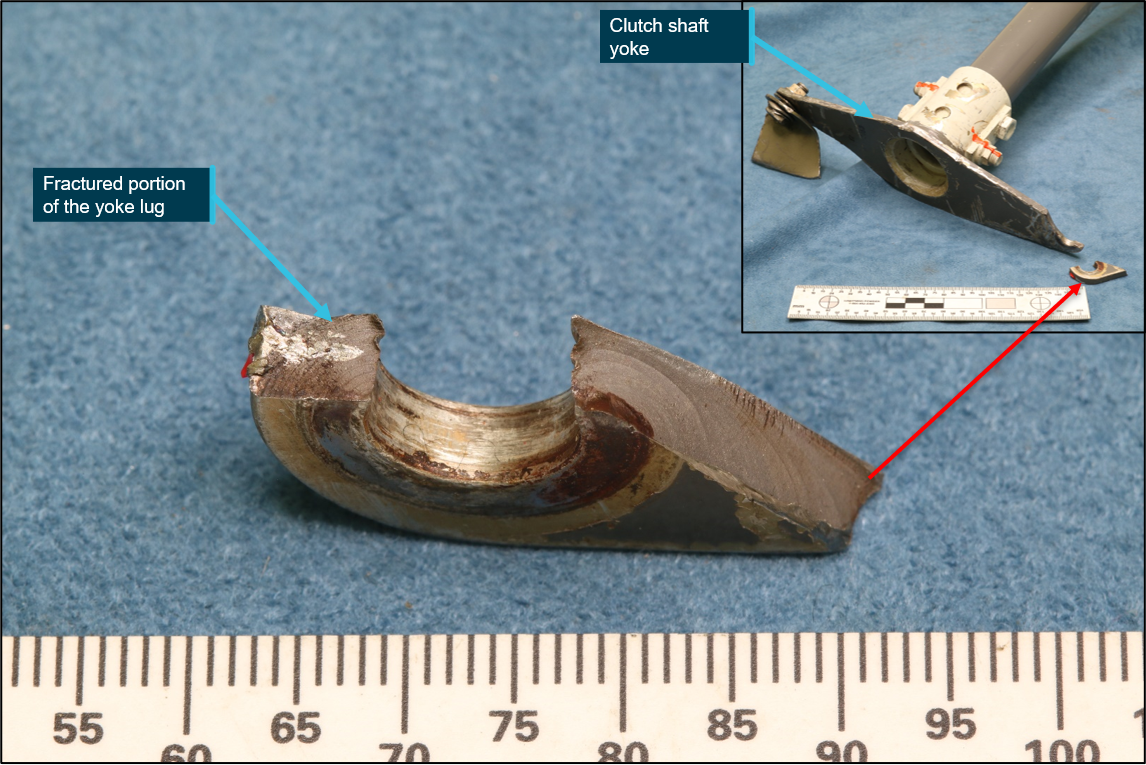
Fractured clutch shaft yoke 

Fractured clutch shaft yoke

Source ATSB

Why did it happen

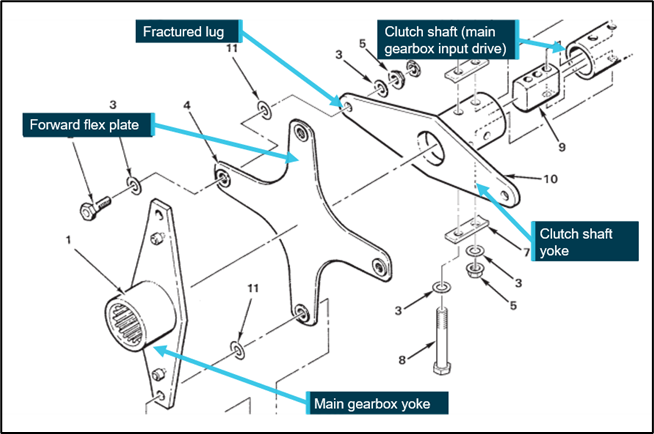
The ATSB’s preliminary metallurgical examination of the drive train components identified that the clutch shaft forward yoke had fractured. The fracture occurred at a bolt hole on the yoke lug that connected with the forward flex plate (Figure 1) and was due to the development of fatigue cracking that progressed almost entirely through the yoke cross‑section.

Figure 1: Main gearbox forward flex plate and yoke assemblies

figure-1.png

Source: Robinson Helicopter Company illustrated parts catalogue, annotated by the ATSB 

The fracture resulted in the loss of engine drive to the main rotor system. Corrosion product and fretting damage were identified in the vicinity of the bolt hole adjacent to the fatigue fracture surfaces.

The airworthiness of the yoke is not limited to a total time in service (no life-limit) and it is required to be inspected at every 100-hour, or annual, inspection. The opportunity to conduct a detailed examination of the yoke contact surfaces for defects is generally limited to those occasions when the bolts are removed and the yoke is separated from the forward flex plate. That is only scheduled to occur during 12 year/2,200 hour overhaul inspections.

A general visual inspection of the assembled clutch shaft yoke during the 100‑hour (or annual) inspection may not easily identify defects such as corrosion, fretting and/or cracking.

While the specific circumstances that led to the fatigue crack on the accident helicopter are still under investigation, the ATSB has issued the following safety advisory notice to advise R44 operators of a potential safety concern.

Safety advisory notice

AO-2020-064-SAN-014 (459.88 KB)
: The ATSB advises operators of R44 helicopters to note the preliminary finding of this accident and to look for the presence of corrosion, fretting or cracking, which may not be visually obvious, during all inspections of the clutch shaft yoke. Any identified defects should be notified to both the ATSB and the Civil Aviation Safety Authority.

Read more about this ATSB investigation: Loss of control and collision with terrain involving Robinson R44 II, VH-HOB, near Clare, South Australia, on 22 December 2020

Publication details

Investigation number AO-2020-064
Publication type Safety Advisory Notice
Publication mode Aviation
Publication date 07/06/2021

Elevator bellcrank inspections

Safety Advisory Notice

Yakovlev Aircraft Factories Yak-52 owners and maintainers

Elevator bellcranks manufactured from aluminium alloy, fitted to Yakovlev Aircraft Factories Yak-52 aircraft, are known to crack. Periodic inspections are important for detecting the presence of fatigue cracking early and ultimately preventing the failure of the component in-flight.

What happened

On 5 June 2019, the pilot and passenger of a Yakovlev Aircraft Factories Yak-52 aircraft, departed Southport airfield, Queensland, for a private aerobatic flight. During the flight, the aircraft collided with water near South Stradbroke Island. The occupants were fatally injured, and the aircraft was destroyed.

What increased risk

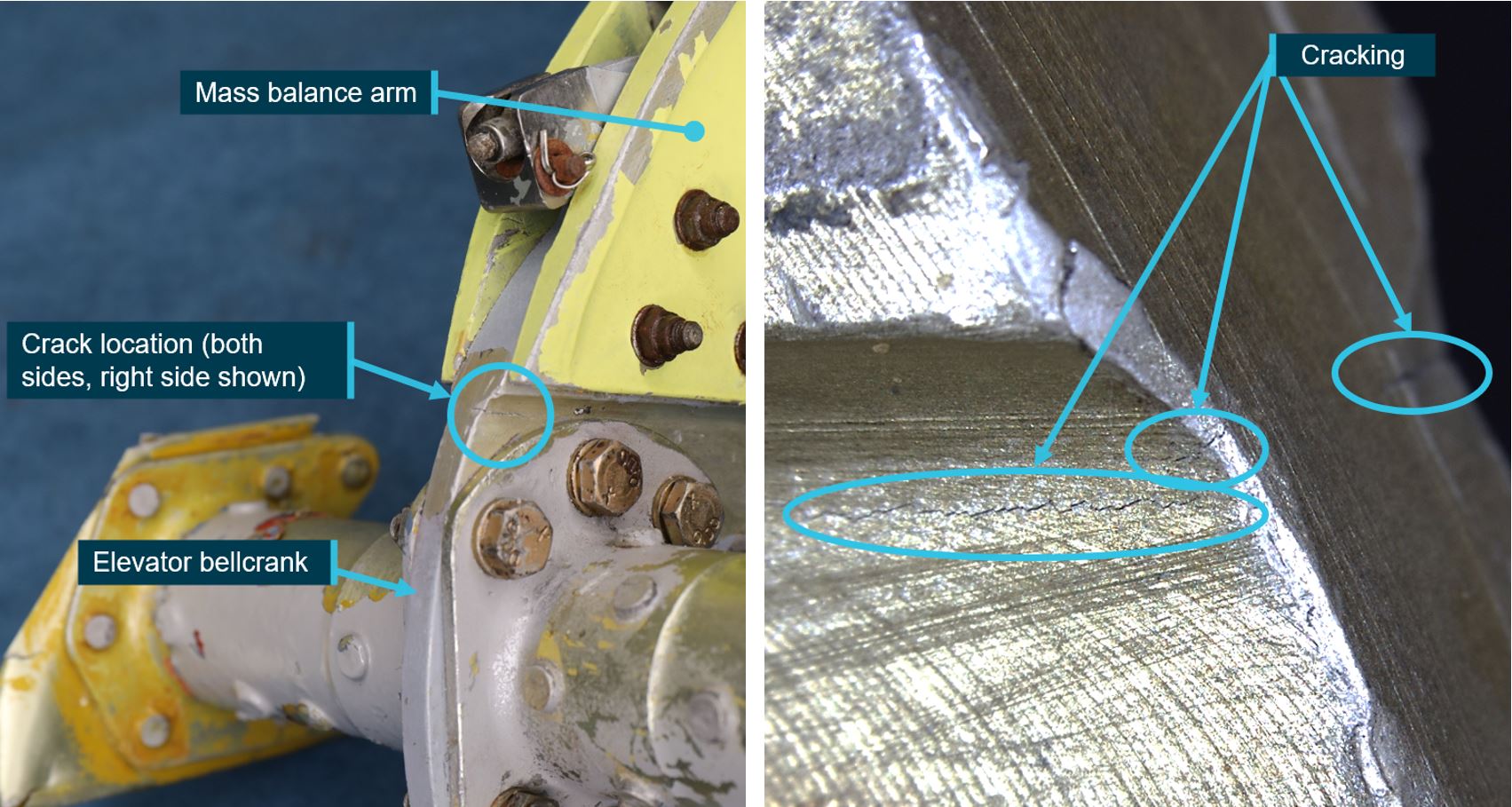
During the wreckage examination, the ATSB identified two small cracks at the change in section of the elevator bellcrank. The location was coincident with that identified in previously published airworthiness directives[1] and the manufacturer’s airworthiness data. Further examination confirmed at least one was a pre-existing fatigue crack (Figure 1). Although this crack did not contribute to the accident, if not detected, cracking in this area could result in failure of the bellcrank and a subsequent loss of aircraft control.

Elevator bellcrank and mass balance removed from VH-PAE

Elevator bellcrank cracks observed on VH-PAE

The aircraft had flown about 35 hours since the bellcrank was last inspected. In Australia, the Australian Warbirds Association Limited[2] Yak-52 maintenance schedule specified bellcrank inspections to be carried out in accordance with the United Kingdom Civil Aviation Authority issued Mandatory Permit Directive (MPD 2000-004, issued in 2000), which required:

  • a dye penetrant inspection of the elevator bellcrank every 100 flying hours or 12 months, and
  • if cracks were detected, no further flight was permitted until replacement.

However, a review of the available Yak-52 maintenance documentation identified a difference in the requirements for inspecting the bellcrank. In 2009, the Yakovlev Design Bureau in Russia, issued an amendment to the scheduled maintenance program, which required a dye penetrant inspection of the elevator bellcrank every 25 ± 5 flying hours. Further, as a result of a fatal Yak-52 accident in 2010, where the elevator bellcrank had failed in-flight, the manufacturer directed that all aluminium alloy bellcranks be replaced with steel. A service bulletin issued on 12 July 2012, 121-BD (121-БД), required the bellcranks to be replaced no later than December 2012.

The airworthiness requirements for Yak-52 aircraft are determined independently in countries outside Russia and have remained relatively unchanged since 2000. While significant, the 2009 changes made to the Yakovlev Design Bureau’s scheduled maintenance program and their actions in response to the accident in 2010 had not been incorporated into maintenance schedules in Australia, nor was there a requirement to do so. Common to both, however, is the importance of detecting cracks and the removal of these bellcranks from service.

Figure 1: Elevator bellcrank cracks observed on VH-PAE

Figure 1: Elevator bellcrank cracks observed on VH-PAE. Source: ATSB

Source: ATSB

Safety advisory notice

Given the known fatigue cracking and potential failure of Yakovlev Aircraft Factories Yak 52 elevator bellcranks manufactured from aluminium alloy, the ATSB reminds maintainers and operators of the importance of dye penetrant inspections to remove defective bellcranks from service. The ATSB would also like to ensure that operators and maintainers of Yak 52 aircraft are aware that Russia, the aircraft’s state of design, increased the inspection frequency for the bellcranks to 25 ± 5 flying hours. Further, aluminium alloy bellcranks are no longer approved for use on Yak-52s operating in Russia.

Read more about this ATSB investigation: AO-2019-027

__________

  1. CAI-TSD-007/2000 (Lithuania), MPD 2000-004 (United Kingdom), and DCA/YAK/5 (New Zealand).
  2. Australian Warbirds Association Limited (AWAL) is a self-administering recreational aviation organisation providing oversight of warbird, ex-military and replica aircraft.

Publication details

Investigation number AO-2019-027-SAN-024
Publication type Safety Advisory Notice
Publication mode Aviation
Publication date 25/11/2020

Are you protected from carbon monoxide poisoning?

Carbon monoxide (CO) is a colourless, odourless and tasteless gas found in the exhaust gases of piston‑engine aircraft. Carbon monoxide detectors provide warning to aircraft occupants of the presence of CO levels in the cabin that are above safe concentrations.

Passive chemical spot detector as carried in VH-NOO (L) with example BWC2R-M1025 active digital CO detector (R) (Source: ATSB)

What happened

On the afternoon of 31 December 2017, the pilot and five passengers of a DHC-2 Beaver floatplane, registered VH-NOO, boarded the aircraft for a charter flight from Cottage Point to Rose Bay, New South Wales. The aircraft taxied for about 7 minutes. Shortly after take-off, the aircraft deviated from the standard flight path, stopped climbing, and entered a confined area (Jerusalem Bay) below the height of the terrain. The aircraft continued along the bay before making a very steep right turn and colliding with the water. All on board were fatally injured and the aircraft destroyed.

Why did it happen

Toxicological testing of stored blood samples found that the pilot and two of the passengers had elevated levels of carbon monoxide (CO). The levels detected were likely to have adversely affected the pilot’s ability to control the aircraft during the flight.

As it is colourless, odourless and tasteless, CO is generally very difficult to detect. The aircraft was fitted with a disposable CO chemical spot detector. While these type of detectors are commonly used in general aviation aircraft, they have known limitations. They have a limited shelf-life when removed from their original packaging, which may be further affected by factors such as exposure to harsh direct sunlight, cleaning chemicals, and halogens. In addition, they are a passive device, which relies on the pilot regularly monitoring the changing colour of the detector to show elevated levels of CO. In contrast, electronic active CO detectors are designed to attract the pilot’s attention through auditory and/or visual alerts when CO levels are elevated, so are more likely to be effective. These are now inexpensive and widely available. Had the pilot been made aware of the presence of CO, the pilot would have been able to take measures to reduce the risk to those on board. In addition, undetected CO in the cabin is a well‑known risk that has been shown to have contributed to many fatal accidents across the world.

Safety advisory notice

AO-2017-118-SAN-002 (85.54 KB)
: The use of an attention attracting carbon monoxide detector in the cockpit provides pilots with the best opportunity to detect carbon monoxide exposure before it adversely affects their ability to control the aircraft or become incapacitated. The ATSB strongly encourages operators and owners of piston‑engine aircraft to install a carbon monoxide detector with an active warning to alert pilots to the presence of elevated levels of carbon monoxide in the cabin. If not provided, pilots are encouraged to carry a personal carbon monoxide detection and alerting device.

Read more about this Civil Aviation Safety Authority’s airworthiness bulletin: AWB 02-064 Issue 1(Opens in a new tab/window)

Read the Safety Advisory Notice: AO-2017-118-SAN-001 - Inspection of exhaust systems and engine firewalls: are they carbon monoxide safe?

Publication details

Investigation number AO-2017-118-SAN-002
Publication type Safety Advisory Notice
Publication mode Aviation
Publication date 03/07/2020

Inspection of exhaust systems and engine firewalls: are they carbon monoxide safe?

The primary mechanism for the prevention of carbon monoxide exposure to aircraft occupants is to carry out regular inspections of piston-engine exhaust systems to identify and repair holes and cracks, and to detect breaches in the firewall between the engine compartment and the cabin.

VH-NOO engine exhaust crack. Note pre-existing crack spread and widened during the impact.  Source: ATSB

What happened

On the afternoon of 31 December 2017, the pilot and five passengers of a DHC-2 Beaver floatplane, registered VH-NOO, boarded the aircraft for a charter flight from Cottage Point to Rose Bay, New South Wales. The aircraft taxied for about 7 minutes. Shortly after take-off, the aircraft deviated from the standard flight path, stopped climbing, and entered a confined area (Jerusalem Bay) below the height of the terrain. The aircraft continued along the bay before making a very steep right turn and colliding with the water. All on board were fatally injured and the aircraft destroyed.

Why did it happen

Toxicological testing found that the pilot and two of the passengers had elevated levels of carbon monoxide (CO) in their blood. The levels detected were likely to have adversely affected the pilot’s ability to control the aircraft during the flight. Carbon monoxide is a colourless, odourless and tasteless by-product found in the exhaust gases of piston-engines.

The ATSB conducted a detailed examination of the engine exhaust collector-ring and found evidence of pre‑existing cracking and exhaust leakage into the engine bay.

In addition, three out of eight bolts used to secure the magneto access panels in the firewall under the instrument panel in the cabin were also found to be missing. Any breach in the firewall can allow gases to enter the cabin from the engine bay.

Safety advisory notice

AO-2017-118-SAN-001 (86.36 KB)
: The thorough inspection of piston-engine exhaust systems and the timely repair or replacement of deteriorated components is the primary mechanism for preventing carbon monoxide exposure. This, in combination with the assured integrity of the firewall, decreases the possibility of carbon monoxide entering the cabin. The ATSB reminds maintainers of the importance of conducting detailed inspections of exhaust systems and firewalls, with consideration for potential carbon monoxide exposure.

Read more about this Civil Aviation Safety Authority airworthiness bulletin: AWB 02-064 Issue 1(Opens in a new tab/window)

Read the Safety Advisory Notice: AO-2017-118-SAN-002 - Are you protected from carbon monoxide poisoning?

Publication details

Investigation number AO-2017-118-SAN-001
Publication type Safety Advisory Notice
Publication mode Aviation
Publication date 03/07/2020

Potential for injury during vehicle-assisted deflation

Safety Advisory Notice

The ATSB advises all commercial balloon operators utilising vehicleassisted deflation to review their current operational practices with the aim of mitigating the safety risks associated with the procedure.

What happened

On 16 March 2019, two passengers were seriously injured when the basket of a Kavanagh B‑400 hot‑air balloon tipped over during vehicle-assisted deflation.

Prior to the accident, the balloon, operated as a scenic charter flight, landed without incident at a private property near Coldstream, Victoria.

Due to a lack of wind and the large size of the envelope, the crew elected to use the retrieval vehicle to assist by pulling the envelope over (by the crown line) during the deflation.

During this process, with 16 passengers and the pilot on board, the vehicle assisting inadvertently pulled the basket over, seriously injuring two passengers.

This accident was the third time since 2016 where occupants of a commercial balloon were injured as a result of similar events during a vehicle‑assisted deflation.

Why did it happen

During the vehicle-assisted deflation, the pilot put down the handheld radio to operate the vent line. The second ground crew member was not in an observable position for the driver, which led to a communications breakdown and limited the pilot and the second ground crew members’ opportunity to promptly command the driver to stop to avoid the basket tipping.

In addition, during the procedure, the majority of passengers were not in the landing position when the basket tipped, which increased their probability of injury.

The operator began using the vehicle-assisted deflation method around 12 months prior to the accident. At this time the operator did not conduct a risk assessment and had not developed procedures for safely conducting vehicle‑assisted deflation. This contributed to the crew’s lack of awareness of the risk of the basket tipping during the deflation.

Safety advisory notice

AO-2019-014-SAN-014 (165.35 KB)
: The ATSB advises all commercial balloon operators utilising vehicle‑assisted deflation methods to review their current operational practices in light of the findings in the ATSB investigation report AO-2019-014 with the aim of mitigating the risks associated with the procedure. This review should be conducted with emphasis on:
  • reducing the risks associated with a communications breakdown between the pilot and vehicle driver, and
  • include a review of the positioning of occupants within the basket to minimise the likelihood of injury if the basket tips during the vehicle‑assisted deflation.

Publication details

Investigation number AO-2019-014_SAN-014
Publication type Safety Advisory Notice
Publication mode Aviation
Publication date 29/06/2020

Rescue hoist cable failure

Safety Advisory Notice

The ATSB advises helicopter operators involved in hoist operations that improper stowage of the rescue hoist hook assembly can lead to excessive movement and accelerated wear of the wire rope. If undetected, the wear and associated damage can significantly reduce the cable integrity and operational safety of the hoist system. Should the cable fail while under load during operation, personnel being winched may sustain serious or fatal injuries.

Rescue hoist and hook assembly

Rescue hoist and hook assembly. 
Source: NSW Parks and Wildlife Service

Source: NSW Parks and Wildlife Service

What happened

On 4 February 2020, an Airbus Helicopters AS 350 B3 was being operated in support of NSW National Parks and Wildlife Service activities. Winching of personnel and equipment was being conducted when the operating crewman detected a technical issue with the wire rope cable of the hoist system fitted to the helicopter. The outer strands of the cable toward its termination into the hook assembly had loosened in respect of the inner core. Such loosening is known to occur during repeated short length winch deployment and retrieval cycles.

During that conditioning operation, and while under load, the cable fractured at the hook assembly, releasing the ‘dummy’ weight to the ground. There was no damage to the helicopter or injuries to personnel.

Why did it happen

Although the investigation is ongoing, the ATSB’s examination of the helicopter winch system identified that the wire rope cable failed near to the swaged ball-end that terminated into the hook assembly (see images below). Detailed technical examination identified that significant wear had occurred to the individual stainless steel wires comprising the cable, leading to reduced cross-section and an associated gross loss of tensile strength. The cable had accrued just 617 cycles of its 1,500 cycle life-limit. Examination of another rescue hoist from the operator identified similar wear damage had also occurred to that cable.

The ATSB identified that the wear associated with the cable failure probably occurred due to improper stowage of the hook assembly following hoisting operations. A hook that is not firmly seated or with the bump stop spring not sufficiently compressed can move during exposure to airframe vibrations and rotor downwash buffeting during normal helicopter operations. That movement can lead to accelerated wear of the hoist cable close to the ball-end fitting where it enters the hook assembly.

A rescue hoist cable that exhibits ongoing loosening of the outer strands, may have accrued damage from incorrect stowage following hoist operations. If the hook assembly is not firmly seated or is noted to be incorrectly stowed, during the required post-flight inspection particular attention should be paid to the ball-end of the cable for evidence of localised thinning or necking-down, broken wires or deformed strands. Such defects can reduce the cable integrity and compromise the safety of the rescue hoist system.

Safety advisory notice

SAN-2020-013-001 (150.94 KB)
: The ATSB advises all helicopter operators and flight crew involved in rescue hoist operations to review their current operational practices to ensure hoist operation and hook stowage are in accordance with the hoist manufacturers’ published procedures.

In addition, the ATSB advises those operators, flight crew and maintainers to closely review the pre- and post-flight inspection requirements of the hook and cable assembly, along with any recurring scheduled maintenance of the hoist system, to ensure that they are completed in accordance with the manufacturers’ instructions.

Read more about this ATSB investigation: Rescue hoist cable failure involving AS 350 B3, VH-UAH, 1 km south-west of Bulga, New South Wales, 5 February 2020

Failed cable and hook assembly from VH-UAH

Exemplar hook assembly noting the failure location. 
Source: ATSB

Source: ATSB

Close view of the failed cable from within hook assembly

Close view of the failed cable from within hook assembly. 
Source: ATSB

Source: ATSB

Exemplar hook assembly noting the failure location

Exemplar hook assembly noting the failure location.
Source: ATSB

Source: ATSB

Damaged cable with necking due to wear

Damaged cable with necking due to wear.
Source: ATSB

Source: ATSB

Publication details

Series number AO-2020-013-SAN-001
Publication type Safety Advisory Notice
Publication mode Aviation
Publication date 23/04/2020

Are you operating your amateur-built helicopter as designed?

Operating an amateur-built experimental helicopter outside the recommended design intent can potentially expose the helicopter to unintended stresses, and lead to the failure of critical components in-flight.

What happened

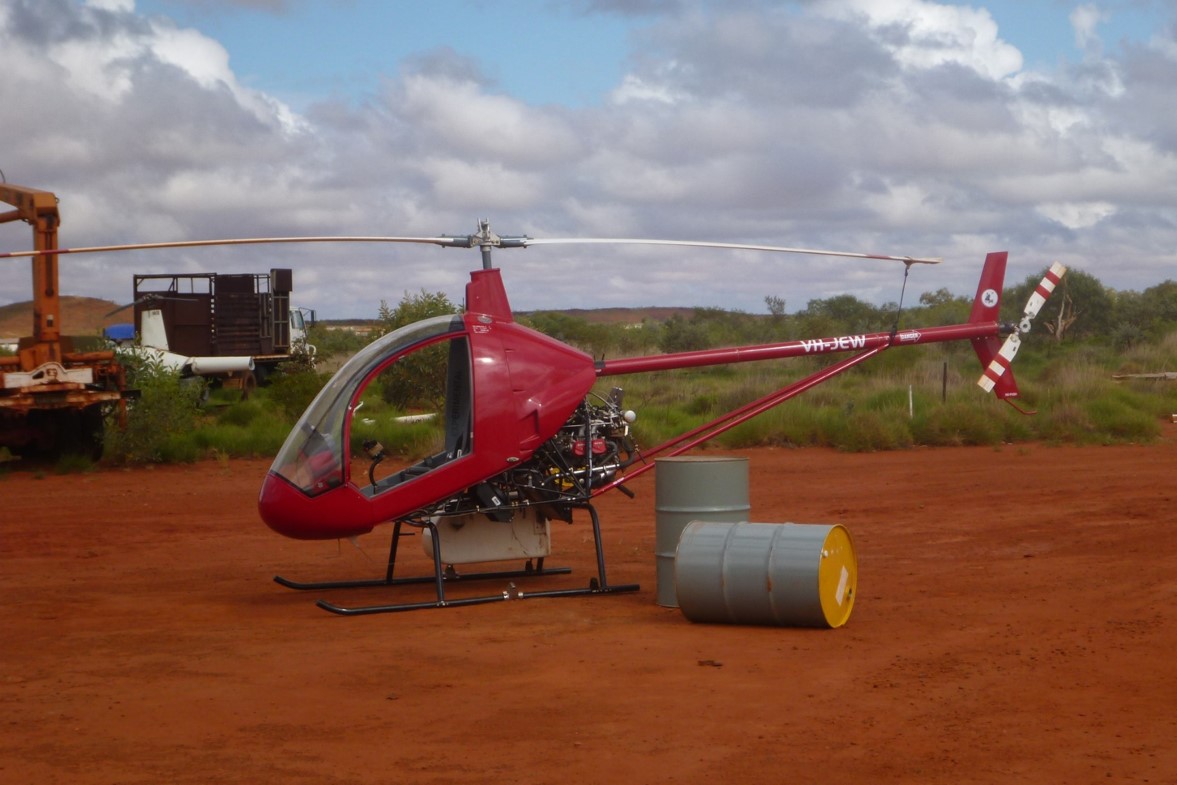
On 28 July 2015, the pilot and owner of an amateur-built Cicaré CH-7BT helicopter, registered VH‍-JEW, was conducting a ferry flight from Indee Station to Roy Hill Station, Western Australia. When about 8.5 NM north‑east of Roy Hill Station, the stabiliser assembly fractured leading to an in-flight break up and collision with terrain. The pilot was fatally injured and the helicopter was destroyed.

Amateur-built Cicaré CH-7BT helicopter, registered VH-JEW

ao2015089_vh-jew_helicopter.jpg

Source: Andrew Miles

Why did it happen

The ATSB examined the helicopter wreckage and identified that the stabiliser had separated in‑flight from the tail boom as a result of fatigue cracking of the stabiliser mount. This was the second fatal accident in Australia involving in-flight stabiliser separation on a Cicaré CH-7B helicopter (In-flight break-up involving Cicaré CH-7B, VH-SWQ, 43 km north-west of Barcaldine Airport Queensland on 12 May 2014 (AO-2014-086)).

During the course of the investigation, the ATSB found that a number of these amateur-built helicopters were being used for mustering operations, although the manufacturer stipulated that they were designed for recreational and sport use only. In addition, the ATSB established that both VH-JEW and VH-SWQ were fitted with external storage accessories, likely without the appropriate engineering assessment to ensure there would be no adverse effects on the performance, handling and structure of the helicopter. Although not the only contributors to the development of these accidents, operating outside the manufacturer’s design intent and limitations has the potential to induce stresses on the aircraft, leading to premature wear and possible failure.

Safety advisory notice

AO-2015-089-SAN-014 (68.44 KB)
  Operating an amateur-built helicopter within the stated design intent and limitations is essential for safe conduct of flight. The ATSB advises owners/operators to be aware of the risks associated with operating amateur-built helicopters outside the limitations prescribed by the manufacturer. For example, mustering operations and the addition of unapproved modifications, can potentially produce unintended stresses on the airframe leading to the premature failure of components.

Read more about this ATSB investigation: In-flight break-up involving Cicaré S.A. CH-7BT helicopter, VH-JEW, near Roy Hill Station, Western Australia, on 28 July 2015

Publication details

Investigation number AO-2015-089-SAN-014
Publication type Safety Advisory Notice
Publication mode Aviation
Publication date 20/12/2019