Incorrect configuration

Incorrect configuration for landing involving Airbus A320, VH-VQK, Ballina/Byron Gateway Airport, New South Wales, on 18 May 2018

Final report

Safety summary

What happened

On the morning of 18 May 2018, an Airbus A320 aircraft, registered VH-VQK, was being operated on a regular public transport flight by Jetstar Airways. The flight departed from Sydney, New South Wales for Ballina/Byron Gateway Airport, New South Wales.

The flight crew conducted a go-around on the first approach at Ballina because the aircraft’s flight path did not meet the operator’s stabilised approach criteria. On the second approach, at about 700 ft radio altitude, a master warning was triggered because the landing gear had not been selected DOWN. The flight crew conducted a second go-around and landed without further incident on the third approach.

What the ATSB found

The flight crew did not follow the operator’s standard procedures during the first go-around and subsequent visual circuit at 1,500 ft. In particular, the flaps remained at Flaps 3 rather than Flaps 1 during the visual circuit. This created a series of distractions leading to a non-standard aircraft configuration for a visual circuit. Limited use of available aircraft automation added to the flight crew’s workload.

During the downwind leg following the first go-around, the flight crew did not select the landing gear DOWN as they had commenced the configuration sequence for landing at the Flaps 3 setting. Furthermore, the flight crew incorrectly actioned the landing checklist, which prevented the incorrect configuration for landing being identified and corrected.

Safety message

Unexpected events during approach and landing phases can substantially increase what is often a high workload period. Adherence to standard operating procedures and correctly monitoring the aircraft and approach parameters provides assurance that a visual approach can be safely completed. The selection of inappropriate auto-flight modes, unexpected developments, or any confusion about roles or procedures can contribute to decisions and actions that increase the safety risk to the aircraft and its passengers.

The ATSB SafetyWatch highlights the broad safety concerns that come out of our investigation findings and from the occurrence data reported to us by industry. Handling of approach to land is one of these priorities.

The occurrence

First approach

On the morning of 18 May 2018, an Airbus A320 aircraft, registered VH-VQK, was being operated on a regular public transport flight by Jetstar Airways. The flight departed from Sydney, New South Wales for Ballina/Byron Gateway Airport, New South Wales. The captain was the pilot monitoring (PM) and the first officer (FO) was the pilot flying (PF).[1]

During the flight, the flight crew discussed and planned their arrival into Ballina. The forecast weather conditions were good with clear visibility and light winds. The FO suggested that they conduct a visual approach. Given that the conditions were good and the captain could see the airport from 50 NM the captain agreed. The FO then programmed the Flight Management Guidance System for the descent and arrival and carried out an approach briefing for a visual approach to runway 24. The FO recalled that he briefed the initial actions for a go-around, however, the flight crew did not discuss subsequent actions including the visual circuit[2] procedure.

At 1042 Eastern Standard Time,[3] the flight crew commenced descent during which they broadcast the required radio calls for their arrival on the common traffic advisory frequency (CTAF). During this period they became aware of a helicopter conducting right circuits at the airport.

Descending through about 2,100 ft the FO disconnected the autopilot and manually flew the aircraft. During manoeuvring to join a left base, the aircraft’s airspeed and altitude were both higher than a normal approach profile. The captain recognised the problem and recalled thinking that a go-around would be required, but due to the circuit traffic he wanted the aircraft established on final approach before commencing the go-around procedure.

The FO continued the approach and targeted a vertical speed of 1,000 ft/min descent and commenced a turn onto the final approach. Recorded flight data showed a peak vertical speed of about 1,300 ft/min at about 730 ft, and the aircraft still well above the desired vertical profile. Still turning onto the final approach the FO observed three white fly-down lights on the visual approach slope indicator system (VASIS).[4]

First go-around

At 500 ft above ground level (AGL) the aircraft automatically generated a callout of ‘five hundred’ and the captain commanded a go-around by calling out ‘not stable’. The FO commenced the go-around procedure (Figure 1).

Recorded flight data showed the aircraft was about 450 ft AGL when the go-around commenced. With take-off/go-around (TOGA) thrust set and Flaps 3 selected, the aircraft approached the circuit altitude of 1,500 ft about 10 seconds later.

As the FO levelled the aircraft it accelerated quickly toward the Flaps 3 limit speed (185 kt). The FO called for the approach phase[5] to be activated, which would have reduced the autothrust’s target speed from green dot speed[6] to 139 kt, and the captain went to action this request.

However, due to the aircraft’s acceleration, the FO believed the autothrust system would not prevent a flap overspeed prior to the approach phase becoming active. Consequently, he retarded both thrust levers to IDLE. This action disengaged the autothrust and generated an Electronic Centralised Aircraft Monitoring (ECAM) caution message (AUTO FLT A/THR OFF).

The captain heard the associated aural master caution chime, scanned the instruments and observed the aircraft’s pitch attitude being 10° nose up with Flaps 3 and idle thrust. He immediately commanded the FO to place both thrust levers back into the climb detent and re-engage the autothrust system. The FO subsequently reported that he had already commenced these actions at that time.

Figure 1: Flight path of VH-VQK during incident flight
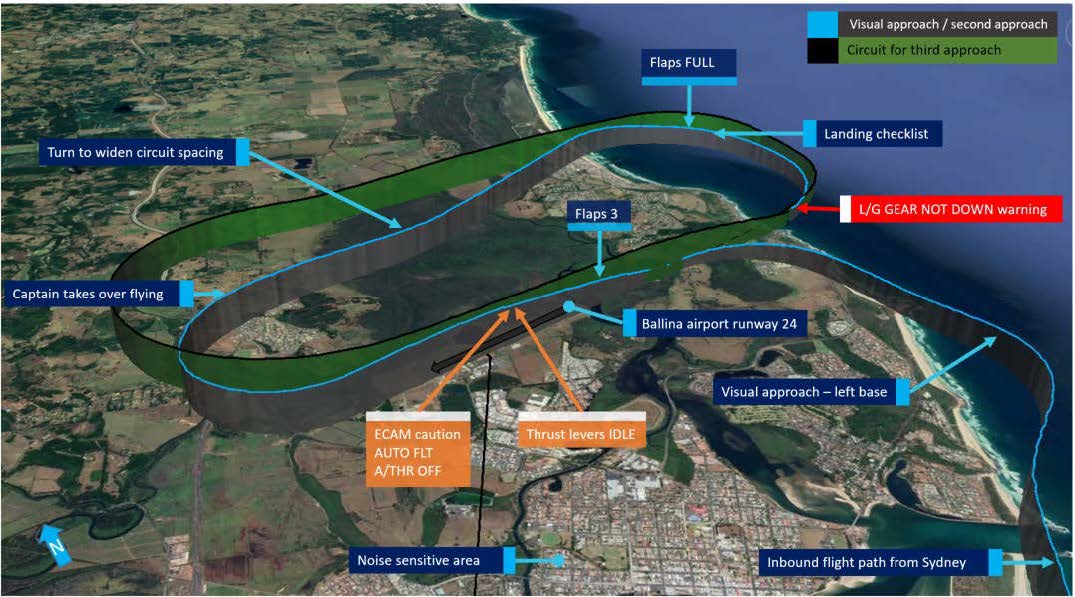
Figure 1_6.jpg

Source: Google Earth annotated by ATSB.

Circuit for second approach

The FO commenced a left turn to conduct a standard left circuit for runway 24, however, the captain instructed the FO to conduct a right circuit. The captain later recalled his decision to conduct a non-standard right circuit was predicated on a number of reasons, but mainly due to the helicopter conducting right circuits and the noise sensitive area over the Ballina township to the south-east of runway 24 (Figure 1).

During the turn onto the downwind leg of the circuit, the FO offered the PF duties to the captain. The captain took control of the aircraft and the FO reverted to PM duties. The captain continued to fly the aircraft manually with the autopilot off and the autothrust engaged.

During the downwind leg, the captain recalled observing on his navigation display that the aircraft was positioned too close to the runway. Recorded flight data indicated the aircraft was about 1.2 NM abeam the runway rather than the captain’s desired 2.0 NM spacing. The captain turned left to widen the circuit spacing.

The flight crew completed the after take-off checklist. The captain noted that the flaps were set to Flaps 3 rather than the normal Flaps 1 configuration for a visual circuit, and he instructed the FO to let the flaps remain at that setting as he wanted to prioritise safely flying the aircraft in the circuit area.

As the captain commenced the turn onto the base leg, he scanned the ECAM upper display and observed the flaps were still set at Flaps 3. He commanded Flaps FULL, which the FO selected.

Both the captain and the FO stated they completed the landing checklist at about 950 ft AGL, which included the ECAM landing memo, and continued the approach.

At about 700 ft radio altitude (RA), a master warning for L/G GEAR NOT DOWN was triggered because the landing gear had not been selected DOWN. Recorded flight data showed that about 4 seconds after the master warning, the landing gear was selected DOWN. A further 2 seconds later the captain selected the thrust levers to TOGA and commenced a second go-around. The aircraft’s lowest recorded height was about 670 ft AGL.

Second go-around

The flight crew reconfigured the aircraft to gear UP and Flaps 1, as per the go-around procedure. The captain elected to continue manually flying the aircraft and conducted a second non-standard right circuit.

At about this time, the pilot of a Cessna 172 inbound from the north made radio calls advising aircraft at Ballina of his intention to join the (left) circuit for landing. The captain of the A320 provided instructions to the Cessna 172 pilot over the radio to confirm separation between the two aircraft.

On the downwind circuit leg for the third approach, the A320’s traffic collision avoidance system (TCAS) generated a traffic advisory (TA). The flight crew had remained in visual contact with the Cessna 172 and estimated its position to be about 2.0 NM to the north and about 800 ft above them. No further actions were required from either flight crew in relation to the TCAS TA.

On the third approach the flight crew configured the aircraft in accordance with the operator’s visual circuit procedures and actioned the landing checklist, including the landing memo items from the checklist. The aircraft landed on runway 24 without further incident.

__________

  1. Pilot Flying (PF) and Pilot Monitoring (PM): procedurally assigned roles with specifically assigned duties at specific stages of a flight. The PF does most of the flying, except in defined circumstances; such as planning for descent, approach and landing. The PM carries out support duties and monitors the PF’s actions and aircraft flight path.
  2. Circuit: a specified pattern flown by aircraft when taking off or landing while maintaining visual contact with the airfield. Typically rectangular in shape and include pattern legs; upwind, crosswind, downwind, base and final.
  3. Eastern Standard Time (EST) was Coordinated Universal Time (UTC) + 10 hours.
  4. VASIS: a visual approach slope indicating system that uses high intensity lighting to assist pilots identify the correct glide path to the runway. The system for runway 24 at Ballina was an AT-VASIS, and three white lights indicated the aircraft was too high.
  5. Approach phase is a function of the Flight Management Guidance System. When activated it automatically commands slower aircraft speeds during an approach and will appropriately reduce airspeed to the respective flap manoeuvring speed as configuration is changed for landing.
  6. Green dot speed is the operational speed in the clean configuration and gives an estimate of the speed for best lift-to-drag ratio.

Safety analysis

Introduction

Incidents such as the incorrect configuration of an air transport aircraft for landing are rarely the result of a single action or identifiable event. Instead, a number of factors combine to result in an unintended outcome; which in this case was the conduct of the second approach to Ballina/Byron Gateway Airport without the landing gear selected DOWN.

Although the incident was highly undesirable, it should be noted that the aircraft’s warning system effectively alerted the flight crew to the problem, and the crew responded promptly to the warning and initiated a second go-around.

Conduct of the first go-around

Due to the unstable approach on the first attempt to land, the flight crew appropriately performed a go-around.

An all engines go-around is a very dynamic procedure with high accelerations created by the application of take-off/go-around (TOGA) thrust. When performed at a low aircraft weight with low altitude level off, such as a 1,500 ft circuit height, it can be a demanding manoeuvre. It requires flight crews to perform a significant number of actions in a short period of time with all of them related to important changes of attitude, thrust, flight path, landing gear and flap configuration and flight modes. The actions need to be performed in the correct order, with a high level of coordination between the crew.[8]

The initial actions of the first go-around manoeuvre, up until reaching the thrust reduction altitude, were performed correctly. However, instead of retracting the flaps on schedule to Flaps 1, the first officer (FO) called for the approach mode to be activated first in an attempt to reduce the aircraft’s acceleration. Concerned about a potential flap overspeed, the FO then retarded the thrust levers past the climb detent to IDLE. This action de-activated the autothrust system and its protections, which limit thrust to help prevent overspeeds. With Flaps 3 still set and about 10° nose-up pitch attitude, the aircraft performance deteriorated, requiring intervention by the captain.

Visual circuit

In this incident, several distractions caused the flight crew to deviate from the operator’s normal visual circuit procedures at Ballina. The FO was anticipating a left circuit to be flown in accordance with the published procedure for runway 24. However, the captain commanded a non-standard right circuit for various reasons, which he had not previously advised the FO during the approach briefing or the subsequent approach.

As the aircraft was being turned onto downwind the flight crew were presented with further distractions including the handover of flying duties to the captain and then correcting the lateral flight path spacing in the circuit. The captain continued to manually fly the aircraft, which added to his workload. Accordingly, the captain elected to concentrate on flying the aircraft and have the FO conduct the required checklists and radio calls. As the captain prioritised tasks he chose to remain at Flaps 3, which was permissible and safe, but not the operator’s standard configuration for a visual circuit which was Flaps 1.

Landing configuration

Linking an aircraft’s normal procedures with an identifiable phase of flight is designed to assist a flight crew’s procedural recall. During most approaches, a flight crew will follow the same sequence for configuring flaps, landing gear and spoilers and conducting the landing checklist.

The operator’s sequence of configuring the aircraft for landing required the landing gear to be selected DOWN prior to the selection of Flaps 3. As the captain turned on to the final approach during the second approach, he scanned the flight instruments, observed Flaps 3 already set and instinctively commanded Flaps FULL, which was the normal sequence from Flaps 3. The FO selected Flaps FULL but then also turned his attention to monitoring the aircraft’s flight path. As such, neither of the flight crew were aware that the landing gear had not been selected DOWN.

Landing checklist

The flight crew flew the second visual circuit at about 1,500 ft. Therefore, the Electronic Centralised Aircraft Monitor (ECAM) landing memo logic was not reset after the go-around. When the flight crew performed the landing checklist on the second approach, with the aircraft at about 950 ft, the landing memo would not have been displayed on the Engine/Warning Display.

The absence of the landing memo should have prompted the flight crew to perform the items of the landing checklist as a ‘read-and-do’ checklist. Had they read the required actions from the checklist, both the captain and FO would have been required to independently check and announce that the landing gear was down. This method should have effectively ‘trapped’ their error.

When the landing memo did appear at 800 ft, both of the flight crew were situationally focused on intercepting the final approach path and performing radio calls. Neither the captain nor the FO recalled seeing the landing memo appear on the E/WD; which would have had the landing gear item in blue text. Both the captain and FO were subsequently alerted to the incorrect configuration for landing by a master warning message triggered at about 700 ft.

It would be ideal if the aircraft’s systems were designed such that the landing memo became available during the 1,500 ft visual circuit. However, system design is often a matter of compromise and there is also a need to minimise unnecessary complexity. Airbus set a minimum height of 2,200 ft to prevent spurious display of the landing memo during take-off and to prevent display flickering during an approach.

The exact reasons why both crew did not notice the absence of the landing memo when completing the landing checklist are unclear. However, a combination of workload and expectancy are often involved in such errors (Wickens and McCarley, 2008).[9] In this case, the flight crew probably expected the memo to be there, given that it is normally present at that phase of flight. In addition, the absence of something that should be present is often more difficult to detect than the presence of something that should not be there (for example, Thomas and Wickens, 2006).[10]

Overall, this occurrence reinforces the importance of using normal procedures, and minimising and managing the effects of workload during critical phases of flight.

__________

  1. Further discussion on the challenges of all-engine go-arounds in modern aircraft is provided in the ATSB investigation report AO-2012-116, Flap overspeed and altitude exceedance during go-around, Airbus A321, VH-VWY, Cairns Airport, Queensland, 3 September 2012. See also Bureau d’Enquêtes et d’Analyses pour la sécurité de l’aviation civile (BEA) 2013, Study on aeroplane state awareness during go-around. Available from www.bea.aero.
  2. Wickens, CD & McCarley, JS 2008, Applied attention theory, CRC Press Boca Raton, FL.
  3. Thomas, LC & Wickens, CD 2006, ‘Effects of battlefield display frames of reference on navigational tasks, spatial judgements, and change detection’, Ergonomics, vol.49, pp.1154-1173.

Context

Flight crew information

The captain held an Air Transport Pilot (Aeroplane) Licence, a multi-engine command instrument rating and a Class 1 Aviation Medical Certificate. He had over 11,000 hours flying experience, of which over 3,000 hours were on the A320/A321. The captain was a check pilot for the operator; however, this flight was rostered as a normal line flight, with no check or training functions scheduled.

The first officer (FO) held a Commercial Pilot (Aeroplane) Licence and was appropriately qualified for the flight. He had about 1,600 hours flying experience, of which about 1,400 hours were on the A320/A321.

Both flight crew signed on for duty at Sydney Airport at 0510 and operated a flight from Sydney to the Gold Coast then return to Sydney. The flight to Ballina/Byron Gateway was their third flight of the day. Both flight crew reported that they had a reasonable amount and quality of sleep the night before and did not feel tired at the time of the occurrence. The captain had conducted flights the previous day and the FO had conducted flights on the two previous days, and neither reported any problems with their sleep prior to those days’ flights.

Both the captain and the FO had operated into Ballina on many previous occasions. The FO advised that this was only the third or fourth time he had operated into Ballina as pilot flying.

Go-around procedure

The operator’s procedures stated the pilot flying (PF) must conduct an immediate go-around if the pilot monitoring (PM) called ‘500 not stable’. The operator’s go-around procedure (based on the aircraft manufacturer’s procedure) detailed a sequence of actions that the PF and PM were required to perform, as summarised in Figure 2.

For most go-arounds, once the aircraft reached the nominated thrust reduction altitude, the procedure required the thrust levers to be placed into the climb detent by the PF. This action would activate the autothrust system.

In SPEED mode, the autothrust adjusts the thrust in order to acquire and hold a speed target and does not allow speed excursions beyond the maximum speed for each flap configuration. The flaps are not automatically retracted from the Flaps 3 configuration.[7] As the aircraft accelerates, the flight crew would need to retract flaps to the required position. The operator’s procedure when conducting a visual circuit following a go-around was normally to re-configure the aircraft to the Flaps 1 position.

Figure 2: Airbus A320 go-around profile
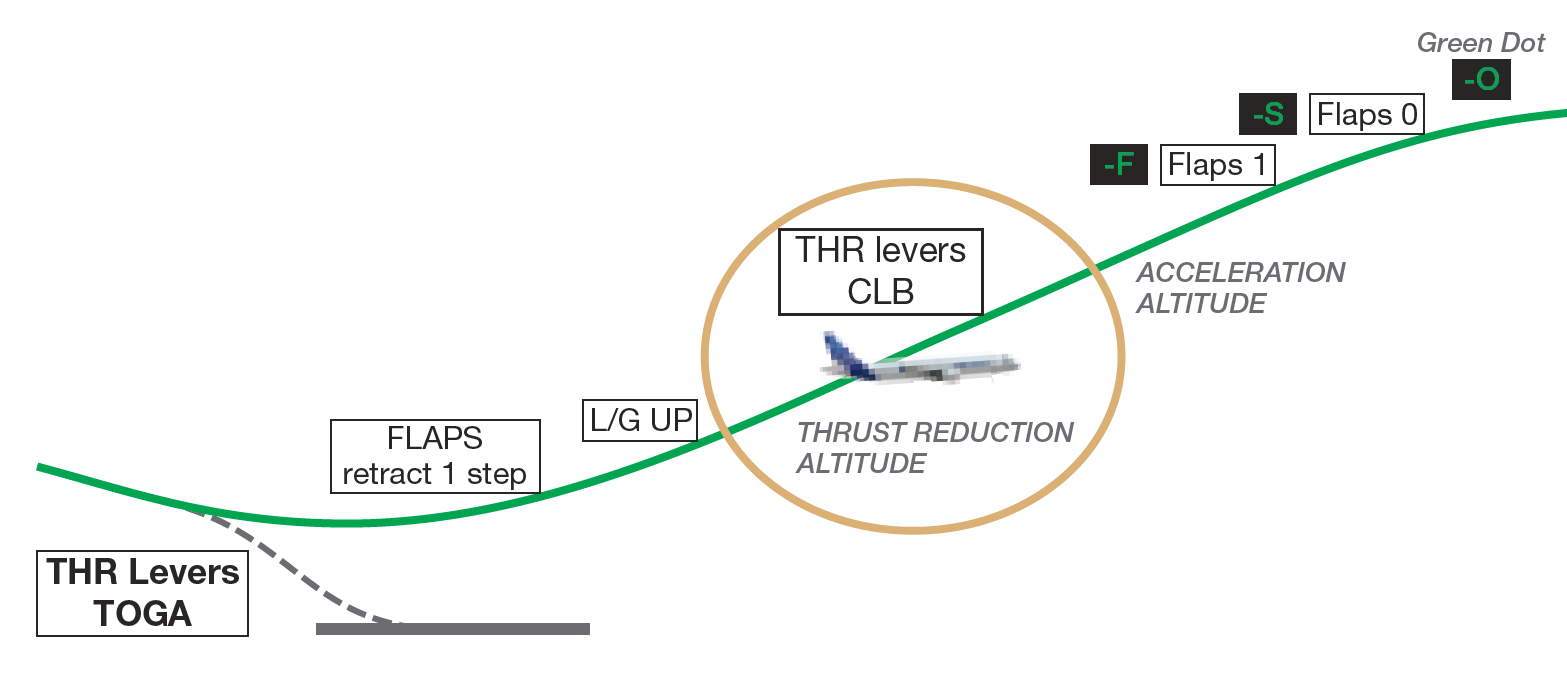
Figure 2: Airbus A320 go-around profile. Source: Airbus.

Source: Airbus.

Visual circuit procedure

The operator’s Flight Crew Operating Manual contained procedures for flying a visual circuit. The procedure detailed a visual circuit be flown at 1,500 ft AGL with Flaps 1. Prior to turning onto the base leg of the circuit, the flight crew should normally select Flaps 2, select landing gear DOWN and arm the spoilers. On the base leg, the flight crew should normally select Flaps 3 followed by Flaps FULL (if required). Flight crews would then perform the landing checklist.

ECAM landing memo

The Airbus A320 Electronic Centralised Aircraft Monitor (ECAM) presents data to flight crew on two displays: the Engine/Warning Display (E/WD) and the System Display (SD). Data presented includes:

  • primary engine indications, fuel quantity, landing gear, flap and slat position
  • warning and caution alerts, or memos
  • synoptic diagrams of aircraft systems, and status messages.

Memos are displayed on the lower section of the E/WD, and they list functions or systems that are temporarily used for normal operations. The display uses colour codes, which indicate to flight crew the importance of the indication. Green indicates the item is operating normally, and blue indicates there are actions to be carried out.

The landing memo is displayed when the aircraft is in the approach phase below 2,000 ft. However, after a go-around the system logic requires the aircraft climb above 2,200 ft radio altitude (RA) in order for the landing memo to reset. If the aircraft conducts a circuit lower than 2,200 ft the landing memo will not be displayed on the E/WD until 800 ft RA on the next approach.

Figure 3: Airbus A320 flight deck and E/WD landing memo
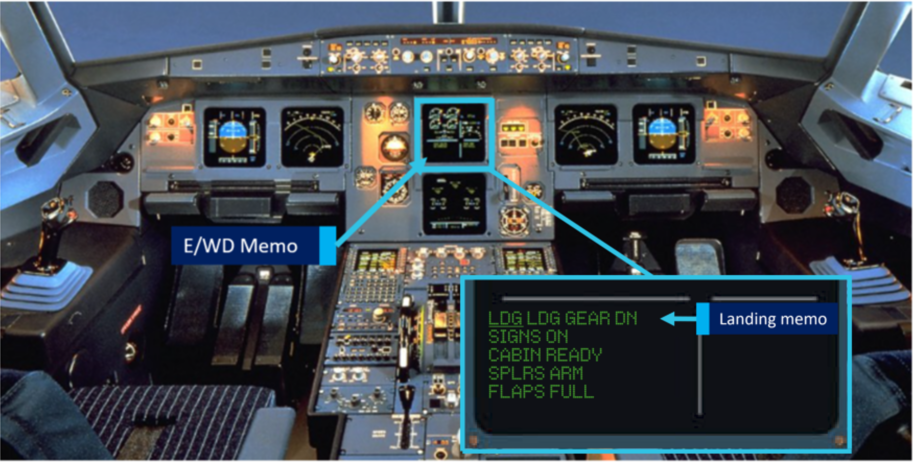
Figure 3: Airbus A320 flight deck and E/WD landing memo. Source: Airbus modified by ATSB.

Source: Airbus modified by ATSB.

Landing checklist

As part of the operator’s stabilised approach criteria the landing checklist was required to be completed prior to 1,000 ft AGL. The checklist included an item for ECAM MEMO. When actioning that item the captain and FO were required to independently look at the ECAM MEMO on the E/WD, confirm that there was no blue text and, on observing that, announce ‘landing, no blue’ in response to the checklist item.

In the case of the landing memo not being displayed on the E/WD (as in the event of a go-around and visual circuit below 2,200 ft), the flight crew were required to read, check and announce the landing memo items listed on the checklist below the item ECAM MEMO.

Figure 4: Jetstar A320 landing checklist
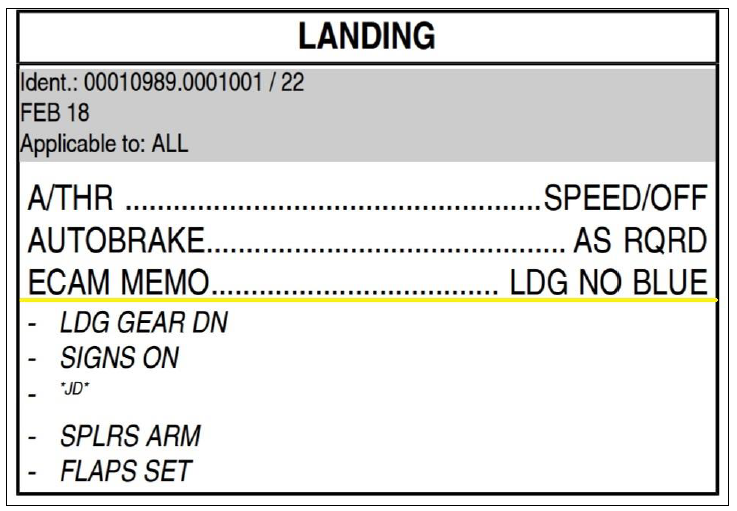
Figure 4: Jetstar A320 landing checklist. Source: Jetstar.

Source: Jetstar.

__________

  1. The only automatic flap retraction that can take place is from Flaps 1+F to Flaps 1.

Findings

These findings should not be read as apportioning blame or liability to any particular organisation or individual.

  • During the first go-around, the flight crew did not fully complete the standard go-around procedure, resulting in the aircraft’s flaps remaining at Flaps 3 rather than Flaps 1 during the subsequent visual circuit at 1,500 ft.
  • During the downwind leg following the first go-around, the flight crew did not select the landing gear DOWN, as they had commenced the configuration sequence for landing at the Flaps 3 setting.
  • The flight crew did not identify that, because the aircraft had not climbed through 2,200 ft, the landing memo had not been reset and was not displayed.
  • Following both go-arounds, the captain elected to conduct non-standard right circuits. This increased the potential for traffic conflicts with other aircraft, and flight crew workload managing such conflicts.

Safety action

Whether or not the ATSB identifies safety issues in the course of an investigation, relevant organisations may proactively initiate safety action in order to reduce their safety risk. The ATSB has been advised of the following proactive safety action in response to this occurrence.

Jetstar Airways

As a result of this occurrence, Jetstar Airways has advised the ATSB that both flight crew members attended debriefings with flight operations management and were provided with specific simulator and line flying training related to the occurrence.

Purpose of safety investigations & publishing information

Purpose of safety investigations

The objective of a safety investigation is to enhance transport safety. This is done through: 

  • identifying safety issues and facilitating safety action to address those issues
  • providing information about occurrences and their associated safety factors to facilitate learning within the transport industry.

It is not a function of the ATSB to apportion blame or provide a means for determining liability. At the same time, an investigation report must include factual material of sufficient weight to support the analysis and findings. At all times the ATSB endeavours to balance the use of material that could imply adverse comment with the need to properly explain what happened, and why, in a fair and unbiased manner. The ATSB does not investigate for the purpose of taking administrative, regulatory or criminal action.

Terminology

An explanation of terminology used in ATSB investigation reports is available here. This includes terms such as occurrence, contributing factor, other factor that increased risk, and safety issue.

Publishing information

Released in accordance with section 25 of the Transport Safety Investigation Act 2003

Published by: Australian Transport Safety Bureau

© Commonwealth of Australia 2019

image_5.png

Ownership of intellectual property rights in this publication

Unless otherwise noted, copyright (and any other intellectual property rights, if any) in this report publication is owned by the Commonwealth of Australia.

Creative Commons licence

With the exception of the Coat of Arms, ATSB logo, and photos and graphics in which a third party holds copyright, this publication is licensed under a Creative Commons Attribution 3.0 Australia licence.

Creative Commons Attribution 3.0 Australia Licence is a standard form licence agreement that allows you to copy, distribute, transmit and adapt this publication provided that you attribute the work.

The ATSB’s preference is that you attribute this publication (and any material sourced from it) using the following wording: Source: Australian Transport Safety Bureau

Copyright in material obtained from other agencies, private individuals or organisations, belongs to those agencies, individuals or organisations. Where you wish to use their material, you will need to contact them directly.

Occurrence summary

Investigation number AO-2018-042
Occurrence date 18/05/2018
Location near Ballina/Byron Gateway Airport
State New South Wales
Report release date 10/12/2019
Report status Final
Investigation level Short
Investigation type Occurrence Investigation
Investigation status Completed
Mode of transport Aviation
Aviation occurrence category Incorrect configuration
Occurrence class Incident
Highest injury level None

Aircraft details

Manufacturer Airbus
Model A320-232
Registration VH-VQK
Serial number 2651
Aircraft operator Jetstar Airways
Sector Jet
Operation type Air Transport High Capacity
Departure point Sydney, NSW
Destination Ballina/Byron Gateway, NSW
Damage Nil

Incorrect configuration involving Avions de Transport Régional ATR72, VH-FVL, Brisbane Airport, Queensland, on 2 April 2017

Final report

What happened

On 2 April 2017, at about 1730 Eastern Standard Time (EST), a Virgin Australia ATR - Gie Avions De Transport Regional ATR72-212A aircraft, registered VH-FVL, departed Moranbah for Brisbane, Queensland on a scheduled passenger service. There were two flight crew, two cabin crew and 38 passengers on board the aircraft. The captain was the pilot flying (PF) and the first officer was the pilot monitoring (PM).[1] The flight also acted as line training for the first officer.

While in the cruise, air traffic control (ATC) cleared the aircraft for the LAVEG ONE standard arrival route for runway 19 at Brisbane Airport. Weather conditions were clear and at 5,700 ft the crew established visual contact with the runway. ATC then gave them radar vectors to intercept the final approach leg.

At around 2,500 ft on descent, the captain disconnected the autopilot and manually flew the aircraft. ATC instructed the crew to track to a 5 NM (9.3 km) final approach leg for runway 19 and cleared the aircraft to descend to 1,700 ft for a visual approach. At 2,300 ft, the captain directed the first officer to select flap 15 and to set 140 kt on the automatic flight control system. The first officer then confirmed that this had been completed. The landing gear was extended soon after.

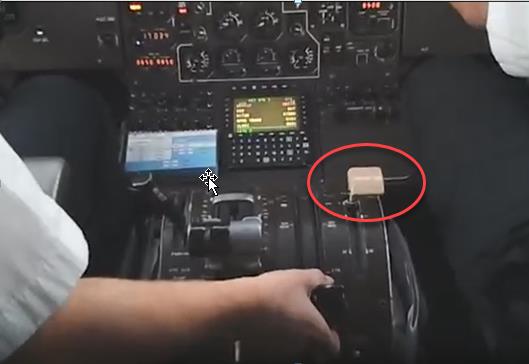
While the aircraft was turning onto the final approach leg, the captain directed the first officer to select flap 30, set the airspeed indicator bug to the approach speed (VAPP),[2] and start the before landing checklist. The first officer completed a radio call with ATC, moved the flap selection lever (Figure 1), set the approach speed (104 kt) and responded ‘V approach set’, and then started the checklist.

Figure 1: Location of flap lever on ATR72

Figure 1: Location of flap lever on ATR72

Source: Virgin Australia

As the aircraft descended on the final approach leg, the crew noticed that the aircraft was not performing as expected. The captain had to keep adjusting the aircraft attitude and engine torque setting to control the speed. Passing about 1,000 ft, the captain recognised that the speed was too high, but thought that this could be corrected by 500 ft and continued the approach. The first officer also noticed the unusually high speed and called out ‘speed’ to alert the captain.

The flight crew had no recollection of completing the before landing checklist or completing the callout at 500 ft to ensure that aircraft was in a stabilised approach.[3] Passing 173 ft, the enhanced ground proximity warning system[4] (EGPWS) activated with the alert, TOO LOW FLAP. The captain immediately conducted a missed approach. During the subsequent climb, the captain called ‘flap 15, check power’ and the first officer responded accordingly.

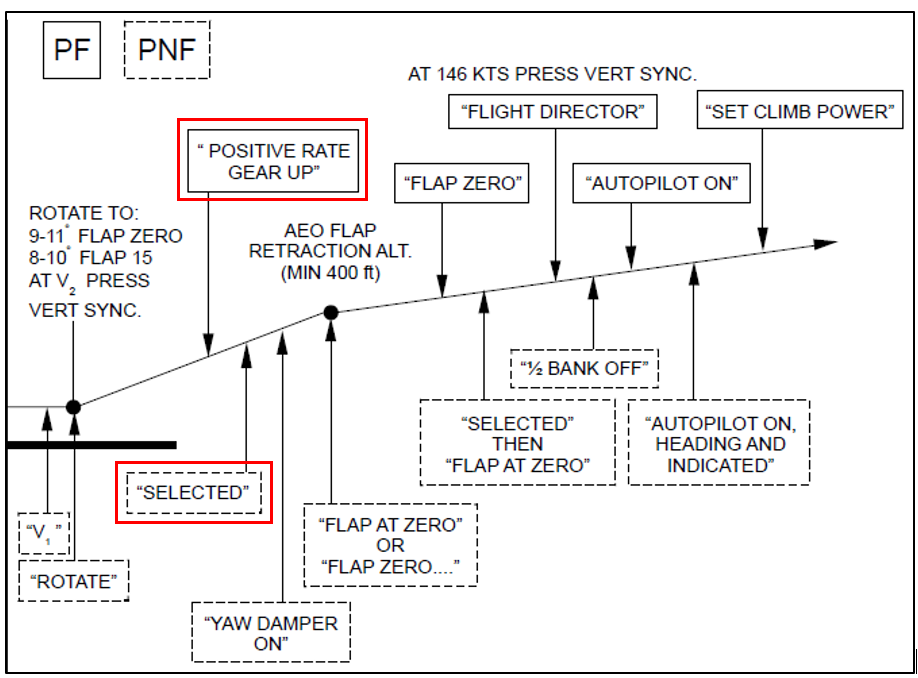
When the aircraft achieved a positive rate of climb, the captain called ‘positive rate, gear up’. ATC cleared the aircraft to climb and then vectored them for a right base leg to conduct the same approach to runway 19. At this time, the first officer commented to the captain a concern that they may have left the flap at 15. After landing, the captain decided to stand the crew down and not conduct the next two sectors.

Recorded data

The operator extracted the flight data from the aircraft’s quick access recorder. It was recorded that the aircraft commenced the turn onto the final approach at 1,720 ft above the airport and was at 1,729 ft when the flaps lever was moved from 15 to 0 degrees at a calibrated air speed (CAS) of 139 kt.

At 900 ft, the air speed had increased to 148 kt and the aircraft was low on the approach. At 542 ft the aircraft had slowed to 123 kt, which coincided with the thrust lever angle set to idle.

Immediately after the TOO LOW FLAP warning at 173 ft, the thrust lever was moved to the go around position and the flap lever moved from flap 0 to flap 15.

The stall speed for the aircraft at flap 0 was about 106 kt at the estimated approach weight of 18 tonnes. The VAPP speed was set at 104 kt, which was below the flap 0 stall speed. The minimum speed recorded on approach was 114 kt at 507 ft.

The stick-shaker[5] activates at 15.9 degrees angle of attack[6] and the maximum angle of attack reached during the approach was 14.6 degrees.

Flap procedures

The operator’s ATR 72-500 standard operating procedures stated that all normal landings are conducted using flap 30. On approach, the pilot flying must call ‘flaps 30, set speed bug V approach’. The pilot monitoring is then required to check the speed, select flap 30, monitor the extension of the flap, and set the speed bug to VAPP and call ‘[speed] set’. The pilot flying then calls out the before landing checklist for the pilot monitoring to action. The last item on the before landing checklist is for both crew to check that flap 30 has been set.

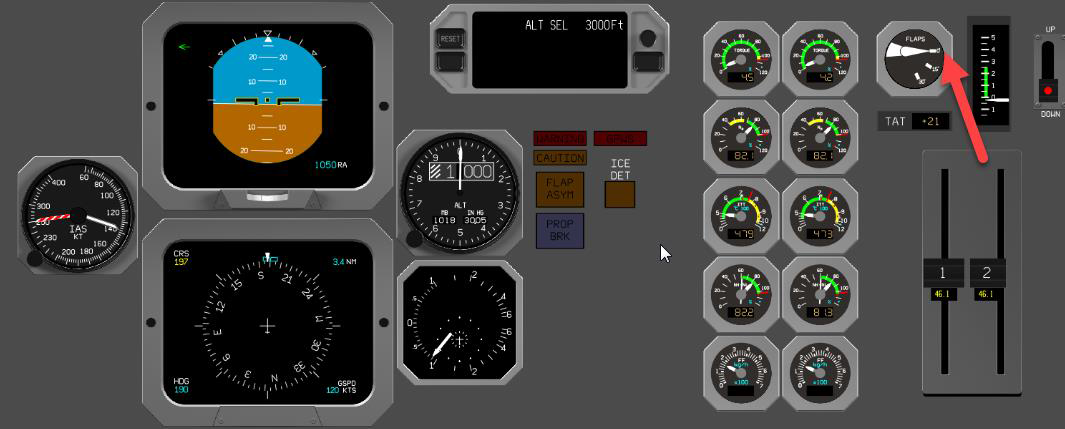
The flap lever is in the 12 o’clock position for flap 0, in the 2 o’clock position for flap 15, and in the 5 o’clock position for flap 30. The flap position is also shown on the flap indicator where the needle points at 0, 15, or 30 (Figure 2).

Figure 2: A screen capture from the operator’s flight data showing the flap indicator positioned at 0 degrees while the aircraft was passing 1,000 feet on descent

Figure 2: A screen capture from the operator’s flight data showing the flap indicator positioned at 0 degrees while the aircraft was passing 1,000 feet on descent

Source: Operator, modified by the ATSB

Stabilised approach criteria

The operator’s stabilised approach criteria included that all approaches shall be stabilised by 1,000 ft above ground elevation. However, in terms of speed, if the pilot-in-command is confident the speed target will be achieved by no later than 500 ft above field elevation, the approach can continue.

The speed criteria is that the aircraft must be within -5 to +10 kt of the speed target.

If the speed remains outside the stabilised criteria at 500 ft above field elevation, or if at any time before it becomes apparent the stabilised criteria will not be met, then a go around must be initiated.

The VAPP set for flaps 30 on the day was 104 knots. At 507 ft, the airspeed was 114 kts, which was within the stabilised approach criteria. However, at 358 ft, the airspeed had increased to 128 kts.

The go around was initiated at 173 ft at an airspeed of 121 kts.

Captain’s comments

The captain provided the following comments:

The captain recalled seeing the first officer’s hand reaching out and grasping the flap lever when instructed to set flap 30, but was also busy hand flying the aircraft at the time.

While the aircraft is climbing on a go around, it is the pilot monitoring’s responsibility to call ‘positive rate’, but there was no call from the first officer so the captain made the call.

When they recognised that the aircraft was performing unusually, the captain thought it was an issue with the aircraft power settings because the aircraft was descending below the approach path.

Normally, both the pilot flying and pilot monitoring would check the flap settings when it is called in the checklist by checking the position of the flap lever, then the flap indicator, and say ‘set’. However, because the captain was busy controlling the aircraft, they may not have checked.

The first time the captain became aware that the flap was set to 0 degrees was during a review of the flight data animation produced by the operator.

The captain completed a fatigue report after the flight, although later reported not feeling overly tired during the flight. The captain had arrived at the airport to sign on at 1140 instead of 1340, due to confusion around the rostered flight time. However, to be safe the captain decided that the crew would not continue onto the next destination.

There are inherent risks with visual approaches at night, given that they are not using the instrument landing system.[7]

First officer’s comments

The first officer provided the following comments:

The workload of the crew increased during the approach when there was a combination of turning onto the final approach path, conducting a visual approach, managing radio calls with ATC and responding to the unexpected aircraft performance.

Flap settings are generally confirmed through the completion of the before landing checklist, whereby the flap lever and indicator must be visually checked. However, in this case, this part of the checklist happened during a high workload period, and it was subsequently rushed. This checklist item may have been missed.

The first officer recalled looking at the flap indicator and seeing movement, but may have wrongly assumed that the flaps were moving to flap 30 in lieu of flap 0.

Previous occurrences

A search of the ATSB’s database found the following occurrences where the incorrect flap setting was selected on approach:

On 28 July 2011, the crew of an Airbus A320 was on approach to Melbourne, Victoria (ATSB investigation AO-2011-089).[8] The approach brief included the requirement for flap 2[9] to be selected. At about 245 ft, the captain realised the landing checklist had not been completed and the crew received an EGPWS warning TOO LOW FLAP. The captain identified the aircraft was not in the landing configuration, including flaps and called for a go-around.

On 24 July 2013, the crew of an Airbus A320 was on approach to Newman Airport, Western Australia (ATSB investigation AO-2013-149).[10] Shortly after passing 500 ft above ground level, the crew received an EGPWS warning TOO LOW FLAP. Full flap was selected at about 185 ft and the aircraft landed shortly after.

On 2 April 2017, the crew of a Boeing 737 were on approach to land on runway 19 at Brisbane Airport (ATSB occurrence 201701579). At 1,400 ft the call for flap 30 was made, but flap 25 was selected. The landing checklist was commenced at 1,200 ft but interrupted by the issue of a landing clearance from air traffic control. The checklist was recommenced and completed at 1,000 ft, however, the flap setting was not identified. At 300 ft, the EGPWS warning TOO LOW FLAP activated and the crew conducted a missed approach.

Safety analysis

The approach and landing is known to be a phase of flight with a high workload due to the number of tasks to be completed in addition to monitoring the flight path. During the approach, as the aircraft was turning, the first officer was responding to a radio call and completing a checklist. It is likely that the first officer inadvertently selected the flap lever up from 15 to 0, instead of down to 30, and did not crosscheck the flap indicator before moving on to the other tasks. This inadvertent action led to an increase in the aircraft’s airspeed, which the flight crew recognised, but at the time were unable to ascertain why. The incorrect flap setting was not detected and a go around initiated after a ground proximity warning alerted the crew to an incorrect configuration at 173 ft.

Due to the high workload in managing the aircraft’s performance on approach, the crew did not detect the aircraft’s speed was exceeding the stabilised approach criteria of VAPP + 10 kts or that the aircraft was incorrectly configured with flap 0. Although at 507 ft, the airspeed was 114 kts, which was within the stabilised approach criteria with the VAPP set at 104 kts, at 358 ft, the airspeed had increased to 128 kts, which was outside the stabilised approach criteria.

Since the incorrect flap setting was not detected by the crew on approach, had they managed to slow the aircraft to the VAPP of 104 kts for flap 30, they would have been 2 kts below the stall speed for the actual flap setting (106 kts).

Findings

These findings should not be read as apportioning blame or liability to any particular organisation or individual.

  • During the approach, the first officer moved the flap lever up from flap 15 to flap 0, instead of from flap 15 to flap 30 as intended. This resulted in an unstable approach.
  • The crew did not identify the incorrect flap setting until the ground proximity warning system alerted them to an incorrect configuration, likely due to workload.

Safety message

Approach and landing have a higher workload compared to other phases of flight because of the continuous monitoring of aircraft parameters and the external environment to maintain a stable approach. This investigation highlights the potential impact crew workload has on flight operations as it can lead to adding, shedding, or rescheduling actions. Handling approaches to land continues to be a safety priority for the ATSB.

Safety message

Purpose of safety investigations

The objective of a safety investigation is to enhance transport safety. This is done through:

  • identifying safety issues and facilitating safety action to address those issues
  • providing information about occurrences and their associated safety factors to facilitate learning within the transport industry.

It is not a function of the ATSB to apportion blame or provide a means for determining liability. At the same time, an investigation report must include factual material of sufficient weight to support the analysis and findings. At all times the ATSB endeavours to balance the use of material that could imply adverse comment with the need to properly explain what happened, and why, in a fair and unbiased manner. The ATSB does not investigate for the purpose of taking administrative, regulatory or criminal action.

Terminology

An explanation of terminology used in ATSB investigation reports is available here. This includes terms such as occurrence, contributing factor, other factor that increased risk, and safety issue.

Publishing information 

Released in accordance with section 25 of the Transport Safety Investigation Act 2003

Published by: Australian Transport Safety Bureau

© Commonwealth of Australia 2017

image_5.png

Ownership of intellectual property rights in this publication

Unless otherwise noted, copyright (and any other intellectual property rights, if any) in this report publication is owned by the Commonwealth of Australia.

Creative Commons licence

With the exception of the Coat of Arms, ATSB logo, and photos and graphics in which a third party holds copyright, this publication is licensed under a Creative Commons Attribution 3.0 Australia licence.

Creative Commons Attribution 3.0 Australia Licence is a standard form licence agreement that allows you to copy, distribute, transmit and adapt this publication provided that you attribute the work.

The ATSB’s preference is that you attribute this publication (and any material sourced from it) using the following wording: Source: Australian Transport Safety Bureau

Copyright in material obtained from other agencies, private individuals or organisations, belongs to those agencies, individuals or organisations. Where you wish to use their material, you will need to contact them directly.

__________

  1. Pilot Flying (PF) and Pilot Monitoring (PM) are procedurally assigned roles with specifically assigned duties at specific stages of a flight. The PF does most of the flying, except in defined circumstances; such as planning for descent, approach and landing. The PM carries out support duties and monitors the PF’s actions and aircraft flight path.
  2. Final approach speed (VAPP) is the speed on the final approach in landing configuration.
  3. On the glidepath at correct airspeed, correctly configured, all checklists and paperwork complete.
  4. An aircraft system that uses aircraft inputs with onboard terrain, obstacle, and airport runway databases to predict potential conflicts between the aircraft’s flight path and terrain or an obstacle.
  5. A tactile warning to alert the flight crew that the aircraft was near an aerodynamically-stalled condition of flight.
  6. The angle between the oncoming air or relative wind and a reference line of the aeroplane or wing.
  7. A standard ground aid to landing, comprising two directional radio transmitters: the localiser, which provides direction in the horizontal plane; and the glideslope, for vertical plane direction, usually at an inclination of 3°. Distance measuring equipment or marker beacons along the approach provide distance information.
  8. www.atsb.gov.au/publications/investigation_reports/2011/aair/ao-2011-089/
  9. Flap 2 is equivalent to 15 degrees position.
  10. www.atsb.gov.au/publications/investigation_reports/2013/aair/ao-2013-149/

Aviation Short Investigations Bulletin - Issue 62

Occurrence summary

Investigation number AO-2017-039
Occurrence date 02/04/2017
Location Brisbane Airport
State Queensland
Report release date 05/09/2017
Report status Final
Investigation level Short
Investigation type Occurrence Investigation
Investigation status Completed
Mode of transport Aviation
Aviation occurrence category Incorrect configuration
Occurrence class Incident
Highest injury level None

Aircraft details

Manufacturer ATR-GIE Avions de Transport Régional
Model ATR72-212A
Registration VH-FVL
Serial number 974
Aircraft operator Virgin Australia Airlines
Sector Turboprop
Operation type Air Transport High Capacity
Departure point Moranbah, Qld
Destination Brisbane, Qld
Damage Nil

Incorrect configuration involving Boeing 717, VH-YQV, Canberra Airport, Australian Capital Territory, on 20 June 2016

Final report

What happened

On 20 June 2016, a captain and first officer, employed by Cobham Aviation Services, conducted a QantasLink flight from Sydney Airport, New South Wales, to Canberra Airport, Australian Capital Territory, in a Boeing 717-200 aircraft, registered VH-YQV.

The aircraft arrived in Canberra at about 0720 Eastern Standard Time (EST), and the first officer then conducted an external inspection of the aircraft, while the captain prepared the cockpit including the take-off data for the next sector to Sydney. The captain wrote the reduced-thrust take-off data onto the take-off and landing data (TOLD) card, including a flex temperature[1] of 40 °C, which was obtained from a table in the regulated take-off (RTO) book, an engine pressure ratio (EPR)[2] of 1.39, aircraft take-off weight, flap setting 5, and the take-off reference speeds (V speeds).[3] As the runway was wet, the V speeds were obtained manually from a table in the RTO book.[4]

After completing the external inspection, the first officer returned to the cockpit and the flight crew checked the take-off data in accordance with standard procedures. The first officer assessed that based on the environmental conditions, the flex temperature should be 39°. The first officer amended the TOLD card by striking through the 40 and writing 39 next to it, and similarly amended the V speeds based on the manual V speeds provided in the table for that flex temperature.

The captain was the pilot flying[5] for the sector to Sydney, so commenced briefing for the flight. The captain read out the data from the TOLD card, including the flex temperature and EPR, and the first officer entered the flex temperature and V speeds into the take-off page of the flight management system (FMS), which then calculated an EPR.

The flight crew then completed the cockpit checklist down to the last four items, in accordance with standard procedures. At that time, a member of the cabin crew entered the cockpit to advise the flight crew that an additional 22 passengers would be boarding the flight. As the aircraft take-off weight would increase by about 2 tonnes, the first officer recalculated the take-off data. The newly derived flex temperature was 34°, and as there was not much room left on the TOLD card, the first officer overwrote the previous figure of 39 with 34. The first officer then obtained the new V speeds, which the captain crosschecked and the first officer wrote them on the TOLD card.   

The aircraft communications, addressing and reporting system (ACARS) then chimed with the loadsheet coming through on the printer, and at about the same time, a cabin crewmember entered the cockpit to confirm passenger numbers and ground personnel communicated over the intercom with the flight crew about removing the wheel chocks. After entering the zero fuel weight from the loadsheet into the FMS and crosschecking the take-off weight in the FMS against the take-off weight derived on the TOLD card, the captain called for the first officer to enter the revised manually derived V speeds from the TOLD card into the FMS.

The standard procedure then was for the captain to call ‘re-flex’ before entering the amended flex temperature and flap setting from the TOLD card into the FMS. The captain was holding the TOLD card and reported stating ‘39’ as the flex temperature, having misread the ‘34’. The first officer could not recall checking the flex temperature in the FMS at that time, and thought it may have been omitted due to the interruptions.

The crew reported that the EPR calculated by the FMS based on the flex temperature and environmental conditions was 1.39. (The flight data showed that the commanded EPR at that stage was actually 1.38.) The EPR obtained from the RTO book (for flex temperature of 34°) and written on the TOLD card was 1.41. The flight crew crosschecked the FMS EPR with the TOLD card EPR, and although there was a discrepancy of 0.2, it was within the 0.3 margin allowed at that stage.[6]

After obtaining the required air traffic control clearances, the captain taxied the aircraft to the runway and commenced the take-off at about 0812. In accordance with standard procedures, the captain then moved the thrust levers forward and checked for an even spool-up of the engines to an EPR of 1.2. The captain then called ‘auto flight’ and the first officer engaged the auto-flight system. This action caused the thrust levers to move to a position where the EPR from the FMS was achieved. The captain then called ‘check thrust’ and the first officer saw that the EPR was 1.38, instead of the required EPR of 1.41 as written on the TOLD card. In accordance with standard procedures, the first officer then moved the thrust levers forward to achieve 1.41 EPR.

The flight crew thought that the aircraft was then correctly configured for the take-off, with the correct EPR, thrust and flap settings and V speeds, and the captain continued the flight. However, after about 4 seconds at 1.41, the EPR returned to 1.38 for the take-off as the thrust lever position returned to that set by the auto-flight system based on the EPR value in the FMS.

During the initial climb, the first officer identified that the flex temperature set in the FMS was 39 instead of 34. As the short sector to Sydney was busy, the crew waited until the aircraft had arrived in Sydney before discussing the incident. Both members of the flight crew assessed that tiredness due to the early start may have contributed to the flex temperature error, but that they were fit to continue to operate for the remainder of the day’s duty.

Flight data

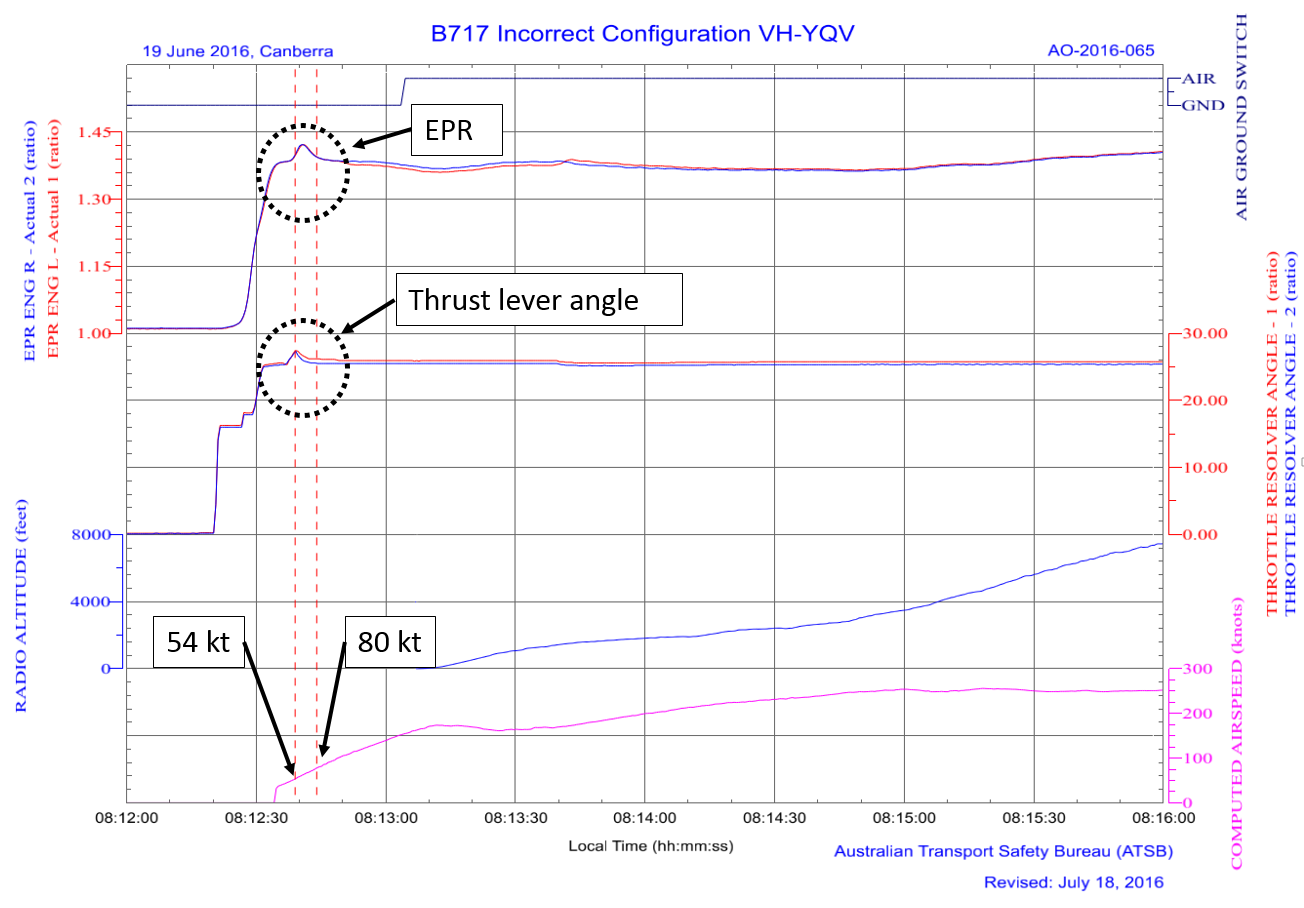
The aircraft operator provided the ATSB with a copy of the quick access recorder (QAR) data for the incident flight. As depicted in Figure 1, the data showed the thrust lever angle set at about 25° and the EPR at 1.38 early in the take-off run. After about 4 seconds at that setting, the thrust lever angle increased to about 26° as the commanded EPR, followed closely by the actual EPR, increased to 1.41. However, after about 4 seconds at 1.41 and a further 6 seconds at 1.39, the EPR reduced to 1.38 and thrust lever angle to about 25°, where they remained for the take-off.

This indicates that although the first officer manually moved the thrust levers forward, as the auto-throttle system was engaged, it then overrode the manual thrust lever position and returned the EPR to the value set in the FMS, which was the target thrust setting. At the time, the computed airspeed was 54 kt. When the airspeed reaches 80 kt in the take-off roll, the auto-throttle system mode changes from ‘take-off thrust’ to ‘take-off clamp’ mode. In clamp mode, the auto-throttle servo does not have power and the thrust levers do not move automatically. However, in take-off thrust mode (prior to 80 kt), the flight crew would have to disengage the auto-throttle system to set the thrust manually, or maintain pressure on the levers until the airspeed reached 80 kt. 

Figure 1: Graph of flight data from the incident flight 

Figure 1: Graph of flight data from the incident flight

Source: QAR data supplied by the aircraft operator analysed by the ATSB

Flight crew comments

During the approach into Canberra from Sydney, the cloud base was at the minima.[7] The captain commented that the workload on an instrument approach down to the minima was high, and would generally result in a reduced state of arousal after landing and shutdown in response.

The flight crew commented that a combination of distraction by cabin crew and ground personnel while re-entering data, a reduced state of arousal following high workload instrument approach, and possibly tiredness from an early start may have contributed to their omitting to enter the correct flex temperature into the FMS.

Although the captain recalled misreading 39 instead of 34, the first officer could not recall the captain calling ‘re-flex’, and commented that it was unlikely to have been called and then not completed. The first officer thought it was more likely that they entered the new V speeds but had omitted to check that the flex temperature written on the TOLD card matched that in the FMS.

Normally by the time they are getting to the third set of amended numbers, the first officer would start a new TOLD card. However, as it was approaching the scheduled departure time, the first officer elected to overwrite the existing figures. The captain further commented that in future, if there were any more than two corrections made to the supplement data on the TOLD card, they would write out a new card.

The captain commented that this incident provided a good example of how adherence to standard operating procedures helps to mitigate errors. While the initial crosscheck prior to taxiing showed a discrepancy between the TOLD card and FMS EPR values, as it was within the permitted tolerance, the flex temperature error was not identified at that time. When the first officer checked the thrust (and EPR) during the take-off run, the too-low EPR setting was identified and the thrust levers set to obtain the correct EPR. Hence following the standard operating procedures provided sufficient risk control to identify and correct the error.

Tiredness

The flight crew signed on at 0505 for a four-sector flight duty from Sydney. The scheduled departure time for their first flight from Sydney was 0620 and the flight crew were required to sign on 1 hour and 15 minutes prior. In addition, the crew had to allow 30 minutes to transfer from the long-term carpark, pass through airport security, and sign on in the crew room in the domestic terminal at Sydney Airport.

The captain reported waking up at 0340 and the first officer at 0305, and both crewmembers reported conducting a self-assessment of their fitness to fly. The first officer reported feeling ‘somewhat tired’ having had a broken night’s sleep, but had the previous four days off work and did not feel fatigued. The captain also reported feeling tired having woken up early, they assessed they were not fatigued, and were fully fit to fly. Both the captain and first officer commented that the early start times generally caused a feeling of tiredness, but did not affect their ability to operate the aircraft.  

Cobham operates flight and duty time limitations based on Civil Aviation Order 48 and an exemption, and had not, nor was required to have, implemented a fatigue risk management system. The flight crew reported that the company operations manual included a statement that it is the flight crew’s responsibility to determine their fitness to fly.

Safety action

Whether or not the ATSB identifies safety issues in the course of an investigation, relevant organisations may proactively initiate safety action in order to reduce their safety risk. The ATSB has been advised of the following safety action in response to this occurrence.

Aircraft operator

As a result of this occurrence, the aircraft operator has advised the ATSB that they are taking the following safety actions:

Communication to flight crew

The operator will remind pilots to use a new TOLD card in the event that the card data is being changed and comprehension of these changes is not clear. Pilots will be advised of the investigation by its inclusion in the company’s staff safety magazine. 

Safety message

Inaccurate take‑off reference data has potentially serious consequences. ATSB Aviation Research and Analysis Report AR-2009-052 (Take-off performance calculation and entry errors: A global perspective) documents a number of accidents and incidents where take‑off performance data was inaccurate. The report analyses those accidents and incidents, and concludes:

… it is imperative that the aviation industry continues to explore solutions to firstly minimise the opportunities for take‑off performance parameter errors from occurring and secondly, maximise the chance that any errors that do occur are detected and/or do not lead to negative consequences.

The ATSB SafetyWatch highlights the broad safety concerns that come out of our investigation findings and from the occurrence data reported to us by industry. One of the safety concerns relates to data input errors.

Aviation Short Investigations Bulletin- Issue 52

Purpose of safety investigations

The objective of a safety investigation is to enhance transport safety. This is done through:

  • identifying safety issues and facilitating safety action to address those issues
  • providing information about occurrences and their associated safety factors to facilitate learning within the transport industry.

It is not a function of the ATSB to apportion blame or provide a means for determining liability. At the same time, an investigation report must include factual material of sufficient weight to support the analysis and findings. At all times the ATSB endeavours to balance the use of material that could imply adverse comment with the need to properly explain what happened, and why, in a fair and unbiased manner. The ATSB does not investigate for the purpose of taking administrative, regulatory or criminal action.

Terminology

An explanation of terminology used in ATSB investigation reports is available here. This includes terms such as occurrence, contributing factor, other factor that increased risk, and safety issue.

Publishing information 

Released in accordance with section 25 of the Transport Safety Investigation Act 2003

Published by: Australian Transport Safety Bureau

© Commonwealth of Australia 2016

image_5.png

Ownership of intellectual property rights in this publication

Unless otherwise noted, copyright (and any other intellectual property rights, if any) in this report publication is owned by the Commonwealth of Australia.

Creative Commons licence

With the exception of the Coat of Arms, ATSB logo, and photos and graphics in which a third party holds copyright, this publication is licensed under a Creative Commons Attribution 3.0 Australia licence.

Creative Commons Attribution 3.0 Australia Licence is a standard form licence agreement that allows you to copy, distribute, transmit and adapt this publication provided that you attribute the work.

The ATSB’s preference is that you attribute this publication (and any material sourced from it) using the following wording: Source: Australian Transport Safety Bureau

Copyright in material obtained from other agencies, private individuals or organisations, belongs to those agencies, individuals or organisations. Where you wish to use their material, you will need to contact them directly.

---------- 

[1]     Flex temperature is a calculated outside temperature used for a reduced thrust take-off. The flex temperature (which is hotter than actual outside temperature) is used for generating take-off parameters rather than the actual outside temperature. It takes into account the runway length and aircraft weight to ensure the aircraft can take off within the runway distance available and maintain the required obstacle clearance during the subsequent climb. The aim is to prolong engine life.

[2]     The engine pressure ratio, or EPR, is a pressure ratio indicative of engine thrust. The pressure is sensed by two probes, one ahead and one aft of the jet engine fan.

[3]     Take-off reference speeds or V speeds assist pilots in determining when a rejected take-off can be initiated, and when the aircraft can rotate, lift-off and climb.

[4]     For a dry runway, the V speeds used would have been automatically generated by the flight management system.

[5]     Pilot flying (PF) and pilot monitoring (PM) are procedurally assigned roles with specifically assigned duties at specific stages of a flight. The PF does most of the flying, except in defined circumstances; such as planning for descent, approach and landing. The PM carries out support duties and monitors the PF’s actions and aircraft flight path.

[6]     A change in bleed configuration, such as selecting air conditioning packs on or off, can change the EPR value. Therefore there is a small discrepancy allowed while parked and during taxi, but the two figures must match at take-off

[7]     For a precision approach, the minima is defined as a decision altitude at which a missed approach must be initiated if the required visual reference to continue the approach has not been established.

Occurrence summary

Investigation number AO-2016-065
Occurrence date 20/06/2016
Location Canberra Airport
State Australian Capital Territory
Report release date 28/09/2016
Report status Final
Investigation level Short
Investigation type Occurrence Investigation
Investigation status Completed
Mode of transport Aviation
Aviation occurrence category Incorrect configuration
Occurrence class Incident
Highest injury level None

Aircraft details

Manufacturer The Boeing Company
Model 717-200
Registration VH-YQV
Serial number 55193
Sector Jet
Operation type Air Transport High Capacity
Departure point Canberra, ACT
Destination Sydney, NSW
Damage Nil

Incorrect configuration involving a Piper PA-31, VH-BEB, Bankstown, New South Wales, on 24 December 1993

Summary

After completing a sequence of touch and go circuits the aircraft returned to the parking area. The pilot was performing a pre-shutdown hydraulic pressure check when he inadvertently selected the landing gear to the UP position and the nose gear retracted. Investigation determined that the landing gear selector ground safety lock was out of rig and allowed the selector to move to the UP position whilst the aircraft was on the ground.

Occurrence summary

Investigation number 199304219
Occurrence date 24/12/1993
Location Bankstown
State New South Wales
Report release date 13/09/1994
Report status Final
Investigation type Occurrence Investigation
Investigation status Completed
Mode of transport Aviation
Aviation occurrence category Incorrect configuration
Occurrence class Accident

Aircraft details

Manufacturer Piper Aircraft Corp
Model PA-31
Registration VH-BEB
Sector Piston
Departure point Bankstown NSW
Destination Bankstown NSW
Damage Substantial

Incorrect configuration involving a Cessna 210M, VH-AQH, Gove, Northern Territory, on 15 September 1993

Summary

At about 40 kts during the take-off run the nose of the aircraft lifted off the runway and then sank, allowing the propeller to strike the runway. The aircraft skidded to a stop with the landing gear partly retracted. The pilot then noticed that the landing gear lever was in the "up" position. The pilot stated that he had not selected the landing gear up during the take-off run and was unsure of the lever position prior to commencing the take-off.

Occurrence summary

Investigation number 199302907
Occurrence date 15/09/1993
Location Gove
State Northern Territory
Report release date 29/03/1994
Report status Final
Investigation type Occurrence Investigation
Investigation status Completed
Mode of transport Aviation
Aviation occurrence category Ground strike, Incorrect configuration
Occurrence class Accident

Aircraft details

Manufacturer Cessna Aircraft Company
Model 210M
Registration VH-AQH
Sector Piston
Departure point Gove NT
Destination Lake Evella NT
Damage Substantial

Incorrect configuration involving a Beech Aircraft Corp A36, VH-MGM, Naracoorte, South Australia, on 16 January 1993

Summary

The pilot in command was undergoing a check flight with a licensed pilot in the right hand seat acting as check pilot.

Both pilots stated that on downwind a landing gear down indication was noted. The gear down indication was again checked final. The aircraft landed normally on the mainwheels but as the nose was lowered the nose gear collapsed and the propeller and nose struck the runway.

After landing, the pilot stated that the landing gear lever was in the "down" position. The landing gear operation was checked by a maintenance engineer and found to be normal.

The reason for the gear collapse was not determined.

Occurrence summary

Investigation number 199300056
Occurrence date 16/01/1993
Location Naracoorte
State South Australia
Report release date 24/03/1994
Report status Final
Investigation type Occurrence Investigation
Investigation status Completed
Mode of transport Aviation
Aviation occurrence category Ground strike, Incorrect configuration
Occurrence class Accident

Aircraft details

Manufacturer Beech Aircraft Corp
Model A36
Registration VH-MGM
Sector Piston
Operation type Private
Departure point Naracoorte SA
Destination Naracoorte SA
Damage Substantial

Stickshaker activation involving a Boeing 717-200, VH-NXM, Brisbane Airport, Queensland, on 27 May 2015

Final report

What happened

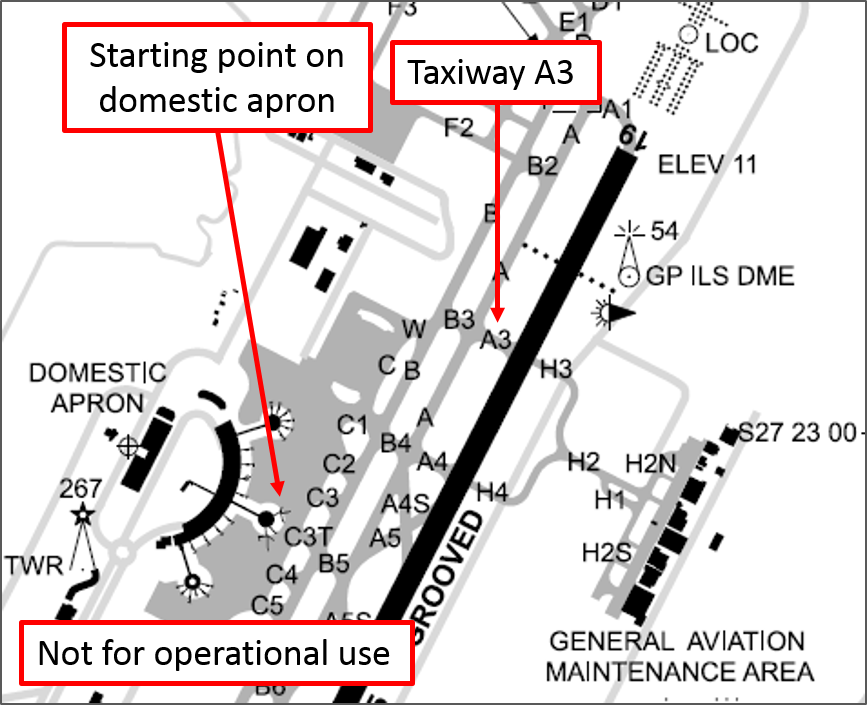
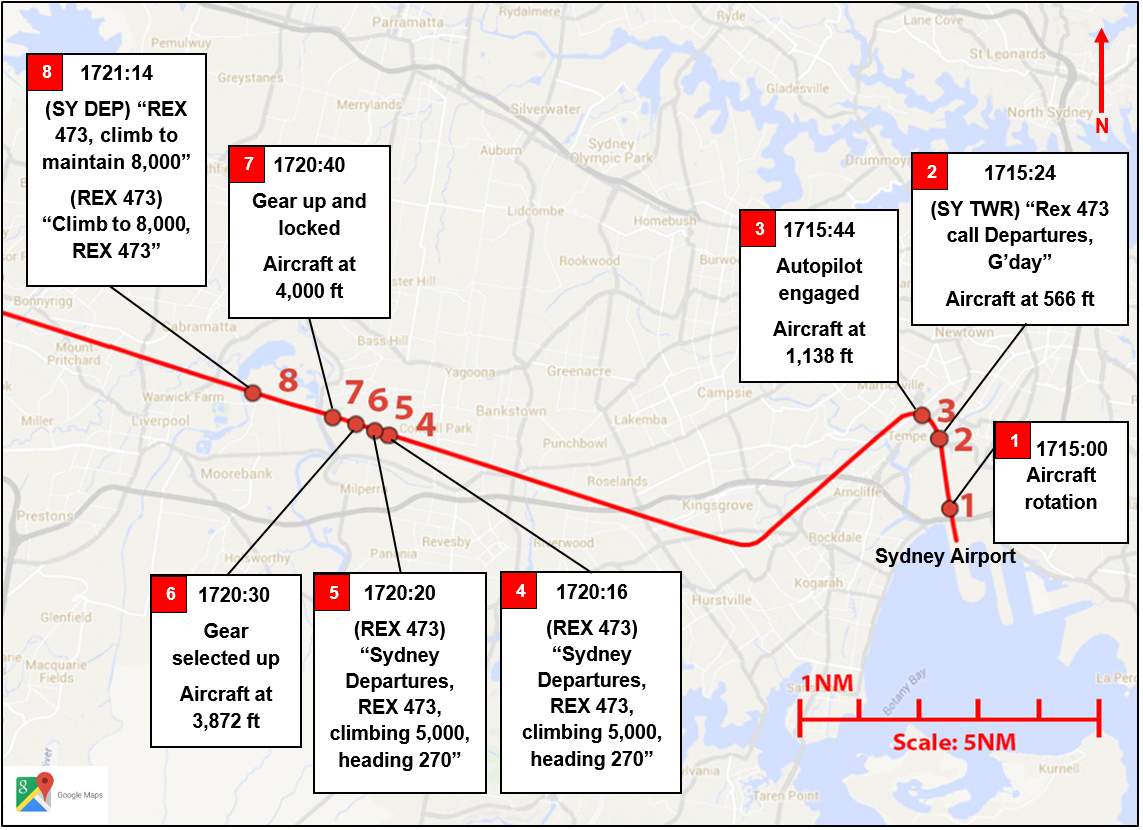
On 27 May 2015, a Cobham Aviation Services Boeing 717-200 aircraft, registered VN-NXM, was being operated from Brisbane to Gladstone, Queensland. The weather in Brisbane was fine and clear, with a light wind from the south. The Captain was the pilot flying (PF) and the First Officer was the pilot monitoring (PM).[1] As part of their preparation for the flight, the crew determined the required flap setting for take-off, and set the flap/slat control handle take-off position detent accordingly (see flap and slat control description). The PM later recalled that, on this occasion, a flap setting of 5.6 degrees was required. Engine start and push-back were normal, and the crew taxied soon after 0900 Eastern Standard Time (EST) for an A3 intersection departure from runway 19 (Figure 1).

Figure 1: Excerpt from Brisbane aerodrome chart showing the location on the domestic apron where the aircraft commenced taxiing and taxiway A3 where the aircraft waited for a clearance to enter the runway

Figure 1: Excerpt from Brisbane aerodrome chart showing the location on the domestic apron where the aircraft commenced taxiing and taxiway A3 where the aircraft waited for a clearance to enter the runway

Source: Airservices Australia, with annotations added by the ATSB

Flap and slat control

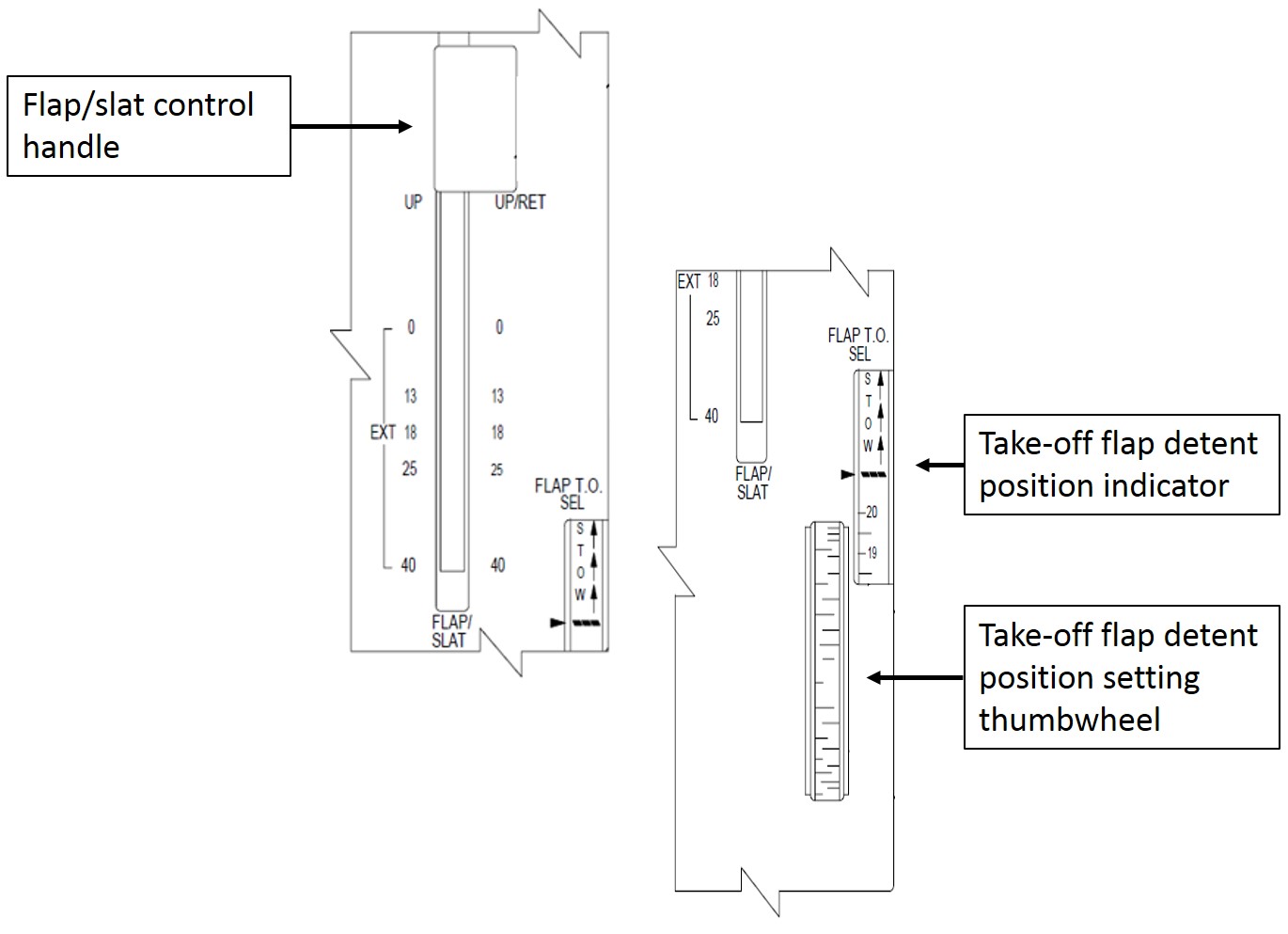
The flaps and slats are controlled by a handle on the right side of the centre pedestal (Figure 2). The flap setting for take-off is determined by the crew according to the conditions. The detent position setting thumbwheel is then used to position a detent for the control handle according to that determination, when a flap setting other than 13 or 18 degrees is required. The flap take-off selection indicator window displays the position of this movable detent. Unlike the flaps, the slats are either fully extended or fully retracted – there is no intermediate setting. The position of the flaps and slats is displayed on each pilot’s primary flight display, beneath the airspeed indicator (Figure 3). The flap/slat control handle needs to be lifted to move it forward from the 0/EXT setting (flaps up/slats extended) to the UP/RET setting (flaps up/slats retracted), to retract the slats.

Figure 2: Flap and slat control

Figure 2: Flap and slat control

Source: Boeing, with annotations added by the ATSB

As they taxied to the holding point, the crew completed relevant procedures, which included a requirement to confirm that the flap and slat configuration was set for take-off. The crew then held position on taxiway A3 while they waited for a clearance from air traffic control to enter the runway.

After waiting for several minutes, the crew were instructed by air traffic control to line up on the runway, but with a caveat that they needed to be ready for an immediate departure. The crew were ready, so accepted the clearance to line up, which was soon followed by their take-off clearance. The crew later commented that the wording used by air traffic control in providing the clearance to enter the runway was somewhat unusual, but there was no confusion and they clearly understood the intent. The crew entered the runway and commenced a rolling take-off.[2] The crew recalled that the take-off roll was normal in all respects, with standard communication and checks made as the take-off roll progressed.

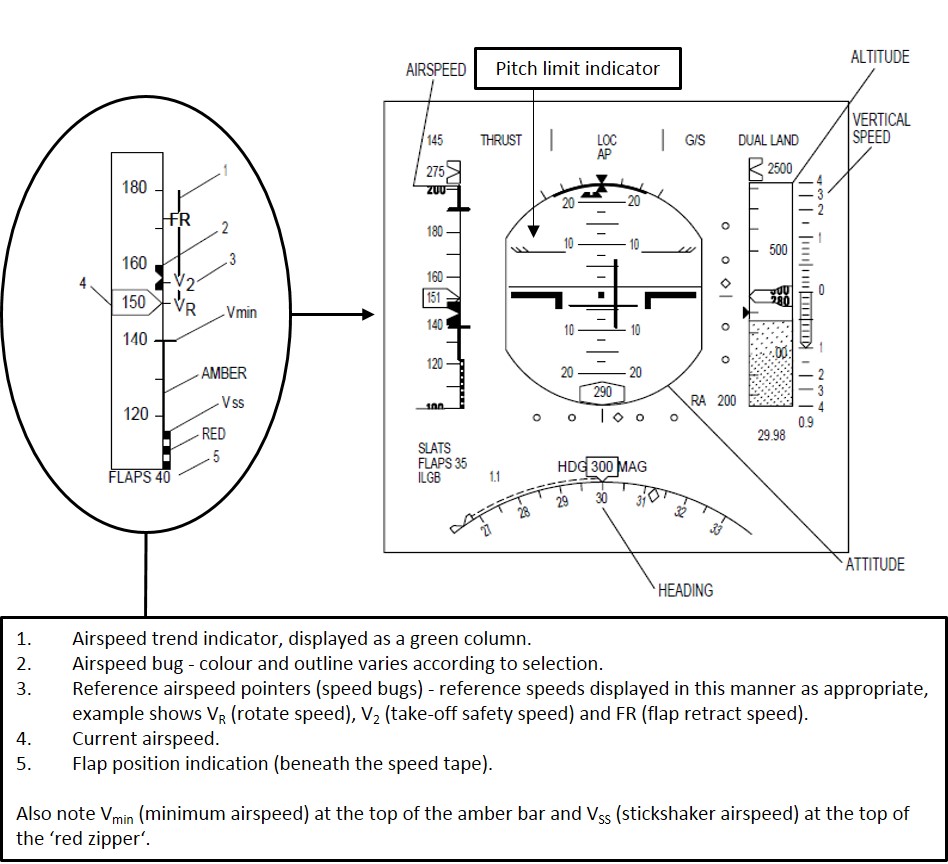
Soon after take-off, the stickshaker activated (see stickshaker description). The PF responded immediately by checking the control column slightly forward to reduce the aircraft pitch attitude. The PF noted that the airspeed at that moment was in the expected target range of V2[3] to V2 + 10 kt, but below minimum speed (Vmin)[4] and stickshaker activation speed (VSS)[5] (Figure 3). The PF also noted the airspeed appeared to be stable, with no indication of a speed reducing trend. The crew recalled that the stickshaker remained active for only a very brief period.

Stickshaker

The stickshaker is part of the aircraft stall protection system. Stickshaker activation is based on a number of parameters, including the angle-of-attack of the aircraft and the position of the flaps and slats. When the required conditions are established, an oscillating force shakes the control column rapidly through a small angle to alert the crew that the aircraft may be approaching an aerodynamic stall. If the aircraft continues towards an aerodynamic stall, other levels of warning and protection may be activated, including visual and aural alerts, and a stickpusher.

The airspeed range for activation of the stickshaker is displayed as a ‘red zipper’ on the lower part of the airspeed indicator (Figure 3). VSS marks the top of the red zipper. When the airspeed is below VSS the pitch limit indicator (which provides an indication of the angle-of-attack margin to the activation of the stall warning system) changes colour from cyan to red, to provide an additional alert to the crew. Additionally, the digits (and the outline box surrounding the digits) representing the current airspeed indication turn red if the airspeed falls below VSS.

Figure 3: Primary flight display and description of relevant airspeed indications

Figure 3: Primary flight display and description of relevant airspeed indications

Source: Boeing, with annotations added by the ATSB

Within moments of stickshaker activation, the PM noticed that the flap/slat control handle was set to the UP/RET position (flaps up/slats retract). Upon noticing the position of the handle, the PM immediately called ‘flaps’, and moved the flap/slat control handle to the previously determined take-off setting position.

As the aircraft continued to climb, the PF noticed that the landing gear was still down - the landing gear would normally be raised soon after having established a positive rate of climb (see description of the operator’s normal configuration management procedures). The crew then raised the landing gear and the climb continued. Later during the climb, the flaps were selected up, and soon after, as the aircraft continued to accelerate, the slats were retracted. The flight then continued to Gladstone without further incident.

Following the incident, the crew deduced that the PM must have selected the flap/slat control handle to the UP/RET position soon after take-off, rather than raising the landing gear handle. The crew’s deduction was based upon the configuration of the aircraft before, and immediately after, stickshaker activation. The crew were confident that before take-off procedures had been completed correctly, and that the flaps and slats had been correctly set. The crew also noted that had they commenced the take-off without the flaps and slats set, they would have received an aural warning alerting them accordingly – there was no such aural warning on this occasion.

Operator’s normal configuration management procedures after take-off

Normal procedures require that the landing gear be retracted soon after take-off. The PM observes that a positive rate of climb has been established and that the aircraft has accelerated to V2. Normally, when those conditions are met, the PM calls ‘positive rate’. If the PF is satisfied that the appropriate conditions are met, he/she responds by commanding ‘gear up’. The PM then raises the landing gear control handle to the UP position accordingly, and when the landing gear has retracted, calls ‘gear up’.

Later during the climb, as the aircraft accelerates through the flap retraction speed, the PF calls ‘flaps zero’. The PM checks that the speed is at or above the flap retraction speed, and that the aircraft is accelerating, then moves the flap/slat control handle to the 0/EXT position (flaps up/slats extended). When the flaps have reached the selected position, the PM calls ‘zero set’. Slat retraction follows a similar process at slat retraction speed which is a slightly higher speed than the flap retraction speed. To retract the slats, the PM sets the flap/slat control handle to the UP/RET position (flaps up/ slats retracted) and when the slats have retracted, calls ‘aircraft clean’.

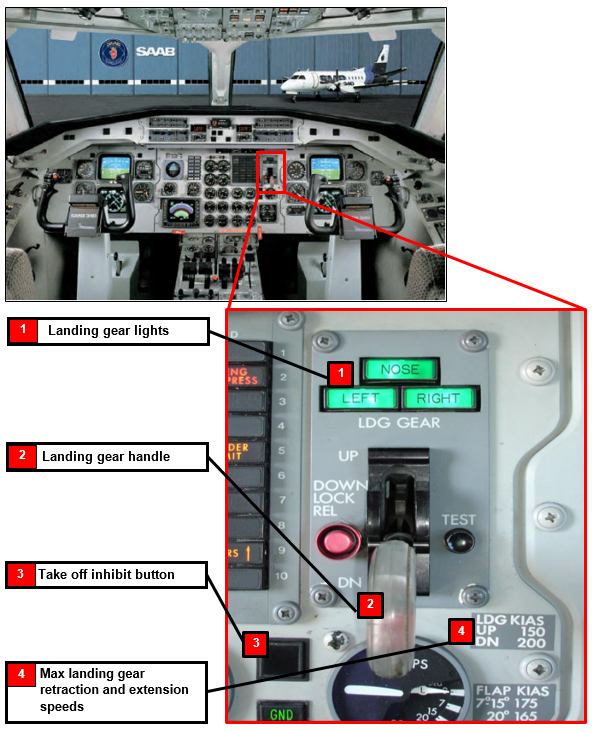
Landing gear control

The landing gear control handle is located on the instrument panel, ahead of and slightly to the left of the pilot in the right seat. The handle is moved in a near vertical motion between the UP and DOWN positions to raise and lower the landing gear.

Flight data analysis

A review of the flight data downloaded following the flight showed that the flaps and slats had been set for take-off. The slats were extended and the flaps had been set to the take-off position determined by the crew. Soon after take-off, at around the time that the landing gear handle would normally be selected to the UP position, the flight data indicates that the flap/slat control handle was moved to the UP/RET position. The stickshaker activated shortly after the flap/slat control handle was moved. At that time, the airspeed was relatively steady at slightly over 160 kt.

The stickshaker was active for about 2 seconds, and stopped at about the time the PF lowered the pitch attitude of the aircraft from about 10 degrees noseup, to about 6.5 degrees noseup. The stickshaker stopped as the aircraft was climbing through about 170 ft, with the airspeed continuing to remain relatively steady at slightly over 160 kt. Although the climb shallowed momentarily immediately following stickshaker activation, a positive rate of climb was maintained throughout.

From about 7 seconds after the flap/slat control handle was selected to the UP/RET position, the handle was moved back to the position that had been set prior to take-off. During that 7 seconds, the flaps had travelled to the fully up position, and the slats had begun to retract. As the handle was reset, the slats moved back to the extended position (before having reached the fully retracted position) and the flaps moved back to the position that had been set prior to take-off. By the time the flaps and slats returned to the take-off configuration, the aircraft was accelerating through about 174 kt, and climbing through about 330 ft.

Flight data showed that after the configuration was reset, the aircraft continued to climb at a relatively steady speed of about 180 kt. As the aircraft climbed through about 700 ft, the landing gear was selected up. As the aircraft climbed through about 3,000 ft, the flaps were selected up as the aircraft accelerated, and soon after, the slats were retracted.

Crew comments

The crew made a number of comments regarding the incident, including:

  • When the stickshaker activated, the PF initially suspected a problem with the aircraft system that senses the position of the slats. Under some conditions, a faulty sensing system may result in a misleading stickshaker activation. The PF had experienced a failure of that nature previously, with similar symptoms.
  • When the stickshaker activated, the PF immediately assessed that the airspeed was appropriate (in the range V2 to V2+10) at that point, and that the pitch attitude was normal. Although there was no immediate explanation for stickshaker activation, the PF lowered the pitch attitude slightly to ensure that the speed was maintained. The PF then heard the PM call ‘flaps’, and became aware that the PM was manipulating the flap/slat control handle (this was at the point that the PM was resetting the configuration, back to the take-off configuration).
  • The PF also commented that with the benefit of hindsight, the thrust setting should have been increased at the onset of the stickshaker. Although that may have been an appropriate response, the limited duration of the stickshaker meant that there was little time to react.
  • The PM could not recall moving the flap/slat handle after take-off, and could not explain why the flap/slat control handle was selected to the UP/RET position when it was. Neither pilot could specifically recall the ‘positive rate’ and ‘gear up’ communication and command that normally takes place soon after take-off, but believe that it was probably carried out.
  • The PM indicated that, even though the flap/slat control handle needs to be lifted in order to move it forward from the 0/EXT position to the UP/RET position, the handle can be moved through the 0/EXT position in a single motion.
  • Both crew commented that, with the exception of brief remarks regarding the flow of air traffic while they waited on taxiway A3, sterile flight deck procedures[6] were being observed.
  • Neither the PF nor PM could recall any specific distractions that may have diverted the attention of the PM at a critical moment during the take-off.
  • For the PM, the day of the incident was the fourth consecutive day of duty. While the PM had slept adequately during the evenings leading up to the incident flight, they reported some tiredness associated with a recent change in personal circumstances and a longer commute to and from work.
  • For the PF, the day of the incident was the third day of a three-day roster, but the schedule was not demanding.
  • After a brief discussion immediately following the event, both pilots were conscious of the need to maintain their focus on the safe and efficient conduct of the flight ahead. They elected not to discuss the incident further during the flight until they were safely on the ground at their destination. Following the flight, they discussed the incident and submitted a report.

ATSB comment

Available evidence suggests that the PM inadvertently selected the flap/slat handle to the UP/RET position, instead of selecting the landing gear handle to the UP position. While the reasons are unclear, the most likely explanation resides in an understanding of human error types. The SKYbrary website includes information about human errors that may have relevance to this occurrence, particularly with respect slips and lapses – referred to collectively as execution errors (Human Error Types). The SKYbrary website also includes an article dealing with the relationship between human performance and level of arousal (Level of Arousal). The article illustrates that over-arousal can lead to a degradation in performance, but importantly, under-arousal can have a similar influence.

In a similar incident in 2003 (ATSB Report 200302037), the co-pilot of a Boeing 717-200 repositioned the flap/slat handle soon after take-off, instead of the landing gear handle. In response to that incident, the operator added the following caution to the procedures for flap/slat retraction after landing:

When retracting flaps/slats to UP/RET, pause at the UP/EXT position until the flaps indicate UP on the PFD prior to retracting the slats. Never move the flap/slat handle to UP/RET in one motion.

The ATSB report states that:

The purpose of the change was to separate the retraction of the flaps and slats into two distinct actions, in an attempt to prevent the retraction of the flaps and slats becoming `learned' as a single continuous action.

In another incident, the flaps of a British Aerospace 146-300 began to retract soon after take-off, just before the aircraft reached 100 ft above ground level. Flap retraction began at about the time the call to raise the landing gear would have normally been made (ATSB Investigation Report 9704041). Although there were numerous factors surrounding the incident, the report commented that ‘On balance … the likelihood rests that the co-pilot inadvertently selected the flaps up instead of the landing gear.’

More information about stall warnings in high-capacity aircraft is available in ATSB research report AR-2012-172 (Stall warnings in high-capacity aircraft: The Australian context 2008 to 2012). The report outlines the results of a review of 245 stall warnings and stall warning system events over a 5-year period from 2008 to 2013. Of those 245 events, 163 were stickshaker activations.

Safety message

This incident highlights the susceptibility of pilots to execution errors such as slips and lapses, irrespective of knowledge and experience. Pilots are encouraged to reflect on the circumstances surrounding this incident to help build their own awareness of human factors issues associated with operating complex equipment in a highly dynamic environment.

Aviation Short Investigations Bulletin - Issue 45

Purpose of safety investigations

The objective of a safety investigation is to enhance transport safety. This is done through:

  • identifying safety issues and facilitating safety action to address those issues
  • providing information about occurrences and their associated safety factors to facilitate learning within the transport industry.

It is not a function of the ATSB to apportion blame or provide a means for determining liability. At the same time, an investigation report must include factual material of sufficient weight to support the analysis and findings. At all times the ATSB endeavours to balance the use of material that could imply adverse comment with the need to properly explain what happened, and why, in a fair and unbiased manner. The ATSB does not investigate for the purpose of taking administrative, regulatory or criminal action.

Terminology

An explanation of terminology used in ATSB investigation reports is available here. This includes terms such as occurrence, contributing factor, other factor that increased risk, and safety issue.

Publishing information 

Released in accordance with section 25 of the Transport Safety Investigation Act 2003

Published by: Australian Transport Safety Bureau

© Commonwealth of Australia 2015

image_5.png

Ownership of intellectual property rights in this publication

Unless otherwise noted, copyright (and any other intellectual property rights, if any) in this report publication is owned by the Commonwealth of Australia.

Creative Commons licence

With the exception of the Coat of Arms, ATSB logo, and photos and graphics in which a third party holds copyright, this publication is licensed under a Creative Commons Attribution 3.0 Australia licence.

Creative Commons Attribution 3.0 Australia Licence is a standard form licence agreement that allows you to copy, distribute, transmit and adapt this publication provided that you attribute the work.

The ATSB’s preference is that you attribute this publication (and any material sourced from it) using the following wording: Source: Australian Transport Safety Bureau

Copyright in material obtained from other agencies, private individuals or organisations, belongs to those agencies, individuals or organisations. Where you wish to use their material, you will need to contact them directly.

__________

  1. PF and PM are procedurally assigned roles with specifically assigned duties at specific stages of flight. The PF does most of the flying, except in defined circumstances. The PM carries out support duties, and monitors the actions of the PF and the flight path of the aircraft.
  2. A rolling take-off is a take-off that commences when the aircraft enters the runway and proceeds with the take-off without stopping in the lined-up position.
  3. V2 is often referred to as the take-off safety speed. It is the minimum speed at which a transport category aircraft complies with those handling criteria associated with climb, following an engine failure. V2 is normally obtained by factoring other critical speeds, to provide a safe margin with respect to aircraft controllability.
  4. Vmin is the minimum manoeuvring airspeed in the existing aircraft configuration. Vmin provides a specific margin above the stickshaker activation airspeed and aerodynamic stall airspeed.
  5. Vss represents the airspeed at which the stickshaker activates to alert the crew to the possibility of an approaching aerodynamic stall.
  6. Sterile flight deck procedures relate to a requirement for pilots to refrain from non-essential conversations and activities during critical phases of flight.


Occurrence summary

Investigation number AO-2015-056
Occurrence date 27/05/2015
Location Brisbane Airport
State Queensland
Report release date 22/12/2015
Report status Final
Investigation level Short
Investigation type Occurrence Investigation
Investigation status Completed
Mode of transport Aviation
Aviation occurrence category Incorrect configuration
Occurrence class Incident
Highest injury level None

Aircraft details

Manufacturer The Boeing Company
Model 717-200
Registration VH-NXM
Serial number 55094
Aircraft operator Cobham Aviation Services
Sector Jet
Operation type Air Transport High Capacity
Damage Nil

Landing gear overspeed involving a Saab 340B, VH-ZRJ, near Sydney Airport, New South Wales, on 4 December 2014

Final report

What happened

On the evening of 4 December 2014, a Saab Aircraft Co. 340B aircraft, registered VH-ZRJ and operated by Regional Express, was on a scheduled passenger service from Sydney to Narrandera, New South Wales. After take-off from runway 34 Left the crew inadvertently did not retract the landing gear. The crew later identified this and instinctively retracted the gear whilst the aircraft was above the maximum landing gear retraction speed.

What the ATSB found

The ATSB found that at the time of the occurrence the first officer (FO) was experiencing a level of fatigue that affected performance. However, the FO’s ability to self-assess their level of fatigue was impeded by a lack of training and objective tools to determine their suitability to operate.

The ATSB also found that the FO did not recall hearing the captain’s ‘gear up’ call, which meant that the gear was inadvertently not retracted. The factors that influenced this omission and its non-detection included both crew focusing on departure procedures and the local weather, and the crew likely expecting that the landing gear was retracted as normal.

The crew detected the error when conducting the climb checklist. As this checklist was designed to confirm the configuration of the aircraft, the time that it was conducted coincided with a time when the aircraft’s speed was above the maximum gear retraction speed. Therefore, there was an increased risk that crew would react to the unexpected gear position before slowing the aircraft.

What's been done as a result

In March 2013, the Civil Aviation Safety Authority released new rules on fatigue management for flight crew. At the time of the occurrence, air operators that already held, or had applied for an air operator’s certificate after April 2013, had until April 2016 to transition to the new fatigue management rules. Consistent with this timeline, Regional Express was planning for their transition to meet those requirements at the time of the occurrence. In November 2015, this deadline was extended by the Civil Aviation Safety Authority to May 2017.

Safety message

This occurrence demonstrates some of the factors that increase the risk of making and not detecting errors of omission, particularly actions prompted by verbal cues. The use of a checklist helps identify errors, but they are most effective in this regard, if they are timed to be conducted before approaching aircraft limits.

Further, while this occurrence highlights the difficulties associated with assessing fatigue, operators and crew share responsibility for managing the risk of fatigue. Operators can reduce fatigue risk by providing crew with adequate rest opportunity, comprehensive training in fatigue management, and tools designed to support objective self-assessment of their alertness. Crew can then use the knowledge and tools to help identify when fatigue is present and may affect safety.

Sources and submissions

Sources of information

The sources of information during the investigation included:

  • Regional Express
  • the crew of VH-ZRJ
  • the Bureau of Meteorology
  • the Civil Aviation Safety Authority
  • Airservices Australia.

References

Battelle Memorial Institute 1998, An Overview of the scientific literature concerning fatigue, sleep, and the circadian cycle, Report prepared for the Office of the Chief Scientific and Technical Advisor for Human Factors, US Federal Aviation Administration.

Caldwell, JA & Caldwell, LC 2003, Fatigue in Aviation: A Guide to Staying Awake at the Stick, Aldershot, United Kingdom, p.16.

Chabris, C.F. and Simons, D.J. (2010), The invisible gorilla and other ways our intuitions deceive us. Random House, New York, NY.

Dawson, D & McCulloch, K 2005, ‘Managing fatigue: It’s about sleep’, Sleep Medicine Reviews, vol. 9, pp. 365-380.

Dinges, DF, Graeber, RC, and Rosekind, MR, 1996, Principles and Guidelines for Duty and Rest Scheduling in Commercial Aviation, NASA Ames Research Centre, California, United States.

Flin, RH, O’Connor, P, and Chrichton, M 2008, Safety at the Sharp End, Ashgate Publishing Ltd, Aldershot, England

Harris, D. 2001, Human Performance on the Flight Deck, Ashgate Publishing Ltd, Surrey, England.

International Civil Aviation Organization 2011, Fatigue risk management systems (FRMS): Implementation guide for operators, 1st edition.

Martin, WL, Murray, PS, Bates, PR 2012, The Effect of Startle on Pilots During Critical Events: A Case Study Analysis, Proceedings of the 30th EAAP Conference: Aviation Psychology & Applied Human Factors, Sardinia, Italy, pp.388-394.

Nowinski, JL, Holbrook, JB, and Dismukes, RK. 2003, Human memory and cockpit operations: An ASRS study. In Proceedings of the 12th International Symposium on Aviation Psychology (pp. 888-893), Dayton, Ohio.

Reason, J 2002, 'Error management: Combating omission errors through task analysis and good reminders’, Quality and Safety in Health Care, vol. 11, pp. 40–44.

Rivera, JR, Talone, AB, Boesser, CT, Jentsch, F and Yeh, M 2014, Startle and Surprise on the Flight Deck: Similarities, Differences and Prevalence, Proceedings of the Human Factors and Ergonomics Society 58th Annual Meeting, Chicago, IL United States, pp.1047-1051.

Sarter, NB & Alexander, HM 2000, 'Error types and related error detection mechanisms in the aviation domain: An analysis of aviation safety reporting system incident reports', The International Journal of Aviation Psychology, vol. 10, pp.189- 206.

Thomas, MJW & Ferguson, SA 2010, ‘Prior sleep, prior wake, and crew performance during normal flight operations’, Aviation, Space, and Environmental Medicine, vol. 81, pp. 665-670.

Thomas, LC & Wickens, CD 2006, 'Effects of battlefield display frames of reference on navigation tasks, spatial judgements, and change detection', Ergonomics, vol. 49, pp. 1154-1173.

Transportation Safety Board of Canada 2014, Guide to Investigating Sleep-Related Fatigue.

Wickens, CD & McCarley, JS 2008, Applied Attention Theory, CRC Press, Florida, United States.

Submissions

Under Part 4, Division 2 (Investigation Reports), Section 26 of the Transport Safety Investigation Act 2003 (the Act), the ATSB may provide a draft report, on a confidential basis, to any person whom the ATSB considers appropriate. Section 26 (1) (a) of the Act allows a person receiving a draft report to make submissions to the ATSB about the draft report.

A draft of this report was provided to the crew of VH-ZRJ, Regional Express, the manufacturer and the Civil Aviation Safety Authority.

Submissions were received from the Civil Aviation Safety Authority and Regional Express. The submissions were reviewed and where considered appropriate, the text of the report was amended accordingly.

Findings

From the evidence available, the following findings are made with respect to the landing gear retraction overspeed involving Saab Aircraft Co. 340B, registered VH-ZRJ, which occurred near Sydney Airport, New South Wales on 4 December 2014. These findings should not be read as apportioning blame or liability to any particular organisation or individual.

Contributing factors

  • During the take-off sequence both crew were focused on the departure procedures and local weather that, combined with the effects of fatigue on the first officer, likely led to the landing gear not being retracted.
  • The first officer’s ability to assess their own level of fatigue was impeded by a lack of training and objective tools to do so, resulting in a decision to operate the flight instead of calling in fatigued.
  • During the climb, the crew likely expected that the landing gear was retracted, reducing the likelihood that they would detect the indicators that it was still extended.
  • When the crew identified that the landing gear was still extended, the first officer instinctively retracted the gear before identifying that the aircraft was above the maximum landing gear retraction speed.

Other factors that increase risk

  • Although compliant with applicable regulations, the Rex rostering processes did not wholly account for the unforeseen extension of the first officer’s previous duty period or the effects on performance of conducting a check flight, both of which impacted the adequacy of the first officer’s sleep opportunity on the evening before the occurrence. 
  • The only checklist item to confirm that the gear was up was carried out when the aircraft’s airspeed was above the maximum landing gear retraction speed, increasing the risk that crew would retract the landing gear before slowing the aircraft.

Context

Personnel information

Qualifications and experience

Captain

The captain held an Air Transport Pilot (Aeroplane) Licence and had a total flying experience of 12,810 hours, of which about 4,900 were on the Saab 340 aircraft. The captain commenced flying with Regional Express (Rex) on 19 August 2013 and was based in Sydney. Prior to this time, the captain was operating in Europe. The captain held a valid Class 1 Aviation Medical Certificate.

The captain completed a Sydney Airport route qualification check on 10 February 2014 and conducted human factors revalidation training on 26 November 2014.

First officer

The first officer (FO) held an Air Transport Pilot (Aeroplane) Licence and had a total flying experience of about 8,300 hours, of which about 4,800 were on the Saab 340 aircraft. The FO had been a training captain since August 2012 and was based in Melbourne, Victoria. The FO held a valid Class 1 Aviation Medical Certificate.

The FO obtained a right seat endorsement on 30 March 2012 and completed a Sydney Airport qualification check on 16 November 2011. The FO had operated from Sydney on eight occasions since June 2014. The FO indicated a relative level of unfamiliarity with operating to/from Sydney as compared to operations to/from Melbourne, and that they not done so ‘that often’.

The FO underwent human factors revalidation training on 17 September 2014.

Crew duty

Captain

On the day of the occurrence, the captain woke at about 0800 and commenced duty in Sydney at 1558. The captain reported feeling well rested. In the 2 days prior, the captain completed a line check, which included an overnight stop. The captain indicated having adequate sleep that night.

First officer

The FO reported usually obtaining about 8 hours of sleep a night between 2200 and 0600.The following outlines the FO’s sleep and work schedule leading up to and including the day of the occurrence:

  • 2 December. The FO had a rostered day off and obtained between 2 and 4 hours sleep that night. The FO indicated that this was due to a line check that was scheduled for the next day, and that they tended to sleep poorly in the days leading up to a check.
  • 3 December. The FO commenced duty for the line check at 1525. Landing back into Melbourne was delayed until 2013 due to in-flight weather diversions and the FO was recorded as signing off at 2058. After completing the line-check paperwork and an extended transit to the car park, the FO recalled leaving the airport at about 2200 on a 1-hour commute home.
  • 4 December. After returning home from the previous nights’ flight, the FO went to bed between 0100 and 0200 and obtained a reported 2 hours of interrupted sleep (due to storms in the area) before waking at about 0600. The FO reported feeling tired after waking and, although initially considering calling in sick or fatigued, the FO instead decided that they were not fatigued and elected to remain on reserve duty. The FO reflected that it was difficult to self assess fatigue given its ‘insidious’ nature. The FO’s reserve duty commenced at 0700. Network Operations contacted the FO at about 1015 and asked the FO to operate an overnight flight from Sydney–Narrandera–Griffith. The FO accepted this requirement, travelled to the airport and signed on at 1330, before positioning on a commercial flight from Melbourne to Sydney that departed at 1400. The FO reported feeling:
    - drowsy and dozing off during that flight
    - ‘pretty tired’ prior to signing on for the occurrence flight at 1558.

Aircraft information

Landing gear system

The aircraft is equipped with a retractable landing gear with the main and nose wheel gears retracting forward. The landing gear control panel is to the left of the FO (Figure 2). The panel incorporates three green indicator lights and the landing gear handle. When the landing gear is in the ‘down’ (DN) position, all three green down lock lights illuminate. The panel also displays the maximum landing gear retraction and extension speeds.

Figure 2: Photograph of the Saab 340 flight deck (with the landing gear panel emphasised) showing the gear indicator lights and handle, and position of the take-off inhibit button. Note that the placard to the right of the handle annotates the maximum landing gear retraction speed is 150 kt and the maximum landing gear extension speed of 200 kt

Figure 2: Photograph of the Saab 340 flight deck (with the landing gear panel emphasised) showing the gear indicator lights and handle, and position of the take-off inhibit button. Note that the placard to the right of the handle annotates the maximum landing gear retraction speedis 150 kt and the maximum landing gear extension speed of200 kt

Source: www.aerospacetechnology.com and Rex, modified by the ATSB
Take-off inhibit mode

Prior to departure, the take-off inhibit button, which is located on the centre instrument panel is selected and illuminates blue to indicate its selection (Figure 2). This mode inhibits nonessential warnings and cautions during take-off. It also inhibits some lights, including illumination of the bleed valve push-button on the overhead panel.

Amongst other methods, the take-off inhibit mode is reset automatically when the landing gear is retracted. The crew then confirm that the take-off inhibit light is extinguished as part of the climb checklist. As the landing gear remained extended after take-off on the occurrence flight, the takeoff inhibit mode also remained active and the associated blue light illuminated.

Meteorological information

Sydney automatic terminal information service (ATIS)[6] ‘Alpha’, issued at 1634, indicated that thunderstorms with rain showers were present to the west and north-west of the airport. This was consistent with the Bureau of Meteorology radar image at 1712, which showed areas of light to heavy rain in the same area (Figure 3).

Figure 3: Bureau of Meteorology radar image at 1712 showing rain to the west and northwest of Sydney Airport

Figure 3: Bureau of Meteorology radar image at 1712 showing rain to the west and northwest of Sydney Airport.

Source: Bureau of Meteorology, modified by the ATSB

Recorded data

A copy of the recorded flight data for the occurrence flight and six previous sectors (flown by other crew) was downloaded for subsequent examination. A review of the previous sectors, two of which included a departure from Sydney, showed that the crews generally retracted the landing gear about 7–8 seconds after becoming airborne, at airspeeds between 128–140 kt.

Take-off and climb procedures

Take-off sequence

The Rex Flight Crew Operations Manual detailed the actions to be completed by the crew for a normal take-off sequence and climb (Figure 4). These actions included:

  • after rotation, when a positive rate of climb has been established, the pilot flying (PF) calls ‘positive rate, gear up’
  • the pilot not flying (PNF) confirms that the aircraft has a positive rate of climb and then selects the landing gear up and calls ‘selected’
  • when the landing gear transit light has extinguished, the PNF turns the yaw damper on and calls ‘yaw damper on’, before adjusting the heading bug if required
  • the crew complete a number of actions relating to the wing flaps, the flight director and autopilot.

On the occurrence flight, the captain reportedly made the call ‘positive rate, gear up’, but the FO reported not hearing it or recall calling ‘selected’. Through flight data and crew recollections, it appeared that all other calls and actions associated with the take-off sequence were completed. This included the retraction of the flaps, engaging the flight director and autopilot and setting climb power. The ATSB could not determine whether the call ‘yaw damper on’ was made or whether the heading bug was adjusted.

Figure 4: The Rex normal take-off profile showing the actions to be taken by the PF (shown in a solid-lined box) and the PNF (shown in a dash-lined box) The PF calls ‘positive rate, gear up’, followed by the PNF calling ‘selected’ once the gear is up (both calls outlined in red)

Figure 4: The Rex normal take-off profile showing the actions to be taken by the PF (shown in a solid-lined box) and the PNF (shown in a dash-lined box) The PF calls ‘positive rate, gear up’, followed by the PNF calling ‘selected’ once the gear is up (both calls outlined in red)

Source: Rex, modified by the ATSB

Climb scan-action flow

Not below 1,000 ft above ground level and the best gradient of climb speed outside icing conditions the PF calls ‘set climb power’. The PNF then commences the climb scan-action flow, which includes selecting the bleed valves to AUTO. However, as the take-off inhibit mode was still active, the bleed valve light would not have been illuminated at that time. The FO reported not noticing the absence of the bleed valve light.

Climb checklist

After completing the climb scan-action flow and a number of other criteria have been satisfied, the PF calls for the climb checklist. The first item on the checklist was to confirm that the landing gear was up and locked. The PF calls ‘gear’ and the PNF checks that the three green down lock lights have extinguished and responds with the call ‘up’. The climb checklist was the first time after the retraction of the landing gear where the crew confirmed its position. By this time, the aircraft’s airspeed is generally above the maximum landing gear retraction speed.

Referring to the aircraft’s airspeed prior to landing gear selection

Although the Rex Policies and Procedures Manual required crew to monitor the aircraft’s flight instruments in a positive manner, there was no documented requirement for the crew to reference, then call out, airspeed prior to retracting the landing gear. The FO reported that it was common, and usually their practice, for crew to place their hand on the gear lever, check the airspeed and then select the gear up. However, checking that there was a positive rate of climb took priority, especially as the aircraft’s airspeed was unlikely to be above 150 kt seconds after take-off.

Operator fatigue management processes and practices

Fatigue Management System

Rex had implemented fatigue management policies and procedures aligned with Civil Aviation Orders (CAO) Part 48 Flight Time Limitations. Under CAO 48.1 Instrument 2013, all Air Operator Certificate holders must transition to the new fatigue rules as detailed in that instrument by May 2017.

Civil Aviation Advisory Publication 48-1(1) Fatigue management for flight crew provides guidance on an operator’s responsibilities to manage fatigue. This includes that:

  • operators should be mindful of the requirement for crew to have prior sleep opportunity before undertaking a period of duty or standby
  • off-duty periods should include defined blocks of time where crew are not contacted
  • management should encourage crew to complete and submit fatigue occurrence forms after fatigue has or could impact on performance
  • staff in managerial and non-operational roles should be educated and aware of their contributions to fatigue management in operations
  • operators need to conduct initial and recurrent training and assessment in the nature of fatigue and sleep and fatigue countermeasures.
Individual assessment of fatigue

The Rex fatigue management policy stated that ‘a pilot will not carry out a rostered duty if the pilot is suffering from fatigue or illness which may affect judgement or performance to the extent that safety may be impaired.’ It was up to the individual crew to make this assessment prior to or during a duty period. At the time of the occurrence, Rex did not have specific tools or guidelines that might be expected to provide for a level of objectivity in crew assessments of their fatigue prior to a duty.

The FO recalled feeling ‘tired’ when commencing the reserve period on the morning of the occurrence, but did not think of it as being ‘fatigued’. The FO explained that it was difficult to self assess fatigue and that it was too ‘insidious’ to detect.

Crew declaring fatigued prior to or during a duty

The Rex Policies and Procedures Manual documented pilots’ responsibilities to ‘immediately report to Network Operations, prior to or during a duty period if they know or suspect they are suffering from fatigue’. If a crew member declared they were fatigued prior to sign on, at sign on or prior to completing the first sector, ‘Network Operations will allocate this as Sick Leave (SL).’ If a pilot declared they were fatigued after completing at least one sector, then Fatigue Leave was allocated (which did not affect leave accruals). If identified later that the pilot’s fatigue was due to ‘personal circumstances’ then the leave would be re-classified as sick leave.

The FO reported to have considered declaring fatigued to Network Operations, first on the evening of 3 December and then on the morning of 4 December. However, the FO concluded that their fatigue level was insufficient to trigger the declaration.

Crew rostering practices: rostered time off between duties

Rex managed its crew flight and duty times in accordance with section one of CAO 48 titled Flight Time Limitations – Pilots. These requirements stated that:

…a tour of duty or period of reserve time at home shall be preceded by a rest period on the ground of at least (a) 9 consecutive hours embracing the hours between 10pm and 6 am local time or (b) 10 consecutive hours.

The FO’s sign off time of 2058 on 3 December resulted in Network Operations delaying the commencement of the FO’s reserve duty the following day by 1 hour to 0700. The FO’s rest period between their duty on 3 December and the commencement of the reserve duty on 4 December complied with the existing CAO 48 requirements.

Fatigue training

Industry approach to fatigue management training

Over the past decade, the requirement for operators to manage fatigue more proactively gained momentum and the guidance material for designing, implementing and assessing this training became readily available. This included a focus on fatigue training for crew.

International Civil Aviation Organization (ICAO) Annex 6 to the Chicago Convention Operation of Aircraft advocated that operators implement ‘[fatigue] training programs to ensure competency commensurate with the roles and responsibilities of management, flight and cabin crew under the planned FRMS’. In addition, ICAO produced guidance material including the Fatigue Risk Management Systems: Implementation Guide for Operators (2011) that outlined suggested training content.

Locally, CASA also produced guidance material for the Australian aviation industry, including the release/publishing of:

  • In 2011, CAAP SMS-3(1) Non-Technical Skills Training and Assessment for Regular Public Transport Operations. This CAAP recommended specific nontechnical skills (NTS) training topics including fatigue management and methods to develop fatigue awareness, knowledge and skills for pilots.
  • In 2012, a suite of guidance material on fatigue management was released, including the Fatigue Management for the Australian Aviation Industry: A Training and Development Workbook. This workbook stated that ‘an important part of any system consists of training all employees about the safety hazards of fatigue and how effectively to manage them…beyond simply raising awareness.’
  • In 2013, CAAP 48-1(0) Fatigue Management for Flight Crew Members. This CAAP provided guidance for operators transitioning to the new fatigue rules. The CAAP included that, as part of crew fatigue training, flight crew should be made aware of the operator’s fatigue procedures, limits and all shared responsibilities. The CAAP outlined specific subject areas that should be part of a typical fatigue training program, including the consequences of fatigue on safety, fatigue in accidents and high-risk situations and a range of fatigue countermeasures.
Operator fatigue management training

At the time of the occurrence, Rex was required to comply with CAO Part 48 Section 48.1 Flight Time Limitations – Pilots. Under CAO 82.3 Conditions on air operators’ certificates authorising regular public transport operations in other than high-capacity aircraft, they were also required to implement and maintain a safety management system, and specifically a human factors/non technical skills (HF/NTS) training and assessment program.

Rex conducted compulsory initial and revalidation NTS courses for their flight crew. The initial course, ‘Introduction to Human Factors’ was of 2 days duration. The Regional Express HF/NTS Program Manual documented the program syllabus, which was based on 12 HF/NTS elements that determined training content. One of these elements was fatigue.

The initial course included ‘sleep and fatigue’ as one of the topics, which was delivered over a 45-minute period. The syllabus included the following topics:

  • requirements for effective sleep
  • the effects of fatigue on performance
  • identifying the signs of fatigue and how to counter its effects.

Flight crew completed a 1-day HF/NTS revalidation course every 12 months, with the course content designed to cycle through the 12 elements over a 3year period. The 2013 and 2015 NTS courses included fatigue. The revalidation course syllabus (including the course held in 2013) included:

  • the definition of fatigue
  • an introduction to fatigue management
  • examination of the legislative changes relating to fatigue management
  • examination of the fatigue precursors
  • examination of circadian rhythms.

The FO conducted a revalidation course on 4 October 2013, and recalled that fatigue was discussed during the day and that the facilitator showed participants an individual fatigue assessment tool used by another operator, although it was not utilised by Rex. The FO completed their initial NTS course in 2007, although it is not certain whether that initial training included an examination of fatigue and its effects.

Related occurrences

Landing gear retraction occurrences

A review of the ATSB occurrence database identified two other occurrences in the previous 5 years where the landing gear was not retracted as part of the aircraft’s published take-off sequence. These were:

  • During the take-off run and initial climb, the crew of the de-Havilland Canada Dash 8 were distracted and the gear-up call was missed. The landing gear was not retracted until after the transition altitude.[7]
  • During the take-off, the crew of the de-Havilland Canada Dash 8 were distracted by an auxiliary power unit warning and forgot to retract the landing gear, resulting in a landing gear overspeed.
Fatigue-related occurrences

In addition, a number of recent ATSB investigations have included an analysis of crew fatigue. Two are summarised below and available via the ATSB website.

ATSB investigation AO-2013-010

The crew of an Embraer Regional Jet 170 were conducting a scheduled passenger service from Darwin to McArthur River Mine, Northern Territory. Shortly after passing navigational waypoint SNOOD, the aircraft’s flight path started diverging from the planned track. The problem was identified by air traffic control and the crew were advised. The ATSB found that, due to restricted sleep in the previous 24 hours, the crew were probably experiencing a level of fatigue known to have a demonstrated effect on performance. Although the operator’s rostering practices were consistent with the existing regulatory requirements, it had limited processes in place to ensure that fatigue risk due to restricted sleep was minimised.

ATSB investigation AO-2013-130

The crew of a Boeing 777 aircraft were conducting an approach into Melbourne Airport. After passing waypoint SHEED, the aircraft descended below the approach path to about 500 ft above ground level. The crew recognised the error and re-intercepted the profile and continued the approach to land. The ATSB found that, due to extended wakefulness, the crew were probably experiencing fatigue at a level that has been demonstrated to affect performance, although fatigue could not be confirmed as contributing to the error in developing the approach profile.

__________

  1. An automated pre-recorded transmission indicating the prevailing weather conditions at the aerodrome and other relevant operational information for arriving and departing aircraft.
  2. The altitude at or below which the vertical position of an aircraft is controlled by reference to altitudes.

The occurrence

On the evening of 4 December 2014, a Saab Aircraft Co. 340B aircraft, registered VH-ZRJ (ZRJ) and operated by Regional Express as ‘Rex 473’, was on a scheduled passenger service from Sydney to Narrandera, New South Wales. The captain was designated as the pilot flying.[1]

At about 1712 Eastern Daylight-saving Time,[2] the crew received a clearance from the Sydney Tower controller to take off from runway 34 Left (34L)[3] on the SYDNEY SIX (RADAR) standard instrument departure. This departure required a turn at 600 ft onto the published heading of 230° and a subsequent climb to 3,000 ft above mean sea level (AMSL). Whilst taxiing, the crew discussed the significant weather observed in the region and the possible effect it may have on their route.

At about 1715, the aircraft departed from runway 34L (Figure 1). The captain reported that, after becoming airborne they[4] called ‘positive rate, gear up’. The captain expected that on this command the first officer (FO) would retract the landing gear, and so looked out to the left of the aircraft to observe the thunderstorms to the west and north of the airport. The FO did not recall hearing the captain’s call and the landing gear was not retracted, nor was the subsequent standard call ‘selected’ made by the FO. The FO reported also focusing on the weather in the area and, due to the FO’s relative unfamiliarity with Sydney departures, on the requirement to turn at 600 ft. The FO selected the yaw damper[5] ON and recorded data indicated that the flaps were selected to zero and the flight director engaged.

Shortly after, the aircraft reached an initial climb speed of 146 kt indicated airspeed. When climbing through about 600 ft, the crew initiated a left turn onto heading 230°. The tower controller then instructed the crew to contact the departures controller. Soon after, the FO engaged the autopilot.

At about 1716, the crew commenced the ‘climb scan-action flow’, which included setting climb power. The aircraft’s airspeed increased to 182 kt and soon after, the FO established contact with the departures controller.

Throughout the climb, the crew continued to focus on the weather to the west. They also recognised that the aircraft’s climb performance was slightly less than normal, but did not establish the reason for this. Neither recalled noticing anything else unusual.

Climbing through 3,800 ft, the captain called for the climb checklist and the FO read the first item, ‘gear’. At that time, the crew identified that the gear was still down. The captain started to respond by saying ‘up’, but immediately revised their words to ‘not up’. At the same time, the FO instinctively selected the gear up and then realised that the aircraft’s airspeed was above the maximum landing gear retraction speed of 150 kt. The crew reported that the gear retracted normally.

Information from the flight data recorder showed that the landing gear retracted and locked into position about 5 minutes after take-off while climbing through 4,000 ft. The airspeed at that time was 182 kt, 32 kt above the maximum landing gear retraction speed.

The departures controller then cleared the aircraft to climb to 8,000 ft and track to Katoomba. The remainder of the climb was uneventful.

The crew discussed the implications of retracting the landing gear above the maximum landing gear retraction speed and they elected to continue the flight based on the following considerations:

  • the gear had retracted normally
  • the aircraft’s airspeed was below the maximum landing gear extension speed of 200 kt at the time
  • maintenance facilities were available at Wagga Wagga, about 100 km east-south-east of Narrandera
  • the adverse weather conditions in the vicinity of Sydney
  • minimising the potential for passenger disruption.

On arrival at Narrandera, the landing gear extended as normal and the landing was uneventful. Engineers conducted a visual inspection of the landing gear as per maintenance requirements, with no damage identified. The aircraft was subsequently ferried with the landing gear extended to Wagga Wagga, where a more detailed inspection was performed and no defects were found.

Figure 1: ZRJ (REX473) departure track (in red) from Sydney towards Narrandera, with the key actions annotated

Figure 1: ZRJ (REX473) departure track (in red) from Sydney towards Narrandera, with the key actions annotated

Source: Google Maps, modified by the ATSB

__________

  1. Pilot Flying and Pilot Monitoring are procedurally assigned roles with specifically assigned duties at specific stages of a flight. The PF does most of the flying, except in defined circumstances; such as planning for descent, approach and landing. The PM carries out support duties and monitors the PF’s actions and aircraft flight path.
  2. Eastern Daylight-saving Time was Coordinated Universal Time (UTC) + 11 hours.
  3. Runways are named by a number representing the magnetic heading of the runway.
  4. Gender-free plural pronouns such as they, them and their may be used throughout the report to refer to an individual.
  5. ‘Yaw’ is the term used to describe the motion of an aircraft about its vertical or normal axis. The yaw damper is a subsystem of the aircraft’s automatic flight system that senses the onset of yaw and immediately applies corrective rudder to eliminate it.

Safety analysis

Introduction

During take-off, the crew unintentionally left the landing gear extended until this was identified in the climb checklist. The first officer (FO) reacted instinctively to retract the gear.

The following analysis examines the various human performance factors that influenced the crew’s actions and ability to detect and react to the landing gear inadvertently being left extended while above the maximum retraction speed.

Crew fatigue

The International Civil Aviation Organization (ICAO 2011) defined fatigue as:

A physiological state of reduced mental or physical performance capability resulting from sleep loss or extended wakefulness, circadian phase, or workload (mental and/or physical activity) that can impair a crew member’s alertness and ability to safely operate an aircraft or perform safety related duties.

Fatigue can have a range of adverse influences on human performance. These include:

  • slowed reaction time
  • increased variability in work performance
  • lapses or errors of omission (Battelle Memorial Institute 1998).

Sleep is vital for recovery from fatigue, with both the quantity and quality of sleep being important. It is generally agreed that most people need at least 7 to 8 hours of sleep each day to achieve maximum levels of alertness and performance. A review of relevant research (Dawson and McCulloch 2005) concluded:

…we can make broad assumptions from existing literature that obtaining less than 5 h [hours] sleep in the prior 24 h, and 12 h sleep in the prior 48 h would be inconsistent with a safe system of work.

Acute sleep disruptions are reductions in the quality or quantity of sleep that have occurred within the previous 3 days (Transportation Safety Board of Canada 2014). Losing as little as 2 hours of sleep will result in acute sleep loss, which will induce fatigue and degrade subsequent performance and alertness (Dinges and others 1996).

Other research has indicated that less than 6 hours sleep in the previous 24 hours can increase risk. Thomas and Ferguson (2010) examined the effects of different amounts of sleep on the performance of Australian airline flight crews. Crew error rates was higher during flights when the crew included a captain with less than 6 hours sleep or an FO with less than 5 hours sleep in the previous 24 hours.

The FO reported obtaining a total of between 4 and 6 hours sleep in the 48 hours prior to the occurrence. Accordingly, it is reasonable to conclude that the FO was experiencing a level of acute fatigue known to have at least a moderate effect on performance.

The types of errors made by the crew, including an error of omission that was not detected, are consistent with the effects of fatigue. However, as discussed in the following sections, there were other factors that could lead to the development and non-detection of such errors. While it is difficult to conclude that fatigue alone led to the FO’s errors on this occasion, it was considered contributory to the occurrence.

Omission of gear selection during the take-off sequence

During the take-off sequence, the FO unintentionally missed the step of selecting the landing gear up, and also missed making the subsequent associated call ‘selected’. The actions included in the take-off sequence immediately following this were completed. When considering how the call ‘positive rate, gear up’ was not perceived, or how the action was not otherwise recalled, the following are relevant:

  • Skill-based errors can occur when a pilot is undertaking highly-learned, well-developed behaviours that are essentially sub-conscious (Harris 2011). Retracting the landing gear was a frequent action for crew and therefore conducted automatically, with little conscious oversight.
  • Omitting a step in a task is one of the most common types of human error. A step is more likely to be omitted if the instructions are given verbally (Reason 2007). Raising the gear was triggered by a standard verbal cue (that is, ‘positive rate, gear up’), and not retracting it could be considered an error of omission. The risk of making errors of omission can increase when experiencing fatigue.
  • Reliance on predictable cues may make items more vulnerable to being forgotten when the cues are not available, or not perceived (Nowinski et al 2003). The verbal cue to raise the gear was not heard by the FO.

Additionally, given the FO was based in Melbourne, their relative familiarity with Sydney Airport operations had reduced due to the low frequency of rostered flights departing Sydney since June 2014. This required the FO to apply a high level of attention to the departure procedures for runway 34 Left.

Crew expectancy of the position of the landing gear during the climb

During the climb, the crew did not detect that the landing gear was still down. There were indicators that the gear remained extended, including:

  • the absence of the call ‘gear, selected’
  • the illumination of the green landing gear lights
  • the absence of the light on the bleed value push-button (due to the take-off inhibit mode still being active)
  • the partially-degraded climb performance.

The crew likely expected that the landing gear was retracted, reducing the chance that they would detect that it remained extended. This is due to human attention being guided by two factors: expectancy (an individual will look where they expect to find information) and relevance (an individual will look to information relevant to their important tasks and goals). At the same time, an individual’s attention is attracted by the salient events in their environment. The key factor is expectancy. It is well-demonstrated that people are more likely to detect targets when they are expected and less likely to detect targets when they are not expected (Wickens and McCarley, 2008). This lack of detection occurs even when targets are salient, important and in an area to which a person is looking (known as inattentional blindness) (Chabris and Simon 2010).

A range of conditions influenced the crew not detecting that the landing gear remained extended:

  • Errors of omission are often difficult to detect by the people who make them (Sarter and Alexander 2000).
  • The absence of something is more difficult to detect than the presence of something (Thomas and Wickens 2006), depending on its salience. In this case, the absence of certain illuminations as a result of the take-off inhibit mode being active were not likely to be identified.
  • Both crew had a lot of experience on the aircraft without making this error before, and probably had a high degree of expectancy that the gear was actually retracted.
  • The crew’s focus of attention during the climb was predominantly on the weather conditions in the region and other operational tasks.
  • The crew detected a degraded climb performance. However, its relevance was not recognised as there were other valid explanations.
  • The green landing gear ‘down’ lights were within the crew’s line of sight. It was likely the lights were not detected due to inattentional blindness arising from an assumption that the gear was up.

Instinctive retraction of the landing gear

The crew realised the landing gear remained extended when they conducted the climb checklist. The FO recalled instinctively reaching out to select the gear up. The FO usually referenced the aircraft’s airspeed before any configuration changes, but in this case, the FO’s action was in response to the surprise of discovering that the gear was still extended.

Surprise is a cognitive-emotional response to something unexpected. It results from a mismatch between one’s mental expectations and what actually happens around them. Experiencing surprise is a combination of physiological, cognitive and behavioural responses (Rivera and others 2014). If a pilot is not expecting things to go wrong, then the level of surprise can result in taking no action, or the wrong action (Martin 2012).

Operator fatigue management

Individual assessment of fatigue

Caldwell (2003) notes the difficulty with individuals knowing ‘…when the amount of fatigue has crossed the line from being simply an unpleasant feeling to being a hazard to safe flight…’.

It has been well demonstrated that ‘fatigued people are not very good judges of their own fatigue level or their ability to perform well’. They tend to overestimate their abilities, particularly if the fatigue levels experienced are anything other than approaching sleep at the time (Transportation Safety Board of Canada, 2014). Flin and others (2008) add that ‘subjective methods [such as] scales give a numerical measure of sleepiness…[although] people are not necessarily good at judging their levels of fatigue, and so subjective measures may underestimate levels of sleepiness.

It is for this reason that Civil Aviation Advisory Publication 48-1(1) Fatigue Management for Flight Crew Members advocates the use of individual fatigue assessment tools that take into account sleep history, behavioural indicators and nature of sleep to avoid crew relying only on their subjective assessment of how fatigued they feel. It encourages crew to ‘consider what factors are associated with the tasks allocated to them prior to presenting as fit for duty.’ The Regional Express (Rex) Policies and Procedures Manual outlined their approach to managing fatigue at the time. However, there were no specific guidance or tools to better facilitate crew recognising their own fatigue.

In this case, the FO relied upon their understanding of fatigue to determine whether they were fit for duty. This understanding did not take into account the inadequate amount of sleep they had obtained in the past 48 hours and their own feeling of being tired.

Fatigue training

The FO felt that being tired was not a sign of fatigue, nor recognised that obtaining between 4 and 8 hours of sleep over the previous two nights was an indication of a significantly increased risk of experiencing fatigue that would likely impair performance.

When comparing the operator’s syllabus and available training material to the recommended industry approach, it was identified that the initial human factors/non-technical training course included a discussion of factors that contribute to fatigue and some of the consequences. One topic in the syllabus was ‘identifying the signs of fatigue and how to counter its effects’, but this did not appear to be included in the presentation material for the course.

Overall, at the time of the occurrence the content of the provided fatigue training was limited to a general overview of fatigue, sleep and fatigue countermeasures which may not provide crew with an adequate opportunity to develop the skills or utilise tools that could best help them identify signs of fatigue in themselves or others. Noting that Rex was not required to comply with the new fatigue rules on training at the time of the occurrence, it could be expected that, as they work towards implementing those requirements by May 2017, the training content will be revised.

Crew rostering practices

It is widely acknowledged that minimising fatigue is a responsibility for both flight crew and operators, and that crew should ensure they use the rest periods provided to obtain adequate sleep where possible. Under the new fatigue rules, there is a greater requirement for the operator to tailor their rostering practices to manage fatigue risk with the nuances of their operational demands. In doing so, the operator should provide adequate time for crew to get the required sleep opportunity (8 hours), sufficient time for bodily functioning (eating, hygiene, and so on), and time to travel to and from the suitable sleeping accommodation (CAAP 48-1(1)). This advisory publication also recommends that operators take into account the impact on fatigue levels of training and checking requirements when designing and setting limits.

On 3 December, the FO signed off duty at 2058 then reportedly was only able to leave the airport at about 2200. To allow a flight crew to commute to and from an airport, deal with a range of personal requirements, and allow for an adequate sleep opportunity is very difficult with potentially only 9 hours time off duty. Additionally, the time between the commencement of the FO’s standby duty at 0700 and sign on at 1330 was also not likely a plausible opportunity to gain restorative sleep.

Rex managed its flight crews’ flight and duty times to comply with CAO 48 at the time of the occurrence. Although compliant with those requirements, Rex’s rostering processes did not wholly account for the:

  • potential for the conduct of the flight check to have impacted on the FO’s sleep preceding the check
  • unforeseen extension of the FO’s previous duty period and the associated time between sign off and being able to leave the airport.

Both of these factors influenced the adequacy of the FO’s sleep opportunity in the period before the occurrence. 

Timing of the climb checklist

Checklists help crew detect the omission of an action (Nowinski and others 2003). In this case, the use of the climb checklist detected the unintended gear position. As the climb checklist is designed to confirm the configuration of the aircraft, there is the potential for its conduct at a time when the aircraft’s speed is above the maximum gear retraction speed. As in this case, this increases the risk of crew reacting to an unexpected gear position by retracting the landing gear before slowing the aircraft.

Purpose of safety investigations & publishing information

Purpose of safety investigations

The objective of a safety investigation is to enhance transport safety. This is done through:

  • identifying safety issues and facilitating safety action to address those issues
  • providing information about occurrences and their associated safety factors to facilitate learning within the transport industry.

It is not a function of the ATSB to apportion blame or provide a means for determining liability. At the same time, an investigation report must include factual material of sufficient weight to support the analysis and findings. At all times the ATSB endeavours to balance the use of material that could imply adverse comment with the need to properly explain what happened, and why, in a fair and unbiased manner. The ATSB does not investigate for the purpose of taking administrative, regulatory or criminal action.

Terminology

An explanation of terminology used in ATSB investigation reports is available here. This includes terms such as occurrence, contributing factor, other factor that increased risk, and safety issue.

Publishing information 

Released in accordance with section 25 of the Transport Safety Investigation Act 2003

Published by: Australian Transport Safety Bureau

© Commonwealth of Australia 2016

image_5.png

Ownership of intellectual property rights in this publication

Unless otherwise noted, copyright (and any other intellectual property rights, if any) in this report publication is owned by the Commonwealth of Australia.

Creative Commons licence

With the exception of the Coat of Arms, ATSB logo, and photos and graphics in which a third party holds copyright, this publication is licensed under a Creative Commons Attribution 3.0 Australia licence.

Creative Commons Attribution 3.0 Australia Licence is a standard form licence agreement that allows you to copy, distribute, transmit and adapt this publication provided that you attribute the work.

The ATSB’s preference is that you attribute this publication (and any material sourced from it) using the following wording: Source: Australian Transport Safety Bureau

Copyright in material obtained from other agencies, private individuals or organisations, belongs to those agencies, individuals or organisations. Where you wish to use their material, you will need to contact them directly.

Occurrence summary

Investigation number AO-2014-189
Occurrence date 04/12/2014
Location Sydney Airport, west 19 km
State New South Wales
Report release date 07/06/2016
Report status Final
Investigation level Systemic
Investigation type Occurrence Investigation
Investigation status Completed
Mode of transport Aviation
Aviation occurrence category Incorrect configuration
Occurrence class Incident
Highest injury level None

Aircraft details

Manufacturer Saab Aircraft Co.
Model 340B
Registration VH-ZRJ
Serial number 340B-396
Aircraft operator Regional Express
Sector Turboprop
Operation type Air Transport Low Capacity
Departure point Sydney, NSW
Destination Narrandera, NSW
Damage Nil

Operational event involving a Boeing 737, VH-VUR, near Renmark, South Australia, on 7 November 2014

Final report

What happened

At about 0600 Central Daylight-saving Time (CDT) on 7 November 2014, a Boeing 737-800, registered VH-VUR and operated by Virgin Australia, departed Adelaide, South Australia, on a scheduled service to Brisbane, Queensland. The captain was the pilot flying and the first officer was the pilot monitoring.

The crew were cleared via the SEDAN 9 Standard Instrument Departure (SID). As the aircraft climbed through about 4,400 ft during the SID, air traffic control re-cleared the aircraft to track direct to waypoint UVUPU (north-east of Mildura, Victoria), and cancelled the standard airspeed restriction of 250 kt below 10,000 ft. The crew made appropriate changes in the Flight Management Computer (FMC),[1] following which the captain selected Lateral Navigation (LNAV)[2] and Vertical Navigation (VNAV) auto-flight modes (see VNAV mode). In these modes, the aircraft commenced tracking directly to waypoint UVUPU, and accelerated to the FMC-programmed airspeed of 280 kt.

The climb proceeded normally until the aircraft was passing about flight level (FL) 250[3] when the captain selected Level Change (LVL CHG) vertical auto-flight mode (see LVL CHG mode), and commanded a continued climb at the existing airspeed of 280 kt. The captain recalled that LVL CHG mode may have been selected to manage continued climb through a layer of turbulence. The crew intended to re-select VNAV mode when LVL CHG mode was no longer required, but inadvertently overlooked that selection, and the climb continued in LVL CHG mode at 280 kt.

Soon after the selection of LVL CHG mode, as the aircraft climbed through about FL 265, the auto-flight system sequenced automatically from climb at a constant airspeed, to climb at a constant Mach number,[4] consistent with normal system behaviour. Climb then continued above FL 265 at a constant Mach number of 0.69, which was the Mach number corresponding to 280 kt at the time the changeover occurred. As the aircraft continued to climb at the constant Mach number, the airspeed slowly reduced (as a function of the characteristics of the atmosphere and the relationship between Mach number and airspeed).

The slowly reducing airspeed went unnoticed by the crew until the auto-flight system was levelling the aircraft at the planned cruise altitude of FL 390. At about that time, the captain noticed that the magenta airspeed bug[5] on the primary flight display (PFD) airspeed indicator was at the top of the minimum manoeuvre airspeed amber bar. At that point, the top of the amber bar corresponded to an airspeed of about 216 kt. The crew also noticed a ‘buffet alert’ advisory message appear in the scratchpad of Control Display Unit (CDU).[6]

In response to the low airspeed condition, the captain selected Mach 0.77 on the Mode Control Panel (MCP)[7] to initiate acceleration towards the FMC-programmed cruise Mach number. As the aircraft accelerated through about Mach 0.74, the captain selected VNAV and the auto-flight system engaged in VNAV Path (VNAV PTH) (see VNAV mode), allowing the aircraft to continue accelerating to the FMC-programmed cruise Mach number of Mach 0.77 while maintaining FL 390. Under the existing conditions, a Mach number of 0.77 corresponded to an airspeed of about 240 kt. Having accelerated to Mach 0.77, the flight continued to Brisbane without further incident.

Figure 1 provides a graphical illustration of some relevant flight parameters and auto-flight system vertical modes from FL 200 until the aircraft had accelerated to Mach 0.77 in cruise flight at FL 390. Of particular note is the change from VNAV mode to LVL CHG mode soon after 1952 UTC.[8] The figure also shows the near constant Mach number and gradually decreasing airspeed from about 1953 UTC, until the aircraft reached the planned cruise altitude soon after 2001 UTC. The airspeed dips beneath the minimum manoeuvre airspeed for a short time as the crew initiated acceleration, reaching a minimum recorded airspeed of about 211 kt. From that point, the aircraft accelerates to the planned cruise Mach number of Mach 0.77, with VNAV re-engaged just before 2004 UTC. Note that the minimum operating airspeed referred to in Figure 1 is the same as the minimum manoeuvre airspeed (see below). The computed airspeed referred to in Figure 1 is the same airspeed that would have been displayed on the captain’s PFD.

Figure 1: Selected flight parameters and auto-flight system modes

 A graphical illustration of some relevant flight parameters and auto-flight system vertical modes

Source: ATSB

Relevant technical information

The auto-flight system consists of an auto-pilot flight director system (AFDS) and an auto-throttle system. The AFDS and auto-throttles are controlled using the FMC and the MCP. The auto-flight system operates in various vertical modes according to the phase of flight, operating environment and crew requirements. Two commonly used vertical modes relevant to this occurrence are VNAV mode and LVL CHG mode.

VNAV mode

During a climb in VNAV mode, the auto-flight system guides the aircraft along the FMC-programmed vertical profile, at the speed (airspeed or Mach number) computed by the FMC, modified and selected by the crew as required according to operational circumstances. During normal operations, the FMC speed profile holds the airspeed at 250 kt up to 10,000 ft (normal procedural requirement in Australian airspace) followed by acceleration to the FMC-programmed climb airspeed (commonly the economy-optimised speed schedule computed by the FMC). As climb continues at a constant airspeed, Mach number increases as a function of the characteristics of the atmosphere and the relationship between Mach number and airspeed. Climb continues at the FMC-programmed airspeed until the Mach number reaches the FMC-programmed Mach number, from which point climb continues at that Mach number. The crew can change FMC-programmed climb speeds as required, by making the required changes on the appropriate page of the CDU. During this occurrence, the recorded data indicates that, had the crew continued to climb in VNAV mode (rather than selecting LVL CHG), the aircraft would have maintained 280 kt to about FL 320, from which point climb would have continued at a constant Mach 0.77.

VNAV mode is selected by pressing the VNAV pushbutton on the MCP. When selected, a green bar on the VNAV pushbutton illuminates. During a climb in VNAV mode, the flight mode annunciator (FMA)[9] indication at the top of each pilot’s PFD indicates N1[10] as the auto-throttle mode and VNAV SPD (speed) as the vertical auto-flight mode (Figure 2). During a climb in VNAV mode, the FMC-programmed speed is displayed on the PFD, and the indicated airspeed/Mach number (IAS/MACH) window on the MCP is blank.

When the aircraft levels at the FMC-programmed cruise altitude, the auto-flight system vertical mode sequences to VNAV PTH (path) to maintain the cruise altitude, and the auto-throttle mode sequences to FMC SPD (speed) to hold the FMC-programmed cruise speed (Mach number). Similar annunciations appear when the auto-flight system levels the aircraft temporarily at an intervening FMC-programmed altitude constraint (there were no intervening altitude constraints relevant to this occurrence).

LVL CHG mode

During a climb in LVL CHG mode, the auto-flight system controls the aircraft pitch attitude in a manner that maintains the speed selected by the crew on the MCP. LVL CHG mode is sometimes used during a climb to allow a more active and typically short-term approach to vertical profile management. For example, rather than allowing the aircraft to accelerate in VNAV mode in accordance with the FMC-programmed speed profile, the crew may elect to temporarily retard acceleration or reduce speed using LVL CHG mode. Temporarily retarding acceleration or reducing speed may generate a higher short-term rate of climb, thereby facilitating an expedited climb through a layer of cloud or turbulence.

LVL CHG mode is selected by pressing the LVL CHG pushbutton on the MCP. Like the VNAV pushbutton, a green bar illuminates on the pushbutton when LVL CHG is selected. The speed control knob on the MCP is then used to select the required climb airspeed or Mach number, which is displayed in the corresponding IAS/MACH window. When LVG CHG mode is selected, the FMA indicates N1 as the auto-throttle mode and MCP SPD (speed) as the vertical auto-flight mode (Figure 2).

Figure 2: Relevant example FMA annunciations (VNAV upper example and LVL CHG lower example)

Figure 2: Relevant example FMA annunciations (VNAV upper example and LVL CHG lower example)

Source: ATSB

Minimum manoeuvre airspeed

The minimum manoeuvre airspeed is represented as the top of an amber bar on the PFD airspeed indicator. Minimum manoeuvre airspeed is defined in the operator’s Flight Crew Operations Manual (FCOM) as the airspeed that provides:

  • 1.3g[11] manoeuvre capability to the stick shaker below approximately 20,000 ft.
  • 1.3g manoeuvre capability to the low airspeed buffet (or an alternate approved manoeuvre capability entered into the FMC maintenance pages) above approximately 20,000 ft.

The FCOM adds the following caution:

Reduced maneuver capability exists when operating within the amber regions below the minimum maneuver speed or above the maximum maneuver speed. During non-normal conditions the target speed may be below the minimum maneuver speed.

During this occurrence, the crew noticed that the airspeed was near the minimum manoeuvre airspeed on the PFD, and noticed the ‘buffet alert’ message on the CDU scratchpad, and responded accordingly. Other more salient system alerts and levels of protection were available had the crew not responded when they did, and the airspeed had continued to reduce. These include an aural ‘airspeed low’ alert and, following further airspeed reduction, a stick-shaker system.[12] Under some conditions the auto-flight system may also command a reduction in the aircraft pitch attitude (accepting a reduction in the rate of climb in return for airspeed management), if the airspeed reaches the minimum manoeuvre airspeed.

Crew comments

During the operator’s investigation into the incident, the crew commented that a number of distractions may have contributed to the incident. The crew commented that sun glare was particularly problematic – the glare was directly through the windscreen for the duration of the climb. The crew also commented that they may also have been distracted by air traffic control and cabin-related communication requirements, and other air traffic in their vicinity. Additionally, both pilots consumed breakfast during the climb (at separate times), which may have provided a source of distraction.

ATSB comment

In a similar occurrence involving the same aircraft type, the crew inadvertently allowed the aircraft to continue to climb in LVL CHG mode at a constant Mach 0.62. On that occasion, the crew noticed the ‘buffet alert’ message and a small pitch attitude reduction as the aircraft climbed through about FL 350 and the airspeed neared the minimum manoeuvre airspeed. A copy of the report associated with that incident is available on the ATSB website.

A recent report by the FAA Performance-based Operations Aviation Rulemaking Committee, (Commercial Aviation Safety Team Flight Deck Automation Working Group) titled Operational Use of Flight Path Management Systems made a number of findings and recommendations dealing broadly with vulnerabilities associated with flight crew management of automated systems. Further to a 1996 FAA report titled The Interfaces Between Flightcrews and Modern Flight Deck Systems, the more recent report commented that ‘…autoflight mode selection, awareness and understanding continue to be common vulnerabilities’. Both the 1996 report and the later Automation Working Group report are available on the FAA website.

ATSB Research Investigation B2004/0324 titled Dangerous Distractions found that pilot distraction contributed to 325 occurrences involving Australian-registered aircraft between 1997 and 2004. The report concluded:

… the findings have shown that distractions have the potential to significantly threaten flight safety across all sections of the industry and during all phases of flight. Clearly, strategies to minimise pilot distraction need to be developed and designed with particular attention to the operations being undertaken.

The report, which includes some strategies for reducing pilot distraction, is available on the ATSB website.

Safety action

Whether or not the ATSB identifies safety issues in the course of an investigation, relevant organisations may proactively initiate safety action in order to reduce their safety risk. The ATSB has been advised of the following proactive safety action in response to this occurrence.

Aircraft operator

As a result of this occurrence, the aircraft operator intended to highlight relevant human factors issues, such as the potential distractions associated with sun glare and communications, in future training programs.

Safety message

For flight crew, this incident highlights the importance of continued auto-flight system mode and aircraft energy state awareness. The incident also highlights the manner in which various distractions have the potential to adversely affect such awareness. For operators, the incident highlights the importance of robust auto-flight management procedures, supported by appropriately focussed crew training and standardisation.

In 2010, the European Aviation safety Agency issued a Safety Information Bulletin on the subject of Flight Deck Automation Policy – Mode Awareness and Energy State Management. The bulletin included a number of recommendations to operators addressing automation policies, procedures and training. A copy of the bulletin is available at European Aviation Safety Agency. Operators of highly automated aircraft are encouraged regularly review their own automation policies, procedures and training in the context of the recommendations included in the bulletin, and with the benefit of lessons learned from this and similar incidents.

Aviation Short Investigations Bulletin - Issue 41

Purpose of safety investigations

The objective of a safety investigation is to enhance transport safety. This is done through:

  • identifying safety issues and facilitating safety action to address those issues
  • providing information about occurrences and their associated safety factors to facilitate learning within the transport industry.

It is not a function of the ATSB to apportion blame or provide a means for determining liability. At the same time, an investigation report must include factual material of sufficient weight to support the analysis and findings. At all times the ATSB endeavours to balance the use of material that could imply adverse comment with the need to properly explain what happened, and why, in a fair and unbiased manner. The ATSB does not investigate for the purpose of taking administrative, regulatory or criminal action.

Terminology

An explanation of terminology used in ATSB investigation reports is available here. This includes terms such as occurrence, contributing factor, other factor that increased risk, and safety issue.

Publishing information 

Released in accordance with section 25 of the Transport Safety Investigation Act 2003

Published by: Australian Transport Safety Bureau

© Commonwealth of Australia 2015

image_5.png

Ownership of intellectual property rights in this publication

Unless otherwise noted, copyright (and any other intellectual property rights, if any) in this report publication is owned by the Commonwealth of Australia.

Creative Commons licence

With the exception of the Coat of Arms, ATSB logo, and photos and graphics in which a third party holds copyright, this publication is licensed under a Creative Commons Attribution 3.0 Australia licence.

Creative Commons Attribution 3.0 Australia Licence is a standard form licence agreement that allows you to copy, distribute, transmit and adapt this publication provided that you attribute the work.

The ATSB’s preference is that you attribute this publication (and any material sourced from it) using the following wording: Source: Australian Transport Safety Bureau

Copyright in material obtained from other agencies, private individuals or organisations, belongs to those agencies, individuals or organisations. Where you wish to use their material, you will need to contact them directly.

__________

  1. The FMC uses information entered by the crew, aircraft systems data, and navigation and performance databases, to provide auto-flight and auto-throttle guidance and control.
  2. In LNAV mode, the auto-flight system guides the aircraft along the FMC-programmed lateral track.
  3. At altitudes above 10,000 ft in Australia, the height of an aircraft above mean sea level is referred to as a flight level (FL). FL 250 equates to 25,000 ft.
  4. Mach number is the ratio of true airspeed to the speed of sound in the surrounding air.
  5. In LVL CHG mode, the magenta airspeed bug on the PFD airspeed indicator points to the speed selected by the crew in the Indicated Airspeed (IAS)/Mach number (MACH) window on the Mode Control Panel (see later description).
  6. Two identical CDUs (one available to each pilot) are used by the flight crew to enter data and control the FMC, and to display FMC data and messages. The scratchpad refers to the bottom line of the CDU screen, used among other things to display FMC advisory messages. When an advisory message such as ‘buffet alert’ appears, a message light on both CDUs also illuminates to draw attention to the CDU message. The operator’s Flight Crew Operations Manual states that the ‘buffet alert’ message appears when the manoeuvre margin is ‘less than specified’.
  7. The MCP is used by the crew to control flight parameters such as altitude, speed and heading, and to select auto-flight and auto-throttle system operating modes.
  8. UTC refers to Coordinated Universal Time. UTC is the time zone used for civil aviation. Local time zones around the world can be expressed as positive or negative offsets from UTC. At the time of this occurrence, CDT was UTC plus 10 hours and 30 minutes. For example, 1952 UTC on 6 November 2014 was 0622 CDT on 7 November 2014.
  9. Auto-flight modes are displayed on the FMA at the top of the PFD. Engaged modes are displayed at the top of the FMA in green letters. Armed modes are displayed in smaller white letters beneath the engaged modes. The mode annunciations, from left to right, are auto-throttle, roll (or lateral) mode, and pitch (or vertical) mode.
  10. N1 auto-throttle mode engages automatically when LVL CHG or VNAV modes are engaged during climb. The auto-throttles then maintain engine speed at the N1 limit selected on the CDU.
  11. 1.3g represents 1.3 times the force of gravity. In this context, 1.3g means that the aircraft can be manoeuvred at up to 1.3g without activating the stick shaker or generating a low airspeed buffet. Approximately 1.3g will be experienced during a level turn at 40 degrees angle of bank.
  12. A stick-shaker is a device that physically shakes the control column through a small angle in the fore and aft plane, providing an artificial warning of an approaching aerodynamic stall.

Occurrence summary

Investigation number AO-2014-179
Occurrence date 06/11/2014
Location near Renmark
State Victoria
Report release date 10/06/2015
Report status Final
Investigation level Short
Investigation type Occurrence Investigation
Investigation status Completed
Mode of transport Aviation
Aviation occurrence category Incorrect configuration
Occurrence class Incident
Highest injury level None

Aircraft details

Manufacturer The Boeing Company
Model 737-8FE
Registration VH-VUR
Serial number 36606
Aircraft operator Virgin Australia
Sector Jet
Operation type Air Transport High Capacity
Departure point Adelaide, SA
Destination Brisbane, Qld
Damage Nil

Incorrect configuration involving a Beech Aircraft Corp E55, VH-TTL, Thevenard Island (ALA), Western Australia, on 19 November 1997

Summary

The pilot reported that she inadvertently selected the landing gear up, instead of the flap, during the landing roll. Aircraft speed was about 70 kt when the mainwheels began to retract. The landing gear warning horn sounded as the gear retracted. The right wing settled onto the ground and the aircraft slewed to a stop. Both propellers suffered ground strikes. The pilot indicated that she was not distracted by anything in particular during the selection process.

Occurrence summary

Investigation number 199703797
Occurrence date 19/11/1997
Location Thevenard Island (ALA)
State Western Australia
Report release date 19/11/1997
Report status Final
Investigation type Occurrence Investigation
Investigation status Completed
Mode of transport Aviation
Aviation occurrence category Incorrect configuration
Occurrence class Accident

Aircraft details

Manufacturer Beech Aircraft Corp
Model E55
Registration VH-TTL
Sector Piston
Operation type Charter
Departure point Onslow WA
Destination Thevenard island WA
Damage Substantial