Incorrect configuration

Incorrect configuration involving Embraer E190, VH-UYI, near Honiara International Airport, Solomon Islands, on 23 February 2024

Final report

Report release date: 03/04/2025

Investigation summary

What happened

On 23 February 2024, an Alliance Airlines Embraer E190-100 aircraft, registered VH-UYI, was operating a scheduled passenger flight, IE700, on behalf of Solomon Airlines, from Honiara, Solomon Islands to Brisbane, Queensland. On board were the captain as pilot monitoring (PM), first officer as pilot flying (PF), 2 cabin crew and 66 passengers. 

Prior to conducting the Before-start checklist, the left seat pilot (captain) was required to set the aircraft’s speed mode selector, with flight management system (FMS) mode recommended. While the crew’s intention was to depart in FMS speed mode, undetected by either flight crew, this step was omitted, and the speed selection remained in manual mode.

As the aircraft was climbing through 1,200 ft, vertical flight level change (VFLCH) mode engaged in the FMS. Once in VFLCH, the flight director (FD) commenced targeting the manual target speed which, at that time, was 125 kt. 

Over the next 20 seconds, the aircraft’s speed gradually reduced and the pitch gradually increased to target the manual speed. Detecting that the aircraft was not accelerating, the PM assessed there was too much drag on the aircraft and retracted one stage of flap. The flap retraction resulted in a visual low airspeed cockpit alert. 

Shortly afterwards, the crew detected the speed mode was incorrectly set, and changed the speed mode to FMS mode, at which time the aircraft commenced accelerating to the correct target airspeed.

What the ATSB found

The ATSB determined that the left seat pilot (captain) unintentionally left the speed selection in manual mode instead of flight management system mode with no manual speed set. The manual speed mode selection was not detected by either flight crew member, resulting in the aircraft decelerating after VFLCH mode engaged.

While the captain was monitoring traffic, weather and making a radio broadcast, the first officer was not effectively monitoring the airspeed and as a result, did not initially detect the aircraft decelerating. Having assessed that the low airspeed was due to excessive drag, the captain retracted one stage of flap while below the minimum flap target speed, resulting in the aircraft entering a low-speed state.

Alliance Airlines’ standard operating procedures manual (SOPM) included a step of initially selecting the speed knob to ‘manual’ in its pre-flight procedures, despite that mode very rarely being used for take-off. This increased the risk of flight crews departing with the manual speed mode unintentionally selected. The ATSB also identified that Alliance’s right seat pilot shutdown flow was undocumented and not in accordance with the manufacturer’s guidance.

Additionally, Embraer's airplane operations manual was inconsistent with its standard operating procedures manual in regard to setting the speed knob to manual in the Before start procedures. 

Likely due to a training deficiency, Alliance Airlines flight crews' conduct of the Before start procedures and Pre-take-off brief review were not being performed effectively to ensure the speed selector knob was correctly set and checked, which increased the risk of a low-speed event after take-off.

A review by the operator of flight data found that in 112 flights operated over a 30-month period, flight crew had also not selected, or detected, the speed selector knob in manual mode prior to commencing the take-off run. In 76 of these events, flight crew were changing the speed selector knob setting during the take‑off run, increasing the risk of distraction during a critical phase of flight.

What has been done as a result

Action was taken by Alliance Airlines to address the safety issues identified in this investigation, including:

  • E190 SOPM pre-flight procedures have been amended so the left seat pilot selects FMS mode to mitigate unintentionally departing in manual speed mode.
  • The practice of the right-seat pilot setting manual speed and 80 knots during the after‑shutdown flow will be discontinued. Recurrent training and check events will reinforce compliance with the correct procedure.
  • Training and procedural guidance to reinforce the correct setting and verification of the speed mode selector knob is being enhanced. Flight crews will receive targeted refresher training through a dedicated simulator training module, emphasising correct procedural discipline for conducting pre-take-off reviews.
  • Flight crews will receive targeted instruction emphasising that no adjustments to the speed selector knob are to be made during the take-off roll. This will be reinforced during initial, recurrent and line check assessments. Compliance with this policy will be monitored through the collection and analysis of flight data and will be assessed during recurrent simulator training and annual line proficiency checks.

Proactively, Alliance Airlines has also:

  • Issued an article to flight crew highlighting that at the completion of the before start duties, the left seat pilot should apply the technique of selecting ‘TOGA, TARA, SPEED’, followed by confirmation of the relevant modes and settings on the primary flight display, prior to calling for the completion of the Before start checklist.
  • Advised that a dedicated training module will be incorporated into recurrent simulator cyclic training exercises commencing 1 January 2025. This module will include a review of this occurrence, its root cause, and a reinforced focus on correct procedures and techniques to prevent reoccurrences.
  • Advised that during recurrent line check events, there will be an added emphasis on reviewing and ensuring adherence to the correct procedures and techniques.

Finally, Embraer advised that it proposes to align the contents of the AOM and SOPM in the first half of 2025, likely removing reference to selection of manual mode in the Before start procedure.

Safety message

This incident highlights how important continuous attention to the modes displayed on the primary flight display is to situation awareness. An ICAO safety advisory on Mode awareness and energy state management aspects of flight deck automation stated that loss of mode awareness and mode confusion have been identified as factors in several major accidents around the world. Further, that mode confusion can often result in flight crews' mismanagement of an aircraft's energy state, such as the low-speed state that occurred in this incident. The circular recommended that at any time an aircraft does not follow the desired vertical or lateral flight path, or airspeed, flight crew should adapt the level of automation to the task and/or circumstances, or revert to hand flying or manual thrust/throttle control, if required.

The circular also identified inadequate training and system knowledge as a key factor contributing to mode confusion. In this case, training in quick identification of mode indications, including speed display colours during pre-take-off checks, would reduce the likelihood of a similar incident occurring.


The investigation

Decisions regarding the scope of an investigation are based on many factors, including the level of safety benefit likely to be obtained from an investigation and the associated resources required. For this occurrence, a limited-scope investigation was conducted in order to produce a short investigation report, and allow for greater industry awareness of findings that affect safety and potential learning opportunities.

The occurrence

On 23 February 2024, an Alliance Airlines Embraer E190-100 aircraft, registered VH-UYI, was operating a scheduled passenger flight, IE700 on behalf of Solomon Airlines, from Honiara, Solomon Islands to Brisbane, Queensland. On board were the captain as pilot monitoring (PM), first officer as pilot flying (PF),[1] 2 cabin crew and 66 passengers. The flight was scheduled to depart at 1400 local time, but due to several delays (see the section titled Pre-departure delays), departed at 1507. 

As the crew were preparing the aircraft, the captain identified that they were likely to encounter a thunderstorm on the track of the planned standard instrument departure (SID). The captain advised that, in order to avoid it, they suggested to the first officer that they conduct a visual departure. However, the first officer reported being ‘comfortable’ with the weather and advised their preference to fly the SID, which was then agreed. The SID required that the aircraft initially climb to 1,000 ft, then conduct a 180° left turn to intercept the outbound track. 

The operator’s pre-flight procedures required the left seat pilot (LSP) (captain) to set the speed knob to manual mode (see the section titled The operator split the Before start procedures between Pre-flight and Before start procedures). This resulted in a target speed setting of 80 kt. 

Prior to conducting the Before start checklist, the LSP was then required to action the Before start flow[2] which again included setting the speed mode, with the flight management system (FMS) mode recommended. While the crew's intention was to depart in FMS mode, undetected by either flight crew, this step was omitted, and the speed mode selection remained in manual. 

The flight crew then configured the aircraft for a flap 4 take-off (see the section titled Flaps) due to the warm, humid conditions and the 2,200 m long runway. The PF armed take-off (TO) mode (see the section titled Vertical modes) in the FMS. In that mode, the flight director (FD) (see the section titled Flight guidance control system) displayed a pitch attitude for the crew to manually follow during rotation and the initial climb.[3]

The PF then commenced the take‑off, selecting TOGA[4] power. After the aircraft rotated, the aircraft’s controller logic (see the section title Controller logic) automatically changed the target speed from 80 kt to V1,[5] which was 125 kt. That change in target speed was displayed on the primary flight display (PFD) (in cyan) but was not detected by either flight crewmember.

The PF manually followed the FD guidance for pitch attitude and the aircraft maintained an airspeed of about V2[6] plus 10 kt (144 kt). In accordance with the operator’s standard operating procedures manual, the PF engaged the autopilot at about 1,000 ft, and subsequently, as the aircraft climbed through 1,200 ft, vertical flight level change (VFLCH) engaged (see the section titled Vertical modes). Once in VFLCH, the FD commenced targeting the target speed, which was 125 kt. 

A few seconds later, the aircraft entered a 25° left turn to comply with the SID. At about that time, the PF reduced the power from TOGA power to climb power, and the PM diverted their attention to visually assessing weather on the departure route and monitoring the traffic collision avoidance system for other aircraft. Over the next 20 seconds, the aircraft’s speed gradually reduced while the PM made a departure broadcast on the common traffic advisory frequency (CTAF).[7]

The PM recalled that at that stage of the flight the aircraft felt ‘draggy’. In response, they looked at the PFD and saw the airspeed indicating around 134 kt and recognised that the aircraft was not accelerating. The PM instructed the PF to ‘roll out’ of the banked turn, to reduce drag. However, the PF did not follow that instruction, likely due to believing the call to roll out was regarding the weather ahead, which the PF was not concerned about.   

The PM recalled further advising the PF ‘you’re not accelerating’, while also being unsure why the aircraft was not accelerating. Knowing that the landing gear was already retracted, the PM retracted flap from 4 to 3 (slats from 25° to 15°) to further reduce the drag. The PF recalled hearing the PM stating that they were selecting flap 3. After the slats were retracted, the speed further reduced to 131 kt and the PF detected the amber pitch limit indicators (see the section titled Pitch limit indicators) on the PFD and alerted the PM accordingly. 

The PF then decided to change the speed mode from FMS to manual, to manually increase the airspeed. However, when they went to change the speed selector knob, they detected that it was already in manual mode and so changed the selection to FMS mode. This occurred 21 seconds after the flap handle was moved to the flap 3 detent. Once the speed mode was in FMS mode, the aircraft accelerated to the correct target speed of 190 kt. 

Context

Flight crew information

The captain and first officer both held an air transport pilot licence (aeroplane) and a class 1 aviation medical certificate. The captain had accumulated 17,000 flight hours, and the first officer had about 13,000 flight hours of experience.

Both crewmembers reported feeling well rested prior to the flight, however, the captain reported feeling ‘mentally tired’ prior to take-off, following ground-handling and dispatch irregularities and delays. 

Airspace information 

Honiara Airport operated a flight information service[8], with the surrounding airspace being non‑controlled. That is, the airspace had no active supervision by air traffic control and pilots were responsible for their own separation from other traffic.

Aircraft information 

The aircraft was an ERJ 190-100 IGW, manufactured in Brazil in 2006 and issued serial number 19000053. It was registered in Australia as VH-UYI on 24 January 2022. The aircraft was fitted with 2 General Electric Company CF34-10E5 turbofan engines. It had an integrated avionics system with either ‘load 25’ or ‘load 27’ software installed. VH-UYI had load 27 software. 

Flight management system and manual speed modes

Flight guidance control system

According to the E190 maintenance manual, the flight guidance control system (FGCS) has 2 relevant functions:

  • flight director (FD) guidance: The FGCS calculates the FD guidance commands that show on the primary flight display (PFD). The FD is selected by pressing a button on the guidance panel (GP).
  • autopilot: this sends automatic pitch and roll guidance to the elevator and aileron servos. Its control authority is limited to keep the aircraft within a safe operating envelope. It is engaged by the AP button on the GP.

The aircraft also had an autothrottle, which the operating policy stated should be used during the entire flight, engaged just prior to take-off and disengaged after touchdown or at the pilot flying (PF) discretion.

The avionics pilot guide stated: 

When engaged, the A/T system automatically positions the thrust levers to control the aircraft thrust throughout the flight regime. The A/T system keeps the aircraft within the thrust and speed envelopes and controls the engine thrust modes in synchronization with the active FGCS modes.

Flight management system

According to the avionics pilot guide, the flight management system (FMS) is: 

an integrated system providing data for the cockpit displays and flight control system (FCS). The FMS serves as an aid to performance, flight planning, navigation, database, and redundancy management.

The FMS is used for complete flight planning activities… Once programmed, the FMS gives control outputs to the autopilot system to fly the aircraft along the planned route, both laterally and vertically.

Speed modes

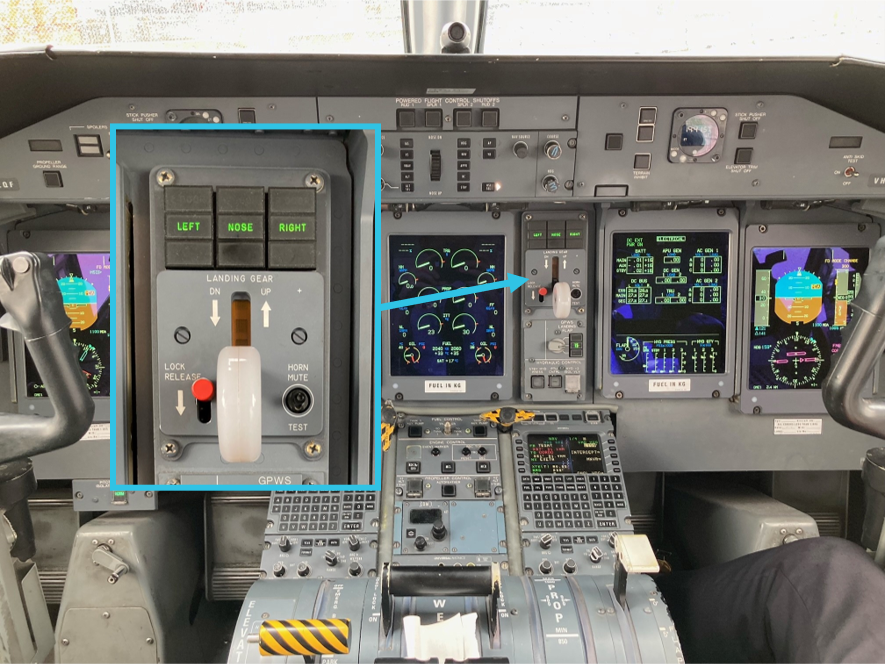
The flight crew had the option of selecting either of 2 speed management modes on the GP – FMS or manual mode (Figure 1).

Figure 1: E190 speed selector knob on guidance panel
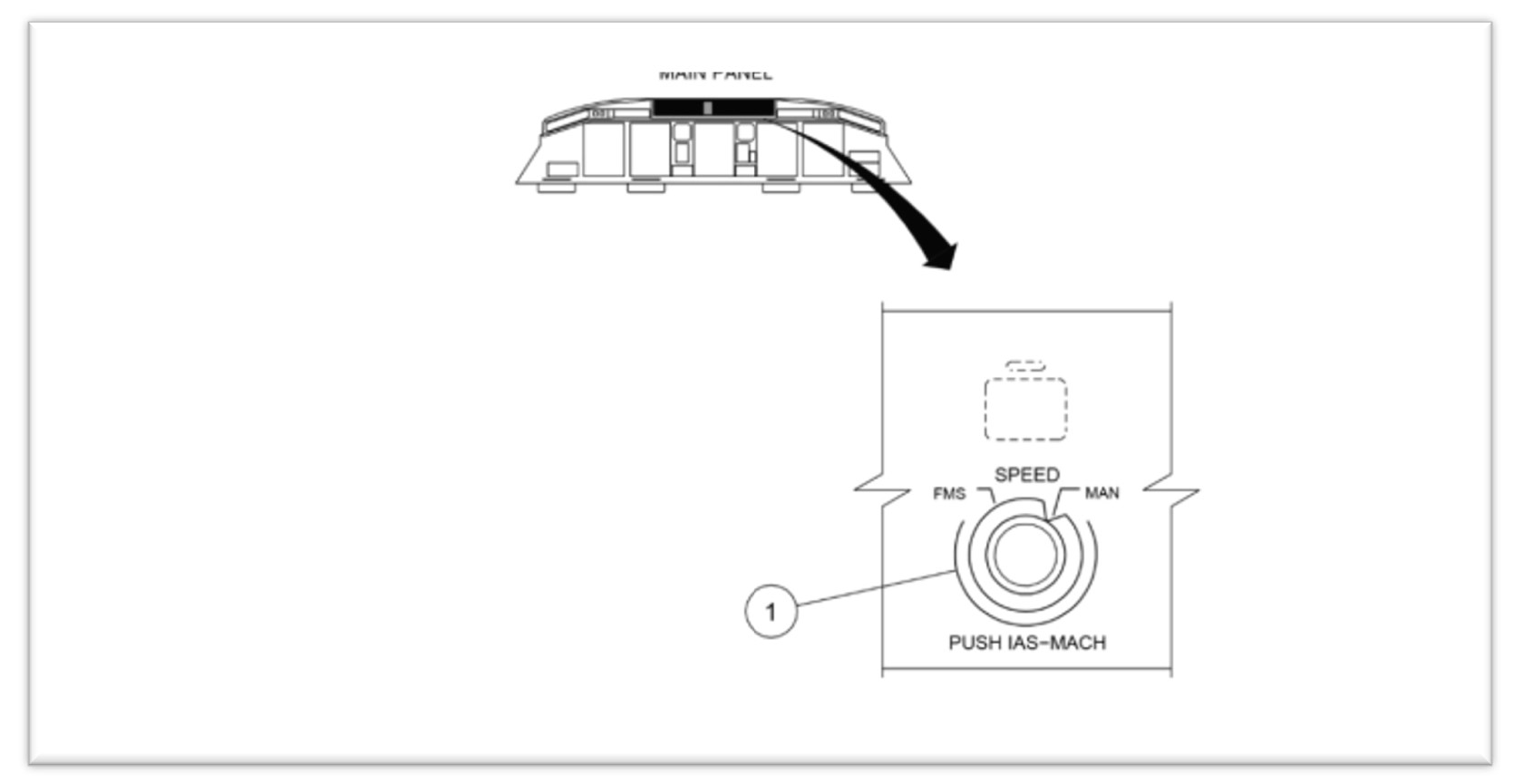
Figure 1: E190 speed selector knob on guidance panel

Source: Alliance interim safety report

In FMS mode, the airspeed selection was managed by the FMS. The airspeed was displayed on the PFD in magenta (Figure 2). 

In manual mode, flight crew retained responsibility for airspeed control, by selecting the airspeed using the SPEED selector knob, which then displayed the selected airspeed on the PFD (Figure 2). This target speed was used by both the autothrottle and the autopilot. A manual selected airspeed was displayed on the PFD in cyan. 

Figure 2: FMS and manual speed displays
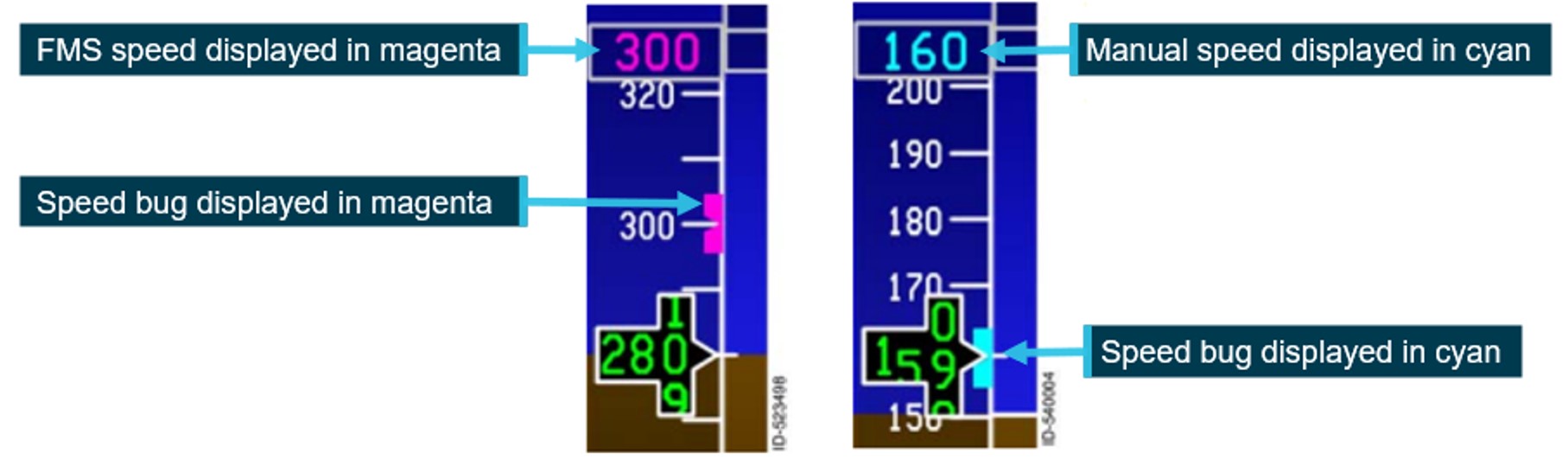
Figure 2: FMS and manual speed displays

Example of speed tape showing the different speed modes. FMS mode on the left and manual mode on the right. Source: Honeywell, annotated by the ATSB

Prior to take-off, the pilot entered the required V speeds[9] from the multifunction control display unit (MCDU). These were then displayed on the lower portion of the speed tape. 

The operator specified that if manual speed mode was selected for take-off:

  • when conducting a take-off in flap 1 to 3 configuration, the airspeed was to be set to final segment speed (VFS), which was the speed to be achieved during the final take-off segment, with landing gear up and flaps retracted
  • when conducting take-off in a flap 4 configuration, the airspeed should be set to 175 kt
  • when using noise abatement procedures, the airspeed should be set to V2 +10 kt.  

The selection of speed mode was referenced in pre-flight, before-start and shutdown procedures (see the section titled Mode selection procedures). 

Vertical modes

The autoflight control system (AFCS) has 11 modes to control the aircraft’s flight path. Two modes were relevant to this incident – take-off (TO) and vertical navigation flight level change (VFLCH). 

In TO mode, the flight crew fly with reference to the flight director (FD). The flight crew set take‑of/go around (TOGA) power and then manually rotate the aircraft to the displayed pitch attitude on the FD to achieve the required airspeed.

When the mode was changed to a mode other than TO, the AFCS will start using the target airspeed as a reference. In VFLCH, the autothrottle holds the thrust lever at the set thrust value and the FD changes the pitch angle to maintain the airspeed at the target airspeed selected on the PFDAccording to the operator’s standard operating procedures manual (SOPM), VFLCH is the preferred climb mode. 

Flaps

The E190, has both flaps and slats. With the flap lever in position 4, the flaps extend to 20° and the slats to 25º. Moving the flap lever to position 3 moves the slats to 15º, with the flap position remaining unchanged.

With slats extended, the critical angle of attack (AOA)[10] is increased, enabling the aircraft to operate at a greater AOA. Conversely, once slats are retracted, the critical AOA decreases. 

Flap retraction – F-Bug

The PFD shows the ideal flap selection speed using a symbol (green dot) on the speed tape. The flap retraction speed is shown using a magenta bug (F-bug). The flap manoeuvring speed is calculated based on the airplane weight and slat/flap setting and does not change with bank angle or turbulence.

The operator’s E190 aircraft operations manual (AOM) stated that:

During flap retraction, the next flap setting should be selected when the F-Bug is reached.

The F-Bug calculation is designed to meet minimum safe margins to VFE[11] and shaker speed. A minimum margin of 20% above the stall speed[12] is set for the next flap.

F-bug speeds calculated for the flight, provided by the manufacturer:

Flap lever43210
F-bug154164174184-
Stall warning protection system

Overview 

The E190 stall warning protection system (SWPS) is a 2-stage system that warns and protects the aircraft from aerodynamic stall conditions. The first stage warns the pilot of the impending stall by:

  • showing a low-speed awareness indication on the airspeed tape
  • showing a pitch limit indication on the attitude direction indicator on the primary flight display
  • activating the stick shaker motor on each control column results in each control column to shake (simulating the aircraft buffeting).

The second level is an AOA limiter protection system that limits the maximum AOA to a safe value below the predicted aerodynamic stall (preventing a stall).

Low-speed awareness system

A low-speed awareness (LSA) indicator is displayed along the lower-right side of the airspeed tape (Figure 3Figure 3). LSA varies with the load factor[13] of the aircraft and the bar position is based on airspeed, aircraft configuration and AOA. The bar rises from the bottom of the tape to show both the calculated stall and stick shaker[14] speed (Vshaker) in 2 coloured ranges:

  • the amber range displays from Vshaker to 1.13 x stall speed
  • a stall occurs at the top of the red range, when the airspeed drops below Vshaker. 

If the speed enters the red range, the stick shaker will activate, and an audible alarm will sound. The speed displayed on the PFD will also change colour to red reverse video.

Figure 3: Low speed awareness indicator
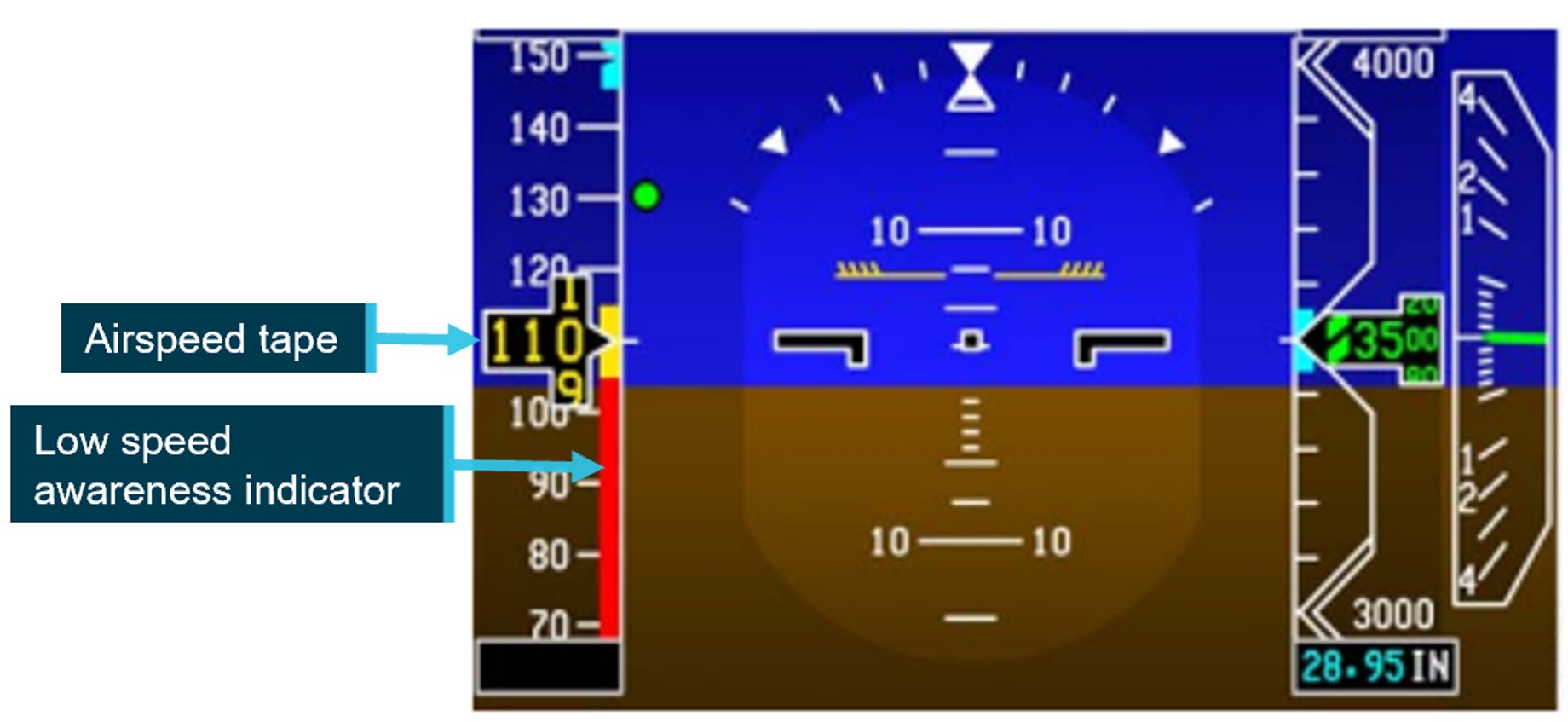
Figure 3: Low speed awareness indicator

Source: Honeywell, annotated by the ATSB

Controller logic

While in TO mode with the speed control in manual, if the speed set is lower than V1, the controller logic automatically increases the speed to V1, after the ground‑to‑air transition. 

Further, the aircraft manufacturer and avionics manufacturer advised that the controller logic ensures that the LSA indicator does not allow the selected speed to stay in the red range. If the manual speed selected on the guidance panel was in the amber band, the LSA automatically increased the speed to target the top of the amber band. 

In this instance, the manual speed target initially increased to 125 kt after rotation and then, due to load effects during the climbing turn, the top of the amber band (and the target airspeed) further increased to 131 kt.

The aircraft manufacturer advised that the aircraft’s controller logic would always attempt to avoid unsafe conditions within a given envelope. The protective measures would not stop working unless the limit of conditions were met – in which case they would be announced to the crew by way of speed displayed in amber on the LSA indicator, the activation of pitch limit indicators (PLI) (see the section titled Pitch limit indicators) and eventually a stick shaker. 

Autothrottle low speed protection

When the autothrottle was providing speed control, it would ensure both high and low speed envelope protection. The manual target speed was limited to the minimum maneuvering speed, flap/gear placard speed or the low speed awareness speed. The autothrottle lower speed limit was the greater of the manual speed target or 1.2 the stall speed. When flaps were extended, the autothrottle would maintain 1.2 x stall speed.

However, when the system was in VFLCH mode, airspeed was controlled by the elevator, with the autothrottle targeting a fixed thrust setting and therefore not providing low speed protection. The FD pitch controller providing speed control did not contain low speed protection and targeted the selected target speed on the guidance panel.

Pitch limit indicators

The aircraft’s SWPS computed a pitch limit indicator (PLI). This was a ‘pitch-based indication of the margin (in degrees) between the stick shaker speed and the current airspeed’ (Figure 4). The PLI margin was calculated continuously and displayed on the PFD when the airspeed was less than 1.2 the stall speed.

Figure 4: Pitch limit indicators
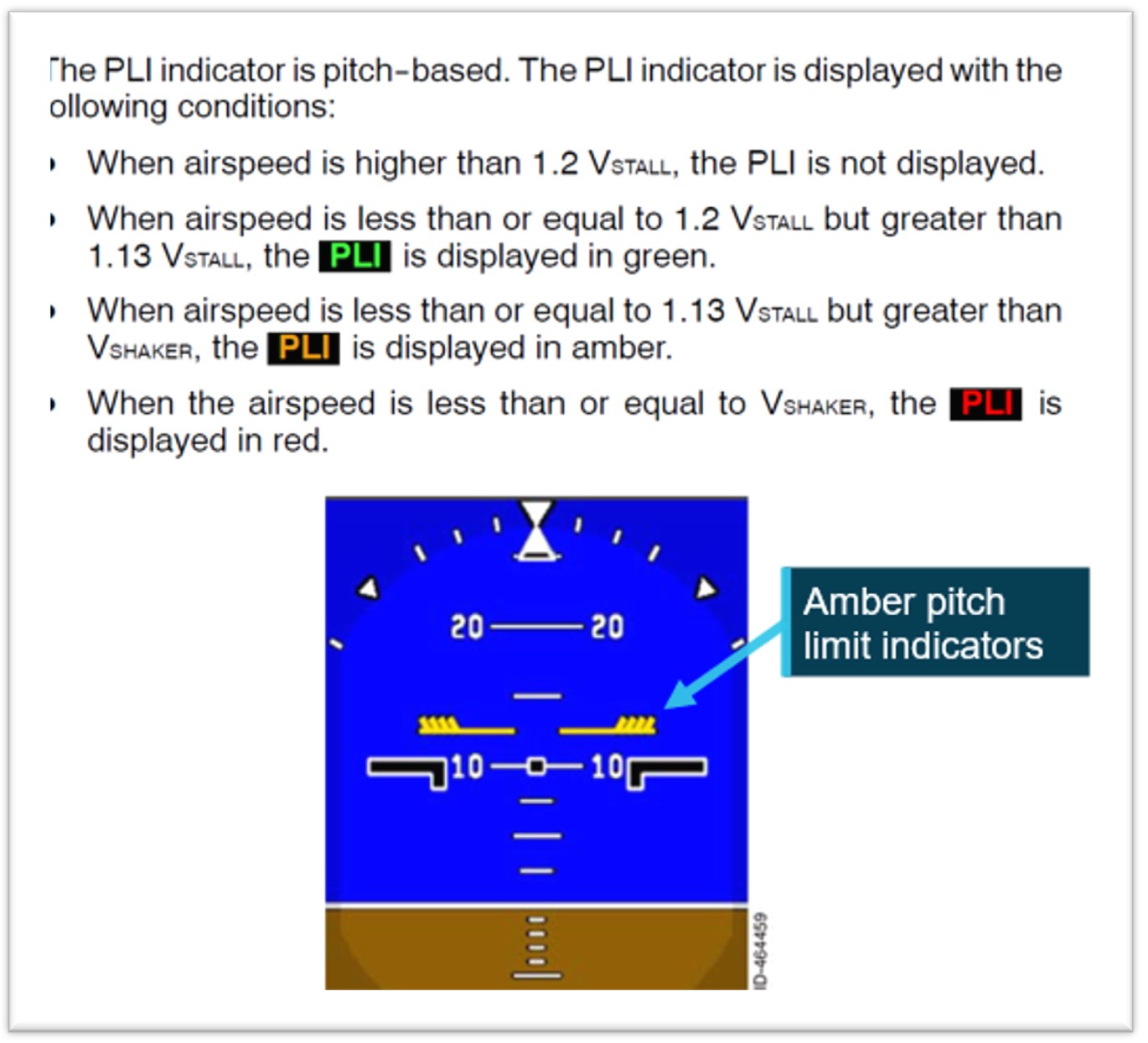
Figure 4: Pitch limit indicators

Source: Honeywell, annotated by the ATSB

Operational information 

Mode selection procedures

The aircraft manufacturer provided operators with an airplane operations manual (AOM) and standard operating procedures manual (SOPM). 

Regarding the 2 documents, the aircraft manufacturer stated:

The intention of the AOM is to gather all the information related to the operation of the aircraft, while the Embraer SOP is generated to provide operational guidance (it is ‘our way’ of operating the aircraft).

Both can be used by the operator, who must produce their own procedures (usually, dealing with mixed fleets) … Thus, operators can create their SOP using our SOP as a starting point and can add or change some points using information from the AOM, or even mix some internal operational information, but the final set must be approved.

This is a flexibility that operators can take advantage of. However, in all cases, following the instructions of the Embraer AOM/SOP entirely, as well as the operator’s SOP, should not lead to undesirable conditions.

As long as the Embraer AOM or SOP is followed in full, no undesirable results will occur.

Manufacturer’s airplane operations manual 

The manufacturer’s AOM Before start procedures called for the speed selector knob to be set to manual:

SPEED Knob............................................. MAN

Subsequently, the Shortly before startup procedures (Figure 5), called for the speed selector knob to be set at pilot discretion, with FMS recommended for Load 27 aircraft (including VH-UYI).

Figure 5: Shortly before startup procedures
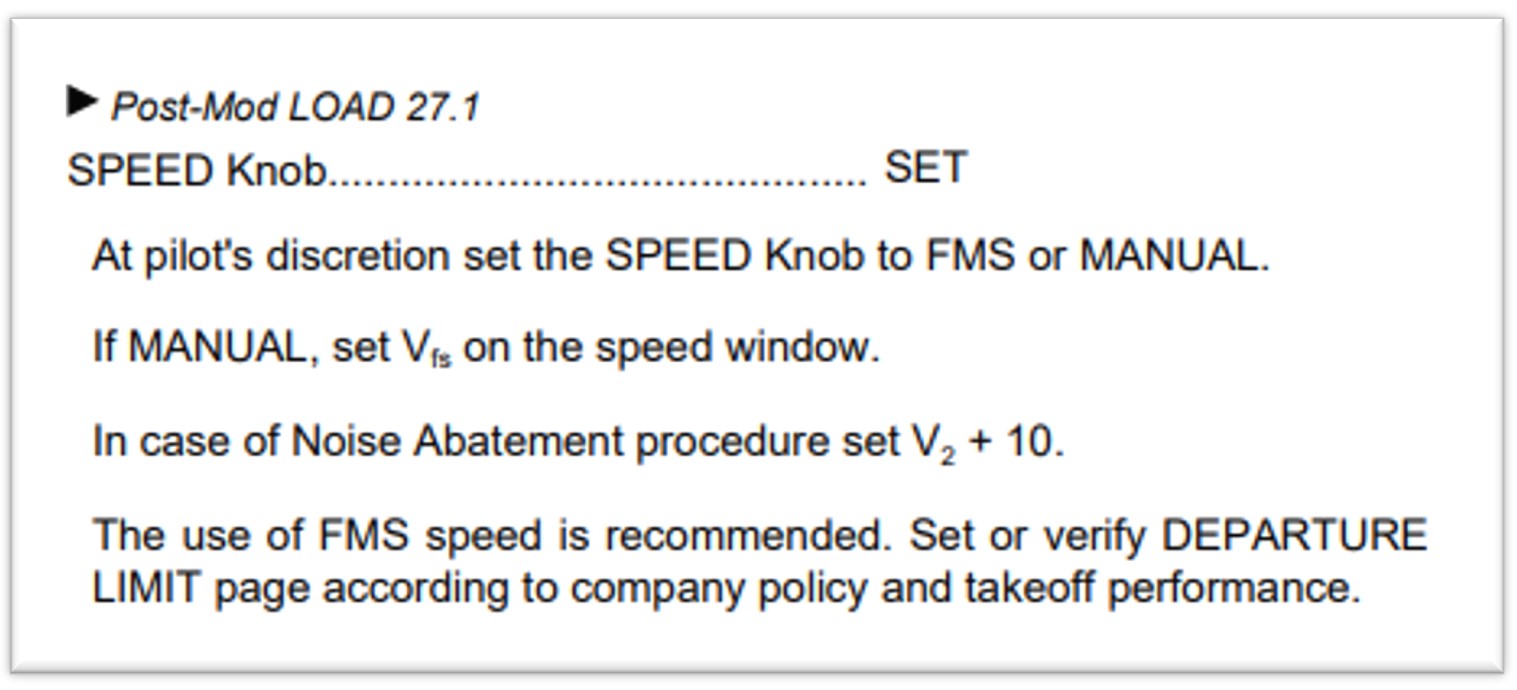
Figure 5: Shortly before startup procedures

Source: Embraer E190 airplane operations manual – normal procedures

Manufacturer’s standard operating procedures manual (SOPM)

Unlike the AOM, the SOPM did not have a requirement to set the speed selector knob to manual in the Before start procedures. The first reference to speed selector knob was in the Shortly before start procedures (Figure 6), where the left seat pilot (LSP) was required to set it at pilot’s discretion (with FMS speed recommended). 

Figure 6: Shortly before start procedures
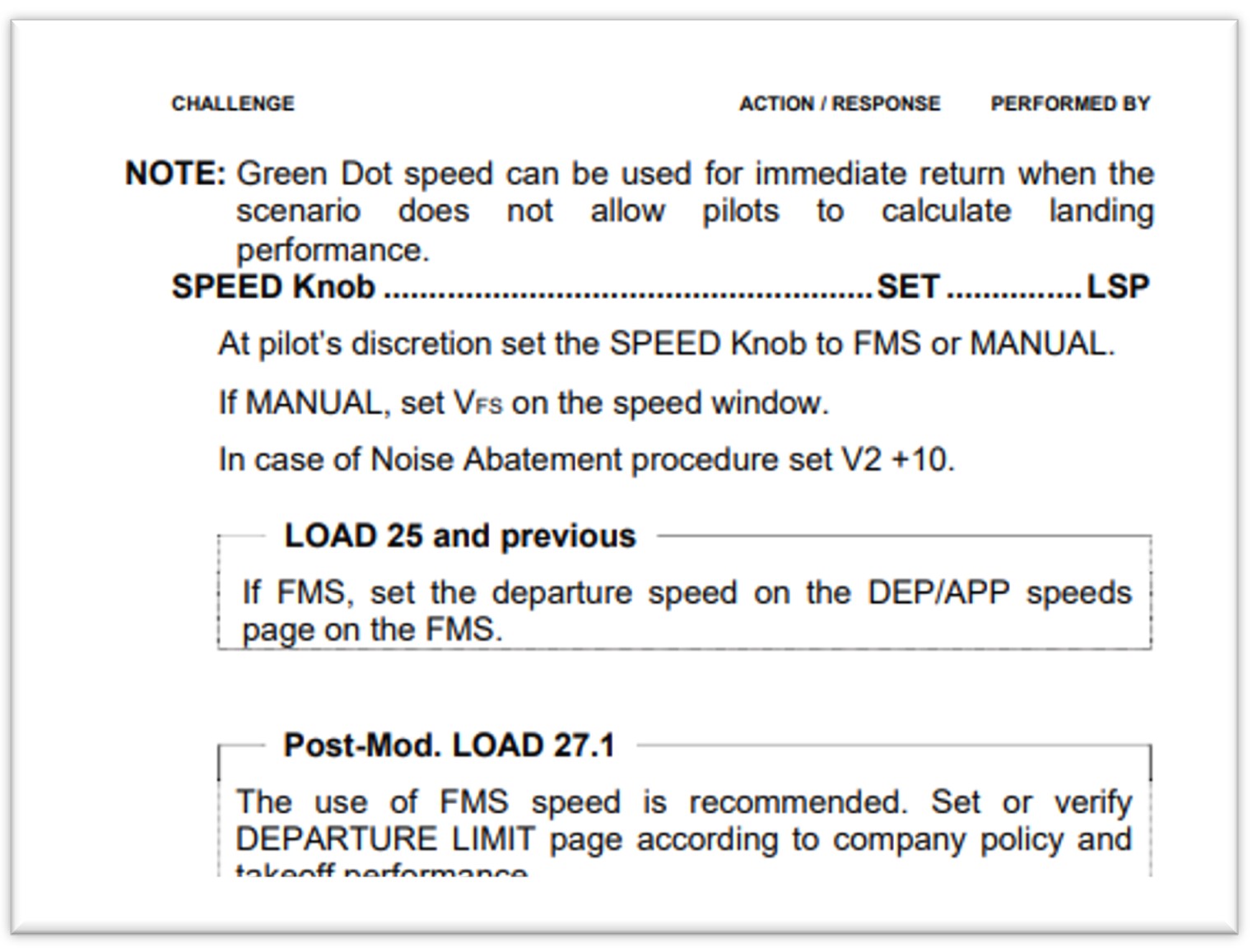
Figure 6: Shortly before start procedures

Source: Embraer E190 standard operating procedures  manual – normal procedures

The manufacturer advised that:

There is no need to set the speed to manual in the pre-flight, because once the necessary data is filled in the FMS (via MCDU), the correct speed target will be automatically set, provided that the selector is in FMS SPEEDS.

The step of bringing it [speed] to manual, mentioned in the AOM, is not included in our SOP, and is not taught in our [original equipment manufacturer] OEM training, as the SOP procedures are followed instead.

Operator’s standard operating procedures manual (SOPM)

The operator advised that: 

As is industry practice, Alliance Airlines adapted the manufactures E190 manual suite, including the E190 AOM and SOPM to develop SOPs that are suitable for our operation. Like other airlines, Alliance Airlines continuously monitors manufacturers recommendations and conducts ongoing reviews of our SOPs to ensure they are fit for purpose, compliant with regulations and follow industry best practice.

The operator split the Before start procedures between Pre-flight and Before start procedures 

Pre-flight procedures

Due to the alignment with the manufacturer’s AOM, the operator’s Pre-flight procedures required the LSP to set the speed selector knob to manual mode.

The operator understood this step was required to clear any previously set FMS speeds. However, the avionics manufacturer advised that: 

From the FMS side (Load 27), there is not a mandatory requirement to set it [speed knob] to manual and it does not have logic to reset the previous autospeed target by setting the speed selector to manual. Rather, the previous flight information is cleared 2 minutes after landing.

Although not documented in their SOPM, the operator advised that it was customary for the right seat pilot (RSP) to switch the speed selector knob to manual during a Shutdown flow, which was intended as an additional protection to ensure that the speed selector knob was selected to manual.

Before start procedures

As part of the Before start flow, the operator’s procedures required the LSP to set the speed selector knob to either manual or FMS, and for aircraft running load 27, FMS mode was the recommended mode. This was not required to be stated out loud, nor challenged by the right seat pilot. 

The Before start flow was termed ‘TOGA TARA SPEED’ as follows:

The LSP should perform the following actions

• Press the TO/GA [take-off/go-around] button to arm the Flight Director for take-off mode.

• Select TA/RA on the transponder.

• At the pilot’s discretion set the SPEED Knob to FMS or MANUAL. If MANUAL, set VFS on the speed window for Flap 1–3 take-off or 175kts for Flap 4 take-off.

• If required, select NAV for a LNAV [lateral navigation mode] departure. 

The crew then performed the Before start procedures, which again called for the speed selector knob to be set, with FMS mode recommended.

The engines were then started, and the relevant checklists completed.

The operator’s procedures subsequently included:

As late as practical approaching the take-off point, the PF for the sector should complete a take-off brief review in accordance with Alliance Airlines [Operations Policy and Procedures Manual] OPPM. This should also include items such as flap setting, runway and intersection, RNP status, assigned altitude setting as applicable and changed weather conditions.

However, the OPPM referred to did not include any information regarding speed settings. 

The manufacturer stated that: 

while the Embraer [standard operating procedures] SOP did not explicitly mention speeds, it was expected that operators' SOPs cover speeds and cross-check the parameters, which are: V1, VR, V2, VFS values and bugs on the speed tape and V2 magenta or VFS blue on the speed target. In this way, the take-off briefing is a second opportunity to verify the correct value set.

Take-off procedures 

The operator’s Take-off procedures stated: 

FMA modes are not called until 400 ft to allow the PM to call any abnormal conditions as well as to reduce distraction during the take-off roll.

The manufacturer advised that as the take-off is a critical phase of flight: 

Embraer’s SOPs recommend that selections and other heads-down tasks be avoided during this phase. The PF is flying the aircraft even while on the ground, and should be concentrating on maintaining directional control, cross-checking the instruments and alerting for any abnormal conditions. While the PM should be monitoring flight parameters (speed), engine parameters, the engine indicating and crew alerting system (EICAS) and monitoring the actions of the PF. Furthermore, the pilot in command is also monitoring for any abnormalities to make the Go/No-Go decision until V1 is reached. 

Speed mode training

The operator advised that, although it was not documented in their training manual: 

Thorough simulator type rating training is conducted to consolidate understanding…

the general practice of confirming a selection using the PFD/ND [navigation display], rather than the position of a physical switch/lever, is best practice and a key principle of operating advanced aircraft. This philosophy is integrated into the Alliance E190 Type Rating program, with a strong emphasis on correct technique starting during the ground school phase.  

during line operations (and training), the before start procedures (scans), cover the requirement for confirmation that either cyan or magenta, are as anticipated, and that the calculated speeds are accurate.

The captain reported that manual speed would have been displayed in cyan, which should have stood out during the scans. They advised they had not used manual speed mode for take-off other than in the simulator during type rating training. 

The FO also reported not having used manual mode previously and had not specifically been told to check for FMS/manual speed displaying in cyan or magenta in the speed window. 

The manufacturer did not provide a specific training syllabus, rather expected the aircraft operator to develop the training manual. Therefore, type rating training for the aircraft was operator-specific. 

Review of other E190 operator’s procedures

The ATSB conducted a review of another E190 operator’s procedures and found that they did not have a requirement for the speed mode to be set to manual during pre-flight, before start procedures or shut down procedures. That is, the speed mode remained in FMS speed throughout all phases of flight. 

In addition, the operator had introduced into their SOPM, a verbal check of speed settings (FMS or Manual) as part of their FMS performance review prior to the flight.

Flight crew roles

The manufacturer established areas in the cockpit that were placed under the responsibility of a specific flight crewmember. Ground operations are divided between the left seat pilot (LSP) and the right seat pilot (RSP) while in-flight operations are divided between pilot flying (PF) and pilot monitoring (PM).

Regarding roles and responsibilities, the operator’s manual stated that:

The PF is responsible for controlling the vertical flight path and horizontal flight path and for energy management by either: 

• supervising the auto pilot vertical and lateral modes through awareness of modes being armed or engaged, mode changes and of selected mode targets; or

• hand flying the aircraft, with or without flight director guidance.

The PNF [pilot not flying – same concept as PM] is responsible for:

• systems related monitoring

• monitoring tasks

performing the actions requested by the PF.

The manufacturer manuals stated that when the aircraft does not perform as expected, the autopilot must be disconnected and manual flight promptly established. The manufacturer further advised it is ‘primary airmanship to monitor airspeed during every phase of flight, especially during take-off and initial climb’. 

Pre-departure delays

Prior to departure, there were multiple irregularities involving ground handling, dispatch and loading sheets, passenger boarding and catering that required the captain’s attention. These included:

  • final loading sheet with a 2-tonne discrepancy from initial loading sheet
  • flight plan issued for Extended-range Twin-engine Operational Performance Standards (ETOPS) when not an ETOPS flight
  • final paperwork approximately 50 pages instead of 3–4 pages of relevant information
  • HF radio failure – requiring extra fuel to hold under 24,500 ft until ATC (Brisbane Centre) could be contacted
  • requirement to leave the bay due to incoming company aircraft.

Resolution of these issues resulted in the aircraft pushing back 30 minutes later than scheduled and the captain reportedly feeling mentally drained by the time they entered the cockpit. Additional delays due to other traffic, a closed taxiway and a displaced runway threshold resulted in the aircraft departing a further 30 minutes after pushback. 

Recorded data

Quick access recorder data

Flight data from the aircraft’s quick access recorder (QAR) for the incident flight and the previous flight was analysed by the ATSB and the aircraft manufacturer. 

The data showed that the speed selector knob had been selected to manual after touchdown on the previous flight.

QAR data confirmed that TOGA power was set and LNAV was armed, which were both items on the Before-start ‘TOGA TARA SPEED’ flow, indicating that part of the captain’s flow was conducted. TA/RA, another required item on the flow, was not a recorded parameter. 

QAR data also confirmed that the captain was using the push to talk button as the aircraft’s speed decreased. 

Stall speed, the low speed awareness (LSA) indicator and the pitch limit indicators (PLI’s) were not recorded by the QAR, however, the manufacturer provided the ATSB with calculations based off the QAR data.

They advised that prior to the flap lever retraction from 4 to 3, the top of the amber band on the LSA was 124.5 kt. When the slats retracted, 20 kts prior to the target speed (F-bug), the upper value of the amber LSA indicator[15] increased to 135.1 kt.

Figure 7: QAR data during initial climb
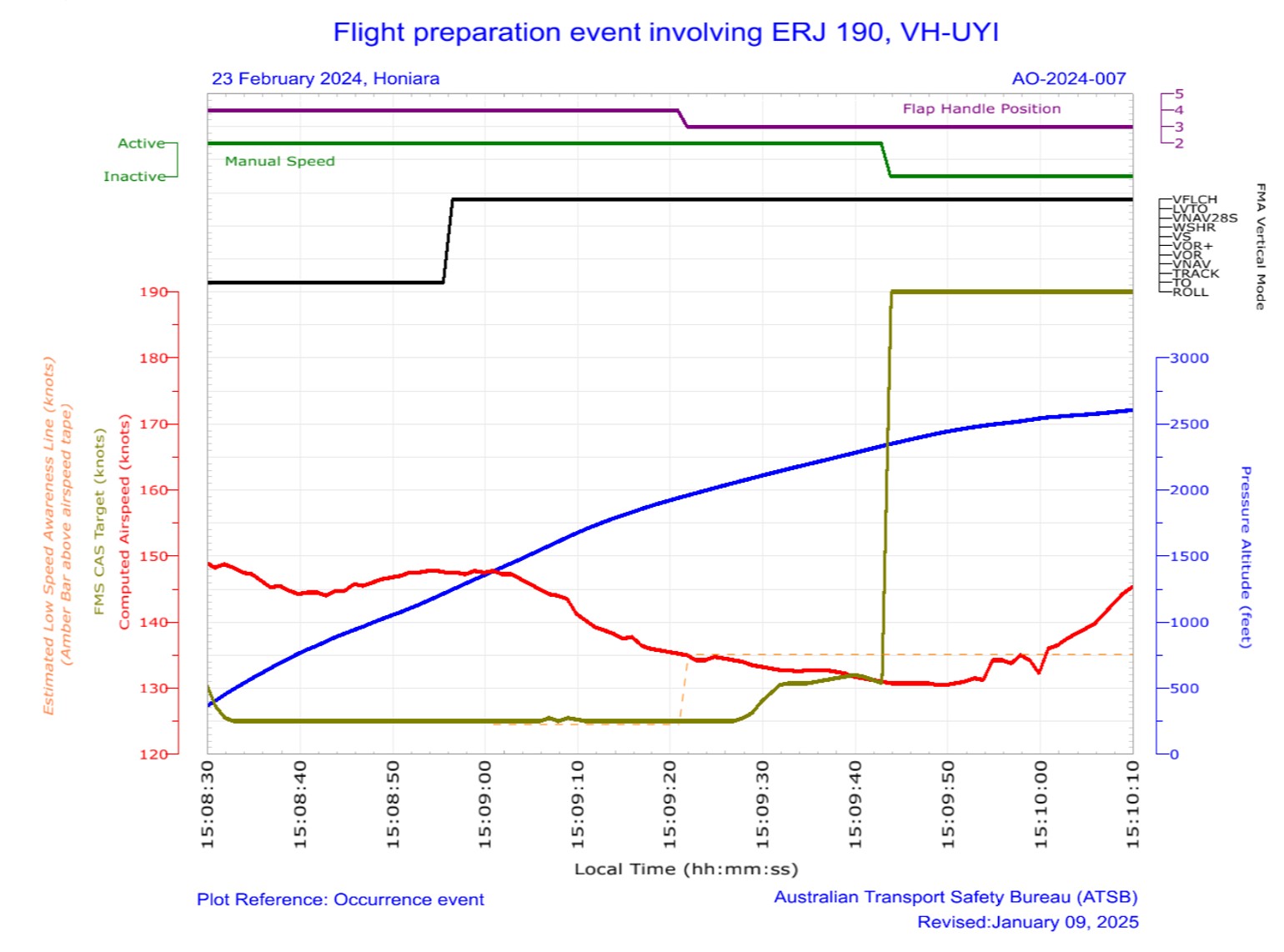
Figure 7: QAR data during initial climb

 Source: ATSB 

The data showed that once VFLCH was engaged, the airspeed (red line) reduced towards the FMS target speed (green line) at 125 kt. When the flap lever was retracted (purple line), the low speed awareness indicator increased to approximately 135.1 kt (dotted orange line), which was above the current airspeed of 134 kt. The PLIs would have been displayed on the PFD at this stage. The target speed then increased when the speed mode was selected to FMS. 

Similar occurrences 

As part of the operator’s internal safety investigation into this incident, a review of QAR data was conducted on flights operated in manual speed. From January 2022–July 2024, 254 flights were identified where manual speed setting was used. In 112 of those (including this incident), the flight crew had manual speed selected with no associated target speed set (80 kt). 

In 76 of these 112 events, the QAR data showed that flight crew adjusted the speed mode selector to FMS during the take-off run and departed in FMS mode. 

The operator advised that a review of the last 50 events where speed had not been set correctly, 38 individual captains were involved, operating from a range of different bases throughout the operator’s network. 

Safety analysis

Introduction

During the pre-flight checks, undetected by either flight crew member, the captain unintentionally omitted to select the speed selector knob to flight management system (FMS), and the aircraft departed in manual mode without a target speed set. After take-off, with the airspeed at about 144 kt, vertical flight level change (VFLCH) mode engaged in the FMS, resulting in the flight director targeting the airspeed displayed on the primary flight display, of 125 kt. The aircraft then decelerated while in a banked turn with flap extended. The captain responded by retracting one stage of flap, resulting in a low-speed state. The flight crew then identified and corrected the speed mode selection. The stick shaker did not activate.

This analysis will discuss the flight crew’s actions in setting and monitoring modes and speeds, and flap retraction. The contribution of training and differences between the manufacturer’s and operator’s documentation will also be examined. Finally, other similar occurrences by Alliance Airlines flight crews and their responses will be examined. 

Speed mode selection

Recorded flight data showed that the speed selector knob had been set to manual, as per the operator’s procedure for the copilot’s flow at shutdown, following the previous flight and the Pre‑flight procedures. It also showed the selector was not switched to FMS mode, as per the captain’s intention in the Before start procedures. Neither flight crewmember detected the speed selector knob in manual or that the speed colour on the primary flight display (PFD) was cyan (compared to the expected magenta) in the before start scans or during the take-off brief review. 

After the aircraft rotated, the controller logic automatically increased the target speed to V1, which was 125 kt. However, at that time, as the aircraft was in take-off (TO) mode, the target speed was not affected, as the pilot flying was following flight director TO mode pitch guidance, and the system was targeting the desired V2 plus 10 kt (about 144 kt) for the take-off, and climb was maintained as expected. 

Passing 1,200 ft, vertical flight level change (VFLCH) mode engaged. At this time, the flight director (FD) began to target the selected airspeed (125 kt) by increasing the pitch of the aircraft, and the airspeed gradually began to decrease.

Contributing factor

During the Before start procedure, the captain unintentionally left the speed selector knob in manual mode instead of flight management system mode, with no manual speed set. The manual speed mode selection was not detected by either flight crewmember, resulting in the aircraft decelerating after vertical flight level change mode was engaged.

Not monitoring speed

During the initial climb in non‑controlled airspace, the captain was making the required departure call, and monitoring traffic and weather.

As the aircraft entered a 25° bank turn to comply with the standard instrument departure (SID), the airspeed further decreased. The speed reduction and increased pitch was not detected by the PF, which may have been due to anticipating a slower climb in flap 4 configuration and a banked turn.  

Contributing factor

While the captain was monitoring traffic, weather and making a radio broadcast, the first officer was not effectively monitoring the airspeed and, as a result, did not initially detect the aircraft decelerating.

Flap retraction

Although the aircraft was slower and pitched higher than usual at that time, it was operating at a safe speed. Manufacturer calculations showed that the top of the LSA amber band was at approximately 125 kt during this time and the airspeed was decelerating through 134 kt. 

However, when the PM detected that the aircraft was not accelerating, they retracted flap from 4 to 3 (slat retraction) to reduce drag. The manufacturer’s calculations showed that this resulted in the upper value of the amber range on the LSA indicator increasing to about 135 kt. When slats were retracted, the airspeed was around 134 kt, therefore within the amber band, before further reducing to 131 kt. During that time, the pitch limit indicators (PLI’s) would have activated and been displayed on the primary flight display. 

The manufacturer required that if the aircraft was not performing as expected, the flight crew were required to disconnect the autopilot and manually fly the aircraft. 

Contributing factor

Having assessed that the low airspeed was due to excessive drag, the captain retracted one stage of flap while below the minimum flap target speed, resulting in the aircraft entering a low-speed state.

Manufacturer’s airplane operations manual 

The manufacturer’s airplane operations manual (AOM) was inconsistent with their standard operating procedures manual (SOPM). Specifically, it required the speed selector knob to initially be set to ‘manual’ in the Before start procedures, which was not an SOPM requirement.

While the use of manual speed was valid, it was unnecessary for the AOM to require initial setting of manual speed in the Before start procedures, as the selection of speed mode was later made in the Shortly before start procedures. It also increased the risk of flight crews not switching the speed selector knob back to the commonly-used FMS speed prior to departure.  

Contributing factor

Embraer's airplane operations manual was inconsistent with its standard operating procedures manual in relation to speed mode selectionThis increased the risk of flight crews departing with the manual speed mode unintentionally selected. (Safety issue)

Operator’s procedures 

While the manufacturer’s AOM was inconsistent with their SOPM, the operator advised that it had reviewed both documents when developing their own SOPM. 

Despite manual speed mode rarely being used, the operator included a requirement for it to be initially set to manual, and then selected to FMS prior to take-off, in line with the AOM. The inclusion of this requirement in its SOPM may have also been influenced by an incorrect belief that it was required to clear previous speeds entered in the flight management system (FMS). In that context, while well intentioned, it increased the risk of the aircraft departing with the incorrect speed mode selected.

In addition, the operator also included an undocumented right seat pilot flow at shut down to switch the speed selector knob to manual. This step was not in accordance with the aircraft manufacturer’s AOM or SOPM and similarly increased the risk of the incorrect speed being selected for take-off.

Contributing factor

Consistent with Embraer’s airplane operations manual, the Alliance Airline's pre-flight procedure required flight crew to unnecessarily initially set the speed knob to ‘manual’. That increased the risk of the aircraft departing with the incorrect speed mode selected. (Safety issue)

Other factor that increased risk

Alliance Airlines’ right seat pilot shutdown flow was undocumented and not in accordance with the manufacturer’s guidance.

Training

While the operator stated that the training and line checks ensured that crews were checking that the speeds were displayed in cyan or magenta as expected, these requirements were not documented in the training manual. Additionally, the first officer (FO) reported never having been told to specifically look at the colour (magenta/cyan) of the speed display as part of their scans. 

The captain did not ensure the target speed was depicted in the expected colour. They had only conducted a take‑off with the speed selector knob in manual mode once, as part of their initial training in the simulator. 

Unlike standard operating procedures, type rating training was not stipulated by the manufacturer, instead was developed by each aircraft operator. The manufacturer was unaware of any other operator having had similar events. Given there were 112 occurrences where the operator’s flight crew had not correctly set the speed selector knob, nor detected the incorrect speed selector knob selection and the speed colour in cyan in the display prior to the take-off run, it is likely that the operator’s training and line checks were not adequate in ensuring flight crew were completing their scans as per the manufacturer’s and operator’s requirements. 

Contributing factor

Likely due to a training deficiency, Alliance Airlines flight crews' conduct of the Before start procedures and Pre-take-off brief review were not being performed effectively to ensure the speed selector knob was correctly set and checked, which increased the risk of a low-speed event after take-off. (Safety issue)

Similar incidents

A review of past occurrences identified 112 incidents (including this incident) in the preceding 30 months where flight crews had unintentionally not set the speed selector knob to FMS. In 76 of these events it was identified that the flight crew had adjusted the speed selector knob during the take-off run, a critical stage of flight. The manufacturer’s SOPM recommended that mode selections and other heads-down tasks be avoided during critical phases of flight. To mitigate that risk, the manufacturer’s and operator’s SOPM required that correction to the speed mode selection should be made when passing 400 ft on climb.

Other factor that increased risk

Alliance Airlines flight crews were regularly changing the speed selector knob setting during the take‑off run. This was contrary to Embraer's guidance, and Alliance Airlines’ own standard operating procedures manual. This increased the risk of distraction during a critical phase of flight. (Safety issue)

Findings

ATSB investigation report findings focus on safety factors (that is, events and conditions that increase risk). Safety factors include ‘contributing factors’ and ‘other factors that increased risk’ (that is, factors that did not meet the definition of a contributing factor for this occurrence but were still considered important to include in the report for the purpose of increasing awareness and enhancing safety). In addition ‘other findings’ may be included to provide important information about topics other than safety factors. 

Safety issues are highlighted in bold to emphasise their importance. A safety issue is a safety factor that (a) can reasonably be regarded as having the potential to adversely affect the safety of future operations, and (b) is a characteristic of an organisation or a system, rather than a characteristic of a specific individual, or characteristic of an operating environment at a specific point in time.

These findings should not be read as apportioning blame or liability to any particular organisation or individual.

From the evidence available, the following findings are made with respect to the incorrect configuration involving Embraer E190, VH-UYI at Honiara Airport, Solomon Islands on 23 February 2024:

Contributing factors

  • During the Before start procedure, the captain unintentionally left the speed selector knob in manual mode instead of flight management system mode, with no manual speed set. The manual speed mode selection was not detected by either flight crewmember, resulting in the aircraft decelerating after vertical flight level change mode was engaged.
  • While the captain was monitoring traffic, weather and making a radio broadcast, the first officer was not effectively monitoring the airspeed and, as a result, did not initially detect the aircraft decelerating.
  • Having assessed that the low airspeed was due to excessive drag, the captain retracted one stage of flap while below the minimum flap target speed, resulting in the aircraft entering a low‑speed state.
  • Embraer's airplane operations manual was inconsistent with its standard operating procedures manual in relation to speed mode selectionThis increased the risk of flight crews departing with the manual speed mode unintentionally selected. (Safety issue)
  • Consistent with Embraer’s airplane operations manual, the Alliance Airline's pre-flight procedure required flight crew to unnecessarily initially set the speed knob to ‘manual’. This increased the risk of the aircraft departing with the incorrect speed mode selected. (Safety issue)
  • Likely due to a training deficiency, Alliance Airlines flight crews' conduct of the Before start procedures and Pre-take-off brief review were not being performed effectively to ensure the speed selector knob was correctly set and checked, which increased the risk of a low-speed event after take-off. (Safety issue)

Other factors that increased risk

  • Alliance Airlines’ right seat pilot shutdown flow was undocumented and not in accordance with the manufacturer’s guidance.
  • Alliance Airlines flight crews were regularly changing the speed selector knob setting during the take‑off run. This was contrary to Embraer's guidance, and Alliance Airline’s own standard operating procedures manual. This increased the risk of distraction during a critical phase of flight. (Safety issue)

Safety issues and actions

Central to the ATSB’s investigation of transport safety matters is the early identification of safety issues. The ATSB expects relevant organisations will address all safety issues an investigation identifies. 

Depending on the level of risk of a safety issue, the extent of corrective action taken by the relevant organisation(s), or the desirability of directing a broad safety message to the aviation industry, the ATSB may issue a formal safety recommendation or safety advisory notice as part of the final report.

All of the directly involved parties were provided with a draft report and invited to provide submissions. As part of that process, each organisation was asked to communicate what safety actions, if any, they had carried out or were planning to carry out in relation to each safety issue relevant to their organisation. 

Descriptions of each safety issue, and any associated safety recommendations, are detailed below. Click the link to read the full safety issue description, including the issue status and any safety action/s taken. Safety issues and actions are updated on this website when safety issue owners provide further information concerning the implementation of safety action. 

Manufacturer’s manual inconsistencies 

Safety issue number: AO-2024-007-SI-07

Safety issue description: Embraer's airplane operations manual was inconsistent with its standard operating procedures manual in relation to speed mode selectionThis increased the risk of flight crews departing with the manual speed mode unintentionally selected.

Operator’s standard operating procedures

Safety issue number: AO-2024-007-SI-05

Safety issue description: Consistent with Embraer’s airplane operations manual, the Alliance Airline's pre-flight procedure required flight crew to unnecessarily initially set the speed knob to ‘manual’. This increased the risk of the aircraft departing with the incorrect speed mode selected.

Multiple occurrences of the speed selector knob not being set correctly and flight crews not detecting the incorrect setting

Safety issue number: AO-2024-007-SI-04 

Safety issue description: Likely due to a training deficiency, Alliance Airlines flight crews' conduct of the Before start procedures and Pre-take-off brief review were not being performed effectively to ensure the speed selector knob was correctly set and checked, which increased the risk of a low-speed event after take-off. 

Multiple occurrences of speed selector knob being reset during a critical phase of flight

Safety issue number: AO-2024-007-SI-03

Safety issue description: Alliance Airlines flight crews were regularly changing the speed selector knob setting during the take‑off run. This was contrary to Embraer's guidance, and Alliance Airline’s own standard operating procedures manual. This increased the risk of distraction during a critical phase of flight. 

Safety action not associated with an identified safety issue

Additional safety action by Alliance Airlines

In addition to the safety action taken to address the identified safety issues, Alliance Airlines: 

  • Issued an article to flight crew highlighting that at the completion of the before start duties, the left seat pilot should apply the technique of selecting ‘TOGA, TARA, SPEED’, followed by confirmation of the relevant modes and settings on the primary flight display, prior to calling for the completion of the Before start checklist.
  • Advised that a dedicated training module will be incorporated into recurrent simulator cyclic training exercises commencing 1 January 2025. This module will include a review of this occurrence, its root cause, and a reinforced focus on correct procedures and techniques to prevent reoccurrences.
  • Advised that during recurrent line check events, there will be an added emphasis on reviewing and ensuring adherence to the correct procedures and techniques.

Glossary

AOAAngle of attack
AOMAirplane/Aircraft operations manual
ETOPSExtended-range twin-engine operational performance standards
FDFlight director
FMSFlight management system
GPGuidance panel
HF High frequency
LNAVLateral navigation mode
LSALow-speed awareness
LSPLeft seat pilot (captain)
MCDUMultifunction Control Display Unit
OEMOriginal equipment manufacturer
PFPilot flying
PFDPrimary flight display
PLIPitch limit indicator
PMPilot monitoring
QARQuick access recorder
RSPRight seat pilot (co-pilot)
SIDStandard Instrument Departure
SOPMStandard operating procedures manual
SWPSStall warning protection system
TA/RA Traffic advisory/Resolution advisory
TOTake-off 
VFLCHVertical flight level change
TOGATake-off / go-around
V1Decision speed
VRRotation speed
V2Take-off safety speed 
VFSFinal segment speed

Sources and submissions

Sources of information

The sources of information during the investigation included:

  • flight crew of the incident flight
  • Alliance Airlines
  • recorded data from the quick access recorder
  • Embraer
  • Honeywell

References

  • Alliance Airlines, ‘E190 standard operating procedures manual’, Issue 1.2, August 2023.
  • Embraer S.A., ‘170/175/190/195 Standard Operating Procedures Manual’, Revision 29, June 2024.
  • Embraer S.A., ‘Embraer E190 Airplane Operations Manual, Volume 1, AOM-1502-047, November 27 2020, Revision 5 – January 31, 2024
  • Honeywell, Primus Epic pilot’s guideintegrated avionics system for E190 Load 27, October 2023.
  • Regional Aviation Safety Group-Pan America ‘Mode Awareness and Energy State Management Aspects of Flight Deck Automation’, November 2022

Submissions

Under section 26 of the Transport Safety Investigation Act 2003, the ATSB may provide a draft report, on a confidential basis, to any person whom the ATSB considers appropriate. That section allows a person receiving a draft report to make submissions to the ATSB about the draft report. 

A draft of this report was provided to the following directly involved parties:

  • flight crew of the incident flight
  • Alliance Airlines
  • Civil Aviation Safety Authority
  • Honeywell
  • Embraer
  • Brazilian Aeronautical Accidents Investigation and Prevention Center
  • United States National Transportation Safety Board

Submissions were received from:

  • the first officer of the incident flight
  • Alliance Airlines
  • Embraer

The submissions were reviewed and, where considered appropriate, the text of the report was amended accordingly.

Purpose of safety investigations

The objective of a safety investigation is to enhance transport safety. This is done through: 

  • identifying safety issues and facilitating safety action to address those issues
  • providing information about occurrences and their associated safety factors to facilitate learning within the transport industry.

It is not a function of the ATSB to apportion blame or provide a means for determining liability. At the same time, an investigation report must include factual material of sufficient weight to support the analysis and findings. At all times the ATSB endeavours to balance the use of material that could imply adverse comment with the need to properly explain what happened, and why, in a fair and unbiased manner. The ATSB does not investigate for the purpose of taking administrative, regulatory or criminal action.

Terminology

An explanation of terminology used in ATSB investigation reports is available here. This includes terms such as occurrence, contributing factor, other factor that increased risk, and safety issue.

Publishing information

Released in accordance with section 25 of the Transport Safety Investigation Act 2003

Published by: Australian Transport Safety Bureau

© Commonwealth of Australia 2025

Title: Creative Commons BY - Description: Creative Commons BY

Ownership of intellectual property rights in this publication

Unless otherwise noted, copyright (and any other intellectual property rights, if any) in this report publication is owned by the Commonwealth of Australia.

Creative Commons licence

With the exception of the Commonwealth Coat of Arms, ATSB logo, and photos and graphics in which a third party holds copyright, this report is licensed under a Creative Commons Attribution 4.0 International licence.

The CC BY 4.0 licence enables you to distribute, remix, adapt, and build upon our material in any medium or format, so long as attribution is given to the Australian Transport Safety Bureau. 

Copyright in material obtained from other agencies, private individuals or organisations, belongs to those agencies, individuals or organisations. Where you wish to use their material, you will need to contact them directly.

[1]     Pilot Flying (PF) and Pilot Monitoring (PM): procedurally assigned roles with specifically assigned duties at specific stages of a flight. The PF does most of the flying, except in defined circumstances, such as planning for descent, approach and landing. The PM carries out support duties and monitors the PF’s actions and the aircraft’s flight path.

[2]     A flow is the basic methodology for running through system checks and setup of the aircraft in varying phases of flight. A flow is meant to be a muscle-memory way to set up the aircraft. Flows are memorised and seen as a quick way to run through all the important checks of an aircraft.

[3]     Rotation: the positive, nose-up, movement of an aircraft about the lateral (pitch) axis immediately before becoming airborne.

[4]     TOGA power: Take off/Go around power – During take-off, pressing the TO/GA switch or advancing the thrust levers to the TO/GA position will command the engines to increase their RPM to the calculated take-off power setting.

[5]     V1: the critical engine failure speed or decision speed required for take‑off. Engine failure below V1 should result in a rejected take‑off; above this speed the take-off should be continued.

[6]     V2: The minimum speed at which a transport category aircraft complies with those handling criteria associated with climb following an engine failure. V2 is the take-off safety speed and is normally obtained by factoring the stalling speed or minimum control (airborne) speed, whichever is the greater, to provide a safe margin.

[7]     CTAF: VHF radio frequency allocated at an airport for pilots to self-announce their intentions and communicate with one another. It's a basic collision avoidance tool at uncontrolled (non-towered) airports.

[8]     Flight information service: A service that provides pilots with advice and useful information such as: meteorological traffic information and aerodrome facilities or hazards.

[9]     V speeds: take-off reference speeds or V speeds are provided by the manufacturer to assist pilots in determining when a rejected take off should be initiated, and when the aircraft can rotate, lift off and climb.

[10]    Critical angle of attack: as the AOA increases, both lift and drag increase, however, above a wing’s critical AOA, the flow of air separates from the upper surface and backfills and eddies, which reduces lift and increases drag. This condition is a stall, which can lead to loss of control and an abrupt loss of altitude if the AOA is not reduced.

[11]    VFE: maximum flap extended speed: the fastest speed at which an aircraft can fly safely with its flaps extended.

[12]    Aerodynamic stall: occurs when airflow separates from the wing’s upper surface and becomes turbulent. A stall occurs at high angles of attack, typically 16° to 18°, and results in reduced lift.

[13]    Load factor: the ratio of the lift of an aircraft to its weight.

[14]    Stick shaker: a mechanical warning device that vibrates the aircraft’s control column when it approaches a stall. 

[15]    Amber band is not a recorded parameter on the QAR. Calculations of amber band values were made by the manufacturer based on the weight and configuration of the aircraft and was estimated to be 1.08 x red band. The calculated value does not consider the aircrafts pitch attitude, which may have induced an even higher LSA value.

Occurrence summary

Investigation number AO-2024-007
Occurrence date 23/02/2024
Location Near Honiara International Airport
State International
Report release date 03/04/2025
Report status Final
Investigation level Defined
Investigation type Occurrence Investigation
Investigation status Completed
Mode of transport Aviation
Aviation occurrence category Incorrect configuration
Occurrence class Incident
Highest injury level None

Aircraft details

Manufacturer Embraer-Empresa Brasileira De Aeronautica
Model ERJ-190-100 IGW
Registration VH-UYI
Serial number 19000053
Aircraft operator Alliance Airlines Pty Limited
Sector Jet
Operation type Part 121 Air transport operations - larger aeroplanes
Departure point Honiara International Airport, Solomon Islands
Destination Brisbane Airport, Queensland
Damage Nil

Partial power loss and collision with terrain involving Cessna 208, VH-UMV, near Barwon Heads Airport, Victoria, on 20 October 2023

Final report

Report release date: 14/03/2025

Investigation summary

What happened

On 20 October 2023 the pilot of a Cessna 208 aircraft, registered VH‑UMV and operated by Experience Co, was conducting parachute operations at Barwon Heads Airport, Victoria with 16 parachutists on board. Passing about 500 ft on climb, the pilot detected a partial power loss consistent with a previously‑encountered transient power reduction.

Expecting the power to return immediately, the pilot did not lower the aircraft’s nose to maintain airspeed. The airspeed continued to reduce until the stall warning horn sounded and, due to the low height, low engine power and low airspeed, the pilot attempted to conduct a forced landing. However, the aircraft collided with water before continuing onto the riverbank and ground for approximately 50 m before coming to rest.

The aircraft was substantially damaged, 6 of the parachutists received serious injuries, 8 sustained minor injuries, and 2 were uninjured. The pilot also sustained minor injuries.

What the ATSB found

The ATSB found that passing about 500 ft on climb, the power reduced likely due to abnormal activation of an engine torque and temperature limiting system. Expecting the power to return quickly and surge, and in preparation for turning off the system, the pilot moved the power lever aft to reduce the power setting and delayed lowering the aircraft’s nose to maintain airspeed, resulting in a stall warning and subsequent collision with water.

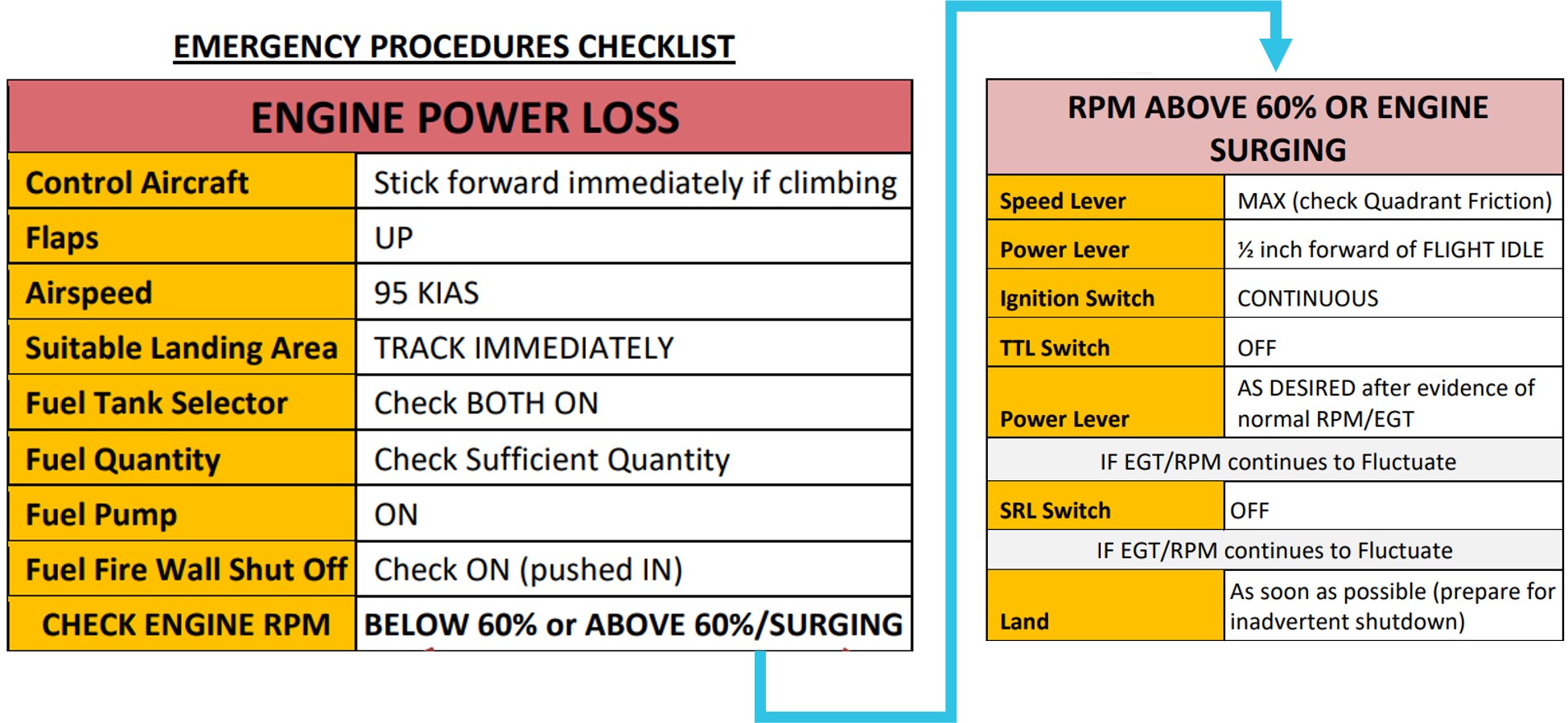
The ATSB also found that Experience Co’s engine power loss checklist instructed pilots to significantly reduce power in preparation for deactivating the engine limiting system, but did not specify a minimum safe height at which to do so. This increased the risk of a loss of control and/or ground collision. 

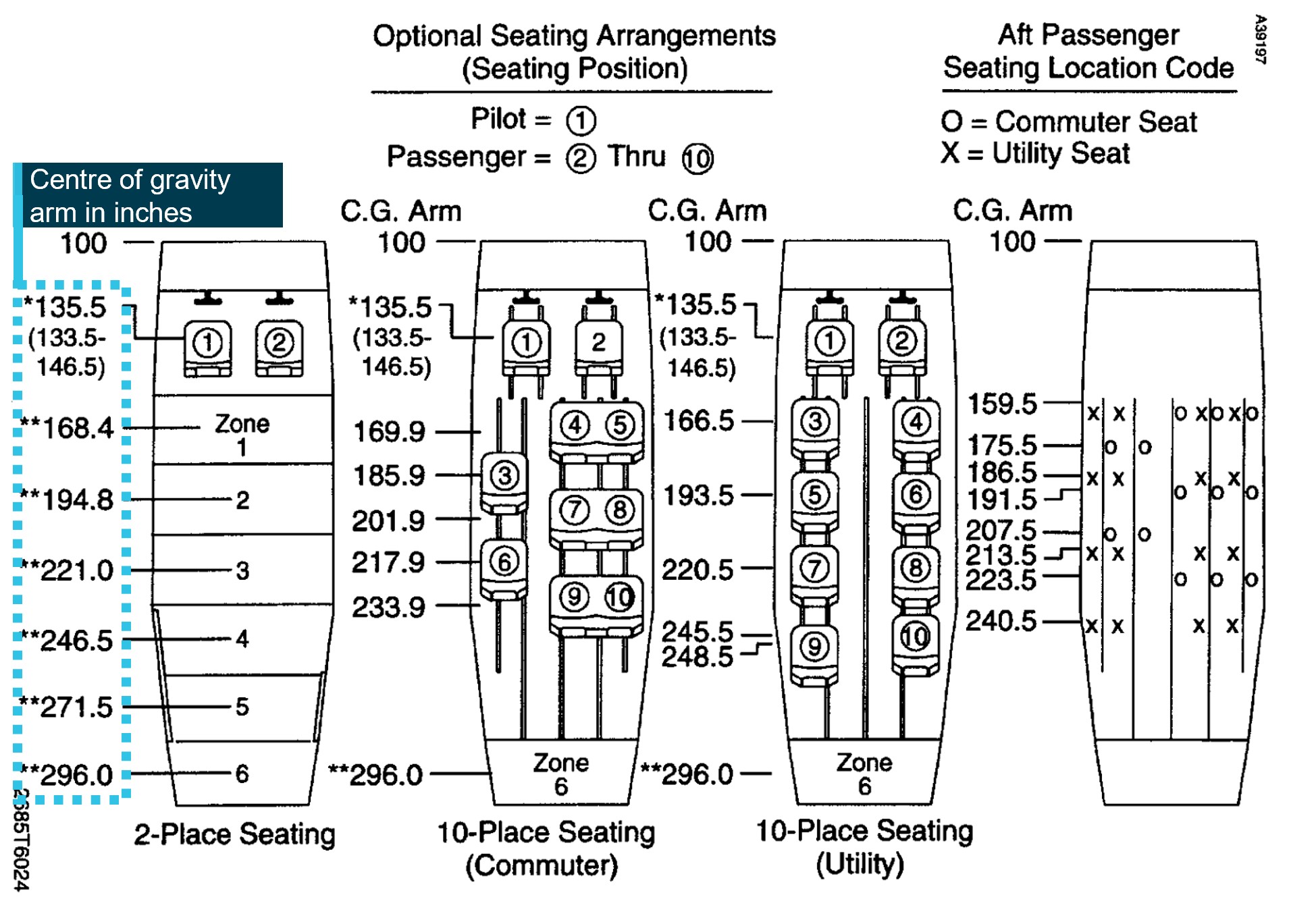
Further, the ATSB found that the operator's weight and balance calculation for the accident flight did not include the bench seating weight or moment, and the loadmaster did not load parachutists in positions used for the calculation of the centre of gravity, therefore, although it did not contribute to the accident, the weight and balance was inaccurate for the intended flight. Additionally, the software used to calculate aircraft weight and balance did not provide a warning if individual aircraft zones were overloaded.

Finally, the ATSB found that Experience Co did not ensure sport parachutists received essential safety information about emergency exits, restraints and brace position, prior to take-off. 

What has been done as a result

At the time of writing, Experience Co was re‑developing its sport skydivers safety video to include emergency procedures. Additionally, the following proactive safety actions have been taken:

  • A safety communique was developed and circulated at each drop zone reminding parachutists to be seated in accordance with their manifested location.
  • Chief instructors, drop zone safety officers and loadmasters were reminded of the loadmasters’ responsibilities to ensure parachutists were seated in accordance with the weight and balance calculation.
  • Skydive Operations Manual was amended to clarify the loadmasters’ responsibilities.
  • Additional training was provided for manifest staff.
  • A fleet-wide audit was undertaken to ensure all aircraft had accurate basic empty weight figures.
  • A prompt was added to the internal reporting software to confirm an entry has been made to the aircraft’s maintenance release when submitting a maintenance‑related internal safety report.
  • Briefings that cover essential safety information about emergency exits, restraints, and brace position, are now required annually by sport skydivers.
  • Additional pilot training relating to the single red line/torque and temperature limiter malfunctions has been developed and was scheduled to be delivered to all pilots.
  • Emergency exit signs in all aircraft were being assessed for compliance and effectiveness, and updated if necessary.
  • Engineering personnel have undertaken specialised TPE331 Powerplant and Systems training.
  • Information circulars were provided to company pilots about the proper defect reporting requirements using the aircraft maintenance release.
  • Experience Co was updating advice as to the altitude at which seatbelts must be worn.
  • Experience Co has developed Cessna 208 and Cessna 208B aircraft flight manual supplements, which outline the carriage of 17 parachutists and 21 parachutists respectively.
  • An additional support bracket has been designed to be fitted to the end of the bench seats in aircraft and will be installed once formally approved.
  • A new engine power loss checklist was developed in cooperation with the supplemental type certificate (STC) holder to be followed at or above 1,000 ft above ground level.

The Australian Parachute Federation (APF) has taken the following safety action:

  • The APF will ensure skydivers and pilots review their aircraft emergency procedures on a regular basis. Recommended topics are likely to include:
    • general safety around aircraft
    • hot loading
    • door activation
    • achieving correct restraint fitment
    • emergency landings
    • brace position
    • emergency exit altitudes and which parachute to use
    • communication during an emergency
    • for coastal operations, life jacket use in a ditching.
  • Each parachuting aircraft operator will conduct a thorough assessment of its aircraft to ensure single point restraints are properly installed, to prevent parachutists from moving outside their designated seating positions and to maintain the aircraft’s weight and balance.
  • The APF will review global data on the use of dual-point restraints to gather insights from other national parachuting organisations regarding their experiences with this system.
  • The APF examined aircraft flight manual wording of all aircraft currently conducting parachute operations in Australia to identify which aircraft would require a short-term CASA exemption to permit operations with the number of passengers onboard in excess of those able to occupy the normal seats under the type design. They identified 22 aircraft requiring an exemption, spanning 5 operators.
  • The APF added the following statement to the participant waiver form: ’parachuting aircraft are not operated to the same safety standards as a normal commercial passenger flight’.

Finally, the Civil Aviation Safety Authority advised that it is developing the following:

  • An exemption, for pilots or operators of parachuting aircraft who may be unable to comply with elements of the aircraft flight manual, is expected to be completed by mid‑2025.
    • CASA stated that it was satisfied that reasonable steps had been taken by the APF to ensure that a level of safety, commensurate with the risks involved in the parachuting activities in which participants engage, was provided to those participants in the interim while the exemption was being developed.
  • An amendment to the Civil Aviation Safety Regulations Part 21 Manual of Standards to specify the standards required for the modifications made to parachuting aircraft. This proposed action is expected to be finalised by the end of 2025.
  • Additional guidance to support aircraft owners and operators seeking to make an approved modification.

Safety message

The ATSB research report Avoidable Accidents No. 3 – Managing partial power loss after take-off in single-engine aircraft provides information to assist pilots to maintain aircraft control in the event of an emergency or abnormal situation after take-off. The report prescribed initial actions to be considered including:

  • Lower the nose to maintain the glide speed of the aircraft. If turning is conducted, keep in mind an increased bank angle will increase the stall speed of the aircraft.
  • Maintain glide speed and assess whether the aircraft is maintaining, gaining or losing height to gauge current aircraft performance.
  • Fly the aircraft to make a landing, given the aircraft’s height and performance, and the pre-planned routes for the scenario.

If time permits, moving the power lever through the full range may result in increased power available to climb and/or create the time to diagnose the issue.

The ATSB SafetyWatch highlights the broad safety concerns that come out of our investigation findings and from the occurrence data reported to us by industry.

SafetyWatch logo

One of the safety concerns is reducing the severity of injuries in accidents involving small aircraft. This incident highlights the importance of passengers being appropriately briefed on the brace position and use of emergency exits. It also illustrates the higher injury risk associated with the carriage of parachutists, due to the increased number of occupants and inferior restraints compared to being secured in a certified seat.


The occurrence

Early on the morning of 20 October 2023, the pilot of a Cessna 208 aircraft, operated by Experience Co and registered VH-UMV, refuelled and inspected the aircraft in preparation for parachuting operations from Barwon Heads Airport, Victoria. No defects, including any fuel debris or contaminants, were identified.

The pilot’s first flight of the day was to carry 16 sport parachutists for a parachute jump from 15,000 ft. At about 0750 local time, the parachutists boarded the aircraft. The pilot recalled that the conditions were CAVOK,[1] with a light wind from the north. They taxied the aircraft to runway 36 for a northern departure. 

A review of OzRunways[2] flight data, recorded at 5-second intervals, showed the aircraft commenced the take-off roll at 0757. The pilot reported moving the power lever forward until the engine reached 100% torque, and then reducing the power slightly during the take-off roll. Camera footage showed that the aircraft became airborne at 0757:22.

The pilot reported that, as the aircraft climbed and the airspeed increased, they retracted one stage of flap passing through 85 kt and another at about 95 kt. At 0757:47, climbing through about 400 ft, the aircraft reached its maximum recorded ground speed of 95 kt. The pilot reported that as the aircraft approached 500 ft above ground level and they reached for the flap lever to retract the last stage of flap, they heard a reduction in engine noise, and felt a deceleration. 

The pilot initially associated the loss of power with activation of the torque and temperature limiter (TTL) (see the section titled Torque and temperature limiter), which they had previously experienced in that aircraft. Consistent with the previous TTL activation, the pilot expected the power to quickly return, and reported reducing power slightly to prevent the engine surging[3] as power was restored.  

The reduction in engine power, combined with the climb pitch attitude, resulted in the airspeed reducing and activation of the stall warning horn. On hearing the stall warning, the pilot lowered the aircraft’s nose to reduce the angle of attack[4] and increase the airspeed. 

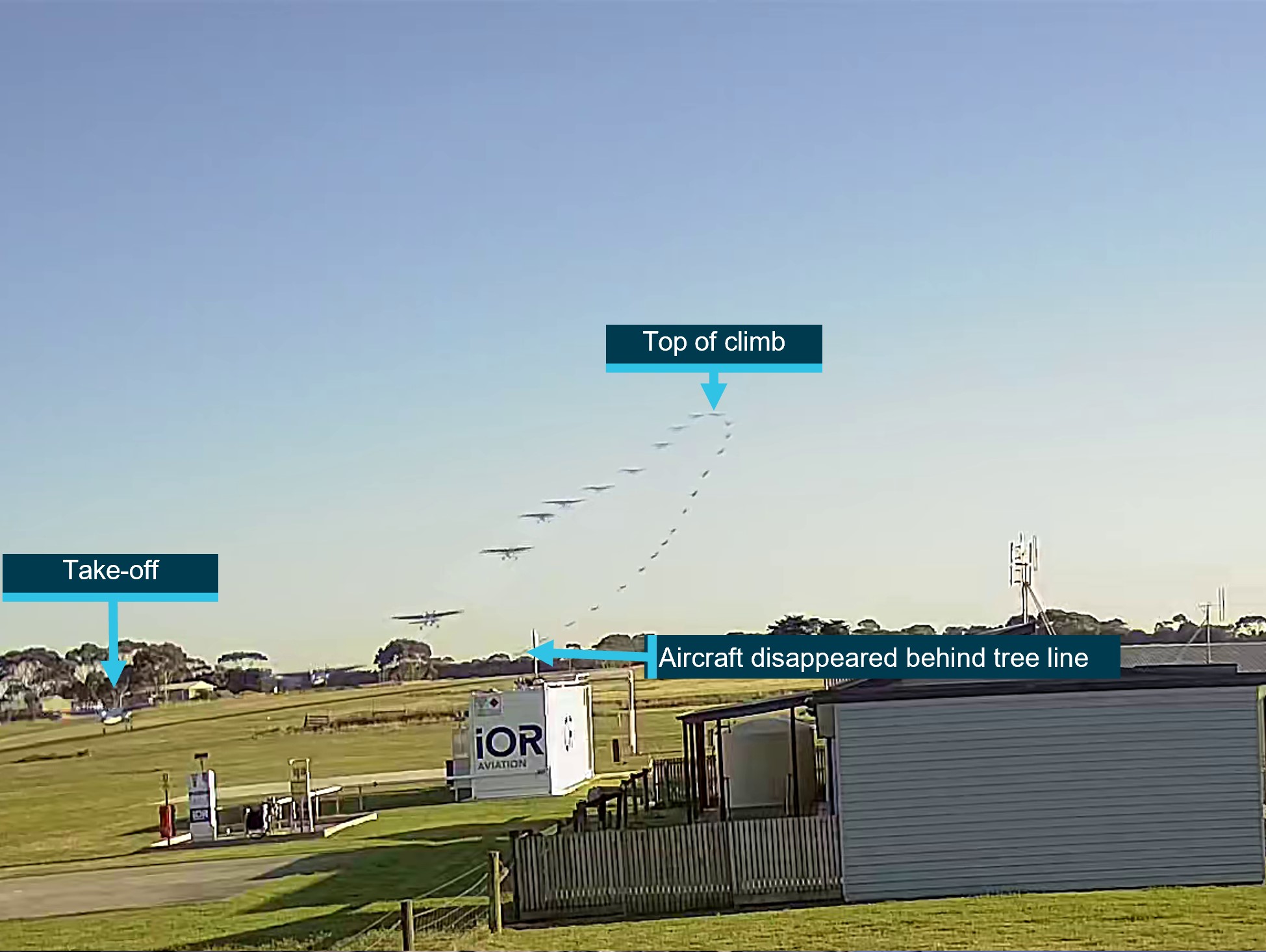
At 0757:57 the aircraft reached the highest recorded altitude of about 700 ft at 88 kt ground speed and, 5 seconds later, had descended to 600 ft and the ground speed reduced to 71 kt, then to 69 kt 5 seconds later. This flight path was consistent with video camera footage of the aircraft’s flight path (Figure 1). At 0758:08 the ADS-B[5] data recorded a descent rate of 3,520 ft/m passing an altitude of approximately 400 ft.

Figure 1: VH-UMV flight path captured by the airport camera

Figure 1: VH-UMV flight path captured by the airport camera

The ATSB combined multiple images together to show the flight path of the aircraft as captured by a local video camera. Source: Airport operator, annotated by the ATSB

The pilot reported that, as the aircraft descended, they observed the engine torque indication reducing through approximately 30% and attempted to switch off the TTL in accordance with the operator’s Engine Power Loss checklist. Due to the aircraft’s low height above the ground, and the pilot’s assessment that there was an engine issue, the pilot then selected a field in which to conduct a forced landing.

The pilot turned to the loadmaster[6] seated beside them and called out ‘gear-up’, to alert parachutists to be ready to exit the aircraft. In response, the loadmaster began directing parachutists to open the roller door, secure their harnesses, and brace for landing. The roller door was opened, but not secured in that position.

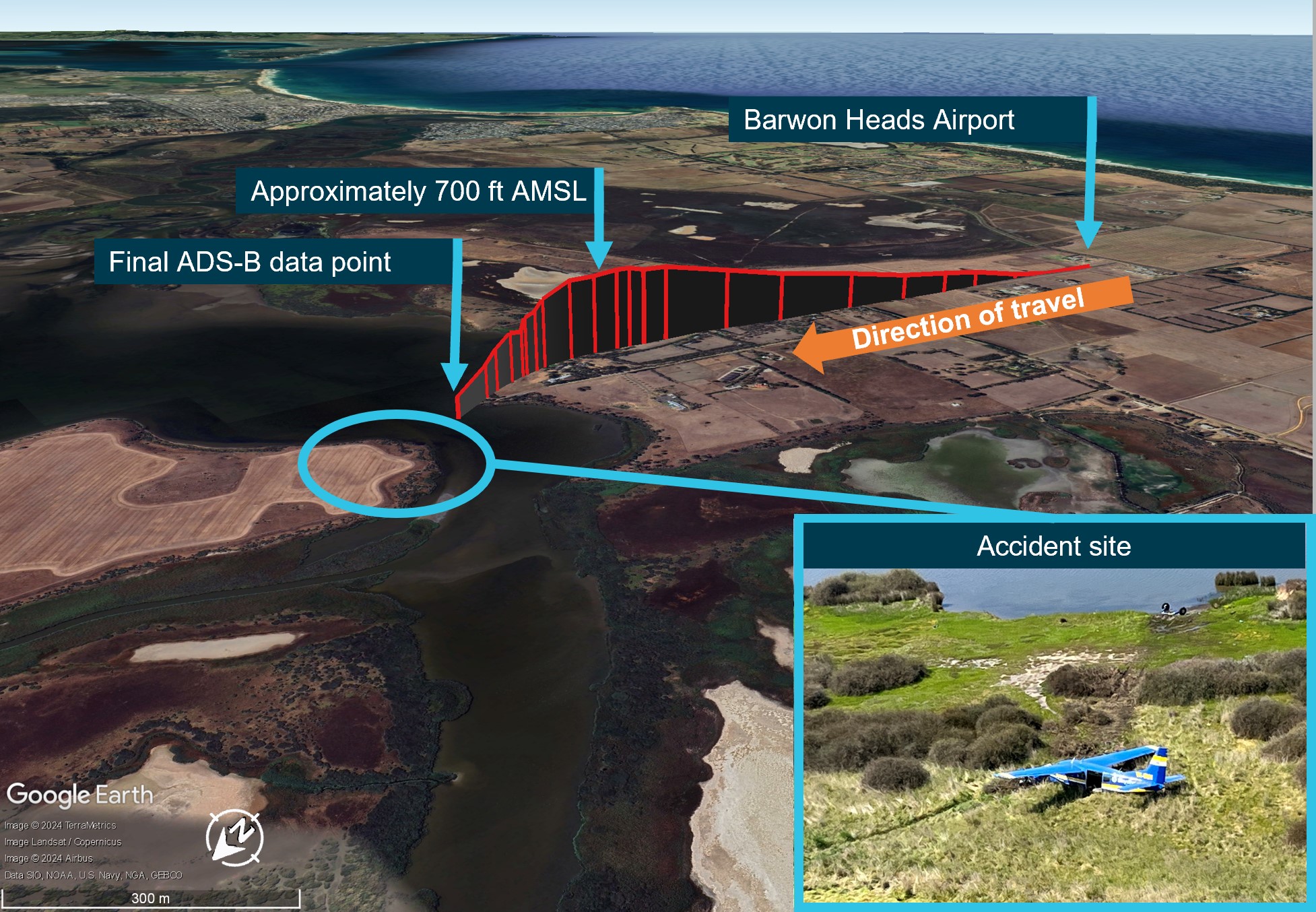
The pilot selected a forced landing location in a clearing beyond a river. However, less than 1 minute after becoming airborne and unable to maintain altitude, the aircraft impacted the water short of the clearing, resulting in water entering the cabin and forcing the unsecured roller door closed. The aircraft continued onto the riverbank where the main landing gear detached, then travelled along the ground for about 50 m before coming to rest (Figure 2).

The pilot sustained minor injuries, 6 parachutists sustained serious injuries, 8 sustained minor injuries and 2 were uninjured. The aircraft was substantially damaged. 

Figure 2: VH-UMV flight path

Figure 2: VH-UMV flight path

Source: ADS-B exchange flight data overlaid on Google Earth and image of accident site provided by operator, annotated by the ATSB

Context

Pilot information

The pilot held a commercial pilot licence (aeroplane) and a current class 2 aviation medical certificate. On 19 April 2023, the pilot completed their gas turbine engine design feature endorsement and single engine aircraft flight review in a Cessna 208 aircraft.

At the time of the accident, the pilot had accrued approximately 220 hours of total flight experience, which included 38 hours on the Cessna 208 aircraft type. Of those hours on type, 36 had been accrued in the previous 90 days.

The pilot reported that they were familiar with VH-UMV, having conducted multiple flights in it prior to the accident flight. The pilot was also aware of operator-specific engine operating limitations for VH-UMV, and reported having previously experienced an engine surge at 5,000 ft (see the section titled Engine surging).

Aircraft information

Certification details

The Cessna Aircraft Company 208 (C208) is an all-metal, high-wing aeroplane with tricycle landing gear and designed for general utility usage. The aircraft type certificate data sheet (TCDS) A37CE described the C208 as an ‘11-place closed land monoplane’, and under the heading ‘No. of seats’, provided a centre of gravity range for seating for one or 2 pilot seat locations and referenced the current Pilot’s Operating Handbook (POH) and United States (US) Federal Aviation Administration (FAA) Airplane Flight Manual (AFM) for passenger seat arrangements for seats 3 to 11.

The C208 POH Section 2 – Limitations – Maximum passenger seating limits stated that up to 11 seats, including the pilot’s seat/s, may be installed.

VH-UMV, serial number 20800077, was manufactured in 1986 and first registered in Australia in 2005. At that time, the aircraft was issued 2 certificates of airworthiness, one for normal category[7] operations and one for restricted category[8] operations for the purpose of carrying people for parachute jumping.

Operating in the restricted category required several conditions, including removal of the cabin seats, compliance with a specific engineering order and readily visible restricted category placards, none of which were in place on the accident flight. Additionally, under Civil Aviation Safety Regulations (CASR) current at the time of the accident (CASR 91.845, 91.025, 135.030), aircraft operating in the restricted category were not permitted to conduct air transport operations (carriage of passengers or cargo for hire or reward). 

In 2017, the aircraft’s Pratt & Whitney PT6A-114 gas turbine engine was replaced with a Honeywell International Incorporated TPE331-12JR-704TT gas turbine engine that drove a 4‑bladed, constant‑speed, full‑feathering,[9] reversible[10] Hartzell HC-E4N-5KL propeller with hydraulically‑operated variable‑pitch control. The engine modification was completed under the Texas Turbine Conversions supplemental type certificate (STC) SA10841SC, with an associated AFM Supplement. Under the heading ‘Maximum passenger seating limits’, the AFM supplement stated ‘No changes’ (from the C208 AFM). 

The aircraft was also modified in accordance with STC SA01180SE, which increased the original maximum take-off weight from 3,628 kg to 3,792 kg. Both STCs were approved by the US FAA and therefore accepted in Australia and taken as having been issued by CASA in accordance with CASR Part 21 regulation 21.114.

Three modifications made to VH-UMV and other aircraft in the operator’s fleet were completed under engineering orders in accordance with the CASR Part 21 regulation 21.437 Grant of modification/repair design approvals—grant by authorised person or approved design organisation:

  • ESE-C208-25-001—Rework of interior for parachute operations
  • ESE-C208-25-007—Installation of parachute bench seating
  • ESE-C208-95-003—Installation of Go-Pro cameras.
Torque and temperature limiter

VH‑UMV was fitted with a switch‑activated torque and temperature limiter (TTL) system designed to prevent these parameters exceeding specified limits. Where an exceedance of the allowable torque or exhaust gas temperature (EGT) was detected, the TTL computer restricted fuel flow to the engine. The maximum allowable fuel reduction of a normally-functioning bypass was about 68 L/hour (125 lbs/hour), resulting in a reduction of the torque output from 100% to about 62% (due to the approximate 25% reduction in fuel flow). 

Texas Turbine Conversions advised that, when functioning normally, the system would maintain the lower of the allowable torque or EGT limits and if the TTL bypassed the maximum allowable fuel, it would be felt immediately. In that case, the appropriate pilot response was to switch off the TTL.

The aircraft’s engine monitoring system included a single red line (SRL) controller, associated with the EGT limit. Like the TTL, the SRL was switch‑activated and deselection of the SRL also deactivated the TTL.

The allowable EGT limit was dependent on the phase of flight. Specifically, the operating margin from the EGT limit in the climb phase was reduced in the cruise phase. The phase was dependent on the position of the speed lever. Therefore, if the speed lever was moved aft during take-off or climb, the EGT limit also reduced and could result in activation of the TTL. The operator reported that the speed lever was fully forward throughout the short flight, and therefore the climb EGT limit applied. 

Operating limits

The AFM supplement for the Honeywell engine specified operating limits. With the SRL and TTL on, those limits included a maximum EGT of 650 °C, maximum 100% torque and maximum of about 101% RPM during take-off and climb. The supplement also provided an EGT table with limits for operating with the SRL off or inoperative, or ‘manual mode’. The limits were provided for operating at 100% RPM or 96% RPM based on the outside air temperature in 5 °C increments from −60 to +60 °C. 

The AFM defined take-off power as the lower of 100% torque or 650 ºC EGT (SRL ON), whichever is reached first at 100% engine RPM.

Engine surging

On 17 October 2023, the pilot submitted an internal safety report relating to an uncommanded engine surge, which they experienced at an altitude of approximately 5,000 ft. The pilot report stated:

Torque roll back for a split second, noticeable reduction in power and deceleration.

The pilot reported reducing the power then slowly increasing it while monitoring engine parameters in response to the event.

Although not recorded on the aircraft’s maintenance release (MR),[11] reportedly due to their transient nature, pilots submitted 7 other internal safety reports between July and October 2023 of engine surging in VH‑UMV, assessed as being due to the TTL. 

A review of maintenance recorded in VH-UMV’s engine logbook for the previous 12 months showed that the TTL controller was replaced ‘for fault isolation’ following the first reported surging occurrence on 3 April 2023. A further logbook entry on 18 September 2023 recorded that the EGT harness was replaced in response to reported engine surging at take-off power. 

The engine surging safety reports indicated troubleshooting test flights were also conducted. A series of test flights on 7 September 2023 was able to replicate the previously‑reported surging.  In addition, a test flight following the EGT harness replacement noted that the surging was still present. One of the experienced surges resulted in a torque value of 62% and fuel flow reduced by approximately 72 L/hour (128 lbs/hour). The MR current at the time of the accident identified that the aircraft operated over 90 flights prior to the next reported surge event on 17 October 2023. On that day, the aircraft operated 6 flights, and one surge occurrence was reported. According to the MR, 12 flights were conducted over the next 2 days (18–19 October), with no reports of engine surging submitted. However, the ATSB was also advised of an engine surge on 18 October, which was not recorded. 

The MR current at the time of the accident recorded 257 flights over 3 months, during which there were 6 reported surging events. That frequency illustrated the intermittent nature of the anomaly, which likely hindered troubleshooting.

As a result of the internal reports, on 21 July 2023, pilots were advised to operate VH-UMV under a set of unique operating conditions to avoid the TTL scheduling a significant bypass of fuel and subsequent notable drop in available power. These were limitations of 95% torque and 640 °C EGT. 

A review of the operator’s safety reports also identified that surging events were reported on 3 other company aircraft. For those aircraft, maintenance actions rectified the cause of each event and there were no subsequent surging events reported.

Minimum equipment list

Experience Co’s minimum equipment list (MEL) specified permissible unserviceable items with which the aircraft was permitted to operate temporarily under the stated procedures, conditions and limitations. The MEL included that both the SRL computer system and TTL ‘may be inoperative provided inoperative SRL system procedures and limits are observed’. In that case, it was also required that an MEL placard be fitted adjacent to the TTL or SRL switch for the inoperative system/s. There was no MEL placard for the TTL nor was it listed as inoperative at the time of the accident.  

Engine power loss checklist

The Texas Turbine Conversions AFM supplement provided checklists for engine failures, but not for partial engine power loss. The operator’s ‘Engine Power Loss’ checklist for the C208 with the Honeywell engine (Figure 3), required pilots to first control the aircraft by moving the elevator control forward to lower the aircraft’s nose if climbing. After completing initial checks, if the RPM was above 60% or the engine was surging, the pilot was to move the power lever to ½ inch (12.7 mm) forward of the flight idle position, in preparation for turning off the TTL, so as not to produce a transient exceedance of the EGT. 

Figure 3: Engine power loss checklist

Figure 3: Engine power loss checklist

Source: Aircraft operator 

Weight and balance

Aircraft moment arms

To enable calculation of the aircraft’s weight and balance, the C208 POH included a 2-place seating option, which divided the cabin into 7 zones (zones 0–6) (Figure 4). The flight manual supplement for the Texas Turbine Conversions STC did not include changes to the zones or seating configuration, therefore the POH applied. 

Figure 4: Cessna 208 Pilot’s Operating Handbook seating configuration

Figure 4: Cessna 208 Pilot’s Operating Handbook seating configuration

Source: Cessna 208 Pilot’s Operating Handbook, annotated by the ATSB

Accident flight weight and balance 

Prior to departure, a member of the parachuting operations team calculated the weight and balance for the proposed flight using the IBIS Technology flight planning module software (Table 1).[12] The moment arms from the POH were used for the calculations. Zone 6 was not used.

Table 1: Planned weight and balance for accident flight

ItemArm (mm)Weight (kg)Moment (kg-mm)
Aircraft basic empty weight4,1811,8897,897.909
Fuel4,680272.1521,273.672
Zone 0 [1]3,442272936.142
Zone 14,277218932.386
Zone 24,9483181,573.464
Zone 35,613173971.049
Zone 46,2614042,529.444
Zone 56,8961731,193.008
Total 3719.15217,307.075
Centre of gravity4,653  
  1. The operator’s weight and balance used the crew seat arm as the zone 0 arm.

The calculated weight and balance resulted in a take-off weight of approximately 3,719 kg and the aircraft’s centre of gravity located at 4,653 mm aft of the datum. To remain inside the operating limitations, the maximum allowable weight was 3,792 kg. Additionally, the aircraft needed to remain within the centre of gravity envelope, which had an aft limit of 4,680 mm and the forward limit varied with the operating weight. Each zone had a maximum allowable weight limit, and the maximum for zone 0 was 159 kg. However, the calculation software did not provide a warning to notify the user a zonal limit had been exceeded.

Information provided by the parachutists included the position they were seated at the time of the accident. Those positions did not match the original seating positions on the planned weight and balance sheet provided to the pilot prior to departure. The operator calculated a revised weight and balance based on the probable parachutist seating positions, which moved the aircraft’s centre of gravity 5 mm aft, although still within the allowable envelope (Table 2). It also showed that zone 0 was under the allowable weight limit.

Table 2: Revised weight and balance for accident flight

ItemArm (mm)Weight (kg)Moment (kg-mm)
Aircraft basic empty weight4,1811,8897,897.909
Fuel4,6802721,272.960
Crew seat3,44292316.664
Zone 03,47280277.760
Zone 14,277349.41,494.384
Zone 24,948271.41,342.887
Zone 35,613334.41,876.987
Zone 46,2611971,233.417
Zone 56,8962331,606.768
Total 3,718.217,319.746
Centre of gravity4,658  

Aircraft basic empty weight

A weigh of VH‑UMV on 17 October 2017 identified that the aircraft’s basic empty weight was 1,889 kg in the single pilot seat configuration (Figure 5).

Figure 5: VH-UMV configuration on date of reweigh

Figure 5: VH-UMV configuration on date of reweigh

The image meta-data showed the image was taken on 17 October 2017 – the reweigh date. Source: AeroWeigh.

The aircraft seating configuration at the time of the accident is shown in Figure 6.

Figure 6: VH-UMV cabin seating arrangement 

Figure 6: VH-UMV cabin seating arrangement

Source: Aircraft operator, annotated by the ATSB

The basic empty weight of the aircraft did not include the flooring, or the 36 kg bench seating installed under engineering order ESE-C208-25-007. The engineering order provided the moment arms and weights shown in Table 3.

Table 3: ESE-C208-25-007 Parachute bench seating options – bench seat weight and arm

ItemArm (mm)Weight (kg)
Forward seat & backrest right-hand side only – option 2, without oxygen bottle mount.3,5567.82
Centre cabin bench seats both left-hand and right-hand sides (2 x 10.92 kg)5,00321.84
Aft bench seat right hand side only6,5536.36
Total of unaccounted weight for bench seating 36.02

Using the operator’s revised weight and balance calculation that reflected the likely positions of the parachutists, and the additional weight of the bench seating, the ATSB determined the probable take-off weight was 3,754 kg and the centre of gravity was 8 mm aft of the originally calculated centre of gravity (4,661 mm).

The operator subsequently weighed the aircraft’s jump mat, single point restraints, rubber matting, and portable oxygen tank. The total of these items was 30.2 kg, increasing the probable take-off weight to 3,784 kg.

Weight and balance implications 

Regarding the importance of accurate weight and balance, the FAA Pilot’s handbook of aeronautical knowledge stated:

An overloaded aircraft may not be able to leave the ground, or if it does become airborne, it may exhibit unexpected and unusually poor flight characteristics.

Changes of fixed equipment have a major effect upon the weight of an aircraft. The installation of extra radios or instruments, as well as repairs or modifications, may also affect the weight of an aircraft.

Loading in a nose-heavy condition causes problems in controlling and raising the nose, especially during take-off and landing. Loading in a tail-heavy condition has a serious effect upon longitudinal stability and reduces the capability to recover from stalls and spins. Tail heavy loading also produces very light control forces, another undesirable characteristic. This makes it easy for the pilot to inadvertently overstress an aircraft.

Recorded data

The ATSB obtained OzRunways and third-party ADS-B recorded data for the accident flight. That data was compared with flight data for the flight conducted by the same pilot in the same aircraft on 17 October 2023, which was the day the pilot reported engine surging at about 5,000 ft. The comparison did not show significant performance difference from take-off to about 500 ft between the 2 flights.

Although the aircraft had an engineering order to fit GoPro cameras, they were not in place for the accident flight. The operator reported that these were only used during the creation of promotional footage and not during day-to-day operations. There was also no video footage from inside the aircraft, but the airport operator provided video footage from cameras located at the airport. One of those cameras recorded the accident flight footage (Figure 1) and provided audio for analysis.

The recorded audio included the aircraft noise and the nearby road and wind noise. The camera was stationary, therefore as the aircraft departed its sound signature reduced. Analysis of the audio conducted by Honeywell found that the engine RPM was approximately 99% throughout the take-off and initial climb. However, the engine noise was not discernible from the background sounds recorded at the time of the reported engine surge.

Site and aircraft examination

Site assessment

The ATSB did not attend the accident site, but the aircraft operator and Victoria Police attended shortly after the accident and provided the ATSB with photos of the aircraft and cockpit. A review of the images showed that the: 

  • flaps were fully retracted
  • power lever was in the max reverse position
  • speed lever was in the minimum position
  • condition lever was in shutoff/feather position.

Those positions were consistent with the pilot’s reported actions to secure the engine after the impact. Additionally, one image appeared to show the TTL switch ON and the SRL switch OFF, indicating that the pilot may have inadvertently selected the SRL OFF instead of the TTL.

Engine and accessories assessment

The aircraft’s engine was recovered by the operator and sent to the Honeywell Investigation Laboratory in the US. On behalf of the ATSB, the US National Transportation Safety Board (NTSB) arranged independent oversight of the engine examination that was conducted between 3–5 January 2024.

Honeywell and the NTSB subsequently oversighted inspection and testing of removed components at various technical facilities. The Honeywell investigation report, provided to the ATSB and aircraft operator, detailed the observations and findings from the engine and associated component examinations, as follows.

The SRL and TTL were tested on 27 February 2024. Although some test points were not within the specified test tolerances, both units were found to be functional. However, further examination of the fuel bypass valve conducted by Woodward Inc. on 5 November 2024, resulted in a maximum bypass flow of 110 L/hour (194.5 lbs/hour), which exceeded the maximum flow test range of 68–74 L/hour (120–130 lbs/hour). At take-off power, a normal fuel flow was approximately 312 L/hour (550 lbs/hour). Therefore, if a bypass of 110 L/hour occurred during the accident flight with take‑off power set, the fuel flow would have reduced by about 35%. 

Initial inspection of the fuel bypass valve’s outer casing revealed impact markings (Figure 7). When the protective cover plate was removed, the pole associated with the impact side was found in contact with the armature. When a 4.5 kg (10 lb) force was applied to each of the poles, there was no visible movement. The armature was cut away from the spade to determine if the armature screws were loose. The armature screws were found to be suitably tightened, and the armature was not bent.

The findings of the inspection showed the out‑of‑limit test results were due to impact damage resulting from the accident. As such, the higher fuel bypass identified in the test was not considered to be contributory.

Figure 7: Fuel bypass valve

Figure 7: Fuel bypass valve

Source: Woodward Inc, annotated by the ATSB

The fuel control unit (FCU) was examined and tested between 26–27 March 2024. The FCU tested values were either within specified ranges or marginally outside of tolerance limits for new or overhauled components. The test results may have been affected by procedures for adjusting an in-service FCU defined in the engine maintenance manual. 

On 11 January 2024, a computed tomography scan of the propeller governor was conducted by Honeywell. Between 26–27 March 2024, the propeller governor was subject to functional testing by the manufacturer. While there were abnormalities identified with the magnetic pickup voltage and RPM maximum/minimum speeds, no contributing anomalies were noted. It was then disassembled, inspected and reassembled, followed by an additional functional test. The results from both functional tests were consistent with expected parameters of various operational modes.

The fuel pump was functionally tested on 2 May 2024, and found to be operating within specifications.

The Honeywell investigation found that the damage was indicative of an engine that was rotating and operating at the time of impact. It found no pre-existing condition that would have prevented normal operation. 

Photos of the propeller were provided to Hartzell for analysis. As the propeller was of composite material, on impact it fractured into parts rather than deforming the propeller shape. From the limited fragments that were retrieved, Hartzell concluded the blades were likely rotating under low power at the time of the accident.

The ATSB considered whether the pilot had moved the power lever to beta range, reversing the propeller, but Hartzell found it likely that the propeller was forced to a low pitch angle during the initial impact. 

Carriage of parachutists

Cabin configuration

The aircraft was configured for skydiving such that:

  • the cargo door was replaced with a vertical sliding door (made of nylon, polycarbonate and aluminium)
  • the passenger seats and lap belts were removed
  • bench seating and 17 single point restraints were installed.

The restraints attached to the parachute harness and parachutists could be seated either on the bench seating or floor, facing toward the aft of the aircraft. 

The associated flight manual supplements for the parachute configuration were: 

  • cargo doors removed kit
  • in-flight openable cargo door
  • in-flight opening of doors
  • oxygen system
  • skydiving jump light
  • external mounted GoPro cameras.
Aircraft modifications

Classification of design changes 

CASA stipulated regulations for modification of an aircraft from the original manufacturer specifications. CASA Advisory Circular (AC) 21-12 Classification of design changes provided different processes for modifying aircraft, depending on the type of change being made. These changes were classified as either major or minor.

A minor modification was anything that was not considered to be a major modification and could be completed by a CASA-authorised person under CASR Part 21.M. Any modification with a significant effect on airworthiness – structural, weight and balance, systems, operational or other characteristics, were classified as major. Additionally, any alteration to the type certificate datasheet was classified as a major change. 

A major modification was further classified into a substantial change or a significant change. A significant change required a supplemental type certificate application to be completed with CASA’s involvement. A substantial change required a new type certificate application, which also involved CASA. The AC provided the following example of a significant change to a small aircraft:

Changes in types and number of emergency exits or an increase in maximum certificated passenger capacity.

The notes associated with that example were: 

Emergency egress certification specifications exceed those previously substantiated. Invalidates assumptions of certification. 

CASA advised that the modifications would be considered a major change if the number of persons was increased above that permitted by the aircraft type certificate data sheet. This was consistent with the US FAA Advisory Circular 105-2E – Sport Parachuting, which included: 

The approved number of skydivers that each aircraft can carry for parachute operations will most commonly be found on FAA Form 337, Major Repair and Alteration (Airframe, Powerplant, Propeller, or Appliance), used for field approvals, or an aircraft Supplemental Type Certificate (STC).

In its submission to the draft report, CASA advised that it considered that the legal basis for conducting parachuting flights with a greater number of passengers than the TCDS specified may be met if the aircraft was modified appropriately by a suitably authorised person and there was an associated aircraft flight manual supplement.

In determining whether the parachuting configuration modification was major or minor, the CASA‑authorised design engineer assessed that it was minor as it had no significant effect on:

  • structure
  • cabin safety
  • flight
  • performance or function of:
    • systems
    • propellers
    • engines or powerplant installation
    • environment.

The engineer also assessed that the design did not:

  • alter airworthiness or operating limitations
  • require an adjustment of the type-certification basis

Technical assessment of modifications 

Aircraft modifications must meet the airworthiness requirements of the aircraft’s certification basis. According to the type certificate data sheet, VH-UMV was certified under FAR 23 amendments 23-1 through 23-28. Modifications were required to comply with standards from that or subsequent amendments. Technical assessments of the modifications detailed in the engineering orders nominated FAR 23 amendment 62 as the certification basis for the parachuting configuration modifications, including the roller door, bench seating and oxygen system. 

The technical assessments included a design compliance matrix, with the following key comments by the design engineer of relevance.

Weight and balance

The engineering order was to include that:

It is the operator’s responsibility to accurately update the aircraft’s load data sheet to reflect the quantity and positioning of oxygen bottles as this may vary dependant on the number of parachutists on a given high altitude drop.

Structure

Standard aircraft hardware is used to secure items of mass installed as part of the parachute fit out modifications. This modification does not alter or effect the strength of the aircraft structure to support all normal aircraft loads. All materials & fasteners used as part of this design package have been selected to have adequate structural properties for their intended use.

Flight loads

The document package includes instructions to ensure the Cessna standard Flight Manual Supplement for operations with the cargo door open/removed is in the Flight Manual.

Oxygen

The engineer assessed the oxygen requirements for conducting flights above 14,000 ft in an unpressurised aircraft, stating:

…The operators (max) occupant capacity for the 208 & 208B model aircraft is x16 & x20 occupants respectively. As such these aircraft must be fitted with a minimum of 2x oxygen dispensing face masks if more than x15 occupants are carried…

Emergency landing conditions

Engineers assessed that the oxygen cylinder restraints were adequate in all load cases. They also rated the seats to at least 170 lb (77 kg) as required by FAR 23.785.

Regarding the installation of the oxygen bottle the engineers provided the following: 

…the seat base and surrounding structure is adequate to support the small increase in weight due to the installation…there is no risk of the installation coming loose and inflicting serious injury on the cabin occupants. 

Control systems

The design package included instructions for the removal of the copilot control wheel and column in accordance with the aircraft maintenance manual, to configure the aircraft for parachuting operations. There was no change to the design or functionality of the pilot's primary flight controls.

Doors

The number and arrangement of doors was not altered by the modifications. Regarding ‘vibration and buffeting’, the parachute door had a proven service history, with no reported issues since the design was originally implemented in June 2012. Further, the roller-style parachute door was commonly installed on parachuting aircraft and Cessna had an approved roll-up door as part of the production standard design. 

Operation of the roller door was ‘simple and obvious’, easily operable from inside and outside the aircraft. The door was held in place by gravity and friction and could not be accidentally opened. Decals specific to the operation of the parachute roller door were installed. 

Seats and restraints

The single point restraints for the parachutists were previously approved for use by ‘Air Safety Solutions’. 

The aircraft certification did not require dynamic testing of the seats and, although the bench seating was not tested, the design engineer referenced FAA AC 105-2E Sport parachuting, which stated: 

1. Straddle benches can offer more occupant crash protection than floor seating since they can be designed to provide significant vertical energy absorption.

Emergency exits

For reference, FAR 23.807 required:

In addition to the passenger-entry door, for an airplane with a total passenger seating capacity of 16 through 19, three emergency exits, as defined in paragraph (b) of this section, are required with one on the same side as the passenger entry door and two on the side opposite the door.

(b) Emergency exits must be movable windows, panels, canopies, or external doors, openable from both inside and outside the airplane, that provide a clear and unobstructed opening large enough to admit a 19-by-26-inch ellipse. Auxiliary locking devices used to secure the airplane must be designed to be overridden by the normal internal opening means. The inside handles of emergency exits that open onward must be adequately protected against inadvertent operation. In addition each emergency exit must:

• be readily accessible, requiring no exceptional agility to be used in emergencies;

• have a method of opening that is simple and obvious;

• be arranged and marked for easy location and operation, even in darkness;

• have reasonable provision against jamming by fuselage deformation; …

(c) The proper functioning of each emergency exit must be shown by tests

The design engineer commented that there was no change to the number of emergency exits and that the ‘steps, handles, bench seats etc. installed for this modification met the requirements for egress in an emergency as specified by this regulation’. Additionally, as there was no change to the door functionality or positioning, no additional emergency testing was required.

The unmodified rear right passenger door met the requirements of the regulation in that a 19" x 26" (48 x 66 cm) ellipse may be passed through the door un-obstructed. However, the rear right bench seat extended across the door at a height of 10” (25.4 cm). The design engineer commented that access to the door handles/operation and decals was not obstructed, and no exceptional agility was required to exit through that door in an emergency.

The roller door was also required to meet the emergency exit criteria, including ‘reasonable provisions against jamming by fuselage deformation’, and that ‘proper functioning of each emergency exit must be shown by tests’. However, this was not documented. 

The parachuting configuration detailed in the engineering orders enabled seating and single-point restraints for 17 parachutists, in addition to the fitted pilot seat and 5-point restraint. The design engineer had not intended to explicitly increase the seating capacity above the 11 specified in the TCDS, as the number of parachutists that could be carried was an operational consideration. The design engineer provided comment on a technical assessment provided to CASA in 2017 regarding maximum passenger seating configuration, that the aircraft operator’s understanding was: 

it is the pilots [sic] responsibility to ensure the aircraft is loaded within the weight and balance and centre of gravity limitations of the aircraft at all times. From these calculations the maximum safe number of parachutists to carry on the Cessna 208 Caravan is 17...

Regulatory requirements 

Part 105 of the CASR came into effect in December 2021 and set out the operational requirements for aircraft used to facilitate parachute descents. Civil Aviation Order (CAO) 20.16.3 paragraph 15 Carriage of parachutists was in force at the time of the accident, and the following regulations were relevant to the aircraft parachuting configuration:

  • CASR 91.200 Persons not to be carried in certain parts of aircraft permitted a person to be carried in ‘a part of the aircraft that is not designed to carry crew members or passengers’, if the aircraft was being operated for a parachute descent and met the Part 105 MOS.
  • CAO 20.16.3 required parachutists to wear a seatbelt, shoulder harness or approved single point restraint (except when about to jump). Similarly, CASR Part 105 section 105.105 required parachutists who were not flight crew to be provided with a seatbelt, shoulder harness or approved single-point or dual-point restraint.

The Part 105 Manual of Standards (MOS) came into effect on 2 December 2023, 44 days after the accident, and specified requirements in greater technical detail. CASA advised that the Part 91 Manual of Standards will be amended to remove ambiguity about approved passenger restraints being permitted in lieu of seatbelts.

Maximum passenger seating configuration

In drafting CASR Part 105, the number of parachutists that could be carried was a significant point of discussion between CASA and the parachuting industry. 

In 2006, CASA proposed Civil Aviation Safety Regulation 105.140 paragraph 3.5.20 which stated:

Proposed CASR Part 105 seeks to provide clarity to the parachuting industry that operating a parachuting aircraft with more parachutists than the normal published aircraft seating capacity in passenger-carrying operations is acceptable, provided weight and balance and other manufacturer’s limitations for the aircraft are observed.

A subsequent notice of proposed rulemaking indicated that the following may be included in the proposed CASR Part 105.140 – Number of parachutists in aircraft

(1) A parachuting aircraft may carry more occupants than the maximum number that is specified in the aircraft’s flight manual only if the aircraft is loaded in accordance with the following requirements and limitations set out in the flight manual or the certification data for the aircraft: 

(a) the weight and balance requirements; and…

When the above proposed rule was not incorporated into draft CASR Part 105 or MOS, as detailed in meeting minutes of the technical working group that reviewed the 30 August 2022 draft Part 105 MOS, they proposed to meet with CASA’s Airworthiness and Engineering Branch to discuss:

possible options for parachuting aircraft to operate with seats removed, to carry more passengers than currently permitted by the aircraft’s type certificate or flight manual and regulatory support mechanisms for modifications (doors, handles etc.) that support safe parachuting operations. 

The ATSB was unable to determine whether this discussion took place, however no related changes were incorporated into the regulations or MOS, noting that the MOS had not come into effect at the time of the accident. 

In response to the ATSB’s request for clarification of CASA’s expectation for the number of parachutists that could be carried, CASA advised that:

  • The legal basis for conducting parachuting flights with a greater number of passengers than the TCDS is met where the aircraft has been modified appropriately by a suitably authorised person and the aircraft’s flight manual has been modified accordingly.
  • CASA has been aware for multiple decades that parachuting aircraft were carrying a maximum number of passengers greater than the TCDS maximum number of dedicated passengers.
  • CASA understood that the increase in passenger capacity for parachuting aircraft was achieved by operators through legitimate aircraft modification processes that removed the normal passenger seats and modified the aircraft for parachute‑specific operations.
  • CASA did not identify any immediate safety of flight issues.

In its submission to the draft report, CASA advised that it was ‘considering the issue of a legislative instrument to remove any doubt that an approved aircraft modification which replaces normal seating with appropriate alternative seating and restraint arrangements is explicitly permitted’.

Supplemental type certificate application

In April 2017, the design engineer applied to CASA on behalf of the aircraft operator for a supplemental type certificate based on the engineering order for the addition of bench seating. The STC application submitted to CASA included details and images of aircraft that already had modifications completed under an engineering order and did not include an increase in the seating capacity.

After several communications and iterations of the documents provided, in August 2017, CASA highlighted 2 areas directly related to safety of parachutists: the rear exit crashworthiness and the increase of maximum passenger capacity to 17.

In July 2020, the STC application was withdrawn by the applicant.

Other parachuting configuration supplemental type certificates

Cessna 182 models E to R­

In 1996, CASA issued STC-214 to the APF. The STC background explained the application was the result of a CASA ramp check, which identified that there were 6 persons on board without single point restraints while conducting parachute operations, where the TCDS stated it was a 4‑seat aircraft.

The STC assessed the floor loading capacity of the aircraft to carry 6 persons (including the pilot) for the purpose of parachute operations. It concluded:

The floor was analysed and substantiated for parachutist loads. The hard points for the approved single point restraints were determined, analysed and substantiated for parachute loads... The aircraft loading is such that no special loading system needs to be devised as the aircraft will always be within the approved centre of gravity range.

The original C182 TCDS 3A13 showed ‘No. of seats 4’.

The amended TCDS for the STC showed ‘No. of seats 1, Parachutist 5’.

Cessna 208, 208B

In 2018, the US FAA issued supplemental type certificate SA04352CH, which incorporated many similar modifications made to model 208 and 208B aircraft certified under A37CE. The modifications included the installation of:

  • wind deflector
  • benches
  • external assist handle
  • internal assist handle
  • jump exit control light
  • external step
  • wind block (sliding parachute door).

The STC limitations and conditions included:

(3) This modification does not install Title 14 [US Code of Federal Regulations] CFR part 23 compliant seating and is therefore zero occupancy.

(4) The left and right hand benches are compliant as monuments and are not certified to carry any items of mass. Testing performed during certification would be sufficient for gust loading or seven evenly distributed masses of 215 pounds (97.5 kg) each…

Australian Parachute Federation

The APF is the peak body for the administration and representation of Australian Sport Parachuting. With the approval of the Civil Aviation Safety Authority, the APF:

  • applies the standards of operation
  • conducts competitions
  • issues parachuting licences, certifications and instructor ratings
  • conducts exams
  • distributes publications to keep its members informed of events and safety standards.

The APF organisation had over 55 group members also known as member organisations, 3,000 licenced members, and engaged with the operators of nearly 100 aircraft conducting parachute operations. As detailed above, the APF held an STC for parachuting operations in Cessna 182 models E through R for parachuting 6‑person operations. The associated supplemental type certificate data sheet amended the aircraft configuration to 1 seat and 5 parachutists from the 4‑seat configuration stated on the type certificate data sheet.

Aircraft operators that conducted parachuting operations as a member of the APF did so in accordance with the APF regulations. This included adhering to the APF Jump Pilot Manual. The Jump Pilot Manual Version 01-2023, in force at the time of the accident, stated:

5.3.3 Loading – Balance/C of G

A parachuting aircraft may carry more occupants than the maximum number that is specified in the aircraft’s flight manual only if the aircraft is loaded in accordance with the following requirements and limitations set out in the flight manual or the certification data for the aircraft:

  (a) the weight and balance requirements; and

  (b) any other limitations related to the provision of: 

       (i) adequate structural support for restraint of occupants; or

       (ii) supplemental oxygen for the flight.

For paragraph 5.3.3 (b), the limitations do not include those that are solely related to the number of seats or seating positions that are, or are normally, fitted in the aircraft.

If an aircraft does not have a flight manual, then any information supplied by the manufacturer that relates to the matters mentioned above or is included in the aircraft’s airworthiness certificate, is taken to be the flight manual.

Balance must be a consideration for all aircraft involved in parachuting operations and can be especially critical during climb-out and exit, when changes occur. Know the operational limitations of your aircraft!

Under the Loadmaster’s supervision, the parachutists will normally load the aircraft in the reverse order of the exit.

The Jump Pilot Manual was accepted by CASA and CASA personnel reported having reviewed the manual. Regarding the wording that a parachuting aircraft could carry more occupants than the maximum specified in the AFM, CASA reported that they understood that only applied to Cessna 182 models E through R, for which the APF held a supplemental type certificate that permitted the carriage of 6 persons. CASA personnel also reported that the manual wording was ‘never intended to serve as a quasi-engineering approval’.

At the time of writing, CASA and the APF were engaged in ongoing discussions, including the carriage of occupants in excess of the number detailed in the TCDS without the necessary modification approvals.

Survivability

Passenger briefing requirements 

The CASA Multi-Part Advisory Circular – Passenger safety information, stated:

2.1.1 In addition to certification standards for the crashworthiness of the aircraft and cabin crew evacuation procedures, well-informed and knowledgeable passengers contribute to survivability in an aircraft accident or incident. There are multiple factors that affect survivability. Physical factors include adopting the correct brace position for impact, the correct use of seatbelts, as well as the location and operation of all emergency exits.

2.1.2 Accident investigations have shown that survival rates are improved when passengers are provided with accurate and effective information about the correct use of equipment such as seatbelts, and the actions they should take in a life-threatening situation such as how to adopt the brace position.

A pilot in command was in contravention of regulation 91.565 if an aircraft commenced a flight and the passengers had not been given a safety briefing and instructions as prescribed by the Part 91 MOS, unless:

(a)  the passenger has been previously carried on the aircraft; and

(b)  the passenger has previously been given a safety briefing and instructions in accordance with this regulation; and

(c)  in the circumstances it is not reasonably necessary to give the same safety briefing and instructions.

The CASR Part 91 MOS provided a list of items that must be covered in a passenger safety briefing and instructions before an aircraft takes off for a flight. Relevant to this occurrence, the list included:

(c) when seatbelts must be worn during the flight, and how to use them;

(f) how and when to adopt the brace position;

(g) where the emergency exits are, and how to use them;

(s) for a flight of a jump aircraft — the physical location(s) within, or on, the aircraft that the passenger must occupy during the flight in order to ensure the aircraft is operated within the aircraft’s weight and balance limits during the flight.

Operator’s safety briefing

The aircraft operator had 2 videos, one of which was shown to parachutists depending on whether they were conducting a tandem jump or a sport jump. The sport jump video was specific to the Barwon Heads operation and included:

  • aircraft climb performance
  • 17 single point restraints, which were to be worn up to 2,000 ft
  • sport jumpers were to listen to the pilot in command in the event of an emergency
  • location of the door securing clip (but not instructions for use). 

The video shown to tandem jump parachutists provided specific aircraft safety information including:

  • how to approach the aircraft
  • the use of single point restraints
  • the location of fire extinguishers
  • how to brace
  • how to egress
  • the requirement not to smoke
  • the use of life jackets where required.

For the accident flight, the pilot reported that they did not provide a safety briefing, and multiple parachutists reported not having received a safety briefing prior to flight. There was no procedure in the operations manual that waived the pilot’s responsibility to provide parachutists with a safety briefing. The pilot reported that they understood that the drop zone safety officer ensured everyone was briefed on emergency situations before jumping and a video briefing was provided to tandem parachutists.         

The operations manual provided the following guidance for providing a safety briefing during an emergency landing with parachutists on board:

It will be the Load Masters responsibility to assist the pilot in ensuring;

1. Parachutists are briefed on and instructed to assume the BRACE position prior to touchdown.

2. Emergency Exits are opened and secured (where possible) prior to touch down.

3. Single point restraints are utilised by all occupants.

The aircraft also had a sign on the rear wall of the internal cabin, detailing the in-flight emergency plan (Figure 8). The sign stated that single point restraints were required as directed by the pilot and at all times below 1,500 ft, differing from the 2,000 ft stipulated in the sport jump video. 

The APF Jump Pilot Manual required that restraints were utilised by all occupants below 1,000 ft, or as directed by the pilot.

Figure 8: In-flight emergency plan

Figure 8: In-flight emergency plan

Source: Victoria Police and the aircraft operator

Parachutist preparedness

After the accident, in response to an ATSB survey, parachutists reported a lack of awareness of how to brace and the location of emergency exits that were available if the main roller door became damaged and unavailable for use in an evacuation. On this occasion the clip that secured the roller door in the open position was not used, which resulted in it closing on impact. Fortunately, the parachutists were still able to successfully evacuate the aircraft via that door. As detailed further below, several of the parachutists also reported that their restraints were not taut prior to the ground collision.

Some parachutists recalled receiving aircraft-specific emergency information during their initial parachuting training. However, in some cases, several years had passed without receiving a refresher. Furthermore, some had conducted their initial training on different aircraft types.

Injuries and seating positions

The pilot wore a 5-point restraint, and the 16 parachutists each had a single-point restraint attached to their parachute. The probable seating arrangement at the time of the accident was determined based on the recollections of parachutists who responded to ATSB’s request for information (Figure 9). There were 4 parachutists seated on the floor, 4 on the left bench seat and 8 on the right bench seat. The parachutists were facing aft and those on the bench seats were seated between each other’s legs. 

Injury information was obtained for the pilot and 14 of the 16 parachutists, with the other 2 assumed to have no injuries (Table 4). The injury mechanisms included deceleration, flail and impact with the aircraft or other occupants.

Figure 9: Seating positions

Figure 9: Seating positions

The seating positions in the image are referenced in Table 4: Injuries sustained. Source: Texas Turbines Cessna 208 pilot operating handbook, annotated by the ATSB

Table 4: Injuries sustained

Image referenceInjuries sustainedATSB injury classificationSurvivability Comments
A. (Pilot)Cut on forehead, bruising, whiplash, bruised sternum, and difficulty talking/breathingMinor5-point safety harness; likely impact with control column/dash
B.Pulmonary contusion, fifth and sixth rib fractures, psychological trauma, and lower back painSeriousSlipped off the end of the bench seat and ended up squashed against the ladder or back of the pilot seat due to a loose restraint 
C.No reported injuriesNo injuries 
D.Tears to both rotator cuffs, tear to sternocleidomastoid muscle, and nerve damage to left arm and shoulderSerious 
E.Broken ribs and internal bleeding to the chest.SeriousLoose restraint
F.Whiplash, fractured L4 transverse process, and nerve pain in right shoulder and legSeriousLoose restraint, seated on floor; adjacent end of bench seat
G.Whiplash, bruising, and headachesMinorSeated on floor
H. (Loadmaster)Cut injury to right leg requiring stitches, and sore backMinor 
I.Strained back, cuts, and bruisingMinor 
J.Whiplash, cuts, and bruisingMinorLoose restraint
K.Whiplash, cuts, and bruisingMinorLoose restraint
L.Cuts to head, face, internal chest cuts, and bruising MinorTight restraint
M.Broken tailbone, bruisingSeriousTight restraint
N.Concussion, and bruisingMinor 
O.Swollen knee, bruised kidney, bruised vertebrae, and strained neck ligamentsMinorLoose restraint
P.Internal abdomen bleeding, Internal hematoma inner right leg, cuts, bruising, whiplash, and back pain.SeriousLoose restraint; inappropriate structures around/in front 
Q.No reported injuriesNo injuries 

The single point restraints could not be adjusted, but an occupant could potentially position themselves such that the restraint was taut. Nine parachutists provided information about the tightness of their restraint; 7 reported their restraints were loose and 2 reported tight restraints. Of those with loose restraints, 3 sustained minor injuries and 4 sustained serious injuries. Of the 2 parachutists who reported having tight restraints, one sustained minor injuries and the other sustained serious injuries.

Of the 4 parachutists seated on the floor, 2 sustained serious injuries, one sustained minor injuries, and another was reported to have been uninjured. The other serious injuries were sustained by 2 parachutists on the left bench seat and one on the right bench seat. 

The parachutist who sustained the most injuries of the highest severity was at the front of the left bench seat. As that bench seat did not have a seatback, the parachutist came off the forward end of the bench between the bench and pilot seat and contacted the back of the pilot’s seat and/or ladder adjacent to the seat. The injuries were likely also increased by the mass of the 3 other parachutists on that bench moving forward during the impact sequence. 

The ATSB compared the injuries sustained by the pilot and parachutists of VH-UMV with those involved in 2 survivable accidents involving C208 aircraft, assessed as likely to have been subjected to similar impact forces (AO-2016-007 and AO-2024-001). In the 2 comparative accidents, some of the occupants sustained minor injuries while others were uninjured. The pilot and front seat passengers had 5-point restraints, and in the 2016 accident the other passengers wore lap belts. In the more recent accident, the other passengers wore 3-point restraints.   

ATSB investigation AO-2014-053 found that single point restraints were less effective than dual restraints in mitigating injury for parachutists. This was consistent with the US FAA’s technical report – Evaluation of Improved Restraint Systems for Sport Parachutists, which found that dual straps attached to the parachute harness provided better restraint and produced less flailing and bending of the body than single point restraints (FAA 1988). The following loading of aft‑facing passengers was found to increase restraint effectiveness:

• the person most forward in the cabin should be leaning against a bulkhead or other substantial support to limit flailing and head impact.

• each parachutist’s restraint should be anchored to the floor aft of his/her pelvis (relative the aircraft’s orientation) at a point on the floor near the middle of the thigh. The restraint should be taut to reduce forward motion, and the loads transmitted to the person behind.

• the proper brace for impact position would be to lean toward the front of the aircraft onto the person or bulkhead behind them.

The US FAA AC 105-2E Sport parachuting also stated that single point restraints were ‘not very effective’, and that dual point restraints offered ‘superior restraint’. 

The ATSB assessed that the increase in number and severity of injuries of the parachutists compared to passengers seated and restrained in seats, was probably a result of single-point restraints being less effective and less cushioning due to being seated on the floor or bench.  

Related occurrences

National Transportation Safety Board Special investigation report

The US National Transportation Safety Board (NTSB), Special investigation report on the safety of parachute jump operations (2008), found that between 1980 and 2008 in the US, 32 accidents involving parachute aircraft resulted in fatal injuries of 172 people, most of whom were parachutists. Acknowledging risks associated with parachuting, the report stated:

Although parachutists, in general, may accept risks associated with their sport, these risks should not include exposure to the types of highly preventable hazards that were identified in these accidents and that the parachutists can do little or nothing to control. Passengers on parachute operations aircraft should be able to expect a reasonable level of safety that includes, at a minimum, an airworthy airplane, an adequately trained pilot, and adequate Federal oversight and surveillance to ensure the safety of the operation.

Of the 32 accidents, 8 involved exceedances of the aircraft’s weight and balance, and 21 resulted from inadequate airspeed or stall situations, and in 6 accidents, both were factors. There was one accident involving a Cessna 208, which resulted in 17 fatalities.

The report also acknowledged that parachuting is typically a revenue operation where a participant pays for a jump and receives the flight as part of that service, it stated:

Most parachute operations flights are operated under the provisions of 14 Code of Federal Regulations (CFR) Part 91 and are typically revenue operations; parachute jump operators provide the flights as part of their services to parachutists who pay to go skydiving, or parachutists pay dues for membership in parachuting clubs. The risks of parachuting are generally perceived to involve the acts of jumping from the aircraft, deploying the parachute, and landing; parachutists are aware of and manage these risks. However, a review of accident reports reveals that traveling on parachute operations flights can also present risks.

The report highlighted the potential for paying participants to be unaware of the risks they were accepting when they boarded a parachute aircraft.

The report identified the following recurring safety issues:

• inadequate aircraft inspection and maintenance;

• pilot performance deficiencies in basic airmanship tasks, such as preflight inspections, weight and balance calculations, and emergency and recovery procedures; and 

• inadequate FAA oversight and direct surveillance of parachute operations.

Recent accidents

The following 3 more recent accidents involved aircraft conducting parachuting operations and resulted in injuries to the occupants.

  • Loss of engine power after take-off involving Cessna 208B, PH-FST, West of International Airport Teuge, Netherlands, on 25 June 2021 (2021062)

On 25 June 2021 at 0932 local time, a Cessna 208B with a pilot and 17 parachutists on board departed from International Airport Teuge. During the initial climb, the aircraft suddenly lost engine power after which the pilot made an emergency landing in a field close to a motorway. The aircraft was substantially damaged, and one parachutist sustained minor injuries.

  • Accident involving GA8-TC-320 Airvan, SE-MES, Storsandskär, Västerbotten, Sweden, on 14 July 2019 (RL 2020:08e).

The purpose of the flight was to drop 8 parachutists from an altitude of 13,000 ft. On the drop run, the pilot lost control of the aircraft. The parachutists were unable to evacuate the aircraft resulting in fatalities of the 9 persons on board.

The investigation found that control of the aeroplane was probably lost due to low airspeed. Other contributing factors were that the aeroplane was unstable as a result of a tail-heavy loading, weather conditions, and a high workload in relation to the pilot’s knowledge and experience.

  • Loss of control involving Cessna U206G, VH-FRT, Caboolture Airfield, Queensland, on 22 March 2014 (AO-2014-053)

On 22 March 2014, a Cessna U206G aircraft was being used for tandem parachuting operations at Caboolture Airfield, Queensland. At about 1124 local time, the aircraft took off from runway 06 with the pilot, 2 parachuting instructors and 2 tandem parachutists on board. Shortly after take-off, witnesses at the airfield observed the aircraft climb to about 200 ft above ground level before it commenced a roll to the left. The left roll steepened, and the aircraft then adopted a nose‑down attitude until impacting the ground in an almost vertical, left-wing low attitude. All the occupants on board were fatally injured. A post-impact, fuel-fed fire destroyed the aircraft.

The ATSB identified that the aircraft aerodynamically stalled at a height from which it was too low to recover control prior to collision with terrain. The reason for the aerodynamic stall was unable to be determined. Extensive fire damage prevented examination and testing of most of the aircraft components. Consequently, a mechanical defect could not be ruled out as a contributor to the accident.

A number of safety issues were also identified by the ATSB. These included findings associated with occupant restraint, modification of parachuting aircraft and the regulatory classification of parachuting operations.

Safety analysis

Introduction 

On the morning of 20 October 2023, the pilot of a Cessna 208, registered VH-UMV, commenced take-off for a planned climb to 15,000 ft to drop 16 parachutists. Passing about 500 ft on climb, the pilot detected a partial power loss, consistent with an abnormal activation of the torque and temperature limiter (TTL). The pilot reduced the power to prevent the engine surging, but the combination of low power and airspeed resulted in the aircraft colliding with water before continuing into a field.

Six of the parachutists sustained serious injuries and the pilot and 8 parachutists sustained minor injuries. The aircraft was substantially damaged.   

This analysis will discuss the TTL activation and response actions. The aircraft’s seating configuration, weight and balance and occupant safety will also be examined. Additionally, the analysis will consider the number of parachutists on board, and operational guidance from the Australian Parachute Federation manual approved by the Civil Aviation Safety Authority (CASA).

Operator’s prescribed actions  

Normal operation of the TTL permitted reduction in the fuel flow to the engine to maintain the lower of 100% torque or 650 °C nominal exhaust gas temperature (EGT). However, the TTL manufacturer advised that the limiter was capable of restricting fuel flow sufficiently to reduce the maximum power to about 62% torque. A noticeable power reduction, followed quickly by a power increase, had been reported by the operator’s pilots as engine surging events associated with the TTL. However, maintenance actions had been unable to identify or resolve the cause of 6 reported engine surging events in VH-UMV over a 5‑month period.  

Unable to resolve the intermittent excessive TTL response, the aircraft operator had advised pilots to limit torque to 95% and EGT to 640°C to prevent TTL activation. Although well intentioned, that was contrary to the aircraft flight manual supplement, which defined take-off power as 100% RPM and 100% torque or 650°C EGT, whichever was reached first. The operator had not assessed the TTL and single red line (SRL) systems as inoperable, which would have required pilots to manually ensure torque and temperature limits were not exceeded. Power reductions resulting from TTL activations were reported to be momentary and power returned to the previous level after the torque or EGT limit reduced below the limit.

Additionally, in the absence of an aircraft manufacturer’s checklist for partial power loss, the operator had created an engine power loss checklist. The first item was to immediately move the elevator control forward if climbing to prevent airspeed decay. After other initial actions, the checklist then instructed pilots to significantly reduce power if the engine RPM was above 60% or surging, in preparation for switching off the TTL. While that was intended to ensure engine limits would not be exceeded when the pilot subsequently reintroduced power, the operator did not specify a minimum height at which it was appropriate for a power reduction to be made.

Such a significant power reduction close to the ground increased the risk of a loss of control and/or ground collision.  

Contributing factor

Experience Co’s engine power loss checklist instructed pilots to significantly reduce power in preparation for deactivating the TTL, but did not specify a minimum safe height at which to do so. This increased the risk of loss of control and/or ground collision.

Pilot actions

At the commencement of the take-off roll, in accordance with normal and the manufacturer’s procedures, the pilot reported applying full power – initially reaching 100% torque for take-off, before reducing power slightly in an attempt to remain under the operator‑specific torque limit of 95%. Whether the torque or temperature limit were reached during the initial climb could not be determined as these parameters were not recorded. However, the pilot detected a power reduction consistent with an abnormal TTL activation. 

 As shown by previous safety reports, in the event of TTL activation, the maximum power available may have been approximately 62%. Such a significant power reduction would have required the pilot to lower the aircraft’s nose attitude to prevent an aerodynamic stall, consistent with the operator’s engine power loss checklist.

However, the pilot did not initially lower the aircraft’s nose, instead they moved the power lever aft, reducing the power setting. This was in accordance with the operator’s procedure in preparation for switching off the TTL. Although the as‑found switch positions indicated that the pilot may have inadvertently selected the SRL switch instead of the TTL, in either event the TTL would have been deactivated. However, as the pilot had not lowered the aircraft’s nose, the aircraft approached an aerodynamic stall, and the stall warning horn sounded.

In response, the pilot lowered the aircraft’s nose and, due to the low height above terrain, low airspeed and low power, searched for a suitable field for landing. Although the pilot only reported reducing the power slightly, as the post-accident inspections found the engine was capable of producing normal power, and there were no pre-existing conditions that would have prevented normal operation, the low power was likely a result of the pilot reducing power to a level insufficient to maintain height in the climb attitude, and not restoring it.  

At the low height above the ground at which the power loss occurred, the above factors led to the collision with water. 

Contributing factor

Passing about 500 ft on climb, the power reduced likely due to abnormal activation of the torque and temperature limiter (TTL). Expecting the power to return quickly, and in preparation for deactivating the TTL, the pilot further reduced the power and delayed lowering the aircraft’s nose to maintain airspeed. This resulted in a stall warning and subsequent collision with water.

Weight and balance

The aircraft had all the aircraft’s certified seating removed other than the pilot’s seat, following which the aircraft was weighed, and a basic empty weight established. However, that weight did not include the bench seating, parachute restraints, floor matting or oxygen bottles which were fitted to the aircraft at the time of the accident. Although the weight and moment arm of the bench seating had been provided with the engineering order, it was not accounted for in the IBIS Technologies weight and balance calculation software used by the operator.

As a result, the bench seating and other aircraft fixtures were not accounted for in the accident flight weight and balance calculation. Additionally, parachutists did not sit in the positions used for the weight and balance calculations for the accident flight. Therefore, the calculated weight and balance was inaccurate.

Although the operator’s post-accident calculations found that the aircraft was almost certainly operating within the weight and balance limitations throughout the flight, an accurate weight and balance assessment prior to take-off to ensure the flight will operate below the maximum take-off weight is essential for the structural integrity of the aircraft. Operating outside the centre of gravity limits increases the risk of a loss of control. Exceeding weight and balance limitations has previously resulted in fatal accidents involving aircraft conducting parachute operations.

Other factor that increased risk

The operator's weight and balance calculation for the accident flight was inaccurate as it did not include the bench seating weight or moment, and the loadmaster did not load parachutists in positions used for the calculation of the centre of gravity.

IBIS Technologies flight planning module

When conducting post-accident weight and balance calculations using the operator’s IBIS Technologies flight planning module, the ATSB identified that, while warnings were provided when the aircraft was outside the overall weight or centre of gravity limit, there was no warning when the weight for a zone within the cabin exceeded the limit. This increased the likelihood of an aircraft being loaded contrary to zone limitations. 

The lack of an alert did not contribute to this accident and, as noted above, the aircraft was not loaded in accordance with the planned overall or zonal distributions. However, the software used to calculate the aircraft weight and balance was used by many operators and overloading a zone limit could result in damage to the aircraft.

Other factor that increased risk

The IBIS technologies software used to calculate aircraft weight and balance did not provide a warning if individual zones were overloaded. 

Safety briefings

To maximise survivability in the event of an emergency, pilots are required to ensure aircraft occupants receive a safety briefing and instructions including in the correct use of restraints, emergency exits and adopting the brace position. However, a pilot is not required to brief passengers on every flight, if they have previously been on the aircraft and are likely to be familiar with safety information. 

The pilot understood that this responsibility had been delegated to the drop zone officer and that the parachutists had received the required safety briefing and information. However, there was no record of which parachutists had been briefed or when. Additionally, as none of the parachutists on board were tandem jump parachutists, they were unlikely to have viewed the operator’s video that included use of single point restraints, how to brace or exit the aircraft in the event of an emergency.

Although some of the parachutists on board had previously received a safety briefing, it had not necessarily been in the accident aircraft type or recently. Additionally, an ‘in-flight emergency plan’ printed on the rear of the cabin advised parachutists to remain seated with single point restraints attached and brace for an emergency landing when below 500 ft, but did not specify how to brace or exit the aircraft. As a result, some of the occupants were unaware of essential safety information regarding brace position and emergency exits. 

Although the aircraft’s roller door closed on impact and water entered the cabin, all 17 occupants evacuated with no difficulties reported. The ATSB was unable to determine whether the absence of a safety briefing increased the severity of the injuries sustained by parachutists. However, adopting the correct brace position for impact, the correct use of restraints, and knowledge of the location and operation of all emergency exits, are factors demonstrated to increase survivability.

Other factor that increased risk

Experience Co did not ensure sport parachutists received essential safety information about emergency exits, restraints and brace position, prior to take-off. (Safety issue)

Seating configuration

The operator routinely conducted parachuting operations in Cessna 208 aircraft with the pilot and up to 17 parachutists on board. This was based on the CASA-accepted Australian Parachute Federation Jump Pilot Manual, which stated that the aircraft could carry as many parachutists as there were restraints and provided the aircraft was operated within the weight and balance limitations.  

The aircraft’s cabin was configured with a roller door, oxygen system, bench seating and single‑point restraints for parachuting operations under an engineering order by a CASA‑authorised person. Although the configuration nominally provided restraints and seating (including on the floor) for up to 17 parachutists, this was not formally documented in the aircraft flight manual or a supplement. The engineer also assessed and modified the aircraft to supply oxygen for 16 occupants to meet the operator’s requirements of their intended operation.

CASA assessed that increasing the number of persons carried above that stated on the type certificate data sheet (TCDS) required a supplemental type certificate (STC) as it was a major modification. In this case the TCDS stated that the aircraft had a maximum seating capacity of 11, but the aircraft was modified to supply oxygen for an intended 16 occupants. As such, the CASA‑authorised engineer incorrectly assessed that the modifications they were approving were minor and conducted them under engineering orders. The ATSB considered whether conducting the modifications in that manner increased safety risk.

As part of the assessment of an STC application for the same modifications submitted by the design engineer in 2017, CASA questioned the modified rear exit crashworthiness and increased number of occupants. Specifically, it was noted that the effect of increased occupancy on speed and ease of emergency egress had not been established, nor had it been demonstrated that the roller door would be unlikely to jam in the event of fuselage deformation.

As that STC application was never finalised, the safety of egress via the modified exit was not verified. However, in this accident, all the occupants evacuated the aircraft through the roller door after impact. As such, while the STC process was not followed when modifying the aircraft, there was no evidence that it increased the safety risk on this occasion. Additionally, CASA advised that the legislative requirements would likely be met if a modification conducted by an authorised person (under an engineering order) included an associated aircraft flight manual supplement.

The expectation for parachuting operations was that the parachutists would jump from a planned height, or be able to exit the aircraft in the event of an emergency when above a safe height. However, they would be inside the aircraft during take-off, at low level, and if unable to exit in the event of an emergency. In those phases of flight or conditions, increasing the number of occupants increased the number of people exposed to the risk of harm in the event of an accident. In this accident, as the aircraft was too low for parachutists to exit airborne, 15 of the 17 occupants sustained injuries, some of which probably occurred due to impact with each other.

Although the parachuting configuration was assessed as compliant with the required airworthiness standards, parachutists were exposed to greater risk of harm than if they were passengers in certified seats with adequate restraints. Those seated on the floor did not have the benefit of a seat to absorb impact forces and the bench seating had not been shown to optimally absorb impact forces. Additionally, the lack of a seatback on the left bench seat likely increased the injuries sustained by the forward-most parachutist seated on that side. The parachutists were also using single-point restraints, demonstrated to be less effective than dual restraints. 

Findings

ATSB investigation report findings focus on safety factors (that is, events and conditions that increase risk). Safety factors include ‘contributing factors’ and ‘other factors that increased risk’ (that is, factors that did not meet the definition of a contributing factor for this occurrence but were still considered important to include in the report for the purpose of increasing awareness and enhancing safety). In addition ‘other findings’ may be included to provide important information about topics other than safety factors. 

Safety issues are highlighted in bold to emphasise their importance. A safety issue is a safety factor that (a) can reasonably be regarded as having the potential to adversely affect the safety of future operations, and (b) is a characteristic of an organisation or a system, rather than a characteristic of a specific individual, or characteristic of an operating environment at a specific point in time.

These findings should not be read as apportioning blame or liability to any particular organisation or individual.

From the evidence available, the following findings are made with respect to the partial power loss and collision with terrain involving Cessna 208, VH-UMV near Barwon Heads Airport, Victoria on 20 October 2023.

Contributing factors

  • Experience Co’s engine power loss checklist instructed pilots to significantly reduce power in preparation for deactivating the TTL, but did not specify a minimum safe height at which to do so. This increased the risk of loss of control and/or ground collision.
  • Passing about 500 ft on climb, the power reduced likely due to abnormal activation of the torque and temperature limiter (TTL). Expecting the power to return quickly, and in preparation for deactivating the TTL, the pilot further reduced the power and delayed lowering the aircraft’s nose to maintain airspeed. This resulted in a stall warning and subsequent collision with water.

Other factors that increased risk

  • The operator's weight and balance calculation for the accident flight was inaccurate as it did not include the bench seating weight or moment, and the loadmaster did not load parachutists in positions used for the calculation of the centre of gravity.
  • The IBIS technologies software used to calculate aircraft weight and balance did not provide a warning if individual zones were overloaded.
  • Experience Co did not ensure sport parachutists received essential safety information about emergency exits, restraints and brace position, prior to take-off. (Safety issue)

Safety issues and actions

Central to the ATSB’s investigation of transport safety matters is the early identification of safety issues. The ATSB expects relevant organisations will address all safety issues an investigation identifies. 

Depending on the level of risk of a safety issue, the extent of corrective action taken by the relevant organisation(s), or the desirability of directing a broad safety message to the aviation industry, the ATSB may issue a formal safety recommendation or safety advisory notice as part of the final report.

All of the directly involved parties were provided with a draft report and invited to provide submissions. As part of that process, each organisation was asked to communicate what safety actions, if any, they had carried out or were planning to carry out in relation to each safety issue relevant to their organisation. 

The initial public version of these safety issues and actions are provided separately on the ATSB website, to facilitate monitoring by interested parties. Where relevant, the safety issues and actions will be updated on the ATSB website as further information about safety action comes to hand.

Safety issue information 

Safety issue number: AO-2023-049-SI-01

Safety issue description: Experience Co did not ensure sport parachutists received essential safety information about emergency exits, restraints and brace position, prior to take-off.

Safety action not associated with an identified safety issue

Whether or not the ATSB identifies safety issues in the course of an investigation, relevant organisations may proactively initiate safety action in order to reduce their safety risk. The ATSB has been advised of the following proactive safety action in response to this occurrence.
Proactive safety action taken by Experience Co

Experience Co has taken the following proactive safety actions:

  • A safety communique was developed and circulated at each drop zone reminding parachutists to be seated in accordance with their manifested location.
  • Chief instructors, drop zone safety officers and loadmasters were reminded of the loadmasters’ responsibilities to ensure parachutists were seated in accordance with the weight and balance calculation.
  • Skydive Operations Manual was amended to clarify the loadmasters’ responsibilities.
  • Additional training was provided for manifest staff.
  • A fleet‑wide audit was undertaken to ensure all aircraft had accurate basic empty weight figures.
  • A prompt was added to the internal reporting software to confirm an entry has been made to the aircraft’s maintenance release when submitting a maintenance‑related internal safety report.
  • Briefings that cover essential safety information about emergency exits, restraints, and brace position, are now required annually by sport skydivers.
  • Additional pilot training relating to the SRL/TTL malfunctions has been developed and was scheduled to be delivered to all pilots.
  • Emergency exit signs in all aircraft were being assessed for compliance and effectiveness, and updated if necessary.
  • Engineering personnel have undertaken specialised TPE331 Powerplant and Systems training.
  • Information circulars were provided to company pilots about the proper defect reporting requirements using the aircraft maintenance release.
  • Experience Co was updating advice as to the altitude at which seatbelts must be worn.
  • Experience Co has developed C208 and C208B aircraft flight manual supplements, which outline the carriage of 17 parachutists and 21 parachutists respectively.
  • An additional support bracket has been designed to be fitted to the end of the bench seats in aircraft and will be installed once formally approved.
  • A new engine power loss checklist was developed in cooperation with the STC holder to be followed at or above 1,000 ft above ground level.
Proactive safety action taken by IBIS Technologies

IBIS Technologies amended its software to include an alert that will be flagged to the staff member in charge of manifesting the flight load if a zone exceeds zonal weight limits.

Proactive safety action taken by the Australian Parachute Federation 

The Australian Parachute Federation (APF) has taken the following safety action:

  • The APF will ensure skydivers and pilots review their aircraft emergency procedures on a regular basis. Recommended topics are likely to include:
    • general safety around aircraft
    • hot loading
    • door activation
    • achieving correct restraint fitment
    • emergency landings
    • brace position
    • emergency exit altitudes and which parachute to use
    • communication during an emergency
    • for coastal operations, life jacket use in a ditching.
  • Each parachuting aircraft operator will conduct a thorough assessment of their aircraft to ensure single point restraints are properly installed, to prevent parachutists from moving outside their designated seating positions and to maintain the aircraft’s weight and balance.
  • The APF will review global data on the use of dual-point restraints to gather insights from other national parachuting organisations regarding their experiences with this system.
  • The APF examined aircraft flight manual wording of all aircraft currently conducting parachute operations in Australia to identify which aircraft would require a short-term CASA exemption to permit operations with the number of passengers onboard in excess of those able to occupy the normal seats under the type design. They identified 22 aircraft requiring an exemption, spanning 5 operators.
  • The APF added the following statement to the participant waiver form: ’parachuting aircraft are not operated to the same safety standards as a normal commercial passenger flight’.
Proposed safety action by the Civil Aviation Safety Authority 

The Civil Aviation Safety Authority advised that it is developing the following:

  • An exemption, for pilots or operators of parachuting aircraft who may be unable to comply with elements of the aircraft flight manual, is expected to be completed by mid‑2025.
    • CASA stated that it was satisfied that reasonable steps had been taken by the APF to ensure that a level of safety, commensurate with the risks involved in the parachuting activities in which participants engage, was provided to those participants in the interim while the exemption was being developed.
  • An amendment to the Civil Aviation Safety Regulations Part 21 Manual of Standards to specify the standards required for the modifications made to parachuting aircraft. This proposed action is expected to be finalised by the end of 2025.
  • Additional guidance to support aircraft owners and operators seeking to make an approved modification.

Glossary

ACAdvisory circular
ADS-BAutomatic dependent surveillance broadcast
AFMAirplane Flight Manual
APFAustralian Parachute Federation
CASACivil Aviation Safety Authority
CASRCivil Aviation Safety Regulations
CAVOKConditions and visibility okay
EGTExhaust gas temperature
FAA(United States) Federal Aviation Administration
FCUFuel control unit
MELMinimum equipment list
NTSB(United States) National Transportation Safety Board
POHPilot’s Operating Handbook
RPMRevolutions per minute
SRLSingle red line
TCDSType certificate data sheet
TTLTorque and temperature limiter
USUnited States

Sources and submissions

Sources of information

The sources of information during the investigation included:

  • the pilot and sports jump parachutists
  • Experience Co
  • Civil Aviation Safety Authority
  • Australian Parachute Federation
  • Victoria Police
  • Textron Aviation
  • Honeywell International Inc
  • OzRunways
  • Barwon Heads Airport
  • Texas Turbine Conversions

References

Federal Aviation Administration (2023). Pilot’s handbook of aeronautical knowledge. FAA-H-8083-25C.

Civil Aviation Safety Authority (2022). Classification of design changes (advisory circular AC 21-12 v1.1), https://www.casa.gov.au/classification-design-changes, CASA, accessed 23 September 2024.

Federal Aviation Administration (1998). Evaluation of improved restraint systems for sport parachutists, https://libraryonline.erau.edu/online-full-text/faa-aviation-medicine-reports/AM98-11.pdf.

National Transport Safety Board (2008). Special investigation report on the safety of parachute operations, https://www.ntsb.gov/safety/safety-studies/Documents/SIR0801.pdf, NTSB/SIR-08/01.

Submissions

Under section 26 of the Transport Safety Investigation Act 2003, the ATSB may provide a draft report, on a confidential basis, to any person whom the ATSB considers appropriate. That section allows a person receiving a draft report to make submissions to the ATSB about the draft report. 

A draft of this report was provided to the following directly involved parties:

  • the pilot and aircraft operator
  • Australian Parachute Federation
  • Civil Aviation Safety Authority
  • Textron Aviation
  • Honeywell International Inc
  • Texas Turbine Conversions
  • Bowden Engineering solutions.

Submissions were received from:

  • the pilot and aircraft operator
  • Australian Parachute Federation
  • Civil Aviation Safety Authority
  • Honeywell International Inc.

The submissions were reviewed and, where considered appropriate, the text of the report was amended accordingly.

Purpose of safety investigations

The objective of a safety investigation is to enhance transport safety. This is done through: 

  • identifying safety issues and facilitating safety action to address those issues
  • providing information about occurrences and their associated safety factors to facilitate learning within the transport industry.

It is not a function of the ATSB to apportion blame or provide a means for determining liability. At the same time, an investigation report must include factual material of sufficient weight to support the analysis and findings. At all times the ATSB endeavours to balance the use of material that could imply adverse comment with the need to properly explain what happened, and why, in a fair and unbiased manner. The ATSB does not investigate for the purpose of taking administrative, regulatory or criminal action.

Terminology

An explanation of terminology used in ATSB investigation reports is available here. This includes terms such as occurrence, contributing factor, other factor that increased risk, and safety issue.

Publishing information

Released in accordance with section 25 of the Transport Safety Investigation Act 2003

Published by: Australian Transport Safety Bureau

© Commonwealth of Australia 2025

Title: Creative Commons BY - Description: Creative Commons BY

Ownership of intellectual property rights in this publication

Unless otherwise noted, copyright (and any other intellectual property rights, if any) in this report publication is owned by the Commonwealth of Australia.

Creative Commons licence

With the exception of the Commonwealth Coat of Arms, ATSB logo, and photos and graphics in which a third party holds copyright, this report is licensed under a Creative Commons Attribution 4.0 International licence.

The CC BY 4.0 licence enables you to distribute, remix, adapt, and build upon our material in any medium or format, so long as attribution is given to the Australian Transport Safety Bureau. 

Copyright in material obtained from other agencies, private individuals or organisations, belongs to those agencies, individuals or organisations. Where you wish to use their material, you will need to contact them directly.

[1]      Ceiling and visibility okay (CAVOK): visibility, cloud and present weather are better than prescribed conditions. For an aerodrome weather report, those conditions are visibility 10 km or more, no significant cloud below 5,000 ft, no cumulonimbus cloud and no other significant weather (Source: Airservices Australia).

[2]      OzRunways is an electronic flight bag application that provides navigation, weather, area briefings and other flight information. It provides the option for live flight tracking by transmitting the device’s position and altitude.

[3]      Engine surging as reported by the pilots of VH-UMV was a power reduction followed quickly by an increase in the power level.

[4]      Angle of attack: the relative angle between the chord line of the wing and the relative airflow.

[5]      Automatic dependent surveillance-broadcast (ADS-B) is a surveillance system that broadcasts the precise location of an aircraft through a digital data link.

[6]      Loadmaster: a person nominated by the drop zone safety officer who is performing duties for a parachute descent.

[7]      Normal category applies to aircraft which are intended for non-acrobatic operation, having a seating configuration (excluding pilot seats) of 9 seats or less, and a maximum take-off weight of 5,700 kg or less.

[8]      Restricted category applies to aircraft which may carry out certain special purpose operations, but may not carry passengers or cargo for hire or reward.

[9]      Feathering: the rotation of propeller blades to an edge-on angle to the airflow to minimise aircraft drag following an in‑flight engine failure or shutdown.

[10]    The propeller can move to reverse when the engine is operating in beta mode, which results in thrust acting in the opposite direction of the aircraft. In beta mode, the propeller blade pitch is controlled by the power lever.

[11]    Maintenance release: an official document, issued by an authorised person as described in Regulations, which is required to be carried on an aircraft as an ongoing record of its time in service (TIS) and airworthiness status. Subject to conditions, a maintenance release is valid for a set period, nominally 100 hours TIS or 12 months from issue.

[12]    The parachutist’s names, weights, and seating locations removed.

Occurrence summary

Investigation number AO-2023-049
Occurrence date 20/10/2023
Location Near Barwon Heads Airport
State Victoria
Report release date 14/03/2025
Report status Final
Investigation level Systemic
Investigation type Occurrence Investigation
Investigation status Completed
Mode of transport Aviation
Aviation occurrence category Collision with terrain, Engine failure or malfunction, Forced/precautionary landing, Incorrect configuration, Loading related
Occurrence class Accident
Highest injury level Serious

Aircraft details

Manufacturer Cessna Aircraft Company
Model 208
Registration VH-UMV
Serial number 20800077
Aircraft operator Experience Co Limited
Sector Turboprop
Operation type Part 91 General operating and flight rules
Departure point Barwon Heads Airport, Victoria
Destination Barwon Heads Airport, Victoria
Damage Substantial

Accredited Representative to Transport Accident Investigation Commission New Zealand - Incorrect configuration (fuel management) involving Boeing 737, ZK-TLL, Auckland, New Zealand, on 8 June 2022

Summary

On 8 June 2022, a Boeing 737 on a cargo flight from Sydney, Australia landed at Auckland, New Zealand with little fuel remaining in the wing tanks, and no fuel being fed to the engines from the centre tank. 

The New Zealand Transport Accident Investigation Commission (TAIC) is investigating this occurrence. TAIC has requested assistance and the appointment of an accredited representative from the ATSB.

To facilitate this support and to provide the appropriate protections for the information, the ATSB appointed an accredited representative in accordance with paragraph 5.23 of the International Civil Aviation Organization Annex 13 and commenced an investigation under the Australian Transport Safety Investigation Act 2003.

The final report into this investigation was released by TAIC on 28 November 2024. The report is available for download on the TAIC website, www.taic.org.nz

Occurrence summary

Investigation number AA-2023-003
Occurrence date 08/06/2022
Investigation type Accredited Representative
Investigation status Completed
Mode of transport Aviation
Aviation occurrence category Incorrect configuration

Cabin pressurisation issue involving Boeing B737-36E SF, ZK-FXK, near Darwin Airport, Northern Territory, on 4 November 2021

Final report

What happened

On 4 November 2021, a Boeing B737-36E SF, registered ZK-FXK, was being operated on a scheduled freight flight from Darwin, Northern Territory, to Brisbane, Queensland. After take-off, the flight crew observed that the aircraft did not pressurise as expected and the indicated cabin altitude was climbing much quicker than normal.

As the cabin altitude kept increasing, the crew stopped the aircraft’s climb at 11,000 ft and soon after commenced descent to 10,000 ft. As the aircraft passed 10,300 ft on descent, a cabin altitude warning alert occurred. The crew completed the required checklist actions but were unable to establish control of the pressurisation. Subsequently, the equipment cooling fan failed, the electronic flight information system reverted to a monochrome display output, and the weather radar failed.

The crew decided to return to Darwin. On arrival they identified that the guarded cargo/depress switch was on. This switch was normally only used in the event of a main cargo deck smoke event, when it will depressurise the aircraft to assist smoke removal. Switching this off returned the aircraft to serviceability.

What the ATSB found

The ATSB found that the cargo/depress switch had been turned on by the engineer as a means to cool the flight deck during pre-flight preparation. However, the engineer had omitted to turn it off prior to completing their duties, which prevented the aircraft from pressurising. Using the cargo/depress switch in this manner was not authorised but it had become normalised by the operator’s staff in Darwin, who were not aware that this practice would not be effective on the B737-36E SF aircraft in their fleet.

Although the cargo conversion operations manual supplement required the switch to be checked, this information was not incorporated into the operator’s flight crew operating manual, nor was the supplement information otherwise available to the flight crew. As a result, the crew did not identify that the switch was on during pre-flight activities. The operator also did not provide sufficient training during the introduction of the B737-36E SF to its fleet to ensure its personnel understood the differences of these aircraft to the rest of their B737 fleet.

The flight crew were accustomed to checking pressurisation after take-off to ensure the aircraft was pressurising as expected. As a result, the flight crew identified the pressurisation problem early, which enabled prompt action and prevention of a more serious incident.

What has been done as a result

The operator issued communications to its staff to immediately cease the unauthorised practice and remind staff to only operate equipment in accordance with approved documentation. Additionally, they commenced a review of operational documentation and completed incorporating the requirements of the operations manual supplement.

The operator also commenced a review of its training and aircraft induction processes to ensure sufficient staff and documentation were available to conduct support these processes.

Safety message

This incident highlights the risks associated with undertaking unauthorised practices and using equipment in a manner other than for its intended purpose. Without formal assessment of its efficacy or its potential for unintended consequences, combined with no documentation or training, there is no assurance that an unauthorised practice would be carried out consistently or safely.

This incident also demonstrated how essential training and up-to-date documentation is in ensuring correct understanding and operation of an aircraft.

The occurrence

On 4 November 2021, a Boeing B737-36E SF, registered ZK-FXK and operated by Airwork Flight Operations, was scheduled for a freight flight from Darwin, Northern Territory, to Brisbane, Queensland. The aircraft was crewed by 2 pilots.

The engineer assigned to prepare the aircraft commenced their tasks at about 1615 local time. The flight crew arrived at about 1630. At this time, the engineer was inside the flight deck conducting their pre-flight procedures but vacated to allow the crew to commence their aircraft preparation. The first officer commenced pre-flight procedures inside the flight deck and the captain commenced the external inspection. No anomalies were identified with the aircraft or its systems.

The aircraft departed Darwin at about 1754. Following the after take-off checks, the flight crew identified that the aircraft was not pressurising as expected. They noted that the cabin pressure differential[1] was lower than normal and that the cabin altitude was increasing at a higher than expected rate of 2,000 ft/minute.

The crew monitored the pressurisation and, as the aircraft was nearing 10,000 ft, noted the cabin altitude was about 8,000 ft and increasing. (Above cabin altitudes of 10,000 ft, flight crew are required to use supplemental oxygen to avoid the possibility of hypoxia.)

The crew attempted contact with air traffic control in order to stop the aircraft’s climb at 10,000 ft, but they were unable to due to radio congestion. After contact was made, the controller cleared the crew to stop the climb at flight level (FL)[2] 110, and subsequently to descend to 10,000 ft. The cabin altitude was below 10,000 ft at this stage, but still climbing.

At about 1800, while passing 10,300 ft on descent, a cabin altitude warning occurred. The alert consisted of the master caution light and a warning horn, and indicated that the cabin altitude was above 10,000 ft. The crew commenced the required immediate actions in response to this warning, which included the use of supplemental oxygen. However, very soon after the aircraft reached 10,000 ft, at which time supplemental oxygen was no longer required.

The cabin altitude warning checklist required changing the pressurisation mode to manual and selecting the outflow valve to fully closed.[3] The crew recalled that the outflow valve was already closed and completing the checklist actions did not establish positive control of the pressurisation.

At about this time, the master caution alert on the overhead panel presented. Looking at the overhead panel, the crew identified the equipment cooling fan(s) had failed. The crew selected the alternate fans in accordance with the quick reference handbook (QRH) procedure, but this did not restore the operation of the equipment cooling fans. Subsequently, the electronic flight information system (EFIS) reverted to monochrome display output, which was a system design feature to reduce heat output.

A short time later the weather radar also failed. The crew stated that, although they were visual at the time, there were thunderstorms in the area, for which the weather radar was a required system. With numerous systems malfunctioning, the crew decided to return to Darwin. The crew conducted a normal approach and landed at 1915.

After shutting down the aircraft, the captain moved to the jump seat to complete the post-flight log. In the darker ambient conditions compared to departure, the captain noticed an unexpected amber light on the aft overhead panel. The light was from the guarded cargo/depress switch, indicating it was in the ON position. The flight crew realised that this was the reason why the aircraft did not pressurise, as the switch was normally only used in the event of smoke in the main cargo deck.[4]

The crew discussed the occurrence with the engineer, who advised that they had selected the cargo/depress switch to ON with the intention of cooling airflow into the flightdeck while the aircraft was on the ground. The engineer stated they had omitted to select the switch off prior to completing their duties, nor had they informed the crew of the switch selection.

After turning the switch off, the aircraft was considered serviceable, and it was operated on its freight service. The systems malfunctions did not occur again nor was there any further incident.

Context

Personnel information

Captain

The captain held an Air Transport Pilot Licence (Aeroplane) and Class 1 aviation medical certificate. They had flown for the operator for about 4 years and had previously flown the B737 for 2 other airlines. The captain had also flown a variety of aircraft with regular public transport, charter and general aviation operators. They had 12,150 flight hours in total, with 3,500 hours on B737 aircraft.

First officer

The first officer (FO) held an Air Transport Pilot Licence (Aeroplane) and a Class 1 aviation medical certificate. They had been at the operator for about 1 year on the B737 but had also flown the B737 for other operators in Australia and overseas. Their previous experience included various aircraft types in regular public transport and regional operations. The FO had 17,300 flight hours in total, with 13,000 hours on B737 aircraft.

Engineer

The engineer was a licensed aircraft maintenance engineer with over 30 years' experience maintaining B737 aircraft. The engineer stated that they had only maintained B737 aircraft but had also held a maintenance manager’s position prior to commencing at the operator about 4 months prior to the occurrence.

Aircraft information

General

ZK-FXK was a Boeing B737-36E Special Freighter (SF) aircraft. It was manufactured in 1991 as a passenger aircraft with serial number 25256. It was then modified for freight operations in 2004 by Israel Aircraft Industries Limited (IAI). The aircraft was acquired by the operator in 2019.

Cargo/depress switch

The cargo/depress switch was part of the main deck smoke detection system. It was on the main deck cargo smoke detector panel, which was located on the aft overhead panel of the flight deck (Figure 1, Figure 2). The panel was located behind the flight crew seats and was not within normal line of sight for a flight crew.

Figure 1: Main deck cargo smoke detector panel

Figure 1: Main deck cargo smoke detector panel

Source: Airwork

The cargo/depress switch was a push-button type switch that illuminated when selected ON. It was guarded by a clear, flat plastic cover. The switch could be on or off with the guard in place (Figure 2). This was in contrast to other guarded switches on the aircraft, where the guard had to remain raised to allow the toggle type switch to be on. The only indication that the switch had been selected ON was the illumination of the switch itself.

Figure 2: Main deck cargo smoke detector panel (view from left seat)

Figure 2: Main deck cargo smoke detector panel (view from left seat)

Source: Captain of ZK-FXK, modified by the ATSB

The only situation for which the switch was to be used was if smoke was detected within the main cargo deck. The flight crew operating manual (FCOM) stated that when the switch was:

Depressed:

Will depressurize aircraft and provide limited ventilation to flight deck.

  • closes right and left main deck airflow shutoff valves
  • right pack valve closes
  • left pack valve closes to low flow (15-18% of normal output)
  • R/H flow control valve will be closed
  • forward outflow valve opens

The main deck cargo smoke, fire or fumes checklist further explained that:

Selecting this switch will depressurize the airplane and provides restricted heat and ventilation for exclusion of fumes and smoke from the cockpit.

As the aircraft departed with the cargo/depress switch on, ZK-FXK was prevented from pressurising.

No problems were identified with the weather radar or electronic flight information system (EFIS). Changes to the status of these systems during the flight was consistent with them being exposed to increased heat due to the cooling fan failure. The quick reference handbook explains that a cooling fan failure may be an indicator of a cabin pressurisation problem.

Operational manual supplement

An operational manual supplement (OMS) was produced by IAI to reflect all changes to the configuration and operation of the aircraft following its conversion from a passenger aircraft to a freighter. The OMS included a requirement that some of its pages must be inserted into the FCOM adjacent to their respective pages. This was to ensure the FCOM was fully amended with the latest information and procedures.

The operational manual supplement stated:

Depressing this switch will depressurize the aircraft to minimize airflow to the main cabin. The following valves will be activated.

  • both left and right air condition shutoff valves will close
  • right pack control flow valve will close
  • left pack control flow valve will drive to low flow
  • forward outflow valve will drive to open

In the preliminary flight deck preparation section of the normal procedures, the OMS required the main deck cargo smoke detector control panel to be checked as follows:

Main deck cargo smoke detector control panel – check

Check detector lights (12) – extinguished

Check detector fault light – extinguished

Check smoke light – extinguished

Main smoke no flow light – extinguished

Check depress switch, normal extinguished position, plastic cover stowed.

Both pilots stated that, after identifying the incorrect switch position on return to Darwin, they reviewed the FCOM and noted that it did not include any reference to pre-flight check requirements for the panel. During interview, the FO stated they were not aware of the OMS requirement and therefore they did not check the panel or switch during their pre-flight checks.

The ATSB reviewed the FCOM and confirmed that it had not been amended with the changes to the pre-flight procedures for checking the cargo/depress switch, as required by the OMS.

Flight crew pre-flight procedures

The FO conducted the flight deck preparation at the same time as the captain conducted the external inspection. The FO recalled that, while they were seated in the jump seat, they had looked at the overhead panel. However, rather than looking vertically up at where the cargo/depress switch was located, they looked across the panel at eye level, paying specific attention to various switches for correct positions. They described Boeing switches as being toggle types, all operating in the same direction to easily identify if they were on or off.

The FO stated that during this scan, in the bright ambient conditions, they did not notice that the cargo/depress switch was illuminated. As the clear plastic guard was able to be closed when the switch was on, and as this was different to the guard on the toggle type switches, the ability to visually determine its state was reduced. The FO recalled that at no stage was the main deck cargo smoke detector panel specifically checked. Following this activity, the FO continued the next section of pre-flight scans from their FO seat on the right side of the flight deck. From this seat, the cargo/depress switch was now behind their head and out of view.

When returning to the flight deck after the external inspection, the captain did not notice that the cargo/depress switch was on, nor were they required to check that panel. Both pilots mentioned conducting the light test to determine if lights were functional on the front, lower console and overhead panels. This test illuminated all lights but was not able to assist the pilots in visually identifying that the cargo/depress switch was on.

Prior to taxiing, the crew conducted the recall check of the master caution system annunciator panel during the before taxi checklist.[5] They also conducted this check again while attempting to establish the reason for the aircraft not pressurising. They received no alerts at those times. The crew and operator later identified that the cargo/depress switch was not connected to this system. This was not the crew’s expectation, given what systems the cargo/depress switch would affect and that it was outside of their normal line of sight.

The captain stated that the only training they received on ZK-FXK’s differences to the operator’s other B737 aircraft was related to operation of the main deck cargo door.

Cooling the flight deck

The engineer arrived at the aircraft about 1.5 hours prior to the scheduled departure time of 1745 to prepare the aircraft. They noted it was a very hot day and the aircraft interior had also become quite hot as a result. After turning the air conditioning on, the engineer then selected the cargo/depress switch to ON. The aircraft operator did not supply ground support equipment (GSE) capable of providing external air-conditioning.

At that time, the engineer believed that selecting the cargo/depress switch to ON would shut off airflow to the main deck and increase airflow to the flight deck to accelerate cooling there. The engineer stated that using the cargo/depress switch on the ground for cooling was not a documented procedure. They had learned to do this practice in Darwin from other engineers but had also seen some pilots do it. The engineer explained that they had not received any formal training on the differences between the operator’s 737 aircraft when they commenced employment with the operator.

The engineer explained that they would normally select this switch to ON, complete their aircraft preparation duties, then turn the switch to OFF prior to leaving the aircraft. On this occasion, the engineer felt that they needed to vacate the flight deck when the flight crew arrived earlier than expected. In doing so, they forgot to turn the switch off.

The operator identified that the same practice of cooling the flightdeck was used on all of their B737 aircraft by the engineers at Darwin.

Operator’s other 737 aircraft

The operator had 14 B737 freighter aircraft:

  • 12 aircraft that had been modified by Aeronautical Engineers, Inc (AEI)
  • 2 aircraft that had been modified by IAI (including ZK-FXK).

The AEI-modified aircraft were also fitted with a smoke detection system for the main cargo deck, however that system operated differently from that on the IAI-modified aircraft like ZK-FXK. On the AEI-modified aircraft, there was a cabin air shut-off switch that, when selected on, worked like the system on ZK-FXK to shut off air to the main deck, but it differed from ZK-FXK in that this system did not restrict air flow to the flight deck. Instead, all airflow was redirected to the flight deck to exclude smoke from the flight deck via positive pressure. This switch to control this system was the guarded toggle type and in the same position on the aft overhead panel as the cargo/depress switch on ZK-FXK.

Both pilots stated that the FCOM for the AEI-modified aircraft included a pre-flight operational check of the cabin air shut-off switch. The FO explained that the check required the guard to be lifted and the switch turned on to check the system operation. They explained there would be a very noticeable increase in air flow into the flight deck. The switch was then turned off and the guard closed.

The captain noted that the flow of air into the flight deck of the AEI-modified aircraft was significant to the point of distracting, and they would switch the system off if it was on. They did not notice any such air flow in ZK-FXK.

Pressurisation monitoring

The FCOM did not require that the aircraft pressurisation (cabin altitude and cabin pressure differential) be checked during flight. However, the FO stated they were in the habit of doing so due to experiences with B737 simulator instructors at a previous airline who would fail a student if they had not detected a pressurisation problem before the aircraft’s cabin altitude warning presented. The captain had a similar mindset with regard to checking the aircraft pressurisation.

It is likely that the cabin altitude warning would have presented while the aircraft was still climbing, however this did not occur because the flight crew had identified the pressurisation problem, monitored the cabin altitude, and then took action to avoid the cabin altitude rising above 10,000 ft.

Operator comments

The operator’s investigation report noted that the OMS for the IAI-modified aircraft was received by its maintenance control department when the aircraft was acquired. However, this manual was not provided to the engineering, flight operations or training departments prior to the aircraft entering service.

The report also identified that the training provided to flight crew was limited and focused on the operation of the main cargo door and escape slides. Engineers were not provided any formal training on the aircraft to identify the differences from other B737 aircraft in its fleet.

In summary, the operator identified that there were insufficient procedures as part of its aircraft induction process to ensure that all operational documentation was correctly distributed and that staffing deficiencies within the training department had impacted the oversight and delivery of training.

Safety analysis

Introduction

During pre-flight preparation, the engineer turned on the cargo/depress switch in an attempt to cool the flightdeck of ZK-FXK. The engineer omitted to turn the switch off prior to completing their duties and this was not identified by the flight crew. This prevented the aircraft from pressurising as expected and the cabin altitude subsequently rose above 10,000 ft.

The use of the cargo/depress switch in this manner was not authorised but had become normalised by the operator’s staff in Darwin.

The analysis will examine the issues related to unauthorised procedures and how documentation and training are essential for correct aircraft operations.

Normalised, unauthorised procedure

‘Normalisation of deviance’ was a process defined by Dianne Vaughan (1996) during the Space Shuttle Challenger investigation whereby unacceptable practices become accepted as the norm. The unacceptable practice is repeated without catastrophic results, reinforcing its normalisation.

Although the occurrence involving ZK-FXK did not have the same potential for a catastrophic outcome, it was an example of normalised deviance. The operator’s staff were using an aircraft system in a manner for which it was not designed (that is, using the cargo/depress switch on the ground). This practice was not authorised but had become accepted because of the perceived benefit of cooling the flight deck of its B737 aircraft in Darwin while working on the aircraft.

The engineer believed that in doing so they would be forcing air into flight deck but did not realise that this would not occur on ZK-FXK. It was identified that limited training on the B737-36E SF aircraft’s differences with the operator’s other type meant that operator’s staff were not aware that the desired result would not be achieved.

There was no evidence to suggest that anyone conducting this practice had undertaken a formal assessment of its efficacy or its potential for unintended consequences. The absence of formal documentation, procedures or training meant there was no assurance that the practice would be carried out consistently or safely. This was demonstrated by the engineer forgetting to deselect the switch, which is likely to have been a result of their normal routine being interrupted by the earlier than expected arrival of the flight crew. Lapses are common when interruptions occur and the absence of controls such as a documented procedure meant that the lapse was not recognised.

The absence of ground support equipment to provide external cooling appears to have instigated the unauthorised practice and it is likely that the practice may have continued given the frequently hot conditions in Darwin.

Aircraft documentation

Although the cargo conversion had taken place prior to the operator acquiring the aircraft, the operator did not ensure that all the aircraft documentation was adequately reviewed prior to entry into service. As a result, the flight crew operating manual (FCOM) had not been amended to include all changes detailed in the operational manual supplement (OMS), notably the requirement to check the main deck cargo smoke detector panel. The pilots were not aware of this requirement, thus removing a defence against the unauthorised use or incorrect position of the cargo/depress switch. Not checking the system also increased the risk of not detecting potential issues in the system.

The B737 is a very common aircraft but can be operated in various configurations which may differ between numerous operators. It is essential that aircraft documentation adequately reflect the correct aircraft configuration and procedures to prevent the aircraft being operated incorrectly.

Training on aircraft differences

Although the pilots had some training on the newly introduced aircraft, it was focused on the cargo door itself and not on all of the new procedures or systems following the cargo conversion. The engineer did not receive any formal training on the differences between the operator’s B737 aircraft. As such, the pilots and engineer were not provided with the opportunity to become fully aware of the aircraft they were required to operate.

In this occurrence, the limited training on aircraft differences reinforced the unauthorised use of the cargo/depress switch. Had the correct system knowledge been provided, it may have discouraged its use if it was known it would not work in the desired manner (at least on the B737-36E SF aircraft). The absence of training on required procedures also removed a defence against departure with an incorrect configuration.

Pilot vigilance

The pressurisation problem was identified early, enabled by the flight crew having developed the habit of monitoring pressurisation during their previous B737 experience. As the FCOM did not require a specific check of pressurisation during the after-take-off checks or climb phase, the pressurisation problem would still have triggered the cabin altitude warning albeit later in the climb. The crew’s heightened vigilance of pressurisation allowed them to identify and monitor the situation, take appropriate action promptly and thus avoid a more serious pressurisation incident.

Findings

ATSB investigation report findings focus on safety factors (that is, events and conditions that increase risk). Safety factors include ‘contributing factors’ and ‘other factors that increased risk’ (that is, factors that did not meet the definition of a contributing factor for this occurrence but were still considered important to include in the report for the purpose of increasing awareness and enhancing safety). In addition, ‘other findings’ may be included to provide important information about topics other than safety factors. 

Safety issues are highlighted in bold to emphasise their importance. A safety issue is a safety factor that (a) can reasonably be regarded as having the potential to adversely affect the safety of future operations, and (b) is a characteristic of an organisation or a system, rather than a characteristic of a specific individual, or characteristic of an operating environment at a specific point in time.

These findings should not be read as apportioning blame or liability to any particular organisation or individual.

From the evidence available, the following findings are made with respect to the incorrect configuration and cabin pressurisation issue involving the Boeing B737-36E SF, registered ZK-FXK, near Darwin Airport, Northern Territory, on 4 November 2021.

Contributing factors

  • While preparing the aircraft for flight, the engineer selected the aircraft’s cargo/depress switch to ON then omitted to switch it off prior to leaving the aircraft.
  • During their pre-flight activities, neither of the flight crew identified that the cargo/depress switch had been selected ON. Although the aircraft operational manual supplement required this switch to be checked, neither pilot was aware of this requirement.  
  • During the aircraft’s climb, the cargo/depress switch was in the ON position. This prevented the aircraft from pressurising as expected and the cabin altitude subsequently rose above 10,000 ft, triggering the cabin altitude warning.
  • The aircraft system to be used in the event of a main deck cargo smoke event on the operator’s B737 fleet was being routinely used by the operator’s engineering personnel in Darwin as a means to cool the flight deck. This practice had become normalised as a result of the perceived benefit of doing so, but there were insufficient risk controls in place to ensure that the aircraft would be returned to the correct configuration prior to departure. (Safety issue)
  • The operator did not provide sufficient training during the introduction of the B737-36E SF to its fleet to ensure its personnel understood the differences between these aircraft and the rest of its B737 fleet.
  • The operator’s flight crew operating manual for the B737-36E SF aircraft had not been fully amended to incorporate all revisions as detailed in the cargo conversion operational manual supplement.

Other findings

  • The flight crew were accustomed to checking cabin pressurisation during climb to ensure the aircraft was pressurising as expected. As a result, the flight crew identified the pressurisation problem involving ZK-FXK early, which enabled prompt action and prevention of a more serious incident.

Safety issues and actions

Central to the ATSB’s investigation of transport safety matters is the early identification of safety issues. The ATSB expects relevant organisations will address all safety issues an investigation identifies.

Depending on the level of risk of a safety issue, the extent of corrective action taken by the relevant organisation(s), or the desirability of directing a broad safety message to the aviation industry, the ATSB may issue a formal safety recommendation or safety advisory notice as part of the final report.

All of the directly involved parties were provided with a draft report and invited to provide submissions. As part of that process, each organisation was asked to communicate what safety actions, if any, they had carried out or were planning to carry out in relation to each safety issue relevant to their organisation.

Descriptions of each safety issue, and any associated safety recommendations, are detailed below. Click the link to read the full safety issue description, including the issue status and any safety action/s taken. Safety issues and actions are updated on this website when safety issue owners provide further information concerning the implementation of safety action.

Normalised, unauthorised procedure

Safety issue number: AO-2021-047-SI-01

Safety issue description: The aircraft system to be used in the event of a main deck cargo smoke event on the operator’s B737 fleet was being routinely used by the operator’s engineering personnel in Darwin as a means to cool the flight deck. This practice had become normalised as a result of the perceived benefit of doing so, but there were insufficient risk controls in place to ensure that the aircraft would be returned to the correct configuration prior to departure.

Safety action not associated with an identified safety issue

Whether or not the ATSB identifies safety issues in the course of an investigation, relevant organisations may proactively initiate safety action in order to reduce their safety risk. All of the directly involved parties are invited to provide submissions to this draft report. As part of that process, each organisation is asked to communicate what safety actions, if any, they have carried out to reduce the risk associated with this type of occurrences in the future. The ATSB has so far been advised of the following proactive safety action in response to this occurrence.
Additional safety action by Airwork Flight Operations Limited

Airwork advised that:

  • A review of the B737-36E SF flight crew operations manual and quick reference handbook was completed to ensure full compliance with the operations manual supplement. Work was in progress to implement an application in conjunction with the flight crew’s electronic flight bag to allow aircraft specific tail number data to be provided immediately to crew.
  • Training packages for both flight crew and engineering staff were developed, and a training manager/coordinator will be introduced to oversee flight operations and maintenance training.
  • The aircraft induction process was reviewed, and an improved induction checklist was created to ensure data is transferred between engineering and flight operations.

Glossary

AEI                   Aeronautical Engineers, Incorporated

ATC                 Air traffic control

EFIS                Electronic flight information system

FCOM              Flight crew operations manual

FDR                 Flight data recorder

FL                    Flight level

FO                   First officer

GSE                 Ground support equipment

IAI                    Israel Aircraft Industries Limited

OMS                Operations manual supplement

QRH                Quick reference handbook

SF                    Special freighter

Sources and submissions

Sources of information

The sources of information during the investigation included the:

References

Vaughan, D. (1986) The Challenger Launch Decision: Risky Technology, Culture and Deviance at NASA. University of Chicago Press; 1st edition.

Submissions

Under section 26 of the Transport Safety Investigation Act 2003, the ATSB may provide a draft report, on a confidential basis, to any person whom the ATSB considers appropriate. That section allows a person receiving a draft report to make submissions to the ATSB about the draft report.

A draft of this report was provided to the following directly involved parties:

  • the flight crew of ZK-FXK
  • the engineer
  • Airwork Flight Operations Limited (the operator)
  • the Civil Aviation Safety Authority
  • the Civil Aviation Authority of New Zealand
  • the Transport Accident Investigation Commission (New Zealand)
  • the National Transportation Safety Board (United States of America).

Submissions were received from:

  • the captain of ZK-FXK
  • the engineer
  • Airwork Flight Operations Limited.

The submissions were reviewed and, where considered appropriate, the text of the report was amended accordingly.

Purpose of safety investigations

The objective of a safety investigation is to enhance transport safety. This is done through:

  • identifying safety issues and facilitating safety action to address those issues
  • providing information about occurrences and their associated safety factors to facilitate learning within the transport industry.

It is not a function of the ATSB to apportion blame or provide a means for determining liability. At the same time, an investigation report must include factual material of sufficient weight to support the analysis and findings. At all times the ATSB endeavours to balance the use of material that could imply adverse comment with the need to properly explain what happened, and why, in a fair and unbiased manner. The ATSB does not investigate for the purpose of taking administrative, regulatory or criminal action.

Terminology

An explanation of terminology used in ATSB investigation reports is available here. This includes terms such as occurrence, contributing factor, other factor that increased risk, and safety issue.

Publishing information 

Released in accordance with section 25 of the Transport Safety Investigation Act 2003

Published by: Australian Transport Safety Bureau

© Commonwealth of Australia 2023

image_5.png

Ownership of intellectual property rights in this publication

Unless otherwise noted, copyright (and any other intellectual property rights, if any) in this report publication is owned by the Commonwealth of Australia.

Creative Commons licence

With the exception of the Coat of Arms, ATSB logo, and photos and graphics in which a third party holds copyright, this publication is licensed under a Creative Commons Attribution 3.0 Australia licence.

Creative Commons Attribution 3.0 Australia Licence is a standard form licence agreement that allows you to copy, distribute, transmit and adapt this publication provided that you attribute the work.

The ATSB’s preference is that you attribute this publication (and any material sourced from it) using the following wording: Source: Australian Transport Safety Bureau

Copyright in material obtained from other agencies, private individuals or organisations, belongs to those agencies, individuals or organisations. Where you wish to use their material, you will need to contact them directly.

[1]     Cabin pressure differential was the difference between cabin pressure and atmospheric pressure.

[2]     Flight level: at altitudes above 10,000 ft in Australia, an aircraft’s height above mean sea level is referred to as a flight level (FL). FL 110 equates to 11,000 ft.

[3]     The normal mode for pressurisation is AUTO, whereby the system will automatically adjust the position of the outflow valve in order to modulate cabin pressure. Manual mode will give full control of the system to the flight crew.

[4]     The passenger area of ZK-FXK’s cabin had been converted to a cargo compartment and was known as the main cargo deck.

[5]     The recall check is used to verify if a master caution condition exists. Pushing the system annunciator panel will illuminate the appropriate system annunciator and master caution light. These systems will have their control/display panels out of the flight crew’s normal line of sight. If this occurs, the flight crew will be required to take further action to verify correct system operation.

Occurrence summary

Investigation number AO-2021-047
Occurrence date 04/11/2021
Location near Darwin
State Northern Territory
Report release date 16/05/2023
Report status Final
Investigation level Defined
Investigation type Occurrence Investigation
Investigation status Completed
Mode of transport Aviation
Aviation occurrence category Incorrect configuration
Occurrence class Incident
Highest injury level None

Aircraft details

Manufacturer The Boeing Company
Model B737-36E SF
Registration ZK-FXK
Serial number 25256
Aircraft operator Airwork Flight Operations Limited
Sector Jet
Operation type Air Transport High Capacity
Departure point Darwin Airport, Northern Territory
Destination Brisbane Airport, Queensland
Damage Nil

Incorrect configuration involving Bombardier DHC-8-402, VH-QOY, near Sydney, New South Wales, on 12 July 2021

Final report

Safety summary

What happened

On 12 July 2021, a Bombardier DHC-8-402 (Q400), VH-QOY was being operated by QantasLink from Sydney to Albury, New South Wales and return. After take-off, the flight crew inadvertently omitted to retract the landing gear and did not identify this omission when completing the after-take-off checklist.

The cabin crew alerted the flight crew that the landing gear was still extended, and the flight crew retracted the landing gear when the aircraft was at about 15,900 ft. The aircraft had exceeded the maximum altitude with landing gear extended (15,000 ft).

What the ATSB found

The ATSB found that both pilots were heavily focused on aircraft performance after take-off, so the positive rate and subsequent gear-up calls were not made. Neither pilot identified these omissions.

When completing the after-take-off checklist, the pilot monitoring provided the ‘landing gear’ challenge and the pilot flying incorrectly called ‘up, no lights’ in response. Both pilots observed that the 3 green landing gear lights were illuminated but neither recognised that this was problematic for this stage of flight. It is likely that both pilots had a strong expectancy that the landing gear had been retracted after take-off.

What has been done as a result

QantasLink advised that both flight crew underwent additional training focused on threat and error management techniques. The occurrence was also included in a safety article, which discussed omissions, threat and error management and situational awareness.

QantasLink advised it had also initiated a program of focused risk monitoring for its operational ramp-up out of the COVID-19 pandemic. Metrics included human factors and performance, crewmember wellbeing, flight data and a return-to-work training program.  

Safety message

This occurrence demonstrates how diverted attention or focus may result in errors of omission, especially where a task may be reliant on standard verbal cues. Highly-repetitive, routine tasks may result in pilots developing strong expectations that a task has been completed, even if it has not been, and make it difficult for pilots to identify an omitted action. Accordingly, it is essential that when flight crews are completing checklists, they focus on confirming that the relevant conditions have been met.  

The investigation

Decisions regarding whether to conduct an investigation, and the scope of an investigation, are based on many factors, including the level of safety benefit likely to be obtained from an investigation. For this occurrence, a limited-scope investigation was conducted in order to produce a short investigation report, and allow for greater industry awareness of findings that affect safety and potential learning opportunities.

The occurrence

On the afternoon of 12 July 2021, a Bombardier DHC-8-402 (Q400), registered VH-QOY, was being operated by QantasLink on a scheduled passenger flight from Sydney to Albury, New South Wales, and return. The aircraft was crewed by 2 pilots and 2 cabin crew with 22 passengers on board.

The flight crew agreed that a take-off from intersection G on runway 34 left would be a more efficient option due to the planned light weight of the aircraft. The operator’s performance software calculations confirmed this assessment, and determined the use of flap 10 would be required if using that intersection. The flight crew stated that, although a flap 10 take-off was a normal operation, a flap 5 departure was the routine departure configuration.

The flight crew agreed that the first officer (FO) would be pilot flying (PF) and the captain would be pilot monitoring (PM) for the first sector.[1] The FO decided that they would hand fly the aircraft up to 5,000 ft in order to refresh and maintain their handling skills.

During the take-off briefing, the flight crew noted that flap 10 had a lower maximum flap extended speed of 181 kt (compared to 200 kt for flap 5). The crew discussed that, as they expected an increase in aircraft performance due to the light weight of the aircraft and normal take-off power, there was an increased potential for exceeding the flap speed limit. When reviewing the maintenance log, the captain also noted that there was a deferred requirement for maintenance action related to propeller balance.

At about 1527 Eastern Standard Time,[2] the aircraft took off. The captain recalled being very focused on the correct pitch attitude for take-off and monitoring the airspeed in relation to the flap speed limit. The captain stated that, although the FO adopted the correct pitch attitude on this occasion, they had previously observed some FOs pitch higher than stated in the operator’s procedures.

The captain explained that, by the time their scan was complete, the aircraft was at approximately 400 ft and fast approaching the first standard instrument departure turn at 600 ft. Their focus then switched towards this turn and anticipation of what the FO may require at that time. Although the captain confirmed that the aircraft had achieved a positive rate of climb, they inadvertently did not make the required ‘positive rate’ call to confirm to the FO that the aircraft was safely climbing.

The FO reported that they were also very focused on airspeed and maintaining runway centreline. As a result, the FO did not identify that the positive rate call had not been made. The FO also did not make the ‘gear up’ call, the next standard call in the flight crew’s after take-off procedural flow.

At this time both of the flight crew were still very focused on the aircraft’s performance, and neither pilot identified that the landing gear had not been retracted.

After passing 600 ft, the FO turned the aircraft onto the assigned heading (230°) and soon after the crew commenced the acceleration drills. At about 1,100 ft, the FO asked for the flaps to be raised, which the captain actioned. The crew selected an airspeed of 210 kt for the climb.

The FO recalled that, while still hand flying the aircraft, they called for the ‘after take-off’ checklist. The first item on the checklist was landing gear. Both pilots were required to look at the item to confirm the correct state (landing gear handle up and no lights illuminated). The captain recalled that they stated ‘landing gear’ and the FO responded ‘up, no lights’. Neither pilot detected that the landing gear was still down.

The captain later reported that, when completing the checklist, they saw the 3 green lights for the landing gear but did not recognise that the green lights indicated an abnormal situation for that stage of flight. At the time they thought it was a safe indication, and they noted that during the landing phase 3 green lights was the correct indication for the equivalent checklist item. The FO later reported that they could not specifically recall what they saw on the landing gear panel at that time.

The FO recalled that they engaged the autopilot when the after-take-off checklist was completed. Recorded flight data showed that the autopilot was engaged at 1530, when the aircraft was approaching 3,400 ft.

Following the after-take-off checklist, both pilots noted that the aircraft was noisier than normal with a vibration also noticeable. They also recalled that there did not seem to be a problem with the aircraft’s performance during the climb. The captain stated that the noise and vibration were uniform and not problematic but were somewhat distracting. The FO recalled thinking the flap and/or gear may still be extended. The FO recalled looking at the landing gear panel at this time and noticing the 3 green lights, but they did not recognise that this was an abnormal indication at that stage of flight. They recalled consciously looking for red lights that may indicate a problem and not seeing any.

The captain advised the FO that the noise and vibration was probably related to the propeller balance maintenance log entry. The captain suggested reducing climb speed, as this would normally reduce such noise and vibration. The FO agreed with this action, although they recalled thinking that the noise was not what they would have expected from a propeller balance issue. At 1531, as the aircraft was climbing through 6,000 ft, the crew selected a speed of 185 kt. This action reduced the noise and vibration, which appeared to reinforce the crew’s assessment of the source of the problem.

Later during the climb, the FO provided the after-take-off public address announcement to the passengers.[3] The cabin crew then contacted the flight crew, asking if it was normal for the landing gear to still be extended at that time. The flight crew immediately looked at the landing gear panel and identified that the handle was down with 3 green lights illuminated, indicating that the landing gear was still extended.

The flight crew confirmed that the aircraft ‘s speed was below the maximum landing gear operating speed (200 kt) and then, at 1536, they retracted the landing gear. They believed no landing gear speed limits had been exceeded, but when they retracted the landing gear the aircraft was at about 15,900 ft. This was above the 15,000 ft altitude limit for flight with gear extended.

Upon raising the landing gear, the flight crew noted that the unusual noise and vibration stopped. The captain later reported that, in hindsight, the unusual but uniform noise and vibration were not consistent with what would normally be expected with a propellor balance problem, but they had not considered other explanations for the noise and vibration at the time it was noticed.

The aircraft continued climbing to the assigned level (FL 240). After reaching their cruise altitude, the flight crew contacted the operator’s maintenance watch department to advice that they had exceeded the maximum landing gear extended altitude. The crew were subsequently directed to conduct a precautionary return to Sydney. The aircraft landed back in Sydney at 1630 without further incident.

Context

Personnel information

Captain

The captain had 15,870 hours flight time, of which 12,280 hours was on DHC-8 aircraft. Their flying career included flying various single and multi-engine aircraft in general aviation prior to joining QantasLink. They had been a captain on the Q400 since 2013. Their last recurrent proficiency (simulator) check was conducted on 2–3 July 2021.

The captain reported having 6 hours sleep the previous night and 13 hours sleep in the previous 48 hours. They indicated that they did not feel tired or fatigued when they signed on for duty. The flight from Sydney to Albury was their first flight that day.

First officer

The first officer (FO) had about 1,470 hours flight time, with about 1,215 hours on the Q400. They had commenced their flying career with QantasLink. Their last recurrent proficiency (simulator) check was conducted on 29–30 June 2021.

FO reported having 8 hours sleep the previous night and 16 hours sleep in the previous 48 hours. However, the FO noted that their sleep the night before the flight was broken and they felt a little tired during the commute to work. This improved after drinking coffee and becoming more engaged with required tasks during the flight planning stage. The FO reported not feeling tired during the flight. The flight from Sydney to Albury was their first flight that day.

Recent flight experience

The operator stated that its recurrent proficiency checks from early 2020 to August 2021 included ‘a focus on the methodical actioning of checks and checklists to capture Flight Crew that may have not flown as regularly due to the impact of COVID19’.

The operator also advised that its flight crew had experienced a reduction in flight hours since March 2020 due to the impact of COVID on the aviation industry. Prior to March 2020, captains averaged 40–50 hours flight hours per month and FOs averaged 50–60 hours per month.

With regard to the crew of VH–QOY, the captain conducted 41 hours per month since March 2020 and the FO conducted 36 hours per month. Prior to the occurrence flight on 12 July 2021, the captain conducted 28 hours line flying (29 sectors) in the previous 30 days and 127 hours in the previous 90 days (excluding the proficiency check). Their last flight was on 7 July (5 days before). The FO conducted 20 hours line flying (22 sectors) in the previous 30 days and 47 hours in the previous 90 days (excluding the proficiency check). Their last flight was on 1 July (11 days before). Both pilots met the minimum regulatory requirements for currency.[4]

The operator noted that it had allocated safety pilots to join a flight crew in situations where a pilot had not flown for a significant period of time. A safety pilot had not been allocated, nor was it required, for the occurrence flight.

Aircraft information

General

The Bombardier DHC-8-402 (Q400) was a was a twin turbo propeller aircraft capable of carrying up to 80 passengers. VH-QOY was manufactured in 2010. The Q400 was normally operated with 2 flight crew and 2 cabin crew.

Landing gear system

The aircraft was equipped with a retractable tricycle landing gear. Operation of the landing gear was via a handle on the main instrument panel on the flight deck, in front of the FO’s seat. The handle illuminated when the landing gear was transiting between positions, and 3 green lights on the landing gear advisory panel indicated the gear was down and locked (Figure 1). When the gear was fully retracted (in the ‘up’ position), there were no lights illuminated.

Figure 1: Landing gear handle and advisory panel

picture1-ao-2021-028.png

Source: QantasLink, annotated by the ATSB

Relevant aircraft limits included:

  • maximum landing gear operating speed – 200 kt (the landing gear cannot be raised or extended when operating above this speed)
  • maximum landing gear extended speed – 215 kt (the aircraft cannot be flown above this speed with the landing gear extended)
  • maximum altitude with landing gear or flaps extended – 15,000 ft.

A review of the recorded data for the flight confirmed that neither of the landing gear speed limits were exceeded. However, the landing gear remained extended above 15,000 ft and was retracted at about 15,900 ft.

The operator advised that, although the maximum landing gear altitude limit was exceeded, the aircraft maintenance manual did not require an inspection of the landing gear. The manufacturer confirmed that an inspection of the landing gear was not required. It stated that the 15,000 ft altitude limit was a practical value, not a limiting value. It was based on the normal envelope of landing gear operation. It advised that the aircraft had been demonstrated above 15,000 ft with the gear extended and confirmed the gear would operate normally above 15,000 ft. As such, no inspection was required.

Flight crew procedures

Landing gear retraction after take-off

The landing gear is normally retracted shortly after take-off. As per the operator’s procedures, this was normally triggered by the pilot monitoring (PM) who, after take-off, observed the radio altimeter and vertical speed indicator to confirm that the aircraft had a positive rate of climb. They then called ‘positive rate’, which triggered the pilot flying (PF) to confirm this and then call ‘gear up’. The PM then selected the landing gear handle up and confirmed the advisory lights were extinguished (Figure 2).

There was no hardware system to alert the flight crew that the gear has not been retracted after take-off, nor was such a system required to be installed.

Figure 2: Take-off procedure extract

picture2-ao-2021-028.png

Source: QantasLink, annotated by the ATSB

After-take-off checklist

As per the operator’s procedures, the PF called for the after-take-off checks (part of the normal checklist) at their discretion. This was normally done once the aircraft had been safely established in the climb. The checklist was preceded by checks that were completed from memory by the PM.

The checklist was a challenge and response type, with the first item being the landing gear. The PM ‘challenges’ the PF by calling ‘landing gear’ and both pilots were then required to observe the landing gear advisory panel to ensure that the handle was up and all lights were extinguished. Once verified, the PF ‘responds’ by calling ‘up, no lights’ (Figure 3).

Figure 3: After-take-off checklist extract

picture3-ao-2021-028.png

Source: QantasLink  

The Q400 flight crew operating manual stated that:

The purpose of the [normal] checklist is to confirm critical items have been actioned and/or confirmed appropriate for the phase of flight. Though the response is by one crew member it is the responsibility of both crew members to clearly communicate if an item has not been actioned or is incorrect.

Related occurrences

A review of the ATSB aviation occurrence database identified 7 other occurrences during January 2011 to December 2021 on commercial air transport flights involving Australian domestic airline operators where a flight crew inadvertently did not raise the landing gear after take-off. Details of these occurrences included:

  • Soon after take-off, a DHC-8 struck a bird, which resulted in the flight crew inadvertently not announcing the ‘gear up’ call and retracting the landing gear at the normal time. The after-take-off checklist was completed but the crew did not identify that the landing gear was still down. The crew subsequently detected the problem and realised the aircraft had exceeded the maximum landing gear extended speed.
  • Soon after take-off, an auxiliary power unit caution light on a DHC-8 illuminated, which distracted the flight crew’s attention and they did not raise the landing gear at the normal time. The after-take-off checklist was completed but the crew did not identify that the landing gear was still down. On climbing through the transition altitude (10,000 ft), they noted the aircraft had poor climb performance and identified the problem. The landing gear was retracted when the aircraft was above the maximum landing gear operating speed.
  • Soon after take-off, the flight crew of a DHC-8 were distracted by another aircraft in the circuit, which turned unexpectedly towards them. The crew omitted the ‘gear up’ call and did not raise the landing gear at the normal time. The problem was subsequently identified, and no speed limits were exceeded.
  • Shortly after take-off, the PF of a Saab 340 made the operator’s standard ‘positive rate, gear up’ call. The PM did not recall hearing this call, which meant that the landing gear was inadvertently not retracted and the PM did not make the standard call in response (‘selected’). The crew detected their error when conducting the climb checklist (after the aircraft passed through 3,800 ft). They instinctively retracted the gear; however, at that time the aircraft was above the maximum landing gear retraction speed. Factors that influenced this omission and its non-detection included both crew focusing on departure procedures and the local weather, and the crew likely expecting that the landing gear was retracted as normal. In addition, the PM was experiencing a level of fatigue (AO-2014-189).
  • The flight crew of an A320 incorrectly calculated the aircraft’s take-off speeds, which resulted in the airspeed exceeding the flap limit speed soon after take-off and the crew did not retract the landing gear after achieving a positive rate of climb. While troubleshooting a buffeting sound, the PF found that the landing gear was still extended and called ‘gear up’, and the landing gear was retracted when the aircraft was above the maximum landing gear retraction speed (AO-2018-067).
  • The flight crew of an A320 were following another A320 on departure and the crew elected to conduct a TOGA take-off to avoid wake turbulence. After take-off, the crew omitted the ‘gear up’ call and did not raise the landing gear. The problem was identified after the flaps were retracted, and the landing gear was retracted when the aircraft was above the maximum landing gear retraction speed.
  • Soon after take-off, the PM of a DHC-8 delayed the ‘positive rate’ due to distractions associated with radio noise. Following the call, the PF made the ‘gear up’ call, but the PM retracted the flaps instead, and the crew did not identify the error at that time. After reaching 7,000 ft, the crew commenced the after-take-off checklist and identified that the landing gear was still down. The landing gear was retracted when the aircraft was above the maximum landing gear operating speed.

In addition to the 8 occurrences where the landing gear was not retracted soon after take-off (including the 12 July 2021 occurrence), there were also 6 other occurrences where a flight crew inadvertently raised the flaps instead of the landing gear after take-off. These occurrences generally did not result in the landing gear remaining extended for a significant period of time.

Overall, for these 2 types of incorrect configuration after take-off, 11 occurrences took place between January 2011 and March 2020 and 3 took place between April 2020 and December 2021. Between April 2020 and December 2021, the number of domestic airline departures in Australia was significantly reduced (by 55%) compared to previous years. Although the rate of the incorrect landing gear configuration after take-off occurrences was 1.9 per million departures from January 2011 to March 2020 and 6.1 per million departures during April 2020 to December 2021, this difference was not statistically significant.[5]    

The ATSB also reviewed the Aviation Safety Reporting System (ASRS) database for occurrences in the United States between January 2011 and October 2021 where an airline flight crew did not retract the landing gear after take-off. There were 8 reports. Some key details included:

  • In most cases, the flight crew reported some form of distraction or additional workload after take-off.
  • In most cases, the flight crew also reported noise, vibration or buffeting and in some cases decreased climb performance and/or increased fuel burn associated with the landing gear being down.
  • In 2 cases, the flight crews reported detecting the problem when the after-take-off checklist was completed, whereas in 5 cases the crew reported the after-take-off checklist was completed but they did not detect the problem.
  • Several crews reported being unable to identify the reason for the problem even after extensive troubleshooting, including 3 cases where the landing gear being down was only detected when the crew went to select the landing gear down for landing. One pilot noted that during troubleshooting everything ‘appeared normal and all symbols were green’. Another pilot noted that this type of occurrence (not raising the landing gear) was so rare that their crew, which was very experienced, did not even consider it when troubleshooting.

Safety analysis

Landing gear not retracted after take-off

After taking off from Sydney, the flight crew did not raise the landing gear. Ultimately the problem was not identified until the aircraft had reached 15,000 ft. No landing gear speed limits were exceeded. Although the 15,000 ft maximum altitude for operating with the landing gear extended was exceeded, this had no subsequent effect on the serviceability of the aircraft. Nevertheless, the occurrence was of some concern as the flight crew did not identify the incorrect configuration for an extended period of time.

Conducting a take-off is a specialised task that is acquired through comprehensive training and significant experience; it involves conducting routine, frequently-practiced tasks in a largely automatic manner with occasional conscious checks on performance. Errors, known as slips and lapses, will occasionally occur when conducting such skill-based tasks (Reason 1990). Omitting a step or an action is one of the most common forms of error (Reason 2002), and they are often associated with interruptions, distractions or attention being diverted to other tasks. Accordingly, occurrences where flight crew forget to raise the landing gear after take-off almost always involve some form of distraction or diverted attention.

In this case, both pilots were heavily focused on the aircraft’s speed soon during the initial climb. Additionally, the captain was focused on the aircraft’s pitch attitude, having previously observed other pilots pitch higher than the operator’s procedures stated in similar situations, and the workload of the first officer (FO) was increased while hand flying the aircraft.

The confirmation of positive rate and subsequent call was a frequently-practiced action for the crew and therefore one normally conducted automatically, with little conscious oversight. Their diverted focus of attention was probably sufficient to result in the omission of the positive-rate call and neither pilot identifying that it had not been made.

Not calling ‘positive rate’ removed the standard verbal cue for the FO to call ‘gear up’, increasing the likelihood that the gear-up call would not be made. At this time, both pilots were still focused on aircraft performance but also shifting their focus to the increasing workload of the standard instrument departure.  

Misidentification of landing gear status

Errors of omission are often difficult to detect by the people who make them (Sarter and Harrison 2000), and the absence of something (such as an action) is harder to detect than the presence of something (Wickens and others 2013). Trying to recall from memory whether actions have already been completed is also vulnerable to source memory confusion, such that the current situation is confused with the memory of many previous occasions when the action was successfully done (Dismukes and others 2007). Accordingly checklists, like the challenge and response after-take-off checklist, perform a vital role in ensuring omissions in a flight crew’s procedural flow are captured (Barshi and others 2016).

When actioning the after-take-off checklist on this occasion, the ‘landing gear’ item was called by the captain (as pilot monitoring) but neither pilot identified the problem. The captain observed that the 3 green landing gear lights were illuminated, but did not identify it as being problematic for that stage of flight. Although the FO could not recall what they saw at that stage, they also recalled seeing the 3 green lights later in the flight and not thinking it was problematic.

Expectations strongly influence where a person will search for information and what they will search for (Wickens and McCarley 2008), and they also influence the perception of information (Wickens and others 2013). Pilots frequently conduct the task of raising the landing gear and, in almost all cases, it is done successfully. Consequently, the pilots on this occasion had a strong expectancy that the landing gear had been retracted, and they probably conducted the after-take-off checklist with a high degree of automaticity, rather than consciously looking for what was required (that is, no green lights). Although the 3 green lights provided a clearly visible indication that the landing gear was still down, green lights are often associated with something being in a safe state; therefore this cue can be interpreted incorrectly in this phase of flight if the flight crew’s attention is not focussed on exactly what they are looking for.

This type of occurrence is very rare but, when it occurs, a flight crew’s further troubleshooting of symptoms associated with the landing gear still being down is often not effective. In this case, both pilots reported observing noise and vibration from the aircraft. After some discussion, the crew associated the noise and vibration with the propeller balance maintenance log entry. In an effort to reduce the noise and vibration, the crew reduced the climb speed. This reduced the abnormal indications and seemingly confirmed that the propeller balance was the source of the problem, consistent with the effects of confirmation bias.

Awareness displayed by cabin crew

The cabin crew displayed a high level of vigilance regarding the aircraft state. Their willingness to bring this to the attention of the flight crew allowed the flight crew to identify the problem and retract the landing gear as soon as possible and highlights the strength of timely communications between crew members.

Reduced flying activity

Skill decay or skill degradation refers to the loss of trained or acquired skills or knowledge following periods of non-use (Arthur and others 1998). Skill decay increases as the retention interval (or time since learning) increases, and it also increases depending on the quantity and quality of the initial and recurrent training and the amount of on-the-job exposure (Arthur and others 1998, Sanli and others 2018, Vlasblom and others 2020).

Procedural skills involving the retrieval and application of step-by-step actions are more sensitive to skill decay than many other types of activities (Goodwin 2006, Stothard and Nicholson 2001, Wisher and others 1999). As recently noted by the European Union Aviation Safety Agency (EASA 2021):

Procedural tasks that require specific procedural or declarative knowledge (e.g. checklists that require more items than prescribed on paper) may be more susceptible to skill decay than higher order cognitive tasks (e.g. decision making) or perceptual/psychomotor tasks. Cognitive shortcuts for procedures decay rapidly, requiring a significant increase in cognitive resources, in particular for procedures that are normally routine. By their prescriptive nature, procedures are easily subject to slips and lapses. Procedures must be viewed as highly sensitive to proficiency decay.

In this case, the FO had undertaken less than the operator’s normal amount of flying since March 2020. In particular, the FO had conducted less than one third of their normal amount of flying in the previous 90 days and had not conducted any flights for 11 days. However, the operator was aware of the potential issues associated with reduced flight recency and had introduced measures to mitigate the risk. Both flight crew had recently undertaken a proficiency check. Overall, there was insufficient evidence to conclude that the FO’s reduced flight recency contributed to the procedural errors made by the flight crew on this occasion.

Findings

ATSB investigation report findings focus on safety factors (that is, events and conditions that increase risk). Safety factors include ‘contributing factors’ and ‘other factors that increased risk’ (that is, factors that did not meet the definition of a contributing factor for this occurrence but were still considered important to include in the report for the purpose of increasing awareness and enhancing safety). In addition ‘other findings’ may be included to provide important information about topics other than safety factors. 

These findings should not be read as apportioning blame or liability to any particular organisation or individual.

From the evidence available, the following findings are made with respect to the incorrect configuration involving Bombardier DHC-8-402, registered VH-QOY, near Sydney Airport, New South Wales on 12 July 2021.

Contributing factors

  • After take-off, the flight crew’s attention was heavily focused on maintaining the aircraft's speed and pitch, resulting in the omission of the ‘positive rate’ call. This removed a trigger for the ‘gear up ‘call, which neither pilot identified, and subsequently the landing gear was not retracted after take-off.
  • Although the landing gear handle was in the down position and 3 green lights were illuminated, the pilot flying incorrectly called 'up, no lights' when conducting the after-take-off checklist. The pilot monitoring did not identify the error. It is likely that both pilots had a strong expectancy that the landing gear had been retracted after take-off when completing the checklist.

Other findings

  • The cabin crew observed that the landing gear remained extended longer than normal following take-off. They advised the flight crew, resulting in the landing gear being retracted.

Safety actions

Whether or not the ATSB identifies safety issues in the course of an investigation, relevant organisations may proactively initiate safety action in order to reduce their safety risk. The ATSB has been advised of the following proactive safety action in response to this occurrence.

Safety action by QantasLink

QantasLink advised that both flight crew underwent additional simulator and human factors training, which was focused on threat and error management techniques.

QantasLink published an article describing this occurrence, which discussed omissions, threat and error management and situational awareness.

QantasLink advised it had also initiated a program of focused risk monitoring for its operational ramp-up out of the COVID-19 pandemic. Metrics included human factors and performance, crewmember wellbeing, flight data and a return-to-work training program.

Sources and submissions

Sources of information

The sources of information during the investigation included:

  • the flight crew of VH-QOY
  • QantasLink
  • Bombardier
  • Airservices Australia.

References

Arthur W, Bennett W, Stanush PL and McNelly TL (1998) ‘Factors that influence skill decay and retention: A quantitative review and analysis’, Human Performance, 11:57-101.

Barshi I, Mauro R, Degani A and Loukopoulou L (2016) Designing flightdeck procedures, NASA Technical Memorandum NASA/TM—2016–219421.

Dismukes RK, Berman BA and Loukopoulos LD (2007) The limits of expertise: Rethinking pilot error and the causes of airline accidents, Ashgate Aldershot UK.

European Union Agency Safety Agency (2021), Safety issue report – Skills and knowledge degradation due to lack of recent practice, downloaded from www.easa.europa.eu.

Goodwin GA (2006) The training, retention, and assessment of digital skills: A review and integration of the literature, Research Report 1864, U.S. Army Research Institute for the Behavioral and Social Sciences.

Reason J (2002) ‘Combating omission errors through task analysis and good reminders’, BMJ Quality & Safety, 11:40–44.

Sanli EA and Carnahan H (2018) ‘Long-term retention of skills in multi-day training contexts: A review of the literature’, Industrial Journal of Ergonomics, 66:10–17.

Sarter NB and Alexander HM (2000) 'Error types and related error detection mechanisms in the aviation domain: An analysis of aviation safety reporting system incident reports', The International Journal of Aviation Psychology, 10:189–206.

Stothard C and Nicholson R (2001), Skill acquisition and retention in training: DSTO support to the army ammunition study, Defence Science and Technology Organisation, report DSTO-CR-0218.

Vlasblom JID, Pennings HJM, Van der Pal J and Oprins EAPB (2020) ‘Competence retention in safety-critical professions: A systematic literature review’, Educational Research Review, 30: 10.1016.

Wickens CD, Hollands JG, Banbury S and Parasuraman R (2013), Engineering psychology and human performance, 4th edition, Pearson Boston, MA.

Wickens, CD and McCarley, JS (2008), Applied attention theory, CRC Press, Boca Raton, FL.

Wisher RA, Sabol MA and Ellis JA (1999) Staying sharp: Retention of military knowledge and skills, US Army Research Institute, Special Report 39.

Submissions

Under section 26 of the Transport Safety Investigation Act 2003, the ATSB may provide a draft report, on a confidential basis, to any person whom the ATSB considers appropriate. That section allows a person receiving a draft report to make submissions to the ATSB about the draft report.

A draft of this report was provided to the following directly involved parties:

  • the flight crew of VH-QOY
  • QantasLink (operator)
  • the Civil Aviation Safety Authority
  • Transportation Safety Board of Canada

Submissions were received from the operator and the captain. The submissions were reviewed and, where considered appropriate, the text of the report was amended accordingly.

Purpose of safety investigations

The objective of a safety investigation is to enhance transport safety. This is done through:

  • identifying safety issues and facilitating safety action to address those issues
  • providing information about occurrences and their associated safety factors to facilitate learning within the transport industry.

It is not a function of the ATSB to apportion blame or provide a means for determining liability. At the same time, an investigation report must include factual material of sufficient weight to support the analysis and findings. At all times the ATSB endeavours to balance the use of material that could imply adverse comment with the need to properly explain what happened, and why, in a fair and unbiased manner. The ATSB does not investigate for the purpose of taking administrative, regulatory or criminal action.

Terminology

An explanation of terminology used in ATSB investigation reports is available here. This includes terms such as occurrence, contributing factor, other factor that increased risk, and safety issue.

Publishing information 

Released in accordance with section 25 of the Transport Safety Investigation Act 2003

Published by: Australian Transport Safety Bureau

© Commonwealth of Australia 2022

image_5.png

Ownership of intellectual property rights in this publication

Unless otherwise noted, copyright (and any other intellectual property rights, if any) in this report publication is owned by the Commonwealth of Australia.

Creative Commons licence

With the exception of the Coat of Arms, ATSB logo, and photos and graphics in which a third party holds copyright, this publication is licensed under a Creative Commons Attribution 3.0 Australia licence.

Creative Commons Attribution 3.0 Australia Licence is a standard form licence agreement that allows you to copy, distribute, transmit and adapt this publication provided that you attribute the work.

The ATSB’s preference is that you attribute this publication (and any material sourced from it) using the following wording: Source: Australian Transport Safety Bureau

Copyright in material obtained from other agencies, private individuals or organisations, belongs to those agencies, individuals or organisations. Where you wish to use their material, you will need to contact them directly.

__________

  1. Pilot flying (PF) and pilot monitoring (PM) are procedurally assigned roles with specifically assigned duties at specific stages of a flight. The PF does most of the flying, except in defined circumstances, such as planning for descent, approach and landing. The PM carries out support duties and monitors the PF’s actions and aircraft flight path.
  2. Eastern Standard Time (EST) was Coordinated Universal Time (UTC) + 10 hours.
  3. This announcement was required to be conducted after passing the transition altitude (10,000 ft) or when the aircraft was established in the cruise. The provision of the announcement cancelled the sterile flight deck with the cabin crew.
  4. Civil Aviation Safety Regulation Part 61 required that, within the previous 90 days of a flight, a pilot had conducted at least 3 take-offs and landings or completed a proficiency check. Additional requirements existed for the conduct of instrument approaches.
  5. Calculated using Fisher’s exact test (p = 0.09). [Note: the number of departures for December 2021 was not available and was estimated using previous months. Figures will be adjusted if required in the final report.]

Occurrence summary

Investigation number AO-2021-028
Occurrence date 12/07/2021
Location near Sydney
State New South Wales
Report release date 23/03/2022
Report status Final
Investigation level Short
Investigation type Occurrence Investigation
Investigation status Completed
Mode of transport Aviation
Aviation occurrence category Incorrect configuration
Occurrence class Incident
Highest injury level None

Aircraft details

Manufacturer Bombardier Inc
Model DHC-8-402
Registration VH-QOY
Serial number 4288
Aircraft operator Sunstate Airlines (Qld) Pty. Limited (operating as QantasLink)
Sector Turboprop
Operation type Air Transport High Capacity
Departure point Sydney, New South Wales
Destination Albury, New South Wales
Damage Nil

Incorrect configuration for landing involving Boeing 737, VH-XMO, near Sydney Airport, New South Wales, on 27 January 2021

Summary

The ATSB is investigating an aircraft configuration incident involving a Boeing 737, freighter aircraft registration VH-XMO, near Sydney Airport, New South Wales, on 27 January 2021.

On final approach to Sydney the aircraft crew received an Electronic Ground Proximity Warning System alert, because the aircraft landing gear had not been selected down. The flight crew conducted a go around and the aircraft subsequently landed without further incident.   

The evidence collection phase of the investigation will include interviewing the pilots and reviewing recorded flight data.

A final report will be released at the conclusion of the investigation. Should a critical safety issue be identified during the course of the investigation, the ATSB will immediately notify relevant parties so appropriate safety action can be taken. 

Discontinuation notice

Section 21 (2) of the Transport Safety Investigation Act 2003 (TSI Act) empowers the ATSB to discontinue an investigation into a transport safety matter at any time. Section 21 (3) of the TSI Act requires the ATSB to publish a statement setting out the reasons for discontinuing an investigation. The statement is published as a report in accordance with section 25 of the TSI Act, capturing information from the investigation up to the time of discontinuance.

Overview of the investigation

On 29 January 2021, the ATSB commenced an investigation into an incorrect configuration involving a Boeing 737-300 SF aircraft, registered VH-XMO, which occurred during final approach at Sydney Airport, New South Wales, on 27 January 2021. During the approach, the crew received a ‘TOO LOW GEAR’ warning from the aircraft’s ground proximity warning system (GPWS). The crew immediately conducted a go-around and conducted a second approach, landing without further incident.

The aircraft was being operated by Express Freighters Australia on a scheduled freight flight at night from Melbourne, Victoria, to Sydney. The captain was the pilot flying and the first officer was the pilot monitoring.

Air traffic control (ATC) cancelled speed restrictions and requested the crew conduct the RIVET THREE standard instrument arrival (STAR) to runway 16R. While the crew were conducting the STAR, ATC commenced providing vectoring to the crew, which had the effect of track shortening the approach and the aircraft intercepted the approach track between the initial and final approach fixes on the runway 16R instrument landing system approach. The vectoring also meant the aircraft intercepted the final approach track at a lower altitude than normally expected for the STAR. Combined with the speed intervention, the vectoring compressed the time, altitude, and track distance available for the crew to configure the aircraft for landing.

The crew attempted to program waypoints into the aircraft flight management computer after receiving the vectoring instructions from ATC. The first officer incorrectly programmed one of these waypoints, and this required multiple attempts to correct. The captain also became confused about an autopilot mode change. These concerns and distractions were resolved by the crew, however the captain later reflected that this may have affected their ability to ‘stay ahead of the aircraft’.

Conditions during the approach included scattered cloud and rain, and the crew planned to conduct the approach using low visibility procedures. This required the captain to transition their attention during the approach to primarily outside the aircraft, and to make ‘environmental callouts’ about the observed conditions. The first officer perceived the captain made many comments about the conditions.  

The crew had planned to conduct the approach to land at Sydney using noise abatement procedures. These procedures required the crew extend the landing gear at 2,000 ft, then extend flaps and reduce the airspeed before completing the landing checklist. Operating procedures also required the crew to configure the aircraft for landing prior to 1,000 ft in instrument meteorological conditions (which were applicable on the occurrence flight).

Both pilots recalled that it was typical to extend the landing gear at about 2,500 ft, after which they would then conduct other steps to configure the aircraft. The captain recalled that they decided not to extend landing gear at 2,500 ft because they were conscious of not slowing down an aircraft behind them. The instructions provided by ATC had also indicated to the captain it was preferable to maintain speed during the approach.

As the aircraft continued to descend, the crew did not extend the landing gear, set flap extension beyond flaps 5, or reduce the selected airspeed. Additionally, the crew did not complete the landing checklist. The airspeed remained at 180 kt throughout the approach, which was significantly greater than intended.

As part of the investigation, the ATSB:

  • interviewed the flight crew
  • analysed data from the aircraft's flight data recorder and quick access recorder
  • reviewed recorded air traffic control audio and surveillance data
  • reviewed information provided by the aircraft operator, including operational procedures.

During the investigation, the ATSB identified that:

  • The captain did not use their normal height-related cue for extending the landing gear at 2,500 ft. As a result, the captain had to remember to extend the landing gear at a stage in the approach they would normally not expect to do so.
  • Neither pilot detected that the airspeed was significantly greater than intended. This indicated that the pilots were experiencing a high workload and either not scanning their instruments effectively and/or had reduced awareness of the aircraft’s position along the approach. The investigation did not determine the exact reason neither pilot identified the excessive airspeed.
  • The crew had strong habits for completing steps during an approach in a sequential fashion after extending the landing gear. The pilots’ normal cue for extending the landing flaps and reducing the airspeed was extending the landing gear. In turn, the subsequent steps in the procedures were normally the trigger for calling for the landing checklist. Because of these sequential cues, the crew’s omission of selecting landing gear created a condition where they were much more likely to forget to conduct the landing checklist.
  • When the aircraft descended through 500 ft, the GPWS generated a ‘TOO LOW GEAR’ alert. The system worked as designed and the crew immediately executed the missed approach/go-around. The quick decision to conduct a go-around and the correct execution of this procedure reduced the likelihood of any accident.

Reasons for the discontinuation

Based on a review of the available evidence, the ATSB considered it was unlikely that further investigation would identify any systemic safety issues or important safety lessons. Consequently, the ATSB has discontinued this investigation.

The evidence collected during this investigation remains available to be used in future investigations or safety studies. The ATSB will also monitor for any similar occurrences that may indicate a need to undertake a further safety investigation.

Occurrence summary

Investigation number AO-2021-004
Occurrence date 27/01/2021
Location near Sydney Airport
State New South Wales
Report release date 05/05/2023
Report status Discontinued
Investigation level Short
Investigation type Occurrence Investigation
Investigation phase Final report: Dissemination
Investigation status Discontinued
Mode of transport Aviation
Aviation occurrence category Incorrect configuration
Occurrence class Serious Incident
Highest injury level None

Aircraft details

Manufacturer The Boeing Company
Model 737-376
Registration VH-XMO
Serial number 23488
Aircraft operator Express Freighters Australia Pty Limited
Sector Jet
Departure point Melbourne, Victoria
Destination Sydney, New South Wales
Damage Nil

Avionics system event involving Fokker F100, VH-FNR, West Angelas Aerodrome, Western Australia, on 1 September 2020

Final report

Safety summary

What happened

On 1 September 2020, a Virgin Australia Regional Airlines Fokker 100 aircraft, registered VH‑FNR, was being operated on a scheduled passenger flight from Perth Airport to West Angelas aerodrome, Western Australia. During the landing, the take-off/go-around (TOGA) mode activated, disarming automatic deployment of the lift dumpers. Manual activation of the lift dumpers and reverse thrust did not occur on the first or second attempts by the flight crew. On the third attempt, the lift dumpers and thrust reversers deployed. During the landing roll, an engine speed caution activated as reverse thrust had been selected between the idle and maximum reverse positions.

What the ATSB found

The ATSB found that, during the landing phase, the TOGA mode activated uncommanded for an undetermined reason. This subsequently prevented automatic deployment of the lift dumpers.

It was also established that the aircraft likely landed so softly that the weight on wheels sensors did not immediately activate. This delayed manual activation of the lift dumpers and deployment of reverse thrust.

What has been done as a result

While no faults were found with the TOGA system, the operator has requested that the aircraft manufacturer develop guidance documentation for maintenance of TOGA switch travel and resistance.

Safety message

This incident illustrates that, despite the high reliability of modern flight control systems, flight crews can still be faced with non-normal situations that require their combined judgement and expertise to safely manage.

The investigation

Decisions regarding whether to conduct an investigation, and the scope of an investigation, are based on many factors, including the level of safety benefit likely to be obtained from an investigation. For this occurrence, a limited-scope investigation was conducted in order to produce a short investigation report, and allow for greater industry awareness of findings that affect safety and potential learning opportunities.

The occurrence

On 1 September 2020, at about 1514 Western Standard Time,[1] a Fokker F28 Mk 0100 (Fokker 100) aircraft, registered VH-FNR and operated by Virgin Australia Regional Airlines departed for a scheduled passenger flight from Perth Airport to West Angelas aerodrome, Western Australia. The first officer (FO) was the pilot flying and the captain was the pilot monitoring.[2]

At about 1642, the flight arrived at West Angelas and the flight crew reported that, after touching down right wheel first, they selected the engine thrust reverser levers to the idle position. However, the reversers did not deploy and the levers returned to the stowed position. The FO selected reverse idle a second time. The captain then noted that the thrust reverser and lift dumper deployed messages did not appear on the multi‑function display unit and therefore called ‘negative reverse, negative lift dumpers’ in accordance with standard procedures. The FO noted that the levers had returned to the stowed position again, and moved the levers beyond reverse idle and applied manual braking. Both thrust reversers and lift dumpers then deployed. The flight crew did not recall any bouncing on landing, which they described as a ‘single positive landing’.

Shortly after, an engine speed caution ’N1 in Prohibited Range’ activated for the left engine, as reverse thrust had been selected between idle and maximum reverse. The captain took over control of the aircraft and returned the thrust reverser levers to idle. The landing continued normally to the end of the runway.

At the end, the captain observed that the go-around (GA) flight mode was active on the primary flight display, with the associated pitch-up attitude direction on the flight director. The multi-function display unit was also indicating take-off/go-around (TOGA) thrust mode. This confused the flight crew as they had not activated the TOGA triggers and were on the ground. The flight crew notified operations and maintenance staff, then grounded the aircraft.

Context

Take-off/go-around modes

The take-off and go-around modes are selected by pulling two TOGA triggers located on the thrust levers (Figure 1). When pulled in-flight, the go-around mode is selected, and the aircraft will direct a rotation to a safe climb-out pitch attitude and maintain the current heading. The thrust levers are initially advanced to go-around thrust and then managed to maintain a climb rate of 2,000 ft per minute or airspeed of 200 kt. In addition, the speed brake is automatically retracted if it has been extended and the lift dumpers are disarmed.

If a performance-decreasing windshear is detected, pulling the TOGA triggers will instead activate the windshear recovery mode.

Figure 1: Fokker 100 throttle quadrant

figure-1.png

Source: Fokker 100 Aircraft Operating Manual, annotated by the ATSB

Take-off/go-around triggers

Each TOGA trigger contains three internal switches that are operated simultaneously when the trigger is pulled. One switch is connected to each of the flight control computers, and one energises relays to inhibit the anti-icing system and disarm the lift-dumpers. It is only necessary for a single trigger to be pulled for the aircraft to respond.

If one of the switches connected to the flight control computers malfunctions, or the flight computers receive different signals, a ‘no autoland permitted’ (NO ALAND) warning and an autothrottle failure alert is generated. The flight crew did not report receiving any NO ALAND warnings. If the third switch fails, only the lift dumper arming system and anti-ice system would be affected.

The flight crew reported that the motion to actuate the TOGA triggers was an intentional movement that they did not believe could happen accidentally. With one hand resting on the thrust levers, the two middle fingers would need to be extended down behind the thrust levers to reach under the TOGA triggers and pull them up.

Reverse thrust

Each engine has a thrust reverser installed that, when deployed, deflects exhaust flow vertically and forward to slow the aircraft. The thrust reversers for each engine operate independently and are deployed by lifting the thrust reverser lever to either the reverse idle or reverse maximum (‘max’) positions (Figure 1). To lift the thrust reverser lever, the thrust levers must be in the idle position. Thrust reversers will not deploy unless the aircraft is on the ground, as sensed by either of the weight on wheels sensors. More than reverse idle cannot be applied before the reverser doors are completely deployed.

If the engine speed (N1) remains in the restricted reverse range between 57 per cent and 75 per cent for more than 2 seconds, a caution will be presented. After 7 seconds, a warning is presented, and an engine fan inspection is required.

Lift dumpers

The lift dumpers are used to greatly reduce lift and increase braking effectiveness after touchdown. They consist of five hydraulically controlled doors on each wing. The system can be armed to deploy automatically on landing. In this case, the lift dumpers extend when the landing gear wheels spin up on touchdown and the thrust levers are at idle. They retract when the system is disarmed or when thrust levers are advanced. When armed, the system will disarm automatically if the TOGA triggers are activated, or when a thrust lever is advanced to maximum thrust. If the system is not armed, and the aircraft is on the ground, the lift dumpers will extend when reverse thrust is selected.

Weight on wheels sensors

The two main landing gears each have a weight on wheels sensor to detect whether the aircraft is on the ground. Each is a proximity sensor that activates when the landing gear is compressed by at least 20 mm. When the landing gear is compressed, the sensor reads a ‘ground’ state. When uncompressed, the sensor reads an ‘air’ state.

Flight data analysis

The aircraft was fitted with a flight data recorder and a cockpit voice recorder, which were downloaded by the ATSB. The cockpit voice recorder contained 2 hours of audio from the subsequent flight and none from the incident flight. The flight data recorder contained 500 hours of data, including the incident. The flight data was analysed, and selected timings and parameters are presented in Figure 2 and Figure 3. Of note:

  • At the activation of TOGA mode, the aircraft had an airspeed of 126 kt with engines at idle.
  • The main landing gear touched down within 0.6 seconds after TOGA mode activation.
  • The nose wheel touched down after about 3 seconds, however, it took a further 5 seconds before the aircraft recognised that it was on the ground (had positive weight on wheels), and deployed thrust reversers and lift dumpers.

Figure 2: Landing sequence of events

Landing sequence of events

Source: ATSB

Figure 3: VH-FNR flight data for the landing

VH-FNR flight data for the landing

Source: ATSB

Maintenance actions

Before returning the aircraft to Perth, the TOGA switches, weight on wheels sensors, lift dumpers, thrust reversers, flight computers, and autothrottle systems were tested by maintenance personnel. No anomaly or unserviceability was found.

After relocating to Perth, the wiring of the TOGA switches and operation of the autothrottle system were tested, with no defects found. The aircraft was then returned to service and at the time of publication of this report, there had been no recurrence.

Landing forces analysis

Accelerometer data from about 200 landings of VH-FNR prior to the incident were aggregated. The maximum G loading, and average between the maximum and minimum G loadings (range) during each landing were calculated. The incident landing had a maximum G loading lighter than about 85 per cent of touchdowns, and range of G loadings during landing smaller than about 90 per cent of touchdowns.

Safety analysis

Activation of TOGA mode

Based on the required hand action and the flight crew’s recollection of the incident, the ATSB assessed that the flight crew did not likely activate TOGA mode inadvertently by pulling the TOGA triggers. Rather, the FO’s hands would have been in the process of reaching for and lifting the thrust reverser levers.

In addition, no system or mechanical faults were found, and there has been no recurrence of the incident, which indicated there was not a persistent fault. Therefore, the reason for the TOGA mode activation could not be established. However, the activation of the TOGA mode resulted in the disarming of the lift dumpers, preventing automatic deployment on touchdown.

Weight on wheels sensing

The weight on wheels sensors gave an intermittent weight on wheels signal during landing, even after all wheels had touched down. This prevented reverse thrust from being deployed and the lift dumpers from extending manually. While not an issue in this incident, research has shown that a delay in the deployment of reverse thrust and/or lift dumpers have contributed to runway overrun events (Jenkins & Aaron, 2012).

The intermittent signal was most likely due to a softer than typical landing, combined with the lift‑dumpers not automatically deploying. Failure of the sensors was unlikely, as the sensors settled to a ground state and no further incidents with the sensors had been recorded at the time of publication of this report.

Findings

ATSB investigation report findings focus on safety factors (that is, events and conditions that increase risk). Safety factors include ‘contributing factors’ and ‘other factors that increased risk’ (that is, factors that did not meet the definition of a contributing factor for this occurrence but were still considered important to include in the report for the purpose of increasing awareness and enhancing safety). In addition, ‘other findings’ may be included to provide important information about topics other than safety factors. 

These findings should not be read as apportioning blame or liability to any particular organisation or individual.

From the evidence available, the following findings are made with respect to the avionics system event involving Fokker F100, VH-FNR, on 1 September 2020.

Contributing factors

  • During landing, the take-off/go-around mode activated uncommanded for an undetermined reason, preventing automatic deployment of the lift dumpers.

Other findings

  • The aircraft landed so softly that the weight on wheels sensors did not immediately activate, which delayed the deployment of reverse thrust and manual extension of the lift dumpers.

Safety actions

Whether or not the ATSB identifies safety issues in the course of an investigation, relevant organisations may proactively initiate safety action in order to reduce their safety risk. All of the directly involved parties are invited to provide submissions to this draft report. As part of that process, each organisation is asked to communicate what safety actions, if any, they have carried out to reduce the risk associated with this type of occurrences in the future. The ATSB has so far been advised of the following proactive safety action in response to this occurrence.

Safety action by Virgin Australia Regional Airlines

While no issue with the TOGA switches were identified, the operator has advised the ATSB that they have contacted the aircraft manufacturer and requested the development of guidance for maintenance of TOGA switch travel and resistance.

Sources and submissions

Sources of information

The sources of information during the investigation included the:

  • Virgin Australia Regional Airlines
  • flight crew
  • Fokker Services.

References

Jenkins, M., & Aaron Jnr, R.F. (2012). Reducing runway landing overruns, Boeing AERO, 47, 15-19. Retrieved from www.boeing.com/commercial/aeromagazine/articles/2012_q3/3/ 

Submissions

Under section 26 of the Transport Safety Investigation Act 2003, the ATSB may provide a draft report, on a confidential basis, to any person whom the ATSB considers appropriate. That section allows a person receiving a draft report to make submissions to the ATSB about the draft report.

A draft of this report was provided to the following directly involved parties:

  • Virgin Australia Regional Airlines
  • flight crew
  • Fokker Services.

Submissions were received from Fokker Services. The submissions were reviewed and, where considered appropriate, the text of the report was amended accordingly.

Purpose of safety investigations

The objective of a safety investigation is to enhance transport safety. This is done through:

  • identifying safety issues and facilitating safety action to address those issues
  • providing information about occurrences and their associated safety factors to facilitate learning within the transport industry.

It is not a function of the ATSB to apportion blame or provide a means for determining liability. At the same time, an investigation report must include factual material of sufficient weight to support the analysis and findings. At all times the ATSB endeavours to balance the use of material that could imply adverse comment with the need to properly explain what happened, and why, in a fair and unbiased manner. The ATSB does not investigate for the purpose of taking administrative, regulatory or criminal action.

Terminology

An explanation of terminology used in ATSB investigation reports is available here. This includes terms such as occurrence, contributing factor, other factor that increased risk, and safety issue.

Publishing information 

Released in accordance with section 25 of the Transport Safety Investigation Act 2003

Published by: Australian Transport Safety Bureau

© Commonwealth of Australia 2021

image_5.png

Ownership of intellectual property rights in this publication

Unless otherwise noted, copyright (and any other intellectual property rights, if any) in this report publication is owned by the Commonwealth of Australia.

Creative Commons licence

With the exception of the Coat of Arms, ATSB logo, and photos and graphics in which a third party holds copyright, this publication is licensed under a Creative Commons Attribution 3.0 Australia licence.

Creative Commons Attribution 3.0 Australia Licence is a standard form licence agreement that allows you to copy, distribute, transmit and adapt this publication provided that you attribute the work.

The ATSB’s preference is that you attribute this publication (and any material sourced from it) using the following wording: Source: Australian Transport Safety Bureau

Copyright in material obtained from other agencies, private individuals or organisations, belongs to those agencies, individuals or organisations. Where you wish to use their material, you will need to contact them directly.

__________

  1.   
  2. Western Standard Time (WST): Coordinated Universal Time (UTC) + 8 hours.
  3. Pilot flying (PF) and pilot monitoring (PM): procedurally assigned roles with specifically assigned duties at specific stages of a flight. The PF does most of the flying, except in defined circumstances, such as planning for descent, approach and landing. The PM carries out support duties and monitors the PF’s actions and the aircraft’s flight path.
  4.   

Occurrence summary

Investigation number AO-2020-046
Occurrence date 01/09/2020
Location West Angelas Aerodrome
State Western Australia
Report release date 22/07/2021
Report status Final
Investigation level Short
Investigation type Occurrence Investigation
Investigation status Completed
Mode of transport Aviation
Aviation occurrence category Incorrect configuration
Occurrence class Incident
Highest injury level None

Aircraft details

Manufacturer Fokker B.V.
Model F28 MK 0100
Registration VH-FNR
Serial number 11488
Aircraft operator Virgin Australia Regional Airlines
Sector Jet
Operation type Air Transport High Capacity
Departure point Perth, Western Australia
Destination West Angelas, Western Australia
Damage Nil

Unstable approach involving Boeing 787, registered VN-A870 near Melbourne, Victoria, on 19 September 2019

Summary

The ATSB is investigating an incorrect configuration incident involving a Boeing 787, registered VN-A870, flight VN781, operated by Vietnam Airlines near Melbourne Airport, Victoria, on 19 September 2019.

During approach to land, Melbourne Air Traffic Control advised the crew that the aircraft’s landing gear was observed not to be extended. The crew initiated a missed approach.

As part of the investigation, the ATSB will obtain information from the flight crew, and additional information as required.

A report will be released at the end of the investigation. Should a critical safety issue be identified during the course of the investigation, the ATSB will immediately notify those affected and seek safety action to address the issue.

Discontinuation

Section 21 (2) of the Transport Safety Investigation Act 2003 (TSI Act) empowers the ATSB to discontinue an investigation into a transport safety matter at any time. Section 21 (3) of the TSI Act requires the ATSB to publish a statement setting out the reasons for discontinuing an investigation. The statement is published as a report in accordance with section 25 of the TSI Act, capturing information from the investigation up to the time of discontinuance.

Overview of the investigation

The occurrence

On 19 September 2019, the ATSB commenced a transport safety investigation into an unstable approach involving a Vietnam Airlines Boeing 787 aircraft landing in Melbourne, Victoria. During the approach to Melbourne Airport, the aircraft was not appropriately configured for landing or slowed to the approach reference speed, which resulted in an unstable approach. After 2 advisory calls from the Melbourne tower air traffic controller, concurrent with an aircraft-generated configuration alert indicating that the landing gear was not extended, the captain initiated a go‑around.

The incident

On 19 September 2019, at about 0725 Eastern Standard Time,[1] the crew of a Vietnam Airlines Boeing 787-9 aircraft, registered VN-A870, operating a scheduled passenger service from Ho Chi Minh City, Vietnam, were on descent into Melbourne, Australia. The captain was the pilot flying (PF) and the first officer was the pilot monitoring (PM).[2]Visual meteorological conditions were present at Melbourne Airport for the arrival.

The crew had planned to track via the ARBEY 4A standard terminal arrival route (STAR)[3] prior to conducting the runway 34 RNAV-Z[4] approach. The aircraft was descended in accordance with instructions from air traffic control.

At 0757:15, while the aircraft was maintaining 6,000 ft, the Melbourne approach controller requested that the crew cancel all speed restrictions and hold their speed for as long as possible. The PM responded that they were maintaining 240 kt and the approach controller replied ‘just the best you can do, thank you’.

At 0758:03, the approach controller provided the crew with their clearance to descend via the STAR to 2,500 ft and that they were cleared for the RNAV-Z approach to runway 34. From 0758:28 to 0801:02, the crew incrementally reduced the aircraft’s speed from 240 kt to 185 kt and selected 2 stages of flaps (flaps-1 then flaps-5).

During the STAR, a tailwind, in combination with the instruction from air traffic control to hold their speed for as long as possible resulted in an average groundspeed of about 280 kt, requiring the crew to use the speedbrake to decelerate and descend.

At 0802:13, after the aircraft had commenced the turn to intercept the approach, the approach controller instructed the crew to contact the Melbourne tower controller. After initial frequency congestion, the PM contacted the tower controller and confirmed they were cleared for the approach.

At 0804:18, the aircraft passed the final approach fix, 4 NM (7 km) from the runway, at 1,493 ft, about 157 ft below the intended glidepath. The aircraft configuration remained at flaps-5 with the landing gear up. The airspeed was about 186 kt, which was 26 kt above the maximum procedure approach speed of 160 kt and about 36 kt above their calculated flaps-30 approach reference speed of 150 kt. The autopilot captured the glidepath at 0804:25, just beyond the final approach fix, at an altitude of 1,493 ft, which was about 1,059 ft above field elevation (AFE).[5] At 0804:30, the tower controller cleared them to land.

At about 0804:45, the Essendon Fields Airport tower controllers, located about 8 km south-east of Melbourne Airport, visually identifed that the landing gear was retracted. The aircraft was descending through 1,305 ft (871 ft AFE) at an airspeed of 181 kt and about 3.0 NM (6 km) from the runway 34 threshold. At about that time, the PM reportedly prompted the PF to continue the configuration for landing.

The Essendon tower controller advised the Melbourne tower controller via an internal coordination hotline ‘Vietnam 781 check wheels’. At 0804:56, the Melbourne tower controller relayed this to the crew as ‘Vietnam 781 check wheels’, at which time the aircraft was at 960 ft radio altitude (RA).[6] However, the PM misheard the advisory call as a ‘check wind’ request from the tower and replied ‘Vietnam 781, wind three-six-zero [360] twenty-five [25] knots’. The Melbourne tower controller immediately recognised the advisory call was misunderstood and provided a second call to the crew ‘Vietnam 781 check your wheels, they were observed up’.

At 0805:06, as the aircraft descended through 1,014 ft (780 ft RA and 580 ft AFE) at 183 kt with flaps-5 and the landing gear up, the crew received a master warning alert with an associated ‘CONFIG GEAR’ message.[7]In response, the PM moved the landing gear handle to the down position, while the PF announced ‘go-around’ and selected the autothrottle take-off go‑around[8] button. The PF disconnected the autopilot and the PM reported to tower ‘Vietnam 781 go-around’. The aircraft’s lowest recorded altitude was 862 ft (600 ft RA and 428 ft AFE) at about 1.5 NM (3 km) from the runway 34 threshold. Following the go-around, a second approach was conducted without further incident.

Investigation activities

During the investigation, the ATSB:

  • interviewed the crew and air traffic controllers involved
  • reviewed air traffic control audio recordings and aircraft recorded flight data
  • reviewed the operator’s Standard Operating Procedures and crew fatigue information
  • reviewed ATSB occurrence data of similar events.

ATSB observation

Stable approach criteria

The Vietnam Airlines standard operating procedures required the correct flight path, approach speed and aircraft configuration to be met, and all briefings and checklists completed by 1,000 ft above ground level for an approach to be considered stable. The procedures also stated that a go‑around must be initiated immediately if the approach became unstable below this height. The ATSB found that the aircraft was not correctly configured and the aircraft’s deviations from the operator’s stabilised approach criteria were not effectively managed, which resulted in an unstable approach.

Non-standard phraseology

The International Civil Aviation Organization Manual of Radiotelephony (ICAO Doc 9432) recommended that landing gear checks by air traffic control use the phraseology ‘check gear down and locked’, which was consistent with the Airservices Australia aeronautical information publication for a civil aircraft. However, the publication provided alternative phraseology to be used when controlling military aircraft of ‘check wheels’.

Fatigue

Considering the crew’s local home time in Ho Chi Minh City, and the approach into Melbourne was conducted during their window of circadian low, this increased the risk of fatigue for the crew. In addition, information provided to the ATSB from the crew indicated that, at the time of the incident, the captain had been awake for around 15 hours and the first officer for around 21 hours. The extended time of wakefulness also increased the risk of fatigue affecting the pilots.

Safety message

Unstable approaches are known to be a hazard to aircraft operations. According to the International Air Transport Association, between 2012–2016, there was an average of 6 accidents per year, which were preceded by an unstable approach.[9] The Flight Safety Foundation approach-and-landing accident reduction task force identified several factors that contributed to unstable approaches, which included:[10]

  • crew fatigue
  • crew or air traffic control-induced circumstances resulting in insufficient time to plan, prepare and conduct a safe approach, which includes accepting requests from controllers to fly higher/faster or to fly shorter routings than desirednot recognising deviations
  • not adhering to parameter-deviation limits
  • belief that the aircraft will be stabilised at the minimum stabilisation height or shortly thereafter
  • confidence by the PM that the PF will achieve a timely stabilisation.

In March 2019, the United States National Transportation Safety Board published Safety Alert 077 Stabilized approaches lead to safe landings. This reiterated that, failing to maintain a stabilised approach could lead to a landing with too much speed or too far down the runway, and ultimately to a runway excursion, loss of control or collision with terrain. The alert went on to urge pilots of all types and classes of aircraft to comply with standard operating procedures and industry best practice for stabilised approach criteria and go-arounds.

Reasons for the discontinuation

Based on a review of the available evidence, the ATSB considered it was unlikely that further investigation would identify any systemic safety issues or important safety lessons. Consequently, the ATSB has discontinued this investigation.

The evidence collected during this investigation remains available to be used in future investigations or safety studies. The ATSB will also monitor for any similar occurrences that may indicate a need to undertake a further safety investigation.

The ATSB has communicated with Vietnam Airlines and Airservices Australia about some its observations and potential learnings. However, it considered that broader communication of this information would not be of significant benefit to other parties.

_______

  1. Australian eastern standard time (EST): coordinated universal time (UTC) + 10 hours. 
  2. Pilot flying (PF) and pilot monitoring (PM) are procedurally assigned roles with specifically assigned duties at specific stages of a flight. The PF does most of the flying, except in defined circumstances such as planning for upcoming stages of the flight. The PM carries out support duties and monitors the PF’s actions and the aircraft’s flight path.  
  3. All time reference in this report are in local time (Central Standard Time).</Standard terminal arrival route (STAR): A designated instrument flight rules arrival route linking a significant point, normally on an air traffic services route, with a point from which a published instrument approach procedure can be commenced. 
  4. Area navigation (RNAV) approach: A method of navigation, which permits aircraft operation on any desired flight path within the coverage of the ground or space-based navigation aids, or within the limits of the capability of self-contained aids, or a combination of these. 
  5. The aerodrome elevation was 434 ft and the threshold elevation for runway 34 was 330 ft. 
  6. Radio altitude (RA) is the height above terrain measured by the aircraft, which is equivalent to height above ground level (AGL). 
  7. The master warning for CONFIG GEAR activates if any thrust lever is at idle, radio altitude less than 800 ft, and the landing gear is not down and locked. 
  8. Take-off/go-around: is an autopilot/autothrottle setting activating take-off or go-around thrust. Depending upon aircraft type, it may be activated by depressing a switch or by manually moving the thrust levers to the appropriate position 
  9. IATA (2017). Unstable Approaches – Risk, Mitigation Policies, Procedures and Best Practices (3rd ed.). Retrieved from https://www.iata.org/contentassets/7a5cd514de9c4c63ba0a7ac21547477a/iata-guidance-unstable-approaches.pdf. 
  10. Flight Safety Foundation (2020). FSF ALAR Briefing Note 7.1 – Stabilized Approach. Retrieved from https://flightsafety.org/wp-content/uploads/2016/09/alar_bn7-1stablizedappr.pdf


Occurrence summary

Investigation number AO-2019-051
Occurrence date 19/09/2019
Location Melbourne Airport
State Victoria
Report release date 23/08/2022
Report status Discontinued
Investigation level Defined
Investigation type Occurrence Investigation
Investigation phase Final report: Dissemination
Investigation status Discontinued
Mode of transport Aviation
Aviation occurrence category Incorrect configuration
Occurrence class Incident
Highest injury level None

Aircraft details

Manufacturer The Boeing Company
Model 787-9
Registration VN-A870
Serial number 39289
Aircraft operator Vietnam Airlines
Sector Jet
Operation type Air Transport High Capacity
Departure point Ho Chi Minh City, Vietnam
Destination Melbourne, Victoria
Damage Nil

Incorrect configuration involving Airbus A320, VH-VFX, Sydney Airport, New South Wales, on 29 September 2018

Final report

Safety summary

What happened

On 29 September 2018, a Jetstar Airways Airbus A320 aircraft, registered VH-VFK, was operating a scheduled passenger flight from Sydney, New South Wales to Melbourne, Victoria. While preparing for the flight and having difficulties with the electronic system used for calculating take-off performance figures, the flight crew reverted to the back-up procedure of manual calculations.

Shortly after take-off, the maximum flap extended speed was exceeded. As the aircraft climbed through 2,800 ft, the flight crew retracted the landing gear after realising it was still extended, resulting in a landing gear retraction overspeed.

What the ATSB found

In completing the manual calculations for take-off performance, the flight crew inadvertently calculated speeds that were higher than required for the actual aircraft weight and environmental conditions. The incorrect take-off speeds were not identified by independent verification and cross-checking.

During the first segment of the take-off climb period, at maximum engine power settings, the aircraft pitch rate was below the recommended 3° per second, resulting in a higher acceleration rate than anticipated. Due to the incorrect calculated speeds, the aircraft rotated with a margin of only 16 kt to the flap extended limit speed. Five seconds after rotation, the flap extended overspeed event occurred.

The aircraft did not rotate to the correct pitch attitude and the pilot monitoring did not alert the pilot flying of this. However, he called ‘speed, speed’ in an attempt to assist the pilot flying manage the airspeed, to which the pilot flying reduced the engine power in response, rather than increasing the aircraft pitch. The action of reducing the engine power was taken when the aircraft was below the safe altitude above ground.

The landing gear would normally be retracted by the flight crew as soon as the aircraft had a positive rate of climb. In this case, the crew did not retract the landing gear when required. Climbing through 2,800 ft, they identified that the landing gear was still extended while troubleshooting the source of a buffeting noise. They then immediately selected the gear to ‘UP’ without first checking the aircraft speed, resulting in a landing gear retraction overspeed event.

What's been done as a result

Jetstar Airways advised that they undertook several actions to prevent a similar occurrence in the future. A safety summary of the incident was distributed to the wider pilot community, focusing on the importance of having the latest Flysmart software database version on their Electronic Flight Bag. It also highlighted the importance of considering reasonability and accuracy checks, consulting company procedure manuals in the event of Electronic Flight Bag issues, and conducting a normal rotation followed by reference to the Speed Reference System.

Safety message

This incident highlights the importance of independent validation and cross-check by the flight crew, in particular for performance speeds and aircraft weight.

The Airbus magazine Safety First #18 reports on potential problems with using incorrect reference speeds. This highlights the design and operational considerations underlying recommendations that Airbus has issued to flight crews.

Safety action

The ATSB has been advised of the following proactive safety action in response to this occurrence.

Jetstar issued an internal safety summary to all flight crew outlining the occurrence and the learning outcomes from the incident. These included reminders to:

  • have the correct databases at the start of their duty and perform a verbal cross-check of the databases to ensure compliance
  • consider performance figures for reasonability and accuracy
  • carefully and methodically follow any available reference instructions, particularly when an ‘out of the ordinary’ circumstance arises
  • consult the Company Procedures manual in the event of electronic flight bag issues
  • conduct a normal rotation followed by reference to the speed reference system, in particular if it is noted that the aircraft is carrying a lot of energy.

The occurrence

On 29 September 2018, the flight crew of an Airbus A320 aircraft, registered VH-VFX and operated by Jetstar Airways, prepared to conduct a scheduled passenger flight from Sydney, New South Wales to Melbourne, Victoria. The flight crew had recently completed their third sector for that day in a different aircraft and were required to change aircraft for this flight, which had a scheduled departure time of 2200 Eastern Standard Time (EST).[1]

Take-off performance calculations – Electronic Flight Bag

The first officer, who was the designated pilot monitoring (PM)[2] for this flight, boarded VH-VFX in advance of the captain who was the pilot flying (PF) to begin flight preparations so as to minimise any delay. Jetstar had issued each pilot with their own electronic flight bag (EFB), an electronic information management device that helps the flight crew perform flight management tasks more easily and efficiently. The EFB enables the flight crew to access up-to-date information and contains applications to automate other functions, such as performance take-off calculations. Neither flight crew updated their EFBs before the first flight of the day, as required by Jetstar Airways.

The PM updated his EFB’s Flysmart[3] database shortly before the occurrence flight. When the PF arrived on the flight deck, he and the PM continued their preparations for departure. Both the PF and the PM used their respective EFBs to calculate the take-off performance data. The PF entered the data from his EFB into the flight management system (FMS)[4] performance take-off page. When the PM cross-checked the performance data displayed on his EFB with the information that the PF had entered into the FMS, he identified that the data was inconsistent. The PM and the PF then conducted a series of checks to troubleshoot the problem. During the flight crew’s attempt to identify the discrepancy, they found that the PF had an older software version of the EFB database on his device. The flight crew assessed that the out-of-date database was possibly related to the performance data discrepancy.

The PF attempted to update the database on his EFB, however, the device screen continuously displayed the ‘busy’ symbol and, at that time, the update was unsuccessful. The flight crew then attempted to use the spare EFB[5] on the aircraft. This had an outdated version of the software database.[6] The PF attempted to update the spare EFB. This update was also unsuccessful. Both the spare EFB and the PF’s EFB were effectively inoperative, continuously displaying the ‘busy’ symbol.

Take-off performance calculations – manual calculations

The flight crew resorted to the back-up procedure in which performance speeds were derived from manual calculations. The manual calculations involved reading the performance speeds off the regulated take-off weight (RTOW)[7] tables.

The PM recalled that he performed the calculations and that the PF agreed with the results, but the PM did not recall the PF independently performing that task. However, the PF’s recollection was that he did independently check the performance speed calculations that the PM had achieved. The flight crew agreed on the following performance speeds that were entered into the flight management system:

  • V1[8]: 157 kt
  • VR[9]: 161 kt
  • V2[10]: 164 kt.

Flap overspeed

The flight crew commenced the take-off at 2237 EST (1237 UTC), using the manually-calculated performance data and take-off/go-around (TOGA)[11] thrust. Table 1 shows the quick access recorder (QAR) data at one second intervals, including indicated airspeed (KIAS), aircraft pitch attitude, pitch rate and the pitch and thrust commands by the pilot flying. Aircraft data times below are in UTC. QAR data showed the aircraft rotated at 169 kt with an initial pitch rate of 2.8⁰/sec. After rotation, the pitch rate remained under the desired 3⁰/sec (see Speed Reference System), reducing across the next 7 seconds before increasing.

Table 1: Aircraft data showing pitch attitude and pitch commands

Time (UTC)[12]KIAS
(knots)
Radio
altitude
(feet)
Pitch
attitude
(degrees)
Pitch
command
(degrees)
Pitch rate
(deg/sec)
Nose
Landing Gear
Main
Landing Gear
Thrust lever
angle
(degrees)
Performance
speeds
(knots)
1237:32155.500.400.2GroundGround45 
1237:33160.50.20.40-0.3GroundGround45157 = V1
1237:34163.900.400.1GroundGround45161 = VR
1237:35169.600.74.02.8AirGround45164 = V2
1237:36169.904.21.62.0AirGround45 
1237:37178.06.05.64.31.7AirAir45174 = V2+10
1237:38179.617.47.73.31.8AirAir45 
1237:39184.437.79.53.51.2AirAir45 
1237:40186.563.410.53.50.6AirAir45 
1237:41187.9100.410.94.70.1AirAir45 
1237:42188.0143.710.9-1.1-0.3AirAir36.6 
1237:43189.1196.411.68.91.1AirAir33.8189 = VFE+4

The green highlighted line shows the rotation. The shaded line shows the flap overspeed. The yellow highlighted line shows when the thrust was reduced. The orange highlighted line shows when the master warning has been triggered.

Source: Quick access recorder (QAR) data provided by Jetstar and tabulated by ATSB.

In the normal procedure, following take-off, the PM would call ‘positive climb’ and the PF would call ‘gear up.’ In this case, neither of the calls were heard by the other flight crew member, although they were both reported as having been made.

The PM reported then calling ‘speed, speed’, indicating that the aircraft was nearly at maximum speed for the flap extension configuration. The aircraft exceeded the flap extended limit speed 5 seconds after rotation (Table 1 and Figure 1).[13] By this time, at 1237:40 UTC, the aircraft was about 63 ft above ground level (AGL) and had a pitch attitude of 10.5° (green graph in Figure 1).

The overspeed warning was triggered when the airspeed exceeded the maximum flap extended speed (VFE[14]) by more than 4 kt. This occurred at a time between 1237:42 and 1237:43 UTC (the yellow and orange lines in Table 1). Airbus advised that the aircraft was at 180 ft radio altitude (AGL) at that time. The overspeed warning was displayed on the electronic centralised aircraft monitor, in addition to an aural warning and the master warning light.

Figure 1: Quick access recorder data graph showing take-off period

Figure 1: Quick access recorder data graph showing take-off period.&#13;This graph shows when the master warning was recorded in the QAR data.&#13;Source: Jetstar Airways quick access recorder data – graphed by ATSB

This graph shows when the master warning was recorded in the QAR data.

Source: Jetstar Airways quick access recorder data – graphed by ATSB

The PF retarded the thrust levers from the TOGA position 2 seconds after the flap overspeed, while the aircraft was at 144 ft AGL, which was below the thrust reduction altitude of 800 ft. After a further 7 seconds, the PF increased the thrust by advancing the thrust levers to the climb detent. The PF then retracted the flaps from position 3 to position 1.[15] The autopilot was engaged in climb mode and the aircraft continued climb with subsequent retraction of the flaps from position 1 to 0.[16]

Landing gear retraction overspeed

The take-off standard operating procedure was to retract the landing gear as soon as a positive climb rate was established. Shortly after completely retracting the flaps, the flight crew reported that they heard a ‘buffeting noise’. They commenced trouble-shooting the source of this sound and they identified that the aircraft’s auxiliary power unit (APU) was still on and delivering bleed air to the air-conditioning packs (as required when take-off performance speeds are calculated using the RTOW tables). Thinking that this may have been causing the buffeting noise, they turned the bleed air off, as per the standard operating procedures. This did not resolve the buffeting noise. The flight crew then realised the landing gear was still extended. The PF immediately called ‘gear up’ and the PM responded by retracting the landing gear immediately. The airspeed was then 250 kt,[17] which was above the maximum landing gear retraction speed of 220 kt.

The flight crew discussed the occurrence and, having no known adverse indications, decided to continue the flight to Melbourne.

__________

  1. Eastern Standard Time (EST): Coordinated Universal Time (UTC) + 10 hours
  2. Pilot Flying (PF) and Pilot Monitoring (PM): procedurally assigned roles with specifically assigned duties at specific stages of a flight. The PF does most of the flying, except in defined circumstances, such as planning for descent, approach and landing. The PM carries out support duties and monitors the PF’s actions and the aircraft’s flight path.
  3. Flysmart is the Airbus software installed on electronic portable devices so they function as an EFB.
  4. The flight management system is an on-board multi-purpose navigation, performance and aircraft operations computer. It automates a wide variety of in-flight tasks. It is comprised of the following interrelated functions: navigation, flight planning, performance computations, data communications and optimised route determination and en route guidance.
  5. Spare EFB is how this operator refers to the EFB kept on the aircraft.
  6. As outlined in the Jetstar A320 Company Procedures Manual: ‘The spare iPad may be up to 8 weeks out-of-date and so all required operational apps must be updated IAW normal procedures prior to operational use.’
  7. RTOW is the limiting take-off weight calculated for a particular runway under particular specified conditions.
  8. V1: the critical engine failure speed or decision speed required for take-off. Engine failure below V1 should result in a rejected take off; above this speed the take-off should be continued.
  9. VR: the speed at which the rotation of the aircraft is initiated to take-off attitude. This speed cannot be less than V1 or less than 1.05 times VMCG. With an engine failure, it must also allow for the acceleration to V2 at a height of 35 ft at the end of the runway.
  10. V2: the minimum speed at which a transport category aircraft complies with those handling criteria associated with climb following an engine failure. V2 is the take-off safety speed and is normally obtained by factoring the stalling speed or minimum control (airborne) speed, whichever is the greater, to provide a safe margin.
  11. TOGA: Take-off/go-around is a throttle position (detent) that gives the maximum available engine thrust for the environmental conditions. This throttle position is required when the performance speeds are manually calculated.
  12. Coordinated Universal Time (UTC): the time zone used for aviation. Local time zones around the world can be expressed as positive or negative offsets from UTC. Australian Eastern Standard Time = UTC + 10:00.
  13. The quick access recorder data was recorded once every second.
  14. VFE: maximum speed with flaps extended. VFE = 185 kt for flaps at configuration 3.
  15. The flap lever is marked 0, 1, 2, 3 and FULL. They mark flap stages: 1 = 10 degrees of flaps; 2 = 15 degrees of flaps; 3 = 20 degrees of flaps and FULL = 35 degrees of flaps.
  16. The take-off procedure in the Jetstar A320/A321 Flight Crew Operating Manual had several segments with instructions at each. The instructions to progressively retract the flaps were part of the segment for after the acceleration altitude has been reached. This is the altitude at which the pilot accelerates the aircraft by reducing the aircraft’s pitch, to allow acceleration to a speed safe enough to raise flaps and slats. The acceleration altitude in this case was 800 ft.
  17. This was below the maximum operating speed with the landing gear extended of 280 kt.

Context

Electronic flight bag

The operator’s procedures required the flight crew to verify the Flysmart software database version on their electronic flight bag (EFB), and update it if required prior to their first flight of the day. On this occasion, neither flight crew member updated their Flysmart software prior to their first flight of the day despite an updated version being available. Included in the updated version was the removal of an obstacle relevant to the departure runway. However, Jetstar Airways later reported that the two software versions should have produced identical take-off performance results for this flight. Different performance data could result from a discrepancy in manually entered parameters. For example, if the incorrect aircraft registration was entered into Flysmart, different performance data would likely result.

The standard operating procedures, which the flight crew were required to complete as part of the preparation of the aircraft, included steps for starting the EFB and using it to calculate the take-off performance data. Subsequently, the flight crew were required to complete the flight management and guidance system preparation, which included entering the take-off data from the EFB into the flight management system’s performance take-off page and completing a cross-check of that data.

For dispatch, the EFB’s AIB Take-off application[18] had to be present and functioning on two EFBs (which could include the spare EFB) unless backup provisions were satisfied. The backup provisions, as detailed in the Jetstar A320 Company Procedures Manual, were ‘manual take-off charts available and/or independent calculations on one device.’ Since the flight crew did not have the AIB Take-off application functioning on two EFBs, they chose to use the manual take-off tables. However, in accordance with the backup provisions, they could also have completed independent calculations on the one functioning device.

Manual calculation for performance values

The manual take-off charts (regulated take-off weight (RTOW) tables) served as a backup method for calculation of the performance speeds when Flysmart was not available. The tables and the instructions for using them were contained in the Jetstar A320/A321 Performance Manual. The instructions spanned three pages and the tables were contained in a separate appendix. The manual was stored electronically on the EFBs and the flight crew accessed it on the PM’s EFB.

To use the manual tables (extract shown in Figure 2), the flight crew had to select the row corresponding to the outside air temperature, in this case 15⁰ (shown by the green arrow). They then had to select the column corresponding to the wind, in this case ‘nil wind’ (shown by the green circle). The point where they intersect is the maximum RTOW for these conditions, which was 85.7 t (shown by the red box). The take-off reference speeds used by the crew corresponded to this row.

The next step in the procedure was to move down the wind column to the row with the weight that was nearest to, but greater than the actual take-off weight (TOW) of 64.5t. The instruction to move down the ‘wind column’ appears at the top of the second page of the instructions. In this case, that weight was 68 t. According to this method, 68 t corresponded to the performance speeds of V1 = 120 kt, VR = 128 kt, V2 = 133 kt (shown by the green box).

After the event, the pilot monitoring (PM) stated that, in hindsight, he did not complete the process and move down the wind column until the actual TOW was less than the RTOW, as required by the procedure.

Training to use the tables was included as part of the operator’s initial ground school and line training. Both flight crewmembers had received this training. However, as the EFBs had been very reliable, it was rarely necessary to use the tables. Additionally, there was no recurrent training or practice with the tables.

Prior to the introduction of Flysmart in 2014, the procedures and charts were the normal method of calculation for the take-off performance speeds. The pilot flying (PF) commenced with Jetstar in 2006, so had prior, although not recent, experience with the charts. The PM stated that before commencing with Jetstar 18 months ago, he had used similar charts for calculating performance speeds for a different aircraft type. Those charts, however, did not require the user to use the aircraft weight to go down the wind column.

The operator’s procedures explaining how to use the tables also stated that normally the PM will calculate and record the performance data. The PF will only enter the performance data into the multifunction control display unit (MCDU) once they have checked and confirmed the calculated data is correct. If the PF identifies an error in the PM’s calculations, they may recalculate the recorded data. In any case, both the PF and the PM must agree on any data before entry into the MCDU, which they did in this instance. However, as described above, there was different recollection among the two crewmembers about whether the PF independently checked the speed calculations.

Both the PF and the PM explained that their resulting take-off reference speeds were ‘on the faster side’ but that this was consistent with what they were expecting, because using the charts required using TOGA thrust.

Figure 2: Regulated take-off weight table

Figure 2: Regulated take-off weight table.&#13;Source: Jetstar Airways – annotated by ATSB

The header of the table shows the aircraft type and variant, the airport location and runway to which the table applies. The sub-header gives more details about the airport and the configuration required. The main body of the table contains data provided for various temperature and wind combinations. The data corresponding to the ambient temperature (to the left) and the wind component (above) are RTOW in tonnes/ Performance Limit Code/Take-off speeds (V1, VR and V2). (Note: 100 must be added to VR and V2.). The performance limit code of *D is an obstacle limit weight. The lower sections of the table show corrections required for such things as wet runway, QNH corrections. They were not required in this case.

Source: Jetstar Airways – annotated by ATSB

Speed Reference System

The take-off procedure prescribed in the Jetstar A320/A321 Flight Crew Operating Manual (FCOM) stated:

At VR, initiate the rotation to achieve a continuous rotation with a rate of about 3°/s, towards a pitch attitude of 15°.

The FCOM further stated ‘After lift-off, follow the [speed reference system] SRS[19] pitch command bar.’ The speed reference system (SRS) shows a pitch line on the primary flight display (PFD). After rotation, the PF is required to bring the aircraft symbol on the PFD up to this line by rotating the aircraft at about 3°/s. While the pitch line is above the aircraft symbol, the PF is required to continue with a smooth rotation rate until the aircraft symbol intercepts the pitch line. From then on, the PF should aim to adjust the pitch only as necessary to keep the aircraft symbol on the pitch bar.

This guidance provided by the SRS helps the PF to maintain speed and pitch within defined parameters. With normal engine configuration, the SRS commands a target speed of V2 + 10 kt and contains speed protection limiting the target speed to V2 + 15 kt. In this case, the calculated V2 was 164 kt, giving a target speed of 174 kt. This speed was achieved less than 2 seconds after rotation. Using the correct weight for the manual calculations would have given a V2 of 133 kt, hence a target speed of 143 kt.

In addition to providing the correct pitch to maintain the target speed, the SRS pitch command bar also provides attitude protection to reduce the aircraft nose-up effect during take-off (limited to 18°) and flight path angle protection that ensures a minimum vertical speed of 120 ft/minute.

Airbus conducted a simulation using the data obtained from the Quick Assess Recorder (QAR), but modifying the pitch input to target a 3°/s pitch rate. From this they were able to conclude in this case the airspeed would have remained below 180 kt and that a 3°/s pitch rate would have prevented the flap overspeed. Airbus further advised that the SRS would likely have been indicating a pitch guidance lower than the maximum 18º. This was evidenced by the speed decrease of 3 kt/s when the pitch attitude reached 17º in response to the PF’s pitch-up input.

Thrust management

The Jetstar A320/A321 Performance Manual required the crew to use TOGA thrust when performance speeds calculated from the RTOW tables were used for take-off. TOGA thrust is the take-off/go-around throttle position that provides maximum power. For most take-offs, maximum power is not necessary and the aircraft can take off using less thrust than the engines are capable of producing, which reduces engine wear. This is implemented by assuming that the temperature for performance speed calculations is higher than actual outside air temperature. The ‘assumed temperature’ gives the required thrust for the available runway length.

The PF reported that TOGA take-offs were only used about two to three times a year and the PM said that he had never experienced TOGA thrust setting with the flaps in configuration three. The limit speed for flaps extended has a specific value for each flap setting—the higher the configuration of the flaps, the lower the limit speed.

The take-off procedure prescribed in the Flight Crew Operating Manual (FCOM) dictated that the thrust levers were to remain in the take-off configuration until the thrust reduction altitude was reached. A minimum thrust reduction altitude ensures that the aircraft has reached a safe height above the ground before reducing thrust.

The PM called ‘speed, speed’ to alert the PF to the impending flap overspeed event.

__________

  1. AIB Take-off is the application installed on the operator’s EFB used to calculate take-off performance figures for a given aircraft and environmental conditions.
  2. SRS: speed reference system. The SRS pitch command bar provides the correct pitch to maintain the target speed during take-off.

Safety analysis

Electronic flight bag

The flight crew did not have the same database versions on their electronic flight bags (EFB). The standard operating procedures required the version to be checked at sign-on each day. Had this been completed the databases on the flight crew’s EFBs would have been the same and the current database. Although the operator reported that the discrepancy should not have made a difference to the performance results obtained for this flight, had both databases been up to date, it is more likely the crew would have considered the source of the discrepancy between the two EFBs was related to something else, such as a data entry, and resolved the discrepancy.

Manual calculations of performance speeds

Instead of using the one serviceable EFB, the crew reverted to the manual take-off charts to calculate the performance speeds, a procedure rarely practiced by the crew. When using the manual performance tables to derive take-off speeds, it was unlikely the flight crew completed the full procedure for the manual calculation. The instruction to move down the ‘wind column’ appears at the top of the second page of instructions. It was likely that this step, and subsequent steps, were overlooked, resulting in performance speeds for the maximum regulated take-off weight (RTOW) being used.

The ATSB could not establish whether both of the flight crew independently made the same calculation error or if the results were not independently validated by the pilot flying (PF). Either way, the error by the pilot monitoring (PM) was not detected by the PF.

Rotation and flap overspeed

The actual rotation speed of 169 kt was only 16 kt below the maximum flap extended speed (185 kt), 41 kt closer than the correct rotation speed would have been. The PF rotated the aircraft at a rate significantly below the recommended rate of 3°/s. This resulted in the aircraft attitude reaching 10.5° pitch-up, instead of 15°, 5 seconds after rotation when the maximum flap extended speed was exceeded. The pitch attitude reached 15°; 11 seconds after rotation.

It is likely that the SRS was indicating guidance to the PF to increase the pitch, which, had the PF followed, would have reduced the aircraft acceleration. According to the simulation conducted by Airbus, if a 3°/s pitch rate had been achieved, the flap overspeed would not have occurred.

The PM did not bring to the attention of the PF the incorrect pitch attitude at take-off. Had the PM called ‘pitch’ it may have prompted the PF to increase the pitch. Jetstar stated this call was not specifically published, like many calls a PM would need to make to identify an incorrect control input.

Thrust management

When the PM called ‘speed, speed’, the PF reduced the engine power in response, as opposed to increasing the aircraft pitch. The thrust reduction occurred below the thrust reduction altitude and therefore had the potential to affect safety of the flight.

Landing gear retraction overspeed event

The retraction of the landing gear was not performed when positive climb was achieved. While troubleshooting a buffeting sound, the PF found that the landing gear was still extended and called ‘gear up’. The PM immediately retracted the landing gear without checking the aircraft’s actual airspeed relative to the maximum landing gear retraction speed. This resulted in an overspeed event when the landing gear was retracted beyond the maximum landing retraction speed. The correct procedure was to reduce the aircraft’s speed below the maximum landing gear speed before retracting the landing gear. There is no aircraft warning associated with this event.

Submissions

Under Part 4, Division 2 (Investigation Reports), Section 26 of the Transport Safety Investigation Act 2003 (the Act), the Australian Transport Safety Bureau (ATSB) may provide a draft report, on a confidential basis, to any person whom the ATSB considers appropriate. Section 26 (1) (a) of the Act allows a person receiving a draft report to make submissions to the ATSB about the draft report.

A draft of this report was provided to the flight crew and Jetstar Airways.

Submissions were received from flight crew and Jetstar Airways. The submissions were reviewed and, where considered appropriate, the text of the report was amended accordingly.

Findings

These findings should not be read as apportioning blame or liability to any particular organisation or individual.

  • The flight crew did not follow standard operating procedures to verify and update Flysmart database during sign on for the day.
  • When using manual calculations to obtain performance speeds, the flight crew made an error which was not detected by independent validation. This resulted in a calculated rotation speed based on an aircraft weight significantly heavier than the actual take-off weight.
  • The rotation rate commanded by the pilot flying was too low to prevent a flap overspeed, given the incorrect performance speeds and use of maximum take-off thrust.
  • In an attempt to manage the airspeed, the pilot flying reduced the thrust from the take-off setting, rather than increasing the pitch, but the aircraft was below the safe altitude above the ground to do so.
  • The landing gear was not retracted at the normal phase of the take-off. When the flight crew identified that the landing gear was still extended, they retracted it immediately, even though the aircraft was above the maximum landing gear retraction speed.

Purpose of safety investigations & publishing information

Purpose of safety investigations

The objective of a safety investigation is to enhance transport safety. This is done through:

  • identifying safety issues and facilitating safety action to address those issues
  • providing information about occurrences and their associated safety factors to facilitate learning within the transport industry.

It is not a function of the ATSB to apportion blame or provide a means for determining liability. At the same time, an investigation report must include factual material of sufficient weight to support the analysis and findings. At all times the ATSB endeavours to balance the use of material that could imply adverse comment with the need to properly explain what happened, and why, in a fair and unbiased manner. The ATSB does not investigate for the purpose of taking administrative, regulatory or criminal action.

Terminology

An explanation of terminology used in ATSB investigation reports is available here. This includes terms such as occurrence, contributing factor, other factor that increased risk, and safety issue.

Publishing information 

Released in accordance with section 25 of the Transport Safety Investigation Act 2003

Published by: Australian Transport Safety Bureau

© Commonwealth of Australia 2020

image_5.png

Ownership of intellectual property rights in this publication

Unless otherwise noted, copyright (and any other intellectual property rights, if any) in this report publication is owned by the Commonwealth of Australia.

Creative Commons licence

With the exception of the Coat of Arms, ATSB logo, and photos and graphics in which a third party holds copyright, this publication is licensed under a Creative Commons Attribution 3.0 Australia licence.

Creative Commons Attribution 3.0 Australia Licence is a standard form licence agreement that allows you to copy, distribute, transmit and adapt this publication provided that you attribute the work.

The ATSB’s preference is that you attribute this publication (and any material sourced from it) using the following wording: Source: Australian Transport Safety Bureau

Copyright in material obtained from other agencies, private individuals or organisations, belongs to those agencies, individuals or organisations. Where you wish to use their material, you will need to contact them directly.

Occurrence summary

Investigation number AO-2018-067
Occurrence date 29/09/2018
Location Sydney Airport
State New South Wales
Report release date 24/02/2020
Report status Final
Investigation level Defined
Investigation type Occurrence Investigation
Investigation status Completed
Mode of transport Aviation
Aviation occurrence category Incorrect configuration
Occurrence class Incident
Highest injury level None

Aircraft details

Manufacturer Airbus
Model A320-232
Registration VH-VFX
Serial number 5871
Aircraft operator Jetstar Airways
Sector Jet
Operation type Air Transport High Capacity
Departure point Sydney, New South Wales
Destination Melbourne, Victoria
Damage Nil

Incorrect configuration involving Boeing 737, VH-VUB, near Sydney, New South Wales, on 12 July 2018

Final report

Safety summary

What happened

On 12 July 2018, the crew of a Boeing 737-8FE, registered VH-VUB was preparing for its flight from Sydney to Melbourne. During pre-flight preparation, the crew did not correctly configure air conditioning pack switches and did not identify the error following take-off. Consequently, the aircraft did not pressurise as expected and the Cabin Altitude warning presented as the aircraft passed 13,500 ft. The crew identified that the pack switches were OFF, reset them to AUTO and descended to 10,000 ft. After a short time, cabin pressurisation was under control and the crew continued the flight to Melbourne.

What the ATSB found

The ATSB found that the incorrect configuration of the pressurisation system resulted in the cabin altitude rising above 10,000 ft. Normal procedures and checklists, which were designed to ensure that the aircraft is correctly configured for flight, were not completed due to a number of factors, including training, distraction, high workload, low expectancy of error and supervision lapses.

What's been done as a result

The operator published a summary of the occurrence in an internal safety publication. They also issued a flight crew notification and conducted a roadshow to remind flight crew of the importance of standard operating procedures and checklist discipline. The operator is reviewing the checklist and is considering an additional check of packs/pressurisation during the climb. The operator has also introduced a flight operations safety assurance program, additional pressurisation event training and amended its training program to ensure continuity for trainee pilots.

Safety message

Flight crews are reminded that effective checklist management is essential for verifying that critical procedural items are undertaken and ensuring safe aircraft operation. Consequently, it is important to prioritise checklists appropriately and avoid conditions that may introduce potential errors or omissions. Flight crews are also reminded to use all available means for verifying correct system configuration and operation.

Safety analysis

Incorrect configuration

Incorrectly configured air conditioning packs (OFF instead of AUTO) resulted in the cabin altitude rising above 10,000 ft, triggering the cabin altitude warning. There were no technical or performance reasons for the packs to be OFF and once returned to the AUTO selection, the cabin pressurisation returned to normal. Flight data recorder data, supported by crew interviews, confirms that the packs switches being OFF was the only reason for the cabin altitude warning.

Procedure and checklist management

Before Taxi Procedure

The First Officer did not turn the packs to AUTO during the before taxi procedure. This was contrary to the FCOM procedure but there was no evidence to suggest other deviations took place. The Captain did not notice this error.

The First Officer had significant experience on other aircraft types and his training records at Tiger did not show that an error of this type had occurred previously. The lengthy break in flying roles and significant gaps in the training program may not have allowed the First Officer sufficient time to consolidate the procedures to an intuitive level that was resilient to error. Acquired skills decay over time and consistent rehearsal and application are essential for long-term retention. Despite this, the First Officer had demonstrated satisfactory performance thus far in his training, having been assessed as no longer requiring a safety pilot.

The Captain’s discussion of the ground disconnect requirements may have served as a distraction for the First Officer. The Captain could not recall exactly when this discussion occurred, but the procedure position was approximately the same time as the First Officer’s required actions to reconfigure the pack switches following engine start. Distraction can interrupt the procedural sequence. As the before taxi procedure was conducted from memory, pilots were required to remember at what point the interruption occurred in order to recommence the sequence. This may lead to further error if there is not a conscious recognition of that distraction and interruption.

The ATSB noted that the before taxi checklist did not include checks for the correct configuration of pack switches. However, the Boeing 737 has supplementary procedures for a no engine bleed or unpressurised take-off, which required the crew to reconfigure the air bleeds and packs after take-off.  If this was missed or done incorrectly, then the after take-off checklist was designed to capture the error.  According to Boeing, the after take-off checklist is also in place to catch a bleed/pack configuration error made during the before taxi procedure. Consequently, absence of this step in the before taxi checklist was not considered as being contributory.

The ATSB also considered whether the First Officer’s previous experience as a captain, and the recent experience of the crew having flown together contributed to a relaxed level of supervision by the Training Captain. The Captain and First Officer had flown together on three occasions in the previous week. The Captain was well aware of the First Officer’s flying experience and had been satisfied with his previous performance such that he had a reasonable level of confidence in First Officer. The Captain explained that the First Officer had got it right before and that he (Captain) may have relaxed his supervision of the First Officer thus contributing to him not identifying the error at this time. Although a highly experienced pilot, the First Officer was still a trainee on the Boeing 737 and as such, required vigilant supervision of a training captain. This is a crucial defence against error by a trainee pilot.

The combination of relative inexperience, disjointed training, distraction and lapses in supervision appear to have contributed to the omission of the pack switches step during the before taxi procedure.

After Take-off Checklist

The take-off is a high workload phase of flight and Sydney is known to be a busy airport to operate from. The procedures to ensure that the air conditioning packs were correctly configured placed significant reliance on the after take-off checklist to achieve this. The high workload experienced by the crew included the procedural actions required by the departure flown and the training being undertaken. This workload was increased by the operational discussions that took place which appeared to have distracted the crew from correctly completing the procedure and subsequent checklist.

Whilst the Captain reported that he did look at the gauges and switches, he is likely to have had a low level of expectancy of error with regard to the pack switches. His confidence in the First Officer’s performance during training and not knowing the First Officer to have made that same mistake before is likely to have caused him to not perceive the error, despite looking at the switches. This would have been exacerbated by rushing the checklist as he reported.

In this case, the pressurisation controller was correctly set and functioned normally by closing the outflow valve to prevent the escape of cabin air. This likely resulted in a natural lag in cabin altitude rising since the controller closed the outflow valve to prevent the escape of cabin air, but additional air via the air conditioning packs was not available to pressurise the aircraft. The Captain specifically mentioned that when he looked at the gauges, the cabin differential and altitude were as expected. Considering the timing of the check (early stage of climb) and the gauges reading as expected, this probably indicated to him that the pressurisation system was correctly operating and gave him no reason to believe that the pack switches were OFF.

The investigation also considered the effect of viewing the air conditioning and pressurisation panels from the left seat. In this case, the Captain may not have moved enough, or at all, to allow a complete view of all gauges and switches, especially given he described rushing the checklist. It is likely that his low expectation of error was reinforced by the cabin differential and altitude appearing to be as expected.

Workload management and disruption also affected the First Officer’s ability to accurately conduct the checklist while flying the aircraft, especially considering the operational discussion that took place during that time. The operational requirements of ATC are considered normal but in light of the induced additional workload due to discussion and distraction, the First Officer did not check pressurisation as would normally occur.

Sources and submissions

Sources of information

The sources of information during the investigation included:

  • Flight crew of VH-VUB
  • Flight data recorder from VH-VUB
  • Tiger Airways Australia (Tiger)
  • Boeing
  • Airservices Australia.

Submissions

Under Part 4, Division 2 (Investigation Reports), Section 26 of the Transport Safety Investigation Act 2003 (the Act), the Australian Transport Safety Bureau (ATSB) may provide a draft report, on a confidential basis, to any person whom the ATSB considers appropriate. Section 26 (1) (a) of the Act allows a person receiving a draft report to make submissions to the ATSB about the draft report.

A draft of this report was provided to the flight crew, Tiger Airways, Boeing, and the Civil Aviation Safety Authority.

Submissions were received from the flight crew, Tiger Airways and Boeing. The submissions were reviewed and where considered appropriate, the text of the report was amended accordingly.

The occurrence

On 12 July 2018, a Boeing Company 737-8FE, VH-VUB, operated by Tiger Airways Australia (Tiger) was being prepared for its flight from Sydney, New South Wales to Melbourne, Victoria. For this flight, a trainee First Officer was the pilot flying (PF) and a training Captain was the pilot monitoring (PM).[1]

The pilots switched off both air conditioning packs in accordance with the standard operating procedure (SOP) for starting the engines. The before taxi procedure followed engine start and although it included selecting the air conditioning packs to AUTO, the air conditioning packs remained OFF.

The aircraft took off at about 1136 Eastern Standard Time (EST).[2] After flap retraction at approximately 1137, the crew completed the final component of the take-off procedure, followed by the after take-off checklist. At about the same time, air traffic control (ATC) issued several instructions to the crew. The take-off procedure and after take-off checklist both included a requirement to check the position of the air conditioning packs switches. However, during both the procedure and the checklist, the packs were not identified as being OFF.

At about 1142, while the aircraft was still climbing and passing 13,500 ft, the cabin altitude warning horn sounded. The First Officer identified that both air conditioning packs switches were in the OFF position. Both packs were then immediately switched to AUTO. The Captain took over control of the aircraft and selected altitude hold on the autopilot. The aircraft reached a maximum height of 14,900 ft (at about 1144), whereby the Captain disengaged the autopilot and commenced a descent to 10,000 ft. The warning ceased at about 1146. During this time, both pilots donned oxygen masks in accordance with the cabin altitude warning procedure.

Once level at 10,000 ft, the crew completed the remainder of the cabin altitude warning checklist. As the cabin pressure was now under control and operations were normal, the crew continued the flight to Melbourne.

__________

  1. Pilot Flying (PF) and Pilot Monitoring (PM): procedurally assigned roles with specifically assigned duties at specific stages of a flight. The PF does most of the flying, except in defined circumstances; such as planning for descent, approach and landing. The PM carries out support duties and monitors the PF’s actions and the aircraft’s flight path.
  2. Eastern Standard Time (EST): Coordinated Universal Time (UTC) +11 hours.

Context

Pilot information

Captain

The Captain had been operating at Tiger since 2012, having joined as a direct entry Captain on the Airbus A320. He had previous experience as an airline training captain on Fokker F50, Fokker F28 and Airbus A320, a role he subsequently undertook at Tiger. In 2016, he transitioned to the Boeing 737 as part of Tiger’s introduction of the aircraft. The Boeing 737 type rating was completed in October 2016. The Captain completed Tiger line training in January 2017 and commenced instructional duties on type in March 2017.

The Captain’s previous experience included Fokker F50, Fokker F28, Airbus A319/320, Boeing 767 and varied operations including charter and instructional flying. The Captain reported that he had a total 21,511 hours with 949 hours on the Boeing 737. Command time on the Boeing 737 was 946 hours.

The Captain’s last line check was in February 2018 with no major concerns noted.

First Officer

The First Officer was an experienced pilot having been a captain on other types including Boeing 777 and 767. His operational experience included charter, regional, domestic and international flying. Returning to Australia in 2015, he did not fly for two years prior to joining Tiger in 2017.

The First Officer completed the Boeing 737 type rating in June 2017. The Tiger operational conversion course was completed in September 2017. Line training commenced in March 2018 and the occurrence flight was his 12th line training event.

Tiger reported that the First Officer had a total of 18,300 hours of which 14,400 hours was in command of various types. Twenty-seven hours were on the Boeing 737.

The First Officer undertook five transition simulator sessions between 31 March 2018 and 7 April 2018. Actual flying training commenced 22 June 2018.

As part of line training, Tiger required the presence of a safety pilot. The safety pilot was to observe the overall operation of the aircraft and ensure that the training captain was aware of any divergence from standard operating procedure (SOP) and any potentially unsafe conditions. This First Officer required a minimum eight sectors to be flown with a safety pilot.

The First Officer had flown the required eight sectors, including two as pilot flying (PF). He had also demonstrated the additional requirements of being able to recall abnormal/emergency memory items and was deemed proficient in the procedure for crew incapacitation. The First Officer was cleared of the requirement for a safety pilot on 7 July 2018.

As the First Officer was yet to be checked to line, further supervision of the First Officer was reliant on the assigned training captain. A training captain was responsible as both the pilot in command and as the instructor and assessor of the trainee.

In the flights following removal of the safety pilot requirement, the First Officer’s training records indicated satisfactory performance. The First Officer had flown with the same Captain on three previous occasions (5, 9 and 11 July 2018) and there was no reason to consider a reintroduction of a safety pilot. There were no issues relating specifically to the before taxi procedures and his pre-flight preparation was recorded as consistently improving.

The Captain reported being satisfied with the First Officer’s performance and held a reasonable level of confidence in his progress potential on the Boeing 737.

Aircraft information

Pressurisation system

Cabin pressurisation is essential to providing a safe and comfortable environment for aircraft occupants flying at high altitude. In an unpressurised cabin at high altitude, aircraft occupants are exposed to the possibility of hypoxia,[3] which can lead to loss of consciousness and possible loss of life.

Cabin pressurisation utilises air bled from the engines, which is distributed throughout the cabin via two air conditioning packs. A cabin pressurisation controller modulates the cabin pressure via an outflow valve. The controller is normally set to AUTO and it operates independently of the air conditioning packs attempting to modulate cabin pressure regardless of the pack switch setting. Normal operation is for both packs switches to be in AUTO. If the packs are OFF, the outflow valve will drive closed to prevent the escape of cabin air. However, without bleed air via the air conditioning packs, there will be insufficient air to pressurise the aircraft.

The cabin pressurisation controller normally controls the cabin altitude rate of climb as well as the cabin altitude up to a cabin altitude (equivalent) of 8,000 ft at the maximum certified aircraft ceiling of 41,000 ft. The system has both an aural and visual warning for cabin altitude rising above 10,000 ft. Above 10,000 ft, flight crew are required to use supplementary oxygen. The system will also automatically deploy passenger oxygen masks once the cabin altitude rises above 14,000 ft.

The system has a number of other cautions to alert the crew to a malfunction, but there is no warning or caution to alert the flight crew if air conditioning packs are OFF.

Pressurisation system controls

Air conditioning, pressurisation controls and cabin pressure indications are located at the right-hand side of the forward overhead panel in the flight deck. The controls use toggle type switches with placards to indicate position. Analogue gauges indicate bleed air duct pressure, cabin altitude, cabin rate of climb and differential pressure.[4] Digital displays are used to set cruise altitude and destination landing altitude (required for control of cabin pressurisation).

Visibility and accessibility of the controls and cabin pressure indications is most convenient for the right-hand seat crew member (First Officer) as the panel is above their seat. The left-hand seat crew member (Captain) may have to move in order to adequately view them and avoid any parallax error[5]. Some placards indicating position are obscured by the switches when viewed from the left-hand seat. Figure 1 shows the view that the Captain may have had from the left-hand seat.

Figure 1: View of air conditioning packs switches from the Captain’s side

Figure 1: View of air conditioning packs switches from the Captain’s side. Source: Tiger Airways Australia, annotated by ATSB.

Source: Tiger Airways Australia, annotated by ATSB.

Figure 2: Close-up view of air conditioning pack switches

ao2018054_figure-2.png

Source: Tiger Airways Australia, annotated by ATSB.

Aircraft serviceability

The aircraft did not have any technical issues related to the pressurisation system.

Recorded data

The ATSB retrieved data from both the flight data recorder (FDR) and the quick access recorder (QAR). Only the FDR required analysis, which identified:

  • Both engine bleed switches were ON from take-off (departure) until time of warning.
  • Both air conditioning packs were OFF from time of take-off (departure) until after warning presented.

The data does not record the highest cabin altitude reached. However, considering that the cabin oxygen masks did not deploy, it is unlikely to have exceeded 14,000 ft. There was nil evidence to suggest settings or events that could have affected the aircraft pressurisation, other than the air conditioning pack switches being OFF.

Operating procedures

The Tiger Boeing 737 Flight crew operating manual (FCOM) contained the expanded normal procedures, which were divided according to the phase of flight with separate duties for each crew member. Since the procedures were conducted by memory, a normal checklist was used to verify that critical items within the procedures had been completed. The checklist contained the minimum items needed to operate the aeroplane safely.

Irrespective of who read or responded to each checklist item, both pilots were required to visually verify the switch associated with each item was in the required configuration or that a step had been done.

Pre-flight and engine start procedures

As part of the pre-flight procedure, the air conditioning packs were required to be switched to AUTO or HIGH. The cabin pressurisation panel was also configured at this stage with the cruise altitude and destination altitude set. The pressurisation mode selector is set to AUTO for normal operation. This formed part of the First Officer’s pre-flight procedure and was completed correctly.

In accordance with the engine start procedure, the First Officer turned OFF the air conditioning pack switches. This was the only component of the pressurisation system that requires turning OFF during engine start.

Before taxi procedure

The before taxi procedure was designed to ensure that the aircraft condition and flight deck configuration is correct prior to taxiing for the departure runway. The procedure commenced upon completion of engine start. During the procedure, the air conditioning pack switches were reset to AUTO, a task allocated to the First Officer as per the FCOM procedure (Appendix A, Figure A1). Upon completion of the procedure, the Captain was required to call for the before taxi checklist. The pack switches were not included in the before taxi checklist (Appendix B, Figure B1).

At about the same time as the commencement of the procedure, the Captain recalled that they discussed the method of confirming the ground crew had removed the steering bypass pin. The discussion was in reference to differences between the ground and flight manuals, and that the ground crew expect a certain procedure for confirmation that crew have acknowledged removal of the steering bypass pin. The crew did not recall any other possible distractions or disruptions to the before taxi procedure.

By take-off, the First Officer had not reset the pack switches to AUTO. The crew did not notice the incorrect configuration and packs switches remained OFF.

Take-off procedure

The take-off procedure (shown at Appendix A, Figure A2) included a step for the pilot monitoring (PM) to set or verify that engine bleeds and air conditioning packs were operating. The FCOM did not explain what set or verify meant, however, Tiger training pilots reported that this should be achieved by visually identifying that the switches were in the correct position and viewing the cabin altitude and differential gauges to ensure they were giving expected readings. Following completion of the procedure, the after take-off checklist (shown at Appendix B Figure B1) is required to be called. This checklist included confirmation steps for both the engine bleeds and air conditioning packs.

Appendix A, Figure A2 states that this final part of the procedure is to take place after flap retraction is complete, which in this case was about 1138.[6] At 1139, air traffic control (ATC) issued the aircraft several instructions, cancelling the SID, directing a turn to 150° and a climb to Flight Level 280 (FL280). At 1140, ATC cleared the aircraft to track direct to Wollongong.

Also during this timeframe, the Captain recalled that he rushed the after take-off checklist in order to discuss the mitigation of traffic threat associated with the noise abatement departure procedure (NADP) being flown, specifically with regard to the high rate of climb induced by the NADP and their initial altitude restriction of 5,000 ft.[7] The Captain recalled looking at the pack switches and the cabin altitude and differential gauges, but remembered the gauge readings being as expected and did not identify that the pack switches were OFF.

While the PM was required to read and respond to the checklist, both pilots were required to verify each item of the checklist. The First Officer (PF) explained that his workload in flying the aircraft during the busy departure prevented him from checking pressurisation, as would normally be his habit.

Climb procedure

The FCOM climb procedure did not include pressurisation checks. The last formal check was during the after take-off checklist. Boeing reported that following the after take-off checklist, their recommended checks did not include a formal check of pressurisation or aircraft warnings associated with incorrect configuration of the pressurisation system until the cabin altitude warning was triggered at 10,000 ft cabin altitude. If the cabin altitude warning was triggered, the crew were required to conduct the associated immediate action checklist to mitigate the safety risk.

Tiger training captains reported that informal periodic checks of the pressurisation are taught during operational conversion course and line training. Checks included visually identifying switch positions and expected gauge indications based on FCOM guidance for the differential pressure limits at various altitudes. In this case, the Captain specifically mentioned noting that the differential was where he expected it to be based on current situation and previous flights, explaining his habit up until then was to look early in climb for expected readings.

Related occurrences

The following occurrences involving Boeing 737s are recorded in the ATSB database.

ATSB Occurrence 200402855

While on climb, the crew noticed that the pressurisation system was not operating. The aircraft was descended and returned to Melbourne for a landing. The air conditioning packs had not been turned on after engine start.

ATSB Occurrence 200506419

As the aircraft climbed through FL130, the cabin altitude warning horn activated indicating that the cabin altitude was at 10,000 ft. The crew obtained clearance to descend to 9,000 ft. The crew then noticed that the pressurisation mode selector was in manual and selected it to auto. The flight continued normally.

ATSB Occurrence 201104003

During climb, the cabin depressurised, and the passenger oxygen masks deployed. The aircraft descended to 10,000 ft and returned to Sydney. Engineering investigation revealed the cause to be incorrect switching of the pressurisation system.

Other occurrences

There are several similar occurrences involving Boeing 737s overseas that departed with an incorrectly configured pressurisation system. In most cases, the error was detected following system warnings with the exception being the Helios Airways accident in 2005. Helios Airways flight HCY522, a Boeing 737-31S departed Larnaca, Cyprus for Prague, Czech Republic. Cabin pressurisation control was in the manual setting for departure and not identified by the crew through procedures or checklists. Whilst the crew heard the cabin altitude warning horn, they believed it to be the take-off configuration warning and commenced trouble shooting for that. Subsequently, the crew succumbed to hypoxia and the aircraft continued the flight on autopilot until it exhausted its fuel supply and crashed, killing all on board.

Whilst being similar in that an incorrect configuration was not identified through multiple procedures and checklists, the crew of Flight TT229 (this occurrence), like those of the other Australian occurrences documented above, did not confuse the cabin altitude warning, quickly identified the issue and corrected it without delay.

__________

  1. Hypoxia: a deprivation of oxygen to the body at the tissue level.
  2. Differential pressure: the difference in pressure between inside and outside the aircraft cabin. The flight crew operating manual had differential pressure limits based upon selected cruise flight level.
  3. Parallax error: an error due to the difference in the apparent position of an object based upon different viewing angles.
  4. Flight data at Appendix C, Figure C2 shows flaps in UP position by 1138.
  5. The aircraft was initially directed to maintain 5,000 ft shortly after take-off at about 1136, then at 1139, directed to climb to 28,000 ft.

Findings

From the evidence available, the following findings are made with respect to the incorrect configuration of a Boeing Company 737-8FE, registered VH-VUB, that occurred near Sydney, New South Wales on 12 July 2018. These findings should not be read as apportioning blame or liability to any particular organisation or individual.

Contributing factors

  • The aircraft did not pressurise due to an incorrectly configured pressurisation system.
  • The incorrect configuration was the result of procedures and checklists not being managed appropriately.

Safety actions

Additional safety action

Whether or not the ATSB identifies safety issues in the course of an investigation, relevant organisations may proactively initiate safety action in order to reduce their safety risk. The ATSB has been advised of the following proactive safety action in response to this occurrence.

Action taken by Tiger Airways Australia

Tiger Airways Australia (Tiger) advised the ATSB of the following safety actions taken as a result of this occurrence:

  • Tiger issued a flight crew notification to flight crew highlighting the need to adhere strictly to standard operating procedure (SOP). The notification explained that on some occasions, the checklist was completed but there had not been conscious verification of the action taken. Tiger reminded flight crew that when conducting checklists, to be mindful to challenge—verify—respond and that verification is to be a very deliberate act undertaken by both the Pilot Flying and Pilot Monitoring.
  • A summary of Tiger’s internal investigation was included in a quarterly safety publication.
  • Tiger’s flight standards team is undertaking a review of the Boeing 737 checklist and if additional checks of the pressurisation system is required.
  • Tiger’s flight training team is undertaking a review of safety pilot requirements.
  • The Head of Flight Operations and Head of Safety and Security conducted a road show to present the importance of SOPs and checklist discipline.
  • Tiger introduced a flight operations safety assurance program to undertake flight deck observations to identify potential adverse trends in procedural compliance. Tiger advised only minor observations were noted.
  • Tiger established a program with Virgin Australia to conduct line training for Boeing 737 pilots in order to ensure crew have continuous training required to embed skills and knowledge.
  • Tiger have introduced additional pressurisation event training.

Appendices

Appendix A – B737 FCOM Normal Procedures – Amplified Procedures

Figure A1: Before Taxi Procedure extract

Figure A1: Before Taxi Procedure extract. Source: Tiger Airways 737 FCOM

Source: Tiger Airways 737 FCOM

Figure A2: Take-off Procedure extract

Figure A2: Take-off Procedure extract. Source: Tiger Airways 737 FCOM

Source: Tiger Airways 737 FCOM

Appendix B – B737 Normal Checklist

Figure B1: Before Taxi and After Take-off Checklists

Figure B1: Before Taxi and After Take-off Checklists. Source: Tiger Airways QRH

Source: Tiger Airways QRH

Appendix C – Recorded data from the incident flight 12 July 2018

Figure C1: Flight data – Cabin Altitude > 10,000 ft Warning

Figure C1: Flight data – Cabin Altitude &gt; 10,000 ft Warning. Source: ATSB

Source: ATSB

Figure C2: Flight data – Air conditioning pack switch position

Figure C2: Flight data – Air conditioning pack switch position. Source: ATSB

Source: ATSB

Purpose of safety investigations & publishing information

Purpose of safety investigations

The objective of a safety investigation is to enhance transport safety. This is done through: 

  • identifying safety issues and facilitating safety action to address those issues
  • providing information about occurrences and their associated safety factors to facilitate learning within the transport industry.

It is not a function of the ATSB to apportion blame or provide a means for determining liability. At the same time, an investigation report must include factual material of sufficient weight to support the analysis and findings. At all times the ATSB endeavours to balance the use of material that could imply adverse comment with the need to properly explain what happened, and why, in a fair and unbiased manner. The ATSB does not investigate for the purpose of taking administrative, regulatory or criminal action.

Terminology

An explanation of terminology used in ATSB investigation reports is available here. This includes terms such as occurrence, contributing factor, other factor that increased risk, and safety issue.

Publishing information

Released in accordance with section 25 of the Transport Safety Investigation Act 2003

Published by: Australian Transport Safety Bureau

© Commonwealth of Australia 2019

image_5.png

Ownership of intellectual property rights in this publication

Unless otherwise noted, copyright (and any other intellectual property rights, if any) in this report publication is owned by the Commonwealth of Australia.

Creative Commons licence

With the exception of the Coat of Arms, ATSB logo, and photos and graphics in which a third party holds copyright, this publication is licensed under a Creative Commons Attribution 3.0 Australia licence.

Creative Commons Attribution 3.0 Australia Licence is a standard form licence agreement that allows you to copy, distribute, transmit and adapt this publication provided that you attribute the work.

The ATSB’s preference is that you attribute this publication (and any material sourced from it) using the following wording: Source: Australian Transport Safety Bureau

Copyright in material obtained from other agencies, private individuals or organisations, belongs to those agencies, individuals or organisations. Where you wish to use their material, you will need to contact them directly.

Occurrence summary

Investigation number AO-2018-054
Occurrence date 12/07/2018
Location near Sydney Airport
State New South Wales
Report release date 30/09/2019
Report status Final
Investigation level Defined
Investigation type Occurrence Investigation
Investigation status Completed
Mode of transport Aviation
Aviation occurrence category Incorrect configuration
Occurrence class Incident
Highest injury level None

Aircraft details

Manufacturer The Boeing Company
Model 737-8FE
Registration VH-VUB
Serial number 34013
Aircraft operator Tiger Airways Australia
Sector Jet
Operation type Air Transport High Capacity
Departure point Sydney, New South Wales
Destination Melbourne, Victoria
Damage Nil