

Final report
Report release date: 13/10/2026
Investigation summary
What happened
On 5 December 2025, a Diamond Aircraft Industries DA20-C1 aircraft, registered VH‑HUU and operated by Flylink Aviation College, was being used to conduct a training flight from Archerfield Airport, Queensland, with a flight instructor and a student pilot on board. As the aircraft approached the planned destination of Toowoomba City Aerodrome, at the conclusion of the approximately 2-hour flight, the aircraft’s engine power reduced momentarily and then restored. This was quickly followed by another similar cycle of power reducing and then restoring.
Aware that Toowoomba Wellcamp Airport was nearby, the instructor took control of the aircraft and diverted to the airport. The aircraft was undamaged and both the instructor and student were uninjured. A post‑flight inspection showed 5–6 L of fuel was on board, significantly less than expected.
What the ATSB found
The ATSB found that the instructor and student likely incorrectly assessed the amount of fuel on board using the aircraft’s dipstick. In addition, thinking that the student had added fuel, the instructor dismissed the discrepancy with the fuel recorded at the end of the previous flight. It was also determined that the instructor and student did not crosscheck the expected fuel on board against the aircraft's fuel quantity gauge prior to departure nor during the flight. As a result, they did not identify when the amount of fuel on board decreased below the final reserve required.
The ATSB could not determine whether the engine power fluctuations as the aircraft approached its destination were the result of interruption to the fuel supply to the engine due to a low fuel level, or an ongoing intermittent engine-related defect on the aircraft.
It was also found that the required fuel quantity indicator calibration card was not displayed in 2 of Flylink Aviation College’s DA20 aircraft. In addition, it was regular practice to use an installed fuel totaliser in place of the fuel quantity gauge to crosscheck expected fuel remaining, removing an independent check of fuel on board. Furthermore, as Flylink Aviation College did not track fuel uplifted at intermediate stops, the block fuel flow used for flight planning was not validated against actual fuel consumption on multi‑leg flights, increasing the risk that an aircraft would use more fuel than expected.
Finally, it was found that Flylink Aviation College primarily used an informal process for raising and tracking aircraft defects making the management of repetitive defects, including an ongoing intermittent engine-related defect, more difficult.
What has been done as a result
Flylink Aviation College arranged a fuel quantity indicator system test and installation of a calibration card for its 2 DA20 aircraft that did not carry the card. In addition, it issued a notice to aircrew advising of new procedures being incorporated into company checklists requiring pilots to:
- check that the fuel gauge placard was on board the aircraft before flight
- crosscheck dipstick readings against the fuel gauge and placard during preflight inspection
- communicate and agree on the amount of fuel on board using the method above
- calculate endurance in-flight with reference to the fuel gauge and placard rather than the fuel totaliser alone.
In addition, at the time of writing the operator was in the process of updating its procedures to include:
- a requirement to record one trip log entry per sector for multi-leg flights
- an allowance for expected in-flight exercises when planning fuel for a navigation flight
- all defects observed are to be recorded on the maintenance release and reported to the head of operations as soon as practicable.
Safety message
Historically, fuel gauges in piston-driven aircraft have not been considered an accurate source of fuel quantity information and consequently may be cursorily dismissed by some pilots. However, they are often the only way to independently verify the quantity of fuel on board. Furthermore, a reliable fuel gauge can help identify when fuel has been lost through leakage or venting in-flight. Sole reliance on one method of fuel assessment leaves the operation vulnerable to fuel exhaustion or starvation occurrences.
Maintaining the aircraft’s fuel quantity indicating system to the regulated standard, including displaying a fuel calibration card when required, allows the system to be used to crosscheck fuel quantity assessed by other methods.
The Civil Aviation Safety Authority’s Advisory Circular 91-15 – Guidelines for aircraft fuel requirements contains important guidance for determining and monitoring the amount of fuel on board, including the use of different verification methods. In addition, fuel management related accidents have been published by the ATSB in Avoidable Accidents No. 5 – Starved and exhausted: Fuel management aviation accidents (AR‑2011‑112), which outlines strategies and key messages for fuel management.
The occurrence
Preflight planning and preparation
On 5 December 2025, a Diamond Aircraft Industries DA20-C1 aircraft, registered VH‑HUU and operated by Flylink Aviation College, was being used to conduct a dual training flight from Archerfield Airport, Queensland, with a flight instructor and a student pilot on board. The flight was a consolidation lesson for progression toward the student’s private pilot licence. This flight was the third flight of the day using VH-HUU. The previous 2 flights had also been training flights, flown by the same instructor with different students.
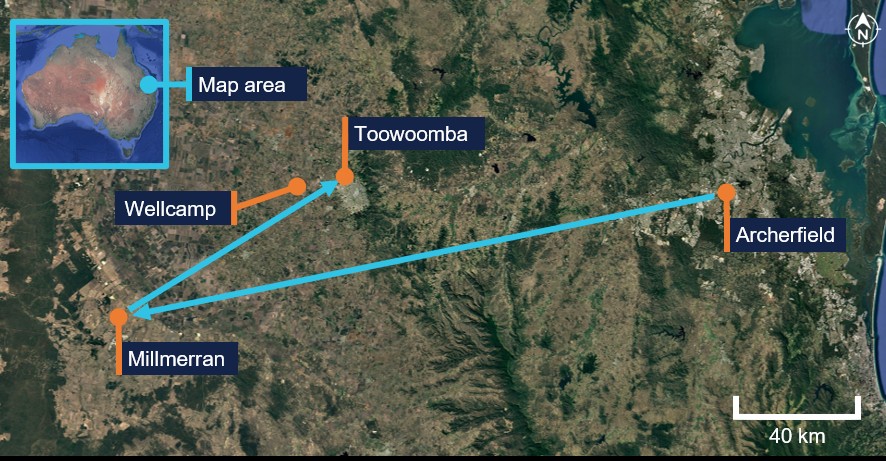
The instructor requested that the student plan the flight from Archerfield Airport to Millmerran Airfield, with an alternate destination of Toowoomba City Aerodrome (Toowoomba) (Figure 1). They planned to refuel the aircraft at Toowoomba, before returning to Archerfield. It was expected that several in-flight training exercises would be conducted during the flight, however the expected fuel consumed during these sequences was not included in the flight plan. The en route winds were forecast to be light, with weather conditions suitable for the flight.
Figure 1: Flight plan
Using the prescribed fuel flow rate of 25 L/h (see the section titled Fuel policy), the student determined that 28 L of fuel would be required for the estimated flight time of 64 minutes. The student also calculated the weight and balance of the aircraft (Table 1) and identified that a maximum of 66 L of fuel could be carried to avoid exceeding the aircraft’s maximum weight limitations. During this calculation, the student inadvertently used the empty weight of a different aircraft (556 kg), which was 8 kg more than the empty weight of VH-HUU (548 kg).
Table 1: Aircraft weight and maximum fuel calculation
The student conducted a preflight inspection of the aircraft during which they dipped the fuel tank to measure the amount of fuel on board (see the section titled Fuel dipstick). They recalled conducting the fuel dip while the aircraft was positioned partially in the hanger and was possibly on a slight slope. They further recalled that they did not add any fuel prior to the inspection.
The student observed that the fuel was ‘just above the ¾ line’ on the dipstick and assessed that approximately 70 L of the 91 L usable fuel capacity was on board. This was greater than the maximum amount of fuel that they thought the weight limitations of the aircraft would allow. However, they determined that the excess fuel would be used during taxi, leaving 66 L as the starting fuel for the flight plan. The student’s resultant fuel plan (Table 2) identified that the total endurance for the flight was 142 minutes, including a final reserve of 45 minutes.
Table 2: Comparison of student and instructor fuel plans
| Student Minutes | Student Litres | Instructor Minutes | Instructor Litres | |
| Trip fuel (Archerfield to Millmerran) | 44 | 19 | 44 | 19 |
| Contingency fuel | - | - | - | - |
| Alternate fuel (Millmerran to Toowoomba) | 20 | 9 | 20 | 9 |
| Holding fuel | - | - | - | - |
| Final Reserve | 45 | 19 | 45 | 19 |
| Taxi | - | 5 | - | 5 |
| Fuel required | 109 | 52 | 109 | 52 |
| Fuel margin | 33 | 14 | 52 | 22 |
| Endurance | 142 | 66 | 161 | 74 |
The instructor reviewed the student’s flight plan and conducted their own preflight inspection of the aircraft. By this time, the aircraft had been moved onto the taxiway, which both pilots recalled as being level ground. The instructor reported that during the review they identified that the incorrect basic empty weight of the aircraft had been used in the student’s calculations, and that the aircraft could carry more fuel.
They decided they would discuss this with the student at the conclusion of the flight. They further reported that after dipping the fuel, they also saw the fuel level ‘just above the ¾ line’, and assessed the amount of fuel on board as approximately 74 L. Because this was 8 L more than the amount the student had used in their flight plan, the instructor added 19 minutes of endurance (at 25 L/h) to the student’s calculated endurance. As a result, the instructor’s total endurance for the flight was 161 minutes (Table 2).
The instructor had also conducted the fuel dip at the conclusion of the previous flight, observing 61 L. They realised that they had observed more fuel on board than they had landed with, which they attributed to the student uplifting fuel. However, they did not confirm this with the student.
Prior to departure, to monitor the remaining endurance throughout the flight, the instructor set a timer on their mobile phone to count down from 161 minutes. The instructor also used an electronic flight bag (EFB) to track the aircraft’s flight path during the flight. In addition, the student wrote their expected endurance of 142 minutes as the initial entry of their fuel log and initialised the fuel totaliser (see the section titled Fuel totaliser) inadvertently with 68 rather than 66 L of fuel on board.
Occurrence flight
The flight departed Archerfield at 1346 local time and progressively climbed through controlled airspace (Figure 2). The instructor recalled that, shortly after departure, they experienced an uncommanded momentary reduction in engine power after which power restored. As this was consistent with previous occurrences they had experienced in this aircraft (see the section titled Previous momentary power loss occurrences), they messaged the head of flying operations (HOFO) to inform them of the power variation and continued the flight.
Figure 2: VH-HUU flight path
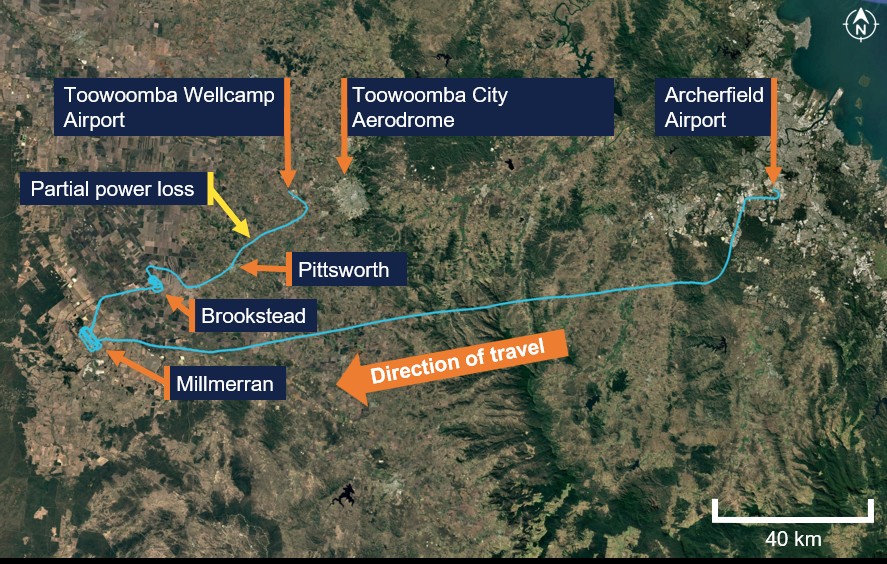
After 17 minutes, the aircraft reached its cruising altitude of 4,500 ft above mean sea level (AMSL), tracking for Millmerran. Both the instructor and student recalled that 65% power was set and the mixture was leaned to a fuel flow of 25 L/h (see the section titled Cruise power and leaning procedure) for most of the cruise. There were some periods during this portion of the flight where the instructor observed that the fuel flow was slightly higher and prompted the student to reduce it.
At 1428, the aircraft commenced a descent to Millmerran, arriving above the airfield 12 minutes later (Figure 3). The student subsequently conducted a precautionary search and landing (PSL) exercise. This activity involved a series of 3 circuits, overflying the runway at progressively lower altitudes to simulate the inspection of an area to assess its suitability for landing. The aircraft did not land during the exercise.
The instructor later advised that, during the activity, the aircraft’s power was reduced to 45%. Recorded data showed that the PSL was conducted for 16 minutes, after which the aircraft climbed to 3,500 ft and departed in a northerly direction.
Figure 3: Flight activities
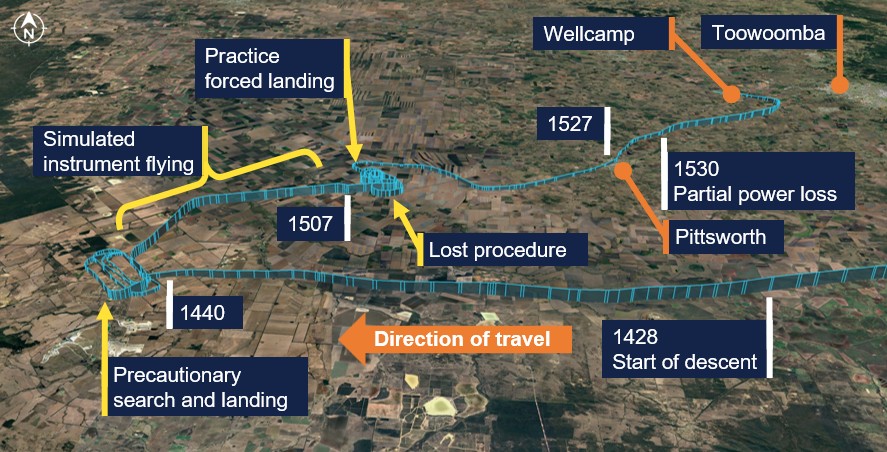
At approximately 1500, the student was placed ‘under the hood’2 to practice simulated instrument flying. During this portion of the flight, the instructor gave the student a series of changes in heading, purposefully guiding the aircraft away from the planned track. After about 7 minutes, the hood was removed and the instructor requested that the student conduct a lost procedure to determine the aircraft’s position.
This activity involved the student manoeuvring the aircraft to remain in the same area while they identified and oriented to features on the ground. The instructor later advised that during this activity, the engine power was also reduced to 45%. The exercise concluded when the student correctly determined that the aircraft was above the township of Brookstead. The instructor also later advised that part of the lost procedure was establishing their endurance, so this would have been assessed at this point in the flight. Following the lost procedure, the instructor reduced the engine power to idle, and the student conducted a practice forced landing. After successfully completing this exercise by conducting a go‑around, the student was asked to navigate to the township of Pittsworth at 1,000 ft above ground level (AGL) (approximately 2,500 ft AMSL).
At 1527, the aircraft passed overhead Pittsworth and climbed to 3,000 ft AMSL, tracking towards Toowoomba, approximately 18 NM (33 km) away. The planned track passed south of Toowoomba Wellcamp Airport (Wellcamp), located 6 NM (11 km) west of Toowoomba.
Throughout the flight, the student had been periodically updating their fuel log with expected endurance remaining and, by this time, the last 2 entries had indicated there was less endurance remaining than the final reserve of 45 minutes. This was not noticed by the instructor, and the student did not bring it to their attention. The instructor later recalled that at about this time, the timer on their mobile phone showed that they would arrive at Toowoomba with about 47–49 minutes of fuel remaining, approximately 20 L.
The instructor advised that 3 minutes later, as the aircraft pitched up to start climbing in preparation for an overhead arrival to Toowoomba at 3,500 ft, the aircraft’s engine power reduced momentarily and then restored. This was quickly followed by another similar cycle of power reducing and then restoring. The instructor assumed control of the aircraft from the student and cycled the throttle to assess the performance of the engine, later recalling that it responded as expected to the throttle input.
The instructor made an assessment this was likely a more serious instance of the power loss that they had experienced earlier in the flight and on previous flights in the aircraft. They were also aware that Toowoomba Wellcamp Airport was nearby and decided to conduct a diversion to the airport. Conditions at the airport at the time were recorded as an easterly wind of 7 kt, temperature of 30°C and QNH3 of 1016.
At this point, the aircraft was at 3,500 ft AMSL, approximately 4 NM (7 km) to the south of the airport and too high for a standard approach. Therefore, the instructor reduced the throttle to idle and commenced a glide approach to runway 30. The instructor declared a PAN PAN4 over the common traffic advisory frequency and coordinated with other aircraft operating near the airport, to ensure the flight path and runway was clear. At 1537, the aircraft landed and rolled through to the end of the runway.
The instructor shut down the engine and called the aerodrome safety officer for assistance to move the aircraft. While waiting, the instructor and student exited the aircraft to inspect it. A fuel dip showed that approximately 5–6 litres of fuel remained in the tank, significantly less than expected. No leaking fluid or fuel staining was observed that would indicate a fuel leak, and the fuel cap was found securely closed. Neither the instructor, nor the student could recall what the fuel quantity indicator or the fuel totaliser were showing after landing.
The aircraft was towed to the fuel bowser, and 75 L of fuel was added (to allow for a departure at maximum take-off weight after ground running). Following a discussion with the HOFO over the phone, an extended period of ground running was conducted to assess the performance of the engine. As no abnormalities were observed, the instructor elected to fly the aircraft back to Archerfield. At 1657, the aircraft departed and landed at Archerfield at 1739. After shutting down, the fuel was dipped and 56 L of fuel was recorded, consistent with the fuel expected to be used for the return leg. No maintenance inspection of the aircraft was conducted following the occurrence.
Context
Pilot information
The flight instructor held a Commercial Pilot Licence (Aeroplane) issued in March 2018 with a grade 1 flight instructor rating and a class 1 aviation medical certificate. They had accumulated 2,467 flight hours, of which 262 hours were operating the Diamond DA20. In the previous 90 days, the instructor had accumulated 105 flight hours, of which 93 hours were operating the DA20.
The student pilot held a Recreational Pilot Licence (Aeroplane) issued in July 2025 and a class 2 aviation medical certificate. They had accumulated approximately 174 flight hours, all of which were operating the DA20. In the previous 90 days, the student had accumulated approximately 40 flight hours.
Aircraft information
General information
VH-HUU was a Diamond DA20-C1 aircraft, powered by a Continental IO‑240‑B fuel‑injected piston engine driving a 2-bladed fixed pitch propeller. The aircraft was manufactured in 1999 and first registered in Australia in 2002. It was subsequently registered with the operator in November 2023. At the time of the occurrence, the aircraft had accumulated 7,291 hours total time in service (TTIS).
Fuel system
Fuel tank
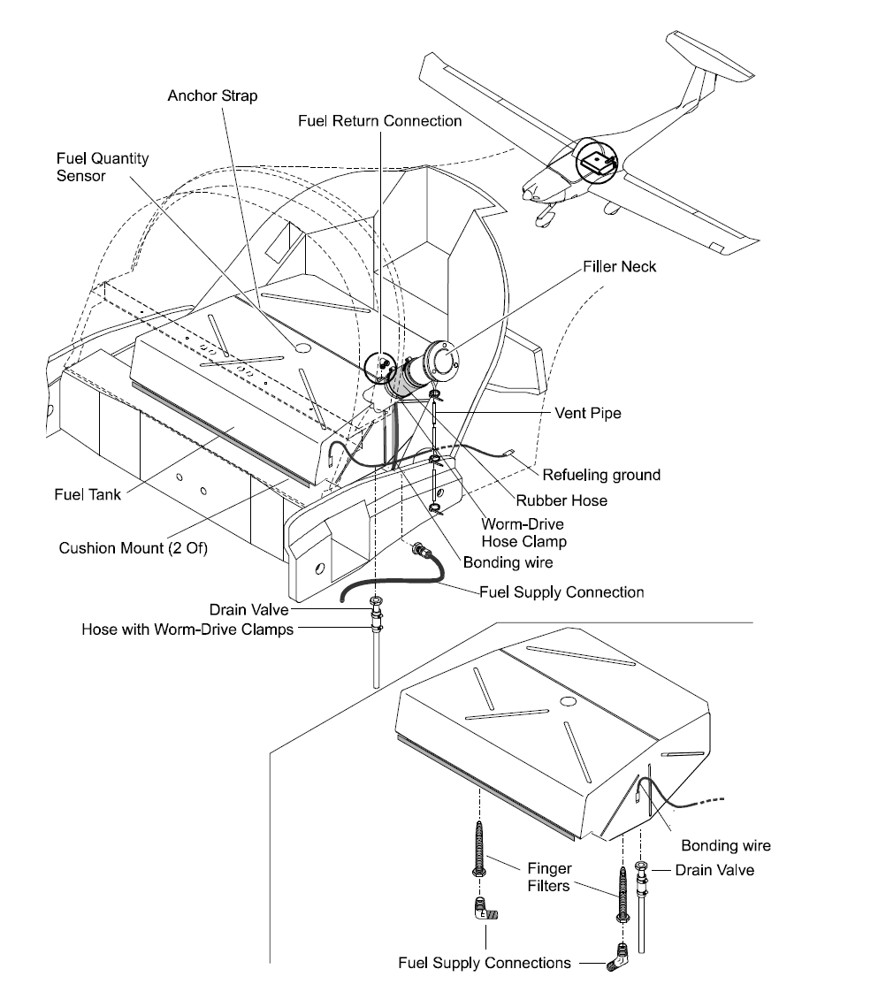
The DA20 stored fuel in a single tank located in the fuselage, behind the pilot seats and underneath the baggage compartment (Figure 4). The tank had a total capacity of 92.7 L, of which 91 L was usable fuel.5 An aluminium tube at the left of the tank connected to the fuel filler on the left of the fuselage where refuelling was conducted. Baffles inside the tank prevented excessive fuel movement, and 2 fuel supply connections were located at the bottom of the tank taking fuel to the engine.
The manufacturer advised that the engine should run without interruption above the minimum level of fuel of 2 L during normal aircraft operation. They further advised that the aircraft was not tested at minimum fuel with non-normal operation such as extended slips or low‑g manoeuvres.
Figure 4: DA20 fuel tank installation
Fuel dipstick
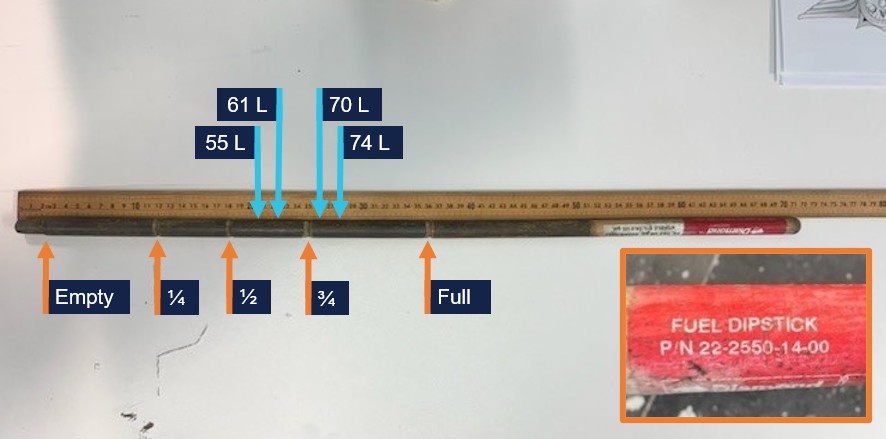
A fuel dipstick was used to directly measure the fuel level in the tank. The dipstick was inserted into the fuel filler neck until it touched the bottom of the tank. It was then withdrawn and the fuel level was read by observing the mark left by the fuel. The dipstick was supplied with the aircraft by the manufacturer as part number 22‑2550‑14‑00. Made of wood, the dipstick was approximately 71 cm long and was graduated in quarter increments of usable fuel capacity. The distances between the graduations varied due to the irregular shape of the fuel tank.
Pilots interviewed advised that to calculate the fuel quantity in litres, they would convert the observed mark to a decimal representation of the number of quarters filled (for example, midway between the ‘½’ and ‘¾’ graduations being 2.5), then divide by 4 and multiply by 91 (being the usable capacity of the fuel tank). The instructor recalled that they regularly dipped multiple times to obtain a reading and noted that the dipstick was dark and stained. The student also noted that the dipstick was stained and that the fuel mark would dry quickly making reading difficult. The aircraft flight manual (AFM) provided instructions for the use of the fuel dipstick, noting that:
several readings should be taken to confirm accuracy.
The aircraft manufacturer advised that the incline of the ground should have minimal effect on the accuracy of the fuel level. However, they recommended that it be checked on a level surface.
The dipstick associated with VH-HUU was labelled with the appropriate part number and the distances between the graduations were as expected (Figure 5). During the fuel quantity indication test (see the section titled Fuel quantity indication system) conducted after the occurrence, the maintainer confirmed that the dipstick read accurately.
Figure 5: VH-HUU fuel dipstick
Fuel quantity indication system
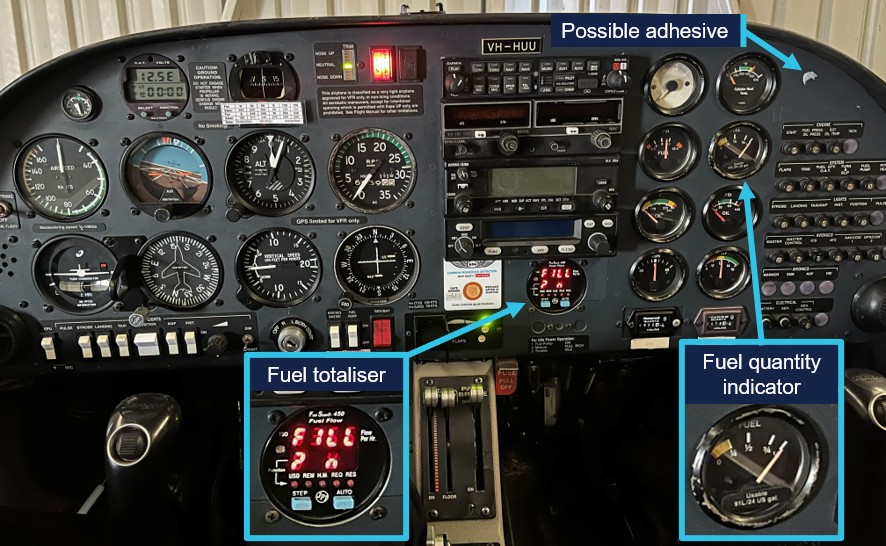
The DA20 had a float-type fuel quantity sensor located in the fuel tank. This sensor was connected to a fuel quantity indicator on the right side of the instrument panel (Figure 6). The gauge could be adjusted during maintenance to give a correct zero indication. The movement of the float changed the resistance of the circuit through the sensor. This changed the current flowing in the system, which set the pointer on the gauge.
Figure 6: VH-HUU instrument panel
A 48-monthly scheduled test of the fuel quantity indication system (see the section titled Fuel quantity system testing) was conducted in December 2022, before the aircraft was acquired by the operator.
The aircraft did not have a fuel calibration card displayed on the instrument panel. Following the occurrence, the maintainer6 observed possible adhesive in the area to the upper-right of the fuel gauge where a card may have previously been attached and since fallen off. They further advised that they would have expected that the absence of a calibration card would have been identified during a periodic inspection.
After the occurrence, at the request of the operator, the maintainer conducted a fuel quantity indication system test on VH-HUU, despite the test not being required until December 2026. The maintainer reported that during the test the fuel quantity indicator read accurately at empty, and at all other graduations. They further advised that indicator was not affected by whether the source of power was external ground power or the aircraft battery.
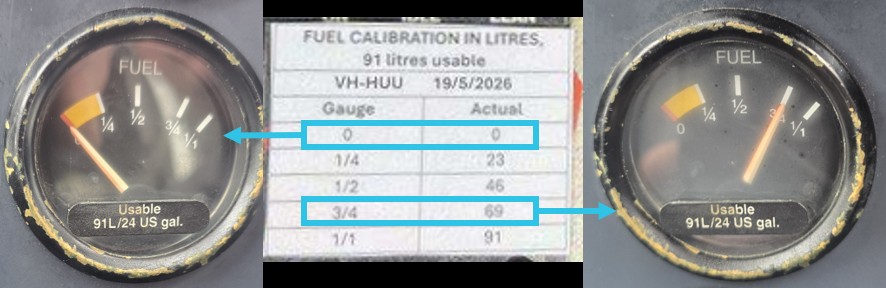
At the conclusion of the test, a fuel calibration card was added to the cockpit correlating the readings at each graduation with the fuel quantity observed during the test (Figure 7). A test was also conducted for another DA20 that the operator had identified did not have a fuel calibration card displayed. The fuel quantity indicator of this aircraft also read accurately at empty, and at all other graduations. The operator operated other aircraft, including another DA20, all of which were reported to either have a fuel calibration card displayed or did not require one.
Figure 7: Fuel quantity indicator readings and calibration card after the occurrence
Fuel totaliser
The aircraft was equipped with a JP Instruments Fuel Scan FS-450 fuel totaliser. This instrument directly measured fuel flow to the engine via a turbine transducer. When the engine was running, the current fuel flow was displayed to the pilot on the top part of the digital display, while the lower part of the display showed an additional parameter, either ‘total fuel used’, ‘fuel remaining’ or ‘time to empty’. An indicator light below the display showed which parameter was being displayed. For the totaliser to accurately calculate the fuel remaining and time to empty, the pilot was required to initialise it with the known quantity of fuel on board prior to engine start. The instrument’s manual stated that:
For fuel calculations to be accurate, it is imperative that you inform the FS-450 of the correct amount of fuel aboard the aircraft. Do not rely on fuel flow instruments to determine fuel levels in tanks. Refer to original fuel flow instrumentation for primary information.
The fuel totaliser also had a low fuel quantity and low fuel time alarm. When either the remaining quantity of fuel, or the remaining time (calculated using the current fuel flow) decreased below a certain limit, the lower display would show the associated parameter, and the corresponding indicator light would flash. The operator advised that, on VH‑HUU, these limits were configured as 20 L for the low fuel quantity alarm, and 45 minutes for the low fuel time alarm.
Maintenance history
General information
The aircraft was maintained by a third party maintainer in accordance with the Civil Aviation Regulations 1988, maintenance Schedule 5. A periodic inspection was required every 100 flight hours or 12 months, whichever came first. The last periodic inspection was conducted on 18 November 2025. At the time of the occurrence flight, the maintenance release recorded that the aircraft had accumulated 40 flight hours since that inspection and did not indicate any outstanding maintenance items.
Maintenance actions were reviewed using maintenance releases, and maintenance logbook entries for VH-HUU between 22 May 2024 and 11 March 2026 (Table 3). Between these times, 5 maintenance releases were issued within the required 100-hour interval specified. In addition, 50-hour inspections were conducted between periodic inspections. Five engine-related maintenance actions were identified in the maintenance documentation. Four of these were dated prior to the occurrence and had rectifying action associated with them. The fifth item was a defect entered on 3 February 2026, approximately 2 months after the occurrence, which remained as an open defect (see the section titled Other momentary power loss occurrences).
Both the operator and maintainer advised that a significant amount of defect and operational reporting was conducted verbally either face-to-face or by phone. The operator further advised this was done to allow issues to be communicated directly and efficiently to the maintainer and to give them the opportunity to ground the aircraft if required.
Table 3: VH-HUU periodic inspections and engine-related maintenance
| Date | Title / Description | TTIS | Inspection / Rectification |
| 2 October 2024 | 100 hr Periodic Inspection | 6951.4 | |
| 2 April 2025 | Reported intermittent miss | 7029.8 | Engine ground run carried out. Could not replicate, engine inspected nil faults noted. All spark plugs renewed. |
| 2 May 2025 | 100 hr Periodic Inspection | 7051.1 | |
| 4 July 2025 | Pilot reports excessive RPM drop on right hand magneto | 7110.1 | Right hand magneto timing inspected and adjusted. |
| 4 July 2025 | Pilot reports rough running on left hand magneto | 7110.1 | All top spark plugs removed and inspected, found serviceable. Left hand magneto coil and capacitor replaced with new. |
| 11 August 2025 | 100 hr Periodic Inspection | 7150.8 | |
| 22 September 2025 | Pilot reports inconsistent idle | 7194.5 | Engine inspected, induction gaskets and flanges inspected with nil defects evident. Unmetered fuel pressure slightly adjusted to correct pressure. Idle mixture rise and idle set. |
| 18 November 2025 | 100 hr Periodic Inspection | 7250.6 | |
| 3 February 2026 | Unexpected RPM drop while airborne | 7326.3 | [Open defect] |
| 11 March 2026 | 100 hr Periodic Inspection | 7349.5 |
Other momentary power loss occurrences
During the investigation, the ATSB was advised that pilots had experienced instances of momentary power loss in VH-HUU on other occasions. The operator recalled that the maintainer was advised of reports of intermittent RPM fluctuations on 2 April 2025, consistent with the defect entered and cleared on the maintenance release (see the section titled Defect reporting).
They advised that the maintainer did not identify any mechanical fault and that the RPM drop could not be replicated during ground runs. They further advised that the issue had not been consistently reproducible and no ongoing mechanical defect had been identified. The operator was aware that other instances had been reported verbally since the initial report, however these were not recorded on the maintenance release.
Following the occurrence flight, the operator recalled that the issue occurred on 3 February 2026, with the defect recorded on the maintenance release. The maintainer was advised of this via text message on the same day. In addition, the HOFO conducted ground runs and local flights but was unable to reproduce the issue. The aircraft was subsequently temporarily restricted to local flights. The operator did not know if the issue was examined during a 50-hourly inspection carried out 11 days after the occurrence or during the periodic inspection on 11 March 2026. They also advised that they were not aware of the issue occurring after 3 February 2026.
The maintainer recalled being informed of 2 events of this nature occurring. They described the reported symptoms as a very brief (less than one second) drop in RPM before restoring to normal.
The maintainer advised that, in their opinion, the engine-related maintenance conducted on 4 July 2025 and 22 September was unrelated to the reported instances of momentary power loss. They further advised they were not aware of the defect entered on the maintenance release on 3 February 2026 until the aircraft was presented for the periodic inspection on 11 March 2026. The periodic inspection included scheduled examination of components of the engine and a ground run test. As the issue could not be reproduced, and the maintenance release had now expired, they did not clear the defect on the expired maintenance release or raise it on the new maintenance release.
The maintainer also noted the difficulty in troubleshooting this type of issue, commenting that in their experience, the symptoms could be the result of excessive leaning, temporary fouling of the plugs or undrained water passing through the fuel system.
The instructor described the issue as a brief reduction in power and engine RPM, followed by the restoration of power after about one second. They were aware that the maintainer had replaced spark plugs when the issue was first reported, but they had experienced the issue multiple times since then including earlier in the occurrence flight, and twice during a flight several days later. They also advised that they had spoken directly to the maintainer via phone about the issue on several occasions.
Another pilot, who flew for the operator, described the issue as a short period of rough running occurring randomly during a flight. They recalled experiencing this on 2 occasions during flights where they were receiving flight training. They had conducted most of their flights with the instructor of the occurrence flight, therefore these were possibly some of the same instances described by the instructor.
Fuel management
Operator procedures
Fuel trip log
The operator maintained a trip log for each aircraft. For each flight, the trip log recorded details including:
- the names of flight crew
- engine operating time
- flight time and fuel on board at the start and end of the flight.
Pilots were required to fill out the log at the conclusion of each flight on return to Archerfield. A series of flights with one or more intermediate stops was entered as one trip. The trip log allowed the ground running time, fuel used and fuel consumption rate of each flight to be calculated. The ground running time for the entry that covered the occurrence flight and the return flight to Archerfield was 36 minutes, which included the extended ground running time at Wellcamp.
The operator provided the ATSB with trip logs from November 2025 to February 2026, which were reviewed to calculate the fuel consumption rate of each flight over this period. All flights over this time, except one, recorded a calculated fuel flow of not greater than 25 L/h (the operator’s block fuel flow). The average ground time per flight was 26 minutes.
The one flight with a higher fuel flow recorded a ground time of almost one hour, likely explaining the increased fuel consumed. During the review, it was identified that fuel uplifted when the aircraft was refuelled at an intermediate stop was not being recorded. Eight such flights were identified, including the occurrence flight, representing 7% of flights in VH-HUU over the reviewed period. The operator was not able to provide additional information to enable the fuel consumption rate to be calculated for these flights.
Refuelling procedure
The operator had implemented a procedure that allowed pilots to refuel and defuel aircraft without needing to request a fuel truck. Fuel stored in portable fuel containers was able to be added to the aircraft when required. In addition, a procedure for defueling from the aircraft back into the containers was available when fuel needed to be removed to ensure weight and balance limits were adhered to. There was no mechanism provided to record that fuelling or defueling had been conducted.
Fuel policy
The operator published a fuel policy, which included procedures for fuel planning and fuel management. The fuel planning requirements allowed the use of a block fuel flow when calculating the quantity of fuel required, stating that:
The use of block fuel flows is approved for Company aircraft; provided that the Head of Operations has actual aircraft history (fuel data) collected over at least a 12-month period validating the published fuel flow figure.
For VH-HUU, this block fuel flow was 25 L/h. The policy also required an allowance of 5 L for taxi, and a final reserve of 45 minutes (19 L), stating that:
The PIC [pilot in command] shall ensure that the amount of usable fuel remaining in flight is not less than the fuel required to proceed to an aerodrome where a safe landing can be made, with fixed reserve [final reserve] fuel remaining. The PIC shall declare an emergency when the actual usable fuel on board is less than fixed reserve fuel.
The operator advised that pilots were expected to report any abnormal fuel consumption. They further advised that trip logs were periodically reviewed to identify any anomalies or irregularities in consumption trends.
The fuel policy specified requirements for the assessment and crosschecking of fuel quantity, stating that:
The PIC [pilot in command] must check the fuel quantity on board by two independent means prior to each flight by verifying that any fuel added to the fuel remaining from the previous leg or dipping the tanks (if applicable).
A PIC shall ensure that fuel checks are carried out in flight at regular intervals. This means that at the end of each leg, the fuel remaining shall be annotated on the navigation log. The remaining fuel must be recorded and evaluated to:
1. Compare actual consumption with planned consumption;
2. Check that the remaining fuel is sufficient to complete the flight; and
3. Determine the expected fuel remaining on arrival at the destination.
The operator also provided an online training package for private pilot licence students. In addition to providing relevant fuel planning information from the fuel policy, this training defined a set of checks that pilots were expected to conduct every 15 minutes while en route. These checks included:
- updating the fuel log
- checking fuel tank selection and quantity
- crosschecking with the fuel log to ensure the accuracy of the fuel gauge.
The training also advised that the purpose of the fuel log was to keep track of fuel, determine the remaining endurance, and to crosscheck with fuel gauges.
Both instructors interviewed by the ATSB during the investigation were consistent in reporting the use of the fuel totaliser to crosscheck against the expected fuel remaining during the flight. Some use of the fuel quantity indicator was reported, in addition to uncertainty with the instrument’s accuracy and a preference for use of the fuel totaliser.
The student did not report using the fuel quantity indicator or the fuel totaliser to crosscheck fuel quantity before or during flight. They further advised they did not typically consider the fuel recorded on the trip log at the conclusion of the previous flight.
Checklists
The operator supplied a set of normal checklists in a quick reference handbook (QRH). Several of these checklists contained steps related to the assessment and checking of fuel quantity (Table 4).
Table 4: Operator fuel quantity checklist items
| Checklist | Fuel quantity related item |
| Preflight | Oil & fuel quantity - checked |
| Top of climb | Fuel - logged |
| En route | Fuel – log minutes endurance remaining |
| Top of descent | Fuel – log minutes endurance remaining |
| Pre-landing | Fuel quantity – checked |
| Post-flight | Fuel quantity - checked |
Cruise power and leaning procedure
The operator advised that students were trained to operate at 65% power during the cruise. As VH-HUU did not have a digital engine display, students were taught to set approximately 2,600 RPM, consistent with the performance charts in the AFM.
In a piston engine, the pilot controls the ratio of air to fuel delivered to the engine’s cylinders via the mixture control. Adjustment of this control to reduce the amount of fuel consumed, known as leaning, optimises engine performance and improves fuel economy in cruise. In VH-HUU, students were taught to lean in the cruise by adjusting the mixture until the fuel flow on the fuel totaliser display reduced to approximately 25 L/h.
Manufacturer procedures
Checklists
The manufacturer supplied a set of normal checklists in the AFM. Several of these checklists contained steps related to the assessment and checking of fuel quantity (Table 5).
Table 5: Manufacturer fuel quantity checklist items
| Checklist | Fuel quantity related item |
4.4.1 Preflight Inspection In-Cabin Check | Fuel quantity – sufficient |
4.4.1 Preflight Inspection Walk Around Check and Visual Inspection | Fuel quantity – visual inspection (use fuel dipstick) |
| 4.4.6 Before take-off | Fuel quantity indicator - check |
Mixture control and leaning
The AFM contained information on the use of the mixture control in different phases of flight:
Cruise
The mixture control allows leaning of the fuel mixture to maximize fuel economy during cruise conditions.
Reduced throttle settings
When operating at reduced throttle settings, other than steady state cruise, the mixture should always be set to FULL RICH. This applies to maneuvers (e.g.: stalls, spins, slow flight), descents, landing approaches, after landing and while taxiing.
Full throttle
When operating at full throttle, the mixture must be set at FULL RICH. This applies to take-off, balked landings and climb.
Guidance for how to lean the mixture was contained in the Cruise checklist which stated:
Mixture – lean to 25°F rich of peak EGT [exhaust gas temperature]
A cruise performance table was also provided in the AFM which indicated that at 4,000 ft, 65% power was obtained by setting the engine RPM between 2,600 and 2,700, depending on the air temperature. At this power setting, the fuel flow of 23.5 L/h was expected when leaned for maximum flight duration.
Regulations and guidance
Fuel quantity system testing
Civil Aviation Order (CAO) 100.5 defined general maintenance requirements for Australian aircraft. Section 11 of the order contained additional maintenance requirements, which the registered operator was responsible for ensuring were carried out. This included a test which required aircraft with a float-type fuel quantity indicating system to have the accuracy of the system tested and determined at least every 48 months. The requirements of this test included the following:
- Fuel quantity gauges must be checked for accuracy at all major graduations.
- The scale error at empty must not exceed +0.5% or −5% of the fuel tank capacity.
There were no requirements for the accuracy of readings other than at empty. However, if the gauge was calibrated in fractions of fuel tank capacity, as the fuel gauge in VH‑HUU was, a fuel calibration card was required to be displayed adjacent to the gauge showing the corrected readings at all major graduations.
Fuel requirements
Part 91 of the Civil Aviation Safety Regulations (CASR) defined final reserve and contingency fuel requirements for aircraft of the DA20 category as 30 minutes of final reserve fuel, and no requirement for contingency fuel. Operators could impose greater requirements in their fuel policy, which this operator had done (see the section titled Fuel policy).
In addition to requiring pilots to assess and monitor fuel on board, procedures when fuel reached specified amounts were defined, including:
If, at any time during a flight, the amount of usable fuel remaining in the aircraft on landing at the nearest aerodrome where a safe landing can be made, will be, or is likely to be, less than the final reserve fuel, then the pilot in command must declare a situation of “emergency fuel” by broadcasting “MAYDAY, MAYDAY, MAYDAY FUEL”.7
Note The emergency fuel declaration is a distress message.
Defect reporting
Civil Aviation Regulation (CAR) 50 stated that defects must be endorsed on the aircraft maintenance release. Civil Aviation Advisory Publication (CAAP) 43-01 – Maintenance release described methods of complying with this requirement including:
• The legislation does not make a distinction between a major defect8 and a minor defect,9 but states that any defect found on the aircraft must be endorsed on Part 2 of the maintenance release.
• The aircraft may be permitted to fly with an ‘open defect’ if the defect or damage that is endorsed on Part 2 has been assessed by the pilot-in-command or an appropriate LAME [Licensed aircraft maintenance engineer] (licensed on type) and a determination has been made that the defect is not a major defect and that the affected item or system is not required for the intended flight.
• In order to avoid doubt, it is recommended that when a pilot, LAME or appropriate authorisation/authority holder assesses a defect as not being a major defect, an entry should be made in the Clearing endorsements column to the effect that the defect is not a major defect.
• A pilot in command should not accept an aircraft for a flight if they have doubts as to whether an open defect is not a major defect, whether or not it has previously been endorsed as not a major defect. In cases of doubt, the pilot should seek advice from a LAME or maintenance authorisation holder who would be authorised to carry out rectification of the defect and make a note of the advice received.
Estimation of fuel consumed
The ATSB estimated the likely time spent and power settings used for each portion of the flight using recorded data, descriptions of flight activities and recollections of power settings and leaning procedures. The aircraft flight manual contained expected fuel consumption rates only for maximum flight duration, however the aircraft manufacturer provided additional information from the engine manufacturer with fuel flow rates across various power and mixture settings. This information was used to estimate the likely quantity of fuel consumed for each section of the flight, and the fuel on board prior to departure (Table 6).
It was estimated that 2.5 L was used during taxi and 47 L of fuel was consumed during the flight; an average fuel flow of 25 L/h. While the instructor advised that they had to remind the student to lean the fuel flow during the initial cruise, the effect of conducting this portion of the flight without leaning was also considered and assessed to increase the amount of fuel consumed by about 1 L.
Table 6: Calculation of estimated fuel on board
| Flight activity | Duration | Power setting | Estimated fuel consumed (L) |
| Climb | 17 min | Full | 9.4 |
| Cruise | 24 min | 65% (Leaned) | 10.0 |
| Descent | 14 min | 45% | 5.3 |
| Precautionary search | 15 min | 45% | 5.7 |
| Climb | 4 min | Full | 2.3 |
| Cruise | 7 min | 65% | 3.2 |
| Lost procedure / Practice forced landing | 13 min | 45% | 4.6 |
| Cruise (low level) | 6 min | 65% | 2.8 |
| Climb | 4 min | Full | 2.1 |
| Diversion | 7 min | Idle | 1.8 |
| Total fuel used | 1 hr 51 min | 47.2 | |
| Taxi fuel | 2.5 | ||
| Fuel remaining on landing | 5.5 | ||
| Estimated fuel on board at start | 55.2 |
Repetitive defects
A repetitive defect is an aircraft defect or system malfunction that reoccurs on the same aircraft because the underlying root cause has not been effectively addressed. The European Union Aviation Safety Agency (EASA) identified inadequate management of repetitive defects as a safety issue, stating that:
Repetitive defects can be difficult to identify and rectify, and their root causes have the potential to remain latent over long periods of time. They may eventually affect the safe operation of aircraft, particularly when combined with other defects, or when they occur on highly integrated systems, potentially having an impact on automation and/ or on flight crew workload. Besides, the management of repetitive defects involves multiple activities including continuing airworthiness management, aircraft maintenance, flight operations and design. This translates into additional challenges, such as information sharing, communication or interpretation issues, which can ultimately affect how well repetitive defects are managed and hence potentially threaten flight safety. There have been cases where repetitive defects were identified as contributing factors to fatal accidents of large aeroplanes in commercial air transport.
EASA introduced a proposed amendment to guidance material (GM) to address this safety issue and raise awareness on managing and rectifying these defects. While principally addressing large aircraft operated for air transport, the proposed guidance material advised that its provisions also applied more generally to other aircraft and organisations. The proposed guidance material identified intermittent faults as a type of repetitive defect, stating that:
In other situations, the fault cannot be confirmed on the ground (intermittent fault) because:
• The defect manifests only under specific conditions encountered in flight (e.g. vibrations, aerodynamic loads, or flight control surface movements); or
• The affected component is in the early stages of deterioration, resulting in sporadic malfunctions (e.g. worn or damaged electrical connectors, pins, wire insulation, or temperature, proximity, or pressure sensors).
The guidance material also described practices for coordination between parties involved in defect management, including that:
technical log entries made by flight or cabin crew include sufficient information to facilitate defect troubleshooting and rectification. In addition to the fault message, details such as the flight phase, aircraft system configuration at the time of the fault, and any associated cockpit effects or malfunctions are considered particularly valuable.
The guidance material further described practices for troubleshooting and recording of repetitive defects, including:
Maintenance records are to include precise references to the maintenance or troubleshooting tasks performed, together with the steps accomplished, inspection or test results, and any measured values, as applicable. This documentation is essential to ensure the traceability and continuity of the troubleshooting process.
Related occurrences
Fuel management and fuel starvation/exhaustion incidents and accidents have regularly occurred with single and twin-engine aircraft. Examples of other similar ATSB investigations include:
- Fuel starvation and ditching involving Piper PA-28, VH-FEY, 15 km north-west of Jandakot Airport, Western Australia, on 20 April 2023 (AO-2023-021)
- Fuel exhaustion involving Aero Commander 500-S, VH-MEH, 6 km east of Bathurst Airport, New South Wales on 9 March 2024 (AO-2024-008)
- Fuel starvation involving Cessna T210M, VH-MYW, 4 km north-west of Bankstown Airport, New South Wales, on 26 May 2024 (AO-2024-033)
- Fuel starvation event involving Cessna T210M, VH-LLM near Darwin Airport, Northern Territory, on 8 September 2025 (AO-2025-054)
The United States National Transportation Safety Board investigated the fuel exhaustion of a DA20 that occurred on 6 July 2023 (CEN23LA281). The flight instructor and student conducted a forced landing due to fuel exhaustion, which the flight instructor reported was likely due to misreading the fuel dipstick as just below three quarters when it was actually below half.
Safety analysis
Introduction
This analysis will discuss the assessment of fuel prior to departure, and crosschecking of fuel both before and during the flight. In addition, it will examine the operator’s fuel management and planning procedures, and its processes for reporting and managing defects.
Assessment of fuel on board
Both the instructor and the student recalled observing similar readings of between 70–74 L on the fuel dipstick during the preflight inspection. However, the fuel dip conducted at the conclusion of the previous flight recorded significantly less fuel (61 L) and no fuel had been added between the flights. This earlier reading was broadly consistent with the approximate amount of fuel on board prior to start, calculated using the engine manufacturer’s fuel flow data (55 L). In addition, there was no evidence of higher than normal fuel consumption or that fuel had been lost in flight. The operator prescribed a simplified leaning procedure using fuel flow. While not consistent with the procedure in the aircraft flight manual, there was no indication that the technique used during cruise significantly affected the amount of fuel consumed. Therefore, it is likely that there was approximately 14 L less fuel on board than that assessed by the crew.
However, it could not be determined why the measurements by both the instructor and student resulted in similar errors. The fuel dipstick used was the correct part number and was subsequently verified to be calibrated correctly. In addition, as the 2 readings were taken in different locations, and the manufacturer advised the incline of the ground should not significantly affect the reading, it was unlikely that each reading was similarly affected by the aircraft being on a slight slope.
While consideration was given to the age and colour of the dipstick affecting the ability to accurately read the fuel level, both pilots had considerable experience using this dipstick with this aircraft and were familiar with the DA20 fuel dipping procedure, having conducted it regularly. The expected fuel level was a similar distance on the dipstick from the ‘½’ graduation as the observed readings were from the ‘¾’ graduation and it is possible that both pilots misread the reading in the same manner. As shown by the United States National Transportation Safety Board investigation, this has occurred previously.
There were inconsistencies in the student’s preflight preparation as they used a different basic empty weight, deducted fuel for taxi twice during planning and initialised the fuel totaliser with a slightly different fuel quantity. However, the incorrect weight was identified by the instructor and while based on the student’s plan, the instructor’s total endurance calculation was consistent with their own dipstick reading.
Significantly, the instructor had conducted the fuel dip at the conclusion of the previous flight. Therefore, there was an opportunity to recognise the discrepancy and resolve it prior to departure. However, they incorrectly assumed that the additional fuel observed was fuel that the student had added. They did not confirm this with the student, and as fuelling and defueling activity between flights was not recorded, this could not be verified without talking to them.
Other factor that increased risk The instructor and student likely incorrectly assessed the amount of fuel on board using the aircraft’s dipstick. In addition, thinking that the student had added fuel, the instructor dismissed the discrepancy with the fuel recorded at the end of the previous flight. |
Fuel crosschecking
The operator required that, prior to departure, the fuel quantity on board was checked using 2 independent means by the pilot in command. In addition, the manufacturer’s checklist required the fuel quantity indicator to be checked before take-off. However, while the instructor did consider the reading from the previous flight, neither the instructor nor the student crosschecked their fuel dip readings against the aircraft’s fuel quantity indicator. This was also likely not a check that was usually conducted, and while in the manufacturer’s checklist, it was not explicitly called for by the operator’s checklists.
Although the aircraft did not have a calibration card displayed, limiting the ability to directly correlate the indicator reading to a quantity of fuel, the fuel quantity indicator was accurate, and was likely showing between ‘½’ and ‘¾’, rather than more than ‘¾’ as expected. Therefore, crosschecking against this indicator would have identified that a discrepancy existed.
Once airborne, the instructor used a timer on their mobile phone and the fuel totaliser to monitor the aircraft’s fuel state while the student regularly maintained a log of remaining endurance. These actions were consistent with the operator’s requirement to conduct regular fuel quantity checks in-flight. Furthermore, while the operator’s fuel policy did not prescribe a crosscheck to be conducted in-flight, training materials advised that a crosscheck against the fuel gauge should be conducted at regular intervals throughout the flight.
The instructor’s process included a crosscheck against the fuel remaining displayed on the fuel totaliser. However, the fuel remaining calculation was reliant on the totaliser being initialised with an accurate starting fuel. As it had been initialised based on the quantity assessed by the pilots, it would have been displaying that the fuel remaining was consistent with their expectation. In addition, the instrument’s low fuel alert would not have activated as the fuel and time remaining thresholds would not have been met. By contrast, the fuel quantity indicator would have provided an independent check of the fuel remaining on board and would have been showing close to empty and below the final reserve required.
The student was relying solely on their fuel log to track the remaining endurance and had recorded that the endurance had reduced to below the final reserve required. While it would be expected they would recognise this as an emergency and bring it to their instructor’s attention, they did not do so. However, because the instructor was aware that their total endurance on departure was greater than that of the student, they would likely have not acted on the information and instead trusted their own assessment that there was sufficient endurance remaining.
Other factor that increased risk The instructor and student did not crosscheck the expected fuel on board against the aircraft's fuel quantity gauge prior to departure nor during the flight. As a result, they did not identify when the amount of fuel on board decreased below the final reserve required. |
Power loss
The aircraft’s low fuel level during the flight increased the risk of air entering the fuel system due to un-porting of the fuel pick-up in the fuel tank, resulting in a temporary loss of engine power. However, while the instructor reported the initial momentary power loss in the vicinity of Wellcamp occurred when the aircraft pitched up, it could not be determined whether the aircraft attitude or any control inputs being applied at the time created a condition under which the fuel supply to the engine was disrupted.
While unaware of the low fuel level, the instructor was aware of an ongoing intermittent engine-related defect and had experienced a momentary power loss shortly after departure on the occurrence flight. Therefore, they responded with caution, electing to land as quickly as possible rather than troubleshooting or continuing to the planned destination. This confluence of events may have prevented a fuel exhaustion event, even though the 2 events may not have been related.
Contributing factor Approaching the planned destination, the flight crew experienced a series of uncommanded power fluctuations, and the instructor diverted to a nearby airport. It could not be determined whether the power fluctuations were the result of interruption to the fuel supply to the engine due to a low fuel level, or an ongoing intermittent engine-related defect on the aircraft. |
Fuel quantity indicator system
While fuel quantity indicator system tests had been conducted within the required timeframe, 2 of the operator’s DA20 aircraft did not have the required fuel calibration card displayed. It was likely a calibration card had been displayed in VH-HUU at some point, but it could not be determined when it was removed.
While the operator was responsible for ensuring that the fuel quantity indicator system test was conducted every 48 months, they were reliant on pilots and maintenance engineers to bring to their attention anything that would require action prior to the next scheduled test. This included loss of the calibration card, or calibration accuracy concerns. However, while there had been opportunities for this to occur, the operator had not been advised of the missing cards.
Testing conducted after the occurrence identified that fuel quantity indicators in both aircraft were reading accurately at all graduations. However, because only the reading at empty was required to be within a defined tolerance, pilots could not assume that readings at other graduations were accurate. Moreover, a calibration card gave pilots a level of assurance that the reliability of the gauge had been assessed, and it allowed quick conversion of the gauge reading to a fuel quantity. This was particularly important when pilots regularly flew different aircraft, with different tank capacities across aircraft types and individual variations in gauge accuracy.
Conversely, the fuel totaliser presented pilots with a constant display of fuel remaining in litres. Therefore, this was the preferred method of crosschecking remaining fuel during a flight. However, because the fuel totaliser was reliant on initialisation with the correct starting fuel, use of this in place of the fuel quantity indicator removed an independent check of fuel on board.
Other factor that increased risk The required fuel quantity indicator calibration card was not displayed in 2 of Flylink Aviation College’s DA20 aircraft. In addition, it was regular practice to use the fuel totaliser in place of the fuel quantity gauge to crosscheck expected fuel remaining, removing an independent check of fuel on board. (Safety issue) |
Validation of block fuel flow
The operator maintained a trip log for each of its aircraft in which pilots recorded the fuel at the start and end of each trip. This enabled the fuel consumption to be calculated for each flight, verifying that the block fuel flow prescribed for fuel planning remained appropriate. However, the log did not record where fuel was uplifted at an intermediate stop. Therefore, fuel consumption on longer, multi-leg flights could not be determined.
These flights typically spent longer in the cruise phase and included multiple climb phases. However, there was no margin between the block fuel flow and the target fuel flow in the cruise, nor any allowance for increased fuel consumption during climb or training exercises where the mixture was not leaned. Additionally, in the cruise, a timely and accurate leaning technique was required to avoid higher fuel consumption.
Furthermore, while the final reserve was more than that required by the regulations, no additional fuel was required to be carried to mitigate against higher fuel consumption or inaccuracies in fuel quantity assessment. Therefore, given their unique flight profile, it was important that the fuel consumption of these multi-leg flights was included in the monitoring and review process, to ensure that the block fuel flow and the fuel policy remained suitable for the operation.
Other factor that increased risk As Flylink Aviation College did not track fuel uplifted at an intermediate stop, the block fuel flow used for flight planning was not validated against actual fuel consumption on multi-leg flights, increasing the risk that an aircraft would use more fuel than expected. |
Defect tracking
The operator’s preference for face-to-face and phone communication was intended to encourage open communication between pilots, the operator and maintenance personnel, and enhance the efficiency and quality of information exchanged. However, while there was no indication that required maintenance was not being carried out appropriately, recording defects on the maintenance release was a legislated requirement, and reliance on the collective memory of the parties involved increased the risk of defects being overlooked or remaining unaddressed. Moreover, the informal process prevented pilots having a clear and unambiguous understanding of aircraft serviceability prior to accepting an aircraft for flight and made it difficult for the maintainer to have a complete understanding of intermittent defects.
Specifically, information available about the aircraft’s intermittent engine-related defect was inconsistent and supported primarily by individuals’ recollections. At the time of the occurrence flight, maintenance documentation had only recorded that the issue had occurred once, when it was first reported. There had almost certainly been multiple instances experienced since that occurrence, however there was no record of other events, nor that the issue was ongoing.
It was also unclear how the occurrence reported on 3 February 2026 had been assessed and by who, as the defect remained open. The pilot and instructor had a good understanding of the aircraft serviceability, due to their familiarity with the ongoing operations of the aircraft. There was, however, the risk of an unfamiliar or less experienced pilot accepting the aircraft on the basis of incomplete information and the lack of information contributing to an otherwise avoidable occurrence.
Additionally, troubleshooting and identifying the underlying cause of the defect was made more difficult and, without a complete and accurate picture of how and when the issue was presenting itself, a comprehensive assessment of the risk to the operation was not possible.
Other factor that increased risk Flylink Aviation College primarily used an informal process for raising and tracking aircraft defects making the management of repetitive defects, including an ongoing intermittent engine-related defect, more difficult. |
Findings
ATSB investigation report findings focus on safety factors (that is, events and conditions that increase risk). Safety factors include ‘contributing factors’ and ‘other factors that increased risk’ (that is, factors that did not meet the definition of a contributing factor for this occurrence but were still considered important to include in the report for the purpose of increasing awareness and enhancing safety). In addition ‘other findings’ may be included to provide important information about topics other than safety factors. Safety issues are highlighted in bold to emphasise their importance. A safety issue is a safety factor that (a) can reasonably be regarded as having the potential to adversely affect the safety of future operations, and (b) is a characteristic of an organisation or a system, rather than a characteristic of a specific individual, or characteristic of an operating environment at a specific point in time. These findings should not be read as apportioning blame or liability to any particular organisation or individual. |
From the evidence available, the following findings are made with respect to the partial power loss involving Diamond DA20, VH-HUU, near Toowoomba Wellcamp Airport, Queensland, on 5 December 2025.
Contributing factors
- Approaching the planned destination, the flight crew experienced a series of uncommanded power fluctuations, and the instructor diverted to a nearby airport. It could not be determined whether the power fluctuations were the result of interruption to the fuel supply to the engine due to a low fuel level, or an ongoing intermittent engine‑related defect on the aircraft.
Other factors that increased risk
- The instructor and student likely incorrectly assessed the amount of fuel on board using the aircraft’s dipstick. In addition, thinking that the student had added fuel, the instructor dismissed the discrepancy with the fuel recorded at the end of the previous flight.
- The instructor and student did not crosscheck the expected fuel on board against the aircraft's fuel quantity gauge prior to departure nor during the flight. As a result, they did not identify when the amount of fuel on board decreased below the final reserve required.
- The required fuel quantity indicator calibration card was not displayed in 2 of Flylink Aviation College’s DA20 aircraft. In addition, it was regular practice to use the fuel totaliser in place of the fuel quantity gauge to crosscheck expected fuel remaining, removing an independent check of fuel on board. (Safety issue)
- As Flylink Aviation College did not track fuel uplifted at an intermediate stop, the block fuel flow used for flight planning was not validated against actual fuel consumption on multi-leg flights, increasing the risk that an aircraft would use more fuel than expected.
- Flylink Aviation College primarily used an informal process for raising and tracking aircraft defects making the management of repetitive defects, including an ongoing intermittent engine-related defect, more difficult.
Safety issues and actions
Central to the ATSB’s investigation of transport safety matters is the early identification of safety issues. The ATSB expects relevant organisations will address all safety issues an investigation identifies. Depending on the level of risk of a safety issue, the extent of corrective action taken by the relevant organisation(s), or the desirability of directing a broad safety message to the aviation industry, the ATSB may issue a formal safety recommendation or safety advisory notice as part of the final report. All of the directly involved parties were provided with a draft report and invited to provide submissions. As part of that process, each organisation was asked to communicate what safety actions, if any, they had carried out or were planning to carry out in relation to each safety issue relevant to their organisation. Descriptions of each safety issue, and any associated safety recommendations, are detailed below. Click the link to read the full safety issue description, including the issue status and any safety action/s taken. Safety issues and actions are updated on this website when safety issue owners provide further information concerning the implementation of safety action. |
Fuel quantity indicator
Safety issue number: AO-2025-073-SI-01
Safety issue description: The required fuel quantity indicator calibration card was not displayed in 2 of Flylink Aviation College’s DA20 aircraft. In addition, it was regular practice to use the fuel totaliser in place of the fuel quantity gauge to crosscheck expected fuel remaining, removing an independent check of fuel on board.
Safety action not associated with an identified safety issue
Additional safety action by Flylink Aviation College
At the time of writing, Flylink Aviation College was in the process of updating its procedures to include:
- a requirement to record one trip log entry per sector for multi-leg flights
- an allowance for expected in-flight exercises when planning fuel for a navigation flight
- all defects observed are to be recorded on the maintenance release and reported to the head of operations as soon as practicable.
Glossary
| AC | Advisory circular |
| AFM | Aircraft flight manual |
| AGL | Above ground level |
| AMSL | Above mean sea level |
| CAAP | Civil Aviation Advisory Publication |
| CAO | Civil Aviation Order |
| CAR | Civil Aviation Regulation |
| CASA | Civil Aviation Safety Authority |
| CASR | Civil aviation safety regulations |
| EASA | European Union Aviation Safety Agency |
| EFB | Electronic flight bag |
| EGT | Exhaust gas temperature |
| GM | Guidance material |
| HOFO | Head of flight operations |
| LAME | Licensed aircraft maintenance engineer |
| PIC | Pilot in command |
| PSL | Precautionary search and landing |
| QRH | Quick reference handbook |
| TTIS | Total time in service |
Sources and submissions
Sources of information
The sources of information during the investigation included:
- the instructor and student of the occurrence flight
- another pilot who conducted flights for the operator
- the aircraft maintainer
- Flylink Aviation College
- Archerfield Airport
- Toowoomba Wellcamp Airport
- another operator of DA20 aircraft
- Diamond Aircraft
- The Bureau of Meteorology
- recorded data from the instructor’s EFB.
References
Australian Transport Safety Bureau (2013). Avoidable Accidents No. 5 – Starved and exhausted: Fuel management aviation accidents (AR-2011-112), https://www.atsb.gov.au/publications/avoidable-accidents/2013/aviation/avoidable-accidents-no-5-starved-and-exhausted-fuel, ATSB, accessed 1 February 2026.
Civil Aviation Safety Authority (2024). Guidelines for aircraft fuel requirements (advisory circular AC 91-15 v1.2), https://www.casa.gov.au/guidelines-aircraft-fuel-requirements, CASA, accessed 1 February 2026.
European Union Aviation Safety Agency (EASA) (2025). Regular Update of the Continuing Airworthiness Regulation Notice of Proposed Amendment (NPA) 2025-12. https://www.easa.europa.eu/en/document-library/notices-of-proposed-amendment/npa-2025-12, EASA, accessed 1 March 2026.
Submissions
Under section 26 of the Transport Safety Investigation Act 2003, the ATSB may provide a draft report, on a confidential basis, to any person whom the ATSB considers appropriate. That section allows a person receiving a draft report to make submissions to the ATSB about the draft report.
A draft of this report was provided to the following directly involved parties:
- the instructor and student of the occurrence flight
- another pilot who conducted flights for the operator
- the aircraft maintainer
- Flylink Aviation College
- Diamond Aircraft
- Civil Aviation Safety Authority
- Transportation Safety Board of Canada
Submissions were received from:
- the aircraft maintainer
- Flylink Aviation College
- Diamond Aircraft
- Civil Aviation Safety Authority
The submissions were reviewed and, where considered appropriate, the text of the report was amended accordingly.
Purpose of safety investigationsThe objective of an ATSB safety investigation is to improve transport safety through:
In accordance with the TSI Act, the ATSB does not investigate for the purpose of taking administrative, regulatory or criminal action, and cannot apportion blame, assist in determining liability, or, as a general rule, assist in court proceedings. About ATSB reportsATSB safety investigation reports are developed in accordance with ATSB procedures and guidelines, and with regard to applicable international standards and instruments. Reports must include factual material of sufficient weight to support the investigation’s analysis and findings. At all times the ATSB endeavours to balance the use of material that could imply adverse comment with the need to properly explain what happened, and why, in a fair and unbiased manner. An explanation of terminology used in ATSB investigation reports is available here. Publishing informationReleased in accordance with section 25 of the Transport Safety Investigation Act 2003 Published by: Australian Transport Safety Bureau © Commonwealth of Australia 2026 Ownership of intellectual property rights in this publication Unless otherwise noted, copyright (and any other intellectual property rights, if any) in this report publication is owned by the Commonwealth of Australia. Creative Commons licence 
With the exception of the Commonwealth Coat of Arms, ATSB logo, and photos and graphics in which a third party holds copyright, this report is licensed under a Creative Commons Attribution 4.0 International licence. The CC BY 4.0 licence enables you to distribute, remix, adapt, and build upon our material in any medium or format, so long as attribution is given to the Australian Transport Safety Bureau. Copyright in material obtained from other agencies, private individuals or organisations, belongs to those agencies, individuals or organisations. Where you wish to use their material, you will need to contact them directly. |
- ^ Ramp weight: the total weight of an aircraft on the ground before starting the engine and prior to taxi.
- ^ Under the hood: a procedure where a pilot wears a device that physically obscures visual references to simulate flight in cloud or reduced visibility. A safety pilot or instructor is required to maintain a visual lookout and take control of the aircraft if required.
- ^ QNH: the altimeter barometric pressure subscale setting used to indicate the height above mean seal level.
- ^ PAN PAN: an internationally recognised radio call announcing an urgency condition which concerns the safety of an aircraft or its occupants but where the flight crew does not require immediate assistance.
- ^ Usable fuel: the amount of fuel which is available in the fuel tanks for supply to the engine
- ^ Not associated with the organisation that conducted the December 2022 test of the fuel quantity indication system.
- ^ MAYDAY: an internationally recognised radio call announcing a distress condition where an aircraft or its occupants are being threatened by serious and/or imminent danger and the flight crew require immediate assistance.
- ^ Major defect: a defect that has caused or could cause a primary structural failure, a control system failure, an engine structural failure or fire in an aircraft.
- ^ Minor defect: a defect that would not significantly reduce aircraft safety, and which involves crew actions that are well within their capabilities.
Occurrence summary
| Investigation number | AO-2025-073 |
|---|---|
| Occurrence date | 05/12/2025 |
| Occurrence time and timezone | 1537 Australian Eastern Standard Time |
| Location | Near Toowoomba Wellcamp Airport |
| State | Queensland |
| Report release date | 13/10/2026 |
| Report status | Final |
| Investigation level | Defined |
| Investigation type | Occurrence Investigation |
| Investigation phase | Final report: Dissemination |
| Investigation status | Completed |
| Mode of transport | Aviation |
| Aviation occurrence category | Diversion/return, Engine failure or malfunction, Low fuel |
| Occurrence class | Serious Incident |
| Highest injury level | None |
Aircraft details
| Manufacturer | Diamond Aircraft Industries |
|---|---|
| Model | DA20-C1 |
| Registration | VH-HUU |
| Serial number | C0093 |
| Aircraft operator | Aircrew Training and Support Pty Ltd (trading as Flylink Aviation College) |
| Sector | Piston |
| Operation type | Part 141 Recreational, private and commercial pilot flight training |
| Activity | General aviation / Recreational-Instructional flying-Instructional flying - dual |
| Departure point | Archerfield Airport, Queensland |
| Destination | Toowoomba City Aerodrome, Queensland |
| Injuries | None |
| Damage | Nil |