

Last updated:
Final report
Report release date: 30/06/2026
Investigation summary
What happened
On 28 March 2025, the Sky Aces formation aerobatics team, which consisted of 4 Pitts‑type aircraft operated by Paul Bennet Airshows, was performing a display at the Avalon Australian International Airshow, at Avalon Airport, Victoria. A Pitts S1-11X, registered VH‑PVX, was one of the 4 aircraft.
During the aerobatic display, the pilot of VH-PVX entered a triple avalanche manoeuvre, which is a loop with 3 snap rolls at the top. The pilot completed the snap rolls, then attempted to complete the loop. The aircraft collided with the ground resulting in substantial damage to the aircraft and serious injuries to the pilot.
What the ATSB found
The ATSB found that the aircraft had a lower nose attitude during the snap rolls, which was likely a result of starting the first half of the loop 100 ft lower than the previous commencement height of 200 ft. While the snap rolls were commenced at approximately 800 ft, which was similar to comparison flights, the low nose attitude limited the aircraft’s ability to climb and resulted in the pilot finishing the snap rolls at about 200 ft lower. From the lower height, the pilot then completed the final part of the loop, with insufficient height to safely recover from.
The ATSB also identified several factors that increased the emergency response times to reach the pilot. Although it was unlikely that this additional time affected the consequences of the pilot’s injuries, these factors could, however, affect survivability in a similar circumstance.
What has been done as a result
The event organiser is in the process of redesigning the pyrotechnic area for future airshows to provide clearly identified routes of entry for emergency services to safely access the pyrotechnic field if necessary. This will involve updating transport and emergency management plans, as well as providing briefings to all emergency services agencies and onsite personnel. The organiser will also adopt similar requirements for aerobatic displays to those instituted by the United Kingdom Civil Aviation Authority, with exceptions provided on a case-by-case approval. These include minimum height requirements based on aircraft performance and pilots having ‘gate’ parameters or check altitudes set for all critical junctures of an aerobatic manoeuvre. Further, the organiser is proposing to stage an ambulance with the Aviation Rescue Fire Fighting Services to reduce accident response times.
Safety message
The accident highlights that, although the nature of low-level aerobatics is a high-risk activity, those who participate in these activities can reduce risk by using personal minimum safe heights. This may include:
- setting and adhering to minimum safe heights for the commencement of manoeuvres
- confirming the aircraft’s height before commencing a manoeuvre
- confirming height prior to reaching a point of no return and having an exit strategy if the height is below the pilot’s minimum
- undertaking regular reviews of your own and other team members’ in-flight video recordings and engaging in regular debriefing of these, particularly checking that selected minimum commencement height are adequate.
Additionally, any risks identified that may impact the emergency response, should have appropriate controls put in place to ensure responders can act quickly and effectively.
The investigation
| The ATSB scopes its investigations based on many factors, including the level of safety benefit likely to be obtained from an investigation and the associated resources required. For this occurrence, the ATSB conducted a limited-scope investigation in order to produce a short investigation report, and allow for greater industry awareness of findings that affect safety and potential learning opportunities. |
The occurrence
On the afternoon of 28 March 2025, the Sky Aces formation aerobatics team, which consisted of 4 Pitts‑type aircraft operated by Paul Bennet Airshows, were performing a display at the Avalon Australian International Airshow, at Avalon Airport, Victoria. The 4‑ship1 formation included the Pitts S1‑11X aircraft registered VH‑PVX.
VH-PVX and another aircraft became airborne at about 1710 local time. At about 1715, the pilot of VH‑PVX departed the formation, to start a solo routine. During this solo routine, the pilot planned to complete an aerobatic manoeuvre known as a triple avalanche. The triple avalanche was a combination of a loop with 3 snap rolls2 at the top (Figure 1). The snap rolls were entered and exited from an inverted position.
Figure 1: A successful triple avalanche manoeuvre performed by the pilot in VH‑PVX on 26 March 2025
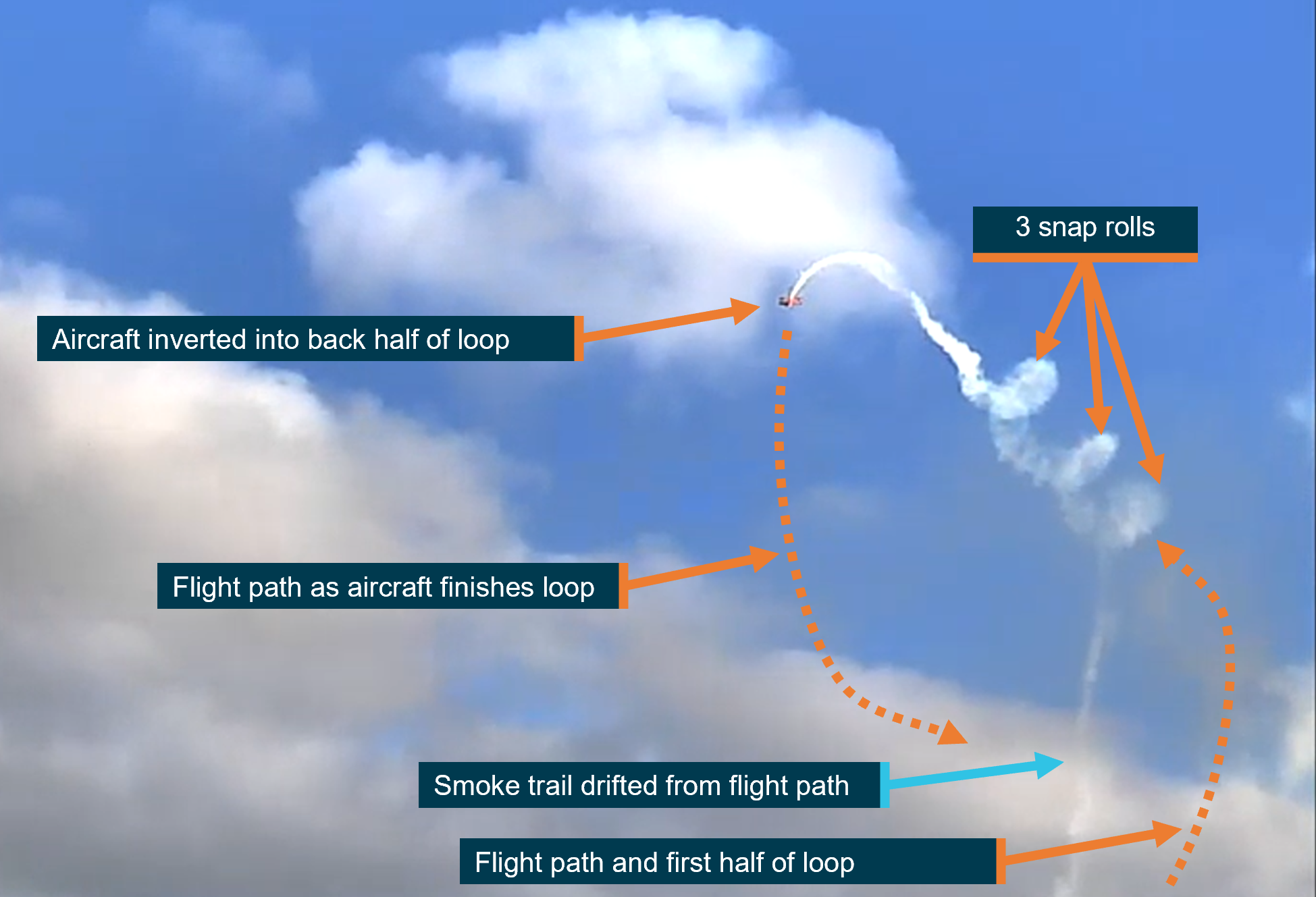
This is a still image extracted from a video recording of the validation flight (see Validation flight). Source: AMDA, annotated by the ATSB
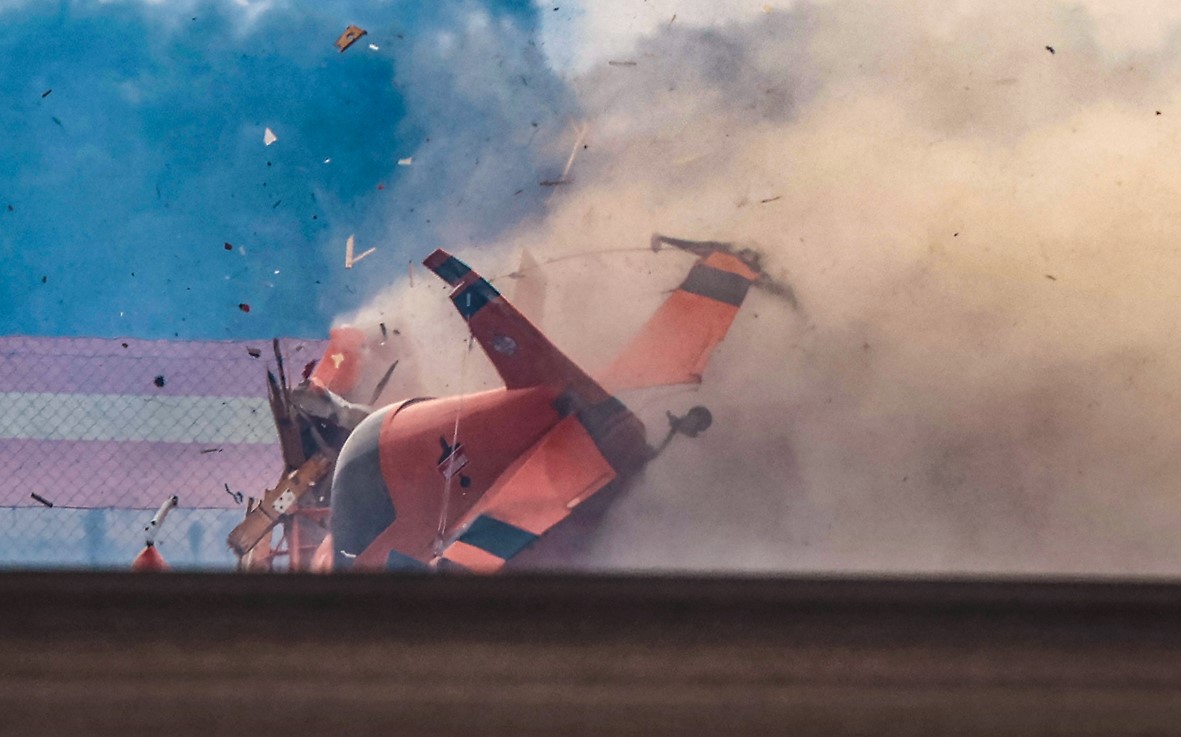
The pilot entered the first half of the loop from approximately 100 ft above ground level (AGL) (see Recorded information). At the top of the loop, while in an inverted position, the altimeter showed that the aircraft was approximately 800 ft. The pilot then initiated 3 snap rolls, during which the aircraft drifted toward the show line (see Air display information). The pilot finished the snap rolls inverted with the aircraft banked away from the show line. They then began the descending part of the loop, however, they had insufficient height to recover. At about 1717, the aircraft collided with terrain, resulting in substantial damage to the aircraft (Figure 2).
The aircraft came to rest upright, west of runway 18/36, within an area that had been designated for fireworks and other pyrotechnics. The pyrotechnic team members were first to arrive at the accident site. They reported a strong smell of fuel and extricated the pilot from the aircraft. The Aviation Rescue Fire Fighting Service (ARFFS)3 arrived a short time later. The pilot was airlifted to hospital and sustained serious injuries. They reported that they had no recollection of conducting the accident manoeuvre.
Figure 2: Aircraft wreckage
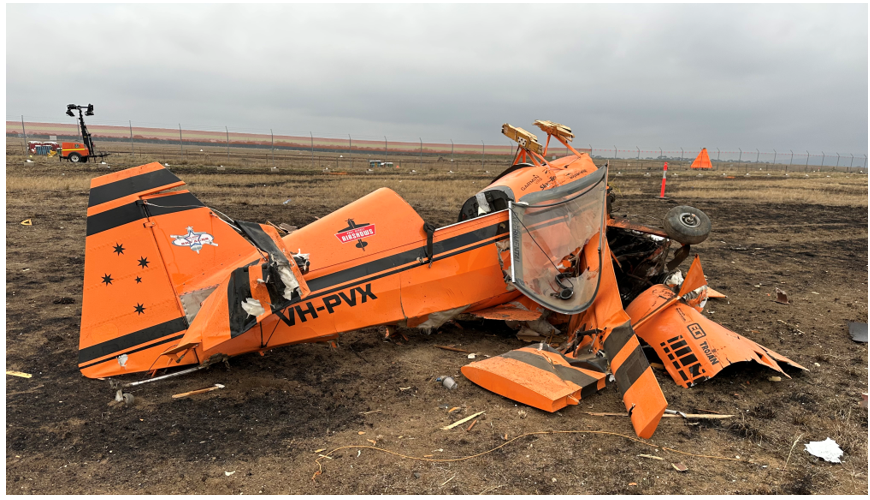
Source: ATSB
Context
Pilot information
The pilot held a Commercial Pilot Licence (Aeroplane) issued in 1999, and a current class 2 aviation medical certificate, which was suitable for the operation type. They completed a single-engine private instrument rating in August 2023, which fulfilled the requirements of a single-engine flight review. The pilot’s logbook showed they had approximately 2,248 hours of total flight experience.
The pilot had a formation aerobatics flight activity rating issued in 2015 and was approved to conduct aerobatics without an altitude restriction. They held design feature endorsements including tailwheel and manual propeller pitch control, which were required to operate the aircraft.
The pilot had competed in aerobatic championships and reported that they had flown with the lead pilot since approximately 2002. More recently they had flown as a part‑time member of the Sky Aces aerobatic team.
Operator information
The operator, Paul Bennet Airshows, was a specialist in aerobatic flying and vintage aircraft displays. They were commonly invited to take part in airshows across Australia and internationally. The Sky Aces formation team had performed at multiple airshows prior to performing at Avalon. In preparation for the Avalon airshow, the Sky Ace formation group practised their routine and completed the flight validation required by the event organiser (see Validation flight).
Aircraft information
General
The Pitts S1-11X aircraft was a single-seat aerobatic, amateur-built biplane, modified from the Pitts S1-11B, and constructed in Germany in 2010 by Wulf (Wolf) Aircraft. It was powered by a Ly-Con AEIO-540-EXP experimental engine and fitted with a 3-bladed, MTV-6 constant-speed propeller of laminated wood construction. The wings were predominantly made of timber with a fabric covering. They were externally braced against each other and the fuselage using a series of flying wires, landing wires, interplane struts, cabane struts4 and incidence wires. The aircraft type did not have wing flaps fitted and all wings had ailerons. The landing gear consisted of left and right forward main gear and a small tailwheel at the rear. The aircraft was a combination of fabric‑covered wood and metal, as well as composite materials, and was designed for unlimited aerobatics up to +/-10 g.5
VH-PVX (Figure 3) was first registered in Australia in 2015 and issued with a special certificate of airworthiness in the experimental category.6 It had been operated by Paul Bennet Airshows since that time.
Figure 3: VH-PVX at Avalon Airshow prior to the accident
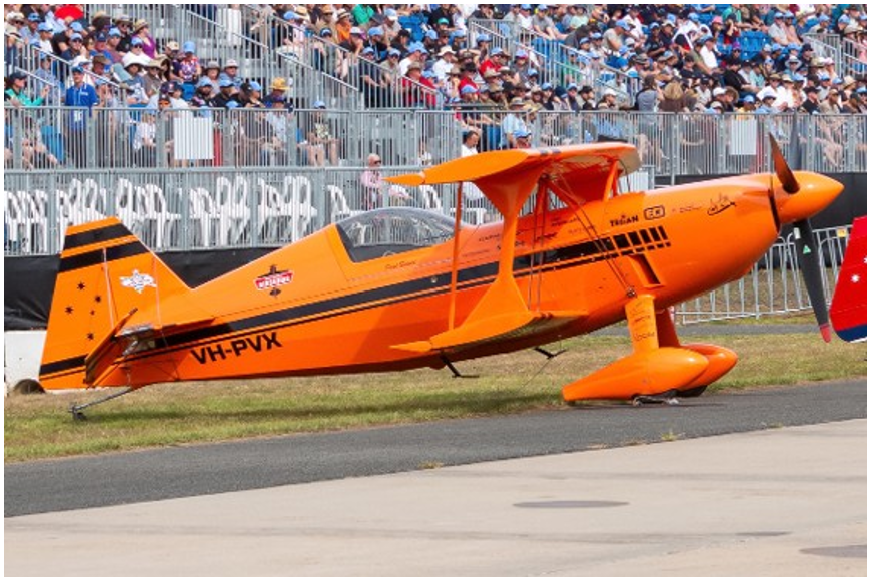
Source: Aircountry
Maintenance
The aircraft was maintained as per Civil Aviation Safety Authority Schedule 5 of the Civil Aviation Regulations and required a periodic inspection every 100 hours or 12 months, whichever came first. The most recent periodic inspection was conducted by an authorised maintenance organisation on 28 February 2025. At the time of the accident, the aircraft had accumulated 303 hours total time in service, about 5 hours of which were since the previous periodic inspection. There were no defects listed on the aircraft maintenance release.7
Altimeter accuracy
In February 2025 the aircraft’s altimeter accuracy was checked during a periodic inspection and found to be within allowable limits. Additionally, about 3 minutes before the accident, the onboard camera showed the aircraft’s altimeter reading approximately 1,200 ft, which was consistent with the automatic dependent surveillance‑broadcast8 (ADS‑B) altitude of 1,214 ft above mean sea level recorded for another of the formation aircraft operating at a similar altitude as VH‑PVX. Flight data was not available for VH‑PVX on this flight.9
Canopy
VH-PVX was fitted with a side‑opening canopy. There were no instructions for opening the canopy visible on the outside of the aircraft (Figure 4 top image). This was contrary to the Civil Aviation Safety Authority Civil Aviation Order 101.28 Airworthiness certification requirements – Amateur-built category aeroplanes, section 3.27 Markings and placards that stated markings were required:
…on both the outside and inside of each exit door, hatch or canopy, indicating the position of the opening handles with locks fully engaged and also providing essential operating instructions for opening.
An example of such instructions on another aircraft is shown in Figure 4 (bottom image).
Figure 4: Outside of canopy on VH-PVX (top image) compared with a different aircraft showing opening instructions (bottom image)
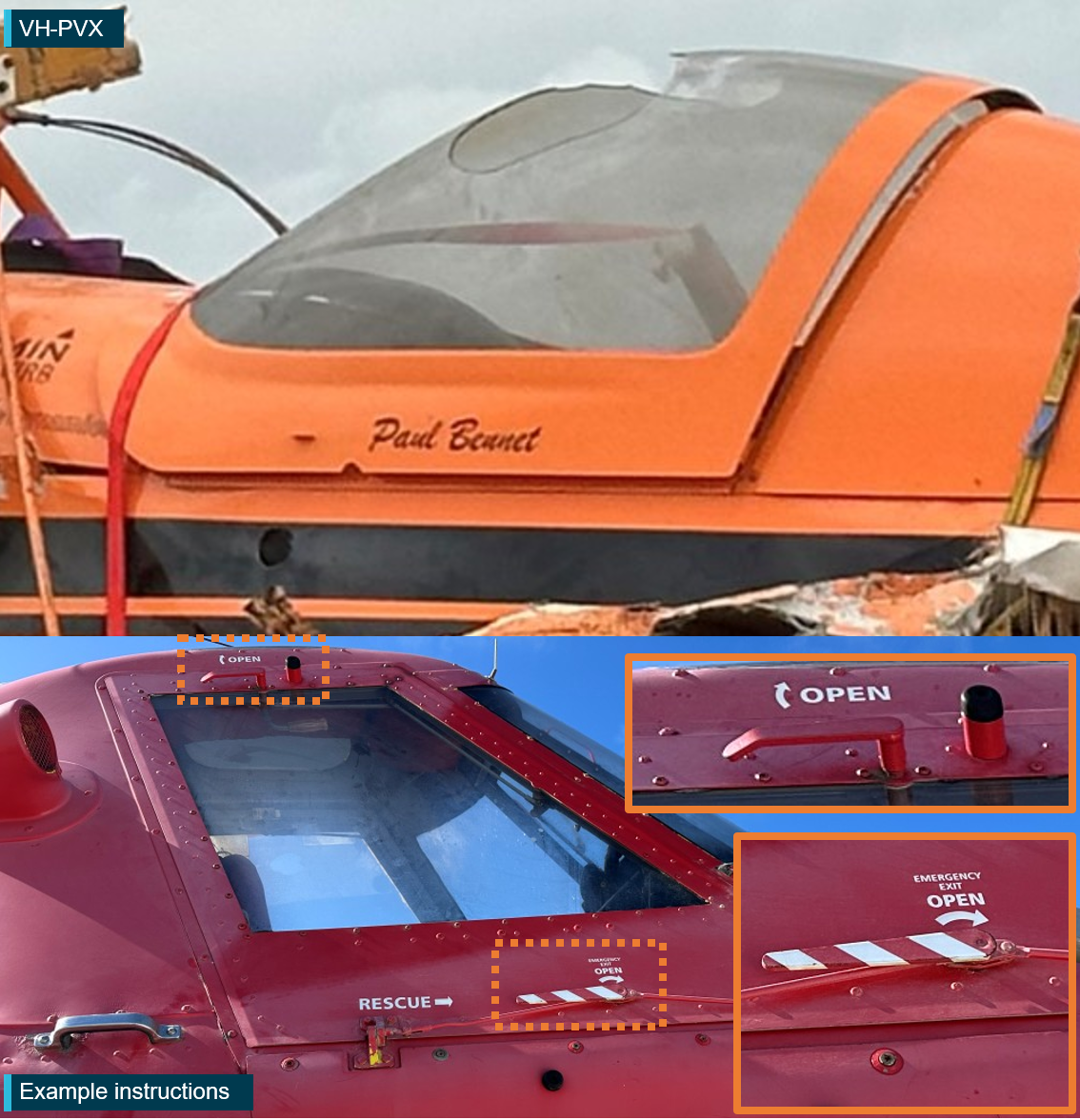
Source: ATSB
The operator reported emergency services and pyrotechnicians were provided with extraction details prior to every airshow.
Meteorological information
The Bureau of Meteorology provided automated weather observations taken at 1-minute intervals at Avalon Airport during the aerobatic display. Between 1710 and 1717, the highest recorded windspeed was 5 kt with gusts up to 6 kt. The temperature was 30°C, visibility was greater than 10 km, and the atmospheric pressure ranged from 1015–1014 hPa for the period.
Recorded information
Flight data was recovered from an onboard accelerometer unit fitted to the aircraft. The unit recorded elapsed time and acceleration g‑forces, but the data was inconsistent with the flight behaviour. Therefore, it was not used in the analysis. Various sources of video that captured the accident flight were available, so video analysis techniques were employed to generate flight path estimates of the aircraft during the accident manoeuvre.
The in-cockpit camera recording was found to be the most suitable source for the video analysis. It recorded a partial view of the instrument panel, the back of the pilot and view of the outside. Various features visible in the video with known locations were analysed using commercial camera tracking software10 to determine the path of the camera. Specifically, it produced information on the aircraft latitude, longitude and height above ground for each frame, which was used to create an estimated flight path.
The operator also provided the ATSB with 2 videos from the cockpit of VH-PVX that were recorded with the same pilot flying at a previous airshow. These videos were recorded on a GoPro camera in a similar, but not the same, position as the accident flight (over the pilot’s left shoulder). An analysis of these videos and the accident flight is discussed below.
Aerobatic manoeuvre
Standard process
The pilot described the normal process they would use to complete the triple avalanche manoeuvre, which included the first half of a loop followed by 3 snap rolls and then the final part of the loop (Figure 1). They stated they would normally enter the loop pulling about 4–5 g, then gradually reduce the g toward the top of the loop to start the snap rolls with a slight nose up attitude. Through the process of completing the snap rolls, it was possible for the aircraft to laterally cross the intended show line (see Air display information). In this circumstance, the pilot reported they usually checked the ground position immediately following the completion of the snap rolls and made corrections if they were no longer aligned with the show line. The pilot indicated their personal minimum height for commencing the snap rolls was 1,000 ft AGL.
Previous flights
In the 2 previous videos provided, the onboard altimeter showed that the pilot began the first half of the loop at 200 ft AGL, began the snap rolls at 800 ft, and finished the snap rolls at 1,200 ft in one instance and at 1,000 ft in the other. In both videos, the pilot completed the final half of the loop and recovered to straight and level flight above 200 ft.
Also, in the first video, the nose attitude of the aircraft appeared to be further above the horizon at the beginning of the snap rolls when compared with the second video. This resulted in more height gained during the snap rolls in the first video. Prior to commencing the snap rolls, the aircraft appeared to be in a nose up attitude. When the pilot commenced the snap rolls the aircraft continued along a similar trajectory in the direction the aircraft’s nose was pointing before the snap rolls were commenced. That is, when the aircraft nose was pointing above the horizon prior to the snap rolls, the aircraft continued in an upward direction while performing the snap rolls.
Accident flight
Loop entry height
During the accident flight, the onboard altimeter was visible prior to commencing the snap rolls at 800 ft and just prior to the collision with terrain at 100 ft. However, it was not visible during the entry to the loop, or at the completion of the snap rolls.
Therefore, to establish the height the pilot entered the first half of the loop, the ATSB used a combination of the ATSB’s estimated flight path, the aircraft’s altimeter (when in view of the camera) and the height of the aircraft during other low-level passes throughout the display. Table 1 provides this information at various stages of the accident manoeuvre. Figure 5 is a simplified recreation of the path the aircraft flew on the accident flight and the comparison flights.
Table 1: VH-PVX manoeuvre sequence
| Sequence position | Figure 5 reference | Aircraft altimeter reading (ft) | Estimated height from ATSB flight path recreation (ft) [1] |
| Entry to first half of the loop | A | Not visible | 32 |
| Beginning snap rolls | B | 800 | 772 |
| Finishing snap rolls | C | Not visible | 786 |
| 0.4 seconds prior to collision with terrain | D | 100 | 47 |
| [1] Specific margins of error in this recreation are not known. To check the validity of the flight path, it was compared against the value seen on the altimeter, which was intermittently visible. | |||
There were discrepancies between the estimated height and the onboard altimeter. Such as during the descent, at 0.4 seconds (Figure 5 D) before the collision with terrain, the altimeter showed 100 ft AGL. At that point, the ATSB estimated height was 47 ft. Although, it was possible that the altimeter was lagging the actual height of the aircraft for the short time it was visible due to the descent rate.
However, it was noted that the low-level passes performed during the display and when the altimeter was visible, the aircraft instrument indicated the pilot was flying at approximately 100 ft. Therefore, it was determined that the entry height to the first part of the loop was likely to be about 100 ft. This was 100 ft lower than seen in the comparison flights.
Figure 5: Comparison of the previous and accident flights, showing the nose attitude when reaching 800 ft when starting the first part of the loop at different heights
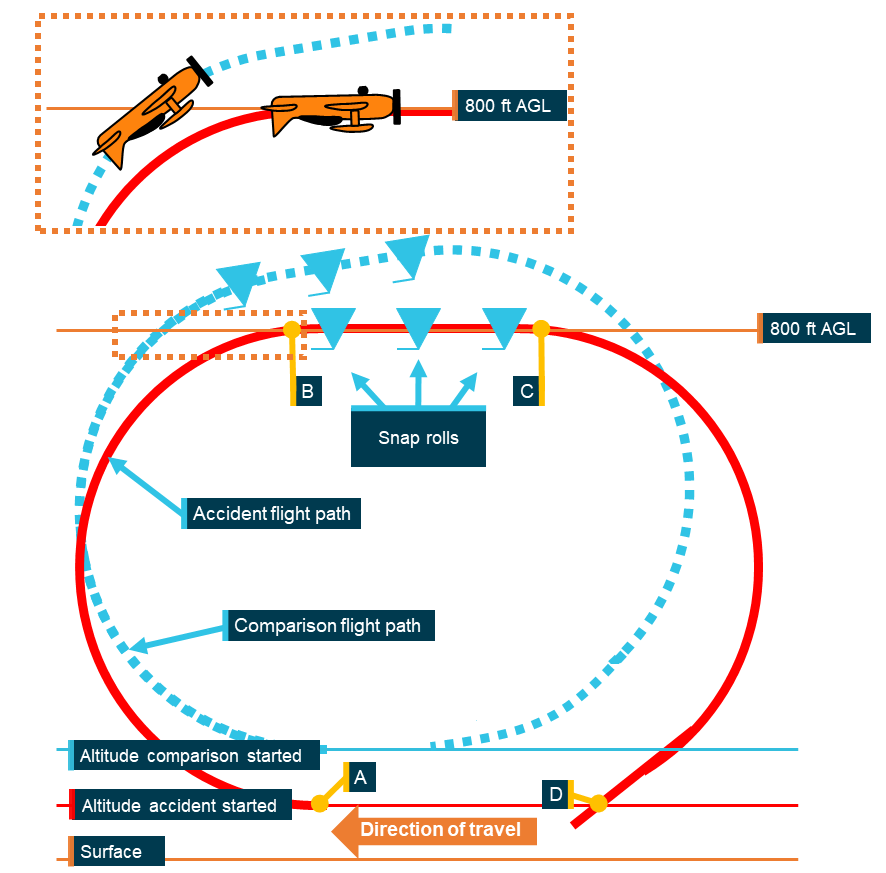
The reference points A, B, C, D refer to Table 1. Source: ATSB
Snap roll height gain
As seen in the previous flights, the aircraft gained approximately 200–400 ft during the snap rolls. This allowed the pilot to start the recovery (final part of the loop) from no lower than 1,000 ft. However, the estimated flight path showed that in the accident flight, this was not achieved.
While there was some margin of error due to the available data sources, the ATSB recreation of the flight path from the onboard video estimated that only around 14 ft of height was gained during the snap rolls.
Attitude comparison
The ATSB compared the aircraft’s nose attitude during the snap rolls in the accident flight with the comparison flights. As the exact position, orientation and settings of the cameras varied between the 3 videos, the ATSB was unable to make a quantitative assessment of the difference in attitude between each of the flights. However, a visual comparison of the videos indicated a noticeable difference in attitude between the accident and comparison flights (Figure 6, Figure 7). Additionally, when the pilot reviewed the onboard video recording of the accident flight with the ATSB, they identified that the nose was low on the first snap roll.
Figure 6 shows the accident flight nose attitude is closer to the horizon when starting the snap rolls than seen in the comparison flight. Figure 7 shows that the accident flight finishes the snap rolls with a lower nose attitude than the comparison flight. Although, it is harder to make a comparison in this image due to the bank angle on the accident flight.
Figure 6: Aircraft’s nose attitude when starting the snap rolls for the accident flight (top image) and a comparison flight (bottom image)
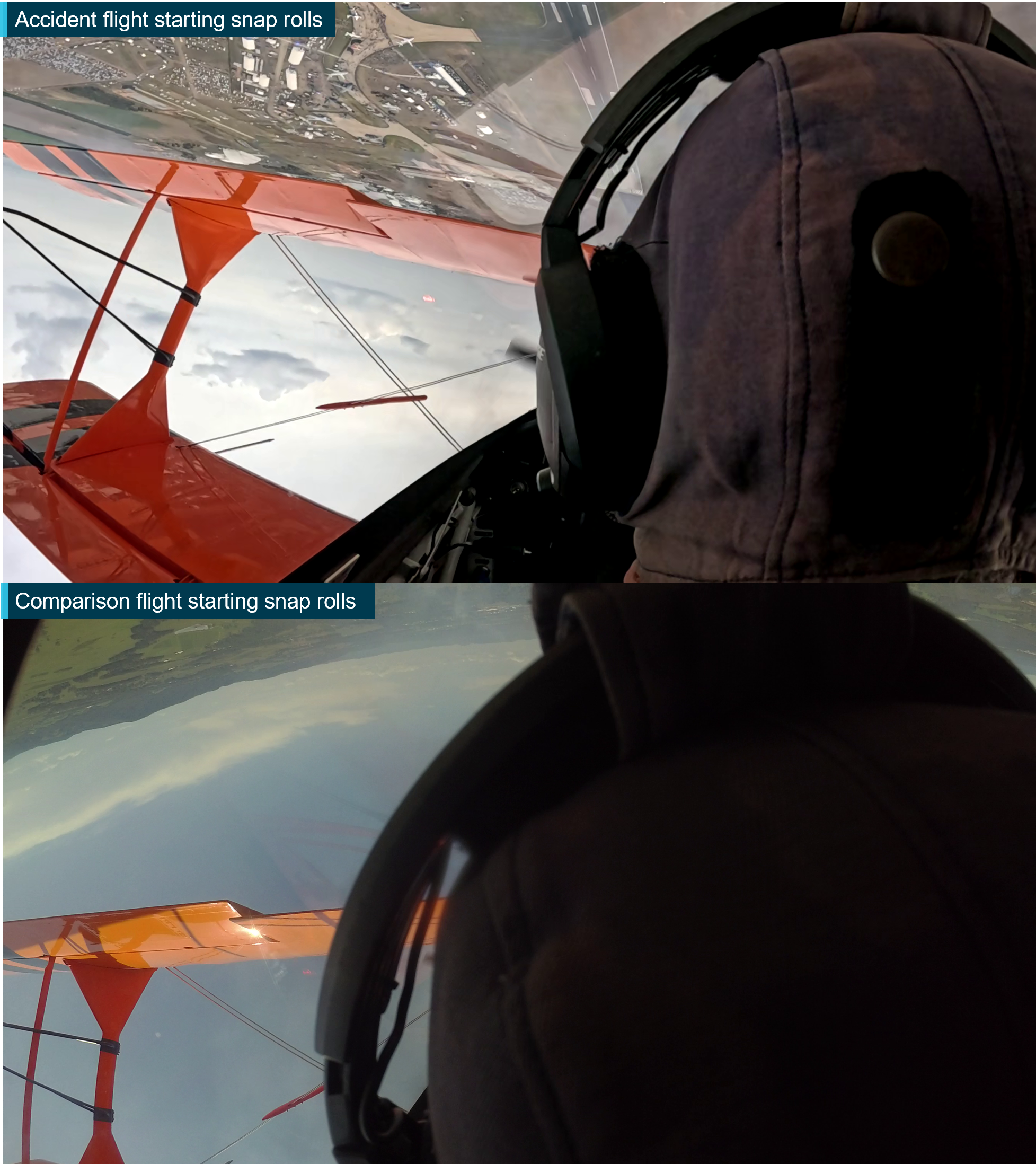
Source: Operator, annotated by the ATSB
Figure 7: Aircraft's nose attitude when finishing the snap rolls for the accident flight (top image) and a comparison flight (bottom image)
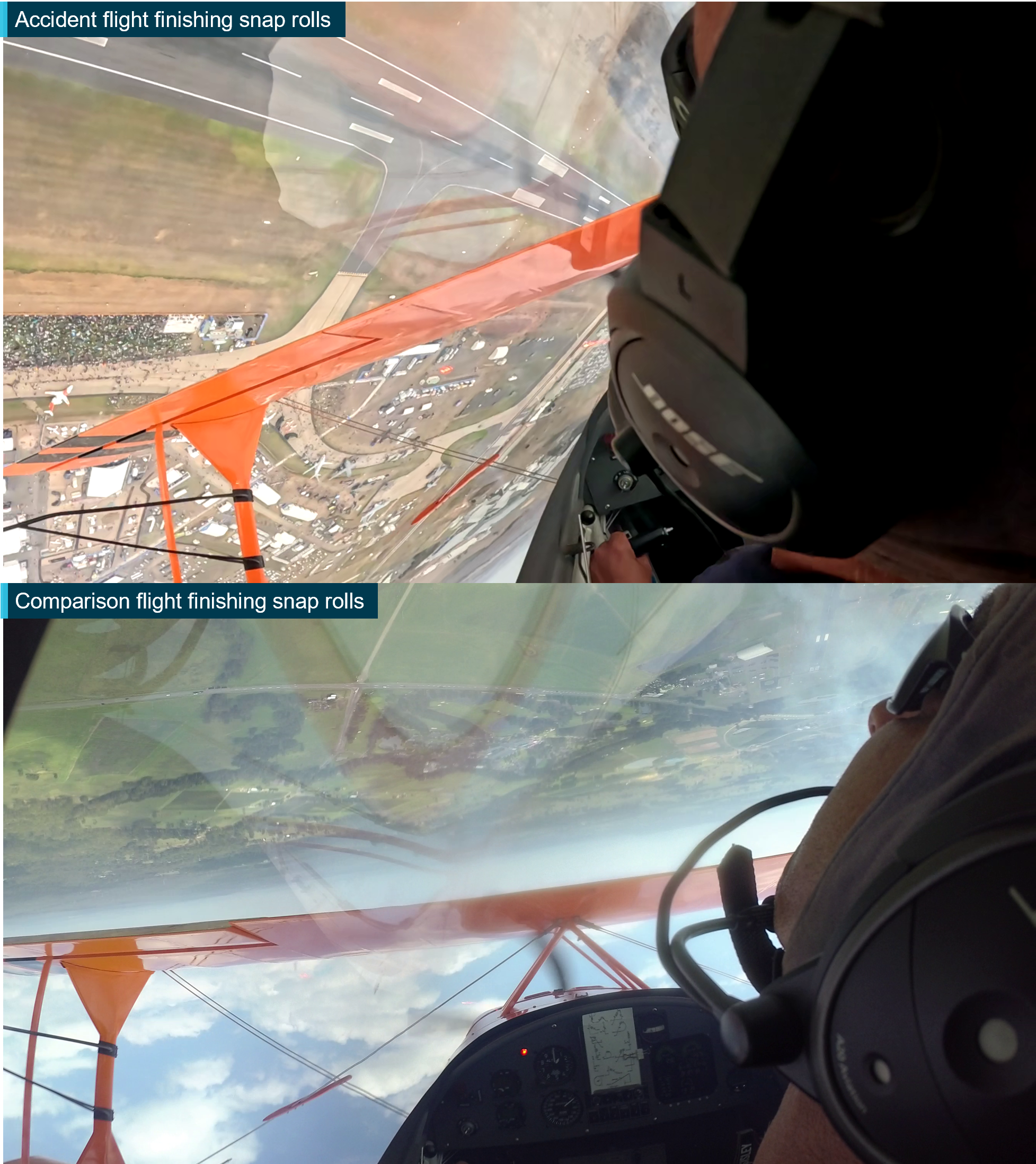
Source: Operator, annotated by the ATSB
Final loop segment and recovery
To recover from the triple avalanche, the pilot needed to have sufficient height after the snap rolls to complete the final part of the loop without entering an aerodynamic stall or colliding with terrain. The comparison flights showed this height increase could be achieved during the snap rolls.
Summary of comparison flights
Table 2 provides a summary of the comparisons made across the 3 videos supplied by the operator.
Table 2: Summary of comparison data
| Sequence position | Comparison flight 1 | Comparison flight 2 | Accident flight |
| Entry speed to first half of the loop | 165 kt | 160 kt | >165 kt |
| Entry height to first half of loop | 200 ft | 200 ft | 100 ft[2] |
| Nose attitude commencing snap rolls | Highest of the 3[2] | Similar but lower than comparison 1[2] | Lowest of the 3[2] |
| Beginning snap rolls height | 800 ft | 800 ft | 800 ft |
| Finishing snap rolls height | 1,200 ft | 1,000 ft | 814 ft[2] |
| [2] ATSB estimated values |
Wreckage and impact information
The aircraft collided with terrain on a grassed area west of runway 18/36, in a location of the airport designated as the pyrotechnic box (seeAir display information). In this area, there were multiple pyrotechnics ready to be used in the Sky Aces show, along with many boxes of fuel that were planned to be ignited during the ‘wall of fire’ display later that evening.
A ground scar, approximately 95 m long, was on a south-south-west heading (Figure 8). The aircraft tumbled around the nose and came to rest upright and oriented toward north, almost opposite the direction of the impact sequence and debris trail. The initial impact point occurred about 10 m from the fuel boxes within the pyrotechnics (Figure 8).
Figure 8: Overview of pyrotechnics and point of VH-PVX collision with terrain
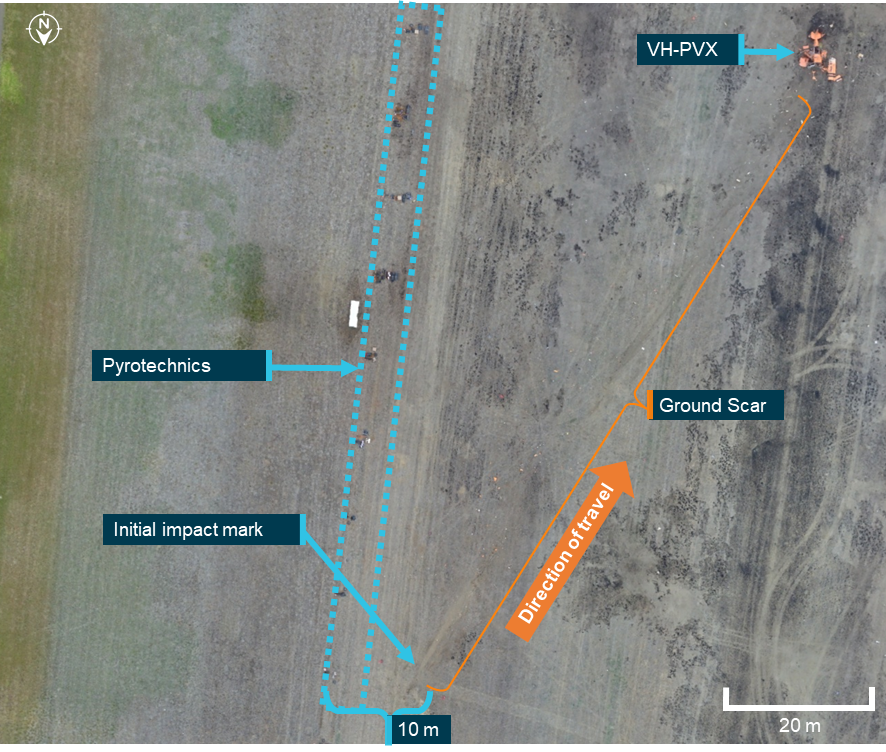
Source: Royal Australian Air Force No 1 Security Forces Squadron, annotated by the ATSB
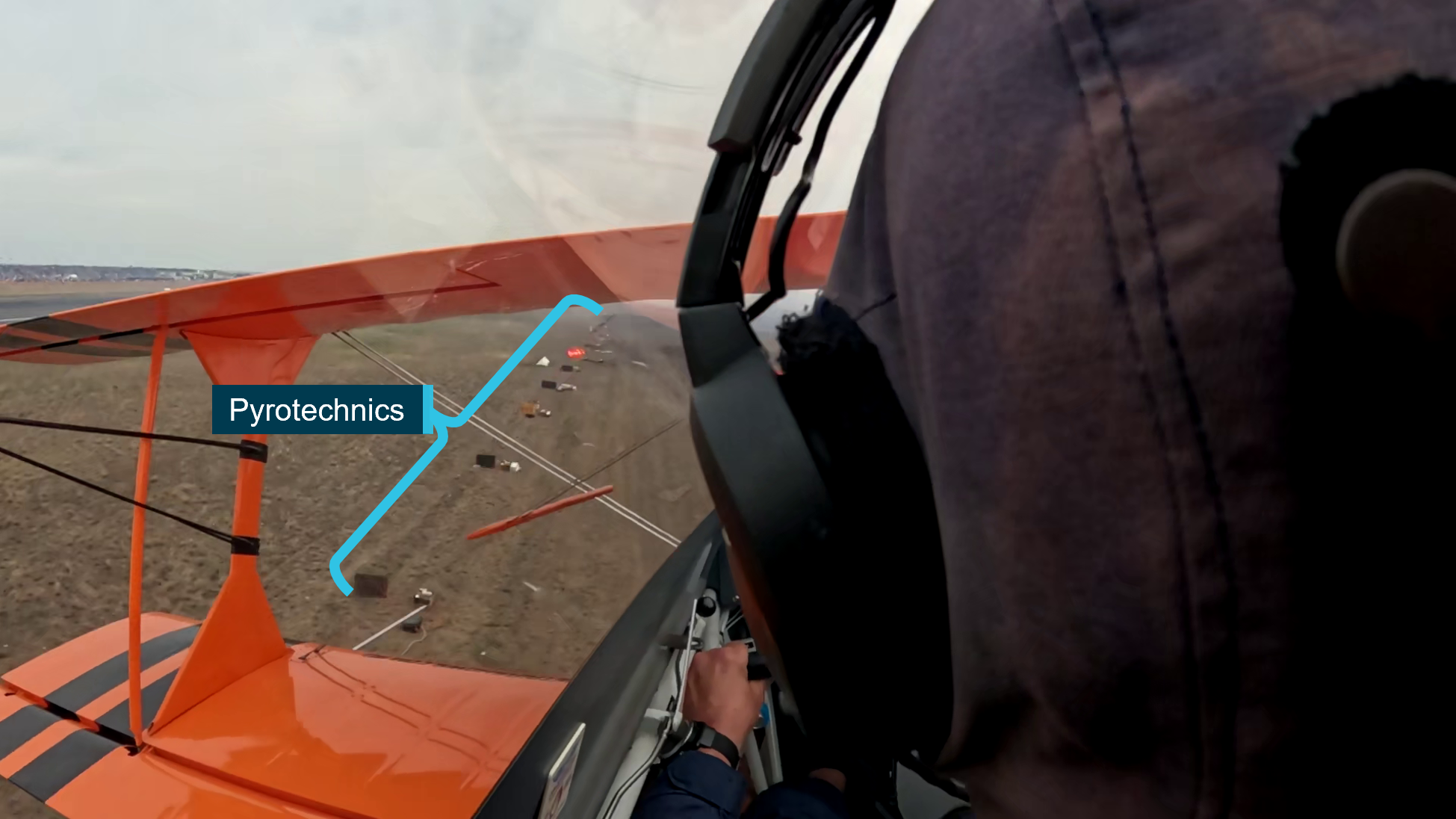
An image taken from the onboard camera showed that the aircraft was in close proximity to the pyrotechnics before (Figure 9) and at the point of the collision with terrain.
Figure 9: VH-PVX just prior to collision with terrain showing proximity to pyrotechnics
Source: ATSB
The ATSB conducted a preliminary examination of the aircraft at the accident site, but due to access restrictions for the operational airport and airshow, the wreckage was then relocated to a secure facility for detailed examination. Examination of the wreckage identified:
- There was no evidence of any defects or failures that may have been present before the impact, and which could have contributed to the development of the accident.
- The uppermost section of the canopy windshield was fractured partly from the accident sequence and then from first responders accessing the cockpit.
- The engine mounts had fractured, with the engine remaining tethered by the main fuel line, engine controls and wiring loom.
- The propeller hub remained attached to the engine and fragmentation of the propeller blades was indicative of the engine providing power at the time of the collision.
- The forward main landing gear had permanently splayed outward, the tailwheel strut exhibited some upward deflection, the engine sump cover had fractured, and the lower fuselage section had sustained compression damage, consistent with a hard landing in an upright orientation.
- The upper wings had separated from the aircraft, with the wing spars fracturing outboard of the cabane strut attachment. The lower wings sustained impact damage but remained secured to the fuselage.
- The rigid lines between the fuel tanks and selector valve were fractured, resulting in post-accident leakage of fuel. However, the fuel tanks remained intact and there was no post-impact fire.
Air display information
General
Held every 2 years over 6 days, the Avalon Australian International Airshow combined Australia’s largest aviation, aerospace and defence industry trade exposition with a 3-day airshow. The event was organised by the AMDA Foundation (AMDA), which was the chosen name to reflect the consolidation of Aerospace Australia Limited and Industry Defence and Security Australia Limited.
AMDA provided a briefing on airshow operations and safety to all airshow pilots prior to the airshow. This included the expected timetable of display events, pilot responsibilities, display area information, manoeuvre limitations, minimum heights, minimum weather conditions and holding areas. It also included a brief of the emergency procedures and airshow terminology that would be used to terminate displays in the event of an emergency.
Event operations centre
AMDA had created an emergency response plan, which stated:
The priority of the EOC [event operations centre] Manager and Chief Warden in an emergency is to support the emergency control agency and provide clear communication to the Area Wardens within each event zone.
The emergency response plan defined a potential or declared emergency as:
An emergency is when there is a potential incident or incident that could be beyond the ability of the normal day to day management structure. An emergency is described as any incident that:
• Has the potential to cause or is causing loss of life and extensive damage to property, infrastructure or the environment.
• Has the potential to have or is having a significant adverse consequence for the Airshow event, guests, staff and aircrews.
• Requires the involvement of two or more emergency control agencies to respond to a class of emergency as defined in the Emergency Management Act 2013.
- Class 1 Emergency
- Class 2 Emergency
It further stated the roles and responsibilities of the event operations centre as follows:
The EOC Manager is required to monitor activity across the precinct and deploy additional resources to assist or deal with incidents as they are reported or identified through CCTV or the AMDA Call Centre.
These include managing critical security, medical or safety incidents which may require a higher level of resources, real time monitoring or a significant management focus. These incidents can occur multiple areas and require deployment of specialised or centrally managed resources.
The EOC Manager is responsible for delegating roles and responsibilities within the EOC to ensure appropriate resources are managing each incident and can escalate to Victoria Police as required.
Designated areas
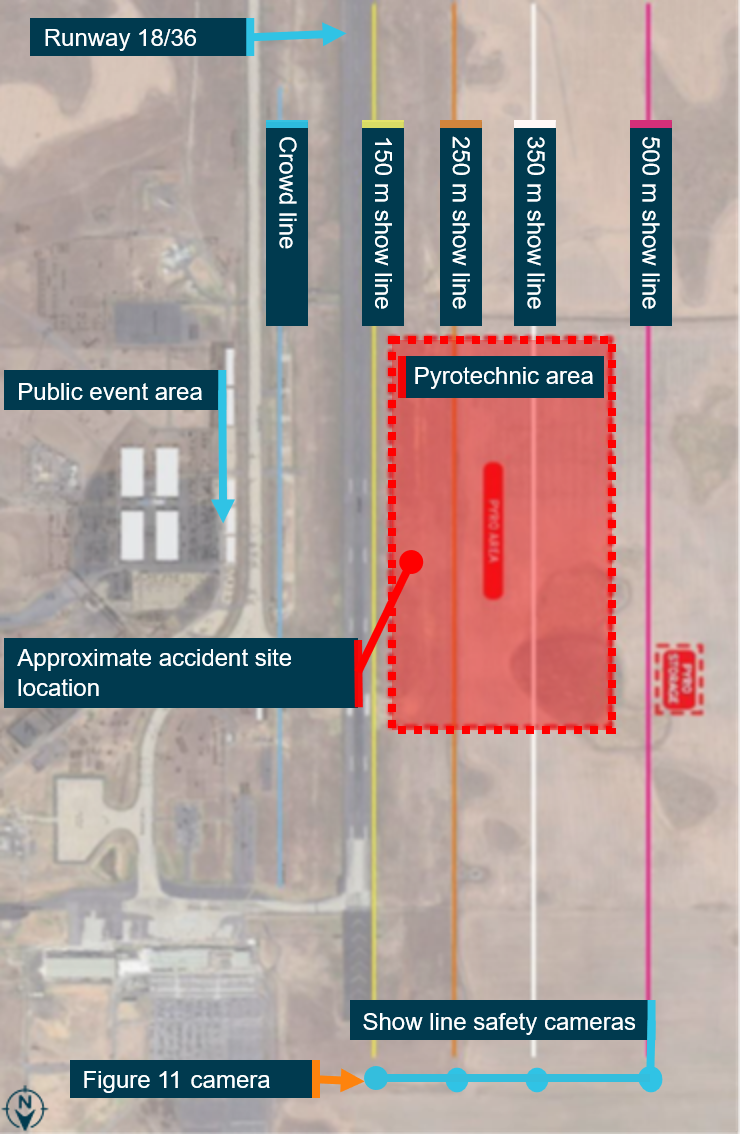
Designated areas were mapped on Avalon Airport to assist in segregating the airshow from spectators. The airshow had several displays that used pyrotechnics, including the Sky Aces routine. The pyrotechnics detonation area was located to the west of runway 18/36 inside the flight display area. Show lines were created to assist aircraft with conducting displays at an appropriate distance from the crowd (150 m, 250 m, 350 m and 500 m). The show line to which a display could be performed to, was determined by the aircraft’s speed during the display. Cameras were placed on each show line and monitored to ensure aircraft were conducting their displays at a safe distance from the spectators (Figure 10).
Figure 10: Avalon Airport designated areas
Source: AMDA, annotated by the ATSB
The display pilot briefing provided by AMDA stated that aircraft with a maximum display speed between 101 kt and 200 kt could conduct their display as close to the crowd as the 150 m show line. At the time of the accident manoeuvre, the pilot was performing at about 160 kt and performing close to the 150 m show line.
During the snap rolls, the aircraft moved towards the 150 m show line. When the pilot reviewed the accident video, they believed they attempted to correct this, which was also evident from the show line video (Figure 11).
Figure 11: VH-PVX reference to 150 m show line, shows the aircraft moving towards the show line, then away from the line
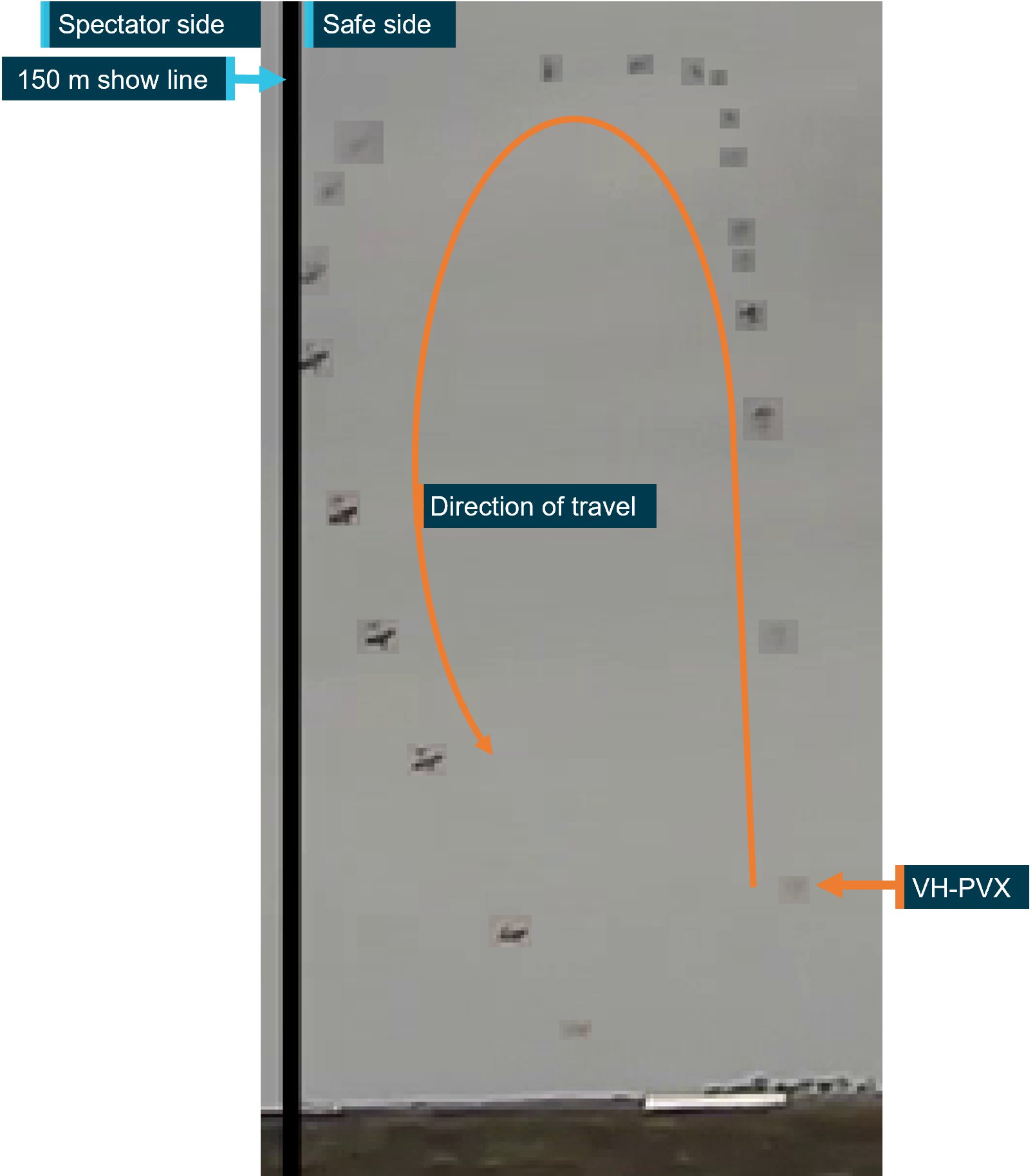
The image is made from several images overlaid on each other to show the sequence of VH-PVX. The VH-PVX label shows the first position of the aircraft in the manoeuvre sequence. Source: AMDA, annotated by the ATSB
Validation flight
AMDA required that participants in the airshow successfully complete a validation flight prior to the public display. On 26 March 2025, the Sky Aces formation team satisfied this requirement, which involved the pilot completing their solo display including the accident manoeuvre in VH-PVX. The validation report had not noted any concerns about the routine or ability of those involved to successfully perform it on the day of the show. There was no comparison video available as evidence of the heights the manoeuvre was performed at during the validation flight.
Event risk assessment
AMDA conducted a risk assessment for the airshow and identified multiple hazards. Some of the associated risks identified that were relevant to the accident included:
• pyrotechnic display operator injured/killed by aircraft wreckage and/or flare debris impact into pyrotechnic area during airshow
• aircraft/vehicle malfunction or crash during atypical flying display
• vehicle or aircraft transits across the pyro [pyrotechnic] box bursting or igniting flammable liquid explosives
• blocking ARFF [Aviation Rescue Fire Fighting Services] route out of the fire station (Figure 12) with resultant impact on ARFF emergency response times.
Risk controls were implemented by AMDA to reduce either the likelihood or consequences of the identified hazards, which included:
- pyrotechnics placed outside the runway strip
- minimising pyrotechnician personnel in the pyrotechnic area during the airshow
- a briefing provided to airshow pilots
- having emergency services in attendance including ARFFS
- AMDA’s emergency response plan
- pilots flying in displays were experienced and were required to complete a validation flight.
To ensure taxiway Foxtrot (Figure 12) remained clear for ARFFS units leaving the southern fire station in an emergency, aircraft movements to/from the southern tarmac were controlled by Airservices Australia air traffic control.
Figure 12: Avalon Airport taxiway and ARFFS southern location
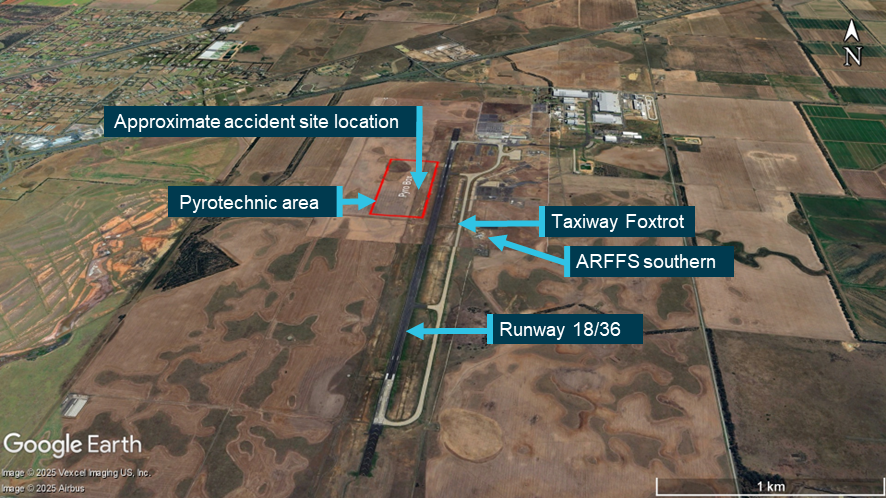
Source: Airservices Australia and Google Earth, annotated by the ATSB
Furthermore, Ambulance Victoria (AV) was contracted to attend the airshow to perform the following roles:
• to manage the pre-hospital impacts of the event through on-site AV resources and transport capability (if required)
• to mitigate the impact of the event on AV’s service delivery to the surrounding community; and
• to ensure that if an incident occurs at the event which evolves into a major emergency, there is an AV presence on-site to manage the pre-hospital response and emergency medical treatment as required, rapidly and effectively.
Survival aspects
Emergency response
An emergency response was activated at 1717 following the accident. Table 3 shows the sequence of events of the emergency response.
At 1718, the pyrotechnicians were first to arrive onsite. The pyrotechnicians were trained in first aid and were able to extricate the pilot from the aircraft, which they determined was necessary due to the strong smell of fuel and their assessment of a possible subsequent fire.
The pyrotechnicians reported having difficulties in opening the aircraft’s canopy, as the opening mechanism was not obvious from the outside. The onboard video showed that the pyrotechnicians took approximately 50 seconds to forcefully remove the canopy, which appeared to have already been damaged in the accident sequence.
At the same time, the ‘crash alarm’ was activated by the air traffic controller and the ARFFS dispatched 2 tenders11 from the southern fire station and one tender from a temporary northern dispatch area. The northern ARFFS response tender crew reported they were unable to use taxiway Bravo while trying to access the accident site as a departing air transport flight was obstructing the taxiway. Instead, the crew opted to use the airport perimeter track and reached the accident site at approximately the same time as the ARFFS tenders responding from the southern side. The ARFFS reported increased response times due to the accident occurring inside the pyrotechnics area and navigating the associated hazards to ensure the safety of the responders.
When the accident occurred, AV ambulances were already on location at the airshow. However, AV reported that their response time was impacted due to the need to wait for an escort to the scene as the airport remained active to assist with landing of the other formation aircraft. Avalon Airport and AMDA reported the delay was due to the escort waiting for the ambulance to make safe access. The ATSB could not verify the difference in these accounts, but the first ambulance arrived onsite at 1731.
Table 3: Emergency response sequence
| Time | Response action |
|---|---|
| 1717 | Accident occurred and event operations centre was advised |
| 1718 | Crash alarm activated by Airservices air traffic controllers |
| 1718 | ARFFS dispatched |
| 1718 | Pyrotechnicians arrived onsite |
| 1719 | ARFFS stopped short of the pyrotechnic area and assessed the situation |
| 1720 | Pilot extricated from the cockpit by pyrotechnicians |
| 1721 | ARFFS arrived at the site |
| 1729 | Ambulance escorted to accident site |
| 1731 | First ambulance arrived onsite |
| 1731 | Ambulance Victoria took control of the emergency response and requested helicopter emergency medical services (HEMS) |
| 1736 | Second ambulance arrived onsite |
| 1756 | HEMS dispatched from Essendon Airport (about 50 km away) |
| 1801 | Ambulances relocated to helicopter extraction point |
| 1822 | HEMS arrived at Avalon Airport |
| 1906 | HEMS arrived at the hospital |
Pilot injuries
The pilot sustained serious head, chest, abdominal, spinal and leg injuries requiring hospitalisation and long-term rehabilitation. The pilot was wearing a 5-point restraint and a cloth flying cap.
ATSB analysis based on estimates of aircraft speed, impact angle, attitude, and energy absorption, indicated that the vertical acceleration experienced by the pilot would normally result in serious injuries, in addition to moderate to serious injuries from the horizontal component.
The tail wheel was the initial impact point followed by the main landing gear, underside of the fuselage, fuel control unit and propeller. During that initial impact, the pilot’s seat crushed 5–8 cm into the fuselage, as the main landing gear spread, distorting the lower fuselage and fracturing the airframe. The pilot’s spinal injuries were almost certainly the result of the vertical impact forces. The gascolator (fuel strainer), located directly beneath the pilot’s seat, pierced the seat base and cushion, but its contribution to the pilot’s injuries could not be determined.
The pilot’s left leg injury was consistent with crushing of the footwell during the impact sequence.
After the initial impact, the aircraft tumbled around the nose (Figure 13), destroying the wings and propeller. The pilot was effectively retained in their seat by the 5-point restraint, minimising flail injuries, and the space around the pilot in the cockpit was retained. However, the canopy fractured and was associated with a superficial scalp injury. Had the pilot been wearing a hard-shell helmet, that injury would probably have been avoided, but it would unlikely have reduced the severity of other injuries.
Figure 13: VH-PVX during the accident sequence
Source: David Caird, Herald Sun
Safety analysis
Introduction
The pilot of VH-PVX was conducting low level aerobatics at the Avalon International Airshow when it collided with terrain, resulting in serious injuries to the pilot and substantial damage to the aircraft.
This analysis will examine the accident flight manoeuvre compared with previous flights. Additionally, the ATSB also reviewed elements of the emergency response, which, although not contributing to the accident, could have resulted in increased severity of injuries in a similar occurrence.
Lower manoeuvre height
The accident pilot had previously completed the triple avalanche manoeuvre (the accident manoeuvre) in VH-PVX. Video evidence showed on at least 2 previous occasions the pilot began the manoeuvre at 200 ft above ground level (AGL), started the snap rolls at approximately 800 ft, gained height during the snap rolls and recovered the aircraft. Conversely, the combined analysis of the accident video and flight path estimated by the ATSB showed that the pilot likely began the manoeuvre at approximately 100 ft, started the snap rolls at about 800 ft, but did not gain height throughout the rolls. Although the pilot stated their minimum was 1,000 ft for starting the snap rolls, all 3 flights showed the manoeuvre starting at 800 ft.
A comparison across the 3 flights indicated that, throughout the snap rolls, the nose attitude was comparatively lower or flatter during the accident flight. This was supported by the pilot’s observations when watching the accident flight onboard video. The lower nose attitude was likely a result of starting the first half of the loop 100 ft lower than the previous commencement height of 200 ft. That is, the extra 100 ft available to the pilot in the first half of the loop meant that the aircraft would have been further through the loop by the time they had reached 800 ft and was therefore in a flatter trajectory. As a result, an estimated 14 ft of height was gained during the snap rolls rather than 200–400 ft as achieved for the previous flights with a higher nose attitude.
As the pilot was unable to recall the events of the accident, it was unclear if they were aware of the reduced height when entering the final part of the loop. However, the onboard video and subsequent collision with terrain showed that the pilot elected to continue the manoeuvre although the aircraft did not gain height during the snap rolls. Consequently, there was insufficient height remaining to complete the manoeuvre before colliding with terrain.
Emergency response
Given the location of the flight display area, it was likely that any accident involving a display aircraft operating to the 150 m, 250 m, or 350 m show lines would occur inside the pyrotechnics area. Therefore, due to the increased risk associated with the pyrotechnics, the emergency crew response times were increased as they navigated the dangerous area while operating on an active airport.
For example, the Aviation Rescue Fire Fighting Service had to assess the hazards associated with the pyrotechnics to ensure the safety of their personnel and one tender had to use an alternative route to the accident site due to a departing aircraft. Likewise, although ambulances were already in attendance at the airshow, it took approximately 14 minutes for them to arrive at the accident site. Ambulance Victoria reported increased response times due to requiring escorts to reach the accident site, however, it was not clear how long ambulances were stationary waiting for an escort.
In addition, the aircraft did not have instructions on how to unlatch the cockpit canopy from the outside, as required for airworthiness certification. However, first responders managed to pull the canopy open in approximately 50 seconds after they arrived onsite. Instructions for opening the canopy may have reduced this time.
Some of these factors could have reduced the time taken to provide assistance to the pilot. However, on this occasion, the pyrotechnicians extracted the pilot from the cockpit, preventing injuries resulting from a possible fire and ARFFS attended to the pilot within 4 minutes of the accident. Therefore, it was unlikely that the severity of the pilot’s injuries were increased due to the location of the accident.
Findings
ATSB investigation report findings focus on safety factors (that is, events and conditions that increase risk). Safety factors include ‘contributing factors’ and ‘other factors that increased risk’ (that is, factors that did not meet the definition of a contributing factor for this occurrence but were still considered important to include in the report for the purpose of increasing awareness and enhancing safety). In addition ‘other findings’ may be included to provide important information about topics other than safety factors. These findings should not be read as apportioning blame or liability to any particular organisation or individual. |
From the evidence available, the following findings are made with respect to the collision with terrain involving Wolf Pitts S1-11X, VH-PVX, Avalon Airport, Victoria, on 28 March 2025.
Contributing factors
- The triple avalanche manoeuvre was likely initiated at a lower height than on previous occasions resulting in a lower nose attitude when commencing the snap rolls at 800 ft, which was also lower than the pilot’s designated height. As result, the aircraft did not gain sufficient height during the snap rolls to recover from the loop before colliding with terrain.
Other findings
- While not likely contributing to the severity of the pilot’s injuries, several factors increased the time taken to respond to the accident, including:
- the co‑location of the flight display area with the pyrotechnic detonation area
- the Aviation Rescue Fire Fighting Service had to assess and then safely navigate the pyrotechnics area
- Ambulance Victoria had to wait for safe access to the accident site
- the aircraft did not have visible markings on the outside about how to open the canopy.
Safety actions
| Whether or not the ATSB identifies safety issues in the course of an investigation, relevant organisations may proactively initiate safety action in order to reduce their safety risk. The ATSB has been advised of the following proactive safety action in response to this occurrence. |
Safety action taken by AMDA (the event organiser)
The event organiser reported pyrotechnic area locations that would be fit-for-purpose would still likely result in future possible airshow accidents occurring in the pyrotechnic area. However, it was in the process of redesigning the pyrotechnic area for future airshows to provide clearly identified routes of entry for emergency services to safely access the pyrotechnic field if necessary. This would involve updating transport and emergency management plans, as well as providing briefings to all emergency services agencies and onsite personnel.
The event organiser will adopt similar requirements for aerobatic displays to those instituted by the United Kingdom Civil Aviation Authority with exceptions provided on a case-by-case approval. These include minimum height requirements based on aircraft performance. Additionally, pilots will also be required to have ‘gate’ parameters or check altitudes set for all critical junctures of an aerobatic manoeuvre, such as the apex of a loop and before committing to ‘pulling through the vertical’ to continue the manoeuvre.
Further, AMDA is proposing to stage an ambulance with the ARFFS to reduce response times for any similar future accidents.
Sources and submissions
Sources of information
The sources of information during the investigation included:
- the pilot of the accident aircraft
- the lead pilot of the formation
- the airshow event organiser
- the maintenance organisation for VH-PVX
- accident witnesses
- video footage of the accident flight and other photographs and videos taken on the day of the accident
- Airservices Australia
- Avalon Airport
- Bureau of Meteorology
- Civil Aviation Safety Authority
- Ambulance Victoria.
References
Civil Aviation Safety Authority. (2004). Civil Aviation Orders 101.28 – Airworthiness certification requirements – Amateur-built category aeroplanes. https://www.legislation.gov.au/F2005B00951/latest/text
Submissions
Under section 26 of the Transport Safety Investigation Act 2003, the ATSB may provide a draft report, on a confidential basis, to any person whom the ATSB considers appropriate. That section allows a person receiving a draft report to make submissions to the ATSB about the draft report.
A draft of this report was provided to the following directly involved parties:
- the pilot of the accident aircraft
- the other pilots within the formation team
- the airshow event organiser
- Airservices Australia
- Ambulance Victoria
- Avalon Airport
- Civil Aviation Safety Authority
- the maintenance organisation.
Submissions were received from:
- another pilot in the formation team
- airshow event organiser
- Ambulance Victoria
- Avalon Airport.
The submission were reviewed and, where considered appropriate, the text of the report was amended accordingly.
Purpose of safety investigationsThe objective of a safety investigation is to enhance transport safety. This is done through:
It is not a function of the ATSB to apportion blame or provide a means for determining liability. At the same time, an investigation report must include factual material of sufficient weight to support the analysis and findings. At all times the ATSB endeavours to balance the use of material that could imply adverse comment with the need to properly explain what happened, and why, in a fair and unbiased manner. The ATSB does not investigate for the purpose of taking administrative, regulatory or criminal action. About ATSB reportsATSB investigation reports are organised with regard to international standards or instruments, as applicable, and with ATSB procedures and guidelines. Reports must include factual material of sufficient weight to support the analysis and findings. At all times the ATSB endeavours to balance the use of material that could imply adverse comment with the need to properly explain what happened, and why, in a fair and unbiased manner. An explanation of terminology used in ATSB investigation reports is available here. This includes terms such as occurrence, contributing factor, other factor that increased risk, and safety issue. Publishing informationReleased in accordance with section 25 of the Transport Safety Investigation Act 2003 Published by: Australian Transport Safety Bureau © Commonwealth of Australia 2026 
Ownership of intellectual property rights in this publication Unless otherwise noted, copyright (and any other intellectual property rights, if any) in this report publication is owned by the Commonwealth of Australia. Creative Commons licence With the exception of the Commonwealth Coat of Arms, ATSB logo, and photos and graphics in which a third party holds copyright, this report is licensed under a Creative Commons Attribution 4.0 International licence. The CC BY 4.0 licence enables you to distribute, remix, adapt, and build upon our material in any medium or format, so long as attribution is given to the Australian Transport Safety Bureau. Copyright in material obtained from other agencies, private individuals or organisations, belongs to those agencies, individuals or organisations. Where you wish to use their material, you will need to contact them directly. |
- ^ Ship: refers to multiple aircraft flying in formation together. The preceding number refers to the number of aircraft in the formation.
- ^ Snap roll: an aerobatic manoeuvre, which results in the aircraft making one revolution about its longitudinal axis with the aircraft aerodynamically stalled. An aerodynamic stall occurs when airflow separates from the wing’s upper surface and becomes turbulent. A stall occurs at high angles of attack, typically 16˚ to 18˚, and results in reduced lift.
- ^ ARFFS: Aviation Rescue Fire Fighting Service provides rescue and firefighting services at select airports within Australia.
- ^ The cabane struts connect the upper wings connection to the fuselage and form part of the overall bracing scheme.
- ^ ‘g’ is an abbreviation for the acceleration due to the earth’s gravity. A positive acceleration equal to 10 times the earth’s gravity is described as +10 g.
- ^ Experimental category: the Civil Aviation Safety Authority can issue experimental certificates to allow specific operations of aircraft, which are not by their nature type certificated or have modifications incorporated that are not yet approved.
- ^ Maintenance release: an official document, issued by an authorised person as described in Regulations, which is required to be carried on an aircraft as an ongoing record of its time in service and airworthiness status. Subject to conditions, a maintenance release is valid for a set period, nominally 100 hours time in service or 12 months from issue.
- ^ Automatic dependent surveillance‑broadcast equipment transmits real-time operational data from an aircraft’s global positioning system and pressure-sensitive altimeter, which enables air traffic service providers to track aircraft. Airservices Australia recorded the transmissions received by its network of ADS-B receivers. That data could also be received by privately-operated equipment used to feed information to flight tracking websites.
- ^ It is common practice during formation flying for only one aircraft to broadcast its position.
- ^ SynthEyes is a program for 3D camera tracking, also known as match-moving.
- ^ Airport tenders are specialised fire engines that carry large amounts of water, foam and other rescue equipment.
Preliminary report
Report release date: 09/07/2025
| This preliminary report details factual information established in the investigation’s early evidence collection phase, and has been prepared to provide timely information to the industry and public. Preliminary reports contain no analysis or findings, which will be detailed in the investigation’s final report. The information contained in this preliminary report is released in accordance with section 25 of the Transport Safety Investigation Act 2003. |
Summary video
The occurrence
On 28 March 2025, at about 1710 local time, the Sky Aces formation aerobatics team, which consisted of 4 Pitts type aircraft operated by Paul Bennet Airshows, became airborne to perform a display at the Australian International Airshow, Avalon Airport, Victoria. The 4 aircraft began their planned routine and flew several aerobatic manoeuvres in 2 and 4 ship[1] configurations.
At about 1715, the pilot of VH-PVX departed the formation, as planned, and began a solo routine while the formation of the 3 remaining aircraft relocated to the south for their next manoeuvre. At about 1717, while conducting their solo routine, the pilot began a ‘triple avalanche’ manoeuvre[2] and entered the aircraft into a loop (example shown in Figure 1, 2 days prior using a smoke system). At the top of the loop and from an inverted position, the pilot performed 3 snap rolls[3] with one wing aerodynamically stalled.[4] The snap rolls were completed and the aircraft returned to stable flight while still inverted. It then entered the back half of the loop, however, the aircraft’s descent rate was unable to be arrested before it collided with terrain. The pilot was seriously injured.
Figure 1: A successful triple avalanche manoeuvre performed by the pilot in VH‑PVX 2 days prior to the accident
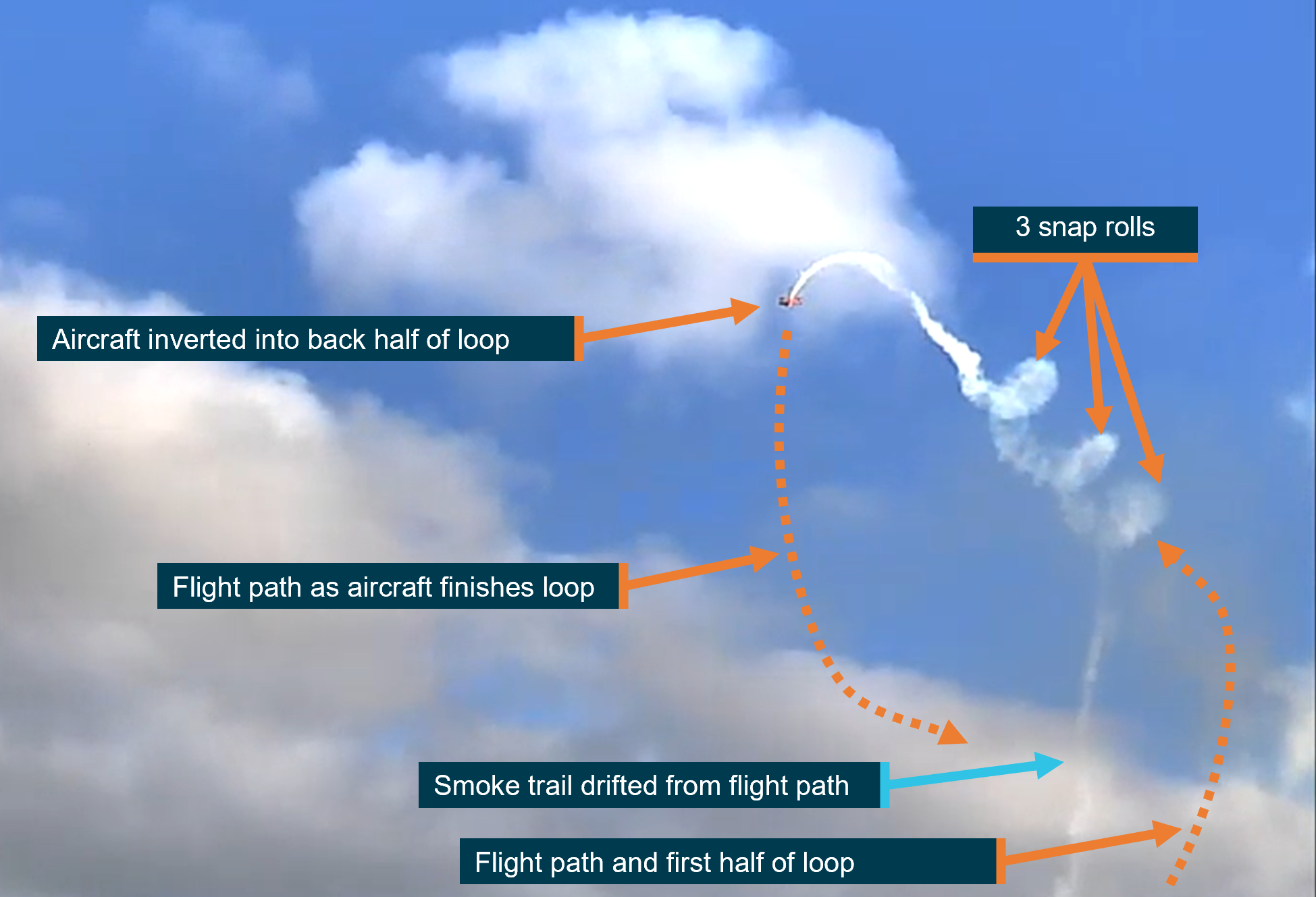
Note: This is a still image extracted from a video recording of the validation flight (refer to section titled Flight validation). Source: AMDA Foundation, annotated by the ATSB
Context
Pilot information
The pilot held a valid commercial pilot licence (aeroplane) and class 2 aviation medical certificate. They successfully completed a private instrument rating in August 2023, which satisfied the requirements of a flight review for single-engine aircraft. Additionally, they had the required flight activity and aircraft design feature endorsements to conduct a formation aerobatic display in the Pitts S1-11X aircraft without a minimum altitude limitation. Their formation aerobatics flight activity endorsement was issued in July 2015.
The pilot’s logbook, which was completed up to 17 March 2025, showed a total flying experience of 2,248.6 hours. It recorded multiple aerobatic preparation flights in VH-PVX and evidence of participation in other airshows. The pilot had also conducted practice flights for the Avalon airshow between 17 March 2025 and the accident flight.
Aircraft information
The aircraft was a single-seat aerobatic Pitts S1-11X amateur-built biplane, modified from the Pitts S1-11B and constructed in Germany in 2010 by Wulf (Wolf) Aircraft. It was powered by a Ly-Con AEIO-540-EXP experimental engine and fitted with a 3-bladed, MTV-6 constant-speed propeller of laminated wood construction. The aircraft was a combination of fabric-covered wood and metal, and composite fibre structure and designed for unlimited aerobatics up to +/-10 G.
The aircraft was first registered in Australia in 2015 and issued with a special certificate of airworthiness in the experimental category.[5] It had been operated by Paul Bennet Airshows since that time. The aircraft was to be maintained as per Civil Aviation Safety Authority Schedule 5 and required a periodic inspection every 100 hours or 12 months, whichever came first. The most recent periodic inspection was conducted by an authorised maintenance organisation on 28 February 2025. At the time of the accident the aircraft had accumulated 303 hours total time-in-service, about 5 hours since the previous periodic inspection. There were no defects listed on the aircraft maintenance release.[6]
Meteorological information
The Bureau of Meteorology provided automated weather observations taken at 1-minute intervals at Avalon Airport during the aerobatic display. Between 1710 and 1717, the highest recorded windspeed was 5 kt with gusts up to 6 kt. The temperature was 30°C, visibility greater than 10 km, and the atmospheric pressure ranged 1015–1014 hPa for the period.
Wreckage and impact information
The aircraft collided with terrain on a grassed area west of runway 18/36,[7] in an area of the airport designated as the pyrotechnics box[8] (Figure 2) where multiple pyrotechnics were live and were planned to be used in the show. Additionally, there were many boxes of fuel positioned in the pyrotechnic box that were planned to be ignited during the ‘wall of fire’ display later that evening.
Figure 2: Accident site location

Source: Google Earth, annotated by the ATSB
A ground scar, approximately 95 m long, was on a south-south-west heading (Figure 3). The aircraft came to rest upright and oriented toward north, almost opposite the direction of the impact sequence and debris trail. The initial impact point occurred several metres from the fuel boxes within the pyrotechnics array.
While the ATSB conducted a preliminary examination of the accident site, due to access restrictions for the operational airport and airshow, the aircraft wreckage was relocated to a secure facility for detailed examination.
Figure 3: Accident site overview showing the location of the initial impact mark, pyrotechnics array, and the wreckage of VH-PVX

Source: No 1 Security Forces Squadron, annotated by the ATSB
The aircraft sustained substantial damage from the impact with terrain (Figure 4). Examination of the wreckage at a secure facility identified:
- no evidence of pre-impact defects with the flight control system or fuselage structure to the extent that could be determined
- the uppermost section of the canopy was fractured and parts of the airframe had departed the main structure
- the engine had separated from the airframe
- the propeller blades had fragmented, however, the propeller hub remained attached to the engine
- the front landing gear was distorted
- the upper and lower wings had separated, and the lower fuselage section had sustained compression damage
- the rigid outlet lines from the fuel tanks were fractured resulting in post-accident leakage of fuel.
Figure 4: Aircraft wreckage at the accident site

Source: ATSB
Aerobatic manoeuvre
Practice flights
A review of training videos showed that previous triple avalanche manoeuvres performed by the pilot in VH-PVX were started at approximately 200 ft above ground level (AGL)[9] and an airspeed of 165 kt. The recordings showed the aircraft would reach an altitude of approximately 800 ft prior to entering the snap rolls. The aircraft would climb during the rolls to about 1,100 ft before beginning the back half of the loop. After the accident, the pilot reported that their normal minimum altitude for commencing the snap rolls was 1,000 ft.
Accident flight
The ATSB recovered a GoPro video camera from within the cockpit of the aircraft that was forward facing and operating during the accident flight. Flight instruments including the altimeter and airspeed gauges were visible in the recording. The recording identified that the pilot set the altimeter to 0 ft (runway reference height) prior to take-off, in accordance with their standard practice when conducting aerobatic manoeuvres.[10]
During entry to the triple avalanche, the indicated airspeed was approximately 165 kt and the altitude was 100 ft. Just before the aircraft reached its peak altitude, the altimeter was showing 700–800 ft (Figure 5). After this point, the altimeter was blocked from the camera’s view by the pilot’s body position just prior to the collision with terrain.
Figure 5: Still image from the accident flight recording showing the altimeter just prior to the first snap roll during the triple avalanche manoeuvre
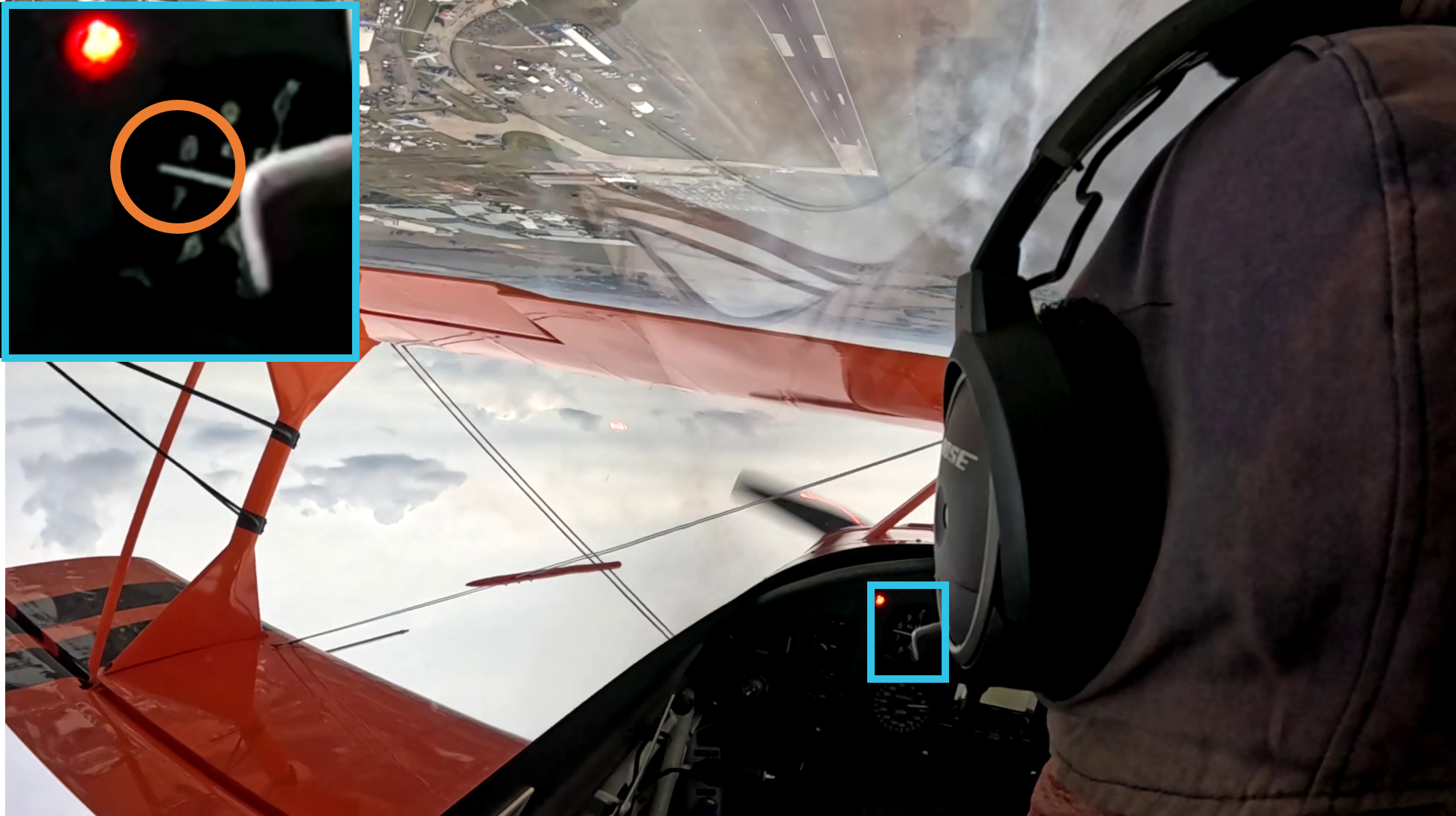
Source: ATSB
Figure 6 provides a representation of the triple avalanche manoeuvre, showing the loop with the 3 snap rolls (indicated by inverted triangles) and the approximate position where the image shown in Figure 5 was taken.
Figure 6: Triple avalanche profile and the approximate position in the manoeuvre where the still image from Figure 5 (above) was taken

Source: ATSB
Flight validation
The event organiser required that participants in the airshow successfully complete a flight validation prior to the public display. On 26 March 2025, the formation group satisfied the flight validation requirement, which included the pilot completing the accident manoeuvre in VH-PVX. The event organiser validation report had not noted any concerns about the routine or ability of those involved to successfully perform it on the day of the show.
Emergency response
Due to the location of the accident, the pyrotechnicians were nearby and therefore were first to arrive at the aircraft wreckage and assist the pilot. The pyrotechnicians reported that the pilot was wearing a 5-point safety harness, and the cockpit canopy remained closed. They also reported difficulties opening the canopy as there was not an obvious mechanism or external signage on the aircraft to assist them. The first responders reported smelling fuel and observing it leaking from the aircraft, however, there was no post-impact fire.
The Aviation Rescue Fire Fighting (ARFF) service was notified of the accident at 1718 and arrived onsite at 1721. The ARFF provided 3 tenders, 2 responding from the main southern base and one from the northern temporary base. They reported their response times were increased as, while the pyrotechnicians were busy providing first aid to the pilot, they were unable to be safely guided by the technicians through the pyrotechnics area. Additionally, the northern ARFF response vehicle had to deviate around a passenger-carrying jet aircraft on the northern taxiway. ARFF responders took control of the scene and continued providing first aid to the pilot until an ambulance arrived at 1731. The pilot was subsequently transported to hospital by helicopter.
Further investigation
To date, the ATSB has:
- examined the accident site and aircraft wreckage
- interviewed the pilot, operator, and first responders
- reviewed the meteorological conditions during the display routine
- reviewed accident and training video recordings.
The investigation is continuing and will include review of:
- components recovered from the aircraft
- the aircraft maintenance records
- video recordings of the accident flight
- the emergency response plan and actions of the responsible organisations
- preparation for the display
- survivability factors.
A final report will be released at the conclusion of the investigation. Should a critical safety issue be identified during the course of the investigation, the ATSB will immediately notify relevant parties so appropriate and timely safety action can be taken.
Purpose of safety investigationsThe objective of a safety investigation is to enhance transport safety. This is done through:
It is not a function of the ATSB to apportion blame or provide a means for determining liability. At the same time, an investigation report must include factual material of sufficient weight to support the analysis and findings. At all times the ATSB endeavours to balance the use of material that could imply adverse comment with the need to properly explain what happened, and why, in a fair and unbiased manner. The ATSB does not investigate for the purpose of taking administrative, regulatory or criminal action. About ATSB reportsATSB investigation reports are organised with regard to international standards or instruments, as applicable, and with ATSB procedures and guidelines. Reports must include factual material of sufficient weight to support the analysis and findings. At all times the ATSB endeavours to balance the use of material that could imply adverse comment with the need to properly explain what happened, and why, in a fair and unbiased manner. An explanation of terminology used in ATSB investigation reports is available here. This includes terms such as occurrence, contributing factor, other factor that increased risk, and safety issue. Publishing informationReleased in accordance with section 25 of the Transport Safety Investigation Act 2003 Published by: Australian Transport Safety Bureau © Commonwealth of Australia 2025 
Ownership of intellectual property rights in this publication Unless otherwise noted, copyright (and any other intellectual property rights, if any) in this report publication is owned by the Commonwealth of Australia. Creative Commons licence With the exception of the Commonwealth Coat of Arms, ATSB logo, and photos and graphics in which a third party holds copyright, this report is licensed under a Creative Commons Attribution 4.0 International licence. The CC BY 4.0 licence enables you to distribute, remix, adapt, and build upon our material in any medium or format, so long as attribution is given to the Australian Transport Safety Bureau. Copyright in material obtained from other agencies, private individuals or organisations, belongs to those agencies, individuals or organisations. Where you wish to use their material, you will need to contact them directly. |
[1] Ship: refers to multiple aircraft flying in formation together. The preceding number refers to the number of aircraft in the formation.
[2] The triple avalanche aerobatic manoeuvre is a basic loop with 3 snap rolls at the top of the loop.
[3] Snap roll: is similar to an accelerated horizontal spin and is essentially an autorotation with one wing stalled.
[4] Aerodynamic stall: occurs when airflow separates from the wing’s upper surface and becomes turbulent. A stall occurs at high angles of attack, typically 16˚ to 18˚, and results in reduced lift.
[5] Experimental category: the Civil Aviation Safety Authority can issue experimental certificates to allow specific operations of aircraft, which are not by their nature type certificated or have modifications incorporated that are not yet approved.
[6] Maintenance release: an official document, issued by an authorised person as described in Regulations, which is required to be carried on an aircraft as an ongoing record of its time in service and airworthiness status. Subject to conditions, a maintenance release is valid for a set period, nominally 100 hours’ time in service or 12 months from issue.
[7] Runway number: the number represents the magnetic heading of the runway – in this case, 176° and 356°.
[8] Pyrotechnics box: an area of the airport designated for pyrotechnics which were used during the airshow to be set-up and detonated.
[9] Altitude above ground level: as the altimeter setting is set to 0 ft, the altitudes in this report are given above ground level unless otherwise stated.
[10] Altimeter setting: setting the altimeter to 0 ft on the ground gives the pilot an accurate representation of their altitude above the ground level in that area.
Occurrence summary
| Investigation number | AO-2025-017 |
|---|---|
| Occurrence date | 28/03/2025 |
| Occurrence time and timezone | 1717 Australian Eastern Daylight Time |
| Location | Avalon Airport |
| State | Victoria |
| Report release date | 30/06/2026 |
| Report status | Final |
| Investigation level | Short |
| Investigation type | Occurrence Investigation |
| Investigation status | Completed |
| Mode of transport | Aviation |
| Aviation occurrence category | Collision with terrain, Loss of control |
| Occurrence class | Accident |
| Highest injury level | Serious |
Aircraft details
| Manufacturer | Amateur Built Aircraft |
|---|---|
| Model | Wolf Pitts S1-11X |
| Registration | VH-PVX |
| Serial number | UB001 |
| Aircraft operator | Paul Bennet Airshows Pty Ltd |
| Sector | Piston |
| Operation type | Part 91 General operating and flight rules |
| Activity | General aviation / Recreational-Sport and pleasure flying-Aerobatics |
| Departure point | Avalon Airport, Victoria |
| Destination | Avalon Airport, Victoria |
| Injuries | Crew - 1 (serious) |
| Damage | Substantial |