Collision with terrain involving Van's Aircraft RV-6, VH-TXF, near Mudgee Airport, New South Wales, on 14 September 2014
Final report
Report release date: 15/01/2016
Safety summary
What happened
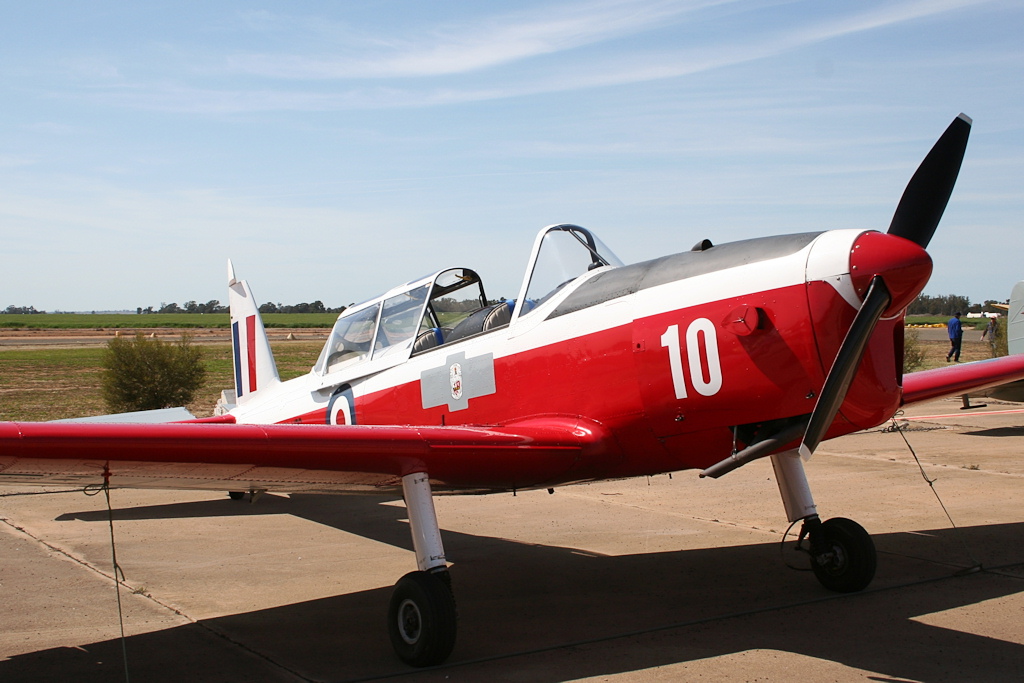
On the morning of 14 September 2014, the pilot and passenger of an amateur-built Van's Aircraft RV-6, two-seat aeroplane, registered VH-TXF and operated in the ‘Experimental’ category, approached Mudgee Airport. The aircraft had departed Dubbo Airport, New South Wales about 25 minutes earlier.
The pilot approached from the north-west and conducted a non-standard circuit entry including an orbit to the south of the airport. Prior to turning onto the downwind leg of the circuit, the aeroplane descended to about 600 ft above ground level. Witnesses stated that the pilot conducted a tight left turn onto final approach at a slow speed and low height. The witnesses also recalled hearing the aeroplane’s engine ‘splutter’ and then silence during the turn, followed by a ‘rev’ followed again by silence.
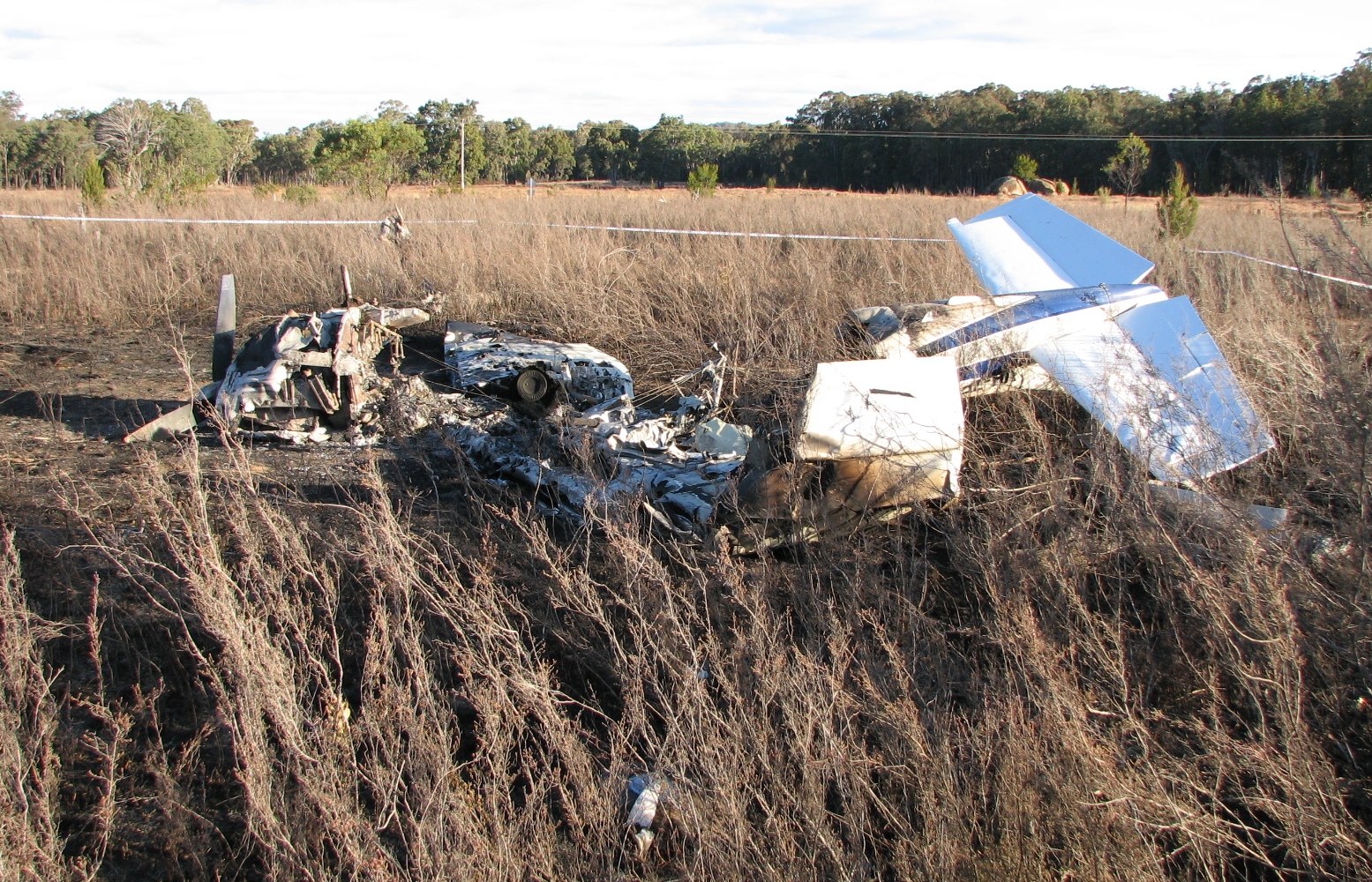
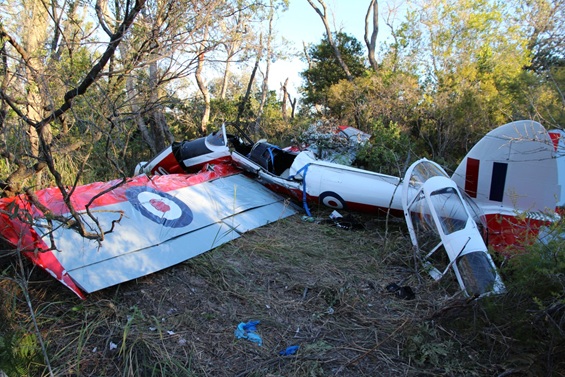
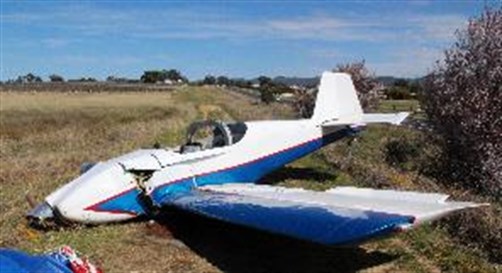
The aeroplane continued its high angle of bank left turn and, at about 1053, collided with terrain about 300 m south-west and short of the runway threshold. The pilot and passenger were fatally injured, and the aeroplane was substantially damaged.
What the ATSB found
The ATSB found that during the turn onto final approach to land, the aeroplane’s engine ceased operating. The aeroplane’s airspeed before the engine failure was within about 0.5 kt of the estimated stall speed during the high-bank turn. After the engine failure, it is likely the aeroplane entered an aerodynamic stall. The associated loss of control was not recovered, and the aircraft continued in the turn until it collided with terrain.
The ATSB also found that the engine failure was probably due to carburettor icing. No defects were identified that would have precluded normal engine operation prior to the accident, and uncontaminated fuel was being supplied to the engine at that time. However, the environmental conditions at the time of the accident were conducive to serious carburettor icing at descent power, and the pilot-operated carburettor heat control was found in the OFF position.
Analysis of the aeroplane’s global positioning system data showed that it was common for this pilot to fly approaches at lower than recommended circuit heights and at speeds close to the aircraft’s stall speed. On the turn to final approach on the accident flight, any loss of airspeed would have left a very short time before the aeroplane reached the stall speed.
The ATSB also found that the aeroplane’s weight was higher than the design limits. However, the effect of this weight on aircraft performance was not considered to have contributed to the accident.
The aeroplane was not required to be, and was not fitted with an angle-of-attack indicator or stall warning device.
Safety message
All pilots of aircraft fitted with a carburettor are advised to check the forecast weather conditions and consider the risk of carburettor icing as a result of those conditions prior to each flight.
Although amateur-built aeroplanes operated in the Experimental category are not required to be fitted with a stall warning device, owner-pilots should consider the benefits of such devices as a last line of defence against the inadvertent approach to, or entry into an aerodynamic stall.
Source: ATSB
The occurrence
At about 1024 Eastern Standard Time[1] on Sunday 14 September 2014, the pilot and passenger of an amateur-built Van's Aircraft RV-6 aeroplane, registered VH-TXF, departed Dubbo Airport on a private flight to Mudgee Airport, New South Wales.
At about 1049 the pilot approached Mudgee Airport from the north-west and conducted a nonstandard circuit entry. This included an orbit to the south of the airport. Airport audio recordings of aircraft broadcasts show that throughout the arrival at Mudgee, the pilot made all of the standard radio calls, including traffic advice of joining crosswind, base leg, and final approach for runway 04.[2] The pilot did not make any broadcasts suggesting any problems with the aircraft.
Prior to turning onto the downwind leg of the circuit, the aeroplane descended to about 600 ft above ground level. Witnesses stated that they saw the aeroplane turn left at about 45° angle of bank onto final approach at a slow speed and at a lower height than usual. The witnesses also recalled hearing the aeroplane’s engine ‘splutter’ and then silence during the turn, followed by a ‘rev’ followed again by silence.
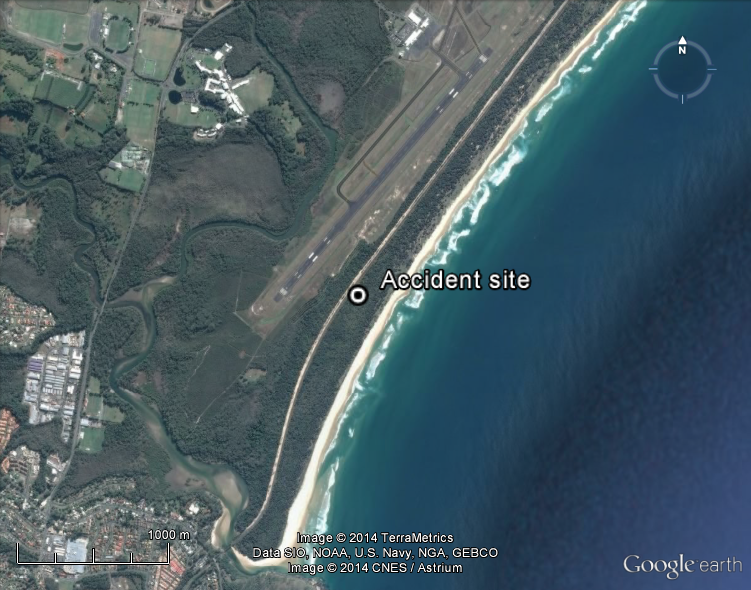
The aeroplane continued its high angle of bank left turn beyond the final approach heading and, at about 1053, collided with terrain about 300 m south-west and short of the threshold of runway 04 (Figure 1 and Figure 2). No witnesses reported seeing the aeroplane impact the terrain.
The pilot and passenger were fatally injured, and the aeroplane was substantially damaged.
Figure 1: Aerial view of the accident site on the day, showing the threshold of runway 04 and direction of travel prior to impact
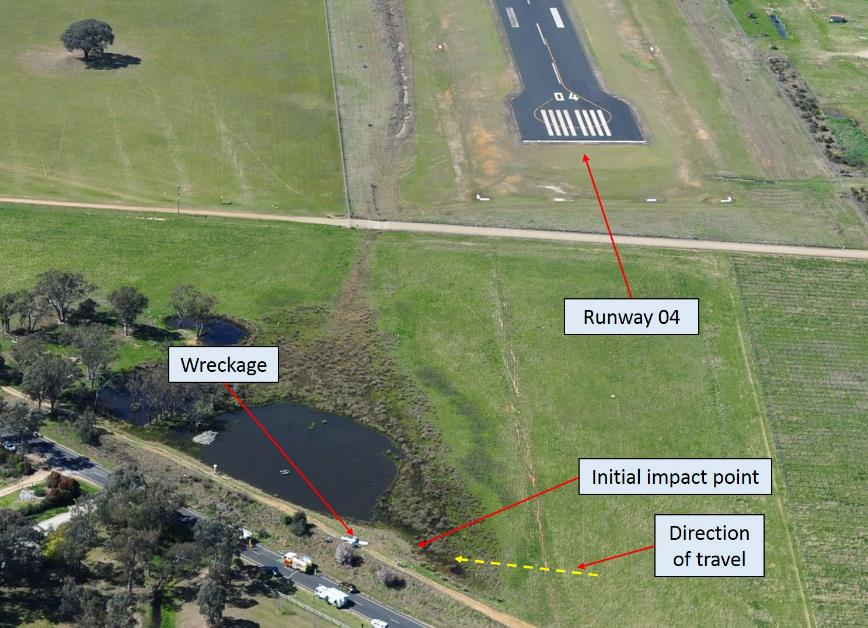
Source: NSW Police Force, modified by the ATSB
Figure 2: Accident site, looking east-south-east and showing the airport boundary fence
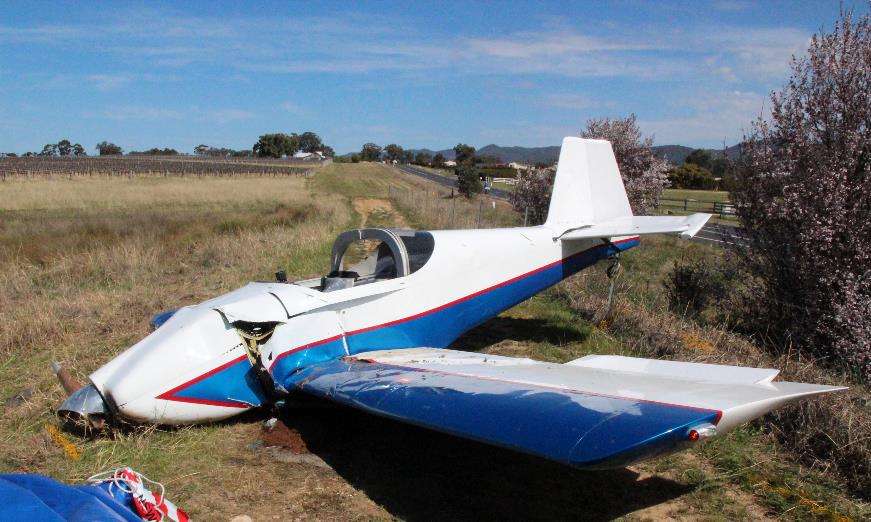
Source: ATSB
__________
- Eastern Standard Time (EST) was Coordinated Universal Time (UTC) + 10 hours.
- Runways are named by a number representing the magnetic heading of the runway.
Context
Pilot information
Qualifications and experience
The pilot held a Private Pilot (Aeroplane) Licence and the appropriate ratings and endorsements to operate the Van's Aircraft RV-6 (RV-6). The pilot also held a valid Class 2 Aviation Medical Certificate, which was sufficient for the pilot to exercise the privileges of their licence.
The last recorded entry in the pilot’s logbook was on 14 June 2014. A review of the pilot’s logbook and aircraft maintenance release for VH-TXF (TXF) indicated that the pilot had accrued a total of about 764 hours flight time. The pilot’s most recent biennial aeroplane flight review was on 9 June 2014.
A flying instructor who had flown with the pilot stated that the pilot was very aware of the risk of carburettor icing, and was in the habit of using carburettor heat at lower power settings.
Recent history
The only recorded flying by the pilot in the week prior to the accident was a 2.9-hour flight from Traralgon, Victoria, to Dubbo on 12 September 2014. Friends of the pilot reported that, on the evening before the accident, the pilot retired at about 2200, and was observed outside the hotel room the next morning at about 0800. There was no evidence that fatigue contributed to the accident.
Aircraft information
General information
TXF was a two-seat Van's Aircraft RV-6 aeroplane, and was manufactured by the pilot from a kit. It was first registered in Australia on 10 July 2001 and the kit was completed in 2006 (serial number 24677). TXF had accumulated about 425 hours total time in service at the time of the accident.
The aircraft was operated in the ‘Experimental’[3] category.
Maintenance history
Examination of the aeroplane’s maintenance records indicated that it was maintained to a day visual flight rules[4] standard in the experimental category. The last periodic inspection was completed on 16 December 2013, and a maintenance release was issued at that time. At the time of the accident, all of the required maintenance had been completed and there were no outstanding recorded defects.
Weight and balance
The aircraft kit manufacturer-published recommended gross weight for the RV-6 was 727 kg. This was also detailed on the aircraft’s data plate.[5] The pilot had generated their own weight and balance calculation paperwork, which detailed a maximum allowable gross weight of 748 kg. This paperwork, which the pilot carried in the aeroplane, indicated that the aeroplane’s gross weight on departure from Dubbo was 740 kg and was planned at about 731 kg on arrival at Mudgee.
The ATSB calculated that the aeroplane was about 4 kg over the manufacturer-recommended gross weight on arrival at Mudgee. However, according to the pilot’s paperwork, the aeroplane was within the pilot’s calculated flight envelope. The ATSB could not identify any data to indicate how the pilot determined the new gross weight for the aircraft. A calculation was performed by the ATSB to examine the effects of the weight increase on the aeroplane’s aerodynamic stall speed.[6] This calculation indicated that the aeroplane’s stall speed would have increased by about 0.5 kt.
Meteorological information
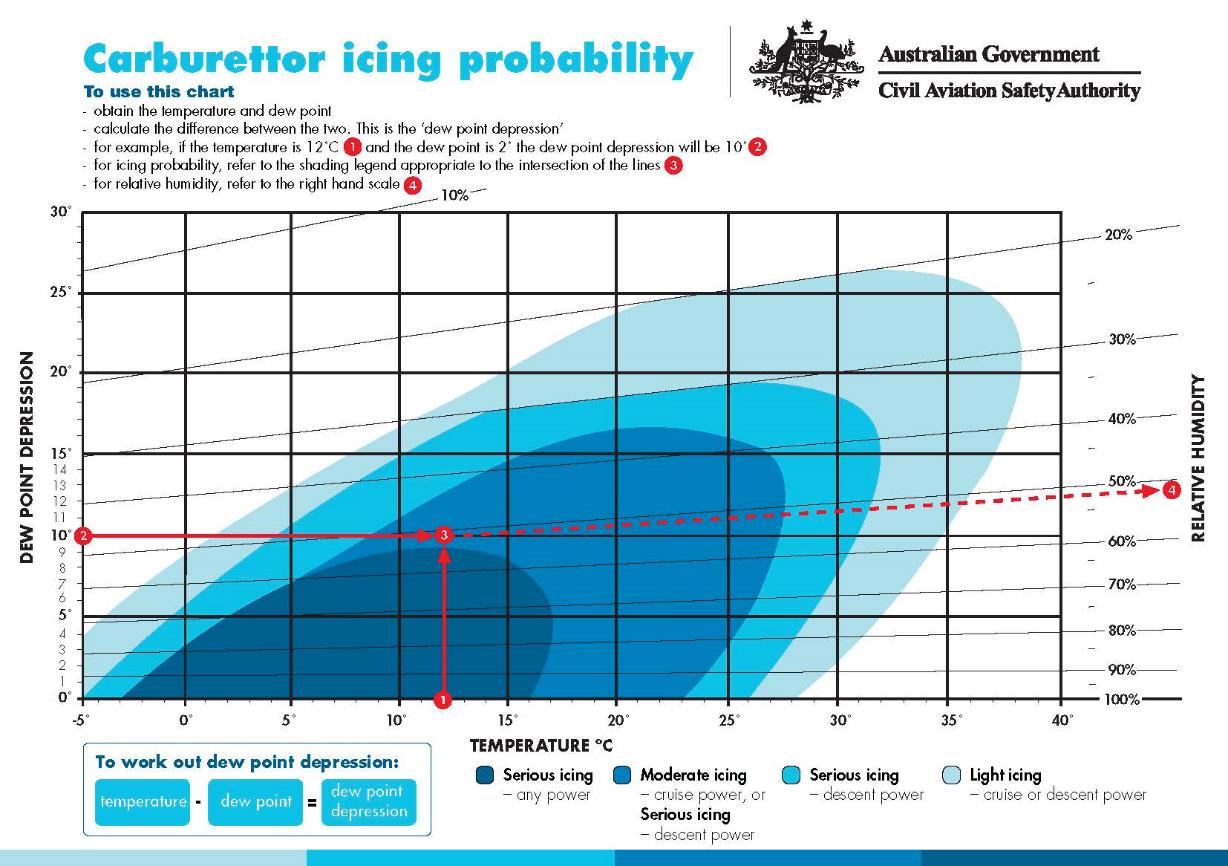
The observed weather at Mudgee Airport at the time was fine with a 6 kt breeze from the north and no cloud in the vicinity. The recorded temperature at about the time of the accident was 17 °C, with a dew point[7] of 11 °C. Given those temperatures, the probability of carburettor icing was calculated to be in the serious icing range for descent power, and moderate icing with cruise power selected (see appendix A – Carburettor icing-probability chart, available from the Civil Aviation Safety Authority (CASA) website).
Wreckage examination
Overview
The aeroplane struck the ground in a north-westerly direction, coming to rest about 18 m beyond the initial impact point. The impact collapsed the aeroplane’s fixed landing gear, damaged the engine, carburettor and air filter and ruptured the left wing fuel tank. The damage to the aeroplane and surrounding area indicated that the aeroplane impacted the ground in an upright, slightly leftwing low and nose-down attitude. All of the aeroplane’s major components were accounted for at the site. No evidence of fire or pre-impact damage was observed and flight control continuity was verified.
One blade of the aeroplane’s two-bladed wooden propeller was broken off at the root and shattered (Figure 3). The other blade remained attached to the hub. The unbroken blade and metal spinner that covered the propeller hub exhibited no evidence of rotational scratch marks or power at impact.
Figure 3: Broken two-bladed propeller blade and metal spinner, showing the reconstructed detached/shattered blade
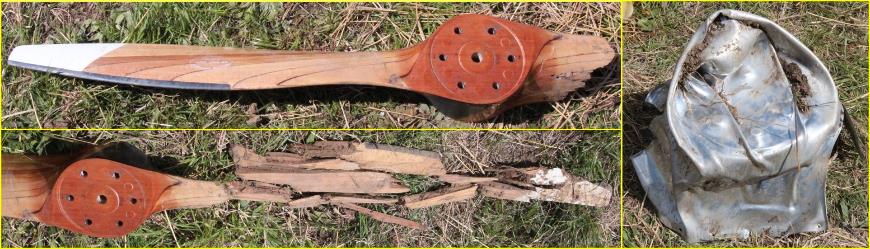
Source: ATSB
The engine and a number of other items and components from TXF were recovered for technical examination at an approved engine overhaul facility and at the ATSB’s technical facilities in Canberra, Australian Capital Territory. This included a portable Garmin GPSMAP 296 global positioning system (GPS) receiver.
Fuel
The left fuel tank was breached along a rivet line, consistent with impact forces. Witnesses reported fuel running from the rivet line before being plugged by the attending fire service.
On examination by the ATSB, about 20 L of fuel remained in the left fuel tank and about 65 L in the right fuel tank. The fuel tank selector in the cockpit was selected to the right tank. Fuel was observed:
- throughout the fuel system through to the engine-driven fuel pump
- to run from the damaged carburettor bowl and its filter screen
- to be free of debris and water throughout the aeroplane’s fuel system, and of a colour and odour that was consistent with aviation gasoline.
The ATSB concluded that fuel starvation or contamination did not contribute to the loss of engine power.
Survivability
The aeroplane was fitted with a 5-point harness for each seating position and both occupants were wearing their harness. The lap belts and crotch straps remained anchored to the floor and the shoulder harnesses were appropriately anchored to the fuselage structure behind the occupant’s seats and luggage area. ATSB analysis based on estimates of aircraft speed, impact angle, and energy absorption indicated that the impact forces imparted to the occupants would normally be expected to result in serious to fatal injuries.
During the impact sequence, the sides of the cockpit buckled, reducing the liveable space and allowing the fuselage behind the pilot and passenger to move forward (Figure 4). As a result, both occupants’ shoulder harnesses slackened and the occupants were no longer adequately restrained. Together with the effect of the estimated impact forces imparted to the occupants, this reduction in liveable space meant that the accident was considered not survivable.
Figure 4: Cockpit region showing buckling alongside the left and right seats
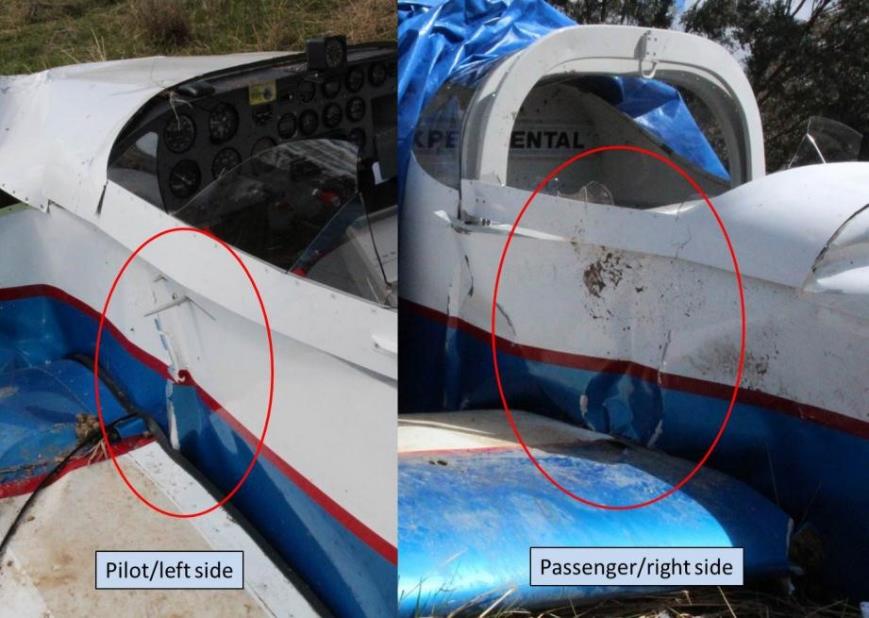
Source: ATSB
Engine and associated components examination
The aeroplane’s engine and associated components were removed and taken to an approved engine overhaul facility for disassembly and detailed examination under the supervision of the ATSB. No evidence was found to suggest abnormal engine operation prior to the impact with terrain. The engine’s two magnetos[8] and associated spark plugs performed correctly when examined and operationally tested on their respective test rigs.
Recorded data
Recorded data from the aircraft’s portable Garmin GPSMAP 296 GPS, including of the accident flight, was successfully downloaded at the ATSB’s technical facilities. This data included a series of points indicating the aeroplane’s latitude and longitude, altitude and the respective dates and times of those records.
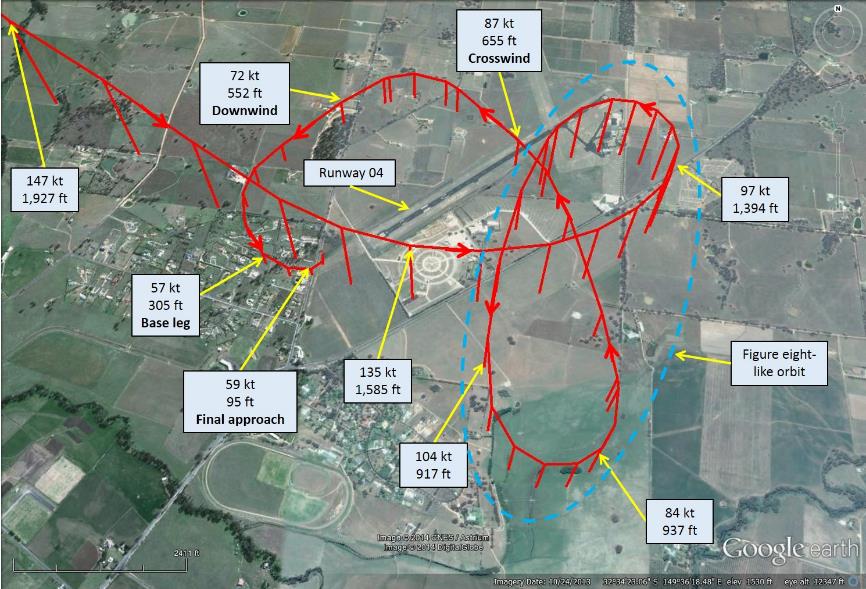
The data for the day of the accident commenced at about 1019 and showed the path taken by the pilot from start-up at Dubbo Airport to the approach at Mudgee Airport. ATSB analysis of this data determined the aircraft’s height above ground, ground speed and heading at the various data points. This included the circuit entry at Mudgee, a southerly, figure eight-like orbit prior to the aeroplane joining the downwind leg of the circuit and the turn onto final approach to land as described by witnesses (Figure 5).
Figure 5: ATSB analysis of the recorded GPS data for the flight showing the aircraft’s heading, height above ground, and ground speed at various data points. The area of the southerly, figure eight-like orbit is indicated by a dashed blue border
Source: Google earth, modified by the ATSB
Data recovered from the aircraft’s Garmin GPSMAP 296 GPS also provided the flight path details for a number of previous flights, up to, and including the accident flight. Circuit entry procedures were compared between flights carried out in 2014 to better understand the pilot’s usual handling of the aeroplane from entering the circuit, through to the landing. None of the approaches analysed displayed a similar figure eight-like orbit prior to joining the crosswind leg as was done on arrival at Mudgee (Figure 5).
A review of the accident and 22 previous final approaches was performed using the recorded GPS data and wind information from the aerodromes visited by the aircraft during those flights. The review found that on 18 occasions, the aeroplane was below 500 ft at the beginning of the final approach and, on 11 of the 22 final approaches, below the target approach speed of 63 kt (see Aeroplane approach speed considerations) on joining the final leg of the circuit. On 10 of the 18 occasions when the aeroplane was below 500 ft at the beginning of the final approach, it was also below the target approach speed of 63 kt.
At the estimated arrival gross weight of 731 kg the aircraft had a stall speed of 48 kt. Turning onto the final leg of the circuit at Mudgee, as derived from the GPS data, the aircraft had:
- a bank angle of about 48°
- a descent rate of 1,770 ft/min
- an airspeed of 59 kt (4 kt below the target approach speed)
- an accelerated stall speed of 58 kt.
In combination these findings indicated that the aeroplane’s airspeed was about 1 kt above the calculated accelerated stall speed, or within about 0.5 kt when considering the aeroplane’s increased weight, which was above the kit manufacturer’s recommended gross weight.
Additional information
Carburettor icing
Carburettor icing[9] can occur in temperatures up to about 38 °C, and is less likely in very cold climates. Increased humidity increases the likelihood of icing. If ice continues to accumulate within the carburettor, the flow of air into the engine reduces and eventually, if the process is allowed to continue, the engine will stop.
Carburettor icing is more pronounced if the engine is operating at a low power setting. In this case, the airflow through the carburettor is partially-impeded by the throttle butterfly valve. This valve provides more area on which the ice can accrete and increases the partial vacuum downstream of the valve. This causes further chilling of the air and the water droplets, further increasing the likelihood of ice accretion.
For aircraft with fixed pitch propellers, as ice forms there is typically a small decrease in engine RPM but the engine may continue to run smoothly. As ice continues to accumulate, the reduction in RPM continues and the engine will begin to run rough. If the icing conditions are severe enough, and the pilot takes no remedial action, the engine will eventually fail.[10]
A carburettor heat control was available in TXF. If selected, warm air was directed from a heat muff[11] installed on the exhaust system to the carburettor inlet, melting any ice in the venturi.
During the on-site examination, the carburettor heat control was identified in the OFF position (pushed in). It is possible that the impact sequence may have depressed the carburettor heat control. However, surrounding push/pull controls were undisturbed in their pulled-out positions.
The environmental conditions and time between the accident and the ATSB’s examination of the wreckage meant that any icing in the carburettor throat would have melted and not been detectable during that examination.
On 24 October 2014, the aeroplane kit manufacturer released a notification to RV-6 owners to inspect their heat muff installations for the correct installation of a vent screen. If placed in the wrong position, there was a chance that the screen may obstruct warm airflow to the carburettor, hindering the ability to remove carburettor ice and/or reduce engine performance. Examination of the exhaust system in TXF confirmed that the heat muff installation was a different type to that specified in the notification, which was therefore not applicable.
Aerodrome circuit entry procedures
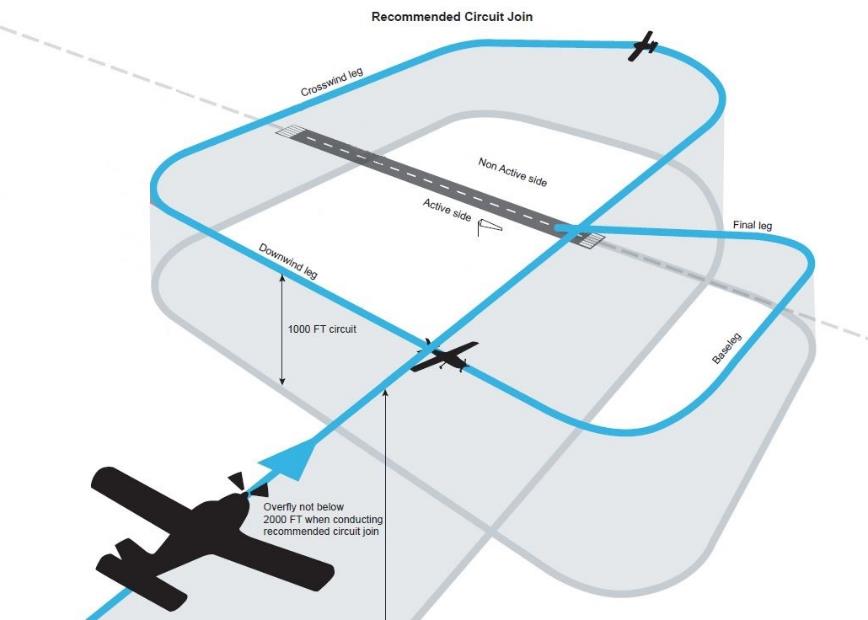
Among other guidance, CASA Civil Aviation Advisory Publication (CAAP) 166-1(3) Operations in the vicinity of non-controlled aerodromes strongly recommended the use of standard circuit procedures at all noncontrolled aerodromes.[12] Standard traffic circuit procedures were designed to facilitate orderly flow of aircraft traffic. Given these standard traffic circuit procedures, other aircraft operating in the vicinity of the aerodrome would have a reasonable expectancy of where to locate other joining and circuit traffic, informing affected pilots’ ‘see and avoid’ procedures (Figure 6). The traffic entry procedure generally consisted of overflying the aerodrome to ascertain the wind direction and which runway was in use by other aircraft, before joining a circuit pattern for landing.
Figure 6: Circuit entry procedures – non-controlled aerodrome
Aeroplane approach speed considerations
Approach speeds are based on the aeroplane’s aerodynamic stall speed. A safety margin of generally 1.3 times the aeroplane’s aerodynamic stall speed in the landing configuration is applied to determine an aircraft’s approach speed.
The kit manufacturer’s published stall speed for the RV-6 at 1 g[13] and a gross weight of 727 kg was 48 kt. Therefore, in an RV-6 at the recommended gross weight, the calculated approach speed would have been about 63 kt. As the g load is increased, as it generally would in a turn, the stall speed also increases. This is known as an accelerated stall.
Stall warning devices
Certified aeroplanes were required to have a stall warning. This could be satisfied by either the inherent aerodynamic qualities of the aeroplane, or by the installation of a technical device that gives clearly distinguishable indications of an aerodynamic stall under the expected conditions of flight.[14]
The Unites States Federal Aviation Administration issued InFo[15] 14010 on 14 July 2014. This document recommended the installation and use of angle of attack (AoA)-based systems to reduce the risk of inadvertent aerodynamic stall that may result in a loss of control accident. The kit manufacturer did not produce a stall warning kit specific to the RV-6, but did encourage builders and owners to consider installing AoA indicators.
TXF was not fitted with a stall warning device or an AoA indicator, nor was it required to be as it was not a certified design. This meant that the only stall warning available to the pilot was via the aircraft’s aerodynamic qualities.
The stall characteristics for each individual aeroplane of an amateur-built type depend to an extent on the precision of the aeroplane build. This necessitates the completion by the pilot of stall testing for the aeroplane and recording the results in the aircraft’s flight manual. The flight manual for TXF was not able to be located to verify the stall speed characteristics as compared to those of the kit manufacturer.
__________
- Experimental category aircraft include all amateur-built aircraft built since 1998 under Civil Aviation Safety Regulation Part 21, and are not certified designs.
- A set of regulations that allow a pilot to only operate an aircraft in weather conditions generally clear enough to allow the pilot to see where the aircraft is going.
- A fireproof plate attached to the aircraft giving the aircraft serial number and other basic information.
- An aerodynamic stall is a term used when a wing is no longer producing enough lift to support an aircraft's weight.
- Dew point is the temperature at which water vapour in the air starts to condense as the air cools. It is used among other things to monitor the risk of aircraft carburettor icing or likelihood of fog at an aerodrome.
- Independent ignition system fitted to aircraft piston engines.
- Carburettor ice is formed when the normal process of vaporising fuel in a carburettor cools the carburettor throat so much that ice forms from the moisture in the airflow which can restrict the airflow and interfere with the operation of the engine.
- Aircraft Owners & Pilots Association of Australia (AOPA) Air Safety Foundation (2009). Combating carb ice. Safety Brief SB09-10/09. (Available at www.asf.org).
- A heat muff is a heat exchanger wrapped around an exhaust system. It is usually used to supply warm air to the carburettor and provide cabin heat.
- An aerodrome at which air traffic control (ATC) is not operating. Mudgee was a non-controlled aerodrome.
- G Load is the nominal value for acceleration. In flight, g load values represent the combined effects of flight manoeuvring loads and turbulence. This can be a positive or negative value.
- Federal Aviation Regulation (FAR) 23.207(b).
- An InFo (Information for Operators) contains valuable information for operators. InFo 14010 is available on the Federal Aviation Administration website at http://www.faa.gov.
Safety analysis
Introduction
From witness information and examination of the accident site, it is evident that during the turn onto final approach, the pilot lost control of the aeroplane and was unable to recover before impacting the ground. The observed departure from controlled flight was consistent with an aerodynamic stall.
This analysis will consider the factors with the potential to have contributed to the loss of control.
Interpretation of the flight path
The ATSB did not identify any issues that would have required the pilot to orbit to the south of the aerodrome as shown on the global positioning system (GPS)-derived flight path profile. Although unable to be confirmed, it was possible that the pilot manoeuvred to view their accommodation, which was just to the south of the runway. Whatever the reason for the orbit, the ATSB believes that it was unrelated to the accident.
Engine operation
The witness accounts of the engine being silent during the turn onto final approach, and the lack of rotational signatures on the propeller, indicates that the engine was not operating when the aeroplane collided with terrain. No defects were identified that would have precluded normal engine operation prior to the accident, and uncontaminated fuel was being supplied to the engine at that time.
Conditions around the time of the accident were conducive to serious carburettor icing at descent power, such as during the circuit and approach onto final. In combination, the as-found positions of the carburettor heat control in the depressed OFF position, and of the surrounding push/pull controls in the pulled-outed positions, were consistent with the carburettor heat control being in the OFF position before impact. In this case, it is probable that the air temperature in the carburettor was in the icing range and that carburettor ice would have formed. Although the pilot was reported in the habit of using carburettor heat at lower power settings, it is possible they forgot on this occasion, or were not aware of the suitability of the environmental conditions for carburettor icing.
Witnesses reported only hearing unusual engine sounds during the pilot’s turn from downwind onto final approach. It is considered unlikely that there was a detectable performance issue prior to that turn because, had that been the case, the pilot would probably have modified their circuit to attempt an earlier forced landing on either of the available runways. Recovery from an engine failure at greater height allows for increased landing options. However, the witness reports of the pilot’s apparent attempt to restart the engine on final approach would suggest that any carburettor icing remained undetected throughout the join and initial legs of the circuit.
In the absence of contradicting evidence, and considering the witness observations, ambient conditions that were conducive to carburettor icing and lack of any indication of propeller rotation at impact, the ATSB concluded that it was probable the engine failed during the final turn due to carburettor icing.
Weight and balance
The evidence indicated that the pilot was operating the aeroplane above the kit manufacturer’s recommended gross weight and above the gross weight as stated on the aeroplane’s data plate. The use of extrapolated data outside the recommended flight envelope is not considered accurate, precluding a full understanding of the effect on the aircraft’s performance. However, using the gross weight figure recorded on the pilot’s flight planning documentation to estimate the aircraft’s centre of gravity suggested that the aircraft was within the kit manufacturer’s recommended limits.
Given the aircraft was being operated above its limiting gross weight, wreckage examination found no evidence of an in-flight structural failure. As a result, the most probable effects of the operation outside the kit manufacturer’s recommended maximum gross weight were a slightly increased stall speed and likely increased difficulty during recovery from a loss of control.
Approach speed consideration
Based on the recorded GPS flight data, the pilot commonly flew their approaches at lower than recommended circuit heights and at speeds close to the aircraft’s stall speed. On the accident flight, the stall margin was significantly reduced throughout the last 48° angle of bank turn, being within about 0.5 kt of the aircraft’s stall speed.
Any loss of airspeed in those conditions left a very short time before the aeroplane reached its stall speed. Given that the engine failed during the steep angle of bank and low speed turn onto final approach, it is probable that the aeroplane entered an accelerated aerodynamic stall soon after the engine failure, from which the pilot was unable to recover before colliding with terrain.
Findings
From the evidence available, the following findings are made with respect to the collision with terrain involving a Van's Aircraft RV-6, registered VH-TXF that occurred near Mudgee Airport, New South Wales on 14 September 2014. These findings should not be read as apportioning blame or liability to any particular organisation or individual.
Contributing factors
- As the aircraft was turned on to the final approach to land, the engine ceased operating.
- The meteorological conditions at the time of the accident were conducive to carburettor icing, which probably led to the engine stopping.
- The steep turn onto the final approach at low airspeed probably resulted in an accelerated aerodynamic stall shortly after the loss of engine power from which the pilot was unable to recover before impacting terrain.
Other factors that increased risk
- The aeroplane was not fitted with a stall warning device or angle of attack indicator, increasing the risk of inadvertent aerodynamic stall.
- The aeroplane was being operated at weights above the kit manufacturer’s recommended gross weight.
Sources and submissions
Sources of information
The sources of information during the investigation included the:
- pilot’s previous flying instructors
- aircraft kit manufacturer
- Civil Aviation Safety Authority
- United States Federal Aviation Administration
- New South Wales State Coroner
- New South Wales Police Force.
References
Australian Transport Safety Bureau, 2001, Melting Moments: Understanding Carburettor Icing, Educational fact sheet.
Civil Aviation Safety Authority, 2014, Visual Flight Rules Guide, CASA Aviation Safety Promotion.
Submissions
Under Part 4, Division 2 (Investigation Reports), Section 26 of the Transport Safety Investigation Act 2003 (the Act), the ATSB may provide a draft report, on a confidential basis, to any person whom the ATSB considers appropriate. Section 26 (1) (a) of the Act allows a person receiving a draft report to make submissions to the ATSB about the draft report.
A draft of this report was provided to the Civil Aviation Safety Authority.
No submissions were received.
Appendices
Appendix A – Carburettor icing-probability chart
Source: Civil Aviation Safety Authority
Purpose of safety investigationsThe objective of a safety investigation is to enhance transport safety. This is done through:
It is not a function of the ATSB to apportion blame or provide a means for determining liability. At the same time, an investigation report must include factual material of sufficient weight to support the analysis and findings. At all times the ATSB endeavours to balance the use of material that could imply adverse comment with the need to properly explain what happened, and why, in a fair and unbiased manner. The ATSB does not investigate for the purpose of taking administrative, regulatory or criminal action. TerminologyAn explanation of terminology used in ATSB investigation reports is available here. This includes terms such as occurrence, contributing factor, other factor that increased risk, and safety issue. Publishing informationReleased in accordance with section 25 of the Transport Safety Investigation Act 2003 Published by: Australian Transport Safety Bureau © Commonwealth of Australia 2016 
Ownership of intellectual property rights in this publication Unless otherwise noted, copyright (and any other intellectual property rights, if any) in this report publication is owned by the Commonwealth of Australia. Creative Commons licence With the exception of the Coat of Arms, ATSB logo, and photos and graphics in which a third party holds copyright, this publication is licensed under a Creative Commons Attribution 3.0 Australia licence. Creative Commons Attribution 3.0 Australia Licence is a standard form licence agreement that allows you to copy, distribute, transmit and adapt this publication provided that you attribute the work. The ATSB’s preference is that you attribute this publication (and any material sourced from it) using the following wording: Source: Australian Transport Safety Bureau Copyright in material obtained from other agencies, private individuals or organisations, belongs to those agencies, individuals or organisations. Where you wish to use their material, you will need to contact them directly. |
Occurrence summary
| Investigation number | AO-2014-149 |
|---|---|
| Occurrence date | 14/09/2014 |
| Location | Near Mudgee Airport |
| State | New South Wales |
| Report release date | 15/01/2016 |
| Report status | Final |
| Investigation level | Defined |
| Investigation type | Occurrence Investigation |
| Investigation status | Completed |
| Mode of transport | Aviation |
| Aviation occurrence category | Collision with terrain |
| Occurrence class | Accident |
| Highest injury level | Fatal |
Aircraft details
| Manufacturer | Amateur Built Aircraft |
|---|---|
| Model | Van's RV-6 |
| Registration | VH-TXF |
| Serial number | 24677 |
| Sector | Piston |
| Operation type | Private |
| Departure point | Dubbo, New South Wales |
| Destination | Mudgee, New South Wales |
| Damage | Substantial |