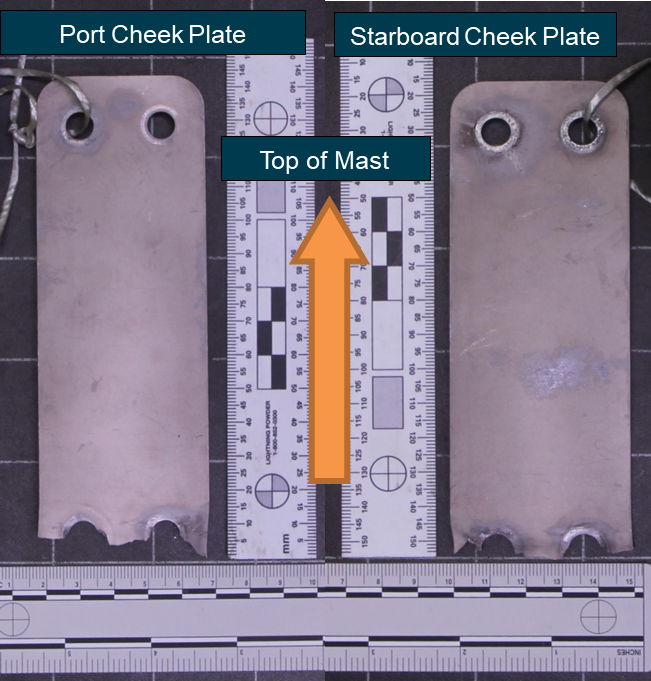
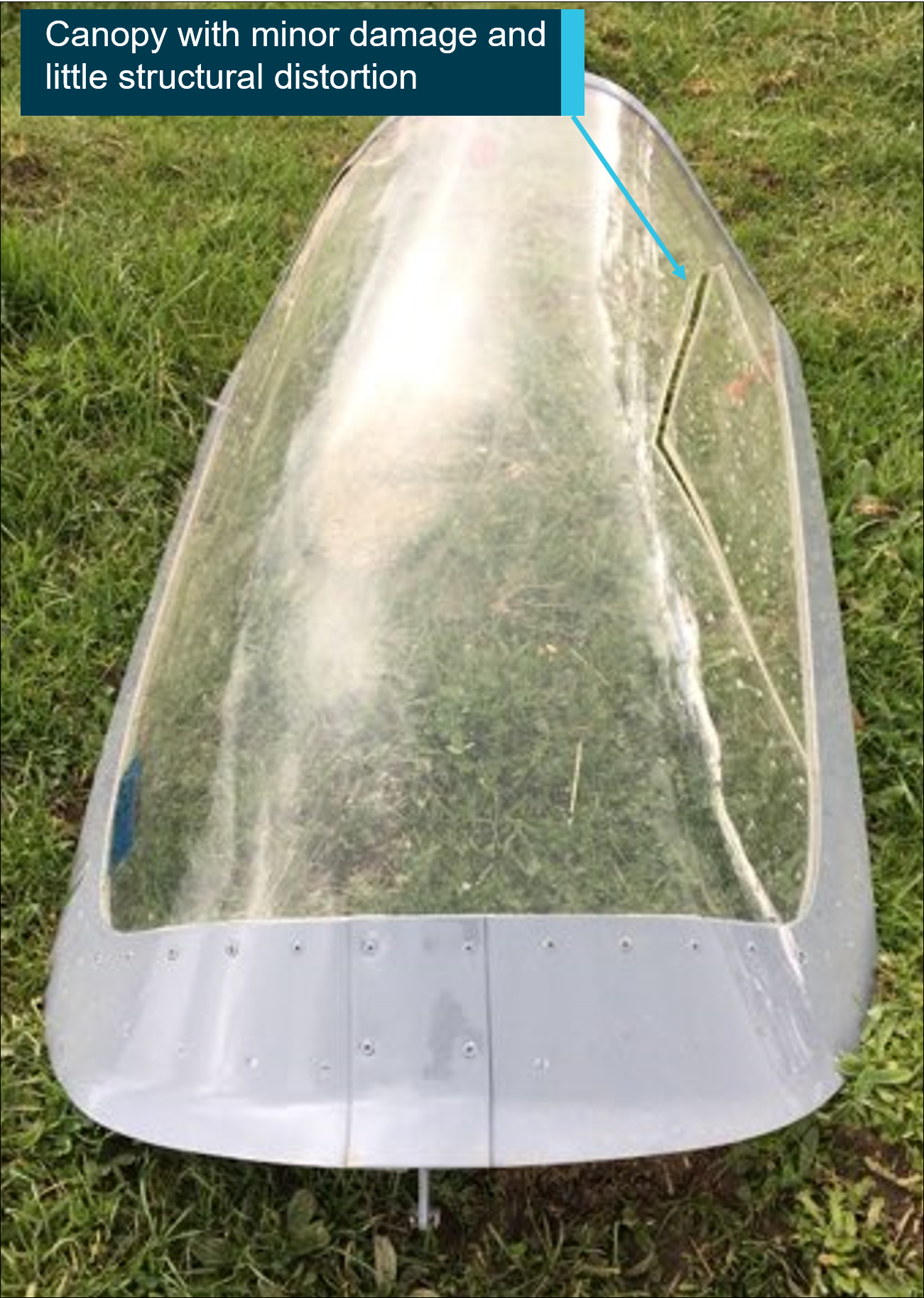
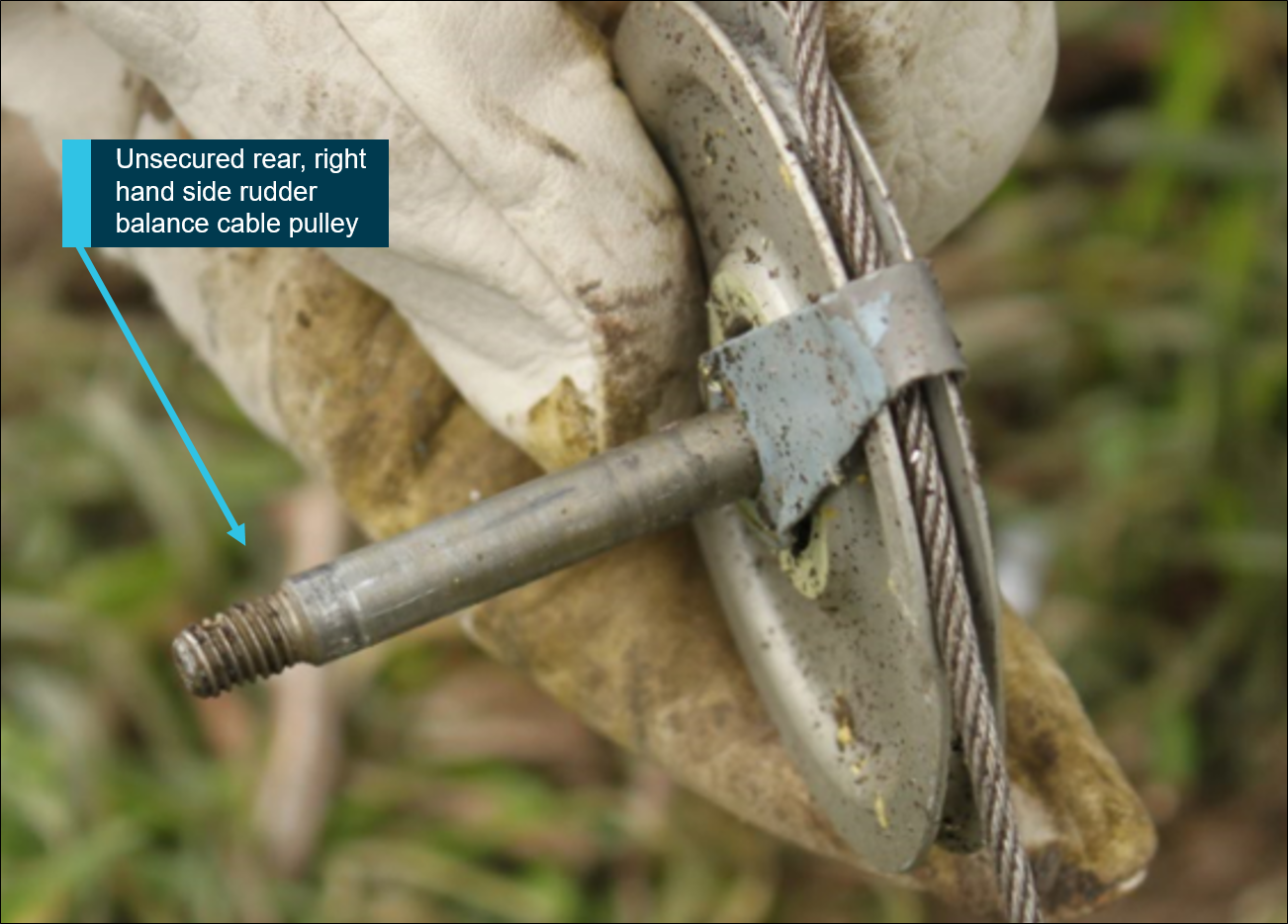
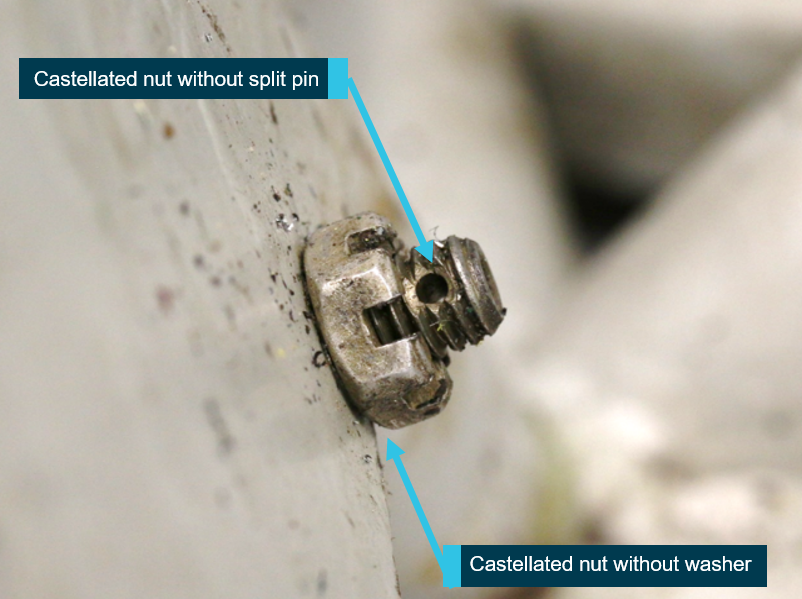
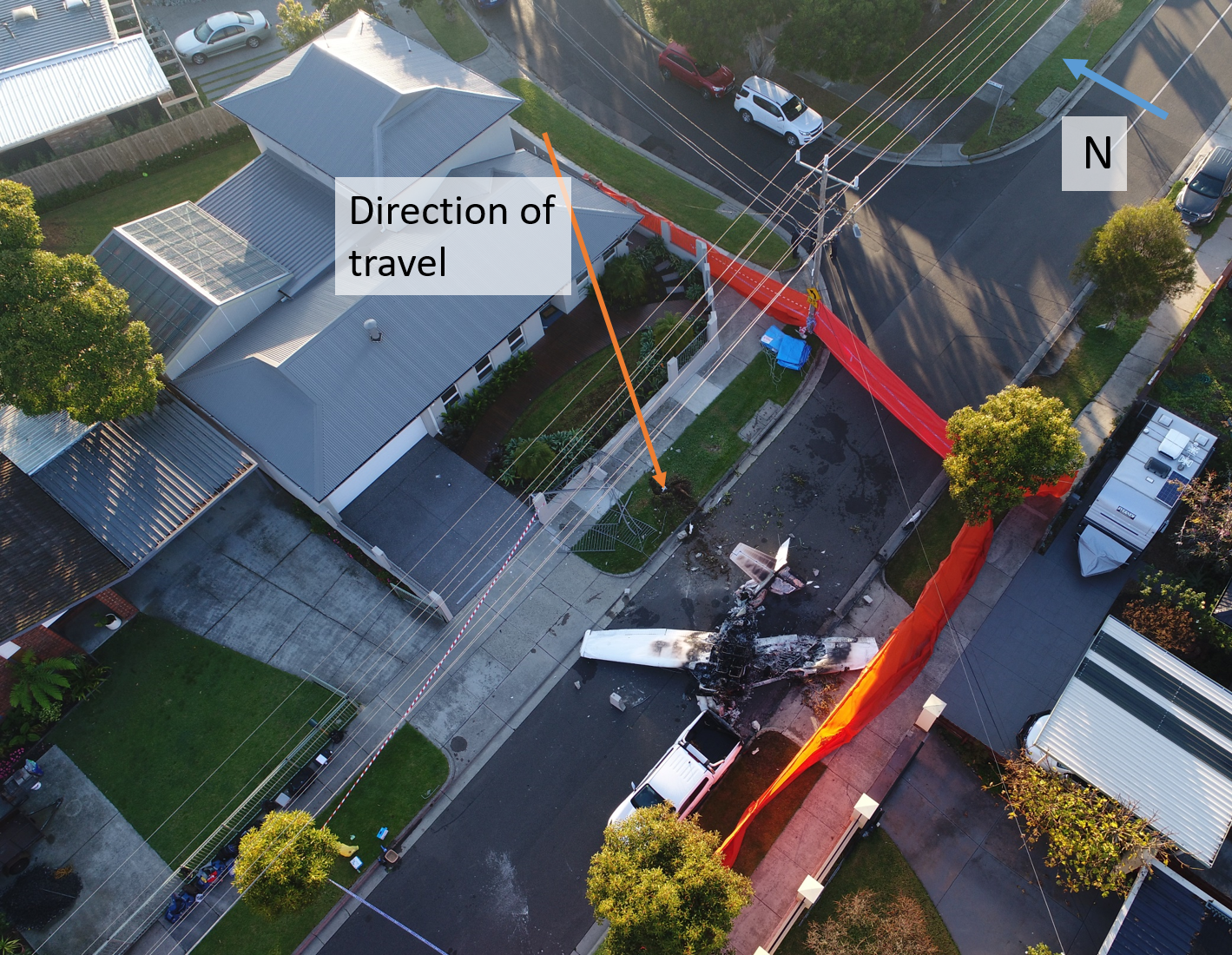
On 31 October 2018 a Titanium Explorer Autogyro, registered G-0014, collided with terrain approximately 1 km south‑east of Orange Airport, New South Wales. The pilot and passenger sustained fatal injuries. The rotors and masthead were found some distance from the main wreckage, having separated at the cheek plates (Figure 1). The cheek plates sit on either side of the collapsible mast and are designed to secure the mast in the upright position during operation.
The Australian Sport Rotorcraft Association commenced an investigation into this accident and requested technical assistance from the ATSB to examine the cheek plates and their fracture surfaces. Specifically, the ATSB was requested to determine the direction of fracture progression through the plates and to identify any factors that may have contributed to their failure.
To facilitate this work, the ATSB initiated an external investigation under the Transport Safety Investigation Act 2003.
Results
The ATSB examination undertook physical, microscopic and chemical analysis of the cheek plates. These examinations found that the plates had failed due to ductile overstress, commencing at the leading edge and progressing to the trailing edge (when oriented in the direction of travel). The plate’s dimensions and chemical composition were in accordance with manufacturer’s specifications and there was no evidence of any pre-existing defects.
Figure 1: Port and starboard cheek plates as supplied to the ATSB
Source: ATSB
With the completion of the component examinations, the ATSB has concluded its involvement in the investigation of this accident. Any further enquiries in relation to the investigation should be directed to the Australian Sport Rotorcraft Association.
______________
This report has been released in accordance with section 25 of the Transport Safety Investigation Act 2003.
On 29 October 2018, Lion Air Flight JT610, a scheduled domestic service from Jakarta to Pangkal Pinang, Indonesia, collided with water in the Java Sea, north of Jakarta, about 13 minutes after take-off. The aircraft, a Boeing 737 MAX 8, registered PK-LQP, was destroyed and all 189 passengers and crew on board were fatally injured.
As the accident occurred in Indonesia, the Indonesian National Transportation Safety Committee (NTSC) was responsible for investigating this occurrence. In accordance with Annex 13 to the Convention on International Civil Aviation, the ATSB appointed an accredited representative to the NTSC investigation. The ATSB provided specialist expertise to support the NTSC in downloading and analysing the flight data recorder (FDR) and cockpit voice recorder (CVR) from the aircraft.
The ATSB has concluded its support of this investigation. On 25 October 2019, the NTSC released the final investigation report into this occurrence and it is available at https://knkt.go.id/en
Any enquiries regarding the investigation and report should, in the first instance, be directed to the NTSC.
On 31 October 2018, an Aeropro 3K, registration 24-7502, collided with terrain 65 km north of Wentworth in NSW. The pilot and passenger were fatally injured.
Recreational Aviation Australia (RAAus) commenced an investigation of this accident and requested technical assistance from the Australian Transport Safety Bureau (ATSB) to download the flight data from a Dynon data logging unit.
To protect the information supplied by RAAus to the ATSB and the ATSB's investigative work to assist RAAus, the ATSB has initiated an investigation under the Transport Safety Investigation Act 2003.
Any enquiries relating to the accident investigations should be directed to RAAus at: www.raa.asn.au.
Updated: 26 March 2019
The ATSB has completed its work attempting to download the recorded data from the Dynon SkyView SV‑D1000 unit supplied by RAAus. A report detailing the work undertaken by the ATSB was provided to RAAus on 15 March 2019.
On 5 October 2018, a BRM Aero Bristell light sport aircraft (LSA), registered VH-YVX, departed Moorabbin Airport, Victoria, with a pilot and passenger on board. The purpose of the flight was a navigation exercise in support of the pilot’s commercial pilot training requirements. Following an overfly of the intended waypoint at Stawell Airport, the aircraft was observed by witnesses to conduct a number of aerobatic‑type manoeuvres before control was lost. The pilot was unable to recover control of the aircraft before it impacted terrain. The occupants sustained significant injuries and the aircraft was destroyed.
What the ATSB found
The ATSB determined that, contrary to the aircraft’s limitations and the pilot’s qualifications, aerobatic manoeuvres were conducted during the flight, and immediately prior to the loss of control. The aircraft experienced an accelerated aerodynamic stall and entered into an upright, fully‑developed spin. Although the pilot did not consistently apply the manufacturer’s recommended spin recovery technique, recovery from a fully‑developed spin may not have been possible in the aircraft type.
The avionics system fitted to the accident aircraft had data storage capability and also backup storage capability by way of a secure digital (SD) card which could be fitted to the avionics system. An SD card was not fitted as standard equipment when Bristell aircraft were delivered to operators from new. Further, the operator was not aware of the additional memory card storage capability and had not installed SD cards in any of their Bristell fleet.
What's been done as a result
Following a number of fatal spin‑related accidents involving BRM Aero Bristell aircraft in Australia and overseas, the Civil Aviation Safety Authority (CASA) reviewed the flight test data supplied by the aircraft manufacturer against the ASTM standard for which the manufacturer self‑certifies compliance. CASA found that there was not enough information in the initial and follow-up test data to provide them with assurance that the aircraft type meets the required standards for spin recovery. At the time of writing the final investigation report, the manufacturer and CASA were still in discussion.
The operator conducted a fleet-wide installation of SD cards to all aircraft capable of storing data.
Safety message
Aerobatic flight should not be undertaken by pilots who have not been adequately trained, as it requires specialist techniques and methods to maintain control of the aircraft during significant manoeuvring. Further, aircraft manufacturers that prohibit aerobatics in certain aircraft types do so because the aircraft has not been designed and/or tested to ensure these manoeuvres can be conducted safely. This accident clearly demonstrates the catastrophic consequences when the hazards of aerobatic flight are not managed.
Aircraft data recording systems can be a readily accessible tool for both flying training, maintenance and safety investigation. Aircraft owners should make themselves aware of the data recording capability of their aircraft and ensure that the systems are fully functioning and backing up information.
The occurrence
What happened
On 5 October 2018, at about 1220 Eastern Daylight‑saving Time,[1] a Bristell light sport aircraft, registered VH-YVX, departed Moorabbin Airport, Victoria, with a pilot and passenger on board. The purpose of the flight was a navigation exercise in support of the pilot’s commercial pilot training requirements. The passenger held a student pilot licence, however their aviation medical certificate was not current. Photographs taken during the flight indicated that the passenger operated the aircraft for brief periods, but the ATSB assessed that this did not contribute to the development of the accident.
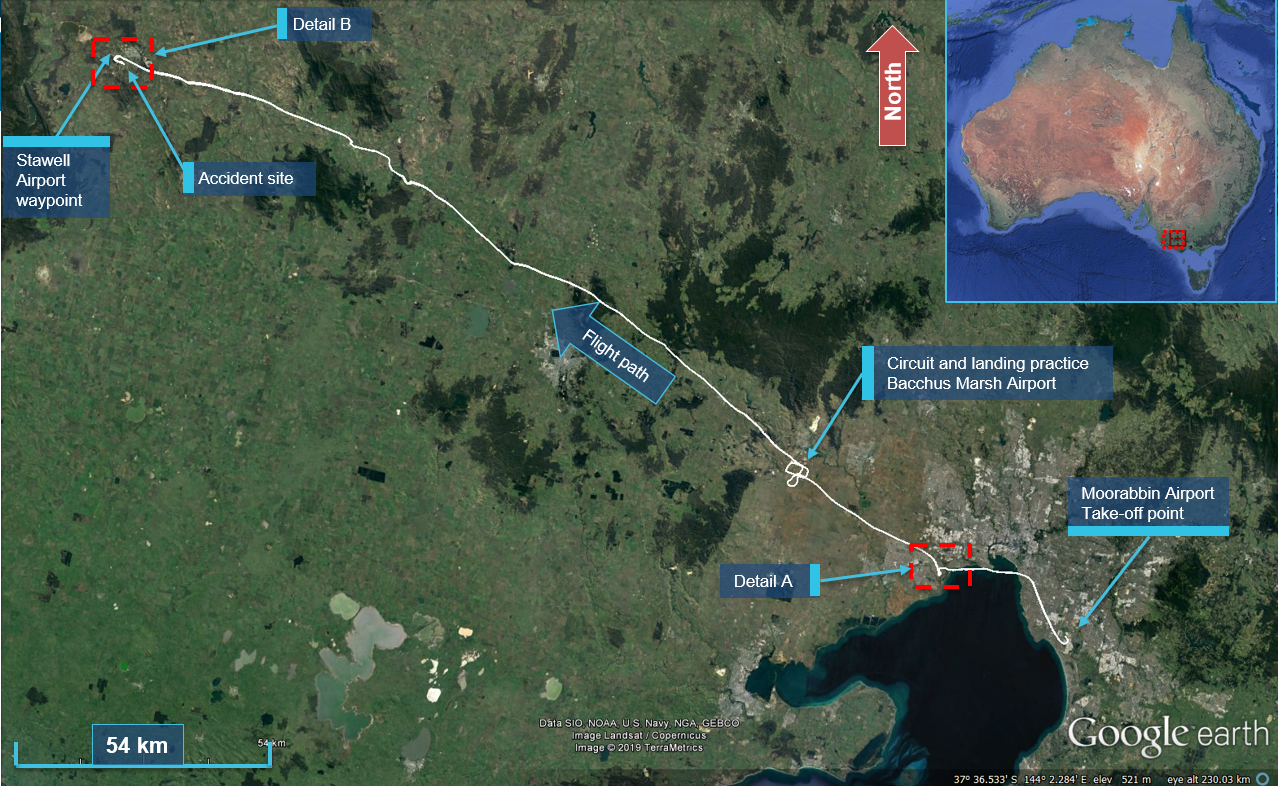
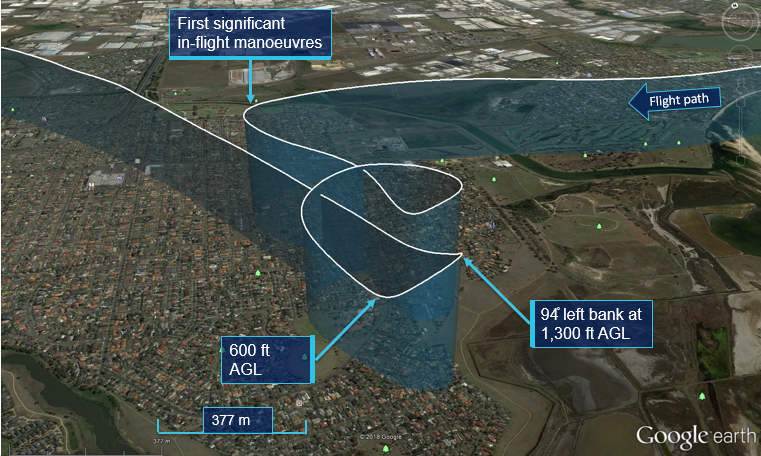
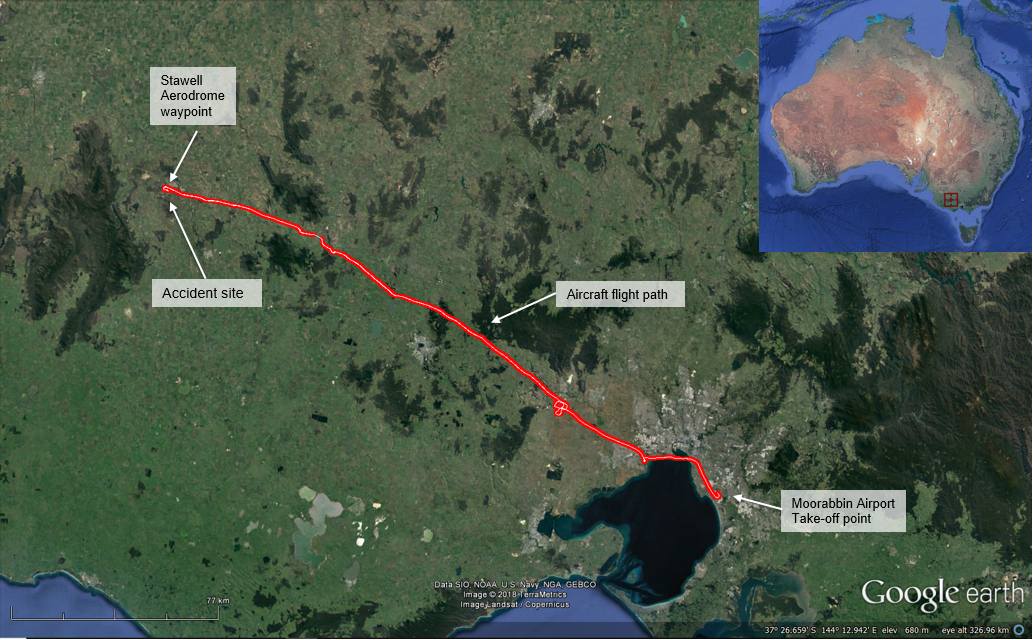
Automatic Dependence Surveillance Broadcast and on-board flight and GPS data recorded the aircraft position and attitude throughout the flight (see the section titled Recorded information). The data showed the take-off and flight over the northern part of Port Phillip Bay, followed by the commencement of significant manoeuvring overhead a built-up area to the west of Melbourne (Figures 1 and 2).
Figure 1: Aircraft’s flight path and accident site location
Source: Google Earth, modified by the ATSB
Figure 1 details the flight path of the aircraft in the area labelled as ‘Detail A’ in Figure 1. The data showed that the pilot conducted significant manoeuvres including steep climbs, descents and turns in excess of 90° angle of bank over a built-up area and at heights between 600‑1,300 ft above ground level (AGL).
In discussing that segment of the flight, the pilot stated that a 360° turn was conducted over the house of someone the pilot knew in the area. The pilot did not recall conducting any aerobatics or significant manoeuvring at that time.
Figure 2: Detail A – Recorded data of the aircraft flight path over a built-up area
Source: Google Earth, modified by the ATSB
The aircraft then continued to Bacchus Marsh Airport where the pilot conducted a circuit followed by a touch-and-go landing. The aircraft then continued in a north‑west direction until overhead Stawell Airport (Figure 3).
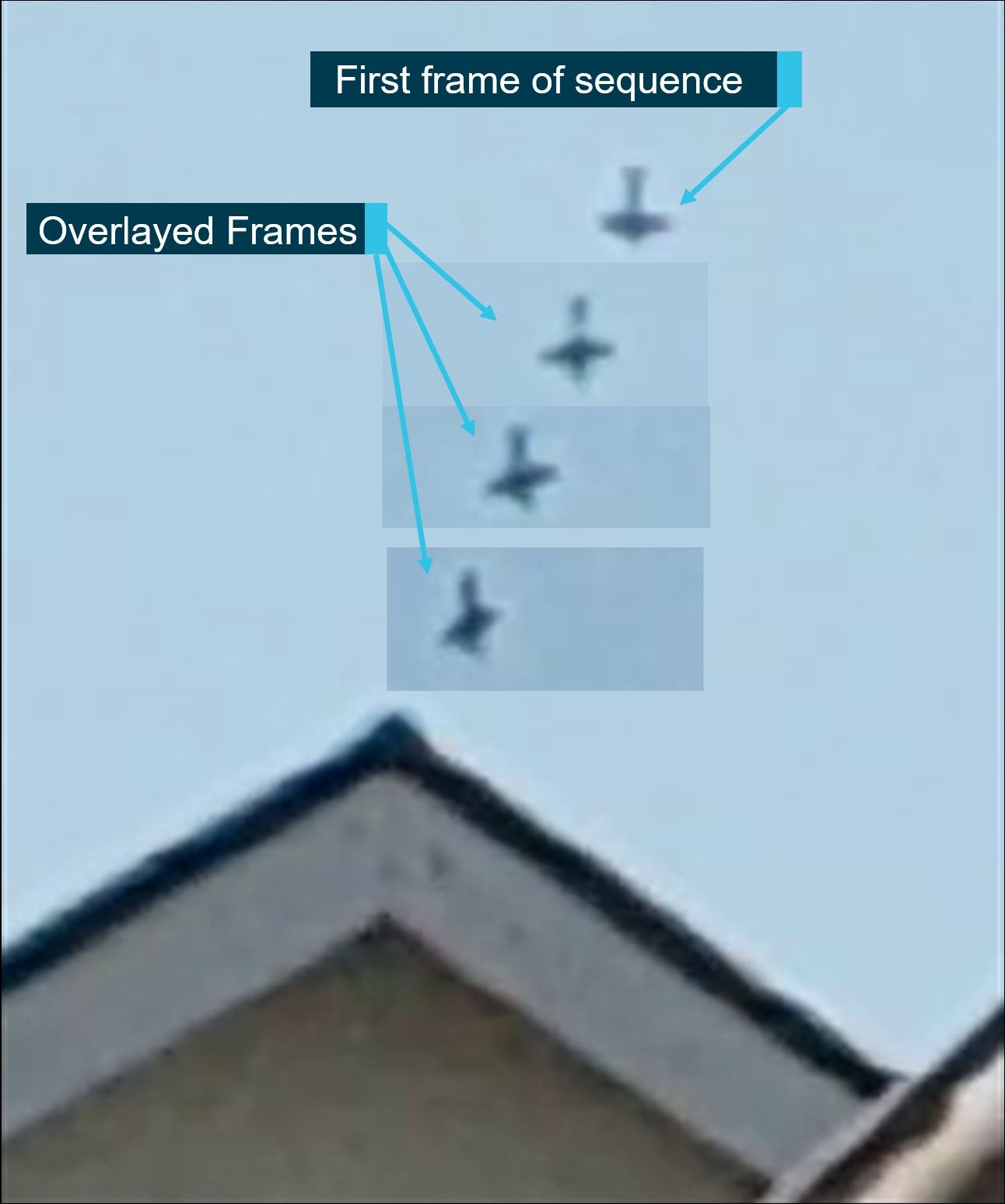
At about 1240, three witnesses at Stawell Airport observed the aircraft overfly the airport before commencing a 180°turn back towards the south‑east. Following that turn, the aircraft was observed to commence a number of significant manoeuvres including steep climbs and turns described as aerobatic in nature. The aircraft was then observed to abruptly enter a flat spin (see the section titled Spins and spin recovery) and descend out of view.
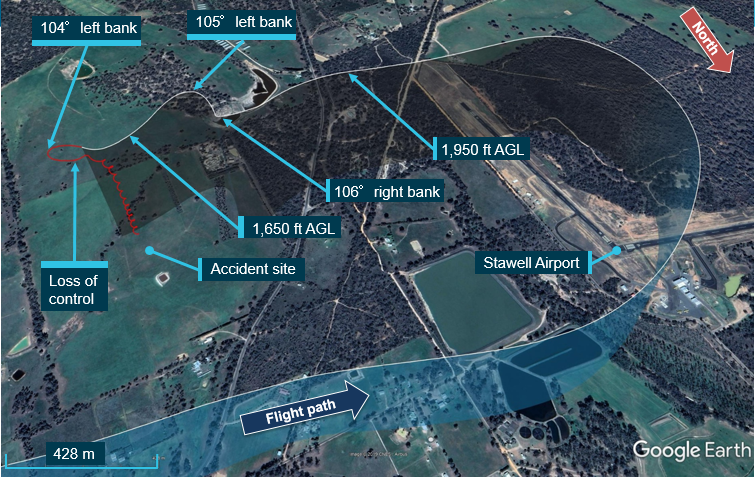
Analysis of the recorded data identified that, after passing overhead the airport, manoeuvres far in excess of the aircraft’s performance limitations were conducted. Based on the magnitude of the recorded pitch and roll values, the manoeuvres were classified as aerobatic. Further data analysis established that while the aircraft was pitching and rolling out from a diving left steep turn, it experienced an accelerated aerodynamic stall[2] while rolling at an indicated airspeed of about 93 kt. The aircraft subsequently flick-rolled and entered a fully developed upright spin at an altitude of about 1,650 ft AGL. The aircraft maintained the spinning descent until it impacted terrain.
The pilot stated that, immediately prior to the accident, a turn of no more than 50° angle of bank was conducted in the process of lining up for a practice circuit and landing at Stawell Airport when ‘the back end of the aircraft slid out’ and control was lost. The pilot also stated that the accident occurred prior to reaching the airport.
When provided with detail of the recorded flight data and other accounts, the pilot was unable to reconcile the difference between their recollection of the event and that of the witnesses and the recorded data. Figure 3 shows the aircraft track, manoeuvring and spin. The red portion of the flight track is the point at which the GPS lost signal and position data was no longer recorded. This was likely due to a combination of the aircraft’s rapid movements and the GPS antenna position. From that point onwards, position data was calculated using groundspeed, bearing and barometric altitude data.
Figure 3: Detail B – Aircraft operation in the vicinity of Stawell Airport
Source: Google Earth, modified by the ATSB
A witness at Stawell Airport notified emergency services about the accident. Two other witnesses at the airport used an aircraft to locate the accident site and guided the emergency services to the location by flying overhead. The pilot and passenger sustained serious injuries and were airlifted to hospital. The aircraft was destroyed.
The pilot attained a Private Pilot Licence (Aeroplane) on 13 August 2018 and had about 160 hours of flying experience. At the time of the accident the pilot was undergoing training for the issue of a Commercial Pilot Licence (Aeroplane) qualification. The pilot was not trained or endorsed to conduct aerobatics.
Medical information
The pilot held a current Class 1 Aviation Medical Certificate with a requirement to conduct additional assessments as directed by the Civil Aviation Safety Authority. The pilot confirmed being well-rested on the day of the flight, with no medical issues.
Stall and spin recovery training
According to the pilot’s instructor, the pilot had been taught theoretical and practical stall recovery techniques, including recovery from an incipient spin. The pilot’s training records indicated that the pilot had demonstrated the correct incipient spin recovery technique to their instructor and flight examiner on several occasions.
Aircraft information
General
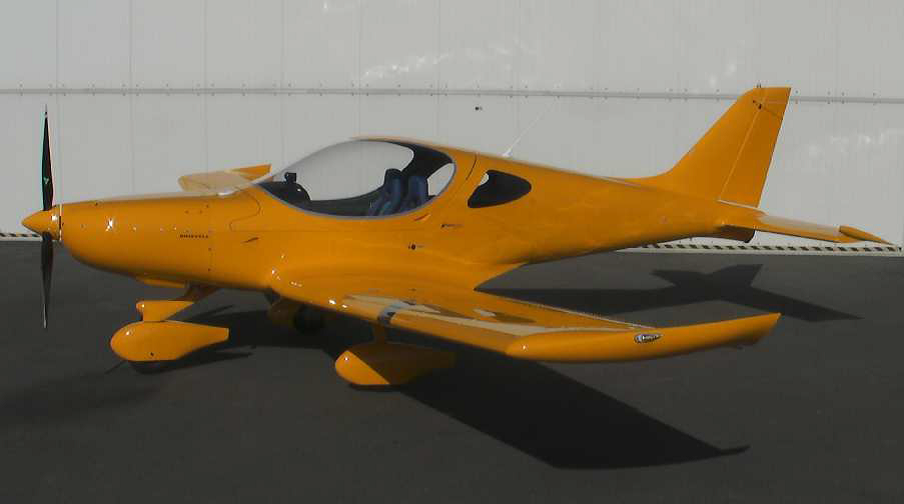
The BRM Aero Bristell is a light sport aircraft (LSA). It is an all-metal, low-wing monoplane of semi-monocoque construction with side-by-side seating and dual flight controls. It is driven by a 4-cylinder, 4-stroke, normally aspirated piston engine, driving a composite three-blade constant-speed propeller. It has a maximum all up weight of 600 kg (Figure 4).
Figure 4: Exemplar BRM Aero Bristell LSA aircraft
Source: Aircraft operator with permission
VH-YVX Airworthiness and maintenance
BRM Aero Bristell LSA serial number 284 was manufactured in 2017 and registered in Australia as VH-YVX.
At the time of the accident, the aircraft was:
operating on a special Certificate of Airworthiness in the light sport aircraft (LSA) category
approved for private operations/flight training
maintained in accordance with the manufacturer’s maintenance schedule
operating under a current maintenance release with no outstanding defects or maintenance. It indicated that the aircraft had about 928 flight hours since new.
Approved aircraft manoeuvres
The aircraft operating instructions (AOI) section 2.9 had approved manoeuvres listed as follows:
• Steep turns not exceeding 60° bank
• Lazy eights
•Chandelles
• Stalls (except whip stalls).
The section also had the following warning:
Aerobatics and intentional spins are prohibited.
The same warning is also included as a placard on the cockpit instrument panel (Figure 5).
Figure 5: Depiction of placard attached to the instrument panel
Source: Bristell LSA operating instructions
Section 2.10 of the AOI identified the maximum manoeuvring load factors as +4.0 to -2.0 G.
Integrated instrument and avionics system
The aircraft was fitted with a Garmin G3X avionics system, which was an integrated flight instrumentation, position, navigation and communication system.
Recorded flight data
The G3X unit had a flight data logging feature which automatically stored flight and engine data to its memory module. A secure digital (SD) card can also be fitted as a backup memory storage that can be easily removed from the aircraft so that the flight data can be downloaded for operational and maintenance monitoring purposes. A data file was created each time the system was powered on with an SD card inserted, or each time an SD card was inserted after power on.
A 2 GB SD card can store over 1,000 hours of flight data or up to 1,000 files (whichever comes first). The SD card is normally located in a receptacle on the right upper face of the unit. However, an SD card was not provided with the aircraft when it was first supplied from the manufacturer. It was therefore at the owner’s discretion if they wished to utilise the recording feature. No SD card was installed at the time of the accident.
Stall warning and angle of attack display
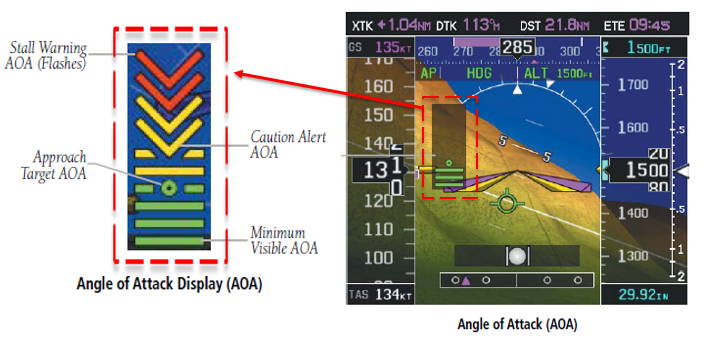
When the angle of attack (AOA) system identifies an exceedance in the calibrated caution alert threshold, an intermittent audible warning will be heard. The tone will increase in frequency until it reaches the AOA stall warning threshold, at which point the audible warning will change from intermittent to continuous.
In conjunction with the audible warning, the AOA system will display a change from a solid green to yellow in the caution level. It flashes from yellow to red when it reaches the stall warning threshold (Figure 6).
Figure 6: Angle of attack on the primary flight display
Source: Garmin G3X Pilot’s Guide, modified by the ATSB
Regulatory definition and requirements for aerobatic flight
Definition of aerobatic flight
Civil Aviation Safety Regulations 1998 (CASR) Dictionary, Part 1 Definitions defined aerobatic manoeuvres as those that involve:
(a) bank angles that are greater than 60˚; or
(b) pitch angles that are greater than 45˚, or are otherwise abnormal to the aircraft type; or
(c) abrupt changes of speed, direction, angle of bank or angle of pitch.
Regulatory requirements for aerobatic flight
To conduct aerobatic manoeuvres, pilots are required to have an aerobatics flight activity endorsement entered on their pilot’s licence. To obtain this endorsement, a pilot is required to have received training and demonstrated competency in all the course units mentioned in CASR Part 61 Manual ofStandards. That training includes recovery from unusual attitudes and spins.
CASR 61.065 prohibits the conduct of any activity for which the licence holder is not authorised. In addition, CASR subpart 61.S Flight activity endorsements stated the requirements for aerobatic endorsements. These included an initial aerobatic endorsement that would authorise the pilot to conduct aerobatic manoeuvres in an aeroplane above 3,000 ft above ground level (AGL). Subsequent endorsements were necessary for aerobatic activities at lower altitudes.
information and guidance on safety issues related to aerobatic flight, including in respect of the aircraft, pilot and regulations
an explanation of spin recovery techniques
advice on the importance of ensuring sufficient height to recover from an aerobatic manoeuvre by 3,000 ft AGL (or the lower limit of the pilot’s approval).
In particular, section 7.3.2 of the CAAP stated:
It is highly probable that the consequence of an error or failure during low-level aerobatics will be fatal to the participants.
Aerobatics are not permitted over populous areas or public gatherings without the written permission of CASA.
Spins and spin recovery
Overview
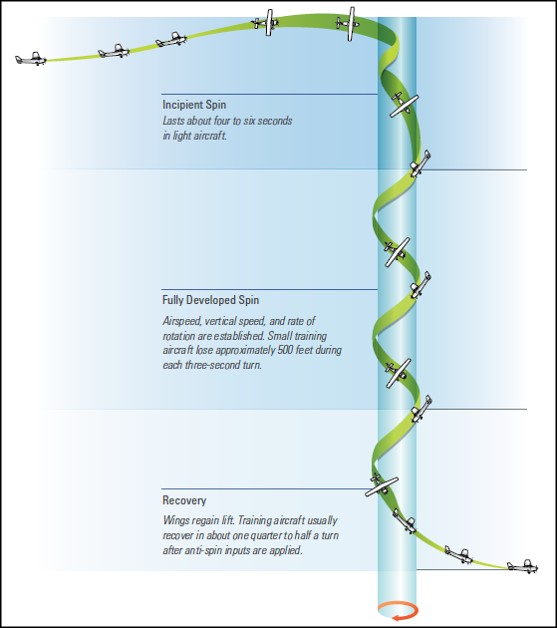
An aerodynamic spin is a sustained spiral descent in which one or both an aircraft’s wings are in a stalled condition,[3] with the outside wing producing more lift and less drag than the other wing. The associated forces sustain the rotation and keep the aircraft in the spin. A spinning aircraft will descend more slowly than one in a vertical or spiral dive and it will have a lower airspeed, which may oscillate. The pitch angle can also vary considerably from significant pitch down to a relatively flat attitude.
Intentional spins are normally entered from a stall in straight and level flight, via the application of full back elevator and full rudder in the intended direction of rotation at the moment of the stall. The circumstances of a spin entry during aerobatic manoeuvring can be very different. If for example, aerobatic manoeuvres are incorrectly conducted, an unintentional consequence can be a flick roll[4] and entry into a spin.
Incipient spin
When entering a spin, an aircraft motion through the air is irregular at first. This is a transition phase from the stall and is known as incipient spin. Though the nature of the incipient spin is heavily dependent on the aircraft type and the manner of entry, recovery may be more rapid and require less control input in this stage compared with recovery from a developed spin.
Developed Spin
After a number of rotations and depending on the aircraft loading, type and control inputs, an aircraft in an incipient spin may settle into a regular rotating descent known as a developed spin. A developed spin is typified by reduced oscillations when compared to an incipient spin and the axis of rotation becomes vertical. The spin may steepen (nose down) or flatten (nose more horizontal) as it continues.
Recovery from an unintentional spin
The BRM Aero Bristell LSA AOI, section 3.7 described the recovery from unintentional spins as follows:
There is no[t] an uncontrollable tendency of the airplane to enter into a spin provided the normal piloting techniques are used.
Unintentional spin recovery technique:
1. Throttle - idle
2. Lateral control - ailerons neutralized
3. Rudder pedals - full opposite rudder
4. Rudder pedals - neutralize rudder immediately when rotation stops
5. Longitudinal control - neutralize or push forward and recover dive.
Spinning ceases only when opposing forces and moments overcome auto-rotation. Since yaw coupled with roll powers the spin, the pilot must forcibly uncouple them by applying the recommended spin recovery technique. Due to rotational inertia, spin recovery is not instantaneous. It may take several turns of the applied technique before recovery control forces finally overcome the spin stabilising forces and rotational inertia. Spins are only recoverable when the cumulative effects of the interacting variables favour recovery and there is enough altitude and therefore time to recover. Generally speaking, recovery from an incipient spin will take less time than a recovery from a fully developed spin. It is therefore vital that the correct recovery technique is implemented as soon as possible.
Pilot and passenger recollection of the attempted spin recovery
The pilot stated that the aircraft did not provide him with an aural or visual warning of an impending stall leading up to or during the accident sequence. When asked about the recovery technique following entry into a spin, the pilot confirmed that full opposite rudder was not maintained. Rather, the pilot initially applied opposite rudder to the spin and then reversed the control and noted that the spin rate increased. The pilot then moved the rudder back to the full opposite rudder position.
Analysis of the recorded data showed that the engine power was only slightly reduced following entry into the spin. Power was reapplied and then reduced to idle about 14 seconds after the spin commenced.
The passenger did not have a full recollection of the event but recalled the plane going pitch-up to a vertical position and then one rotation. The passenger remembered then saying ‘opposite rudder power down’ to the pilot before passing out prior to impact.
Although the passenger did not recall an audible warning when interviewed by the ATSB, they did mention hearing a beeping sound when discussing the event with their family a short time after the accident.
Light sport aircraft certification standards for spin recovery
Aircraft in the LSA category are certified to the ASTM International[5] standards. The certification process is conducted and self-certified for compliance by the manufacturer themselves, rather than by the regulating aviation authority from the state of manufacture. The LSA process relies on the manufacturer declaring that the aircraft meets all the construction and flight requirements of the LSA standards identified by them in the statement of compliance.
Aircraft certification standards for spin testing
ASTM F2245 standard specification for design and performance of light sport aeroplanes, section 4.5.9 states:
4.5.9 Spinning:
4.5.9.1 For airplanes placarded “no intentional spins,” the airplane must be able to recover from a one turn spin or a 3-s[econd] spin, whichever takes longer, in not more than one additional turn, with the controls used in the manner normally used for recovery.
In some aircraft not approved for spinning, recovery may not be possible if the spin progresses to the developed stage.
The standard has various requirements, for example the light sport aircraft category for non-aerobatic aircraft requires the aircraft manufacturer to prove the aircraft type can recover from a one-turn spin.
CASA assessment of BRM Aero Bristell LSA spin testing
The LSA category relies solely on the aircraft manufacturer declaring that each individual aircraft meets/complies with the standard(s) that they have indicated within the statement of compliance. Each individual aircraft must have its own statement of compliance issued and signed by the aircraft manufacturer that the particular aircraft meets the identified standards. Manufacturers are not required to submit test data, or show compliance to those standards, to CASA or any other regulator.
Following a number of fatal accidents involving Bristell aircraft entering into and not recovering from spins in Australia and overseas, CASA assessed the Bristell LSA self-certification testing documentation against the ASTM certification test standards.
CASA found that there was insufficient information in the initial test data to provide assurance that the aircraft type met the ASTM standards for spin recovery. As a result, CASA requested more certification testing data from the manufacturer. The manufacturer conducted further certification flight tests in the Bristell LSA and provided that data, including video recordings of each flight sequence to CASA. CASA’s assessment of the new flight-testing data and further information supplied by the manufacturer was that it still did not confirm that the aircraft met the required ASTM standard for spin recovery.
Post-accident CASA guidance on spin avoidance
Due to an increase in spin‑related accidents across a broad range of light aircraft types in the training environment, CASA produced guidance material in the form of an advisory circular (AC) 61-16 v1.0 titled Spin avoidance and stall recovery training. The AC highlights:
…the risks associated with advanced stalling training when conducted in aircraft that are not certified for intentional spinning. It clarifies the difference between wing drop at the stall and the incipient phase of a spin and provides background for the interpretation of aircraft flight manual manoeuvre limitations with respect to spinning. It also provides guidance on acceptable methods of training and testing stalls with a wing drop and spin avoidance.
The AC provides detailed guidance for pilots, flight instructors, flight examiners and flight training organisations. The AC states that:
The key messages in this AC that are critical for the safe conduct of advanced stalling and spinning exercises, and that all pilots instructors, operators and flight examiners should be aware of are:
• A spin must not be induced in aircraft not certified or approved for intentional spinning
• A spin must not be induced without the pilot in command holding a spinning flight activity endorsement
• Aircraft flight manual limitations and any special procedures before conducting any exercise which may result in a spin
• The need to comply with aeroplane centre of gravity limits
• Wing drop at the stall for the purposes of spin avoidance training must not be induced by application of pro-spin rudder and the induction of a spin
• Training in spin avoidance must include the recognition of symptoms associated with slow flight and approach to the stall through to recovery from stall with a wing drop
• Recognise and manage changes in aircraft energy state
• Spin avoidance training where a wing may drop at the stall should be undertaken through scenario-based in-flight manoeuvres:
- Approach configuration descending turns (base to final turn)
- Go-around from approach configuration (significant change in trim state)
- Climbing turns in departure configuration (trim changes during flap retraction and turns)
- Engine failure after take-off (potential out of trim condition)
- Turns in slow flight.
Site and wreckage examination
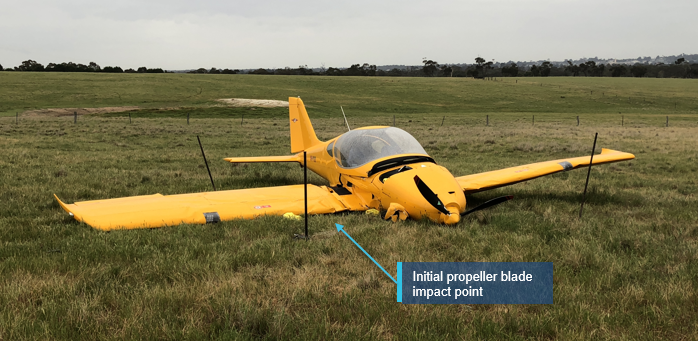
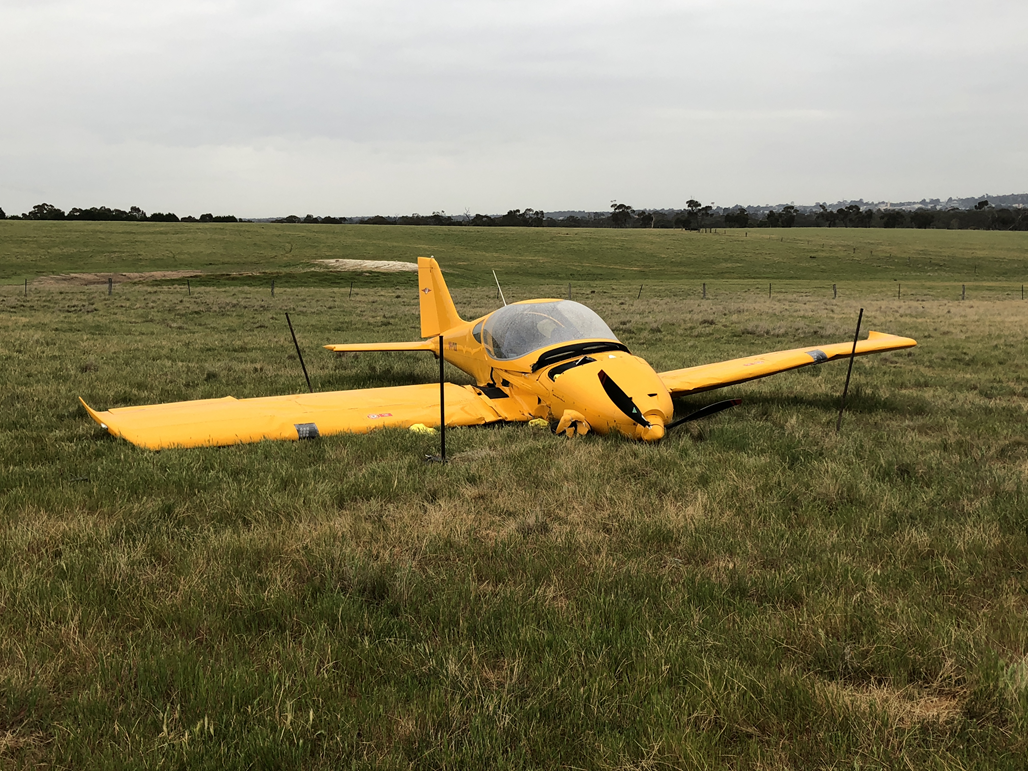
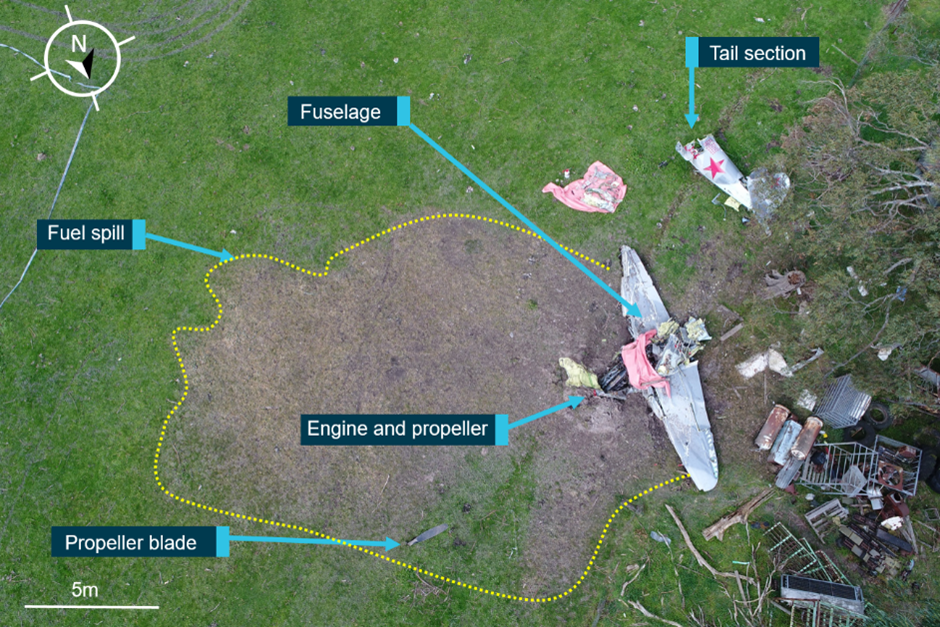
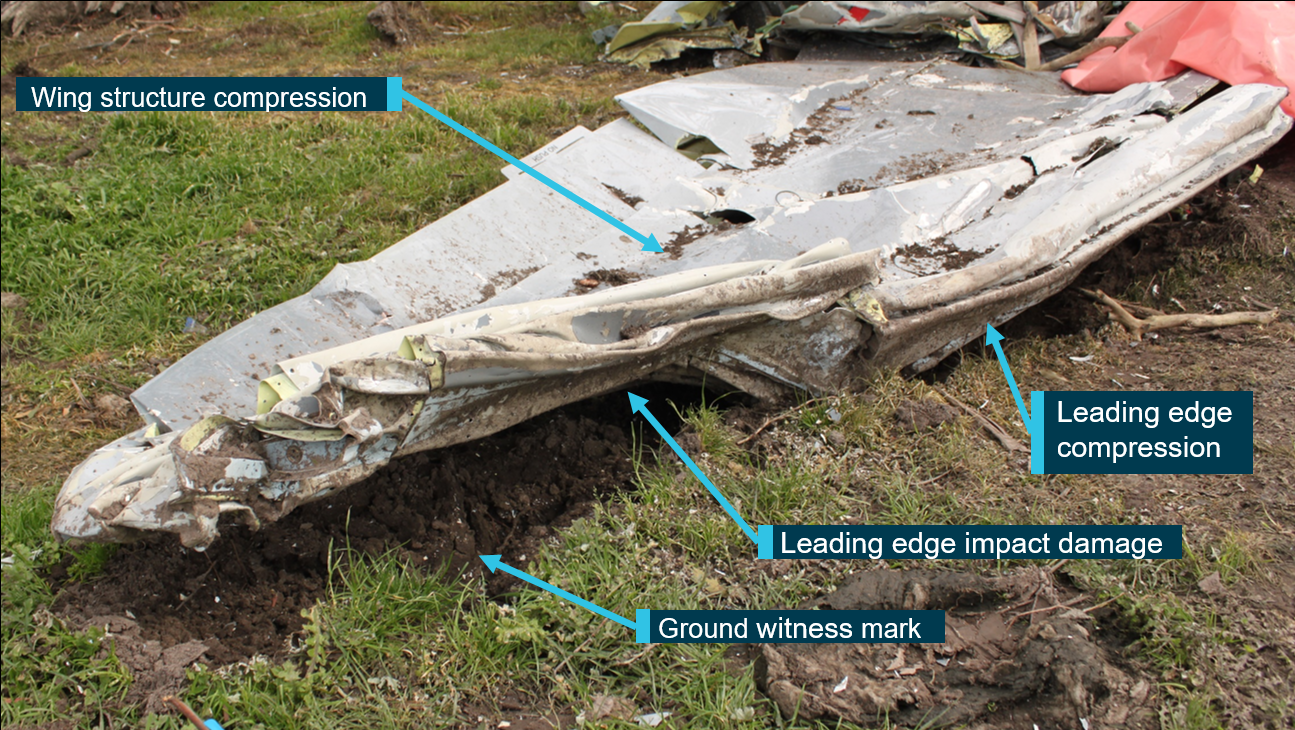
The ATSB conducted an examination of the accident site and wreckage (Figure 7). The examination identified that:
the aircraft was located in relatively flat and open farmland, about 1.7 km south‑east of Stawell Airport
ground impact marks indicated that the aircraft had impacted terrain in a relatively flat, upright, counterclockwise spin
the flaps were in the retracted position
there was evidence of a significant amount of fuel at the accident site and the airframe fuel filter bowl was full of fuel and free of contaminants
the propeller blades showed rotation damage consistent with engine operation at a low power setting at impact
elevator trim was in a neutral position
no pre-impact defects were identified with the flight controls or aircraft structure
all aircraft components were accounted for at the accident site.
A Garmin G3X (G3X) panel‑mounted avionics unit was removed from the aircraft for detailed examination at the ATSB’s technical facility in Canberra.
Figure 7: Aircraft accident site
Source: ATSB
Recorded information
G3X avionics system flight data download
The ATSB inspected the G3X unit and identified that it was visually undamaged. There was no SD card fitted to the unit. On return to Canberra, the unit was powered up with an SD card fitted (Figure 8). Data files associated with the accident flight were successfully downloaded from the memory module to the card.
Figure 8: G3X avionics unit being downloaded, showing memory card position
Source: ATSB
Flight data summary
The downloaded data recorded 86 parameters for the duration of the accident flight, from the initial taxi until impact with terrain. The flight data indicated that the aircraft and engine were operating normally throughout the flight with no anomalies identified within the data or aircraft operating systems.
Position verification
The GPS position was verified to be accurate within 2 metres by utilising the aircraft’s:
track on the parking bay, taxi ways and runway at Moorabbin Airport
track during the touch-and-go on the runway at Bacchus Marsh Airport
final position at the accident site.
Significant aircraft manoeuvres
The data recorded that at about 1230, while the aircraft was overhead the built‑up area shown in Figure 2, it was operated significantly outside of its allowable flight envelope. This included banking to 94° while manoeuvring between 600‑1,300 ft above a populated area.
At 1319, the recording captured a 91° roll to the left followed by a pitch down to 40°. The data also recorded a climbing right turn to 91° angle of bank at 1323, followed by a pitch down to 38° then a rolling left pull out turn. Whilst pulling out, the instrumentation system recorded a peak normal acceleration of 4.4 G. That loading exceeded the aircraft’s positive load limit of 4 G.
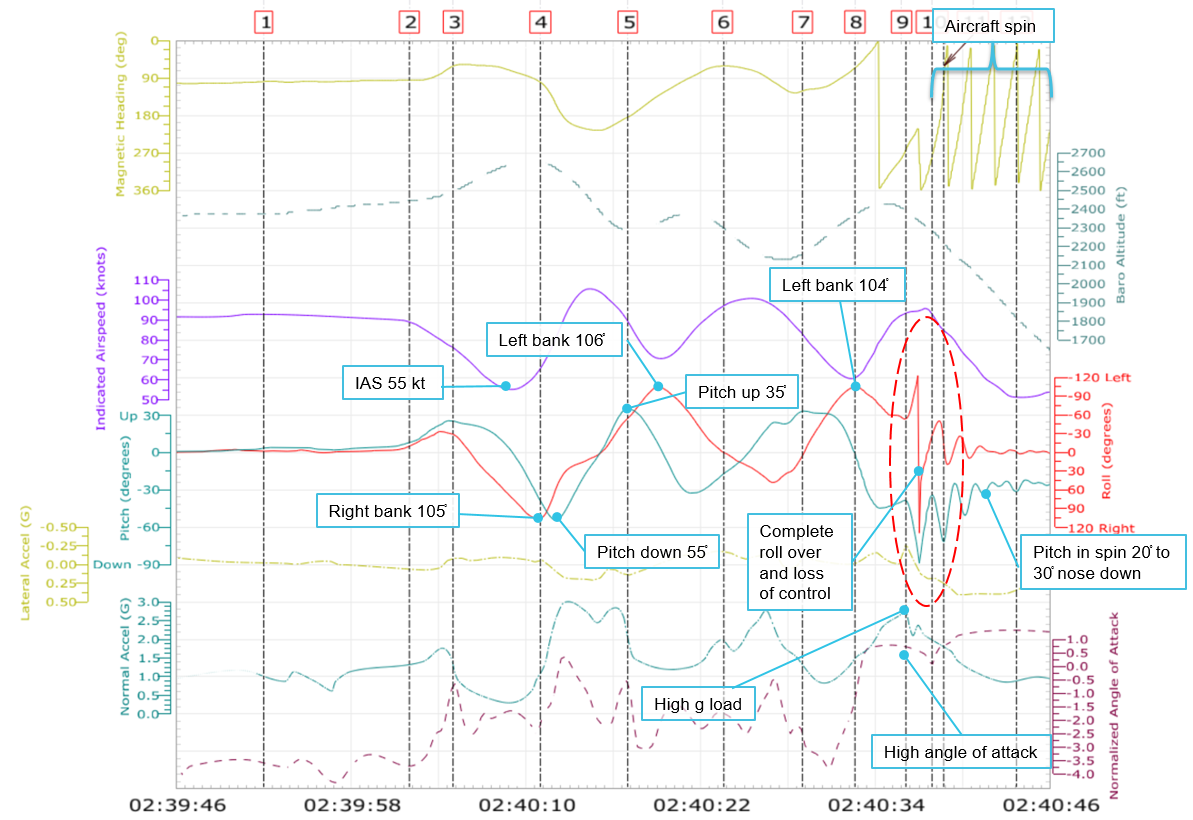
From 1340, there was significant variation in the magnitude of pitch, roll and load factor, consistent with additional aerobatic manoeuvring during the final minute of the flight (Figure 9).
At 1340:36, while the aircraft was operating at:
about 90 kt indicated airspeed
a pitch-down angle of about 50°
high angle of attack and positive load factor
it abruptly pitched down to 90° and rolled significantly to the left. That behaviour was consistent with the aircraft experiencing an accelerated aerodynamic stall.[6]
Subsequent variation in the recorded parameters indicated that the aircraft then entered a counter-clockwise upright spin at a rotation rate of about one full turn every 1.5 seconds and a vertical descent rate of over 3,000 ft/min at the time of impact.
The engine power level remained at a constant high setting prior to the spin entry.
Figure 9: Last 60 seconds of recorded flight data parameters prior to the accident
Source: ATSB
Weight and balance information
The aircraft weight was calculated as being about 17 kg over the maximum allowable limit at take‑off from Moorabbin Airport, but within the balance limits. However, the aircraft was within the weight and balance limits at the time of the accident, when the weight was adjusted for 1 hour 20 minutes of fuel consumption.
Previous accidents
BRM Aero Bristell registered 24-7954, Clyde North, Victoria
This accident was investigated by Recreational Aviation Australia. The accident investigation report is not a publically available document.
On 3 August 2017, during a training flight, a student pilot was conducting stall recovery training under supervision of an instructor at an altitude of 3,500 ft AGL. Following entry into the stall, the right wing dropped and, despite the correct instructed actions, the student pilot mishandled the stall recovery by applying opposite aileron. Although this is an intuitive response to raise the wing, it exacerbated the stall and the aircraft entered a spin.
The instructor took over control of the aircraft from the student and initiated the correct spin recovery technique using ailerons neutral and opposite rudder. Despite having 3,000 ft remaining, the instructor was unable to regain control of the aircraft before it impacted the terrain. The student pilot was fatally injured, and the instructor sustained serious injuries.
On 14 June 2019, during a flight with two occupants, recorded data showed that the engine power was reduced as the aircraft maintained about 3,200 ft with reducing airspeed. The aircraft then rapidly lost height and impacted the ground about 30 seconds later. The aircraft was destroyed and the two occupants were fatally injured.
The on-site examination indicated that the aircraft impacted the ground at a high vertical rate, in a nearly level attitude, whilst rotating anticlockwise about the yaw axis.
At the time of writing the accident was still under investigation by the Irish Aircraft Accident Investigation Unit.[7]
Examination of the aircraft and recorded flight data identified that there were no mechanical defects that contributed to the accident. Further, a review of the meteorological conditions as described by witnesses and the pilot indicated that weather was not a factor.
Evaluation of the flight data also established that the pilot engaged in aerobatic manoeuvres during the course of the flight, including just prior to the loss of control in the vicinity of Stawell Airport. This analysis will discuss the development of the accident in that context.
Aerobatic limitations
The Bristell light sport aircraft (LSA) operating instructions prohibit excessive angles of bank, aerobatics and intentional spins. This was clearly defined and the information relating to spin avoidance was also presented by way of a placard in the cockpit.
Civil aviation regulations stipulate the types of manoeuvres that are considered to be aerobatic. It also sets out the pilot training and endorsements requirements before aerobatics are to be conducted. The framework provided by these rules ensures that this hazardous activity can be performed with an acceptable level of safety.
When interviewed, the pilot demonstrated an awareness of the aircraft limitations and the requirements relating to aerobatics. Further, the pilot did not have any training or endorsements in aerobatics and did not apply for or receive permission from CASA to undertake aerobatics over a populous area. Despite that, manoeuvres meeting the definition of aerobatics were carried out during the accident flight in the form of abrupt changes in flight parameters and excessive bank and pitch.
Aerobatic manoeuvring and loss of control
Aerobatics were first conducted above a built-up area at 600‑1,300 ft above ground level (AGL), and with a maximum bank angle of 94°. Had an unrecoverable loss of control occurred over such a populated area, in addition to the likely fatality of the occupants, there was a significantly increased risk of injuries or fatalities to people on the ground.
Additional aerobatics were conducted mid-flight between Bacchus Marsh and Stawell airports, with one exceeding the aircraft’s flight load limitations. The aircraft was then observed by witnesses to overfly Stawell Airport before again commencing significant pitch and bank manoeuvres. During one of these manoeuvres, the aircraft experienced an accelerated aerodynamic stall and entered into an upright spin at an altitude of about 1,650 ft AGL. This progressed into a fully developed spin that continued until the aircraft impacted terrain.
Due to the accelerated nature of the spin entry and the already nose-down and banked attitude, the entry to the spin would probably have been abrupt and disorientating. The pilot reported not maintaining the correct spin recovery technique with respect to rudder input. Despite that, as discussed further below, even with immediate and sustained application of spin recovery control inputs, recovery from the spin may not have been possible.
The pilot’s account of the aircraft manoeuvring during the flight, including immediately before the loss of control, did not align with either the flight data or the witness statements. The passenger only recalled fragments of information about the flight and did not recall what happened before the aircraft entered the spin.
The ATSB assessed that the recorded flight data was accurate. It clearly indicated that the aircraft was operated significantly beyond the allowable limits of both the aircraft and the pilot’s qualifications, with catastrophic consequences.
Aircraft spin certification and characteristics
Non‑aerobatic aircraft in the LSA category, such as the Bristell LSA, are certified to the ASTM International standards. As such, the aircraft is required to demonstrate the ability to recover from a one‑turn or 3‑second spin, whichever was longer, in not more than one additional turn. Recovery from a multiple-turn, fully developed spin is not required to be demonstrated.
As a consequence, there is no assurance that, even if the normal spin recovery technique was applied, that recovery from a fully developed spin is possible in the Bristell LSA aircraft.
In response to a number of fatal accidents involving Bristell aircraft entering and not recovering from spins in Australia and overseas, the Civil Aviation Safety Authority (CASA) assessed the Bristell LSA type certification testing documentation against the ASTM certification test standards. CASA found that there was insufficient information in the initial flight test data to provide assurance that the aircraft type met the ASTM standards for spin recovery. As a result, CASA requested more certification testing data from the manufacturer. The manufacturer conducted further certification flight tests in the Bristell LSA and provided that data, including video recordings of each flight sequence to CASA. CASA’s assessment of the new flight-testing data and other information provided after that point still did not confirm that the aircraft met the required ASTM standard for spin recovery. At the time of writing, CASA and the manufacturer were still in discussion.
In the context of this accident, as the aircraft was operated significantly outside its operating limitations, it was not possible to identify if a safety issue surrounding aircraft spin and recovery characteristics of the Bristell LSA exists.
Avionics memory and data use
There are many advantages to having recording devices installed in aircraft. These include the use of downloaded data to monitor:
student pilot performance
third party aircraft usage
engine health trends and aircraft limitation exceedances.
They also provide a significant source of evidence during the investigation of aircraft accidents.
The avionics system fitted to the accident aircraft had data storage capability and also backup storage capability by way of a secure digital (SD) card which could be fitted to the avionics system. An SD card was not fitted as standard equipment when Bristell aircraft were delivered to operators from new. Further, the operator was not aware of the additional memory card storage capability and had not installed SD cards in of their Bristell fleet. As a result, had the avionics unit memory module been damaged, then important recorded data associated with this accident could have been destroyed.
The ATSB encourages operators and owners of aircraft to, wherever possible, use on board recording capability to capture the available data parameters.
Findings
From the evidence available, the following findings are made with respect to the loss of control and collision with terrain involving a Bristell LSA aircraft, registered VH-YVX, in Stawell Victoria on 5 October 2018. These findings should not be read as apportioning blame or liability to any particular organisation or individual.
Contributing factors
While conducting aerobatics, the aircraft experienced an accelerated aerodynamic stall and entered into an upright spin that continued until impacted terrain.
The pilot conducted aerobatic manoeuvres without aerobatic training, in an aircraft which prohibited such manoeuvres.
Other factors that increased risk
During the accident flight, the pilot conducted aerobatics at low altitude over a built-up area in contravention to safe practices and the regulations. Had an unrecoverable loss of control occurred there was a significantly increased risk of injuries or fatalities to people on the ground.
A regulatory review of the aircraft type’s self-certification flight test data and documentation by the Civil Aviation Safety Authority (ongoing at the time of writing) did not provide assurance that the aircraft type met the required standard for spin recovery.
Other findings
The aircraft's avionics system, while capable of storing data, was not fitted with a memory card. The memory card serves as a back-up for stored data, which can be a readily accessible tool for both flying training and safety investigation.
Safety issues and actions
Proactive safety action
Whether or not the ATSB identifies safety issues in the course of an investigation, relevant organisations may proactively initiate safety action in order to reduce their safety risk. The ATSB has been advised of the following proactive safety action in response to this occurrence.
Civil Aviation Safety Authority
During the investigation, the ATSB became aware that the Civil Aviation Safety Authority (CASA) was reviewing the BRM Aero Bristell LSA aircraft certification testing against the ASTM standards. At the time of writing, there was insufficient information available to assure CASA that the Bristell LSA aircraft met the required standard for spin recovery. Consequently, CASA has requested further information from the aircraft manufacturer.
The operator
The operator conducted a fleet-wide installation of SD cards to all aircraft capable of storing data.
General details
Pilot details
Licence details:
Private Pilot Licence (Aeroplane), issued 13 August 2018
Endorsements:
Manual Propeller Pitch Control
Ratings:
Single engine aeroplane
Medical certificate:
Class 1 and 2, valid to 19 October 2018
Aeronautical experience:
about 160 flight hours
Sources and submissions
Sources of information
The sources of information during the investigation included:
the pilot and passenger
witnesses and first responders to the accident
the aircraft operator and manufacturer
Civil Aviation Safety Authority
Airservices Australia
Victoria Police.
Submissions
Under Part 4, Division 2 (Investigation Reports), Section 26 of the Transport Safety Investigation Act 2003 (the Act), the ATSB may provide a draft report, on a confidential basis, to any person whom the ATSB considers appropriate. Section 26 (1) (a) of the Act allows a person receiving a draft report to make submissions to the ATSB about the draft report.
A draft of this report was provided to the pilot and passenger, the aircraft operator and manufacturer and the Civil Aviation Safety Authority.
Submissions were received from the pilot and passenger, the aircraft operator and manufacturer and the Civil Aviation Safety Authority. The submissions were reviewed and, where considered appropriate, the text of the report was amended accordingly.
Purpose of safety investigations
The objective of a safety investigation is to enhance transport safety. This is done through:
identifying safety issues and facilitating safety action to address those issues
providing information about occurrences and their associated safety factors to facilitate learning within the transport industry.
It is not a function of the ATSB to apportion blame or provide a means for determining liability. At the same time, an investigation report must include factual material of sufficient weight to support the analysis and findings. At all times the ATSB endeavours to balance the use of material that could imply adverse comment with the need to properly explain what happened, and why, in a fair and unbiased manner. The ATSB does not investigate for the purpose of taking administrative, regulatory or criminal action.
Terminology
An explanation of terminology used in ATSB investigation reports is available here. This includes terms such as occurrence, contributing factor, other factor that increased risk, and safety issue.
Publishing information
Released in accordance with section 25 of the Transport Safety Investigation Act 2003
Ownership of intellectual property rights in this publication
Unless otherwise noted, copyright (and any other intellectual property rights, if any) in this report publication is owned by the Commonwealth of Australia.
Creative Commons licence
With the exception of the Coat of Arms, ATSB logo, and photos and graphics in which a third party holds copyright, this publication is licensed under a Creative Commons Attribution 3.0 Australia licence.
Creative Commons Attribution 3.0 Australia Licence is a standard form licence agreement that allows you to copy, distribute, transmit and adapt this publication provided that you attribute the work.
The ATSB’s preference is that you attribute this publication (and any material sourced from it) using the following wording: Source: Australian Transport Safety Bureau
Copyright in material obtained from other agencies, private individuals or organisations, belongs to those agencies, individuals or organisations. Where you wish to use their material, you will need to contact them directly.
Preliminary report
Report release date: 21/11/2018
This preliminary report details factual information established in the investigation’s early evidence collection phase and has been prepared to provide timely information to the industry and public. Preliminary reports contain no analysis or findings, which will be detailed in the investigation’s final report. The information contained in this preliminary report is released in accordance with section 25 of the Transport Safety Investigation Act 2003.
What happened
On 5 October 2018, at about 1120 Eastern Daylight‑saving Time,[1] a Bristell Light Sport Aircraft, registered VH-YVX, departed Moorabbin Airport, Victoria, with a pilot and passenger onboard. The purpose of the flight was a navigation exercise in support of the pilot’s commercial pilot training requirements. The passenger held a student pilot licence, but his aviation medical certificate was not current.
At about 1240, following an overfly of the intended waypoint at Stawell Airport, the aircraft was observed by witnesses to conduct a 180° turn towards the east at about 1,500 ft above ground level (Figure 1). Following the turn the aircraft was observed to commence a number of manoeuvres before entering a spin. The pilot was unable to recover control of the aircraft before it impacted terrain.
Figure 1: Aircraft’s flight path and accident site location
Source: Google earth, with Airservices surveillance radar data. Modified by the ATSB
A witness at the aerodrome notified emergency services about the accident. Two other witnesses at the aerodrome utilised an aircraft to locate the accident site and guided the emergency services to its location. The pilot and passenger sustained significant injuries and were airlifted to hospital. The aircraft was destroyed.
Site and wreckage examination
The ATSB conducted an examination of the accident site and wreckage (Figure 2). This examination identified that the:
aircraft was located in relatively flat and open farmland, which was about 1.7 km south‑east of Stawell Airport
ground impact marks indicated that the aircraft had impacted terrain in a relatively flat, upright, counter clockwise spin
flaps were in the retracted position
elevator trim was in a neutral position.
No pre-impact defects were identified with the flight controls or aircraft structure.
A panel‑mounted avionics unit was removed from the aircraft and taken to the ATSB’s technical facility in Canberra for examination. The stored information was successfully downloaded and included numerous flight and engine parameters recorded during the accident flight.
Figure 2: Accident site of Bristell Light Sport Aircraft, registered VH-YVX
Source: ATSB
Ongoing investigation
The investigation is continuing and will include:
interviews with parties involved in the accident
analysis of the downloaded data from the avionics unit and other electronic devices
examination of the pilot’s qualifications, experience and medical history
assessment of the aircraft’s flight performance characteristics
examination of aircraft maintenance and operational records
examination of the training organisation records and procedures.
___________________
The information contained in this preliminary report is released in accordance with section 25 of the Transport Safety Investigation Act 2003 and is derived from the initial investigation of the occurrence. Readers are cautioned that new evidence will become available as the investigation progresses that will enhance the ATSB's understanding of the accident as outlined in this update. As such, no analysis or findings are included in this update.
Purpose of safety investigations
The objective of a safety investigation is to enhance transport safety. This is done through:
identifying safety issues and facilitating safety action to address those issues
providing information about occurrences and their associated safety factors to facilitate learning within the transport industry.
It is not a function of the ATSB to apportion blame or provide a means for determining liability. At the same time, an investigation report must include factual material of sufficient weight to support the analysis and findings. At all times the ATSB endeavours to balance the use of material that could imply adverse comment with the need to properly explain what happened, and why, in a fair and unbiased manner. The ATSB does not investigate for the purpose of taking administrative, regulatory or criminal action.
Terminology
An explanation of terminology used in ATSB investigation reports is available here. This includes terms such as occurrence, contributing factor, other factor that increased risk, and safety issue.
Publishing information
Released in accordance with section 25 of the Transport Safety Investigation Act 2003
Ownership of intellectual property rights in this publication
Unless otherwise noted, copyright (and any other intellectual property rights, if any) in this report publication is owned by the Commonwealth of Australia.
Creative Commons licence
With the exception of the Coat of Arms, ATSB logo, and photos and graphics in which a third party holds copyright, this publication is licensed under a Creative Commons Attribution 3.0 Australia licence.
Creative Commons Attribution 3.0 Australia Licence is a standard form licence agreement that allows you to copy, distribute, transmit and adapt this publication provided that you attribute the work.
The ATSB’s preference is that you attribute this publication (and any material sourced from it) using the following wording: Source: Australian Transport Safety Bureau
Copyright in material obtained from other agencies, private individuals or organisations, belongs to those agencies, individuals or organisations. Where you wish to use their material, you will need to contact them directly.
The pilot of a Cessna 208B aircraft, registered VH-FAY (FAY), was contracted by the aircraft operator to ferry FAY from Jandakot Airport, Western Australia to Mississippi, United States. On the morning of 27 September 2018 local time, the aircraft departed Saipan International Airport, Northern Mariana Islands, for a planned flight to New Chitose Airport, Hokkaido, Japan. After climbing for about an hour, the aircraft levelled off at flight level (FL) 220.
After 2 hours 20 minutes flight time, the pilot contacted Tokyo Radio flight information service at the first mandatory reporting position. The aircraft passed the next reporting point at the same altitude, 1 hour 20 minutes later, but the pilot did not contact Tokyo Radio as expected. Tokyo Radio made repeated attempts to communicate with the pilot, without success. Having received no communications from the pilot for 4.5 hours, two Japan Air Self‑Defense Force (JASDF) aircraft intercepted FAY. The pilot did not manoeuvre the aircraft in response, in accordance with international intercept protocols.
After about 30 minutes, the JASDF pilots observed FAY descend into cloud. The aircraft descended rapidly and disappeared from radar less than 2 minutes later. Within 2 hours, search and rescue personnel located the aircraft’s rear passenger door. No other aircraft parts were located and the pilot was not found.
What the ATSB found
While the aircraft was in the cruise on autopilot, the pilot almost certainly became incapacitated and did not recover. About 5 hours after the last position report, without pilot intervention to select fuel tanks, the aircraft’s engine stopped, likely due to fuel starvation. This resulted in the aircraft entering an uncontrolled descent into the ocean.
The cause of incapacitation could not be determined. While a medical event could not be ruled out, the pilot was operating alone in an unpressurised aircraft at 22,000 ft and probably using an unsuitable oxygen system, which increased the risk of experiencing hypoxia and being unable to recover.
What's been done as a result
The aircraft operator amended their operations manual to include additional guidance for international ferry flights. They also created an oxygen use guide and a specific risk assessment for positioning (ferry) flights.
Safety message
Operating unpressurised aircraft above 10,000 ft requires careful oxygen management and planning. Where an increased risk of hypoxia exists, good risk management practices should be used for flight planning. Because the effects of hypoxia can be insidious, training in recognition of early symptoms of hypoxia can increase the time available to react, descend and resolve any issues. The Flight Safety Australia (2014) article Do not go gentle: the harsh facts of hypoxia provides further information, including anecdotal experiences of hypoxia.
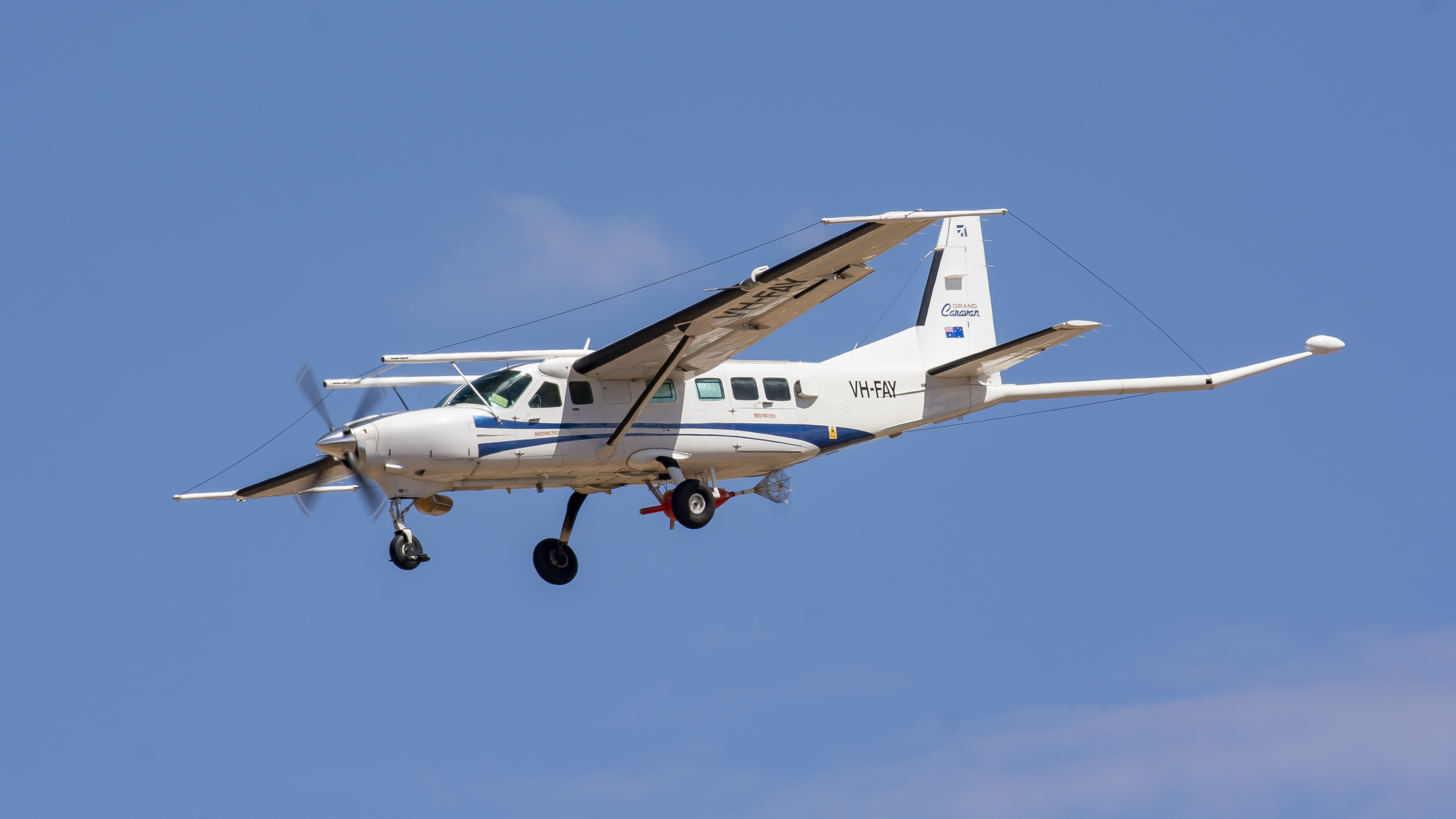
VH-FAY with full survey equipment installed
Source: Sid Mitchell, Aviation Spotters Online
The occurrence
What happened
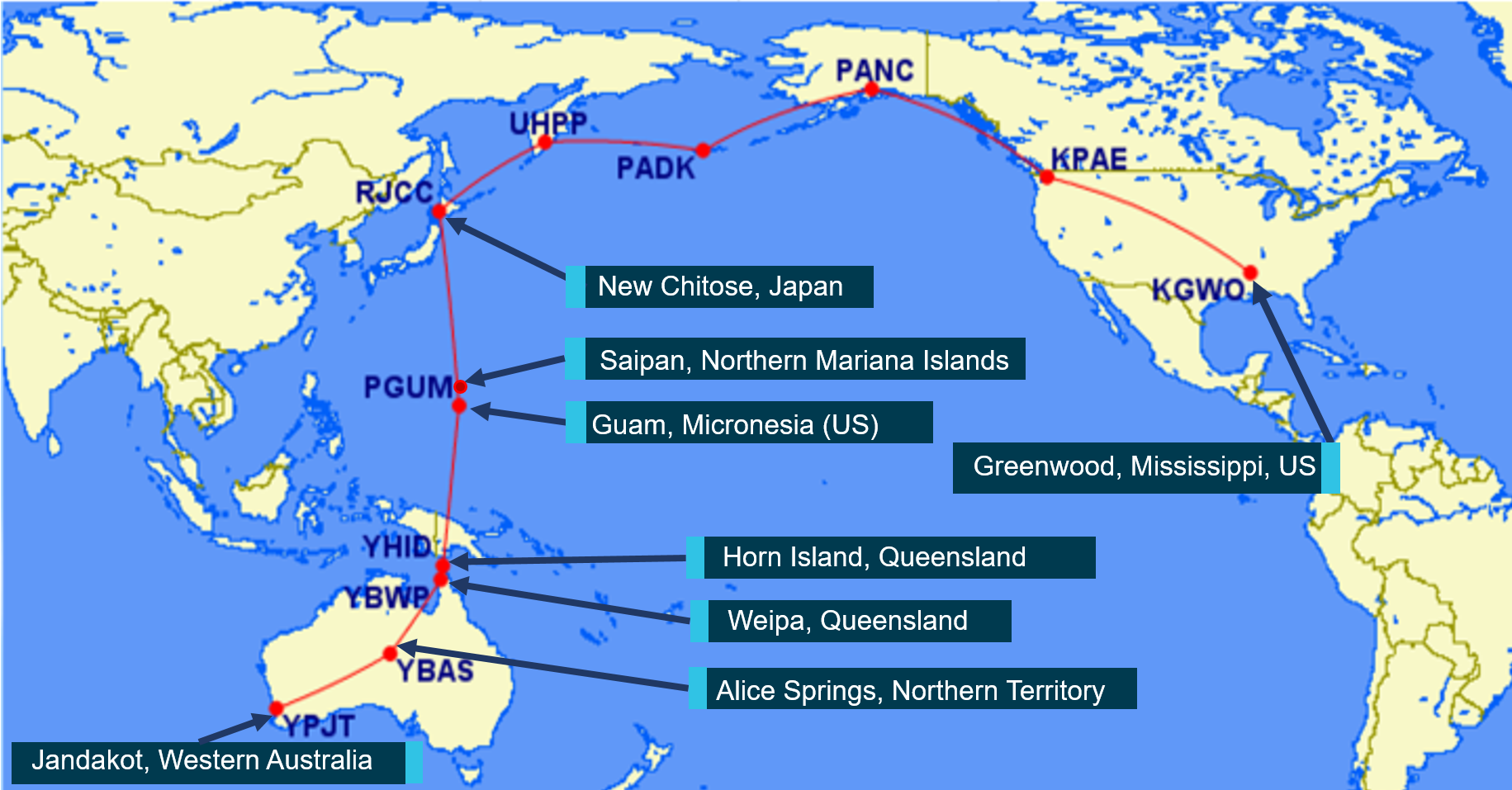
The pilot of a Cessna 208B aircraft, registered VH-FAY (FAY), was contracted to ferry the aircraft from Jandakot Airport, Western Australia (WA), to Greenwood, Mississippi in the United States (US). The pilot planned to fly via the ‘North Pacific Route’ (Figure 1).
At 0146 Coordinated Universal Time (UTC)[1] on 15 September 2018, the aircraft took off from Jandakot Airport, WA, and landed in Alice Springs, Northern Territory at 0743. After landing, the pilot advised the aircraft operator that the aircraft had a standby alternator fault indication. In response, two company licenced aircraft maintenance engineers went to Alice Springs and changed the alternator control unit, which fixed the problem.
Late the next morning, the aircraft departed Alice Springs for Weipa, Queensland, where the pilot refuelled the aircraft and stayed overnight.
On the morning of 17 September, the pilot conducted a 1-hour flight to Horn Island, Queensland. About an hour later, the aircraft departed Horn Island with the planned destination of Guam, Micronesia. While en route, the pilot sent a message to the aircraft operator advising that he would not land in Guam, but would continue another 218 km (118 NM) to Saipan, Northern Mariana Islands. At 1003, the aircraft landed at Saipan International Airport.
The next morning, the pilot refuelled the aircraft and detected damage to the propeller anti-ice boot. The aircraft was delayed for more than a week while a company engineer travelled to Saipan and replaced the anti-ice boot.
Figure 1: North Pacific Route
Source: Aircraft operator – annotated by ATSB
At 2300 UTC on 26 September, the aircraft departed Saipan, bound for New Chitose Airport, Hokkaido, Japan. Once airborne, the pilot sent a message from his Garmin device, indicating that the weather was clear and that he had an expected flight time of 9.5 hours.
About an hour after departure, the aircraft levelled out at flight level (FL) 220.[2] Once in the cruise, the pilot sent a message that he was at 22,000 feet, had a tailwind and the weather was clear. This was followed by a message at 0010 that he was at FL 220, with a true airspeed[3] of 167 kt and fuel flow of 288 lb/hr (163 L/hr).
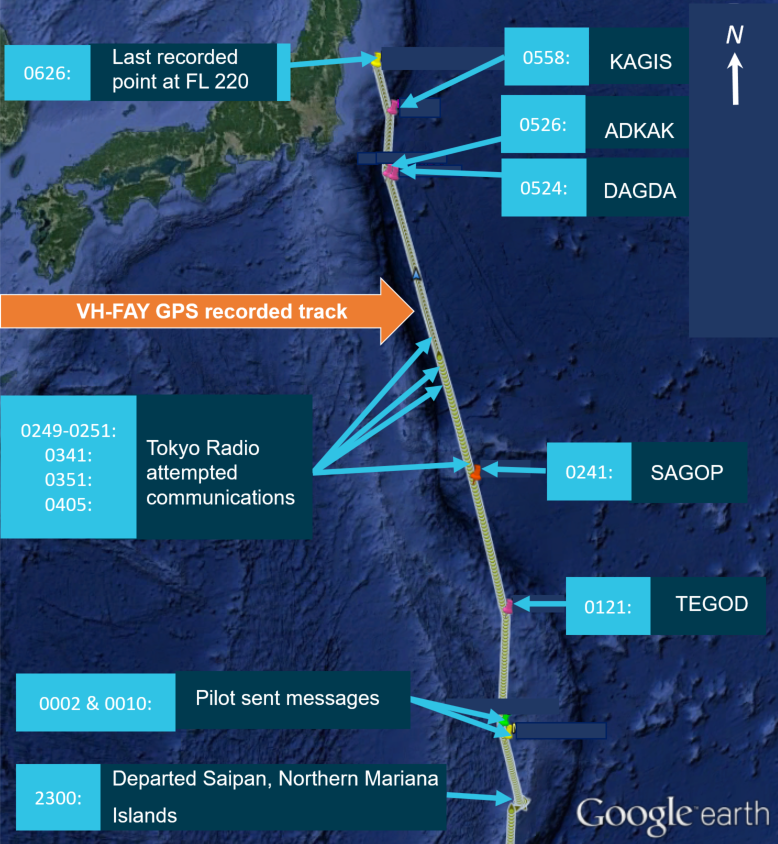
At 0121, while overhead reporting point TEGOD (Figure 2), the pilot contacted Tokyo Radio flight information service[4] on HF radio. The pilot was next due to report when the aircraft reached reporting point SAGOP, which the pilot estimated would occur at 0244. GPS recorded track showed that the aircraft passed SAGOP at 0241, but the pilot did not contact Tokyo Radio as expected. At 0249, Tokyo Radio made several attempts to communicate with the pilot on two different HF frequencies, but did not receive a response. Tokyo Radio made further attempts to contact the pilot between 0249 and 0251, and at 0341, 0351 and 0405.
Figure 2: VH-FAY GPS recorded track
Source: Aircraft operator, Google Earth – annotated by ATSB
About 4.5 hours after the pilot’s last communication, two Japan Air Self-Defense Force (JASDF) aircraft intercepted FAY. The pilot did not respond to the intercept in accordance with international intercept protocols, either by rocking the aircraft wings or turning, and the aircraft continued to track at FL 220 on its planned flight route. The JASDF pilots were unable to see into the cockpit to determine whether the pilot was in his seat or whether there was any indication that he was incapacitated. The JASDF pilots flew around FAY for about 30 minutes, until the aircraft descended into cloud.
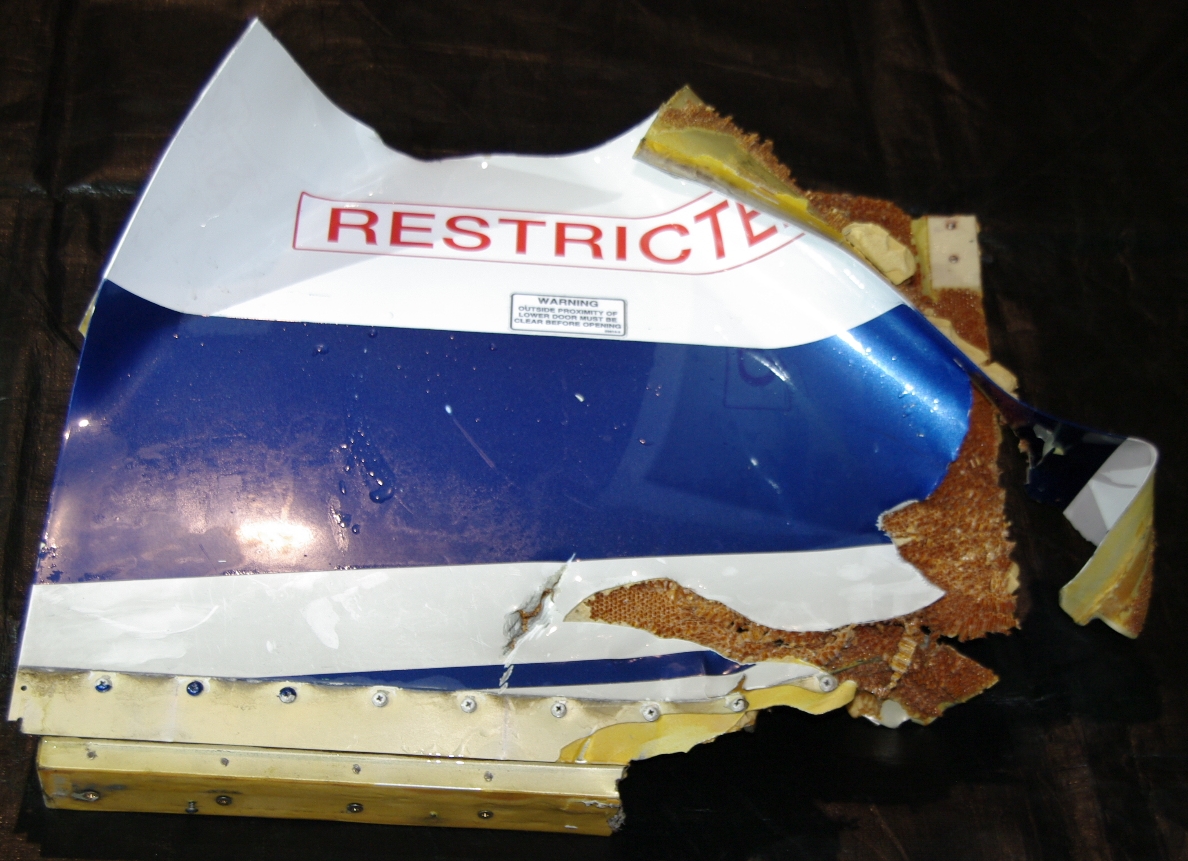
At 0626 UTC, the aircraft’s GPS tracker stopped reporting, with the last recorded position at FL 220, about 100 km off the Japanese coast and 589 km (318 NM) short of the destination airport. Radar data showed that the aircraft descended rapidly from this point and collided with water approximately 2 minutes later. The Japanese authorities launched a search and rescue mission and, within 2 hours, searchers found the aircraft’s rear passenger door (Figure 3). The search continued until the next day, when a typhoon passed through the area and the search was suspended for two days. After resuming, the search continued until 27 October with no further parts of the aircraft found. The pilot was not located.
According to information provided by the aircraft operator, the pilot had accrued over 13,600 hours of aeronautical experience and had conducted more than 200 ferry flights for various companies. The pilot held a valid US First Class Medical Certificate issued on 19 March 2018, with the restriction of vision correction. The 66 year-old pilot was reported by acquaintances to be a non-smoker, in good health for his age, and there was no evidence of any underlying medical conditions. In the nights before FAY departed from Saipan, the pilot had reportedly not slept well, but there was insufficient evidence to determine whether he could have been experiencing a level of fatigue that would affect performance.
The pilot was a Norwegian/American dual citizen with a United States (US) Airline Transport Pilot Licence issued in January 2018. For the ferry flight, a Certificate of Validation was issued by the Civil Aviation Safety Authority (CASA) on 14 September 2018 for a Commercial Pilot Licence (Aeroplane). This included the conditions that the flight ‘must be conducted in accordance with [the aircraft operator’s] operations manual and CASA legislative requirements pertaining to the flight planned route.’ In January 2018, the pilot had ferried another Cessna 208B aircraft, VH-FHY (FHY) from Canada to Perth, WA.
Aircraft information
VH-FAY (FAY) was a Cessna Aircraft Company C208B aircraft manufactured in the US in 2001. At that time, the aircraft was issued with a Certificate of Airworthiness and an associated Airplane Flight Manual.[5]
The aircraft was fitted with a Honeywell TPE331-12JR engine and a Hartzell Propeller Inc. HC-B4TN-5QL/LT10891NK (De-ice) propeller under a Supplemental Type Certificate (STC). Also under an STC, the aircraft had been fitted with an improved landing gear axle. This increased the maximum landing weight from 3,856 to 4,082 kg and the maximum take-off weight (MTOW) from 3,969 to 4,110 kg. Flight Manual Supplements (FMS) to the Airplane Flight Manual had been issued for each of these modifications.
FAY was fitted with a Garmin GTN 750 GPS. Among other options, the aircraft’s autopilot could be selected to ‘Altitude hold’, and lateral navigation mode could be selected to capture a GPS programmed flight plan.
The aircraft’s last Maintenance Release[6] was issued on 7 September 2018 following completion of extensive maintenance in preparation for overseas operations. It was valid for 14 months or 230 hours. At issue, the aircraft had 9,269.8 hours total time in service and was approved in the aerial work category and for flight under the instrument flight rules (IFR).[7]
On the morning of 27 September, prior to departure from Saipan, the aircraft had a total of 9291.7 hours in service.
Survey equipment
The aircraft was usually used for aerial survey work and had been fitted with an electromagnetic (EM) loop system under an Engineering Order[8] (EO) and an associated FMS had been issued. The system consisted of a copper cable loop suspended around the aircraft and supported by nose, wingtip and tail stingers with a transmitter mounted in the cabin. A receiver (bird) could be towed behind the aircraft on a cable, extended and retracted using a winch. The cable, bird and its cradle, and wingtip stingers had been removed in preparation for the ferry, and the tail stinger had been shortened but was still fitted to the aircraft. EM equipment in the cabin had also been removed, except for some fixed cables.
As the equipment was fitted under an EO, the aircraft had a Special Certificate of Airworthiness (CoA) that limited aircraft operation to the restricted category, for the purpose of aerial surveying.
The FMS for the EM loop limited the aircraft to a maximum operating airspeed of 161 kt and a maximum operating altitude of 20,000 ft, however, most of the equipment had been removed from the aircraft for the ferry. The design holder of the EM loop system advised the ATSB that exceeding the altitude limit had no safety implications in that configuration.
Although the aircraft was permitted to operate in IFR conditions, flight into known icing conditions was prohibited.
Ferry fuel tank and special flight permit
An aircraft that is not operated in accordance with its Type Certificate (and approved Supplementary Type Certificates) is not permitted to operate in foreign countries without a Special Flight Permit (SFP) and the approval of all countries the aircraft flies over or into.
For the ferry, FAY had been fitted with a ferry fuel tank under an engineering order with an associated FMS. The ferry fuel tank fitment meant that the aircraft no longer met the design requirements for the aircraft. Therefore, the aircraft was required to operate under an SFP. An SFP was issued on 6 September 2018 by a person authorised by CASA to issue SFPs, but not to issue overweight approvals.
The aircraft Type Certificate Data Sheet (TCDS) stated that the aircraft was structurally satisfactory for ferry flight up to 130 per cent of the TCDS MTOW (which equates to 11,375 lb or 5,160 kg). However, without overweight approval, the aircraft was required to be operated not above the STC MTOW of 9,062 lb (4,110 kg). The ferry tank FMS stated that ‘the ferry tank may only be able to be partially filled to stay within the aircraft 9062 lbs MTOW.’
Weight and balance
The load sheet indicated that on departure from Saipan, the aircraft’s take-off weight was 4,430 kg and it was loaded within the centre of gravity and structural limits.
Journey logs
The pilot completed journey logs for each flight sector, which included a daily inspection certification, take-off, landing and flight times, and fuel information. The pilot had also recorded engine condition trend monitoring information including the exhaust gas temperature (EGT) and RPM percentage. These are depicted in Table 1.
Table 1: Trend exhaust gas temperature (EGT) and engine RPM
Date
EGT (°C)
RPM (%)
15 September
657
100.5
16 September
658
100.4
17 September
658
100.2
Source: Aircraft operator
Operating the engine at 100.2 to 100.9 per cent was within the normal continuous engine speed allowable range. The FMS for the engine specified the maximum EGT as 650 °C. The engine manufacturer advised that operating at an average EGT of 658 °C relative to 650 °C increased fuel flow by about 5 lb (2.8 L) per hour under the conditions of the accident flight. The aircraft operator’s head of airworthiness and maintenance control advised that no inspection was needed for the recorded temperature exceedances, which could be avoided if the pilot reduced RPM to 100 per cent.
The journey logs were sent to the operator each day, however they were not reviewed during the ferry flight.
Communications
Radio equipment
The aircraft was fitted with the following equipment:
two VHF radios
one HF radio
a Spidertracks GPS connected via a switch on the instrument panel to a hot bus straight to the aircraft battery, so it would continue to operate in case of electrical failure
one Artex G406-4 emergency locator transmitter fitted with a G shock and remote panel switch
a satellite phone was installed in the aircraft, docked and with Bluetooth connection
four personal locator beacons (MT410G) and one Kannad marine sport emergency position indicating radio beacon were on board, all of which needed to be manually activated.
The pilot had a Garmin inReach system from which he could send and receive messages, navigate and track flights and ‘if necessary, trigger an SOS to get emergency help from a 24/7 global monitoring via the 100% global Iridium® satellite network.’
Push to talk
When the company licenced aircraft maintenance engineer (LAME) arrived in Saipan, the pilot advised him that the pilot-side push-to-talk (PTT) button had only been working intermittently and reported that he had been using the co-pilot-side PTT. The LAME cleaned and tested the button, which the pilot then verified was transmitting correctly.
Recorded data
GPS data
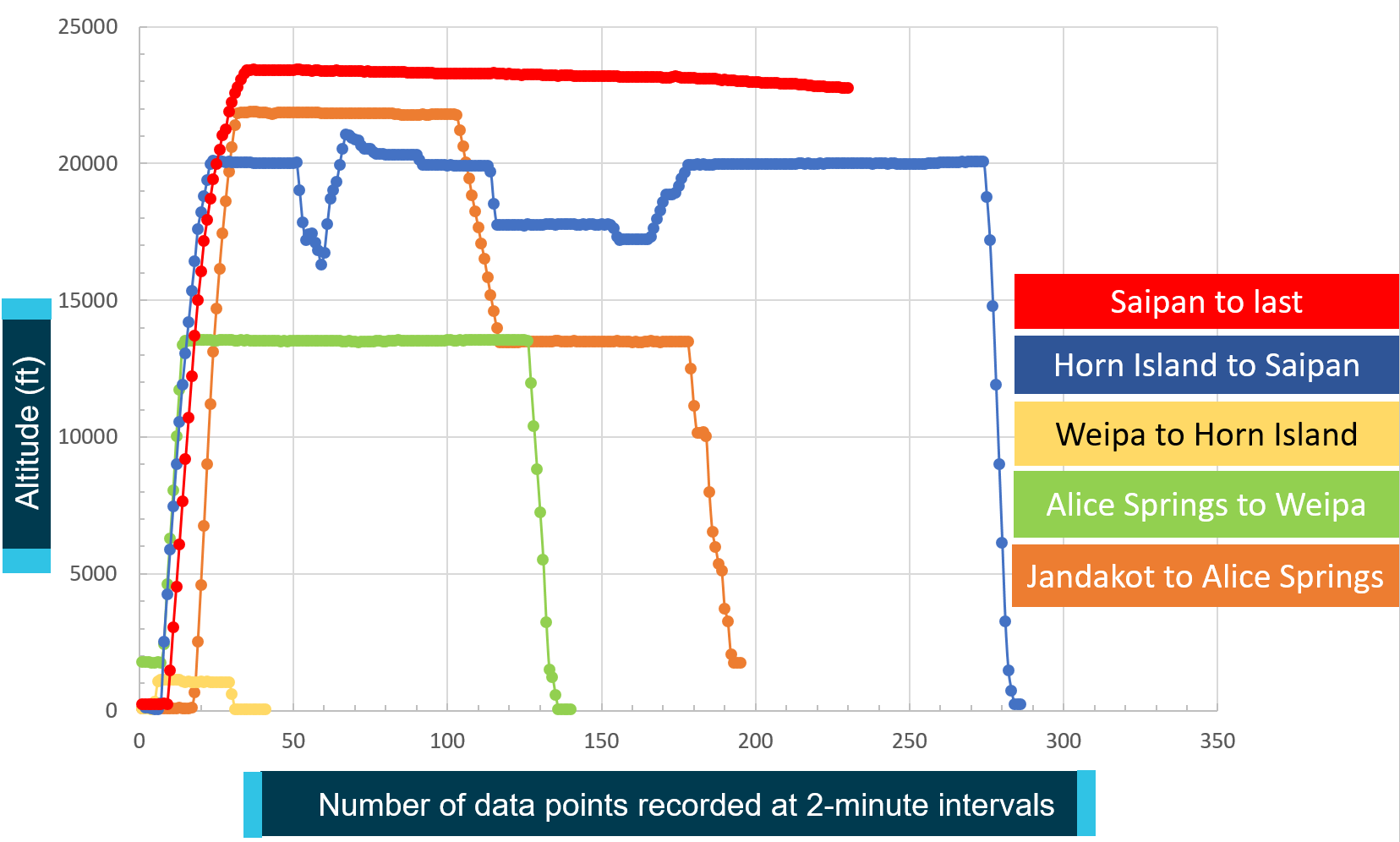
The on-board Spidertracks and Garmin GPS devices recorded the aircraft’s position and geometric altitude at 2-minute intervals. The recorded altitude of all sectors flown from Jandakot Airport to the last recorded position is shown in Figure 4. About half of the first leg, from Jandakot to Alice Springs, was flown at FL 210 before descending to FL 130, which was also the cruise altitude on the following sector to Weipa. On the flight from Horn Island to Saipan, having conducted a climb to FL 200, the pilot then made a descent over Papua New Guinea, possibly to avoid weather near Mount Hagen, before climbing and then maintaining FL 200.
The geometric altitude for the occurrence flight from Saipan showed a gradual descent from top of climb at 23,412 ft to the last recorded position at 22,770 ft. This was consistent with the aircraft flying into reducing temperature and barometric pressure. The corresponding radar data recorded pressure altitude at intervals of about 10 seconds and showed a constant altitude at 22,000 ft AMSL.
The pilot sent several messages from the Garmin device after departing Saipan and before the aircraft reached reporting point TEGOD. The last position recorded by the Spidertracks and Garmin devices was at 0626 UTC at FL 220. The aircraft took less than 2 minutes to descend from FL 220 to the ocean and there were no GPS recorded points below that altitude.
Figure 4: Geometric altitude of all flight sectors
Source: Spidertracks analysed by ATSB
Radar and ADS-B data
Japanese air traffic services recorded mode C radar and automatic dependant surveillance broadcast (ADS-B) data from FAY. Secondary surveillance radar (SSR) returns depend on an aircraft transponder’s reply to an interrogation from the ground. In response to a mode C interrogation, the aircraft transmits an encoded return with the aircraft’s selected SSR code and pressure altitude.
Radar data recorded the aircraft’s position (in X and Y coordinates) from the ground radar site and pressure altitude (referenced to 1013 hPa and quantised to the nearest 100 ft) at approximately 10-second intervals. ADS-B data transmitted from FAY’s GPS included the aircraft’s altitude within about 25 ft.
The aircraft was recorded by radar at 22,000 ft at 0627:36 and there were five valid radar returns after that. The data showed that the aircraft descended from 22,000 to the last recorded position of about 11,500 ft in 62 seconds, with an increasing descent rate of up to 22,000 and 23,000 ft/min. That descent rate was less than the dive speed (VD)[9] for the aircraft (250 kt calibrated airspeed), which corresponded to a vertical descent rate of about 25,300 ft/min.
Recorded audio transmissions
The ATSB obtained recorded audio of the pilot’s transmissions on HF radio to Tokyo Radio and VHF transmissions while tracking across Australia. Comparative analysis of these was carried out with the aim of determining whether the pilot was likely to have been using a nasal cannula and/or affected by hypoxia in the final transmission. Indicators of hypoxia include timing of microphone keying, voice onset time and fundamental frequency range of the pilot’s voice, but these could not be measured due to the noise in the HF channels. The pilot’s communications with Tokyo Radio at TEGOD included some hesitation and a misstated time, but the tempo of the pilot’s next transmission appeared normal and he corrected the time error. The ATSB was unable to make any conclusions based on the recorded audio.
Fuel
The aircraft was fitted with left- and right-wing tanks, which held a combined total of 1,257 L (2,225 lb) of usable fuel. The ferry tank held 924 L (1,635 lb) of usable fuel. The ferry tank was fitted under an engineering order with an associated FMS.
Based on the journey log and fuel dockets, the aircraft ferry and wing tanks were filled in Saipan on 18 September. Although the pilot had taxied the aircraft for maintenance, the fuel was likely close to full on departure. The LAME in Saipan had seen the pilot conduct a pre-flight fuel sample drain from the aircraft and check for contaminants, on the morning prior to departure.
There was no published fuel flow data for flight at FL 220, but the pilot reported an in-flight fuel consumption rate of 163 L/hr (288 lb/hr), which would have been relatively constant for the 6.4 hours in cruise. The aircraft took about 1 hour from taxi to reaching top of climb at 22,000 ft. The operations manual specified a planned fuel burn rate of 450 lb/hr in the climb and the design holder for the engineering orders estimated a taxi and climb fuel consumption of 353 lb. Given the pilot had previously started the aircraft and taxied for maintenance, an estimated fuel consumption for the taxi and climb was 400 lb. Based on these figures, the estimated total fuel used at the last recorded position was 1,241 L (2,196 lb), which was approximately the combined volume of the wing tanks.
Fuel transfer and imbalance
The fuel transfer protocol detailed in the ferry tank FMS was to conduct the take-off and climb to altitude using both aircraft main fuel tanks and, when established in the cruise, turn the left-wing tank selector to off, as fuel in the ferry tank could only be transferred to the right-wing tank. Two electric ferry tank pumps could be selected with different flow rates – 440 lb/hr (low) and 600 lb/hr (high). There was no gauge to indicate fuel quantity remaining in the ferry tank, and the pilot was required to monitor the fuel quantity of the right-wing tank to ensure fuel was transferring as planned and that fuel was not venting overboard.
The FMS specified 200 lb as the maximum permitted fuel imbalance between the left and right tanks. When more severe sideslip is maintained (due to imbalance), the unusable fuel quantity increases. In this occurrence, if the left tank selector was set to off at the top of climb and the right tank was used until empty, it was possible to have a 900 lb imbalance.
In August 1998, the Cessna Aircraft Company conducted flight tests at the request of the US National Transportation Safety Board to determine controllability of the Cessna 208B at various airspeed and lateral fuel imbalance combinations. A Cessna 208B aircraft was flown to a maximum 600 lb imbalance, at airspeeds between 70 and 120 kt at flap settings of 0° and 20°. The maximum control wheel deflection attained was about 28°, of the maximum available 55° control wheel deflection. Control deflection versus lateral imbalance curves were derived from the test. The ATSB extrapolated the data and found that for a 900 lb imbalance, at the aircraft’s likely airspeed, this equated to a control wheel deflection of +14°-17° and right aileron travel of +5-7°.
The aircraft manufacturer (now Textron Aviation) advised the ATSB that the autopilot servo was capable of driving the ailerons to the travel limits of 25° +4°/-0° up and 16° +1°/-0° down in the hangar. This indicated that if the aircraft had a fuel imbalance of 900 lb, there was adequate aileron control to maintain level flight at the aircraft’s likely airspeed, however the autopilot force required to maintain this was not assessed. Photos from the JASDF of FAY in the final 30 minutes of the flight did not show any visible aileron deflection.
Weather
During the last 30 minutes of the flight, the aircraft was observed to be situated between two layers of cloud. The weather conditions that the aircraft likely encountered at FL 220 included strong south-westerly winds averaging about 50 kt, temperature about -15 °C and moderate turbulence. Moderate icing and light rain were present in cloud.
Supplemental oxygen
Because of reduced atmospheric pressure, operation of unpressurised aircraft in Australia above 10,000 ft requires supplemental oxygen.
Flight crew oxygen requirements
Australian Civil Aviation Order (CAO) 20.4 – Provision and use of oxygen and protective breathing equipment, stated:
A flight crew member who is on flight deck duty in an unpressurised aircraft must be provided with, and continuously use, supplemental oxygen at all times during which an aircraft flies above 10 000 feet altitude.
CAO 108.26 – System specification – oxygen systems included that portable oxygen units may be used to meet the crew or passenger breathing requirements and that:
…flight crew members may use nasal cannula manufactured under the name “Oxymizer”, subject to the following conditions… (b) the flight crew members must use the nasal cannula only during private, aerial work, or charter, operations; (c) the aircraft must not operate above 18 000 feet altitude.
Further, it stated that ‘Dispensing units provided in an aircraft operating above flight level 180 must be designed to cover the nose and mouth.’
Aircraft oxygen system
The aircraft was fitted with a 13-port oxygen system with a 3.312 cubic metre (116.95 cubic foot) capacity oxygen cylinder located in the fuselage tail cone. The cylinder had been tested and maintained in accordance with requirements, was within its 15-year life limit and had been filled with aviator breathing oxygen (ABO) prior to the aircraft’s departure from Jandakot.
Oxygen from the cylinder was first reduced to 70 PSI by a pressure regulator and then by two altitude-compensating regulators located between the pressure regulator and oxygen supply lines, which automatically varied the flow of oxygen to the masks with changes in altitude. A remote shut-off valve in the overhead console was used to shut off the supply of oxygen to the system when not in use. A cylinder pressure gauge was located on the overhead console above the pilot’s (and copilot’s) seat.
A microphone-equipped Cessna mask with a vinyl plastic hose and flow indicator was stored under the pilot’s seat. It was observed to be in its packaging (unused) when the aircraft was in Saipan.
On-demand system
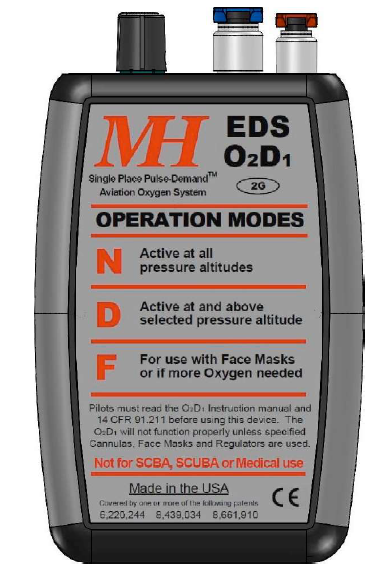
The pilot had a battery-operated Mountain High (MH) Pulse-Demand™ Electronic Delivery System (EDS) O2D1 (single-person) model (Figure 5). The EDS unit supplied a measured pulse of oxygen at the beginning of each inhalation and was oxygen-compensating (increasing flow with altitude). The unit had audible and illuminating flow fault and apnoea alarms. A representative from Mountain High advised that although the ceiling of the MH EDS is 25,000 ft, at 22,000 ft it is at the maximum flow rate requirement for oxygen.
Figure 5: Mountain High Pulse-Demand Electronic Delivery System O2D1
Source: Mountain High
Cannula
The pilot preferred to use a nasal cannula for oxygen delivery and he intended to use it for the ferry flight. This was consistent with the supplied oxygen mask being unused before departing Saipan, despite two previous sectors above 18,000 ft. The pilot had also sent a message on the previous sector, indicating that he was using the cannula at 19,000 ft.
The ATSB could not establish the cannula model used for the ferry, however the MH EDS manual stated ‘Use only the supplied MH EDS cannula, as other cannulas may not work properly with the EDS.’ The standard MH nasal cannula (Figure 6) differed from the Oxymizer specified in CAO 108.26, which had a reservoir that stored oxygen during the exhalation then added it to the delivery during inhalation to increase oxygenation. Mountain High advised that the risks of wearing a cannula are:
it is ineffective if the pilot has nasal congestion, is eating, talking or mouth-breathing
it can come away from the nose, which would also trigger the apnoea alert.
Figure 6: Mountain High nasal cannula
Source: Mountain High
In-line regulator
The EDS was required to be operated with an oxygen inlet pressure between 16 and 20 PSI, which could be achieved with an in-line regulator (Figure 7). The MH EDS manual indicated that the flow of oxygen would be unnecessarily high between 20-30 PSI. The manual also included the warning that higher pressure ‘will not only compromise the performance of the EDS, but is likely to damage the internal breathing sensor, rendering your EDS unit inoperable.’ MH advised that pressures above 30 PSI would cause the valve to open up and result in the EDS working like a constant flow system. In this situation, the apnoea alert would sound out constantly until the oxygen supply was nearly depleted.
The pilot did not have an in-line regulator for the flight. At altitudes above 17,000 ft, the aircraft’s system provided oxygen at 21.55 ± 2.5 PSI, which was higher than the EDS inlet pressure range. At 20,000 ft, this increased 24.45 ± 2.5 PSI. There was no data for the output pressure at 22,000 ft.
Figure 7: In-line regulator to connect EDS to aircraft oxygen outlet
Source: Mountain High
Mountain High aluminium cylinders
In his briefing before the aircraft departed Jandakot, the chief pilot understood that the pilot intended to plug his EDS directly into the aircraft system without an in-line regulator and was concerned about its effectiveness. Therefore, to ensure the pilot had an independent oxygen supply, the operator provided two MH aluminium (AL682) cylinders fitted with MH regulators, each of which had a maximum volume of 0.68 cubic metres (24.1 cubic feet) and a ‘typical volume’ of 0.63 cubic metres (22.1 cubic feet). The cylinders were filled with ABO and secured behind the copilot’s seat, which the pilot could reach if he slid his seat backwards.
Flight above FL 180
The MH EDS manual advised that pilots operating above 18,000 ft should have a supplementary oxygen cylinder gauge and an emergency backup oxygen system. The manual also provided full cylinder duration figures up to its ceiling of 25,000 ft and cylinder duration graphs from which to calculate usable oxygen for altitudes up to 18,000 ft.
The FAA pilot safety brochure Oxygen equipment: Use in General Aviation Operations stated that the use of cannulas was restricted by US Federal Aviation Regulations to 18,000 ft ‘because of the risk of reducing oxygen-blood saturation levels if one breathes through the mouth or talks too much.’
The aircraft operator’s operations manual approved the use of the MH EDS O2D2 and MH standard aviation nasal cannula up to FL 180, above which pilots were required to use a constant flow mask.
Pulse oximeter
To aid in identifying the symptoms of hypoxia, the pilot had a pulse oximeter, which showed blood oxygen saturation levels based on reading from the finger. On a previous flight the pilot was observed only to use the oximeter intermittently.
The US Federal Aviation Administration (FAA) cautions against relying on pulse oximeters as the sole indicator of hypoxia because by the time the oxygen saturation levels fall, it may result in a level of hypoxia sufficient to cause impairment. Further, the haemoglobin oxygen saturation in blood passing through the finger may not reflect oxygen available to the brain.
Pilot’s oxygen usage
An oxygen management plan from the pilot was not provided to the operator, however there were three sources of oxygen available to the pilot – the aircraft oxygen system and two aluminium cylinders, which were all filled prior to departure from Jandakot. It was not known which source the pilot used and when, but only one cylinder remained behind the copilot’s seat prior to the aircraft departing Saipan. This suggests the pilot had used one cylinder during the flights to Saipan. The pilot had not refilled the aircraft or portable oxygen cylinders since commencing the ferry.
The ATSB estimated whether the pilot had sufficient oxygen to complete the sector. This was based on the time at various altitudes flown for all sectors up to the last recorded aircraft position, and the expected endurance of the available oxygen, filled to typical pressures, according to the manufacturer’s documentation. The estimation was also based on using the available equipment as follows:
oxygen was used at all altitudes above 10,000 ft
the nasal cannula was used with the MH cylinders at all flight levels
the aircraft system was used with a mask or cannula, with or without the EDS.
The pilot’s actual equipment usage may have varied from these assumptions and it is acknowledged that oxygen usage can vary significantly between individuals, especially with on‑demand systems. However, it represented realistic usage scenarios and approximate endurance for the available oxygen. Even when conditions of highest usage were considered, there should have been several hours of oxygen remaining at the completion of the sector to Japan.
Hypoxia
Hypoxia is the absence of an adequate supply of oxygen to the tissues. Hypobaric hypoxia is the most common form in aviation and is associated with breathing air at low barometric pressure. A deficiency in alveolar oxygen exchange due to low oxygen tension (partial pressure) of inspired air leads to inadequate oxygen supply to the blood and reduced oxygen available to the tissues.
Hypoxia can be prevented by pressurising the aircraft cabin or by breathing supplemental oxygen. However, hypoxia can still occur in unpressurised aircraft if, for example, the supply equipment fails and/or does not provide an adequate concentration of oxygen or if the supply is not managed appropriately. In an aviation context, acute hypobaric hypoxia is the ‘most serious single physiological hazard during flight at altitude.’ [10]
Signs and symptoms of hypobaric hypoxia include:
darkening and restriction of the visual field and loss of peripheral vision
increased heart rate, hyperventilation and light-headedness
syncope (fainting/unconsciousness, pallor, sweating, nausea and vomiting)
cyanosis (bluish colouration of the skin, nail beds and mucous membranes)
impairment of mental performance and neuromuscular control, slowed reaction time
muscular spasms.
From 15,000 to 20,000 ft ‘there is a loss of critical judgment and willpower…the subject is usually unaware of any deterioration in performance or indeed of the presence of hypoxia; it is this that makes the condition such a potentially dangerous hazard in aviation.’ Above 20,000 ft these symptoms and signs become more pronounced. Involuntary jerks of the arms, loss of consciousness and convulsions occur, and after several minutes, death.
Physical activity, cold, illness and certain drugs increase the onset speed and severity of hypoxia.
US FAA Advisory Circular AC_61-107B Aircraft operations at altitudes above 25,000 feet mean sea level or Mach numbers greater than .75 indicated that while the signs of hypoxia can be detected in an individual by an observer, signs are not a very effective tool for hypoxic individuals to use to recognize hypoxia in themselves. The circular carried the following warning:
A common misconception among pilots is that it is easy to recognize the symptoms of hypoxia and to take corrective action before becoming seriously impaired. While this concept may be appealing in theory, it is both misleading and dangerous for crewmembers.
Above this altitude, complete incapacitation can occur with little or no warning. All senses fail, and a pilot will become unconscious within a very short period of time. No stimuli such as the radio will be able to help a pilot suffering from hypoxia, especially [rapid onset] fulminant hypoxia, above 5,500 meters (18,000 feet).
A less common form of hypoxia in an aviation context is anaemic hypoxia, caused by carbon monoxide poisoning. This is most commonly associated with piston engine aircraft, in drawing air for cabin heating over a damaged or defective exhaust system. Turbine engines produce up to two orders of magnitude lower carbon monoxide emissions than piston engines and utilise compressor bleed air as opposed to an exhaust heat exchanger. In addition, in 1984, the US National Transportation Safety Board investigated the possible effect of engine oil bleed air contamination on pilot incapacitation, from Garrett TPE 331 engines. It was concluded that such contamination was not likely to occur.
Time of useful consciousness
The FAA circular referenced above (AC_61-107B) defined the time of useful consciousness (TUC) as ‘the period of time from interruption of the oxygen supply, or exposure to an oxygen-poor environment, to the time when an individual is no longer capable of taking proper corrective and protective action.’ There are significant variations in TUC between individuals, and it does not mean that everyone will be capable of performing complex tasks in a challenging environment for the duration.
The circular included a graph showing decreasing TUC with increasing altitude (Figure 8). At 22,000 ft, the TUC was 10 minutes, or 5-6 minutes following rapid decompression. However, it goes on to caution that slow decompression is as dangerous as, or more dangerous than, a rapid decompression, as the resultant hypoxia may be unrecognized by the pilot. The circular also carried the warning: ‘The TUC does not mean the onset of unconsciousness. Impaired performance may be immediate.’
Figure 8: Times of useful consciousness versus altitude
Source: FAA AC 61-107B
Pilot exposure and training for high altitude flying
There was evidence from previous flights that the pilot had some exposure to operating at higher altitudes. The pilot also held a valid US type rating for a Bombardier Challenger aircraft which had a service ceiling above FL 250. Under US Code of Federal Regulations Part 61.31 (g), this required completion of ground theory training including the effects, symptoms and causes of hypoxia and any other high-altitude sickness. The pilot had completed theoretical hypoxia awareness training and reported being aware of his own initial signs of hypoxia.
Altitude-induced decompression sickness
Flying unpressurised aircraft above 18,000 ft can not only induce hypoxia, but also result in altitude-induced decompression sickness (DCS). This is the formation of nitrogen bubbles in different areas of the body due to exposure to reduced barometric pressure. According to the FAA pilot safety brochure on decompression sickness, in most cases of DCS, the bubbles form in the joints, but in 10-15 per cent of cases, neurological manifestations occur. These can include similar symptoms to hypoxia such as confusion, seizures and unconsciousness.
While most cases occur at or above 25,000 ft, the risk of DCS increases with exposure to altitudes above 18,000 ft.
Oversight of the ferry flight
The aircraft operator’s Air Operator Certificate (AOC) was for aerial work and as such, it was not a regulatory requirement to have a formal safety management system. Despite this, the aircraft operator had implemented a health, safety and environmental operating management system (HSE-OMS) that applied to their aviation activities, most of which were low-level survey operations.
FAY was routinely ferried to new surveying locations with its specialised equipment installed. Although ferry flights were classed as private operations, they were normally carried out by company pilots, operating under the AOC. The flights were conducted in accordance with the standard operating procedures and the chief pilot was responsible for operational matters affecting the safety of flying operations. However, following the successful ferry of FHY from Canada to Western Australia by the contract pilot 6 months earlier, the operator elected to re‑engage the contract pilot to ferry FAY to the US.
Risk assessment for the ferry flight
The operator initially conducted a gap analysis to identify any changes that had occurred since the ferry of FHY. It identified several actions, including the need to audit the pilot’s qualifications, conduct a familiarisation flight and briefing on the aircraft and fitments, and for flight monitoring by company staff.
At the planning stage of the FAY ferry, the primary concerns of the operator were around managing:
long sectors over water – fatigue, lack of alternate landing areas and distance from search and rescue assistance
single-pilot operation – the operator required their own ferry flights to be conducted with two crewmembers, but the contracted ferry pilot preferred to operate alone
routing – including consideration of security in countries to be overflown.
In accordance with the HSE-OMS, the operator then conducted a risk assessment for the ferry flight. The operator’s risk matrix guidelines included:
The Risk Matrix must be used with good judgment, applying the following recommendations:
- Make use of the experience of several people, with a broad range of experience and backgrounds.
- Within the defined context, the relevant hazards should be identified and documented in the hazard libraries.
- For an identified hazard, the potential consequences (severity) are determined first. A hazard can have a consequence in several categories…
- Risk must be assessed in the context of an activity as hazards manifest themselves differently in different environments or conditions…
The aviation manager reported that he had done the risk assessment based on what the company had experienced in previous ferries and general risk assessment from their operations. The quality assurance manager and flight operations administrator were involved in the assessment process. He also obtained input from the company’s aviation specialist in Canada, who had been involved with the risk assessment for the previous ferry (of FHY). The assessment report was then provided through to their HSE manager.
The HSE manager commented that normally they would get flight operations personnel involved; he, the chief pilot, the aviation manager, a ferry pilot, and a couple of other pilots would form a team. However, the HSE manager had been on vacation during the ferry risk assessment and had not been involved in the process.
The risk assessment identified 32 hazards including one relating to hypoxia:
Unconscious pilot due to oxygen starvation [resulting in] uncontrolled flight into terrain.
It was initially rated as moderate and assessed as unlikely to occur. The nominated control to reduce risk was that there was an oxygen system fitted to the aircraft, with no resultant change to the risk rating (or likelihood). Consideration of specific operational or technical factors that could contribute to hypoxia were not included in the risk assessment. Nor was any form of pilot incapacitation other than hypoxia.
Nearly half of the identified hazards nominated the pilot’s experience (having conducted over 200 ferry flights, including multiple recent Pacific crossings) as one of, or the only risk control. The assessment did not detail whether the pilot had considered the hazards or associated risks, or how he proposed to mitigate them. However, the day before FAY departed Jandakot, the ferry pilot reviewed the risk assessment in conjunction with the operator and suggested additional risks, including road transport, ‘poor decision making due client pressure,’ and access to food and medical support. The chief pilot and a senior company pilot later outlined to the ATSB that they assessed the pilot as being ‘quite organised and competent’, albeit with a clear preference for doing things his own way.
Aircraft operator and pilot agreement
The contract between the pilot and aircraft operator for the ferry detailed the responsibilities of each party, and stipulated how the aircraft was to be operated, including the requirement to adhere to standard operating procedures as specified in the operations manual.
The ‘International Operations’ section of the operations manual included requirements for approvals, permits and documentation associated with travelling to foreign countries as well as flight planning, flight following and emergency equipment. In the agreement between the aircraft operator and the contract pilot, most of these responsibilities had been assigned to the pilot to manage. Of significance, the section stated that ‘In general, the Chief Pilot will manage an overseas operation. Close liaison between the aircrew and the Chief Pilot or their delegate is essential.’
The chief pilot had commenced with the operator on 28 August 2018, two weeks before FAY departed Jandakot on the ferry flight. The chief pilot had previously conducted ferry flights for a different operator, but was inexperienced on the C208 aircraft type. Additionally, because the ferry was assigned to a contract pilot, the chief pilot reported having been informed that he was not required to have involvement in the conduct of the operation, other than briefing the ferry pilot prior to departure.
Along with the risks inherent to the type of operation, the aircraft operator had considered the additional threats posed by financial incentive to complete the ferry as expeditiously and cost-effectively as possible. To this end, the contract included that the pilot would be paid for any days delayed on the ground to reduce pressure to continue the flight in adverse conditions. The pilot was responsible for fuel, oil and other en-route costs such as accommodation and food.
Pre-flight briefing and familiarisation flight
The day before the ferry flight departed from Jandakot, the pilot completed an aircraft familiarisation flight with a senior company pilot experienced in ferry flights, and a briefing with the chief pilot. The familiarisation flight focused on aircraft handling and use of the ferry tank fuel. The chief pilot’s briefing was primarily about the aircraft’s minimum equipment list and safety equipment. These measures had been identified in the gap analysis but not included in the risk assessment.
When the chief pilot briefed the ferry pilot, he was concerned about the pilot’s intention to connect his EDS unit to the aircraft oxygen system without the requisite regulator. To address the concern, he provided the pilot with the two portable oxygen cylinders that were appropriate for use with the pilot’s equipment. The risk assessment did not include the pilot’s oxygen management plan and further risk assessment was not done to assess the effect of the additional oxygen sources.
Flight following
The gap analysis indicated that company operations staff would be responsible for flight following. As required by the contract, the pilot sent the flight plan and journey logs to the operator each day, however they were not reviewed by the operator until after the aircraft disappeared from radar. The logs showed the pilot consistently operated the aircraft engine above the exhaust gas temperature (EGT) limit of 650 °C. Additionally, on the first sector to Alice Springs, the aircraft was flown at 21,000 ft and the final sector from Saipan was at 22,000 ft. Operations staff did not contact the pilot about exceeding the 20,000 ft limit.
Flight plan
The flight plan that the aircraft operator obtained, which was submitted for the planned flight from Saipan to New Chitose Airport, showed the flight planned altitude as FL 250, total estimated elapsed time of 10 hours and 15 minutes and (fuel) endurance of 9 hours and 30 minutes. The discrepancy with the planned flight time exceeding the endurance may have been a transposition error by the pilot, however neither this, the lack of alternates, nor the planned altitude in excess of the 20,000 ft limit was identified or amended prior to departure.
The flight plan obtained by Japan Civil Aviation Bureau was sent from Honolulu at 0507 UTC on 26 September, before the aircraft departed Saipan. That flight plan had a planned cruising level of FL 220 and a total estimated elapsed time of 8 hours and 53 minutes.
Summary of operational oversight
The aircraft operator had processes in place to identify and manage the risks associated with the ferry flight. This included conducting a gap analysis and risk assessment, familiarisation flight and pre-flight briefing, which identified the potential issue with pilot’s intended use of the oxygen system.
The operator also relied on the pilot’s extensive ferry experience to bring level of safety to the ferry flight. However, many of the risk controls relied solely on the pilot’s experience and did not provide any detail on the steps the pilot had taken to manage those risks. The flight also took place outside of the company’s standard procedures and without the normal level of oversight from operations personnel, both of which could have provided an additional opportunity to identify and manage the hazards associated with the ferry flight.
Previous occurrences
ATSB research publication Pilot Incapacitation – Analysis of medical conditions affecting pilots involved in accidents and incidents (2007), reviewed occurrences recorded by the ATSB from 1 January 1975 to 31 March 2006. It identified three cases of hypoxia, which was 3 per cent of the medical/incapacitation events. One of those was a Beech Super King Air aircraft (VH-SKC) near Burketown, Queensland on 4 September 2000. The ATSB investigation report (200003771) assessed that the incapacitation of the pilot and seven passengers was probably due to hypobaric hypoxia due to operating at high cabin altitude and not receiving supplemental oxygen. The report also identified that all the fatal accidents where medical conditions or incapacitation occurred were single-pilot operations where there was no second pilot on board who could assume control of the aircraft and prevent an accident.
The ATSB investigated an incapacitation event involving a Raytheon Aircraft Super King Air 200, VH-OYA, which occurred on 21 June 1999 (199902928). As the aircraft climbed through 10,400 ft, the pilot inadvertently selected the ‘bleed air off’, which prevented the aircraft from pressurising. As the aircraft reached the planned cruising altitude of FL 250, the aircraft deviated from the assigned track and the pilot was observed repeatedly attempting to program the GPS. Shortly afterwards, the pilot lost consciousness. The passenger in the co‑pilot seat took control of the aircraft and conducted an emergency descent, during which the pilot regained consciousness. The investigation findings included that hypobaric training did not provide an effective defence to ensure the pilot (or passengers) would identify the onset of hypoxia.
ATSB investigation AO-2014-134: Flight crew incapacitation involving a Reims F406, VH-EYQ near Emerald Airport, Qld on 1 August 2014. The pilot and navigator were planning to conduct a survey operation at FL 240. The aircraft was unpressurised but fitted with an oxygen system. Having selected the oxygen supply on and donned oxygen masks, passing about FL 180, the pilot noticed the blood saturation level reporting on his oxygen pulse meter was 77 per cent instead of above 90 per cent. In a hypoxic state, the pilot worked to rectify a problem with his oxygen system connection with assistance from the navigator and air traffic control. In this case, the pilot subsequently commented that his hypoxia awareness training had aided his appreciation of his symptoms and effects of hypoxia.
On 23 September 2012, a Metro 3 aircraft, VH-SEF, failed to pressurise on climb (ATSB investigation AO-2012-127). Passing FL 140, the captain started to feel the effects of hypoxia, donned an oxygen mask, and the first officer took over flying the aircraft and conducted an emergency descent to 10,000 ft.
After departing Saipan and climbing for about an hour, the aircraft levelled off at flight level (FL) 220. An hour later, the pilot made a mandatory position report on HF radio and then no subsequent communications. About 5 hours after the position report, while maintaining FL 220 and the flight planned route, the aircraft descended to the ocean. No wreckage other than a part of the aircraft door was recovered and the pilot was not found, limiting the evidence available.
The analysis will consider reasons for the pilot’s lack of any further communication and the aircraft’s subsequent descent. The investigation identified some operational factors that increased the pilot’s risk of experiencing hypoxia. These factors are explored in detail below.
Pilot incapacitation
The absence of any communication by the pilot after reporting at position TEGOD was almost certainly a result of pilot incapacitation. He did not make any further mandatory position reports, or respond to repeated attempts by Tokyo Radio to communicate on HF radio. The pilot had several alternative means of communication available in case of HF radio failure or failure of the aircraft’s electrical system. He would have been able to communicate using one of those means if not incapacitated, as demonstrated by having successfully sent messages from his standalone Garmin device prior to reaching TEGOD.
Additionally, the pilot did not respond in accordance with international intercept protocols, either by rocking the aircraft wings or turning, when intercepted by two Japan Air Self-Defence Force (JASDF) aircraft. The JASDF pilots were unable to see into the cockpit to confirm whether the pilot of VH-FAY was visibly incapacitated.
No evidence was available from which to determine the cause of incapacitation. The two most likely mechanisms for incapacitation were due to the pilot experiencing a medical event or hypoxia. Although the pilot had a valid medical certificate and was reportedly in good health, a medical event could not be ruled out. Similarly, the pilot’s last communications with Tokyo Radio were not of adequate sound quality to determine whether the pilot was affected by hypoxia at that time. In any case, there was ample time after TEGOD for the pilot to experience hypoxia and be unable to recover at the cruise altitude, before the aircraft reached the next reporting point.
With the pilot incapacitated, the aircraft continued on autopilot. The aircraft’s track and altitude were consistent with the flight director selected to hold flight level (FL) 220 and to follow the GPS programmed track.
Fuel starvation and uncontrolled descent
About 5 hours after the pilot’s last transmission, the JASDF aircraft radar showed FAY start to descend at an increasing rate, which was indicative of engine power loss. In the absence of pilot intervention, the power loss would have resulted from either engine failure or fuel starvation. An engine failure could not be ruled out, however this would had to have occurred in addition to pilot incapacitation, and the likelihood of both these events occurring in the same flight was considered to be low. The engine power loss was therefore considered more likely to have resulted from fuel starvation.
The estimated fuel used at the commencement of the descent was significantly less than the total fuel carried. However, as the pilot almost certainly became incapacitated relatively early in the flight, he would therefore not have been able to manually alter the fuel state after that point. It was possible to have starved the engine of fuel around the descent point by switching to the right tank and using some or all of the ferry tank (and venting some). However, this would have resulted in a fuel imbalance that was not evident in photos of the aircraft taken shortly before its descent. Given that the estimated fuel used was approximately equal to the usable fuel in the wing tanks, it was more likely that the wing tanks were selected for the duration and this usable fuel was exhausted, leaving the ferry tank full.
The aircraft’s last computed descent rate was below the dive speed for the aircraft, and was therefore indicative of an uncontrolled descent, rather than an in-flight breakup. There was no recorded data of the aircraft’s collision with the water, however the descent profile and wreckage indicated that the collision with water was not survivable.
Increased risk of experiencing hypoxia
In exploring the potential reasons for pilot incapacitation, there were several operational factors identified that increased the pilot’s risk of experiencing hypoxia and being unable to recover.
The pilot elected to fly solo at FL 220 where, without adequate oxygen supply, the time of useful consciousness (TUC) was in the order of 5-6 minutes. This was limited compared to FL 180, for example, where the TUC was two to three times longer.
The pilot had undertaken a hypoxia awareness course and reportedly knew the initial symptoms that presented in himself, which would aid in identifying and mitigating against the risk of hypoxia. However, particularly above FL 180, impairment and incapacitation can occur quickly, with little or no warning, rendering a person unable to take action to recover. The pilot also had a pulse oximeter to monitor blood oxygen saturation, but had been observed on a previous flight to use it intermittently rather than continuously. Given the limited TUC, had the pilot followed a similar regime on this flight, it may have resulted in insufficient time to alert the pilot to decreasing saturation levels. The pilot elected not to have a second pilot on board, as offered by the operator, which would have provided an additional risk control in assisting to identify the signs of hypoxia in each other and enable recovery action, as illustrated by previous occurrences. This would be especially pertinent at altitudes where there is limited TUC.
There was adequate oxygen on board for the flight, however the pilot was probably using a nasal cannula connected to the pilot’s electronic pulse-demand system (EDS) at all flight levels, as indicated by the fact that the Cessna mask was unused by the time the aircraft was in Saipan, despite having flown above FL180. This increased the risk of reduced oxygen-blood saturation levels.
The pilot had also indicated his intention to connect the EDS to the aircraft system without the in-line regulator that was required to ensure the EDS operated within its limits. At FL 220, this had the potential for the pilot to receive inadequate oxygen supply or for the EDS to be rendered inoperative, resulting in higher oxygen consumption than anticipated. However, it is noted that the pilot had the Cessna mask available which, if used with the aircraft system, would have mitigated this risk.
Findings
From the evidence available, the following findings are made with respect to the uncontrolled flight into water involving a Cessna Aircraft Company 208B, registered VH-FAY, that occurred 260 km north-east of Narita International Airport, Japan, on 27 September 2018. These findings should not be read as apportioning blame or liability to any particular organisation or individual.
Contributing factors
During the cruise between Saipan and New Chitose, the pilot very likely became incapacitated and could no longer operate the aircraft.
The aircraft’s engine most likely stopped due to fuel starvation from pilot inaction, which resulted in the aircraft entering an uncontrolled descent into the ocean.
Other factors that increased risk
The pilot was operating alone in the unpressurised aircraft at 22,000 ft and probably not using the oxygen system appropriately, which increased the risk of experiencing hypoxia and being unable to recover.
Safety actions
Whether or not the ATSB identifies safety issues in the course of an investigation, relevant organisations may proactively initiate safety action in order to reduce their safety risk. The ATSB has been advised of the following proactive safety action in response to this occurrence.
Aircraft operator
As a result of this occurrence, the aircraft operator has advised the ATSB that they are taking the following safety actions:
Risk assessment and standard procedures
The aircraft operator reviewed their risk assessment processes and the standard operating procedures for conduct of ferry flights. As a result, they amended the guidance for international ferry operations in their operations manual including: maximum sector length, fuel planning, mandating two-crew operations, oxygen planning, management and training, operating altitude limitations, and use of contract pilots.
Oxygen use guide
The aircraft operator also created an oxygen use guide and a specific risk assessment for positioning (ferry) flights.
Sources and submissions
Sources of information
The sources of information during the investigation included the:
Aircraft operator and maintainer
Aircraft engineer and design holder
Japan Transport Safety Board
Civil Aviation Safety Authority
Bureau of Meteorology
Honeywell
Textron Aviation
United States National Transportation Safety Board.
References
Campbell RD, Bagshaw M 2002, Human performance and limitations in aviation, Blackwell Science Ltd.
Gradwell DP, Rainford DJ 2006, Ernsting’s aviation medicine, Edward Arnold (Publishers) Ltd London, Chapter 3.
Newman, DG 2004, Flying fast jets: Human factors and performance limitations, CRC Pres LLC.
Submissions
Under Part 4, Division 2 (Investigation Reports), Section 26 of the Transport Safety Investigation Act 2003 (the Act), the ATSB may provide a draft report, on a confidential basis, to any person whom the ATSB considers appropriate. Section 26 (1) (a) of the Act allows a person receiving a draft report to make submissions to the ATSB about the draft report.
A draft of this report was provided to the aircraft operator, aircraft maintainer, aircraft insurance assessor, Civil Aviation Safety Authority, Japan Transport Safety Board, US National Transportation Safety Board, Textron Aviation, Honeywell, Thomson Design and Mountain High.
Submissions were received from the Japan Transport Safety Board, Honeywell, aircraft insurance assessor, aircraft operator, Thomson Design and Mountain High. The submissions were reviewed and, where considered appropriate, the text of the report was amended accordingly.
Purpose of safety investigations
The objective of a safety investigation is to enhance transport safety. This is done through:
identifying safety issues and facilitating safety action to address those issues
providing information about occurrences and their associated safety factors to facilitate learning within the transport industry.
It is not a function of the ATSB to apportion blame or provide a means for determining liability. At the same time, an investigation report must include factual material of sufficient weight to support the analysis and findings. At all times the ATSB endeavours to balance the use of material that could imply adverse comment with the need to properly explain what happened, and why, in a fair and unbiased manner. The ATSB does not investigate for the purpose of taking administrative, regulatory or criminal action.
Terminology
An explanation of terminology used in ATSB investigation reports is available here. This includes terms such as occurrence, contributing factor, other factor that increased risk, and safety issue.
Publishing information
Released in accordance with section 25 of the Transport Safety Investigation Act 2003
Ownership of intellectual property rights in this publication
Unless otherwise noted, copyright (and any other intellectual property rights, if any) in this report publication is owned by the Commonwealth of Australia.
Creative Commons licence
With the exception of the Coat of Arms, ATSB logo, and photos and graphics in which a third party holds copyright, this publication is licensed under a Creative Commons Attribution 3.0 Australia licence.
Creative Commons Attribution 3.0 Australia Licence is a standard form licence agreement that allows you to copy, distribute, transmit and adapt this publication provided that you attribute the work.
The ATSB’s preference is that you attribute this publication (and any material sourced from it) using the following wording: Source: Australian Transport Safety Bureau
Copyright in material obtained from other agencies, private individuals or organisations, belongs to those agencies, individuals or organisations. Where you wish to use their material, you will need to contact them directly.
On 7 September 2018, the pilot of a Yakovlev 9-UM (YAK 9) aeroplane, registered VH-YIX, departed Latrobe Regional Airport, Victoria for a local private flight. The aircraft was observed by witnesses to the north of Moe, Victoria performing aerobatic manoeuvers. A short time later the aircraft impacted the ground in a steep nose‑down attitude, fatally injuring the pilot and destroying the aircraft.
What the ATSB found
The ATSB found that the aircraft entered a spin at low altitude from which it was not possible to recover. There was no evidence of pilot incapacitation, or a mechanical fault with the aircraft that contributed to the accident.
The pilot had limited experience and recency in the YAK 9 and had not previously conducted aerobatics in the aircraft. He was therefore likely unaware of its unique handling characteristics and not adequately prepared to conduct the solo aerobatic flight.
The ATSB also identified a number of other factors that, while not contributory, increased safety risk. These included inadequate aircraft maintenance and operation without important flight and maintenance documentation.
Safety message
This accident highlights the inherent risks associated with performing low-level aerobatics in high performance aircraft. Pilots engaged in such flights are encouraged to observe minimum approved operating heights above the ground, commensurate with their ability and qualifications, and to engage in regular flight reviews and/or flight instruction.
Pilots should also ensure that careful preparation and planning is undertaken prior to each flight and that all documentation, checklists and required manuals are appropriately stored and accessible within the aircraft.
The occurrence
What happened
On 7 September 2018, a Yakovlev 9-UM (YAK 9), VH-YIX was flown from Boonah Queensland, to Latrobe Regional Airport, Victoria. The relocation of the aircraft was undertaken by two separate pilots, with a handover conducted at Dubbo Airport, New South Wales. One of the pilots, an instructor, flew another aircraft from Latrobe Regional Airport to Dubbo. On arrival at Dubbo the pilots swapped aircraft for their respective return flights.
Prior to landing at Dubbo in the YAK 9, the pilot from Boonah opened the forward cockpit canopy in-flight to provide greater visibility for the landing. It was reported that the resultant turbulent airflow from the open canopy ejected a number of aircraft documents from inside the cockpit. After landing at Dubbo, the instructor was advised of the loss of the aircraft checklist, maintenance release, Certificate of Registration, and Special Certificate of Airworthiness from the aircraft.
The instructor conducted an uneventful flight back to Latrobe Regional Airport in the YAK 9, and landed at about 1155 Eastern Daylight-saving Time.[1] He refuelled the aircraft with 341 litres of aviation gasoline and parked the aircraft on the Latrobe Valley Aero Club hardstand at 1244.
One of the aircraft’s owners (the pilot) met the instructor on arrival. The pilot told the instructor that his intention was to conduct some taxi practice prior to a pre-arranged instructional flight scheduled for 1630 that afternoon.
The instructor and the pilot discussed the absence of the checklist and other required documents. The instructor reported that they agreed that the aircraft should not be flown, but taxiing would be acceptable, provided the aircraft’s operating temperatures were monitored. The instructor then proceeded inside the aero club to prepare another student for a training flight.
Sometime later, the instructor heard the pilot attempting to start the YAK 9. After numerous starting attempts, the instructor went outside to assist the pilot to apply the correct starting sequence.
At about 1420, the pilot began to taxi the aircraft, which was witnessed by two aircraft engineers standing outside a hangar at the northern end of runway 21. The aircraft was taxied along to the run-up bay. The witnesses observed that the rear canopy of the aircraft was open and that the pilot appeared to conduct routine engine checks. A short time later, the aircraft entered runway 21, the pilot applied power and commenced to take-off.
The instructor, who was walking across the tarmac from the aero club, recalled observing the take-off roll of the YAK 9 and noted that the aircraft used more than double the normal length of runway before it lifted off. The instructor then noticed that the rear canopy was not secure.
He attempted to contact the pilot from within the aero club by radio to advise him that the rear canopy was not secure. The instructor made several broadcasts but did not receive a response from the pilot. However, another pilot in the area responded to the instructor’s radio call, which confirmed that the radio call had been broadcast.
The YAK 9 initially maintained runway heading as it continued to climb. At 1428, it was identified by military radar turning off runway heading to the west at about 130 kt (Figure 1). The aircraft climbed to about 2,600 ft above mean sea level (AMSL). About 4.6 km to the south‑west of Latrobe Regional Airport, it was observed on radar to level out.
Figure 1: Flight track of VH-YIX
Source: Google Earth with annotations by ATSB
At 1431:09, the aircraft was about 18 km to the north-west Latrobe Regional Airport at about 2,800 ft, and travelling at 206 kt groundspeed when the pilot began to conduct what ground witnesses assessed as aerobatic manoeuvers. Radar contact with the aircraft was lost during those manoeuvres. The aircraft briefly reappeared on radar at 1431:34, at about 3,100 ft, (2,900 ft above ground level) with a groundspeed of 157 kt. This was the last contact received by radar, and showed a 49 kt reduction in groundspeed during the 25-second period when the aircraft was not visible on radar.
Figure 2: Video captured by a witness with overlayed ATSB analysis
Source: Witness footage with ATSB analysis and annotations
Witnesses in the Moe region, who were actively watching the aircraft from the ground, observed the YAK 9 conduct a series of what appeared to be aerobatic manoeuvers. One witness described what appeared to be a roll followed by a loop. They stated that as the aircraft came out of the bottom of the loop, the aircraft appeared to conduct an abrupt left turn before it began spiralling towards the ground. Video taken by another witness showed the aircraft in a spinning, steep nose‑down attitude prior to disappearing from view (Figure 2). These four frames were captured over 0.48 seconds.
At about 1432, the aircraft impacted terrain in a paddock about 3 km north of Moe, in a flat, slightly right‑wing and nose-low attitude, with little to no forward movement (Figure 4). The aircraft was destroyed, and the pilot was fatally injured.
The pilot held a Commercial Pilot Licence (Aeroplane), issued in March 1983. At the time of the accident, the pilot held the appropriate aircraft ratings and endorsements to operate the YAK 9. The pilot had undertaken an aeroplane flight review with an instructor in a twin-engine Cessna 310, about two weeks prior to the accident.
In August 1997, the pilot conducted spin training in a basic aerobatic training aircraft. At that time, the pilot also received an aerobatic endorsement. This qualification permitted the pilot to perform basic aerobatic manoeuvres such as loops, aileron rolls, slow rolls, barrel rolls and stall turns. The endorsement contained an altitude restriction which required the pilot to have completed any aerobatic manoeuvre by 3,000 ft above ground level.
Experience
The pilot was a relatively experienced private aircraft operator, and had operated a number of ex‑military, high-performance warbird aircraft. The pilot had logged over 2,000 flight hours in multiple aircraft types, and had flown about 100 hours in warbird aircraft. The pilot had recorded a total of 1.9 hours in VH-YIX as at 29 March 2018, however it was reported that a number of additional flights were undertaken in the aircraft but not recorded in the pilot’s logbook. The instructor who had overseen all of the pilot’s operation of the aircraft estimated that the pilot’s experience in the YAK 9 was about 5‑6 hours.
As part of transitioning to operate high-performance warbird aircraft, the pilot had voluntarily undertaken a significant number of instructional flights in warbird aircraft since 2011. Flight training records and instructor interviews indicated that the pilot normally required debriefing in a number of areas after these flights. Basic warbird aircraft handling issues were identified as the most prevalent debriefing points. However, the use of checklists and correct procedures were also identified a number of times. Several different instructors noted in the pilot’s training records that he needed to fly often to retain currency and consistency in operating warbird aircraft.
The pilot had conducted aerobatics in a number of high-performance warbird aircraft in the two years prior to the accident, however he had not flown the YAK 9 in over 3 months, and had not previously conducted aerobatics in the aircraft.
Medical
The pilot conducted an aviation medical examination on 10 July 2018 and was issued a Class 2 aviation medical certificate on 31 July 2018. Limitations placed on the pilot’s medical certificate required distance vision correction to be worn whilst flying and reading correction to be available whilst exercising the privileges of the licence. A review of the previous five years of medical files did not identify any medical concerns. The post-mortem examination found no evidence of any medical conditions that may have affected the pilot’s performance.
The pilot was reported to be excited about the return of the YAK 9 to Latrobe Regional Airport, and took a flight bag when departing for the airport that morning. However, family members reported that the pilot was uncertain if he would fly the aircraft that day.
Aircraft information
General
The YAK 9 is a two-seat, low-wing, aerobatic[2] aircraft with retractable landing gear. At the time of design, it was intended to perform the role of an advanced wartime aerial combat platform. Manufactured with front and rear flight controls, the primary flight controls are located in the front cockpit section with independent, secondary flight controls located in the rear passenger cockpit.
VH-YIX was manufactured in Russia in 1996 and exported to the United States shortly after construction without an engine. A Special Airworthiness Certificate issued for the purpose of experimental exhibition was granted on 20 February 2004 to allow the aircraft to operate in the United States. Logbook entries indicate that an Allison V-12 liquid‑cooled engine was installed and on 12 April 2004, the aircraft had flown 1.5 hours. The aircraft was imported to Australia and was placed on the Australian civil aircraft register on 19 July 2004, as VH-YIX.
Handling characteristics
As part of dive recovery, most aircraft require the application of rearward pitch control input to raise the nose and ease out of a dive. Experienced YAK 9 pilots reported that the aircraft exhibited a divergent pitch control that was more pronounced when it had a rearward centre of gravity. This characteristic, which is different to most other warbird aircraft, meant that the effort required to pull back on the control stick reduced as the airspeed increased during a high-speed dive. That behaviour increases the possibility of the pilot over-controlling the aircraft with excessive pitch-up input. This, in turn, increases the risk of unintentionally entering a high‑speed stall by exceeding the wing’s maximum angle of attack[3] and entering a spin.[4]
The YAK 9 flight manual emphasises the need for smooth and deliberate control inputs for aerobatics. A high-speed stall occurs when the airflow over one or both wings of an aircraft detaches and becomes turbulent due to a high angle to the relative airflow.[5] At this point the addition of a yawing force, most typically due to an out of balance condition, begins to rotate the aircraft into a spin. These forces will continue until control input from the pilot stops them. High‑performance aircraft like the YAK 9 transition into a fully developed spin quicker and more forcefully than a typical light training aircraft. It is essential during recovery from a spin to have sufficient altitude to effect the recovery. Experienced YAK 9 pilots stated that, depending on pilot experience, 5-7,000 ft is required to safely recover the aircraft from a developed spin.
The YAK 9 flight manual states that recovery from a spin (Figure 3) also requires considerable forward control stick movement to hold the aircraft in a dive until the speed builds up. It also warns pilots not to energetically over-control the elevator during dive recovery as the aircraft may ‘wing rock’, which is a symptom of impending stall. Should too much rearward control stick application continue, then the aircraft may re-enter a stalled state that may lead to a further spin.
It is an Australian regulatory requirement that the aircraft maintenance history is documented in the aircraft and engine logbooks. A review of the aircraft’s logbooks indicated that the YAK 9 was operated in Australia for about 106 hours before the aircraft was damaged in a landing incident at Tyabb, Victoria, in September 2015. The aircraft underwent a significant repair process, which was completed on 21 October 2016. The aircraft logbook indicated that, as part of the repair the:
rudder and port aileron had been removed, repaired, recovered and refitted
fin and port wingtip had been repaired
engine was removed, bulk stripped and refitted
propeller was overhauled and propeller blades replaced
centre and rear cockpit canopy transparencies were removed and replaced.
An independent inspection of the flight control system was undertaken relating to the rudder and port aileron refit.
Following the purchase of the aircraft from the original owner, a maintenance provider conducted a periodic inspection, and a maintenance release was issued on 20 December 2017. The aircraft’s total time in service was 107.9 hours when it became registered to the pilot on 22 January 2018.
Entries in the maintenance release[6] indicated that it flew a further 15.9 hours before the day of the accident. The last recorded entry on the aircraft maintenance release was dated 29 May 2018 and listed a total time in service of 122.8 hours with no recorded outstanding maintenance or defects. It was reported by the ferry pilot that prior to departing Boonah, there were no outstanding recorded maintenance or defects.
It was originally reported that the Yak 9 was relocated to Queensland for maintenance, however the only maintenance performed on the aircraft during its time at Boonah related to checking the security of coolant hoses. It was subsequently reported that the aircraft was primarily flown to Queensland to attend, and conduct a display at, an air show.
Requirements for the carriage of a documents in flight
The Civil Aviation Regulations 1988 (CAR) require that the pilot-in-command of an aircraft carries, as a minimum on the aircraft during flight, the maintenance release and the flight manual (if any).
Paragraph 139 (1) (c) of the (CAR) also directs that an aircraft shall not commence a flight unless there is a valid maintenance release or other approved document in force, covering the period of the proposed flight. This is to ensure that the pilot-in-command:
is informed of any defects in the aircraft
is able to determine that all required maintenance on the aircraft has been completed and certified
can determine that no maintenance requirement will become due during the time of the proposed flight.
Pilots familiar with operation of the YAK 9 reported that there was little provision to store flight documents in the cockpit. When preparing to land the aircraft, it was common for a pilot to open/slide the forward canopy rearward to allow for a better view of the landing area during the final turn for landing. On a previous occasion, opening the forward canopy in flight resulted in the loss of the aircraft maintenance release and the aircraft checklist. At that time, the maintenance release was re-issued by an approved maintenance organisation.
A similar situation occurred when the aircraft arrived at Dubbo, on its return flight to Latrobe Regional Airport on the day of the accident. As a consequence, the aircraft departed Dubbo without the maintenance release or checklist. The instructor reported that on arrival at Latrobe Regional Airport, he asked the maintenance provider to arrange a replacement maintenance release for VH-YIX. However, before a maintenance release could be reissued, the aircraft departed the airport without an aircraft checklist or current maintenance release.
In the case of VH-YIX, the aircraft checklist was incorporated into, and formed part of the flight manual. Neither the flight manual nor the maintenance release were located at the accident site.
Rear canopy
The rear canopy of the YAK 9 can be secured from the rear seat inside the cockpit, or prior to flight from the front seat. Securing the rear canopy from the front seat requires the front seat pilot to face backwards in order to lock the rear canopy in place, prior to resuming the control seat.
The YAK 9 pre-flight checklist specifically requires that in single seat operations, prior to starting the engine, the rear seat must be properly prepared by securing the seatbelt assembly to prevent interference with the aircraft’s controls, and the rear canopy is also to be locked in place prior to taxi. It is not possible to secure the rear canopy once seated from the front seat.
Wreckage and impact information
On-site examination
The accident site was in a flat grazing paddock, 19 km west-north-west of Latrobe Regional Airport. The aircraft collided with terrain close to the fence line of two properties.
Figure 4: Major features of the wreckage at the accident site
Source: ATSB
The site inspection confirmed the presence of all the major flight control surfaces including trim tabs, the tailplane, fuselage and wings.
Fuel burns to grass were identified forward of the aircraft’s orientation. This was the result of the highly compressed wing structure rupturing the main leading edge fuel tanks, allowing fuel to escape on impact, chemically burning vegetation adjacent to the accident site.
The lack of wreckage trail, high compression of the aircraft structure and close proximity of the majority of the aircraft pieces indicated an impact at a high vertical speed with little forward movement.
Figure 5: Right wing structure impact damage
Source: ATSB
Ground impact marks and aircraft damage indicated that the YAK 9 collided with terrain in about a 30° right wing low, and 30° nose‑low attitude (Figure 5). This attitude and wreckage distribution was consistent with the wreckage pattern of an aircraft established in, or partially recovering from, a spin.
One propeller blade separated from the aircraft at impact and the other two sustained damage consistent with the engine operating under low power at the time of the accident. Witness reports of engine popping and backfiring prior to impact were consistent with the engine operating in a dive with a reduced power setting. The inspection of the engine and its controls did not reveal any defect that may have prevented its operation. The availability of fuel, serviceability of the ignition and engine control systems and a lack of structural defects, indicated that all systems appeared serviceable during the flight.
In combination with the propeller blade damage, it is likely that at the time of impact with terrain, the engine was operating, however at a low power setting.
The flight controls were present and accounted for at the site. Examination of the systems did not reveal any pre-existing defects that may have inhibited normal operation.
Some anomalies were noted within the wreckage during the ATSB’s on-site phase of the investigation, these included:
the rear canopy was not accounted for within the wreckage at the accident site - it was subsequently located by a land owner in a nearby paddock
one of the rear seat rudder control balance cables and pulley had detached from the airframe
internal corrosion was identified within the compromised structure of the welded steel fuselage
unsecured fasteners in the forward and rear seats
rear-seat seatbelt assembly unbuckled and unsecured.
Rear canopy
The rear passenger canopy was located approximately 500 m to the south-east of the impact site. The proximity of the canopy in relation to the accident site, in combination with the recorded radar track of the aircraft during the final moments of the flight, indicated that the canopy most likely separated from the aircraft during the vertical descent.
Assessment of canopy photographs identified that the canopy was relatively intact, sustaining only minor damage upon separation from the aircraft and some further damage on impact with the ground. The canopy’s transparency contained two large cracks on the left and right side; originating at the forward corners of the canopy frame and extending rearward. The transparency was contained within its alloy frame. The forward part of that frame, identified as the canopy bow, had buckled in a rearward manner, likely due to impact with the ground (Figure 6). There was no evidence that the rear canopy contacted the aircraft structure, including the flight controls, following detachment.
Figure 6: Forward looking view of the rear canopy
Source: Insurance assessor image with ATSB annotations
Rear rudder control assembly
The YAK 9-UM is a tandem two-seat aircraft. Each seating position has independent rudder cables running from the rudder, through a series of pulleys, to the rudder pedals. To balance the movement of each rudder pedal position in each seat, a balance cable ran between the left and right rudder pedals. This ran through a series of pulleys to ensure that if one rudder pedal was depressed then the other would raise. Each rudder control, for both the forward and rear seating positions, was independent of each other. This means that in the event of a failure in one, the other would function appropriately.
On-site wreckage examination identified that the passenger right-side rudder balance cable pulley had separated from its mount within the airframe structure. The castellated nut, washer and accompanying split pin that would normally secure the pulley bolt to the airframe tube were not able to be located and there was no evidence that the fastener had failed due to force associated with the impact sequence (Figure 7).
Figure 7: Rear right rudder pulley, found away from the airframe.
Source: ATSB
An additional anomaly was noted with the left-side rudder pulley. Although the castellated nut was present on the bolt threads to that pulley, no split pin had been fitted. Furthermore, even if one had been fitted, the fastener arrangement would not have prevented loosening of the castellated nut (Figure 8).
Figure 8: Left side rear rudder balance cable bolt and castellated nut
Source: ATSB
Internal corrosion within tubular structure
During the on-site examination of the wreckage, corrosion was noted inside a number of airframe tubes. The rear cockpit‘s rudder balance cable pulley structure also had evidence of internal corrosion. The pilot’s seat rear mount cross-member had separated from the tubular side frames of the forward cockpit, revealing further evidence of internal corrosion. Internal corrosion was also found in the tubular steel structure of the fuselage. It was noted that there was little provision for applying and draining corrosion-inhibiting products to the internal surfaces of the tubes.
Further examination
ATSB identified other anomalies during the on-site examination of the wreckage. There was evidence of incomplete maintenance activity, with further examples of missing split-pins, in the rear-seat mounting bolts and nuts. A split-pin was also missing from the pilot’s seat lower mounting bolt securing nut, which was engaged by several threads, with the locking portion of the nut disengaged.
The rear seat was found outside the aircraft near the tailplane with the individual straps of the seatbelt assembly loose. The position of the seat indicated that significant force/s had been applied to it, raising the possibility that the rear seatbelt assembly became unclipped during the impact sequence.
However, the instructor who flew the aircraft to Latrobe Valley earlier that day reported that, on arrival, he removed a bag that had been secured via the harness to the rear seat and left the seatbelt undone in preparation for a planned 1630 flight with the pilot. If that harness was not secured by the pilot prior to the accident flight, the straps may have fouled the control stick and inhibited full and free movement in flight. From the available evidence, it was not possible to determine if that occurred.
VH-YIX departed Latrobe Regional Airport, Victoria at about 1428 and climbed to 2,600 ft before turning to the north and accelerating to over 200 kt north of Moe. The pilot then began to conduct manoeuvres identified by witnesses as being consistent with aerobatics. A short time later the aircraft impacted the ground in a steep nose‑down attitude, fatally injuring the pilot.
This analysis will discuss the development of the accident, including the pilot’s qualifications and readiness for the flight. Aspects of the aircraft maintenance and associated documentation will also be detailed.
Development of the accident
Aerobatic manoeuvres
Witness reports indicated that the pilot was performing manoeuvres consistent with aerobatics, including loops and rolls, immediately prior to an abrupt loss of control.
Analysis of video footage provided by a witness indicated that VH-YIX was established in a spin when the aircraft disappeared from view below 1,000 ft above ground level (AGL). The aircraft damage and localised nature of the accident site confirmed that the aircraft collided with terrain in a right wing‑low and nose‑down attitude at high vertical speed and with little forward movement. That impact signature was consistent with the aircraft established in a spin.
Analysis of radar coverage in that area identified that an aircraft operating below about 1,800 ft above mean sea level would be below radar coverage, and therefore not identifiable on radar. The absence of radar identification of the aircraft during the latter part of the flight therefore indicated that the pilot was operating significantly below his approved 3,000 ft AGL aerobatic limit. More importantly, the aircraft was also well below the altitude that experienced YAK 9 pilots advised was required to safely recover from a spin. As such, and consistent with the observed impact signature, the spin was probably unrecoverable in the height available.
The pilot was qualified to perform basic aerobatics above 3,000 ft AGL, and the aircraft type was appropriate for the aerobatics conducted. However, while the pilot had experience conducting aerobatics, he had limited experience and recency in the YAK 9 and had not previously conducted aerobatics in the aircraft. He was therefore likely unaware of its handling characteristics during such manoeuvres. Specifically, the possible pitch control sensitivities required during aerobatic manoeuvres or spin recovery in the YAK 9.
Additionally, as there was no flight manual/checklist available to the pilot, he was unable to refer to important operational information such as operating airspeeds/limitations during the flight.
In summary, the ATSB concluded that the pilot was probably not adequately prepared to conduct a solo aerobatic flight in the YAK 9.
Canopy
Numerous witnesses recalled that the rear canopy of the YAK 9 was not secure prior to take-off. Consequently, this allowed in flight air loads to slide it fully rearward along its guide rails and ultimately detach it from the aircraft. There was no evidence that the canopy struck any other part of the aircraft as it departed the airframe.
While it remains unknown if an open rear canopy may have a detrimental effect on airflow over the rear control surfaces of the YAK 9, it is unlikely to have been sufficient to cause a loss of control as it was open from the commencement of the take-off. However, the canopy’s departure from the airframe was probably sudden and could well have distracted the pilot. Given the proximity between the canopy and the wreckage location and the flightpath of the aircraft however, it was considered likely that the canopy detached during the spinning vertical descent.
Aircraft maintenance
Defects
Examination of the rear rudder balance cable pulleys identified that the associated fasteners were not correctly secured. Specifically, the required split pins were not fitted and this led to detachment of one of the castellated nuts. Despite that, the design of the pulleys is such that the bolt shank is unlikely to migrate from its installation during operation as cable tension from the rudder control is likely to keep the rudder pulley bolt in place during service.
In addition, wreckage examination also identified unsecured rear seat mounting bolts and an unsecured pilot’s seat mounting nut.
Finally, significant corrosion was identified within the steel fuselage frame. The nature and progression of the corrosion was not at a magnitude to be visually identifiable on the external airframe, however it may have presented a significant future risk to aircraft operation. Russian accredited representatives advised that internal tube anti‑corrosion measures are not applied to the YAK 9, and that no internal surfaces are coated during manufacture.
These observations, while not considered to have contributed to the accident, indicated that maintenance had not been performed on the aircraft to an acceptable standard. That had the potential to affect the future airworthiness of the aircraft.
Documentation
The loss of the maintenance release approaching Dubbo Airport meant that the written means to convey relevant maintenance information or defects was unavailable to both the instructor and the accident pilot. While this did not influence the development of the accident, operation without this document increases the risk that maintenance may be overdue, or that a defect may compromise the safety of the aircraft.
Findings
From the evidence available, the following findings are made with respect to the collision with terrain involving the Yakovlev 9-UM (YAK 9), registered VH‑YIX, which occurred 19 km west‑north‑west of Latrobe Regional Airport, Victoria on 7 September 2018. These findings should not be read as apportioning blame or liability to any particular organisation or individual.
Contributing factors
While conducting aerobatic manoeuvers, the aircraft entered a spin and impacted terrain.
The pilot initiated aerobatics lower than his flight activity endorsement permitted and well below the height required to safely recover the YAK 9 from a spin.
The pilot had limited experience and recency in the YAK 9 and had not previously conducted aerobatics in the aircraft. He was therefore likely unaware of its unique handling characteristics and not adequately prepared to conduct the solo aerobatic flight.
Other factors that increased risk
The rear canopy was unsecured before take-off and consequently separated from the aircraft during flight. This increased the risk of damage to aircraft structure, distraction of the pilot and possibly adverse handling qualities.
Post-accident examination of the aircraft identified incomplete maintenance practices, including inadequate airframe anti‑corrosion measures and insecure primary flight controls and seat fasteners.
The aircraft was operated without the maintenance release or the flight manual, which deprived the pilot of important operational and maintenance‑related information.
General details
Pilot details
Licence details:
Commercial Pilot Licence (Aeroplane) issued April 2010
The sources of information during the investigation included:
witness interviews
the pilot’s previous flight instructors
interviews with YAK 9 pilots
the aircraft logbooks and maintenance documentation
the aircraft flight manual and documentation
Airservices Australia and Department of Defence radar data
the Civil Aviation Safety Authority pilot licence and aircraft documentation
the pilot logbook
video and audio information related to the flight.
Submissions
Under Part 4, Division 2 (Investigation Reports), Section 26 of the Transport Safety Investigation Act 2003 (the Act), the ATSB may provide a draft report, on a confidential basis, to any person whom the ATSB considers appropriate. Section 26 (1) (a) of the Act allows a person receiving a draft report to make submissions to the ATSB about the draft report.
A draft of this report was provided to the Civil Aviation Safety Authority, Airservices Australia, Department of Defence, National Transport Safety Bureau, Interstate Aviation Committee, the maintenance provider and the pilot’s recent flying instructor and a subject matter expert in the YAK 9.
A submission was received from the pilot’s recent flying instructor. The submission was reviewed and, where considered appropriate, the text of the report was amended accordingly.
Purpose of safety investigations
The objective of a safety investigation is to enhance transport safety. This is done through:
identifying safety issues and facilitating safety action to address those issues
providing information about occurrences and their associated safety factors to facilitate learning within the transport industry.
It is not a function of the ATSB to apportion blame or provide a means for determining liability. At the same time, an investigation report must include factual material of sufficient weight to support the analysis and findings. At all times the ATSB endeavours to balance the use of material that could imply adverse comment with the need to properly explain what happened, and why, in a fair and unbiased manner. The ATSB does not investigate for the purpose of taking administrative, regulatory or criminal action.
Terminology
An explanation of terminology used in ATSB investigation reports is available here. This includes terms such as occurrence, contributing factor, other factor that increased risk, and safety issue.
Publishing information
Released in accordance with section 25 of the Transport Safety Investigation Act 2003
Ownership of intellectual property rights in this publication
Unless otherwise noted, copyright (and any other intellectual property rights, if any) in this report publication is owned by the Commonwealth of Australia.
Creative Commons licence
With the exception of the Coat of Arms, ATSB logo, and photos and graphics in which a third party holds copyright, this publication is licensed under a Creative Commons Attribution 3.0 Australia licence.
Creative Commons Attribution 3.0 Australia Licence is a standard form licence agreement that allows you to copy, distribute, transmit and adapt this publication provided that you attribute the work.
The ATSB’s preference is that you attribute this publication (and any material sourced from it) using the following wording: Source: Australian Transport Safety Bureau
Copyright in material obtained from other agencies, private individuals or organisations, belongs to those agencies, individuals or organisations. Where you wish to use their material, you will need to contact them directly.
Preliminary report
Report release date: 15/11/2018
What happened
On 7 September 2018, a Yakovlev Aircraft Factories YAK-9UM aircraft, registered VH-YIX (Figure 1), was being operated on a private flight from Latrobe Regional Airport, Victoria. The pilot/owner of the aircraft was the sole occupant.
The aircraft departed the airport at about 1425 Eastern Standard Time.[1] Recorded air traffic control data showed that the aircraft initially tracked from the airport to the west toward Morwell, climbing to about 2,600 ft and heading north-west near Moe.
Several witnesses described seeing the aircraft conducting aerial manoeuvres to the north of Moe and video footage from a witness showed the aircraft in a steep spiralling dive shortly before it collided with terrain (Figure 2). Other witnesses described seeing the aircraft moments prior to the accident with the engine ‘not revving very loudly’, and ‘making popping noises’. The aircraft was destroyed, and the pilot was fatally injured.
On-site examination of the wreckage and surrounding ground markings indicated that the aircraft impacted terrain in a right-wing low, nose‑down attitude. The tail of the aircraft separated from the fuselage during the accident sequence. Both wings, the forward fuselage and the cockpit were substantially disrupted and compressed from vertical impact forces. An extensive area surrounding the accident site was contaminated with fuel that was released when the wing tanks ruptured. The degree of propeller damage observed on-site was consistent with the engine producing a level of power at the time of impact.
The ATSB recovered a number of components from the accident site for further examination. The aircraft was not equipped with a flight data recorder or cockpit voice recorder, nor was it required to be.
Figure 2: VH-YIX aerial picture of accident site
Source: ATSB
Ongoing investigation
The investigation is continuing and will include consideration of the:
pilot’s qualifications, experience and medical history
recovered aircraft components
maintenance documentation
operational documentation
witness interviews
electronic devices recovered from the aircraft.
The information contained in this update is released in accordance with section 25 of the Transport Safety Investigation Act 2003 and is derived from the initial investigation of the occurrence. Readers are cautioned that new evidence will become available as the investigation progresses that will enhance the ATSB's understanding of the accident as outlined in this web update. As such, no analysis or findings are included in this update.
Purpose of safety investigations
The objective of a safety investigation is to enhance transport safety. This is done through:
identifying safety issues and facilitating safety action to address those issues
providing information about occurrences and their associated safety factors to facilitate learning within the transport industry.
It is not a function of the ATSB to apportion blame or provide a means for determining liability. At the same time, an investigation report must include factual material of sufficient weight to support the analysis and findings. At all times the ATSB endeavours to balance the use of material that could imply adverse comment with the need to properly explain what happened, and why, in a fair and unbiased manner. The ATSB does not investigate for the purpose of taking administrative, regulatory or criminal action.
Terminology
An explanation of terminology used in ATSB investigation reports is available here. This includes terms such as occurrence, contributing factor, other factor that increased risk, and safety issue.
Publishing information
Released in accordance with section 25 of the Transport Safety Investigation Act 2003
Ownership of intellectual property rights in this publication
Unless otherwise noted, copyright (and any other intellectual property rights, if any) in this report publication is owned by the Commonwealth of Australia.
Creative Commons licence
With the exception of the Coat of Arms, ATSB logo, and photos and graphics in which a third party holds copyright, this publication is licensed under a Creative Commons Attribution 3.0 Australia licence.
Creative Commons Attribution 3.0 Australia Licence is a standard form licence agreement that allows you to copy, distribute, transmit and adapt this publication provided that you attribute the work.
The ATSB’s preference is that you attribute this publication (and any material sourced from it) using the following wording: Source: Australian Transport Safety Bureau
Copyright in material obtained from other agencies, private individuals or organisations, belongs to those agencies, individuals or organisations. Where you wish to use their material, you will need to contact them directly.
On the afternoon of 17 August 2018, the pilot of a Kawasaki Heavy Industries BK117 helicopter, registered VH-JWB, was conducting fire-bombing operations approximately 9 km west of Ulladulla, New South Wales (NSW).
The pilot was on the third flight for the day and was conducting repeated water bombing of a fire on Plot Road, Woodburn, NSW. On the fifth fire-bombing circuit, at this location, the pilot filled the slung Bambi Bucket (bucket) without incident from a nearby dam and departed towards the fire area. Shortly after, the aircraft diverted off course, the bucket and longline became caught in trees and the helicopter collided with terrain. The pilot was fatally injured and the helicopter was destroyed.
What the ATSB found
The ATSB found that it was likely the pilot suffered an incapacitating medical event. As a result, the pilot unintentionally diverted off track, leading to the bucket becoming tangled in the trees and causing the helicopter to collide with terrain.
The pilot’s post-mortem identified a focus of acute inflammatory change in the heart muscle, a condition known as lymphocytic myocarditis. This condition is capable of causing sudden impairment or complete incapacitation. The pilot is unlikely to have known they suffered from this condition. There are no risk factors for the development of this condition and it cannot be detected by medical screening.
The pilot’s post-mortem also identified coronary heart disease which is also capable of causing sudden impairment and incapacitation. This condition was being effectively managed by medication.
Despite the pilot suffering from these two heart-related conditions, there was insufficient evidence to determine if they contributed to the accident.
The ATSB also determined that the pilot was known to use an over the counter medication for the treatment of hay fever that, although labelled as non‑sedating, was not approved for use while conducting flying operations.
Finally, the pilot did not wear the upper torso restraint correctly. Although on this occasion the accident was unsurvivable, the use of such a shoulder harness restraint generally reduces the likelihood of fatal head injuries.
Safety message
Pilots are reminded that some medical conditions may be undetectable by the normal aviation medical screening process. Pilots should remain vigilant for any medical symptoms which may be the precursor to a more serious medical event.
Pilots should also exercise caution when using over-the-counter medications as their availability does not mean they are automatically safe for use while conducting aviation activities.
The occurrence
On 17 August 2018, a Kawasaki Heavy Industries BK 117 (BK 117),[1] registered VH-JWB (JWB), was performing aerial work in the Ulladulla area, New South Wales (NSW). The operator had been tasked by the NSW Rural Fire Service (RFS) to support fire-fighting activities in the Bombaderry area, near Nowra, on 15 August 2018, then in the Ulladulla area from the afternoon of 16 August 2018 (Figure 1). The fire-bombing operations were being flown out of the Milton Showground during the day, with the fire-bombing aircraft flown back to Nowra, for overnight parking.
Figure 1 - Accident location
Source: Google Earth, annotated by the ATSB
On the morning of 17 August 2018, JWB departed Nowra for the Milton Showgrounds. The pilot was the sole occupant and conducted a number of flights that day, refuelling from the showground at 1030 Eastern Standard Time[2]
In the afternoon, JWB and another BK 117, VH-FHB (FHB), were tasked to assist ground‑based fire crews extinguish fires near Plot Road, Milton (Figure 2). Both helicopters were operated with a Bambi Bucket[3] (bucket) on a longline.[4] The operation involved flying circuits between the fire area and a nearby dam, where the buckets were re‑filled with water.
Figure 2 - Area of operations
Figure 2 shows the area of operations with circuit direction arrows that are indicative of the average track of JWB during the previous 4 circuits.
Source: Google Earth, annotated by the ATSB
At 1400 the RFS Air Attack co-ordinator conducted an ‘operations normal’ radio call with all aircraft operating in the Ulladulla fire area. The pilot of JWB responded normally and did not report any difficulties.
At about 1407, the pilot of FHB observed JWB’s pilot fill the bucket at the dam before releasing a small quantity of water, consistent with normal operations. JWB then departed the dam in a south‑easterly direction towards the fire.
The pilot then moved FHB over the same dam to fill its bucket. On completion of filling the bucket, the pilot looked for JWB but could not sight the helicopter.
A witness on Plot Road, approximately 100 m east of the accident site, observed JWB tracking in a north-easterly direction, contrary to the established flight pattern. A number of witnesses in the same area then observed the bucket and longline become tangled in trees at the edge of a clearing, and the helicopter collide with terrain (Figure 3). The pilot was fatally injured and the helicopter was destroyed.
The pilot was a New Zealand citizen who had flown in several countries and had experience on numerous helicopter types. They held a valid Commercial Pilots Licence (Helicopter) that was initially issued by the Civil Aviation Authority of New Zealand, in June 1987 and then converted to an Australian licence by the Civil Aviation Safety Authority in October 1998.
The pilot held a Class 1 aviation medical certificate, valid until 5 June 2019, with a restriction requiring reading correction to be available whilst exercising the privileges of the licence.
The pilot’s logbook, combined with the operator’s flying record, showed a total flying experience of approximately 7,750 hours. The pilot had approximately 1,300 hours experience operating the BK117 and in excess of 3,000 hours of longline experience.
The pilot last completed an aerial application rating proficiency check on 9 August 2018, which was valid until 31 August 2020, and included Bambi Bucket operations. The pilot was qualified to conduct helicopter fire operations and had a low-level rating and a sling operations endorsement. The pilot’s logbook contained evidence of fire operations first being conducted in 1997. The pilot obtained an Agricultural Pilot (Helicopter) Rating Grade 2 from the Civil Aviation Safety Authority Australia in March 2003.
Fatigue assessment
The ATSB assessed whether the pilot may have been fatigued at the time of the accident. The pilot’s start times, rest time available, accommodation facilities, environmental factors and workload associated with the task were all reviewed. From the evidence available it was considered unlikely that the pilot was experiencing a level of fatigue known to affect performance.
Meteorological information
Bureau of Meteorology data was available from an automatic weather station located on the coast at Ulladulla, approximately 9 km east of the accident site. One-minute observations at the time of the accident indicated that the wind was from the south-east, between 8‑10 kt.
The other pilot operating in company with JWB at the time of the accident similarly reported the wind to be about 10 kt from the south‑east, which was roughly in the direction of the up-wind leg of the fire-bombing circuit.
Visibility was estimated to be in excess of 5 km by another pilot operating in the same area. Photographs taken shortly after the accident were consistent with that visibility assessment. Other pilots reported that the conditions were good for fire-bombing operations, with no turbulence or visibility issues.
Aircraft information
General
The Kawasaki Heavy Industries BK117 helicopter is a multi-purpose, twin-engine, skidded, medium helicopter with ten seats in the basic configuration.
Airworthiness and maintenance
The helicopter was built in 1994 and operated in Japan before being imported to Australia in 2015. A Certificate of Airworthiness inspection was completed on 24 September 2015. JWB had a current maintenance release, issued on 5 September 2017 and was valid for a period of 300 hours or 12 months, whichever occurred sooner.
The helicopter was maintained in accordance with an approved System of Maintenance. A general maintenance review was conducted on the helicopter’s history since being imported into Australia. This review did not identify any anomalies with the aircraft’s maintenance. At the time of the accident, there were no outstanding defects or maintenance requirements.
Weight and Balance
It was calculated that at the time of the accident the aircraft’s weight and balance were within the operational limits for the helicopter.
Engines
The helicopter was powered by two Lycoming (now Honeywell) LTS101-750B-1 engines. The engines were initially examined on site by the ATSB and also subject to detailed disassembly and technical examination by the manufacturer (see the section titled Wreckage examination).
Hydraulic System
The hydraulic system consists of two independent subsystems of which construction, function and performance are identical.
Bambi Bucket
JWB utilised a Bambi Max bucket that is a lightweight, low‑power draw, quick‑operating multiple drop valve Bambi Bucket. The bucket was attached to the helicopter cargo hook via a 130 ft longline. The pilot controlled the bucket using a push button switch mounted on the cyclic.[5]
Cargo Hook
JWB was fitted with an Indraero Siren Equipment cargo hook. The hook allows external cargo to be released via a collective[6] ‑mounted electrical switch. In addition, a foot‑activated manual release lever was located to the right of the pilot’s tail rotor pedal. This lever was used to release cargo in the event of an emergency or failure of the electrical release system.
During the course of the investigation, the ATSB was informed that the pilot sometimes operated with the circuit breaker for the electrical hook release pulled. The operator advised that the company procedure was to fly with the circuit breaker in and the electrical hook switch armed during flight. Additionally, even if the pilot had flown with this circuit breaker pulled, they would still have had the foot‑activated manual release lever available in the event of an emergency.
Operational information
The pilot of FHB commented during interview that each time JWB was overhead the fire‑bombing area there was a substantial level of clearance between the bucket and the trees. This pilot estimated that water was consistently dropped from JWB at about 6‑9 m above the trees.
None of the ground or airborne crews heard any radio transmissions from JWB immediately before the accident. During water bombing operations it is standard practice to make a radio call when leaving the circuit for any reason, to inform other airborne assets of the helicopter’s tracking.
Ground fire-fighting crews were also operating in the immediate area. Those personnel advised that there were no other spot fires in the immediate area. Additionally, the crew of the air attack helicopter reported to the ATSB that when they came into land at the accident location minutes after the accident, they did not see any fire in the area that may have caused JWB to turn away from the circuit.
Fuel
JWB and the other helicopters on task, had all refuelled using Jet A1 fuel from the same onsite tanker based at the Milton Showgrounds. In addition, other helicopters operating in the area were using fuel from the same source and there were no reported issues with fuel quality. Fuel records confirmed the fuel on-board the tanker conformed to the relevant specification.
JWB had refuelled twice from the tanker on the day of the accident with the last refuel of 435 litres conducted approximately 2 hours and 20 minutes prior to the accident. Considering the helicopter’s fuel consumption rate, there was adequate fuel onboard at the time of the accident.
Wreckage and accident site information
Accident site
The accident site was located 9 km west of Ulladulla, New South Wales. The wreckage of JWB was approximately 200 m from the average circuit path and the aircraft final track was estimated to be 90° off the circuit direction (Figure 2).
The main cabin of the helicopter was found inverted in a clearing with the bucket and longline still attached (Figure 3). The bucket and longline were caught in a 22 m tall tree at the edge of the clearing.
Rub marks from the longline were found on the trunk of the tree that the bucket was hanging from. These marks indicated the bucket snagged the tree at least 13 m down from the top of the tree.
In the later part of the circuit the helicopter bucket would normally have a minimum of 6–9 m clearance above the treetops. Taking this into account, and the tree contact 13 m below the canopy, the bucket was at least 19–22 m lower than expected when it snagged the tree and brought the helicopter down.
Figure 3 - Accident site and wreckage
Source: ATSB
The bucket, while suspended from the tree, still contained a large quantity of water. After removal, examination of the bucket showed that the cable required to operate the drop valve had broken at the attaching point to the motor, either during the accident sequence or as the bucket was removed from the tree. However, during post‑accident repairs the main valve was tested and found to be serviceable.
Wreckage examination
The ATSB examined the wreckage and did not identify any pre-existing aircraft defects that may have contributed to the accident sequence. The aircraft and all its components were accounted for at the accident site. There was no evidence of fire.
There was extensive damage to the fuselage with heavy vertical compression evident. One main rotor blade detached, while the other three remained attached to the head, with varying degrees of damage due to contact with the airframe and terrain. The vertical fin, including the tail rotor assembly, intermediate and tail rotor transmissions, fractured from the tail boom at the lower section of the vertical fin. The horizontal and vertical stabilisers had been struck by the main rotor blades multiple times.
Consistent with normal firefighting operations, the pilot door was not fitted at the time of the accident. The cabin doors were forced from their closed position due to impact forces.
All flight controls were observed to be connected at the time of the accident and did not indicate any pre-existing defects. There was no visible damage to the cockpit controls.
Several circuit breakers in the overhead panel were found in the ‘tripped’ position, including the cargo hook, annunciator warn and main rotor RPM warning. However, due to the nature of the accident sequence, these circuit breakers may have tripped due to impact forces.
The serviceability of the cargo hook mechanical release mechanism was verified after disconnecting the cargo hook from the helicopter. This was necessary due to the damage at the hook end of the actuating cable.
The ATSB tested the hook assembly electrically with the use of another BK117 and it was found to be serviceable. The hook was cycled a number of times and released and relatched without any anomalies observed.
Each engine assembly was examined on-site and found to be complete, with no evidence of pre‑accident defects that influenced the accident.
Both engines were removed from the wreckage and shipped to the manufacturer in the United States for detailed examination under the supervision of the United States National Transportation Safety Board.
The disassembly and examination of the engines identified that the type and degree of damage was indicative of both engines rotating and operating normally at the time of impact. No pre‑existing conditions were noted that would have affected their operation.
Examination of the tandem hydraulic unit assembly showed three of the four filter bypass indicators in the ‘popped’ condition. An examination of the filters in each location showed them to be clear of blockages and debris. Consequently, the ‘popped’ indicators were probably impact related. The fluid level indicators for each reservoir showed that both systems had adequate fluid to operate.
While moving the wreckage upright, approximately 100 litres of fuel leaked from JWB. This fuel was clear in appearance and indicated sufficient fuel on-board for use.
Recorded information
The aircraft was not fitted with a flight data recorder or a cockpit voice recorder and neither were required.
A Spidertracks system was installed in the helicopter. Spidertracks provides a real-time flight tracking service using satellite communications. The device reports position and groundspeed at a pre-set time interval, in this case every 2 minutes.
The last recorded point for JWB was at 1408 (Figure 2). At that time, the helicopter was departing the dam, where it had just taken on water, and was heading towards the fire ground. This was consistent with previous circuits.
Medical and pathological informational
Post-mortem examination
The forensic pathologist who conducted the post-mortem examination concluded that the pilot succumbed to injuries sustained during the accident sequence. The examination also identified a widespread area of acute lymphocytic myocarditis, likely of viral origin, and ischaemic (coronary) heart disease. The examining pathologist noted that the myocarditis and/or coronary heart disease found during the post-mortem may have caused sudden incapacitation.
The post-mortem also identified injuries to the pilot’s left arm and both hands. Specialist opinion was that this injury pattern evidence was inconclusive in determining whether the pilot was manipulating the flight controls at the time of the accident.
No witness marks were identified during the examination to indicate the pilot was wearing the available upper torso restraints over the shoulders and the time of the accident.
Finally, toxicological examination identified that a level of 5 per cent carboxyhaemoglobin was present in the pilot’s blood (see the section titled Carbon monoxide below). No other substances were identified that were likely to have impaired the pilot’s performance.
Lymphocytic myocarditis
Lymphocytic myocarditis (myocarditis) is an inflammatory change in the heart muscle, usually caused by an acute viral infection. Acute viral myocarditis can involve a period with mild early symptoms which can be followed by chest pain, heart rhythm abnormalities, heart failure, or sudden cardiac death. Myocarditis may also have a sudden onset with no early mild symptoms. The signs and symptoms of myocarditis vary, depending on the cause of the disease. Common myocarditis signs and symptoms include:
chest pain
rapid or abnormal heart rhythms (arrhythmias)
shortness of breath, at rest or during physical activity
fluid retention with swelling of the legs, ankles and feet
fatigue
other signs and symptoms of a viral infection, such as headache, body aches, joint pain, fever, sore throat and/or diarrhoea
The ATSB engaged two external aviation medicine specialists (consultants A and B), to provide advice regarding the pilot’s health, medications and medical conditions in relation the accident sequence.
The consultants advised that the standard aviation medical examination procedure would not have detected myocarditis. Myocarditis cannot be detected by medical screening, and there are no risk factors for the development of viral myocarditis. The only avenue for prevention is for pilots to self-monitor for any symptoms or signs of illness prior to and during each flight.
Advice was sought from the medical consultants as to the likelihood of the pilot having symptoms of the condition based on the post-mortem report. Consultant A, in conjunction with a cardiologist, reported that the presence of a focus of acute myocarditis in the pilot was a finding ‘likely to have functional significance for the risk of sudden impairment or sudden complete pilot incapacitation.’ Consultant A also stated that viral infections of all kinds are often characterised by quite severe illness developing suddenly, sometimes with early mild symptoms. They also advised that the risk of cardiac arrhythmia due to viral myocarditis and the apparent cessation of pilot control inputs were strongly suggestive of severe and sudden loss of situational awareness and/or loss of consciousness occurring as a result of myocarditis in the final moments of the flight.
Consultant B reported that it was possible the myocarditis was an incidental finding in the post‑mortem and did not cause any symptoms. However, they also advised that it was equally possible the pilot was suffering some medical incapacitation from this condition, however there was no evidence for this prior to the flight.
Coronary heart disease
Coronary heart disease describes a condition where narrowing of the coronary arteries by fatty deposits in the artery walls, or hardening of the arteries, causes a reduction of the blood to the heart muscle, reducing the oxygen supply. If this condition causes a blockage to one of the major arteries supplying blood to the brain, a stroke can occur. Depending on the part of the brain affected, sudden incapacitation and the inability to operate an aircraft may result.
Common symptoms of this disease include:
chest pain
dizziness
shortness of breath
decreased ability to function normally
The ATSB medical consultants advised that the pilot had undergone an aviation medical examination, including an electrocardiogram, by an aviation medical examiner three months prior to the accident and was found to be fit to fly. In addition, consultant A advised that the pilot’s medical examination and medical certification processes were appropriate and took into account the effective management of cardiovascular risk factors.
Opinion was sought from the consultants on the potential for the condition to have influenced the accident. They commented that coronary artery disease of the level found at post-mortem is often found in healthy people and can be regarded as part of the normal degenerative process of aging. The presence of calcification indicated that the pilot’s heart disease was longstanding and would not necessarily have caused symptoms.
Consultant A also commented that coronary artery narrowing without evidence of inadequate blood supply was reported at post-mortem, but the changes were longstanding and unlikely to have caused symptoms.
Observed behaviour
Several people were interviewed as part of the investigation who had contact with the pilot on the day of the accident and during the days immediately preceding the accident. With one possible exception, all commented that the pilot was generally well and in good spirits.
Following a lunch break on the 16 August, the pilot was observed having difficulty writing down the latitude and longitude of a new task location. The pilot was passed the latitude and longitude three times over the radio and the pilot was observed to write part of the numbers correctly, part incorrectly or just stop writing mid sequence. The latitude and longitude was described as being passed via the radio very clearly.
The observer knew the pilot in a professional capacity and had witnessed the pilot landing, taking off and attending briefings that day and the previous day with no indications the pilot was having any difficulties. The observer made comment that, when the pilot had difficulty writing down the latitude and longitude, nothing in the pilot’s movement, speech or facial expression appeared unusual.
With regard to this observation of apparent impairment, consultant A commented that it may have been associated with myocarditis-related arrythmia or transient ischaemic attack.
Consultant B commented that this apparent episode of confusion was non-specific and while it could be attributed to myocarditis, or the effects of heart disease, it could also have been unrelated.
Medication
During the wreckage examination four prescription medications and one over the counter antihistamine medication were found with the pilot’s possessions. It was confirmed with the pilot’s designated aviation medical examiner (DAME) that all four prescription medications had been taken by the pilot for a number of years and were consistent with their age and health. It was reported by a family member that the pilot did not suffer any side effects from the prescription medications.
Opinion was sought from medical consultant A, in conjunction with an aviation cardiologist, whether the medications could have influenced the accident. The potential for side effects such as sedation and drug interactions, were all considered and excluded by these specialists. The potential for cardiac irregularity due to an interaction between one of the antihypertensive drugs and the antihistamine was also assessed as very unlikely.
The antihistamine medication was for the treatment of hay fever and the pilot’s DAME was not aware of its use. The active ingredient of this medication is listed in the CASA guidance as prohibited. It was reported that the pilot was known to suffer from hay fever and used this medication to treat the symptoms.
Medical opinion regarding the possible sedating side effects of this medication was that, while some people experience sedation when taking this non-sedating antihistamine, this was recognisable on taking the first dose. The pilot was known to have been taking this medication regularly, so any adverse effects on the day of the accident were considered unlikely.
Carbon monoxide
Carbon monoxide (CO) is a colourless, odourless and tasteless gas. It is the by-product of the incomplete combustion of materials containing carbon. The Agency for Toxic Substances and Disease Registry (2012) stated that CO is produced from both human-made and natural sources.
When inhaled, CO is absorbed into the bloodstream where it readily binds with the haemoglobin to form carboxyhaemoglobin (COHb). The binding affinity of CO for haemoglobin is 200-300 times stronger than that for oxygen. Therefore, CO reduces the oxygen carrying capacity of the blood.
An individual’s COHb levels increase as the duration and intensity of the CO exposure increases.
Normal levels of carbon monoxide and effects
There have been a considerable number of studies examining CO exposure, though very few regarding such exposure in helicopters.
Hampson et al. (2007) cited various publications that indicated that there were differing views regarding the correlation between COHb levels and a patient's clinical symptoms.
Further, when comparing the COHb levels detected in individuals, Rathore and Rein (2016) highlighted that it was important to note that ‘both the concentration and length of time are key distinguishing factors. It is vital to note however that individuals exposed to the same source simultaneously can exhibit differing levels of COHb’. Taking this into consideration, when discussing the normal levels of CO contained in an individual’s blood, Consultant B stated that:
Normal levels of carbon monoxide in non-smokers are less than 2-3%. Smokers may have elevated levels around 3-5% or even as high as 9%, depending on number of cigarettes smoked and time since last cigarette smoked.
A police forensic pharmacologist involved in a previous ATSB investigation[7] reported similar levels, where a non-smoker’s maximum COHb level would be around 5 per cent, while smokers could have levels up to 10 per cent and up to 16 per cent for heavy smokers.
While the research shows some variability in what was considered to be the normal production of CO without occupational exposure, generally less than 3 per cent COHb saturation was considered normal for non-smokers. For smokers, levels up to 10 per cent, or even more were expected.
Recognising the potential for variability, physical symptoms and cognitive effects of CO exposure generally start to occur at COHb levels of around 10 per cent. These include headaches, nausea, dizziness, confusion, and disorientation.
ATSB report AO-2017-118 contains further details on the effects of CO.
Possible sources
Aviation fuels contain carbon so exhaust gasses are a source of carbon monoxide that can potentially enter the cabin during flight. Piston engines produce the highest concentrations of CO, however turbine engines also produce CO (Salazar).
Based on the configuration of the helicopter, with the engines above and behind the cabin as well as the cabin doors closed, it was considered unlikely for significant exhaust gasses to enter the cabin, even with the pilot door removed.
Carbon monoxide is also produced during combustion from bushfires. Studies have been conducted regarding the effect of the smoke on firefighters on the ground, however there is no data in relation to pilots conducting airborne firefighting. One study conducted by Reinhardt and Ottmar (2004) found 5‑10 per cent of firefighters exceeded exposure standards for respiratory irritants, of which carbon monoxide is one, while attending bushfires.
In a study conducted by MacSween et al (2019) it was noted that emissions and subsequent exposure levels were highly variable over the duration of a burn. Carbon monoxide levels present during fire-fighting activities depend on numerous variables, including fuel properties, temperature, moisture, ventilation of the area and proximity to the fire (De Vos, et al, 2008). The pilot was operating at varying altitudes and proximity to the fire and considered to be further from the fire source than ground-based firefighters.
The pilot’s smoking history was also examined. The pilot had been a non-smoker for more than 20 years and it was considered by consultant B to not be a factor in the elevated levels of CO found in the toxicology.
In summary, the source of the pilot’s slightly elevated CO could not be determined.
Medical opinion
The forensic pathologist, who performed the post-mortem, considered the level of carbon monoxide found in the pilot’s blood was unlikely to have had an effect on the pilot’s ability to fly the helicopter.
Consultant B reviewed the results of the CO testing and the post-mortem report. Taking into account the circumstances of the accident and the CO level found in the pilot’s toxicology, they similarly concluded it was extremely unlikely that the level of CO in the pilot’s blood would have affected their operation of the helicopter.
Survival aspects
Due to the inverted nature of the accident and resulting vertical compression of the fuselage, the accident was not considered survivable.
It was noted, however, that evidence from the first responders showed the upper torso restraint (UTR) was worn incorrectly. The UTR was fastened around the pilot’s waist rather than over the shoulders, meaning the upper torso was unrestrained. A photograph from a previous flight also showed the pilot with the UTR being worn in the same manner as found in the accident flight.
Related occurrences
The ATSB report Pilot incapacitation: Analysis of medical conditions affecting pilots involved in accidents and incidents examined medical conditions and incapacitation events between 1 January 1975 and 31 March 2006. This report concluded that the majority of pilot incapacitation events do not involve a chronic or pre-existing medical condition. That is, they are largely unforeseeable events, often involving acute illnesses or injury. Of the 10 accidents that resulted in fatalities, all involved single-pilot operations and in half of these, heart conditions were identified as a significant contributing factor.
The ATSB safety education publication Pilot incapacitation occurrences 2010–2014 (AR‑2015‑096) documents recent pilot incapacitation occurrences in high capacity air transport, low capacity air transport, and general aviation to help educate industry about the causes and risks associated with inflight pilot incapacitation. Part of the safety message reminded pilots to assess their fitness prior to flight. Assessment of fitness includes being aware of any illness or external pressures they may be experiencing.
ATSB investigation AO-2015-145: Flight crew incapacitation – Lake Macquarie Airport, NSW, on 15 December 2015
On the morning of 15 December 2015, a SOCATA TBM 700, aircraft, registered VH-YZZ, departed Gold Coast Airport, Queensland for Lake Macquarie Airport, New South Wales. On board were the pilot and one passenger.
The flight to Lake Macquarie was uneventful. However, when the aircraft was just about to land on the runway the pilot started to feel ‘woozy’ and, shortly afterwards, lost consciousness. The aircraft impacted the runway, bounced and impacted the runway a second time before the pilot regained consciousness. The pilot and passenger were not injured during the accident and exited the aircraft. Medical tests and monitoring after the accident found that the loss of consciousness was due to a previously undiagnosed heart condition.
During daytime fire-bombing operations the aircraft deviated off track without making a radio call, flew too low and caught the bucket in trees resulting in a collision with terrain.
Site and wreckage examination did not identify any defects or anomalies that might have contributed to the accident. The following analysis will focus on possible reasons why the aircraft diverted off track as well as medical and survivability aspects.
Pilot incapacitation
The pilot of JWB was familiar with the area of operations and the conditions on the day, having flown several circuits in the area that afternoon. No weather or mechanical issues were identified during the course of the investigation that could have influenced the accident.
The absence of any communication by the pilot after filling the bucket for the final time was unusual as it was standard practice to make a radio call when leaving the circuit for any reason and was a simple action to perform.
At any time during the flight the pilot had the option to dump the water and/or release the bucket and longline in total from the aircraft hook should circumstances have required it. However, this action was not completed by the pilot. Had the observed flight deviation been the result of the pilot responding to a mechanical issue, dumping the water and/or releasing the bucket would have increased the aircraft performance and made dealing with a mechanical malfunction easier.
If the pilot was attempting an emergency landing, then it would be expected that they would have tracked for one of the nearby suitable landing areas and, depending on the emergency, dumped the water and/or released the bucket and made a radio call. The area the accident occurred in was not a suitable emergency landing site due to the slope of the terrain and surrounding obstacles. In addition, the pilot did not perform any of the expected actions associated with an emergency. Therefore, it was considered unlikely that the pilot was attempting an emergency landing at the time of the accident.
The on-site assessment indicated that JWB was at least 19–22 m lower than expected at the time the bucket caught in the trees. The bucket and longline contacted the tree at least 13 m below the top of the tree. The pilot was aware of terrain having completed four circuits in the area and was on the fifth at the time of the accident. In addition, the pilot had been observed flying with a substantial level of clearance between the bucket and the trees on previous circuits.
With the pilot’s extensive experience working with a longline and at low level, as well as several standard pilot actions that were missing, it is unlikely that the pilot knowingly diverted off track, did not make a radio call and flew significantly lower than was safe resulting in the bucket snagging in the trees and the helicopter colliding with terrain.
In the absence of any mechanical issue, and considering the significant, unannounced tracking and height deviation from the normal operating procedure, the evidence indicated that the pilot probably suffered an incapacitating event. Due to this event the pilot unintentionally diverted off track, was unable to make a radio call and was unable to react to the low altitude of the helicopter. This led to the bucket becoming tangled in the trees and caused the helicopter to collide with terrain.
Possible sources of incapacitation
Although 5 per cent carboxyhaemoglobin was present in the pilot’s blood, the level was considered by medical specialists to be too low to have affected the pilot’s ability to operate the helicopter. Recognising the potential for individual variability, the conclusions of the specialists were consistent with research that indicated about 10 per cent carboxyhaemoglobin was generally required to produce adverse effects. As such, it was considered unlikely that carbon monoxide was the source of pilot incapacitation.
Lymphocytic myocarditis
Both medical consultants engaged by the ATSB agreed that myocarditis may have a sudden onset with no initial mild symptoms. In addition, the signs and symptoms of myocarditis vary depending on the cause of the disease and can include sudden incapacitation.
However, the consultants’ opinion differed in relation to the strength of the link between this specific condition and the outcome of the flight. Consultant A stated that the presence of a focus of acute myocarditis in this pilot was a finding likely to have functional significance for the risk of sudden impairment or sudden complete pilot incapacitation. However, consultant B concluded that it was possible that the pilot was suffering some medical incapacitation from myocarditis or heart disease or other causes that were not identified.
Due to the variation between the specialist conclusions, the ATSB was unable to determine if the effects of myocarditis contributed to the accident.
Coronary heart disease
Both medical consultants commented that the level of coronary heart disease found at the post‑mortem examination was likely typical of a large proportion of the population of similar age to the pilot and was not known to produce symptoms.
The pilot had undergone and passed a Class 1 aviation medical within 3 months prior to accident which included an electrocardiogram.
Due to the pilot’s current effective management of their cardiovascular risk factors and a lack of any other evidence linking this condition to the outcome of the flight, it was considered unlikely to have influenced the accident.
Over the counter medication
During the examination of the wreckage, the ATSB found an over-the-counter antihistamine in the pilot’s possessions, and it was reported that the pilot regularly took this medication for the treatment of hay fever. The Civil Aviation Safety Authority (CASA) provides guidance on medications that are approved, hazardous and prohibited for flight. CASA notes that just because a medication is available over the counter does not mean it is automatically safe for aviation. CASA also recommends that a pilot should always consult their designated aviation medical examiner or CASA about the safe use of medication.
The active ingredient of this medication is listed in the CASA guidance as prohibited in aviation. While the label stated it was non-sedating, it is classed by CASA as a sedating antihistamine. ATSB medical consultant A commented that the sedating effects of this medication would be recognisable on taking the first dose. The pilot had been taking this antihistamine for some time and had not reported any side effects. Therefore, any adverse effect on the day of the accident was considered unlikely.
Upper torso restraint
The pilot was found to have not been wearing the upper torso restraint correctly at the time of the accident. The ATSB medical consultant commented that had this been an un-inverted impact, or an impact with significant longitudinal aircraft deceleration, the absence of the shoulder harness restraint would have increased the likelihood of head injuries, with possible fatal consequences in an otherwise survivable accident.
Findings
ATSB investigation report findings focus on safety factors (that is, events and conditions that increase risk). Safety factors include ‘contributing factors’ and ‘other factors that increased risk’ (that is, factors that did not meet the definition of a contributing factor for this occurrence but were still considered important to include in the report for the purpose of increasing awareness and enhancing safety). In addition, ‘other findings’ may be included to provide important information about topics other than safety factors.
These findings should not be read as apportioning blame or liability to any particular organisation or individual.
From the evidence available, the following findings are made with respect to the collision with terrain involving Kawasaki Heavy Industries BK117, VH-JWB, which occurred 9 km west of Ulladulla, New South Wales, on 17 August 2018.
Contributing factors
While conducting fire-bombing operations, the pilot likely experienced an incapacitating event resulting in deviation off track, entanglement of the bucket in trees and subsequent collision with terrain.
Other factors that increased risk
The pilot had acute lymphocytic myocarditis which is known to affect heart rhythm and/or blood pressure. This can cause dizziness, impaired consciousness, and incapacitation.
The pilot had coronary heart disease which is known to reduce the supply of blood to the heart muscle. This can cause chest pain, dizziness, shortness of breath and possible incapacitation.
The pilot used an over-the-counter medication for the treatment of hay fever that, although labelled as non‑sedating, was not approved for use while conducting flying operations.
The pilot did not wear the upper torso restraint correctly. Although this accident was unsurvivable, the absence of such a shoulder harness restraint generally increases the likelihood of fatal head injuries.
Sources and submissions
Sources of information
The sources of information during the investigation included the:
Civil Aviation Safety Authority (CASA)
operator
pilot’s and crew of other helicopters airborne in the area
New South Wales Police Service and Rural Fire Service
aircraft and engine manufacturers
maintenance organisation for VH-JWB
Airservices Australia
next of kin
medical consultants
accident witnesses
recorded data from Spidertracks
References
Civil Aviation Safety Authority’s aviation medicine guidance, Medication, available from the CASA website.
De Vos, A. Reisen, F. Cook, A. Devine, B & Weinstein, P. (2008). Respiratory Irritants in Australian Bushfire Smoke: Air Toxics Sampling in a Smoke Chamber and During Prescribed Burns. Arch Environ Contam Toxicol (2009). 56:380-388.
Hampson, N.B. & Hauff, N.M. (2007). Carboxyhemoglobin levels in carbon monoxide poisoning: do they correlate with the clinical picture? The American Journal of Emergency Medicine, 2008(26), 665-669.
MacSween, K. Paton-Walsh,C. Roulston, C. Guerette, E. Edwards, G. Reisen, F. Desservettaz, M. Cameron, M. Young, E & Kubistin, D. (2019). Cumulative Firefighter Exposure to Multiple Toxins Emmitted During Prescribed Burns in Australia. Exposure and Health.
Rathore, O. & Rein, G. (2016). Carbon Monoxide Toxicology: Overview of Altitude Effects on the Uptake and Dissociation of COHb and Oxygen in Human Blood. Retrieved from RFImpactAltitudeCOToxicology.ashx (nfpa.org)
Salazar, G.J. Federal Aviation Administration. (n.d.). Carbon Monoxide: A Deadly Menace. Retrieved from CObroforweb (faa.gov)
Purpose of safety investigations
The objective of a safety investigation is to enhance transport safety. This is done through:
identifying safety issues and facilitating safety action to address those issues
providing information about occurrences and their associated safety factors to facilitate learning within the transport industry.
It is not a function of the ATSB to apportion blame or provide a means for determining liability. At the same time, an investigation report must include factual material of sufficient weight to support the analysis and findings. At all times the ATSB endeavours to balance the use of material that could imply adverse comment with the need to properly explain what happened, and why, in a fair and unbiased manner. The ATSB does not investigate for the purpose of taking administrative, regulatory or criminal action.
Terminology
An explanation of terminology used in ATSB investigation reports is available here. This includes terms such as occurrence, contributing factor, other factor that increased risk, and safety issue.
Publishing information
Released in accordance with section 25 of the Transport Safety Investigation Act 2003
Ownership of intellectual property rights in this publication
Unless otherwise noted, copyright (and any other intellectual property rights, if any) in this report publication is owned by the Commonwealth of Australia.
Creative Commons licence
With the exception of the Coat of Arms, ATSB logo, and photos and graphics in which a third party holds copyright, this publication is licensed under a Creative Commons Attribution 3.0 Australia licence.
Creative Commons Attribution 3.0 Australia Licence is a standard form licence agreement that allows you to copy, distribute, transmit and adapt this publication provided that you attribute the work.
The ATSB’s preference is that you attribute this publication (and any material sourced from it) using the following wording: Source: Australian Transport Safety Bureau
Copyright in material obtained from other agencies, private individuals or organisations, belongs to those agencies, individuals or organisations. Where you wish to use their material, you will need to contact them directly.
The Australian Transport Safety Bureau was an accredited representative to assist the South African Civil Aviation Authority (SACAA) for their investigation of a General Dynamics Convair 340, registered ZS-BRV, which collided with a building near Wonderboom Airport, South Africa, on 10 July 2018.
During the initial climb, smoke was observed emanating from the left engine. The aircraft subsequently collided with a building. One person on board the aircraft was fatally injured and 18 people were injured. One person on the ground was fatally injured and two people sustained serious injuries.
The SACAA’s Accident and Incident Investigations Division has completed the investigation and the final report is now available. Any enquires relating to the investigation should be directed to the SACAA at: www.caa.co.za
On 4 June, 2018, about 1152 PDT (Pacific Daylight Time), a GippsAero GA10, VH-XMH, was substantially damaged following a loss of control during spin testing and subsequent impact with terrain at Mojave, California.
The crew were assessing the aircraft’s spin characteristics with a belly-mounted cargo pod installed. An attempt to deploy the spin chute to aid the spin recovery failed, resulting in the crew electing to bail out. The two crew successfully exited the aircraft and deployed their parachutes whereupon they landed safely, but suffered minor injuries. The aircraft was operating under an Australian experimental certificate and a Federal Aviation Administration (FAA) special flight authorisation.
The NTSB have released the final report into this investigation.
Any enquires relating to the investigation should be directed to the NTSB: www.ntsb.gov
At about 1710 on 8 June 2018, the pilot of a Cessna Aircraft Company 172S, registered VH-EWE, was returning to Moorabbin Airport, Victoria, following a one-hour private flight. While on final approach, and shortly after receiving clearance to land, the pilot transmitted ‘we’ve got engine failure’. Shortly after, witnesses observed the aircraft’s left wing and nose drop, consistent with an aerodynamic stall. The aircraft collided with terrain in a residential street about 680 m from the airport. The pilot was fatally injured, and a post-impact fuel-fed fire destroyed the aircraft.
There was minor damage to one residence and a vehicle, there were no injuries to persons on the ground.
What the ATSB found
The ATSB examined the aircraft’s engine, its components and fuel system, but was unable to determine the reason for the reported engine power loss. The investigation also found that when control of the aircraft was lost, there was insufficient height to recover.
Safety message
The loss of engine power while on final approach presents a scenario where there may be limited forced landing options, especially when there is insufficient height to glide to the airport. This is particularly relevant where the approach is over built-up areas, such as at Moorabbin Airport. The ATSB publication, Avoidable Accidents No. 3 - Managing partial power loss after take-off in single-engine aircraft provides guidance that is also applicable to an engine failure occurring at low-level during an approach. Taking positive action and ensuring that control is maintained has a much better survivability potential than when control of the aircraft is lost. In addition, using the aircraft structure and surroundings to absorb energy and decelerate the aircraft can assist in minimising injury.
Having a clear, defined emergency plan prior to the critical stages of the flight, such as approach, removes indecision and reduces pressure on the pilot while in a high stress situation. Further, flying the approach as per manufacturer and airport procedures places the aircraft in the optimum configuration and position.
On 8 June 2018, a Cessna Aircraft Company C172S, registered VH-EWE (EWE), was being operated on a private flight from Moorabbin Airport, Victoria. The flight was the first one after scheduled maintenance and the pilot, an employee of the maintenance organisation, was the sole occupant.
The aircraft departed Moorabbin Airport at 1604 Eastern Standard Time.[1] Flight tracking data showed that it climbed to an altitude of 3,000 ft above mean sea level and tracked towards Tyabb, Victoria. EWE then tracked south toward Hastings, south-east to Inverloch, and north-east toward Leongatha, before heading north-west to return to Moorabbin Airport (Figure 1 inset).
Figure 1: VH-EWE flight path
Source: Flight Aware flight data and Google Earth, modified by ATSB
At 1706, the pilot advised Moorabbin Air Traffic Control (ATC)[2] that EWE was at reporting point GMH,[3] at 1,500 ft and inbound to Moorabbin. ATC acknowledged and instructed the pilot to join base (see the section titled Circuit operations) for runway 35 Right (35R), the expected arrival runway when tracking from GMH. At 1711, due to the number of aircraft tracking for 35R, ATC subsequently requested EWE change runways to 35 Left (35L), which the pilot accepted.
At 1712:41, EWE was cleared to land on runway 35L and this was acknowledged by the pilot. ATC’s observation of EWE during the approach was that the aircraft was a little low, but not unusually so, with flaps extended and a slight nose-up attitude.
At about the time the aircraft was cleared to land, witnesses on the ground observed EWE heading toward Moorabbin and described hearing the engine ‘spluttering’, ‘struggling’ and that it ‘sounded like a lawn mower struggling to start’. Some witnesses also reported the aircraft was quite low and slower than expected. Witnesses located 120 m from the accident site reported EWE was heading in a westerly direction, at a height of about 25 m (82 ft) above the ground, with no engine noise.
At 1713:05, the pilot of EWE broadcast MAYDAY[4] and stated ‘we’ve got engine failure’. In response, the tower controller directed his attention to EWE and observed that the aircraft was ‘low’ and the nose had ‘started to pitch up’ before the MAYDAY call was finished. At the completion of the MAYDAY transmission, the surface movement controller looked toward EWE and also noticed the aircraft was in a nose‑up attitude. About 2–3 seconds later, they both observed the left wing and nose drop, before they lost sight of the aircraft below the tree line.
The MAYDAY broadcast also prompted several pilots to look toward EWE.[5] These pilots reported observing that EWE was:
initially in a shallow left turn, with increased angle of bank, prior to a left wing drop
in ‘a sharp left turn’, then the left wing dropped
‘near to a 30˚ bank to the west…the aircraft lost considerable height in this manoeuvre and continued in this state’ [before he lost sight]
‘banked in an uncontrolled state at about 150–200 ft…heading toward the ground’.
A security camera located two houses to the west of the accident site captured the accident sequence. The footage showed EWE enter the frame in a slight left bank and initially on about a westerly heading. The aircraft was descending with a nose attitude appearing higher than that for a normal glide (Figure 2). As the aircraft passed behind a tree, the aircraft appeared to stall, indicated by the sharp reduction in pitch attitude and left wing drop (see the section titled Stall characteristics and recovery). The left wing subsequently clipped the power service line[6] to a corner property. The footage showed that the wing flaps were in the retracted position.
Figure 2: Security camera footage
Source: Supplied, modified by ATSB
EWE collided with the top of a concrete column and tubular steel fence located at the front of a property. The propeller and nose wheel impacted the grass verge with the aircraft stopping behind a parked vehicle on the southern side of the street (Figure 3). A severe post‑impact fuel‑fed fire commenced immediately. Witnesses reported that ignited aircraft fuel leaked from EWE and flowed along the street gutter.
The pilot was fatally injured, and a post-impact fuel-fed fire destroyed the aircraft. There was also some damage to a residential property and the parked car. There were no injuries to members of the public.
The pilot held a Commercial Pilot Licence (Aeroplane), issued in January 1989, with single- and multi-engine aeroplane ratings and had accrued about 1,400 hours of total flight experience. The pilot held the appropriate licences and qualifications and met all currency requirements to operate VH‑EWE (EWE).
The pilot conducted his last flight review in a Cessna 182 on 14 July 2017, 11 months prior to the accident. Competencies demonstrated at this time included:
entry and recovery from stall
recovery from incipient spin
management of engine failure after takeoff and in the circuit area (simulated)
performance of forced landing (simulated).
The pilot’s training records showed he conducted a ‘recurrency’ flight with an instructor, in a Cessna 172, on 25 August 2017. Comments from that flight included that the approach speed was ‘initially a little slow’ and the pilot had ‘a tendency to use aileron in an approach stall recovery’. Normal, flapless and glide approaches to Moorabbin were also practiced. The instructor noted that they worked on power settings and attitudes on the approach, resulting in subsequent approaches being ‘much improved’ and that pilot flew to a ‘safe standard’.
The pilot’s logbook did not record any additional stall and/or engine failure training, either formal or informal. It was possible, however, that this practice had been conducted without being documented. The pilot had flown once in the preceding 30 days and had flown less than 2 hours in the preceding 90 days, all in the Cessna 172.
Medical information
The pilot held a current Class 1 aviation medical certificate, with restrictions. These restrictions had been successfully managed by the pilot and the Civil Aviation Safety Authority (CASA), for several years.
Post-mortem and toxicological examinations of the pilot did not reveal any medical issues that may have contributed to the accident. Additionally, there were no indicators that the pilot was experiencing a level of fatigue known to affect performance.
Aircraft information
General
EWE was a Cessna Aircraft Company 172S all-metal, four-seat, high-wing aircraft designed for general utility and training purposes (Figure 4). EWE was powered by a Lycoming IO‑360-L2A fuel-injected piston engine and fitted with a McCauley two-blade, fixed-pitch propeller. The aircraft was manufactured in the United States in 2006 and first registered in Australia the same year. EWE had been owned and operated by the same flight training organisation since 2007 and had accumulated 6,348 hours in service prior to the accident flight.
A Garmin G1000 (G1000) integrated flight deck system was installed in EWE. The G1000 system consists of two display units, presenting flight instruments, position, navigation, communication and identification information to the pilot. Each display had two slots for secure digital (SD) memory cards, one for the navigation database and one for flight plans, software updates and flight data logging. SD cards were installed in the slots of at least one of the display units at the time of the accident.
EWE was fitted with a standard stall warning system, which consisted of a stall warning horn and scoop assembly. The warning system was designed to activate the horn between 5–10 knots above the stall speed in all configurations.
Weight and balance calculations showed that the aircraft was well within the weight and centre‑of‑gravity limits at all stages of the flight.
Figure 4: VH-EWE
Source: Phil Vabre
Fuel system information
The Cessna 172 fuel system has a total capacity of 212 litres (of which 200 litres is useable) and consists of two vented integral fuel tanks, one in each wing. The tank is located in the inboard section of each wing and has two fuel pick-ups, forward and aft. Surrounding each pick-up is a baffle, to reduce any sloshing affecting fuel flow downstream.
A fuel selector valve lever (Figure 5), operated by the pilot, allows fuel to gravity flow from either the left or right, or both wing tanks to a reservoir (feeder) tank. The handle is indexed and therefore cannot be fitted incorrectly. The Cessna 172 pilot operating handbook (POH) recommends checking the fuel selector is in the BOTH position prior to engine start, prior to take-off, and before landing.
An auxiliary pump[7] draws fuel from the reservoir and delivers it, under pressure, to the engine‑driven pump and fuel injector unit.[8] The fuel injector unit meters the fuel/air ratio that is delivered to the flow divider, which distributes the fuel to each cylinder nozzle, for combustion.
A fuel shut-off valve is located between the auxiliary and engine driven pumps. The POH requires the fuel shut-off valve to be selected to ‘off’ (closed) in the event of a forced landing due to engine failure.[9] The fuel shut-off valve is located separate to the fuel selector valve to prevent inadvertent shutting of the fuel system when selecting between tanks. Fuel shut-off valve operation, via mechanical linkage, is achieved by pulling the knob full out (rearward).
Figure 5: Typical Cessna 172 fuel and engine control locations
Source: ATSB
The throttle is configured so that it is open in the forward position and closed in the full aft position. The throttle also has a friction lock to hold it at the selected position. The mixture control allows the pilot to vary the fuel/air mixture entering the engine. The ‘rich’ position is fully forward. Moving the control aft leans the mixture and full aft is idle-cutoff (engine shutdown).
Each tank has a low fuel sensor that indicates when the tank quantity drops below about 18 L for 60 seconds. The POH states that in this condition, a LOW FUEL amber message will flash on the annunciator panel for about 10 seconds, then remain steady. There is no aural warning for low fuel. In addition, the POH recommends that if the selected tank is less than one‑quarter full (28L), uncoordinated/unbalanced flight with respect to rudder input should be avoided for periods longer than 30 seconds.
Maintenance information and history
EWE was maintained in accordance with a CASA-approved System of Maintenance, which required a periodic check to be conducted every 105 hours or 6 months, whichever came first. A review of the aircraft logbooks did not identify any significant incidents, accidents or major repairs in the aircraft’s maintenance history. EWE was last flown on 3 June 2018, with no reports of concern about its serviceability prior to it entering routine maintenance.
Maintenance prior to accident flight
EWE underwent scheduled maintenance during the week of 4-8 June 2018 at the flight training organisation’s maintenance facility at Moorabbin Airport. This included a periodic inspection, other scheduled maintenance, and minor additional maintenance/rectifications. A scheduled engine change was also completed. In addition, the fuel selector handle was removed, painted and reinstalled, and the stall warning air scoop was replaced and tested.
The accident pilot, who was also a licenced aircraft maintenance engineer (LAME), worked on the airframe and was assisted by an apprentice. The engine change was conducted by another LAME.
At the completion of the maintenance, the aircraft was washed and readied for engine runs. An initial ground run was carried out, for about 5–10 minutes. The LAME who had conducted the engine change reported that he conducted a leak check and adjusted the idle mixture, with satisfactory results. A second engine run, of about 20–30 minutes, was then conducted and included checks of the magnetos, fuel flow, cylinder head temperatures, exhaust gas temperatures and oil pressure. Once the engine oil reached operating temperature, the idle RPM was noted to be a little low and was adjusted accordingly. EWE was then returned to the hangar, engine cowls were fitted, and a new maintenance release issued.
While there was no formal requirement for a test flight, the chief engineer advised it was standard procedure for LAME’s holding pilot licences to conduct an ‘acceptance flight’ in the aircraft at the completion of major work. Several pilot-licenced LAMEs took it in turns to conduct these flights with the knowledge of the flight training organisation.
The acceptance flights were generally about 60 minutes duration and operated at about 65‑75 per cent power, to help bed the piston rings, when an overhauled engine had been installed. A visual inspection and leak check was then conducted after landing. The chief engineer surmised the pilot had ‘done about 50’ of these flights during the approximate 20 years he had been working for the company.
Engine history and overhaul information
The Lycoming IO-360-L2A is a four-cylinder, direct drive, horizontally opposed, air-cooled, fuel‑injected piston engine. Engine serial number L-32890-51E was installed new in one of the flight school's aircraft in 2006 and removed twice for 3,000 hour scheduled overhaul. After each overhaul, the engine was installed in a different aircraft. The second installation was in EWE.
The engine was inspected and overhauled at an authorised maintenance and overhaul facility in Victoria. The facility received the engine on 10 April 2018 and the engine inspection worksheets did not indicate any issue with the engine strip and inspection.
The scheduled maintenance included replacement of the engine hoses, baffles and mount components. Two overhauled magnetos were fitted at this time. In addition, inspection of the fuel injection supply lines was conducted in accordance with the United States Federal Aviation Administration (FAA) airworthiness directive (AD) 2015‑19‑07. The flow divider was replaced with an overhauled item. The fuel injector and fuel nozzles were disassembled, cleaned and inspected. The flow divider, fuel injector and fuel nozzles were bench tested with satisfactory results.[10] They were then fitted to the engine for the engine post-maintenance test-bed runs.
Following overhaul, the engine was run on the overhaul facility’s test bed on 25 May 2018 with satisfactory results. The engine test schedule included two runs, for a total of 75 minutes, with a shutdown and oil level check in between runs.
Additional maintenance carried out during the engine change included:
replacement of two engine control rod ends due to wear.
Site and wreckage information
The accident site was located on a residential street in the Melbourne suburb of Mordialloc, about 680 m south of the runway 35L threshold. A school oval (210 m long by 120 m wide) was situated about 50 m south of the accident site (Figure 6).
Figure 6: Accident site location
Source: Victoria Police, modified by ATSB
Security camera footage, along with statements from two nearby witnesses, were used to calculate the height of the aircraft at the time of the apparent stall. From this, EWE was estimated to be about 85 ft above ground level at the commencement of the loss of control.
The security footage showed the landing light was in operation immediately prior to the collision with terrain, which was consistent with the aircraft electrical system being energised. The fire initiation point could not be determined. However, it was likely the energised electrical system or hot engine components ignited the fuel on board.
The post-impact fire destroyed the cabin section of the fuselage and most of the left wing, which precluded a complete examination of those sections of the aircraft. The on-site examination of the wreckage identified:
no evidence of in-flight break-up
no evidence of pre-existing damage or anomalies in the flight control system that may have contributed to a loss of control
at the point of impact the propeller was not rotating and the flaps were retracted.
The engine assembly and fuel selector valve were retained for further examination. One of the G1000 units was identified in the wreckage, however the SD cards were destroyed in the fire and no data was able to be retrieved.
Engine and fuel systems examination
Engine examination
The engine was disassembled and examined at a CASA-approved engine overhaul facility under the supervision of the ATSB. The engine condition was consistent with the operated life of the engine and limited run time (bedding in) following the recent overhaul.
Fire and heat damage prevented functional testing of the engine ancillary components. However, visual examination of the engine-driven fuel pump did not identify any anomalies that may have affected its operation. Disassembly and examination of the magnetos, vacuum pump, oil pump and associated oil system components, and drivetrain similarly did not identify any failure or condition that may have affected engine operation.
The throttle and mixture controls were identified in the forward positions. The fuel injector was found in the open (full power) condition, consistent with throttle being fully forward, and the throttle valve had full and free movement. The fuel metering section of the injector was severely damaged by fire and heat, however it was noted there was no evidence of oil contamination. Engine fuel system component disassembly and inspection did not identify any failure, seizure or blockage that may have prevented fuel flow to the engine cylinders.
The spark plugs were noted to be a darker colour than standard, this could be due to:
an engine running rich
the ‘bedding in’ phase, for up to 25 hours after the overhaul
the engine being flooded during an attempted restart.
It is unlikely that the engine was running excessively rich, as this was the first flight after the overhaul and the engine and fuel components had been tested prior to reinstallation. In addition, the pilot probably adjusted the mixture control for each phase of flight in accordance with normal operating procedure and should have identified if there was a higher than usual fuel flow. Witness reports of the engine spluttering or struggling to start may be indicative of the pilot attempting an engine restart.
In summary, examination of the engine did not identify any failures or issues that may have contributed to the loss of engine power.
the inboard section of the left wing, including fuel tank, was destroyed by the fire
the right wing, including fuel tank, had minor heat damage, to the inboard section only
a small fracture to the right tank inboard skin upper half that was likely a result of impact forces
about 2 litres of fuel drained from the right tank when the wing was inverted
the fuel shut-off valve was in the off (closed) selection
the fuel selector valve was mid-travel between the ‘left’ and ‘both’ ports.
It was standard practice to fuel the flight school aircraft to ‘full’, however an accurate ‘fuel on board’ figure was not recorded. Fuel delivery records showed the EWE was fuelled after its last flight, prior to entering maintenance and the amount of fuel uplifted was consistent with completely filling the tanks.
Fuel usage calculations (including on-ground engine runs) indicated there should have been about 121–146 L on board EWE at the time of the accident, of which between 109–134 L was usable.[13] Considering a worst-case scenario, with the aircraft being operated solely on one tank for the engine runs and flight, fuel calculations indicated that there should have been 17 L (11 L useable) remaining in the selected tank. Additionally, flight with the left tank full and the right nearly empty would likely have induced noticeable flight handling characteristics.
Given the duration of the accident flight, it was considered unlikely that there was any problem with the fuel quality. That assessment is supported by the fact that a number of other aircraft used the same fuel source, with no reported issues.
Meteorological information
The Bureau of Meteorology’s Moorabbin Airport automatic weather station recorded a temperature of 13˚C and a 13 kt northerly wind at 1700 on 8 June 2018. This corresponded with the conditions recorded on the Moorabbin Airport automatic terminal information service, which the pilot acknowledged receiving.
Sunset occurred at 1706, 7 minutes prior to the accident. After the pilot declared MAYDAY, EWE was observed in a left turn toward the west. Calculations and recorded video showed that sun glare and lighting conditions would not have reduced visibility at the time of the accident.
Approach profile considerations
Standard approach and glide profiles
The Cessna 172 POH does not provide approach profile guidance, however, it does contain the following information regarding landing approaches:
Normal landing approaches can be made with power on or power off with any flap setting within the flap airspeed limits. Surface winds and air turbulence are usually the primary factors in determining the most comfortable approach speeds.
The glide distance capability of aircraft varies with the effect of ambient wind, reducing with a headwind component. A headwind is most commonly experienced during an approach to land and was present during the accident approach.
The glide distance capability of the aircraft also reduces with flap extension and an increase in bank angle. The best gliding distance capability of the Cessna 172 is achieved with wings level and the flaps fully retracted. However, an approach is typically conducted with flaps extended. Retracting the flaps to increase gliding distance results in an initial reduction in lift and associated loss of height. Furthermore, the POH instructs that FULL flap be used for a forced landing without power to facilitate the lowest possible touchdown groundspeed. Multiple configuration changes at low level however, may distract a pilot and make it more difficult to maintain control of the aircraft.
Forced landing
Forced landing without engine power
The Cessna 172 POH provided guidance on restart procedures for an engine failure during flight should sufficient height and time be available. The POH also included guidance for ‘engine failure after take-off’. While not directly related to this occurrence, the guidance was relevant to an engine failure on approach as it occurs at low-level, with limited options and time to effect a successful landing.
ENGINE FAILURE IMMEDIATELY AFTER TAKEOFF
1. Airspeed - 70 KIAS - Flaps UP - 65 KIAS - Flaps 10° - FULL
2. Mixture Control - IDLE CUTOFF (pull full out)
3. FUEL SHUTOFF Valve - OFF (pull full out)
4. MAGNETOS Switch - OFF
5. Wing Flaps - AS REQUIRED (FULL recommended)
6. STBY BATT Switch - OFF
7. MASTER Switch (ALT and BAT) - OFF
8. Cabin Door - UNLATCH
9. Land - STRAIGHT AHEAD
The ATSB publication Avoidable Accidents No. 3 - Managing partial power loss after take-off in single-engine aircraft outlined the hazards associated with engine power loss at low height and strategies to minimise the associated risk. In addition, the guidance included ‘knowing that you have planned your action under non-stressful and controlled circumstances should give you the confidence to carry out the actions in an emergency situation’.
Moorabbin Airport
Moorabbin Airport is located 21 km south-east of Melbourne, Victoria at an elevation of 55 ft above means sea level. The airport is home to a range of general aviation activities including flying training, flight charter, aviation maintenance, and general and recreation aviation operations. The published circuit altitude is 1,000 ft.
The standard approach to runway 35 left (35L) and runway 35 right (35R) involves flight over a nature reserve, a residential area, the Woodlands Golf Course and a light industrial area (Figure 7). Lower Dandenong Road forms the southern boundary of the airport and has powerlines running along its southern edge and the airport perimeter chain-link fence to the north. The area from the fence to the start of 35L, about 240 m, consists of undulating, clear grass ground and two internal airport service roads.
Figure 7: Overview of Moorabbin Airport vicinity showing VH-EWE departure and approach track
Source: Google Earth, modified by ATSB
Options for forced landing
Theoretical glide distances were calculated for three points (last radio call, midway between last radio call and MAYDAY call, and the MAYDAY call location) using ATC recorded audio, radar data, flight tracking data and witness reports. At each point, it was theoretically possible to make the edge of the airport with a perfect glide. However, accounting for the effects of wind, flap configuration, tolerances on the data and reaction time of the pilot, this may not have been achievable.
The school oval and Woodlands Golf Course were possible landing options for the pilot if he believed he could not glide to the runway. The golf course as a landing option was deemed impractical as EWE was calculated to be at, or near, overhead the golf course at a height above the ground of around 300 ft at the time of the MAYDAY.
The security footage and witness reports indicate that EWE may have turned left and been heading in a westerly direction shortly after the MAYDAY call. Based on this, it was possible that the pilot was attempting to conduct a forced landing on the school oval. EWE’s estimated location during the MAYDAY call would have required a 180˚ left turn in order to conduct a southerly, downwind landing on the oval. The oval was about 210 m at its longest point, which is shorter than the approximately 375 m required for the Cessna 172 to land and come to rest.
Engine power loss during approach and forced landing guidance
FAA guidance
The United States Federal Aviation Administration publication Airplane Flying Handbook, Chapter 17 Emergency Procedures advises that when an emergency landing in terrain makes extensive aeroplane damage inevitable, pilots should keep in mind that keeping the cabin area relatively intact will help minimise injuries. This can be accomplished by using dispensable structure (wings, landing gear, fuselage bottom) to absorb the impact before it affects the occupants. In addition, vegetation, including brush and small trees, can provide considerable cushioning and braking effect without destroying the aeroplane.
Most pilots instinctively—and correctly—look for the largest available flat and open field for an emergency landing. If beyond gliding distance of a suitable open area, the pilot should judge the available terrain for its energy absorbing capability.
It was noted that EWE’s final approach was slightly lower than usual, prior to the MAYDAY broadcast. Chapter 8 Approaches and Landings includes accident statistics that show that a pilot is at more risk of an accident during the approach and landing than in any other phase of a flight. Further, following established procedures reduces the likelihood of an accident or mishap.
In addition, the guidance advised that in an emergency, such as an engine failure, elevator back pressure should not be applied to stretch a glide back to the runway. This will likely lead to the airplane landing short and may even result in a loss of control if the airplane stalls.
Other guidance
Flight Safety Australia published the article Your one and only: mitigating the risk of engine failure in singles in March 2019. This article highlighted that, while rare, engine failures should still be considered in the pre-flight planning.
Although reassuring, the statistics on engine failure don’t give licence to assume engine failure in a single won’t happen to you. Rather than passively waiting for power loss and falling back on trained responses, pilots must actively defend their aircraft against the consequences of engine failure. Know your aircraft and procedures. Fly as high as practical, keep your options open and have a clear plan rehearsed for engine failure during every sequence of flight.
CASA developed ‘a ten-part video series providing tips and advice from experts about keeping safe and legal’ titled Out-n-Back. Episode 8 Emergency procedures recommended that ‘the more you practise forced landings, the more readily those immediate vital actions will kick in, and the less daunting and intimidating your task will seem’.
Stall characteristics and recovery
An aerodynamic stall occurs when airflow separates from the wing’s upper surface and becomes turbulent, resulting in reduced lift and increased drag. In addition to any stall warning devices, pilots are trained to recognise an impending stall via sight, sound and feel.
A stall can be identified by an increasing descent rate, often accompanied by a rapid reduction in pitch attitude. An uncommanded roll or ‘wing drop’ may also occur when one wing stalls earlier than the other. Stall recovery practically involves lowering the nose of the aircraft and, if available, applying power to increase airspeed. Pilots are trained and assessed in stall identification and recovery during initial flight training and also during regular ongoing flight reviews. The POH stated that altitude loss of a C172, during a stall recovery, may be as much as 230 ft.
Circuit operations
In order to assure a safe and orderly traffic flow into and out of an airport, a standard circuit traffic pattern is used. The circuit consists of four legs: crosswind, downwind, base and final as shown in Figure 7, with standardised methods for joining the pattern to avoid traffic conflicts.
Figure 7: Standard circuit pattern
Source: Airservices Australia
Similar occurrences/research
A review of the ATSB national aviation occurrence database for single-engine piston-powered aeroplanes was conducted for the period January 2009 to January 2019. In total, out of 1,346 engine failure occurrences, 103 resulted in a loss of control. Engine failure or malfunction is not common, however there is increased pressure on the pilot when it occurs at critical stages of a flight, such as take-off and during final approach.
On 3 July 2018, the pilot, and sole occupant, of a Cessna 172RG aircraft, registered VH‑LCZ, was conducting circuit operations at Parafield Airport, South Australia. At about 1758 Central Standard Time,[14] while under the night VFR[15] operations, the engine failed, likely due to carburetor icing. The engine failed at a position during the final approach that did not permit the aircraft to glide to the runway, and afforded limited alternative landing area options. While descending during the forced landing at night, the aircraft struck a power line and then collided with terrain, resulting in minor injury to the pilot and substantial damage to the aircraft.
While a successful landing was not achieved in this instance, the pilot's actions after realising he would not reach the runway closely followed the guidance in the Federal Aviation Authority pilot’s handbook (Airplane Flying Handbook). The pilot’s actions in maintaining control of the aircraft maximised the likelihood of a successful forced landing.
Late in the afternoon on Sunday 19 July 2015, an amateur-built Stoddard Hamilton Glasair SH‑2FT two-seat aeroplane, registered VH-HRG and operated in the Experimental category, was seen flying due north, consistent with the downwind leg of a circuit for landing at Wedderburn Airport, New South Wales. Witnesses stated that they heard the aircraft’s engine surge twice and then silence, prior to hearing the aircraft collide with wooded terrain about 900 m north of the runway threshold. No witness reported seeing the aircraft turn onto the base leg or final approach, nor the aircraft collide with terrain. The pilot sustained serious injuries, the passenger was fatally injured and the aircraft was destroyed.
The ATSB found that during the turn onto final approach to land, the aeroplane’s engine ceased operating, probably due to carburetor icing. Following the loss of power, the pilot was unable to control the aircraft’s descent to an appropriate forced landing area before colliding with the ground.
On the morning of 14 September 2014, the pilot and passenger of an amateur-built Van's Aircraft RV-6, a two-seat aeroplane, registered VH-TXF, approached Mudgee Airport, following a 25‑minute flight. Witnesses stated that the pilot conducted a tight left turn onto final approach at a slow speed and low height. The witnesses also recalled hearing the aeroplane’s engine ‘splutter’ and then silence during the turn. The aeroplane continued its high-angle-of-bank left turn until it collided with terrain about 300 m south-west and short of the runway threshold. The pilot and passenger were fatally injured and the aeroplane was substantially damaged.
The ATSB found that during the turn onto final approach to land, the aeroplane’s engine ceased operating, likely due to carburetor icing. Analysis of the aeroplane’s global positioning system data showed that it was common for this pilot to fly approaches at lower than recommended circuit heights and at speeds close to the aircraft’s stall speed. The aeroplane’s airspeed before the engine failure was within about 0.5 kt of the estimated stall speed during the high-bank turn. After the engine failure, it is likely the aeroplane entered an aerodynamic stall. The associated loss of control was not recovered and the aircraft continued in the turn until it collided with terrain.
VH-EWE (EWE) experienced an engine power loss while on final approach to land at Moorabbin Airport. The pilot transmitted a MAYDAY distress message, which was shortly followed by a loss of control and subsequent collision with terrain. The analysis will examine the factors involved in the engine power loss and subsequent loss of control.
Engine power loss
The pilot had been in contact with Moorabbin air traffic control for over 6 minutes with no indication of any engine issues. The pilot transmitted MAYDAY, stating ‘engine failure’, about 20 seconds after acknowledging his clearance to land, consistent with the engine issue developing relatively rapidly.
The engine had been operated, during testing and in the aircraft, for about 4 hours, with no indication of abnormalities. Further, the engine examination did not identify a mechanical reason for the loss of power. In the absence of an identified mechanical failure, the ATSB considered the possibility of a fuel-related issue.
Fuel calculations indicated there should have been over 100 L on board EWE at the time of the accident. In addition, the intense post-impact fire was consistent with there being a substantial quantity of fuel on board.
Wreckage examination identified that the right wing had minor heat damage whereas the forward fuselage and left wing were almost entirely consumed by the fire. In addition, the engine issue occurred shortly after EWE turned right onto final. The investigation therefore explored the possibility that EWE had been operated solely on the right fuel tank during maintenance runs and flight, resulting in fuel starvation that was potentially influenced by un‑porting of the fuel tank outlet. The fuel selector valve position prior to the accident could not be determined. However, fuel tank selection should be checked prior to start, prior to takeoff and before landing to ensure that fuel is drawn from both fuel tanks simultaneously. Further, the fuel quantity in both tanks would normally be monitored by the pilot throughout the flight to identify any fuel consumption variation.
In addition, the following factors opposed this hypothesis:
there should have been at least 17 L (11 L useable) remaining in the right tank at the time of the accident, even if the entire flight was conducted using fuel from the right wing tank
conducting a coordinated turn should avoid un‑porting of the fuel tank outlet in low-fuel quantity conditions
the LOW FUEL warning should have indicated if the fuel quantity was less than 18 L for 60 seconds however, as there is no aural warning for low fuel, the pilot may have missed any activation of the warning light during the relatively high workload period setting up for landing
flight with the left tank full and right nearly empty would likely induce flight characteristics that would be noticed by the pilot.
Therefore, while the uneven fire damage was unusual, there was insufficient evidence to determine that fuel starvation occurred following operation solely on the right tank. Further, there was insufficient evidence to determine if a temporary interruption to fuel flow or other intermittent fuel starvation event occurred.
Witness reports of unusual engine sounds of an engine struggling to start could be indicative of the pilot attempting to restore power. However, it was also likely that the pilot closed the fuel shut off valve, which was consistent with a decision to conduct a forced landing without engine power.
In summary, the reason for the engine power loss could not be determined.
Loss of control
The final approach path was situated over residential and light industrial areas, with few options for an off-airport landing. The pilot had worked at, and flown out of, Moorabbin Airport for many years, so was presumably aware that the departure and approach paths offered limited options for off-airport forced landings. Air traffic control’s observation of EWE’s approach was that the aircraft was a little low but not unusually so. In normal circumstances, the lower than normal height would not have affected the landing. In this occurrence, however, it reduced the likelihood of being able to safely glide to the airfield following the engine failure.
After the pilot’s MAYDAY transmission, both air traffic controllers noted that EWE’s nose attitude increased. This may have been indicative of the pilot attempting to extend the glide to the airport. Acknowledging that such an action would be instinctive when faced with the potential of a forced landing over an unsuitable area, the most important actions are to ‘continue flying the aircraft’ and achieve best glide speed. Raising the nose, without the addition of power, reduces airspeed, which can lead to loss of control if the aircraft slows excessively. The pilot also retracted the flaps, consistent with attempting to achieve the best glide distance. However, with the flaps retracted, the aircraft’s stall speed also increased.
The theoretical glide distance from the approximate location of the MAYDAY call, in ideal conditions, indicated it may have been possible to reach the airport property short of runway 35L. However, given the headwind and time required for the pilot to identify and react to the situation, had he attempted to conduct a forced landing straight ahead it is likely the aircraft would have landed just short of the airport.
Notwithstanding the chance of the touchdown occurring on a relatively busy road, landing short of, and passing through, the perimeter fence would have reduced the aircraft’s forward momentum. In addition, the open grassed area between the fence and runway threshold was relatively energy‑absorbent and free of obstacles. As such, and consistent with advice provided by the United States Federal Aviation Administration, a forced landing in these conditions was conducive to increased survivability.
The ATSB considered whether the school oval may have appeared more desirable to the pilot than a forced landing straight ahead, which presented buildings, roads, power lines and the airport perimeter fence. This may have prompted the reported left turn shortly after the MAYDAY broadcast. However, the act of turning increases the angle of bank and, in turn, the stall speed if back pressure is applied.
Ultimately, the left wing drop and sharp nose drop were consistent with an aerodynamic stall. In addition, the aircraft was calculated to be at about 85 ft when the stall occurred, considerably lower than the published minimum height required for stall recovery.
The pilot’s last flight review, 11 months prior to the accident, included practice engine failures. While the pilot may have conducted additional practice in the intervening time, there was no documented evidence of any additional practice, either formal or informal, having been conducted. The extent to which the pilot’s recency in management of emergencies influenced the development of the accident could not be determined. However, regularly practicing the appropriate emergency response improves readiness and proficiency, should an engine power loss occur.
When faced with in‑flight emergencies such as a loss of engine power, pilots needs to make decisions on how to manage the situation under conditions of stress, uncertainty, high workload, and time pressure.
During pre‑landing planning, considering factors such as wind direction and landing options on and off the airfield will likely reduce the pilot’s mental workload if an engine power loss occurs. While it was not possible to determine the degree to which the pilot considered the potential for an engine power loss, pre-planning generally mitigates the detrimental effects of decision-making under stress.
Findings
From the evidence available, the following findings are made with respect to the loss of control and collision with terrain involving a Cessna Aircraft Company 172S, registered VH-EWE that occurred near Moorabbin Airport, Victoria on 8 June 2018. These findings should not be read as apportioning blame or liability to any particular organisation or individual.
Contributing factors
During final approach, for reasons that could not be determined, VH-EWE experienced an engine power loss, at a position that afforded limited clear landing area options.
Following the engine power loss, control of the aircraft was lost at a height insufficient for recovery prior to collision with terrain.
Sources and submissions
Sources of information
The sources of information during the investigation included:
Civil Aviation Safety Authority (Australia) Out-n-back. Available via www.casa.gov.au
Submissions
Under Part 4, Division 2 (Investigation Reports), Section 26 of the Transport Safety Investigation Act 2003 (the Act), the Australian Transport Safety Bureau (ATSB) may provide a draft report, on a confidential basis, to any person whom the ATSB considers appropriate. Section 26 (1) (a) of the Act allows a person receiving a draft report to make submissions to the ATSB about the draft report.
A draft of this report was provided to the Civil Aviation Safety Authority, Airservices Australia, the United States National Transportation Safety Board, the aircraft and engine manufacturers, the aircraft maintainer, and the flight-training organisation.
Submissions were received from the Civil Aviation Safety Authority, Airservices Australia, the United States National Transportation Safety Board, the aircraft and engine manufacturers, the aircraft maintainer, and the flight training organisation. The submissions were reviewed and, where considered appropriate, the text of the report was amended accordingly.
Purpose of safety investigations
The objective of a safety investigation is to enhance transport safety. This is done through:
identifying safety issues and facilitating safety action to address those issues
providing information about occurrences and their associated safety factors to facilitate learning within the transport industry.
It is not a function of the ATSB to apportion blame or provide a means for determining liability. At the same time, an investigation report must include factual material of sufficient weight to support the analysis and findings. At all times the ATSB endeavours to balance the use of material that could imply adverse comment with the need to properly explain what happened, and why, in a fair and unbiased manner. The ATSB does not investigate for the purpose of taking administrative, regulatory or criminal action.
Terminology
An explanation of terminology used in ATSB investigation reports is available here. This includes terms such as occurrence, contributing factor, other factor that increased risk, and safety issue.
Publishing information
Released in accordance with section 25 of the Transport Safety Investigation Act 2003
Ownership of intellectual property rights in this publication
Unless otherwise noted, copyright (and any other intellectual property rights, if any) in this report publication is owned by the Commonwealth of Australia.
Creative Commons licence
With the exception of the Coat of Arms, ATSB logo, and photos and graphics in which a third party holds copyright, this publication is licensed under a Creative Commons Attribution 3.0 Australia licence.
Creative Commons Attribution 3.0 Australia Licence is a standard form licence agreement that allows you to copy, distribute, transmit and adapt this publication provided that you attribute the work.
The ATSB’s preference is that you attribute this publication (and any material sourced from it) using the following wording: Source: Australian Transport Safety Bureau
Copyright in material obtained from other agencies, private individuals or organisations, belongs to those agencies, individuals or organisations. Where you wish to use their material, you will need to contact them directly.
Preliminary report
Report release date: 18/07/2018
This preliminary report details factual information established in the investigation’s early evidence collection phase and has been prepared to provide timely information to the industry and public. Preliminary reports contain no analysis or findings, which will be detailed in the investigation’s final report. The information contained in this preliminary report is released in accordance with section 25 of the Transport Safety Investigation Act 2003.
On 8 June 2018, a Cessna Aircraft Company C172S, registered VH-EWE (EWE), was being operated on a private flight from, and intending to return to, Moorabbin Airport, Victoria. The flight was the first one after scheduled maintenance. The pilot, an employee of the maintenance organisation, was the sole occupant.
The aircraft departed Moorabbin Airport at about 1600 Eastern Standard Time.[1] Recorded Air Traffic Control (ATC) data showed that the aircraft climbed to an altitude of 3,000 ft above mean sea level and tracked towards Tyabb, Victoria.
At 1707, the pilot reported to Moorabbin ATC that EWE was at reporting point GMH at 1,500 ft, inbound to Moorabbin. ATC instructed the pilot to join base for runway 35 Right (R). At 1710, ATC requested EWE change runways to 35 Left (L), due to the number of aircraft tracking for 35R. The pilot accepted the runway change and at 1712, EWE was cleared to land on runway 35L. At 1713, the pilot of EWE broadcast a MAYDAY[2] radio call and stated “we’ve got engine failure”. Shortly after, the aircraft was observed in a descending left turn.
The aircraft initially contacted a power line and fence before coming to rest on a residential street against a parked car (Figure 1). The pilot was fatally injured and a post-impact fuel-fed fire destroyed the aircraft. There was also damage to a residential property and the parked car.
Figure 1: Accident site
Source: ATSB
Aircraft information
The Cessna 172S aircraft was manufactured in 2006. It had 6,348 hours in service prior to the accident flight and was predominantly used for flight training. The aircraft was fitted with a Lycoming IO-360-L2A fuel injected engine and McCauley two-blade, fixed pitch propeller.
The maintenance carried out on EWE before the accident flight included a periodic inspection and scheduled engine change. A valid maintenance release had been issued just prior to the accident flight.
The installed engine had recently undergone a scheduled inspection and overhaul at another maintenance facility. As part of that process, the engine had been run on a test bed at the overhaul facility for about 2 hours. Post installation into EWE, it was reported that the engine was twice operated on the ground for a total of about 30 minutes.
Wreckage examination
On-site examination of the wreckage and surrounding ground markings indicated that the aircraft collided with terrain in a nose‑down attitude. The tail of the aircraft twisted clockwise as a result of the impact with the fence and was inverted. Evidence of the fire extended down the street, and was indicative of fuel being released with the rupturing of the fuel tanks.
The degree of propeller damage observed on-site was consistent with the engine not producing power at the time of impact. The engine, propeller and several other components were retained for further examination.
The aircraft was not equipped with a flight data recorder or cockpit voice recorder, nor was it required to be.
Engine and propeller examination
The engine and propeller were subsequently examined at an independent engine overhaul facility, under ATSB supervision. Representatives from the Civil Aviation Safety Authority, the aircraft maintenance organisation, the engine overhaul facility, and the aircraft insurer were present at the engine disassembly.
This examination did not identify evidence of a mechanical failure of the engine. Some additional components, including those associated with the fuel system, were retained for further examination.
Ongoing investigation
The investigation is continuing and will include consideration of the:
examination of retained aircraft and engine components
maintenance documentation
pilot’s experience
aircraft fuel records
audio analysis of engine sound (from ATC radio recordings)
available electronic data.
__________ The information contained in this preliminary report is released in accordance with section 25 of the Transport Safety Investigation Act 2003 and is derived from the initial investigation of the occurrence. Readers are cautioned that new evidence will become available as the investigation progresses that will enhance the ATSB's understanding of the accident as outlined in this preliminary report. As such, no analysis or findings are included in this report.
Purpose of safety investigations
The objective of a safety investigation is to enhance transport safety. This is done through:
identifying safety issues and facilitating safety action to address those issues
providing information about occurrences and their associated safety factors to facilitate learning within the transport industry.
It is not a function of the ATSB to apportion blame or provide a means for determining liability. At the same time, an investigation report must include factual material of sufficient weight to support the analysis and findings. At all times the ATSB endeavours to balance the use of material that could imply adverse comment with the need to properly explain what happened, and why, in a fair and unbiased manner. The ATSB does not investigate for the purpose of taking administrative, regulatory or criminal action.
Terminology
An explanation of terminology used in ATSB investigation reports is available here. This includes terms such as occurrence, contributing factor, other factor that increased risk, and safety issue.
Publishing information
Released in accordance with section 25 of the Transport Safety Investigation Act 2003
Ownership of intellectual property rights in this publication
Unless otherwise noted, copyright (and any other intellectual property rights, if any) in this report publication is owned by the Commonwealth of Australia.
Creative Commons licence
With the exception of the Coat of Arms, ATSB logo, and photos and graphics in which a third party holds copyright, this publication is licensed under a Creative Commons Attribution 3.0 Australia licence.
Creative Commons Attribution 3.0 Australia Licence is a standard form licence agreement that allows you to copy, distribute, transmit and adapt this publication provided that you attribute the work.
The ATSB’s preference is that you attribute this publication (and any material sourced from it) using the following wording: Source: Australian Transport Safety Bureau
Copyright in material obtained from other agencies, private individuals or organisations, belongs to those agencies, individuals or organisations. Where you wish to use their material, you will need to contact them directly.