In April 1999 the Australian Transport Council (ATC) agreed to the establishment of an independent review of rail safety arrangements in Australia, focusing particularly on the interstate system. A Standing Committee on Transport (SCOT) steering committee, comprising industry and government representatives, developed the review brief and supervised the conduct of the review by consultants Booz-Allen & Hamilton. The report was finalised in September 1999.
ATC Ministers considered the report at their meeting of 12 November 1999, and agreed that:
the report's main recommendation of two new statutory bodies for interstate and intrastate rail safety regulation and investigation not be progressed; and
the ATSB develop a national rail safety statistical database to better identify safety trends in the rail industry.
One passenger was fatally injured when a helicopter crashed in bad weather near Cairns last year.
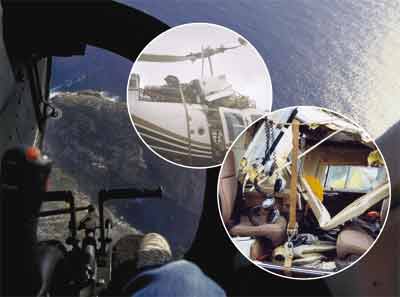
At 1130 on 12 March 1999 the Bell 206L-3 helicopter departed from Green Island on a routine passenger charter flight to Cairns airport. The helicopter took off in light drizzle and the pilot elected to track back to The Pier via the shipping channel.
The Bureau of Meteorology had issued an amended aerodrome forecast for Cairns at 0808 for the 24-hour period from 1000. It forecast an easterly wind at 15 knots, visibility of 9,000 metres and light rain. Some cloud patches were expected with a base of 800 feet a broken layer at 1,800 feet and overcast at 10,000 feet. Periods of up to one hour of heavy rain, scattered cloud at 800 feet and broken cloud at 1,500 feet were expected over the forecast period.
At 1139 the helicopter was cleared by Cairns Air Traffic Control to track to The Pier, not above 500 feet. The controller advised the pilot that within seven to nine kilometres from The Pier the cloud base was between 800 and 1,000 feet with some showers and visibility less than 10 kilometres.
As the helicopter continued along the shipping channel, the pilot noticed that the weather ahead was deteriorating. A short time later, he descended the helicopter to about 150 feet to keep the water surface in sight, and reduced speed.
The weather conditions continued to deteriorate, and eventually the pilot flew the helicopter at 50 feet or less above the water in light to moderate rain. By this time, he could no longer see any channel beacons.
The pilot turned on the windscreen demister as condensation had begun to form on the inside and he also armed the inflatable floats, which were fitted to the skid-type landing gear.
At about 1146 the pilot asked the controller for directions to The Pier. He was advised that The Pier was on a bearing of 205 degrees M, at a range of three kilometres (about 1.5 nautical miles). At about that time, visibility had deteriorated to the extent the pilot could not determine where the helicopter was.
Then, noticing that the helicopter had climbed to 100 feet altitude, the pilot placed it in a gentle descent to try and sight the water again. A short time later the helicopter contacted the water and rolled inverted.
The pilot and five passengers escaped from the fuselage, but one passenger was trapped inside the cabin and did not survive. One passenger sustained serious injuries, four experienced minor injuries and the pilot was uninjured.
Actual weather conditions
The air traffic controllers on duty in the tower said that the weather had been fluctuating significantly and rapidly throughout the morning. There were periods when the weather conditions met the criteria for VFR (Visual Flight Rules) flight and intervals of low cloud and very heavy rain, some of the worst conditions controllers said they had seen at Cairns airport.
Radar images and rainfall rates suggested that the visibility in the area of the accident would have been reduced to a few hundred metres or less. Personnel who were at The Pier at the time of the accident described the rainfall as torrential with visibility as low as one car length.
The weather information passed by the controller to the pilot was based on his visual assessment of the weather in Cairns Harbour as he saw it from the air traffic control tower.
Height speed and track
Air Traffic Services radar data confirmed that the helicopter was initially tracking via the Cairns Harbour shipping channel at about 100 knots and at an altitude of 200 feet above mean sea level.
At about seven kilometres from The Pier the speed gradually decreased to between 55 and 60 knots and then to below 40 knots. The last recorded speed was 31 knots. The altitude recorded during the last two minutes of the recording was 100 feet with one reading of 200 feet.
The pilot reported that during an earlier flight to The Pier the airspeed indicator was not functioning normally and did not indicate above 40 knots. He thought that the fault was probably due to water in the pitot-static system and expected it to clear during the flight to Green Island. However, the fault remained.
The airspeed indicator did not function during the flight when the accident occurred. The pilot said he relied on the ground speed display on the GPS (Global Positioning System) unit. The ATSB's occurrence brief stated that the GPS receiver records ground speed and not indicated airspeed.
Examination of the wreckage confirmed that the helicopter had struck the water in a slight left skid-low nose attitude, and at low forward and vertical speeds.
Circumstances and issues
A number of issues were highlighted as possible contributing factors to this accident.
There was an expectation from the helicopter company that the pilots would 'give it a go' if weather looked doubtful; to 'have a look before turning back.' However, there was no pressure to complete flights in unsuitable weather conditions.
The pilot held an ATPL (airline transport) licence with a total of 5,321 hours and 1,656.1 on the Bell 206L. His decision to track via the channel was based on his experience with mechanical turbulence on the alternative route, which was coastal via False Cape. The alternative route had proven uncomfortable for passengers in the lee of high terrain on the southern side of Trinity Inlet when the wind was a south or south easterly greater that 15 knots.
The pilot followed his usual practice during conditions of deteriorating visibility of descending to keep sight of the water and reduced airspeed. Although the visibility was poor, he continued with the flight because of his experience in similar conditions and the information from the controller which suggested that the weather would improve as he approached Cairns.
The pilot's night VFR rating was not current, and he disliked instrument flying since getting the rating in 1992. In any event, the helicopter was not Instrument Flight Rules (IFR) rated. In the prevailing conditions the pilot did not consider that turning at low altitude and flying back to better conditions was a safe option.
The pilot reported that the visibility during the return flight from Green Island was the worst that he had ever experienced. The sea surface had become completely flat and featureless and had blended entirely with the rain. By that time, it was too late to turn around.
He reflected that it might have been better to track coastal because the vegetation and other land features would have provided a higher level of visual contrast against the rain and cloud and may have enabled him to complete the flight safely. He would have been able to land the helicopter and await passage of the weather.
Investigation analysis
The formal analysis of this accident noted the following circumstance as valid contributors:
The pilot continued the flight into adverse weather beyond the point of having a visual external reference.
The risk of not being able to turn around onto a reciprocal track without visual clues was high as the pilot was not instrument rated and the helicopter was not IFR rated.
The pilot's operating culture was conditioned from having 'got through' adverse weather on previous occasions.
Having decided to track via the shipping channel because of turbulence consideration on the coastal route, the pilot overlooked the coastal route as an alternate course of action.
The weather information passed by the tower controller probably placed an expectation in the pilot's mind that he could negotiate the weather successfully. *
The ATSB receives around 15,000 notifications of aviation occurrences each year; 8,000 of which are accidents, serious incidents and incidents. It is from the information provided in these notifications that the ATSB makes a decision on whether or not to investigate. While further information is sought in some cases to assist in making those decisions, resource constraints dictate that a significant amount of professional judgement needs to be exercised.
There are times when more detailed information about the circumstances of the occurrence would have allowed the ATSB to make a more informed decision both about whether to investigate at all and, if so, what necessary resources were required (investigation level). In addition, further publicly available information on accidents and serious incidents would increase safety awareness in the industry and enable improved research activities and analysis of safety trends, leading to more targeted safety education.
To enable this, the Chief Commissioner has established a small team to manage and process these factual investigations, the Level 5 Investigation Team. The primary objective of the team is to undertake limited-scope fact-gathering investigations, which result in a short summary report. The summary report is a compilation of the information the ATSB has gathered, sourced from individuals or organisations involved in the occurrences, on the circumstances surrounding the occurrence and what safety action may have been taken or identified as a result of the occurrence.
The summary reports detailed herein were compiled from information provided to the ATSB by individuals or organisations involved in an accident or serious incident between the period 1 July 2010 and 30 September 2010.
One of the most dangerous situations a pilot operating under Visual Flight Rules (VFR) could be faced with is the complete loss of visual reference. In the last five years, 28 people have been fatally injured in such circumstances.
VFR flight into IMC
Year
Occurrences
Accidents
Fatalities
1995
38
7
13
1996
34
1
2
1997
33
1
3
1998
39
4
3
1999
36
4
7
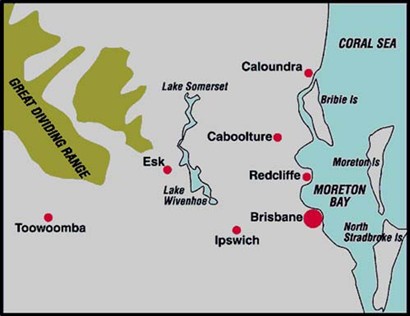
On 14 October last year, a VFR pilot with 220 hours flying experience set off from Lightning Ridge for Caloundra in a Cessna 182 in VFR weather. Although the weather forecasts looked reasonable when he took off, by the time he was overhead Goondiwindi the actual weather conditions were not looking good.
At about 1100 the radar controller noticed a secondary surveillance radar return (code 1200), operating in close proximity to the boundary of controlled airspace at about 5,600 feet above mean sea level.
By the time the controller was able to talk to the pilot at 1107:57, the aircraft was inside controlled airspace bearing 310 degrees M from Amberley at 30 NM. The pilot was immediately instructed to make a left orbit to maintain separation from an inbound F111 with an in-flight emergency.
During the orbit, the pilot advised the controller that he was caught in cloud and that he was in trouble. The controller tried to clarify what was happening and spoke to the pilot a number of times.
By the time the controller had established that the pilot wanted to track to Caloundra and while rated only for VFR flight was now non-visual, the pilot had commenced a second left orbit. Halfway through the orbit, passing a heading of approximately 240 degrees, the controller instructed the pilot to turn right and take up a northerly heading for Caloundra.
While in the right turn, the controller asked the pilot if he wanted to descend. The pilot replied yes and he was cleared to leave control area on descent.
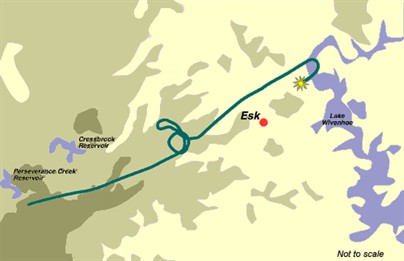
The aircraft's altitude during the turn was erratic. It descended to 4,400 feet in less than a minute then climbed back to 4,800 feet. The pilot continued the right turn onto a heading of about 130 degrees then began a left turn to intercept the track from Toowoomba to Caloundra.
While the pilot was doing this, the controller told him that he could descend safely to 3,000 feet in the aircraft's current location. Once established on track to Caloundra, the aircraft maintained a steady heading with a rate of descent of about 300 feet per minute.
The controller then instructed the pilot to turn right heading 130 degrees, a turn of about 90 degrees, to avoid an area of higher terrain where the radars lowest safe altitude was 3,800 feet. The aircraft was passing through 3,700 feet when the turn began.
The aircraft continued to turn through the assigned heading and its ground speed and rate of descent increased. Its radar return disappeared from the radar display at about 1116 as it was passing through 3,200 feet on a heading of approximately 210 degrees.
The pilot's last broadcast was at about 1116 in response to a question from the controller.
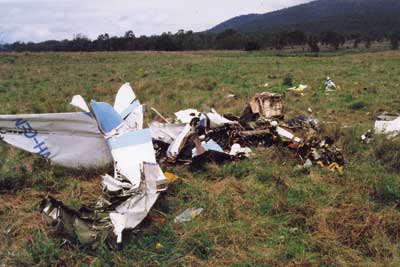
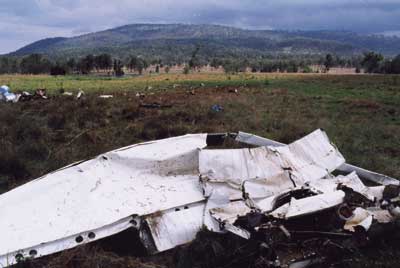
The wreckage of the aircraft was located about 6.5km north of Esk on flat pastoral land. A nearby resident had called the emergency services at 1117:30 after he had observed a plume of fuel and debris.
The aircraft was in a left spiral dive when it impacted the ground. The weather was showery and cloud covered the tops of the hills. The aircraft was destroyed.
Some safety lessons
Air Traffic Services (ATS) emergency procedures are outlined in chapter 17 of the Manual of Air Traffic Services (MATS), which is a joint military/civil document. It covers the declaration of emergency phases and outlines procedures for handling in-flight emergencies, including situations involving flight confined to Visual Meteorological Conditions (VMC) but operating in Instrument Meteorological Conditions (IMC).
According to MATS, a pilot faced with this situation would have difficulty maintaining headings and altitude and perceiving aircraft attitude. ATS should try to reassure the pilot and limit communications to avoid diverting the pilot's attention from flying the aircraft.
Airservices Australia's In-flight Emergency Response (IFER) Training Manual gives more detailed guidance for handling a VFR in IMC situation. This manual advises Air Traffic Controllers to help an inexperienced pilot in distress with some reminders on aircraft handling such as concentrating on aircraft attitude (steady heading, wings level, constant speed); trusting what the instruments say; and when manoeuvring make gentle movements (climb, turns, descents) and to turn first then establish straight and level before climb or descent.
Controllers could also help a pilot by giving navigational information that would help to re-establish the aircraft in VMC. In communicating with the pilot, controllers should keep instructions simple and distractions to a minimum, while also instilling confidence and providing reassurance. It is also important to pass only one item at a time.
According to the IFER manual, communication style is important. It states that a VFR pilot in an IMC situation is under considerable stress and there is a need for ATS staff to convey empathy, patience and confidence. This would require staff to adopt a different technique to the customary delivery of information. It was vital that questions were not put in an interrogative manner.
The ATSB found that there was no record that the Australian Defence Force (ADF) had received copies of the IFER training manual from Airservices, and it, or an ADF equivalent, was not held at any ADF ATS unit. However, ADF units did hold copies of the Airservices IFER checklist, a document separate from the IFER training manual.
According to the ATSB's investigation the controller communicated with the pilot in an authoritative manner and questions were posed in an interrogative style. ATS staff referred to the IFER checklist but were unaware of the more detailed guidance contained in the training manual.
Outcomes
As a result of concerns regarding military air traffic control officers' awareness of in-flight emergency response practices and procedures for civil aircraft, the Bureau issued interim recommendation IR 19990190 to the Australian Defence Force on 16 December 1999. The ATSB recommended that the ADF review IFER training for air traffic services staff responsible for the provision of services to civil aircraft.
As a result, the ADF undertook a comprehensive review of IFER training, procedures and practices. The review concluded that Defence IFER management and training was capable of improvements and the Chief of Air Force directed that 11 recommendations arising from the review be implemented by 30 June 2000. The recommendations included enhancements to ab-initio and post-graduate IFER training, establishment of dedicated training officer positions within ATC flights and development of a formal Supervisors course, incorporating IFER and team/crew resource management instruction.
Despite the ATS issues that came to light after this tragic accident, the pilot flew on into IMC, a situation that was beyond his skills and experience. It is likely that he became spatially disoriented and lost control of the aircraft soon after descending through 3,200 feet.
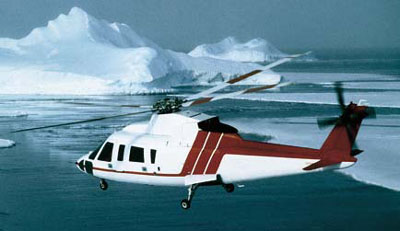
The pilot of a Sikorsky S76 helicopter was left with only lateral cyclic control when a loose screw lodged at the base of the cyclic stick.
During transition from normal cruise flight to the approach to land the pilot found that the cyclic could not be moved aft. He also found that with any further forward movement of the cyclic stick it could not be moved aft of the new position.
The pilot froze the cyclic longitudinal position and the helicopter stabilised in a level pitch attitude at about 85 knots indicated airspeed. Using only lateral cyclic movements to manoeuvre the helicopter, the pilot conducted an 80-knot run-on landing on the runway at Barrow Island. A run-on landing utilises the aircraft's weathervane effect to streamline the fuselage until landing.
An inspection discovered that a panhead type screw was lodged at the base of the cyclic stick. The screw had lodged between the lower protrusion on the casting on the end of the cyclic stick torque tube and the lugs on a support bracket.
The cyclic stick base hardware is accommodated in a tub-like area formed by the cabin structure supports. A leather boot mounted at the base of the cyclic normally prevented foreign objects from entering the tub. Further inspection found the leather boot on this helicopter to be intact. With the boot in place, the only possible entry points for a screw is through a rigging pin hole in the aft mid-height position of the boot-halves joint, or vertically through an opening provided for the cyclic stick electrical wiring loom.
It was unlikely that the screw would have entered the tub area with the boot fitted. It was more probable that it was introduced during previous maintenance when the boot was removed.
After this incident and a similar incident experienced by another Australian S76 operator in 1995, an ATSB investigation was begun. The operator issued an alert message for its fleet of S76 helicopters to undergo an inspection of the subject area. A defect report was also submitted to the Civil Aviation Safety Authority.
The ATSB worked with the manufacturer to develop an acceptable solution that would eliminate the hazard.
The manufacturer conducted a design engineering review of the cyclic stick base hardware. It was agreed that an engineering design change, although extensive in nature, would more effectively reduce the effects of human factor maintenance error in this area.
The manufacturer advised that a field modification of the pilot's side bracket was being prepared to increase the gap between the torque tube rig boss and the bracket foot.
In October 1999, the manufacturer issued Alert Service Bulletin 76-64-44 outlining an inspection for foreign objects and procedures to modify both the composite controls cover and the cyclic stick support tube assembly. These modifications eliminate the foreign object interference problem.
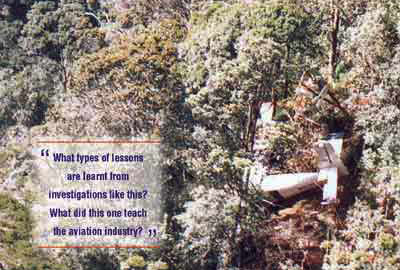
Bob Kells and his investigation team had arrived at the accident site by helicopter. It had been at least a day since the Twin Otter had struck trees nine kilometres south west of Simbai in the Bismark Ranges, Papua New Guinea, when the crew had tried to fly it out of a steep valley.
It was an incredible sight. The fuselage was intact. The wings had been taken off by the trees. Ahead of it was a precipice -- a steep drop from which there may have been no survivors had the aircraft gone over.
It was a unique situation. Bob had been able to interview the crew in hospital, and they talked openly about what had happened. He had been on standby within hours of the crash as the civilian leader of a joint civil/military team of investigators. The army operated the aircraft but as it was a civil registered aircraft, the accident investigation fell under the jurisdiction of the PNG authorities. They had requested that the (then) Bureau of Air Safety Investigation conduct the investigation.
That was in November 1997. The final investigation report, number 9703719, was released to the public in June 1999. In that period, action had been taken on a series of recommendations that had highlighted significant deficiencies in the way the military had conducted tropical mountainous flying training in Papua New Guinea.
What types of lessons are learnt from investigations like this? What did this one teach the aviation industry?
According to Dr Rob Lee, Director, Human Factors, Systems Safety and Communications, if underlying organisational deficiencies are left unchanged, the same kinds of occurrences would continue to happen.
In the report, the crew of the Twin Otter was found to have been operating within an organisational environment that had a 'low level of experience and corporate knowledge regarding the operations of fixed-wing aircraft...in tropical mountainous areas'.
'Against this background, deficiencies were identified in the planning and preparation for the exercise, including risk assessment and the selection and briefing of the training pilot,' so the report states.
Aviation safety across the world relies on the thoroughness of accident and incident investigations and the timely reporting of the findings. Dr Assad Kotaite, President of the International Civil Aviation Organization (ICAO) said, 'Without this essential information the efforts of industry, aviation administrations and the ICAO cannot be effective in addressing hazards in the air transport system.'
Since the 1950's Australia has had one of the world's most comprehensive aviation occurrence reporting systems. By law, anything that affects the safety of flight must be reported.
Under Annex 13 of the ICAO Standards and Recommended Practices, Aircraft Accident and Incident Investigation, a mandatory reporting system must be in place and supported by a non-punitive voluntary system.
In 1988, Australia's mandatory open reporting system was complemented by the Confidential Aviation Incident Reporting system (CAIR), where the reporter's identity remains confidential. Through both systems, the ATSB receives thousands of reports annually.
Most of these reports are of a relatively minor nature. "In the mandatory reporting system, we get around about 5,000 incidents and about 3-400 incidents through the confidential system," Dr Lee said.
"One of the features of the Australian system, unlike say in the US where you only have to report certain categories of more serious incidents, is that the information from relatively minor occurrences can be analysed to see if there is an underlying reason that might be causing the occurrences," Dr Lee said.
In 1996 the Bureau reviewed the way it stored and collected air safety occurrence information. The Systemic Incident Analysis Model (SIAM) was developed and provided a better way of using occurrence data. It is based on the model developed by Professor James Reason of the University of Manchester, who developed a conceptual and theoretical approach to the safety of large, complex sociotechnical systems such as aviation.
Major investigations such as the PA-31 accident at Young (1993) the Boeing 747 accident at Sydney airport (1994) and the Class G airspace demonstration (1999) were undertaken and reported using the principles of the Reason model.
These investigations all had substantial impacts on rectifying major latent organisational deficiencies in the aviation system across government, corporate, regulatory and organisational areas.
According to Dr Lee, if these investigations had not been undertaken in accordance with the basic principles of the Reason model, the significant systemic safety outcomes would not have been achieved.
What safety lessons would be lost if there was no reporting culture?
A great many issues have been identified by the analysis of reports received through Australia's incident reporting systems. Numerous lessons have been learnt and actions taken as the following CAIR report from mid-1999 shows.
On taxi, we noted traffic of a C310 approaching the circuit and a C182 departing. Upon runway entry and TCAS switching to T/A R/A, we had indication of one aircraft only, which we identified as the C310. We then asked the C182 if it was transponder equipped and, if so, to switch it on. The reply was that they were equipped and that they would switch it on. It appeared to me that they hadn't forgotten to switch it on, but rather that they were unaware of the requirement to have it switched on. We subsequently got a return and used it to assist our separation procedures.
My view is that far too many aircraft are not using their transponders correctly. These are predominantly low hour or OCTA only pilots. I believe that having the relevant transponder operating procedures within the 'Radar Services and Procedures' section (both CASA and JEPPS) is misleading and results in this information being missed by pilots who never operate in a radar environment. I feel this information should be in the OCTA procedures section as well.
Response from Airservices
The use of transponders is clearly defined and adequately covered in AIP ENR 1.6 - Radar Services and Procedures - under Section 8. However, AIP Book A/L 26, effective 2 Dec 99, has a new section in ENR 1.1 which was submitted by CASA. The new section advice is as follows:
68.1
Pilots of aircraft fitted with a serviceable Mode 3A transponder must activate the transponder at all times during flight in non-controlled airspace, and if the transponder is Mode 3C capable, that mode must also be operated continuously.
68.2
For further information on the operation of transponders, including normal and emergency codes, see ENR 1.6 Section 8.
"Reporting systems serve as a vital early warning device, so it is important that people feel able to lodge a report on anything that they think is affecting safety (see table 2). New methods of analysing the information, such as the Systemic Incident Analysis Model (see Flight Safety March-April) demonstrate the operational value of a reporting culture. We have to know about problems before lives are lost," Dr Lee said.
A sound reporting culture is one of the best defences against that happening.
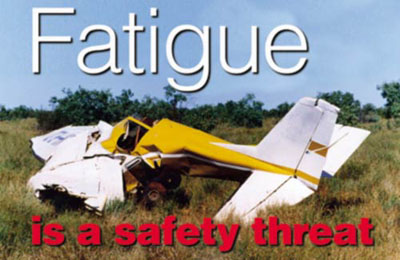
Two aviation occurrences in 1999, one of them a fatal mustering incident and the other a wheels-up landing, highlight some of the potential hazards of fatigue on flying performance.
Mustering accident
A newly licensed private pilot was fatally injured at Mindaroo Station in Western Australia when mustering sheep with a Cessna 172. The accident happened late in the afternoon at the end of more than eight hours of low-level flying following nine days of intense flying activity.
During the nine days, the pilot had flown 68 (tachometer) hours. The flying was both mentally and physically demanding, involving sheep spotting and low-level mustering.
The pilot, who had no formal low-level or mustering training, had to manoeuvre the aircraft in conditions that were sometimes turbulent, and was operating under constant aircraft noise and vibration. On the day of the incident, he had taken no more than a short break, which included refuelling after about four hours of flying.
It is quite possible that he was unaware that fatigue had affected his flying performance.
The pilot had exceeded the flight duty times normally permitted for a commercial operation (dealt with in Section 48 of the Civil Aviation Orders). Although these requirements are not mandatory for private operations such as this one, they are a guide to flying limits.
In the absence of any formal duty time requirement, the pilot was responsible for determining his own daily flying limitations. This was done in conjunction with the property owners, property manager and the mustering party. A typical day started at 0700 local time and the pilot worked through the day until just before last light.
Wheels-up landing incident
In this incident, the pilot of a Cessna 210 had forgotten to re-engage the landing gear circuit breaker, which had popped during the flight.
On the morning of the incident, the pilot woke at 0530 local time and started his tour of duty at 0630. The pilot had flown an Instrument Flight Rules (IFR) check flight for 2.3 hours in the morning and his performance was considered to be above average.
The pilot departed on a Visual Flight Rules (VFR) charter towards the end of the tour of duty. The pilot had pulled the circuit breaker after it popped to prevent damage to the electric motor that had continued to run. This procedure was in accordance with the Cessna 210 Operating Handbook recommendation.
On final approach, the pilot selected the landing gear down but forgot to re-engage the landing gear circuit breaker and the landing gear did not deploy. The investigation revealed that the pilot did not recall hearing the landing gear warning horn nor did the pilot notice the status of the landing gear indicator lights.
The investigation concluded that the pilot was probably suffering from a transient fatigue-related memory lapse and, unlike the incident at Mindaroo Station, was not suffering severely from accumulated fatigue. "The pilot reported that he was very tired on the day of the occurrence and he had been for some time leading up to the incident," the ATSB report said.
During the investigation, the pilot's work and rest history for the 14 weeks before the incident was examined using a computerised fatigue algorithm developed by the Centre for Sleep Research.
The results demonstrated that the pilot probably wasn't suffering severely from cumulative fatigue. Of more significance was that the pilot had been on duty for more than 12 hours and had been awake for almost 14 hours.
Effects of fatigue
Research has shown that the effects of fatigue are similar to moderate alcohol consumption. On-the-job performance loss for every hour of wakefulness between 10 and 26 hours is equivalent to a .004 per cent rise in blood alcohol concentration. Eighteen hours of wakefulness is usually considered to be equivalent to a blood alcohol concentration of .05. A person who has been awake for this length of time will act and perform as if they have consumed .05 of alcohol.
The result is significantly delayed response and reaction times, impaired reasoning, reduced vigilance and impaired hand-eye coordination.
The article 'Pilot Fatigue and the Limits of Endurance', Flight Safety Australia (April 1999), reported that fatigue makes a pilot less vigilant and more willing to accept below par performance, and a pilot begins to show signs of poor judgement. It reported that expert research into fatigue had established that it degrades a pilot's:
Muscular strength and coordination
Vision and perception
Memory
Performance monitoring
Error management
Decision making
Motivation and attitudes
Communication
Ability to cooperate.
But the greatest single threat is being unaware that it is happening.
Before the mustering incident at Mindaroo Station, the pilot had been talking to the ground mustering party by radio as well as flying the aircraft (possibly below 500 ft). The ATSB investigation found that he had worked very long hours in a highly demanding job in which he was inexperienced.
He had received minimal training that would help him to understand the visual illusions associated with low-level flight. The investigators considered that in the absence of specific training for low level flying operations, he was probably unaware of the appropriate techniques to safely manoeuvre an aircraft at low level.
According to the ATSB Occurrence Brief (number 199903464) a human factors report noted that the pilot had worked long hours in a job in which he was inexperienced and that he probably found this type of flying both physically and mentally demanding. The report concluded that at the time of the incident the pilot was suffering from the effects of fatigue, possibly impairing his ability to safely operate the aircraft.
According to the Centre for Sleep Research's 1999 report to the Neville Committee Fatigue and Transportation it has been difficult for researchers to determine all the factors that cause and contribute to fatigue; and "determining the relative importance of these factors under different conditions has also been problematic".
However, research had concluded that when a person works long hours, for more than say 50 hours a week, there is increasing competition between restorative sleep and the other activities of daily living.
Non-work factors contribute to overall fatigue by a reduction in the opportunity for sleep and recovery. These include social factors and domestic arrangements (for example working away from home) sleep disorders and shift work.
"For example, the same roster could have quite different effects according to social circumstances," the report stated. "A 12-hour night shift might have very different consequences for an 18-year-old single male living on his own compared to a 35-year-old single mother of two toddlers without access to 24-hour childcare facilities.
"Taken together, both employees and employers have clear responsibilities with respect to managing fatigue. The basic responsibilities of both parties relate to ensuring that adequate sleep can be obtained between shifts so that fatigue does not reach dangerous levels during shifts. Thus, lack of sleep causes fatigue and sleep allows recovery from fatigue.
"Employers have a duty of care to provide safe work schedules that permit adequate time for an employee to sleep, rest and recover as well as fulfil their social and domestic responsibilities.
"Employees also have a duty of care to use their time away from work in a safe and responsible manner to ensure that they obtain sufficient sleep and recovery in order to complete their work duties in a safe and responsible manner."
How safe are you?
There are many flying organisations operating with exemptions from the requirements of CAO 48 issued by the Civil Aviation Safety Authority (CASA).
Whether you are working to the flight and duty time guidelines under CAO 48, or under an exemption, how safe are you? Are there other factors in your life that may make you more tired than usual?
The final report of the accident involving Qantas B747-400 VH-OJH at Bangkok, Thailand on 23 September 1999 concluded our most important investigation of an accident involving an Australian registered jet aircraft.
The investigation was one of the most comprehensive and exhaustive ever conducted by the ATSB (or its predecessor the BASI). Investigator In Charge, Mike Cavanagh, reports on the investigation itself.
The Australian Transport Safety Bureau released its report on the Qantas B747-400 runway overrun accident at Bangkok International Airport on 23 September 1999 on 25 April 2001.
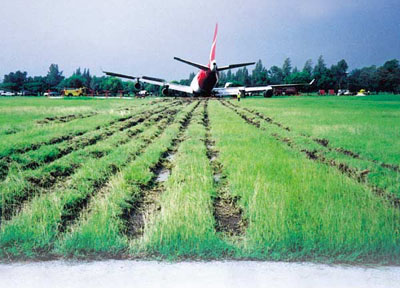
The accident occurred when the B747-400 landed well beyond the normal touchdown zone and then aquaplaned on a runway that was affected by water following very heavy rain. The crew omitted to use either full or idle reverse thrust during the landing. The aircraft was still moving at 88 kts (163 km/h) at the end of the runway and stopped 220 m later in soft turf with its nose on the airport perimeter road. A precautionary evacuation was made using emergency escape slides about 20 minutes later.
Although the flight crew and cabin crew made a number of errors, many of these were linked to deficiencies in the Qantas operational procedures, training and management processes. CASA's regulations covering contaminated runways and emergency procedures were also found to be deficient, as was its surveillance of airline flight operations. Qantas and CASA either have made, or are in the process of making, significant changes in the areas where deficiencies were identified including the development by CASA of a systems-based surveillance audit approach.
The on-site phase
As the accident occurred in Thailand, responsibility for conducting the investigation fell to Thailand in accordance with Annex 13 to the International Civil Aviation Convention. As the State of registry, Australia had the right to appoint an Accredited Representative to the investigation. On the day following the accident, a team of four ATSB investigators travelled to Bangkok with the Qantas incident response team. Thai agreement to the Australian nominated Accredited Representative was received en route.
A series of meetings was held with the Aircraft Accident Investigation Committee of Thailand over the next few days. The Committee took possession of the cockpit voice and flight data recorders, examined the aircraft, and interviewed the flight crew.
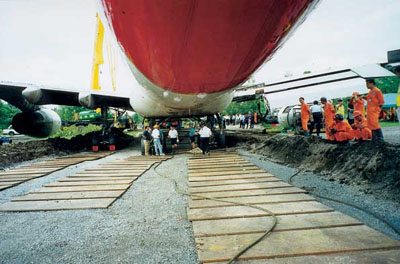
Runway 21L was closed because of the position of the aircraft in the overrun area. It was necessary to reopen the runway as soon as possible so that normal operations could resume. To facilitate this, the Committee handed custody of the aircraft back to Qantas so that recovery of the aircraft could begin. By that time, aircraft recovery experts from Boeing had arrived.
The first step in the recovery involved stabilising the aircraft to prevent further movement in the very wet, muddy soil. The landing gear was removed and a gravel road sloping down from the end of the stopway to below ground level beneath the aircraft was then constructed. New landing gear was fitted and the aircraft lowered on to the road. It was then towed backwards on to the runway. The recovery process took about seven days to complete.
In the meantime, the Committee delegated investigation of the cabin safety aspects of the occurrence to the ATSB. That enabled the ATSB investigators to conduct a detailed examination of the aircraft cabin and to speak to local sources regarding post-accident events.
The Committee retained control of other aspects of the investigation and asked the ATSB to conduct readouts of the flight recorders under the Committees supervision. Four Thai investigators attended the ATSB's Canberra facility in October 1999 and supervised the readouts. On 18 November 1999, the Committee delegated the complete investigation to the ATSB. The ATSB accepted the delegation and agreed to provide the draft report to the Committee for review in accordance with Annex 13 clause 6.9 before public release.
The investigation process
In common with widely accepted international practice, the ATSB formed an investigation team consisting of a number of groups aircraft operations, flight recorders, engineering, cabin safety, and organisational issues each under the control of an ATSB investigator reporting to the Accredited Representative who acted as investigator in charge.
The function of the groups was to collect all factual information that was relevant to the groups area of investigation. As standard practice, organisations with a direct interest in the investigation (such as Qantas, Boeing, CASA, and the flight and cabin crew industrial organisations) were invited to nominate relevant experts to the groups. In some cases, the expertise and resources available within the ATSB were not sufficient for the level and volume of information required. This meant that assistance from outside organisations was requested both as participation in a group or providing specific information to the group.
Qantas provided a very high level of cooperation and substantial expert assistance and advice regarding all facets of the investigation, especially in the areas of aircraft operations, engineering and cabin safety. This level of assistance made a major contribution to the safety benefits achieved by the investigation.
From an initial assessment of the accident and post-accident events, a logical approach to the investigation seemed to be to break the task into two segments and these were:
1. The accident flight (i.e. the approach and landing) to determine the issues relating to the flight itself that led to the overrun. Aspects to be examined included:
- weather - air traffic control - aerodrome/runway - crew performance - aircraft systems - aircraft performance in the air and on the runway - crew procedures and training.
2. Post accident events (i.e. from the time the aircraft touched down until the precautionary disembarkation was complete) to determine any passenger or crew safety issues. Aspects to be examined included:
- cabin damage - aircraft emergency escape and communications systems - flight and cabin crew performance - flight and cabin crew procedures and training - airport emergency response - the evacuation process.
As these tasks progressed and the picture of events emerged, it was possible to identify areas where deficiencies might have existed. These areas then became the subject of closer and more detailed examination. Eventually, this enabled conclusions to be drawn regarding the active failures that occurred.
The next step was to look at the systems behind the active failures to see if any deficiencies existed that might have set the scene, for the active failures to have occurred. The sorts of things to be examined here included how various procedures and training programs were developed and how possible hazards were identified and risks assessed. This examination centred on Qantas and CASA.
It should be noted that the investigation groups were not involved in collecting and assessing all of the factual information. Certain types of information, such as the cockpit voice recorder, had restricted access. The organisational factors group was composed only of ATSB personnel. The analysis of the factual information was undertaken solely by ATSB investigators.
By July 2000, more than 45 files (each containing 200 documents), more than 500 photographs, and over 1100 emails of information had been collected. The next step was to draft the investigation report.
Since September 1999, three ATSB investigators had been working full-time on the investigation. A number of other investigators assisted at various stages. In total, the investigation involved six ATSB investigators.
The report and review process
Writing the report was a challenging and difficult task. It was important for the document to be reader friendly, but at the same time contain enough information to justify the conclusions of the investigation. It was felt that the recommended ICAO format for accident reports was not appropriate because of the many issues involved and their complexity. The structure settled upon involved dividing the report into a number of parts, each part covering a particular aspect and, in effect, being a report within a report.
By mid-October 2000, the draft had been completed. An extensive interested party review took place to ensure factual accuracy and natural justice. A final draft was sent to the Accident Investigation Committee of Thailand on 12 February 2001.
On April 2001 the Chairman of the Committee, Air Chief Marshal Kongsak Variana, advised ATSB's Executive director that the Committee had considered the draft report and agreed without amendment. It concluded one of the most detailed world-wide investigations of a non-fatal large passenger aircraft accident.
There has been an aircraft accident. Debris from the wreckage is scattered throughout a 200-metre radius. Tragically, the aircrafts crew and its passengers have been fatally injured. The sound of sirens permeates the scene as police and ambulance services attend. Soon, media representatives arrive to speculate as to its causes with cameras poised to document the wreckage.
That this could happen so suddenly and wreak such devastation strikes at the heart of many people. An occurrence like this is always associated with a sense of urgency to understand its underlying features. But aircraft accidents are commonly attributable to a complex interaction of many factors and on-scene speculation rarely resembles the final conclusion. Often, long after commotion surrounding an accident has dissipated, a team of highly skilled experts continues to investigate the reasons for its occurrence and uncover the events that preceded it.
Scientific analysis of evidence
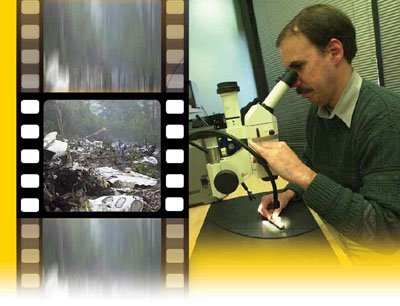
The interpretation of evidence resulting from an occurrence can require scientific analysis. This is the role of the Technical Analysis Unit of the ATSB, which investigates, often in painstaking detail, any structural, mechanical or operational factors related to aircraft accidents or incidents.
Failures of propulsion systems, landing gear or flight control structures, fractures in crankshafts, engine rods or turbine fan blades, abnormal aircraft speeds or flying operations are just some areas of investigation undertaken by the Unit.
Because there are myriad potential causes of aircraft safety breaches, the team of specialists working in the Unit approaches each occurrence with an assumption that it is unique.
"Investigations are rarely the same" said the Units Team Leader Dr Arjen Romeyn. "There are always new issues, new understandings to be gained. What were trying to do, ultimately, is get specific answers to questions surrounding an occurrence."
Questions can include: what was the mode and sequence of failures? have all components performed to their specifications? what were the mechanical settings at the time of the occurrence? what results does analysis of the residual matter furnish?
Flight recorder analysis
To answer such questions the team uses specialist equipment and apparatus. The Unit has the capacity to download and analyse data from all civil flight data and cockpit recorders (commonly referred to as black boxes) fitted to Australian-registered aircraft. Because of its ability to establish the sequence of events prior to an accident, this undertaking can provide critical information. This is particularly so in instances where accidents have resulted in a negligible amount of recoverable aircraft wreckage or where evidence is transitory, such as occurrences involving windshear.
Even in situations where significant material evidence has been recovered an investigation can be reduced by days, or even weeks, through the retrieval of information from a flight data recorder.
Equipment for this purpose includes specialised tape decks and interfaces, and both hardware and software for signal processing and enhancing.
A radio frequency-shielded audio room, designed to prevent internal and external interference, preserves the integrity of audio analysis activities. It is also in line with the Air Navigation Act 1920, which affords protection to audio captured by cockpit voice recorders from any individuals not directly associated with its analysis, as part of an investigation.
The Unit is also equipped with advanced computer graphics software with the capacity to convert recovered data into three-dimensional animations. This capability can provide a detailed graphic reconstruction of a flight, allowing the examination of any sequence of events, from any perspective, and at any time. The benefits of this technology were demonstrated in the investigation of the much-publicised overrun of QF1 at Bangkok Airport, which occurred on 23 September 1999. Animations of the flight used for the investigation were subsequently aired on commercial television.
Materials failure analysis
Often microscopic features provide corroborating or conclusive evidence in the determination of failed components. They can also be vital to the detection of manufacturing assembly, maintenance or operational abnormalities, such as fractures in engine mechanisms or defects in airframe components.
Microscopes utilised in the Unit include: a low-power stereo microscope for general observation, which has the capacity for magnification of up to 50 times; a reflected-light microscope for the examination of the internal structures of materials, which has the capacity for magnification of up to 1000 times; and a scanning electro-microscope which magnifies from 14 to 300,000 times the actual size of an object. In addition, this microscope has an x-ray analysis facility for determining the chemistry of small material items.
The team approach
According to Dr Romeyn, while the array of equipment used in the laboratories is impressive, the Units most important assets are the highly skilled investigators who staff it.
"There is a perception that, because we work in a technical area, it's the equipment that does the work and were just operators. To do our job we need particular tools, but that's all they are. It's the understanding of what the tools allow us to see that's important", said Dr Romeyn.
Core skills necessary to undertake the work required of the Unit include a high degree of understanding in the ways mechanisms operate and their environmental affects, an appreciation of design issues, an awareness of how structures function and the ability to identify failure modes.
These skills are reflected in the academic backgrounds of the Units five investigators which comprise advanced qualifications in metallurgy, aeronautical engineering and electrical design engineering. According to Dr Romeyn, however, while knowledge of these areas is vital, it is not in itself sufficient.
"Safety investigative work is a complex system and its the depth of understanding that is important. You don't gain that just by doing a degree. It's a continual learning process and experience is an essential component of the success of our work", said Dr Romeyn.
Dr Romeyn also acknowledges the importance of contributions made from other areas of speciality. In any investigation a range of skills are applied, and this is just one skilled area. It is very important to talk to a wide range of people. Investigators with expertise in such areas as cabin safety and human performance, as well as individuals from the wider aviation industry, can be vital sources of information. It's the coming together of experience that provides the basis for fruitful investigation, said Dr Romeyn.
Often pro-active measures are initiated from work performed by the team. On 13 October 2000, while on a climb out of Hobart, a Boeing 737 experienced a dramatic malfunction in one of its engines which caused a reaction consistent with explosion. The aircraft landed safely and its pilot and passengers were unharmed. By analysing the factors surrounding the incident, the team identified deficiencies in a procedure used to repair cracks in turbine blades. Pursuant to these findings, the operator of the aircraft modified repair procedures to prevent recurrence.
According to Dr Romeyn, initiating such improvements to existing safety defences is a critical aspect of the work of the Unit.
"In the context of our work, pro-active investigations are those directed at events which haven't threatened safety directly but have the potential to do so. We know that little things can trigger big accidents. In a way, we operate as independent auditors of the aviation system", said Dr Romeyn.
Aircraft accidents and incidents can have significant, immediate and long-term affects on those involved. The determination of underlying factors takes time, and months can lapse between an occurrence and the official release of findings related to it. However, investigations into occurrences, such as those undertaken by the team of the Technical Analysis Unit, can furnish illuminating explanations as to what went wrong and how safety can be improved.
The ATSB collects and analyses data from accidents and incidents involving aircrew, ground personnel and passenger safety. In this issue of the ATSB Supplement, a selection of Australian cabin safety occurrence briefs are summarised and one from the Transportation Safety Board of Canada.
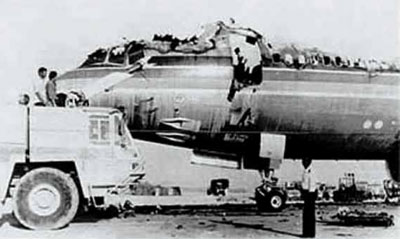
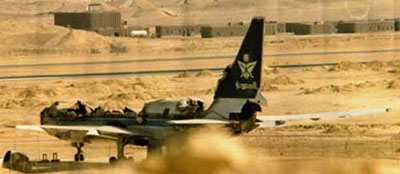
Photographs of the burnt out Saudi Arabian Airlines Lockheed Tristar at Riyadh on 19 August 1980 following an emergency landing. All 287 passengers and 14 crew on board died from smoke inhalation from a fire in the aft cargo hold which started shortly after take-off. Despite the successful landing the crew were unable to open the doors. Emergency services took 20 minutes to open one door. A serious breakdown of crew coordination was cited as one of the significant factors in the disaster.
This report from the Transportation Safety Board of Canada (A99AO046) highlights the need for continued care and vigilance in the use of ground-handling equipment to ensure safe movement to and from aircraft for passengers, aircrew and ground personnel.
In March 1999 a five-year-old child was injured during disembarkation from a B767 at a Canadian airport. The aircraft was parked on the open ramp away from an aerobridge.
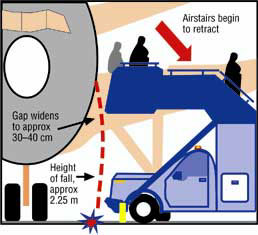
After the first 10 passengers had left the aircraft a flight attendant exited the aircraft carrying an infant in a car seat. When the flight attendant stepped on to the passenger stand he noticed it was descending slowly away from the aircraft. As he turned to tell the in-charge flight attendant, the infants five-year-old brother, who was following with his mother, stepped out of the aircraft and fell between it and the stairs to the apron below. The child suffered a broken arm and lacerations to the head in the fall and was taken to hospital for treatment and observation.
The locking mechanism used to hold the upper stairs in position is a fairly simple mechanical device. The pawl that prevents the stairs from descending is held in place against the dog rail by a spring and released by energising a solenoid. In this occurrence the pawl had only partially engaged the dog rail and after several passengers had travelled over the stairs had slipped off. This allowed the upper stairs to descend away from the aircraft. According to the report it was unclear whether this was due to a weakness in the spring, a mechanical resistance in the mechanism or a combination of both. In any case proper functioning of the locking mechanism was impeded.
Investigation findings:
The locking mechanism was not functioning properly and as a consequence disengaged and allowed the upper stairs to descend away from the aircraft. There was no policy in place requiring the passenger stand operator to do a close visual inspection of the locking mechanism to ensure full engagement.
Passenger stand operators reported that they would take only a cursory look at the locking mechanism when leaving the vehicle. Any visual inspection would have been impeded because the pawl, the dog rail, and the background were all painted the same dark green colour and on this particular vehicle a support brace impeded the operators view. Operators of the passenger stand reported that they had not received formal training on the operation of the equipment.
Other contributing factors to the occurrence were the failure to follow the maintenance schedule and the absence of a requirement to visually inspect the locking mechanism of the passenger stand before use.
Safety action taken:
Since the occurrence the company has completed a comprehensive inspection of all company passenger stands. All pawl mechanisms were painted in contrasting colours to facilitate determination of the pawl position and support braces were relocated to prevent the impediment of the operators view of the pawl. All airstairs units were put on a weekly follow-up routine to ensure all checks are completed on time.
The company, the TSB and the Canadian regulator Transport Canada, have disseminated details of the occurrence to local and international air transport operators regulators and industry associations to alert other operators using similar equipment of the potential for injury and the steps that may be taken to avoid similar occurrences.
Occ No. 200100741, 22 February 2001
At top of descent to Los Angeles the cabin crew of a Boeing 747 aircraft reported smoke and fumes emanating from the cabin ceiling located in the vicinity of the rear right side (R5) emergency exit door. Smouldering paper tissues were found in an overhead light fitting. Cabin crew removed the tissues and discharged a fire extinguisher onto the light fitting, tissues and surrounding area. The cabin crew remained in the vicinity and monitored the area until passengers disembarked at Los Angeles.
The company reported that the light fitting is a night light and is always on. The light has a blue plastic cover that should always be in place, and which was not fitted on this occasion.
The investigation was unable to determine why or who placed the tissues in the light fitting.
Safety action:
The company issued an Important Information bulletin to flight attendants advising that any visible cabin light fitting must have a protective grill or glass covering the bulb.
Occ no. 200104168, 21 August 2001
During the cruise the passenger seated in 56C was warned several times for lighting cigarettes. Most cigarettes were extinguished and confiscated by the crew but one was dropped and ignited a blanket. The cabin crew members were quick to extinguish the smouldering blanket. The passenger was off-loaded in Bangkok.
Occ No. 200104464, 5 Sept 2001
During a flight between Melbourne and Sydney a smouldering fire was detected and extinguished in the waste bin of the aft toilet of the aircraft. A particular passenger was strongly suspected of smoking in the toilets during flight and the pilot in command requested that security staff meet the aircraft upon arrival in Sydney. The aircraft landed without further incident.
Occ No. 200103578, 10 July 2001
The aircraft was on climb passing FL200 when a passenger sustained a head injury from a bottle of liquor that was accidentally dropped from an overhead locker by another passenger who was removing a piece of luggage. The injury was treated immediately by the cabin crew to stop the blood flow. A paramedical team met the aircraft on arrival at Rome.
Occ No. 200103478, 15 July 2001
During disembarkation a passenger was struck on the head by a metal scooter that fell from on overhead storage bin. The passenger received a bleeding cut to the head, was given first aid and attended by the Rescue Fire Fighting Service. The passenger was later transported to a local medical centre for treatment.
Occ No. 200100393, 24 Jan 2001
During the cruise cabin crew were required to abruptly cease cabin service when the flight crew turned on the fasten seat belt sign due to severe turbulence associated with thunderstorm activity. They were not able to secure the cabin prior to landing and as a result the aircraft landed with the cabin insecure. The pilot in command reported later that he did not consider it safe to turn the sign off during the descent.
Occ No. 200103943, 8 August 2001
During the cruise a passenger seated in 20C was struck on the head by a plastic bottle full of water, which had been stored in the overhead locker by a cabin crew member. The passenger later collapsed, became ill and required medical attention. An ambulance was organised to meet the aircraft on arrival at Darwin.
Occ No. 199902180, 24 April 1999
The aircraft was cleared for take-off when the flight attendant advised the pilot that a cat had escaped from a cage in the cargo hold and was loose in the cabin. The flight attendant locked the cat in the toilet while the pilot returned the aircraft to the ramp. The cat was removed through the toilet door without further incident.
Occ No. 200102090, 3 May 2001
During the cruise the crew noticed smoke in a rear toilet. The cabin crew found a smouldering tissue box that appeared to have been used to extinguish a cigarette and then water used to extinguish the potential fire. At the time the no smoking sign was extinguished.