

Final report
Report release date: 05/09/2025
Investigation summary
What happened
On the morning of 10 February 2024, the pilot of an Air Tractor 502 aircraft, registered VH-AQW and operated by Rebel Ag Aviation, departed an airstrip on a property near Bourke, New South Wales, to commence aerial spraying operations. While spraying a field, the aircraft descended to a height where the left main wheel touched the ground. The aircraft subsequently travelled along the field, then collided with an irrigation levee. The aircraft wreckage was found inverted in an adjacent field. The pilot was fatally injured, and the aircraft was destroyed.
What the ATSB found
The ATSB found that, during the first spray run at low level, the pilot activated the spray system to disperse herbicide in the field. Based on recorded data from the spray system, ‘no flow’ was recorded, which likely displayed the associated visual warning on the system screen in the cockpit. It was likely that the pilot’s attention was momentarily diverted to the warning at some point during the spray run and the aircraft inadvertently descended in the field. The descent led to the aircraft’s left main wheel touching the ground near the edge of the field, subsequently travelling around 27 m, then colliding with an irrigation levee. The ATSB was unable to determine the reason for the ‘no flow’ indication.
While not related to the accident, the ATSB identified that the operator’s flight manual did not contain a supplement for weight and balance charts above the maximum take‑off weight of 3,629 kg (8,000 lbs), which was allowed when operating in the agricultural category.
What has been done as a result
The operator has obtained weight and balance charts for the Air Tractor 502. The charts will be added to the respective aircraft’s flight manuals to assist the pilots when loading.
Safety message
This accident is a reminder that unexpected alerts can divert a pilot’s attention from the primary task of flying the aircraft. The National Agricultural Aviation Association in the United States published a safety alert emphasising that when conducting a high‑risk activity, such as low‑level spraying operations, even a momentary change in focus of attention can have a significant consequence given the limited height and time available. When possible, pilots should climb the aircraft before commencing troubleshooting of a potential system failure.
The investigation
| The ATSB scopes its investigations based on many factors, including the level of safety benefit likely to be obtained from an investigation and the associated resources required. For this occurrence, the ATSB conducted a limited-scope investigation in order to produce a short investigation report, and allow for greater industry awareness of findings that affect safety and potential learning opportunities. |
The occurrence
On the morning of 10 February 2024, the pilot of an Air Tractor AT‑502 aircraft, registered VH‑AQW and operated by Rebel Ag Aviation, prepared to conduct aerial spraying operations on a property near Bourke, New South Wales. The plan was to continue spraying herbicide on 3 unsown fields they had commenced spraying the previous day.
A loader assisted the pilot with loading the liquid herbicide and fuel and, at 0629:52 local time, the aircraft departed a private airstrip on the property in a north‑westerly direction with the first load. Another pilot from the same operator also departed around this time to conduct spraying in a different area of the same property. Almost immediately after take‑off, the aircraft’s spray system was activated for 15 seconds, but no spray flow was recorded (0630:14 to 0630:29). The operator reported that activating the spray system to disperse water from the hopper was a normal practice, but was normally done either before take‑off or for around 2–3 seconds in‑flight. The reason for the longer spray activation on this flight could not be determined.
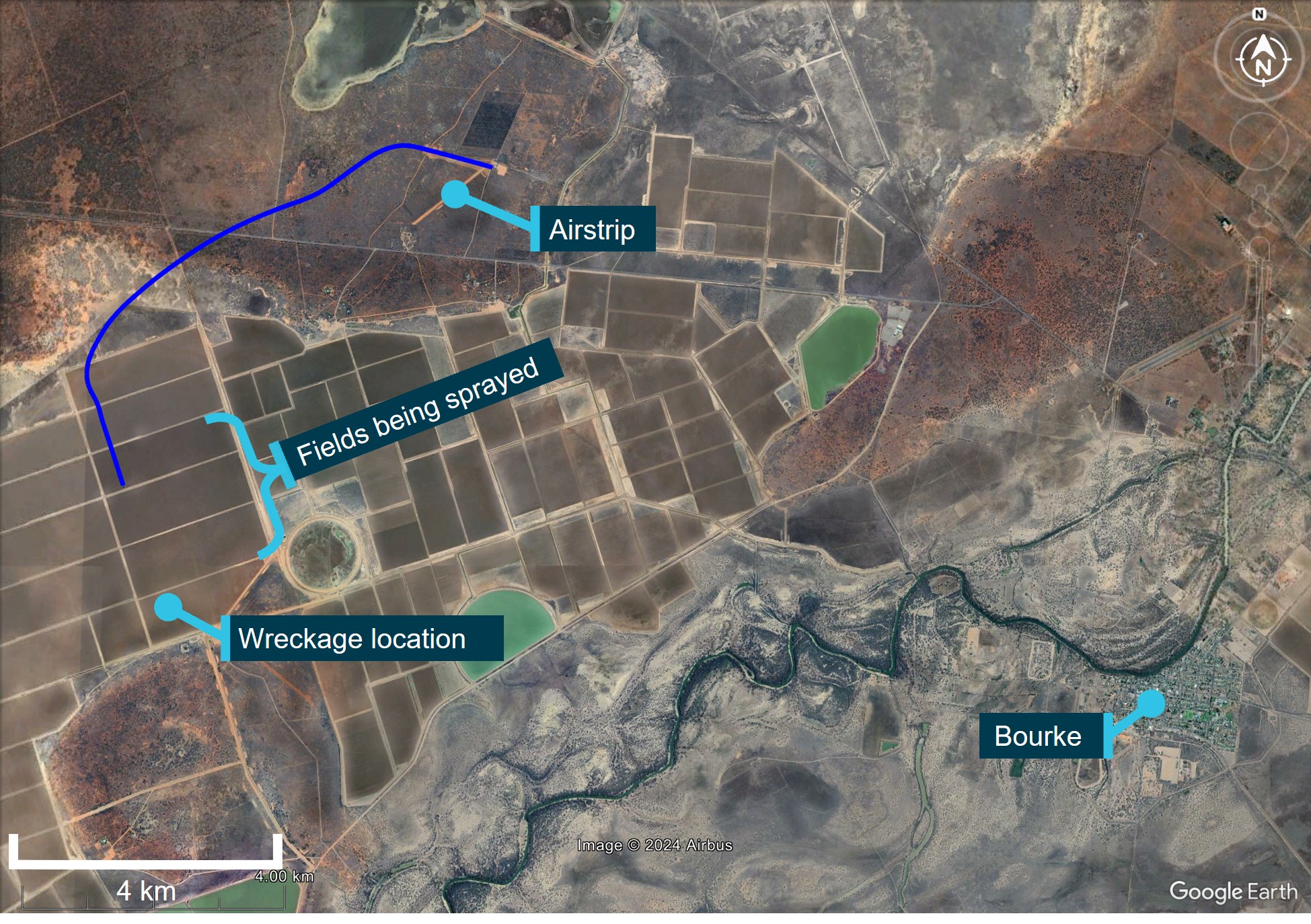
At 0632:50, GPS data from the onboard Satloc[1] system showed that the aircraft was positioned at their first planned field, parallel to the previous day’s spray run at a heading of 161° and a height between 10 ft and 22 ft above ground level (Figure 1). At this time, the spray system was activated, but no spray flow was recorded. For 40 seconds, the aircraft maintained the same heading tracked in a south‑easterly direction with a ground speed between 112 kt and 115 kt and height between 4 ft and 22 ft. At 0633:30, the final data point captured recorded the aircraft in the third (southern‑most) field of the planned run with a ground speed of about 115 kt, a height of up to 7 ft and maintaining heading. Shortly after this point, the aircraft contacted the ground, ran along the rest of the field and then impacted an irrigation levee that ran perpendicular to the end of the field.
Figure 1: Overview of flight path and key events
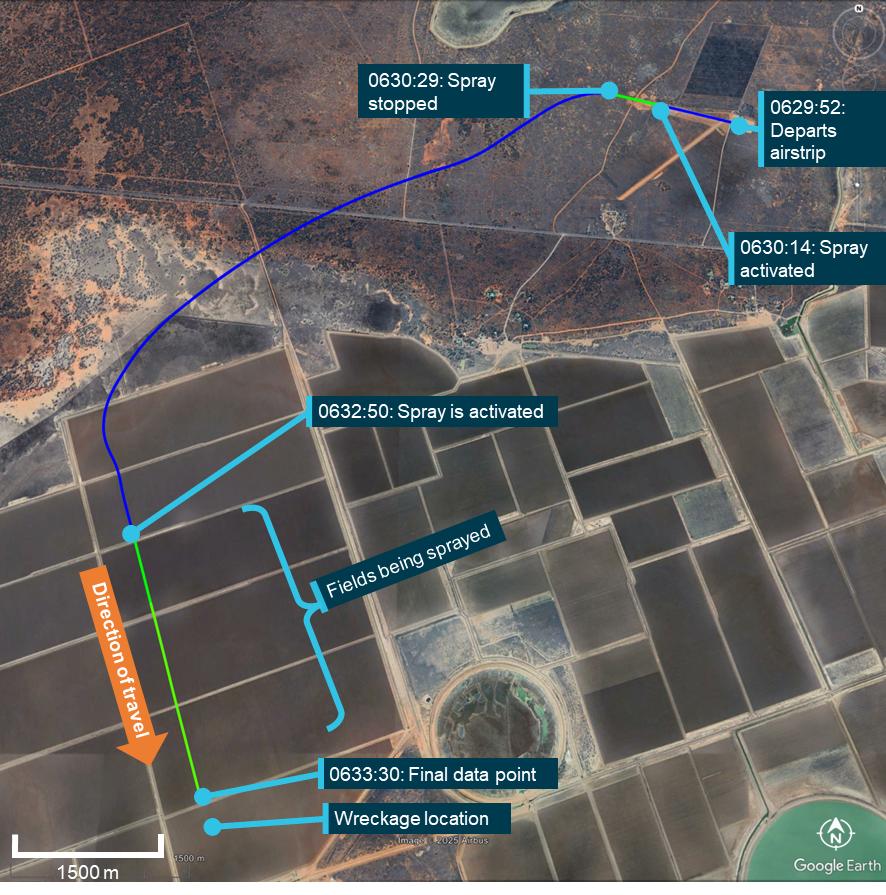
The first part of the flight path is blue, with green indicating when the spray was activated. Source: Google Earth, annotated by the ATSB
At about 0715, the pilot of the other aircraft attempted to contact the pilot of VH‑AQW on the ultra‑high frequency radio, but received no response. They followed up with a text message at about 0719. The other pilot decided to fly around the property to locate the aircraft. The aircraft was found inverted in a cotton field adjacent to the third field. The other pilot immediately returned to the airstrip and drove to the accident site to render assistance. The pilot was fatally injured, and the aircraft was destroyed.
Context
Pilot information
Licence and experience
The pilot held a valid commercial pilot’s licence (aeroplane) and last completed a flight review on 20 October 2023. They held an aerial application rating, as well as float plane, manual propeller pitch control, tailwheel undercarriage, and gas turbine endorsements.
Information provided by the operator indicated that the pilot had 13,135.6 hours of total aeronautical experience, and at least 3,721.2 hours on Air Tractor aircraft variants.
Medical and pathological information
The pilot had a class 1 aviation medical certificate valid until 15 November 2024 and was required to wear distance vision correction, and have reading correction available while exercising the privileges of their licence. A review of the pilot’s aviation medical records found no information that indicated a medical event may have contributed to the accident. The pilot was described as generally fit and healthy, with no reports of any ongoing or recent illnesses.
The pilot’s post-mortem report stated that the cause of death was blunt force head injuries. The examination found mild to moderate heart disease, but there was no evidence of a heart attack. Toxicology results obtained did not identify any substances likely to have contributed to the accident. Carbon monoxide[2] levels were not significantly raised (below 5% saturation). Low levels of the pesticides used for spraying (clethodim and glyphosate) were detected, but they were considered a low risk for toxicity to humans.
Recent history
The pilot was staying with other colleagues at a house rented by the operator, located around 15 minutes’ drive from the property being sprayed. The pilot commenced their duty period on 1 February 2024, following a week of leave. The pilot generally started duties around 0600 and finished around 1200. This was a normal pattern of work in summer as spraying conditions were not favourable during high temperatures in the afternoon.
The day prior to the accident, the pilot commenced duty around 1030 and finished around 1430. They had dinner at the house around 1800 and went to their room around 1930 where they remained until the next morning.
On the day of the accident (which was the pilot’s 10th consecutive day of duty), the pilot was reported to have woken up between 0400 and 0500, had breakfast, and departed for the property by car at around 0530. They were observed to be in good spirits in the morning, with nothing unusual about their demeanour observed.
Based on the available information for the pilot, there were no indicators of fatigue. However, there was insufficient information available to the ATSB about their sleep and non‑duty activities to estimate fatigue level with confidence.
Aircraft information
General information
VH-AQW was an Air Tractor Incorporated AT‑502 single‑seat low‑wing tail‑wheel aircraft manufactured in the United States in 1993 and assigned serial number 502‑0218. It was powered by a Pratt & Whitney Canada PT6A‑34AG turboprop engine. It was first registered in Australia on 29 November 1993. It was issued with a Certificate of Airworthiness in the agricultural category on 2 December 1993.
The current maintenance release was issued on 30 January 2024, with 18,162.5 hours recorded as the total time in service.
Aircraft modifications
The aircraft was equipped with a single point refuelling system that allowed simultaneous filling of each wing tank to pre‑determined quantities of fuel. Fuel uplift was managed via pilot‑selectable switch positions, from a control panel located in the left instrument panel. The switch positions equated to ‘minimum’, ‘mid’ and ‘maximum’ fuel level in the tanks, with an automatic shut-off once the selected level of fuel was reached.
Aircraft weight and balance
The AT-502 aircraft flight manual limitations section specified that the maximum take‑off weight was 8,000 lbs (3,629 kg). However, when operating in the restricted/agricultural category, the aircraft type certificate data sheet specified that the aircraft could be operated to 9,200 lbs (4,173 kg), provided a flight manual supplement was available. A statement in the aircraft flight manual further advised:
An appropriate Flight Manual Supplement must be approved and present in the Flight Manual before operations can be undertaken at Takeoff Weights that are greater than the Maximum Takeoff Weight permitted in the Limitations section of the Flight Manual
A flight supplement was not included in the flight manual retrieved from the aircraft. Following the accident, the operator obtained the required flight manual supplement for agricultural operations from the manufacturer, for their other aircraft. From the additional weight and balance information provided after the accident, the aircraft’s centre of gravity range would not change when operating at permitted weights above 3,629 kg (8,000 lbs).
The operator identified challenges in obtaining documents about AT‑502 aircraft, as there were very few aircraft around. However, the pilot was experienced on the aircraft type and reported to have a good understanding of its performance. Loading the aircraft per the weight and balance information contained in the aircraft flight manual was considered to be a pilot responsibility but responsibility for the provision of aircraft documents to assist pilots with their flight load planning resided with the operator.
No fuel uplift records or hopper loading information was available for the accident flight. On request from the ATSB, the operator provided an estimate of a typical payload for the planned aerial spraying operation, which consisted of a full hopper containing 1,800 kg of herbicide, and a likely minimum fuel quantity of 380 L. Using these estimates for weight and balance calculations, it was probable that the aircraft was above its maximum take‑off weight of 9,200 lbs. However, as records of the aircraft’s load on departure were unavailable, the actual weight and balance information could not be accurately determined. The aircraft centre of gravity for the accident flight (based on the estimate) was found to be within allowable limits.
Dispersal system
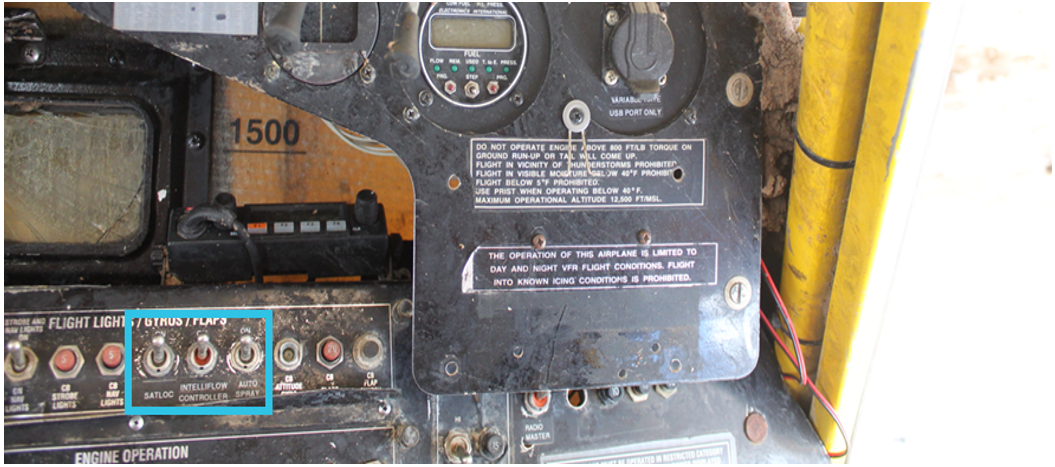
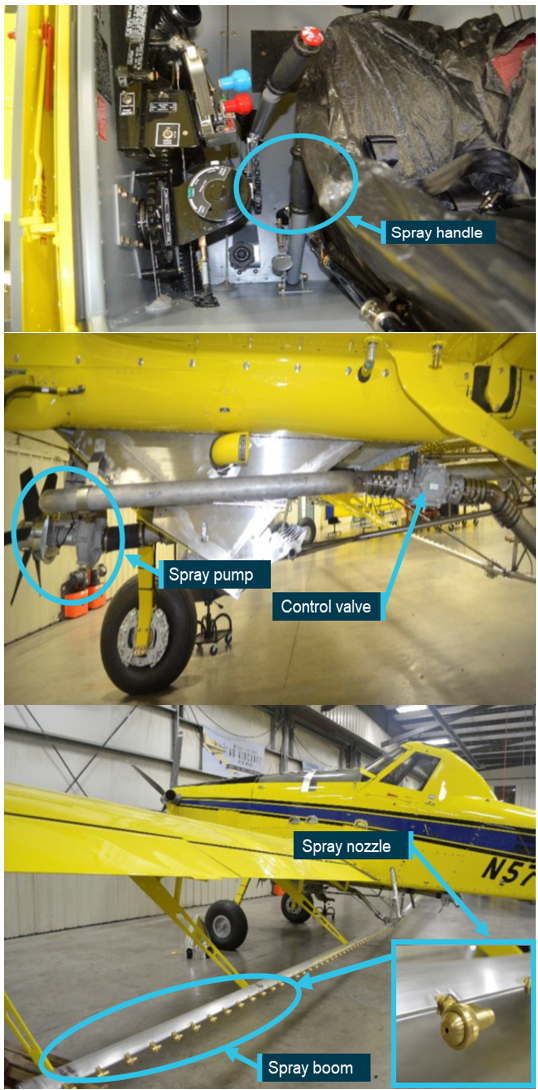
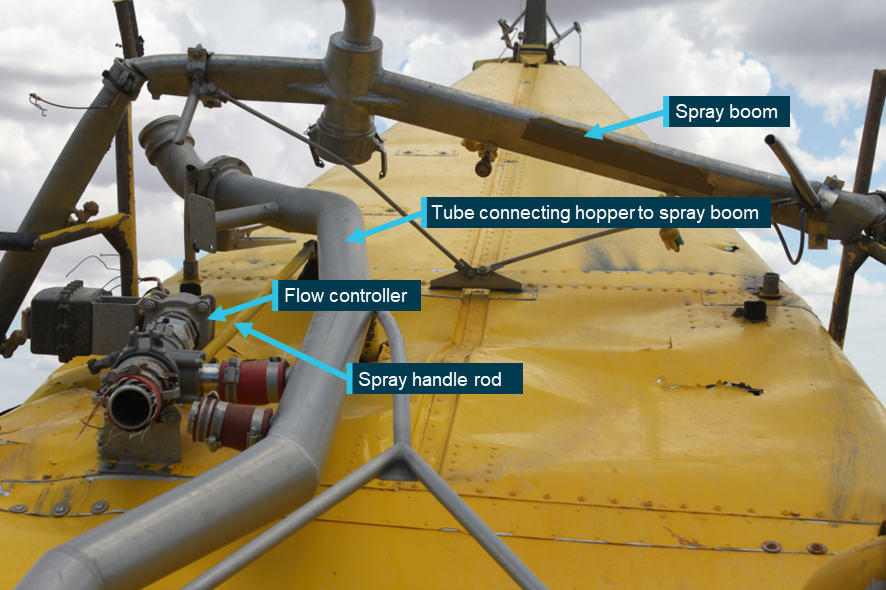
All Air Tractor aircraft were fitted with a spray dispersal system at the time of production. To activate the dispersal system, the pilot switched on the spray pump from the cockpit (Figure 2) and moved the spray handle down to release the load from the hopper (Figure 3). This movement opened the control valve. The hopper contents, driven by the spray pump under the aircraft, would then be dispersed through the spray nozzles on the spray boom mounted under each wing (Figure 3). Additionally, a flow controller system, including a flow meter, was installed on the spray boom as part of the Satloc system (Figure 4). This allowed for spray flow information to be displayed in the cockpit, on the Satloc screen or light bar (refer to section titled Recorded data).
Figure 2: Switches (in box) used for spraying in VH-AQW
Source: ATSB
Figure 3: Spray handle (top), spray pump and control valve (middle), and spray boom (bottom) on an exemplar aircraft
Source: Air Tractor, annotated by the ATSB
Figure 4: VH-AQW’s dispersal system
Source: ATSB
Meteorological information
Around the time of the accident, a private weather station located on the property recorded the air temperature as 26°C and an average windspeed of about 9 kt from the south‑south‑east. At 0630, the Bourke Airport METAR[3] recorded the windspeed as 6 kt from the south‑south‑east and a temperature of 21°C. The other pilot reported they observed light winds at the property, which was consistent with the weather recordings.
Geoscience Australia recorded first light[4] at 0627 and sunrise at 0652 at the accident site.
Wreckage and impact information
The ATSB’s site examination found a shallow, uniform ground scar about 27 m long from the aircraft left main wheel contacting the end of the field being sprayed (Figure 5). Two wheel marks were found in the irrigation levee from the left and right main landing gear. After the impact with the levee, the main landing gear separated from the fuselage and struck the flaps and sections of the tailplane, resulting in their detachment.
Figure 5: Wheel marks in the field and levee
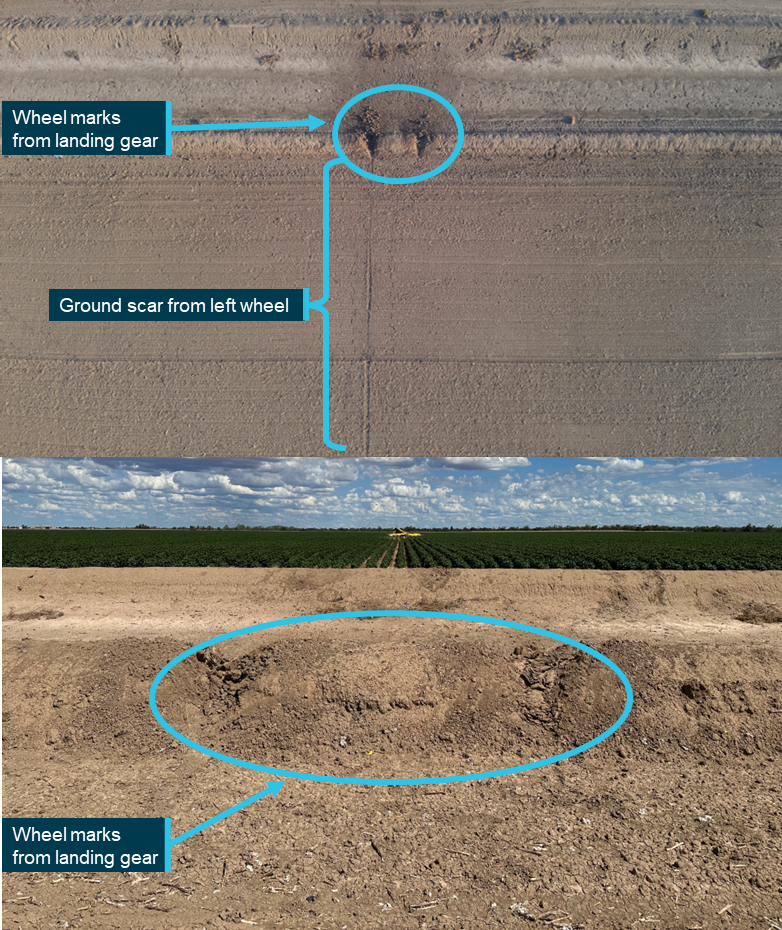
Source: New South Wales Police Force (top) and ATSB (below), annotated by the ATSB
A larger ground scar was found in an adjacent cotton field where additional debris, including the elevator, flap, parts of the landing gear and the main wreckage were located. The position of the propeller and parts of the engine in the large ground scar indicated that the aircraft initially collided with terrain nose down, before coming to rest inverted (Figure 6). It was considered likely that the detachment of the flaps and elevator affected aircraft controllability. The ground scars and main wreckage were aligned with the final data point recorded on a track of about 160°, and perpendicular to the levee at the site of the main wheel impact.
Figure 6: Overview of wreckage distribution
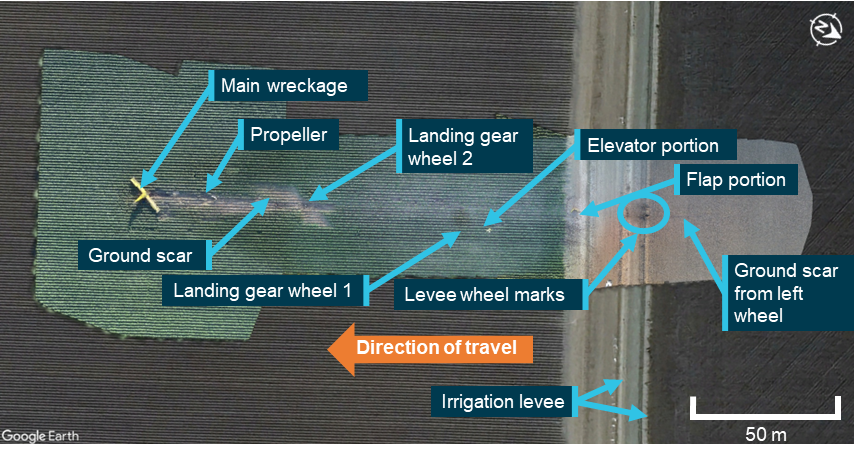
Source: Google Earth and New South Wales Police Force, annotated by the ATSB
All the major aircraft components were present at the accident site, with no evidence of an in‑flight break‑up or birdstrike occurring. No pre‑impact defects were identified that would have affected the airframe or flight controls. The elevator trim control lever was set for slightly ‘nose up’ trim. The flap position was consistent with retraction, but the exact position could not be determined due to possible differences between aircraft and the static rigging position of the flap system. The operator stated that the normal configuration for spraying straight and level would be flaps fully retracted.
Examination of the propeller and engine indicated that the engine was delivering power at the time of the impact. Fuel and chemical product residues were found at the accident site, but there was no post‑impact fire. Given the damage to the aircraft, the position of the hopper door or emergency dump lever[5] could not be determined, therefore it could not be concluded whether the pilot attempted to dump the herbicide load. The airframe around the cockpit had retained its structure, but the windscreen had fragmented resulting in the cockpit filling with mud.
Recorded data
The aircraft was fitted with a Satloc G4 device, which was transported and downloaded at the ATSB’s technical facility in Canberra, Australian Capital Territory. Data from the pilot’s previous 10 days of flights was reviewed.
The pilot was spraying the same 3 fields in the 2 consecutive days prior to the accident and completed 12 spray runs. On those 2 days, 5 spray runs were recorded in the same direction as the accident run. On the day of the accident, the pilot had positioned the aircraft next to the start of the spray run from the previous day and activated the spray system. The accident spray run was 41 seconds and the data ended about 15 m before the ground scar.
A comparison of the recorded data for the previous spray runs, including from the day of the accident over the same direction and fields, showed that they were consistent:
- The average ground speed ranged between 109 kt and 120 kt.
- The average height was between 9 ft and 13 ft above ground level (which was consistent with the operator’s recommendation of the spray height).
- The average heading was 161°.
The recorded heading for the accident run was consistent with the wheel marks in the field, indicating no lateral deviations.
On the accident run, the data showed that, while the spray was activated, no flow was recorded. This was the only flight in the recorded data where there was no flow recorded. Analysis of previous runs and correspondence from Satloc confirmed that the no flow recorded was a valid parameter.
‘No flow’ recording on Satloc system
Satloc reported that it was not a common occurrence to have a no flow recording but was previously reported by other users during spray operations. Both Satloc and the operator advised that some potential reasons for the system to record no flow were due to:
- system not powered
- a micro-switch or relay failure
- a wiring failure
- switches set incorrectly
- a flow meter obstruction
- a problem with the flow controller
- mechanical failure of the spray pump or valve.
The pilot’s mobile phone contained a note written 2 days prior to the accident that the spray door seal was ‘chewed out’ and the spray valve was ‘binding up’. It was unknown whether these issues contributed to the no flow recording.
The operator indicated that the aircraft hopper was cleaned at the end of each day and was reloaded at the beginning of the next day. They reported that the herbicide used was liquid and therefore unlikely to block the spray nozzles, compared to other products in powder or granule form. As the fields sprayed did not contain vegetation and the herbicide would have evaporated in the high temperatures, it was not possible to ascertain whether the spray was dispersed from the aircraft during the accident spray run.
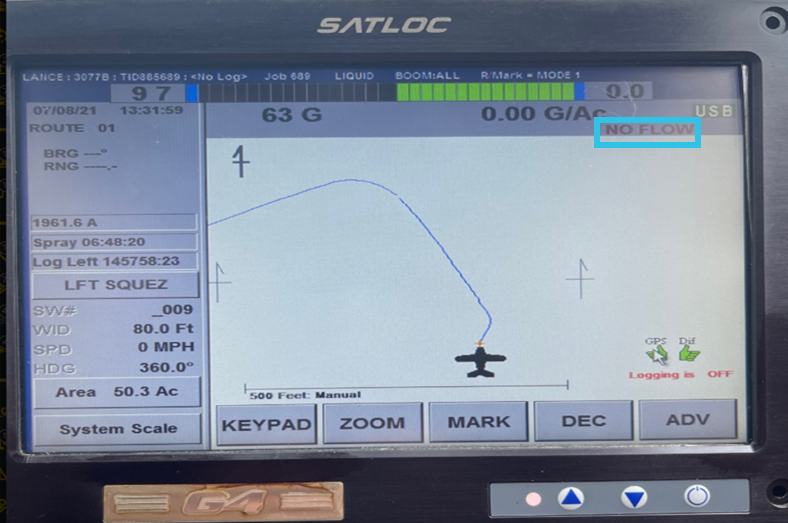
There were 3 places where indications of no flow would be shown to the pilot; the Satloc screen and light bar in the cockpit (Figure 7), and the boom pressure gauge immediately outside the front windshield (Figure 8). While the pilot’s primary visual reference in flight was outside the aircraft, each indication was located within the pilot’s field of view and was included in the standard pilot scan conducted during the spray run. The aircraft had a camera inside the hopper connected to a display inside the cockpit, but it was not normally referred to when spraying liquid products.
Figure 7: VH-AQW cockpit displays
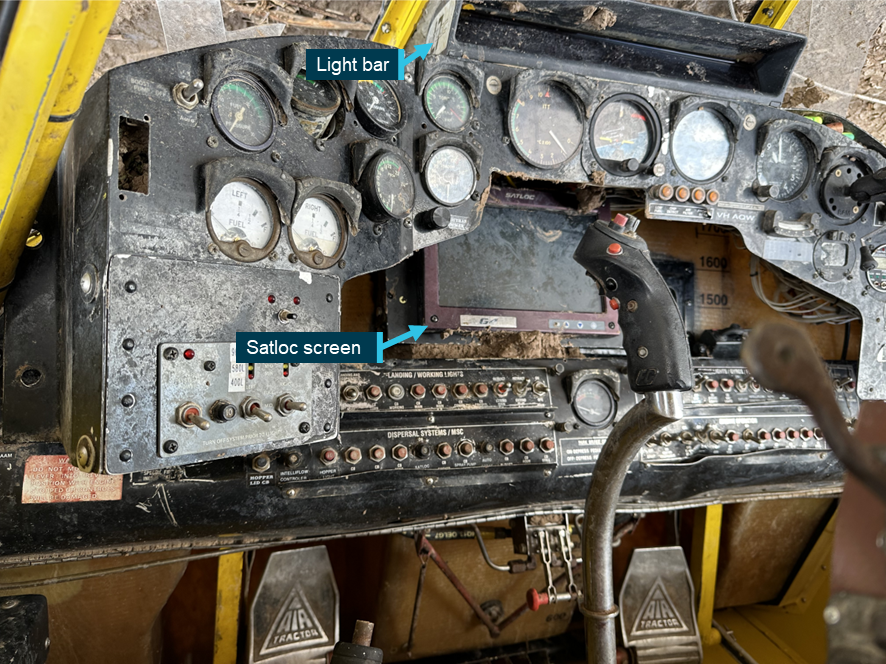
Source: ATSB
Figure 8: Boom pressure gauge
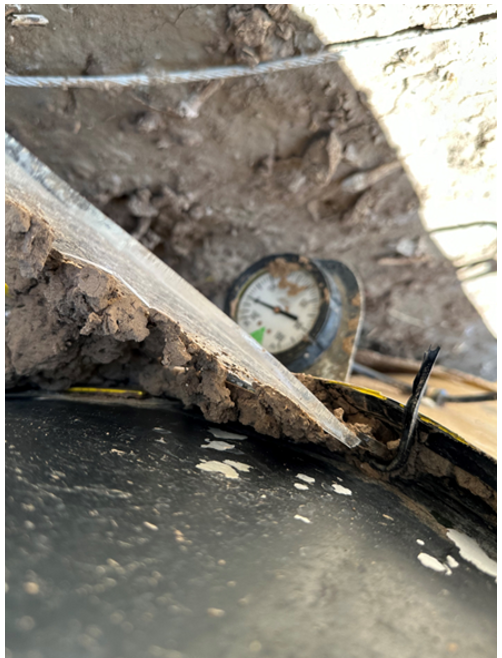
Source: ATSB
If there were spray flow problems, the Satloc screen would display a visual warning indicating ‘no flow’ (Figure 9) and the light bar would show a reduced spray rate. The boom pressure gauge would also indicate no pressure. The operator reported that general practice was that, if the pilot observed the ‘no flow’ warning on the Satloc screen, then they would likely check the boom pressure gauge. If the dispersal system was functioning, the boom pressure gauge would be expected to change as the load was dispersed from the hopper. It was also expected that if a problem was identified, the pilot would climb and troubleshoot when operating at a higher altitude, return to the airstrip, or dump the load.
Figure 9: Example of the ‘no flow’ visual warning (in blue box) on Satloc screen
Source: Satloc
Attention diversion
In August 2025, the National Agricultural Aviation Association in the United States published a safety alert (titled Do not let boom-mounted pressure gauges or other instruments divert your attention from flying) for pilots about the risks of attention diversion when conducting a spray run. The safety alert stated:
There are numerous potential distractions for ag aviators. In many cases the distraction can be a gauge, instrument, or screen that is required for the application mission. While glancing occasionally at these items is necessary, an accident can occur if a pilot focuses on the item at the wrong time or for too long a time. In some cases, the item may be positioned on the aircraft in a manner that creates an unsafe situation by forcing the pilot to fully divert their attention and line of sight from the aircraft’s flight path.
While the safety alert specifically targeted the boom-mounted pressure gauge, it also referred to other flight instruments and advised that pilots should focus on them at a safe altitude.
Survival aspects
The first responder (the other pilot) reported that the pilot had been fastened into the seat by the aircraft’s 4‑point harness (lap-belt and shoulder harness). The shoulder harness (upper torso restraint) was found to be in the ‘unlocked’ position permitting forward movement of the upper body, but the inertia reel restrained the pilot. It was unknown whether the harness was unlocked pre- or post‑accident. However, the post‑mortem report noted that the pilot had a possible harness mark on the shoulders and abdomen.
The first responder also recalled that the pilot was wearing a flight helmet, with the strap fastened. The helmet was found intact but covered with the dried mud. Based on the accident sequence and the injuries sustained, the accident was not considered survivable. The post‑mortem report indicated that the pilot was fatally injured as a result of the accident sequence.
Related occurrences
A review of the ATSB and the United States National Transportation Safety Board’s database over the past 10 years found the following occurrences where the pilot’s attention was diverted within the cockpit, followed by a collision with terrain during aerial spraying operations:
ATSB occurrence (OA-2023-01160)
On 9 June 2023, the pilot of a Piper PA-25 aircraft was spreading snail bait on a property 25 km east of Esperance, Western Australia. During the fourth load while downwind at approximately 150 ft, the pilot looked at the GPS, then looked in the hopper to see how much bait was remaining. The pilot recalled they spent too long looking inside the hopper and had not realised they had inadvertently put the aircraft in a shallow dive, banking slightly to the right. On realising, the pilot attempted to climb but there was insufficient height. The aircraft collided with the paddock and came to rest inverted. The pilot sustained minor injuries, and the aircraft was substantially damaged.
National Transportation Safety Board investigations:
GAA16CA399: On 27 July 2016, the pilot of an Air Tractor 301 aircraft was spraying corn fields in Bird Island, Minnesota. They observed a glitch in the navigation system and attempted to identify the problem, which diverted their attention inside the cockpit. The pilot recalled that, while focused inside the cockpit, they felt the corn stalks they were spraying strike the aircraft. In response, they looked outside the cockpit and observed a slight rise in terrain, so increased power and attempted to climb. The aircraft descended into the corn field, yawed to the right, impacted the ground and came to rest inverted. The pilot was uninjured, and the aircraft was substantially damaged.
CEN16LA303: On 29 July 2016, the pilot of a Hughes 269A helicopter was spraying fungicide on a soybean field near Morris, Minnesota. While on their fourth load, they looked at the navigation system to ensure they were on course. The pilot reported they felt the helicopter slow down and when they looked up, they had descended into the field. The helicopter rotated 180°, descended and came to rest on its right side. The pilot was uninjured, and the helicopter was substantially damaged.
CEN24LA318: On 20 June 2024, the pilot of an Ayres Corporation S2R Thrush aircraft was spraying fungicide on potato fields near Stanwood, Michigan. After the pilot completed their spray run, they looked at the spray boom pressure gauge, which was located outside the cockpit. Shortly after, the main landing gear impacted terrain and the pilot immediately climbed to gain altitude. The pilot conducted a forced landing in a nearby field. The pilot was uninjured, and the aircraft was substantially damaged.
Safety analysis
Pilot’s attention to no flow warning
During a low-level run, the pilot aligned the aircraft adjacent to the previous day’s run and activated the spray system to disperse herbicide from the hopper. However, analysis of the Satloc data for the accident run found that no spray flow was recorded. This was the only time this occurred after reviewing 10 days of flight data and the only variation from previous flights, including spray runs of the same fields.
It was likely that a visual warning was displayed on the Satloc system immediately after the spray was activated, indicating there was no flow. Given the spray run was around 40 seconds, this was sufficient opportunity for the pilot to notice the message. There were also alternate sources inside and outside the cockpit where no flow would be displayed and could be used for crosschecking the parameter to confirm it was valid. It was also likely the pilot noticed the warning as the Satloc screen, as well as the other sources, were within their field of view in the cockpit. Further, a purpose of a warning is to capture attention by design (Wickens et al, 2022) and while the pilot’s primary focus of attention would be outside the aircraft, the Satloc screen was part of their visual scan during the spray run. However, as the warning was visual only, it largely relied on the pilot scanning the display for the warning to be noticed.
When attention is diverted away from primary focus, such as from outside the aircraft to within, this external monitoring can be reduced, and inadvertent deviations may not be noticed (Wickens et al, 2022). Several previous occurrences have detailed circumstances where a pilot’s attention was diverted within the cockpit and the aircraft’s descent was not immediately detected. Based on these types of occurrences, the United States National Agricultural Aviation Association also highlighted that a momentary diversion could have a significant effect on flight and result in an accident. In this accident, with the aircraft flying at 120 kt and around 10 ft, in one second the aircraft would travel around 60 m, and even the smallest change in attitude could be imperceivable but still result in a collision with terrain.
The ATSB acknowledges the pilot’s level of flying experience and the general expectation that when pilots encounter abnormal situations, particularly at low‑level flight, they would climb to troubleshoot. However, with no other reasonable explanation and having excluded an aircraft malfunction, pre‑existing medical conditions, and environmental factors, it was likely that focusing on the no flow message, even momentarily, diverted the pilot’s attention away from outside the aircraft. Subsequently, the aircraft inadvertently descended. As the spray run was conducted at a low level, there was limited height available to recover and the aircraft touched the ground, subsequently colliding with the irrigation levee.
Potential reasons for no flow warning
The investigation considered potential reasons a ‘no flow’ was recorded on the Satloc system. Given the high temperatures of the day and that there was no vegetation in the field where the spray run occurred, it was not possible to confirm if spray had or had not been dispersed from the aircraft during the accident run.
Further, given the damage to the aircraft in the accident sequence, it was difficult to ascertain if any damage to the dispersal system occurred before or after the collision. Based on insufficient information, it could not be determined whether the aircraft was dispersing herbicide or any spray system fault resulted in a no flow recording.
Findings
ATSB investigation report findings focus on safety factors (that is, events and conditions that increase risk). Safety factors include ‘contributing factors’ and ‘other factors that increased risk’ (that is, factors that did not meet the definition of a contributing factor for this occurrence but were still considered important to include in the report for the purpose of increasing awareness and enhancing safety). In addition ‘other findings’ may be included to provide important information about topics other than safety factors. These findings should not be read as apportioning blame or liability to any particular organisation or individual. |
From the evidence available, the following findings are made with respect to the collision with terrain involving Air Tractor AT-502, VH-AQW, 17 km south‑west of Bourke Airport, New South Wales, on 10 February 2024.
Contributing factors
- During a low-level spray run, the spray system likely displayed a ‘no flow’ warning, which likely captured the pilot's attention. Subsequently, the aircraft inadvertently descended and touched down on the ground prior to colliding with a levee.
Other findings
- The reason for the spray system recording ‘no flow’ was not able to be determined.
Safety action
| Whether or not the ATSB identifies safety issues in the course of an investigation, relevant organisations may proactively initiate safety action in order to reduce their safety risk. All of the directly involved parties are invited to provide submissions to this draft report. As part of that process, each organisation is asked to communicate what safety actions, if any, they have carried out to reduce the risk associated with this type of occurrences in the future. The ATSB has so far been advised of the following proactive safety action in response to this occurrence. |
Safety action by Rebel Ag Aviation
- The operator has contacted the aircraft manufacturer and obtained weight and balance charts for their Air Tractor 502 aircraft. The charts will be added to the respective aircraft’s flight manuals to assist the pilots when loading.
Sources and submissions
Sources of information
The sources of information during the investigation included:
- Rebel Ag Aviation Pty Ltd
- the other pilot operating on the day of the accident
- recorded data from the Satloc unit on the aircraft
- Satloc
- Pratt & Whitney Canada
- the maintenance organisation
- Civil Aviation Safety Authority
- New South Wales Police Service.
References
National Agricultural Aviation Association. (2025). Fly Safe: Do not let boom-mounted pressure gauges or other instruments divert your attention from flying. https://www.agaviation.org/wp-content/uploads/2025/08/2025-08-11-FlySaf…
Wickens, C.D., Helton, W.S., Hollands, J.G. and Banbury, S. (2022). Engineering psychology and human performance, 5th edn, Routledge, New York.
Submissions
Under section 26 of the Transport Safety Investigation Act 2003, the ATSB may provide a draft report, on a confidential basis, to any person whom the ATSB considers appropriate. That section allows a person receiving a draft report to make submissions to the ATSB about the draft report.
A draft of this report was provided to the following directly involved parties:
- Rebel Ag Aviation Pty Ltd
- other pilot operating on the day of the accident
- Satloc
- Civil Aviation Safety Authority.
Submissions were received from:
- Rebel Ag Aviation Pty Ltd
- the other pilot operating on the day of the accident.
The submissions were reviewed and, where considered appropriate, the text of the report was amended accordingly.
Purpose of safety investigationsThe objective of a safety investigation is to enhance transport safety. This is done through:
It is not a function of the ATSB to apportion blame or provide a means for determining liability. At the same time, an investigation report must include factual material of sufficient weight to support the analysis and findings. At all times the ATSB endeavours to balance the use of material that could imply adverse comment with the need to properly explain what happened, and why, in a fair and unbiased manner. The ATSB does not investigate for the purpose of taking administrative, regulatory or criminal action. TerminologyAn explanation of terminology used in ATSB investigation reports is available here. This includes terms such as occurrence, contributing factor, other factor that increased risk, and safety issue. Publishing informationReleased in accordance with section 25 of the Transport Safety Investigation Act 2003 Published by: Australian Transport Safety Bureau © Commonwealth of Australia 2025 
Ownership of intellectual property rights in this publication Unless otherwise noted, copyright (and any other intellectual property rights, if any) in this report publication is owned by the Commonwealth of Australia. Creative Commons licence With the exception of the Commonwealth Coat of Arms, ATSB logo, and photos and graphics in which a third party holds copyright, this report is licensed under a Creative Commons Attribution 4.0 International licence. The CC BY 4.0 licence enables you to distribute, remix, adapt, and build upon our material in any medium or format, so long as attribution is given to the Australian Transport Safety Bureau. Copyright in material obtained from other agencies, private individuals or organisations, belongs to those agencies, individuals or organisations. Where you wish to use their material, you will need to contact them directly. |
[1] Satloc: an aerial guidance system that provides the pilot with guidance commands to fly accurate spray patterns.
[2] Carbon monoxide is a colourless, odourless, tasteless, and poisonous gas that is produced as a by-product of burnt fuel. Exposure to a leak from the exhaust of an aircraft engine into the cabin can lead to elevated levels of carbon monoxide, which can impair cognitive function.
[3] METAR: a routine report of meteorological conditions at an aerodrome. METAR are normally issued on the hour and half hour.
[4] First light: when the centre of the sun is at an angle of 6° below the horizon before sunrise. At this time, the horizon is clearly defined but the brightest stars are still visible under clear atmospheric conditions.
[5] Emergency dump or jettison is an essential part of emergency procedures for aircraft operating with a hopper load. The procedure releases the entire hopper contents from the aircraft within a few seconds.
Preliminary report
Report release date: 17/07/2024
| This preliminary report details factual information established in the investigation’s early evidence collection phase, and has been prepared to provide timely information to the industry and public. Preliminary reports contain no analysis or findings, which will be detailed in the investigation’s final report. The information contained in this preliminary report is released in accordance with section 25 of the Transport Safety Investigation Act 2003. |
The occurrence
On the morning of 10 February 2024, the pilot of an Air Tractor AT‑502 aircraft, registered VH‑AQW (AQW) and operated by Rebel Ag, was conducting aerial spraying operations on a property near Bourke, New South Wales. The plan was to continue spraying herbicide on fields they had commenced the previous day.
At 0629 local time, AQW departed a private airstrip on the property in a southerly direction with the first load of herbicide (Figure 1). Another pilot also departed around this time to conduct spraying in a different area of the same property. At 0632, recorded data showed that AQW had commenced spraying a field. The recording ended 12 seconds later. The final point recorded AQW’s ground speed of about 114 kt and travelling in a south-easterly direction.
At about 0715, the other pilot attempted to contact the pilot of AQW on the ultra-high frequency radio, followed by a text message at about 0719, but received no response. The other pilot became concerned so decided to fly around the property to locate AQW. The aircraft wreckage was found in a cotton field adjacent to the field being sprayed. The pilot was fatally injured, and the aircraft was destroyed.
Figure 1: Overview of flight path (track in blue)
Source: Google Earth, annotated by the ATSB
Context
Pilot information
The pilot held a Commercial Pilot’s Licence (Aeroplane) and a valid Class 1 Aviation Medical Certificate. The pilot also held an aerial application rating, as well as float plane, manual propeller pitch control, tailwheel undercarriage, and gas turbine endorsements.
The pilot had 13,135.6 hours of total aeronautical experience, and at least 3,721.2 hours on Air Tractor aircraft variants based on information provided by the operator.
Aircraft information
VH-AQW was an Air Tractor Incorporated AT-502 single-seat low-wing tailwheel aircraft manufactured in the United States in 1993. It was powered by a Pratt & Whitney Canada PT6A‑34AG turboprop engine. It was first registered in Australia on 29 November 1993.
The current maintenance release was issued on 30 January 2024, with 18,162.5 hours recorded as the total time-in-service.
Meteorological information
Around the time of the accident, a private weather station located on the property recorded the air temperature as 26 °C and an average windspeed of about 9 kt from the south-south-east. At 0630, the Bourke Airport METAR[1] recorded the windspeed as 6 kt from the south-south-east.
Geoscience Australia recorded first light at 0627 and sunrise at 0652 at the accident site.
Wreckage and impact information
The ATSB’s site examination found that the aircraft had impacted an irrigation levee adjacent to the southernmost field to be sprayed. A ground scar about 27 m long from the aircraft’s left main wheel was found in the paddock just before the levee. Two more wheel marks were found where the main landing gear struck the levee (Figure 2).
Figure 2: Wheel marks in the paddock and levee
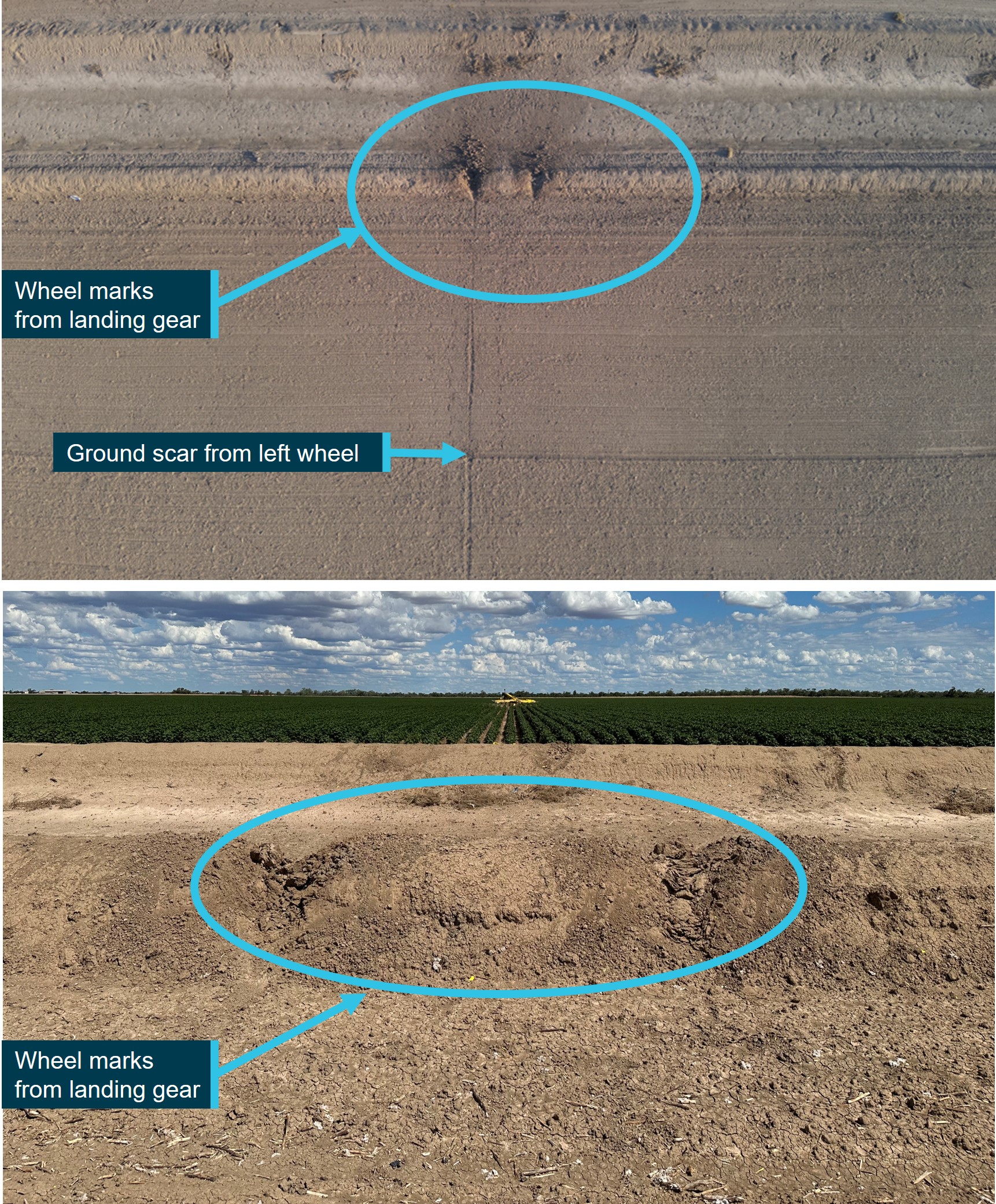
Source: New South Wales Police Force (top) and ATSB (below), annotated by the ATSB
A larger ground scar was found in an adjacent cotton field where additional debris, including the elevator, flap, and parts of the landing gear and the main wreckage was found. The propeller and parts of the engine were found in the large ground scar, indicating the aircraft collided with terrain nose down initially, then came to rest inverted (Figure 3). The ground scars and main wreckage were aligned with the final data point recorded on a track of about 150° magnetic and perpendicular to the levee at the site of the main wheel impact.
Figure 3: Overview of the wreckage distribution
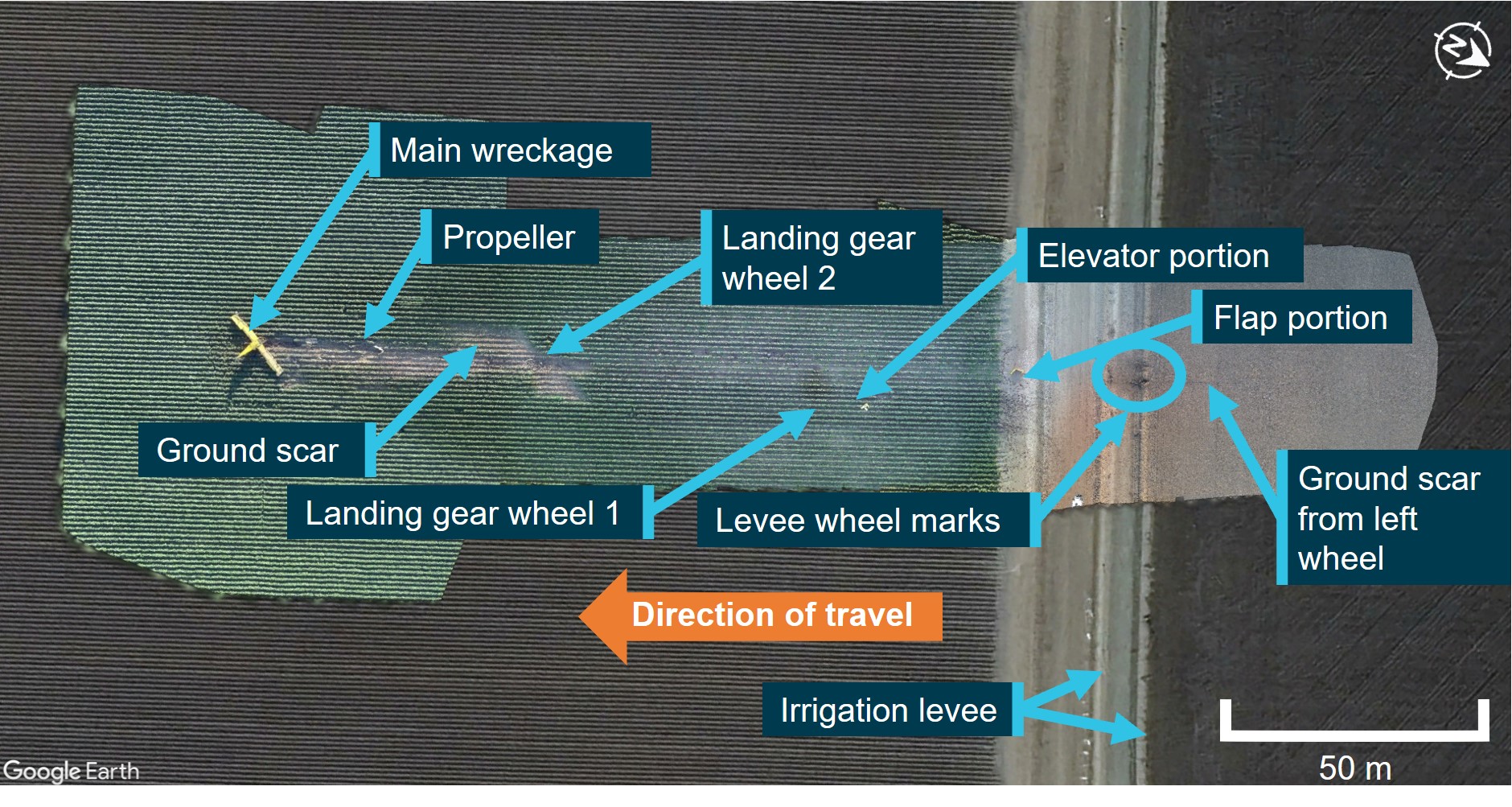
Source: Google Earth and New South Wales Police Force, annotated by the ATSB
All the aircraft’s major components were present at the accident site with no evidence of an in‑flight break-up. There were no pre-impact defects identified that affected the airframe or flight controls. Examination of the propeller and engine indicated that the engine was delivering power at the time of the impact. Fuel and chemical product residues were also found at the accident site, but there was no post-impact fire.
The airframe around the cockpit had retained its structure, but the windscreen had fragmented resulting in the cockpit filling with mud.
The first responder reported that the pilot had been fastened into the seat by the aircraft’s 4-point harness and was wearing a flight helmet. The helmet was found intact but covered with the dried mud.
Operational information
The fields planned to be sprayed did not have crops and were being sprayed with herbicide chemicals in preparation for crop growth in a subsequent season. The surrounding terrain in the area was flat and the operator reported that they expected the accident run field to be sprayed at a height between 2–3 m above the ground, measured from the wheelbase of the aircraft.
Further investigation
The investigation is continuing and will include further review and examination of:
- electronic components recovered from the aircraft
- medical and pathological records
- operational documentation
- aircraft maintenance records.
A final report will be released at the conclusion of the investigation. Should a critical safety issue be identified during the course of the investigation, the ATSB will immediately notify relevant parties so appropriate and timely safety action can be taken.
Acknowledgements
The ATSB acknowledges the support of the staff from Darling Farms and the New South Wales Police Force for their assistance during the onsite investigation.
Purpose of safety investigationsThe objective of a safety investigation is to enhance transport safety. This is done through:
It is not a function of the ATSB to apportion blame or provide a means for determining liability. At the same time, an investigation report must include factual material of sufficient weight to support the analysis and findings. At all times the ATSB endeavours to balance the use of material that could imply adverse comment with the need to properly explain what happened, and why, in a fair and unbiased manner. The ATSB does not investigate for the purpose of taking administrative, regulatory or criminal action. TerminologyAn explanation of terminology used in ATSB investigation reports is available here. This includes terms such as occurrence, contributing factor, other factor that increased risk, and safety issue. Publishing informationReleased in accordance with section 25 of the Transport Safety Investigation Act 2003 Published by: Australian Transport Safety Bureau © Commonwealth of Australia 2024 
Ownership of intellectual property rights in this publication Unless otherwise noted, copyright (and any other intellectual property rights, if any) in this report publication is owned by the Commonwealth of Australia. Creative Commons licence With the exception of the Coat of Arms, ATSB logo, and photos and graphics in which a third party holds copyright, this publication is licensed under a Creative Commons Attribution 3.0 Australia licence. Creative Commons Attribution 3.0 Australia Licence is a standard form licence agreement that allows you to copy, distribute, transmit and adapt this publication provided that you attribute the work. The ATSB’s preference is that you attribute this publication (and any material sourced from it) using the following wording: Source: Australian Transport Safety Bureau Copyright in material obtained from other agencies, private individuals or organisations, belongs to those agencies, individuals or organisations. Where you wish to use their material, you will need to contact them directly. |
[1] METAR: a routine report of meteorological conditions at an aerodrome. METAR are normally issued on the hour and half hour.
Occurrence summary
| Investigation number | AO-2024-005 |
|---|---|
| Occurrence date | 10/02/2024 |
| Location | 17 km south-west of Bourke Airport |
| State | New South Wales |
| Report release date | 05/09/2025 |
| Report status | Final |
| Investigation level | Short |
| Investigation type | Occurrence Investigation |
| Investigation status | Completed |
| Mode of transport | Aviation |
| Aviation occurrence category | Collision with terrain |
| Occurrence class | Accident |
| Highest injury level | Fatal |
Aircraft details
| Manufacturer | Air Tractor Inc |
|---|---|
| Model | AT-502 |
| Registration | VH-AQW |
| Serial number | 502-0218 |
| Aircraft operator | Ashby Aviation Pty Ltd, trading as Rebel Ag Aviation Pty Ltd |
| Sector | Turboprop |
| Operation type | Part 137 Aerial application operations |
| Departure point | Darling Farms, New South Wales |
| Destination | Darling Farms, New South Wales |
| Damage | Destroyed |