Safety Education Material

Collisions at level crossings

Despite continued concerted efforts to prevent collisions at level crossings by local, state and federal governments in conjunction with the rail industry, the ATSB continues to investigate similar occurrences. 

The following investigations highlight some key learnings for both road users and rail infrastructure managers to help reduce collisions at level crossings.
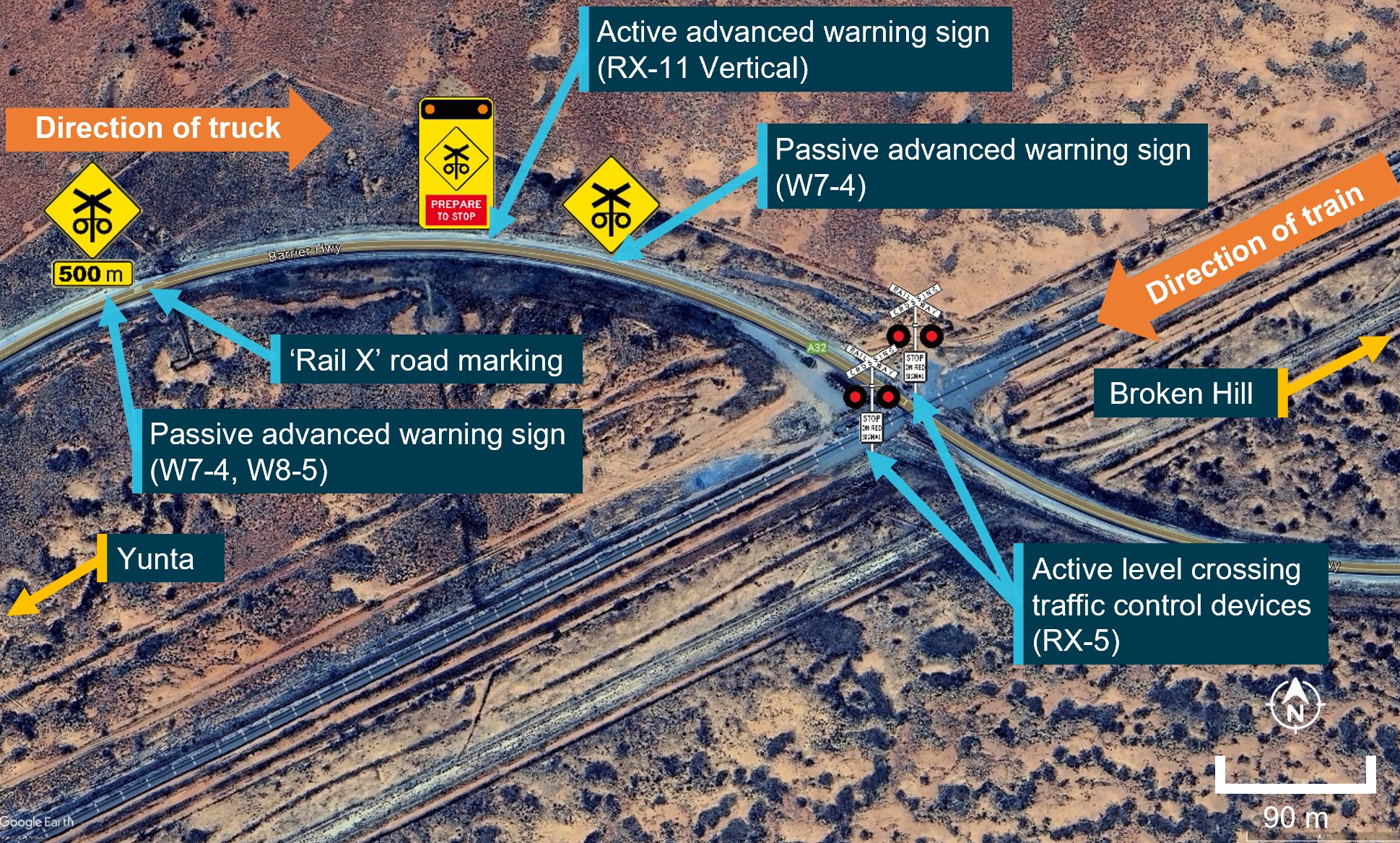
Figure 4: Aerial view of the level crossing approach and road alignment

Expectation bias

Level crossing collision between freight train 6839 and truck, Gooray Road, Gooray, Queensland, on 23 May 2024

A truck driver who failed to stop before a passive level crossing collision in southern Queensland was probably influenced by expectation bias, having likely never seen a train at the crossing in the past.

On 23 May 2024, a prime mover hauling a skid steer was about 50 metres north of Gooray Road level crossing, near Goondiwindi, when the truck driver saw a train approaching from the west. Assessing they could not stop in time, the truck driver accelerated, but the truck was unable to clear the crossing before the train collided with the truck’s trailer.

The truck driver and two train drivers were seriously injured in the collision, which also destroyed the train’s two locomotives and 12 grain hoppers, and the truck’s prime mover and low-load trailer.

Due to the infrequency of trains on that corridor, it is likely the truck driver had not seen a train at that crossing in the past. This created an expectation bias which probably reduced the effectiveness of the truck driver’s scan while approaching the crossing. Nonetheless, the signage instructed the driver to stop at the crossing, and the driver did not comply with this requirement.

This accident demonstrates the limitations of passive controls at level crossings, where the onus is on road users to follow these controls – making them particularly vulnerable to unintentional driver error, or intentional driver decisions.

Passive controls are common at level crossings where road and rail traffic volumes are low, and it is unlikely most road users will encounter a train at such a crossing. As road users become familiar with a level crossing where they have not previously encountered trains, they can unconsciously form an expectation that no trains will be present every time they approach that crossing.

It is therefore crucial that road users remain cognisant of the potential presence of trains at every level crossing, and are mindful of the consequences of a collision such as this one.
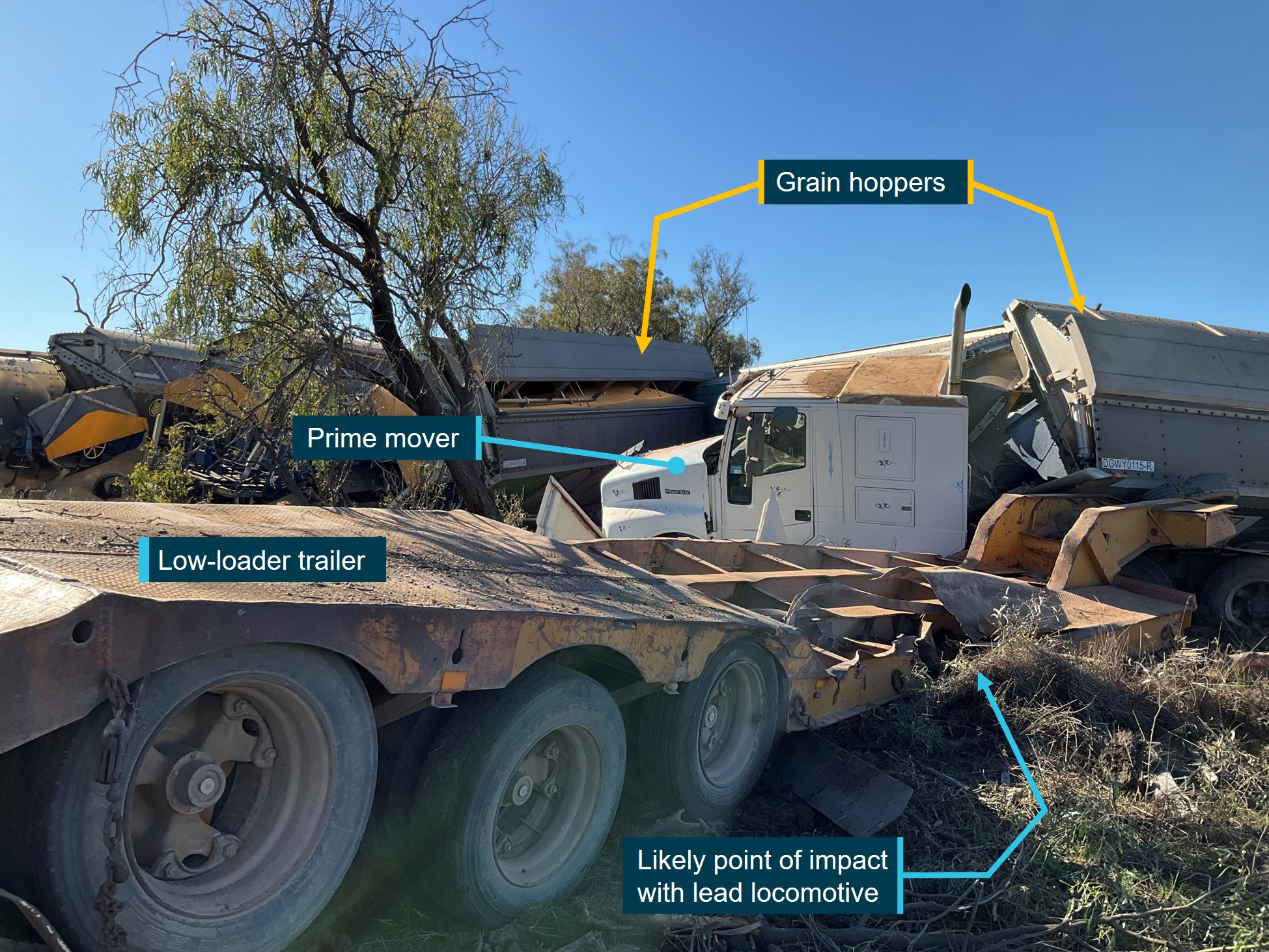
Figure 6: Grain hoppers, prime mover, and low-loader trailer post-collision

Lessons learnt

Passive controls cannot physically prevent vehicles from entering a crossing, and the onus is on road users to follow these controls. This makes passive level crossings particularly vulnerable to driver error (unintentional) or driver decisions (intentional), which can place road users at imminent risk of collision with rail traffic.

This incident also highlights, for truck drivers, the importance of completing preparatory checks and rectifying any problems which may be observed prior to moving their vehicle, as there is a significant risk of harm and damage when driving vehicles with mechanical issues. 

Unfamiliar territory in a noisy environment

Level crossing collision between passenger train and road vehicle, Wynnum West, Queensland, on 26 February 2021

A motorist was fatally injured in a collision with a passenger train at the Kianawah Road level crossing, near Lindum Station in Wynnum West, Queensland after they passed through a gap between the end of the lowered boom barrier and a median island.

On the afternoon of 26 February 2021, a Queensland Rail suburban express passenger train was approaching the Kianawah Road level crossing in the Brisbane suburb of Wynnum West, Queensland. The boom barriers were in the lowered position and other protection devices (flashing lights) were active at the level crossing.

At the same time, after stopping to give way to opposing road traffic at the intersection, immediately adjacent to the level crossing, a motor vehicle turned towards the crossing. It then continued through the level crossing, bypassing the lowered boom barrier, colliding with the train. The motor vehicle was destroyed, and the sole occupant was fatally injured. The only 2 occupants of the train, the driver and guard, were not injured.

Our investigation found that there was a 3.1 m gap between the end of the boom barrier and the median island, which meant that the barrier only partially blocked road traffic that approached the level crossing from Lindum Road. In this instance, it was very likely that the driver of the motor vehicle followed the turn line markings on the road surface, which directed them past the end of the lowered boom barrier onto the level crossing and into the path of the approaching train. Safety concerns raised by local road users and work undertaken by the Government also indicated that the road-rail interface at the Kianawah Road level crossing was complex and visually noisy from a road user’s perspective.

Queensland Rail had not been managing risk at level crossings in accordance with the requirements of its level crossing safety standard. In particular, the standard stated that public and pedestrian level crossings were to be assessed every 5 years or sooner. However, the Kianawah Road level crossing had not been assessed for 19 years. Some other level crossings with high instances of incidents and accidents had also not been assessed for 20 years.

It was also identified that, between 2016 and 2021, Queensland Rail had just one person qualified to assess all their public, pedestrian, private, maintenance, and construction level crossings, which numbered in the thousands. Of the 1,138 public level crossings that required assessment within the 5-year timeframe, just 52 were completed.

Further, Queensland Rail and the Brisbane City Council did not have a formal road-rail interface agreement in place at the time of the accident, although negotiations were ongoing. This was a missed opportunity to collectively identify any unique risks associated with the level crossing and manage and maintain those risks through an agreed process.

Following the accident at the Kianawah Road level crossing, Queensland Rail and the Brisbane City Council have formalised an interface agreement encompassing all level crossings where they have a shared responsibility. In addition, Queensland Rail:

  • Has installed a new boom barrier at the level crossing, compliant with the Australian Standard (1742.7), that fully protects road users when approaching the active crossing from Lindum Road. In addition, rectified a safety issue where the boom barrier did not fully comply with the requirements of the Australian Standard at 29 other level crossings within its jurisdiction.
  • Assessed the Kianawah Road level crossing in accordance with the Australian Level Crossing Assessment Model (ALCAM) to establish a current assessment risk score rating.
  • Has trained 4 internal staff to undertake ALCAM assessments and introduced a procurement process to engage a contract firm to update outstanding regional ALCAM assessments over the next 5 years.
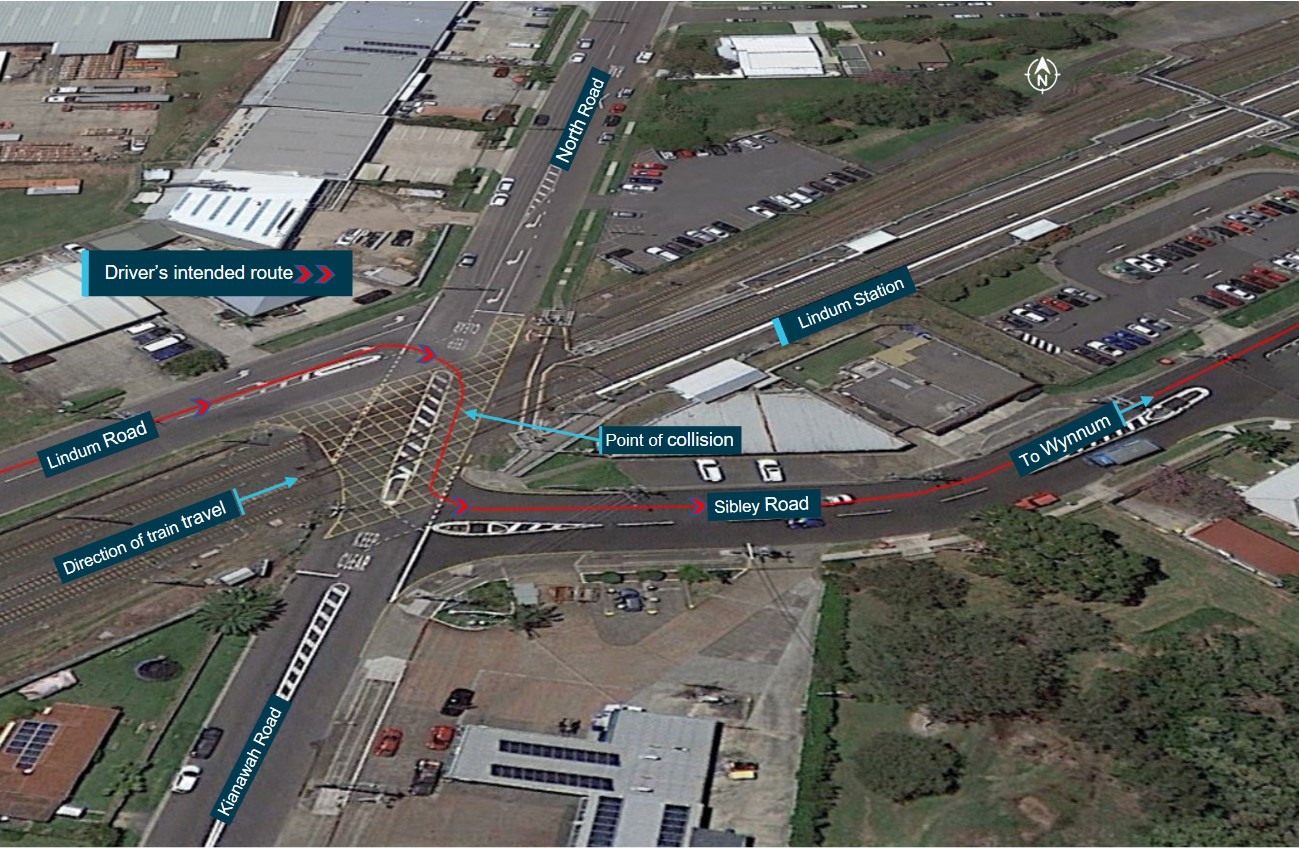
Aerial view of the level crossing at Wynnum West, Queensland

Lessons learnt

Level crossings are a complex environment and are well known for their high-risk consequences. While the ultimate preference is to avoid or remove level crossings, this is often very costly and not a practical solution. Therefore, it is important that road authorities and rail infrastructure managers collectively manage these risks. To achieve this, they should enter into an interface agreement as soon as possible to identify and manage hazards and risks at the road and rail interface, so far as is reasonably practicable.

Acute angles

Level crossing collision between truck and passenger train 8753, Phalps Road, Larpent, Victoria, on 13 July 2016

Sighting from road vehicles can be severely restricted at passively protected level crossings with an acute angle road-to-track interface.

On 13 July 2016, a Warrnambool-bound V/Line passenger train collided with a semi-trailer at the Phalps Road passive level crossing at Larpent, near Colac, Victoria.

When the truck initially stopped at the crossing, the train was more than 300 metres away. The truck commenced moving towards the track when the train was between 220 and 260 m from the crossing. Unaware of the train approaching beyond their line of sight, the truck driver entered the level crossing and heard the train’s horn shortly before the locomotive struck the truck’s semi-trailer. 

After impact, the train’s locomotive and all passenger cars derailed. The locomotive driver, train conductor, 18 passengers and the truck driver were injured. There were no fatalities. 

The investigation, conducted by Victoria's Chief Investigator, Transport Safety, on behalf of the ATSB, found the driver was unable to detect the approaching train on the left due to the restricted view from the level crossing’s acute road-to-rail angle and the composition of the truck’s passenger-side window.

The ability of a truck driver to see along a railway track to their left can be affected by in-cab obstructions. The Australian Design Standard for passively controlled level crossings accounts for this possibility by requiring a viewing angle of no more 110 degrees for a driver looking to their left from the straight-ahead direction. If this viewing angel is exceeded, passive level crossing controls should not be used.

The investigation found that for a vehicle stopped at the northern side of the Phalps Road level crossing, the viewing angle to achieve the required sighting distance was 116 degrees. The Phalps Road level crossing was subsequently upgraded to active protection controls in August 2016.
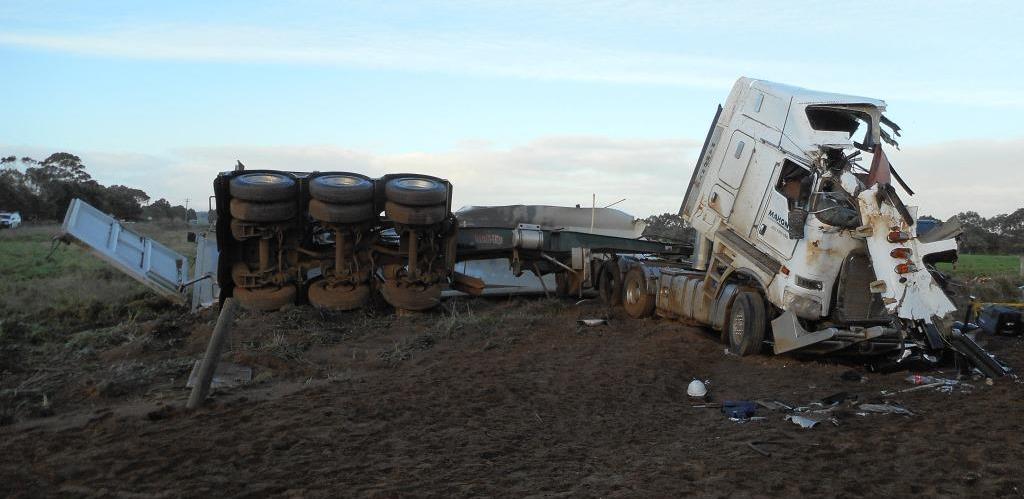
Truck smashed up

Lessons learnt

Rail infrastructure and road managers should ensure that risk assessment processes take account available risk controls for hazards stemming from poor sighting at acute-angle level crossings and actively pursue their implementation.

Road users should be particularly cautious at passively-controlled acute-angle level crossings where their vision to the left may be affected by the road vehicle cabin design.

Conclusion

Each year, people continue to lose their lives or are injured at Australia's level crossings causing significant social and economic impacts on individuals, communities and businesses. 

Record investment in rail and road infrastructure, combined with growing passenger traffic and freight demand, is continuing to increase interactions at level crossings.

Our investigations have identified there is a higher rate of collisions at passive level crossing, with a large proportion of these collisions involving heavy vehicles.

Passive controls cannot physically prevent vehicles from entering a crossing, and the onus is on road users to follow these controls. This makes passive level crossings particularly vulnerable to driver error (unintentional) or driver decisions (intentional), which can place road users at imminent risk of collision with rail traffic.

Further reading and resources

Railway Crossing Safety - TrackSAFE Foundation(Opens in a new tab/window)

Review of level crossing collisions involving trains and heavy road vehicles in Australia | ATSB

National Level Crossing Safety Strategy (Department of Transport and Main Roads)(Opens in a new tab/window)

Publication details

Publication type Safety Education Material
Publication mode Rail
Publication date 23/12/2024

Hazards at aviation accident sites

The first people to arrive at an aircraft accident site can render valuable assistance to minimise injury and loss of life, reduce property loss through damage and prevent the loss of clues and evidence that are vital to determining the reason for the accident.

Often, emergency services personnel (police, fire brigade and ambulance, and their Defence Force equivalents) are the first trained personnel to arrive at aircraft accident sites. This online guide (note: printed copies no longer available - PDF version ONLY) has been prepared by the Australian Transport Safety Bureau (ATSB) and the Defence Flight Safety Bureau (DFSB), formerly the Directorate of Defence Aviation and Air Force Safety (DDAAFS), to assist these personnel to:

  • understand the reporting requirements for military and civil aircraft accidents
  • have an awareness of hazards at an aircraft accident site
  • consider how to manage the various hazards
  • understand the requirements of the Transport Safety Investigation Act 2003 (TSI Act) and the Defence Aviation Safety Manual
  • manage and control the accident site to preserve essential evidence necessary for the ATSB or DFSB to conduct an effective investigation.

This online guide also features a 'what to do' checklist in its centre pages for easy reference. The checklist(Opens in a new tab/window) (146 KB) should help personnel undertake essential actions as safely as possible.

Role of first responders

There are three main components to the work of first responders to the scene of an aviation accident:

  1. Reporting the accident to the ATSB or DFSB.
  2. Coordination of the accident site including rescuing any survivors, managing fire and hazardous materials and ensuring that the site is secured.
  3. Protection of the aircraft wreckage and associated evidence so that an effective investigation can be conducted.

This online PDF guide assumes that first responders will apply their own expert training to deal with victims, manage hazards and control the site. It offers specific advice that may be helpful in identifying and managing the particular hazards and risks associated with an aircraft accident. It also contains important advice about preserving evidence at the site.

While there are mandatory requirements in the Transport Safety Investigation Act 2003 in regard to civil transport accidents, the guidance material contained in this document does not override specific policies or procedures developed by police, emergency services or other agencies, such as airport authorities.

How can I report?

CIVIL: All civil aircraft accidents must be reported to the ATSB via the toll free number: 1800 011 034.

MILITARY: Contact the DFSB Duty Officer on 02 6144 9199, or by other methods as detailed in this publication.

Guidelines for aerodrome operators

The required actions by an aerodrome operator in the event of an aviation accident are detailed here.

Publication details

Series number Edition 7 - June 2017
Publication type Safety Education Material
Publication mode Aviation
Publication date 26/06/2017
Review date 26/06/2017
Authors ATSB and DFSB
ISBN ISBN: 978-1-74251-318-8

Pilot incapacitation occurrences 2010–2014

Why the ATSB did this research

Occasionally pilots become incapacitated during flight. Incapacitations can arise from different reasons. They include the development of an acute medical condition, changes in environmental conditions during the flight, or the effects of a pre-existing medical condition. The effect of incapacitation on a pilot can be restricting their flight duties for the remainder of the flight, or for single-pilot operations, a collision with terrain.

This research report documents pilot incapacitation occurrences in high-capacity air transport, low-capacity air transport, and general aviation to help educate industry about the causes and risks associated with inflight pilot incapacitation.

What the ATSB found

In the past 5 years, there have been 23 pilot incapacitation occurrences reported per year on average. Nearly 75 per cent of the incapacitation occurrences happened in high-capacity air transport operations (about 1 in every 34,000 flights), with the main cause being gastrointestinal illness, followed by laser strikes. In the majority of the occurrences reported, the incapacitation was severe enough for the pilot to be removed from duty for the remainder of the flight. With multi-pilot crews in high-capacity operations, these occurrences usually had minimal effect on the flight.

Low-capacity air transport and general aviation had fewer occurrences with a wider variation of causes of incapacitation. These ranged from environmental causes, such as hypoxia, to medical conditions, such as heart attack. Furthermore, 70 per cent of pilot incapacitation occurrences in general aviation had an effect on flight operations, namely return to departure aerodrome or collision with terrain.

Safety message

This report highlights that pilot incapacitation can occur in any operation type, albeit rarely. In high-capacity air transport operations, the practice of ensuring all pilots on the same flight eat different meals prior to and during the flight has been an effective defence preventing all pilots on the same flight becoming incapacitated at the same time. Providing pilots with training in dealing with incapacitation events has been effective for when these events do occur. Pilots are also encouraged to report laser strikes to police and the Office of Transport Security. In low-capacity air transport operations, providing emergency training to non-flight crew, such as aeromedical nurses, is an important defence in case of pilot incapacitation. Finally, in general aviation, pilots are reminded to assess their fitness prior to flight. Assessment of fitness includes being aware of any illness or external pressures they may be experiencing.

Publication details

Investigation number AR-2015-096
Publication type Safety Education Material
Publication mode Aviation
Publication date 18/02/2016

Managing bird strike risk at Australian airports

The Australian Airports Association (AAA) commissioned preparation of this Airport Practice Note to provide aerodrome operators with species information fact sheets to assist them to manage the wildlife hazards at their aerodrome. The species information fact sheets were originally published in June 2004 by the Australian Transport Safety Bureau (ATSB) as Bird Information Fact Sheets.

The AAA was prompted to revise and add additional fact sheets for supplementary species by the release of the ATSB Australian aviation wildlife strike statistics 2004 – 2013 report. This report listed Kites and Bat/ Flying Foxes as having the largest overall number of strikes in the 2012-2013 reporting period representing a demonstrated risk to safe operations. As a result of this report the AAA partnered with Avisure in consultation with the ATSB to update the existing fact sheets and create new species information fact sheets focused on managing the strike risk of these species at Australian airports.

These new and revised fact sheets provide airport members with useful information and data regarding common wildlife species around Australian aerodromes and how best to manage these animals. The up-to-date suite of species information fact sheets will provide aerodrome operators with access to data, information and management techniques for the species posing the greatest risk to safe aerodrome operations in Australia. It is hoped that this document will be a worthwhile and useful asset to aerodrome operators across Australia and the AAA would like to acknowledge the contribution of Avisure and the ATSB in the development of this project.

Publication details

Publication type Safety Education Material
Publication mode Aviation
Publication date 25/09/2015
Subject matter Bird Strikes

Review of Rail Safety 1999

In April 1999 the Australian Transport Council (ATC) agreed to the establishment of an independent review of rail safety arrangements in Australia, focusing particularly on the interstate system. A Standing Committee on Transport (SCOT) steering committee, comprising industry and government representatives, developed the review brief and supervised the conduct of the review by consultants Booz-Allen & Hamilton. The report was finalised in September 1999.

ATC Ministers considered the report at their meeting of 12 November 1999, and agreed that:

  • the report's main recommendation of two new statutory bodies for interstate and intrastate rail safety regulation and investigation not be progressed; and
  • the ATSB develop a national rail safety statistical database to better identify safety trends in the rail industry.

Publication details

Publication type Safety Education Material
Publication mode Rail
Publication date 20/10/1999
Subject matter Rail Crossing

Improving the odds: Trends in fatal and non-fatal accidents in private flying operations

Forty-four per cent of all accidents and over half of fatal accidents between 1999 and 2008 were attributed to private operations. These figures far surpassed the proportions for any other flying category, even though private operations contributed to less than 15 per cent of the hours flown in that decade.

This report aims to identify the factors contributing to fatal accidents in private operations and how these factors differed from non-fatal accidents. This was achieved through exploring common occurrence types (what happened), contributing factors (why the accident happened), contributing pilot errors, and aircraft and pilot characteristics.

Three occurrence types accounted for the majority of fatal accidents: collision with terrain (90%); loss of control (44%); and wirestrikes (12%). When all incidents and accidents are taken into account, the likelihood of being killed was about 36 per cent for a collision with terrain occurrence, 30 per cent for loss of control occurrences, and about 50 per cent for a wirestrike. For non-fatal accidents, there was greater variability in the common occurrence types - forced landings, hard landings, problems with the landing gear, and total power loss/ engine failure were also common.

Problems with pilots' assessing and planning were identified as contributing factors in about half of fatal accidents in private operations, and about a quarter involved problems with aircraft handling. Other contributing factors associated with fatal accidents to a smaller extent were visibility, turbulence, pilot motivation and attitude, spatial disorientation, and monitoring and checking. Non-fatal accidents were just as likely to involve aircraft handling problems, but had fewer contributing factors than fatal accidents.

Action errors and decision errors were both common to fatal accidents. Violations, while less frequently found, were mostly associated with fatal accidents.

In light of the contributing factors that were associated with fatal accidents in private operations, the report provides advice to pilots for improving the odds of a safe flight. Pilots are encouraged to make decisions before the flight, continually assess the flight conditions (particularly weather conditions), evaluate the effectiveness of their plans, set personal minimums, assess their fitness to fly, set passenger expectations by making safety the primary goal, and to seek local knowledge of the route and destination as part of their pre-flight planning. Also, becoming familiar with the aircraft's systems, controls and limitations may alleviate poor aircraft handling during non-normal flight conditions. Finally, pilots need to be vigilant about following rules and regulations that are in place - they are there to trap errors made before and during flight. Violating these regulations only removes these 'safety buffers'.

Publication details

Publication number Jun10/ATSB94
Investigation number AR-2008-045
Publication type Safety Education Material
Publication mode Aviation
Publication date 23/06/2010
ISBN ISBN 978-1-74251-063-7
Subject matter Aviation statistics

Perceived threats, errors and safety in aerial work and low-capacity air transport operations

Although several studies have reported the common threats and errors identified in line operations safety audits (LOSAs) of high-capacity regular public transport (RPT) operations (Klinect, Wilhelm & Helmreich, 1999; Veilette, 2005; Thomas, 2004), there is little information on the types of threats and errors faced by pilots in other parts of the aviation industry.

This report catalogues the most common threats to operations, and errors made by pilots, in aerial work and low-capacity air transport operations, as perceived by flight instructors, check-and-training pilots, chief pilots and line pilots. The aim of this report is to provide a snapshot of these perceived threats and errors, along with ratings of safety deficiencies, and to offer some suggestions in how to deal with threats and errors.

Publication details

Series number AR-2006-156
Publication type Safety Education Material
Publication mode Aviation
Publication date 16/12/2009

Safety Bulletin 01 - Ships and Fishing Vessels

At about 0110, on 21 June 2000, a fisherman from Iluka, New South Wales, was killed when his 14 m trawler was run down and sunk by a 181 m long, 42 717 tonne deadweight bulk carrier.

Publication details

Publication type Safety Education Material
Publication mode Marine
Publication date 01/06/2004
Review date 01/06/2009
Subject matter Maritime safety bulletin

Rail Accident Fatalities: Australia compared with other OECD countries, 1980-99

(a report produced and published by the Australian Transport Safety Bureau, Canberra, Feb 2004)

The purpose of this publication is to examine trends in the numbers of railway accident deaths in Australia in the 1980s and 1990s in the light of comparable data from other countries that are members of the Organisation for Economic Cooperation and Development (OECD). Overall, the data indicate that in the period from 1980 to 1999 Australia's rail safety improvement compared favourably with that of other OECD countries and performance reached OECD median levels in the 1990s.

Data for this publication have been obtained from the World Health Organisation's 'Mortality Database' but responsibility for the analyses presented here rests solely with the ATSB.

The OECD was formed in 1961 to promote economic cooperation and development among its members. Current member states are Australia, Austria, Belgium, Canada, Czech Republic, Denmark, Finland, France, Germany, Greece, Hungary, Iceland, Ireland, Italy, Japan, South Korea, Luxembourg, Mexico, Netherlands, New Zealand, Norway, Poland, Portugal, Slovakia, Spain, Sweden, Switzerland, Turkey, the United Kingdom and the United States.

In addition to those on the ATSB web site under Rail Safety / Statistics, other publications by the ATSB on related topics include:

  • Transport accident fatalities: Australia compared with other OECD countries, 1980-1999
  • Cross-modal safety comparisons

Publication details

Publication type Safety Education Material
Publication mode Rail
Publication date 01/02/2004

Safety Bulletin 02 - Ships and Fishing Vessels, an open letter to all Masters and bridge watch-keepers

The safety of fishermen and people in small boats is a continuing concern in terms of safety at sea. In the course of your voyages, you encounter many types of fishing operations from dug out canoes, with sometimes a candle or oil lantern, to large fishing/factory ships. In and around the Australian coast fishing vessels tend to be less than 20 m in length with a crew of two or three. They often exhibit very bright working lights, though these should be shielded in order to ensure that the fishing lights required by the Colregs can be seen clearly.

Publication details

Publication number 01
Publication type Safety Education Material
Publication mode Marine
Publication date 01/06/2004
Subject matter Maritime safety bulletin