Wirestrike

Wirestrike and collision with terrain involving Robinson R22, near Charleville, Queensland, on 14 May 2019

Brief

Occurrence Briefs are concise reports that detail the facts surrounding a transport safety occurrence, as received in the initial notification and any follow-up enquiries. They provide an opportunity to share safety messages in the absence of an investigation.

What happened

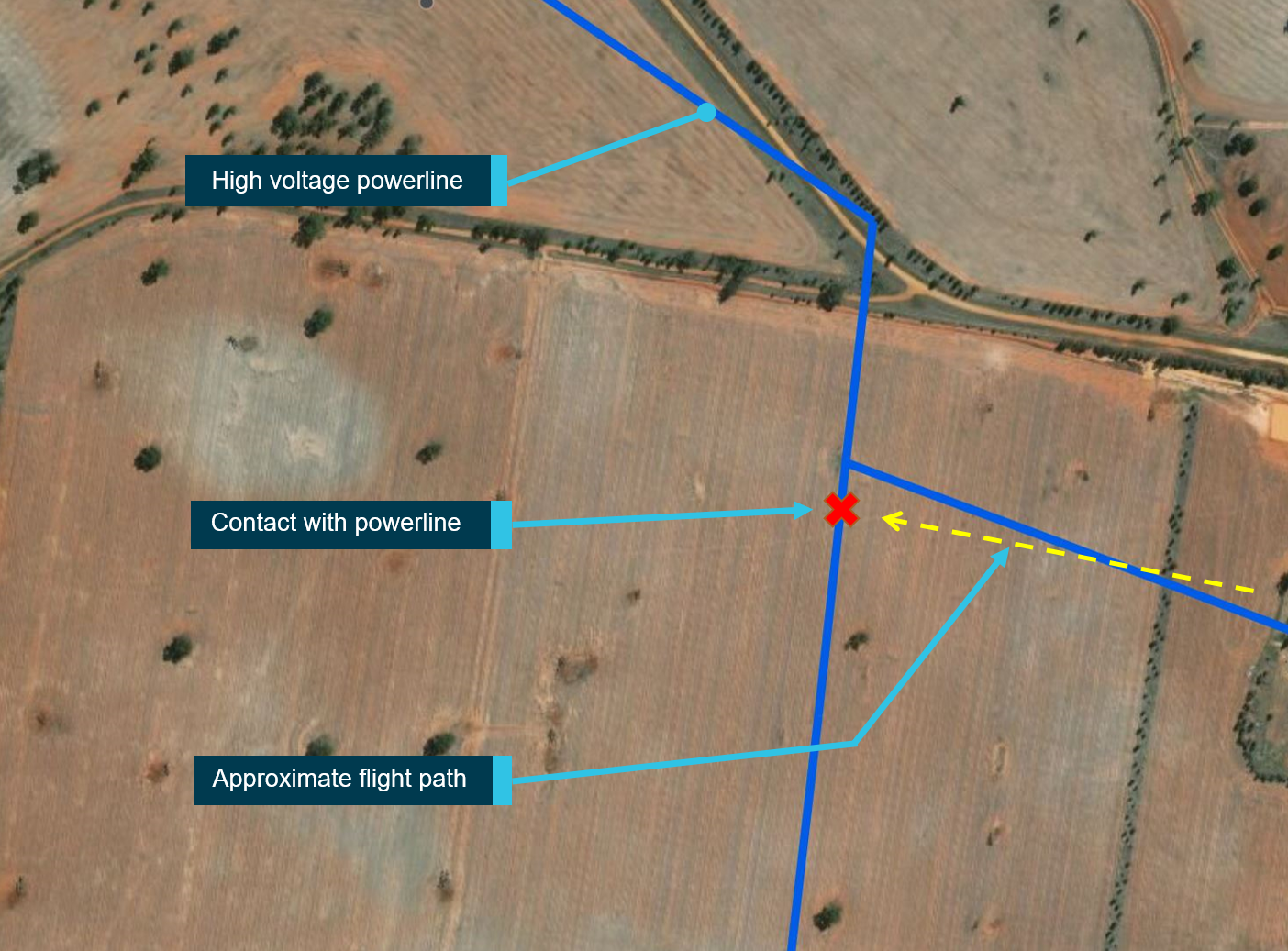
On the morning of 14 May 2019, a Robinson R22 helicopter was on descent into a property near Charleville, Queensland to meet the property owner prior to conducting mustering operations. The property owner requested that the pilot land the helicopter in a particular area to the south of the owner’s house.

During descent, the pilot initially conducted an orbit of the property and identified multiple powerlines near the house and shed area. The pilot confirmed with the property owner that there were no powerlines in the vicinity of the landing spot. As the helicopter was coming in to land, the tail contacted a powerline running north to south. The pilot reported that he did not see the powerline as it was unexpected and obscured by a large tree.

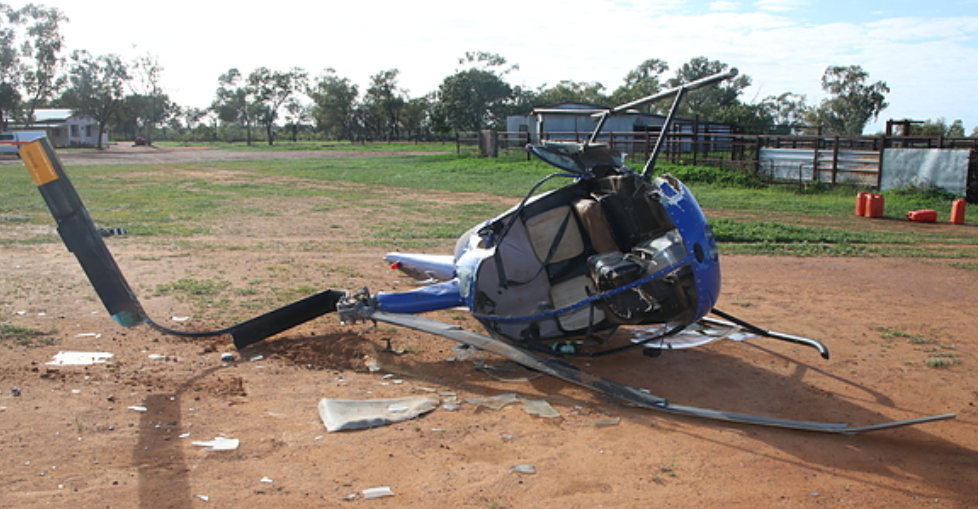
The helicopter subsequently collided with terrain and was substantially damaged. The pilot sustained minor injuries.

Figure 1: Damage to helicopter

Figure 1: Damage to helicopter, Robinson R22, near Charleville, Qld. Source: Queensland Police

Source: Queensland Police

Safety message

Wires can be difficult to sight and are often in the most unexpected places in rural areas. The ATSB research article, Avoidable Accidents No. 1 – Low level flying provides information on wire hazards associated with flight below 500 ft.

In this instance, the pilot requested pre-arrival information specifically regarding powerlines on the property and was provided with incorrect information.

Both pilots and property owners are reminded that they can always contact power companies to have wires marked if they could present a hazard to low-level operations.

About this report

Decisions regarding whether to conduct an investigation, and the scope of an investigation, are based on many factors, including the level of safety benefit likely to be obtained from an investigation. For this occurrence, no investigation has been conducted and the ATSB did not verify the accuracy of the information. A brief description has been written using information supplied in the notification and any follow-up information in order to produce a short summary report, and allow for greater industry awareness of potential safety issues and possible safety actions.

Occurrence summary

Mode of transport Aviation
Occurrence ID AB-2019-018
Occurrence date 14/05/2019
Location Near Charleville
State Queensland
Occurrence class Accident
Aviation occurrence category Wirestrike
Highest injury level Minor
Brief release date 17/06/2019

Aircraft details

Manufacturer Robinson Helicopter Co
Model R22 Beta
Sector Helicopter
Operation type Private
Destination near Charleville, Queensland
Damage Substantial

Wirestrike involving Kavanagh Balloons E-300, Billinudgel, New South Wales, on 31 March 2018

Brief

Occurrence Briefs are concise reports that detail the facts surrounding a transport safety occurrence, as received in the initial notification and any follow-up enquiries. They provide an opportunity to share safety messages in the absence of an investigation.

What happened

On 31 March 2018 at 0745 Eastern Daylight-saving Time, the pilot of a Kavanagh E-300 balloon was on final approach to land near Billinudgel, New South Wales with a pilot and 11 passengers on board.

As it was a new landing area, the pilot had asked the ground crew following the balloon to check the landing site and adjacent road and report any powerlines. The ground crew reported none and the pilot directed his attention to managing the landing. Neither the pilot nor passengers had identified any powerlines on the approach path to the landing site.

Just before landing, at 3-4 kt and 10 ft above ground level, the pilot saw two wires in front of the balloon, about a third of the way up the envelope. The pilot immediately pulled the red rip line to deflate the balloon, but the envelope struck the powerlines, which snapped and fell to the ground. The powerlines short-circuited five times and then stopped sparking.

No one was injured, and a subsequent inspection found no tears, burns or abrasion marks on the balloon envelope. The owner of the property was advised, and the ground crew contacted the power supplier to report the incident.

Pilot comment

The powerlines had only become visible when seen against the sky. On approach, against the dark green surface of the landing site, neither the pilot nor passengers had seen the wires.

Once the ground crew had advised there were no powerlines on the approach path to the landing site the pilot had concentrated on landing the balloon, rather than looking for wires.

Safety action

As a result of this occurrence, the balloon’s operator has advised the ATSB that they have spoken to the ground crew about the importance of identifying powerlines adjacent to landing sites and communicating that information to the pilot. The operator’s other pilots and ground crew received a comprehensive briefing on the incident.

Safety message

The Australian Ballooning Federation’s Pilot Circular No 18, dated February 2012, emphasised the importance of avoidance and made the following points:

  • Pre-flight planning: Critical for ballooning, maps, charts and information must be current. Consult council staff, locals and farmers, topographic map in hand, for precise location of powerlines and those not on the maps.
  • Complacency: Familiarity and repetition regarding operation and location can lead to complacency. Be aware of this and hence be vigilant. Data shows the worst accidents are often made by the most experienced and skilled operators.
  • Crew/passenger briefing: Stress to crew and passengers pre-take-off and before approach: (1) you are only human and may not see threatening powerlines, and (2) to feel free to point them out to you.
  • Reduced visibility: Sun, mist, haze, contrast. Be vigilant and conservative under these conditions.
  • See and Avoid scanning technique: Avoid focusing too long on close objects or scanning quickly left and right. Focus at a distance and move attention slowly over small arcs pausing briefly for a few seconds each time to closely examine the area.
  • Country flying: Expect lines to be along roads with feed offs to farmhouses. Often, single wires can be identified only by first locating their poles, so look for them first and assume lines run between them. They also cross paddocks to connect to other facilities. In this case be aware poles are often placed among trees making them difficult to see.
  • Minimum safety altitude: Most power line strikes involve wires which are usually no more than 15 metres (50 feet) above ground level. Except for take-off and landing, staying above this height when flying in unfamiliar or risky areas is great insurance against hitting a wire.
  • Distraction on approach: Checks, fuel, pilot lights, passengers, stock, obstacles, stress, tunnelling. All are Human Factors aspects that must be recognised and managed early such that full attention is then available for approach and landing.

The Civil Aviation Safety Authority web site includes a list of wire strike resources that specifically address this hazard.

About this report

Decisions regarding whether to conduct an investigation, and the scope of an investigation, are based on many factors, including the level of safety benefit likely to be obtained from an investigation. For this occurrence, no investigation has been conducted and the ATSB did not verify the accuracy of the information. A brief description has been written using information supplied in the notification and any follow-up information in order to produce a short summary report, and allow for greater industry awareness of potential safety issues and possible safety actions.

Occurrence summary

Mode of transport Aviation
Occurrence ID AB-2018-045
Occurrence date 31/03/2018
Location Billinudgel
State New South Wales
Occurrence class Incident
Aviation occurrence category Wirestrike
Highest injury level None
Brief release date 02/11/2018

Aircraft details

Manufacturer Kavanagh Balloons
Model E-300
Sector Balloon
Operation type Ballooning
Destination Billinudgel, NSW
Damage Nil

Wirestrike involving Robinson R44, Whitton, New South Wales, on 24 March 2018

Brief

Occurrence Briefs are concise reports that detail the facts surrounding a transport safety occurrence, as received in the initial notification and any follow-up enquiries. They provide an opportunity to share safety messages in the absence of an investigation.

What happened

On the morning of 24 March 2018, the pilot of a Robinson R44 was conducting aerial application operations on a crop near Whitton township, New South Wales (NSW). The pilot was aware of a powerline in the vicinity of the paddock and was verbally calling ‘wire at the end’ on each run towards the powerline in order to heighten his awareness of the obstacle and focus on its location.

After about ten minutes of operation over the crop at about 40 ft above ground level, the pilot commenced a run towards the powerline. As he did so, he noticed an unusual obstacle protruding about half a metre above the crop canopy and 20 m to the right of the helicopter’s track. The pilot focussed his attention on the obstacle, momentarily interrupting the verbal annunciation of the position of the powerline at the end of the spray run.

The obstacle was a water moisture probe located approximately 100 m from the end of the spray run. Although it posed no immediate danger to the operations of the helicopter, the pilot was distracted by its presence and watched it as it passed the aircraft, which was enough to interrupt his situational awareness.

As the pilot turned his focus back to the front of the aircraft at the end of the spray run and pitched the helicopter up to commence a turn, the aircraft struck the wire. After contact, the helicopter was able to proceed straight ahead for approximately 100 m with the wire dragging behind it before contacting the ground and rolling over.

The pilot exited the aircraft and sustained minor injuries in the accident. The helicopter was substantially damaged.

Figure 1: Helicopter final resting site

Figure 1: Helicopter final resting site

Source: Aircraft operator

Safety action

As a result of this occurrence, the operator has advised the ATSB that they are taking the following safety actions:

  • requesting customers to detail any potential obstacles prior to operation
  • conducting a site inspection prior to commencing the operation
  • debriefing and discussing with pilots the use of unbroken situational awareness techniques to enhance awareness of obstacles and distractions.

Safety message

This accident highlights that distractions can arise unexpectedly during any phase of flight and demonstrates the dangers of such, especially in the low-level environment.

The ATSB research report B2004/0324, Dangerous distraction: An examination of accidents and incidents involving pilot distraction in Australia between 1997 and 2004, is available from the ATSB website.

The ATSB has also released, in association with the Aerial Agriculture Association of Australia, an educational booklet, Wirestrikes involving known wires: A manageable aerial agriculture hazard (AR-2011-028). This booklet contains numerous wirestrike accidents and the lessons learnt from them. It also highlights the role of landholders and utility owners in contributing to safe operations. This includes installing markers on wires, particularly where regular low-level flying takes place.

About this report

Decisions regarding whether to conduct an investigation, and the scope of an investigation, are based on many factors, including the level of safety benefit likely to be obtained from an investigation. For this occurrence, no investigation has been conducted and the ATSB did not verify the accuracy of the information. A brief description has been written using information supplied in the notification and any follow-up information in order to produce a short summary report, and allow for greater industry awareness of potential safety issues and possible safety actions.

Occurrence summary

Mode of transport Aviation
Occurrence ID AB-2018-041
Occurrence date 24/03/2018
Location 2.6 km NE Whitton
State New South Wales
Occurrence class Accident
Aviation occurrence category Wirestrike
Highest injury level Minor
Brief release date 22/06/2018

Aircraft details

Manufacturer Robinson Helicopter Co
Model R44
Sector Helicopter
Operation type Aerial Work
Damage Substantial

Wirestrike involving Bell Helicopter 206L, Pappinbarra, New South Wales, on 19 March 2018

Brief

Occurrence Briefs are concise reports that detail the facts surrounding a transport safety occurrence, as received in the initial notification and any follow-up enquiries. They provide an opportunity to share safety messages in the absence of an investigation.

What happened

On 19 March 2018, at 1340 Eastern Daylight-saving Time (EDT), a Bell Helicopter 206L conducting an aerial weed survey struck an 11 kV powerline.

On board the helicopter was a pilot and three passengers. The scope of work was to track small creeks and rivers in search of noxious weeds. The pilot met the passengers earlier that day at a local airport. Prior to the flight, the crew conducted a job hazard analysis and discussed proposed routes for identification of anticipated hazards. The pilot also gave a detailed passenger brief. During the brief, one passenger was instructed to assist the pilot in identifying hazards such as wires.

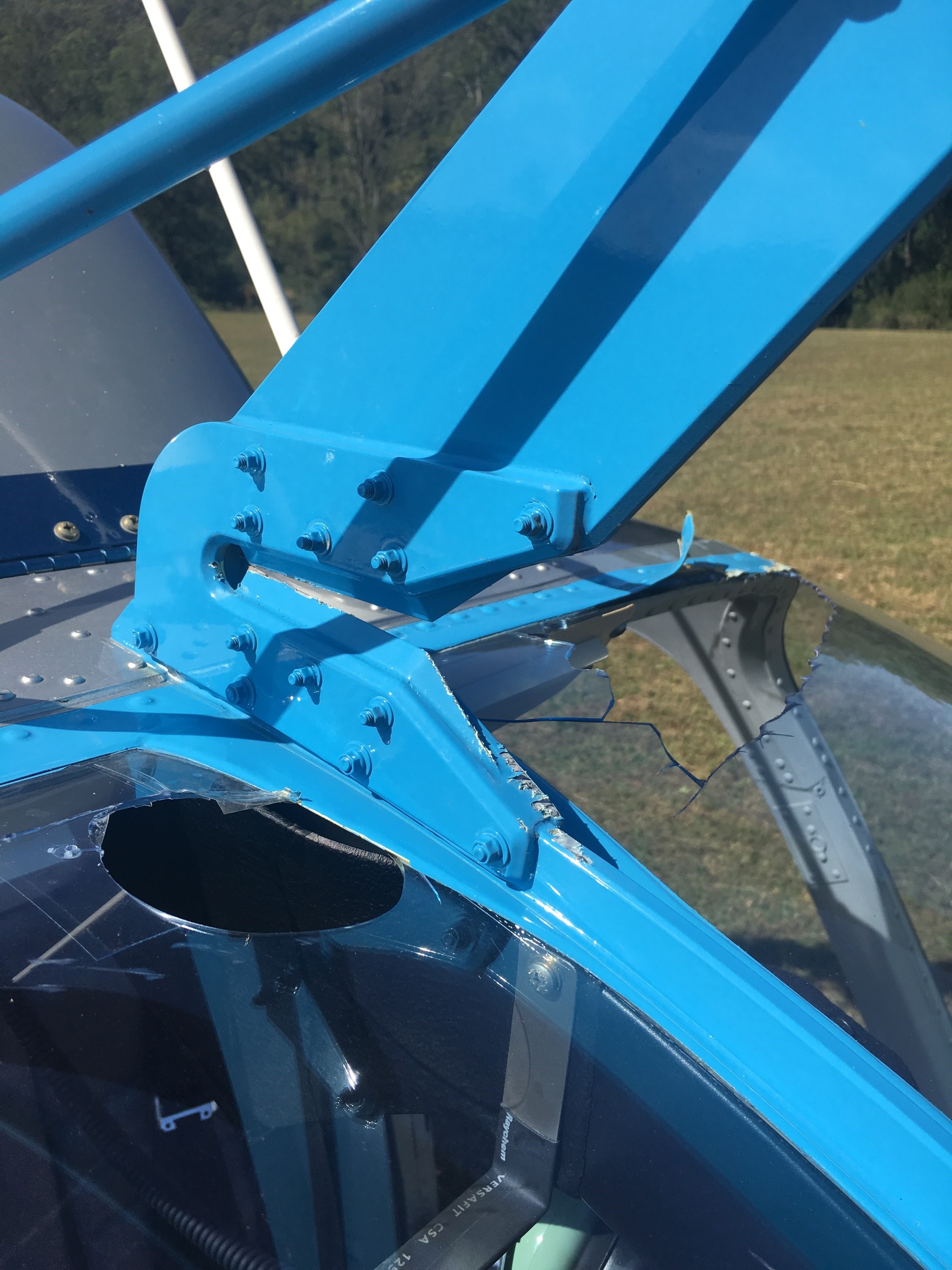
Approximately 2 hours 10 minutes into the second flight of the day, at a height of 200 ft, the aircraft struck an unknown and unseen 11 kV powerline. The powerline had a span of 650 m. In addition to the long bay length, trees on one side and a building on the other obscured the poles from sight. The span also ran perpendicular to the main flow of powerlines that ran along the valley.

The powerline was severed by the aircraft’s wire strike protection system (WSPS). The pilot announced the emergency to the passengers and immediately landed the helicopter in a paddock below. The time frame of the incident prevented the pilot from making an external emergency transmission.

Upon landing, the pilot assessed the passengers and found that one had sustained minor injuries. The pilot and one of the passengers walked to a nearby farmhouse, called emergency services and reported the event to the aircraft operator. Emergency services attended the scene 50 minutes later.

Figure 1: Close up of WSPS showing witness marks from wirestrike

Figure 1: Close up of WSPS showing witness marks from wirestrike. Source: Operator

Source: Operator

Safety message

It is near impossible for the human eye to detect a thin wire at the distance needed to avoid it in flight. For this reason, pilots often depend on sighting and reading the poles and hardware over which the wire is strung. There are also limits to the field of view of the human eye, meaning a constant scan is required to identify poles. A bay length of 650 m with obscured poles leaves scarce opportunity to identify the hazard.

In aerial survey and spotting work, a pilot must make a trade-off between flying as high as possible to avoid hazards and flying low enough to allow the observers the best opportunity to successfully identify targets. Survey flight will often be below 500 ft. Because wires are so difficult to detect, their presence must be assumed at all times. All helicopter pilots are encouraged to attend a course in wire hazards; these courses teach techniques such as self-briefing, “I can’t see the wires yet” to help maintain a mindset of precaution.

The WSPS served a vital function in protecting the aircraft following the wirestrike. Though effectiveness requires contacting the wire at a suitable angle and airspeed which may not be the case in all low-level work, WSPS should be considered essential equipment in operations below 500 ft.

The pilot was able to land the helicopter immediately in an open paddock, delivering the helicopter to a safe place. When flying at low level, choosing a flight path to maximise availability of suitable forced landing areas is another vital element of protection should the aircraft experience an adverse incident.

ATSB Report Wire-strike Accidents in General Aviation: Data Analysis 1994 to 2004 and the ATSB’s booklet Avoidable Accidents No. 2 - Wirestrikes involving known wires: A manageable aerial agriculture hazard provide further information and guidance.

About this report

Decisions regarding whether to conduct an investigation, and the scope of an investigation, are based on many factors, including the level of safety benefit likely to be obtained from an investigation. For this occurrence, no investigation has been conducted and the ATSB did not verify the accuracy of the information. A brief description has been written using information supplied in the notification and any follow-up information in order to produce a short summary report, and allow for greater industry awareness of potential safety issues and possible safety actions.

Occurrence summary

Mode of transport Aviation
Occurrence ID AB-2018-039
Occurrence date 19/03/2018
Location Pappinbarra
State New South Wales
Occurrence class Accident
Aviation occurrence category Wirestrike
Highest injury level Minor
Brief release date 05/06/2018

Aircraft details

Manufacturer Bell Helicopter Co
Model 206L-3
Sector Helicopter
Operation type Aerial Work
Damage Minor

Loose article leading to wirestrike involving Evektor Aerotechnik Sportstar Plus, 19 km south of Naracoorte Airport, South Australia, on 7 March 2018

Brief

Occurrence Briefs are concise reports that detail the facts surrounding a transport safety occurrence, as received in the initial notification and any follow-up enquiries. They provide an opportunity to share safety messages in the absence of an investigation.

What happened

On 7 March 2018, at about 0810 Central Daylight-savings Time (CDT), an Evektor Sportstar Plus departed Naracoorte on a private flight to Mount Gambier, South Australia (SA). During the cruise at approximately 600 feet above ground level, 21 kilometres south of Naracoorte, the pilot noticed cattle in a paddock on his flight path and banked right to avoid overflying the cattle. During the manoeuver, the pilot’s flight bag fell from the passenger seat and became lodged between the seat and the control column, causing an abrupt pitch down.

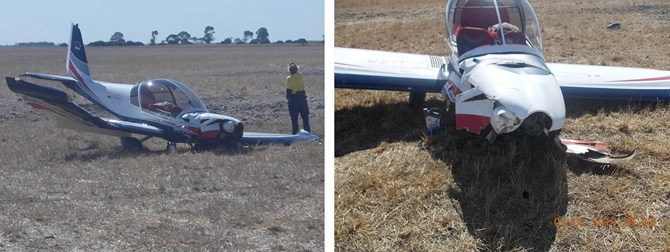
The pilot tried to extricate the bag as the aircraft rapidly descended, but the aircraft struck a powerline and collided with terrain. As he exited the aircraft, the pilot stepped on the downed but still live powerline, causing burns to his foot.

The aircraft was extensively damaged, and the pilot suffered injuries to the knee, shin and foot.

Figure 1: Evektor Sportstar Plus damage

ab2018031_fig_1.jpg

Source: South Australia Police

Safety message

Even a planned routine flight in good flying conditions can encounter unexpected hazards at any time. The cockpit should always be arranged to minimise the hazard of loose articles, regardless of the type of flight expected.

Unrestrained items in the cockpit increase the risk of both flight control interference during normal flight and injury to occupants during an accident. Pilots should take care to ensure that all items and cargo are adequately restrained to prevent movement during flight and improve survivability in the event of an accident.

About this report

Decisions regarding whether to conduct an investigation, and the scope of an investigation, are based on many factors, including the level of safety benefit likely to be obtained from an investigation. For this occurrence, no investigation has been conducted and the ATSB did not verify the accuracy of the information. A brief description has been written using information supplied in the notification and any follow-up information in order to produce a short summary report, and allow for greater industry awareness of potential safety issues and possible safety actions.

Occurrence summary

Mode of transport Aviation
Occurrence ID AB-2018-031
Occurrence date 07/03/2018
Location 19 km S of Naracoorte
State South Australia
Occurrence class Accident
Aviation occurrence category Wirestrike
Highest injury level Serious
Brief release date 12/04/2018

Aircraft details

Manufacturer Evektor Aerotechnik
Model Sportstar Plus
Sector Piston
Operation type General Aviation
Damage Destroyed