Turbulence/windshear/microburst

Turbulence/windshear/microburst involving a British Aerospace PLC 3107, VH-JSW, Perth, Western Australia, on 31 March 1993

Summary

The aircraft was conducting an instrument approach to runway 21 when a Boeing 767 was cleared for take-off from runway 21. The Boeing had just become airborne as the landing aircraft crossed the runway threshold. At a height of about 20 feet the landing aircraft encountered severe turbulence. The most likely source of the turbulence was the jet efflux of the departing Boeing 767 (Thrust Stream Turbulence), despite the distance between both aircraft exceeding the separation standards for an aircraft landing behind a departing aircraft.

The turbulence was reported as being so severe that both pilots in the landing aircraft were occupied in keeping the aircraft upright.

Safety Action

Following this occurrence the Bureau reviewed similar local and overseas reports. As a result of the review the Bureau recommended to the Civil Aviation Authority that they:

1. review the Aeronautical Information Publication (AIP) with a view to defining a wake turbulence separation standard for medium category aircraft following medium category aircraft on approach.

2. review the AIP and the Manual of Air Traffic Services with a view to clearly defining separation standards with respect to "Thrust Stream Turbulence".

3. assess the need for special or re-classification of Boeing 757 aircraft for the purpose of wake turbulence separation standards.

Occurrence summary

Investigation number 199300884
Occurrence date 31/03/1993
Location Perth
State Western Australia
Report release date 28/02/1994
Report status Final
Investigation type Occurrence Investigation
Investigation status Completed
Mode of transport Aviation
Aviation occurrence category Turbulence/windshear/microburst
Occurrence class Incident

Aircraft details

Manufacturer British Aerospace
Model 3107
Registration VH-JSW
Sector Turboprop
Operation type Air Transport High Capacity
Departure point Geraldton WA
Destination Perth WA
Damage Nil

Wake turbulence event involving a Bombardier Dash 8, VH-QOY at Sydney Airport, NSW on 7 May 2015

Discontinued

Section 21 (2) of the Transport Safety Investigation Act 2003 (TSI Act) empowers the Australian Transport Safety Bureau (ATSB) to discontinue an investigation into a transport safety matter at any time. Section 21 (3) of the TSI Act requires the ATSB to publish a statement setting out the reasons for discontinuing an investigation.

_______________

On 14 May 2015, the ATSB commenced an investigation into a reported wake turbulence event involving a Bombardier Dash 8, VH-QOY and operated by QantasLink at Sydney Airport, New South Wales, on 7 May 2015.

During runway 34 parallel runway operations at Sydney Airport, the Dash 8 aircraft on approach reportedly encountered wake turbulence from a preceding A330 aircraft. The Dash 8 aircraft commenced  uncommanded pitch and roll movements prior to being stabilised by the crew. A review of the flight data indicated that the bank angle was less than initially reported by the crew. No alerts or warnings were triggered in the aircraft (the bank angle did not exceed 30 degrees). As per standard operating procedures the crew conducted a go-around.

The ATSB did not identify any organisational or systemic issues that contributed to the incident and assessed that no safety issues would be identified through further investigation. On that basis, the ATSB has decided to discontinue its investigation.

Occurrence summary

Investigation number AO-2015-047
Occurrence date 07/05/2015
Location Sydney Airport
State New South Wales
Report release date 07/07/2015
Report status Discontinued
Investigation level Short
Investigation type Occurrence Investigation
Investigation status Discontinued
Mode of transport Aviation
Aviation occurrence category Turbulence/windshear/microburst
Occurrence class Incident
Highest injury level None

Aircraft details

Manufacturer Bombardier Inc
Model DHC-8-402
Registration VH-QOY
Serial number 4288
Aircraft operator Sunstate Airlines
Sector Turboprop
Operation type Air Transport High Capacity
Departure point Coffs Harbour, NSW
Destination Sydney, NSW
Damage Nil

Turbulence/windshear/microburst involving an American Blimp Corporation A-60+, VH-ZIC, Essendon Aerodrome, Victoria, on 28 September 1998

Summary

The airship was tasked to fly at night over the city of Melbourne to broadcast a live link to a TV variety show. The pilot telephoned the Bureau of Meteorology aviation forecasters twice before 1830 for a briefing on weather conditions. He was advised by the forecasters that conditions would be windy. The area forecast issued at 1415 indicated that winds at 2,000 ft would be from the north at 35kt.

Moderate turbulence was forecast at all levels with occasional severe turbulence in the lee of the ranges, situated to the north of Melbourne. At 1626 the Bureau issued an amended forecast for Essendon with winds from 350 degrees at 18 kt gusting to 35 kt with moderate turbulence below 5,000 ft. The airship departed Essendon at 2105 and was cleared to operate in the Albert Park Lake area at 1,000 ft. At 2125 the air traffic controller in the Essendon tower noticed that the airship was operating below 1,000 ft.

At the same time the controller and police began to receive telephone calls from the public reporting that the airship was flying very low and erratically. The pilot advised ATC that he was operating at a lower level due to winds, otherwise operations were normal and no emergency conditions existed. When ATC observed a radar altitude of 400 ft AMSL an altitude alert was issued to the pilot. Concerned members of the public alerted the police and emergency services, both of which followed the airship during its return to Essendon.

After arrival at Essendon the airship landed and was secured without further incident. Video recordings of the flight taken both on board and from the ground showed the airship pitching, rolling and yawing while being buffeted by the wind. The extent of the disruption to normal flight could not be accurately assessed because some of the images had been increased in speed when broadcast by television news outlets.

Occurrence summary

Investigation number 199804070
Occurrence date 28/09/1998
Location Essendon Aerodrome
State Victoria
Report release date 20/10/1998
Report status Final
Investigation type Occurrence Investigation
Investigation status Completed
Mode of transport Aviation
Aviation occurrence category Turbulence/windshear/microburst
Occurrence class Incident

Aircraft details

Model A-60+
Registration VH-ZIC
Sector Other
Departure point Essendon Vic.
Destination Essendon Vic.
Damage Nil

Turbulence/windshear/microburst involving a Boeing 747-238B, VH-ECB, Vasko (IFR), on 6 July 1996

Summary

FACTUAL INFORMATION

History of the flight

The Boeing 747 aircraft was operating from Cairns to Narita, cruising at flight level (FL)310. The flight is normally a daylight service but because the departure was delayed for 3 hours, the latter part of the flight, including this incident, was in darkness. Shortly after the aircraft passed Vasko, a position reporting point located at 25 degrees N and 142 degrees 02 minutes E, it encountered severe turbulence which lasted for a period of approximately 12 seconds. The encounter resulted in injuries to some unrestrained passengers and cabin crew and disruption of the rear cabin due to unsecured meal trolleys. The encounter occurred approximately 650 miles south of the destination. The pilot in command was in the crew rest section of the aircraft and the co-pilot was the pilot on watch, supported by the third pilot and flight engineer.

The co-pilot said that the first indication he noted was when the aircraft pitched up and climbed about 300 ft. He immediately switched the seat belt signs on and the flight engineer switched on the ignition and nacelle anti-ice. The aircraft then encountered the turbulence which the crew thought lasted for about 5 seconds. The autopilot remained engaged throughout the encounter. After the encounter, the co-pilot was informed by a cabin crew member of the situation in the rear cabin. As there were no radar returns in the immediate vicinity of the aircraft that may have indicated the possibility of further turbulence, the co-pilot turned off the seat belt signs and the pilot in command returned to the flight deck.

Approximately 20 minutes before the occurrence, at the direction of air traffic control, the aircraft descended from FL350 to FL310 for traffic separation. The co-pilot said that at that level the aircraft was in and out of cloud but there were no radar returns indicating any weather on the aircraft's track. The consensus of opinion from the crew was that the aircraft was in clear air at the time of the encounter and that there was a complete overcast about 500 ft above their cruising level. However, a few minutes before the encounter, there were returns indicating isolated buildups approximately 40 NM ahead and 15 NM to the right of track.

The co-pilot believed the wind velocity at FL310 at the time of the occurrence was north-westerly at 4-10 kts. This was consistent with the forecast wind velocity. After the encounter, the aircraft continued to its destination where the more seriously injured passengers and crew received medical attention.

Injuries to persons

At the time of the encounter, the cabin staff were just commencing a meal service. Injuries were sustained by six cabin staff and 24 passengers, most of whom did not have their seat belts fastened. The severity of the encounter was such that some passengers, cabin crew and meal trolleys hit the cabin ceiling and then landed heavily back on the floor. This resulted in some serious injuries being sustained, including bone fractures, lacerations, neck and back strains, a dislocated shoulder and shattered teeth. On arrival at the destination, three passengers and one flight attendant were admitted to hospital.

Damage to aircraft

A severe turbulence conditional check, completed in accordance with the maintenance manual, revealed no structural damage was sustained by the aircraft. There was minor superficial damage to the cabin interior including three damaged passenger service units, three damaged oxygen masks and damaged meal trolleys. The aircraft was returned to Sydney the following day where it was subjected to further inspection and minor maintenance, and then returned to service.

Meteorological information

Flying conditions both before and after the encounter were smooth. Examination of Bureau of Meteorology satellite imagery indicated there was a typhoon (Tropical Storm Dan) centred to the east of the aircraft's track. The aircraft traversed the western flank of that system and encountered an isolated area of vertical development that was not showing on aircraft radar. Information on the storm was included in the pre-flight meteorological briefing material received by the crew.

An analysis of the encounter was completed by the Bureau of Meteorology Research Centre (BMRC). A report of their investigation was published as BMRC Research Report No 58. In summary, the BMRC report concludes that the incident was associated with a developing squall line within an outer spiral band or "feeder band" of a developing typhoon. Rather than being "clear air turbulence" as such, the incident is categorised as turbulence near thunderstorm tops (TNTT). The report goes on to say that based on current knowledge and operational procedures, meteorologists cannot predict the specific location for this type of turbulence.

However, from present knowledge of tropical convection, it seems likely that typhoon or tropical storm outer spiral bands would be a preferred location for such turbulence. Such bands are evident on satellite imagery but are not detectable on current aircraft radar systems. The squall line being in a stage of rapid development was probably a contributing factor in this case, as likely locations for such rapid development of turbulence are the intersections of cloud arcs with squall lines.

Flight recorders

The aircraft was equipped with a Lockheed 209E digital flight data recorder (DFDR). The recorded data showed that the aircraft left FL350 on descent to FL310 at 1045 UTC. At 1104 UTC, vertical acceleration values of +1.58g and -0.43g were recorded. Pressure altitude variations during this period were +400 ft to -100 ft from the cruising level. At the time of the encounter, the aircraft was cruising at Mach 0.84 with the B autopilot engaged in the command mode. The duration of the encounter was approximately 12 seconds with smooth flight conditions prevailing for several minutes both before and after the event.

ANALYSIS

The turbulence encounter

Because the type of turbulence encounter was one not detectable by aircraft equipment, the crew had no warning of the impending encounter and were therefore unable to take any avoiding action. 

Injuries

The injuries occurred because there was no warning of the turbulence and hence no specific measures had been taken to protect against it. The activation of the seat belt signs, albeit as soon as there was evidence of unusual aircraft behaviour, came too late to allow passengers and crew time to fasten their seat belts.

SIGNIFICANT FACTORS

1. The aircraft was experiencing smooth flying conditions and there was no indication of an impending severe turbulence encounter.

2. There had been no preparation in the cabin for a severe turbulence encounter.

3. The turbulence encountered (TNTT) was of a type that was not detectable on aircraft radar systems and could only be identified on satellite imagery.

SAFETY ACTION

Safety action by the operator

As a result of this investigation, the operator's safety department made a number of recommendations.

1. Medical matters

Three recommendations made in respect of medical equipment and procedures. When cabin staff were trying to assist injured passengers, they encountered some difficulties locating appropriate medical supplies and opening first aid kits. In addition, the operator's investigation revealed that some crew were not aware that a company duty doctor was available at all times to provide advice to the crews of aircraft in flight. Company safety department recommendations in respect of these matters were:

i. [The company's] Medical Department should ensure the first aid kits are easy to open. The tape should have a tab on it so it can be opened easily.

ii. The medical amenities should be easy to locate. The drawer that contains such items should be placarded.

iii. Crew should be made aware that a [company] duty doctor is available at all time to help them and to provide any advice whilst they are in flight.

2. Technical matters

During this investigation it was noted that the cabin floor was not fitted with "mushroom" devices which are used to secure the meal trolleys to the floor when meals and/or refreshments are being served. When the aircraft encountered the turbulence, some unsecured trolleys hit the roof. In such circumstances the trolleys become a potential source of injury. Some [company] aircraft did have these fittings but they were removed some time previously. In this particular incident, "mushroom" devices would not have prevented the trolleys lifting off the floor because they were being moved at the time of the occurrence. 

The [company's] Safety Department recommended that the Engineering and Maintenance Department provide a costing for fitting the entire fleet with cabin floor mushrooms. Upon receipt of that information the company will carry out an analysis on the feasibility of retrofitting this equipment.

The operator's report also recommended that the Safety and Flight Operations Departments form a Turbulence Committee to:

i. review past occurrences and data,

ii. assist internal customers with implementing emergency plans, and

iii. review reporting procedures to ensure all injuries are reported via air safety incident reports so as to allow correlation with workers compensation and human resources records.

Safety action by the Bureau of Meteorology Research Centre (BMRC)

The BMRC Research Report No. 58 suggested that the BMRC take the following steps to improve its understanding of gravity-wave type turbulence associated with tropical convection:

(i) develop an infrastructure to collect and process both meteorological and flight recorder data for all turbulence incidents on air routes used by international regular public transport operators servicing Australia. This would facilitate statistical analyses of frequency and location of incidents and case studies to identify key large-scale conditions leading to severe turbulence;

(ii) initiate correspondence with several international research institutions (with expertise in aviation meteorology, tropical convection, typhoons and diagnosis of clear air turbulence operational numerical models) with which the BMRC has long-term working relationships, as part of further investigation of the incident;

(iii) present a report on the meteorological conditions leading to the incident to the American Meteorological Conference on Aviation, Range and Aerospace Technology;

(iv) improve BMRC staff knowledge of flight instrumentation and data recorders, through interaction with aircraft operators and overseas meteorologists and engineers who work with these data; and

(v) investigate the development of numerical algorithms to diagnose the conditions conducive to both spiral band development and upper tropospheric propagation of gravity waves, based upon the current Bureau of Meteorology's operational numerical analysis and prediction models.

Copies of BMRC Research Report No. 58 can be obtained from: BMRC GPO Box 1289K MELBOURNE, Vic. 3001

Occurrence summary

Investigation number 199602144
Occurrence date 06/07/1996
Location Vasko (IFR)
State International
Report release date 03/09/1997
Report status Final
Investigation type Occurrence Investigation
Investigation status Completed
Mode of transport Aviation
Aviation occurrence category Turbulence/windshear/microburst
Occurrence class Accident
Highest injury level Serious

Aircraft details

Manufacturer The Boeing Company
Model 747-238B
Registration VH-ECB
Sector Jet
Operation type Air Transport High Capacity
Departure point Cairns Qld
Destination Narita Japan
Damage Nil

Windshear event involving a Eurocopter EC120B, VH-BGB, near Port Hedland Airport, Western Australia, on 21 October 2014

Final report

On 21 October 2014, the pilot of a Eurocopter EC120B helicopter, registered VH-BGB, conducted a charter flight from a ship about 24 nautical miles north-north-west of Port Hedland to transfer two marine pilots to Port Hedland Airport, Western Australia. The flight was conducted under night visual flight rules.

At about 2240 Australian Western Standard Time, the helicopter lifted off and the pilot commenced the climb and transitioned to a forward airspeed of about 15 knots. As the helicopter passed over the bow of the ship, it encountered windshear. Approaching about 350 feet above sea level, the pilot observed the airspeed indicating about 5 knots. He reported that his focus had momentarily been on the radar altimeter, and he had not detected the airspeed decaying. He immediately applied forward cyclic to increase the airspeed, then continued the climb to 1,500 feet, and proceeded to Port Hedland without further incident.

The pilot reported that in a normal climb, by about 400 feet he would expect the airspeed to be approaching 40 knots. He believed that his delay in recognising the decreasing airspeed was due to feeling unwell. He had some symptoms of a cold prior to the flight, had been on duty for about 22 hours prior to the incident, and had slept for about 2 hours during that time.

The helicopter operator issued a Safety Notice to all company pilots reminding them of the importance of managing fatigue and fitness to fly in accordance with their Fatigue Management policy.

Aviation Short Investigations Bulletin - Issue 38

Occurrence summary

Investigation number AO-2014-172
Occurrence date 21/10/2014
Location near Port Hedland Airport
State Western Australia
Report release date 27/01/2015
Report status Final
Investigation level Short
Investigation type Occurrence Investigation
Investigation status Completed
Mode of transport Aviation
Aviation occurrence category Turbulence/windshear/microburst
Occurrence class Incident
Highest injury level None

Aircraft details

Manufacturer Eurocopter
Model EC120B
Registration VH-BGB
Serial number 1347
Sector Helicopter
Operation type Charter
Departure point FPMC.B.Luck (ship) near Port Hedland, WA
Destination Port Hedland, WA
Damage Nil

Turbulence/windshear/microburst involving a Boeing 737-476, VH-TJH, Melbourne, Victoria, on 19 January 1996

Summary

Runway 34 was in use and the wind was from 340 degrees T, at 15-25 knots. VH-HYJ, an A320 aircraft, commenced the take-off roll from the Juliet taxiway intersection. The aircraft was climbed on a track of 340 degrees M until about three miles from the airport, then was turned left onto a track of 230 degrees M.

VH-TJH was also cleared for take-off from the Juliet taxiway intersection. At the time of this clearance VH-HYJ had passed the threshold at the departure end of the runway. VH-TJH was also flown on a track of 340 degrees M on climb. At a height of about 1800 feet the aircraft encountered severe wake turbulence from VH-HYJ. To maintain control and prevent the aircraft from rolling excessively the captain was forced to apply and hold almost full left aileron followed by a significant amount of right aileron over a period of approximately 20 seconds.

At the time of the incident VH-TJH was about five kilometres behind the other aircraft. The longitudinal separation between the two aircraft, at the time the take off in VH-TJH was commenced, met the minimum standard specified in the Manual of Air Traffic Services.

Significant Factors

The following factors were considered relevant to the development of the incident:

1 Encounter with wake turbulence.

Occurrence summary

Investigation number 199600208
Occurrence date 19/01/1996
Location Melbourne
State Victoria
Report release date 09/05/1996
Report status Final
Investigation type Occurrence Investigation
Investigation status Completed
Mode of transport Aviation
Aviation occurrence category Turbulence/windshear/microburst
Occurrence class Incident

Aircraft details

Manufacturer The Boeing Company
Model 737-476
Registration VH-TJH
Sector Jet
Operation type Air Transport High Capacity
Departure point Melbourne Vic
Destination Sydney NSW
Damage Nil

Turbulence/windshear/microburst involving a British Aerospace PLC 3107, VH-TQL, Sydney, New South Wales, on 30 September 1995

Summary

A Jetstream 31 aircraft was inbound to Sydney runway 34, on descent from 6,000 ft to 4,000 ft, when severe turbulence was encountered. Whilst being subjected to sustained buffeting, the aircraft experienced uncommanded pitch and roll events. Both pilots responded on the controls, in an attempt to minimise the excursions. At the crew's request, the air traffic controller advised that their separation from a preceding Airbus A300, also tracking for runway 34, was six miles.

Examination of recorded radar information confirmed that the required wake turbulence avoidance separation standard had been maintained. At the time at which the Jetstream 31 had experienced the upset, the A300 was 6.3 NM ahead. However, when closest to the point at which the upset occurred, the A300 had been 600 ft higher than the Jetstream, and the flight path of the A300 had been about 1 NM upwind of that of the Jetstream.

The effect of the prevailing wind, and the descent of the Jetstream to an altitude of less than 1,000 ft below that of the A300, placed the significantly smaller aircraft in the wake turbulence generated by the wide-bodied aircraft.

Occurrence summary

Investigation number 199503966
Occurrence date 30/09/1995
Location Sydney
State New South Wales
Report release date 21/08/1996
Report status Final
Investigation type Occurrence Investigation
Investigation status Completed
Mode of transport Aviation
Aviation occurrence category Turbulence/windshear/microburst
Occurrence class Incident

Aircraft details

Manufacturer British Aerospace
Model 3107
Registration VH-TQL
Sector Turboprop
Operation type Air Transport Low Capacity
Departure point Williamtown NSW
Destination Sydney NSW
Damage Nil

Turbulence/windshear/microburst involving a Boeing 737-377, VH-CZH, 24 km south-west of Sydney Aerodrome, New South Wales, on 15 October 1995

Summary

The Boeing 737 was tracking towards Sydney at about 250 kts, descending through 6000 ft, following a Boeing 747, when the crew of the 737 reported that they suddenly encountered wake turbulence. The aircraft abruptly rolled about 30 degrees to the left before the handling pilot was able to return the aircraft to straight and level. The crew advised ATC that they required greater separation from the 747.

No passengers were injured, however the purser cut her arm, and the second senior flight attendant grazed her knee, when they fell during the occurrence.

Subsequent investigation revealed that the 737 was 5.8 NM behind and 600 ft below the 747 at the time of the occurrence. The 737 had rolled 38.1 degrees to the left before the roll was stopped. The minimum longitudinal separation standard required for wake turbulence avoidance was 5 NM.

Occurrence summary

Investigation number 199503454
Occurrence date 15/10/1995
Location 24 km south-west of Sydney Aerodrome
State New South Wales
Report release date 05/06/1996
Report status Final
Investigation type Occurrence Investigation
Investigation status Completed
Mode of transport Aviation
Aviation occurrence category Turbulence/windshear/microburst
Occurrence class Incident
Highest injury level Minor

Aircraft details

Manufacturer The Boeing Company
Model 737-377
Registration VH-CZH
Sector Jet
Operation type Air Transport High Capacity
Departure point Melbourne. Vic
Destination Sydney. NSW
Damage Nil

Turbulence/windshear/microburst involving a Boeing 737-377, VH-CZJ, Canberra, Australian Capital Territory, on 7 October 1994

Summary

While approaching 6000 feet on descent into Canberra the aircraft entered an area of severe turbulence. The turbulence had not been forecast and lasted for about one minute.

Prior to penetrating the turbulence, the flight attendants had prepared the aircraft for landing, but not all had taken their seats. Two of the non-seated flight attendants were thrown about the cabin but were not injured. The aircraft was climbed to 8000 feet for a smoother ride to allow all on board to be seated.

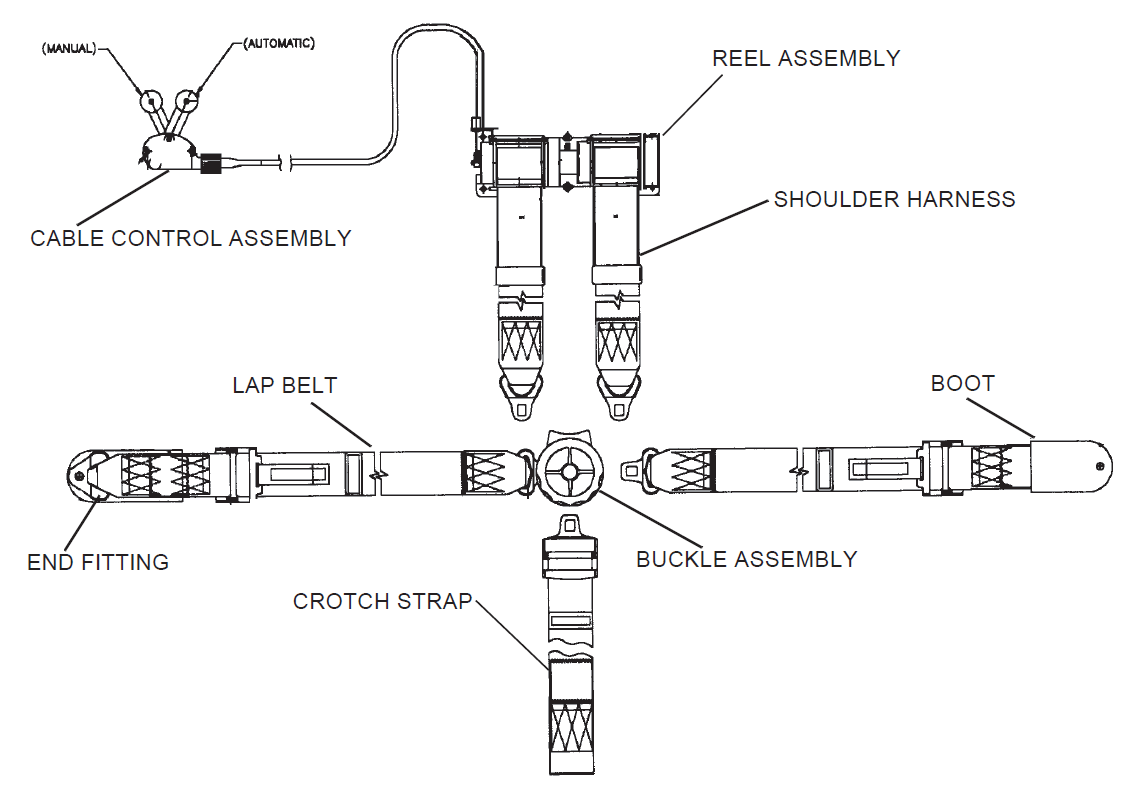
One seated flight attendant had the shoulder harness pull through the bulkhead fitting. It was suspected that the harness had been incorrectly routed through the fitting. A fleet check was initiated to inspect all seat harnesses for correct installation. No further examples of incorrect installation were found.

Occurrence summary

Investigation number 199402936
Occurrence date 07/10/1994
Location Canberra
State Australian Capital Territory
Report release date 05/01/1995
Report status Final
Investigation type Occurrence Investigation
Investigation status Completed
Mode of transport Aviation
Aviation occurrence category Turbulence/windshear/microburst
Occurrence class Incident

Aircraft details

Manufacturer The Boeing Company
Model 737-377
Registration VH-CZJ
Sector Jet
Operation type Air Transport High Capacity
Departure point Adelaide SA
Destination Canberra ACT
Damage Nil

Turbulence/windshear/microburst involving a Mooney M20J, VH-LOB, Wagga Wagga, New South Wales, on 6 June 1994

Summary

An RAAF C130 Hercules transport aircraft was conducting touch and go circuits using runway 05. The pilot of VH-LOB called for taxy clearance for runway 05 at 1500.22, (time in hours minutes and seconds.) After establishing the distance remaining for an intersection departure as 1190 metres the pilot requested and received approval for an intersection departure.

At 1502.20 the pilot was cleared to line up on runway 05. A clearance for take-off was given at 1502.59 and the pilot quickly applied take off power and commenced the ground roll. The lightly loaded aircraft was soon airborne. The landing gear and then the flaps were retracted. Suddenly the aircraft rolled very rapidly to the left and pitched nose down. Despite application of full opposite aileron and rudder and nose up elevator the pilot was unable to prevent the aircraft from descending left wing down into the ground to the left of the runway.

The investigation concluded that the accident was due to an encounter with wake turbulence from the C130. Under the Manual of Air Traffic Services (MATS) instructions the minimum separation between a light aircraft making an intersection take off behind a medium aircraft, was three minutes. This standard was required to be applied by the air traffic controller at Wagga.

Information provided by the RAAF indicated the C130 was making consistent circuits, with the base call given just after the base leg turn was commenced. They indicated the time from making the call until the aircraft touched down, was 80-90 seconds. After a short ground roll power was re-applied for take-off and lift off was achieved an estimated 150-180 metres beyond the taxiway intersection from which the take off in VH-LOB was commenced.

The time between base calls on the last four approaches for the C130 averaged four minutes and 28 seconds, with all being within eight seconds of this average. The last base call by the C130 crew was at 1459.42, some three minutes and 17 seconds before VH-LOB was cleared for take-off. Considering the C130 crew's estimate of 80 to 90 seconds to touchdown from this call, the indications were that the three minute separation standard was not met.

The controller said that the C130 base leg calls were given when the aircraft was halfway around base leg. He also estimated the time from these calls to touchdown was 30 seconds and to lift off was one minute. On the touch-and-go landing immediately before the accident, the controller believed that the C130 touched down 12 to 15 seconds past the hour, at about the time VH-LOB taxied. Under MATS provisions the controller is allowed to anticipate that the standard will exist at the time of lift off. In the controller's opinion he had the required three minutes separation. He did not, and was not required to, record any times so these estimates could not be verified.

The Civil Aviation Authority (CAA) published an Aeronautical Information Circular (AIC) H 11/1991, on wake turbulence hazards and characteristics. This AIC was still current at the time of the accident. It stated that wake turbulence vortices (there is one from each wing) start at rotation for lift off and end at touch down. These vortices tend to sink until close to the ground and then move sideways at about five knots.

The vortice from the right wing moves to the right, while that from the left wing moves to the left. The light wind conditions existing at the time of the accident, probably resulted in the right-wing vortice remaining above the runway. The AIC stated that in stable conditions wake vortices can exist for in excess of three minutes.

From the available evidence it has not been possible to conclusively establish whether the required separation of three minutes existed at the time VH-LOB took off.

Significant Factors

The following factors were considered relevant to the development of the accident:

1. The light wind conditions that existed at the time probably resulted in the right wing vortice remaining over the runway.

2. Wing tip vortices generated by normal operations in the C130, persisted long enough and were of sufficient intensity to cause a control loss in VH-LOB.

Occurrence summary

Investigation number 199401475
Occurrence date 06/06/1994
Location Wagga Wagga
State New South Wales
Report release date 08/11/1994
Report status Final
Investigation type Occurrence Investigation
Investigation status Completed
Mode of transport Aviation
Aviation occurrence category Turbulence/windshear/microburst
Occurrence class Accident
Highest injury level Minor

Aircraft details

Manufacturer Mooney Aircraft Corp
Model M20J
Registration VH-LOB
Sector Piston
Operation type Private
Departure point Wagga NSW
Destination Moorabbin VIC
Damage Substantial