Smoke

Embraer EMB-110P1, VH-OZG

Summary

On 25 June 2001, an Embraer Bandeirante on a charter flight from Sydney to Griffith, sustained an in-flight engine fire during cruise. The pilot attempted to extinguish the fire, and believing it to be extinguished, commenced a rapid descent to Young. Fog at Young prevented a landing, and the pilot diverted the aircraft to Cootamundra. Smoke entered the cabin, and the pilot transmitted a MAYDAY. Only the right main landing gear extended when the landing gear was selected down, but the pilot did not get an indication of the landing gear position. Unaware that the right main landing gear had extended, he prepared to make a gear-up landing. The aircraft touched down on the right main wheel and settled onto the left engine nacelle and nose, sustaining abrasion damage as it slid along the runway. The fire in the right engine nacelle was still burning when the aircraft stopped. The occupants egressed uninjured, and bystanders extinguished the fire.

Technical investigation revealed that vibration from the worn armature shaft of the right engine starter generator initiated a fatigue crack in the fuel return line. Fuel leaked from the fractured line during the flight, and was ignited by sparks or frictional heat from the generator after the armature shaft failed.

The pilot reported that he was unable to select the fuel cut-off position with the right fuel condition lever and feather the right propeller. While carrying out the engine fire emergency checklist actions, the pilot did not complete all of the items of the manufacturer's engine fire emergency checklist and the firewall shut-off valve remained open. Fuel continued to flow to the fuel control unit and feed the fire. The investigation was unable to determine if the fire extinguisher bottle discharged effectively. The fire continued to burn and heat conducted through the firewall affected components in the wheel well. Smoke from the heat-damaged components entered the aircraft cabin though gaps between the wing root and fuselage.

Checklists carried on the aircraft did not contain appropriate smoke evacuation procedures and the pilot's attempts to evacuate smoke from the cabin were unsuccessful. Consequently, the uncontained fire in the engine nacelle, and smoke in the cabin, created a potentially life threatening situation and influenced the pilot's decision not to delay the landing while attempting to resolve the apparent failure of the landing gear to extend.

This occurrence demonstrates the need for error-free and complete checklists to be available to pilots during emergency situations. It also demonstrates the need for pilots to be familiar with the systems of the aircraft they operate, and the emergency actions to be taken in the event of abnormal or emergency situations. Regular practice of those procedures is essential if they are to be executed effectively. More thorough training and checking of (charter) pilots, as proposed in the Civil Aviation Safety Regulations Part 121B (charter) operations, if adopted, can potentially improve pilot proficiency and knowledge in emergencies, specific to the aircraft type.

As a result of this occurrence the ATSB recommended to the Civil Aviation Safety Authority, the aircraft manufacturer and the certification authorities that the temperature setting of thermal relief valves on fire bottles, and the temperature setting of fire detectors, be reviewed to avoid inadvertent discharge of fire bottles. The ATSB also recommended that crews be provided with an indication of fire bottle contents.

Occurrence summary

Investigation number 200102710
Occurrence date 25/06/2001
Location Cootamundra, Aero.
State New South Wales
Report release date 06/11/2002
Report status Final
Investigation type Occurrence Investigation
Investigation status Completed
Mode of transport Aviation
Aviation occurrence category Smoke
Occurrence class Accident
Highest injury level None

Aircraft details

Manufacturer Embraer-Empresa Brasileira De Aeronautica
Model EMB-110
Registration VH-OZG
Sector Turboprop
Operation type Charter
Departure point Sydney, NSW
Destination Griffith, NSW
Damage Substantial

Boeing 747-438, VH-OJJ

Safety Action

The company issued an "Important Information" bulletin to flight attendants advising that any visible cabin light fitting must have a protective grill or glass covering the bulb.

Summary

At top of descent to Los Angeles, the cabin crew of the Boeing 747 aircraft reported smoke and fumes emanating from the cabin ceiling located in the vicinity of the rear right side (R5) emergency exit door. Smouldering paper tissues were found in an overhead light fitting. Cabin crew removed the tissues and discharged a fire extinguisher onto the light fitting, tissues, and surrounding area. The cabin crew remained in the vicinity and monitored the area until passengers disembarked at Los Angeles.

The company reported that the light fitting is a "night light" and is always "on". The light has a blue plastic cover that should always be in place, but was not fitted on this occasion.

The investigation was unable to determine why, or by whom, the tissues were placed in the light fitting.

Occurrence summary

Investigation number 200100741
Occurrence date 22/02/2001
Location 111 km E Los Angeles, Aero.
State International
Report release date 08/08/2001
Report status Final
Investigation type Occurrence Investigation
Investigation status Completed
Mode of transport Aviation
Aviation occurrence category Smoke
Occurrence class Incident
Highest injury level None

Aircraft details

Manufacturer The Boeing Company
Model 747
Registration VH-OJJ
Serial number 24974
Sector Jet
Operation type Air Transport High Capacity
Departure point New York, USA
Destination Los Angeles, USA
Damage Nil

Smoke event involving Boeing B787-8, Bali International Airport, Indonesia, on 28 March 2018

Brief

Occurrence Briefs are concise reports that detail the facts surrounding a transport safety occurrence, as received in the initial notification and any follow-up enquiries. They provide an opportunity to share safety messages in the absence of an investigation.

What happened

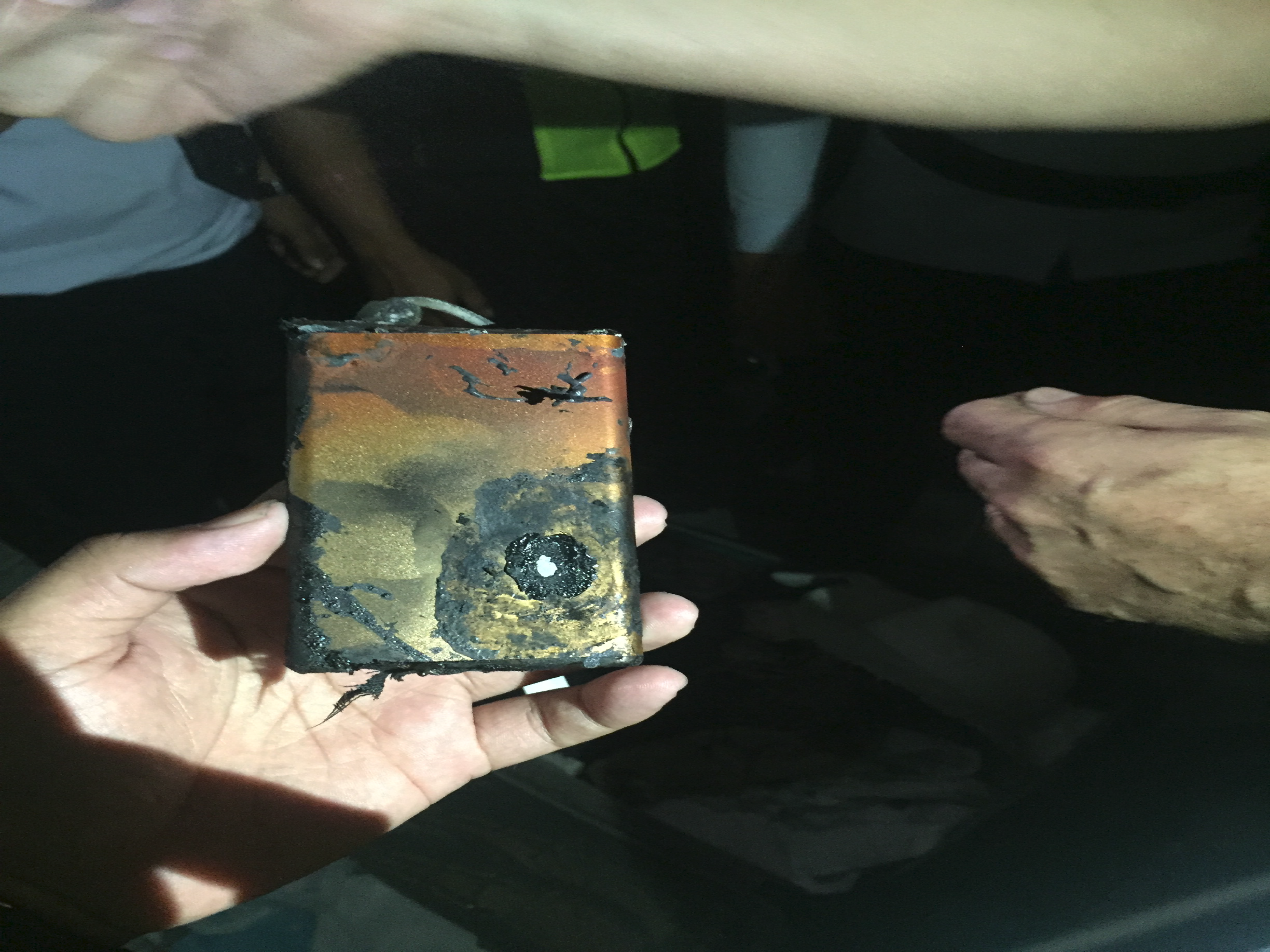
On 28 March 2018, a Boeing 787-8 departed Melbourne, Victoria (Vic.) on a scheduled passenger flight to Bali, Indonesia. On arrival into Bali, while the aircraft was being unloaded, the ground crew noticed smoke emanating from the cargo hold and identified a burnt passenger bag as the potential source. The ground crew subsequently removed the bag from the aircraft. Following further inspection, it was found that a power bank[1] (Figure 1) contained within the passenger bag was the cause of the smoke.

Figure 1: Power bank removed from passenger bag

Figure 1: Power bank removed from passenger bag

Source: Operator

Safety message

Spare lithium and lithium-ion batteries can present a significant hazard when carried in the cargo hold of an aircraft. If a battery is damaged or overheats, it can result in a fire. Such fires require the device or battery to be cooled with non-alcoholic liquids. Cabin crew and flight crew are specifically trained in the management of lithium battery smoke and fire incidents in the cabin. If a battery in the cargo hold catches fire, however, it might not be possible to extinguish the fire, with potentially catastrophic results.

Power packs and power banks are classified as spare lithium-ion batteries, therefore only permitted in a passenger’s carry-on baggage. The Civil Aviation Safety Authority (CASA) provides guidance on their “Travelling safely with batteries and portable power packs” webpage and via the ‘Can I pack that? dangerous goods app for passengers.

About this report

Decisions regarding whether to conduct an investigation, and the scope of an investigation, are based on many factors, including the level of safety benefit likely to be obtained from an investigation. For this occurrence, no investigation has been conducted and the ATSB did not verify the accuracy of the information. A brief description has been written using information supplied in the notification and any follow-up information in order to produce a short summary report, and allow for greater industry awareness of potential safety issues and possible safety actions.

__________

  1. A power bank is a portable device that can supply power to another device through a USB port.

Occurrence summary

Mode of transport Aviation
Occurrence ID AB-2018-052
Occurrence date 28/03/2018
Location Bali International Airport, Indonesia
State International
Occurrence class Incident
Aviation occurrence category Smoke
Highest injury level None
Brief release date 22/06/2018

Aircraft details

Manufacturer The Boeing Company
Model 787-8
Sector Jet
Operation type Air Transport High Capacity
Damage Nil

Smoke event involving Fairchild Industries SA227-DC, Essendon Airport, Victoria, on 7 March 2018

Brief

Occurrence Briefs are concise reports that detail the facts surrounding a transport safety occurrence, as received in the initial notification and any follow-up enquiries. They provide an opportunity to share safety messages in the absence of an investigation.

What happened

On 7 March 2018, at about 2018 Eastern Daylight-saving Time (EDT), a Fairchild SA-227-DC arrived at Essendon airport and taxied clear of the runway. During taxi, the flight crew noticed a smell and observed a smoke haze about halfway down the cabin. The aircraft was shut down and the crew and passengers evacuated the aircraft safely. Fire services were not required. Following exterior safety checks, the aircraft was towed to maintenance for investigation.

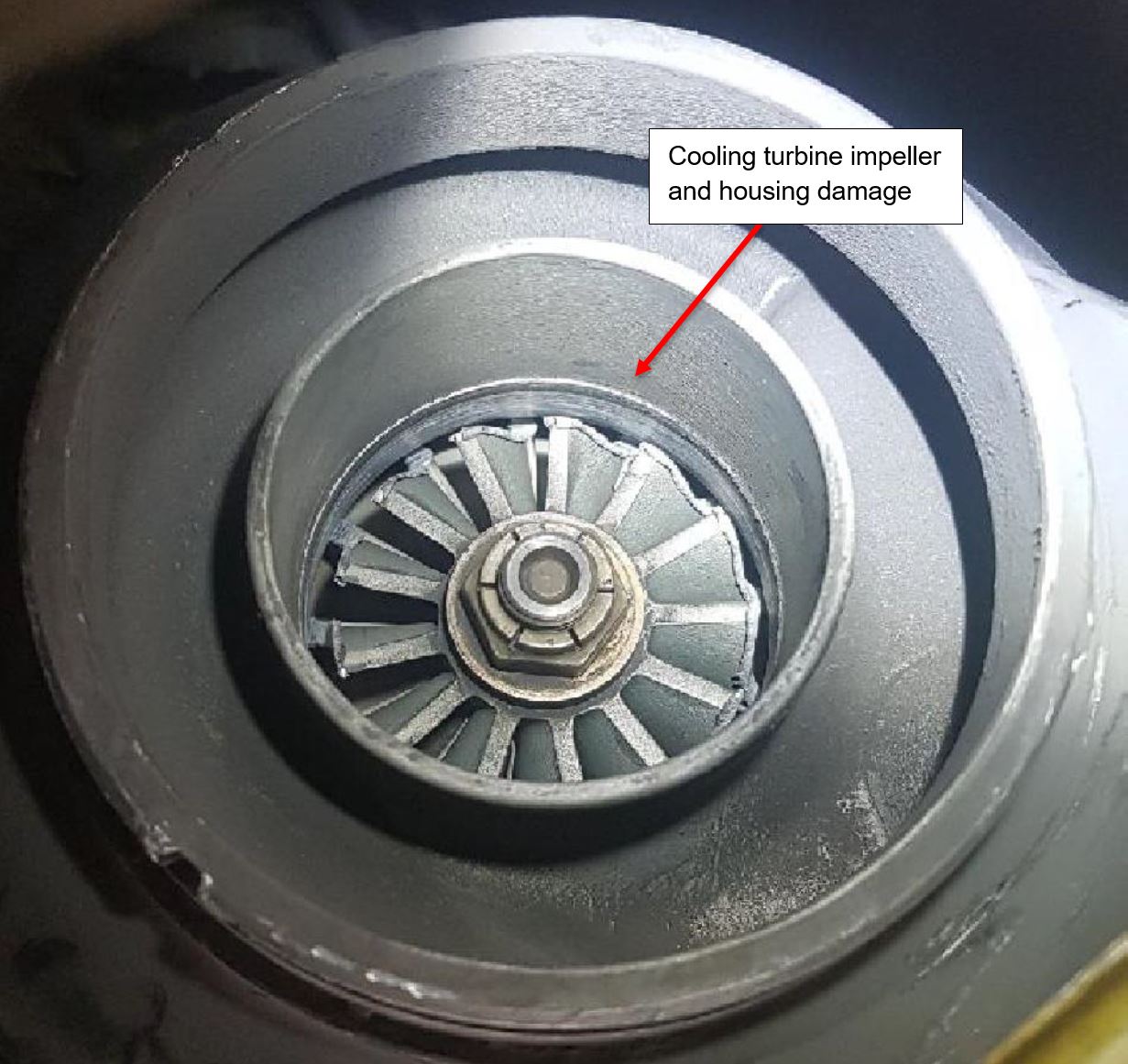
Following investigation of the aircraft’s air-conditioning system, it was discovered that the left cooling turbine was seized and unable to be rotated. Evidence of metal fragments were also found around the cooling turbine body. Significant damage to the turbine impeller was also observed due to contact within the cooling turbine housing (Figure 1).

Figure 1: Left cooling turbine impeller damage

Figure 1: Left cooling turbine impeller damage

Source: Aircraft operator annotated by ATSB

Safety message

Smoke and fumes can originate from any number of aircraft systems during any stage of aircraft operation. This incident highlights the effective flight crew management of maintaining awareness at all times and carrying out the actions required to ensure the situation was handled effectively, including the evacuation of the aircraft.

The joint CASA and ATSB research report AR-2013-213, An analysis of fumes and smoke events in Australian aviation, found that a majority of smoke and fumes events were minor in consequence and that they were generally managed appropriately by the flight crews.

About this report

Decisions regarding whether to conduct an investigation, and the scope of an investigation, are based on many factors, including the level of safety benefit likely to be obtained from an investigation. For this occurrence, no investigation has been conducted and the ATSB did not verify the accuracy of the information. A brief description has been written using information supplied in the notification and any follow-up information in order to produce a short summary report, and allow for greater industry awareness of potential safety issues and possible safety actions.

Occurrence summary

Mode of transport Aviation
Occurrence ID AB-2018-033
Occurrence date 07/03/2018
Location Essendon Airport
State Victoria
Occurrence class Incident
Aviation occurrence category Smoke
Highest injury level None
Brief release date 16/05/2018

Aircraft details

Manufacturer Fairchild Industries Inc
Model SA227-DC
Sector Turboprop
Operation type Air Transport Low Capacity
Damage Nil

Smoke event involving Boeing B737-8, near Townsville, Queensland, on 19 March 2018

Brief

Occurrence Briefs are concise reports that detail the facts surrounding a transport safety occurrence, as received in the initial notification and any follow-up enquiries. They provide an opportunity to share safety messages in the absence of an investigation.

What happened

On 19 March 2018, a Boeing 737-8 departed Brisbane, Queensland (Qld) on a scheduled passenger flight to Townsville, Qld. On descent, at about 2130 Eastern Standard Time (EST), cabin crew became aware of smoke emanating from a point of sale (POS) machine.

The cabin supervisor contacted the flight crew and relayed guidance obtained from the flight crew to the cabin crew member managing the event. The cabin crew subsequently removed, isolated and submerged the battery and the device in water. However, communication difficulties between the cabin supervisor and the cabin crew were experienced during the event.

Safety message

Fire and smoke on an aircraft can eventuate from a range of sources. As such, crew members must remain vigilant during all stages of flight to ensure that any situation that arises is handled effectively.

In addition to operational procedures, non-technical skills for cabin crew, such as crew communication and coordination are imperative in any abnormal or emergency situation. An example of effective crew coordination between flight and cabin crew can be found in previous ATSB investigation; Tailstrike involving Airbus A320, VH-VGF, at Melbourne Airport, Victoria on 11 May 2016. Operators are therefore reminded of the benefits of providing cabin crew with the opportunity to practice these skills. The International Civil Aviation Organization (ICAO) and the Civil Aviation Safety Authority (CASA) provide guidance in the Cabin Crew Safety Training Manual as well as Civil Aviation Advisory Publication (CAAP) SMS-3(1) Non-Technical Skills Training and Assessment for Regular Public Transport Operations.

About this report

Decisions regarding whether to conduct an investigation, and the scope of an investigation, are based on many factors, including the level of safety benefit likely to be obtained from an investigation. For this occurrence, no investigation has been conducted and the ATSB did not verify the accuracy of the information. A brief description has been written using information supplied in the notification and any follow-up information in order to produce a short summary report, and allow for greater industry awareness of potential safety issues and possible safety actions.

Occurrence summary

Mode of transport Aviation
Occurrence ID AB-2018-038
Occurrence date 19/03/2018
Location Near Townsville
State Queensland
Occurrence class Incident
Aviation occurrence category Smoke
Highest injury level None
Brief release date 20/04/2018

Aircraft details

Manufacturer The Boeing Company
Model 737-8
Sector Jet
Operation type Air Transport High Capacity
Damage Nil

Passenger cabin smoke event involving a Boeing 737, Melbourne Airport, Victoria, on 5 March 2018

Brief

Occurrence Briefs are concise reports that detail the facts surrounding a transport safety occurrence, as received in the initial notification and any follow-up enquiries. They provide an opportunity to share safety messages in the absence of an investigation.

What happened

On 5 March 2018, as boarding for a domestic flight from Melbourne to Sydney was nearing completion, a passenger noticed his mobile phone was smoking and emitting popping and crackling sounds.

The mobile phone was dropped on the cabin floor in front of seat 23C and the cabin crew were alerted. Those passengers already aboard were directed to leave any personal items behind, move towards the front of the aircraft and exit through the forward door. The flight crew were advised, and they requested that the Aviation Rescue and Fire Fighting Service (ARFFS) attend.

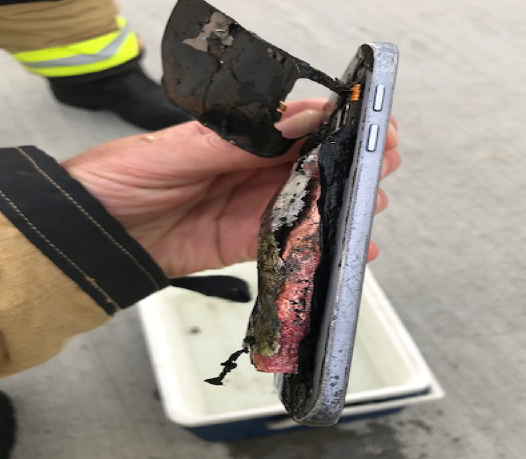
Cabin crew poured bottled water sourced from passengers and the galley onto the mobile phone and by the time the ARFFS arrived through the aircraft’s rear door the device (shown in Figure 1) had ceased smoking.

After the burned mobile phone had been removed from the aircraft by the ARFFS the operator’s engineering services employees cleaned up the spilled water and conducted an inspection for any damage. Passengers were subsequently allowed to return to the cabin to retrieve their belongings and the operator arranged for another aircraft to work the scheduled service.

Figure 1: Damaged mobile phone after removal from aircraft by ARFFS

Figure 1: Damaged mobile phone after removal from aircraft by ARFFS. Source: ARFFS

Source: ARFFS

Safety message

This incident is a dramatic reminder of the hazards of transporting personal electronic devices powered by lithium or lithium-ion batteries, and a demonstration of the importance of including mobile phones, laptop computers, power banks, wireless headphones, watches and cameras in carry-on baggage, rather than checked baggage.

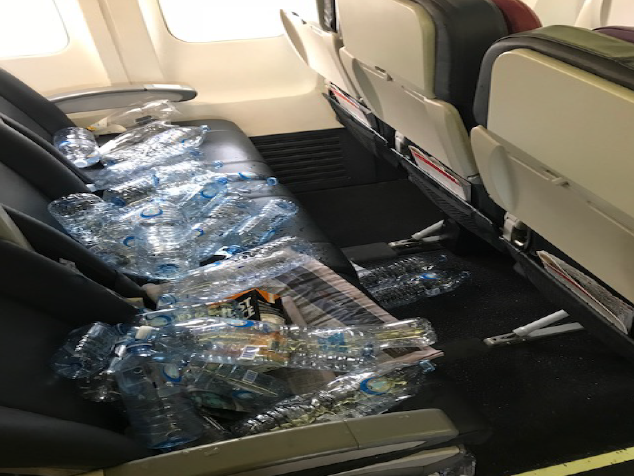
If the overheating device had been included in the passenger’s checked baggage and placed in the aircraft’s cargo hold it may have presented a much greater hazard. A significant quantity of water was required to contain the thermal runaway event that developed as the mobile phone short circuited and overheated and Figure 2 shows the water bottles emptied onto the device by the cabin crew.

While the risk of these devices catching fire and exploding in-flight is low, airlines and flight crews have well-established procedures and methods to contain battery fires in-flight. The Civil Aviation Safety Authority web page Travelling safely with batteries and portable power packs provides information on the safe transport of devices with lithium or lithium-ion batteries on aircraft.

Figure 2: Water bottles emptied to cool and extinguish mobile phone

Figure 2: Water bottles emptied to cool and extinguish mobile phone. Source: ARFFS

Source: ARFFS

Other ATSB news stories and investigations about lithium or lithium-ion batteries are available:

About this report

Decisions regarding whether to conduct an investigation, and the scope of an investigation, are based on many factors, including the level of safety benefit likely to be obtained from an investigation. For this occurrence, no investigation has been conducted and the ATSB did not verify the accuracy of the information. A brief description has been written using information supplied in the notification and any follow-up information in order to produce a short summary report, and allow for greater industry awareness of potential safety issues and possible safety actions.

Occurrence summary

Mode of transport Aviation
Occurrence ID AB-2018-026
Occurrence date 05/03/2018
Location Melbourne Airport
State Victoria
Occurrence class Serious Incident
Aviation occurrence category Smoke
Highest injury level None
Brief release date 06/04/2018

Aircraft details

Manufacturer The Boeing Company
Model 737-8FE
Sector Jet
Operation type Air Transport High Capacity
Damage Nil