Before landing, the pilot circled the 2,500 feet landing strip
several times to check on surface conditions and decide oh his
landing direction. There was no wind and after observing another
aircraft make a landing into the south east, the pilot made a left
circuit and approached in the same direction. The approach path was
steeper than normal and made at a speed in excess of that
recommended for approach at the existing aircraft weight. After
floating for some distance, the aircraft did not decelerate as
quickly as he expected. When he became aware that the aircraft was
not going to stop within the confines of the strip he turned to
starboard slightly, towards what appeared to be an extension of the
strip. It became obvious that this area also was inadequate and the
pilot then turned the aircraft to port. As the boundary of the
cleared area was reached, and at a speed of some 10 knots, the
starboard wheel entered a depression and the undercarriage unit was
torn from the aircraft.
Occurrence Briefs are concise reports that detail the facts surrounding a transport safety occurrence, as received in the initial notification and any follow-up enquiries. They provide an opportunity to share safety messages in the absence of an investigation.
What happened
The occurrence
On 24 November 2021, the pilot of a Cirrus SR22 aircraft conducted a business flight from Northern Peninsula to Darnley Island (Erub), Queensland, with one passenger on board. The flight was conducted under the visual flight rules[1] and in visual meteorological conditions.[2]
At 0913 local time, the aircraft joined the downwind leg of the circuit for runway 10 at Darnley Island. The pilot reported conducting a stabilised approach. Once aligned with the runway, the pilot reduced the airspeed to about 3 kt slower than normal, to compensate for encountering less headwind than anticipated.
The aircraft landed long and ballooned,[3] touching down about 100 m beyond the runway threshold. The pilot initially assessed that there was still sufficient runway remaining to stop. However, when the nose wheel contacted the runway, it started to ‘wobble’. In response, the pilot pulled back on the elevator control to lift weight off the nose wheel and reduced pressure on the brakes. The pilot then realised the end of the runway was approaching and applied full braking, and the wheel wobble resumed.
The aircraft overran the runway and rolled down a steep embankment beyond the eastern threshold. The aircraft flipped over, coming to rest inverted (Figure 1). The pilot sustained minor injuries, and the passenger sustained serious injuries. Both were wearing the fitted four-point harness. The aircraft was substantially damaged.
Figure 1: Darnley Island aerodrome and accident site
Source: Babcock Aviation & Critical Services
Pilot qualifications and experience
The pilot was appropriately qualified for the flight and held a private pilot licence (aeroplane). The pilot’s aeronautical experience totalled nearly 5,000 hours, including about 1,600 hours in SR22 aircraft. The pilot had landed at Darnley Island 17 times previously, 5 of which were in the accident aircraft.
Darnley Island aerodrome
The runway on Darnley Island is 528 m long, 18 m wide, has a 2% slope down in the landing direction and lies 220 ft above mean sea level.
Airport reporting officer comments
The airport reporting officer (ARO) was at the aerodrome at the time of the accident and assisted in extricating the pilot and passenger from the aircraft. The ARO commented that there was no wind at the time and the windsock was drooping down. The ARO observed the aircraft touch down long and the nose wheel ‘wobbling all over the place’.
Nose wheel wobble
The pilot reported that the nose wheel wobble previously occurred on about 1 in 10 landings in the aircraft and had been investigated by aircraft maintainers. The recommended action in response to the wobble was to pull back on the elevator control and stop braking, then release back pressure and recommence braking. In this occurrence, the pilot performed those actions but in doing so, was distracted from initiating a go-around. The pilot also assessed that when braking heavily, the wobble had contributed to reduced braking effectiveness.
Pre-flight planning
Based on the area forecast, the pilot expected, and planned for, an easterly wind of 7–15 kt. The pilot calculated the aircraft’s weight and balance to be in the middle of the operating envelope. The aircraft landing distance charts did not specify a required runway length for the calculated landing weight, so the pilot used the closest (higher) available weight. Based on nil wind and a landing weight 226 kg heavier than the actual landing weight, the landing distance required was 378 m. This reduced to 340 m with a 15 kt headwind. Factoring in the 2% downslope increased the landing distance required to 524 m (with a 15 kt headwind). The pilot used this figure for planning, having assessed the wind would likely be stronger than forecast based on previous experience with the local conditions. The pilot therefore anticipated that with a stronger headwind and lighter landing weight than used for planning, there would be a safe margin between landing distance available and required.
Density altitude
The pilot reported the conditions at the time of the accident included an easterly wind of about 7 kt and visibility greater than 10 km. The nearest Bureau of Meteorology weather station was at Coconut (Poruma) Island, 89 km to the south-east, where the temperature at 0900 was 32 °C and the atmospheric pressure 1,009 hPa at sea level.
Assuming the conditions at Darnley Island were similar to Coconut Island, the pressure altitude at the aerodrome was about 340 ft above mean sea level and the density altitude about 2,380 ft. Effects of increased density altitude include increased landing roll distance and reduced performance in the event of a go-around.
Runway end safety areas for aircraft landing areas
Darnley Island aerodrome was uncertified and unregistered. Aerodromes that have not been approved to the regulated requirements are referred to as aircraft landing areas (ALA). An ALA is not required to comply with any aerodrome standards, and it is a pilot’s responsibility to determine the aerodrome’s suitability for the intended flight.
The Civil Aviation Safety Authority’s Civil Aviation Advisory Publication 92–1
, provides guidance for pilots operating at ALAs and considerations for ALA owners regarding obstacle clearance proximal to the runway. The publication does not include guidelines regarding an overrun area beyond the runway ends. In this occurrence, the steep embankment at the eastern end of the runway increased the risk of aircraft damage and occupant injury in the event of a runway overrun. There was also an escarpment beyond the runway’s western end.
Previous accident
In 1993, a Piper PA-23 aircraft overran the western end of the runway at Darnley Island (ATSB investigation 199303915). The pilot initiated a ground loop to stop the aircraft falling down the 50 ft escarpment beyond the western end of the runway strip.
Safety message
Pre-flight preparation includes understanding the destination aerodrome and environmental conditions and establishing a plan to manage identified hazards. The United States Federal Aviation Administration’s Advisory Circular 91-79A Mitigating the risks of a runway overrun upon landing listed the following hazards associated with runway overruns:
unstabilised approach
high airport elevation or high-density altitude, resulting in increased groundspeed
excessive airspeed or height over the runway threshold
airplane landing weight
landing beyond the touchdown point
downhill runway slope
delayed use of deceleration devices
landing with a tailwind
a wet or contaminated runway.
The circular recommends that once the actual landing distance is determined – taking into consideration the compound effects of multiple factors – a minimum 15% safety margin should be added.
About this report
Decisions regarding whether to conduct an investigation, and the scope of an investigation, are based on many factors, including the level of safety benefit likely to be obtained from an investigation. For this occurrence, no investigation has been conducted and the ATSB did not verify the accuracy of the information. A brief description has been written using information supplied in the notification and any follow-up information in order to produce a short summary report, and allow for greater industry awareness of potential safety issues and possible safety actions.
Occurrence Briefs are concise reports that detail the facts surrounding a transport safety occurrence, as received in the initial notification and any follow-up enquiries. They provide an opportunity to share safety messages in the absence of an investigation.
What happened
On 25 December 2020, a Raytheon (Beechcraft) A36 aircraft was departing from a private airstrip on a property near Pingrup, Western Australia, for a private flight to Jandakot, Western Australia, with the pilot and four passengers on board.
During the take-off to the east, when about halfway down the runway, the pilot detected a sudden and severe wind change. The northerly wind became gusty and variable, which affected the aircraft’s airspeed, resulting in a stall warning. When the stall warning sounded, the aircraft was approximately 10 ft above the runway, but the pilot was having difficulty maintaining altitude.
The pilot elected to reject the take-off and land but was unable to stop the aircraft before the end of the runway. The aircraft overran the runway and struck a fence, resulting in substantial damage to the propeller, wings, landing gear and fuselage. There were no injuries to the pilot or passengers.
Safety action
As a result of this accident, the pilot has advised the ATSB that they are planning to install a second windsock at the eastern end of the airstrip, and construct an additional flight strip running in a north/south direction.
Safety message
This accident highlights the importance of early decision making for pilots, specifically when rejecting a take-off. Instead of attempting to keep the aircraft in the air operating below safe flying speed, the pilot made the safer decision to land back on the runway. Although the aircraft was damaged, the pilot and the passengers were uninjured.
About this report
Decisions regarding whether to conduct an investigation, and the scope of an investigation, are based on many factors, including the level of safety benefit likely to be obtained from an investigation. For this occurrence, no investigation has been conducted and the ATSB did not verify the accuracy of the information. A brief description has been written using information supplied in the notification and any follow-up information in order to produce a short summary report, and allow for greater industry awareness of potential safety issues and possible safety actions.
Occurrence Briefs are concise reports that detail the facts surrounding a transport safety occurrence, as received in the initial notification and any follow-up enquiries. They provide an opportunity to share safety messages in the absence of an investigation.
What happened
On 6 August 2020, the pilot of a Cessna 172RG was conducting a private flight under visual flight rules from Noosa Airport to Thangool Airport, Queensland.
The pilot had not previously landed at Thangool Airport and chose to overfly the airfield in order to observe the windsock and assess the crosswind for a landing on runway 28.[1]The pilot perceived the windsock to indicate a steady but manageable crosswind that was consistent with the Thangool Airport aerodrome weather information service.[2]
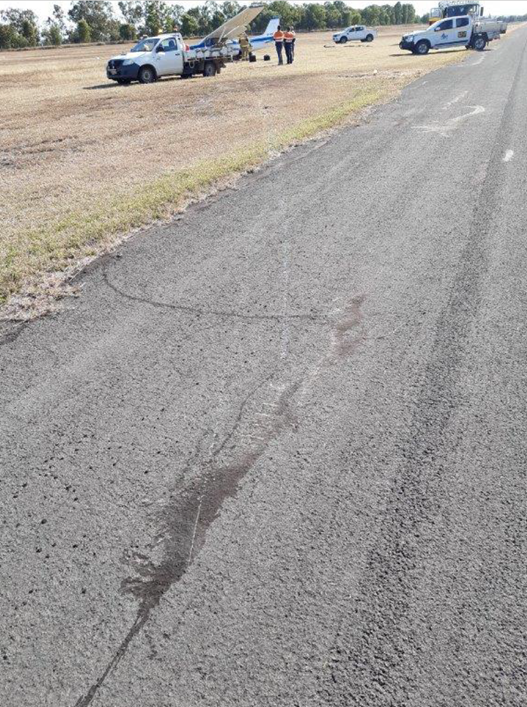
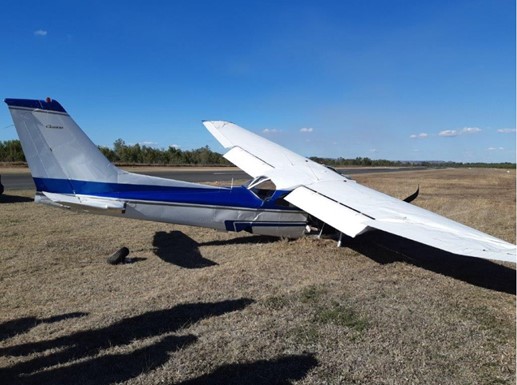
The aircraft then joined the circuit for a landing on runway 28. The pilot elected to cross the runway threshold slightly faster and higher than normal, to gauge the effect of the crosswind and conduct a go-around if necessary. During the flare, just prior to touching down, the pilot felt the aircraft encounter a strong gust of wind from the right. The pilot was unable to maintain control of the aircraft and it touched down heavily, veered left, and exited the left side of runway 28 (Figure 1). The pilot was the only occupant on board and was uninjured in the occurrence. The aircraft sustained substantial damage (Figure 2).
The recorded automatic weather for Thangool Airport, for the period 15 minutes before and after the occurrence, indicated a wind direction between 020–060° true, a wind speed between 7–11 kt, and wind gusts between 8–14 kt.
Based on the recorded wind direction, when landing on runway 28 with a 14 kt wind gust, the aircraft would have encountered a crosswind of 10–14 kt and a tailwind component of 0–9 kt. The aircraft’s maximum demonstrated crosswind was 15 kt.
The pilot had 46.5 hours of experience on the aircraft type and a total aeronautical experience of 141.2 hours.
Figure 1: Marks on the runway and grass leading to the aircraft’s final position
Source: Provided to the ATSB
Figure 2: Aircraft damage
Source: Provided to the ATSB
Safety action
As a result of this occurrence, the pilot advised the ATSB that they will pursue additional crosswind landing training.
Safety message
This occurrence highlights the importance of exercising caution when operating in conditions that have the potential to exceed the maximum demonstrated crosswind speed of an aircraft. It also illustrates the need for pilots to establish a personal minimums checklist that is commensurate with the flying experience of the individual. If the conditions do not meet these criteria, or if there is any doubt, pilots should not attempt the activity.
About this report
Decisions regarding whether to conduct an investigation, and the scope of an investigation, are based on many factors, including the level of safety benefit likely to be obtained from an investigation. For this occurrence, no investigation has been conducted and the ATSB did not verify the accuracy of the information. A brief description has been written using information supplied in the notification and any follow-up information in order to produce a short summary report, and allow for greater industry awareness of potential safety issues and possible safety actions.
[1] Runway number: the number represents the magnetic heading of the runway. The magnetic variation at Thangool was 10° east.
[2] Aerodrome weather information service (AWIS): actual weather conditions, provided via telephone or radio broadcast, from Bureau of Meteorology (BoM) automatic weather stations, or weather stations approved for that purpose by the BoM.
Occurrence Briefs are concise reports that detail the facts surrounding a transport safety occurrence, as received in the initial notification and any follow-up enquiries. They provide an opportunity to share safety messages in the absence of an investigation.
What happened
On 3 January 2020, a Cessna 501 Citation was conducting a private flight with a single pilot and seven passengers from Merimbula, New South Wales to Moorabbin, Victoria. During the instrument approach to runway 35 at Moorabbin in low visibility conditions due to smoke, the pilot became visual with the runway environment at approximately 500 ft. The pilot reported that the aircraft was slightly high and fast compared to the normal landing profile but decided to continue with the landing.
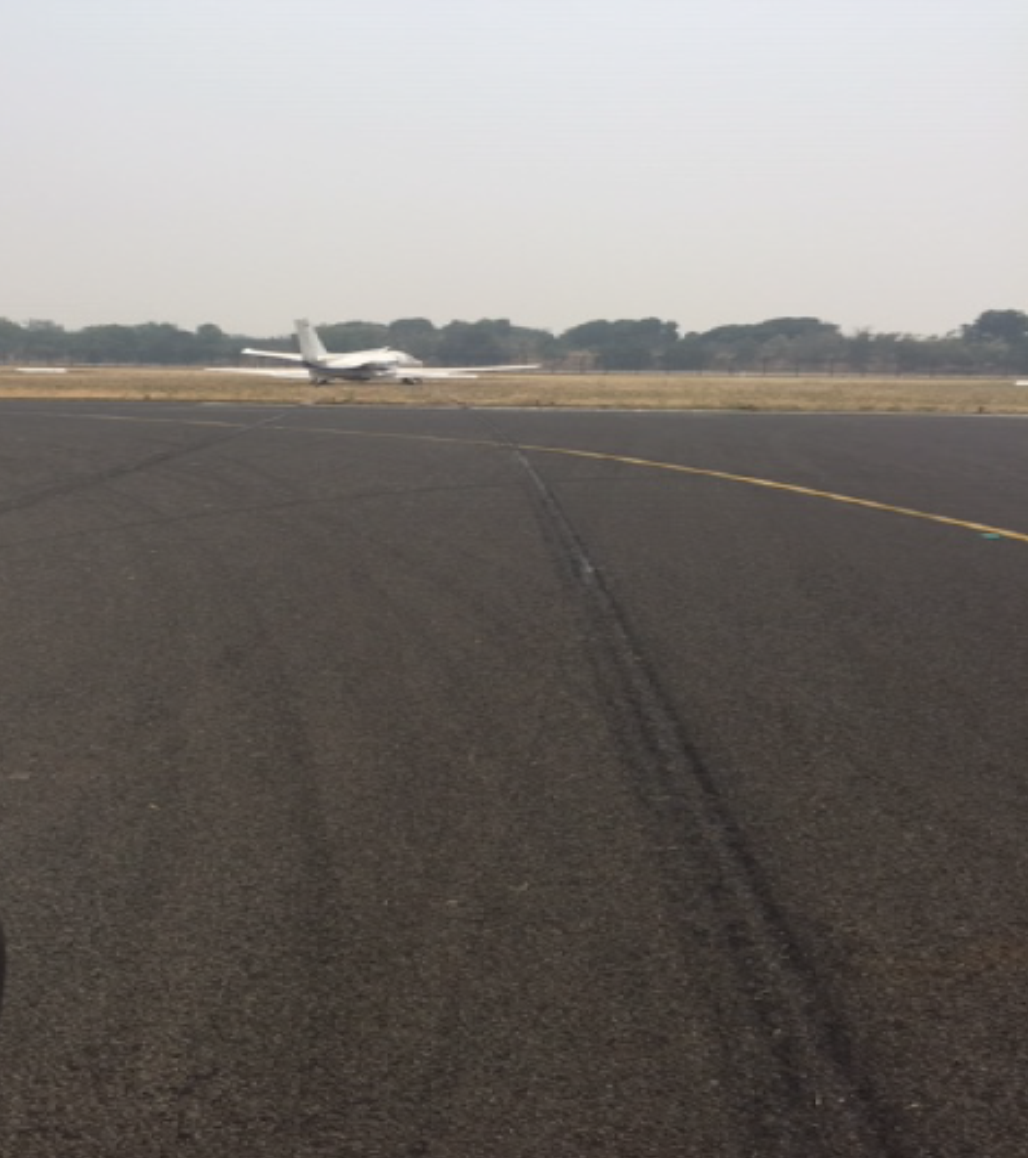
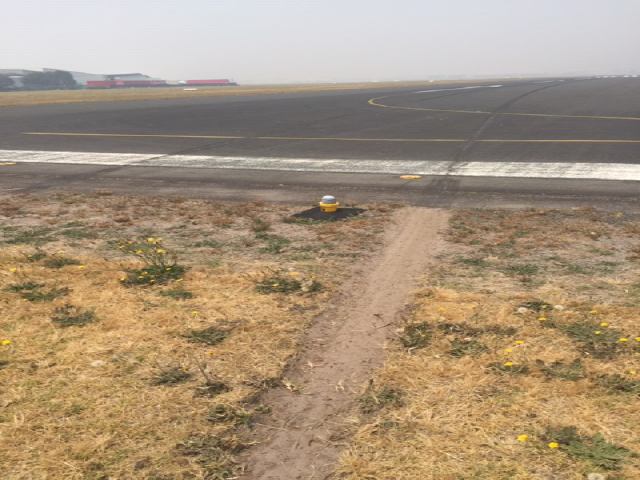
The aircraft touched down past the normal landing point and at a higher than normal speed. Despite the application of maximum braking, the aircraft overran the end of the runway by approximately 20 metres. There were no injuries to the pilot or passengers. The aircraft sustained minor damage.
Pilot comments
In hindsight, my decision should have been to conduct a missed approach and proceed to my planned alternate where the weather was better.
Figure 1: Skid marks on the runway end leading to where the aircraft came to a stop.
Source: Supplied
Figure 2: Skid marks on the runway end into the grass.
Source: Supplied
Safety action
As a result of this occurrence, the pilot has advised the ATSB that they are taking the following safety actions:
conducting a comprehensive debrief and review of the occurrence with their instructor
undertaking further briefing and remedial training, concentrating on decision-making.
Safety message
This incident highlights the need for pilots to have a personal approach minimums checklist including clearly defined unstable approach criteria. If the approach does not meet these criteria or if there is any doubt, pilots should conduct a go-around.
The ATSB SafetyWatch highlights the broad safety concerns that come out of our investigation findings and from the occurrence data reported to us by industry. One of the safety concerns is inflight decision making.
About this report
Decisions regarding whether to conduct an investigation, and the scope of an investigation, are based on many factors, including the level of safety benefit likely to be obtained from an investigation. For this occurrence, no investigation has been conducted and the ATSB did not verify the accuracy of the information. A brief description has been written using information supplied in the notification and any follow-up information in order to produce a short summary report, and allow for greater industry awareness of potential safety issues and possible safety actions.
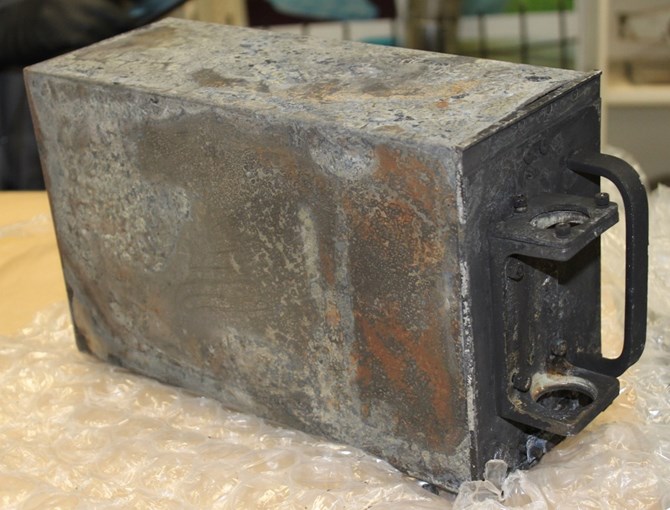
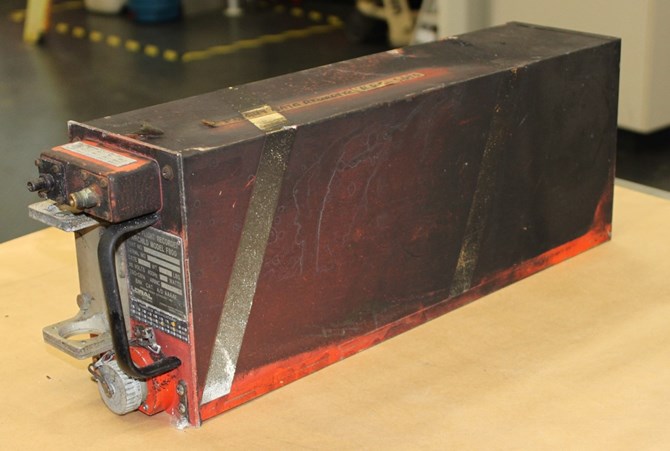
On 29 March 2020, an IAI Westwind II 1124A aircraft registered RP-C5880, on an aeromedical flight from Ninoy Aquino International Airport, Manila, Philippines was destroyed following a runway excursion during take-off from RWY 06. The eight occupants received fatal injuries.
The Civil Aviation Authority of the Philippines – Aircraft Accident Investigation and Inquiry Board (AAIIB) requested assistance from the Australian Transport Safety Bureau (ATSB) to download the aircraft’s cockpit voice recorder (CVR) and flight data recorder (FDR) to assist their investigation.
To facilitate this support and to provide the appropriate protections for the information, the ATSB appointed an accredited representative in accordance with paragraph 5.23 of ICAO Annex 13 and commenced an investigation under the Australian Transport Safety Investigation Act 2003.
On 15 October 2020, the fire-damaged recorders from RP-C5880 (Universal Navigation Corporation CVR-30 and Fairchild Model F800 FDR) arrived in Canberra. The CVR and FDR were successfully downloaded at the ATSB data recovery facility. This activity was performed by ATSB recorder specialists in conjunction with AAIIB investigators located in the Philippines. All data recovered from the recorders was provided to the AAIIB to assist with their Annex 13 investigation. A report detailing the results of the download of the recorders was provided to the AAIIB on 18 July 2021.
Figure 1: Universal CVR-30 cockpit voice recorder recovered from RP-C5880 on arrival at ATSB
Source: ATSB
Figure 2: Fairchild Model F800 flight data recorder recovered from RP-C5880 on arrival at ATSB
Source: ATSB
The Philippines AAIIB is responsible for the investigation and release of the final investigation report regarding this accident. Any enquiries regarding the investigation should be addressed to the Philippines Aircraft Accident Investigation and Inquiry Board at the contact details listed below: