Foreign object damage / debris

Foreign object debris involving a Gates Learjet Corp 35A, Darwin, Northern Territory, on 3 February 2019

Brief

Occurrence Briefs are concise reports that detail the facts surrounding a transport safety occurrence, as received in the initial notification and any follow-up enquiries. They provide an opportunity to share safety messages in the absence of an investigation.

What happened

On 3 February 2019 at 2245 Central Standard Time, a Gates Learjet Corp 35A was operating a medevac[1] flight with two crew and four passengers on board from Darwin, Northern Territory to Adelaide, South Australia.

During the take-off run, the crew noticed a moderate shimmy in the right hand main wheel resulting in the aircraft slightly veering to the right of the runway. The crew suspected a blown tyre; however, as there were no abnormal indications they elected to continue to Adelaide.

While en route to Adelaide, the crew were notified by Air Traffic Control that rubber tyre and metal fragments had been recovered from the runway in Darwin. The crew then requested a local standby[2] for their arrival into Adelaide.

At 0150 Central Daylight-saving Time, the aircraft landed safely at Adelaide Airport with aviation rescue and firefighting teams in attendance.

Upon landing it was found that both the right hand tyres had blown and damage was sustained to the aircraft’s right wheel and brake assemblies (Figure 1) and to the right flap (Figure 2).

The operator suspects that the cause of the blown tyres was due to foreign object debris (FOD) on the runway at Darwin. However, Darwin Airport did not find any FOD apart from tyre debris.

Figure 1: Damage to the right main landing gear and fuselage
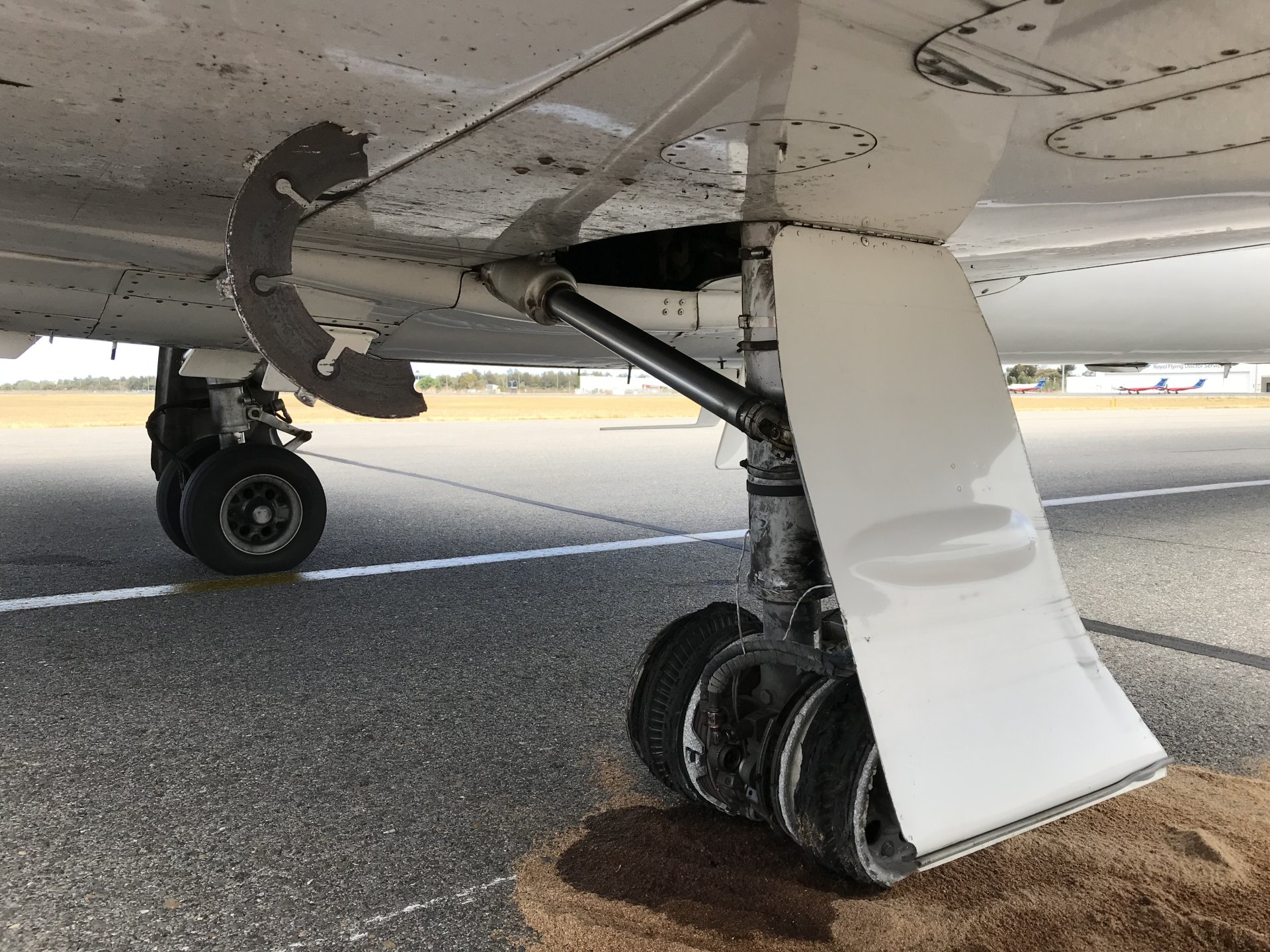
Figure 1: Damage to the right main landing gear and fuselage. Source: Adelaide Airport

Source: Adelaide Airport

Figure 2: Damage to the right flap
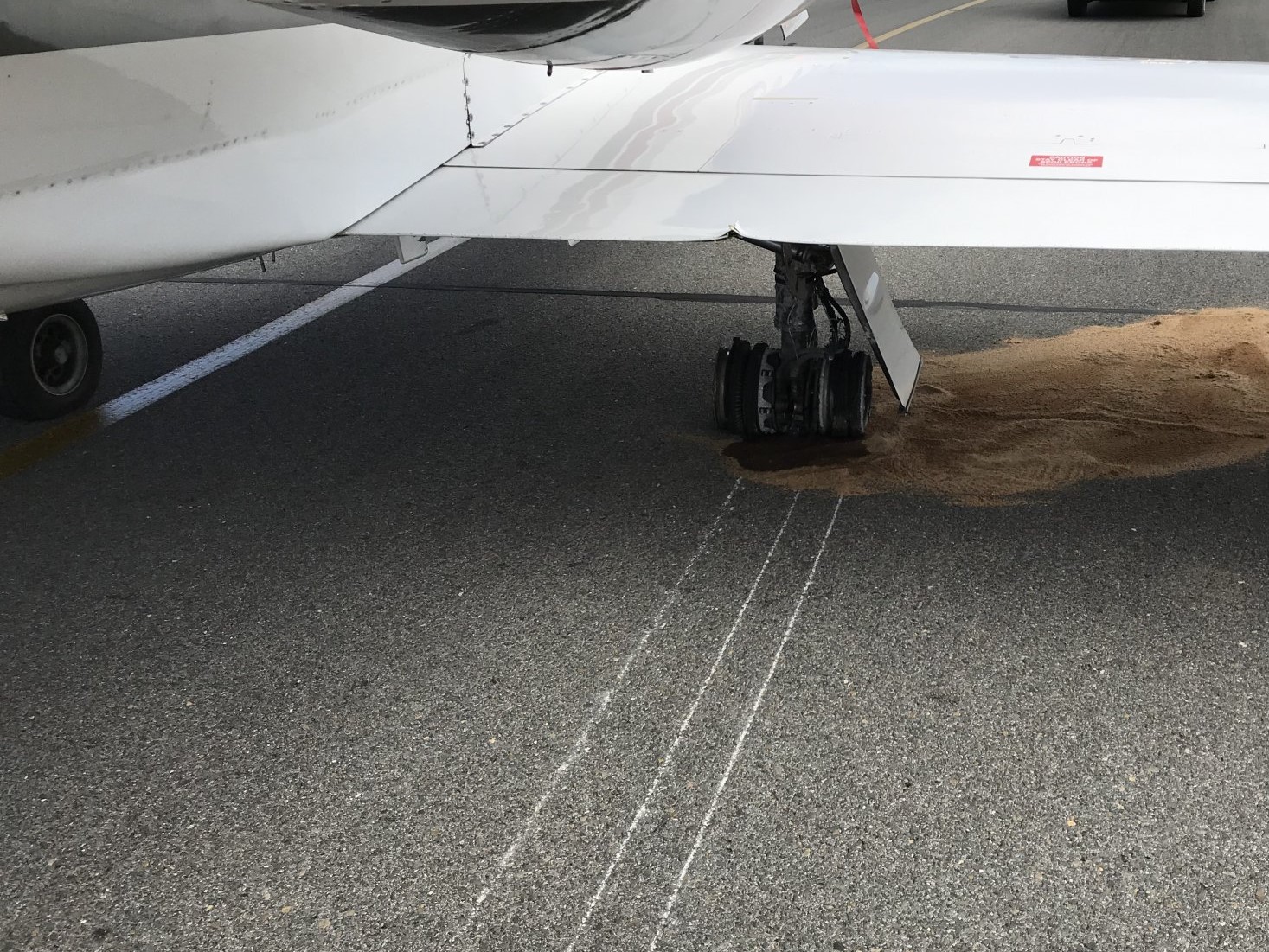
Figure 2: Damage to the right flap. Source: Adelaide Airport

Source: Adelaide Airport

Safety message

This occurrence highlights the importance of communicating any suspected FOD, including a blown tyre, to airport authorities to ensure that a runway inspection is carried out in a timely matter. Boeing, in Foreign Object Debris and Damage Prevention, estimate that FOD damage costs the aviation industry $4 billion per year.

All aerodromes are encouraged to have an active FOD management program in place. Aerodrome staff and pilots are reminded to keep an active lookout and retrieve any identified FOD before it becomes a hazard.

Further information about FOD management at aerodromes can be found on the Australian Airports Association website, Foreign object debris.

About this report

Decisions regarding whether to conduct an investigation, and the scope of an investigation, are based on many factors, including the level of safety benefit likely to be obtained from an investigation. For this occurrence, no investigation has been conducted and the ATSB did not verify the accuracy of the information. A brief description has been written using information supplied in the notification and any follow-up information in order to produce a short summary report, and allow for greater industry awareness of potential safety issues and possible safety actions.

__________

  1. Medevac by ambulance aircraft. Medical evacuation, or medevac, is the transportation of seriously ill patients by air.
  2. Local standby: declared when only airport-based agencies are required in the AEP (e.g. the on-airport Rescue and Fire Fighting Service and the Aerodrome Safety Officer). A Local Standby will be the normal response when an aircraft approaching an airport is known or is suspected to have developed some defect, but the trouble would not normally involve any serious difficulty in effecting a safe landing (This generally equates to a PAN PAN).

Occurrence summary

Mode of transport Aviation
Occurrence ID AB-2019-005
Occurrence date 03/02/2019
Location Darwin
State Northern Territory
Occurrence class Serious Incident
Aviation occurrence category Foreign object damage / debris
Highest injury level None
Brief release date 30/07/2019

Aircraft details

Manufacturer Gates Learjet Corp
Model 35A
Sector Jet
Operation type Charter
Departure point Darwin, Northern Territory
Destination Adelaide, South Australia
Damage Minor

Foreign object damage involving Boeing 787-8, Bali International Airport, Indonesia, on 28 March 2018

Brief

Occurrence Briefs are concise reports that detail the facts surrounding a transport safety occurrence, as received in the initial notification and any follow-up enquiries. They provide an opportunity to share safety messages in the absence of an investigation.

What happened

On 28 March 2018, a Boeing 787-8 departed Bali, Indonesia on a scheduled passenger flight to Melbourne, Victoria (Vic.). After arrival in Melbourne, at about 0230 Eastern Standard Time, maintenance engineers were investigating a right engine anti-ice fault indication, when they discovered a cabin passenger blanket within the engine cowling (Figure 1).

Investigation by the operator found that maintenance had been performed in Bali prior to the aircraft returning to Australia, and five blankets from the passenger cabin had been used in place of correct personal protective equipment to prevent burn injuries to the engineers while maintenance was conducted. One of these blankets was inadvertently left on the engine after maintenance. The area in which the blanket was discovered was protected by fire suppressant, should it have been required.

Figure 1: Passenger blanket as found on engine

A towel wrapped around part of an aircraft engine
Source: Aircraft operator

Safety message

This incident highlights the importance of maintenance personnel remaining vigilant in the conduct of their duties. There are a number of factors that can lead to errors occurring. The ATSB research report AR-2008-055, An Overview of Human Factors in Aviation Maintenance is available from the ATSB website.

Utilising an independent inspector may also minimise the possibility of items being missed upon the completion of maintenance.

About this report

Decisions regarding whether to conduct an investigation, and the scope of an investigation, are based on many factors, including the level of safety benefit likely to be obtained from an investigation. For this occurrence, no investigation has been conducted and the ATSB did not verify the accuracy of the information. A brief description has been written using information supplied in the notification and any follow-up information in order to produce a short summary report, and allow for greater industry awareness of potential safety issues and possible safety actions.

Occurrence summary

Mode of transport Aviation
Occurrence ID AB-2018-053
Occurrence date 28/03/2018
Location Bali International Airport, Indonesia
State International
Occurrence class Incident
Aviation occurrence category Foreign object damage / debris
Highest injury level None
Brief release date 06/07/2018

Aircraft details

Manufacturer The Boeing Company
Model 787-8
Sector Jet
Operation type Air Transport High Capacity
Damage Nil

Foreign object debris involving Bombardier DHC-8-402, Sydney Airport, New South Wales, on 1 March 2018

Brief

Occurrence Briefs are concise reports that detail the facts surrounding a transport safety occurrence, as received in the initial notification and any follow-up enquiries. They provide an opportunity to share safety messages in the absence of an investigation.

What happened

On 1 March 2018, at about 0730 Eastern Daylight-saving Time (EDT), the flight crew of a Bombardier DHC-8-402 aircraft reported to engineering staff at Sydney, New South Wales (NSW), that a torch was missing from the flight deck. The engineering staff subsequently inspected the flight deck and found the torch behind the left-side rudder pedals. It was unknown as to how or when the torch moved from its usual position.

Safety message

This incident highlights the importance of not only ensuring unaccounted items are located, but loose items are secured to prevent interference with the aircraft’s controls.

ATSB investigation report AO-2017-108 (Foreign object damage involving Airbus A320) notes that the presence of foreign object debris poses a significant threat to aircraft safety and demonstrates the effect that foreign object debris can have on aircraft operations. Similarly, the National Aeronautics and Space Administration aviation safety reporting system provided an example of where a foreign object jammed the rudder pedals during a critical phase of flight (aviation safety reporting system report number 736444). While taking off, the left rudder pedal became jammed on a Regional Jet CRJ700 aircraft and the take-off was successfully rejected. The pilot reported that directional control was difficult, but maintained during the rejected take-off. The pilot subsequently found a small tissue box under the rudder pedal.

About this report

Decisions regarding whether to conduct an investigation, and the scope of an investigation, are based on many factors, including the level of safety benefit likely to be obtained from an investigation. For this occurrence, no investigation has been conducted and the ATSB did not verify the accuracy of the information. A brief description has been written using information supplied in the notification and any follow-up information in order to produce a short summary report, and allow for greater industry awareness of potential safety issues and possible safety actions.

Occurrence summary

Mode of transport Aviation
Occurrence ID AB-2018-028
Occurrence date 01/03/2018
Location Sydney Airport
State New South Wales
Occurrence class Incident
Aviation occurrence category Foreign object damage / debris
Highest injury level None
Brief release date 16/05/2018

Aircraft details

Manufacturer Bombardier Inc
Model DHC-8-402
Sector Turboprop
Operation type Air Transport High Capacity
Damage Nil