

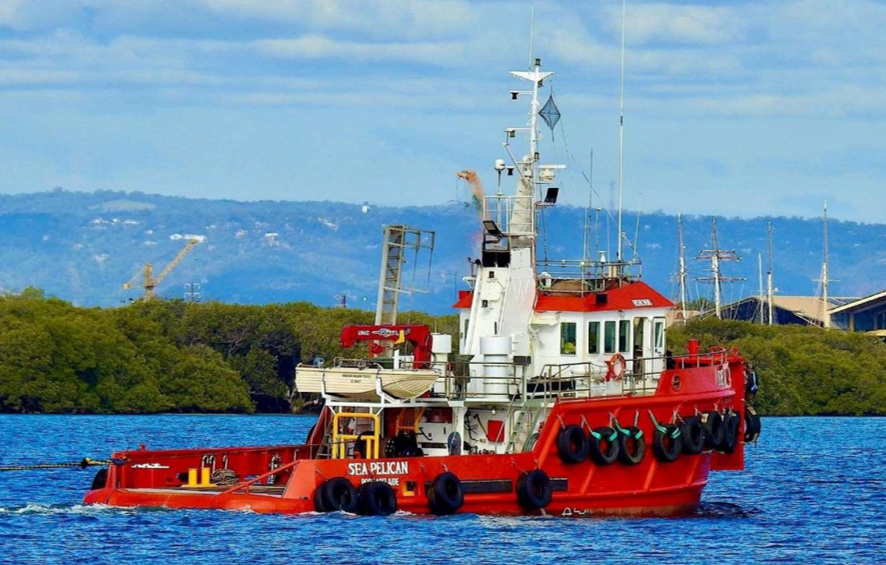
Insufficient planning and preparation and inadequate risk controls contributed to the grounding of a tug in Port Adelaide, an ATSB investigation has identified.
On 10 June 2025, the tug Sea Pelican was in combination with the barge Rocksea, to manoeuvre out of the North Arm waterway and into the Port Adelaide River, in South Australia.
During the turn, the tug was manoeuvred wide and contacted a sandbar.
The tug’s shell plating was holed, and water began to enter the engine room. Bilge pumping commenced, and the tug was slipped the following day for repairs. No injuries were reported.
The ATSB’s investigation into the serious incident identified planning and preparation for the movement were inadequate for ensuring all risks were properly addressed.
“The masters on board did not have accurate knowledge of the boundaries of the encroaching sandbank, and were unaware of the extent of the resulting narrowing of the navigable channel,” Chief Commissioner Angus Mitchell said.
“Pre-departure planning did not sufficiently evaluate the channel width available, or address the sandbank as a navigational hazard.”
The investigation further identified the tug operator, Maritime Constructions, had not adequately identified and controlled risks associated with the operation of tug and barge combinations within the port.
The final report notes under port regulations, the tug and barge combination was required to carry a harbour pilot, or a pilotage‑exempt master, to operate within the port. As Sea Pelican’s master did not hold a pilotage exemption certificate, a pilotage‑exempt master was on board during the incident.
“The investigation identified differences in interpretation among company masters and pilotage‑exempt masters as to the role and responsibilities of the pilotage‑exempt master in this type of operation, and the use of the pilotage exemption certificate system was not defined and included in the operator’s documentation,” Mr Mitchell noted.
“When a vessel is navigated in pilotage waters under the guidance of a pilotage exemption holder, the responsibilities of the exemption holder in relation to the master should be defined and documented in the company’s safety management system.”
In response to the incident, the vessel operator has updated its safety management system to strengthen its procedures, particularly regarding training, watchkeeping, and passage planning procedures.
“This incident highlights the importance of sufficient planning, as well as a robust safety management system, to ensure operational risks are identified and effectively controlled,” Mr Mitchell concluded.
Read the final report: Grounding of Sea Pelican, Port Adelaide, South Australia, on 10 June 2025