

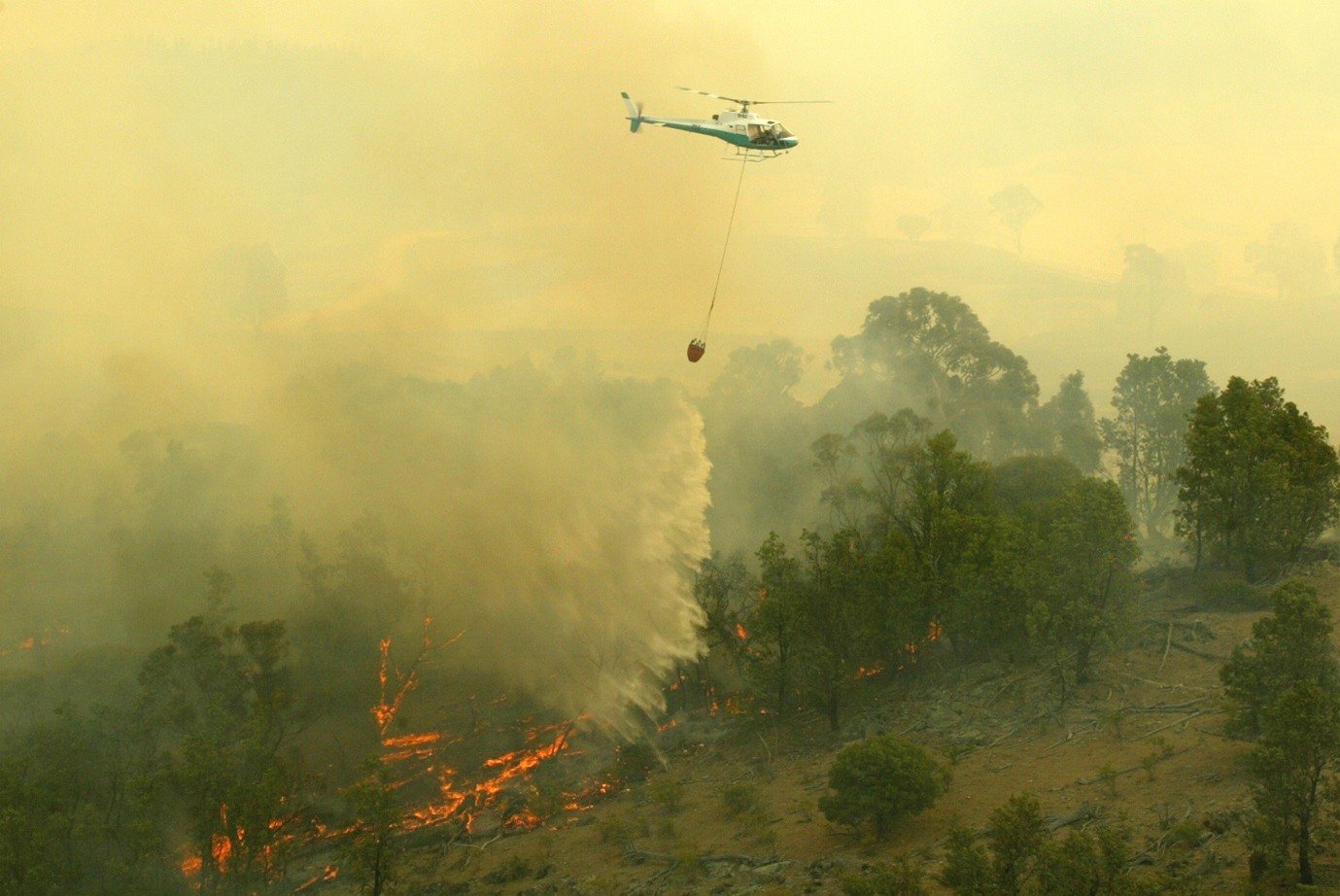
The Australian Transport Safety Bureau has published a summary of its interviews with Australian fire agencies and aerial firefighting operators, as part of an ongoing safety study into Australia’s growing aerial firefighting sector.
The summary report comprises information gathered from interviews with 11 fire agency representatives from all Australian states and territories, and 9 aerial firefighting operators.
ATSB Chief Commissioner Angus Mitchell said the interviews formed part of a safety study aiming to assess the escalating risk environment faced by aerial firefighting operators in Australia.
“Aerial assets are playing a growing, and increasingly important role in fire prevention and control in Australia,” he said.
“It is therefore important we understand the risk controls in place, and consider how effective these controls can be as the airspace above firegrounds gets busier, and the size and variety of aircraft increases.
“The information gathered during these interviews will form part of our analysis as we develop findings, and consider recommendations for governments, agencies and operators.”
Analysis of the interviewees’ comments identified 18 key safety themes, detailed in the report.
Mr Mitchell noted there was a wide variation in interviewees’ perceptions of fire agencies in the safety themes identified, so it was not possible to characterise all fire agencies in the same way.
“Agency representatives and operators sometimes expressed opposing views on the extent to which a safety aspect was being achieved, for example regarding safety culture and a pressure to fly,” Mr Mitchell noted.
“Several themes indicated a belief that fire agencies could enhance their management of safety by developing a just, learning, reporting, informed and flexible culture.”
Another common thread across multiple themes was a desire for standardisation and formalisation of policies and procedures across different jurisdictions.
“This desire was expressed in relation to aircraft coordination, communication, training, pilot performance, and the identification of risk and monitoring of changing conditions,” Mr Mitchell explained.
Several key themes were also identified relating to accountability for, and management of risk.
These related to the transfer of risk responsibility, pressure to fly conditions, and concerns around high risk tolerance, and risk normalisation.
“These themes suggest interviewees perceive a need for Australia’s fire agencies to play a greater role in risk management, and ongoing risk monitoring,” Mr Mitchell noted.
Read the report: Analysis of Australian aerial firefighting agency and operator interviews regarding aviation safety