

A Dash 8 flight crew was focused on conducting checks as they inadvertently aligned their aircraft with the runway edge lighting prior to taking off from Mildura Airport, in Victoria, an ATSB final report explains.
On the morning of 25 February 2025, the QantasLink-operated Dash 8 was being operated on a scheduled passenger service from Mildura to Melbourne.
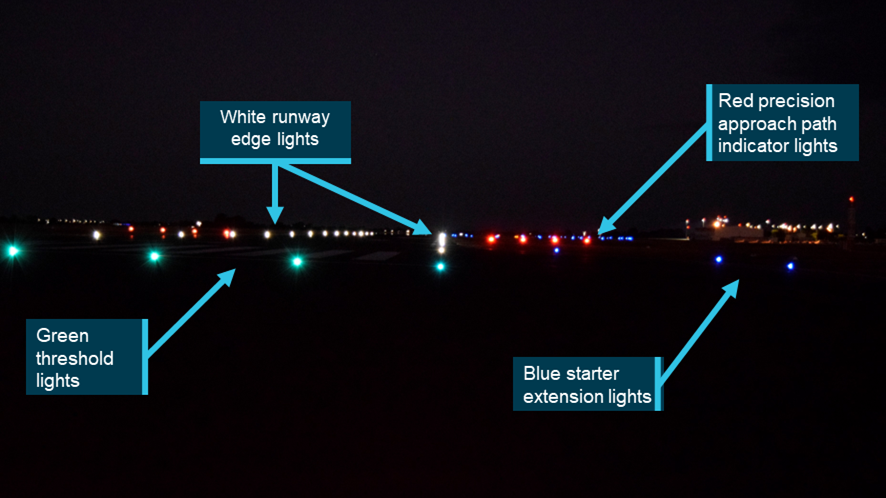
After leaving the gate shortly after 0630, prior to first light, the aircraft was backtracked down runway 09 and taxied past the threshold into the start extension bypass pad, to turn around and line up.
In the dark ambient conditions, the flight crew did not follow the taxi guidance line markings, and inadvertently lined the aircraft up on the right runway edge lights, before commencing a take-off, the ATSB’s investigation found.
During the take-off roll, the nose landing gear contacted five runway edge lights, before the captain identified they were not on the centreline, and manoeuvred the aircraft towards it to continue the take-off.
ATSB Director of Transport Safety Kerri Hughes said a number of factors known to influence misaligned take-offs were identified in the investigation.
“Dark ambient conditions have been consistently identified in similar occurrences and can reduce the visual cues available,” Ms Hughes said.
“The crew was also focused on completing checks during the turn and at its completion. While these checks are a necessary part of a flight, they may result in the diversion of attention away from tasks like lining up correctly.
“Pilots should consider the timing for conducting checks in situations where monitoring their external environment is important.”
The ATSB’s report notes during the initial climb, the flight crew realised that the aircraft had impacted runway edge lights.
Prior to landing in Melbourne, they subsequently conducted a low pass of the air traffic control tower to facilitate a visual inspection of the landing gear.
“While ATC did not identify any issues and the aircraft later landed without incident, during the low pass the aircraft descended below the briefed height of 200 ft, to a minimum of 134 ft for a short period,” Ms Hughes said.
“Notably, the flight crew did not seek advice on the low pass from the operator, nor did the operator provide supporting procedures for this.”
Ms Hughes said this element of the investigation highlighted how, in non-normal situations for which there is no documented procedure, pilots should consult all available sources, including their operator, for assistance.
After the flight, the aircraft was found to have sustained minor damage to its nose landing gear, fuselage and right propeller blade.
In response to the incident, QantasLink has enhanced flight crew recurrent training with human factors and non‑technical skills training on the threat awareness of factors known to contribute to misaligned take-offs.
The operator has also introduced policy aligned with Qantas Group operators regarding the risks associated with air traffic control tower fly pasts.
Finally, the final report notes that during post-incident drug and alcohol testing, the captain tested positive for a non-prescribed medication. However, impairment was not expected by the time of the incident given the reported dosage and time elapsed.
“Nonetheless, this is a reminder to pilots to exercise caution when taking any medications, and to be discouraged from taking prescription medications without medical supervision,” Ms Hughes concluded.
Read the final report: Misaligned take-off involving Bombardier DHC-8-315, VH-TQM, Mildura Airport, Victoria, on 25 February 2025