

Final report
Report release date: 14/12/2016
What happened
On 27 September 2016, at about 0030 Eastern Standard Time (EST), an Avions de Transport Regional ATR42-300 aircraft, registered VH-TOX (Figure 1), was being loaded at Sydney Airport, New South Wales, for a freight charter flight to Brisbane, Queensland.
The freight had arrived from a freight facility where it had been weighed and a load plan completed, with a total freight weight of 2,281 kg.
Prior to loading the freight, a representative from the aircraft operator was unsure of the accuracy of the provided weights and requested ground staff reweigh the freight using calibrated scales at the airport. The measured total weight was 3,215 kg, which was 934 kg more than stated on the load plan.
The flight crew, consisting of a captain and first officer, completed the trim sheet using the actual weights, and the aircraft was within its weight limitations and the allowable centre of gravity envelope. The aircraft operated to Brisbane without incident.
Figure 1: VH-TOX
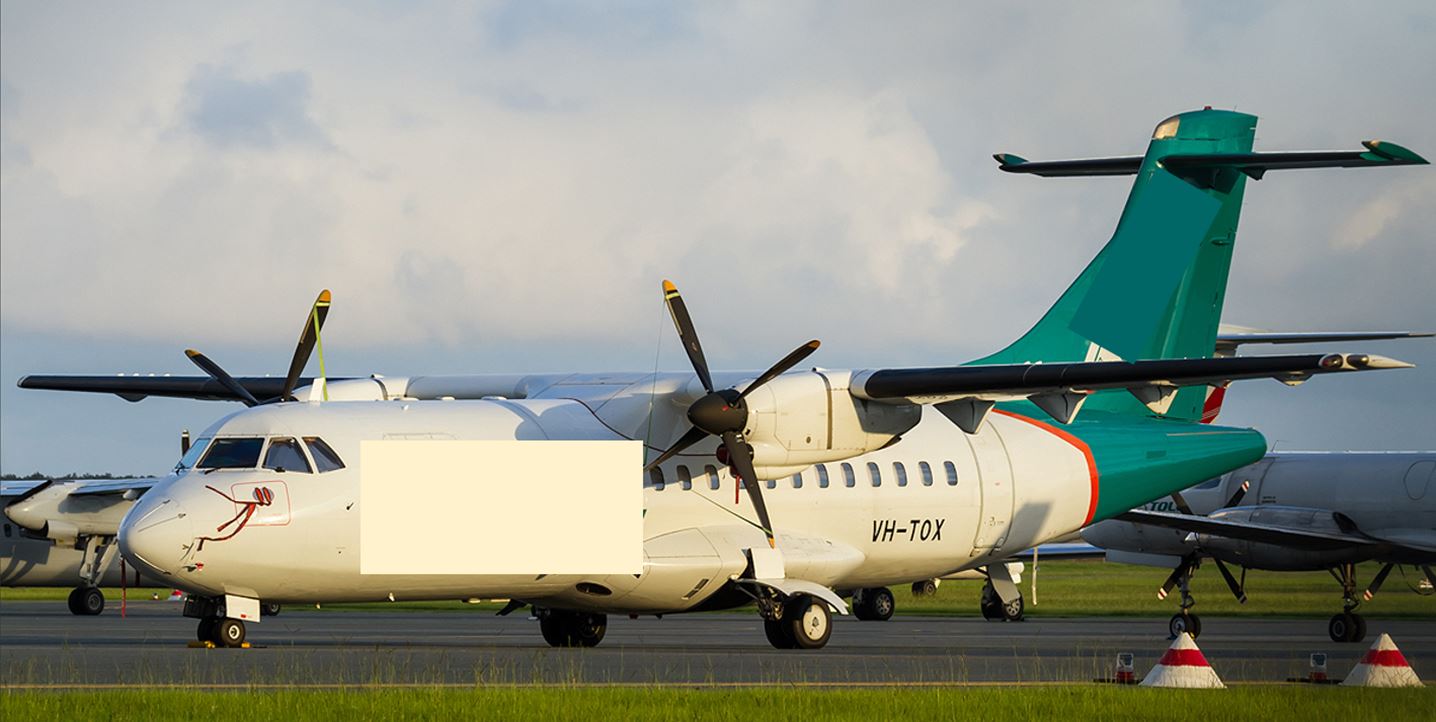
Source: Daniel Vorbach edited by ATSB
Freight weighing
The freight was weighed at the freight facility using a forklift fitted with scales. Each item of freight was then allocated to a loading position on the aircraft using a spreadsheet from which the aircraft load plan was derived.
The aircraft operator commented that they had previously advised the freight company that forklifts should not be used for the weighing of freight when intended for carriage by air, as they were not sufficiently accurate. The loading supervisor, who was employed by the freight company and responsible for loading the aircraft in accordance with the load plan, was not aware that the weights recorded on the load plan were inaccurate.
The ground handling agreement between the aircraft operator and freight company did not include Sydney as a port of service at the time of the incident. Until recently, the operator’s Sydney operations were based at Bankstown Airport, where calibrated floor scales were used to weigh the freight.
Findings
These findings should not be read as apportioning blame or liability to any particular organisation or individual.
- The freight company weighed the freight using inaccurate (forklift) scales, resulting in a discrepancy of 934 kg from the actual freight weight. The aircraft load plan was derived from the inaccurate freight weights.
- The aircraft operator discovered the inaccuracy before loading and the aircraft was subsequently loaded within its weight and balance limitations.
Safety action
Whether or not the ATSB identifies safety issues in the course of an investigation, relevant organisations may proactively initiate safety action in order to reduce their safety risk. The ATSB has been advised of the following proactive safety action in response to this occurrence.
Aircraft operator
As a result of this occurrence, the aircraft operator has advised the ATSB that they are taking the following safety actions:
Change of port
The operator ceased operations into and out of Sydney Airport and reverted to Bankstown Airport, where calibrated floor scales are used to determine the freight weight for the load plan.
Safety message
Accurate aircraft weight and balance information is vital for the safety of flight, particularly during take-off. Inaccurate weight of freight items can lead to incorrect flight management selections such as power and trim settings. Discrepancies in these can result in reduced take-off performance and incidents such as tail strikes and runway overruns.
Short Investigations Bulletin - Issue 55
About this reportDecisions regarding whether to conduct an investigation, and the scope of an investigation, are based on many factors, including the level of safety benefit likely to be obtained from an investigation. For this occurrence, a limited-scope, fact-gathering investigation was conducted in order to produce a short summary report, and allow for greater industry awareness of potential safety issues and possible safety actions. Publishing informationReleased in accordance with section 25 of the Transport Safety Investigation Act 2003 Published by: Australian Transport Safety Bureau © Commonwealth of Australia 2016 
Ownership of intellectual property rights in this publication Unless otherwise noted, copyright (and any other intellectual property rights, if any) in this report publication is owned by the Commonwealth of Australia. Creative Commons licence With the exception of the Coat of Arms, ATSB logo, and photos and graphics in which a third party holds copyright, this publication is licensed under a Creative Commons Attribution 3.0 Australia licence. Creative Commons Attribution 3.0 Australia Licence is a standard form licence agreement that allows you to copy, distribute, transmit and adapt this publication provided that you attribute the work. The ATSB’s preference is that you attribute this publication (and any material sourced from it) using the following wording: Source: Australian Transport Safety Bureau Copyright in material obtained from other agencies, private individuals or organisations, belongs to those agencies, individuals or organisations. Where you wish to use their material, you will need to contact them directly. |
Occurrence summary
| Investigation number | AO-2016-127 |
|---|---|
| Occurrence date | 27/09/2016 |
| Location | Sydney Airport |
| State | New South Wales |
| Report release date | 14/12/2016 |
| Report status | Final |
| Investigation level | Short |
| Investigation type | Occurrence Investigation |
| Investigation status | Completed |
| Mode of transport | Aviation |
| Aviation occurrence category | Loading related |
| Occurrence class | Incident |
| Highest injury level | None |
Aircraft details
| Manufacturer | ATR-GIE Avions de Transport Régional |
|---|---|
| Model | ATR42-300 |
| Registration | VH-TOX |
| Serial number | 024 |
| Sector | Turboprop |
| Operation type | Charter |
| Departure point | Sydney, New South Wales |
| Destination | Brisbane, Queensland |
| Damage | Nil |