

Final report
Report release date: 13/04/2016
What happened
On 19 December 2015, the pilot of a Eurocopter AS 350 helicopter, registered VH-NPS (NPS), was conducting fire control work near Glenbrook, New South Wales, with one crewperson on board. The fire control work included use of a Bambi Bucket (Figure 1) to drop water on the fires, slung under the helicopter by a 100 ft long-line.
Shortly before 1830 Eastern Daylight-saving Time (EDT), the pilot and crewperson decided they would cease operations for the day, due to the limited daylight remaining and the number of hours they had been on duty. The pilot elected to land the helicopter at Glenbrook helipad to refuel, before returning to base.
Figure 1: Bambi Busket
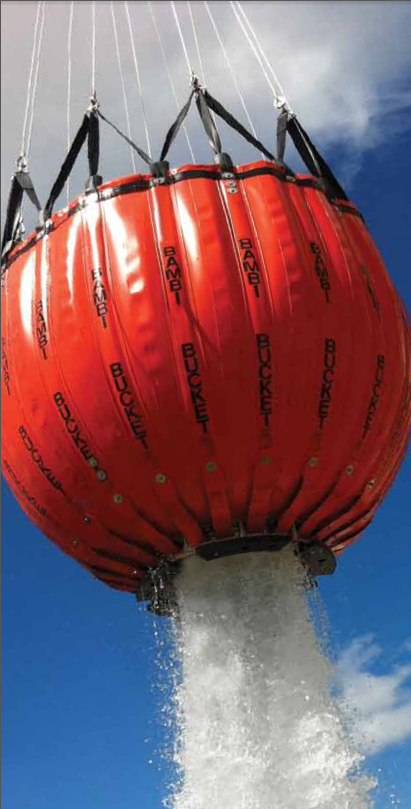
Source: sei.ind.com
The helicopter landed with the bucket and line in front of the helicopter, and the fuel drum to the right of the helicopter. While the engine was still running and the rotor blades turning, the pilot realised that the helicopter’s fuel cap was on the left side and therefore needed to turn the helicopter around to access the fuel drum.
The crewperson exited, stood in front of the helicopter and took hold of the long-line to ensure it remained clear during the turn. The pilot then lifted the helicopter to about 2 ft above ground level. The crewperson used hand signals to direct the pilot to conduct a right turn, walking to stay in front of the helicopter, manage the long-line, and remain in the pilot’s sight. After the helicopter had turned 180°, the crewperson gave the signal to lower the helicopter, which the pilot followed. As the helicopter lowered down, the tail rotor struck the bucket, which was on the ground behind the helicopter. The pilot detected the strike as a vibration through the pedals, and immediately moved the helicopter forward slightly, lowered the collective, and landed.
The tail rotor was damaged (Figure 2); the pilot and crewperson were uninjured.
Pilot comments
The pilot was not looking at the bucket, which ended up behind the helicopter, but following the crewperson’s hand signals. The pilot commented that to minimise risk he should have lifted back up, turned the helicopter to the left, to keep the path ahead of the tail rotor in sight, and set the bucket back down in front of the helicopter, keeping the bucket in sight at all times.
While both the pilot and crewperson were highly experienced in helicopter operations, both had limited experience specifically in fire control work.
Operator report
The operator conducted an investigation into the incident, and identified several factors that may have contributed to the incident:
- Due to rostering requirements, an inexperienced fire operations pilot and crewperson were tasked together.
- The pilot was on their ninth successive day of duty.
- The pilot lost situational awareness of the bucket.
- Fatigue may have played a small role in reducing the pilot’s situational awareness of the bucket, and the pilot may not have been aware of this fatigue level.
- Task pressure to get the job done along with high workload due to last light requirements, crew transport and a request for the crew to continue water bombing, may have reduced situational awareness and crew communication.
- Time pressure may have contributed to the incident. As incident work is high-paced, it is important for the crew to slow down to allow all critical checks to be completed in an unhurried manner.
- The day had been extremely hot, highlighting the need for crew to remain well-hydrated, eat and take regular rest breaks.
Figure 2: Damage to VH-NPS tail rotor
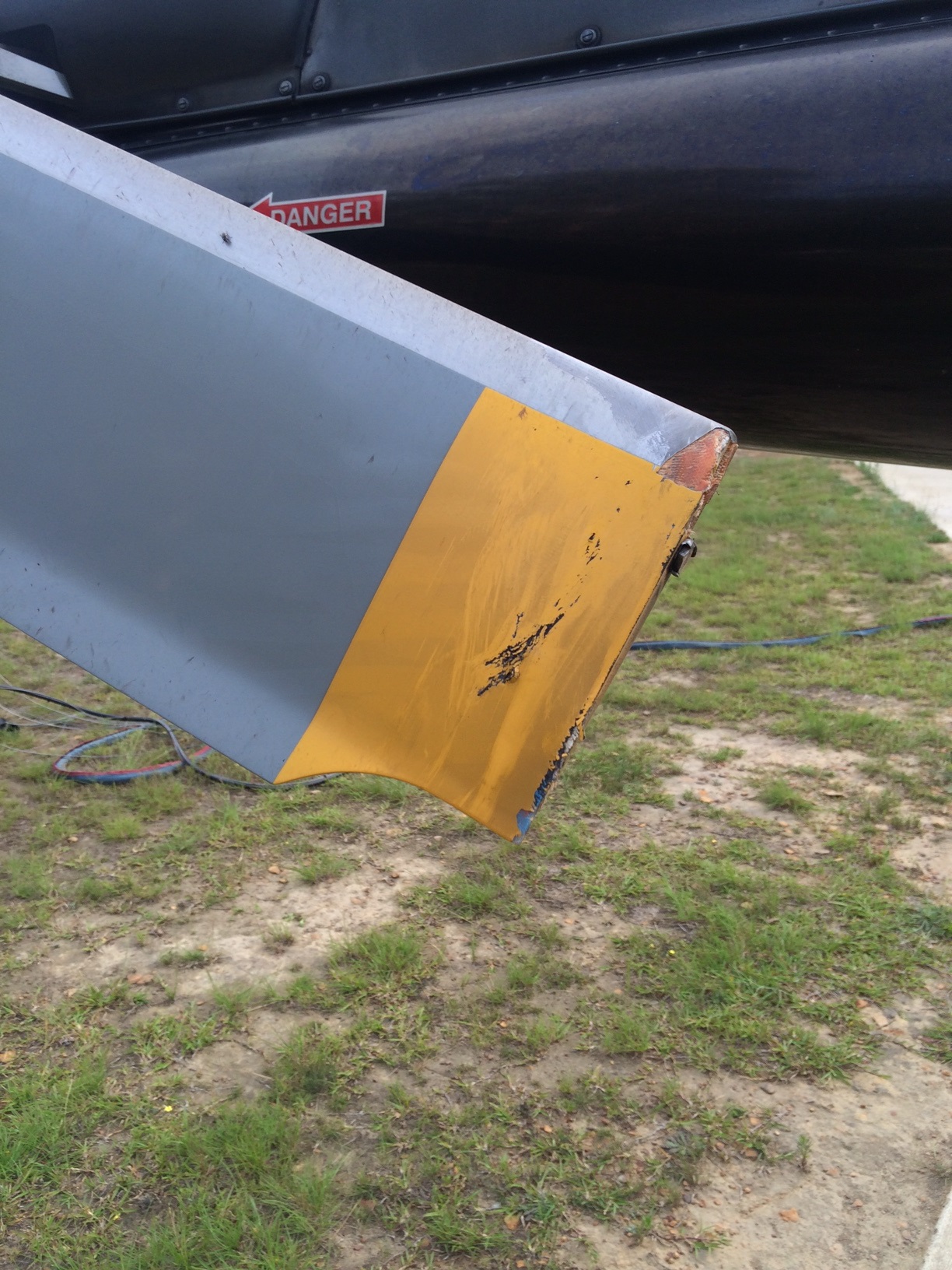
Source: Helicopter operator
Safety action
Helicopter operator
As a result of this occurrence, the helicopter operator has advised the ATSB that they are taking the following safety actions:
Crew pairing
Where possible, pilots who are more experienced with a particular type of operation, such as fire control work, will be rostered with less experienced crewpersons and vice versa.
Fatigue management
The operator will monitor fatigue levels in a more robust manner, including crew self-reporting and managers monitoring their staff.
Training
The operator’s training strategy and practices will be overhauled, with a training package released by 30 March 2016. Pilots and crewpersons will be assessed on their understanding of the operations manual.
Safety message
This incident highlights the importance of effective risk assessment and crew communication. Careful risk assessment is particularly important where a non-standard manoeuvre is planned. Effective crew communication is vital to ensure that potential hazards are clearly identified and understood, and the associated risks are appropriately managed.
Aviation Short Investigations Bulletin - Issue 47
About this reportDecisions regarding whether to conduct an investigation, and the scope of an investigation, are based on many factors, including the level of safety benefit likely to be obtained from an investigation. For this occurrence, a limited-scope, fact-gathering investigation was conducted in order to produce a short summary report, and allow for greater industry awareness of potential safety issues and possible safety actions. Publishing informationReleased in accordance with section 25 of the Transport Safety Investigation Act 2003 Published by: Australian Transport Safety Bureau © Commonwealth of Australia 2016 
Ownership of intellectual property rights in this publication Unless otherwise noted, copyright (and any other intellectual property rights, if any) in this report publication is owned by the Commonwealth of Australia. Creative Commons licence With the exception of the Coat of Arms, ATSB logo, and photos and graphics in which a third party holds copyright, this publication is licensed under a Creative Commons Attribution 3.0 Australia licence. Creative Commons Attribution 3.0 Australia Licence is a standard form licence agreement that allows you to copy, distribute, transmit and adapt this publication provided that you attribute the work. The ATSB’s preference is that you attribute this publication (and any material sourced from it) using the following wording: Source: Australian Transport Safety Bureau Copyright in material obtained from other agencies, private individuals or organisations, belongs to those agencies, individuals or organisations. Where you wish to use their material, you will need to contact them directly. |
Occurrence summary
| Investigation number | AO-2015-147 |
|---|---|
| Occurrence date | 19/12/2015 |
| Location | Glenbrook |
| State | New South Wales |
| Report release date | 13/04/2016 |
| Report status | Final |
| Investigation level | Short |
| Investigation type | Occurrence Investigation |
| Investigation status | Completed |
| Mode of transport | Aviation |
| Aviation occurrence category | Miscellaneous - Other |
| Occurrence class | Serious Incident |
| Highest injury level | None |
Aircraft details
| Manufacturer | Eurocopter |
|---|---|
| Model | AS.350B3 |
| Registration | VH-NPS |
| Serial number | 3239 |
| Sector | Helicopter |
| Operation type | Aerial Work |
| Departure point | Warragamba Dam, New South Wales |
| Destination | Glenbrook, New South Wales |
| Damage | Minor |