

Final report
Report release date: 12/11/2026
Investigation summary
What happened
On 11 April 2026, a night hot air balloon static display of 21 balloons was being conducted at Wangaratta Racecourse, Victoria. Each balloon was restrained to a vehicle to prevent flight. At about 1900, the event commenced, and about 12 minutes later, the balloons were affected by a rapid and significant increase in wind speed. Several of the balloons become temporarily airborne before they could be deflated.
Two participants on the ground were injured when the balloon they were holding onto at the time became airborne. One participant received minor injuries and the other was seriously injured. While airborne, the restraint securing one of the balloons to its vehicle failed and it dragged across the ground before the envelope was deflated. All balloons were undamaged.
What the ATSB found
The ATSB found that, while written in the event procedures, the event director did not request the involvement of the event meteorologist in the static display. Consequently, the pre‑event briefing did not include discussion of the forecast weather, nor were conditions actively monitored once the event commenced. This reduced the opportunity to anticipate and respond to a change in wind conditions.
It was also determined that, while the risk of an adverse change in the weather was assessed, there were no clearly defined conditions that would require the event to be discontinued, and the risk of the launch restraint as a single point of failure was not effectively managed.
Finally, it was found that the launch restraint securing the balloon to a ground vehicle likely had insufficient breaking strain. In addition, periodic inspections had not identified that the restraint should have been retired due to damage and its extended time in service.
What has been done as a result
The Australian Ballooning Federation advised that it was developing a balloon glow procedures document to provide guidance for organisers and participants of future events.
Safety message
This occurrence highlights the effect that adverse weather conditions can have on a hot air balloon while it is still on the ground. While static displays are typically of short duration and no flight is intended, several of the same hazards exist as for a balloon during launch. Therefore, a thorough review of available forecasts, in conjunction with active monitoring of the weather during the display, can help identify when conditions are changing before they deteriorate to a level that is unsuitable or unsafe.
A comprehensive pre‑event briefing is also an opportunity to re‑enforce to balloon crew members the importance of using the recommended hands‑on / hands‑off technique to reduce the risk of injury should a balloon suddenly become airborne.
The occurrence
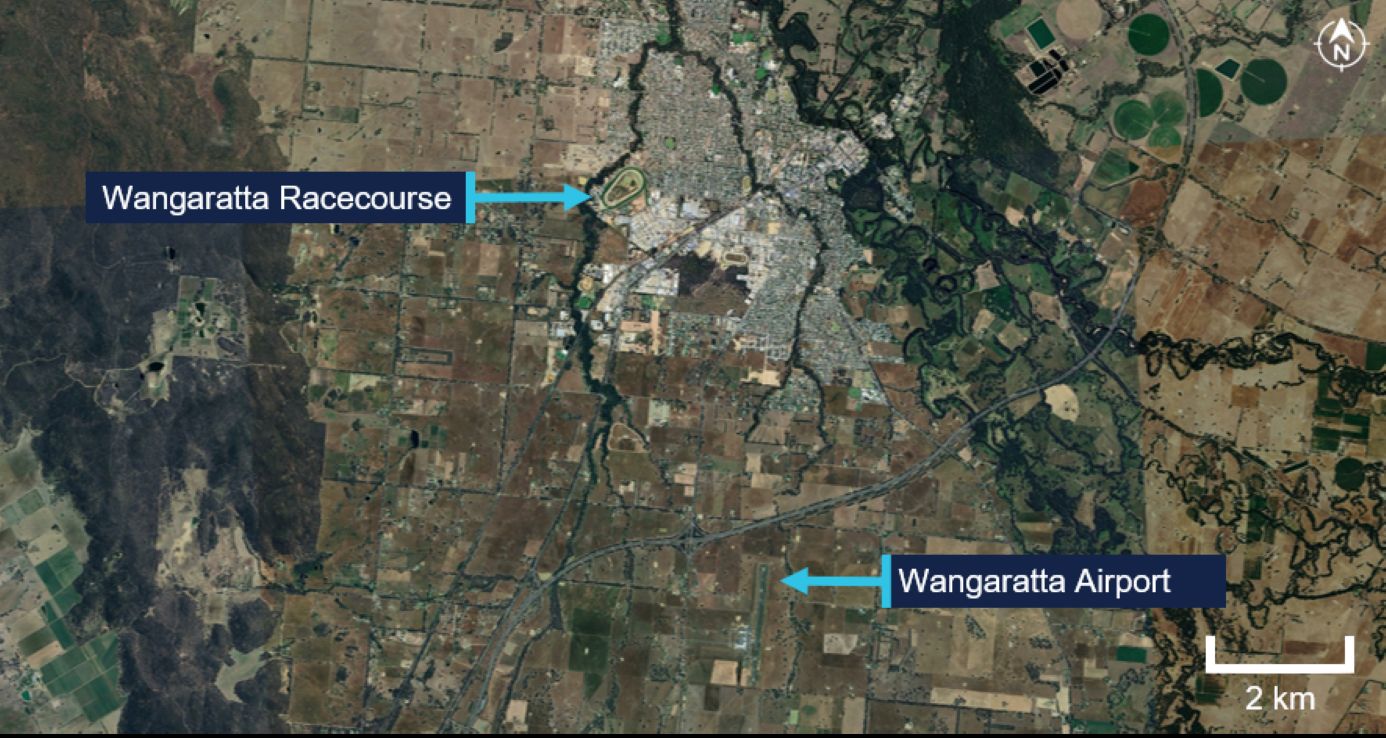
On 11 April 2026, a night hot air balloon static display was planned at Wangaratta Racecourse, Victoria (Figure 1). The display formed part of the Art of Flight Festival and involved 21 hot air balloons of varying manufacturers and sizes performing for approximately 2,300 spectators. A drone show was scheduled to immediately follow the balloons.
Figure 1: Wangaratta, Victoria
The balloon display was a static event conducted at night, where pilots activated their balloon’s burner in time to music to create a visual performance. Most balloons had their envelope inflated for the performance (balloon glow), while others used only the basket with a burner (candlestick burn). All balloons were to remain grounded throughout the display and were restrained by attaching them to one or more vehicles (see Launch restraint).
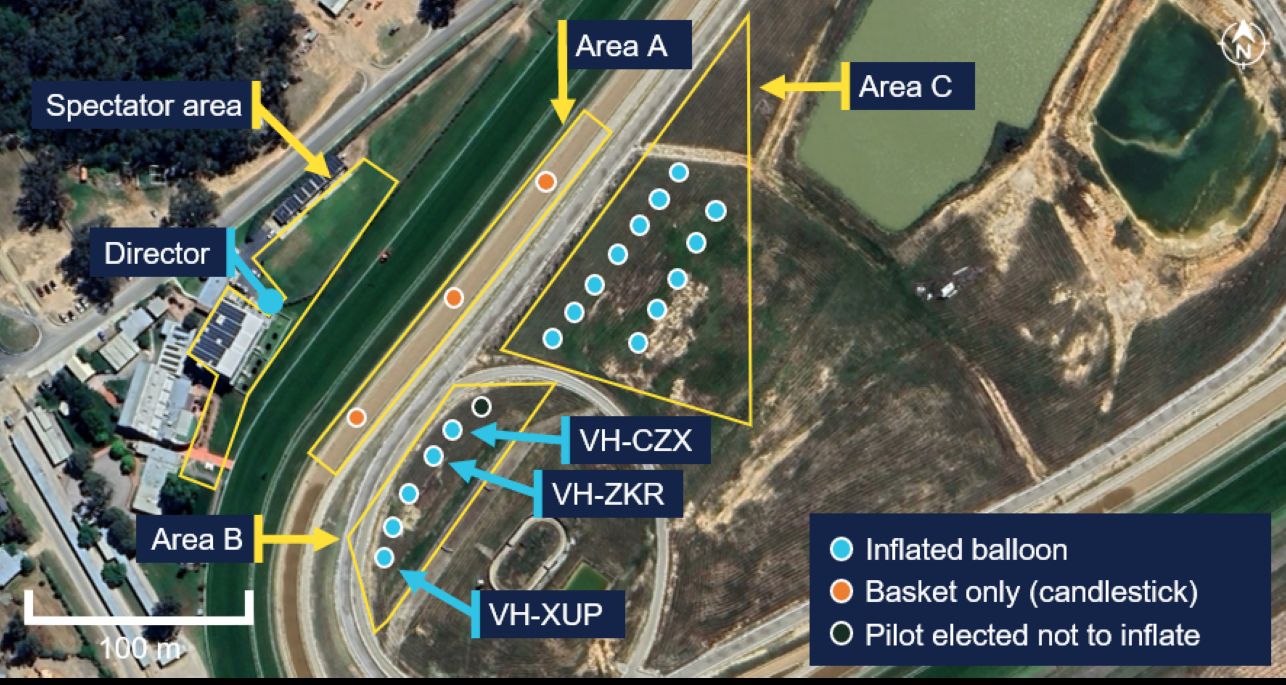
Each balloon had a single pilot in the basket, assisted by a small crew of other individuals familiar with balloon operations, typically friends and family. Crew members assisted in the inflation process and when the balloon was inflated, applied their weight to the basket when required to prevent it from leaving the ground (see Ground crew). The display area was divided into 3 sections (Figure 2):
- Area A – 3 baskets (candlestick burns)
- Area B – 6 balloons
- Area C – 12 balloons
Figure 2: Balloon layout
The balloon glow organiser had assigned official roles to different individuals:
- Director: responsible for briefing and conducting the balloon glow, which involved communicating with pilots via handheld radios. This role was filled by the balloon glow organiser.
- Liaison officer: coordinated with external parties and supervised the mustering of balloons on and off the display area.
- Safety officer: provided safety oversight of balloons during the event.
- Assistant safety officer: provided assistance to the safety officer.
At about 1500, the pilots and crews set up their balloons on the display area for inflation later in the evening. At about 1815, after attending a function at the racecourse, the pilots gathered in the display area for a briefing. At around this time, a pibal1 was launched by a pilot in area C. The director recalled that the pibal indicated wind conditions were suitable below 100 ft.
The briefing was conducted by the director. Both the director and liaison officer recalled the briefing included the following instructions related to launch restraints:
- The quick release should be isolated or removed from the launch restraint (see Launch restraint).
- Pilots should use 2 short independent restraints from the balloon to the front of the vehicle.
During the briefing, the director also advised the pilots that the wind speed had reduced as expected and was now suitable for the display.
The pilots of 2 of the involved balloons (VH‑CZX and VH‑XUP) both recalled that there was minimal discussion of the weather at the briefing, and neither recalled instructions to use 2 restraints, stating that such a request would be unusual.
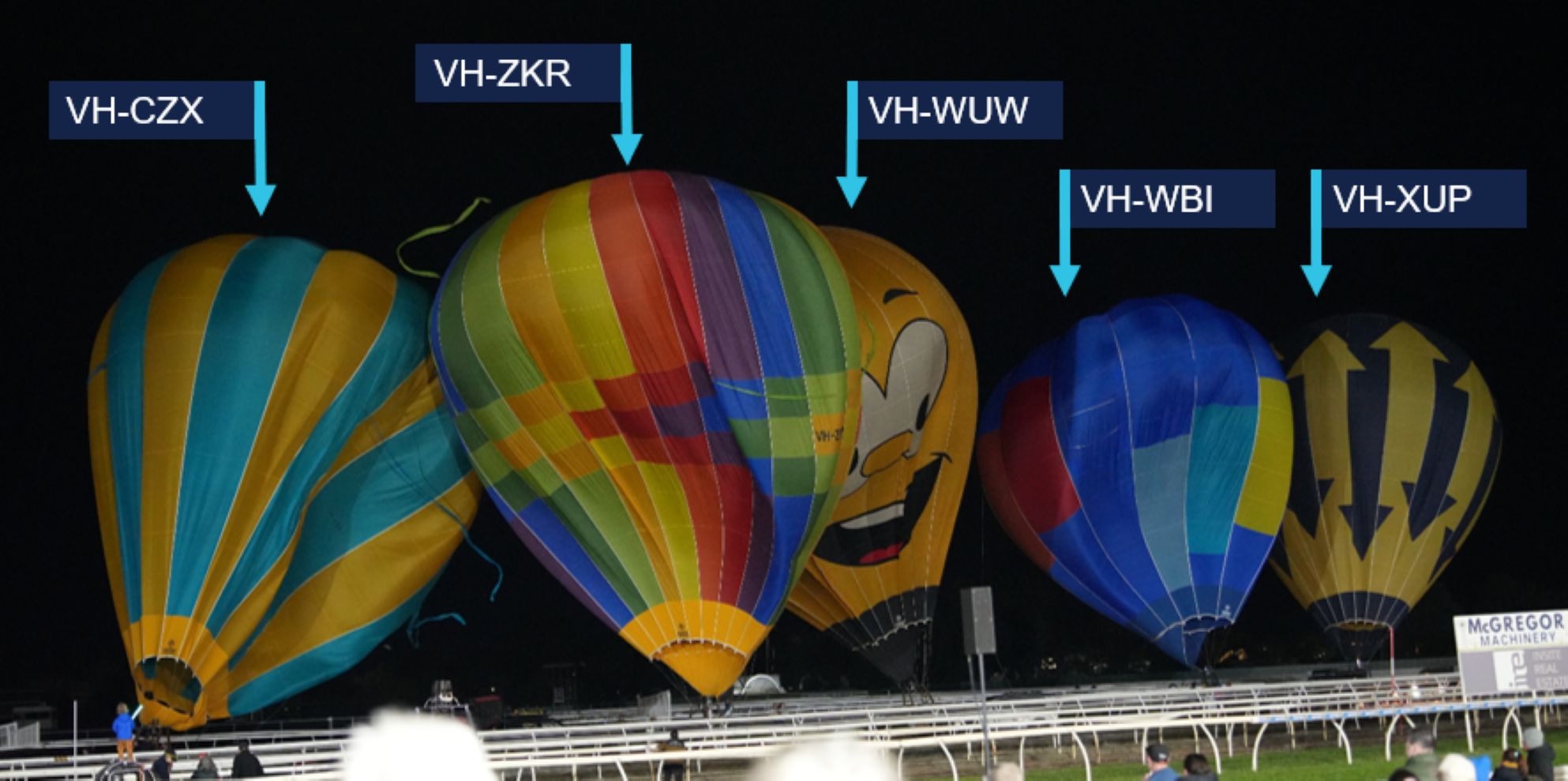
Following the briefing, the director went back across the track to a marquee where they had a view of the balloons and could conduct the display. The pilots in areas B and C inflated their envelopes and stood their balloons up. One pilot at the northern end of area B elected not to participate because they were concerned about the proximity of a nearby railing. The 5 inflated balloons in area B were (Figure 3):
- VH‑CZX, a Kavanagh D‑77, now the northernmost inflated balloon in the row, with a pilot and 2 crew members in the basket. Three additional crew members were positioned outside of the basket
- VH‑ZKR, a Kavanagh B‑77, with a pilot in the basket and 4 crew members outside of the basket
- VH‑WUW, a Kavanagh EX‑60, with a pilot in the basket and 2 crew members outside of the basket
- VH‑WBI, a Kavanagh C‑56, with a pilot in the basket and 4 crew members outside of the basket
- VH‑XUP, an amateur‑built GUS‑69, positioned at the southern end of the row, with a pilot and a crew member (also a student balloon pilot) and their child in the basket. An additional crew member and their child were positioned outside of the basket.
Figure 3: Balloons in area B affected by increasing wind
At about 1900, the balloon glow commenced, however, about 12 minutes later, the balloons were affected by a rapid and significant increase in wind speed. The director recalled a pilot on the radio reporting that some balloons in area B had been impacted by a squall,2 which coincided with a short rain shower. In response, the director instructed the balloons in area B to deflate. The director further recalled that the balloons in area C were initially less affected by the wind, with the pilots in this area deflating their balloons as the wind speed increased.
Following exposure to the increased wind, both VH‑ZKR and VH‑WUW became temporarily airborne, while the basket of VH‑WBI moved but stayed on the ground. The crew members at each of these balloons were not holding onto their balloon’s basket at the time, with neither the pilots nor crew members of these balloons receiving injuries.
VH‑CZX was affected by a strong wind gust and, while initially lifting briefly, was held down by crew members outside the basket. The balloon then lifted a second time, with the crew unable to hold it on the ground. It subsequently rose to the limit of the launch restraint, and a crew member was lifted off the ground before falling away and receiving serious injuries. The balloon came back to ground, still held by the launch restraint, and the basket came to rest on its side as the pilot deflated the envelope.
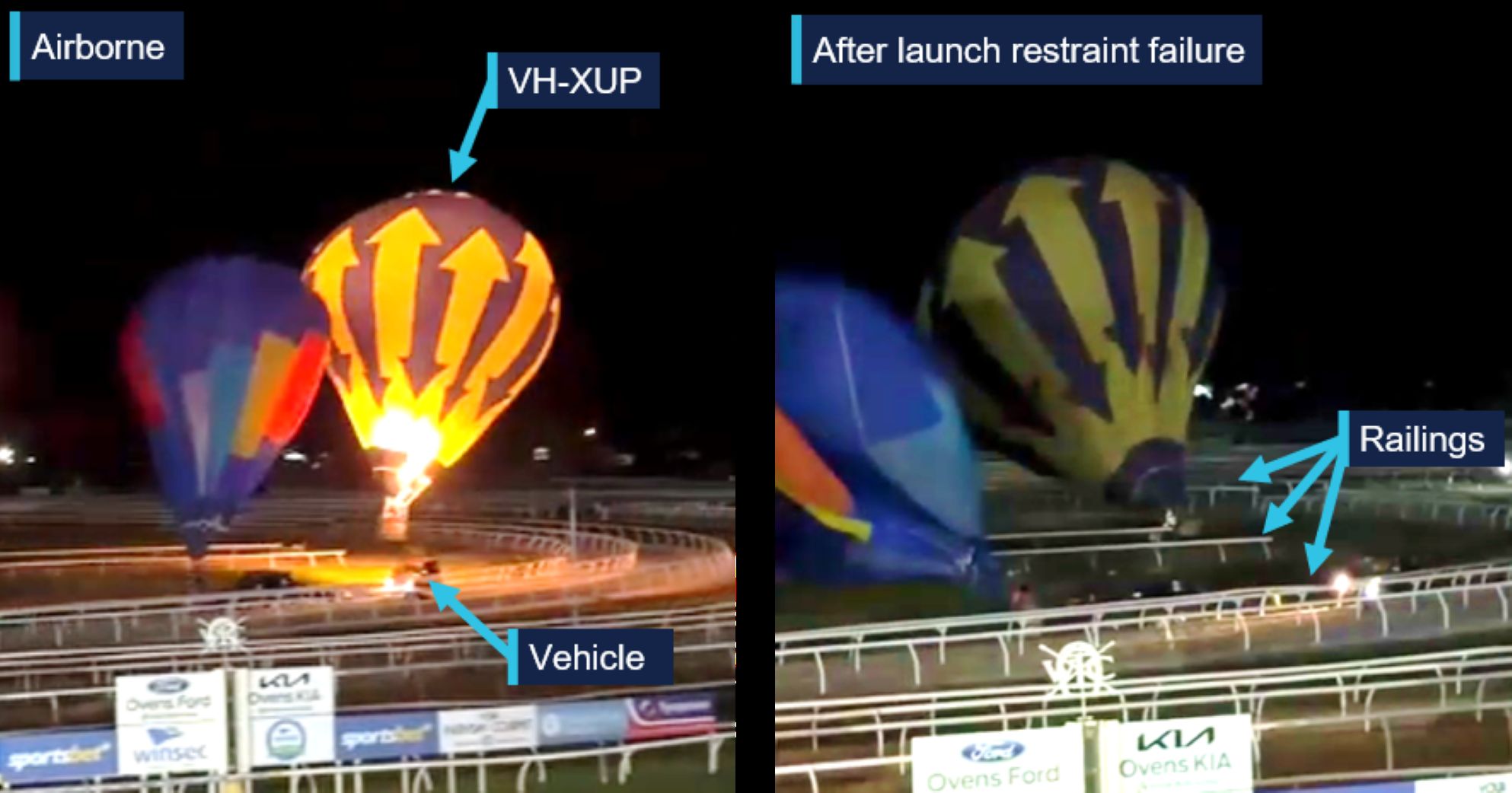
At the time, the safety officer was walking through area B monitoring the balloons. Arriving at VH‑XUP they noticed it was ‘getting jostled about a bit’ and assisted by applying their weight to the outside the basket. A crew member was also holding the basket at the time, while their child was positioned away from the balloon. VH‑XUP subsequently became airborne, travelling over its tethering vehicle before coming back to the ground (Figure 4).
When the balloon lifted, the safety officer was thrown to the side and received minor injuries. While the balloon was airborne, the launch restraint attaching it to its tethering vehicle failed. Upon returning to ground, the basket of the unrestrained balloon tipped onto its side and was dragged for approximately 40 m past multiple railings before the envelope deflated. The balloon’s occupants remained inside the basket throughout and were uninjured.
Figure 4: Footage of VH-XUP launch restraint failure
No damage to any of the balloons was reported. The injured participants were attended to by first aid personnel engaged for the event. These personnel were stationed within the spectator area and arrived at the injured crew member of VH‑CZX at 1935. By this time, an off‑duty paramedic at the event had called Ambulance Victoria, who arrived at 1950 and took over treatment of the crew member, subsequently transporting them to hospital. The safety officer was also assessed by paramedics at the racecourse and was taken to hospital by car.
Following the deflation of all balloons, the balloon display did not resume. The director subsequently made a phone call to the remote pilot in command (RPIC) of the drone show, which was scheduled to commence at 1930. The RPIC did not have concerns about the wind, and it was agreed to proceed with the drone show. The RPIC was aware that a balloon had become unrestrained and was now secure, but they were not told that any participants had been injured, nor that emergency services had been notified. They advised they would likely not have proceeded with the drone show had they known this.
Context
Pilot information
The pilot of VH‑XUP held a Private Pilot (Balloon) Permit issued in 2017 with a valid flight review. They had accumulated 356 hours of flight time of which 154 hours were in the GUS‑69. They had accumulated 6.3 hours of flight time in the last 90 days, all in the GUS‑69.
The pilot of VH‑CZX held a Private Pilot (Balloon) Permit issued in 2017 with a valid flight review. They had accumulated 645 hours of flight time of which 13.6 were in the last 90 days, all in the D‑77.
Aircraft information
VH-XUP was an amateur-built GUS-69 manned free balloon. The envelope was built by the pilot and the balloon’s maintainer. The basket and burner were manufactured by Kubicek Balloons. The aircraft was registered in Australia in 2008, and a special certificate of airworthiness was issued in 2009. It was maintained under a maintenance schedule that required an inspection to be conducted every 12 months or 100 hours, whichever came first. The most recent inspection was conducted in January 2026.
The aircraft flight manual did not specify any wind limits for launch or inflation. It also did not contain procedures for the conduct of a static display.
VH-CZX was a Kavanagh Balloons D-77 manned free balloon. The balloon was manufactured and registered in Australia in 2017. The most recent periodic inspection was conducted in February 2026. The aircraft flight manual stated that:
If the surface wind is above 5 kt a sheltered site should be considered for inflation.
The manual also did not contain procedures for the conduct of a static display.
The ATSB only requested pilot and aircraft information for the 2 balloons associated with injuries.
Meteorological information
Forecasts
The Bureau of Meteorology (BoM) issued a graphical area forecast (GAF) at 1400, covering Wangaratta, that was valid at the time of the balloon glow. This forecast broken cloud from 5,000 to 7,000 ft with no additional weather. A terminal area forecast (TAF)3 for Wangaratta airport, located 6 km south of the event, was issued at 1034 which forecast:
- from 1200, wind from 270°T at 15 kt, gusting to 25 kt, with clear skies
- from 1600, wind from 270°T at 12 kt with scattered cloud at 5,000 ft.
The wind reported on a TAF was the mean direction and mean speed. The maximum gust was given only if it was forecast to exceed the mean wind by 10 kt or more.
Observations
The remote pilot in command (RPIC) of the drone show had positioned a portable weather station on the eastern side of the racecourse, which recorded the mean and maximum wind strength at 5‑minute intervals (Figure 5). Following gusty conditions in the late afternoon, at 1810, the wind speed began to reduce, and at 1835, was below 2 kt. From 1905, the median and the gust increased significantly with a peak gust of 17.5 kt recorded at 1920.
Figure 5: Wind speed recorded by portable weather station 1600 to 1940
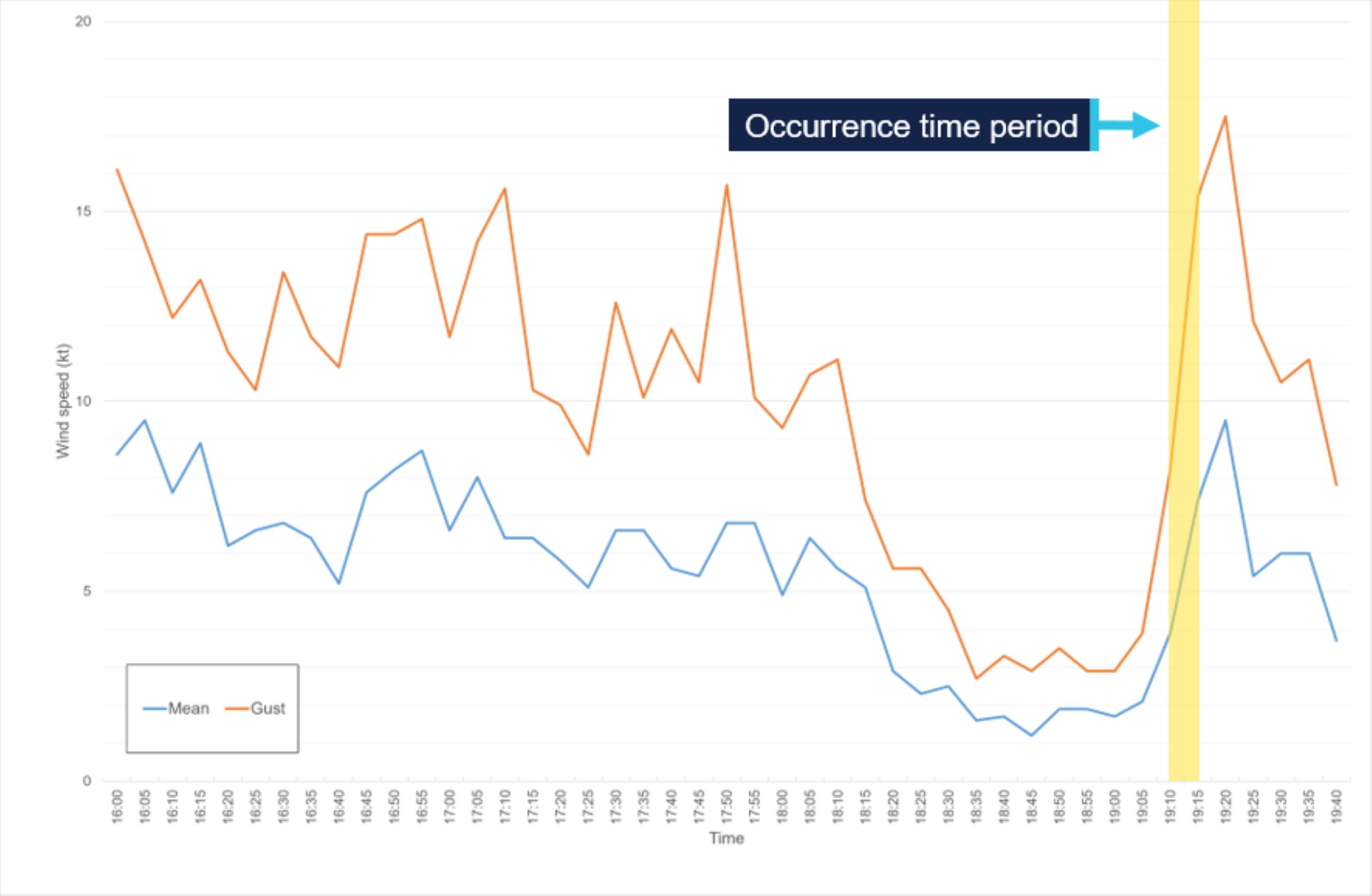
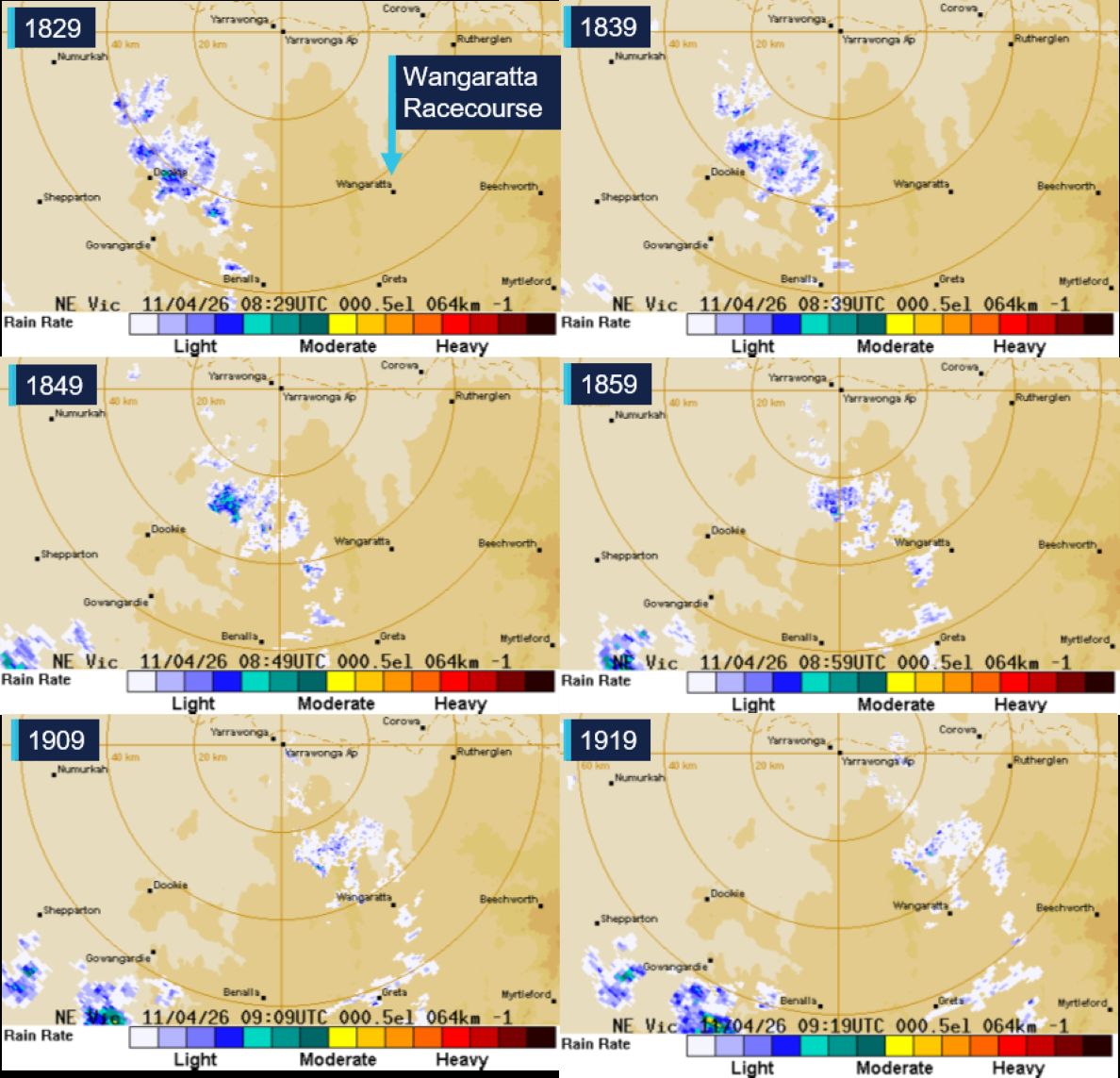
Rain radar images provided by the BoM (Figure 6) showed light rain approaching from the west and passing overhead Wangaratta racecourse at about the time of the occurrence.
Figure 6: Rain radar images from 1829 to 1919
Meteorologist
The Art of Flight Festival included a ballooning competition conducted across several days prior to the balloon glow event. A highly experienced meteorologist, specialising in balloon meteorology, was responsible for assessing the weather and briefing participants at the start of each competition day. They had conducted a weather briefing the morning of the balloon glow for that day’s competition which was specific for the proposed flights that day and did not include any information on the balloon glow display.
The meteorologist was at the racecourse as a spectator during the balloon glow and described the weather event that they witnessed as likely a downdraft from a rain shower. They were surprised that event officials did not ask them to participate in the weather assessment or pilot briefing for the balloon glow, but they did not request to be involved. They advised they had been involved in weather briefings for night glows conducted by other organisations, and had they known that their participation was required by this event’s safety management plan (see Safety management plan), they would have insisted on their involvement.
Weather assessment
The director reviewed the Windy4 application before the pilot briefing to check the forecast wind for the following hour and was principally relying on this for their weather information. They did not consult official aviation weather products such as the Wangaratta Airport TAF. They reported that they attempted to access the BoM rain radar on their phone but were unable to due to usability issues on their mobile phone.
The director stated that no one was tasked with monitoring the weather during the event and they personally were not in a position to do so. They expected that each pilot would individually monitor conditions and assess them against their own limits. They also stated they had not defined a wind limit for the balloon glow, however considered it unlikely they would go ahead with the balloon glow in winds greater than 10 kt, and possibly 8 kt for larger balloons.
Before the balloon glow, the pilot of VH‑CZX checked the GAF and the Bureau of Meteorology’s MetEye5 online tool, focusing on surface wind, and did not see any indication that conditions would deteriorate. They did not review the rain radar, and they later reported being surprised that the meteorologist had not presented information relating to the weather as part of the balloon glow briefing. During the event, they used streamers hanging from their balloon to inform them of any wind changes.
The pilot of VH‑XUP accessed the Windy application during the presentation dinner and observed that the wind speed was reducing. They were predominantly focused on whether the conditions were suitable when inflating the balloon, later reporting they considered a wind speed of 4–5 km/h (2–3 kt) to be the upper limit for them to participate. During the briefing, they assessed the conditions would be suitable. Once the event started, they did not monitor the weather.
Launch restraint
Overview
A launch restraint is a device used to hold an inflated balloon close to the ground. For balloon flights, the device usually includes a quick release mechanism to allow the pilot to detach the balloon from the restraint while they are located in the basket. The pilot of VH‑XUP used a single launch restraint, with the quick release mechanism removed, to attach their balloon to the front of their vehicle. One end of the restraint was attached to the tethering vehicle with a snap hook, while the other end was attached to a D‑ring. With the quick release removed, the D‑ring was directly attached to a bridle with a carabiner. The bridle was attached to 2 corners of the burner frame of the balloon.
The pilot had acquired the launch restraint about 26 years prior (2000), when it was supplied with the second‑hand purchase of their previous balloon. Cameron Balloons, the manufacturer of that previous balloon, reviewed production records from when it was manufactured in 1989 and did not have any record of a launch restraint being supplied. It also did not recognise the restraint as a component it ever produced.
Requirements
Guidance and requirements for launch restraints were available across multiple documents: the Civil Aviation Safety Authority Recreational ballooning procedures manual, the Australian Ballooning Federation Pilot training manual and Part 131 of the Civil Aviation Safety Regulations (CASR) (see Regulations and guidance).
The pilot training manual contained guidance on the type and strength properties of launch restraints. It stated that:
Ropes should be synthetic fibre, in good condition, of a kind which does not degrade quickly in sunlight. The breaking strain of the rope should be similar to the total weight of the balloon including contained air, i.e. several tonnes.
The total weight of VH‑XUP at the balloon glow including heated air was calculated to be approximately 2,400 to 3,000 kg.6
The manual also contained general guidance on the use of rope to restrain a balloon. It stated that for small sport balloons, ropes for tethering should have a minimum strength of 4,000 kg. It also stated that:
Ropes should be inspected prior to every use and ropes with knots or damage in them should not be used – the simplest overhand knot reduces rope strength by up to 50%. The ends are best fitted with eyelets or secured with a bowline knot, avoiding sharp metal edges.
The CASR Part 131 Manual of Standards defined the equipment required when conducting balloon operations. The regulations did not state any requirements for a balloon’s launch restraint. The recreational ballooning procedures manual contained additional equipment requirements, including that:
A launch rope and quick release approved by the balloon manufacturer must be used to secure the balloon during pre‑flight set up and until take‑off.
VH-XUP’s aircraft flight manual did not specify what type of launch rope was required. The maintenance inspection listed ancillary equipment that should be inspected including:
Launch restraint – check function of the latch. Check bridle for wear or fading.
Restraint examination
The ATSB conducted a non-destructive inspection of the failed launch restraint used on VH‑XUP. The restraint, approximately 4 m in length, was constructed with rope covered by webbing and carried no labelling or identification markings (Figure 7). The webbing was faded and generally appeared aged. Markings consistent with melting and friction damage were also observed. The webbing had bunched around what was likely a knot in the middle of the restraint, which prevented its free movement. Greater length in the webbing indicated that load was carried by the rope while the webbing provided protection.
Figure 7: VH-XUP launch restraint
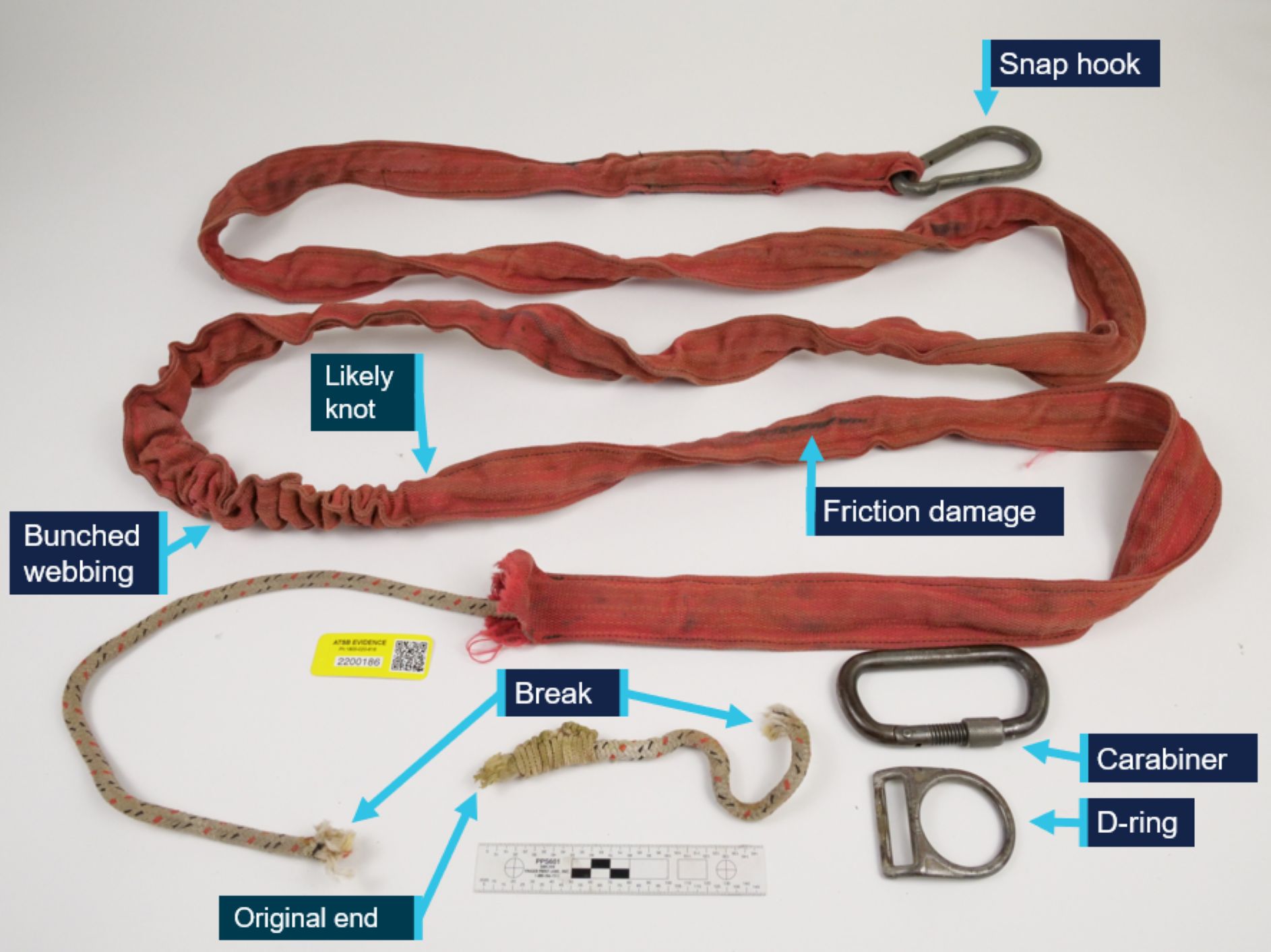
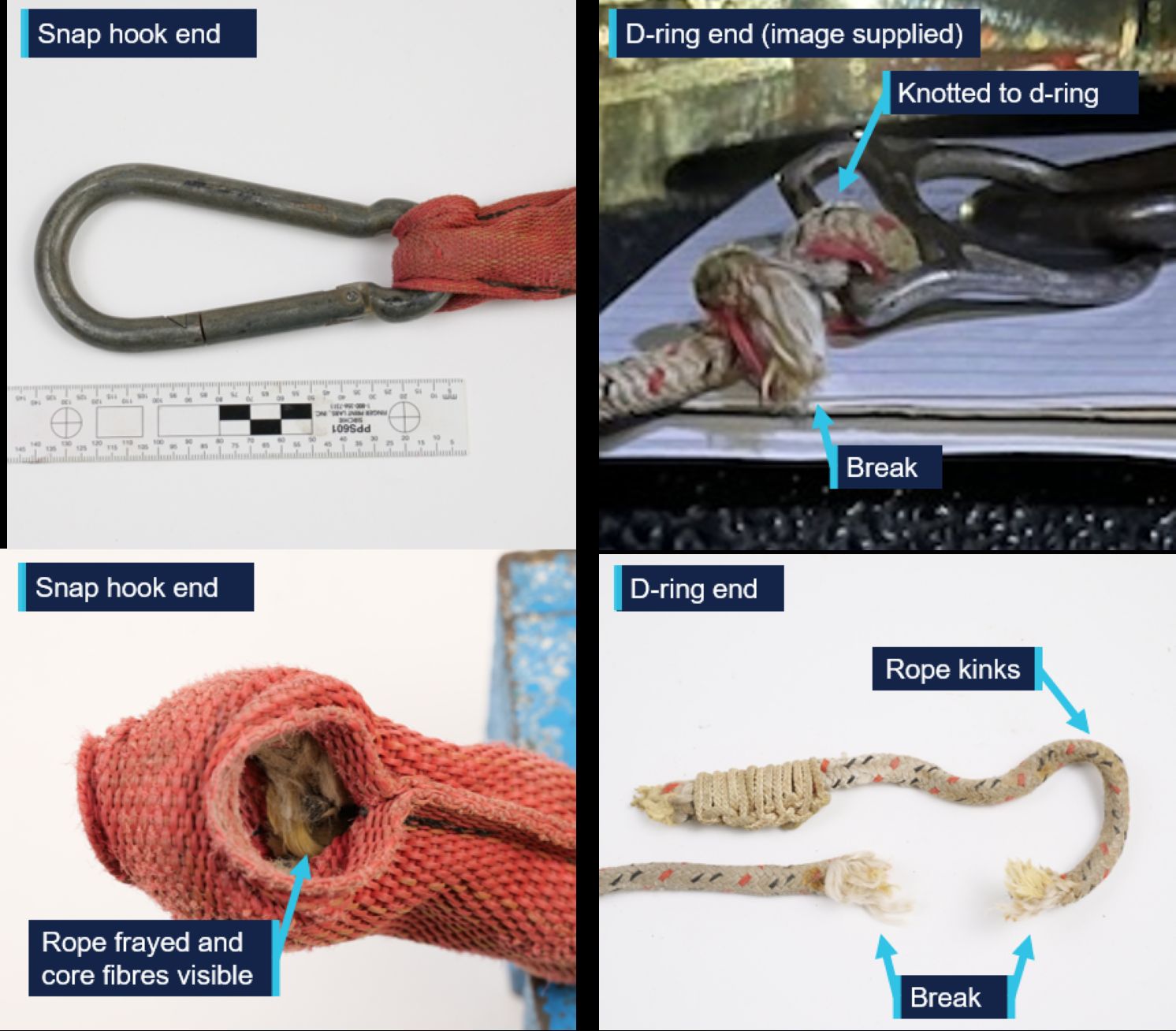
One rope end was attached to a steel snap hook with sewn webbing. The other end, where the break occurred, was previously attached to a steel D‑ring. Based on the rope kinks and supplied imagery taken immediately following the occurrence, this end of the rope was knotted to the D‑ring with the break likely occurring at the knot (Figure 8).
The rope was identified as double braid polyester type, consistent with that used in marine applications and did not carry any markings or labels to identify its properties or manufacturing history. The diameter of the rope ranged from 9.0 to 10.6 mm. Visual inspection of the rope inside the webbing at the snap hook end showed that it had frayed and core fibres were visible.
Figure 8: Rope ends of VH-XUP launch restraint
Double braid polyester rope
ATSB reviewed the advertised breaking strain of 10 mm polyester double braid marine rope, commercially available from several different rope manufacturers at the time of the occurrence, to estimate the likely breaking strain of the launch restraint. Breaking strains ranged from 1,600 to 3,060 kg with the majority within the 1,850 to 2,400 kg range. Manufacturers’ advice also compared methods of terminating a rope:
- Splice: the preferred method of termination that should not reduce the strength of a rope by more than 10%.
- Sewn eye: this method has advantages over a splice in that it allows for easy inspection and clear retirement criteria. A sewn eye’s strength is a factor of the stitching pattern and thread and not related to the strength of the rope.
- Knot: the simplest way to terminate or join a rope, but will reduce the strength of the rope, sometimes significantly, due to the tight bends and compression found in any knot. The magnitude of the reduction will depend on the knot, type of rope, and the material from which the rope is made, but can be up to 60%.
Several rope manufacturers also stated limitations on the service life of their ropes and were consistent in recommending a maximum lifespan of 10 to 12 years from the date of manufacture.
Commercially available launch restraints
The ATSB reviewed the construction and advertised breaking strain of launch restraint systems available from balloon manufacturers at the time of the occurrence (Table 1).
Table 1: Properties of commercially available launch restraints
Regulations and guidance
Overview
Part 131 of the Civil Aviation Safety Regulations (CASR) set out requirements for operating balloons. In December 2023, CASA assumed responsibility for certification and regulation of recreational ballooning from the Australian Ballooning Federation (ABF). The ABF remained as the national organisation that connected members with instructors, examiners, events, and competitions.
CASA published the Recreational ballooning procedures manual, which contained additional operational procedures and airworthiness requirements applicable to recreational ballooning. This document was based on the original ABF operations manual. The ABF continued to publish the Pilot training manual which was intended as the primary training document for private balloon pilots in Australia. It contained the syllabus and study materials for the Private Pilot Permit and was an ongoing resource to help pilots maintain their flying skills and knowledge.
Static displays
The CASR Part 131 Manual of Standard (MOS) and the Recreational ballooning procedures manual contained requirements for balloon tethered flight, but none for a static display or balloon glow where flight was not intended. The Pilot training manual also did not contain information specific to a static display or balloon glow. However, it did provide guidance on tethering a balloon and stated:
Sometimes a pilot may wish to tether a balloon (restrain it with ropes) in order to demonstrate it without flying away. Safe and effective tethering requires specific techniques, suitable equipment, competent crew, light winds, and compliance with manufacturer’s requirements. Windy conditions, whether or not expected, will put the balloon, equipment, personnel, spectators and the reputation of the sport at risk and should be avoided. (emphasis in the manual)
Crew members
The Pilot training manual contained guidance for use of a launch restraint when inflating and standing up a balloon in preparation for flight, stating that:
Any slack should be taken up by attaching to similar strong points before starting cold inflation, and again as soon as the balloon is upright following hot inflation, to minimise sudden movements of the basket due to false lift8 or wind changes. In addition, one or two crew members should be ready to put hands on (apply some weight to the edge of the basket) until the balloon is ready for take‑off.
Flight training exercises included guidance for pilots utilising crew members to hold down a balloon, which stated:
Emphasise minimum crew to have hands on – to avoid too much weight. Their feet must remain firmly on the ground at all times, and hands rather than elbows on the basket edge. They should stay clear of the downwind side in case the basket drags. ‘Hands on’ means hold the basket down firmly. ‘Hands off’ means raise hands to see if the basket is buoyant.
International guidance
The United Kingdom Civil Aviation Authority published Civil Aviation Publication 1739 Safety Guidance for Balloon Events and Competitions on 30 April 2026 (after the occurrence). This provided guidance to balloon event organisers specifically for the conduct of static displays, which included:
• Static displays must be made in accordance with the manufacturer’s flight manual for tethering (3‑point tether) to ensure that the basket does not leave the ground.
• Tethered Flight (and static displays where the basket remains on the ground at all times) should be conducted in line with the Manufacturer’s Flight Manual or builder’s operating notes. This includes using appropriate serviceable equipment and utilising a three- or four‑point tether system to a solid anchor point; this must not include a quick release system.
• Consideration should be given to the immediate surroundings when setting up to tether or static display, including proximity of fixed or temporary objects (e.g. trees, marquees, fences), other balloons and associated vehicles, other activities, and persons.
• As far as possible a single point of failure in a tether system should be avoided and all components must be of appropriate breaking strain.
• Any balloons that are being inflated for static display purposes only, must be ballasted and tethered appropriately so the basket doesn’t leave the ground.
• If a night glow is to be performed, a specific night glow briefing should be given to all participating pilots prior to the activity taking place.
Event procedures
Safety management plan
Weather assessment and pilot briefing
The organiser developed a safety management plan (SMP) for the balloon glow event. The SMP included procedures for weather monitoring, which stated:
• Weather conditions are monitored by our professional and highly regarded weather man [name redacted]. [Name redacted] is a well-known meteorologist specializing in micrometeorology for hot air ballooning, serving as the go‑to weather expert for major balloon festivals in Australia and New Zealand
• Operating thresholds: weather events, wind speed, wind direction, storms or precipitation, world events, weather events
• Who makes the final decision
[Name redacted] – Event Director advised by Weather expert [name redacted] & team.
The SMP also described the pilot briefing which included:
• Who attends: All pilots and crew must attend mandatory briefing, meteorologist, event manager and directors, event staff and volunteers
• Key safety points covered: crowd safety, weather expected, go no go decision and time, decided on the day with advice from meteorologist
Event risk assessment
The SMP contained a risk assessment for the balloon glow and identified several risks related to adverse weather. Risk treatments were identified for each to reduce the residual risk. (Table 2)
Table 2: Risk assessment items related to adverse weather
Drone show
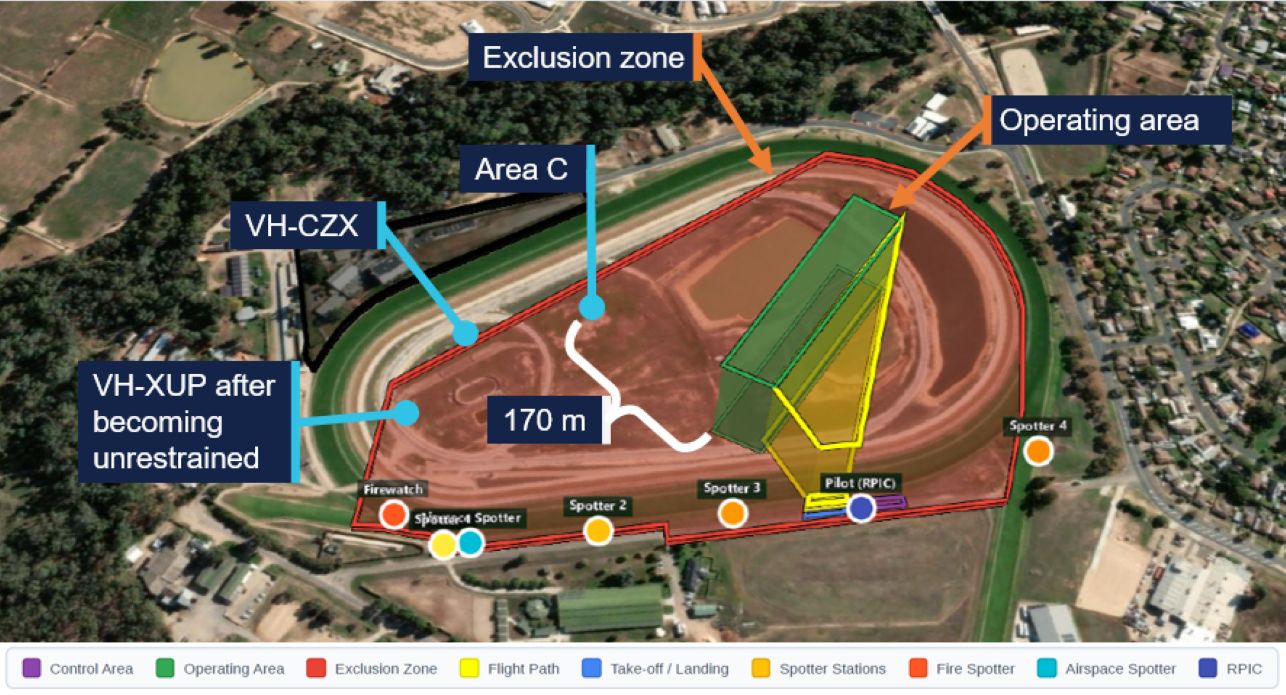
The operator of the drone show produced a job safety analysis which defined an exclusion zone for the show (Figure 9), and stated:
…at any time the RPAs [remote piloted aircraft] are airborne, absolutely no person other than staff or spotters are to enter the exclusion zone.
The RPIC advised that balloon glow participants were permitted inside the exclusion zone and the briefing document had been shared with the organiser so they could operate safely in the exclusion zone. The liaison officer reported they had been given guidance on how to avoid the drone operating area and employed this guidance when marshalling the balloons on and off the track.
Figure 9: Drone show exclusion zone and operating area
Safety analysis
Weather
While the organiser’s safety management plan stated that the meteorologist would be involved in assessing and monitoring the weather, they were not asked to participate in the balloon glow briefing.
The director assessed the weather conditions prior to the event commencing but did not consult key information sources, such as the Wangaratta Airport terminal area forecast (TAF). The racecourse was within the area covered by the TAF, which forecast that the mean wind strength was expected to remain above that which the director considered suitable. Furthermore, radar imagery from the Bureau of Meteorology showed that rain was approaching and was likely to arrive when the display was to start. Pilots did conduct some individual assessment of the weather before the balloon glow commenced however, these assessments were brief and focused primarily on the relatively calm conditions at the time.
As the director had direct local wind observations from the pibal and considered conditions suitable to commence the balloon glow, a comprehensive analysis of the forecast weather may not have resulted in a decision to cancel or delay the start of the event. However, the inclusion of this analysis in the briefing would have given pilots an awareness that conditions could deteriorate and they would have been more prepared to respond. Additionally, no one was tasked with actively monitoring weather conditions once the event commenced. Instead, the director expected that pilots would monitor conditions themselves. However, this would likely have been difficult given the dark conditions, and the pilots’ attention directed toward following instructions for the performance. Had the rain and increasing wind been identified and communicated earlier, pilots would have had more time to act before the safety of their balloon was affected.
Contributing factor While written in the event procedures, the director did not request the involvement of the event meteorologist in the static display. Consequently, the pre‑event briefing did not include discussion of the forecast weather, nor were conditions actively monitored once the event commenced. This reduced the opportunity to anticipate and respond to a change in wind conditions. |
During the balloon glow, the wind increased rapidly associated with a passing rain shower. The gusts were consistent with the forecast and of sufficient strength that several balloons in area B became unintentionally airborne, likely due to false lift. While multiple balloons were affected, participants in the baskets were not injured, despite one balloon becoming unrestrained and dragging across the ground. In contrast, injuries did occur to people on the ground holding onto the outside of a basket at the time. This was reflective of the additional risk crew members were exposed to when applying their weight to a balloon to prevent flight, without ensuring that they remained on the ground.
Contributing factor During the event, the wind strength rapidly increased, and several balloons became temporarily airborne. Two event participants on the ground were injured when the balloon baskets they were holding onto lifted into the air. |
An exclusion zone had been defined for the drone show. However, participants of the balloon glow were permitted to be within this zone. While there were no documented procedures on how participants could operate safely in the zone, the liaison officer employed informal guidance to ensure participants maintained sufficient separation from the operating area.
The drone show was also likely running while injured participants and emergency services were within the exclusion zone. However, area B was far enough from the drone operating area such that they were not exposed to significant additional risk. Nonetheless, by conducting the show while an emergency response was in progress, there was the potential to inadvertently complicate an already demanding situation.
Launch restraint
While the manufacturing history of the launch restraint of VH‑XUP could not be determined, the rope used was consistent with commercially available double braid polyester marine rope. This type of rope typically offered a breaking strain of between 1,800 and 2,400 kg. The launch restraint also used knots to attach the rope to metal hardware, reducing the breaking strain of the rope by up to 60%. Consequently, contrary to Australian Ballooning Federation (ABF) guidance, the overall breaking strain of the restraint was likely significantly less than the balloon's total weight at inflation.
No regulatory requirements were in place for the construction of launch restraints, however the Civil Aviation Safety Authority (CASA) required that that recreational balloons use a launch restraint approved by the manufacturer. Launch restraints commercially available from balloon manufacturers used rope of a greater thickness or a stronger material and incorporated splices or sewn eyes rather than knots in their construction. As a result, they offered a higher breaking strain. While VH‑XUP was an amateur‑built aircraft and was not associated with a manufacturer, a commercially available launch restraint could have been used.
While the construction of the launch restraint was such that the full length of the rope could not be visually inspected, it was possible to observe that the rope was frayed at the snap hook end by removing the metal hardware, revealing the core fibres. While the maintainer inspected the restraint at the most recent periodic inspection, they did not identify any damage to the rope and it remained in service.
It was not possible to determine how degraded the connection to the D‑ring appeared as the failure disturbed the arrangement of the rope and webbing at this end. Even had the restraint not looked damaged, it had been in service for more than twice as long as the maximum lifespan recommended by rope manufacturers and its original strength had likely deteriorated.
When VH‑XUP became airborne, the launch restraint was placed under strain and failed, allowing the balloon to break away. Given the proximity of railings and other balloons in area B, there was a high risk of collision once the balloon became unrestrained and it was fortunate that VH‑XUP was positioned at the end of the row and furthest from obstacles. A launch restraint failure in any other position would have likely resulted in the balloon colliding with a railing, another balloon, or people on the ground, resulting in damage and potentially additional, or more severe, injuries.
Other factor that increased risk The launch restraint securing VH‑XUP to a ground vehicle likely had insufficient breaking strain. In addition, periodic inspections had not identified that the restraint should have been retired due to damage and its extended time in service. Therefore, when placed under strain when the balloon was airborne, the launch restraint failed. |
Safety management plan
The safety management plan (SMP) identified that adverse weather posed a risk to the balloon glow and referred to general categories of weather to be considered. However, conditions and thresholds that would trigger cancellation of the balloon glow were not specified and there were no procedures on how changes in weather would be monitored and communicated to participants. Without clear and unambiguous limits, and no weather monitoring procedures, assessing the suitability of the weather was subject to interpretation, making any decision to discontinue more difficult.
The SMP’s risk assessment of a balloon becoming unrestrained during the event was unclear and contained no requirements for how the balloons should be restrained. Further, while the director reported making an informal request to use 2 restraints during the briefing, the pilots did not recall those instructions, and the requirement was not checked before the balloon glow commenced.
Moreover, no guidance was available from balloon manufacturers, the ABF or CASA on the conduct of static displays. Therefore, the organiser had to develop their own procedures and risk assessment based on personal experience, and by identifying existing limitations and guidance that were appropriate to apply to a static display. Guidance was published internationally after the occurrence which directly addressed ballooning events and static displays, including advice on the use of multiple attachment points, the risk of ground obstacles and the importance of a comprehensive pre‑event briefing.
Other factor that increased risk While Art of Flight assessed the risk of an adverse change in the weather, there were no clearly defined conditions that would require the event to be discontinued, and it did not effectively manage the risk of the launch restraint as a single point of failure. |
Findings
ATSB investigation report findings focus on safety factors (that is, events and conditions that increase risk). Safety factors include ‘contributing factors’ and ‘other factors that increased risk’ (that is, factors that did not meet the definition of a contributing factor for this occurrence but were still considered important to include in the report for the purpose of increasing awareness and enhancing safety). In addition ‘other findings’ may be included to provide important information about topics other than safety factors. These findings should not be read as apportioning blame or liability to any particular organisation or individual. |
From the evidence available, the following findings are made with respect to the loss of control on the ground involving Kavanagh Balloons D‑77, VH‑CZX and amateur‑built GUS‑69, VH‑XUP, at Wangaratta Racecourse, Victoria, on 11 April 2026.
Contributing factors
- While written in the event procedures, the director did not request the involvement of the event meteorologist in the static display. Consequently, the pre‑event briefing did not include discussion of the forecast weather, nor were conditions actively monitored once the event commenced. This reduced the opportunity to anticipate and respond to a change in wind conditions.
- During the event, the wind strength rapidly increased, and several balloons became temporarily airborne. Two event participants on the ground were injured when the balloon baskets they were holding onto lifted into the air.
Other factors that increased risk
- The launch restraint securing VH‑XUP to a ground vehicle likely had insufficient breaking strain. In addition, periodic inspections had not identified that the restraint should have been retired due to damage and its extended time in service. Therefore, when placed under strain when the balloon was airborne, the launch restraint failed.
- While Art of Flight assessed the risk of an adverse change in the weather, there were no clearly defined conditions that would require the event to be discontinued, and it did not effectively manage the risk of the launch restraint as a single point of failure.
Safety actions
| Whether or not the ATSB identifies safety issues in the course of an investigation, relevant organisations may proactively initiate safety action in order to reduce their safety risk. The ATSB has been advised of the following proactive safety action in response to this occurrence. |
Safety action by the Australian Ballooning Federation
In response to this investigation, the Australian Ballooning Federation advised the ATSB that it was developing a balloon glow procedures document to provide guidance for organisers and participants of future events.
Sources and submissions
Sources of information
The sources of information during the investigation included:
- the involved pilots
- the maintainer of VH‑XUP
- key event personnel
- the remote pilot in command of the drone show
- the organiser of another balloon glow event
- Cameron Balloons
- publicly available information from other balloon manufacturers
- Australian Ballooning Federation
- Civil Aviation Safety Authority
- Bureau of Meteorology
- video footage and photographs taken at the event.
Submissions
Under section 26 of the Transport Safety Investigation Act 2003, the ATSB may provide a draft report, on a confidential basis, to any person whom the ATSB considers appropriate. That section allows a person receiving a draft report to make submissions to the ATSB about the draft report.
A draft of this report was provided to the following directly involved parties:
- the involved pilots
- the maintainer of VH‑XUP
- key event personnel
- the remote pilot in command of the drone show
- Cameron Balloons
- Australian Ballooning Federation
- Civil Aviation Safety Authority
- United Kingdom Air Accidents Investigation Branch.
Submissions were received from:
- the maintainer of VH‑XUP
- the meteorologist
- Australian Ballooning Federation
- Cameron Balloons
- Civil Aviation Safety Authority.
The submissions were reviewed and, where considered appropriate, the text of the report was amended accordingly.
Purpose of safety investigationsThe objective of an ATSB safety investigation is to improve transport safety through:
In accordance with the TSI Act, the ATSB does not investigate for the purpose of taking administrative, regulatory or criminal action, and cannot apportion blame, assist in determining liability, or, as a general rule, assist in court proceedings. About ATSB reportsATSB safety investigation reports are developed in accordance with ATSB procedures and guidelines, and with regard to applicable international standards and instruments. Reports must include factual material of sufficient weight to support the investigation’s analysis and findings. At all times the ATSB endeavours to balance the use of material that could imply adverse comment with the need to properly explain what happened, and why, in a fair and unbiased manner. An explanation of terminology used in ATSB investigation reports is available here. Publishing informationReleased in accordance with section 25 of the Transport Safety Investigation Act 2003 Published by: Australian Transport Safety Bureau © Commonwealth of Australia 2026 Ownership of intellectual property rights in this publication Unless otherwise noted, copyright (and any other intellectual property rights, if any) in this report publication is owned by the Commonwealth of Australia. Creative Commons licence 
With the exception of the Commonwealth Coat of Arms, ATSB logo, and photos and graphics in which a third party holds copyright, this report is licensed under a Creative Commons Attribution 4.0 International licence. The CC BY 4.0 licence enables you to distribute, remix, adapt, and build upon our material in any medium or format, so long as attribution is given to the Australian Transport Safety Bureau. Copyright in material obtained from other agencies, private individuals or organisations, belongs to those agencies, individuals or organisations. Where you wish to use their material, you will need to contact them directly. |
- ^ Pibal or ‘pilot balloon’ is a small helium-filled balloon released to check low-level wind speed and direction.
- ^ Squalls are a sudden large increase in wind speed (usually accompanied by a change in wind direction) that lasts several minutes and then suddenly dies.
- ^ Terminal area forecast (TAF): a statement of meteorological conditions expected at an aerodrome and within a radius of 8 km of the aerodrome reference point.
- ^ Windy: a weather visualisation platform that provides interactive weather maps and forecasting tools.
- ^ MetEye: an online tool that assists in visualising local weather observations and forecasts.
- ^ The weight of the air decreased as the temperature inside the envelope increased.
- ^ Dyneema: a brand of ultra-high-molecular-weight polyethylene (UHMWPE) fibre offering high strength and light weight.
- ^ False lift: an upward force generated when wind blows across the curved upper surface of a balloon. The phenomenon relies on the same principle of airflow over an aircraft wing generating lift.
- ^ Knock off: an instruction given to balloon pilots to deflate their balloons and discontinue the activity.
- ^ It was unclear if this was intended to be 10 kt, or 10 km/hr (5 kt).
Occurrence summary
| Investigation number | AO-2026-070 |
|---|---|
| Occurrence date | 11/04/2026 |
| Occurrence time and timezone | 1912 Australian Eastern Standard Time |
| Location | Wangaratta Racecourse |
| State | Victoria |
| Report release date | 12/11/2026 |
| Report status | Final |
| Investigation type | Occurrence Investigation |
| Investigation phase | Final report: Dissemination |
| Investigation status | Completed |
| Mode of transport | Aviation |
| Aviation occurrence category | Cabin injuries, Ground operations - Other, Loss of control, Turbulence/windshear/microburst |
| Occurrence class | Accident |
| Highest injury level | Serious |
Aircraft details
| Manufacturer | Amateur Built Aircraft |
|---|---|
| Model | GUS-69 |
| Registration | VH-XUP |
| Serial number | GUS-01 |
| Sector | Balloon |
| Operation type | Part 131 Balloons and hot air airships |
| Activity | General aviation / Recreational-Sport and pleasure flying-Other sport and pleasure flying |
| Injuries | Crew - Nil, Passengers - Nil, Ground - 1 (Minor) |
| Damage | Nil |
Aircraft details
| Manufacturer | Kavanagh Balloons |
|---|---|
| Model | D-77 |
| Registration | VH-CZX |
| Serial number | D77-549 |
| Sector | Balloon |
| Operation type | Part 131 Balloons and hot air airships |
| Activity | General aviation / Recreational-Sport and pleasure flying-Other sport and pleasure flying |
| Injuries | Crew - Nil, Passengers - Nil, Ground - 1 (Serious) |
| Damage | Nil |