

Final report
Report release date: 20/10/2026
Investigation summary
What happened
On 4 February 2026, a flight instructor and student pilot of an Avions Mudry & Cie CAP 10B aircraft, registered VH-YAO, departed Parafield Airport, South Australia, to conduct an upset prevention and recovery training flight. About 30 minutes into the flight, when at about 7,000 ft above mean sea level, the instructor commenced an aerobatic manoeuvre. Following a roll to the left to commence inverted flight, and with the wings level, the crotch strap of the instructor’s 5‑point restraint disconnected. As a result, the instructor impacted the aircraft canopy and there was a momentary loss of control. The aircraft nosedived with increasing speed and was recovered at about 3,000 ft. The instructor received a minor injury, and there was minor damage to the aircraft canopy.
What the ATSB found
It was found that the latches and internal subparts of the buckle of the instructor’s 5-point harness were worn. This resulted in disconnection during the aerobatic manoeuvre. Pilot harness security checks were conducted prior to the flight and before commencing the manoeuvre but did not reveal a problem.
The method for inspecting the restraint system during routine maintenance did not enable detection of worn components within the buckle. Also, the 5-year service life defined by the restraint manufacturer did not account for the extent of usage associated with some aerobatic training operations.
What has been done as a result
The manufacturer was in the process of revising the service life of the restraint system when used for aerobatic flight and will release an updated service bulletin. The operator has also limited the use of the restraint system to 3 years or 1,000 hours, with a 50-hour tolerance, and will monitor advice from the manufacturer.
Safety message
When undertaking flights that may involve unusual aircraft attitudes and higher than normal loads on the restraint system, it is critically important that a restraint security check is completed before undertaking any such manoeuvres. However, it can be difficult to ensure serviceability if worn restraint system components are not readily visible.
Adequate maintenance requires the participation and cooperation of manufacturers, regulatory authorities, owners, operators, and maintainers. Manufacturers provide a pivotal role in ensuring continued airworthiness by conducting analysis of their products and rectifying unexpected problems as they arise. Reporting defects to the manufacturer and regulatory authorities as soon as possible ensures that any safety improvements, and the dissemination of safety-related information, can occur quickly.

The ATSB SafetyWatch highlights the broad safety concerns that come out of our investigation findings and from the occurrence data reported to us by industry. One of the safety concerns is reducing the severity of injuries in accidents involving small aircraft: Reducing the severity of injuries in accidents involving small aircraft
The occurrence
On the evening of 4 February 2026, at about 1830 local time, an Avions Mudry & Cie CAP 10B aircraft, registered VH-YAO and operated by Flight Training Adelaide, departed Parafield Airport, South Australia, for a local training flight. On board the aircraft was a flight instructor in the right seat and a student pilot in the left seat.
This was the student’s second flight with the instructor, and the purpose of the flight was to undertake upset prevention and recovery training.1 During the flight, the instructor was intending to demonstrate several aerobatic manoeuvres, to familiarise the student with the physical effects of the unusual attitudes and techniques for recovery.
Prior to take-off, in accordance with standard procedures, the instructor reported checking the security of both restraints and again prior to their first aerobatic manoeuvre as part of a HASELL check.2
Approximately 30 minutes into the flight, following completion of the first manoeuvre, which included inverted flight, the instructor commenced the demonstration of a split S manoeuvre3 from about 7,000 ft above mean sea level (Figure 1). The instructor recalled that, as they rolled the aircraft to the left, just as the wings levelled in inverted flight and as they were about to pull through with the aircraft under negative g,4 their crotch strap suddenly released.
Figure 1: Split S manoeuvre and point of crotch strap disconnection
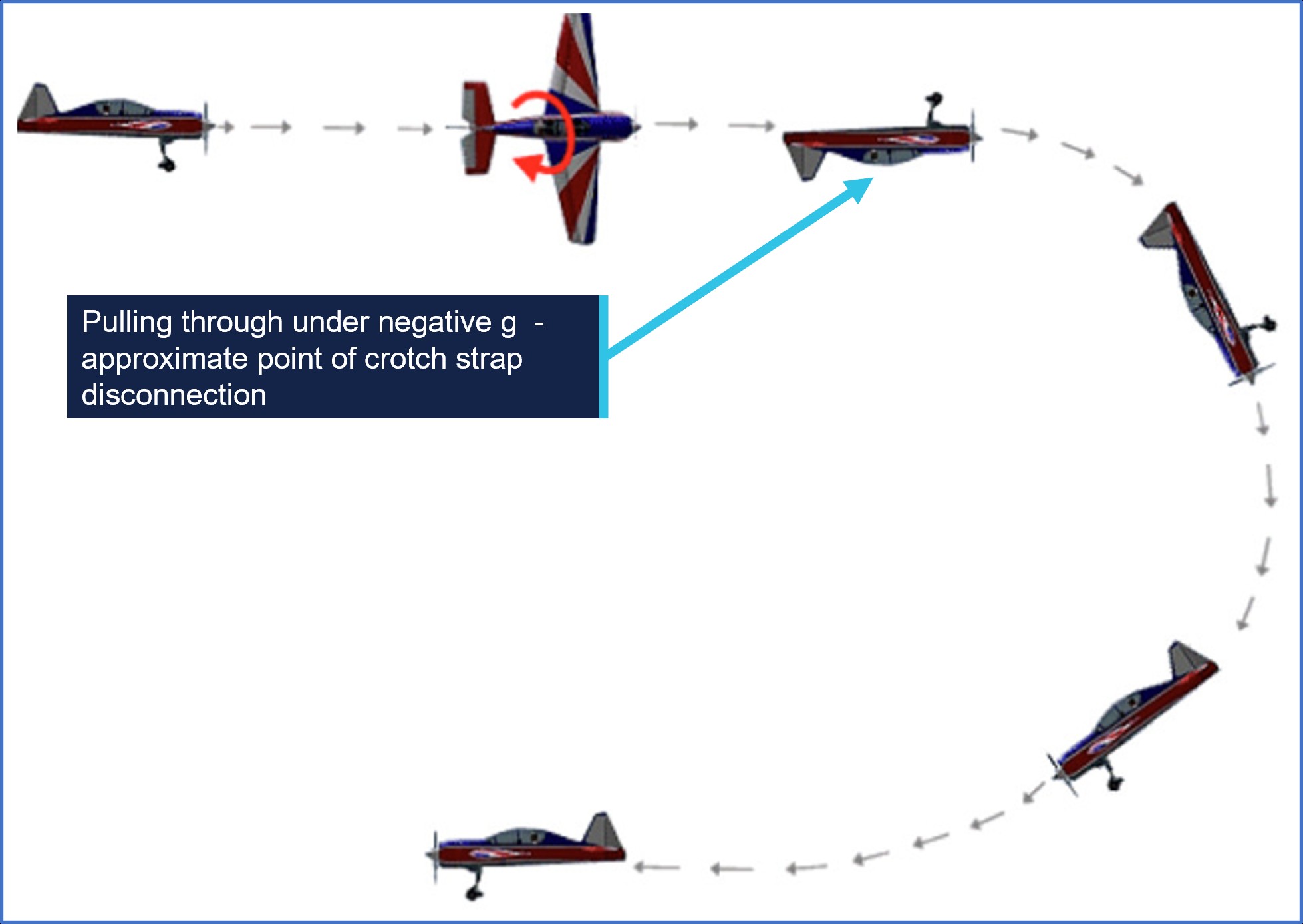
As a result of the disconnection of the crotch strap, the instructor fell out of their seat, impacting the overhead canopy. The instructor reported briefly releasing pressure on the flight control stick and as a result the aircraft went into a nosedive.
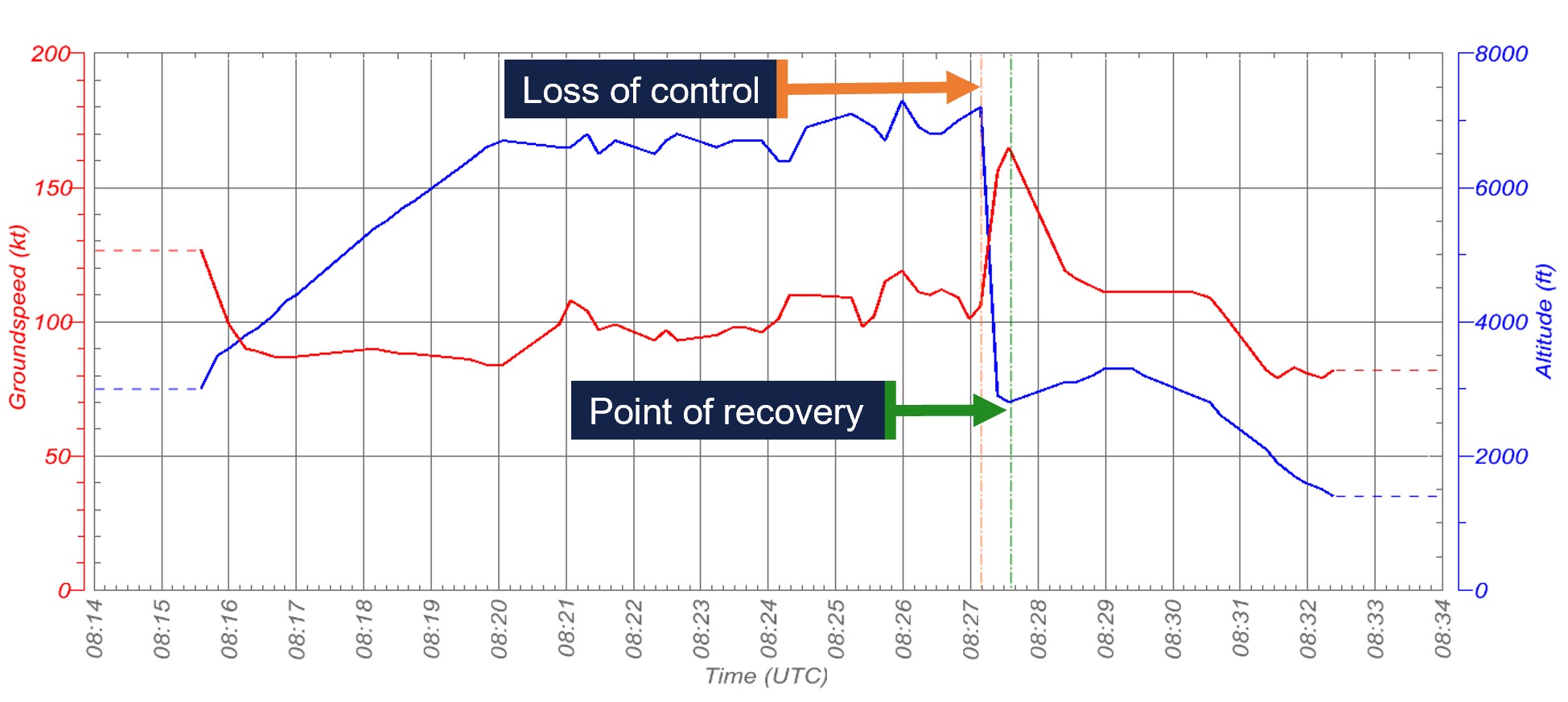
The instructor stated that the aircraft ‘gained a lot of speed’, reaching the never exceed speed5 of 184 kt and descending about 4,000 ft. Due to the high airspeed, the instructor reported completing a pitch roll to the left, and gently pulling out to ease out of the dive recovering to normal flight. While the instructor recalled that they recovered at about 5,000 ft, based on secondary surveillance radar data, control of the aircraft was recovered at about 3,000 ft (Figure 2). The instructor then contacted Adelaide air traffic control to request approval to descend and return to Parafield Airport. The pilot immediately returned to Parafield Airport and the aircraft landed without further incident. As a result of impacting the aircraft canopy, the instructor received a minor head injury, and the canopy sustained minor damage.
Figure 2: Secondary surveillance radar data of loss of control and recovery
Context
Pilot information
The flight instructor held a Commercial Pilot Licence (Aeroplane), first issued on 15 December 2021, a Grade 3 instructor rating, including an aerobatic endorsement and a class 2 aviation medical certificate6 valid until 9 November 2026. The instructor had a total flight experience of 1,722.5 hours, with 21.4 hours on the CAP 10B aircraft. The instructor stated that at the time of the incident their fatigue level was 3/7 ‘Okay, somewhat fresh’.7
The student pilot held a Commercial Pilot Licence (Aeroplane), first issued on 9 December 2025, and a class 2 aviation medical certificate valid until 7 March 2029. The student had 162.3 hours of total flight experience, inclusive of 2.3 hours on VH‑YAO.
Aircraft information
General
The Avions Mudry & Cie CAP 10B is a low‑wing cantilever monoplane with 2 seats side‑by-side, designed for use as a training aerobatic aircraft. VH-YAO, with serial number 266, was manufactured in France in 1992 and first registered in Australia in January 1993. It was powered by a Lycoming piston engine, model AEIO-360-B2F and a Hoffmann GmbH HO-29HM-180-170 propeller.
Restraint
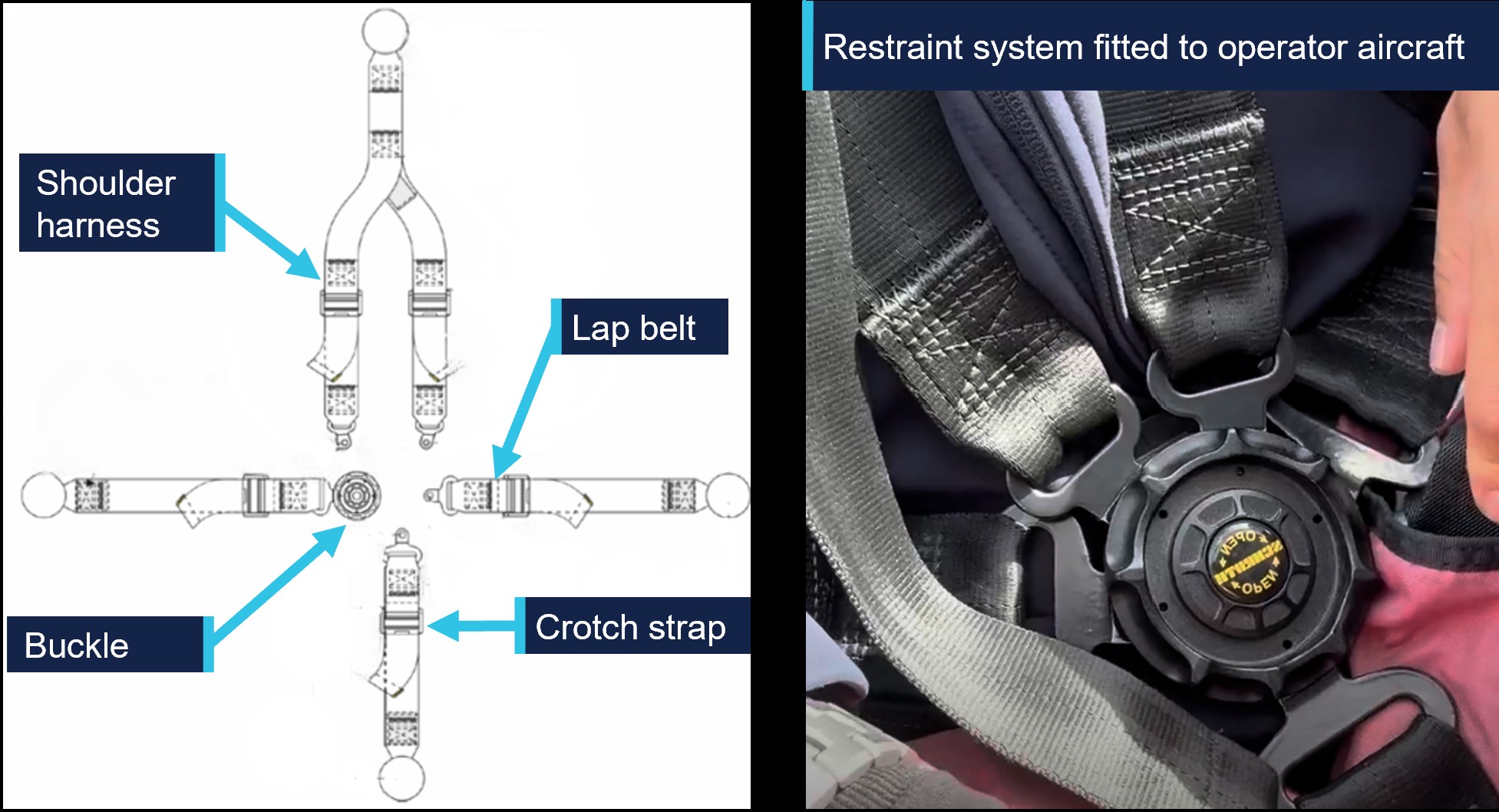
Restraint system fitted to VH-YAO
VH-YAO was fitted with a Schroth Safety Products GmbH (Schroth) 5-point harness restraint system, which consisted of 2 shoulder straps, 2 lap belts and a crotch strap (Figure 3), (P/N 4-04-385A01) and a rotary buckle (P/N SL 11.52). The buckle was fixed to one half of the lap belt and was fixed in this position by the manufacturer.
The restraint and buckle were manufactured in October 2022 and were fitted to the aircraft in February 2023. The fitment was in accordance with engineering order ESE‑CAP10-25-001 Issue 01 Installation of SHROTH or AMSAFE Safety Harness, which was approved under Civil Aviation Safety Regulation 21.437 Grant of modification/repair design approvals—grant by authorised person or approved design organisation. At the time of the incident, the restraint had a total time in service of 1,329 hours.
Figure 3: Restraint system fitted to VH-YAO
Operation of the restraint
The Schroth Component maintenance manual 25-04-01 (CMM) stated that, to fasten the restraint all latches must be inserted into the buckle ‘until you can hear a distinct clicking sound’. To release the buckle, the actuator could be twisted in either direction until all the latches were released and ejected. The fixed lap belt would remain connected. There was no means to release one part of the restraint individually.
The CMM also advised of certain precautions:
Improper use of any seatbelt can cause serious personal injury or death. To help reduce the risk of serious injury in an accident:
• Never use one or two portions of the restraint system alone, always use the lap portion, crotch portion and shoulder portion together.
• Always make sure that the lap belt, the crotch belt or the shoulder belt is not twisted when worn.
• Always wear the lap belt portion of the harness system low and tight across the pelvis.
• Never wear the belts over heavy clothing as it can interfere with proper positioning and adjustment of the belts, reducing the overall effectiveness of the system.
• Never wear the belts over rigid or breakable objects in or on your clothing, such as eye glasses, pens, jewellery, keys etc. as they may cause injury.
• Never allow lap belts, crotch belt or shoulder belts to rub again [sic] sharp objects.
• Never allow the belts to be damaged by becoming caught in seat hardware.
Restraint servicing
Servicing of the restraint described in the CMM required an inspection based on an ‘on‑condition’ principle8 and was governed by an inspection and servicing schedule. It was recommended the inspection include a check of contamination, dampness, abrasion damage, corrosion, serviceability and legibility of inscriptions.
The CMM provided details of how the buckle and latch of the restraint system should be inspected:
As a functional check, insert the latch into the buckle until you can hear a distinct clicking sound and apply tension to the latch ensuring that the latch is securely held by the buckle. Hold the buckle, latch inserted in the vertical position with the latch pointing downwards. Rotate the activator and allow the latch to fall clear. The latch shall release.
Continued airworthiness
The CMM stated that an inspection was required at the following intervals for continued airworthiness:
5.2 Inspection for Continued or Renewed Airworthiness
5.2.1 General
Continued or renewed airworthiness of the restraint system is to be determined by means of an inspection.
Inspection Intervals
a) When the equipment has sustained damage or whenever malfunction occurs.
b) After repairs/overhauls, when the equipment, due to damaged subassemblies, was not in a serviceable condition.
c) After modifications requiring qualification testing.
d) When the equipment is transferred to another owner.
e) Whenever the equipment was overstressed or if overstress is suspected.
f) Concurrently with the aircraft inspection.
The procedure for inspection required:
a) Inspect the individual components of the restraint system for completeness of the label, deformation, cracks, fractures, functioning of moveable parts, corrosion and surface finish condition.
b) Textile components are to be checked for damaged stitching, injurious marks, broken fabric threads, chafe marks and fusing’s. Slight wear and roughening of the webbing caused by the operation of the length adjuster or by the jamming action of the buckle may be ignored. Cut or worn edges, however, make the strap unserviceable.
In addition, a functional test of the buckle, as per the servicing procedure was also required.
Service bulletin 2017
Service bulletin 40.073-25-01 was released by Schroth in June 2017 and applied to aerobatic restraint systems manufactured prior to February 2017. It was issued due to inadvertent release of individual latches without activation of the release mechanism. In addition to the requirement to replace affected restraints, the service bulletin stated that, for any restraint system utilised for aerobatic flight (continuous or occasional), the whole system must be replaced at intervals no greater than 5 years.
The restraint system fitted to VH-YAO had been in use for about 3 years and 3 months and was therefore within the 5-year limit.
Aircraft and restraint inspection post‑incident
Aircraft inspection by the operator
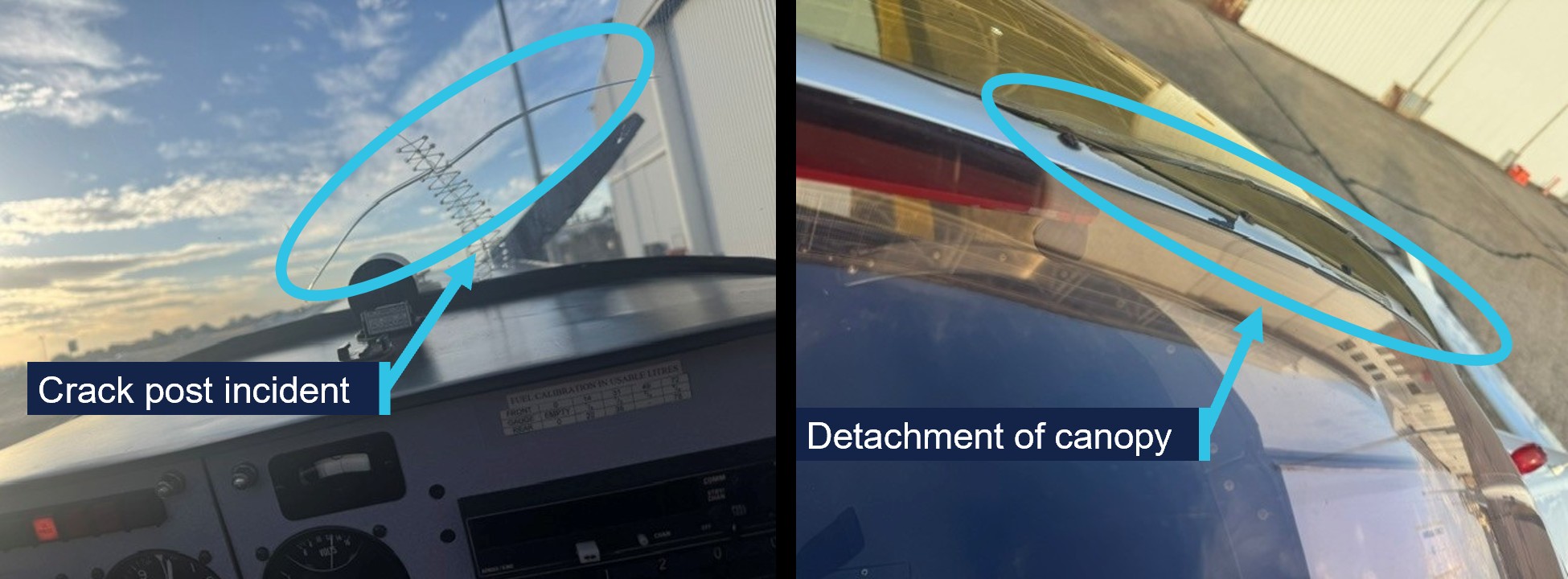
A post‑incident inspection by the operator identified that a pre-existing windshield crack had increased in size likely due to the nosedive and there had been partial detachment of the aircraft canopy from the impact with the instructor’s head. (Figure 4).
Figure 4: Images taken immediately after the event showing damage to the aircraft
Restraint inspection by the operator
Following the incident, the restraint and buckle were tested by the operator and functioned normally, with no detectable faults found. The operator reported the restraint failure to the Civil Aviation Safety Authority and the manufacturer, noting that they could not determine the reason for the disconnection. As a result of the report, the manufacturer requested that the operator return the restraint system to its facility in Germany for further examination and testing.
Restraint inspection and testing by the manufacturer
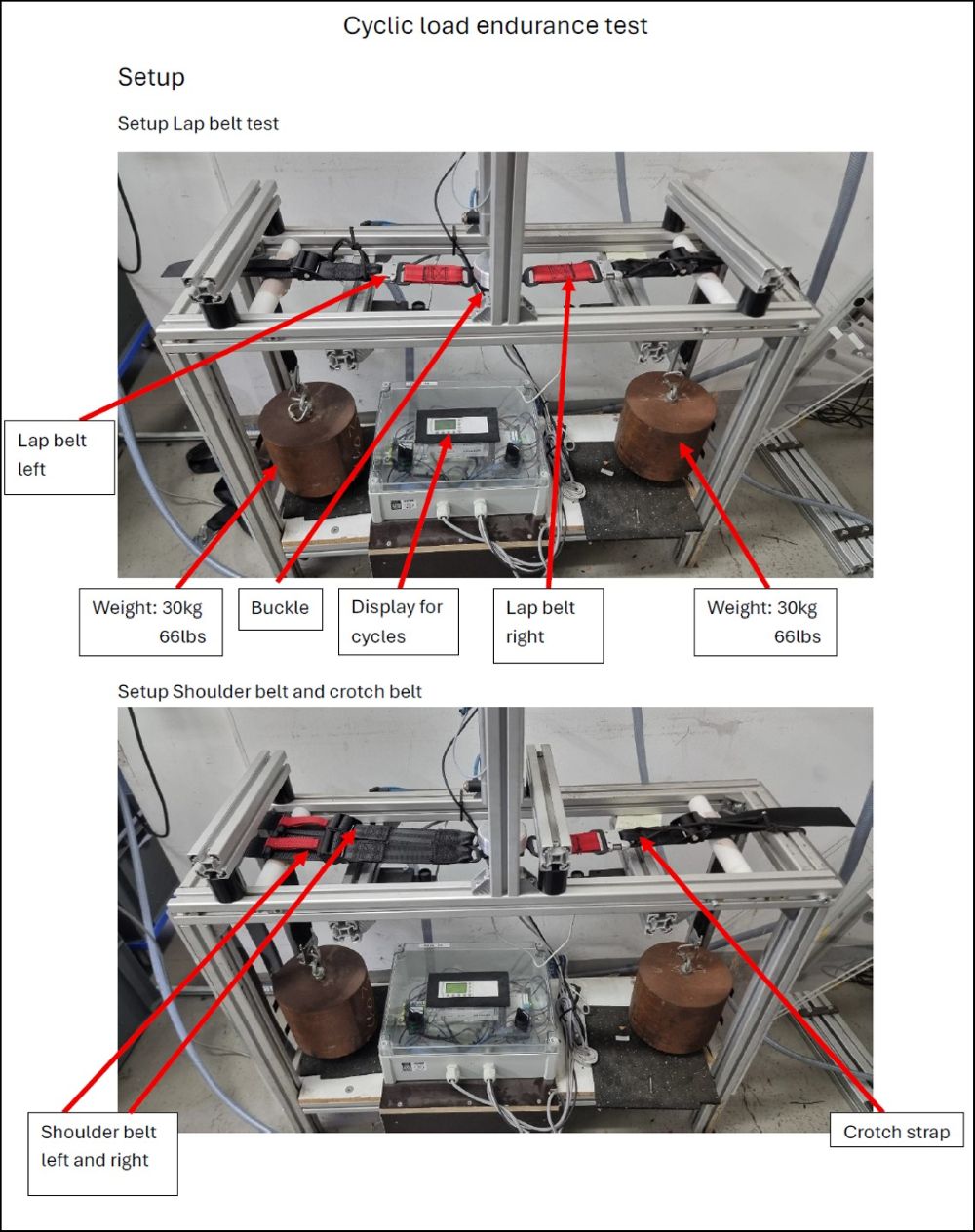
The manufacturer examined and tested the restraint system from VH-YAO, conducting cyclic load endurance testing of the belts and the buckle (Figure 5). The manufacturer subsequently requested that all Schroth restraint systems in use by the operator be returned for testing to assist in being able to establish a flight hour limit.
Figure 5: Manufacturer testing set up
The results of the examination and testing determined that, for the restraint fitted to VH‑YAO:
- the fault could be replicated
- while the latches on the restraint appeared serviceable, there was wear present that could affect operation
- the disconnection occurred due to wear on several sub-parts inside the buckle and, to a lesser extent, wear on the latches (Figure 6).
Figure 6: Manufacturer examination, showing wear to latch and buckle components
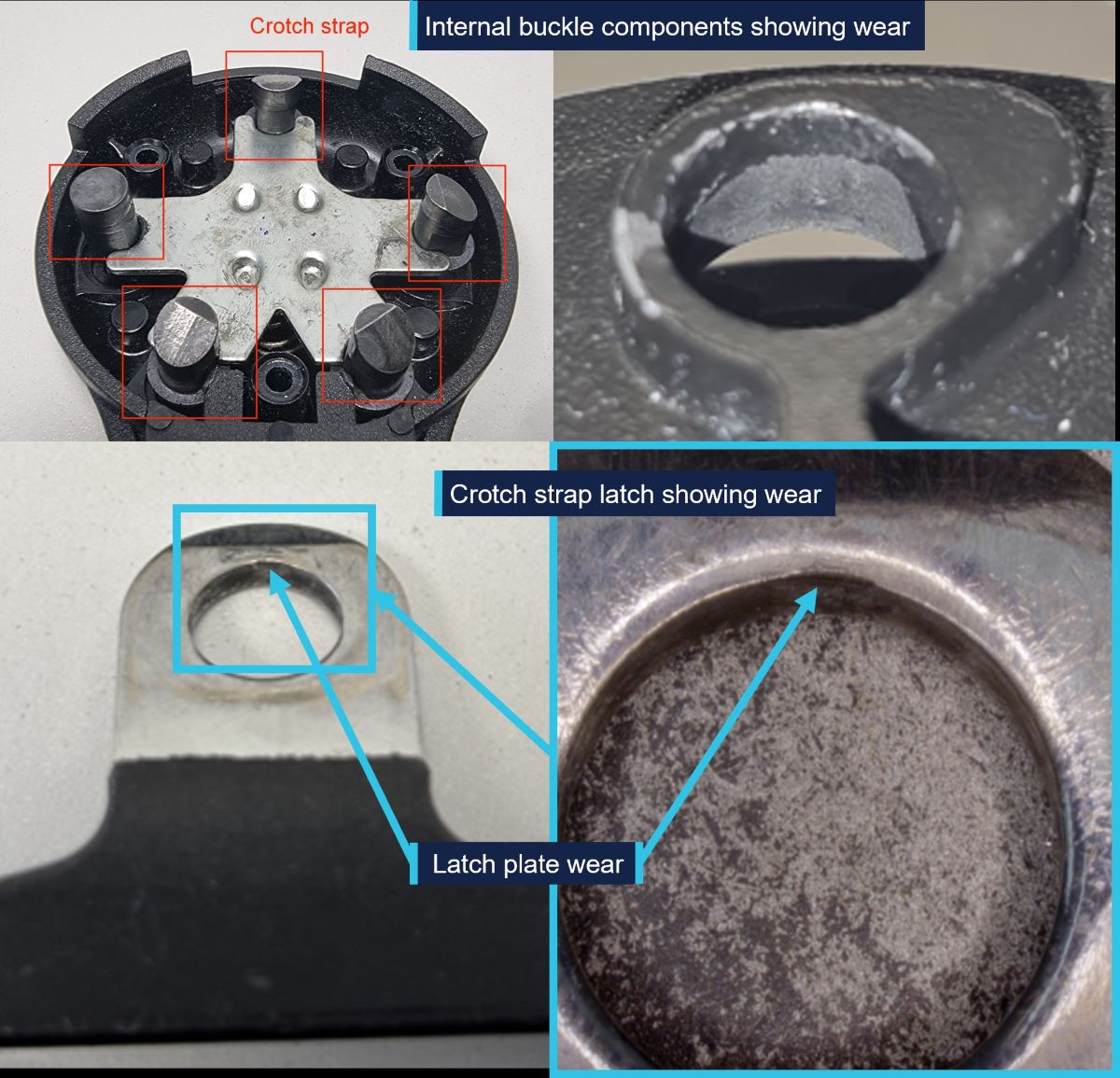
The manufacturer advised that the wear that was present at the time of the incident would not be detectable by the operator or its maintenance organisation using the procedures outlined in the CMM, and that specialist examination by a person with a technical product background would be required. In addition, the manufacturer reported that the extent of the usage by the operator, 1,329 hours time in service, had not been accounted for in the 5-year service life, at the time of distribution of service bulletin 40.073-25-01.
Safety analysis
Restraint latch disconnection
While conducting an aerobatic manoeuvre, in inverted flight, the flight instructor’s crotch strap disconnected. There was no evidence to suggest that the restraint system had been fitted incorrectly, and it was reported that restraint security had been checked both before take-off and just prior to the conduct of the first manoeuvre. In addition, the operation of the release mechanism did not allow for singular latches to be disconnected when the actuator was engaged. It was known, however, that aerobatic manoeuvres subject restraint systems to increased loading, which would have been the case at the time of disconnection.
Following the incident, the operator removed and tested the restraint system, with no discernible faults identified. They notified both the Civil Aviation Safety Authority and contacted the manufacturer. The manufacturer’s testing established the reason for the disconnection was the wear to the internal buckle subparts and to a lesser extent wear of the latches.
Contributing factor As a result of worn internal buckle sub-parts and latches, the crotch strap of the flight instructor’s 5-point harness disconnected during an aerobatic manoeuvre. |
Restraint serviceability
The manufacturer advised that the wear identified would not have been detectable in accordance with the procedures outlined in the Component maintenance manual and without specialist examination it was unlikely that the operator would assess the restraint system as unserviceable.
In addition to inspection requirements, service life is one of the ways in which operators can ensure their aircraft and components remain airworthy and, therefore, is an important limit set by the manufacturer. While the restraint system was within the 5-year service life set by the manufacturer and communicated via service bulletin, this limit had not accounted for the frequency of use and number of hours in-service accumulated by the operator, particularly hours of aerobatic flight.
Therefore, without the ability to detect deterioration through inspection procedures and potential for in-service hours to exceed that expected by the manufacturer, the 5-year service life limit was not sufficient to assure that a restraint with excessive wear would not remain in service, with this occurring in this instance.
This incident also highlighted the importance of the communication of defects from operators to manufacturers and regulatory authorities so that any safety deficiencies can be identified and addressed as soon as possible. This was noted in the ATSB’s 2007 safety analysis and research report How Old is Too Old? The impact of ageing aircraft on aviation safety B20050205, which described the continuous airworthiness framework and emphasised communication between those parties as a way to ensure aircraft and their components remain in a safe and reliable condition.
Contributing factor The manufacturer’s inspection method for the restraint system did not assure that deterioration within the buckle would be detected. Further, the 5-year service life did not account for the extent of usage in some aerobatic training operations. This increased the likelihood that a restraint system with excessive wear remained in service. |
Findings
| ATSB investigation report findings focus on safety factors (that is, events and conditions that increase risk). Safety factors include ‘contributing factors’ and ‘other factors that increased risk’ (that is, factors that did not meet the definition of a contributing factor for this occurrence but were still considered important to include in the report for the purpose of increasing awareness and enhancing safety). In addition ‘other findings’ may be included to provide important information about topics other than safety factors. |
From the evidence available, the following findings are made with respect to the restraint release and loss of control involving Avions Mudry & Cie CAP 10B, VH‑YAO, 28.5 km west-north-west of Edinburgh Airport, South Australia, on 4 February 2026.
Contributing factors
- As a result of worn internal buckle sub-parts and latches, the crotch strap of the flight instructor’s 5-point harness disconnected during an aerobatic manoeuvre.
- The manufacturer’s inspection method for the restraint system did not assure that deterioration within the buckle would be detected. Further, the 5-year service life did not account for the extent of usage in some aerobatic training operations. This increased the likelihood that a restraint system with excessive wear remained in service.
Safety actions
| Whether or not the ATSB identifies safety issues in the course of an investigation, relevant organisations may proactively initiate safety action in order to reduce their safety risk. The ATSB has been advised of the following proactive safety action in response to this occurrence. |
Safety action by Schroth
As a result of the incident, Schroth, the restraint manufacturer, advised of an intention to revise the service life for use during aerobatic flight to include a time in service hour limit, in addition to a calendar life limit.
Safety action by Flight Training Adelaide
The operator has limited the use of the restraint system to a 3-year period or 1,000 hours, with a 50-hour tolerance, and this is tracked within its maintenance system. The limit will remain, with the operator continuing to monitor manufacturer advice.
Sources and submissions
Sources of information
The sources of information during the investigation included the:
- flight instructor
- Flight Training Adelaide Pty Ltd
- Schroth Safety Products GmbH (restraint system manufacturer)
- Civil Aviation Safety Authority
- Flight Aware.
Submissions
Under section 26 of the Transport Safety Investigation Act 2003, the ATSB may provide a draft report, on a confidential basis, to any person whom the ATSB considers appropriate. That section allows a person receiving a draft report to make submissions to the ATSB about the draft report.
A draft of this report was provided to the following directly involved parties:
- flight instructor
- Flight Training Adelaide Pty Ltd
- Schroth Safety Products GmbH (restraint system manufacturer)
- Civil Aviation Safety Authority
- German Federal Bureau of Aircraft Accident Investigation.
Submissions were received from Flight Training Adelaide Pty Ltd. The submissions were reviewed and, where considered appropriate, the text of the report was amended accordingly.
Purpose of safety investigationsThe objective of an ATSB safety investigation is to improve transport safety through:
In accordance with the TSI Act, the ATSB does not investigate for the purpose of taking administrative, regulatory or criminal action, and cannot apportion blame, assist in determining liability, or, as a general rule, assist in court proceedings. About ATSB reportsATSB safety investigation reports are developed in accordance with ATSB procedures and guidelines, and with regard to applicable international standards and instruments. Reports must include factual material of sufficient weight to support the investigation’s analysis and findings. At all times the ATSB endeavours to balance the use of material that could imply adverse comment with the need to properly explain what happened, and why, in a fair and unbiased manner. An explanation of terminology used in ATSB investigation reports is available here. Publishing informationReleased in accordance with section 25 of the Transport Safety Investigation Act 2003 Published by: Australian Transport Safety Bureau © Commonwealth of Australia 2026 Ownership of intellectual property rights in this publication Unless otherwise noted, copyright (and any other intellectual property rights, if any) in this report publication is owned by the Commonwealth of Australia. Creative Commons licence 
With the exception of the Commonwealth Coat of Arms, ATSB logo, and photos and graphics in which a third party holds copyright, this report is licensed under a Creative Commons Attribution 4.0 International licence. The CC BY 4.0 licence enables you to distribute, remix, adapt, and build upon our material in any medium or format, so long as attribution is given to the Australian Transport Safety Bureau. Copyright in material obtained from other agencies, private individuals or organisations, belongs to those agencies, individuals or organisations. Where you wish to use their material, you will need to contact them directly. |
- ^ Upset prevention and recovery training is a program of theory and practical training providing exposure to aeroplane upset conditions.
- ^ HASELL is an acronym that refers to height, airframe, security, engine, location and lookout and is used as a checklist before conducting aerobatics, spins, unusual attitude training, or any high-risk flight operation.
- ^ A split S manoeuvre includes a half-roll of the aircraft such that it becomes inverted, a descending half-loop, resulting in level flight in the opposite direction at a lower altitude.
- ^ G load: the nominal value for acceleration. In flight, g load represents the combined effects of flight manoeuvring loads and turbulence and can have a positive or negative value.
- ^ VNE (never exceed speed): the speed limit that may not be exceeded at any time. The calculation of this speed is driven by structural or aerodynamic limitations, however, control system flutter is typically one limitation that factors heavily into the calculation of VNE.
- ^ The flight instructor was operating with a class 2 aviation medical certificate in accordance with Civil Aviation Safety Authority exemption EX32/24, which stated a class 2 was permitted when passengers are not carried. For clarification, the Civil Aviation Safety Regulations dictionary included a person receiving instruction under the definition of a crew member and therefore the student was not a passenger.
- ^ Samn-Perelli fatigue scale: a self-assessed 7-point fatigue scale where 1 is ‘fully alert and wide awake’ and 7 is ‘completely exhausted, not able to function’.
- ^ On-condition: repetitive inspections, or tests to determine the condition of units or systems or portions of structure.
Occurrence summary
| Investigation number | AO-2026-066 |
|---|---|
| Occurrence date | 04/02/2026 |
| Occurrence time and timezone | 1834 Australian Central Daylight Time |
| Location | 28.5 km west-north-west of Edinburgh Airport |
| State | South Australia |
| Report release date | 20/10/2026 |
| Report status | Final |
| Investigation type | Occurrence Investigation |
| Investigation phase | Final report: Dissemination |
| Investigation status | Completed |
| Mode of transport | Aviation |
| Aviation occurrence category | Furnishings & fittings, Loss of control |
| Occurrence class | Serious Incident |
| Highest injury level | Minor |
Aircraft details
| Manufacturer | Avions Mudry & Cie |
|---|---|
| Model | CAP 10B |
| Registration | VH-YAO |
| Serial number | 266 |
| Aircraft operator | Flight Training Adelaide Pty Ltd |
| Sector | Piston |
| Operation type | Part 141 Recreational, private and commercial pilot flight training |
| Activity | General aviation / Recreational-Instructional flying-Instructional flying - dual |
| Departure point | Parafield Airport, South Australia |
| Destination | Parafield Airport, South Australia |
| Injuries | Crew - 1 (Minor) |
| Damage | Minor |