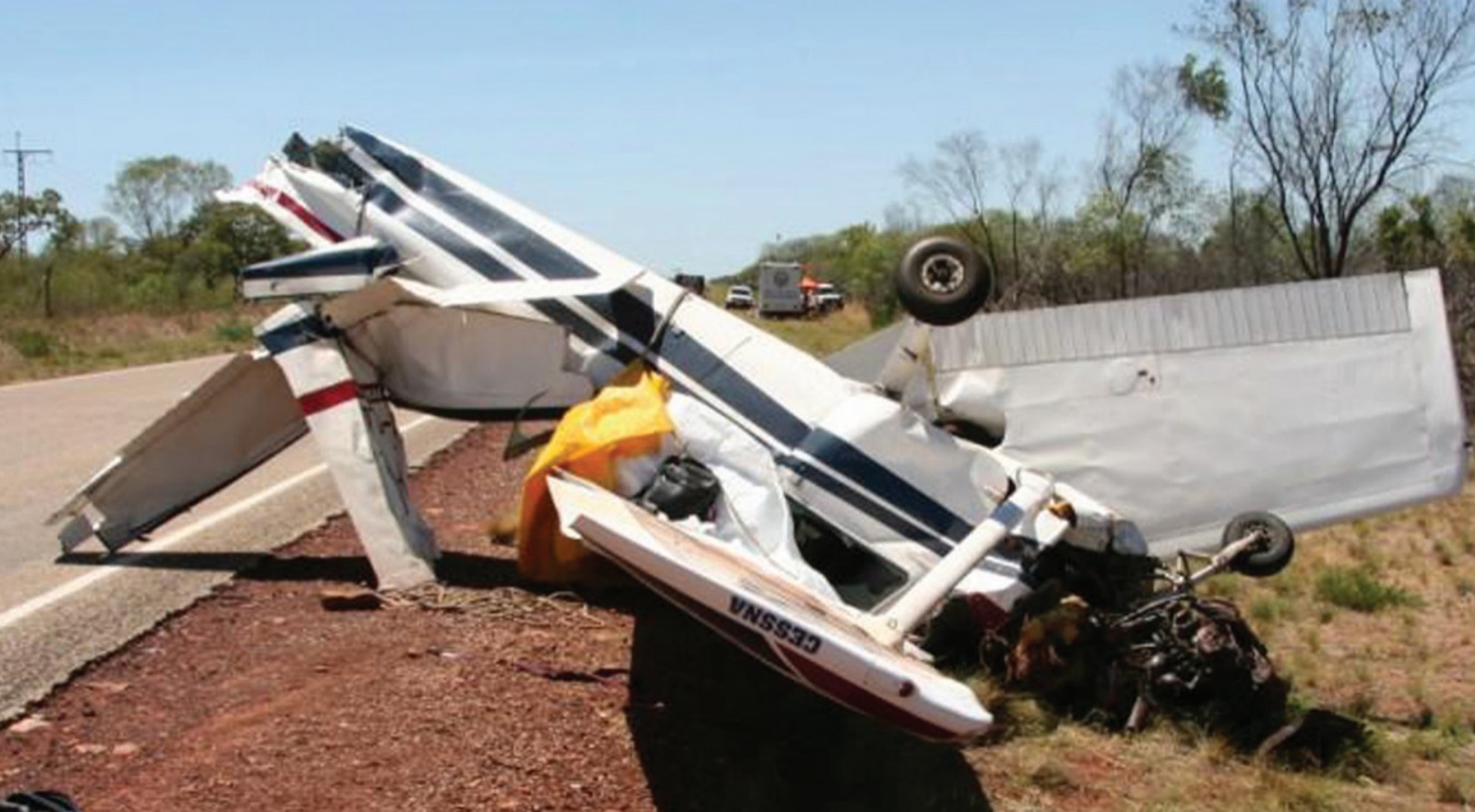
Avoidable accidents

Accidents involving Visual Flight Rules pilots in Instrument Meteorological Conditions
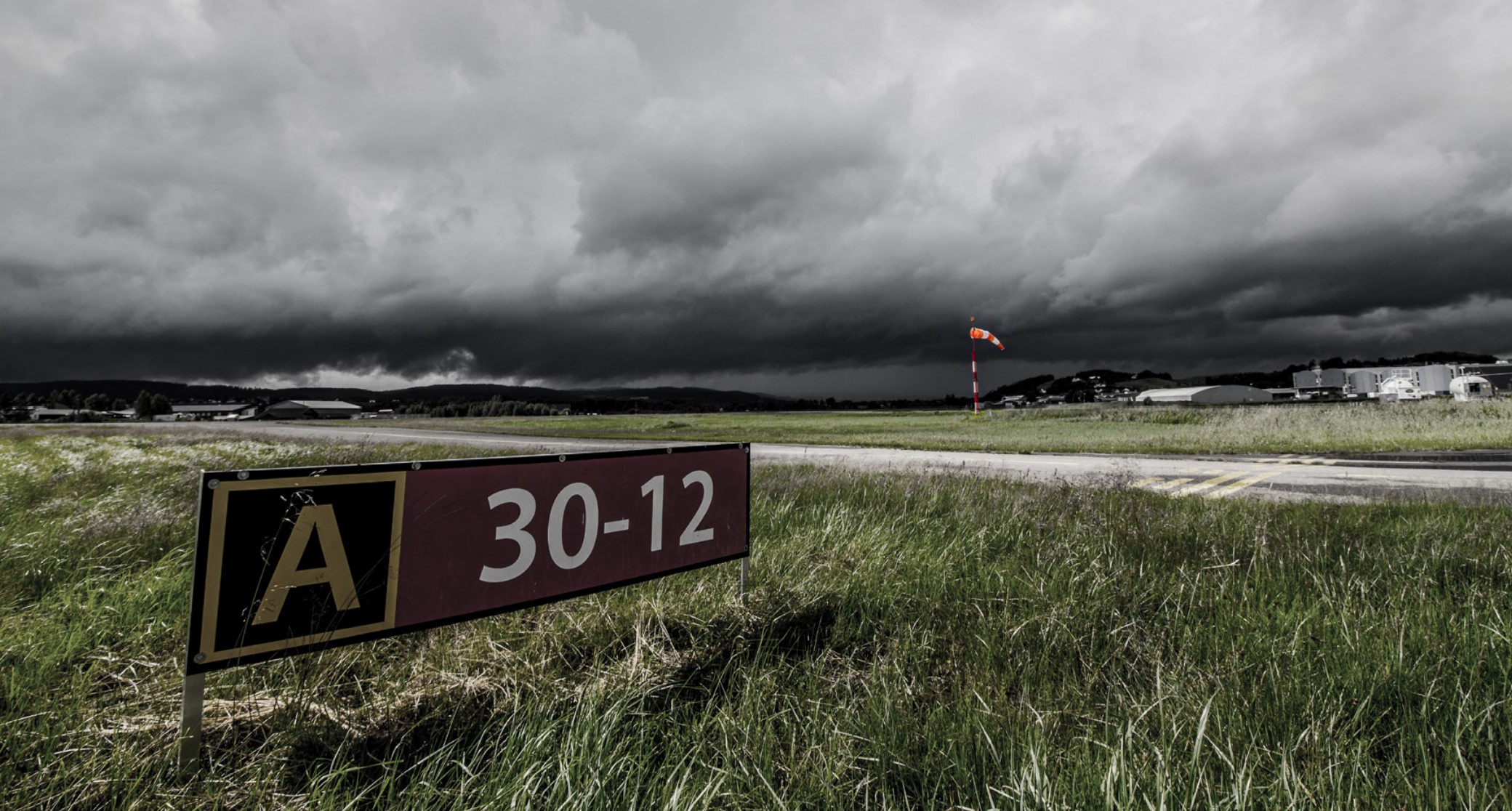
Stormy clouds over an airport and runway.

Weather-related general aviation accidents remain one of the most significant causes for concern in aviation safety; the often-fatal outcomes of these accidents are usually all the more tragic because they are avoidable.

The dangers of visual flight rules (VFR) pilots flying into instrument meteorological conditions (IMC) have been recognised for a very long time, yet VFR pilots still fly into deteriorating weather and IMC. In the decade from 1 July 2009 to 30 June 2019, 101 VFR into IMC occurrences in Australian airspace were reported to the ATSB. Of those, nine were accidents resulting in 21 fatalities. That is, about one in 10 VFR into IMC events result in a fatal outcome.

Flying into IMC can occur in any phase of flight. However, a 2005 ATSB research publication – General Aviation Pilot Behaviours in the Face of Adverse Weather (B2005/0127) – concluded that the chances of a VFR into IMC encounter increased as the flight progressed, with the maximum chance occurring during the final 20 per cent of the flight distance.

This publication describes a selection of weather-related general aviation accidents and incidents that show weather alone is never the only factor affecting pilot decisions that result in inadvertent IMC encounters. These investigations consistently highlight that conducting thorough pre-flight planning is the best defence against flying into deteriorating weather.

The ATSB encourage all pilots, no matter what their experience level, to develop the knowledge and skills required to avoid unintentional operations in IMC. Have alternate plans in case of unexpected changes in weather, and make timely decisions to turn back, divert or hold in an area of good weather. The use of a ‘personal minimums’ checklist can also be a strong mitigator against the risk of flying into bad weather. Checklists can help pilots more clearly identify risk factors.

Flight planning requirements

Prior to a flight, a pilot must study all available information appropriate to the intended operation, including the current weather forecasts. This is even a requirement in the Civil Aviation Regulations (CAR 174) and repeated in the Aeronautical Information Publication.

Apart from the more straightforward and mechanical elements of the flight preparation, such as how much fuel to carry, planning should include anticipating the unusual, and preparing a course of action should it occur.

Pre-flight planning minimises in-flight decision errors because it removes the unforseen element from situations that arise during the flight. Failure to carry out this prior planning can result in decisions being made under a situation of considerable stress and increases the likelihood of poor or incorrect decision making.
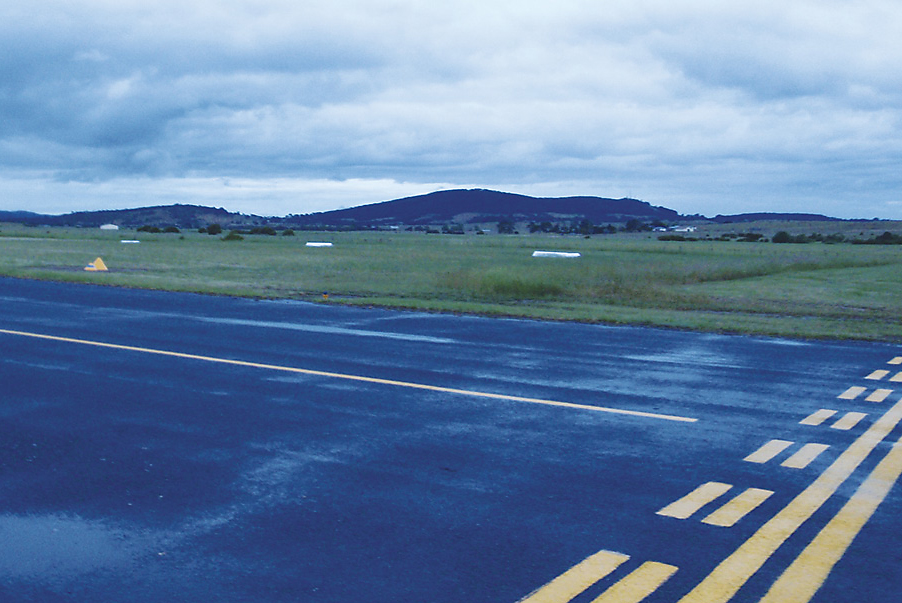
 

Aerodrome

No way out

Investigation AO-2008-083
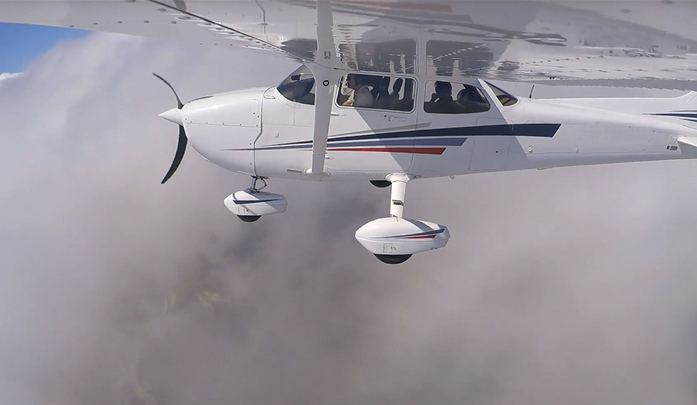
A Cessna 172.  Source: CASA

In December 2008, a Cessna 172 with a pilot and one passenger departed Mudgee, New South Wales (NSW), on a private VFR flight to a property near Glen Innes, NSW. Although having visually assessed the weather conditions at Mudgee Aerodrome as suitable for departure, the pilot chose not to obtain the relevant aviation weather forecasts for the flight.

About 15 minutes after departure, the weather ahead deteriorated, with increasing cloud above and below the aircraft and the cloud base lowering. With the intention of assessing the weather ahead, the pilot climbed the aircraft to ‘on top’ of the cloud. Observing that the cloud ahead was increasing, with a blanket of cloud below and building thunderstorms, the pilot decided not to stay above the cloud. Rather than choosing to turn back or divert, the pilot descended the aircraft visually through a hole in the cloud, while continuing on toward the intended destination.

When levelling out, the pilot realised the aircraft had descended into a closed valley framed by ridgelines on its eastern, western and northern sides. After flying up the valley for a short time, the pilot decided to turn back.

During the turn-back manoeuvre, the aircraft entered cloud, the pilot became disoriented, and the aircraft collided with terrain. The pilot and passenger were seriously injured in the collision and shortly after, the passenger succumbed to their injuries.

Lessons learnt
One of the key risk controls to avoid becoming a VFR pilot entering IMC is appropriate pre-flight preparation and planning. Pilots should always obtain up-to-date weather information before and during flight. The more doubtful the weather, the more information you will need to get and the more planning is required. Your passengers trust you to make responsible decisions about whether it is safe to fly.

Hazardous landing

Investigation AO-2010-080
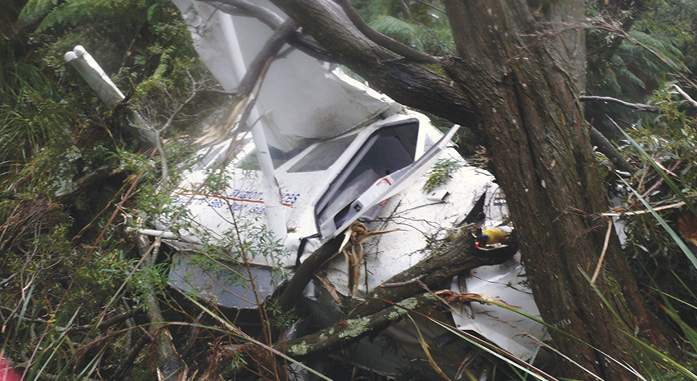
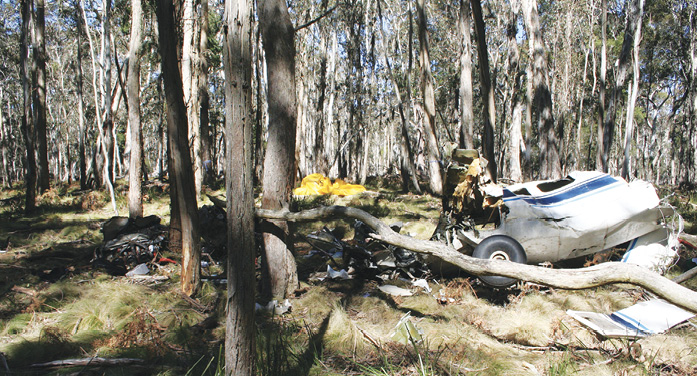
Wreckage of the Gippsland Aeronautics GA-8 Airvan.  Source: Michael Patterson

In October 2010, the pilot of a Gippsland Aeronautics GA-8 Airvan, was conducting a charter flight from Lady Barron Aerodrome, Flinders Island, Tasmania. The forecast weather was marginal for flight under VFR, with broken cloud forecast down to 500 ft above mean sea level in the area. However, the pilot’s assessment from the ground was that the cloud base was 1,000 ft to 1,500 ft.

During the climb after take-off, the weather conditions deteriorated to below those necessary for flight under VFR. The pilot, concerned about adhering to an unwritten operator rule to maintain a minimum height of 1,000 ft, continued to climb into IMC instead of remaining visual below the cloud and lost all visual reference with the ground and horizon.

The pilot, who was not qualified to fly in instrument meteorological conditions, continued to fly in IMC for several minutes in the hope of climbing above the cloud. When this did not happen, the pilot decided to turn the aircraft back towards Lady Barron Aerodrome, initiating a gentle turn to the right. The pilot succeeded in maintaining controlled flight with reference to the aircraft’s flight instruments. While intending to turn through 180°, the pilot inadvertently turned less than this and flew towards high ground in the Strzelecki National Park.

Becoming visual, the pilot turned the aircraft into a valley unable to turn around nor out-climb. The pilot elected to conduct a forced landing into the treetops, slowing the aircraft to land at the slowest speed possible. Luckily, only one passenger sustained minor injuries and the pilot and other five passengers were uninjured.

Lessons learnt
If you encounter deteriorating weather, turn back or divert before you are caught in cloud. For a non-instrument rated pilot, even with basic attitude instrument flying proficiency, maintaining control of an aircraft in IMC by reference to the primary flight instruments alone entails a very high workload that can result in narrowing of attention and loss of situational awareness.

Don’t push it, land it

Investigation AO-2015-131
Don’t push it, land it — when it’s not right in flight

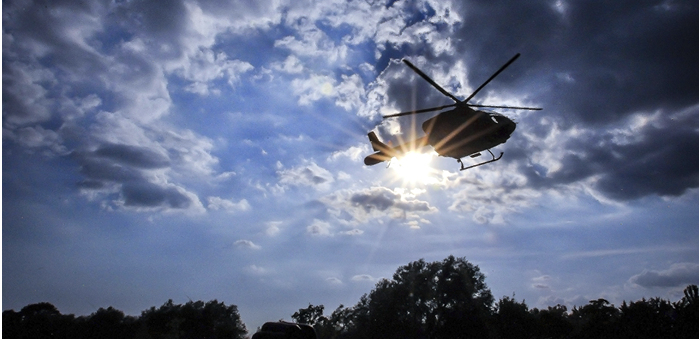
At about 5.30 pm on 7 November 2015, the owner-pilot of an Airbus Helicopters (Eurocopter) EC135 departed Breeza, NSW, on a VFR private flight with two passengers on board to Terrey Hills, NSW.

About 40 km to the south-west of the Liddell mine, the pilot diverted towards the coast, probably after encountering adverse weather conditions. Witnesses observed the helicopter overfly the Watagan Creek valley in the direction of higher terrain. The helicopter was then observed to return and land in a cleared area in the valley.

After 40 minutes on the ground, the pilot, who did not hold an instrument rating and was limited to visual flight operations, departed to the east towards rising terrain in marginal weather conditions. About seven minutes later, and approximately 9 km east of the interim landing site, the helicopter collided with terrain. A search was initiated about 36 hours later. The helicopter wreckage was found late on 9 November 2015. The pilot and two passengers were fatally injured.

The ATSB found that the pilot likely encountered reduced visibility conditions leading to loss of visual reference leading to the collision with terrain. The ATSB also found that the fixed, airframe-mounted emergency locator transmitter had been removed and that personal locator beacons which required manual activation were carried instead. While in this accident it did not affect the outcome for the occupants, the lack of activation, combined with the absence of flight notification information, delayed the search and rescue response.

Lessons learnt
Avoiding deteriorating weather or IMC requires thorough pre-flight planning, having alternate plans in case of an unexpected deterioration in the weather, and making timely decisions to turn back or divert. For VFR pilots pressing on into IMC conditions carries a significant risk of encountering reduced visual cues leading to disorientation. This can easily affect any pilot, no matter what their level of experience. In the event of inadvertent entry into IMC, pilots are encouraged to contact air traffic control for assistance.
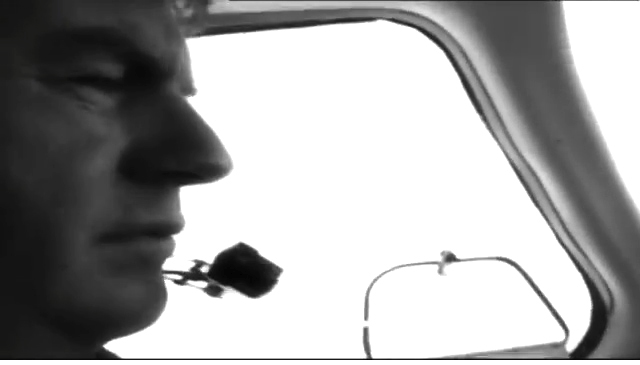
Image from CASA video

Spatial disorientation

In order to correctly sense the orientation of the body relative to its environment, a pilot relies on a number of sensory systems in order to establish or maintain orientation:

  • the visual system
  • the vestibular system, which obtains its information from the balance organs in the inner ear
  • the somatic sensory system which uses the nerves in the skin and proprioceptive senses in our muscles and joints to sense gravity and other pressures on the body.

The visual system is by far the most important of the three systems, providing some 80 per cent of the raw orientation information. In conditions where visual cues are poor or absent, such as in poor weather, up to 80 per cent of the normal orientation information is missing. Humans are then forced to rely on the remaining 20 per cent, which is split equally between the vestibular system and the somatic system. Both of these senses are prone to powerful illusions and misinterpretation in the absence of visual references, which can quickly become overpowering.

Pilots can rapidly become spatially disoriented when they cannot see the horizon. The brain receives conflicting or ambiguous information from the sensory systems, resulting in a state of confusion that can rapidly lead to incorrect control inputs and resultant loss of aircraft control.

Simulator experiments at the University of Illinois determined that on average, a pilot with no instrument training can expect to retain control of their aircraft for only 178 seconds after entering bad weather and losing visual contact.

Watch CASA’s ‘178 seconds to live’ video on YouTube.(Opens in a new tab/window)

Engulfed by cloud

Investigation AO-2009-077
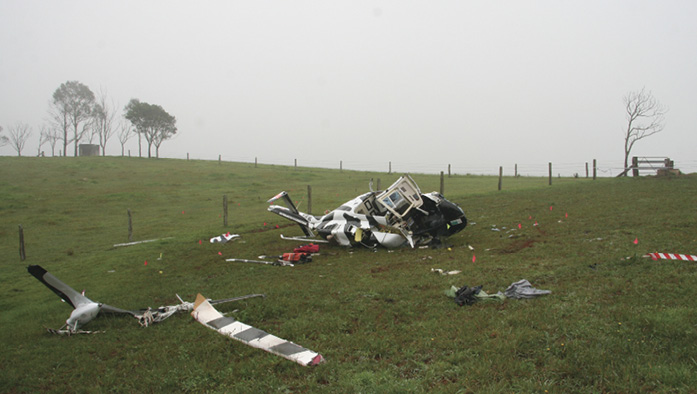
Wreckage of the Bell 206L helicopter. Source: ATSB

In December 2009, a Bell 206L helicopter was being operated in the area of Dorrigo, NSW, conducting fire observation, water bombing and personnel insertion duties under VFR. The cloud in the area of the helicopter landing and take-off point at around the time of the accident was fluctuating around the minimum required for VFR flight.

During the initial take-off, the experienced pilot recalled raising the helicopter into a low hover and conducted a pedal turn through 360° to get a better look at the weather and establish an appropriate departure direction. The pilot said that the weather looked better in the low hover than it did on the ground, so elected to climb to about 100 ft into a high hover.

The pilot reported looking inside the cockpit for a couple of seconds to survey the instruments. When returning focus outside, the pilot lost visual reference and became spatially disoriented, rapidly leading to incorrect control inputs and loss of control. The helicopter impacted the ground in an uncontrolled state. The passenger was fatally injured, and the pilot was seriously injured.

Lessons learnt
Even momentary loss of outside visual reference can result in spatial disorientation, incorrect control inputs, and loss of control.
Whenever the natural horizon is not clear enough to control the aircraft by visual reference, such as often occurs in marginal VMC, all pilots, no matter what their flight experience level, are potential victims of spatial disorientation.

Into the void

Investigation AO-2007-061
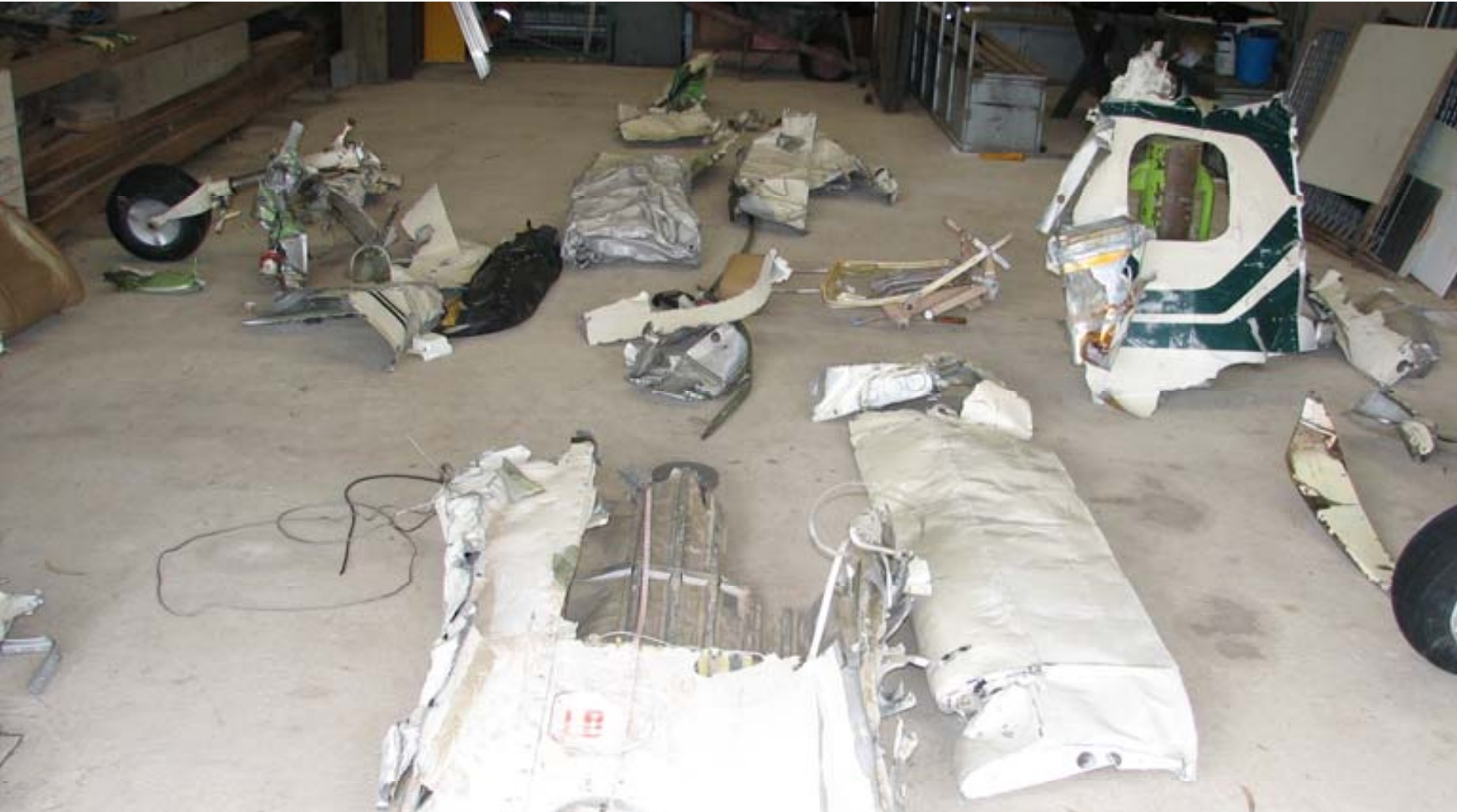
Aircraft wreckage on a hangar floor.

In November 2007, the pilot of a Cessna 337 Skymaster was conducting a private VFR flight from Moorabbin Airport, Victoria, to Merimbula, NSW. The pilot, who was only qualified to operate in VMC, had indicated the flight would track along the coast at low level.

The forecast weather included isolated showers or thunderstorms over the sea and coast, and low cloud over the sea/exposed coast. The low cloud was expected to be broken stratus between 800 ft and 2,000 ft. Visibility was quoted as reducing to 3 km in thunderstorms with rain and 6 km in showers of rain.

About 30 minutes after departing Moorabbin, people on a beach south-east of Venus Bay heard and then suddenly saw the aircraft emerge from fog at low level, flying above the water line on the beach with the wings level. Within seconds, the Skymaster turned right at a steep angle of bank while maintaining height and headed out to sea before disappearing from sight into the fog. Witnesses reported no apparent problem with the engines and the aircraft appeared to be under control. About two seconds after the aircraft disappeared from view, they heard a ‘bang’ and then silence.

Two days later, wreckage of the aircraft and three of the deceased occupants were found washed up on the beach. The pilot was not found.

The investigation concluded that while manoeuvring over water at low level in conditions of reduced visibility, the pilot probably became spatially disorientated and inadvertently descended into the water.

By turning away from the land in the foggy conditions, the pilot would have encountered a featureless, grey environment with no visible horizon, making it extremely difficult to judge the aircraft’s attitude and/or height.

Lessons learnt

As a pilot you should accept that flying under VFR will not always enable you to reach your planned destination. Weather often does not act as the forecast predicts. You must have alternatives available, and you must be prepared to use them—even if it means returning to your departure point.

In forecast marginal weather, careful pre-flight planning is essential and must include a thorough analysis of the latest weather forecasts and consideration of your available options. Those options should be evaluated while en route to ensure you have an alternative course of action available which provides for a safe landing. 

Personal limitations

When deciding on whether it is safe to fly, pilots should consider not only the route to be flown, the prevailing weather and aircraft serviceability, but their own physical and emotional fitness and flying experience. In other words, to be a competent pilot, you must know and fly within your own limitations.

Adhering to a pre-flight ‘personal minimums’ checklist will go a long way toward keeping you safe. For example, the decision to turn back or divert will be easier if you have decided in advance what your personal minimum VFR flying altitude will be. That minimum altitude may well be much more conservative than the legal requirement.
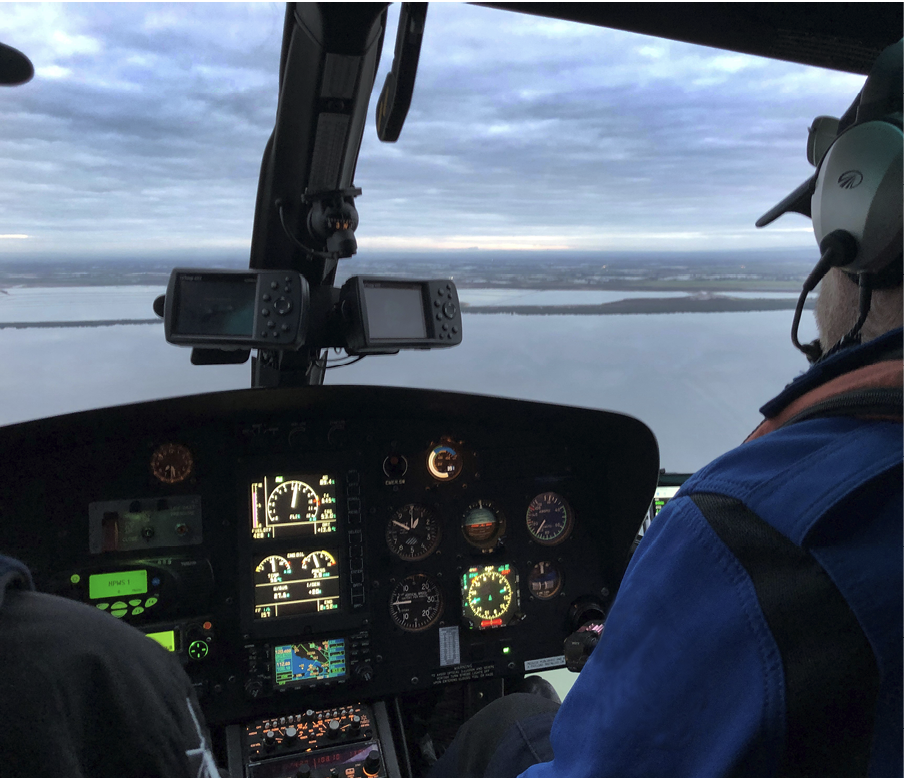
page9_picture_ps.png

Hostile environment

Investigation AO-2008-063
Wreckage of the Cessna 206 aircraft. Source: ATSB

In September 2008, a Cessna 206 departed Bankstown, NSW, on a private flight to Archerfield, Queensland, via Scone, NSW. The private pilot had purchased the aircraft on the morning of the accident flight and was advised that the flight should track along the coast to Archerfield to avoid any weather problems. However, the pilot indicated an intent to visit friends in Scone.

The aircraft landed at Scone Airport and was met by friends of the pilot, who observed the subsequent take-off, in what was described by another pilot as ‘poor weather’. The aircraft was reported missing when it did not arrive at its planned destination. The following day, the wreckage of the aircraft was located on top of a ridge in rugged terrain, approximately 56 km north-north-east of Scone Airport. The pilot and his two passengers were fatally injured.

The investigation concluded that the pilot was probably attempting to return to Scone after encountering weather unsuitable for flight under VFR, and that the circumstances of the accident were consistent with controlled flight into terrain after encountering IMC.

It was determined that both the forecast and actual weather conditions were not suitable for VFR flight on the planned route, with low cloud, rain showers and high winds. The pilot most probably did not check the forecast weather before the flight. The route chosen for the flight was not suitable for the aircraft in the prevailing weather conditions.

Lessons learnt

Although the pilot would have been generally aware of the weather situation from observations during the flight from Bankstown, and at Scone itself, without knowledge of the forecast weather on the route selected it is unlikely that adequate consideration was given to the risks inherent in continuing the flight.

Attempting continued VFR flight when the weather clearly does not support it compromises the safety of yourself and your passengers. Running out of altitude and/or visibility leaves you without alternatives. 

Calming influence

Investigation AO-2007-014
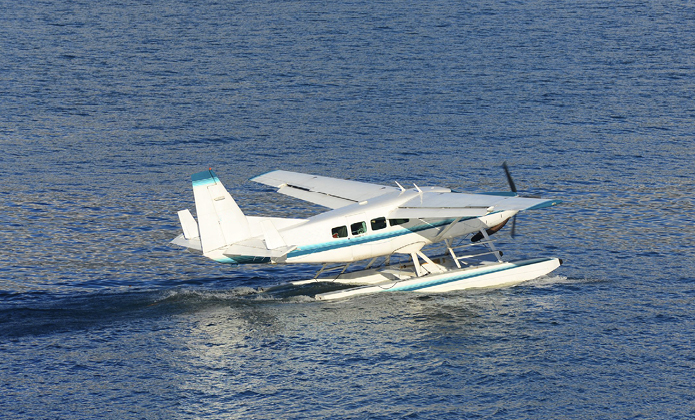
Cessna Caravan float plane.

In June 2007, a Cessna Caravan float plane departed Broome Airport, Western Australia (WA), on a VFR charter flight to Talbot Bay, WA. On board the aircraft were the pilot and 10 passengers.

About 40 minutes into the flight, the weather conditions deteriorated and the pilot elected to return to Broome. During the return, the aircraft entered an area of reduced in-flight visibility that resulted in the loss of the visual horizon and, while manoeuvring the aircraft to regain VMC, the pilot became disoriented.

The non-instrument-rated pilot made a general radio broadcast requesting assistance, which was received by the crew of another aircraft who initially advised the pilot of the Caravan to concentrate on maintaining the aircraft’s orientation using its attitude indicator. After confirming that the Caravan pilot was maintaining the aircraft’s attitude with reference to its instruments, the assisting pilot advised to set cruise power, and to maintain level flight with reference to the vertical speed indicator.

The crew of the assisting aircraft reported that, about five minutes after the initial radio contact, the pilot of the Caravan sounded less stressed and advised the aircraft was in level flight. The flight continued on to Broome, which required the pilot to descend through cloud before becoming visual and landing safely.

Lessons learnt

The potentially severe consequences of this occurrence were probably avoided by the pilot’s decision to seek assistance and the ability of the flight crew of the other aircraft to provide appropriate input and guidance. If you find yourself in marginal weather and becoming disoriented or lost, seek whatever help is available. Air traffic control can provide assistance, especially if you are in radar coverage.

Having entered deteriorating weather, many pilots will descend to remain in VMC. Apart from the terrain hazards, descending may eliminate radar and communication contact. In order to get the aircraft safely on the ground it is up to the pilot to keep the aircraft under control. Being able to make a 180° turn, and if necessary climb to a safe altitude, requires proficiency at basic flying manoeuvres on instruments. Those skills, learned while training for the Private Pilot Licence, disappear if not regularly practised. 

Personal minimums checklist

Investigation AO-2017-061
Accident site involving Cessna 172, VH-FYN, 13 km NNW of Ballina, NSW, on 16 June 2017

On 16 June 2017, a Cessna 172 was being operated on a private flight from Southport Mason Field, Queensland, to Ballina Airport, NSW. The purpose of the flight was to ferry the aircraft to Ballina for scheduled maintenance before the expiry of the aircraft’s maintenance release on 17 June 2017.

En route, near the town of Bangalow NSW, the aircraft entered an area of reduced visibility, including low cloud, fog and drizzle. The aircraft diverted off the initial track and was last seen disappearing into cloud heading inland. A short time later the aircraft collided with terrain and the pilot was fatally injured.

The ATSB found that the decision to depart on the flight had placed the pilot at risk of encountering conditions of reduced visibility. On entering those conditions, the pilot likely became spatially disoriented, resulting in a loss of control and a collision with terrain. The investigation also found that the pilot was likely under some degree of self-imposed pressure to meet a pre-arranged appointment, despite the inclement weather conditions.

Lessons learnt

VFR pilots should use a ‘personal minimums’ checklist to help control and manage flight risks by identifying risk factors that include marginal weather conditions and only fly in environments that do not exceed their capabilities.

A personal minimums checklist is an individual pilot’s own set of rules and criteria for deciding if and under what conditions to fly or to continue flying based on your knowledge, skills and experience. As a personal ‘go/no go’ checklist they can help take the stress out of difficult decisions both before and during flight, acting as a safety buffer between the demands of the situation and the extent of a pilot’s skill. 

Conclusion

Pilot decision making, particularly weather-related decision making, is complex and there is no single solution to the problem of VFR into IMC occurrences. However, there are a number of measures which can be used to reduce the significant risk inherent in the operation of VFR into IMC.

The ATSB’s report Improving the odds: Trends in fatal and non-fatal accidents in private flying operations, found that problems with pilots’ assessing and planning were contributing factors in about half of all fatal accidents in private operations.

The report encourages all pilots to consider the following strategies:

  • make decisions before the flight
  • continually assess the flight conditions (particularly weather conditions)
  • evaluate the effectiveness of their plans
  • set personal minimums
  • assess your fitness to fly
  • set passenger expectations by making safety the primary goal
  • seek local knowledge of the route and destination as part of their
  • pre-flight planning.

Also, becoming familiar with the aircraft’s systems, controls and limitations may alleviate poor aircraft handling during non-normal flight conditions. Finally, pilots need to be vigilant about following rules and regulations that are in place—they are there to prevent errors being made before and during flight. Violating these regulations only removes these ‘safety buffers’.

References

Australian Transport Safety Bureau. (2005). General Aviation Pilot Behaviours in the Face of Adverse Weather. Aviation Research Investigation Report B2005/0127.

Australian Transport Safety Bureau. (2007). An overview of spatial disorientation as a factor in aviation accidents and incidents. ATSB Aviation Research and Analysis Report B2007/0063.

Australian Transport Safety Bureau. (2010). Improving the odds: Trends in fatal and non-fatal accidents in private flying operations. Aviation Research and Analysis Report AR-2008-045.

Further reading and resources

The Civil Aviation Safety Authority (CASA) produces a wide range of multi-media safety materials designed to assist VFR pilots.

CASA Online Store: shop.casa.gov.au(Opens in a new tab/window)

  • Flight Planning Kit — always thinking ahead. A flight planning guide designed to help you in planning and conducting your flight. Includes a handbook outlining eight stages of a flight; flight planning notepad; personal minimums checklist; time in your tanks card and more.
  • Weather to Fly DVD — highlights the dangers of flying in cloud, and how to avoid VFR into IMC.
  • Look out! Situational Awareness — an informative DVD on situational awareness and why it is vital to flying safety.
  • Safety Behaviours: Human factors for pilots (second edition) resource kit — includes a series of booklets and videos on a wide range of topics such as situational awareness, decision-making, and threat and error management.
    Also available online at www.casa.gov.au/hf(Opens in a new tab/window)

AvSafety seminars(Opens in a new tab/window)

CASA holds free seminars for pilots held across Australia. VFR operations into IMC, situational awareness and decision making are just some of the safety issues covered. Find out more at www.casa.gov.au/avsafety(Opens in a new tab/window)

Flight Safety Australia magazine(Opens in a new tab/window) 

Flight Safety Australia, CASA’s flagship aviation safety magazine and website, is topical, technical, but reader-friendly, with articles covering all the key aviation safety issues. Flight Safety Australia has produced a number of articles that focus on VFR into IMC, and spatial awareness, including:

CASA on YouTube(Opens in a new tab/window)

www.youtube.com/user/CASABriefing(Opens in a new tab/window)

US FAA

The US Federal Aviation Administration (FAA(Opens in a new tab/window)) has published a comprehensive Personal and Weather Risk Assessment Guide(Opens in a new tab/window). It includes an example of a personal minimums checklist and a flight assessment form.

CASA: Standing personal minimums checklist
 

CASA Standing personal minimums checklist

Publication details

Publication number AR-2011-050
Series number Avoidable Accidents 4 - revised August 2019
Publication type Avoidable accidents
Publication mode Aviation
Publication date 22/08/2019

Avoidable Accidents No. 6: Experience won't always save you

Introduction

As pilots, we are familiar with well-publicised events of aircrew who, as a result of their experience and exceptional airmanship, avoided what could have been a disaster and a tragic loss of life. Pilots, such as Captain ‘Al’ Haynes in command of a United Airlines Douglas DC-10 on a flight from Denver to Chicago in July 1989, that had the fan wheel of its number two (centre) engine disintegrate, causing a loss of all three of its hydraulic control systems — an unprecedented problem that made the aircraft nearly impossible to fly or land. Captain Haynes and his crew figured out how to gain some control of the plane and were eventually able to get the severely disabled airliner to the Sioux City, Iowa airport, where they crash-landed. The aircraft broke apart during the landing and although there were 112 fatalities, a remarkable 185 people survived the crash.

More recent events, such as the US Airways Airbus A320 under the command of Captain Chesley Sullenberger, an experienced pilot, who together with his co-pilot, successfully ditched their stricken aircraft in the Hudson River after both its engines lost power following multiple bird ingestion on take-off from New York’s La Guardia airport in January 2009. All the passengers and crew were rescued from the floating aircraft without injury. Then there was the effort of Captain Richard de Crespigny and his crew after the Qantas Airbus A380 they were flying experienced an uncontained engine failure just after departing Singapore’s Changi airport in November 2010. They guided the heavily damaged aircraft back to a safe landing at Singapore, averting what could have been a major catastrophe.

There have been many other individual acts of outstanding airmanship where ‘experience’ clearly played a part in the safe outcome. At the same time, a closer analysis of events suggests that things other than experience alone had a hand in the outcome. Good training, focussed preparation, a readiness for the unexpected and good crew interaction also had a significant part to play. Unfortunately, those other factors go mostly unreported in our media and the impression is created that mostly it is an individual’s experience that makes the difference.

In the same way, in those tragic cases where the outcome was a fatal accident, many factors were in play. Naturally, media interest in an accident is heightened when it involves an experienced pilot who is also a well-known aviation identity. Although this adds a human interest aspect to the tragedy, the subsequent media reports often do little to assist a thorough understanding of the circumstances that led to the accident.

The following selection of occurrences, taken from the Australian Transport Safety Bureau (ATSB) archives1 over the previous 20 years, bears testimony to the fact that experience alone is not necessarily a protection against vulnerability to an accident. 

Key messages

Fatal accidents can and do happen to experienced pilots, as the following examples illustrate. In some of these occurrences, very experienced pilots were undertaking flying that involved much higher risk, and as a consequence found that, in those circumstances, their flying experience alone, was unable to help them avoid disaster. Other accidents involved experienced pilots who may have allowed factors other than their experience to influence their actions. Yet in other accidents, the pilot’s vast experience may have even led to decisions that, in hindsight, were associated with more risk than necessary.

The report provides some insight as to why experience alone will not always prevent a pilot from having an accident and provides awareness of the following.

  • Experience alone can never compensate for high-risk activity.
  • Sound decision-making and experience are not necessarily synonymous.
  • Using pilot experience as mitigation for potential operational risks is inadvisable. If the risks are unacceptable for a qualified and competent pilot, there should be no reason for an experienced pilot to find it otherwise.
  • Attend to the three Cs — compliance, communication and complacency, and all the other human performance considerations. Experience cannot overcome the mental and physical limitations of humans. 

Conclusion

‘Human beings, who are almost unique in having the ability to learn from the experience of others, are also remarkable for their apparent disinclination to do so.’ 

Experience, used wisely, can be extremely useful for avoiding accidents and invaluable in an emergency. Experience also allows a pilot in normal operation to anticipate events, allowing more time to review and monitor a flight without having to ‘sweat’ the details. However, as can be seen, experience does not give a pilot immunity from an accident.

Experienced pilots will no doubt be familiar with many of the events discussed in this report and should not assume they are any less vulnerable than the pilots involved in the accidents reported on these pages. Less experienced pilots can learn to avoid the pitfalls that can develop with their increasing experience. A pilot, no matter what level of experience, should never be beyond learning from the experiences of others. 

Publication details

Publication number AR-2012-035
Investigation number AR-2012-035
Publication type Avoidable accidents
Publication mode Aviation
Publication date 26/02/2013
ISBN 978-1-74251-291-4

Avoidable Accidents No. 4 - Accidents involving Visual Flight Rules pilots in Instrument Meteorological Conditions

Introduction

Weather-related general aviation accidents remain one of the most significant causes for concern in aviation safety; the often-fatal outcomes of these accidents are usually all the more tragic because they are avoidable.

In the 5 years 2006–2010, there were 72 occurrences of visual flight rules (VFR) pilots flying in instrument meteorological conditions (IMC) reported to the ATSB. Seven of these resulted in fatal accidents, causing 14 fatalities. That is, about one in ten VFR into IMC events result in a fatal outcome.

Flying into IMC can occur in any phase of flight. However, a 2005 ATSB research publication General Aviation Pilot Behaviours in the Face of Adverse Weather concluded that the chances of a VFR into IMC encounter increased as the flight progressed, with the maximum chance occurring during the final 20 per cent of the flight distance.

The dangers of flying VFR into IMC have been recognised for a long time, yet VFR pilots still fly into deteriorating weather and IMC. This publication describes recent weather-related general aviation accidents and incidents that show that weather alone is never the only factor affecting pilot decisions that result in inadvertent IMC encounters. It has been produced solely with the intention of encouraging all pilots, no matter what their experience level, to develop the knowledge and skills required to avoid unintentional operations in IMC.

It should be accepted that flying under the VFR will not always enable you to reach your planned destination. Weather often does not act as the forecast predicts.

Key messages

  • Avoiding deteriorating weather or IMC requires thorough pre-flight planning, having alternate plans in case of an unexpected deterioration in the weather, and making timely decisions to turn back or divert.
  • Pressing on into IMC conditions with no instrument rating carries a significant risk of severe spatial disorientation due to powerful and misleading orientation sensations in the absence of visual cues. Disorientation can affect any pilot, no matter what their level of experience.
  • VFR pilots are encouraged to use a ‘personal minimums’ checklist to help control and manage flight risks through identifying risk factors that include marginal weather conditions.

Conclusion

It should be noted that pilot decision making, particularly weather-related decision making, is complex and there is no single solution to the problem of VFR into IMC occurrences. However, there are a number of measures which can be used to reduce the significant risk inherent in the operation of VFR into IMC.

The ATSB Report Improving the odds: Trends in fatal and non-fatal accidents in private flying operations, found that problems with pilots’ assessing and planning were contributing factors in about half of all fatal accidents in private operations. The report encourages all pilots to consider the following strategies to ‘improve the odds’:

  • make decisions before the flight
  • continually assess the flight conditions (particularly weather conditions)
  • evaluate the effectiveness of their plans
  • set personal minimums
  • assess their fitness to fly
  • set passenger expectations by making safety the primary goal
  • seek local knowledge of the route and destination as part of their pre-flight planning.

Also, becoming familiar with the aircraft’s systems, controls and limitations may alleviate poor aircraft handling during non-normal flight conditions. Finally, pilots need to be vigilant about following rules and regulations that are in place — they are there to prevent errors being made before and during flight. Violating these regulations only removes these ‘safety buffers’.

The Civil Aviation Safety Authority has produced media discs to address weather-related decision making. Weatherwise is an interactive presentation to enhance the ability of pilots to identify hazardous weather conditions. The Weather to Fly disc features interviews with senior pilots and human factors experts, and in-flight footage of specific locations. Some of the points covered are:

  • pre-flight preparation is important to obtain all the available weather information and update it regularly
  • make decisions early — when in doubt, turn about
  • VFR into IMC usually occurs in the last half of the flight
  • above all, do not close the back or side door (i.e. always leave an ‘out’)
  • talk to Air Traffic Control if possible
  • slow the aircraft down in precautionary mode to give more time and reduce the radius of turn
  • experience of marginal weather with an instructor is valuable
  • learn from mistakes (our own and others’).

Publication details

Series number 4
Publication type Avoidable accidents
Publication mode Aviation
Publication date 25/03/2013
Authors ATSB
ISBN 978-1-74251-188-7

Avoidable Accidents No. 3 - Managing partial power loss after take-off in single-engine aircraft

Planes taking off at low level

Introduction

This ATSB booklet aims to increase awareness among flying instructors and pilots of the issues relating to partial power loss after take-off in single-engine aircraft. Accident investigations have shown that a significant number of occurrences result in fatalities or serious injury due to the aircraft stalling and subsequent loss of control resulting in a collision with the ground or water.

Historically, the simulated total loss of power and subsequent practice forced landing has been the core of a pilot’s emergency training. The data, however, shows that during and after take-off, a partial power loss is three times more likely in today’s light single-engine aircraft than a complete engine failure. Furthermore, there have been nine fatal accidents from 2000 to 2010 as a result of a response to a partial power loss compared with no fatal accidents where the engine failed completely. 

While one reason for the disparity in these statistics could be the more challenging nature of partial power loss, due to the choices confronting a pilot and the decisions that have to be made immediately, it does not fully explain the different outcomes. Another possible factor is training. Total engine failure after take-off is part of the Day VFR syllabus and is taught and practiced throughout a pilot’s initial training. However, partial power loss after take-off is not a specific syllabus item, and probably does not receive the same emphasis during training.

While acknowledging the difficulty of attempting to train pilots for a partial power loss event which has an almost infinite variability of residual power and reliability, analysis of the occurrences supports the need to raise greater awareness of the hazards associated with partial power loss and to better train pilots for this eventuality. 

Partial engine power loss is more complex and more frequent than a complete engine power loss.

Key messages

Most fatal and serious injury accidents resulting from partial power loss after take-off are avoidable. This booklet will show that you can prevent or significantly minimise the risk of bodily harm following a partial or complete engine power loss after take-off by using the strategies below: 

  • pre-flight decision making and planning for emergencies and abnormal situations for the particular aerodrome
  • conducting a thorough pre-flight and engine ground run to reduce the risk of a partial power loss occurring
  • taking positive action and maintaining aircraft control either when turning back to the aerodrome or conducting a forced landing until on the ground, while being aware of flare energy and aircraft stall speeds.

Summary

Pre-flight checks prevent partial power loss

ATSB occurrence statistics indicate that many partial power losses could have been prevented by thorough pre-flight checks. Some conditions reported as causing partial power loss after take-off are fuel starvation, spark plug fouling, carburettor icing and pre-ignition conditions. In many cases, these conditions may have been identified throughout the pre-take-off and on-take-off check phases of the flight sequence.

Pre-flight planning and pre-take-off briefings

Even if a partial power loss does occur after take-off, considering actions to take following a partial power loss after take-off during the process of planning and the pre-flight safety brief gives pilots a much better chance of maintaining control of the aircraft, and helps the pilot respond immediately and stay ahead of the aircraft. Considerations include planning for rejecting a take-off, landing immediately within the aerodrome, landing beyond the aerodrome, and conducting a turnback towards the aerodrome. 

Stay in control

If nothing else, maintain glide speed and plan a maximum bank angle against your personal minimums, which you will not exceed if a turnback is an option. Be prepared to re-assess the situation throughout any manoeuvre.

AR-2010-055 (7.03 MB)

Publication details

Publication number AR-2010-055
Series number 3
Publication type Avoidable accidents
Publication mode Aviation
Publication date 25/03/2013
ISBN 978-1-74251-291-4

Avoidable Accidents No. 2 - Wirestrikes involving known wires: A manageable aerial agriculture hazard

Wirestrikes Avoidable Accidents Cover

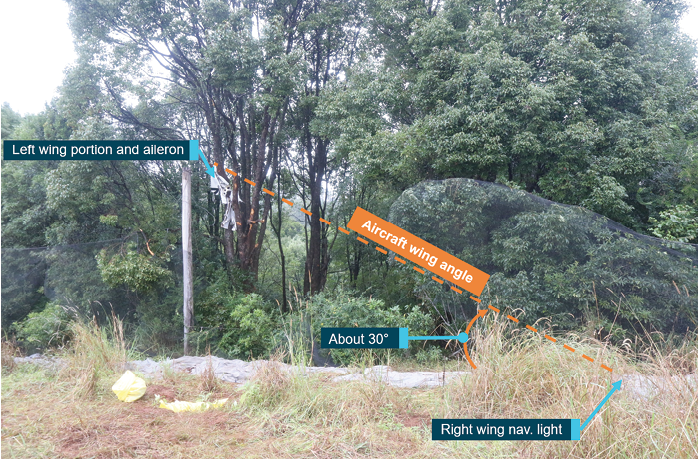
Wirestrikes pose an on-going problem to aerial agricultural operations. There are 180 wirestrike accidents in the Australian Transport Safety Bureau (ATSB) database for the period between 2001 and 2010. Of these, 100 involved agricultural flying. Research by the ATSB has shown that 63 per cent of pilots were aware of the position of the wire before they struck it.

This publication describes recent aerial agricultural wirestrike accidents. In all these cases, the aircraft struck a powerline that was known to the pilot. In many of these accidents, the pilot was not completely focused on the immediate task of flying due to a change in plans.

This publication also explains a number of strategies developed by the Aerial Agriculture Association of Australia (AAAA) and the ATSB to help agricultural pilots manage the on-going risk of wirestrikes during spraying operations. These include:

  • ensure you are physically and mentally fit to fly
  • set client expectations so that they are clear that safety comes first
  • conduct a thorough briefing and study a detailed map of the area before the flight
  • conduct an aerial reconnaissance before spraying and conduct an extra aerial reconnaissance before the clean-up run
  • reassess the risks when plans change
  • avoid unnecessary distractions and refocus when distracted
  • be aware of vigilance limitations
  • don’t rely on your ability to react in time to avoid a wire
  • actively look for and remind yourself of wires
  • be aware of and manage pressures
  • have a systematic approach to safely managing wires.

Publication details

Publication number AR-2011-028
Series number 2
Publication type Avoidable accidents
Publication mode Aviation
Publication date 25/03/2013
ISBN 978-1-74251-290-7

A pilot's guide to staying safe in the vicinity of non-controlled aerodromes

Summary

Most aerodromes in Australia are located in uncontrolled airspace and consequently do not have an air traffic control presence. At and around non-controlled aerodromes, pilots are responsible for making themselves aware of nearby aircraft and maintaining separation. This report aims to provide pilots with an appreciation of the types of safety events that are associated with operations at non-controlled aerodromes and provide education on expected behaviours to assist pilots in being prepared for the risks.

Generally, operations at non-towered aerodromes can be considered to be safe, but this relies on all pilots maintaining awareness of their surroundings and of other aircraft, and on flying in compliance with procedures, while being observant, courteous and cooperative. Most of the 709 airspace-related safety occurrences reported to the ATSB between 2003 and 2008 at, or in the vicinity of non-towered aerodromes, were incidents, but they also included 60 serious incidents and six accidents (mid-air and ground collisions). 

Most of the occurrences involved conflicts between aircraft, or between aircraft and ground vehicles. A large number of these involved separation issues, ineffective communication between pilots operating in close proximity, the incorrect assessment of other aircraft’s positions and intentions, relying on the radio as a substitute for an effective visual lookout, or a failure to follow published procedures. 

This report looked only at incidents and accidents prior to the introduction of changes by the Civil Aviation Safety Authority (CASA) to Civil Aviation Regulation (CAR) 166 on 3 June 2010, which affected procedures at all non-towered (non-controlled) aerodromes. Although the CAR 166 changes may in time be shown to reduce incidents and accidents, a number of issues highlighted by the occurrences documented in this report persist at non-towered aerodromes which pilots can easily address. 

This guide has been released in association with a more detailed and larger report (

) into non-controlled aerodrome operations.

What you need to do

Non-towered aerodromes have been, and will continue to be, a central component of the Australian airspace system. A number of issues related to communications, situational awareness, and following circuit procedures persist in occurrences at non-towered aerodromes that pilots can easily address to make sure that safe operations are always maintained.

The aim at all times is to achieve radio-alerted see-and-avoid, to be aware of other traffic, and position your aircraft appropriately to prevent conflicts with that traffic. Observing these simple points will help to you to do this4.

  • Maintain a lookout for other aircraft at all times.
  • Get a radio, and always make the standard broadcasts — even when you think there is no nearby traffic.
  • Achieve radio alerted see-and-avoid by making all of the standard broadcasts within 10 NM of a non-towered aerodrome.
  • Use the same procedures at all non-towered aerodromes, unless otherwise stated in the En Route Supplement Australia (ERSA).
  • Be aware that any radio-equipped aircraft could be conducting straight-in approaches at non-towered aerodromes
  • Avoid overflying aerodromes where possible and take note of IFR inbound and outbound routes.

Read the research report

AR-2008-044 (6.01 MB)
.

Publication details

Publication number AR-2008-044(1)
Publication type Avoidable accidents
Publication mode Aviation
Publication date 08/03/2013
Authors ATSB
ISBN 978-1-74251-295-2

Avoidable Accidents No. 7 - Visual flight at night accidents: What you can't see can still hurt you

Plane flying at sunset

Introduction

At night, less can be seen outside the cockpit to help you control your aircraft. Although flight instruments are used under both Night Visual Flight Rules (VFR) and Instrument Flight Rules (IFR), at some stage during a night flight you will also need to fly the aircraft with reference to what can be seen outside.

What can be seen outside an aircraft at night varies greatly between the almost day-like conditions of flying over a city under a full moon to the complete darkness of remote areas without any moon or significant ground lighting. Safe flight relies on pilots applying the correct flying skills using the combination of information from flight instruments and from outside the aircraft.

Many pilots fly mostly in daylight. Night flying, even when undertaken by appropriately qualified pilots, presents an added level of complexity. In most cases pilots who operate at night have the necessary knowledge and skills and are flying suitably equipped aircraft.

A pilot who is qualified to fly visually at night should have the extra skills and equipment to control the aircraft by using flight instruments and by using more detailed flight procedures. Safe night visual flight requires the application, use and integration of all the information sources correctly. Compared with day visual flight, there is more to night visual flight than meets the eye.

Key message

The extra risks inherent in visual flight at night are from reduced visual cues, and the increased likelihood of perceptual illusions and consequent risk of spatial disorientation. These dangers can, however, be managed effectively. This report explains how suitable strategies can significantly reduce the risks of flying visually at night.

  • Night flying is more difficult than flying in the day. Ensure you are both current and proficient with disciplined instrument flight. Know your own personal limitations in terms of flying with minimal or no visual references. Only fly in environments that do not exceed your capabilities.
  • Before committing to departing on a visual flight at night or close to last light, ensure your aircraft is appropriately equipped and consider all obtainable operational information, including the availability of celestial and terrestrial lighting.
  • Some nights and some terrain are darker than others. Excellent visibility conditions can still result in no visible horizon or contrast between sky and ground. Inadvertently flying into instrument meteorological conditions (IMC) is also harder to avoid at night.
  • Always know where the aircraft is in relation to terrain and know how high you need to fly to avoid unseen terrain and obstacles.
  • Remain aware of illusions that can lead to spatial disorientation—they can affect anyone. Know how to avoid and recover from illusions by relying on instrument flight.

Publication details

Publication number AR-2012-122
Investigation number AR-2012-122
Publication type Avoidable accidents
Publication mode Aviation
Publication date 17/12/2013

Avoidable Accidents No. 5 - Starved and exhausted: Fuel management aviation accidents

Safe flight depends on reliable power. Despite the money and effort spent on ensuring aircraft engines are reliable, equally reliable systems are needed to ensure that engines always get the fuel they need.

This report discusses procedures that pilots can use before and during a flight to help them be absolutely sure they will have sufficient fuel to land at their destination aerodrome with reserve fuel intact. It does not discuss procedures to ensure fuel quality, such as checking all fuel drain valves for contaminants or using approved fuel, although these remain important. Nor does it discuss fuel system integrity measures, such as the maintenance of fuel filler cap seals.

The report will look at two main reasons why fuel stops getting to an engine during flight.

  • Fuel exhaustion happens when there is no useable fuel remaining to supply the engine(s).
  • Fuel starvation happens when the fuel supply to the engine(s) is interrupted although there is adequate fuel on board.

The more tanks you have to choose from, the greater the potential to make a mistake and to select the wrong fuel tank.  

Key message

  • Accurate fuel management starts with knowing exactly how much fuel is being carried at the commencement of a flight. This is easy to know if the aircraft tanks are full, or filled to tabs. If the tanks are not filled to a known setting, then a different approach is needed to determine an accurate quantity of usable fuel.
  • Accurate fuel management also relies on a method of knowing how much fuel is being consumed. Many variables can influence the fuel flow, such as changed power settings, the use of non-standard fuel leaning techniques, or flying at different cruise levels to those planned. If they are not considered and appropriately managed then the pilot’s awareness of the remaining usable fuel may be diminished.
  • Keeping fuel supplied to the engines during flight relies on the pilot’s knowledge of the aircraft’s fuel supply system and being familiar and proficient in its use. Adhering to procedures, maintaining a record of the fuel selections during flight, and ensuring the appropriate tank selections are made before descending towards your destination will lessen the likelihood of fuel starvation at what may be a critical stage of the flight. 

Conclusion

Fuel exhaustion is more likely to occur on flights when there is little flight fuel margin, that is, landing with just reserve fuel on board. In these circumstances, particular attention to detail in fuel management is warranted.

The chance of fuel exhaustion can be reduced by:

  • using more than one source of information to obtain consistent results about the fuel on board before flight
  • the use of a consistent procedure that is regularly checked to know the exact rate of fuel consumption
  • monitoring the flight to ensure that sufficient fuel will remain on board in the event of unplanned delays.
  • Fuel starvation usually happens when the selected tank is run dry. In addition to the factors relevant to fuel exhaustion, the chance of starvation can be further reduced by:
  • ensuring the pilot is fully familiar with the operation of the fuel system for both normal and abnormal operations
  • adhering to pre-flight procedures and checks to ensure the correct tank is selected before take-off and landing
  • using a fuel log during flight to provide a record of the fuel usage from each tank
  • selecting the appropriate tank before descending to the destination and ensuring that tank has adequate fuel for landing. 

Publication details

Publication number AR-2011-112
Publication type Avoidable accidents
Publication mode Aviation
Publication date 25/03/2013
ISBN 978-1-74251-293-8

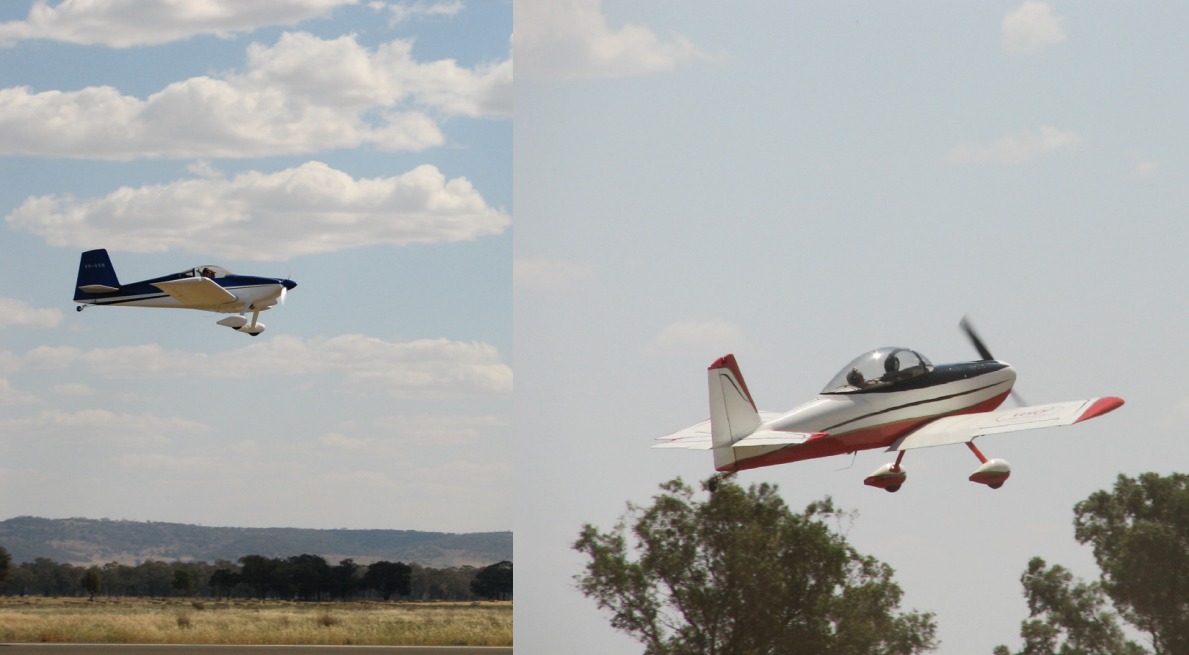
Avoidable Accidents No. 1 - Low-level flying

Image of crashed plane.

Introduction

This publication is the first in a pilot education series by the Australian Transport Safety Bureau (ATSB) on avoidable accidents. In this report, we will focus on accidents involving unnecessary and unauthorised low flying; that is, flying lower than 1,000 ft (for a populous area) or 500 ft (for any other area) above ground level without approval from the Civil Aviation Safety Authority (CASA).

Between 1999 and 2008, there were 147 fatal accidents reported to the ATSB involving aerial work, flying training, private, business, sport and recreational flying in Australia. Of those fatal accidents, at least six were associated with unauthorised and unnecessary low flying. Those six accidents, along with a seventh non-fatal accident, presented here as case studies, were chosen by aviation safety investigators at the ATSB to highlight the inherent dangers of unauthorised low flying and to offer some lessons learnt from each case. It is hoped that these lessons learnt will help pilots make more accurate risk assessments and better decisions before electing to fly at low levels. 

Before you decide to conduct low-level flying, ask yourself whether there is a legitimate or operational reason for you to do so.

At low altitudes, there are many obstacles to avoid and there is a lower margin for error. Recognising the risks and hazards of low-level flying, CASA requires pilots to receive special training and endorsements before they can legally conduct low-level flying. In the accidents described in this booklet, most of the pilots had neither of these, and none had a legitimate reason to be flying below 500 ft. Some legitimate reasons for flying at low level include aerial stock mustering, crop spraying, and firefighting operations. For most private pilots, there is generally no reason to fly at low levels, except during take-off and landing, conducting a forced or precautionary landing, or to avoid adverse weather conditions.

What is sad and unfortunate about the accidents described in the following case studies is that they were all avoidable.

Conclusion

These case studies serve as salient reminders of the risks associated with low-level flight. Out of the seven accidents documented in this report, only one had survivors. Low-level flying is inherently unsafe for a number of reasons, so it should be avoided at all costs when there is no operational reason to do it (regardless of whether you have been trained and/or approved to do so). 

Flying at low level is unsafe because: 

  • there are more obstacles to avoid, many of which are hard to see until it is too late (e.g. powerlines and birds)
  • pilots have a higher workload because there are more hazards to negotiate in the environment
  • there may be turbulence and windshear that pilots do not encounter at higher levels and
  • there is very little time to recover control of the aircraft if something goes wrong.

From the accidents described here, it is apparent that the two major hazards of low flying are wirestrikes and pilots’ reduced opportunity to recover their aircraft from a stall or loss of control. 

It is important to keep in mind that powerlines also exist in remote areas where you least expect. For example, the pilots of the Stuart Highway accident probably did not expect powerlines in the remoteness of the Northern Territory, and the pilot of the Lake Eildon accident probably did not expect to encounter powerlines above the expanse of a large lake. 

The effects of wirestrikes at low level are obvious — significant damage to the aircraft, usually leading to a loss of control and, because of the lower margin for recovery, subsequent impact with the ground or water. Pilots must keep in mind that not only do powerlines exist at low levels and in remote areas, they are also not easy to identify. Even against a clear blue sky, wires are difficult to spot for a number of reasons. Wires can oxidise to a blue/grey tinge and may blend into the background (ATSB, 2006), or the wire may be obscured by terrain. Single wires are difficult to detect from the air and can be encountered in the most unexpected places in rural areas. Even if a pilot has spotted a powerline, his or her ability to judge its distance from the aircraft can be distorted by optical illusions or a lack of nearby visual reference points. 

Pre-flight assessment and planning is an important part of any flight. Make sure you have maps of your intended flight path with you when you fly, and study them before you get into your aircraft to identify any terrain, wire, or other obstacles that you need to avoid should operational circumstances necessitate flight at low level. If you have been trained and are qualified for low flying, and low flying is necessary, ensure that you conduct an aerial survey of the area from an appropriate height before you conduct any low flying.

Low-level flying also presents fewer opportunities to recover from a loss of control compared to flight at higher altitudes. It takes time to react and to regain control of an aircraft, and the closer to the ground you are, the less time and distance you have. Flying at low altitudes is not only risky when things are going right; it becomes downright perilous when things are going wrong. 

Before you decide to conduct low-level flying, ask yourself whether there is a legitimate or operational reason for you to do so.

Publication details

Publication number AR-2009-041
Series number 1
Publication type Avoidable accidents
Publication mode Aviation
Publication date 25/03/2013
ISBN 978-1-74251-289-1