

Report summary
Why the ATSB conducted this study
Instructional flying is a critical component of aviation safety, providing pilots with the skills, knowledge, and decision-making capabilities required for safe flight operations. It represents a substantial component of general aviation activity and accounts for around one-third of reported general aviation occurrences involving aeroplanes and helicopters. As such, understanding the trends and factors contributing to instructional flying occurrences is important for informing training practices and improving future safety outcomes.
What the ATSB found
Between 2015 and 2024, there were 5,131 instructional flying occurrences reported to the ATSB. There were 187 accidents (including 15 fatal and 9 serious injury accidents), which accounted for 4% of all instructional flying occurrences. On average, 19 accidents were reported to the ATSB each year, with accident rates (VH-registered aircraft) showing a downward trend across the 10 years. For VH-registered aircraft, instructional flying had a lower accident rate than most other general aviation activities (sports and pleasure flying, aerial work) except own business flying.
Aircraft control issues, particularly hard landings and loss of control, represented the greatest accident risk during instructional flying, with over half of the accidents involving terrain collisions. Over half of the accidents occurred during the landing phase of flight.
Aircraft separation issues, including near collisions, were the leading factor involved in serious incidents. These occurrences mostly took place in uncontrolled airspace and were commonly associated with failures in monitoring and checking, ineffective communication and coordination, inadequate task experience or recency, and increased workload or distractions. These results reinforce the importance of maintaining effective lookout and actively managing separation during instructional flying.
The number of fatal accidents was double during dual compared to solo instructional flying, possibly reflecting a higher frequency of dual-training flights. Dual and solo instructional flying had similar accident risks, with a similar number of aircraft control issues and terrain collisions.
Although most instructional flying occurrences involved aeroplanes, helicopters recorded nearly 3 times the rate of accidents, double the rate of fatal accidents and higher rates of serious incidents than aeroplanes. This suggests that instructional flying conducted in helicopters posed a greater overall risk compared to aeroplanes.
There were also differences based on the number of aircraft engines. For VH-registered aircraft, while the total accident rate was similar, the fatal accident rate was 5 times higher for multi-engined aeroplanes compared to single-engined aeroplanes. In contrast, multi-engined helicopters recorded lower rates of accidents and serious incidents. These differences may be influenced by factors beyond engine number alone, such as pilot experience, training activities, and aircraft complexity.
Overall, these results highlight that instructional flying risks vary according to the activity subtype, aircraft type, and the number of aircraft engines. By maintaining awareness of these risks, and applying targeted safety strategies to address them, the aviation community can continue to advance the safety performance of instructional flying operations across Australia.
Introduction
Background
Instructional flying is an essential foundation for safe aviation, equipping pilots with critical skills, decision-making capability, and procedural discipline required for safe flying. It involves training conducted for the issue of a licence, or the issue or renewal of a pilot rating, including dual flights with an instructor (for example learning to fly, type endorsement or conversion training), as well as solo navigation exercises conducted as part of a course of applied flight training. It also includes other instructional flying activities such as search and rescue training, winching training, aircrew training, flight to maintain currency, and load master training.
Instructional flying forms part of general aviation (GA), which includes aircraft operations other than commercial air transport (ICAO, 2018) across both VH- and non-VH (recreational) registered aircraft. GA also involves other activities including aerial work,1 other general aviation flying,2 sport and pleasure flying,3 and own business travel. Over the past decade, instructional flying accounted for around one-third of GA reported occurrences (accidents, serious incidents, and incidents) that involved aeroplanes and helicopters.4 However, instructional flying recorded fewer fatal and serious injuries compared to other GA activities.
Between 2015 and 2024, 5,131 instructional flying occurrences were reported to the ATSB. Accidents accounted for around 4% of occurrences, including 15 fatal and 9 serious injury accidents, while a further 8% were classified as serious incidents.
Dual instructional flying accounted for around half of all occurrences, while solo instructional flying accounted for around one-quarter of occurrences. However, accidents were more evenly distributed between dual and solo instructional flying. Further, just under one-quarter of occurrences were classified as unknown instructional flying, with the remainder (2%) classified as other instructional flying.
From 2021 to 2024, the number of instructional flying occurrences (VH-registered aircraft only) increased by around 58%, broadly aligning with a 42% rise in VH-registered instructional flying flights following the restrictions during the COVID pandemic. Given this rise in instructional flying activity and the relatively constant rate of occurrences, understanding the factors contributing to these occurrences is important to reduce future safety risks and improve training outcomes.
This publication analyses instructional flying occurrences reported to the ATSB between 2015 and 2024. Occurrences reported to the ATSB in 2025 were not included in the analyses as aircraft movement data was not yet available. The publication includes CASA registered (VH-) aeroplanes and helicopters and Recreation Aviation Australia (RAAus) registered aeroplanes.
The purpose of this publication is to present to flying instructors, pilots, and flight training organisations the common occurrence categories and safety factors contributing to instructional flying occurrences to raise awareness, inform training practices and improve future safety outcomes.
Data sources and limitations
Sources of information
The sources of information used included:
- the ATSB aviation occurrence database
- ATSB investigation reports
- aircraft movement data from the Bureau of Infrastructure, Transport and Research Economics (BITRE).
Limitations
This report presents both the number of occurrences and the rate of occurrences per flight (take-off and landing). While the number of occurrences gives an indication of the overall risk, the rate is a more appropriate measure for relative risk. Exposure data (number of flights) was only available for VH-registered aircraft and was not available separately for dual and solo instructional flying. Consequently, occurrence rates by activity subtype could not be calculated.
A further limitation is that the ATSB occurrence data relies on reported occurrences under the mandatory reporting requirements of the Transport Safety Investigation Regulations (2003). While the below data is representative of instructional flying and other GA sectors, it likely does not represent 100% of occurrences.
Occurrence class
The majority of reported instructional flying incidents5 involved VH-registered aircraft (Table 1). While the majority of accidents6 and serious incidents7 also involved VHregistered aircraft, recreational-registered aircraft accounted for a higher proportion of these occurrences. This may reflect variation in reporting rates, with VH-registered operators potentially more likely to report lower risk occurrences (incidents), rather than a difference in the level of safety risk between registration types.
Table 1: Instructional flying occurrences by registration and class (2015–24)
| Accidents | Serious incidents | Incidents | Total | |
| VH-registered | 133 | 325 | 4,176 | 4,634 |
| Recreational-registered | 54 | 79 | 364 | 497 |
| Total | 187 | 404 | 4,540 | 5,131 |
Accidents (including 15 fatal and 9 serious injury accidents) accounted for 4% of all instructional flying occurrences. On average, 19 accidents were reported to the ATSB each year, with accident rates (VH-registered aircraft) showing a downward trend across the study period (Figure 1 blue line).
Figure 1: Instructional flying occurrences by class and year that involved VH-registered aircraft
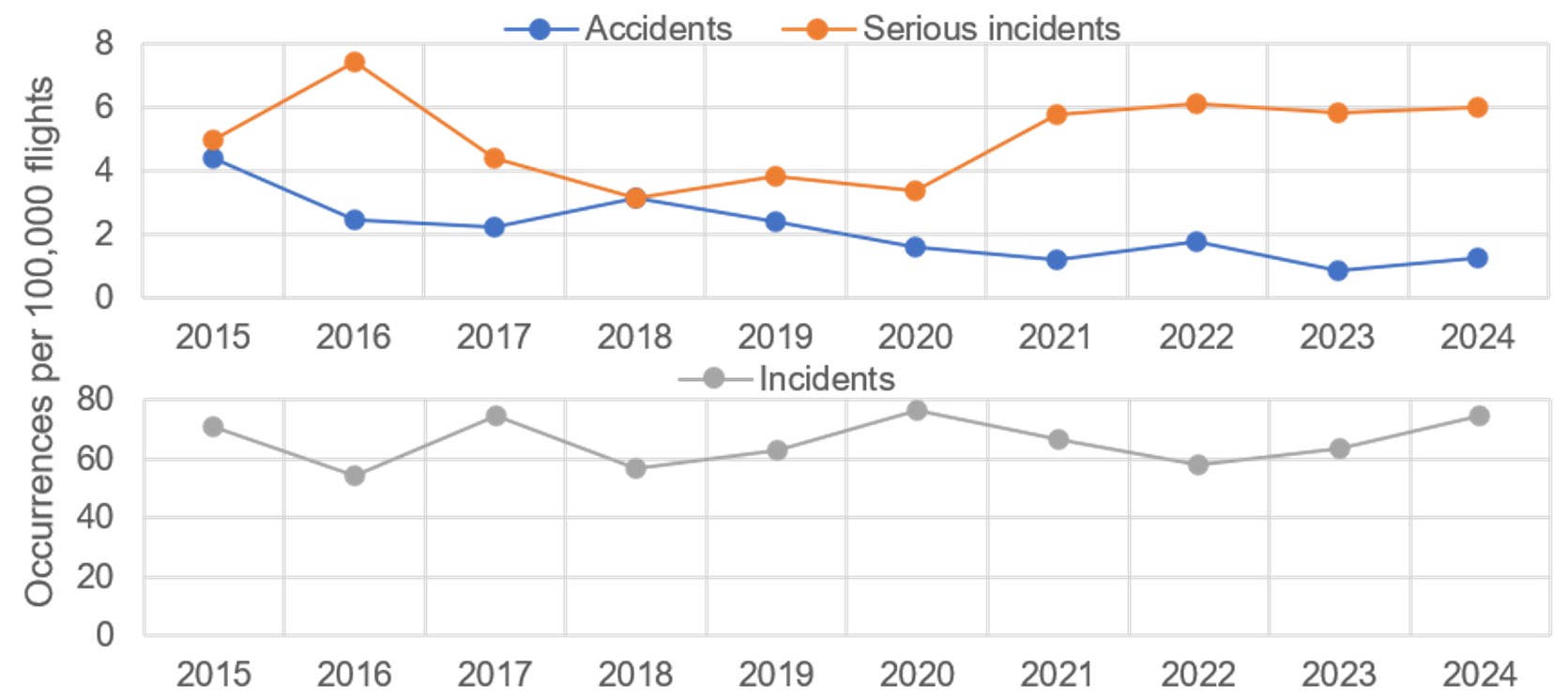
There were, on average, around 40 serious incidents reported each year, around twice that of accidents. The serious incident rate (orange line) peaked in 2016 then declined and remained relatively consistent until a steep increase in 2021, where it was steady over the remainder of the period.
Incidents represented the remaining occurrences, with rates (grey line) remaining relatively consistent.
The majority of occurrences happened during the landing and approach phases of flight (Figure 2). Accidents were primarily in the landing phase, while serious incidents were spread fairly evenly across approach, landing and cruise phases.
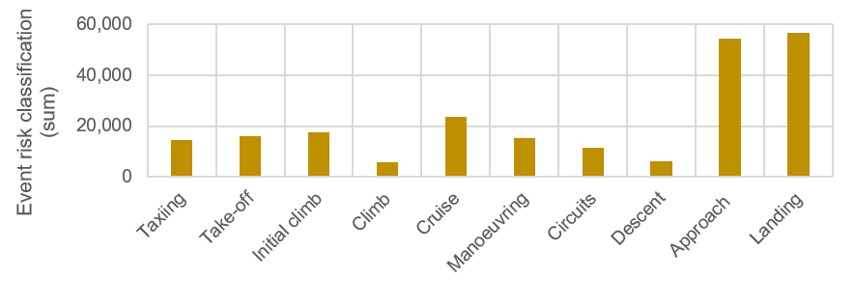
Further, by combining both the number of occurrences and the total event risk classification (ERC)8 score from each occurrence, the highest risk for instructional flying can be seen to be during landing and approach phases of flight. While less than half the risk of these phases, the cruise phase, posed the next highest risk (Figure 3).
Figure 2: Instructional flying occurrences by phase of flight and occurrence class (2015–24)
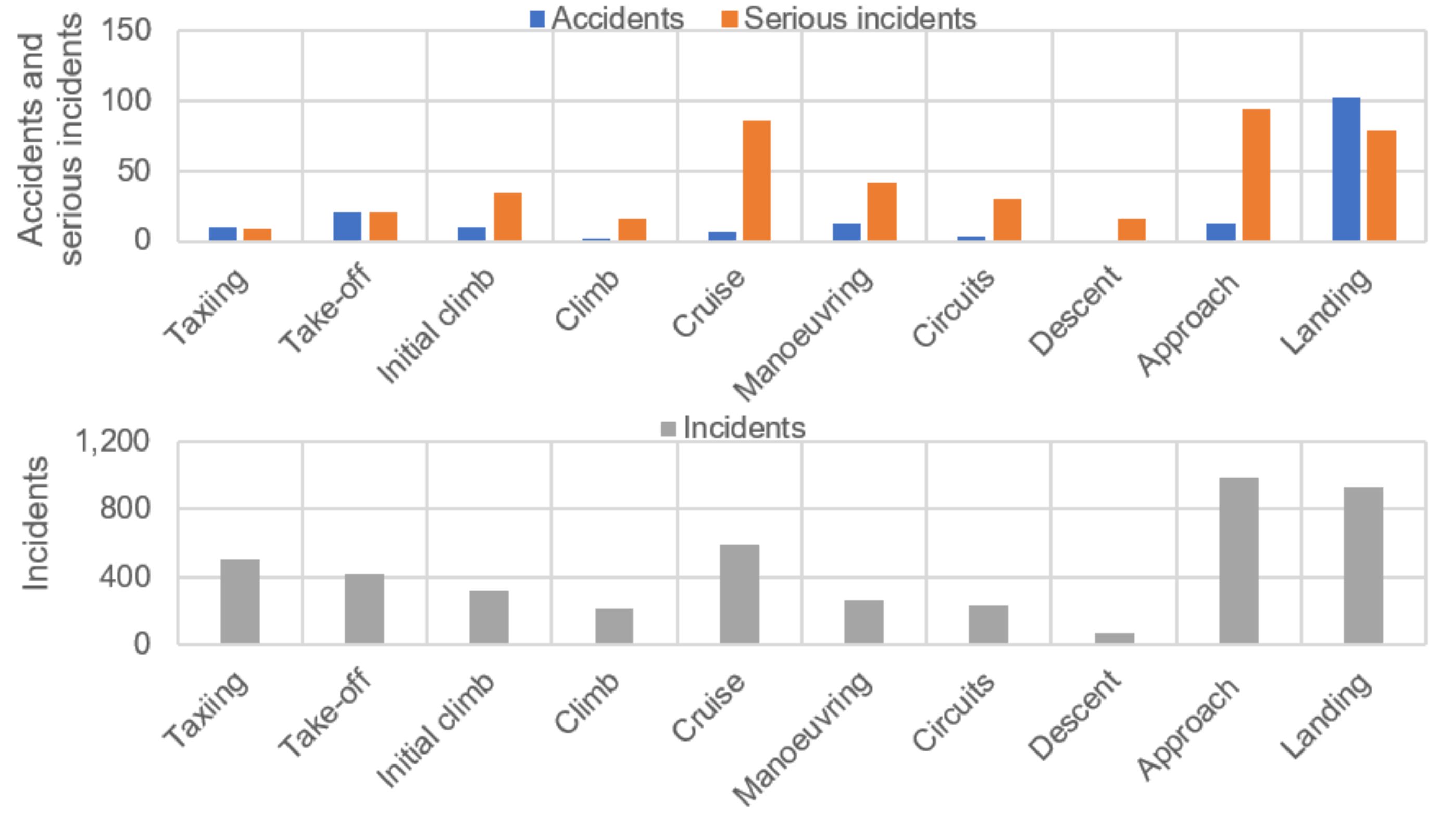
Figure 3: Event risk classification scores by phase of flight (2015–24)
Occurrence categories
This section will examine instructional flying occurrence categories (what happened in each occurrence).
Individual occurrences can have multiple associated occurrence categories, and each occurrence category can be further subdivided into multiple subcategories for a single occurrence. For example, an occurrence that involved aircraft control issues may have involved both loss of control and a hard landing.
Accidents and serious incidents
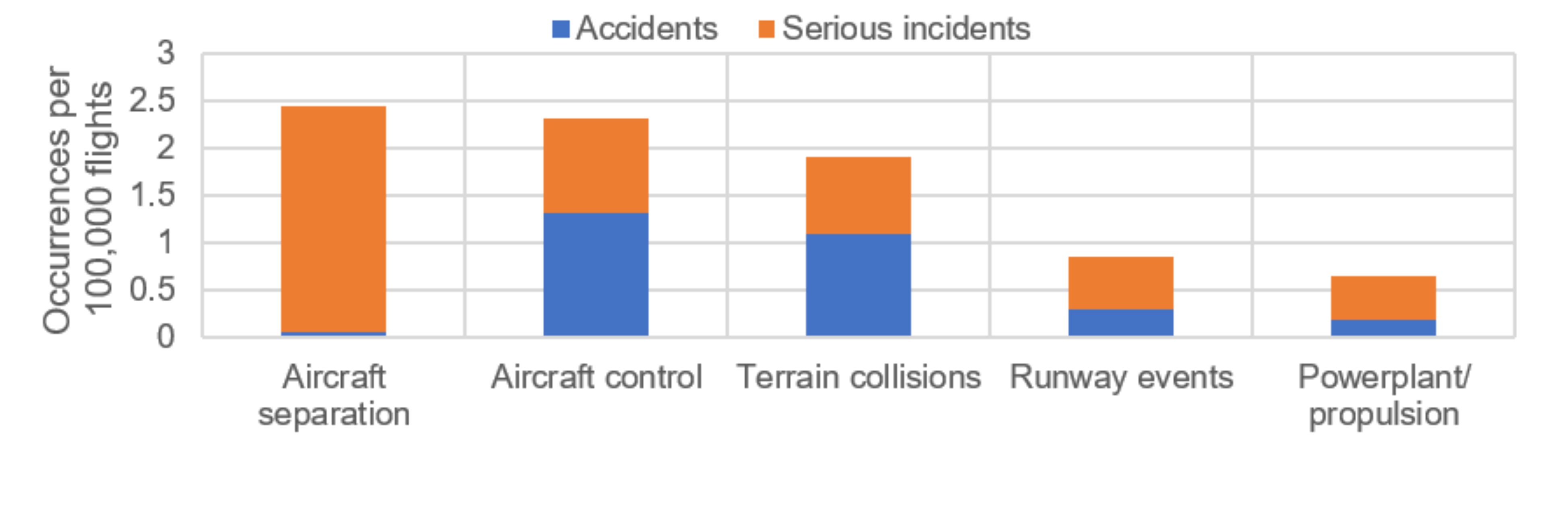
Analysis of occurrence categories underlying instructional flying accidents and serious incidents identified aircraft separation issues, aircraft control issues, terrain collisions, runway events, and powerplant or propulsion issues9 as the most common occurrence categories (Figure 4).10
Figure 4: Common occurrence categories for instructional flying accidents and serious incidents that involved VH-registered aircraft (2015–24)
Aircraft control issues
Aircraft control issues were involved in just under two-thirds of all accidents, including 5 that resulted in 10 fatalities. Hard landings and loss of control11 each accounted for almost half of the accidents that involved control issues, with only one accident involving successful recovery following loss of control. Just over half of the accidents involving loss of control occurred during landing, while 2 fatal loss of control accidents occurred during initial climb, one during manoeuvring, one during cruise, and one during approach.
Aircraft control issues also were involved in around one-fifth of serious incidents, with loss of control accounting for around two‑fifths of these occurrences, followed by wheels‑up landings (around 22%) and hard landings (around 20%). Recovery following loss of control was achieved in around two‑fifths of serious incidents.
Analysis of safety factors12 (events or conditions that increase safety risk) identified several recurring factors underlying aircraft control issues including:
- aircraft handling13 (for example bounced landing)
- monitoring and checking14 (for example instructor not acting to recover the aircraft in sufficient time)
- task experience or recency (for example limited experience on aircraft type)
- windy weather conditions.
Terrain collisions
Over half of all accidents resulted in terrain collisions, accounting for the highest number of fatalities, with 12 accidents resulting in 21 fatalities. Most of these accidents involved collision with terrain, while only one accident resulted from controlled flight into terrain and around one‑fifth involved ground strikes.
Around one-tenth of serious incidents also resulted in terrain collisions, mostly involving ground strikes, with one controlled flight into terrain and one wirestrike.
Common safety factors contributing to terrain collisions included:
- aircraft handling (for example incorrect stall recovery technique applied)
- task experience or recency (for example student pilot on first solo instructional flight)
- windy weather conditions.
First night training flight ends in loss of control On 15 May 2018, at 1903 Australian Eastern Standard Time, a Cirrus SR22 aircraft collided with terrain at Orange Airport, New South Wales. The accident was a night training flight with one pilot and one flight instructor on board. The pilot and instructor were seriously injured, and the aircraft was destroyed. The ATSB found that the pilot, who was conducting their first night training flight, likely became spatially disoriented during a go-around manoeuvre, which resulted in a loss of control at low level and collision with terrain. The flight instructor did not intervene to take control of the aircraft during the go-around manoeuvre, because they were not aware the pilot had become spatially disorientated and was accustomed to directing the pilot to correct control problems. Inconsistent with Civil Aviation Safety Authority guidance, the instructor, who had previously instructed the pilot for their private instrument rating, did not provide a night flying demonstration before directing the pilot around the circuit. Investigation safety message It is important for flight instructors to provide a demonstration when introducing a pilot to a new flight sequence or new flight environment. Time spent demonstrating the key points of a new sequence or environment will usually improve the learning process by ensuring that the development of a new skill is supported and preceded by knowledge and understanding from experience. Figure 5: Wreckage of the Cirrus SR22 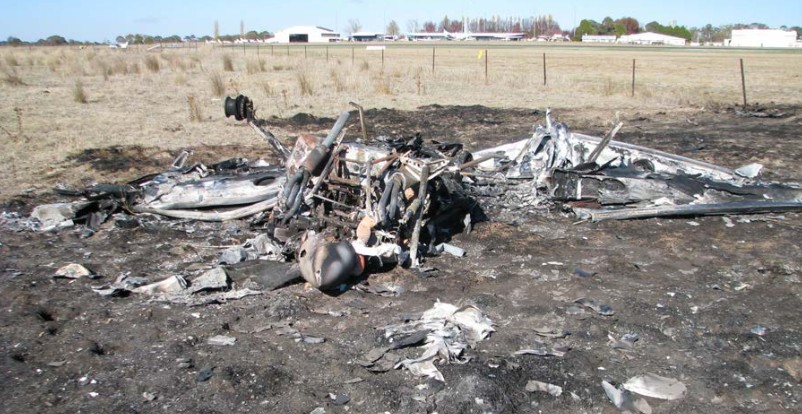
|
Aircraft separation issues
While occurring in fewer accidents, aircraft separation issues, including near collisions, were involved in around two-fifths of the serious incidents. In around two-thirds of these at least one aircraft was aware of the other, and just over two-thirds occurred in Class G airspace (uncontrolled airspace where ‘see and avoid’ responsibilities remain with flight crews).
While the distribution of occurrence locations was widespread, near collisions most commonly took place at or near (within 7 NM) Moorabbin aerodrome (around 12%), Jandakot aerodrome (around 10%), and Bankstown aerodrome (around 8%), reflecting higher levels of instructional flying activity at these locations.
Common safety factors contributing to near collisions included:
- monitoring and checking (for example not maintaining appropriate lookout)
- communicating and coordinating with personnel external to the aircraft (for example failure to make a radio call)
- task experience or recency (for example student pilot conducting solo circuits)
- high workload (for example operating at a busy aerodrome)
- distractions.
Together, these highlight the importance of maintaining awareness of other aircraft and actively managing separation during instructional flying, particularly in uncontrolled airspace where ‘see-and-avoid’ techniques remain the responsibility of flight crews.
Near collision at a non-controlled aerodrome On 14 April 2016, the instructor and student of a Pacific Aerospace CT/4B aircraft, registered VH-YCO (YCO), conducted a dual (military) training flight under the instrument flight rules. The aircraft departed from Tamworth Airport, and tracked to Narrabri Airport, before commencing the area navigation runway 11 approach to Gunnedah Airport, all in New South Wales. Prior to commencing the approach, the instructor of YCO contacted the military radar controller, who advised that they were not aware of any other aircraft in the area. The instructor reported that they broadcast on the Gunnedah common traffic advisory frequency (CTAF), when 18 NM from the aerodrome, advising that they were going to conduct the area navigation runway 11 approach, and stating their estimated time at the airport. The crew reported hearing a voice-back response from the aerodrome frequency response unit, indicating that no one else had transmitted on the CTAF in the previous 5 minutes. At that time, an instructor and student pilot of a Piper PA-28-181 aircraft, registered VH-WJZ (WJZ), were conducting a local dual training flight from Gunnedah Airport. The instructor reported that they were broadcasting on and monitoring the CTAF. At about 1450 Eastern Standard Time, YCO was 13 NM north-west of Gunnedah on the area navigation approach for runway 11, and at 4,500 ft above mean sea level, when they were alerted by the aircraft’s traffic collision avoidance device of another aircraft. The device indicated that the other aircraft was 200 ft below them and 2 NM away. The instructor looked south and within 20 seconds sighted WJZ at the same level. The instructor took control of the aircraft from the student, and conducted a 60° angle of bank turn to the left to avoid WJZ. The instructor of WJZ sighted YCO when about 13 NM north-west of Gunnedah aerodrome at about 4,000 ft above mean sea level. The instructor of WJZ conducted a left turn and reported sighting YCO commence a left. The aircraft passed at the same level about 150 to 200 m horizontally apart. Investigation safety message In this occurrence, un-alerted see-and-avoid did lead to the instructor of one aircraft sighting the other. However, insufficient communication between pilots operating in the same area is the most common cause of safety incidents outside controlled airspace and near non-controlled aerodromes. Figure 6: Recorded track of VH-YCO, approximate track of VH-WJZ, and approximate location of near collision 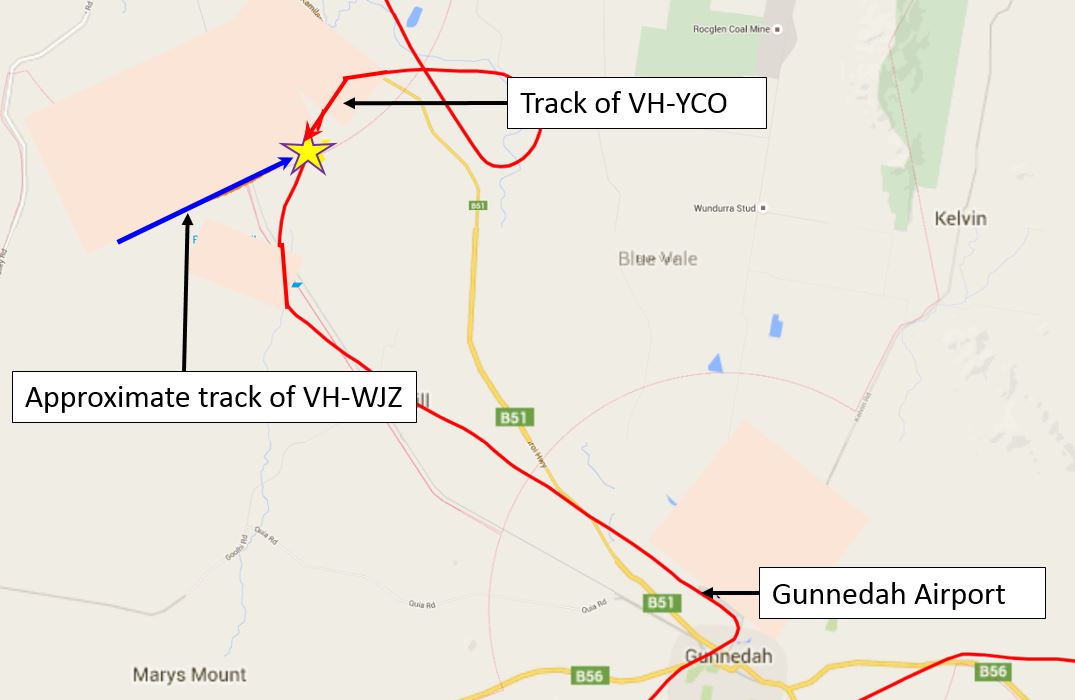
|
Runway events and powerplant issues
Although less frequent, accidents and serious incidents also involved runway events and powerplant or propulsion issues. Runway events mostly involved runway excursions for both accidents (around 93%) and serious incidents (around 70%). Almost all powerplant or propulsion related accidents and serious incidents involved engine failure or malfunction, with most aircraft involved having a piston engine.
Incidents
The main recurring occurrence categories for instructional flying incidents included aircraft separation issues, wildlife strikes, runway events, systems issues, and powerplant or propulsion issues (Figure 7).
Figure 7: Common occurrence categories for instructional flying incidents that involved VH-registered aircraft (2015–24)
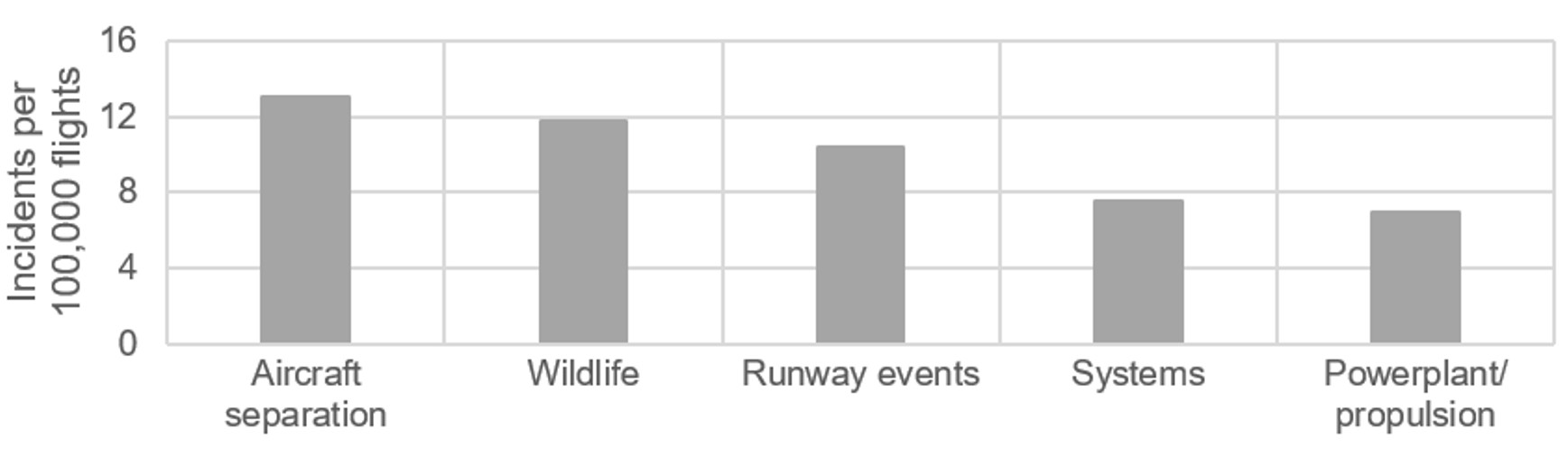
Similar to serious incidents, around half of the aircraft separation issues occurred in Class G airspace. This was followed closely by Class D airspace at around two-fifths.
While widespread, the primary locations (within 7 NM) where aircraft separation issues occurred were Moorabbin aerodrome, Parafield aerodrome, and Jandakot aerodrome, with each accounting for around one-tenth of the occurrences. This likely reflects higher levels of instructional flying activity at these locations.
Similar to other GA activities, wildlife strikes were involved in around one-fifth of incidents and primarily included birdstrikes.
Runway events were involved in around 16% of instructional flying incidents, and around half of these were runway incursions. These almost always resulted from pilot or driver15 actions, with only 5 incidents resulting in evasive action by another pilot, around 25% in a go-round, and 3% in a rejected take-off.
Systems issues16 and powerplant or propulsion issues each were involved in around one-tenth of incidents. Just under half of the system failures involved loss of normal functioning of avionics or flight instruments such as communication equipment.
Consistent with accidents and serious incidents, powerplant or propulsion issues mostly involved engine failure or malfunction including rough running (around 39%), partial power loss (around 22%), rough running and partial power loss (around 18%), and total failure (around 9%).
Comparison with other general aviation activities
For VH-registered aircraft, instructional flying had a lower accident rate than all other GA activities except for own business travel (Figure 8).17 Serious incident rates were also lower compared to sports and pleasure flying and other general aviation flying, and were broadly similar to those recorded for aerial work activities.18
Figure 8: Instructional flying accidents and serious incidents compared to other GA activities (2015–24)
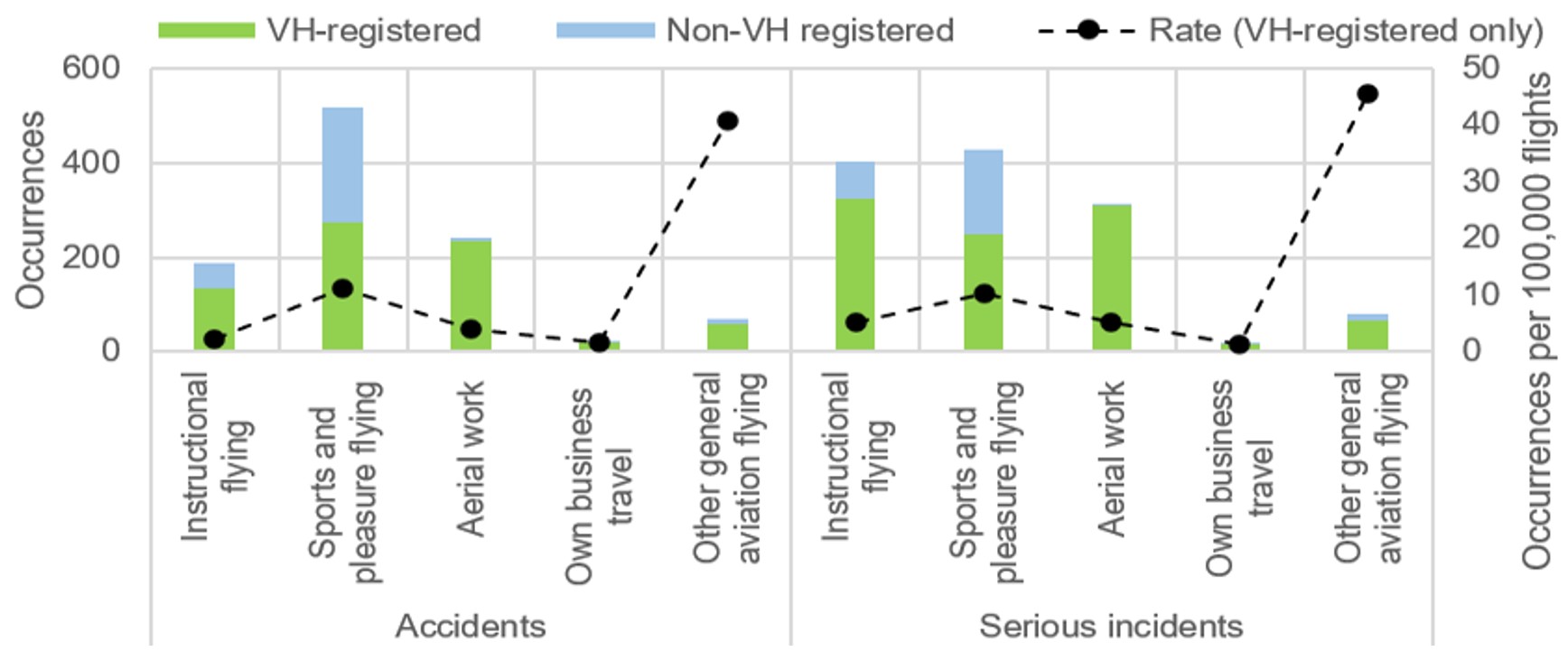
The most common occurrence categories associated with instructional flying accidents were consistent with those observed in other GA activities, including aerial work and sports and pleasure flying (Figure 9).19 However, accident rates were generally lower for instructional flying. This difference may reflect variations in the operational environments between the activities and the levels of supervision associated with instructional flying.
Figure 9: Common occurrence categories for instructional flying accidents and serious incidents that involved VH-registered aircraft compared to other GA activities (2015–24)
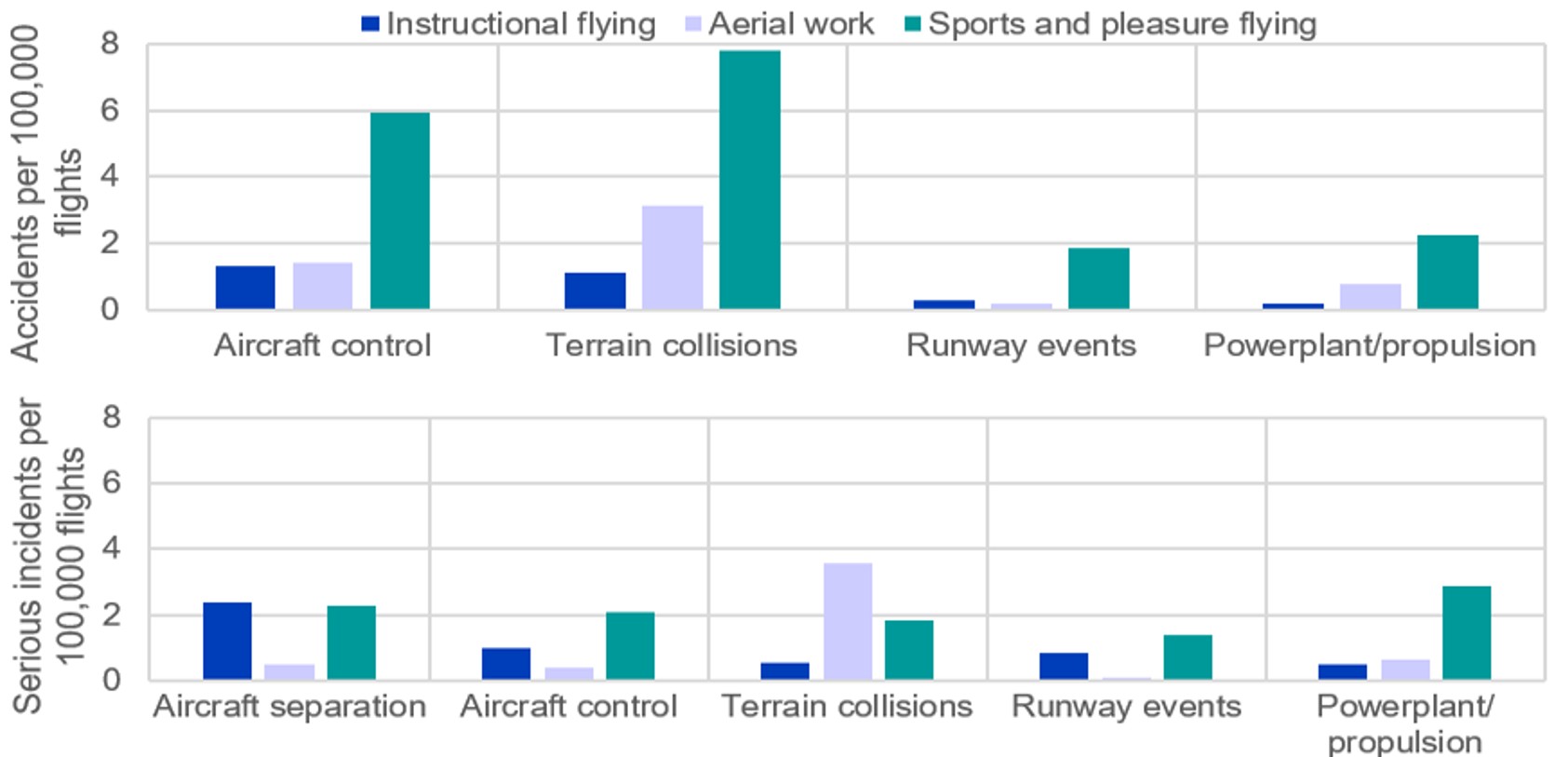
Aircraft control accident and serious incident rates differed for aerial work. While instructional flying had similar accident and serious incident rates, aerial work had about double the accident rate compared to serious incidents. This suggests that potential accidents from aircraft control issues are more commonly avoided in instructional flying.
Instructional flying had similar serious incident rates of aircraft separation issues and runway events compared to sports and pleasure flying, but rates were more than twice as high for instructional flying compared to aerial work. This difference reflects that aerial work is not commonly conducted near busy airports where most aircraft separation occurrences happen.
Instructional flying had a lower rate of serious incident terrain collisions compared to aerial work and sports and pleasure flying. Again, the lower rates for instructional flying potentially reflect the fact that instructors may be present and can intervene where necessary, as well as differences in operating environments (for example low-level flying associated with aerial agricultural work).
Further, the rate of serious incident powerplant or propulsion issues and aircraft control issues were lower for instructional flying compared to sports and pleasure flying, and slightly lower than aerial work, suggesting instructional flying aircraft have had reliable engines through good maintenance practices.
Summary
Overall, these results suggest that:
- Hard landings and loss of control were significant contributors of instructional flying accidents.
- Over half of instructional flying accidents resulted in terrain collisions.
- Accidents predominantly occurred during the landing phase of flight.
- Serious incidents were mostly associated with aircraft separation issues including near collisions, which most commonly took place in the vicinity of metropolitan aerodromes (Moorabbin, Jandakot, Bankstown).
- For VH-registered aircraft, instructional flying generally had a lower accident rate than all other GA activity types.
Dual and solo instructional flying
As exposure data (number of flights) is not available for instructional flying activity subtypes (dual and solo), this section only presents the occurrence counts (number of accidents, serious incidents and incidents).
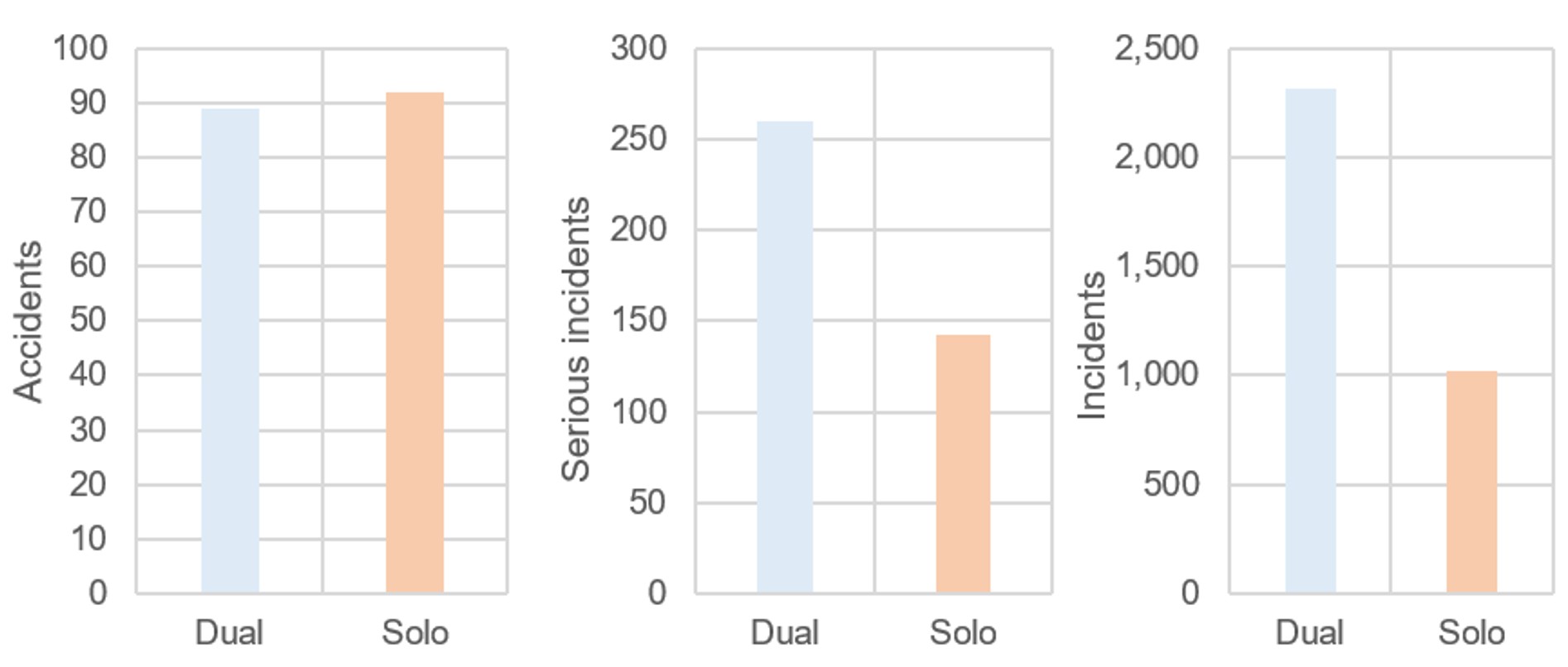
Dual instructional flying (where an instructor and student are both on board) and solo instructional flying had about the same number of accidents (Figure 10). However, the proportion of dual instructional flying accidents that were fatal (10 fatal accidents) was around twice that of solo (5 fatal accidents).
There were also nearly double the number of dual instructional flying serious incidents, and more than double the number of incidents, compared to solo instructional flying.
Figure 10: Dual and solo instructional flying occurrences by classification (2015–24)
Occurrence categories
Aircraft control issues were involved in just under two-thirds of accidents for both dual and solo instructional flying, and over half of the accidents involved terrain collisions. Loss of control accounted for a similar number of aircraft control issues (around 45%) for both dual and solo, while a higher proportion of accidents resulted in hard landings for solo (50%) compared to dual (36%) instructional flying. Overall, these findings suggest that there are shared risks inherent to the training environment regardless of instructor presence.
For serious incidents and incidents, notable differences were observed between the activity subtypes (Figure 11). For solo instructional flying, the proportion of serious incidents and incidents involving runway events (mostly runway excursions) and flight preparation or navigation issues was double that of dual instructional flying. These differences may reflect the absence of instructor assistance during solo operations, where students are responsible for aircraft handling, navigation, and decision-making.
Figure 11: Proportion of common occurrence categories for dual and solo instructional flying by classification (2015–24)
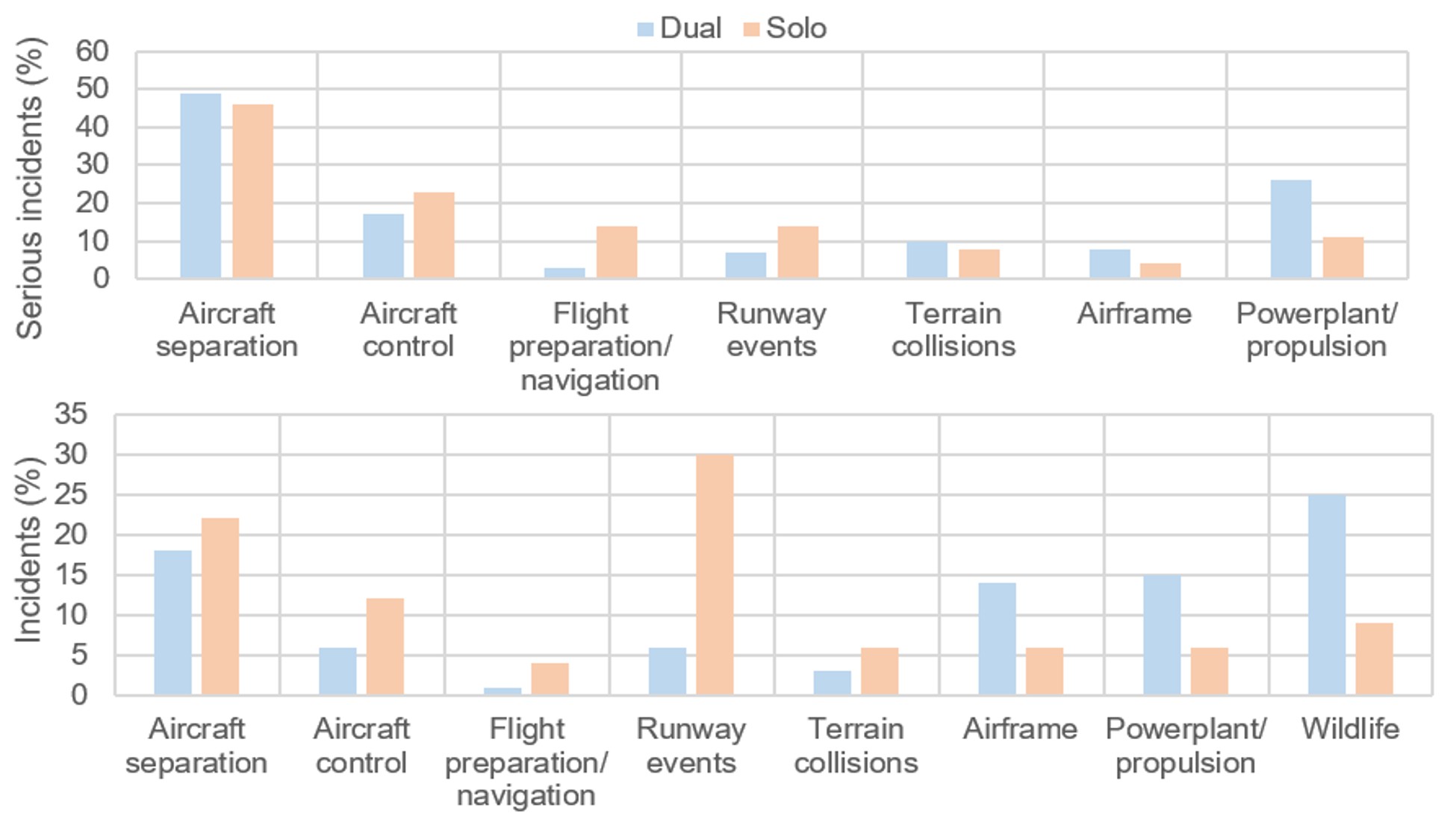
In contrast, dual instructional flying had higher proportions of powerplant or propulsion issues, including engine failure or malfunction. These differences may reflect risks associated with the types of training activities performed during dual instructional flying (for example simulated system failures).
Summary
Overall, these results suggest that:
- The number of fatal accidents was double during dual compared to solo instructional flying, possibly reflecting a higher frequency of dual-training flights.
- Dual and solo instructional flying had similar accident risks, with a similar number of aircraft control issues and terrain collisions.
- Dual instructional flying had nearly double the number of serious incidents and more than double the number of incidents than solo.
Loss of control and collision with terrain during a dual training flight On 11 April 2024, a flight instructor and student pilot were conducting a dual training flight under the instrument flight rules in a Beechcraft E55 aircraft. The aircraft departed from Cowra Airport, New South Wales, and conducted instrument approaches to Goulburn and Canberra Airports, before returning to Cowra. As the aircraft tracked over the Cowra non-directional beacon (NDB) to conduct a practice instrument approach to runway 15, the instructor simulated a failure of the left engine by moving the mixture lever to the idle cut-off position. The student continued the approach with the left engine inoperative and the propeller windmilling, then joined the circuit for runway 33 on the crosswind leg. During the landing flare, the instructor initiated a go-around. The aircraft yawed and rolled to the left and impacted the ground in an almost vertical nose-down altitude before coming to rest inverted. The ATSB found that the instructor moved the left engine mixture level to idle cut-off to simulate an engine failure over the navigation aid, and it was likely that they unintentionally did not subsequently move the lever to rich and ensure the engine was restarted and available for instant use, when attempting to set zero thrust on the downwind leg of the circuit. As a result, the instructor initiated a go-around below the minimum control speed, unaware the left engine was inoperative, resulting in an asymmetric loss of control. Investigation safety message Aircraft manufacturers’ procedures for one engine inoperative training should be followed in the first instance. In this case, the manufacturer required the throttle be used to simulate an engine failure. In addition to the manufacturer’s procedures, Civil Aviation Safety Authority guidance recommended using the throttle rather than the mixture to simulate an engine failure when at low level, such as asymmetric instrument approaches. Figure 12: Wreckage of the Beechcraft E55 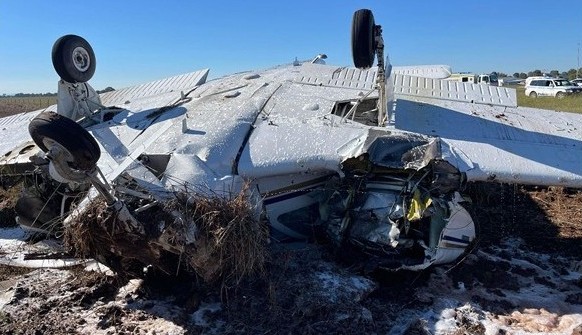
|
Aircraft type
While instructional flying accidents and serious incidents were more frequent for aeroplanes than helicopters (Table 2), the accident rate for VH-registered helicopters was nearly 3 times higher, and the serious incident rate was also higher for helicopters compared with aeroplanes (Figure 13). Further, the fatal accident rate was around double for helicopters (0.5 per 100,000 flights) compared to aeroplanes (0.2 per 100,000 flights).
However, the rate of incidents was higher for aeroplanes compared to helicopters, although the total ERC score (per 100,000 flights) associated with these incidents was higher for helicopters compared to aeroplanes.
Table 2: Instructional flying occurrences by aircraft type and classification (2015–24)
| Accidents | Fatal accidents | Serious incidents | Incidents | Total[1] | |
| Aeroplane (VH-registered) | 110 | 10 | 300 | 3,978 | 4,388 |
| Helicopter (VH-registered) | 24 | 2 | 30 | 217 | 271 |
| Aeroplane (ra-aus) | 54 | 3 | 86 | 381 | 521 |
| [1] A number of instructional flying occurrences involved both an aeroplane and a helicopter | |||||
Figure 13: Instructional flying occurrences for VH-registered aeroplanes and helicopters by classification (2015–24)
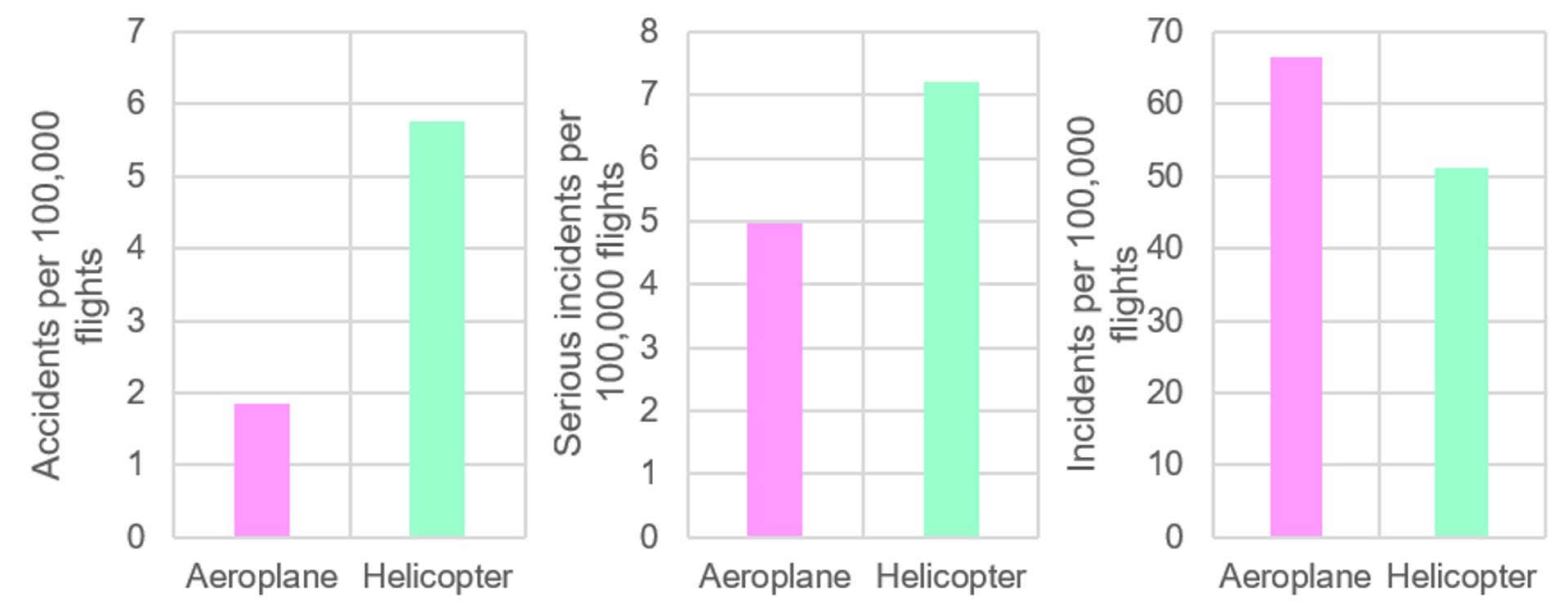
Regarding activity subtypes, accidents involving aeroplanes were almost evenly distributed between dual and solo instructional flying. In contrast, accidents involving helicopters were more common during dual (around 63%) compared to solo instructional flying (around 25%). Aircraft exposure data (number of flights) was not available for instructional flying activity subtypes (dual and solo), and hence occurrence rates could not be determined for these subtypes. As such it is not possible to establish whether the observed difference reflects a higher level of risk or simply differences in exposure.
Occurrence categories
For VH-registered aircraft, helicopters recorded substantially higher accident and serious incident rates that involved aircraft control issues, and that resulted in terrain collisions (Figure 14). For both VH-registered and recreational-registered aeroplanes, hard landings and loss of control were involved in just under half of aeroplane accidents involving aircraft control issues. In contrast, helicopter accidents were predominantly associated with loss of control (57%), followed by hard landings (29%).
The phase of flight distribution also differed, with aircraft control issues predominantly occurring during landing for aeroplanes, but during manoeuvring for helicopters.
Figure 14: Common occurrence categories for VH-registered aeroplanes and helicopters by classification (2015–24)
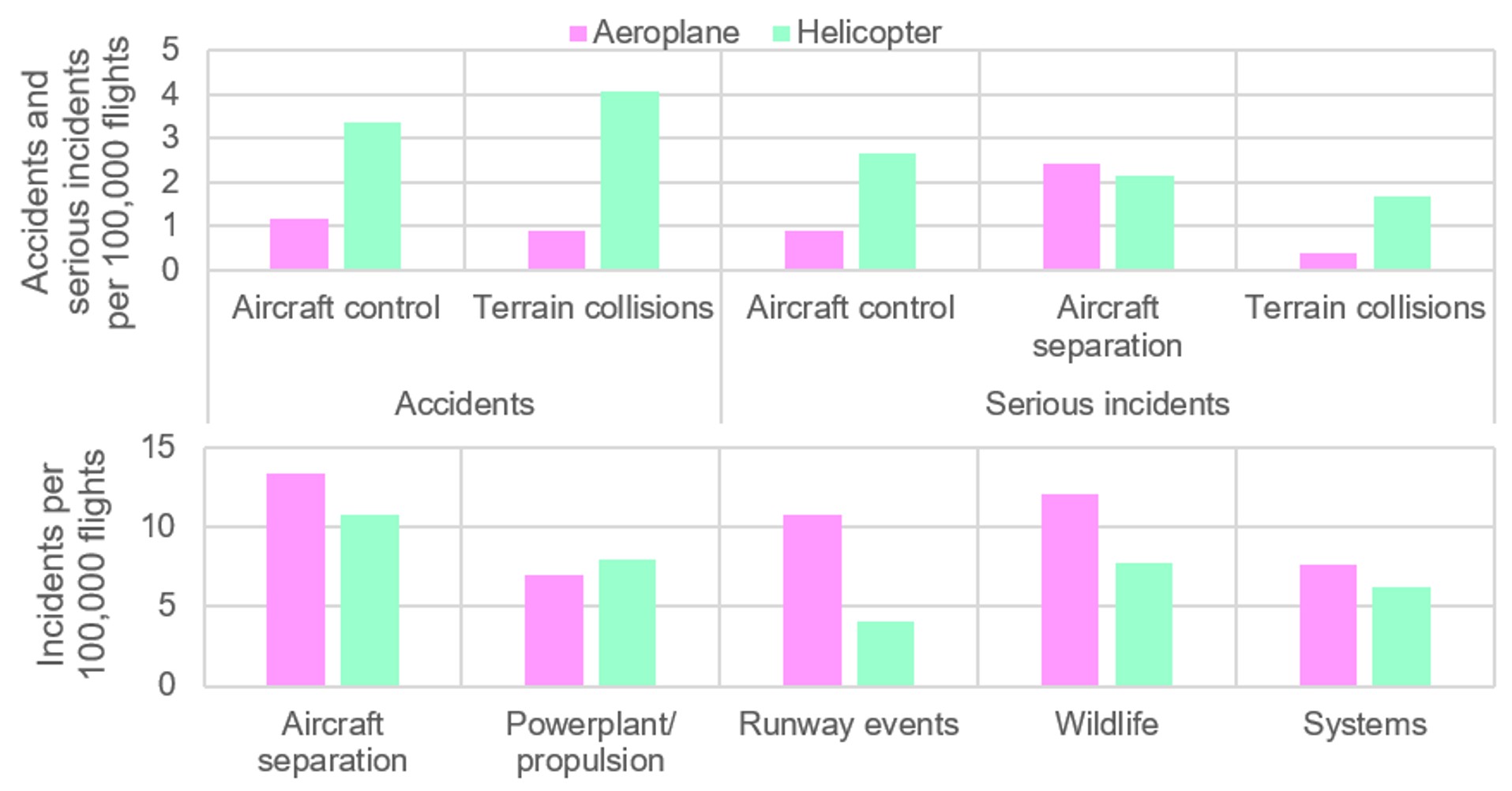
For incidents, runway events accounted for more than double the rate for aeroplanes compared to helicopters, likely reflecting greater use of runways by aeroplanes. Birdstrike rates were also higher for aeroplanes, potentially reflecting higher operating speeds compared to helicopters.
Fatal accident involving Eurocopter AS350BA helicopter On 7 November 2017, a chief flying instructor (CFI) and pilot under instruction (PUI) were flying a Eurocopter AS350BA Squirrel. They were conducting practice emergencies under visual flight rules at Hobart Airport, Tasmania. During hydraulic system failure practice, control of the helicopter was lost and the aircraft collided with terrain. The CFI was fatally injured and the PUI was seriously injured. The ATSB found that flight manual emergency procedures stipulate that in order to maintain control following a hydraulic system failure (or simulated failure), a shallow approach should be made into wind and the helicopter show not enter a hover. On this occasion, the aircraft approached crosswind and came to a high hover without hydraulic assistance. Consequently, the helicopter was rendered uncontrollable. A delay in restoration of the hydraulic system prevented the crew from regaining control before collision with terrain. The ATSB also identified that:
Due to a lack of available information, the influence, if any, of these two factors on the accident sequence could not be determined. Investigation safety message In a training context, the rapid development of this accident, reinforces the need for a clear understanding and coordination between instructor and student when conducting hazardous activities such as simulated system failures. Figure 15: Accident site image 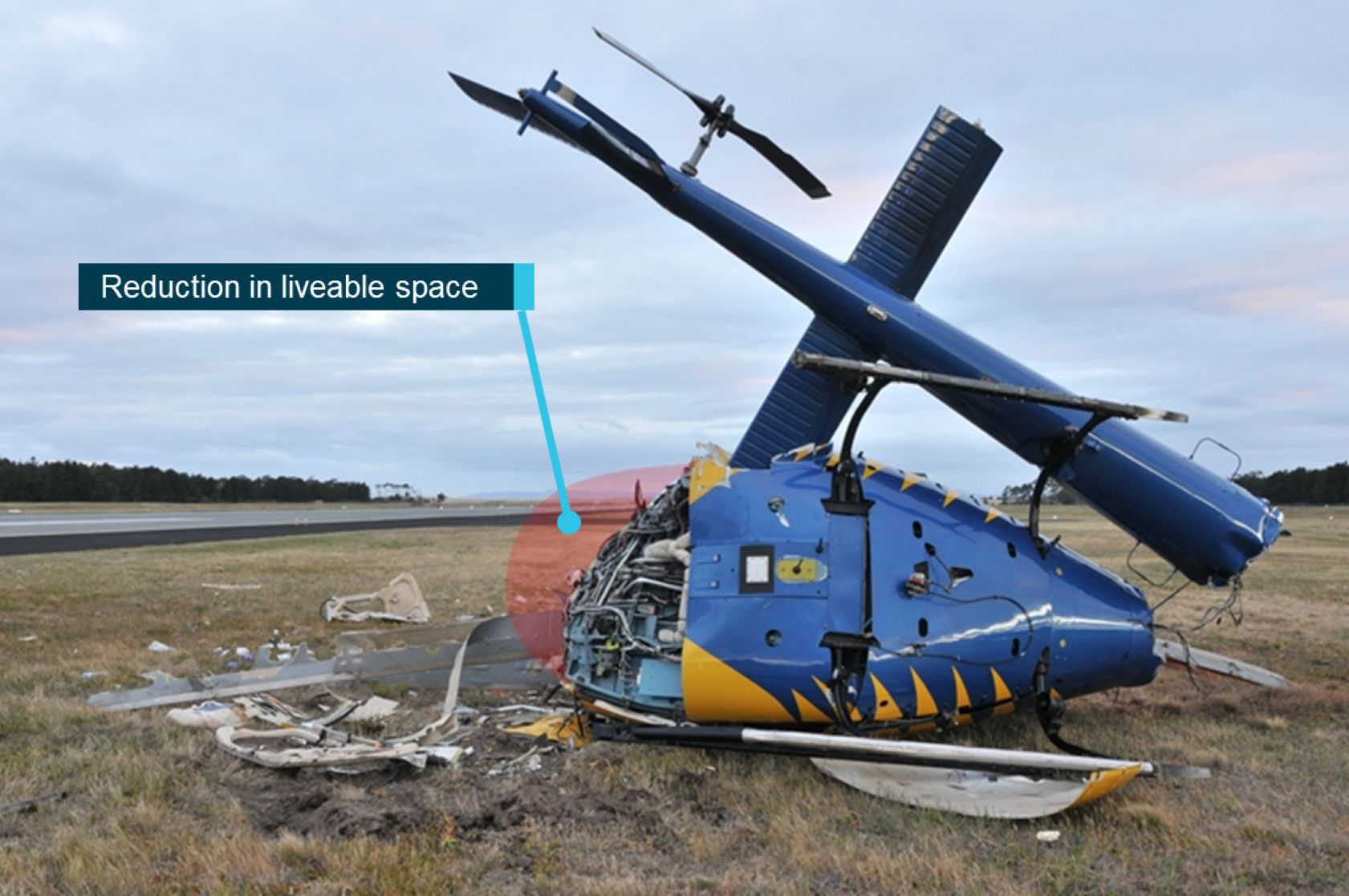
|
Number of engines
Single-engined aircraft had a higher number of instructional flying occurrences than multi-engined aircraft (Table 3).
However, for VH-registered aeroplanes, accident rates were similar between single and multi-engined aircraft, while fatal accident rates were 5 times higher for multi-engined (0.5 per 100,000 flights) compared to single-engined (0.1 per 100,000 flights) aeroplanes (Figure 16). Serious incident and incident rates were also higher for multi-engined aeroplanes.
Consistent with these findings, for incidents, total ERC scores (per 100,000 flights) were higher for multi-engined aeroplanes compared to single-engined aeroplanes.
Table 3: Instructional flying occurrences by engine type and classification (2015–24)
| Aircraft type | Number of engines | Accidents | Serious incidents | Incidents | Total |
| Aeroplane | Single | 154 | 332 | 3,554 | 4,040 |
| Multi | 10 | 32 | 656 | 698 | |
| Helicopter | Single | 24 | 27 | 125 | 176 |
| Multi | 0 | 3 | 91 | 94 |
For helicopter occurrences, accident and serious incident rates were higher for single‑engined aircraft, whereas incident rates were substantially higher for multi‑engined aircraft. A possible explanation is that multi-engined helicopter training typically requires more experienced pilots, which may assist in identifying and managing emerging risks before they can escalate into accidents or serious incidents.
Figure 16: Instructional flying occurrences that involved VH-registered aircraft by number of engines and classification (2015–24)
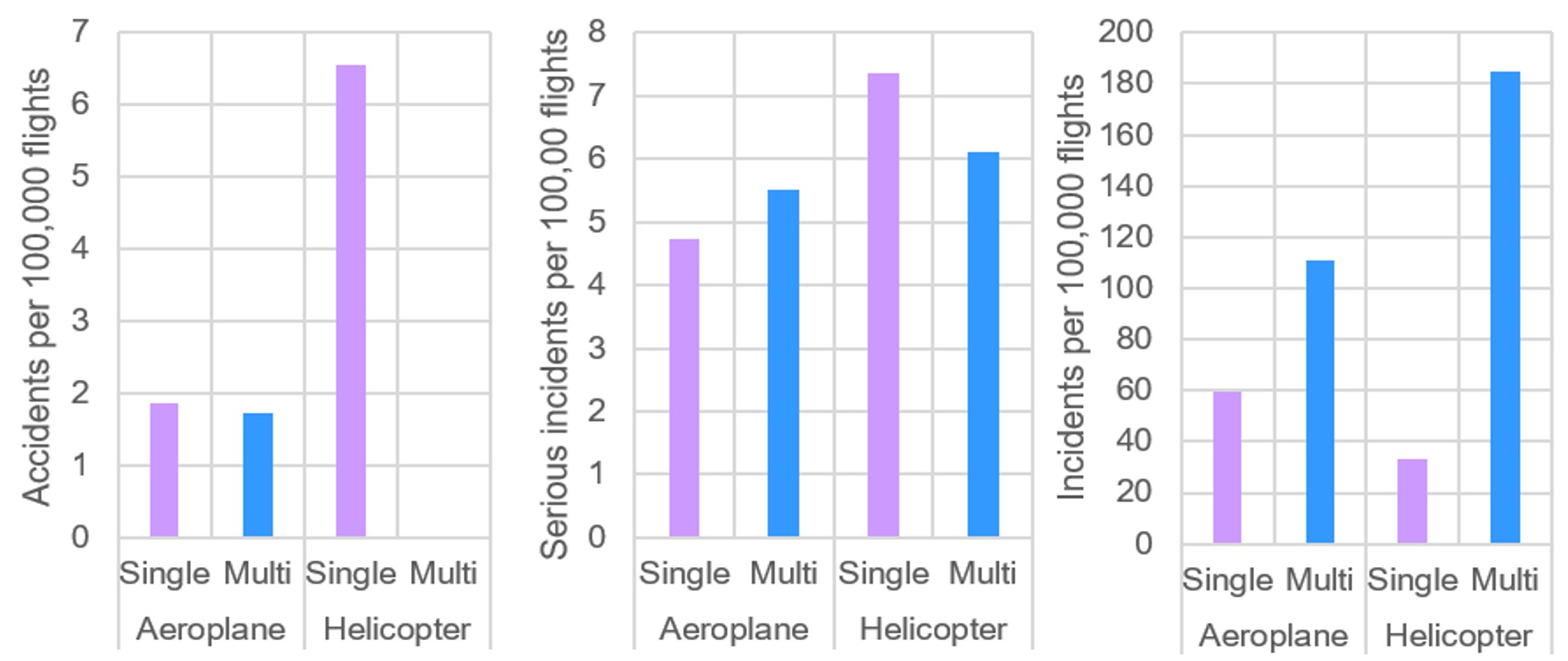
For both aircraft types, aircraft separation issues and birdstrikes accounted for the highest incident rates, with rates generally higher for multi-engined aircraft. However, it is unlikely that these factors are directly related to the number of engines. Instead, these differences between single and multi-engined aircraft may be influenced by other factors such as pilot experience, training activities, and aircraft complexity.
Summary
Overall, these results show that for VH-registered aircraft:
- Helicopters accounted for nearly 3 times the rate of accidents, double the rate of fatal accidents and higher rates of serious incidents than aeroplanes.
- Accident and serious incident rates involving aircraft control issues and terrain collisions were higher for helicopters than aeroplanes.
- Accident rates were similar between single and multi-engined VH-registered aeroplanes, but fatal accident rates were 5 times higher for multi-engined compared to single-engined aeroplanes.
Conclusion
Aircraft control issues, including hard landings and loss of control, posed the highest accident risk during instructional flying, with most accidents occurring during landing. Recurring safety factors underlying these accidents included inappropriate aircraft handling, failures in monitoring and checking, inadequate task experience or recency, and windy weather conditions. Addressing these factors through robust instructional oversight and targeted safety education is critical for improving instructional flying safety outcomes.
Aircraft separation issues, including near collisions, was the leading occurrence category involved in serious incidents, particularly around uncontrolled airspace where ‘see-and-avoid’ responsibilities lie with flight crew. Common safety factors included failures in monitoring and checking, inadequate communication and coordination with personnel external to the aircraft, inadequate task experience or recency, and high workload or distractions. These highlight the importance of pilots and instructors in maintaining effective lookout, awareness of other aircraft, and actively managing separation during instructional flying, especially around busy aerodromes.
A similar number of accidents took place during dual and solo instructional flying, with aircraft control issues occurring similarly across both activities, and a comparable number of accidents resulted in terrain collisions. However, dual instructional flying accounted for higher proportions of serious incidents and incidents.
While instructional flying occurrences predominantly involved aeroplanes, reflecting larger activity levels, helicopters accounted for nearly 3 times the rate of accidents, double the rate of fatal accidents and higher rates of serious incidents than aeroplanes. Aircraft control issues also accounted for higher accident rates for helicopters, with a greater rate of accidents resulting in terrain collisions. Accordingly, the risk associated with instructional flying was greater when conducted in helicopters compared to aeroplanes.
Single-engined aircraft were involved in most of the instructional flying occurrences, reflecting activity levels. However, occurrence rates differed by aircraft type. Multi‑engined aeroplanes had higher fatal accident, serious incident, and incident rates than single-engined aeroplanes, but a similar accident rate. The fatal accident rate was 5 times higher for multi-engined than single-engined aeroplanes. Whereas multi-engined helicopters had lower accident rates and serious incident rates, but higher incident rates than single-engined helicopters. Overall, these differences may be linked to factors such as pilot experience, the nature of training activities, and aircraft complexity.
The selected investigation case studies illustrate how loss of situation awareness, poor communication, and a lack of instructor intervention can escalate the risk of an accident during instructional flying. Safety messages from these investigations reinforce the benefit of sound instructional practices which may prevent similar occurrences in the future.
These include:
- conducting instructor demonstrations before introducing students to new flight environments or training exercises
- ensuring clear communication, shared understanding, and effective coordination between instructor and student
- maintaining instructor competency through proficiency checks
- adherence to training manuals and aircraft manufacturer procedures
- ensuring timely instructor intervention when required to maintain control of the aircraft and minimise risk.
Instructional flying is an evolving, dynamic and demanding environment, and its influence on the safety of the next generation of pilots should not be underestimated. Flight training organisations, instructors and students each play a pivotal role in supporting safer instructional flying outcomes, by providing pathways for building aeronautical experience, deeper aviation understanding, airmanship development and safety culture.
By maintaining awareness of the recurring occurrence categories and safety factors contributing to instructional flying occurrences, and applying targeted safety strategies to address them, the aviation community can continue to advance the safety of instructional flying operations across Australia.
Glossary
| ATC | Air traffic control |
| BITRE | Bureau of Infrastructure and Transport Research Economics |
| CTAF | Common traffic advisory frequency |
| CFI | Chief flying instructor |
| ERC | Event risk classification |
| GA | General aviation |
| ICAO | International Civil Aviation Organization |
| PUI | Pilot under instruction |
| RA-AUS | Recreational Aviation Australia |
Sources and submissions
References
International Civil Aviation Organization. (2018). Annex 6 to the Convention on International Civil Aviation: Part II, International general aviation–Aeroplanes (10th ed.). International Civil Aviation Organization.
Further reading
Civil Aviation Safety Authority (CASA)
Instructional flying sector safety risk profile (Opens in a new tab/window)– CASA’s instructional flying sector safety risk profile.
Issue: aircraft separation amongst training aircraft and to other aircraft types (CAT) (Opens in a new tab/window)– An issue page within CASA’s instructional flying sector safety risk, summarising concerns about aircraft separation.
Be heard, be seen, be safe(Opens in a new tab/window) – CASA’s radio procedures in non-controlled airspace.
Purpose of safety investigationsThe objective of an ATSB safety investigation is to improve transport safety through:
In accordance with the TSI Act, the ATSB does not investigate for the purpose of taking administrative, regulatory or criminal action, and cannot apportion blame, assist in determining liability, or, as a general rule, assist in court proceedings. About ATSB reportsATSB safety investigation reports are developed in accordance with ATSB procedures and guidelines, and with regard to applicable international standards and instruments. Reports must include factual material of sufficient weight to support the investigation’s analysis and findings. At all times the ATSB endeavours to balance the use of material that could imply adverse comment with the need to properly explain what happened, and why, in a fair and unbiased manner. An explanation of terminology used in ATSB investigation reports is available here. Publishing informationReleased in accordance with section 25 of the Transport Safety Investigation Act 2003 Published by: Australian Transport Safety Bureau © Commonwealth of Australia 2026 Ownership of intellectual property rights in this publication Unless otherwise noted, copyright (and any other intellectual property rights, if any) in this report publication is owned by the Commonwealth of Australia. Creative Commons licence 
With the exception of the Commonwealth Coat of Arms, ATSB logo, and photos and graphics in which a third party holds copyright, this report is licensed under a Creative Commons Attribution 4.0 International licence. The CC BY 4.0 licence(Opens in a new tab/window) enables you to distribute, remix, adapt, and build upon our material in any medium or format, so long as attribution is given to the Australian Transport Safety Bureau. Copyright in material obtained from other agencies, private individuals or organisations, belongs to those agencies, individuals or organisations. Where you wish to use their material, you will need to contact them directly. |
- ^ Aerial work includes agricultural spreading/spraying, agricultural mustering, other agricultural, unknown agricultural, construction (sling loads), other construction, photography, pipeline/powerline surveying, other surveying, observation and patrol, search and rescue, policing, firefighting, advertising, and other aerial work.
- ^ Other general aviation flying includes test flights, ferry flights, and other flights (demonstration flights).
- ^ Sports and pleasure flying includes glider towing, parachute dropping, aerobatics, pleasure and personal transport, community service flight, and other sport and pleasure flying.
- ^ Occurrences involving balloons, gyroplanes, hang gliders/paragliders, motor-gliders, powered weight shift aircraft, remotely piloted aircraft, and sailplanes were excluded from this analysis.
- ^ An incident is an occurrence, other than an accident, associated with the operation of an aircraft which affects or could affect the safety of operation.
- ^ An accident is an occurrence involving an aircraft where a person dies or suffers serious injury, the aircraft is destroyed or seriously damaged, or any property is destroyed or seriously damaged.
- ^ A serious incident is an incident involving circumstances indicating that an accident nearly occurred.
- ^ Event risk classification (ERC) is a 3-stage process that incorporates the most credible accident outcome and the effectiveness of barriers between the actual occurrence and the credible accident outcome into a risk score. ERC scores are calculated by the ATSB for all occurrences and are a useful measure to compare risk between occurrences or a collection of occurrences.
- ^ Powerplant or propulsion issues involve abnormal engine indications, mechanical failures of the auxiliary power unit, engine failure or malfunction, propeller or rotor malfunction, and transmission and gearboxes failure or malfunction.
- ^ Proportions presented throughout this section include both VH- and recreational-registered aircraft. However, where rates are presented, only VH-registered aircraft are included as flight data for recreational-registered aircraft is not available for instructional flying.
- ^ Loss of control includes an unintentional ground loop of an aircraft, unintentional departure from normal flight necessitating recovery action or resulting in a terrain collision, and helicopter dynamic rollover.
- ^ Safety factors include occurrence events, individual actions that increase risk, local conditions that increase risk, absent or problematic risk controls, and internal and external organisational influences that increase risk. For occurrences that are not investigated, safety factors are only recorded when likely contributing factors are reported.
- ^ Aircraft handling involves direct manipulation of aircraft flight path and configuration, either through the use of normal flight controls or through flight control units, flight management systems or similar systems.
- ^ Monitoring and checking includes flight crew actions associated with maintaining awareness of system states, environmental states, traffic disposition and other relevant variables.
- ^ In this context, the driver is of a ground vehicle driving on the runway.
- ^ Aircraft systems include air/pressurisation systems, anti-ice protection, avionics/flight instruments, datalink, electrical, fire protection, flight controls, fuel, and hydraulic systems.
- ^ The Bureau of Infrastructure, Transport and Research Economics (BITRE) classifications of general aviation activities including sports and pleasure flying, aerial work, own business travel, and other general aviation flying were used as a comparison.
- ^ Incident data was not compared across general aviation activities due to differences in reporting requirements between the activities.
- ^ Aerial work and sports and pleasure flying were used as a comparison given that they accounted for a higher number of general aviation occurrences and the associated risk was higher compared to other general aviation activity types.
Publication details
| Investigation number | AD-2026-001 |
|---|---|
| Publication type | Research and Analysis Report |
| Publication mode | Aviation |
| Publication date | 10/11/2026 |